A Work Project, presented as part of the requirement for the Award of a Master Degree in Management from the NOVA – School of Business and Economics
Disaster Relief Management: Supply Chain
Challenges and Recent Progress
MADALENA SERRA DE MAGALHÃES
Student N°25900
A Project carried out on the Master in Management Program, under the supervision of: Professor Manuel Baganha
1
Abstract
This research starts by introducing the topic of disaster relief management and underlines the importance of logistics and supply chain in the humanitarian context. It then focuses on describing four of the main chronic challenges hindering the humanitarian relief
effectiveness and efficiency, by providing an overview of each and the recent solutions and progresses achieved in each of those areas. The former is supported by data on real disaster scenarios, and when possible, is inserted in the context of the relief upon the Mozambican cyclones in 2019. Follows a compilation of the main results of such analysis, and
recommendations to NGOs on how to further improve the performance of their relief
operations. Concludes by presenting the shortcomings of the concern research and potential directions for future similar studies.
Keywords: Humanitarian Logistics; Disaster management; Humanitarian supply chain;
Disaster Relief.
Acknowledgements
To Nuno Almeida Frazão, Helena Ribeiro Telles and Nuno Lima for their vital contribution to this research.
This work used infrastructure and resources funded by Fundação para a Ciência e a Tecnologia (UID/ECO/00124/2013, UID/ECO/00124/2019 and Social Sciences DataLab, Project 22209), POR Lisboa (LISBOA-01-0145-FEDER-007722 and Social Sciences DataLab, Project 22209) and POR Norte (Social Sciences DataLab, Project 22209).
2
Table of contents
Introduction ... 3 Literature Overview ... 3 Research Objective ... 6 Methodology ... 7Challenges of the Humanitarian Supply Chains and Recent Progress ... 8
Investing in preparedness ... 8
Collaborating for an improved joint operational performance ... 11
Donating better: more money and less inappropriate donations ... 14
Recovering by improving resilience ... 18
Discussion of Results and Recommendations ... 20
Limitations and Future Directions ... 23
Conclusion ... 23
Appendices ... 24
References ... 27
Additional Appendices... 34
Acronyms
DFID: United Kingdom’s Department for International Development IFRC: International Federation of Red Cross and Red Crescent Societies INGC: Instituto Nacional de Gestão de Calamidades
IOM: International Organization for Migration LC: Logistics Cluster
NGO: Non-Governmental Organization
OCHA: Office for the Coordination of Humanitarian Affairs ROI: Return on Investment
UN: United Nations
UNHCR: United Nations High Commissioner for Refugees UNICEF: United Nations Children’s Fund
UNJLC: United Nations Joint Logistics Center WFP: World Food Programme
3
Introduction
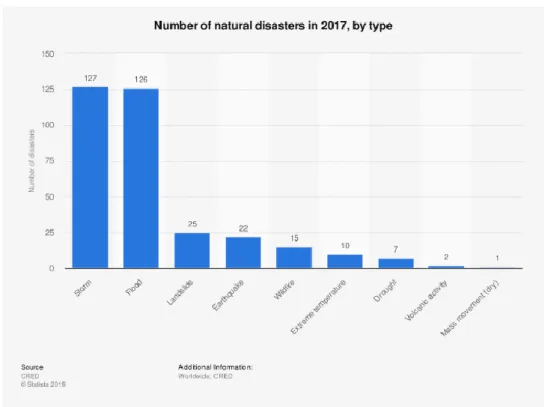
Nowadays, we are witnessing a growth of both number and intensity of natural disasters striking the world, expected to increase at least five times during the next five decades and affecting from poor and developing countries to the leading global economic powers. Contemporary phenomena, as emerging technologies and new information channels, have prompt widespread awareness and real-time knowledge on the occurrence and alleviation of natural disasters taking place globally. However, others, as the escalation of climate change and globalization, are deeply damaging the balance of the earth’s ecosystem leading to more complex and recurrent natural hazards, of which hydro-meteorological catastrophes have posed as the most preeminent and which have taken more lives during 2018.
In this context, the performance of disaster relief operations has become increasingly relevant. With more than 200 million people needing humanitarian assistance worldwide and at least US$131 billion in damages throughout 2018, humanitarian agencies need to progressively improve the efficiency and effectiveness of their relief supply chains, in order to assist a growing number of people in need, with limited resources and under a uncertain environments. The recent cyclones Idai and Kenneth in March and April of 2019, portray this scenario, representing two out of almost fifty floods and cyclones which have blighted Mozambique for the last three decades. These catastrophes caused extensive losses, displaying more than 2 million people and severely damaging approximately 90% of the infrastructures in some of the most affected regions of the country, according to the reporting of the Logistics Cluster. The former is a recent example of how, once more, the international humanitarian community has come together to alleviate the suffering of the people afflicted by natural disasters.
Literature Overview
Disasters, both natural and man-made, are a reality that have brought great suffering for communities around the world, disrupting infrastructures, economies and lives (Nikbakhsh &
4 Farahani, 2011). However, Thomas and Kopczak (2005) characterize the current disaster world scenario, as a “growth market”; and Gad-el-Hak (2008) highlights the recurrent effect of specific natural hazards in specific regions; which have led to a raise of interests by the international professionals and academic, exploring and compiling in literature the topic of disaster relief supply chain management and logistics (Cozzolino, 2012).
The root causes fulling natural catastrophes’ growth, have been addressed by several authors, of which: the raise of the world population, the pressure on environment, the rapid urbanization (Thomas & Kopczak, 2005). Still, independently of the reasons for such increase, the clear implication is of “the need to develop a much higher level of capability for the provision of [disaster] relief” (Kovács & Spens, 2011). With disaster relief, referring to the design and management of processes “to be implemented before, during and after disasters” (Van Wassenhove, 2005) by humanitarian organizations, following the three basic principles of “humanity, neutrality and impartiality” (Tomasini & Van Wassenhove, 2009).
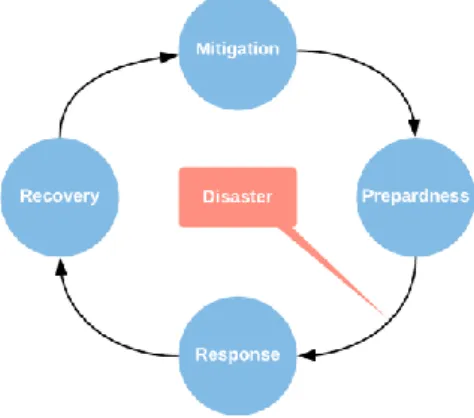
The majority of authors have considered that disaster management is constituted by a four-phase cycle, flowing in time from mitigation, to preparedness, response and recovery (Van Wassenhove, 2005; Afshar & Haghani, 2009; Nikbakhsh & Farahani, 2011; Tomasini & Van Wassenhove, 2009; Gad-el-Hak, 2008). The same authors describe these phases, by arguing that relief operations should start with initiatives to mitigate the occurrence and effect of future hazards. Followed by developing and implementing preventive mechanisms that improve the aid agencies’ capacity and speed for the response operations; which are activated upon the occurrence of the catastrophe itself and focus on responding to save lives and alleviate immediate needs. Finally, in the aftermath of a disaster, follows the reconstruction and rehabilitation, of infrastructures and livelihoods.
Particularly, humanitarian operations can be divided into core value programs – which refer to the “front-line” activities of relief and development - and the support services - including
5 functions as logistics and supply chain management, finance, human resources, among others (Thomas & Kopczak, 2005; Peterken & Bandara, 2015). Humanitarian logistics and supply chain management, together encompass all the planning, implementing and controlling activities to ensure an efficient and effective flow of relief from the point of origin to the alleviating of needs of affected populations (Thomas & Kopczak, 2005). The majority of the authors emphasizes the importance of the former with Tomasini and Van Wassenhove (2009) quantifying it in 80% of the total relief operations. Yet, it has also been widely highlighted in the international literature, that supply chain and logistics planning within the humanitarian context has been, until recently, greatly overlooked by practitioners and academics.
Recently, the international community has start to undergo a shift of mindset, acknowledging that the shortage in capacity and ability of supply chains have been undermining the respective relief programmes’ effectiveness (Kovács & Spens, 2011; Tomasini & Van Wassenhove, 2009; Nikbakhsh & Farahani, 2011; ); and that maximizing relief provision, with limited resources, can only be achieved by the “slick, efficient and effective logistics operations and more precisely, supply chain management” (Van Wassenhove, 2005).
Moreover, the disaster relief scenario, is characterized by: capacity having to be continuously extended with the quantity and simultaneity of catastrophes and so operations worldwide rising (Thomas & Kopczak, 2005); complex and expanding network of humanitarian and non-humanitarian actors involved in the relief – including local and international NGOs, governments, private and public donors, military, beneficiaries, among others (Cozzolino, 2012); donors becoming more informed and demanding of the effectiveness of their donations (Thomas & Kopczak, 2005); resources having to be stretched, but procurement and transportation constituting a substantial costly activities of the relief operations (Afshar & Haghani, 2009); deep uncertainty environment, from supply to the demand, to the location and intensity of the next disaster (Tomasini & Van Wassenhove, 2009); a need for acute urgency
6 and reaching affected people, in a context of relatively long or volatile lead times; (Tomasini & Van Wassenhove, 2009); among many other features that imply higher operational complexity than in commercial environments.
Although the motto of “delivering the right goods, at the right time, to the right place and to the right people” is still applicable in the humanitarian context (Van Wassenhove, 2005), humanitarian supply chains need further to go beyond the basic commercial concepts of effectiveness and efficiency, and become truly AAA supply chains, this is, adaptable, agile and aligned (Tomasini & Van Wassenhove, 2009). To achieve such highly-performing humanitarian supply chains, aid agencies need to acknowledge the intrinsic complexities of their chains and the specific and chronic challenges these have (Afshar & Haghani, 2009), in order to work towards hindering them.
In this context, Thomas & Kopczak (2005) produced one of the first and most relevant contributions, by exposing what the authors considered to be the most limiting issues to humanitarian supply chains, and an overall “ path forward” to guide aid organizations into starting optimizing their relief operations and their ability to help people in need.
Research Objective
This research aims at answering the question of whether humanitarian organizations are progressively being more effective and efficient upon natural disaster relief. This will be evaluated by analyzing four of the main and chronic challenges of relief supply chains – recurrently highlighted in the international literature of the last two decades – and assessing whether aid organizations, in the face of those challenges, have acknowledged, learnt and improved their processes and mechanism to enhance their disaster relief performance. With this in mind, real and practical examples and solutions of such progresses by humanitarian organizations will be presented. When possible, such examples will be inserted in the context of the recent relief operations - of international organizations and the local NGO Apoiar -
7 during the Mozambican 2019 cyclones Idai and Kenneth. The former provides a common ground for a multi-dimensional analysis, of whether all or just some of the stated challenges are being progressively surpassed.
Methodology
The methodology followed through this research was of qualitative nature. It poses as the most adequate and insightful approach to topics which are still relatively understudied and unknown (Ellram, 1996); corresponding to the case of disaster relief supply chain management.
In a first phase, a review of international literature was carried out, with textbooks and practitioner journals sought by using online searches which included search words formed mainly by interactions of “supply chain”, “logistics”, “operations” and “management”, with “humanitarian”, “relief”, and “disaster”. More recent sources were prioritized, and those with more than 20 years were not considered. Furthermore, in order to obtain up-to-date humanitarian operational information, websites of leading international humanitarian organizations – such as the UN and the IFRC -, were used to collect annual insights and disaster-specific data, displayed on reports, and other formats of documents. The operational reviews provided by the Logistics Cluster were particularly relevant to understand the field reality, regarding logistics and supply chain deployed, during the Mozambican cyclones. Moreover, semi-structured and face-to-face interviews were conducted to Helena Ribeiro Telles, President of the NGO Apoiar, a provider of support to African countries and with focus on the Mozambican province of Sofala. Additionally, to Nuno Lima, belonging to the Board of Communication and Marketing of Lusíadas Saúde, a Portuguese private health group and a recent donor to the humanitarian operations, upon the occurrence the cyclones in Mozambique. This format of interviews, was chosen in order to provide guidance, focusing on the topics relevant to address the research question, while still providing flexibility for interviewees to bring-up matters they found pertinent and shape the conversation according to their experience
8 and knowledge, as highlighted by Mason (2002). Finally, the disaster relief of the Mozambican cyclones was used as a common scenario when possible, to allow for a performance analysis considering the different challenges and in a same setting. This case-study tactic, is adequate to investigate the “how” of events which the researcher has no control of (Yin, 2009).
Challenges of the Humanitarian Supply Chains and Recent Progress
The challenges affecting humanitarian supply chains are complex and innumerous. However, there are certain bottlenecks which have recurrently been emphasized by both academics and practitioners globally, as the most impactful ones, consequently hindering the ability of humanitarian organizations to achieve a higher-performing supply chains.
Investing in preparedness
The international humanitarian framework has been intrinsically characterized by a chronic fire-fighting approach, a consequence of the insipient relevance given to the preparedness phase and to its fundamental building block, logistics and supply chain management.
The fire-fighting behavior consists of aid organizations mainly working towards avoiding the escalation of existing crisis, rather than channeling part of their resources towards preventing potential future ones. The lack of time to address the more critical challenges and develop complete solutions, perpetuates this behavior, as new and incumbent problems not previously fully address, remerge (Bohn, 2000). Under such circumstances, the organization falls into a vicious cycle, hindering both the efficiency and the effectiveness of its relief operations. Fire-fighting does not depend solely on the humanitarian organizations’ strategic management decisions, but also on the resource that underlines and enables it: funding. And, according to the former Head of Operations of IFRC Bernard Chomilier: “It is easy to find resources to respond, it is hard to find resources to be more ready to respond” (Samii, Kumar, & Wassenhove, 2002). Donors tend not to be amply informed about the true needs within the humanitarian sector, focusing on the more high-profile and media covered crises, and so only
9 donating upon disasters already taking place. Plus, preparedness is considered an overhead cost, used by charity ranking institutions to measure the humanitarian organization operations’ efficiency, consequently leading to a harmful “race to the bottom” on preparedness investment (Peterken & Bandara, 2015).
However, the success of a relief operation can be mostly measured by the speed an organization is able to mobilize the right materials and people to the distressed location, upon the first moments of any type of natural disaster. This success is not improvised, particularly within the complex humanitarian framework (Tomasini & Van Wassenhove, 2009). It rather relies heavily on the organization’s early action in capacity and preparedness building, developing and re-designing mechanisms and processes to ensure their readily availability upon future crises. A recent study on the ROI of preparedness initiatives carry out by UN agencies and the DFID, has confirmed and quantified - for the first time in a large scale - the positive impact of this type of investment, leading to approximately 260% of cost savings and a 14 days quicker initial response by the aid agencies (OCHA, UNICEF, UNHCR, & WFP, 2017).
Approximately 20 years ago occurred a shift in the existing mindset, pioneered by IFRC, when this acknowledged the importance of “(...) work not only during disasters but, more importantly, between disasters(…)” as highlighted by Bernard Chomilier (Tomasini & Van Wassenhove, 2009). From that moment forward, IFRC has undergone a deep restructuration of its modus operandi, introducing, among other mechanisms, new teams and departments, directed at researching and acting on preparedness efforts. Following, was the creation of the HLS, a web-based system to optimize the humanitarian supply chain management, through a partnership between IFRC and the Fritz institute in 2003. The former system, enabled to consolidate in one single platform, the tasks from donation and procurement, to the transportation, warehousing, inventory management, real-time tracking, reporting, and among many others. The impacts of the HLS in terms of speed, cost, and adaptability were far
10 reaching, and IFRC measured them by comparing its performance in three different disasters occurring from 2004 to 2006. Namely, it reduced costs of aid kits in 20% and reduced the number of days to activate the relief supply chain from 18 to 3 days, comparing the first to the last considered disaster (Peterken & Bandara, 2015). IFRC was able to proportionally assist more families in need of aid.
Since then, other players within the international humanitarian community have joined IFRC - from other aid agencies, governments, to private and public donors – and many have been the examples of the positive impact of investment in preparedness initiatives and, particularly when directed to supply chain improvements.
The WFP is one other example of progressively and successfully including preparedness in its relief supply chain. Operating in environments of highly uncertainty and destruction of infrastructures, as most aid organizations, WFP has improved its supply chain speed and effectiveness under such conditions, by designing and implementing solutions to prepare for future disasters. WFP has developed prefabricated and wired physical facilities and communication systems, which can quickly be transport and set up upon any disaster, anywhere in the world. Further preparedness initiatives include, for example, strategic pre-positioning of warehouses, and strategic long-term agreements with sourcing partners throughout the world. During the cyclones in Mozambique, many of the preparedness mechanisms of international humanitarian organizations were once again put to use. Helena from the local NGO Apoiar, highlights the effectiveness and efficiency of pre-prepared health kits – to, for example, contain the eminent cholera outbreak - which reached the majority of the beneficiaries on Sofala’s neighborhoods approximately in 15 days, according to what was observed. Besides the health kits, provided by organizations as CARE and WHO, other pre-designed and prepared aid kits – of hygiene, shelter, food, among others – included basic goods to fulfill the wide variety needs that can emerge on the field. These prompted speed, effectiveness and reduced
11 relief supply chain complexity. For example, IOM reached more than 4,000 families in the Sofala province, with easy to implement shelter kits (IOM, 2019). While IFRC distributed multi-purpose kits including items as soap, food and building tools (IFRC, 2019), to ensure basic living conditions for the survivors.
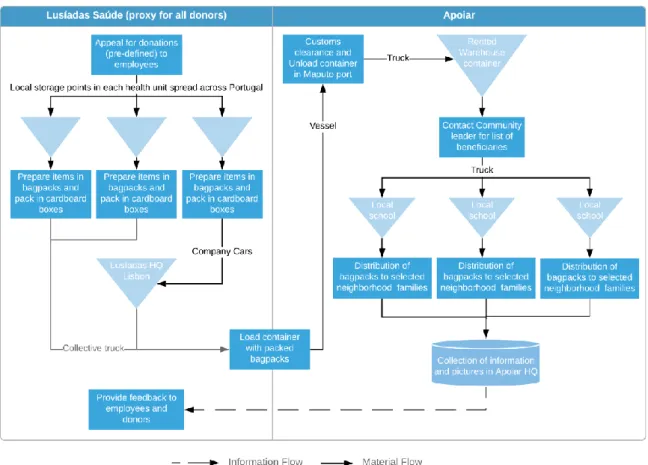
Likewise, private donors, particularly corporations, are also following this mindset shift, by changing their contributions to the humanitarian sector, towards more impactful ones. In view of cyclones’ Idai and Kenneth in Mozambique, Moitinho de Almeida and Guha-Sapir (2019) argue that the country’s history of recurrent natural disasters, specifically suffering from 46 floods and cyclones in the previous three decades, have provided opportunities for communities and humanitarian organizations to create preventive mechanisms and processes, rather than only focusing on response. In this context, Lusíadas Saúde in partnership with the NGO Apoiar, have managed to, on one hand, support the response operations of Idai through in-kind donations within the charity project named “Apoiar Moçambique: Mochilas Solidárias” (which the supply chain is represented in figure 1) and, on the other hand, they were able to see the needs beyond the emergency response. This is, by initiating a programme to provide medical training to the local Mozambican physicians and health staff, as understood from an interview with Nuno Lima, member of the Board of Communication and Marketing of the health institution. Considering past and current circumstances, the investment in readiness interventions - namely the provision of training to local medical staff, on both flood and cyclone related diseases – shows high potential to positively impact the effectiveness of relief operations during future crises.
Collaborating for an improved joint operational performance
Collaboration and coordination are a cornerstone to achieve satisfactory logistics performance and a robust joint supply chain within disaster relief. Collaboration is not only desirable, as every organization involved benefits from the value-adding capacities of other partners; as it is
12 vital, given the multi-sectoral nature of every disaster and the current increasing trend of the number players populating the international humanitarian community.
Nevertheless, discoordination has been a long-standing challenge within the humanitarian world. Organizations compete between themselves for the same constrained resources and assets hindering their purchasing power and driving up operational costs (Gad-el-Hak, 2008); duplicate their efforts in some sectors or regions, while perpetuating gaps in others; and refuse to share operational information, losing many opportunities for resource sharing with other humanitarian players. Particularly, during Idai’s emergency response, Helena Ribeiro Telles from the NGO Apoiar - which has been present in the Sofala district for several years – highlights how this initial lack of collaboration with local NGOs, led to an drastic increase in the prices of logistic services, which hindered the cost efficiency of every agency’s operations. Authors describe different potential chronic causes for the persistent the uncoordinated nature of disaster management, of which the most common are: the high number of NGOs involved upon a disaster, that can reach hundreds and even thousands (McLachlin & Larson, 2011), which imposes barriers to developing committed relationships, the main driver of coordination (Kovács, Spens, & Moshtari, 2018). Humanitarian actors are also driven by different beliefs, values and relief approaches, not so easily integrable, in opposition to the private sector, where all companies mainly are led by profitability. The behavior of donors, by funding individual NGOs based on their individual performance, have indirectly exacerbating this direct competition (Tomasini & Van Wassenhove, 2009). Finally, coordination of the whole international humanitarian community requires a clear leader, but such efforts are substantially expensive and many local NGOs are not financially or skilled equipped to initiate such global initiatives. There’s the need to be a large actor that takes the responsibility to provide collaboration mechanisms and frameworks for the remaining partners. Particularly, is the UN
13 in most disasters, that poses as the unofficial leading agency and most equipped to be the promoter of collaboration within the humanitarian world.
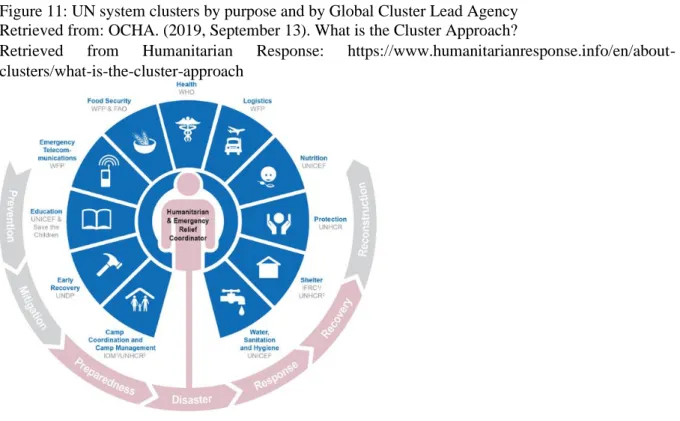
The shift on the collaboration paradigm was in fact pioneered by the UN System following the General Assembly resolution 46/182 in 1991, with the conceptualization of the first large-scale inter-agency collaboration initiatives. Of those, emerged: the OCHA - responsible for the general humanitarian cooperation agenda, the UNJLC - focused specifically on supporting logistical planning and coordination optimization of humanitarian actors, and the Inter-Agency Committee (IASC) – a collaboration-enabling forum for both UN and non-UN agencies. However, was only in 2005 that the UN, upon the beginning of a deep restructuration of the humanitarian collaboration model designed practical mechanisms to assist cooperation – reviewed in a summit in 2011 and still ongoing. From those the Cluster Approach, which nowadays stands as an increasingly crucial tool - as catastrophe complexity is on the rise, by permitting to face each disaster in a multi-sectoral approach and with the participation of the high volume of humanitarian actors (DCR, 2019).
A Cluster consists of a focused group of agencies working together on one of the main humanitarian sectors - under the supervision of a leading agency. Besides ensuring its founding principles of “predictability, accountability and partnership” (OCHA , 2019), it aims to achieve a better individual and joint performance, by promoting joint capacity-building and so reducing duplication of efforts and preventing against gaps in relief.
The Logistics Cluster (LC) activation during the response to the Mozambican cyclones Idai and Kenneth, exemplifies how overall supply chain collaboration can be enhanced through Cluster Approach. Which confirms the findings of McLachlin and Larson (2011) that, clusters are effective collective problem-solving enablers for tackling logistic bottlenecks during the emergency response to disasters. Activated on 20 of March of 2019, six days after the first cyclone Idai, the LC ensured an uninterrupted supply chain of relief items (Logistics Cluster,
14 2019) by performing the innumerous tasks, described in the several operational documents referenced and shared through the web-based platform from March and July of 2019. Of those: the support to the INGN during the multi-sectoral post-disaster needs assessment; followed by capturing information on all agencies’ cargo pipeline flowing towards the country (28 March); to plan and minimize the pressure on the limited logistics capacity (31 May), avoiding a clogged supply chain with enough provision of logistic services (1 April); while working as last resort provider of collective transport and temporary storage of relief items, which all LC participants could request via a Service Request Form (28 March). In parallel, the cluster promoted resource sharing within humanitarian actors, by requesting them information on availability of warehouses or transport space, that that could be allocate to other in-need partner (21 May). Particularly, the LC consisted the main information-sharing platform to support and promote coordination (1 April), together with real time overviews of the current needs and available overall capacity, for better and more informed decision-making. Overall, during the Mozambique’s recent cyclones, the LC was responsible for coordinating the efforts of at least 101 aid organizations, compiling and sharing more than 120 documents and 37 maps with crucial up-to-date operational data for daily relief operations of the whole humanitarian community involved. Plus, supported in the collective storage and transport of 3974 M3 and 1814 MT of cargo, respectively, to serve 64 affected regions (Logistics Cluster, 2019).
By July, this global collaboration mechanism had successfully assisted the elimination of all main logistic bottlenecks obstructing the relief on Mozambique, by building joint capacity and strengthening the humanitarian community’s supply chain (Logistics Cluster, 2019).
Donating better: more money and less inappropriate donations
Donations are a main enabler of humanitarian relief operations, impacting the efficacy, feasibility and speed of the humanitarian supply chains supporting such operations. These come mainly in the form of financial contributions (monetary or in-cash) or as goods (in-kind).
15 The funding gap - between the total donations provided and the actual relief needs - has been a chronic challenge affecting humanitarian managers on daily basis, who do their best at maximizing the lives saved with such limited resources. During 2018 this gap globally represented approximately 61% or US$11.1 billion of the appeals not being met by voluntary donations (Urquhart, 2019). Particularly, within Mozambique’s 2019 cyclone disaster outline, only 42.1% of the efforts were fully funded (OCHA, 2019). Within such scenario, is crucial to improve the volume of funding and to maximize the added value of each contribution made; as well as, to understand the potential barriers obstructing the achievement these objectives. First, the over flown of unsolicited donations to disaster sights - which represent from 50 to 70% of total in-kind donations usually in every natural disaster (Holguín-Veras, 2018) - has constituted a bottleneck during emergency responses. Substantial logistic investment, of time and money, is required to collect, sort, transport and pack all those unsolicited goods. This, beyond delaying and increasing the costs of field operations, it also clogs the supply chain in an environment of already low logistics services available and highly damaged infrastructures. This problem is further exacerbated by the inappropriateness nature of some of these donations, which are useless or even culturally offensive within a specific disaster, such as: expired medication, electronic equipment requiring electricity or improper clothing for the certain climate of that region (Kovács, Spens, & Moshtari, 2018). Moreover, even if unsolicited donations turn out to be appropriate, the incipiency of in-cash relatively to in-kind donations, generates liquidity issues, reducing flexibility and speed of the immediate and critical 72h post-disaster response, jeopardizing the number of lives saved.
The international humanitarian community, over the decades of disaster assistance projects, has acknowledged that direct and unmarked financial contributions are consistently best for a maximized value-adding impact and efficiency of relief operations (USAID CIDI, 2017; High-Level Panel on Humanitarian Financing, 2016; Holguín-Veras, 2018; Kovács, Spens, &
16 Moshtari, 2018; Mejia, Urrea, & Pedraza-Martinez, 2019; Tomasini & Van Wassenhove, 2009; Urrea & Pedraza-Martinez, 2018; UK Aid, 2015). Benefits of monetary donations are concrete and widely known, allowing aid agencies to provide “what is needed, when it’s needed” (USAID CIDI, 2017).
And although the High-Level Panel on Humanitarian Financing (2016) refers that by 2016 only 6% of the total contributions were direct monetary ones; progress has been registered gradually, which has allowed humanitarian organizations to raise by 10% - between 2017 and 2018 - their relief cash and voucher-based programmes globally (Urquhart, 2019). Several agencies - including UNICEF, IOM, WFP, WHO, IFRC – have implemented voucher and cash-based programmes during and in the aftermath of the Mozambican cyclones, in regions where the local markets could support those. The WFP alongside its in-kind support on the most affected districts, it started with cash-based programmes during the emergency phase on April aiming to feed 145,000 people in that same month. Later on, in August upon the beginning of the recovery efforts, the former initiated a joint mission with UNICEF, based on a voucher programme which would cover 100,000 beneficiaries monthly with US$44, within districts of the Sofala province. Vouchers could be used by families in selected local shops, to purchase basic food and domestic goods (WFP & UNICEF, 2019; WFP, 2019). Cash and voucher based programmes provide many benefits throughout the relief supply chain. First, Mozambican families had the flexibility to purchase what they truly need to fulfil their current basic needs, reducing the necessity for continuously monitoring and carry out external and not-as-accurate needs assessments. Secondly, stimulates the local Sofala’s districts economies, still recovering from the disruption caused by the cyclones, and reduces the potential aid dependency of those regions. Finally, these programmes were applied throughout several phases of the management of the disaster and can now further be extended to the mitigation and preparedness phase, to reduce the risk and impact of future flooding and cyclones catastrophes.
17 Further analyzing the drivers that demotivates individuals and institutions from donating, particularly monetarily, the lack of transparency and accountability appear as a key factor. Nowadays more than ever, donors are well-informed and consequently are increasingly demanding concerning the agencies’ timely and concrete feedback on how efficiently and effectively the donated money was employed (Gad-el-Hak, 2008; Tomasini & Van Wassenhove, 2009; Mejia, Urrea, & Pedraza-Martinez, 2019; Thomas & Kopczak, 2005; Urrea & Pedraza-Martinez, 2018; Achamkulangare & Tarasov, 2017). With this in mind, humanitarian organizations have increasingly made use of new online channels to provide more transparency, accountability and accessibility to the funding process, affecting positively donors’ perceptions. Upon the Idai cyclone, during response and reconstruction, the NGO Apoiar made use of the several available social media platforms to keep donors updated on the use of their donations.
Moreover, aid agencies have also broadened the range of channels through which these capture donations, leading to an expansion of their donor base. Particularly, crowdfunding has posed as a promising online channel. On one hand, these platforms focus mainly on capturing lower-value donations from individual private donors; but on the other, these type of donors have become increasingly relevant, representing 22% of the total contributions in 2018 (Urrea & Pedraza-Martinez, 2018). A recent study proved that in fact the operational transparency provided through crowdfunding platforms, increases substantially the amount of donations (Mejia, Urrea, & Pedraza-Martinez, 2019). This new online channel to capture donations for disaster relief, is still recent for larger humanitarian organizations, as the UN or the IFRC, yet gradually there has been an adoption of the former tool. Namely, during the response to Mozambique’s cyclones, agencies such as the British Red Cross and Save The Children used crowdfunding platforms for funding projects within their relief supply chains, in the country.
18
Recovering by improving resilience
Recovery constitutes the last phase of the disaster relief management cycle. It encompasses the activities aiming at rehabilitating and reconstructing public and private infrastructures and services, while reestablishing communities and people’s livelihoods. Such infrastructures and services range from transportation and communication structures, to education and health facilities, water and sanitarian systems, housing, among others.
Particularly is in the aftermath of a disaster, that the lives saved during the emergency response are preserved, by ensuring basic human conditions and avoiding early deaths. Plus, the post-disaster efforts have the challenging aim of re-build communities, not to their previous state of vulnerability, but rather “building back stronger, faster, and inclusively” (IFRC, 2019). Effective recovery operations foment long-term sustainable development of affected areas. On one hand, well-designed rehabilitation projects override chronic problems of humanitarian assistance as aid dependency by implementing self-sustainable solutions in affected regions. On the other hand, is in the aftermath of a disaster that many opportunities arise to reduce the risk and impact of future ones (Villa, Urrea, Castañeda, & Larsen, 2019). First, by growing resilience of current and design new infrastructures against frequent regional natural disasters. For example, the use of hydraulic solutions - as dykes and levees - to protect Mozambique against recurrent flooding. Secondly, during recovery, crucial mitigation activities and vital lessons for preparedness strategies are taken, improving the management of future disasters. Throughout the years, this last phase of relief was comparatively overlooked by the international humanitarian community. Literature on the topic of humanitarian supply chain tended to disregard recovery and its importance in disaster management. Donors have neglected to properly fund reconstruction efforts, given the inability for immediate output and drop of media coverage relatively to the response phase. And finally, aid agencies lack strategic
19 planning and timely deployment of recovery operations, exacerbating the long-term negative effects on communities.
Once again, we have witnessed a gradual shift of mentality, with a higher effort from NGOs and governments on designing mechanisms and processes focused on analyzing and improving resilience during recovery. For example, the IFRC (2016) highlights how the Post-Event Review Capability framework, can successfully identify key lessons from the current and previous disasters, to plan and design more effective and efficient recovery supply chains. The recovery project of Apoiar, in the aftermath of Mozambican’s cyclone Idai, enlighten on how humanitarian organizations have acknowledged and surpass the above mentioned challenges, improving resilience. Focused on the Sofala province, Apoiar kick started its recovery efforts already upon the end of response operations, during July of 2019. Such speed, gave the NGO advantage in its appeal for funding the reconstruction process, being one of the firsts and benefiting from the still substantial media coverage of the disaster. Plus, it also provided the proper time for the design and implementation of a sustainable reconstruction strategy of the selected neighborhoods, with the involvement and alignment of communities and the Mozambican government. Namely, the project - which the supply chain and processes are depict in figures 2 and 3- aimed at rebuilding the affected houses and provide the families with agriculture tools. These allow them to cultivate goods, both for self-consumption, as well as, to sell to the local school. Particularly, as the former had also been restored and improved with a functional canteen to feed the young students. Ultimately enhancing the self-sustainability of those neighborhoods.
Apoiar’s reconstruction supply chain is of community-base nature, in which beneficiaries were active participants of the housing rehabilitation process, assisted by the NGO field staff and hired local contractors for the more technical tasks. Such supply chains are more empowering for beneficiaries and bring effectiveness and efficiency to the recovery operations (Kovács,
20 Matopoulo, & Hayes, 2012). While involving local personnel and suppliers, further helps to stimulate the local economy. Moreover, as previously discussed, recovery is generally characterized by greater lack of funding relative to the emergency phase; so another cost-efficient solution used by Apoiar during the post-Idai reconstructions was, the hydraform technique. Which uses soil from the building site to produce reliable hydraform bricks for housing construction, minimizing the need for procurement, transport and contractors.
Helena Ribeiro Telles from Apoiar, believes that the district of Sofala will become far more resilient and with improved infrastructures, subsequently to the recovery efforts of the international community in the aftermath of the cyclones.
Discussing of Results and Recommendations
Through assessing the progress of performance of international disaster relief on the light of recent disasters, resulted that humanitarian organizations are indeed becoming progressively more effective and efficient in its operations. The optimization of their supply chains and logistic processes was possible through acknowledging and addressing the chronic challenges that were hindering humanitarian performance in a continuously way, which in turn have shown to be the root causes for temporary on-field bottlenecks. By doing so, aid agencies have gradually been achieving the decrease of costs and lead times within their chain, translating into a higher ability and capacity to save and preserve lives of those affected by disasters. The analysis of recent international literature produced by both academics and practitioners, together with the interviews carried out, have on one side provided both the backgrounds on which runs each of the mentioned challenges and how interconnected these are, as well as, the current mechanisms and processes which are being put in place to surpass them. And on the other side, shed a light on new issues that have not been fully addressed, and which should constitute the next focus for humanitarians, in their path towards higher-performing operations.
21 Particularly, first, on the overlook of preparedness efforts, resulted that more enlightened donors, particularly public entities such as the DFID, are recognizing preparedness importance and providing funds to humanitarian organizations for that purpose, which have allowed them to invest for example: in IT systems, e.g. HLS, and on standardized, adaptable and quickly-deployable solutions, as aid kits or pre-fabricated infrastructures. In addition, aid agencies are restructuring their modus operandi, to include new and improve current processes, such as logistic teams, pre-positioning of warehouses and strategic selection and management of suppliers. Moreover, private donors, especially those which work tightly with aid agencies, are looking beyond response, and also assisting preparedness by offering, for example, services as medical training to communities.
Secondly, on the lack of collaboration between humanitarian organizations, the leader of the humanitarian world - the UN - has been enabling several new entities, forums, summits and initiatives that have led to the implementation of mechanisms, of which the Cluster approach. These jointly have had practical effects on enhancing the global capacity to support those in need, by ending the doubling of efforts and increasing resource and information sharing. Furthermore, concerning the volume and nature of donations, followed that the amount of contributions has increased, yet the funding gap has remained unchanged give the increase of the number of disasters and consequent relief operations. Donors should also aim not only on donating more, but better: by increasing monetary donations and thus liquidity and flexibility; while reducing the unsolicited or inappropriate, clogging supply chains and wasting resources which could be used in value-adding activities. Humanitarian organizations are fomenting the increase of monetary contributions, by expanding to new online funding tools, and using multi-channels for transparent and timely feedback on the use of donations on the field.
Finally, when it comes to the recovery after a disaster, there was widespread lack of consideration for this phase, by all actors of the international community. However, recently,
22 humanitarian organizations are having a more strategic approach by strenuously and timely re-designing and deploying their reconstruction supply chains, constantly learning and improving those processes. This allows to achieve auto-sustainable and more resilient solutions, hindering aid dependency and past vulnerabilities of affected communities, awakening local economies, and creating the foundations for impactful future mitigation and preparedness initiatives. In addition, by employing community-based approaches, these have not only brought operational benefits, as cost savings, but also psychosocial benefits, as empowerment to disaster victims. While witnessing substantial recent progress being achieved on humanitarian supply chains, also new or not fully addressed issues were observed. Of those, the lack of tendency of international agencies to collaborate with local NGOs, is still reality in the field. A potential path forward, could be that platforms as the Clusters, would in a permanent basis, compile and share assessments and lists of credible local NGOs throughout the globe, which could be consulted upon a local disaster by all the international community, giving the required trust to international agencies to cooperate with local ones; while giving these smaller actors considerable visibility to better capture global donations. One other outstanding challenge, is the gap between the expectations of donors and the reality in the field, when it comes to the use of donations. Although in fact aid organizations are thriving in being more operational transparent and accountable towards donors, the latter seem to have unrealistic expectations that their individual contributions will have immediate and large-scale impact, and believe (incorrectly) that earmarked donations will be more impactful. Such hopes, however, pressure field staff into using the contributions non-optimally and cannot be fulfilled by any - current and future - transparency mechanisms. With this in mind, it could be recommended to humanitarian organizations to carry out information campaigns not attached to specific disasters, to inform the public of the realities on the field and the timelines that are usually connected. Plus, to further invest in the research and design of IT systems and
tracking-23 technology, present in private supply chains, which could be adapted and employed, providing – within feasible boundaries – more real-time and progressive feedback to donors, without requiring significant valuable time and resources from the field staff.
Limitations and Future Directions
While conducting the concern research, some limitations were observed; particularly the main shortcomings were: the absence of direct fieldwork observation and experience during a disaster, which importance was highlighted both in humanitarian supply chain literature, and by the humanitarian-field expert Helena Ribeiro Telles; within the broad scope of the research only four of the several chronic supply chain challenges affecting the relief performance were analyzed; the reduced number and absence of larger international NGOs interviewed, which provided a narrow perspective of the relief operations in Mozambique; and finally the lack of quantitative data measuring the impacts of the recent operational progresses by NGOs, which is relevant to prove the concrete importance of logistics and supply chain in the humanitarian context. With this in mind, future qualitative research on this topic, could focus on: first, the analysis of not covered challenges. Of those, the fact that the high staff turnover constraints the creation of institutional knowledge which is crucial to deal with uncertainty, and how data and knowledge management could provide insightful solutions in such context; and the potential of private-NGO partnerships for supply chain performance, not fully explored yet. Secondly, future research could carry out a systematic assessment and compilation of up-to-date operational best practices and trainings, with practical use for humanitarian field workers.
Conclusion
The humanitarian world has witness recent and substantial progress on its operational performance during disaster relief, which was both desirable and compulsory within a context of growing catastrophes. Although starting from a point of widespread incipient importance
24 given to logistics and supply chain management in the humanitarian context, there has been a shift of mindset, which have brought concrete gains in time and cost efficiency and effectiveness, translated into the capacity to save lives and alleviate suffering of victims. Relief operations’ performance is expected to keep improving, as the acknowledgment and spread of the current results of such operational improvements, as through this research, will in turn generate more awareness, institutional learning and investment in the humanitarian supply chains management and processes.
Appendices
25 Figure 2: Apoiar's house reconstruction supply chain
Figure 3: Apoiar’s reconstruction needs assessment process flow
References
Achamkulangare, G., & Tarasov, G. (2017). Review of Donor Reporting Requirements. Geneva: United Nations
Joint Inspection Unit. Retrieved from
https://www.unjiu.org/sites/www.unjiu.org/files/jiu_rep_2017_7_english.pdf
26
Bohn, R. (2000, August). Stop Fighting Fires. Harvard Business Review.
Cozzolino, A. (2012). Humanitarian Logistics: Cross-Sector Cooperation in Disaster Relief Management. SpringerBriefs.DCR. (2019, October 7). Humanitarian Reform and the Global Cluster Approach. Retrieved from Danish Refugee Council: https://drc.ngo/media/2113486/humanitarian-reform-and-the-global-cluster-approach-intro.pdf
Ellram, L. (1996). The use of the Case Study method in logistics research. Journal of Business Logistics, 93–138. Fritz Institute. (2019, October 24). Humanitarian Logistics: Getting the Right Relief to the Right People at the
Right Time. Retrieved from Fritz Institute: http://www.fritzinstitute.org/prsrm-HLS.htm
Gad-el-Hak, M. (2008). Large-Scale Disasters: Prediction, Control, and Mitigation. Cambridge University Press. High-Level Panel on Humanitarian Financing. (2016). Too important to fail—addressing the humanitarian
financing gap. World Humanitarian Summit. Retrieved from
https://reliefweb.int/sites/reliefweb.int/files/resources/%5BHLP%20Report%5D%20Too%20important %20to%20fail%E2%80%94addressing%20the%20humanitarian%20financing%20gap.pdf
Holguín-Veras, J. (2018). Strategies for Managing Unsolicited Donations. Retrieved from Logistics Cluster: https://logcluster.org/sites/default/files/gm_files/strategies_for_managing_unsolicited_donations.pdf IFRC. (2016). World Disasters Report 2016: Resilience: saving lives today, investing for tomorrow. International
Federation of Red Cross and Red Crescent Societies.
IFRC. (2019). Cyclone Idai and Kenneth: Responding as a Red Cross and Red Crescent Movement . Retrieved from https://media.ifrc.org/wp-content/uploads/sites/5/2019/07/201907-MOZ-MovementHandOut.pdf IFRC. (2019). The cost of doing nothing: The Humanitarian price of climate change and how it can be avoided.
Geneva: International Federation of Red Cross and Red Crescent Societies.
IOM. (2019, September 1). Mozambique cyclone IDAI and Kenneth Response: Situation Report 12. Retrieved from https://www.iom.int/news/iom-responds-devastating-cyclone-idai-shelter-materials-and-more Kovács, G., & Spens, K. (2011). Relief Supply Chain Management for Disasters: Humanitarian Aid and
Emergency Logistics. Business Science Reference.
Kovács, G., Matopoulo, A., & Hayes, O. (2011). Designing Post-Disaster Supply Chains: Learning from Housing Reconstruction Projects. In G. Kovács, & K. Spens, Relief Supply Chain Management for Disasters: Humanitarian Aid and Emergency Logistics (pp. 90-103). Business Science Reference.
Kovács, G., Spens, K., & Moshtari, M. (2018). The Palgrave Handbook of Humanitarian Logistics and Supply Chain Management. Palgrave Macmillan.
Lee, H., & Zbinden, M. (2003). Marrying Logistics and Technology for Effective Relief. Forced Migration Review.
Logistics Cluster. (2019, July 15). Concept of Operations, 15 July 2019. Retrieved from Logistics Cluster: https://logcluster.org/document/mozambique-concept-operations-15-july-2019
Logistics Cluster. (2019, May 31). Concept of Operations, 31 May 2019 . Retrieved from Logistics Cluster: https://logcluster.org/document/mozambique-concept-operations-31-may-2019
Logistics Cluster. (2019, May 21). Meeting Minutes, 21 May 2019. Retrieved from Logistics Cluster: https://logcluster.org/document/meeting-minutes-beira-21-may-2019
Logistics Cluster. (2019, March 28). Meeting Minutes, 28 March 2019 . Retrieved from Logistics Cluster: https://logcluster.org/sites/default/files/logistics_cluster_mozambique_maputo_meeting_minutes_1903 28.pdf
Logistics Cluster. (2019, July 30). Mozambique Infographic, March-June 2019. Retrieved from Logistics Cluster: https://logcluster.org/document/mozambique-infographic-march-june-2019
Logistics Cluster. (2019, April 19). Situation Update, 1 April 2019. Retrieved from Logistics Cluster: https://logcluster.org/document/mozambique-situation-update-1-april-2019
Logistics Cluster. (2019, March 22). Standard Operating Procedures (SOPs) Temporary Storage . Retrieved from Logistics Cluster: https://logcluster.org/document/mozambique-standard-operating-procedures-sops-storage-march-22-2019
Mason, J. (2002). Qualitative Researching. London: SAGE Publications.
McLachlin, R., & Larson, P. (2011). Building Humanitarian Supply Chain Relationships: Lessons From Leading Practitioners. Journal of Humanitarian Logistics and Supply Chain Management, 32-49.
Mejia, J., Urrea, G., & Pedraza-Martinez, A. (2019, July). Operational Transparency on Crowdfunding: Effect on Donations for Emergency Response. Production and Operations Management Society Journal, pp. 1773– 1791.
Moitinho de Almeida, M., & Guha-Sapir , D. (2019, May 10). Why Mozambique’s cyclones tell us disaster
preparedness needs health at its core. Retrieved from thebmjopinion:
https://blogs.bmj.com/bmj/2019/05/10/mozambiques-cyclones-disaster-preparedness-needs-health-core/?utm_source=twitter&utm_medium=hootsuite&utm_term=&utm_content=&utm_campaign=edito rs
27
Nikbakhsh, E., & Farahani, R. Z. (2011). Humanitarian Logistics Planning in Disaster Relief Operations . In E. Nikbakhsh, R. Z. Farahani, & L. Kardar, Logistics Operations and Management: Concepts and Models (pp. 297-332). Elsevier Inc.
OCHA . (2019, September 13). What is the Cluster Approach? Retrieved from Humanitarian Response: https://www.humanitarianresponse.info/en/about-clusters/what-is-the-cluster-approach
OCHA. (2019). Tropical Cyclone Idai - Mar 2019 and Kenneth - Apr 2019 2019: Total funding to the emergency
in 2019. Retrieved from Financial Tracking Service:
https://fts.unocha.org/emergencies/808/summary/2019
OCHA. (2019, September 13). Who does what? Retrieved from Humanitarian Response:
https://www.humanitarianresponse.info/en/about-clusters/who-does-what
OCHA, UNICEF, UNHCR, & WFP. (2017, November). Return on Investment in Emergency Preparedness.
Retrieved from The Inter-Agency Standing Committee:
https://interagencystandingcommittee.org/system/files/return_on_investment_in_emergeny_preparedne ss_phase_2.pdf
Peterken, H., & Bandara, W. (2015). Business Process Management in International Humanitarian Aid.
Samii, R., Kumar, K., & Wassenhove, L. V. (2002). Choreographer of Disaster Management: Preparing for tomorrow’s disasters. INSEAD.
Thomas, A., & Kopczak, L. (2005). From Logistics to Supply Chain Management: The Path Forward in the Humanitarian Sector. Fritz Institute.
Tomasini, R., & Van Wassenhove, L. (2009). Humanitarian Logistics. INSEAD Business Press.
UK Aid. (2015). Doing cash differently: How cash transfers can transform humanitarian aid . London: Overseas
Development Institute. Retrieved from
https://www.odi.org/sites/odi.org.uk/files/odi-assets/publications-opinion-files/9828.pdf
Urquhart, A. (2019). Global Humanitarian Assistance Report 2019. Development Initiatives. Retrieved from http://devinit.org/wp-content/uploads/2019/09/GHA-report-2019.pdf
Urrea, G., & Pedraza-Martinez, A. (2018). Private Donations for Humanitarian Operations. In S. Villa, G. Urrea, J. Andrés Castañeda, & E. Larsen, Decision-making in Humanitarian Operations: Strategy, Behavior and Dynamics (pp. 31-54). Palgrave Macmillan.
USAID CIDI. (2017). Why Cash is Best. Retrieved from USAID Center For International Disaster Information:
https://www.cidi.org/how-disaster-relief-works/monetary-contributions-work-bestwhy-cash-is-best/#.XdEXjVf7TD4
Van Wassenhove, L. (2005, December 14). Humanitarian aid logistics: supply chain management in high gear.
Journal of the Operational Research Society, pp. 475-489. Retrieved from
http://blogs.ethz.ch/ETHambassadors/files/2018/06/Van-Wassenhove-2006-Humanitarian-aid-logistics-supply-chain-management-in-high-gear.pdf
Villa, S., Urrea, G., Castañeda, J. A., & Larsen, E. R. (2019). Decision-making in Humanitarian Operations: Strategy, Behavior and Dynamics. Cham: Palgrave Macmillan.
WFP & UNICEF. (2019, August 21). WFP and UNICEF launch joint voucher programme to support communities affected by Cyclone Idai. Retrieved from World Food Programme: https://www.wfp.org/news/wfp-and-unicef-launch-joint-voucher-programme-support-communities-affected-cyclone-idai
WFP. (2019, April 16). World Food Programme reaches 1 million flood-affected people in Mozambique . Retrieved from World Food Programme: https://www.wfp.org/news/world-food-programme-reaches-1-million-flood-affected-people-mozambique
28
Additional Appendices
Figure 4: Number of natural disasters by type
29
Figure 6: Disaster relief management cycle
Figure 7: Generic humanitarian supply chain and flows
Figure 8: Thomas and Kopczak's framework to overcome humanitarian supply chain challenges Retrieved from: Thomas, A., & Kopczak, L. (2005). From Logistics to Supply Chain Management: The Path Forward in the Humanitarian Sector. Fritz Institute.
30
Figure 9: IFRC's supply chain improvements with the HLS
Retrieved from: Peterken, H., & Bandara, W. (2015). Business Process Management in International Humanitarian Aid.
Figure 10: WFP and UNICEF's voucher programme in Mozambique 2019
Retrieved from: https://www.unicef.org/mozambique/comunicados-de-imprensa/pma-e-unicef-lançam-programa-de-cupões-para-apoiar-comunidades-afectadas
31
Figure 11: UN system clusters by purpose and by Global Cluster Lead Agency Retrieved from: OCHA. (2019, September 13). What is the Cluster Approach?
Retrieved from Humanitarian Response: https://www.humanitarianresponse.info/en/about-clusters/what-is-the-cluster-approach
Figure 12: Structure of UN Cluster System
Retrieved from: OCHA. (2019, September 13). Who does what? Retrieved from Humanitarian Response: https://www.humanitarianresponse.info/en/about-clusters/who-does-what
32
Figure 13: Crowdfunding campaign of The British Red Cross for Mozambique disaster relief Retrieved from: https://www.justgiving.com/search?q=cyclone%20mozambique%20Idai
Figure 14: Crowdfunding campaign by Save The Children for Mozambique disaster relief Retrieved from: https://www.justgiving.com/search?q=cyclone%20mozambique%20Idai
Figure 15: Hydraform bricks manufacturing for recovery of infrastructures
33 Figure 16: Mozambique's map with logistics information compiled by the LC and shared with the Humanitarian actors
Retrieved from: https://logcluster.org/map/central-mozambique-general-logistics-and-planning-map-2019
34 Figure 17: LC overview and quantification of support given during the response to the
Mozambican cyclones.