Economic evaluation of human albumin use in patients
with nephrotic syndrome in four Brazilian public hospitals:
pharmacoeconomic study
Avaliação econômica do uso de albumina humana em pacientes com síndrome
nefrótica em quatro hospitais públicos brasileiros: estudo de farmacoeconomia
Leonardo Augusto Kister de Toledo
I, Antônio Carlos Beisl Noblat
II, Harrison Floriano do Nascimento
III, Lúcia de Araújo
Costa Beisl Noblat
IVHospital Universitário Professor Edgard Santos (HUPES), Salvador (BA), Brazil
ABSTRACT
CONTEXT AND OBJECTIVE: In 2004, the Brazilian National Health Surveillance Agency (Agência Nacional de Vigilância Sanitária, ANVISA) published a resolution establishing guidelines for albumin use. Although the published data do not indicate any deinitive conclusions about the beneits of albumin use in pa-tients with nephrotic syndrome (NS), the guidelines recommend this procedure only in cases of edema that is refractory to use of diuretics. The aim here was to analyze albumin use among patients with nephro-tic syndrome.
DESIGN AND SETTING: Pharmacoeconomic study conducted in four large public referral hospitals for nephrology services in northeastern Brazil.
METHOD: Cost-efectiveness and cost-utility economic evaluations were performed on a concurrent cohort of patients with nephrotic syndrome, who were divided into two groups according to compliance or noncompliance with the guidelines. Quality-of-life data were obtained from the SF36 and CHQ-PF50 questionnaires.
RESULTS: This study enrolled 109 patients (60% adults and 56% women); 41.3% were using albumin in ac-cordance with the guidelines. The weight, diuresis and luid balance parameters were more cost-efective for patients who adhered to the guidelines. Regarding days of hospitalization avoided, the incremental ratio showed a daily cost of R$ 55.33, and guideline-compliant patients were hospitalized for ive days or fewer. The quality of life improved by 8%, and savings of R$ 3,458.13/QALY (quality-adjusted life year) for the healthcare system were generated through guideline compliance.
CONCLUSION: The economic analyses of this study demonstrated that there were greater cost beneits for patients whose treatment followed the guidelines.
RESUMO
CONTEXTO E OBJETIVO: Em 2004, a Agência Nacional de Vigilância Sanitária (ANVISA) publicou uma resolução que estabelece diretrizes para o uso de albumina. Embora os dados publicados não indiquem conclusões deinitivas sobre os benefícios do uso de albumina em pacientes com síndrome nefrótica (SN), a diretriz recomenda o procedimento apenas em casos de edema refratário ao uso de diuréticos. O obje-tivo aqui foi analisar o uso de albumina em pacientes com síndrome nefrótica.
TIPO DE ESTUDO E LOCAL: Estudo farmacoeconômico realizado em quatro grandes hospitais públicos de referência em serviços de nefrologia no nordeste do Brasil.
MÉTODO: Foram realizadas avaliações econômicas do tipo custo-efetividade e custo-utilidade em uma coorte concorrente de pacientes com síndrome nefrótica, divididos em dois grupos de acordo com o cumprimento ou descumprimento das diretrizes. Dados de qualidade de vida foram obtidos a partir dos questionários SF36 e CHQ-PF50.
RESULTADOS: Este estudo incluiu 109 pacientes (60% adultos e 56% mulheres); 41,3% estavam usando al-bumina conforme as diretrizes. Os parâmetros de peso, diurese e balanço hídrico foram mais custo-efetivos para pacientes que aderiram às diretrizes. Quanto a dias de internação evitados, a razão incremental mostrou um custo diário de R$ 55,33, sendo que os pacientes que seguiram as diretrizes icaram cinco dias a menos internados. A qualidade de vida melhorou 8%, gerando economia de R$ 3,458.13/QALY (quality-adjusted life year) para o sistema de saúde por meio do cumprimento das diretrizes.
CONCLUSÃO: As análises econômicas deste estudo demonstraram maiores benefícios em termos de cus-to para os pacientes cujo tratamencus-to seguiu as diretrizes.
IMSc. Pharmacist, Hospital Universitário Professor
Edgard Santos (HUPES), Universidade Federal da Bahia (UFBA), Salvador (BA), Brazil.
IIMD, PhD. Nephrologist, Head of Complex Care
Management Division, Hospital Universitário Professor Edgard Santos (HUPES), Universidade Federal da Bahia (UFBA), Salvador (BA), Brazil.
IIIMSc. Economist, Hospital Universitário Professor
Edgard Santos (HUPES), Salvador (BA), Brazil.
IVPharmacyst, PhD. Professor, School of
Pharmacy, Universidade Federal da Bahia (UFBA), and Education and Research Manager, Hospital Universitário Professor Edgard Santos (HUPES), Salvador (BA), Brazil.
KEY WORDS:
Economics, pharmaceutical. Economics, medical. Nephrotic syndrome. Cost-beneit analysis. Albumins.
INTRODUCTION
Healthcare needs have expanded exponentially over recent years, thus increasing the demand for more efective results. A number of analysis tools are available to public policy managers, to enable justiication of decisions that are made. One of these tools is eco-nomic evaluation, which is characterized by comparative analy-sis of diferent interventions in terms of costs and their conse-quences. Economic evaluation has been regarded as an excellent
decision-making support tool.1-5 Production of clinical protocols
and therapeutic guidelines rationalizes the use and safety of tech-nologies, since they organize logical thinking towards positive
results in terms of economy, efectiveness, safety and eiciency.6
Albumin is an endogenous liver-synthesized protein. It is present at high concentrations in human plasma and is primarily
responsible for maintaining intravascular oncotic pressure.7-10 As a
pharmaceutical product, human albumin is an injectable blood product from human plasma that is found at hyperosmotic con-centrations in plasma (4% to 25%). Its primary therapeutic indica-tions are for restoration of oncotic and iso-osmotic pressure (4%),
and also, although less indicated, for plasma volume restoration.7,10
Because of variability in the way in which human albumin is used in Brazil, as well as its high cost, the National Health Surveillance Agency (Agência Nacional de Vigilância Sanitária, ANVISA) published guidelines for therapeutic use of this drug
in 2004.7 Brazil’s expenditure on imported blood products in 2010
reached US$ 330 million and, within this amount, 12 tons of human
albumin were imported, at a cost of approximately US$ 50 million.11
One of the formal indications for the use of human albumin stated within the scope of ANVISA’s guidelines is nephrotic syn-drome (NS). his involves the presence of large-scale edema that is refractory to diuretics, thereby endangering these patients’ lives (due to pleural efusion, pericardial efusion or bulky ascites). In these cases, treatment with albumin would be short-term and would aim to resolve the patient’s acute decompensation. Presence of hypoalbuminemia alone in patients with NS (a condition that is
caused by the disease) does not justify albumin use.7
NS is a clinical condition characterized by the presence of massive proteinuria, edema, hypoproteinemia and dyslipidemia. Massive proteinuria is deined as excretion of more than 3.5 g of
protein per 1.73 m2 of body surface area within 24 hours or more
than 50 mg/kg of bodyweight within 24 hours through the urinary tract. NS afects both adults and children and is primarily caused by kidney disease (idiopathic or primary NS) or by various
pathologi-cal conditions (secondary NS)12-15 Generalized edema is the main
complication of NS, since it can lead to serious conditions such as
pulmonary edema, heart failure and hypertension.13 Formation of
this edema can be explained through pathophysiological mecha-nisms that are activated due to decreased glomerular iltration rates resulting from prior renal disease, inadequate sodium excretion in
the distal tubules and hypoalbuminemia.13,15,16 he treatments for
nephrotic syndrome depend on two factors, namely, the patient’s general condition and the type of primary renal disease. In cases of generalized edema, the irst procedure should be grounded in removing the patient from the critical state.
he use of human albumin in association with diuretics as the irst choice for patients with NS has been extensively
dis-cussed in the literature.17 Some studies have shown that human
albumin enhances the efect of diuretics,13,18-21 while other studies
have failed to show any diference in the results from compari-sons between ways of using diuretics: on a stand-alone basis or
in association with albumin.17,22-25 Some other studies have
con-traindicated this combination of human albumin and diuretics
for treating edema in NS,26 while yet others have shown beneit
from stand-alone use of albumin.27
Knowledge of patients’ proiles and economic evaluation of human albumin use among patients with NS can be valuable tools in decision-making for the healthcare system. his information can assist managers in spreading the use of these guidelines to other healthcare units, thereby optimizing disease management and use of public resources, or it may spur a review of standards.
OBJECTIVE
he aim of this study was to analyze albumin use among patients with nephrotic syndrome, from the perspective of the Brazilian National Health System (Sistema Único de Saúde, SUS), through a pharmacoeconomic study.
METHODS
Method, population and data source
Cost-efectiveness and cost-utility economic evaluations were performed on a concurrent cohort of patients with nephrotic syn-drome that was observed between December 2010 and July 2012. his study was conducted in four public referral hospitals for nephrology services that are located in Salvador, Bahia. he cri-teria for selecting these institutions comprised their care proile (referral centers for nephrology within the state’s public health net-work), level of human albumin consumption and formal accep-tance of participation.
he study population consisted of consecutive adult and pediat-ric patients with nephrotic syndrome, who were monitored from the start to the end of their treatment and were divided into two groups: • Group 1: patients whose treatment followed the instructions
for human albumin use, as recommended by ANVISA, i.e. human albumin was only used in cases of large-scale edema that was refractory to diuretics;
Patients were required to agree to and sign a free and informed consent statement in order to join the study.
he research team was independent from the clinical team, and only allocated the case to one or other of the groups shortly ater the beginning of the treatment prescribed. hus, if ater the case had been diagnosed as nephrotic syndrome and the use of albumin alone or albumin in association with diuretics was pre-scribed as the irst-choice treatment, this patient would belong to group 2 (treatment not following the guidelines). If the patient was using diuretics alone and an inadequate therapeutic response was obtained (i.e. the patient was refractory to diuretics), and then albumin use was added, this patient would be allocated to group 1, since the guidelines indicate that albumin should only be used for patients with nephrotic syndrome in cases of large-scale edema that was refractory to diuretics.
In order to check the allocations of patients to groups 1 and 2 that the researchers made, all cases were reviewed and validated weekly by a nephrologist.
Data-gathering
Clinical, laboratory, socioeconomic and demographic data were gathered upon conirmation of the case of nephrotic syndrome during hospitalization. he main sources of information used were the human albumin stock movement records in the phar-macy service, daily medical prescriptions, hospitalization cen-suses and medical records, along with interviews with patients and/or guardians. he data-gathering was conducted by trained ield workers who had been instructed about all the study meth-odology and research instruments.
he variables were grouped into general data, socioeconomic and demographic data, clinical data, indications for human albu-min, hospital length of stay, reason for discharge, deaths and qual-ity-of-life data.
he quality-of-life data were obtained by applying two generic health-related quality-of-life questionnaires, which have both been adapted and validated for the Brazilian population. he Medical
Outcomes Survey Short Form 36 (SF36),28,29 which consists of 36
questions addressing eight quality-of-life domains, was used for adults. Scale scores are converted into values from 0 (worst quality of life) to 100 (best quality of life). Adolescents aged 12 and over could also answer this questionnaire.
he “50-item, parent complete short form, Child Health
Questionnaire” (CHQ-PF50)30 was used for pediatric patients up
to the age of 12 years. his can be applied to these patients either
directly or indirectly through their parents or guardians.31,32 It
con-sists of ten patient-related health concepts and four family-related concepts, in order to measure the emotional impact of child health on the adult responsible for that child. he results range from 0 to 100, with higher scores indicating better quality of life.
he patients included in this study gave responses to the qual-ity-of-life questionnaires at two stages: before the onset of treat-ment and four weeks ater the irst application.
he Short Form 6D (SF-6D) algorithm was applied to data gathered through the SF36. his enabled direct measurement of
utility, through calculation of quality-adjusted life years (QALYs).33
Cost data were obtained by calculating the patients’ direct treatment costs during the hospitalization period through the absorption costing technique, since the participating hospitals did not have systematic computerized overhead cost informa-tion to enable their estimainforma-tion. he direct costs used in this study were drawn from the medical billing sectors of the institutions and were gathered from the patients’ billing sheets (patient/days of hospitalization), in accordance with the SUS procedures table. Costs were adjusted for inlation to June 2013, based on the Market General Price Index (IGP-M) of the Getúlio Vargas Foundation (Fundação Getúlio Vargas, FGV). he study was conducted from the economic perspective of SUS.
All the cases were presented and discussed before oicially deining their inclusion in the study, at meetings in which both the data-gatherers and the advisory members of the project (two pharmacists, one economist and one nephrologist) participated. All data collected were checked by a supervisor before database entry. Where divergences and/or lack of data were noted, the question-naires were reevaluated by the researchers using complementary information and were analyzed again by the supervisor.
Data analysis
he data were entered into the Microsot Excel 2007 sotware and were analyzed using SPSS version 20.0. Continuous variables were expressed as means and standard deviations. he Kolmogorov-Smirnov test was used to evaluate the normality pattern of the distribution of continuous variables. P-values of less than 0.05 with 95% conidence interval were considered to be statistically signiicant. Categorical variables were reported as proportions and were tested using the chi-square test.
he cost-efectiveness economic analysis was performed starting from cost-efectiveness mean ratios and, when necessary, incremen-tal cost-efectiveness ratio (ICER) analysis was applied, in which costs and health outcomes were calculated by dividing the difer-ence in strategy cost by the diferdifer-ence in health results for each group. For the cost-efectiveness economic analysis, the efective-ness indicators used to compare the groups were: weight, diuresis, water balance and days of hospitalization avoided.
Univariate sensitivity analysis was performed. Each parameter was assessed separately within its range of variation, while the other remained constant. he objective was to ascertain the inluence of the parameter analyzed on the inal result, so as to determine whether or not this was sensitive to change.
he study was approved by the Research Ethics Committee of the Prof. Edgard Santos University Hospital Complex, Federal University of Bahia, under report number 063/2007.
RESULTS
One hundred and nine patients were enrolled by the end of the study period, and the treatments for 45 (41.3%) of them followed the human albumin use guidelines. Two patients were excluded because of lack of information for the economic analysis that had been planned.
In Group 1, 64% (29/45) were pediatric patients with a mean age of 16 years, and the CHQ-PF50 questionnaire was applied in most cases. In group 2, 77% (49/64) were adult patients with a mean age of 28 years, and the SF36 was used in most cases. Comparison between the average ages of the groups showed
diferences (P < 0.0001). Table 1 shows the comparison groups
according to the four hospitals surveyed.
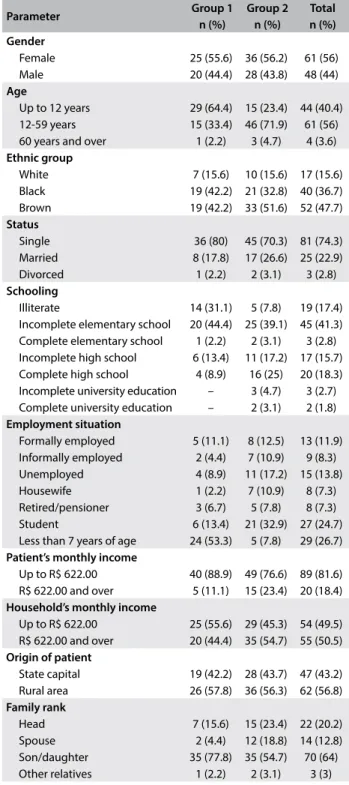
he demographic and socioeconomic data are shown in Table 2.
Overall, an average of four people were living with each patient, and this average was also maintained in the group analysis.
In Group 1, 77.8% (35/45) of the patients were not in their irst treatment, whereas a balance was noted in Group 2 between irst and non-irst treatment, with 50% (32/64) of the cases in each treatment situation.
he overall average hospitalization cost for SUS (Sistema Único de Saúde, the Brazilian public health system) in this study was R$ 2,360.00, with an average of 22 days of hospitalization. he average cost for Group 1 was R$ 2,221.68, with an average of 20 days of hospitalization and it was R$ 2,498.33 for Group 2, with an average of 25 days of hospitalization. he incremental cost-efectiveness ratios for days of hospitalizations and urine output
parameters are shown in Table 3. he weight loss and luid
bal-ance parameters were better in Group 1.
Data from the quality-of-life analyses are shown in Figure 1,
through QALY indices before and ater the procedure for each
group. Table 4 displays the ICUR.
Univariate sensitivity analyses were performed based on the ICER and ICUR results. he ICER sensitivity data showed that
Table 1. Total number of patients with nephrotic syndrome in each study group, according to hospital of origin, in Salvador, Bahia, in 2012
Adherence to guidelines
Institution
Total
Hospital A Hospital B Hospital C Hospital D
Treatment followed the guidelines – Group 1 26 3 13 3 45
Treatment did not follow the guidelines – Group 2 19 28 4 13 64
Total 45 31 17 16 109
Table 2. General characteristics of patients with nephrotic syndrome treated at four hospitals in Salvador, Bahia, in 2012, according to group
Parameter Group 1
n (%)
Group 2 n (%)
Total n (%) Gender
Female 25 (55.6) 36 (56.2) 61 (56)
Male 20 (44.4) 28 (43.8) 48 (44)
Age
Up to 12 years 29 (64.4) 15 (23.4) 44 (40.4) 12-59 years 15 (33.4) 46 (71.9) 61 (56) 60 years and over 1 (2.2) 3 (4.7) 4 (3.6)
Ethnic group
White 7 (15.6) 10 (15.6) 17 (15.6)
Black 19 (42.2) 21 (32.8) 40 (36.7)
Brown 19 (42.2) 33 (51.6) 52 (47.7)
Status
Single 36 (80) 45 (70.3) 81 (74.3)
Married 8 (17.8) 17 (26.6) 25 (22.9)
Divorced 1 (2.2) 2 (3.1) 3 (2.8)
Schooling
Illiterate 14 (31.1) 5 (7.8) 19 (17.4)
Incomplete elementary school 20 (44.4) 25 (39.1) 45 (41.3) Complete elementary school 1 (2.2) 2 (3.1) 3 (2.8) Incomplete high school 6 (13.4) 11 (17.2) 17 (15.7) Complete high school 4 (8.9) 16 (25) 20 (18.3) Incomplete university education – 3 (4.7) 3 (2.7) Complete university education – 2 (3.1) 2 (1.8)
Employment situation
Formally employed 5 (11.1) 8 (12.5) 13 (11.9) Informally employed 2 (4.4) 7 (10.9) 9 (8.3)
Unemployed 4 (8.9) 11 (17.2) 15 (13.8)
Housewife 1 (2.2) 7 (10.9) 8 (7.3)
Retired/pensioner 3 (6.7) 5 (7.8) 8 (7.3)
Student 6 (13.4) 21 (32.9) 27 (24.7)
Less than 7 years of age 24 (53.3) 5 (7.8) 29 (26.7)
Patient’s monthly income
Up to R$ 622.00 40 (88.9) 49 (76.6) 89 (81.6) R$ 622.00 and over 5 (11.1) 15 (23.4) 20 (18.4)
Household’s monthly income
Up to R$ 622.00 25 (55.6) 29 (45.3) 54 (49.5) R$ 622.00 and over 20 (44.4) 35 (54.7) 55 (50.5)
Origin of patient
State capital 19 (42.2) 28 (43.7) 47 (43.2) Rural area 26 (57.8) 36 (56.3) 62 (56.8)
Family rank
Head 7 (15.6) 15 (23.4) 22 (20.2)
Spouse 2 (4.4) 12 (18.8) 14 (12.8)
Son/daughter 35 (77.8) 35 (54.7) 70 (64)
there was an increase of 60% in the value of avoided hospitaliza-tion days, with a diference of 2 days of hospitalizahospitaliza-tion between the groups; the amount of expenditure avoided per day was only R$ 138.33. he ICUR sensitivity analysis showed that there was a 30% improvement in the quality of life, which generated savings of R$ 1,024.63 for SUS.
DISCUSSION
his was the irst pharmacoeconomic study in Brazil examin-ing the use of human albumin among patients with nephrotic syndrome. he general economic analyses showed that the treatments that followed ANVISA’s guidelines were more cost-efective. hese data suggest that these guidelines should be implemented in SUS services where they are currently not being used. his can be justiied since they produce clinical and eco-nomic results for the system.
These data show that treatments have better cost-effec-tiveness and usefulness for patients when the guidelines are followed, even though this issue remains undefined in the lit-erature. This seems to lead to a broad discussion on the appro-priateness of using an initial association of human albumin and diuretics as the first choice in treatments for NS. It has been sug-gested in the literature that the clinical relevance of the effects of furosemide and albumin is still obscure and that there is no accumulated scientific evidence justifying use of this
combi-nation in the initial intervention, or as a routine treatment.25
The review by Elwell et al.25 confirms that the results from
dif-ferent studies are conflicting with regard to using human albu-min coupled with furosemide in cases of NS. Therefore, this combination should be reserved for specific groups of patients
whose doses of diuretics have been maximized or for cases of
severe hypoalbuminemia.17
he indings from the review by Caraceni et al.34 show that
use of human albumin alone for correcting hypoalbuminemia is not backed by scientiic evidence. his conirms the stance taken in the guidelines, i.e. that thorough analysis is required before using human albumin in a direct association and as the
irst-choice treatment.7,24,34
he possible positive impact within clinical practice from using a combination of human albumin and furosemide among patients with edema is not associated with correction of hypovo-lemia. here is agreement that one possible explanation for the
Table 3. Incremental cost-efectiveness ratio according to “days of hospitalization” and “diuresis” among patients with nephrotic syndrome treated at four hospitals in Salvador, Bahia, in 2012
Parameter Average cost to SUS per
hospitalization (R$)
Average parameter value
Diference in health outcomes
Diference in costs
Incremental cost-efectiveness (R$) Days of hospitalization
Group 2 2498.33 25
-5 -276.65 55.33/day
Group 1 2221.68 20
Diuresis (ml)
Group 2 2498.33 1045.16
-54.75 -276.65 5.05/ml
Group 1 2221.68 990.41
SUS = Sistema Único de Saúde, the Brazilian National Health System.
Table 4. Incremental cost-efectiveness ratio per QALY of patients with nephrotic syndrome treated at four hospitals in Salvador, Bahia, in 2012
Parameter Interventions
Average cost to SUS per hospitalization
(R$)
Average QALY value
gained
Diference in health outcomes
Diference in costs
Incremental cost-efectiveness (R$)
QALY Group 2 2498.33 0.02
0.08 -276.65 -3458.13
QALY Group 1 2221.68 0.1
QALY = quality-adjusted life year; SUS = Sistema Único de Saúde, the Brazilian National Health System. 0.54
0.64 0.61 0.63
0 1
Group 1 Before
Group 1 After
Group 2 Before
Group 2 After
QALY
(0.0 to 1.0)
boosting of the efect of furosemide is that greater availability of
the drug at its site of action is achieved.13,35
he present study based on economic analyses had the aim of assessing ANVISA’s guidelines regarding the use of human albu-min among patients with NS. It also poses the question of whether the use of protocols and guidelines in clinical practice is relevant. It has been suggested in the literature that institutionalization and dissemination of guidelines or protocols in itself does not neces-sarily translate into changes in practices or into lasting clinical
results.21 Data from one study have shown that it takes ive to ten
years to achieve signiicant results from changes in practice ater
implementation of these instruments.36
he process of establishing therapeutic guidelines should also be followed by continuing education, review of processes and monitoring of practices. hese actions can deinitely bring about
real and positive results.10,36,37
Lastly, the beneits of guidelines and clinical protocols and their negative aspects and the obstacles to implementing them have been widely assessed in the literature. he information from the pres-ent study, in which the treatmpres-ents for most of the cases did not follow the policy guidelines, reinforces the previously published data, thus reairming that merely disseminating a guideline or protocol does not warrant safer, more efective and more eicient practices for patients, government and society itself.
he assessment of the numbers of cases distributed per tal showed the situation of bed availability within these SUS hospi-tals in Bahia. One of them is the largest state hospital in the pub-lic network, with approximately 1,792 beds and emergency care, whereas the others are traditional referral centers for nephrology.
Ethnic group analysis showed that brown and black individuals together accounted for more than 90% of the cases, which relects
the state’s population composition.38
An analysis on the patients’ origins revealed that most of them were from municipalities in rural areas of the state. his may dem-onstrate the fragility or lack of hospitals in rural macroregions to serve the needs of this proile of patients.
Regarding the economic analysis, the cost-efectiveness anal-ysis results calculated from the average ratios for weight loss and luid balance outcomes showed better relationships for Group 1. An incremental ratio method was used for the parameter of days of hospitalization, since treatments that followed the guidelines were more efective but also more costly. his allowed the hospitalization to be ive days shorter but with an increased daily cost (R$ 111.08/ day versus R$ 99.93/day). hus, the ICER result for the number of days of hospitalization showed that an additional cost of R$ 55.33 will be required per day avoided. his data needs to be analyzed in the light of the reality of the lack of public hospital beds in Brazil and the consequent long waiting lists for care and attempts to make overall savings for SUS through deinstitutionalization of patients.
In fact, the additional cost should be analyzed as an investment in the system, since having a bed available ive days earlier brings more beneits. Data gathered by the Organization for Economic Cooperation and Development (OECD) show that the number of
beds per capita varies greatly between countries and over time.39
Brazil has one of the lowest levels in the Americas (1.7 beds per
1,000 population).39
Several other risks are associated with longer hospital stays. Hospital infection and various adverse events can be highlighted among these risks, and these give rise to additional diagnostic investigations and tests, along with greater routine stay expenses (accommodation, meals, general nursing, etc.), which all contribute towards increased hospitalization costs. hese explanations ulti-mately indicate that investments in deinstitutionalization need to be made. Univariate sensitivity analysis showed that a diference of only two days of hospitalization between the groups would gen-erate a 60% increase in the amount saved through avoidance of hospital stay. hus, investment of these amounts can be justiied, given the other costs of keeping patients hospitalized.
he average cost-efectiveness rate for the diuresis parameter in Group 1 was less efective and lower, in relation to the possible cost-efectiveness responses. he ICER analysis for diuresis high-lighted the need to invest resources, so as to achieve clinical results better than those that have been found so far. However, in clinical practice, these shortfalls probably would not have an impact on patients great enough to justify investment.
he results from the cost-utility analysis showed that Group 1 achieved greater improvement of quality of life than Group 2. his beneit can be put back into society and into SUS.
here was an increase in quality of life of 10% for Group 1 and 2% for Group 2. For treatments that followed the guidelines, ICUR showed that there were savings of R$ 3,458.13 per QALY for SUS. Univariate sensitivity analysis on ICUR, setting the QALY gained in Group 2 at 2%, showed that the savings for the system were maintained even when the diference in QALY gained by the groups was more than 30%. In other words, savings for SUS were generated through treatments that followed the guidelines, even with better quality of life in Group 1.
It is important to highlight that there is no high-quality evi-dence supporting use of albumin for treating nephrotic syn-drome. Caution is still needed in using albumin, since this is not considered at all for other clinical situations. For example, a non-concurrent historical cohort study that was carried out in Brazil based on DATASUS records found that use of albumin among patients with major burns was associated with consider-ably increased mortality (seven times higher than when
crystal-loid solutions were used).40
directly related to the care process showed diferences between the groups in this study. However, within clinical practice, these dif-ferences would probably not demonstrate observable relevance. Nonetheless, what can be highlighted is the diference in the num-ber of days of hospitalization, i.e. the numnum-ber of days avoided and the increased quality of life for patients whose treatments followed the guidelines. hese analyses showed both clinical beneits for patients and savings for the system.
CONCLUSION
he cost-efectiveness results, and especially the cost-utility results of this study provided information on the use of human albumin among patients with nephrotic syndrome. his infor-mation, along with other data, can guide healthcare practices within SUS from both the clinical and the economic and inan-cial viewpoints.
Economic analyses suggest that the use of guidelines for using human albumin among patients with NS has been beneicial, since there was a gain in efectiveness and quality of life for patients and economic gains for SUS.
REFERENCES
1. Brasil. Ministério da Saúde. Secretaria Executiva. Área de Economia da Saúde e Desenvolvimento. Avaliação econômica em saúde: desaios para gestão no Sistema Único de Saúde. Brasília: Editora do Ministério da Saúde; 2008. Available from: http://bvsms.saude.gov. br/bvs/publicacoes/avaliacao_economica_desaios_gestao_sus.pdf. Accessed in 2016 (Jun 3).
2. Brasil. Ministério da Saúde. Secretaria de Ciência, Tecnologia e Insumos Estratégicos. Departamento de Ciência e Tecnologia. Diretrizes Metodológicas: estudos de avaliação econômica de tecnologias em saúde. Brasília: Editora do Ministério da Saúde; 2009. Available from: http://bvsms.saude.gov.br/bvs/publicacoes/avaliacao_economica_ tecnologias_saude_2009.pdf. Accessed in 2016 (Jun 3).
3. Drummond MF, Sculpher MJ, Claxton K, Stoddart GL, Torrance GW. Methods for the economic evaluation of health care programmes. Oxford: Oxford University Press; 1997.
4. Rascati KL. Introdução à farmacoeconomia. Porto Alegre: Artmed; 2010. 5. Gold MR, Siegel JE, Russell LB, Weinstein MC. Cost efectiveness in
health and medicine. New York: Oxford University Press; 1996. 6. Brasil. Ministério da Saúde. Secretaria de Atenção a Saúde. Protocolos clínicos
e diretrizes terapêuticas. Brasília: Editora do Ministério da Saúde; 2010. Available from: http://bvsms.saude.gov.br/bvs/publicacoes/protocolos_ clinicos_diretrizes_terapeuticas_v1.pdf. Accessed in 2016 (Jun 3). 7. Brasil. Ministério da Saúde. Agência Nacional de Vigilância Sanitária. Resolução
RDC no 115, de 10 de março de 2004. Aprova as Diretrizes para o uso de Albumina.
D. O. U. - Diário Oicial da União 11 de maio 2004. Available from: http://redsang. ial.sp.gov.br/site/docs_leis/rs/rs12.pdf. Accessed in 2016 (Jun 3).
8. Tullis JL. Albumin. 1. Background and use. JAMA. 1977;237(5):355-9.
9. Tullis JL. Albumin. 2. Guidelines for critical use. JAMA. 1977;237(5):460-3. 10. Matos GC. Estudo de utilização da albumina humana em hospitais
do Rio de Janeiro, Brasil [thesis]. Rio de Janeiro: Fundação Oswaldo Cruz – Escola Nacional de Saúde Pública Sergio Arouca; 2006. 11. Brasil. Ministério da Saúde. Empresa Brasileira de Hemoderivados e
Biotecnologia. Hemobrás Auditoria Interna. Plano anual de atividades de auditoria interna exercício de 2012. Recife: Hemobrás; 2012. Available from: http://docplayer.com.br/4796239-Ministerio-da-saude-empresa- brasileira-de-hemoderivados-e-biotecnologia-hemobras-auditoria-interna.html. Accessed in 2016 (Jun 3).
12. Veronese FV, Morales DD, Barros EJG, Morales JV. Síndrome nefrótica primaria em adultos [Primary nephrotic syndrome in adults]. Revista HCPA. 2010;30(2):131-9.
13. Ghafari A, Mehdizadeh A, Alavi-Darazam I, et al. Co-administration of albumin-furosemide in patients with the nephrotic syndrome. Saudi J Kidney Dis Transpl. 2011;22(3):471-5.
14. Sociedade Brasileira de Nefrologia. Tratamento da glomerulopatias primárias. Jornal Brasileiro de Nefrologia. 2005;27(2 Suppl 1):10-8. Available from: http://www.jbn.org.br/details/1396/pt-BR/tratamento-das-glomerulopatias-primarias. Accessed in 2016 (Jun 3).
15. Orth SR, Ritz E. The nephrotic syndrome. N Engl J Med. 1998;338(23):1202-11. 16. Cadnapaphornchai MA, Tkachenko O, Shchekochikhin D, Schrier
RW. The nephrotic syndrome: pathogenesis and treatment of edema formation and secondary complications. Pediatr Nephrol. 2013;29(7):1159-67.
17. Elwell RJ, Spencer AP, Eisele G. Combined furosemide and human albumin treatment for diuretic-resistant edema. Ann Pharmacother. 2003;37(5):695-700.
18. Fliser D, Zurbrüggen I, Mutschler E. Coadministration of albumin and furosemide in patients with the nephrotic syndrome. Kidney Int. 1999;55(2):629-34.
19. Bircan Z, Kervancioğlu M, Katar S, Vitrinel A. Does albumin and furosemide therapy afect plasma volume in nephrotic children? Pediatr Nephrol. 2001;16(6):497-9.
20. Haynes GR, Navickis RJ, Wilkes MM. Albumin administration--what is the evidence of clinical beneit? A systematic review of randomized controlled trials. Eur J Anaesthesiol. 2003;20(10):771-93.
21. Dharmaraj R, Hari P, Bagga A. Randomized cross-over trial comparing albumin and frusemide infusions in nephrotic syndrome. Pediatr Nephrol. 2009;24(4):775-82.
22. Akcicek F, Yalniz T, Basci A, Ok E, Mees EJ. Diuretic efect of frusemide in patients with nephrotic syndrome: is it potentiated by intravenous albumin? BMJ. 1995;310(6973):162-3.
23. Na KY, Han JS, Kim YS, et al. Does albumin preinfusion potentiate diuretic action of furosemide in patients with nephrotic syndrome? J Korean Med Sci. 2001;16(4):448-54.
25. Kitsios GD, Mascari P, Ettunsi R, Gray AW. Co-administration of furosemide with albumin for overcoming diuretic resistance in patients with hypoalbuminemia: a meta-analysis. J Crit Care. 2014;29(2):253-9. 26. Haws RM, Baum M. Eicacy of albumin and diuretic therapy in children
with nephrotic syndrome. Pediatrics. 1993;91(6):1142-6.
27. Rego Filho E de A, Casoni W. [The efect of albumin and furosemide administration in children with primary nephrotic syndrome (author’s transl)]. Rev Bras Pesqui Med Biol. 1977;10(5):299-304.
28. Ware JE Jr, Sherbourne CD. The MOS 36-item short-form health survey (SF-36). I. Conceptual framework and item selection. Med Care. 1992;30(6):473-83.
29. Ciconelli RM, Ferraz MB, Santos W, Meinão I, Quaresma MR. Tradução para a língua portuguesa e validação do questionário genérico de avaliação de qualidade de vida SF-36 (Brasil SF-36) [Brazilian-Portuguese version of the SF-36. A reliable and valid quality of life outcome measure]. Rev Bras Reumatol. 1999;39(3):143-50.
30. Landgraf JM, Abetz L, Ware JE. The Child Health Questionnaire: s user’s manual. Boston: The Health Act; 1999.
31. Machado CS, Ruperto N, Silva CH, et al. The Brazilian version of the Childhood Health Assessment Questionnaire (CHAQ) and the Child Health Questionnaire (CHQ). Clin Exp Rheumatol. 2001;19(4 Suppl 23):S25-9.
32. Gomes DC. Adaptação e validação para a língua portuguesa do questionário genérico de avaliação de qualidade de vida - “50-item, parent complete short form, Child Health Questionnaire” (CHQ-PF50) [dissertation]. Uberlândia: Universidade Federal de Uberlândia; 2001. 33. Brazier J, Roberts J, Deverill M. The estimation of a preference-based
measure of health from the SF-36. J Health Econ. 2002;21(2):271-92. 34. Caraceni P, Domenicali M, Tovoli A, et al. Clinical indications for the
albumin use: still a controversial issue. Eur J Intern Med. 2013;24(8):721-8. 35. Hari P, Bagga A. Co-administration of albumin and furosemide in
patients with the nephrotic syndrome. Saudi J Kidney Dis Transpl. 2012;23(2):371-2; author reply 372-3.
36. Phillips LS, Branch WT, Cook CB, et al. Clinical inertia. Ann Intern Med. 2001;135(9):825-34.
37. Mahmud SDP. Protocolos clínicos: adesão e aplicabilidade numa instituição hospitalar. Rio Grande do Sul [monograph]. Rio Grande do Sul: Universidade Federal do Rio Grande do Sul. Escola de Administração. Curso de Especialização em Gestão em Saúde; 2002.
38. Brasil. Instituto Brasileiro de Geograia e Estatística. Censo Demográico 2010. Características gerais da população, religião e pessoas com deiciência. Brasília: IBGE; 2010.
39. Brasil. Ministério da Saúde. Secretaria de Atenção à Saúde. Consulta Pública no 6, de 12 de março de 2014. Submete à Consulta Pública os
critérios e parâmetros assistenciais de planejamento e programação de ações e serviços de saúde no âmbito do Sistema Único de Saúde. Seção A - Atenção Hospitalar (leitos e internações). Brasília: Ministério da Saúde; 2014. Available from: http://bvsms.saude.gov.br/bvs/saudelegis/ sas/2014/cop0006_12_03_2014.html. Accessed in 2016 (Jun 3).
40. Caleman G, Morais JF, Puga ME, Riera R, Atallah AN. Use of albumin as a risk factor for hospital mortality among burn patients in Brazil: non-concurrent cohort study. Sao Paulo Med J. 2010;128(5):289-95.
Acknowledgements: We wish to thank all ield researchers, PPGASFAR, Federal University of Rio Grande do Sul (UFRGS) and Professor Dr. Giácomo Balbinotto Neto
Sources of funding: Research for SUS: shared healthcare management PPSUS – 004/2009 - MS/CNPQ/FAPESB/SESAB. Request: 5240/2009. Award statement: SUS 0015/2009. Fundação de Amparo à Pesquisa do Estado da Bahia
Conlict of interest: None
Date of irst submission: February 26, 2016
Last received: April 19, 2016
Accepted: May 3, 2016
Address for correspondence:
Leonardo Augusto Kister de Toledo
Hospital Universitário Professor Edgard Santos (HUPES)/Universidade Federal da Bahia (HUPES/UFBA)
Rua Doutor Augusto Vianna, s/no
Canela — Salvador (BA) — Brasil CEP 40110-060