Universidade Nova de Lisboa,
Faculdade de Ciências Médicas
Master's Dissertation in International
Mental Health
Analysis of mental health service financial
models with a particular emphasis on
Ireland
Student:
Anna Datta
Supervisor:
Professor António
Leuschner
Abstract
Financing is a critical factor in ensuring the optimal development and delivery of a
mental health system. The primary method of financing worldwide is tax-based. However many low income countries depend on out-of-pocket payments. There is a report on Irish Health Care funding but none that deals exclusively with mental health care.
This paper analyses the various financial models that exist globally with respect to financing the mental health sector, examines the impact of various models on service users, especially in terms of relative ‘financial burden’ and provides a more detailed examination of the current mental health funding situation in Ireland
After extensive internet and hardcopy research on the above topics, the findings were analysed and a number of recommendations were reached.
Mental health service should be free at the point of delivery to achieve universal coverage. Government tax-based funding or mandatory social insurance with
government top-ups, as required, appears the optimal option, although there is no one funding system applicable everywhere.
Out-of-pocket funding can create a crippling financial burden for service users. It is important to employ improved revenue collection systems, eliminate waste, provide equitable resource distribution, ring fence mental health funding and cap the number of visits, where necessary.
Political, economic, social and cultural factors play a role in funding decisions and this can be clearly seen in the context of the current economic recession in Ireland. Only 33% of the Irish population has access to free public health care and the number health insurance policy holders has dramatically declined, resulting in increased out-of-pocket payments. This approach risks negatively impacting on the social determinants of health, increasing health inequalities and negatively affecting economic productivity.
It is therefore important the Irish government examines other options to provide funding for mental health services.
Table of Contents
1. Introduction ... 1
2. Mental Health Financing and Funding models. ... 3
2.1 Comparative spending on mental health ... 3
2.2 Health funding models ... 4
2.3 Mental health funding and system ... 7
2.4 Mental health funding – case studies ... 9
2.4.1 Netherlands ... 9
2.4.2 Israel ... 9
2.4.3 The United States ... 10
2.4.4 New Zealand ... 11
2.4.5 Brazil ... 11
2.4.6 Taiwan ... 12
2.5 Conclusion ... 12
3. Funding System Standards ... 13
3.1 WHO on health system financing and structure ... 13
3.1.1 Importance of community-based mental health care systems ... 14
3.1.2 Universal health coverage ... 14
3.1.3 Lower income countries potential funding mechanisms ... 14
3.1.4 Required prepayment ... 15
3.1.5 Private expenditure ... 15
3.1.6 Reducing capital flight ... 15
3.1.7 Direct payment or cost sharing ... 15
3.1.8 Exempting consumers on economic criteria ... 15
3.1.9 User fees ... 16
3.1.10 Joint federal and state financing ... 16
3.1.11 Loss of income and transport costs ... 16
3.1.12 Inefficient and inequitable use of resources ... 16
3.1.13 Service fees ... 16
3.1.14 Performance based funding ... 17
3.1.15 Varying outcomes ... 17
3.2 Unique case of mental health ... 17
3.3 Social Health Insurance ... 18
4. Health System Financing and Impact on Various Social Categories ... 22
4.1 Mental health funding and impact on service users ... 22
4.1.1 Financial burden on mental health service users ... 22
4.1.2 Disproportionate impact on vulnerable groups ... 22
4.1.3 Impact of ‘out-of-pocket’ medical expenses ... 23
4.1.4 Out-of-pocket expenditure and household income - India ... 24
4.1.5 Health related expenditure and household welfare ... 24
4.1.6 Impact of low levels of savings ... 25
4.1.7 Impact on persons with depression ... 25
4.1.8 Impact of direct health costs in low- and middle-income countries ... 25
4.2 Economic costs of mental health ... 25
4.3 Conclusion ... 28
5 Socio-economic realities of mental health in Ireland ... 30
5.1 Prevalence of mental health related problems in Ireland ... 30
5.1.1 Over 65 mental health problems ... 31
5.1.2 Adolescent mental health issues ... 31
5.1.3 Intellectual disability ... 32
5.1.4 Mental Health Commission ... 32
5.2 Mental health service utilisation ... 33
5.3 Social perceptions regarding mental health problems in Ireland ... 35
5.3.1 Underestimation of mental health problems in Ireland ... 35
5.3.2 Public attitude towards mental health problems ... 36
5.4 Socio-economic determinants of mental health in Ireland ... 37
5.4.1 Education... 38
5.4.2 Employment ... 38
5.4.3 Poverty ... 39
5.4.4 Income inequality ... 40
5.4.5 Housing status ... 40
5.4.6 Urbanisation ... 41
5.4.7 Access to services ... 41
5.4.8 Social position ... 41
5.5 Conclusion ... 42
6 Irish Mental Health System ... 43
6.1 The public health care system ... 43
6.2 Financing the Irish health/mental health system ... 43
6.2.1 Funding breakdown ... 43
6.2.3 Private health insurance ... 45
6.3 Allocation of mental health service funding ... 46
6.4 Mental health funding – current status ... 47
6.5 Health/Mental health service user support programmes ... 48
6.5.1 Access to free or partially free care ... 48
6.5.2 Means tested GP visit card ... 48
6.5.3 Treatment Benefit Scheme ... 49
6.5.4 General Medical Services scheme ... 49
6.5.5 Drugs Payment Scheme ... 49
6.5.6 ‘Fair Deal’ Nursing Homes Support scheme ... 50
6.5.7 Methadone Treatment Scheme ... 50
6.5.8 Illness Benefit ... 50
6.5.9 Long Term Illness Scheme ... 51
6.5.10 Invalidity Pension ... 51
6.5.11 Domiciliary Care Allowance ... 51
6.5.12 Household Benefits Package ... 51
6.5.13 Free Public Transport ... 52
6.6 Conclusion ... 52
1. Introduction
The objectives of this thesis are to
1. Provide an overview of the various financial models that exist globally with respect to financing the mental health sector, taking into account high-resource, middle-resource and low-resource countries.
2. Examine implications of the various models in terms of their impact on mental health service users, paying special attention to issues such as the relative financial burden they impose and equality of access to services and treatment. 3. Undertake a more detailed examination of the current mental health funding
situation in Ireland including an analysis of the requirements of Irish mental health service users, the demand for mental health services, the social
determinants that lead to varying needs amongst mental health service users as well as the history and current funding system.
4. The thesis concludes with a brief summary of certain of the paper’s main points and recommendations on mental health system financing.
The financing of a national mental health system is of critical importance in ensuring the optimal development and delivery of the services, treatment and prevention
programmes required to cater for a country’s mental health. It is the mechanism by which mental health plans and policies are translated into action through the effective and efficient allocation of resources.1
In 2001, the WHO collected information on available mental health care resources in 89 countries worldwide as part of the Atlas Project. This project revealed that the primary method of financing was tax-based (60.2%) although many low income countries were also dependent on out of pocket expenditures. Furthermore, it found that in addition to there being a great disparity between the burden of mental health problems and
resources allocated, the presence of a mental health policy and plan did not necessarily mean a realistic proportion of the health budget was allocated to mental health.2
This thesis therefore starts by examining some of the many different mental health system financial models in order to better understand the options and modalities available to those responsible for managing the funding of mental health systems. In addition, the paper will examines the political-economic and socio-economic mechanisms that lie behind the choice of mental health financing paradigms, the cost effectiveness of various models in delivering mental health care and how care receivers are affected by the cost of their treatment or services they need to access. The impact of different funding mechanisms on various categories of mental health service users is also
assessed. These factors, though frequently neglected, are critical in estimating the real social and economic costs of mental health and provide a crucial argument as to the importance of adequate mental health funding.
To complement the general findings of how mental health financing works and the impact it has on service users, the paper takes a more in-depth look at the mental health financing situation in Ireland and how it has evolved. Ireland is a particularly interesting case given the severe strain placed on the Irish health system in general and the mental health system in particular due to the current economic recession which has resulted in serious health expenditure cutbacks over the past few years.
1 WHO (2003) Mental Health Financing: Mental Health Policy and Service Guidance Package. WHO: Geneva.
http://www.who.int/mental_health/policy/services/essentialpackage1v4/en/index.html. p. 2
2 Commission on Financial Management and Control Systems in the Health Service (2003) Report of the
This analysis is undertaken by taking into account the levels of mental health service needs in Ireland, public attitudes towards mental health and the influence of social determinants in creating health inequalities and thence varying needs amongst different social strata.
Although a general report on the financial management of the Irish Health system has been produced, there is no one financial report that deals exclusively with the mental health system.3 Furthermore, while a number of financial methods have been reviewed for various services such as the Chains of Care in Sweden, Care Trusts in England and the veterans’ health care system, administered by the U.S. Department of Veterans Affairs (VA), these do not deal with mental health services exclusively.4
Moreover, the Irish mental health system has been weakened by the absence of a separate individual with exclusive responsibility within the Irish health system to promote as well as defend mental health funding.5
The methodology for this thesis has primarily consisted of desk and internet research, which was then analysed in terms of relevance to the financing of mental health
systems. Given both the lack of studies specifically focusing on mental health financing and the overlapping of health and mental health financing, extensive reference was also made to papers and studies focusing on health financing in addition to just mental health funding. Based on this research and the Irish case study, certain conclusions and
recommendations have been developed and are presented in the paper’s concluding chapter.
Finally, it should be noted that this thesis has been constantly informed by the
recommendations made by relevant organisations and scholars, most particularly those of the WHO, with respect to the financing of mental health care.
3 Saxena S, Sharan P & Saraceno B (2003) ‘Budget and Financing of Mental Health Services: Baseline
Information on 89 Countries from WHO’s Project Atlas’. J Ment Health Policy Econ. 6:135-143.
4 Weatherly H, Mason A, Goodard M & Wright K (2010) Financial Integration Across Health and Social Care:
Evidence Review. Scottish Government Social Research: Edinburgh.
http://www.scotland.gov.uk/Resource/Doc/303234/0095107.pdf
5 Mental Health Reform (2012) Mental Health in Ireland.
2. Mental Health Financing and Funding models.
This chapter will look at mental health financing and funding models by firstly examining comparative spending on mental health and the various mental health funding models applied globally. Certain of the more important criteria which are essential in ensuring a successful mental health model and system will then be noted. In conclusion, a number of short mental health case studies will be outlined to highlight some of the major components of mental health funding systems in operation globally.
2.1 Comparative spending on mental health
According to a 2007 study published in Lancet, African, Eastern Mediterranean, and South East Asian countries spent significantly less of their GDP on health than American, European, and Western Pacific countries. Similarly low-income countries dispense
significantly less of their GDP on health than middle-income countries, which in turn spent considerably less of their GDP on health than high-income countries. Only 31% of countries reported not having a specified budget for mental health care.6
High-income countries expended more of their health budget on mental health than upper middle-income countries (median 3%), which in turn spent more of their health budget on mental health than low-income countries (1%) and lower middle-income countries (2·1%). European countries (6·3%) spent more of their health budget on mental health than countries in other WHO regions (2·9% and 0·76% respectively).7 Table 1 below depicts federal mental health budgets by WHO region as well as the burden of Neuro-psychiatric disorders.8
Table 1: Federal Mental Health Budgets/Neuropsychiatric Burden by Region
In 1984, health spending in the 18 OECD countries (where data were consistently available for all 6 different years) was on average 7.5% of GDP. The US had the highest GDP share (10.7%) and Greece the lowest (4.6%). The average elasticity of 16 of the 18 countries as a group substantially exceeded 1.0 for the 1960-84 period, as well as the 1960-75 (1.6) and 1975-84 (1.3) sub periods. Thus, real health spending increased 60% faster than real GDP between 1960-84 and 1960-75, and 30% faster between 1975-84.9
6 Jacob KS, Sharan P, Mirza I, Garrido-Cumbrera M, Seedat S, Mari JJ, Sreenivas V & Saxena S (2007) ‘Mental
health systems in countries: where are we now?’ Lancet. 370(9592):1061-1077
7 Jacob K S et al (2007) Ibid
8 Saxena S, Sharan P & Saraceno B (2003) ‘Budget and financing of mental health services: baseline
information on 89 countries from WHO's project atlas.’J Ment Health Policy Econ. 6(3):135-43.
More recently, health spending in OECD countries rose almost 5% per year in real terms between 2000 and 2009. However, this growth ceased in 2010 where there was zero growth. 2011 Preliminary figures indicated there would be minimum if any growth. The zero growth in total health spending was primarily caused by a 0.5% decline in total health spending in 2010, following a rise of over 5% in both 2008 and 2009.10
As noted above, the level of financing tends to be far inferior in ‘developing’ countries. In India, for instance, public spending on health amounts to under 1% of total GDP. This extremely low level of public health expenditure health has resulted in one of the highest proportions of private out-of-pocket expenses globally. Citizens receive low value for money in both public and the private sectors. Financial protection against medical expenditures is far from universal with only 10% of the population having medical insurance.11
2.2 Health funding models
The health journalist T.R. Reid divides the world's health funding models into four basic categories:
a) a government service, similar to a state police force or public library system, paid for through tax revenue
b) a government-run national insurance scheme paid into by employers and workers via a payroll tax
c) mandated or voluntary private insurance and d) out-of-pocket-only payments12
At the global level in 1990 worldwide expenditure on health was about 60% public and 40% private in origin.13 In 2009, OECD statistics showed public spending still comprised
the majority of health spending in all but three member countries namely, the U.S. Mexico and Chile.14 World Bank statistics on health spending from 2007 to 2010 confirmed that the majority of health spending at the national level emanated from public sources, although a large number of low-resource countries went against this trend.15
In a 2003 study, Saxena et al found the most common method of financing mental health care was tax-based (60.2%), followed by social insurance (18.7%), out-of-pocket payments (16.4%), external grants (2.9%) and private insurance (1.9%). Out-of-pocket payment, the least equitable method, was used as the primary method of financing health care in 35.9% and 30% of countries in the African and South-East Asia regions respectively. No European country used this method as the primary method of financing mental health care.16
10 OECD (2012)
Health: Growth in health spending grinds to a halt. OECD Newsroom. 28/6/2012.
http://www.oecd.org/newsroom/healthgrowthinhealthspendinggrindstoahalt.htm
11 Kumar A K, Chen L C, Choudhury M, Ganju S, Mahajan V, Sinha A & Sen A (2011) Financing health care for
all: challenges and opportunities. Lancet. 377(9766):668-79
12 Johnson T. (2009) Lessons in Universal Health Insurance Models. Council on Foreign Relations
http://www.cfr.org/global-health/lessons-universal-health-insurance-models/p19871
13 Murray C J, Govindaraj R & Musgrove P (1994) ‘National health expenditures: a global analysis.’Bull World
Health Organ.; 72(4):623-37
14 OECD (2011) Health at a Glance 2011: OECD Indicators. OECD: Paris.
http://www.oecd.org/els/healthpoliciesanddata/49084488.pdf
15 World Bank (2012) Health Expenditure, Public (% of total health expenditure).
http://data.worldbank.org/indicator/SH.XPD.PUBL
Using 2009 figures, the OEC reports the proportion of health care expenditure covered by households via out-of-pocket payments at approximately 19%. At the national level, out-of-pocket expenses ranged from a high of over 30% in Korea, Mexico and Chile to a low of 6% and 7% in the Netherlands and France respectively. The OECD did add that the practice of informal payments in certain central and east European countries may have led to an underestimation of the share of out-of-pockets expenses in the total health spending figure.17
Social insurance was the primary method of financing mental health care in 50% of European countries, while not one of the countries in the African, South-East Asia and Western Pacific regions used social insurance as the primary method of financing mental health care.18 Tables 2 and 3 below outline the WHO summary of various health care
financing methodologies and the major sources of health funding respectively.
Table 2: WHO Summary of Health Care Financing Methodologies19
17 OECD (2012)Health at a Glance 2011: OECD Indicators. OECD: Paris.
http://www.oecd-ilibrary.org/social-issues-migration-health/health-at-a-glance_19991312
18 Saxena S, Sharan P & Saraceno B (2003) Ibid
19 World Health Organization (2010) The world health report: health systems financing: the path to universal
Table 3: Sources of Mental Health Funding
Countries Specific Budget – Mental Health
Mental Health Budget as proportion of General Health Budget
Sources of Mental Health Finance in Descending Order
Australia Yes 6.5% Tax-based, private insurance and
out-of-pocket
Chili Yes 4.1% Social insurance, tax based,
out-of-pocket and private insurance
Egypt Yes 9.0% Tax-based, out-of-pocket, social
insurance and private insurance
Fiji Yes 1.7% Tax-based and private insurance
France Yes 5.0% Tax-based and social insurance
Italy Yes Not Available Tax-based, out-of-pocket and private
insurance
Kenya Yes 0.01% Tax-based, out-of-pocket, private
insurance and social insurance
Lao PDR No Not Available Out-of-pocket and tax-based
Republic of Korea No 3.0% Social insurance, tax-based and
out-of-pocket
Romania Yes 3.0% Out-of-pocket and social insurance
South Africa Yes 2.7% Tax-based, private insurance,
out-of-pocket and social insurance
USA Yes 6.0% Private insurance, tax-based,
Table 3 above demonstrates there are a wide variety of approaches with respect to mental health funding currently in use. However, as the WHO points out in a 2008 policy brief on health systems there is no one correct approach which would be appropriate for or that could be successfully implemented across all 53 European countries.20
At the overall level, public policy in EU member states has aimed at preserving the principle of universally accessible health care funded by the state or social insurance, regardless of ability to pay. This has resulted in almost universal coverage, mandatory participation, the provision of comprehensive benefits and high levels of public
expenditure.21 VHI (Voluntary Health Insurance) should be purchased by people exempt
from or excluded from participating in some or all aspects of statutory health insurance on account of being self-employed or high earners, such as in Germany, Austria and Belgium.22 In the past when there were cutbacks in public expenditure at the same time as sustained economic growth, this generally led to an increased demand for VHI.23
2.3 Mental health funding and system
While it is clear the resources and funding available for mental health financing will vary between high resource, medium resource and low resource countries, there are a
number of essential criteria that should be taken into account in designing and
implementing a successful mental health system, irrespective of the resources available. Furthermore, although it is crucial that the funds allocated to mental health are
disbursed in an optimal manner to further the overall objectives of the mental health system and provide maximum support to mental health service users, it is also vital that the mental health system is properly managed in order to ensure the most effective and efficient use of the funds allocated. This section will look at certain of the principal priorities that should be in place to develop a successful mental health funding system.
2.3.1 Mental health prioritisation
It has been noted that the mental health resources available in countries appear to be as related to measures of general health as are economic or developmental indicators, which would indicate that it is important to ensure that mental health receives a certain level of prioritisation even in low-resource settings.
2.3.2 Funding – integral component of general health financing
It is critical in terms of mental health financing, especially in countries that do not have a well-articulated mental health system, that funding for mental health financing is seen as an integral component of general health financing with specific and targeted allocations being made for mental health initiatives.24 Furthermore, mental health financing should reflect new ideas emerging from community based practice in lower and middle income countries (LMICs).25
20 World Health Organization (2008) How can chronic disease management programmes operate across care
settings and providers? World Health Organization: Geneva, Switzerland
21 Mossialos E & Thompson S (2004 Voluntary health insurance in the European Union. World Health
Organization: Geneva
22 Ibid 23 Ibid
24 Jacob K S et al (2007) Ibid
25 Raja S, Wood S K, de Menil V & Mannarath S C (2010) ‘Mapping mental health finances in Ghana, Uganda,
2.3.3 Funding/Resource allocation criteria
A range of factors should be considered during the allocation process including, inter alia, the current distribution of resources, priority needs, rurality and the percentage of the population on low income or unemployed.26 It is also important to allow for other factors, such as the argument that funding allocations work more effectively through decentralization. Where this are considered to be the case, they should be included during the establishment and implementation of the funding disbursement system.27
2.3.4 WHO AIMS indicators – mental health finance review
Governments should examine the possibility of adapting WHO AIMS indicators to their own particular context in order to review their national mental health finances.28
2.3.5 Ring-fenced budget
While mental health funding should remain within the overall health and development framework, there should be a dedicated and ring-fenced budget devoted specifically to mental health. These funds should not be leaked into other areas of health funding to cover shortfalls or other needs.29
2.3.6 Budget – Service Shifts & Transitional Phase
The mental health services’ budget should be at or over 10% of the total health budget. This budget should be in the form of protected funding so as to ensure funds are fully transferred during service shifts from institutions to community. Additional ring-fenced mental health funding and resource allocation mechanisms, taking into account and responding specifically to mental health needs, should be put in place during the transitional phase.30
2.3.7 Tracking budget Information
A system should be established to ensure mental health budget information is tracked. This information should be made publically accessible. 31
2.3.8 Essential system criteria
Those responsible for overseeing mental health policy must remember that the provision of responsive and effective support to mental health service users requires a well trained workforce, effective system governance, and addressing the concerns of administrators and employees.32
2.3.9 Inter-agency coordination
A mental health system should be established that promotes and ensures effective coordination between all agencies involved in both funding and delivering the required services. This can be achieved in a number of ways. One approach is to foster and ameliorate enhanced coordination across sectors through the employment of a “one-stop shop” model. In this model, one agency might be allocated responsibility for working with mental service users to assist in procuring services, accessing health and social care sector entitlements, obtaining housing assistance and any other social security benefits to which they are entitled and to help service users avail of consumer-directed payments enabling individuals to purchase those services directly which best respond to their needs.33
26 World Health Organization (2003)
Mental Health Financing: Mental Health Policy and Service Guidance
Package. WHO: Geneva.
http://www.who.int/mental_health/policy/services/essentialpackage1v4/en/index.html
27 Raja S et al. (2010) Ibid 28Ibid
29 Jacob K S et al (2007)Ibid
30 McDaid D (2005) Key issues in the development of policy and practice across Europe. European Observatory
on Health Systems and Policies/WHO: Geneva
2.4 Mental health funding – case studies
This section will examine mental health funding systems in a number of countries from Europe and other regions.
2.4.1 Netherlands
The Netherland has a private-insurance/managed-competition model which includes social insurance schemes for the elderly and poor. The option of private insurance is available for the more affluent. However, there are problems associated with this approach including inequities of service based on income status, rising costs, and rationed health services. In 2006, a mandatory scheme was established requiring the purchase of health insurance policies from private insurers. Adults pay a set premium to their chosen insurer for a basic package of services and the government collects about 6.5% in payroll taxes from all employees to fund health services covered by the state, such as those for children. The government also subsidizes low wage earners and
insurance companies for taking on high-risk individuals.34 The Netherlands spent 12% of
its total GDP on health in 2010. This was the second highest of all OECD countries and well above the 9.5% average. Health spending per capita was also high and ranked fourth highest in the OECD in 2010 behind the US, Norway and Switzerland. 85.7% of health spending in the Netherlands was financed by public sources, well above the OECD average of 72.2%35
2.4.2 Israel
Since the introduction of National Health Insurance (NHI) in 1995, Israel has had a universal health insurance system that is predominantly tax-financed and that ensures access to a broad package of benefits. All residents are entitled to enrol in any of the four competing, non-profit health plans.36
The health plans receive capitation payments from the government, which reflect the number of members in each plan and their age mix. Many residents also purchase supplemental insurance, from either the health plans or commercial insurers.
Approximately 31% of total health care expenditures are financed privately. This figure includes household payments for supplemental insurance, out-of-pocket payments for services not covered under NHI, co-payments for pharmaceuticals and specialist visits provided under NHI, and visits to private physicians.37
Israel spends around 7.5% of its GDP on national health, below the 9.5% OECD average. Israel also ranks below the average OECD capita spending on health with spending of US$2,165 in 2009 (adjusted for purchasing power parity) against an average of
US$3,268. 60.5% of all health spending was financed by the State, well below the 7.2% OECD average.38
It is important to note that the mental health system is broadly separate from the physical health system in terms of financing, planning, organization, and practice
setting. These expenses are primarily financed by general tax revenues. The government is the largest provider of mental health services, operating about half of the psychiatric hospitals and the largest network of community mental health centres.39
34 Johnson T (2009) Ibid
35 OECD (2012) OECD Health Data 2012: How Does the Netherlands Compare?
http://www.oecd.org/netherlands/BriefingNoteNETHERLANDS2012.pdf
36 Rosen B, Nirel N, Gross R, Bramali S & Ecker N (2008) ‘The Israeli Mental Health Insurance Reform’.
J Ment Health Policy Econ. 11:201-208
37 Ibid
38 OECD (2012) OECD Health Data 2012: How Does Israel Compare?
http://www.oecd.org/israel/BriefingNoteISRAEL2012.pdf
The National Health Insurance Law includes a lengthy inventory of mental health
services the government is expected to supply. However, it overlaps with a list of mental health services that the health plans should provide, thus leading to confusion about the allocation of responsibility between the government and the health plans. This can make it difficult for those requiring mental health care to realize their rights to care.40
2.4.3 The United States
Historically, it was found that while only a small proportion of people used mental health care services, the costs associated were very high. Consequently, employers placed limits on mental health benefits to try and make the insurance risk more manageable. The general strategies employers have used to manage health care costs include cost sharing, utilization review, managed care, and the packaging of provider services. Employers' cost management strategies may be restricted, however. Five states have mental health parity laws, though three of the states - Rhode Island, Maine, and New Hampshire - apply these laws only to the seriously mentally ill. In addition, 31 states have mandated that mental health benefits be provided. However, these mandates only apply to insured plans not self-insured employer plans, which were exempted from state regulation of health plans under the 1974 Employee Retirement Income Security Act (ERISA). A number of studies in the 80s and early 90s examined the impact of mental health parity on health insurance premiums in a "typical" preferred provider organization and on the uninsured. In general, the studies concluded that mental health parity could increase health insurance premiums, decrease health insurance coverage for non-mental health related illnesses, and increase the number of uninsured individuals. All studies of mental health parity and mandated benefits in general, assume a strong likelihood that increased health benefit costs would be passed along to workers through higher cost sharing for health insurance, lower wage growth, or lower growth in other employee benefits.41 Across the three measures of out-of-pocket expenditures as a share of income the estimates are under 10% for most groups. However, there is some variation in the burden across groups with people who are older, uninsured, or from a minority spending a larger share of their pocket income. The estimated mean out-of-pocket share of total expenditures for the mental health group as a whole is 25%.42
The benefits of the U.S. privately insured population under 65 leave most people at risk of high out-of-pocket costs in the event of a serious mental illness. Moreover, the
generosity of existing mental health benefits varies widely across subgroups, particularly across firm size. Significantly lower out-of-pocket costs occur when simulating full parity coverage. However, research shows those with less generous mental health coverage usually also have less generous physical health coverage. Parity would substantially increase the generosity of mental health coverage for most of the privately insured population. The wide variation in the generosity of existing mental health benefits suggests the likelihood of differential impacts from a parity perspective.43 Those with
limited physical health coverage have also tended to be at significant financial risk for catastrophic mental illness.44
40 Ibid
41 Fronstin P (1997) ‘Issues in mental health care benefits: the costs of mental health parity’. EBRI Issue Brief.
182:1-14.
42 Ringel J S, & Sturm R (2001) ‘Financial Burden and Out-of-Pocket Expenditures for Mental Health Across
Different Socioeconomic Groups: Results from HealthCare for Communities’. J Ment Health Policy Econ. 4(3):141-150
43 Zuvekas S H, Banthin J S & Selden T M (2001) ‘How would mental health parity affect the marginal price of
care?’Health Serv Res. 35(6):1207–1227 & & Bull World Health Organ. 80(2):134–142
44 Zuvekas S H, Banthin J S & Selden T M (1998) ‘Mental health parity: what are the gaps in coverage?’J Ment
A 2007 study undertaken by Himmelstein et al analysed 2,314 random bankruptcy filers in the U.S. and estimated that medical expenses contributed to 62.7% of the personal bankruptcies. This was a rise of almost 16% from 46.2% found in their previous 2001 study 2001. Most worryingly, of this 62.1%, some 75% actually had health insurance.45
Parity legislation has not led to significant changes in benefit design. In fact, the high ratio of out-of-pocket payments relative to total mental health care expenditures is consistent with a limited role of parity legislation.46
Today, the U.S. health care system is a mix of employer-provided insurance,
government-provided Medicare and Medicaid, and state-provided high-risk pools for the "medically uninsurable," and out-of-pocket payments by the uninsured, which do not fall into any of these programs.47 Health spending accounted for 17.6% of GDP, the highest in the OECD, almost double the OECD average of 9%. The U.S. was by far the highest spender by capita on health, disbursing US$8,233, nearly US$3,000 more than the next highest Norway (US$5,388) and over 2.5 times the OECD average of US$3,268. The U.S. was one of only three countries, together with Mexico and Chile, where less than 50% of total healthcare costs were publicly funded with its 48.2% of public health funding well under the OECD average of 72.2%.48
2.4.4 New Zealand
The public sector proportion of New Zealand's total health expenditure fell from 87% in 1983/84 to 77% in 1997/98 in real per capita terms.49 There were also increases in both out-of-pocket payments and membership of private health insurance funds over the period from 1983/84 to 1997/98.50 However, by 2010, New Zealand’s public share of expenditure on health had risen to 83.2%, more than 10% above the OECD average.51 Total health spending as a percentage of GDP stood at 10.1% in 2010, 0.6% above the OECD average of 9.5%. However, New Zealand ranked below the average in per capital health spending, disbursing US$3,022 (adjusted for purchasing power parity) against the OECD average of US$3,268.
2.4.5 Brazil
In Brazil, the current financial model was established after a right to free health care was codified in 1988 in the country's constitution.With a population of 191 million, Brazil spends 9% of its GDP on health, just under the OECD average of 9.5%. According to the OECD, health spending tends to rise with income and it is therefore not surprising that Brazil spends well below the OECD average per capita, US$1,028 (adjusted for
purchasing power parity) in 2010 against the OECD average of US$3,022. In Brazil, the public sector accounted for 47% of health funding well below the OECD average of 72.2%.
45Himmelstein D U, Thorne D, Warren E & Woolhandler S (2007) ‘Medical Bankruptcy in the United States,
2007: Results of a National Study’. The American Journal of Medicine. 122:8. http://www.pnhp.org/new_bankruptcy_study/Bankruptcy-2009.pdf
46 Ringel J S & Sturm R (2001) Ibid 47 Johnson T (2009) Ibid
48 OECD (2012) OECD Health Data 2012: How Does the U.S. Compare?
http://www.oecd.org/unitedstates/BriefingNoteUSA2012.pdf
49 Hopkins S & Cumming J (2001) ‘The impact of changes in private health expenditure on New Zealand
households.’ Health Policy. 58(3):215-29
50 Hopkins S & Cumming J (2001) Ibid
51 OECD (2012) OECD Health Data 2012: How Does New Zealand Compare?
The private sector, which comprises both private voluntary health insurance and private providers, operates alongside the public system.52 In the private sector, people pay
private providers using private health insurance or out-of-pocket payments. This approach risks duplicating the public health system’s services.53 According to a 2008
WHO paper, about 70% of Brazilians access government health services, with about 30% supplementing these services with additional private insurance. The public health service is financed through federal tax revenues but is largely administered by state and local governments.54
2.4.6 Taiwan
Taiwan has a national insurance model, providing health coverage to approximately 99% of the population in 2000 and spends about 6 per cent of GDP on health. Its compulsory system is financed largely through shared deductions from employers and employees on a sliding income-based scale, while the government funds a portion of services from the general budget. This system has one of the lowest administrative costs worldwide and uses a smart card system, enabling everything from making payments to disease monitoring, abuse detection and instant medical histories. The system provides most protection for the sick and elderly as everyone is included in the same risk pool.
However, the long-term financial viability of Taiwan's system is a concern. In 2008, for example, the program ran a monthly $30 million deficit but the government was unwilling to raise premiums.55
The Taiwanese Department of Health establishes the health policy and oversees the operations of the Bureau of National Health Insurance. The benefits package for
Taiwanese citizens is a comprehensive one and comprises a range of services including inpatient and outpatient services, dental services, traditional Chinese medicine,
prescription drugs, diagnostics, mental health treatment, home health care as well as certain preventive health services. Beneficiaries are expected to pay premia to enrol in this scheme.56
2.5 Conclusion
The amount of public spending on health care varies greatly from country to country. However, there are some clear trends. Firstly, countries with fewer resources tend to expend a lower percentage of their GNP on health care than relatively wealthier
countries. Secondly, different regions tend to favour different models with, for example, Europe generally preferring social health insurance models. Thirdly, there is a wide range of health funding models with the model chosen frequently depending as much on
political factors as on economic criteria. The fact that different countries chose disparate funding models is not necessarily a negative thing. As discussed in Section 2.2 above and as the WHO advise there is no one de facto funding model that is always right. However, it is essential that the funding model chosen is selected on the needs of the mental health service and its users and not on political grounds.
52 Johnson T (2009) Ibid
53Ugá M A D & Santos I S (2007) ‘An Analysis Of Equity In Brazilian Health System Financing’.
Health Affairs. 26(4)1017-1028
54 Johnson, T. (2009) Ibid 55 Ibid
56 Center for Health Market Innovations (2012) Health Financing in Taiwan.
3. Funding System Standards
This chapter will examine the standards for health system financing, as recommended by the WHO, and certain of the discussions with respect to these recommendations. The unique characteristics of mental health in terms of financing that make it critical for governments to ensure their citizens are adequately covered for mental health treatment compared will also be analysed. The chapter will conclude with a more in-depth look at social health insurance and how well it provides cover for those who require mental health care.
3.1 WHO on health system financing and structure
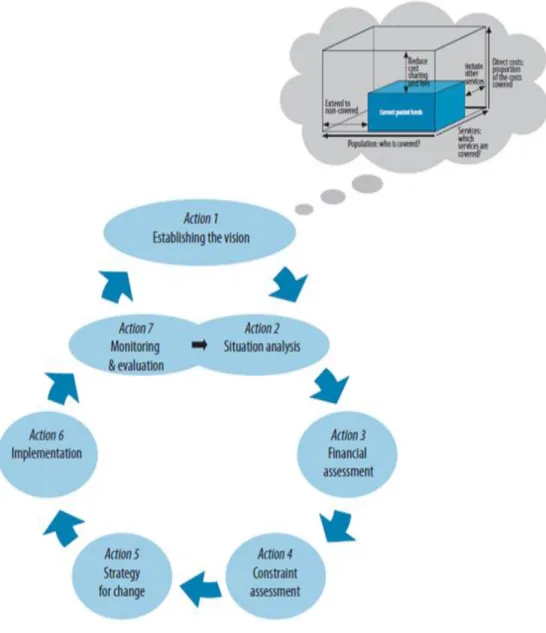
The WHO has provided a very useful compendium of the more important components and criteria that should be taken into account when developing and implementing an effective mental health care system and funding structure. It is important to look at both the system and funding methods together in order to identify and develop an effective mental health funding system that responds and meet the needs of the mental health system for which it is designed. Figure 1 below outlines the health financing decision process.57
Figure 1: Health Financing Decision Process
3.1.1 Importance of community-based mental health care systems
Health systems are core to the delivery of evidence-based mental health care.58 In this
respect. The WHO has outlined the rationale for these together with the need to construct community-based mental health systems and services59 and identified the following key components in developing an effective community based system:
i) Treatment for mental disorders should be provided through primary care ii) Increased accessibility to essential psychotropic medication should be ensured iii) Care should be provided in the community
iv) The public should be educated on mental health
v) Communities, families and consumers should be involved in the mental health system vi) National policies, programmes, and required legislation on mental health should be developed and promptly enacted
vii) The required human resource expertise should be developed viii) Links with other relevant sectors should be established ix) Community mental health should be effectively monitored x) Relevant research should be supported60
3.1.2 Universal health coverage
In 2005, the Member States of the WHO made a commitment to work towards
developing health financing systems that would ensure all their citizens could access the health services they require and would not suffer financial hardship from out-of-pocket expenses.61 This goal was defined as ensuring universal coverage or universal health coverage for all.62 To ensure universal health coverage, the WHO suggested countries
would need to ensure they were able to raise sufficient funds, reduce reliance on direct payments to finance services, and improve efficiency and equity.63
One means by which developing countries could be assisted in raising the required funds to ensure universal coverage would be through the increasing of development aid to these states.64 If the UN international development assistance target of 0.7% gross national income was met, supplementary funds would be available for lower income countries that could be allocated to universal coverage. 65 Since the signing of the
Millennium Declaration in September 2008, donor commitments for health have
increased more than fourfold. However, lower income countries still have to find almost 75% of their health funding from domestic sources.66
3.1.3 Lower income countries potential funding mechanisms
Lower income countries can raise income from domestic sources in a variety of ways including more efficient revenue collection, reprioritizing government budgets, innovative financing (levy on foreign transactions, taxes on air tickets, taxes on products harmful to health) diaspora bonds and solidarity levies. The Taskforce on Innovative International Financing for Health Systems has calculated that about 5-6% of GDP would be required to ensure the entire population has access to government financed health services.67
58 World Health Organization (2000)
World Health Report 2000: Health systems: improving performance. WHO: Geneva
59 World Health Organization (2001a) World Health Report 2001: Mental health: new understanding, new hope.
WHO: Geneva
60 Jacob K S et al (2007) Ibid
61World Health Organization (2005) ‘Resolution WHA 58.33: Sustainable health financing, universal coverage
and social health insurance’. In: Fifty- eighth World Health Assembly, Geneva, 16–25 May 2005. WHO: Geneva
62 World Health Organization (2010) Ibid 63 Ibid
64 Ibid
65 Fryatt R & Mills A (2010) ‘Taskforce on Innovative International Financing for Health Systems: showing the
way forward’. Bull World Health Organ. 88:476–477
66 Evans D B & Etienne C (2010) ‘Health systems financing and the path to universal coverage’. Bull World
Health Organ. 88:402
67 World Health Organization (2009) Constraints to scaling up Health Related MDGs: Costing and Financial Gap
3.1.4 Required prepayment
Arguably, the most efficient way to raise funds from domestic sources is through required prepayment68 with the pooling of funds across the population to spread the financial risk of illness together with health financing systems to ensure these funds are used efficiently and equitably.69 The WHO has also recommended a system of cross subsidization between multiple pools so that funds are transferred between people enrolled with few health needs and those with people requiring more services.70
3.1.5 Private expenditure
According to Fryatt and Mills an implicit recommendation arising from the work of the Task Force on Innovative International Financing of Health Systems,71 is that a
significant proportion of funding should come from private expenditure by expanding private (profit-seeking) investment through the use of public funds to mitigate risk.72 Pools created to cater for health/mental health needs should have a certain minimum number of members, as those containing too few members will not be viable in the long run and risk getting wiped out after a few expensive illnesses.73
3.1.6 Reducing capital flight
McCoy and Brikci recommend low income countries reduce capital flight through the promotion of a more effective tax policy and by improving their tax collecting systems, At the same time, they should adopt a performance based system, as a lack of public service investment combined with an unregulated commercially driven health system could deteriorate the situation.74
3.1.7 Direct payment or cost sharing
While all countries have direct payment or cost sharing it has been recommended they should be limited to 15-20% of total health expenditure to ensure that the incidence of financial catastrophe and impoverishment fall to negligible levels.75 Recent research
would also appear to indicate that out-of-pocket payments (user fees) are an inefficient and inequitable health financing mechanism.76
3.1.8 Exempting consumers on economic criteria
Attempts to exempt people from fees on economic criteria have tended to have a poor record of success in low-resource countries.77 In Sub-Saharan Africa informal, low accuracy and low-cost means testing was trialled at the point of service. In Ethiopia, waived fees were paid from community association funds. Local community associations issued free health care certificates but did not issue them freely. There was low leakage and possibly inadequate coverage among the poor. In Zimbabwe, leakage was high, because the income threshold was high and set by central bodies. Facilities in rural areas had to determine eligibility since pay slips are not used. In general the systems applied to date in Africa have suffered from relatively high leakage.78
68 World Health Organization (2010)
Ibid
69 Evans D B & Etienne C (2010) Ibid 70 World Health Organization (2010)
Ibid
71 Fryatt R & Mills A (2010) Ibid 72 McCoy D & Brikci N (2010) Ibid
73 World Health Organization (2010) Ibid 74 McCoy D & Brikci N (2010) Ibid
75 World Health Organization (2010)
Ibid
76 Yates R (2009) ‘Universal health care and the removal of user fees’. Lancet. 373:2078-81 77 Yates R (2010) ‘Women and children first: an appropriate first step towards universal coverage’.
Bulletin of the World Health Organization. 88:474-475
78 Willis C Y & Leighton C (1995) ‘Protecting the poor under cost recovery: the role of means testing’. Health
3.1.9 User fees
A 2008 Japanese Government taskforce recommended that ‘developing’ countries’ remove user fees, starting initially with services relevant to Millennium Development Goals (MDG) 4, 5 and 6.79 Yates argues for the total abolition of user fees starting with women and children.80 He argues that providing services free at the point of delivery would be an efficient means of channelling people with a greater ability to pay into the private sector, thus making the benefit incidence of public health financing more
equitable and compatible with all other financing mechanisms that rely on pre-payment methods.81 Others argue that user fees are a means of making patient payments more transparent and thereby countering unofficial and under the table payments.82
3.1.10 Joint federal and state financing
Health care can be jointly financed by federal and state (or provincial) governments. Some countries use the general tax approach but decentralize responsibility to local government.83
3.1.11 Loss of income and transport costs
Loss of income and transport cost can be an impediment in accessing care. These can be overcome by conditional cash transfers, vouchers and refunds as well as micro-credit schemes.84, 85
3.1.12 Inefficient and inequitable use of resources
According to WHO 20% to 40% of all health spending is wasted through inefficient and inequitable use of resources.86 According to the WHO’s World Health Report, health systems everywhere could make better use of resources, whether through better procurement practices, broader use of generic products, better incentives for providers, eliminating waste and corruption, reducing medical errors, increasing hospital efficiency, getting more out of newer technologies and health services, critically assessing what services are needed or streamlined financing and administrative procedures.
When purchasing services, countries would be better off either pursuing active purchasing based on population health needs or strategic purchasing based on the particular country’s ability to collect, monitor and interpret information and enforce standards of quality and efficiency.87
3.1.13 Service fees
Fees for services can result in over servicing those who can pay. Many governments have introduced capitation at the primary care level and case based payments to try and avoid this.88 The existence of service fees can serve as an incentive for General
Practitioners not to participate in coordinated care programmes without pay increases as well as encouraging consumers to seek a substantial decrease in their premiums.89
79 Task Force for Global Action for Health System Strengthening (2009) Global Action for Health System
Strengthening. Policy recommendations to the G8. Japan Center for International Exchange: Tokyo.
www.jcie.org/researchpdfs/takemi/full.pdf
80 Yates R (2009) Ibid 81 Yates R (2010)
Ibid
82 Jowett M & Danielyan E (2010) ‘Is there a role for user charges? Thoughts on health system reform in
Armenia’. Bull World Health Organ 2010. 88:472-473.
83 World Health Organization (2003) Mental health financing. WHO: Geneva.
http://www.who.int/mental_health/resources/en/Financing.pdf
84 Leatherman S & Dunford C (2010) ‘Linking health to microfinance to reduce poverty’. Bull World Health
Organ 2010. 88:470-471.
85 World Health Organization (2010)
Ibid
86 Ibid 87 Ibid 88 Ibid
89 Zweifel P (2011) ‘Swiss experiment shows that physicians, consumers want significant compensation to
3.1.14 Performance based funding
Performance based funding has as its primary drive the aim of improving health-worker performance, where it is funded from public finances. However, it ignores the human dimension to development, thus acting as a disincentive to patient centred care.90
3.1.15 Varying outcomes
As noted above, health systems are core to the delivery of evidence-based mental health care.91 Countries with similar levels of health expenditure achieve strikingly different health outcomes from their investments due to differing policy decisions.92
3.2 Unique case of mental health
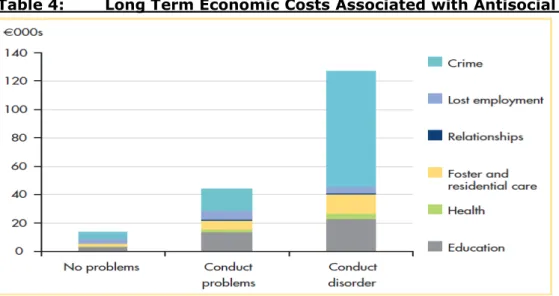
Mental health is a unique case in terms of health systems, given its broad impact on all aspects of a patient’s life including physical health, family relationships and social networks, employment status and contact with the criminal-justice system. Mental Health therefore requires a coordinated multi-sectoral approach in the formulation of policies and the development of services, which take into account culture, disposable resources and local structures.93,94
Table 4 below demonstrates how mental health concerns impact across a wide range of social concerns by evaluating the long term economic costs of mental health problems arising from the required long term follow up of antisocial children.95
Table 4: Long Term Economic Costs Associated with Antisocial Children
As a general rule and although it may be difficult to achieve, governments should strive to achieve mandatory coverage for mental health, even if the coverage is limited.96
90 Ireland M, Paul E & Dujardin B. (2011) ‘Can performance based financing be used to reform health systems
in developing countries?’ Bulletin of the World Health Organization. 89(9):695-698.
91 World Health Organization (2000) Ibid 92 Ibid
93 McDaid D (2005) Ibid
94Jenkins R (2002) Developing a National Mental Health Policy. Psychology Press: Hove, UK
95 Scott S, Knapp M, Henderson J & Maughan B (2001) ‘Financial cost of social exclusion: follow-up study of
antisocial children into adulthood’. British Medical Journal. 323:191–196
If a government accounts for 70-80% of total expenditure on health, as occurs in many OECD Member States, mental health priorities can be directly implemented through the budget, with only minor offsetting effects due to private spending. If, however, a government provides only 20-30% of total financing and there is little insurance
coverage, mental health care is likely to be neglected in comparison with other areas of health care given the greater reliance on out-of-pocket spending.97
Out of pocket payments place an excessive and unplanned burden on families, especially in low-income countries, and diminish the resources available for mental health care the more one moves away from prepayment.98 In low income countries with low prepayment
and/or difficulties raising revenue or extending social insurance community, financial schemes may be a way forward.99
Table 5 outlines WHO recommendations on mental health service provision in low-resource, medium resource and high resource countries.100
Table 5: Recommended Mental Health Services
Countries Funding Sources
Low Resource Should focus on establishing and improving mental health services within primary care services, using specialist services as a back-up Medium Resource Should also seek to provide related components such as outpatient
clinics, community mental health care teams, acute inpatient care, long-term community-based residential care and occupational care High Resource In addition to the above, they should also provide forms of more
differentiated care such as specialized ambulatory clinics and community mental health care teams, assertive community treatment, and alternatives to acute inpatient care, long-term community residential care and vocational rehabilitation
3.3 Social Health Insurance
Given the widespread use of Social Health Insurance (SHI) in Europe and globally, if not in income poor countries, this section will examine SHI in more detail. Figure 2 below depicts the relationship between various actors in countries with a Social Health Insurance (SHI) system.101
97 Ibid 98 Ibid 99 Ibid
100 World Health Organization (2001b) Atlas: Country Profiles on mental health resources 2001. WHO: Geneva 101 Busse R, Saltman R B, Dubois H F W (2004) ‘Organisation and financing of social health insurance systems:
Figure 2: Interaction of Actors in Social Health Insurance Countries
A number of countries have several sickness funds complete with management and decision making boards. However, in general, decision making powers are limited by legislation and in many countries the sickness fund is supplemented by a national umbrella organization with up to 84% of the population covered by sickness funds.102
At the point of making payment from the sickness fund to the physicians/service providers, factors determining performance assessment such as a potential shirking at tasks, risk averseness and random shocks cannot be fully verified based on observable outcomes. Performance contracting or incentive contracts are used to balance the challenges of providing high quality care while containing costs. There is evidence suggesting that the implementation of financial incentives within contractual relationships in managed care settings can improve quality of care.103
Most SHI countries have a combination of private and public service provision but this is often associated with short term budget goals or political interests and can lead to
variations in cost, quality and patient coverage. The division between private provision in primary care and public provision in inpatient care created incentives for various forms of cost shifting in either direction.104
European style managed care models have proven difficult to implement in many instances due to, for example, the difficulty encountered by physicians in coping with double agent roles and the patient´s desire to see any available provider through the regular SHI contracts. The latter was particularly noticeable in Switzerland. Moreover, insurers claim that managed care models, given their particular format, are only appropriate in urban settings.105
In certain SHI countries, all physicians must be contracted by SHI insurers while in others the option of selective contracting is preferred. This does not result in a restriction of access to any physician as visits are associated with patient reimbursement and
substantial co-payments. Again, some SHI countries do collective contracting while others set prices centrally.
Doctors and other health professionals often negotiate target income with reference to certain income levels as in the Netherlands where this is not supposed to exceed that of the higher income bracket civil servants.106
In SHI countries, ambulatory health care tends to be provided for on a fee for service basis. The Sickness Fund covers basic GP care packages with hospital care organized in a decentralised manner without use of benefit catalogues. Certain countries such as
Germany have implemented a DRG system which should entail benefits being
catalogued.Countries such as Switzerland and Germany sanction the reimbursement of medication through SHI provided drugs that have been licensed by the European
Medications Evaluation Agency or national equivalent. On the other hand, countries such as France, Israel and Netherlands have positive lists of the drugs covered. 107
Although emergency treatment is generally covered, dental coverage is usually restricted under SHI but can be obtained by disbursement of a fee for a particular service or via private insurance schemes.108 There is a general trend to contract the provision of
services in primary and secondary care from the private sector and the public provision of services for hospital care from government or private (non-profit) providers.109
People with mental illness frequently require long term care (LTC) provided in the form of support in activities of daily living (ADL) and or instrumental activities in daily living (IADL). However, due to a decline in informal cultural arrangements, involving relatives and neighbours, there has been an increased government interest in providing these supports socially.110 Figure 3 below illustrates how mental health services may be
mapped. This system can be funded by a variety of different mechanisms including social health insurance, private health insurance and so forth. Therefore, SHI or any indeed any other funding mechanism should not be rejected without taking into account the economic resources of the country concerned as well as other relevant political and social variables.
105 Ibid 106 Ibid
107 Gibis B, Koch-Wulken P W & Baltman J (2004) ‘Shifting criteria for benefit decisions in social health
insurance systems’. In Social Health Insurance systems in Western Europe. Ibid
108 Ibid
109 Hoffmarcher M M & Durand-Zaleski I (2004 ‘Contracting and paying providers in social health insurance
systems’. In Social Health Insurance systems in Western Europe. Saltman R B, Busse R & Figueras J (eds). Open University Press: Maidenhead, UK
110 de Roo A, Chambaud L, Güntert B J (2004) ‘Long term care in social health insurance systems’. In Social
Figure 3: Mapping Mental Health Services.111
3.4 Conclusion
The WHO guidelines provide a very useful set of guidelines and principles that countries can avail of in order to optimise their mental health funding model irrespective of their level of resources. It is important to remember when designing a funding model for mental health that mental health is unique in terms of health care needs. If there is low public expenditure on mental health, it often tends to be relatively neglected compared to other health treatments. If inadequately resourced, mental health problems can lead to expenses in other sectors of the economy and society. SHI appears to offer the best financial protection from high out-of-pocket expenses and financial burden for those who are eligible. Families with private non group coverage have the highest odds of being in the high-expense and high-burden categories for all incomes. For higher-income
families, having a family member in fair or poor health is a significant risk factor for high out-of-pocket expenses and financial burden. Having a higher penetration of health maintenance organizations in an area appears to lower the odds of being in the high-burden category for all families.112
111 World Health Organization (2003) Ibid
112 Shen Y C & McFeeters J (2006) ‘Out-of-pocket health spending between low-and higher-income populations: