malaria liver infection
a functional study of the unfolded
protein response
patrícia irene da silva inácio
dissertation presented to instituto de tecnologia química e biológica universidade nova de lisboa to obtain the phd in biology,
supervision of Doctor Maria Manuel Mota, Instituto de Medicina Molecular, Faculty of Medicine, Universidade de Lisboa, Portugal and co-supervised by Doctor Adriano Henriques, Instituto de Tecnologia Química e Biológica, Universidade Nova de Lisboa.
by Bolsas C&T – I&D Concurso 2012 from Fundação Luso-Americana.
table of contents
acknowledgments abbreviations summary sumário
introduction chapter one 1 malaria
1.1 Major achievements and future challenges 1.2 Plasmodium life cycle
1.3 The mammalian host
1.3.1 The erythrocytic stage of Plasmodium infection 1.3.2 The pre-erythrocytic stage of Plasmodium infection 1.3.2.1 The skin stage
1.3.2.2 The liver stage 1.3.2.2.1 Arrest in the liver 1.3.2.2.2 Hepatocyte invasion
1.3.2.2.3 Parasite development in hepatocytes 1.3.2.2.4 Exit the liver to the blood
1.4 Models for Plasmodium liver stage infection
2 the liver
2.1 The Endoplasmic Reticulum 2.2 The mammalian UPR 2.2.1 The IRE1α-XBP1 pathway 2.2.2 The PERK-eIF2α pathway 2.2.3 The ATF6 pathway 11 15 21 23 27 27 27 29 32 32 34 34 34 34 35 38 39 42 43 43 44 45 48 52
2.2.4 CREBH – a liver specific ER stress transcription factor 2.3 ER, Metabolism and UPR
2.3.1 UPR in Lipid Metabolism 2.3.2 UPR in Glucose Metabolism 2.3.3 UPR Crosstalk with Iron Metabolism 2.4 UPR and Inflammation
3 study outline results chapter two
4.1 The role of UPR activation in Plasmodium liver infection 4.2 Impact of discrete UPR pathways on Plasmodium liver infection 4.2.1 The XBP1 pathway
4.2.2 The CREBH pathway
discussion chapter three
conclusions and future challenges chapter four materials and methods chapter five
references 52 54 54 57 59 61 64 69 75 94 94 100 111 119 123 131
acknowledgments
The completion of my PhD wouldn’t have been possible without the many people who I have had the pleasure of working with. First of all, I must thank the Gulbenkian PhD Programme where I started. Obrigada pela incrível opor-tunidade de poder ter feito parte deste programa, de ter conhecido e ter trabal-hado com todos os meus colegas dos três programas doutorais da Gulbenkian. Um sincero obrigada à Maria! Obrigada por me teres aceite no teu laboratório, pela liberdade e oportunidade que me deste para poder pensar e aprender.
Obrigada ao Doutor Adriano Henriques pelos comentários e entusiasmo com o meu trabalho.
To Gunnar, thank you for everything!! For all your support, for the dis-cussions about the work (and beyond!).
Ao Bruno Silva-Santos, muito obrigada pelo entusiasmo e comentários acerca do trabalho.
Special thanks to David Fidock and Brie Falkard, for receiving me in New York and for all your support and enthusiasm.
To Vanessa, Nagarjuna Nagaraj and Matthias Mann I thank for allowing me to use the proteomics screen.
To Koos Rooijers, thank you for all your precious help.
Ao Nuno, obrigada pela ajuda com todas as figuras da tese e por estares sempre disponível a ajudar.
I thank all the members of Mota’s lab, past and present, with whom I learned so, so much - in particular to Vanessa, obrigada por me teres ensi-nado e acompanhado quando cheguei ao laboratório; Fernanda (obrigada!) and Ana Parreira, Ana Roberto, Céline, Liliana, Daniel, Miguel, Ghislain, Silvia, Peter, Claudia, Ksenija, Maurice, Kirsten, António, Catarina, Marga-rida, Audrey, Joana Carrelha, Joana Dias, Rosangela e Maria Rebelo; Iset (thank you for all your help!); Inês (ou melhor, Maria Alice) e Meireles, obrigada pela boa disposição e pela ajuda, sempre que precisei!
To all the members of UPAMOL, Jorge, Patrícia, Ana, Natalia and Neuza, thank you all for having me in the lab, and for all your precious help!
To all the members of Figueiredo’s lab, thank you for being such a nice group to share a space with and, in particular to Ana Pena (obrigada por tudo!) e Fabien (merci!).
My special thanks to Schmolka (danke, meine süße freundin deutsch), Eli, Penérrima, Filipa, Carina, Mariana and Pamplona for being there!
Ao Charlie Brown, por seres sempre o sítio onde quero chegar e permanecer. E, à minha família maravilhosa, em especial, aos meus pais, ao meu irmão e ao meu avô, pelo apoio incondicional. Dedico todo o meu trabalho à minha avó Irene!
Acc2 acetyl-CoA carboxylase 2
ACTs artemisinin-based combination therapies Acl ATP citrate lyase
AD activation domain
AMA-1 apical membrane antigen 1 ASK1 apoptosis signal-regulating kinase 1 ATF4 activating transcription factor 4 ATF6 activating transcription factor 6 ATP adenosine triphosphate
BiP binding immunoglobulin protein CEBPα CCAAT enhancer binding protein α CHOP C/EBP homologous protein
CREBH cAMP responsive element-binding protein, hepatocyte specific CReP constitutive repressor of eIF2α phosphorylation
CRP C-reactive protein
CRTC2 CREB-regulated transcription coactivator 2 CSP circumsporozoite protein
DBD DNA-binding domain DBL Duffy binding-like
DDT dichlorodiphenyltrichloroethane DE differentially expressed
Dgat2 diacyl glycerol acyl transferase 2
EDEM1 ER degradation enhancer, mannosidase alpha-like 1 eIF2α eukaryotic translation factor-2 α
ER endoplasmic reticulum ERAD ER-associated degradation ERO1 ER oxidoreductin 1
ERSE-I | ERSE-II ER stress-response elements I and II Fas fatty acid synthase
GO gene ontology
G6Pase glucose-6-phosphatase GRP94 glucose-regulated protein 94 HSPGs heparan sulphate proteoglycans
HERPUD1 homocysteine-inducible, endoplasmic reticulum stress-inducible, ubiquitin-like domain member 1
HGF hepatocyte growth factor HRD1 ubiquitin protein ligase IL-4 interleukin-4
IL-6 interleukin 6 IL-8 interleukin 8
iRBCs infected red blood cells IRE1α inositol requiring protein 1 α IRS indoor residual spraying ISR integrated stress response
iv intravenously injection
JNK stress-induced Jun N-terminal kinase LDLR low-density lipoprotein receptor L-FABP liver-fatty acid binding protein LLINs long-lasting insecticidal nets MCP-1 monocyte chemotactic protein-1 MSP1 merozoite surface protein 1 MSPs merozoite surface proteins
NF-κBnuclear factor-kappa B
NK natural killer cells NKT natural killer T cells
NMR nuclear magnetic resonance
OASIS old astrocyte specifically induced substance
ORFs open reading frames PC phosphatidylcholine PDI protein disulfide isomerase
PERK protein kinase RNA (PKR)-like ER kinase
PfRh Plasmodium falciparum reticulocyte binding protein homolog
PGC-1α peroxisome proliferator-activated receptor-gamma coactivator α pi post-infection
PKCζ protein kinase C ζ
PPARα peroxisome proliferator-activated receptor α PVM parasitophorous vacuole membrane
qRT-PCR quantitative RT-PCR RDTs rapid diagnostic tests
RIP regulated intramembrane proteolysis RNAse endoribonuclease
ROS reactive oxygen species S1P site 1 protease
S2P site 2 protease
SAP serum amyloid P-component SCAP SREBP cleavage-activating protein Scd-1 stearoyl-CoA desaturase-1
SPECT sporozoite protein essential for cell traversal SR-BI scavenger receptor B type I
SREBPs sterol regulatory element-binding-proteins TLRs toll like receptors
TM tunicamycin
TNF-α tumor necrosis factor α
TRAP thrombospondin-related adhesive protein TRB3 tribbles homolog 3
UIS3/4 upregulated in infective sporozoites uORFs upstream open reading frames
UPR Unfolded Protein Response
UPRE UPR element
WHO World Health Organization XBP1 X-box binding protein 1 XBP1s XBP1 spliced
summary
Malaria, a disease caused by Plasmodium, represents a major health problem with a still disconcertingly high mortality rate (655 000 malaria deaths were estimated by the World Health Organization in 2012), mainly in Africa [1]. After a bite by an infected Anopheles mosquito occurs, Plasmodium sporo-zoites reach their target organ, the liver, within minutes. After traversing several hepatocytes, the parasite invades a final one and establishes a para-sitophorous vacuole, where it replicates exponentially generating thousands of infective merozoites, the red blood cell infectious forms that are released in the blood stream. The liver stage is the first obligatory phase of malaria infection and, although no symptoms are associated with it, it is absolutely crucial to the establishment of a successful infection.
Inside hepatocytes the parasite establishes a replicative niche that was shown to impact hepatocytes metabolic transcriptional programmes [58] such as lipid, glucose and aminoacids metabolism, thus suggesting that
Plas-modium development is intrinsically connected to hepatocytes metabolic
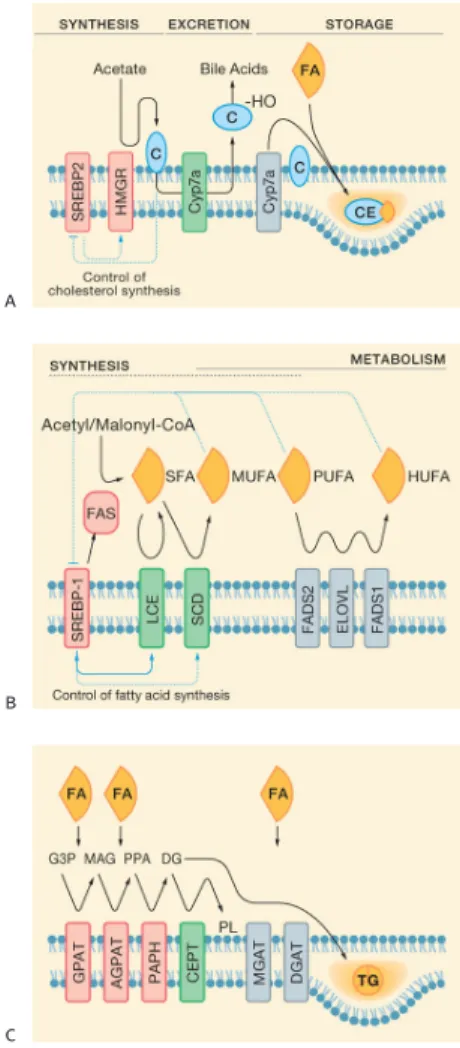
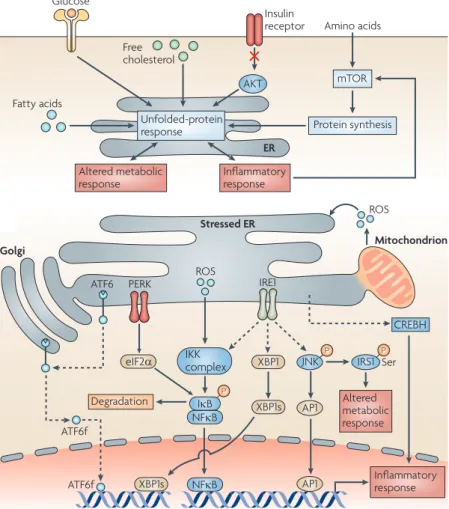
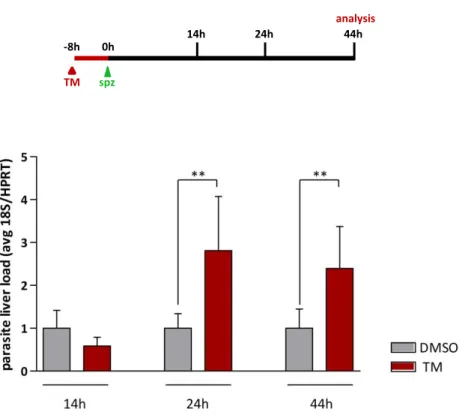
status. In highly metabolically active cells, such as hepatocytes, the endo-plasmic reticulum (ER) is essential to maintain cellular homeostasis. In fact, the ER is increasingly being recognized as a metabolic organelle due to its role not only as the primary organelle of cellular anabolic metabolism, but also by being a signal-integrating platform of the metabolic status of the cell. We hypothesized that Plasmodium development within hepatocytes impacts ER functions and modulates the unfolded protein response (UPR) signal-ling pathways. To address this question we analysed a semi-quantitative pro-teomic screen and a transcriptome study between sporozoite infected versus uninfected cells, in order to determine the impact of infection on the host ER. We found a significant modulation of ER proteins with infection, in agreement with a clear ER stress signature and concomitant UPR activation. To understand the role of the UPR in the infection we induced its activation in the liver prior to sporozoite delivery. Our data clearly showed that UPR activation greatly enhances Plasmodium liver infection. We explored this
phenotype and discovered that the mechanism leading to infection increase is multifactorial. We found that, in the liver, sporozoite infection induces a potent type I interferon response and that UPR activation abolishes it. Be-yond its role in innate immunity we found that UPR activation increases infection through regulation of different metabolic pathways. Specifically, we found that the UPR branch mediated by XBP1 active form, XBP1s, is induced by Plasmodium infection together with the liver specific branch mediated by CREBH. Both branches contributed to Plasmodium infection through their regulatory actions on different metabolic pathways: XBP1 possibly by enhancing de novo lipogenesis and CREBH by regulating iron availability via hepcidin.
These findings suggest that ER stress is a central feature of malaria liver infection and that activation of the unfolded protein response contributes to the parasite infection, therefore establishing the ER as a new mediator in liver stage malaria.
sumário
A malária, uma doença causada pelo parasita do género Plasmodium, repre-senta um grave problema de saúde pública, principalmente em África, onde ainda se verifica uma elevada taxa de mortalidade (a Organização Mundial de Saúde estimou 655 000 óbitos associados à malária em 2012) [1]. O pa-rasita Plasmodium é transmitido, sob a forma de esporozoíto, com a picada do mosquito Anopheles, atingindo o fígado em minutos através da circula-ção sanguínea. Uma vez no fígado, o parasita atravessa vários hepatócitos antes de estabelecer a infecção num hepatócito, através da formação de um vacúolo parasitóforo, onde se desenvolve e replica em dezenas de milhares de merozoítos (os parasitas responsáveis pela infecção dos eritrócitos, uma vez libertados na corrente sanguínea). A fase hepática é uma etapa obriga-tória da infecção do hospedeiro vertebrado e, apesar de não estar associada a sintomas clínicos, é uma fase indispensável para a progressão da doença.
No interior da célula infectada, cada parasita estabelece um nicho onde se desenvolve e replica, e foi demonstrado que a infecção altera o perfil de expressão genética associada ao metabolismo dos hepatócitos [58]. Especifi-camente, a expressão de genes associados ao metabolismo de lípidos, gluco-se e aminoácidos o que sugere que a infecção pelo parasita está intimamente associada ao metabolismo da célula hospedeira. Em células metabolicamen-te muito activas, tais como os hepatócitos, o retículo endoplasmático (RE) é essencial na manutenção da homeostasia celular. O RE é, aliás, considerado um organelo metabólico, por ser o principal organelo responsável pelo ana-bolismo celular, mas também por responder e regular o metaana-bolismo celular através de uma complexa via denominada Unfolded Protein Response (UPR). Sendo assim, neste estudo colocámos a hipótese de que a infecção hepática poderá ter um impacto nas funções do RE, resultando na modelação das vias integradas na UPR. De forma a testar esta hipótese, procedemos à aná-lise de dois estudos, um screen semi-quantitativo de proteínas e um estudo de microarrays entre células infectadas e não infectadas, para determinar o impacto da infecção no RE dos hepatócitos. Esta análise permitiu identificar
alterações significativas de proteínas do RE, características de uma resposta de stress do RE e activação da UPR, em células infectadas. Para avaliarmos o impacto da UPR na infecção pelo parasita, procedemos à sua activação no fígado imediatamente antes da infecção. Esta análise demonstrou que a acti-vação da UPR aumenta drasticamente a infecção. Posteriormente, um estu-do mais detalhaestu-do revelou que a causa estu-do aumento na infecção é multifac-torial. No fígado, os esporozoítos induzem uma resposta de interferão tipo I que é significativamente reduzida com a activação da UPR. Paralelamente, a activação da UPR aumenta a infecção ao regular diferentes vias de metabo-lismo nos hepatócitos. Especificamente, as vias da UPR regulada pela forma activa de XBP1, XBP1s, e a via específica do fígado mediada pelo CREBH são induzidas com a infecção. Ambas as vias contribuíram para a infecção hepática ao regular diferentes aspectos do metabolismo hepático: a via re-gulada pelo XBP1, possivelmente, através da indução da de novo lipogénese e o CREBH ao regular o metabolismo do ferro, via a hormona hepcidina.
Este estudo demonstra que o stress do RE é uma condição característica da infecção hepática e que a consequente activação da UPR contribui para a viabilidade do parasita na célula hepática hospedeira.
Doubt requires more courage than conviction does, and more energy; because conviction is a resting place and doubt is infinite – it is a passionate exercise
1 malaria
1.1 Major achievements and future challenges
Malaria still represents a major health problem, particularly in Africa. In 2010, 216 million new cases of malaria and 655 000 malaria deaths were esti-mated by the World Health Organization (WHO), 81% and 91% (with up to 86% deaths in children under 5 years old) in the Sub-Saharan region, respec-tively [1]. Although these numbers represent a major achievement (malaria mortality rates have fallen by more than 25% globally since 2000 and by 33% in the African Region), malaria remains one of the most prevalent infectious diseases worldwide with a mortality rate still disconcertingly high (figure 1). The real numbers may be even higher, as a recent study using a systematic analysis indicated that global malaria toll exceeded 1.2 million in 2010 [2].
The past decade witnessed unprecedented efforts in malaria control. Access to insecticide-treated mosquito nets (ITNs) has increased by 50% since the year of 2000. The number of rapid diagnostic tests (RDTs) and artemisinin-based combination therapies (ACTs) has also expanded significantly. Cur-rently, a number of strategies and products represent our tool box in fighting malaria. Rapid diagnostic tests (RDTs) that can be used in the field have been positively reinforced by the latest WHO directives. In countries were health systems may be fragile and a population fraction might not easily access to it, a rapid and reliable diagnostic is critical to confirm every suspicion of ma-laria before treatment. With the exception of the regions where chloroquine remains fully effective, artemisinin-based combination therapies (ACTs) are recommended to treat uncomplicated P. falciparum malaria. Monotherapies as treatment of malaria are not to be followed in order to prevent resistance and chemoprophylaxis, as a preventive measure, is applied to pregnant women and children in specific areas of high infection risk. For decades, the scientific community has pursued a vaccine against malaria. At the moment, the vac-cine candidate RTS,S is on phase 3 of clinical trials although the efficacy does
introduction
chapter one
figure 1
Number of malaria reported confirmed cases in 2010 by World Health Organization (WHO).
not go beyond 30% [3]. Moreover, vaccine’s efficacy declined quickly over time and with increasing malaria exposure, as recently reported in a 4 years follow-up study where the efficacy registered was only 16.8% [4]. Insecticide-based vector-control interventions contributed greatly for the global progress in fighting malaria, mainly the long-lasting insecticidal nets (LLINs) and indoor residual spraying (IRS) initiatives. In LLINs the only class of insecticides used is the pyrethroids. Four classes of insecticides, including DTT (dichlorodiphe-nyltrichloroethane) are used in IRS.
Despite all these achievements, crucial aspects of Plasmodium biology re-main elusive: Plasmodium repeated infection ultimately leads to protective immunity, however our knowledge of naturally acquired immunity is remark-ably scarce. Although malaria symptoms arise only once the parasite infects red blood cells, the liver stage is an essential and obligatory step that still re-mains largely unknown. Importantly, besides the more basic aspects of ma-laria research, practical issues are also arising. Recent evidence that resistance to artemisinin derivatives, currently the first line treatment to combat malaria, is developing in Southeast Asia denotes the urgency to, not only develop new antimalarial compounds, as well as to understand the mechanisms of resist-ance. Additionally, while our resources are mainly directed to Plasmodium
falciparum malaria, the agent responsible for the most severe forms of disease
nowadays, Plasmodium vivax is a more widespread parasite and increasingly cases of infection with Plasmodium knowlesi have been reported, endangering 40% of the world’s population. With a more complex biology, it is believed that
Plasmodium vivax will be more difficult to control and we do not have enough
and adequate tools to fight it.
In the last decade, malaria research in all its fronts produced the knowl-edge and tools responsible for the encouraging results in malaria control. But these gains are still fragile. Strengthening can only be achieved by the joint work of basic and clinical research.
1.2 Plasmodium life cycle
Malaria is caused by protozoan parasites belonging to the genus
Plasmodi-um. The malaria parasite is the most important member of the Apicomplexa
phylum, which includes other parasites of human and also veterinary im-portance as Toxoplasma, Theileria, Eimeria, Babesia, and Cryptosporidium.
Plasmodium primary natural transmission vector are female Anopheles
mosquitoes (however, Plasmodium can also be trasmitted by pregnant wom-en to their unforn child). There are approximately 5000 Plasmodium species which infect animals ranging from humans and other mammals to birds and lizards. From those, five can cause malaria in humans – Plasmodium
and Plasmodium knowlesi. Plasmodium falciparum causes the majority of infections in Africa and is responsible for the most severe forms of disease and mortality. P. vivax and P. ovale form dormant forms in the liver (hypno-zoites) that, once reactivated, can cause clinical relapses, i.e., the re-appear-ance of clinical symptoms of a disease after its cessation [5].
Parasites of the genus Plasmodium are obligate intracellular organisms with a complex life cycle, switching between a mosquito vector and a mammalian host (figure 2). The mammalian life cycle begins when an infected female
Anopheles mosquito, during its blood meal, deposits Plasmodium parasites
(named at this stage, sporozoites) under the skin of the mammalian host. Once in the bloodstream, these extracellular forms rapidly migrate to the liver and actively invade hepatocytes. Each sporozoite differentiates and divides into thousands of liver merozoites that are released into the bloodstream, be-tween 2 to 16 days later, depending on the species. Each merozoite invades an erythrocyte, where after a replication cycle the infected erythrocyte (schizont) ruptures and releases newly formed merozoites which are ready to infect oth-er oth-erythrocytes. This begins the asexual blood-stage life cycle of Plasmodium parasites. In the blood of the mammalian host another parasite cycle also oc-curs. While the asexual Plasmodium life cycle goes on, some merozoites cease asexual replication and switch to sexual development with the formation of male and female gamete precursors (gametocytes). Although the sexual stages exist in a reduced number, when compared to the asexual one, it is of crucial importance to assure malaria transmission. What triggers gametocytogenesis is still to be determined. During a mosquito blood meal, occurs the uptake of female and male gametocytes. Once in the mosquito midgut, gametocytes undergo fertilization and maturation leading to an infective ookinete. Simi-larly to sporozoites, ookinetes are motile and cross the midgut epithelial cell wall. Between this and the basal lamina of the midgut, the ookinete develops into an oocyst. Once matured, the oocyst burst and releases the thousands of sporozoites into the hemocele (body cavity) that will then invade the salivary glands. Here the sporozoites are ready to be injected in a new host, thus begin-ning a new cycle (reviewed in [6]).
In the mammalian host, malaria associated symptoms only occur during the blood stage of infection. Thus, the disease progresses from an asympto-matic, silent stage – pre-erythrocytic – to a symptomatic one – the erythro-cytic stage. For the purpose of this thesis, I will first briefly present the eryth-rocytic stage to then focus on our current knowledge of the pre-erytheryth-rocytic stages of infection, with main focus on the liver stage.
figure 2
Plasmodium falciparum life cycle.
During a blood meal, female Anopheles mosquitoes inject the sporozoite form of the parasite into the skin of a human host (a) The sporozoites travel to the liver via the bloodstream and, once inside hepatocytes, replicate into thousands of merozoites (b) Merozoites are released in the blood where an asexual cycle occurs with invasion and replication within red blood cells, followed by the production of female and male gametocytes (c) The gametocytes are transmitted back to a mosquito during a blood meal, where they fuse to form oocysts that divide into new sporozoites. These migrate to the salivary glands, starting a new infection cycle with the next blood meal (d).
a
b
c
1.3 The mammalian host
1.3.1 The erythrocytic stage of Plasmodium infection
Once released into the bloodstream hepatic merozoites recognize, attach and invade erythrocytes, a rapid process that occurs within 1 minute [7]. The invasion of erythrocytes occurs in four distinct phases – adhesion, reo-rientation, tight-junction formation and invasion. Due to the lack of cilia or flagella, merozoites when released into the bloodstream rely on passive diffusion to access the red blood cell. The adhesion process is suggested to be mediated by merozoite surface proteins (MSPs), however definitive proof is still lacking. On the contrary, the role of two protein families, the DBL (Duffy binding-like) and PfRh (P. falciparum reticulocyte binding protein homolog) family is well established [7]. Recognition and adhesion is crucial to ensure the binding to the correct cell. Once attached to the red blood cell, merozoite reorients itself juxtaposing its apical end (with the rhoptry and microneme organelles) towards the erythrocyte membrane. Once apical at-tachment is established, several proteins stored in these organelles bind to specific receptors on the erythrocyte creating a tight-junction [8]. During invasion, the tight junction moves from the apical end to the posterior pole of the merozoite powered by the actin-myosin motor of the parasite [9]. As the parasite invades it creates a parasitophorous vacuole (for a detailed review see [10]).
While parasite proteins as DBL and PfRh are important for erythrocyte invasion they are not essential. P. falciparum not only has multiple ligand-receptor interactions, named invasion pathways, as it is able to switch be-tween them. This capacity represents a strategy that allows the parasite to evade host receptor polymorphisms and immune system responses [11]. However, a recent study showed that P. falciparum relies on a single recep-tor, known as ‘basigin’, on the surface of red blood cells to invade the cell. Basigin is a receptor for PfRh5, a parasite ligand that is essential for blood stage growth [12]. This cross-strain dependency on a single extracellular receptor-ligand has recently been shown to offer a potential target for a new anti-malarial therapy, since PfRH5 generated an immune response in ani-mal models capable of neutralising many of the strains of the P. falciparum parasite tested [13].
Inside erythrocytes, the merozoites develop for 48 hours beginning with the ring stage (0-24 hours), followed by DNA replication and growth during the throphozoite stage (24-36 hours) and, finally, the schizont stage (36-48 hours) culminating with 16 to 32 new merozoites that are released during
chapter one | 33
Nature Reviews | Microbiology
Vesicle-like structure Maurer’s cleft Endoplasmic reticulum Nucleus Knob PfEMP1 Liver Merozoite Bloodstream 0 h 1–24 h 24–30 h 30–36 h 36–48 h 48 h a b c PVM PV Erythrocyte
relevance of this interesting feature is currently unknown.
A conserved export signal Entry into the host cell from the para-sitophorous vacuole requires an addi-tional sequence downstream of the signal
sequence19,20. By aligning the N termini of known exported proteins, two groups identi-fied a pentapeptide motif — RXLX(E/Q/D), where X is any amino acid — that is able to target a protein for export. This motif, called the protein export element (PEXEL) or the vacuolar targeting signal21,22, is located
25–30 amino acids downstream of the signal sequence. Using bioinformatics these groups generated lists of 200–400 proteins carry-ing this sequence, and this ‘exportome’ was subsequently refined through bioinformatics and cell biology approaches23,24. Most genes encoding predicted exported proteins are clustered in the subtelomeric regions of the Plasmodium spp. chromosomes and, par-ticularly in P. falciparum, an expansion and radiation of some genes led to the genera-tion of large families of predicted exported proteins, including the FIKK kinases, the PHIST (Plasmodium helical, interspersed, subtelomeric) proteins and the DNAJ pro-teins11. Although these analyses provided clues about the functions of some exported proteins, most showed no similarity to any known proteins.
During the liver stage, proteins are probably exported into the host hepato-cyte using a PEXEL-based mechanism. Circumsporozoite protein (CS) has a func-tional PEXEL motif25 and is exported into the hepatocyte, where it then translocates to the nucleus to alter the expression of genes involved in host defence. Early-stage gametocytes also use the PEXEL pathway for protein export26. Although the PEXEL motif, and therefore this general mode of protein export, is conserved in all Plasmodium spe-cies, it is not present in related apicomplexan parasites23.
PEXEL is a protease cleavage motif The signal sequence in exported proteins is essential for targeting these proteins to the ER, and the PEXEL motif is recognized and cleaved by a protease27. Analysis of the bio-synthesis of two exported proteins from P. falciparum, histidine-rich protein II (HRPII) and PfEMP2, showed that the PEXEL motif is a protease recognition sequence that results in removal of the N terminus of the protein, including the signal sequence. Both proteins were cleaved after the conserved leucine, with subsequent acetylation of the N terminus28. Mutational studies revealed that the arginine and leu-cine residues of the motif are required for cleavage, and that the final residue (which can be glutamic acid, glutamine or aspartic acid) is necessary for subsequent export but not for cleavage27. N-acetylation of the exported proteins after cleavage is not suffi-cient for their correct export to the host cell, and whether it is necessary for export has not yet been established. Two observations suggest that the ER is the site of processing. First, brefeldin A, an agent that prevents trafficking from the ER to the Golgi29, does
Figure 1 | Plasmodium falciparum life cycle. a | Infection starts when an infected mosquito releases
sporozoites into the skin of a human during a blood meal. The sporozoites travel to the liver, where they enter hepatocytes and subsequently divide for approximately 10 days, after which they differenti-ate into merozoites. Growth in hepatocytes requires export of proteins into the host cell. The mero-zoites are released into the bloodstream, where they infect erythrocytes. b | Inside erythrocytes, the
parasite undergoes a 48-hour-long developmental process that starts with the ring stage (0–24 hours), followed by DNA replication and parasite growth during the trophozoite stage (24–36 hours) and, ultimately, the schizont stage (36–48 hours), during which infectious merozoites are formed. A small percentage of the parasites undergo differentiation into gametocytes (not shown), which can be taken up by a mosquito during a blood meal and can then mate inside the mosquito gut. Export of parasite proteins also occurs at this stage. c | During the intracellular stages in the vertebrate host, the
para-site actively remodels the host erythrocyte. An outline of the export pathway of a protein is shown, starting with secretion through the secretory pathway (initiating in the endoplasmic reticulum) into the parasitophorous vacuole (PV). Exported proteins are then transported past the parasitophorous vacuolar membrane (PVM) by an export complex. Transmembrane domain-containing proteins may be transported through vesicle-like structures. Exported proteins, including Plasmodium falciparum erythrocyte membrane protein 1 (PfEMP1), are part of the knobs and the Maurer’s clefts.
618 | SEPTEMBER 2010 | VOLUME 8 www.nature.com/reviews/micro
© 20 Macmillan Publishers Limited. All rights reserved10
figure 3
Plasmodium falciparum blood stage
development.
Plasmodium falciparum merozoites attach to
and invade erythrocytes, with the formation of a vacuole where the parasite develops through the ring (0–24 hours), trophozoite (24–36 hours) and schizont stages (40–48 hours). A small percentage of the parasites undergo diff erentiation into gametocytes (not shown), which can be taken up by a mosquito during a blood meal and start a new infection cycle. In order to survive, the parasite remodels its host cell by exporting hundreds of parasite proteins into the erythrocyte. The export of one parasite protein is shown, starting with its secretion from the endoplasmic reticulum and into the parasitophorous vacuole (PV).
An export machinery is responsible for the transport of proteins pass beyond the parasitophorous vacuolar membrane (PVM). Exported proteins, as PfEMP1, are part of the knobs and the Maurer’s clefts which are responsible for infected erythrocytes cytoadherence (Adapted from Goldberg and Cowman, 2010).
red blood cell egress (figure 3) to start a new replication cycle.
The egress from the infected erythrocyte involves rupture of its parasito-phorous vacuole and host cell membrane. Egress is mediated by an increase in intracellular pressure together with a destabilization of the infected cell cytoskeleton via biochemical changes. This mechanical/biochemical forces induce the erythrocyte explosive rupture and merozoite release [14]. Al-though the cause for the increase in pressure and cytoskeleton disruption is not clear it appears to occur in a two-step process [15]. Accordingly, the internal vacuolar membrane is disrupted prior to the erythrocytic one in a protease depend event [16].
1.3.2 The pre-erythrocytic stage of Plasmodium infection 1.3.2.1 The skin stage
During the bite of a female Anopheles mosquito, the insect probes for a blood vessel in the skin of the vertebrate host. It was believe that the sporozoites located at the mosquito salivary glands were directly delivered into the skin blood vessels during the mosquito blood meal. This concept was challenged when a series of studies showed that sporozoites are actually deposited in the dermis ([17-19]). Sporozoites are injected at an average between 100 to 200, during a mosquito bite ([20, 21]). After injection into the skin, sporozoites migrate through the dermis in order to reach a blood vessel and enter the circulatory system to reach their target organ – the liver [17, 19]. Although sporozoites, once start migrating, are able to invade a blood vessel within a minute, a significant proportion of sporozoites remain in the dermis (ap-prox. 50%) [17]. In fact, sporozoites were found in the dermis up to 7 hours after injection. Of those that leave the bite area within 1 hour, approximately 70% reach blood vessels, while the remaining 30% invade lymphatic vessels. Lymph sporozoites cease in the proximal lymph node, where the majority is degraded by dendritic cells [17]. Thus, within a short period of time spo-rozoites have to be able to migrate to a blood vessel in order to establish a successful liver infection.
The termed “skin stage” has been suggested as a new pre-erythrocytic stage in malaria infection and possibly the first stage to boost a host immune response against sporozoites [22].
1.3.2.2 The liver stage 1.3.2.2.1 Arrest in the liver
As soon sporozoites reach the circulatory system, they are found in hepato-cytes within 2 minutes of intravenous injection into rats, despite contacting
and traversing many cell types as they migrate from the skin to the liver [23]. The specificity of the target cells suggests a strong and exact interaction between parasite surface proteins and hepatocyte molecules. The molecules involved in sporozoite arrest in the liver have been extensively studied, from host and parasite side.
In the host, the heparan sulphate proteoglycans (HSPGs) at the surface of liver cells have been shown to be the trigger for the preferential attachment of Plasmodium receptors [24, 25]. Liver sinusoids are limited by fenestrated endothelial cells, have resident Kupffer cells and are separated from hepato-cytes through the space of Disse. Here, we can find the stellate cells, which are responsible for the continuous production of the extracellular matrix [26]. It has been suggested that the initial arrest of Plasmodium sporozoites in the liver sinusoids occurs by binding to the proteoglycans produced by stellate cells (figure 4a). The proteoglycans traverse endothelial cells fen-estrations encountering the sporozoites in the sinusoidal lumen. Moreover, stellate cells synthesize eight times more proteoglycans than hepatocytes, with twice the level of sulphate [27]. Once arrested in the liver sinusoid, proteoglycans at the surface of Kupffer cells mediate sporozoite entry into hepatocytes [28].
In the parasite, two proteins, the circumsporozoite protein (CSP) and the thrombospondin-related anonymous protein (TRAP) recognize and bind to the HSPGs in the basolateral membrane of hepatocytes in the space of Disse ([24, 29]).
HSPGs are not exclusive to liver cells, however, sporozoites react only to these proteins in the liver. Studies from different groups suggest that the HSPGs high levels of sulphation in liver cells [30] are the trigger for sporo-zoite arrest in the liver and invasion of hepatocytes [31, 32].
1.3.2.2.2 Hepatocyte invasion
Once sequestered in the liver sinusoids, sporozoites must reach and invade the hepatocytes. However, in the route to hepatocytes lies the sinusoidal cell layer composed of endothelial and Kupffer cells. According to some studies, sporozoites reach hepatocytes by invading Kupffer cells with the formation of a non-acidic vacuole [33]. However, transgenic parasites with a defect in the traversing machinery (SPECT and SPECT2 mutants) have reduced
in vivo infectivity, suggesting that the crossing towards hepatocytes is
de-pendent on cell membrane disruption. Additionally, Kupffer cell depletion restored the in vivo infectivity to the SPECT mutant sporozoites which sup-ports the role of Kupffer cells in hepatocyte invasion [34, 35]. Why Kupffer cells do not recognize and remove, by phagocytosis, the traversing
sporo-figure 4
Plasmodium liver stage.
Plasmodium sporozoites arrest in the liver
– sporozoites (green) present in the liver sinusoids arrest in the liver by binding to heparan sulphate proteoglycans (HSPGs) from stellate cells and hepatocytes; they enter hepatocytes by traversing the sinusoidal layer, possibly through the Kupffer cells (a) Plasmodium replication within hepatocytes – once the sporozoite enters an hepatocyte, it traverses several before invasion of a final one where it establishes a parasitophorus vacuole (b); each sporozoite replicates and develops inside its vacuole forming the schizont that contains thousands of merozoites (c)
Plasmodium release into the bloodstream –
with merozoites fully developed, its
release into the bloodstream occurs via merosomes (vesicles full of merozoites), which bud off from the infected hepatocyte into the sinusoidal lumen (d) (Adapted from Prudencio et al., 2006).
a
c
b
zoites is still not known.
After crossing the space of Disse, sporozoites traverse several hepatocytes before invading a final one where it will establish its parasitophorous vacu-ole (figure 4b). The traversal of hepatocytes is achieved by breaching the cell membrane [36]. The requirement of cell traversal by Plasmodium to es-tablish a successful liver infection has been challenged by studies with
Plas-modium mutants that lost the ability to migrate. Some studies defend that
migration through cells leads to sporozoite regulated exocytosis to expose membrane proteins, TRAP, activating sporozoites for hepatocyte invasion [37], and induces the secretion of the hepatocyte growth factor (HGF). Lo-cally increased HGF levels are thought to sustain the survival of infected hepatocytes via HGF/MET signalling and the activation of anti-apoptotic pathways [38]. However, deletion of the spect gene completely abrogates the sporozoite capacity to traverse cells, while maintaining their infectivity in
vitro in both hepatoma cells and primary hepatocytes [35]. The same
pheno-type was maintained with the deletion of other traversal-related genes [34, 39]. Thus, while migration through cells is essential for the parasite to be able to reach the liver parenchyma, it is dispensable to infect liver cells after passing the natural barriers.
Plasmodium sporozoites invade the final hepatocyte, after migration
ceased, to establish their replication niche within a parasitophorous vacu-ole. Hepatocyte invasion is thus an active process that involves parasite and host molecules. From the parasite side, the microneme proteins CSP, TRAP and AMA-1 (apical membrane antigen 1) have been implicated in hepato-cyte invasion ([24, 29, 40]). The role of two proteins specifically produced in liver-sporozoites, Pb36 and P36p, in hepatocyte invasion is still a matter of debate. While the first study with knockout parasites for both proteins nearly abolished sporozoite infectivity [41], recently it has been proposed that although the infectivity does not change, the formation of the parasito-phorous vacuole is largely compromised [42, 43].
From the host side, the already mentioned HSPGs have an important role in binding and internalization of sporozoites, due to their interaction with CSP and TRAP parasite proteins. Serum glycoprotein fetuin A by interact-ing with TRAP extracellular region enhances hepatocyte invasion by
Plas-modium [44]. Two other proteins, the tetraspanin CD81 and SR-BI
(scaven-ger receptor B type I), both membrane proteins expressed at the surface of hepatocytes, have been shown to play a role in hepatocyte infection. CD81 deletion from hepatocytes, in vitro and in vivo, inhibits parasite invasion [45], possibly due to CD81 localization in tetraspanin-enriched microdo-mains [46]. Interestingly, CD81 is a putative receptor for hepatitis C virus [47]. CD81 role in parasite invasion has been suggested to occur through
association with other host molecular partners. The host protein SR-BI by mediating cholesterol uptake facilitates CD81 organization into tetraspanin-enriched microdomains, thereby enhancing parasite invasion [48, 49]. A host kinase, PKCζ (PKCzeta), has been shown to influence infection in vitro as well as in vivo, since its downregulation impairs hepatocyte invasion [50]. 1.3.2.2.3 Parasite development in hepatocytes
With the final hepatocyte invasion, each Plasmodium sporozoite, by invagina-tion of the plasma membrane is internalized within the parasitophorous vacuole. Here, the parasite undergoes extensive nuclear division to form a multinucle-ated syncytium, the schizont (figure 4c). Each nucleus is later surrounded by a membrane. Exoerythrocytic schizogony represents one of the most remarkable replication rates in the eukaryotic world culminating in the production of 10 000 to 30 000 merozoites, the red blood cell infectious forms that are released in the bloodstream. The astonishing replication rate in the liver can only be achieved through an intimate and extensive connection between parasite and hepato-cytes. Liver cells are one of the most metabolically active cells, representing an ideal source of metabolites to support parasite growth. However, still relatively little is known about the complex cellular and molecular interactions between parasite and host during this phase of Plasmodium life cycle.
Infective sporozoites were shown to induce the expression of two parasite genes termed UIS3 and UIS4 (UIS stands for upregulated in infective
sporo-zoites) [51]. In the liver, UIS3 and UIS4, two transmembrane proteins, are
localized to the parasitophorous vacuole membrane (PVM) within the first hours of parasite development. Its depletion inhibits the establishment of a successful in vivo liver infection, since although able to invade no mutant parasite is detected within 48 hours after sporozoite injection ([52],[53]). UIS4 role during the parasite liver stage development is still unknown. On the other hand, UIS3 has been suggested to bind to the liver fatty acid bind-ing protein (L-FABP) [54, 55], an interaction that possibly provides the par-asite with a pathway to obtain host cell lipids. However, this interaction has been challenged by a recent study using nuclear magnetic resonance (NMR) spectroscopy [56]. Further work is necessary to elucidate this controver-sial data. Together with UIS3 and UIS4, the parasite exported protein 1 (EXP1) is also a PVM protein detected in late liver stage developed parasites ([57],[58],[59]). Another parasite protein that has a role during liver devel-opment, but not only, is the previously mentioned CSP. CSP is translocated to the hepatocyte cytoplasm and imported to the host cell nucleus within the first 4 hours after parasite invasion. There, CSP has been shown to inhibit the
translocation of NF-κB to the nucleus [60].
The technical difficulties concerning Plasmodium liver stage research has been the main cause for our lack of knowledge of this stage. However, un-derstanding the hepatocyte role during infection will provide us the insight into the processes that are vital for Plasmodium development and merozoite formation. A major breakthrough on this matter has been recently achieved by Albuquerque et al. who, based on a genome-wide microarray analysis of host cells infected with P. berghei sporozoites, identified a coordinated and sequential set of biological pathways in the host cell that are modulated with infection [61]. Importantly, several metabolic pathways, such as lipid metabolism and glucose metabolism are significantly altered during hepatic infection. Together with these pathways, aminoacid metabolism and oxida-tive stress pathways are also modulated with infection (figure 5), as well as activation of inflammatory responses, which were later confirmed in an
in vivo model of hepatic infection by microarray analysis [62]. During the
different stages of Plasmodium life cycle immune responses are triggered in order to control the infection. Our current knowledge of this aspect of
Plas-modium infection is summarized in figure 6.
Thus, Plasmodium liver infection modulates the transcriptional landscape of hepatocytes, leading to changes in its metabolic signature. The impact of these profound changes in hepatocytes, rather if they are directly induced by the parasite or a consequence of the host cell response to infection and, finally, how it impacts infection are crucial questions that remain largely unanswered. 1.3.2.2.4 Exit the liver to the blood
Ceased the replication process inside the hepatocyte, the parasitophorous vacuole contains the membrane-bound infective merozoites ready to be re-leased into the bloodstream and invade red blood cells. In late schizont stag-es, merozoite surface protein 1 (MSP1) is expressed and incorporated in the schizont plasma membrane that, through continues invaginations, forms the merozoites membrane [63]. During the release process, the PVM disrupts and the parasites are released into the host cytoplasm. The merozoites are then re-leased into the bloodstream inside merozoite-filled vesicles, called merosomes (figure 4d). These small vesicles, whose membrane is originated from the host cell membrane, are release into the liver sinusoids. It has been proposed that the membrane host origin assures that merosomes are not recognized by Kupffer cells, and so can safely transport the merozoites into the bloodstream [57]. At last, after passing the liver sinusoids and the heart intact, merosomes are sequestered in the lung capillaries. Here, the merosome membrane disin-tegrates and the free infective-merozoites go through the lung circulation and begin the blood stage of Plasmodium infection [64].
BMC Genomics 2009, 10:270 http://www.biomedcentral.com/1471-2164/10/270
Page 7 of 13
(page number not for citation purposes)
Gene set enrichment analysis Figure 5
Gene set enrichment analysis. (A) Gene Ontology enrichment analysis (p < 0.01) based on GOslim. Genes found signifi-cant in the analysis were grouped by function following GO annotation. The stacked bars show the contribution of each time point across categories. Time points are colored as indicated on the graph. (B) KEGG metabolic pathway enrichment analysis calculated using the DEG having a KEGG annotation. Significantly enriched pathways are marked with a * (for p < 0.01).
figure 5
Microarray analysis identified several metabolic pathways as significantly altered during infection.
Gene Ontology enrichment analysis (p<0.01) based on GOslim. Genes found significant in the analysis were grouped by function following GO annotation. The stacked bars show the contribution of each time point across categories (a) KEGG metabolic pathway enrichment analysis calculated using the differentially expressed genes having a KEGG annotation (b) (Adapted from Albuquerque, et al 2009).
b a
NATURE MEDICINE VOLUME 19 | NUMBER 2 | FEBRUARY 2013 169
Any hope of accelerating the evaluation stage of new vaccines thus depends on identifying immune correlates that predict—individually or, more realistically, within the population—whether any particular vaccine candidate will protect against natural infection. Defining correlates of protection requires a much better understanding than we currently have about how these vaccines work, and such correlates will probably be spe-cific for each candidate. Moreover, deployment of RTS,S will necessitate a major re-evaluation of future vaccine needs, taking into consideration operational issues, as well as the benefits and limitations of RTS,S13. This
re-evaluation will require a comprehensive and open-minded review of our progress with other vaccines and the parasitological, immunological, methodological and logistical constraints that we face. This review aims to begin this re-evaluation of malaria vaccine research and suggest areas of research that are particularly timely and promising for the immediate future.
RTS,S—the only phase 3 candidate
RTS,S is the first malaria vaccine to approach licensure by entering phase 3 trials. Preliminary data from this trial11 confirmed that the vaccine
such as the US National Institutes of Health, the Wellcome Trust and the European Commission, continue to fund broad portfolios of vaccine research, the most recent Bill and Melinda Gates Foundation Malaria Strategy document (April 2011) now specifically prioritizes vaccines designed to interrupt malaria transmission10.
The malaria vaccine landscape is extremely heterogeneous, with many disparate approaches being followed; however, for more than a decade, this landscape has been dominated by one particular vaccine candidate. The anticipated licensing of RTS,S/AS01 as the first malaria vaccine, expected in 2015, will substantially affect malaria vaccine research. Assuming that RTS,S will be used in a substantial number of P. falciparum–endemic countries, any new vaccine will need to show markedly greater protective efficacy than the 30–50% reported for RTS,S11,12. In the absence of reli-able correlates of protection, however, this may mean many more years of costly empirical studies. If funders and regulators require these trials to directly compare the efficacy of a new vaccine against RTS,S in ‘head-to-head’ trials, they will need to be very large indeed. The placebo-controlled phase 3 trial of RTS,S involves 16,000 children11; comparative trials might need to be substantially larger to show superiority.
Mosquito
Blood vessel Lymphatic vessel
Abs block invasion of liver cells and opsonize for phagocytosis Lymph node Merozoites Spleen Liver iNOS NO MHC-I Cytotoxicity M ee Liver Induction of T cell responses RBC Blood vessel Sple uction uc uc Indu T cell of T of of responses responses C RBC RC R R p Blocking of fertilization Gut Innate immunity Salivary gland Gamete
Less polymorphic antigens but genetic recombination generates new sporozoite genotypes
Moderate antigenic variability
Zygote
(ookinete) Oocyst Sporozoite
CD4 APC (Kupffer cell) MHC-II IFN-a CD8 Adaptive immunity Innate immunity
Intracellular replication in the hepatocyte protects against immune recognition
Extreme antigenic variability Extreme antigenic variability
Merozoite Phagocytic removal CD4 NK IFN-a O2– NO Macrophage Sporozoites Ab Skin Liver
High antigenic variability
T cell epitopes are polymorphic B cell epitopes more or less conserved Poorly immunogenic; only in circulation for a few minutes
CD4 Bmemory CD8 Antigen MHC-IIMHC-I T cell priming or reactivation γδ T NK-T
Extreme antigenic variability
RBC
Prevent infected RBC sequestration Opsonization
Ab
Block invasion Variable surface antigens
Vessel wall Merozoite
Figure 1 Life cycle of Plasmodium spp. infections, with the main immune responses that control the parasite at each stage. Sporozoites, injected into the skin by the biting mosquito, drain to the lymph nodes, where they prime T and B cells, or the liver, where they invade hepatocytes. Antibodies (Ab) trap sporozoites in the skin or prevent their invasion of liver cells. IFN-a–producing CD4+ and CD8+ T cells inhibit parasite development into merozoites inside the hepatocyte. However, this immune response is frequently insufficient, and merozoites emerging from the liver invade red blood cells, replicate, burst out of the infected erythrocyte and invade new erythrocytes. Merozoite-specific antibodies agglutinate and opsonize the parasite and can inhibit the invasion of red blood cells through receptor blockade. Antibodies to variant surface proteins also opsonize and agglutinate infected red blood cells (RBCs) and prevent their sequestration (cytoadherence) in small blood vessels. IFN-a–producing lymphocytes activate macrophages and enhance the phagocytosis of opsonized merozoites and iRBCs. Complement-fixing antibodies to gametocyte and gamete antigens lyse parasites inside the mosquito gut or prevent the fertilization and development of the zygote. Sporozoite, liver-stage and gametocyte and gamete antigens are somewhat polymorphic, whereas merozoite antigens and variant surface antigens are highly polymorphic. APC, antigen-presenting cell.
Katie Vicari
R E V I E W
npg
figure 6
Plasmodium life cycle and the main immune
responses that control the parasite at each stage.
With the bite of an infected mosquito, sporozoites injected into the skin are drained to the lymph nodes (here they activate T and B cells) or to the liver where they invade hepatocytes. Antibodies against sporozoites neutralize sporozoites and/ or block invasion of hepatocytes. This response is, however, ineffi cient since sporozoites are in circulation only for a few minutes (sporozoites take typically 10-15 minutes to reach the liver and merozoites invade a red blood cell in less than 30 seconds). In the blood stage, merozoite-specifi c antibodies agglutinate and opsonise the parasite and can block invasion of red blood cells. Antibodies drive the opsonisation and agglutination of infected red blood cells (iRBCs) preventing their sequestration in blood vessels of small calibre. IFN-γ producing lymphocytes activate macrophages enhancing opsonised merozoites and iRBCs phagocytosis. Antibody and complement to gametocytes are taken up in the blood meal and mediate the lysis of gametocytes, thus preventing its fertilization and further development in the mosquito. Liver immune responses – immune responses against Plasmodium liver stage depend mainly on the eff ector CD8+T cells, with IFN-γ being the critical
eff ector molecule, and interleukin-4 (IL-4) secreting CD4+T cells required for induction of the CD8+T cell responses. Additionally, components of the innate immune system, including gamma-delta T cells (γδ T), natural killer cells (NK) and natural killer T cells (NKT) have also been implicated. While Plasmodium erythrocytic stages induce potent innate immune responses, the role of innate immunity to liver stage parasites remains largely unknown. Whether parasites are detected in the liver by innate immune mechanisms and how it impacts the outcome of liver infection are important questions to be addressed (Adapted from Riley and Stewart, 2013).
1.4 Models for Plasmodium liver stage infection
Plasmodium liver stage of infection still remains a “black box” in comparison
to other life cycle stages. Identified in 1948, technical constrains have been a major obstacle in the study of Plasmodium liver infection [65]. Although the establishment of human primary hepatocytes in culture has increased, which allow Plasmodium falciparum infection, the culture conditions are still very demanding and difficult to implement. Human hepatocyte cell lines, HepG2 [66] and HC04 [67], have been shown to support Plasmodium vivax and the latest being the only cell line that supports Plasmodium falciparum in vitro liver infection [67]. However, a particular weakness of these procedures is the need for mosquitoes infected with human parasites, which demands specific safety protocols and infrastructures that are expensive and scarcely used. As such, one of the important breakthroughs in the research of Plasmodium in-fection was the establishment of mouse models. For the liver stage field par-ticularly, rodent Plasmodium species as Plasmodium berghei and Plasmodium
yoelli have been used extensively. These parasite strains are also able to infect
mouse primary hepatocytes, as well as mouse hepatoma cell lines as Hepa 1-6 [68]. Plasmodium berghei, although a rodent parasite, successfully infects hu-man hepatoma cell lines, as Huh7 [69] and HepG2 [70]. Here, however, the maintenance of mosquito colonies is still mandatory.
An intrinsic characteristic of hepatic infection by Plasmodium is its low infectivity: only a few sporozoites are delivered in a single infected mosquito bite [71]. In in vitro and ex vivo infections the percentage of parasitized cells is extremely low (< 5%) [69] and even increasing the number of sporozoites added to the culture does not lead to a linear enhancement of infection.
In vivo systems, as mouse models, while the number of sporozoites can be
greatly increased if we pass from mosquito bites, the physiological way of parasite transmission, to intravenously sporozoite injection (the most effi-cient way of delivering sporozoites and have higher liver parasite loads) only a small proportion of the total number of hepatocytes is infected. Parasites that express GFP throughout its life cycle, including the liver stages, have been established in order to help researchers circumvent this particular is-sue by allowing, for example, the use of fluorescence-activated cell-sorting of infected cells and thus enrich the pool of parasitized cells [69].
Hence, the study of Plasmodium liver stage has been shadowed by its own intrinsic biology and only recently, owing to technological advances, we start to shed light on its events.
2 the liver
Plasmodium targets the liver as the final address to engage an astonishing
replication process. The liver is a vital organ which fulfils crucial metabolic and clearance functions due to its main cells – the hepatocytes. Hepatocytes are one of the most impressive multi-taskers cells in the body, being respon-sible for protein synthesis, metabolism of lipids, peptides, carbohydrates and nutrients, such as iron [72]. To perform its diverse metabolic functions, hepatocytes are highly enriched in an organelle - the endoplasmic reticu-lum [73]. Interestingly, recent research has suggested that in high metaboli-cally active cells, such as hepatocytes, the endoplasmic reticulum is essen-tial in the maintenance of cellular homeostasis and several infectious and metabolic diseases are characterized by the activation of signalling pathways steaming from the ER. In the following sections I will present the endoplas-mic reticulum main functions and how perturbations to it are connected to disease, mainly in the liver.
2.1 The Endoplasmic Reticulum
The endoplasmic reticulum (ER) is an extensive and continuous membrane network that functions as a central regulator of multiple cellular processes. The ER is the first organelle of the secretory pathway. In its lumen, nascent secretory and transmembrane proteins, together approximately 30% of the cellular proteome, fold and mature before being delivered to other or-ganelles, cell surface or released extracellularly ([74],[75]). Also, the highest intracellular concentrations of calcium are found in the ER, making it the major signal-transducing organelle in the cell [76]. At the cytosolic face of the ER membrane occur lipogenic reactions for the synthesis of triacylglyc-erols, sttriacylglyc-erols, ceramides, and the majority of cellular phospholipids, as also as fatty acids desaturation [77]. Enzymes involved in gluconeogenesis and specialized pathways of fatty acid oxidation are also housed at the ER. The ER contributes to the biogenesis of peroxisomes [78], lipid droplets [79] and autophagic membranes [80] and is continuous with the nuclear envelope. It closely contacts almost every membrane-bound organelle in the cell, includ-ing mitochondria, endosomes, the Golgi apparatus and peroxisomes, as well as the plasma membrane [81].
This physical and functional interconnectivity facilitates the bidirectional transfer of lipids, calcium and other molecules, and conveys to the ER a cen-tral role as regulator of numerous aspects of cellular and organism home-ostasis.
physi-ological inputs in order to maintain cellular homeostasis. Such regulatory processes can only be achieved through a crosstalk between cellular signal-ling pathways and the ER. The first sign to the existence of such intracel-lular signalling events was found in 1988. Kozutsumi et al observed that pharmacological and genetic manipulations that increase the burden of un-folded proteins in the ER cause a transcriptional induction of ER-resident chaperone-encoding genes ([82],[83]). This intracellular signalling path-way became known as the Unfolded Protein Response (UPR). Described originally as a stress response, the principles of UPR activation are relatively well defined. Perturbations that require an increase in the protein folding machinery but that exceed ER’s capacity lead to the accumulation of un-folded and misun-folded proteins in the ER lumen. The resulting loss of ER-homeostasis (called ER stress) activates the UPR that consists of fast but also long term adaptations. The immediate response, a transient adaptation, is the reduction of protein entering the ER; changes in gene expression, on the other hand, promote long-term adaptation and, if homeostasis cannot be re-established, cell death is eventually triggered (for a detailed review see [84]). The ER is responsible for a broad spectrum of processes; therefore calcium depletion, oxidative stress, hypoxia, glucose deprivation, viral infections as well as metabolic stimulation can cause ER stress and activate the UPR [85]. Our current understanding about the diversity of molecular signalling mechanisms that coordinate the complex UPR is the subject for the next sections, focusing on mammalian UPR.
2.2 The mammalian UPR
Three main branches of the mammalian UPR have been identified. The branches are activated in parallel and use unique mechanisms of signal trans-duction. Each branch is defined by a class of ER transmembrane proteins: IRE1 (inositol requiring protein 1), PERK (protein kinase RNA (PKR)-like ER kinase) and ATF6 (activating transcription factor 6). Each of these fac-tors has an ER lumenal portion that senses the protein-folding environment in the ER and transmits this information across the ER membrane to the cytosol. The IRE1 branch is the evolutionary most conserved branch of the UPR and the only identified ER stress sensor in yeast [86]. Later in evolution the PERK and ATF6 branches were added to metazoan cells. The complex-ity of mammalian UPR has evolved to a tissue and cell type specialization – IRE1 and ATF6 have paralogs; ATF6 shares homology with two additional ER transmembrane proteins – cAMP responsive element-binding protein, hepatocyte specific (CREBH) in liver hepatocytes and old astrocyte specifi-cally induced substance (OASIS) in brain astrocytes [87].
2.2.1 The IRE1α-XBP1 pathway
IRE1, the most conserved and only branch of the UPR in lower eukaryo-tes, is the first stress transducer identified and the best-studied UPR branch due to its presence in yeast (figure 7). In mammals there are two IRE1 homologues: Ire1α is expressed ubiquitously, whereas IRE1β expression is confined to the intestinal epithelium.
Ire1α is a type 1 ER-resident transmembrane protein (with an ER-lu-menal domain that senses unfolded proteins in the ER and a cytoplasmic portion that has both a serine/threonine kinase and an endoribonuclease (RNAse) domain ([88],[89]). Via the coordinated action of its cytosolic ef-fector domains, Ire1α signals UPR in a transcriptional program. Two models have been proposed for the activation of Ire1α – one posits a competition-binding model whereas an alternative model proposes that un- and misfold-ed proteins bind to the IRE1 lumenal domain directly (see box 1 for a more detailed discussion). As unfolded proteins accumulate, the lumenal domain of Ire1α rearranges allowing lateral oligomerization in the ER membrane, thereby concentrating the covalently tethered kinase/RNAse domains on the cytosolic side of the membrane [90]. This concentration event is thought to provide the primary switch leading to Ire1α activation. Oligomerization opens the kinase domain allowing ATP to enter and phosphorylates the ac-tivation loop in trans (trans-autophosphorylation), which in turn activates its RNAse activity ([90, 91]).
When activated, IRE1α induces the unconventional splicing of its only known substrate – an mRNA encoding a transcription factor called, in metazoans, XBP1 (X-box binding protein 1) ([92],[93]).
Splicing of the precursor, unspliced XBP1 mRNA (XBP1u) encodes an active transcription factor – the spliced XBP1 (XBP1s). In mammalian cells, the excision of a 26 base intron from unspliced XBP1 mRNA results in a translational frameshift that induces the conversion of the 267 amino acids unspliced form to a spliced form of 371 amino acids (comprising the origi-nal N-termiorigi-nal DNA-binding domain plus an additioorigi-nal, potent transacti-vation domain in the C terminus). While the DNA-binding domain (DBD) and the transcriptional activation domain (AD) are encoded in separate open reading frames, the protein translated from XBP1u mRNA has only the DBD and cannot activate transcription. However, the splicing event in response to UPR removes the intron and joins the two ORFs (open reading frames) so that XBP1s has both DBD and AD [92]. XBP1s binds to the UPR element (UPRE) and to ER stress-response elements I and II (ERSE-I and ERSE-II) in the promoter regions of a broad spectrum of UPR-related genes ([94],[95],[96]). XBP1s binding induces the upregulation of factors involved
figure 7
Signalling by IRE1.
In stressed cells, Inositol-requiring protein-1 (IRE1) oligomerizes in the plane of the endoplasmic reticulum (ER) allowing for trans-autophosphorylation in its cytosolic kinase domain and activating its RNAse activity. IRE1 mediates a sequence-specific cleavage of a single known mRNA (X-box binding protein-1 (XBP1) in higher eukaryotes, excising a small RNA fragment (intron). The two ends of the mRNA are ligated (the ligase identity in metazoans is unknown) leading to a frame shift in the coding sequence (shown in the figure as a colour change from purple to blue after removal of the intron). Spliced XBP1 mRNA encodes a potent transcriptional activator (XBP1s), whereas the unspliced XBP1 mRNA encodes XBP1u, an inhibitor of the unfolded protein response (UPR). XBP1s regulates a subset of UPR genes that promote ER-associated degradation (ERAD) of misfolded proteins and ER biogenesis. In addition to the transcriptional remodeling of the ER folding environment, IRE1 is also involved in the activation of cell death pathways in response to prolonged ER stress. Phosphorylated IRE1 associates with tumor necrosis associated factor 2 (TRAF2) and activates the c-Jun N-terminal kinase (JNK) pathway via the apoptosis signaling-regulating kinase (ASK1), which controls
apoptosis through caspase 12 activation. Additionally, IRE1 is linked to a nonspecifc RNase activity that degrades mRNA localized to the ER membrane termed regulated IRE1-dependent decay of mRNAs (RIDD), leading to a global reduction in proteins imported into the ER lumen (see review by Ron and Walter, 2007).
box 1
How is ER stress sensed?
The endoplasmic reticulum (ER) stress transducers inositol-requiring protein-1 (IRE1) and protein kinase RNA (PKR)-like ER kinase (PERK) are enzymes whose activation is linked to perturbed protein folding in the ER. The ER lumen domain of both IRE1 and PERK are experimentally interchangeable and evolutionarily related. Different models for how these domains sense the unfolded protein load have been proposed (see review by Ron and Walter, 2007; Hetz el
al, 2011). A direct recognition model was
proposed where, based on structural studies of the ER lumenal domain of both human and yeast IRE1, misfolded proteins may actually bind the NH2-terminal region of IRE1 promoting its oligomerization (a). The indirect recognition model suggests that the ER chaperone BiP binds to the luminal domain
of IRE1α maintaining it in an inactive state as a monomer. In cells undergoing ER stress, BiP is released and binds to unfolded proteins allowing for IRE1α activation through its oligomerization and autophosphorylation (b). However, mutagenesis of BIP binding site did not change the ability for IRE1 to detect unfolded proteins, in yeast. A third, hybrid recognition model proposes that both BiP dissociation and peptide binding cause sensor activation (c). Recently, a new model has been proposed where three pools of IRE1p may exist: an inactive subpopulation in equilibrium with an active unfolded protein-bound pool and a third inactive set sequestered by BiP for inactivation. In this model, BiP binding to or release from IRE1p does not activate the UPR, but it may adjust the sensitivity and dynamics of IRE1p activity (d).
a
b
c