CIÊNCIAS DA VIDA E DA SAÚDE LIFE AND HEALTH SCIENCES
CIENCIAS DE LA VIDA Y LA SALUD
mill
e
nium
45
Millenium, 2(3), 45-51.
PREVENÇÃO DE QUEBRAS CUTÂNEAS NO IDOSO DEPENDENTE: CONTRIBUTO DA METODOLOGIA DE CUIDAR
HUMANITUDE
PREVENTION OF SKIN TEARS IN THE DEPENDENT OLDER PERSON: CONTRIBUTION OF THE HUMANITUDE CARE
METHODOLOGY
PREVENCIÓN DE SKIN TEARS EN EL ANCIANO DEPENDIENTE: CONTRIBUCIÓN DE LA METODOLOGÍA CUIDAR
HUMANITUDE
Rosa Cândida Melo
1Ana Celina Pereira
1Erica Melissa Fernandes
1Neide Vanessa Freitas
1Andreia Sofia Melo
21
Escola Superior de Enfermagem de Coimbra, Unidade Cientifica e Pedagógica de Enfermagem Fundamental, Coimbra, Portugal 2Universidade de Coimbra, Faculdade de Ciências e Tecnologias, Departamento de Ciencias da Vida, Coimbra, Portugal
Rosa Cândida Carvalho Pereira de Melo - [email protected] | Ana Celina Ôlo Pereira - [email protected] | Erica Melissa da Silva Fernandes -
[email protected] | Neide Vanessa Martins de Freitas - [email protected] | Andreia Sofia Pereira de Melo - [email protected]
Autor Correspondente
Rosa Cândida Carvalho Pereira de Melo
Rua 5 de Outubro (Polo B) Apartado 7001, 3046-851 Coimbra, Portugal
RECEBIDO: 22 de novembro de 2016 ACEITE: 06 de abril de 2017
Melo, R., Pereira, A., Fernandes, E., Freitas, N. & Melo, A. (2017). Prevention of Skin Tears in the Dependent Older Person: Contribution of the Humanitude Care Methodology. Millenium, 2(3), 45-51.
m
46
3
RESUMO
Introdução: O envelhecimento carateriza-se pelo declínio das capacidades físicas e cognitivas aumentando a suscetibilidade do
idoso à dependência. Este fator, juntamente com as alterações fisiológicas da pele potenciam o aparecimento de quebras cutâneas. Estas feridas são frequentes nos idosos e muitas vezes estão relacionadas com a forma como são cuidados, daí a importância de cuidar com humanitude evitando intervenções em força.
Objetivos: Este estudo pretende identificar e analisar as evidências científicas, relacionadas com o contributo de cuidar com
humanitude na redução da agitação e prevenção de quebras cutâneas no idoso dependente.
Métodos: Revisão Integrativa da Literatura dos artigos publicados no período de 2011 a 2016, disponíveis na íntegra em
português e inglês, nas bases de dados EBSCOhost e Google Académico.
Resultados: De um total de 75 artigos após a aplicação dos critérios de inclusão e exclusão obteve-se um total de 5 artigos. Conclusões: Os estudos evidenciam que a aplicação da Metodologia de Cuidar Humanitude, por utilizar técnicas suaves no
cuidar, demonstra particular efetividade em idosos dependentes, reduzindo os comportamentos de agitação patológica e oposição/recusa aos cuidados, prevenindo as forças de cisalhamento, fricção e contusão na pele.
Palavras-chaves: Humanitude; cuidados de enfermagem; idosos; agitação; quebras cutâneas.
ABSTRACT
Introduction: Aging is characterized by a decline in physical and cognitive functioning, increasing the older person’s vulnerability
to dependence. The age factor and the associated physiological skin changes contribute to the occurrence of skin tears. This type of wounds is common in older people and often results from care delivery, hence the importance of caring with Humanitude and avoiding the use of force during interventions.
Objectives: This study aims to identify and analyze the current scientific evidence on the contribution of the Humanitude care
methodology toward reducing the agitation and preventing skin tears in dependent older people.
Methods: Integrative literature review of articles published between 2011 and 2016, available in full text and written in
Portuguese and English, in the EBSCOhost and Google Scholar databases.
Results: Of a total of 75 articles, five articles were obtained after applying the inclusion and exclusion criteria. Conclusions: The studies showed that the application of the Humanitude care methodology, by using gentle caring techniques,
is particularly effective in dependent older people by reducing their pathological agitation behaviors and opposition to treatment/refusal of care and preventing shearing, friction, and bruising.
Keywords: Humanitude; nursing care; elderly people; agitation; skin tears.
RESUMEN
Introducción: El envejecimiento se caracteriza por la disminución de las capacidades físicas y cognitivas aumentando la
susceptibilidad del anciano a la dependencia. Este factor, junto con los cambios fisiológicos de la piel potencia el aparecimiento de lesiones cutáneas laceradas. Estas heridas son comunes en los ancianos y, a menudo están relacionadas con la forma como son cuidados por eso es importante el cuidar con humanitude evitando el uso de intervenciones en fuerza.
Objetivos: Este estudio pretende identificar y analizar las evidencias científicas disponibles actualmente relacionadas con la
contribución de cuidar en humanitude en la reducción de la agitación de las personas cuidadas, y también la prevención de lesiones cutáneas laceradas en el anciano dependiente.
Métodos: Revisión Integradora de la Literatura de los artículos publicados entre 2011 y 2016, disponibles en la íntegra en
portugués e inglés, en las bases de datos EBSCOhost y Google Academico,
Resultados: De un total de 75 artículos después de la aplicación de los criterios de inclusión y exclusión se obtuvo un total de 5
artículos.
Conclusiones: Los estudios demuestran que la aplicación de la Metodología Cuidar Humanitude, mediante el uso de técnicas
suaves en el cuidado de la persona, muestra una efectividad particular en los ancianos dependientes, reduciendo los comportamientos de agitación patológica y la oposición/rechazo a los cuidados, previniendo las fuerzas de cizallamiento, la fricción y contusión en la piel.
Melo, R., Pereira, A., Fernandes, E., Freitas, N. & Melo, A. (2017).
Prevention of Skin Tears in the Dependent Older Person: Contribution of the Humanitude Care Methodology. Millenium, 2(3), 45-51.
m
3
47
INTRODUCTION
Aging is characterized by the natural decline of physical and cognitive functioning, thus increasing older people’s vulnerability to dependence. The age factor and the associated physiological skin changes contribute to the occurrence of skin tears (LeBlanc & Baranoski, 2014). Skin tears are defined as traumatic wounds caused by shearing or friction forces resulting in the separation of the epidermis from the dermis; a skin tear can be partial-thickness, full-thickness, or without loss of tissue (Battersby, 2009). This type of wounds are common in dependent older people (LeBlanc & Baranoski, 2009, 2011).
Despite the negative impact on older people’s physical and psychosocial health and the significant treatment costs associated with skin tears, healthcare institutions tend to undervalue these wounds (Ribeiro, 2013; Santos, Gomes, Barreto, & Ramos, 2013).
Therefore, nurses should possess knowledge about the prevention of skin tears, not only by adopting internationally established measures, but also by using innovative evidence-based care methodologies that are appropriate to the individual older patient. A literature review was conducted to answer the following research question: “What is the contribution of the Humanitude care methodology in reducing agitation and preventing skin tears in dependent older people?”
Studies show that nurses should be aware of this issue and intervene for reducing the prevalence and incidence of skin tears during care delivery to dependent older people, by avoiding sudden movements and using appropriate positioning and transferring techniques (Stephen-Haynes, 2012; LeBlanc and Baranoski, 2014). However, the authors of these studies do not operationalize or systematize how these procedures should be performed and what techniques should be used.
The Humanitude care methodology is an important tool for reducing the risk of complications during care delivery by using accurate and replicable techniques to establish how nurses should interact with patients. This care methodology is particularly effective in dependent patients and in patients with cognitive alterations by avoiding pathological agitation behaviors through a 5-step sensory capture process: openings, preliminaries, sensory circle, emotional consolidation, and appointment (Gineste & Pellissier, 2008; Phaneuf, 2010; Simões, Salgueiro, & Rodrigues, 2011; Salgueiro, 2014). According to these authors, nurses who provide care using the principles of the Humanitude philosophy should never use force or surprise, focusing their attention on the conservation of the patients’ life forces and promotion of their autonomy and independence, and preventing complications, and physical and psychological damage during care delivery.
This study aims to identify the main scientific evidence available on the risk factors for skin tears among dependent older people and identify the contribution of the Humanitude care methodology toward the prevention of this type of wounds.
1. THEORETICAL FRAMEWORK
The Portuguese population aging that results from the increasing life expectancy and declining birth rate is today a priority health issue (Firmino, Nogueira, Neves, & Lagarto, 2014).
In the last few decades, demographic changes have drawn attention to old age, namely in what concerns the higher incidence of dependence in Activities of Daily Living (ADLs) (Sequeira, 2007).
The increase in the aging rate has led to a greater prevalence of degenerative diseases (OMS, 2016; INE, 2016), and behavioral change is the major predictor of institutionalization (OCDE, 2015). This situation raises serious challenges during care delivery, often leading caregivers to use force (Delmas, 2013) or physical restraints , which may increase the patient’s agitation (Faria, Penaforte, & Martins, 2012) and cause skin tears given the skin fragility to mechanical forces (Souza & Santos, 2006). LeBlanc and Baranoski (2011) report that, with increasing age, individuals experience subcutaneous tissue loss and epidermal thinning, as well as a decrease in elasticity and tensile strength. Stephen-Haynes and Carville (2011) support this statement by reporting a loss of 20% in dermal thickness, which, in turn, causes the reduction in blood supply and collagen.
Skin tears, although less severe than chronic wounds, are painful due to the skin’s heightened sensitivity (Souza & Santos, 2006). According to LeBlanc and Baranoski (2011), the prevalence rates of skin tears are equal to or greater than pressure ulcers. However, this type of wound is not often reported, which means that the incidence of skin tears is actually greater than expected.
According to LeBlank and Baranoski (2011), a skin tear is a common traumatic wound in older people with vulnerable skin that usually occurs on the extremities as a result of friction force. The International Skin Tear Advisory Panel (ISTAP) recently revised its definition as a wound resulting from shearing, friction, and/or blunt trauma that causes separation of skin layers and, consequently, skin breakdown (Ribeiro, 2013).
According to LeBlanc and Baranoski (2011), skin tears are mainly caused by the person’s or caregiver’s movements while using technical aids, medical equipment, furniture, or environmental factors. According to these authors, skin tears tend to occur during the peak activity/care delivery hours of 6:00 AM to 11:00 AM and 3:00 PM to 9:00 PM. Dependent older people are more affected because they are prone to falls, and require assistance for transferring and performing ADLs (LeBlanc & Baranoski, 2011).
The ISTAP developed a set of guidelines for the prevention, identification, and management of skin tears, namely on the assessment of risk factors for skin tears. Risk factors are divided into three categories: general health, mobility, and skin. The
Melo, R., Pereira, A., Fernandes, E., Freitas, N. & Melo, A. (2017). Prevention of Skin Tears in the Dependent Older Person: Contribution of the Humanitude Care Methodology. Millenium, 2(3), 45-51.
m
48
3
factors related to the general health are chronic and/or critical diseases, polypharmacy, and cognitive, sensory, visual, auditory, and nutritional impairment. The factors related to mobility are history of falls, impaired mobility, need of assistance with ADLs, and mechanical trauma. However, some studies show that agitated older patients with impaired cognition and mobility are at greater risk for skin tears (LeBlank & Baranoski, 2011).
Caring for these people can be even more difficult due to a lack of understanding of the behaviors (Pinto & Queirós, 2015), leading caregivers to use inappropriate techniques that are misunderstood by patients, who become even more agitated (Gineste & Pellissier, 2008). Therefore, in accordance with the Ordem dos Enfermeiros (2001, p. 7), “the major challenge for nursing is to reform methods and techniques that have been shown not to benefit the citizens” by innovating and improving methodological tools.
The Gineste-Marescotti® Methodology (MGM®), also known as Humanitude care methodology, has proved to be a caring tool with very positive relational outcomes by reducing behaviors of agitation and opposition to treatment/refusal of care (Araújo, Alves, & Oliveira, 2012; Araújo, Melo, & Silva, 2014). This care methodology was developed by Gineste and Marescotti and is based on the Philosophy of Humanitude (Gineste & Pellissier, 2008).
MGM® is based on four key pillars: gaze, speech, touch, and verticality. It promotes the systematization and professionalization of the relationship through a Structured Sequence of Care Procedures, allowing the sensory capture in patients (Phaneuf, 2010; Simões et al., 2012; Salgueiro, 2014).
The sensory capture entails the 5 dynamic and successive steps, namely openings and preliminaries (which correspond to the preparation of care), sensory circle or care delivery, emotional consolidation (which corresponds to the end of care delivery), and appointment so as to avoid a feeling of abandonment (Gineste & Marescotti, 2008; Simões et al., 2012; Salgueiro, 2014). The first step concerns the openings (knocking on the patient’s bedroom door and/or the bed’s foot board, and waiting for the patient to reply), with the purpose of preparing the patient for the nursing meeting and avoid surprising him/her in care delivery. This technique allows respecting the patient’s privacy, freedom, and autonomy (Simões et al., 2012; Salgueiro, 2014). The second step concerns care preliminaries, which aim to establish a relationship of trust and promote the acceptance of care through the use of three key pillars: gaze, speech, and touch (Gineste & Pellissier, 2008, Simões et al., 2012). According to these authors, gaze allows establishing a connection with the patient, capturing his/her attention. It must be axial, horizontal, long, and close for the promotion of a relationship of equality, openness, trust, tenderness, and intimacy (Salgueiro, 2014).
According to Gineste and Pellissier (2008), after the attention is captured, the speech should be smooth, melodious, deep, meaningful, and descriptive. For these authors, when this communication channel is effectively open, the use of positive words reduces agitation and promotes the patient’s well-being.
The touch, as an essential part of non-verbal communication, should start in the body’s social areas (e.g., hand shake) or neutral areas (e.g., hand, arm, and shoulder). It should be continuously maintained until the end of care delivery in order to promote an effective connection with the older person (Gineste & Pellissier, 2008).
After the consent for care, the third step begins: sensory circle. This step is translated into a state of well-being that is achieved when all sensory inputs (vision, audition, touch) are positively consistent, leading to muscle relaxation and facilitating care provision (Simões et al., 2011; Salgueiro, 2014).
According to Gineste and Pellissier (2008), in case of an individual with agitation behaviors and unable to communicate verbally, techniques such as auto-feedback, that consists in a predictive (announcing what will be done) and descriptive speech (positively describing the care that is being provided), involve the person in care delivery and allow avoiding the use of surprise approaches and force.
Care delivery ends with a fourth step: emotional consolidation. When nurses positively reinforce the patient by valuing the nursing meeting and the patient’s effort, collaboration, and progress made during care, they are promoting a positive image that is recorded in the emotional memory during the restorative sleep (Gineste & Pellissier, 2008; Simões et al., 2012; Salgueiro, 2014). In this way, this affective memory will positively influence the subsequent care delivery moments, reducing the patient’s agitation and aggressiveness (Phaneuf, 2010). A new nursing meeting is scheduled when the nurse says goodbye to the patient with the purpose of preventing the patient from feeling abandoned and neglected (Gineste & Pellissier, 2008).
The relational techniques that integrate this care methodology are characterized by smoothness, particularly the “tender touch”, which precludes grabbing the older person’s wrist or forearm. This form of grabbing, which implies exerting pressure with the finger tips, hurts the older person and causes bruising, or even injuries in their forearms (Gineste & Pellissier, 2008). For these authors, the nurse should professionalize and humanize the touch so that it is interpreted as a touch of recognition and promotion of the older person’s well-being.
MGM respects the modern gerontology standards by advocating that force should not be used during care delivery since it is a threat to the patient’s physical and psychological integrity and a trigger factor for agitation behaviors (Simões et al., 2011; Salgueiro, 2014).
Thus, care methods that humanize care should be adopted by avoiding the provision of care using force. In this sense, care professionalization is an ethical imperative to ensure the promotion of a protective and harmless environment that respects the individual as a human being in a situation of vulnerability (Phaneuf, 2010; Salgueiro, 2014).
Melo, R., Pereira, A., Fernandes, E., Freitas, N. & Melo, A. (2017).
Prevention of Skin Tears in the Dependent Older Person: Contribution of the Humanitude Care Methodology. Millenium, 2(3), 45-51.
m
3
49
2. METHODS
This study followed the principles of Integrative Literature Reviews (ILR), with a view to answering the research question that was previously formulated based on the PI(C)OD strategy (Participants; Intervention; Outcomes and Design) (Ramalho, 2005). The following research question was formulated: “What is the contribution of the Humanitude care methodology in reducing agitation and preventing skin tears in dependent older people?”.
2.1 Search databases
This ILR was conducted based on a search in the following databases: EBSCOhost, which includes MEDLINE with Full Text, CINAHL Plus with Full Text, and Academic Search Complete; and Google Scholar. The following descriptors were combined and used for study selection: Humanitude, cuidados de enfermagem (nursing care), cuidar (care), idosos (elderly), prevenção (prevention), quebras cutâneas (skin tears), agitação (agitation).
2.2 Inclusion and exclusion criteria
The following inclusion criteria were applied: full-text articles available online in the above-mentioned databases, published between January 2011 and October 2016, written in Portuguese and English, and that addressed the research question. A total of 75 articles were found. Of these, after full-text analysis, five articles met the inclusion criteria.
The following exclusion criteria were applied: articles that did not address the relevant issue for this study; articles without a full-text version available online; articles written outside of the specified time period and in another language; and studies involving children and adults.
3. RESULTS
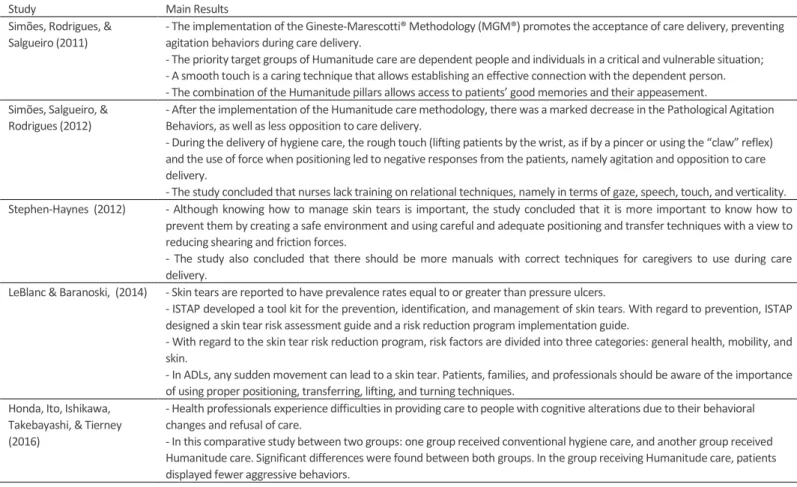
Table 1 shows a summary description of the five selected articles in chronological order.
Table 1. Main results of the studies
Study Main Results
Simões, Rodrigues, & Salgueiro (2011)
- The implementation of the Gineste-Marescotti® Methodology (MGM®) promotes the acceptance of care delivery, preventing agitation behaviors during care delivery.
- The priority target groups of Humanitude care are dependent people and individuals in a critical and vulnerable situation; - A smooth touch is a caring technique that allows establishing an effective connection with the dependent person. - The combination of the Humanitude pillars allows access to patients’ good memories and their appeasement. Simões, Salgueiro, &
Rodrigues (2012)
- After the implementation of the Humanitude care methodology, there was a marked decrease in the Pathological Agitation Behaviors, as well as less opposition to care delivery.
- During the delivery of hygiene care, the rough touch (lifting patients by the wrist, as if by a pincer or using the “claw” reflex) and the use of force when positioning led to negative responses from the patients, namely agitation and opposition to care delivery.
- The study concluded that nurses lack training on relational techniques, namely in terms of gaze, speech, touch, and verticality. Stephen-Haynes (2012) - Although knowing how to manage skin tears is important, the study concluded that it is more important to know how to
prevent them by creating a safe environment and using careful and adequate positioning and transfer techniques with a view to reducing shearing and friction forces.
- The study also concluded that there should be more manuals with correct techniques for caregivers to use during care delivery.
LeBlanc & Baranoski, (2014) - Skin tears are reported to have prevalence rates equal to or greater than pressure ulcers.
- ISTAP developed a tool kit for the prevention, identification, and management of skin tears. With regard to prevention, ISTAP designed a skin tear risk assessment guide and a risk reduction program implementation guide.
- With regard to the skin tear risk reduction program, risk factors are divided into three categories: general health, mobility, and skin.
- In ADLs, any sudden movement can lead to a skin tear. Patients, families, and professionals should be aware of the importance of using proper positioning, transferring, lifting, and turning techniques.
Honda, Ito, Ishikawa, Takebayashi, & Tierney (2016)
- Health professionals experience difficulties in providing care to people with cognitive alterations due to their behavioral changes and refusal of care.
- In this comparative study between two groups: one group received conventional hygiene care, and another group received Humanitude care. Significant differences were found between both groups. In the group receiving Humanitude care, patients displayed fewer aggressive behaviors.
Melo, R., Pereira, A., Fernandes, E., Freitas, N. & Melo, A. (2017). Prevention of Skin Tears in the Dependent Older Person: Contribution of the Humanitude Care Methodology. Millenium, 2(3), 45-51.
m
50
3
4. DISCUSSION
Skin tears have been reported in the literature in the United States and Australia with prevalence rates equal to or greater than those of pressure ulcers (LeBlanc & Baranoski, 2014). Studies show that skin tears usually occur during the hours of 6:00 AM to 11:00 AM and 3:00 PM to 9:00 PM, which are moments of peak activity/care delivery to dependent older people (LeBlanc & Baranoski, 2011). For this reason, nurses are in a privileged position to identify older people at risk for skin tears and apply the best preventive measures in each situation.
The scientific knowledge about skin anatomy and physiological changes associated with aging helps nurses to identify risk factors. Therefore, they must possess skills not only to treat skin tears, but also to prevent them by applying their knowledge about each patient’s predisposing factors (Stephen-Haynes, 2012), thus avoiding the pain and suffering caused by skin tears (Souza & Santos, 2006).
The factors increasing the likelihood of skin tears must be identified in order to lower the incidence of this type of wound. According to LeBlanc and Baranoski (2014), older people with impaired cognition and who need assistance in ADLs are at high risk for skin tears due to defensive-aggressive and agitation behaviors, which increase the risk of mechanical trauma caused by a sudden movement while the patient is receiving hygiene care, being dressed, positioned, or transferred. These sudden movements, often associated with the force exerted by the patient when he/she does not understand the care being provided and adopts defensive behaviors, should be avoided. To achieve this, it is essential to negotiate and involve the patient in care (Phaneuf, 2010; Salgueiro, 2014) by using careful and adequate positioning and transfer techniques with a view to reducing shearing and friction forces (Stephen-Haynes, 2012).
Therefore, the Humanitude care methodology, characterized by the use of appeasing relational techniques adequate to older patients, has had positive results, namely the significant reduction in patients’ resistance and/or opposition to care delivery and in the frequency of pathological agitation behaviors (Gineste & Pellissier, 2008; Honda et al., 2016).
The pillars of Humanitude (gaze, speech, and touch) must be combined to access the patient’s good memories and appease them, thus avoiding skin tears in older people with agitation behaviors (Simões et al., 2011). The nurse must provide care using gentle movements, using a smooth touch throughout care delivery and avoiding lifting the dependent person by the wrist, as if by a pincer or using the “claw” reflex so as to build an effective relationship with him/her and reduce his/her agitation, opposition to care, and counterforce (Simões et al., 2011; 2012).
In addition to meeting ISTAP recommendations for the prevention of skin tears, this care methodology provides replicable relational techniques and explains how to touch the patient, establish eye contact, and communicate verbally. It also explains how to reduce and prevent agitation/aggression behaviors by applying the structured sequence of Humanitude care procedures and avoiding the use of invasive gestures and surprise approaches (Simões et al., 2012).
CONCLUSIONS
Studies show that older people with impaired cognition and in need of assistance with ADLs display defensive-aggressive and agitation behaviors, which puts them at a higher risk for skin tears. The most common risk factors for skin tears include sudden movements of patients or nurses, which mainly occur while the patient is receiving hygiene care, being dressed, positioned, or transferred.
International preventive measures provide an important contribution for the prevention of skin tears and recommend the use of thoughtful techniques to reduce the risk of skin tears in the older person. However, there are gaps in the characterization and operationalization of thoughtful and appropriate techniques.
Therefore, the context of care delivery to people with behavioral changes requires knowledge and intentionality in all actions. Within this scope, the Humanitude care methodology can significantly contribute toward the operationalization and systematization of the relationship based on the nurse’s implementation of specific and intentional relational techniques, with the purpose of achieving the patient’s sensory capture through gaze, speech, and touch. These techniques are performed with gentle movements and in a quiet environment, thus banning care delivery using force and surprise.
In addition, studies show that the Humanitude care methodology allows reducing the frequency of psychomotor agitation behaviors and refusal of care in dependent older people. Both the older person and the nurse make fewer sudden movements caused by counterforce during care delivery, thus reducing the risk factors for skin tears related to the patient’s agitation, mobility, and transferring.
The results open the way for reflection and guidance for further research on this topic, which will lead to an increase in the number of studies conducted and the production of knowledge about the prevention of skin tears and the development of practical guidelines.
Further studies should be developed to confirm or reject the results of this study, and analyze the issue of skin tears in Portugal from multiple theoretical and methodological perspectives.
Melo, R., Pereira, A., Fernandes, E., Freitas, N. & Melo, A. (2017).
Prevention of Skin Tears in the Dependent Older Person: Contribution of the Humanitude Care Methodology. Millenium, 2(3), 45-51.
m
3
51
REFERENCES
Araújo, J., Melo, R., & Alves, R. (2014). Cuidados em humanitude na redução dos comportamentos de agitação e recusa de cuidados. In Atas Do Congresso Internacional De Enfermagem De Reabilitação. Referência, Suplemento 1(IV), 49. Araújo, J., Alves, R., & Oliveira, O. (2012). Impacto da Metodologia de Cuidados Humanitude na redução da agitação e consumo
de psicotrópicos nas pessoas idosas internadas. In Unidade de Investigação em Saúde e Escola Superior de Saúde de Leiria (Orgs.). Livro de resumos: Congresso Internacional de Saúde do IP Leiria (p. 135). Leiria: Instituto Politécnico de Leiria.
Battersby, L. (2009). Exploring best practice in the management of skin tears in older people. Nursing Times, 105(16), 22-26. Delmas, C. (2013). Are difficulties in caring for patients with Alzheimer’s disease becoming an opportunity to prescribe well-being
with the Gineste-Marescotti® care methodology? Recuperado de: http://humanitude-usa.com/wp-content/uploads/2015/11/IPRIM-poster.pdf
Faria, H., Paiva, A., & Marques, P. (2012). A restrição física da mobilidade: Estudo sobre os aspetos ligados à sua utilização com fins terapêuticos. Revista de Enfermagem Referência, 3(6), 7-16.
Firmino, H., Nogueira, V., Neves, S., & Lagarto, L. (2014). Psicopatologia das pessoas mais velhas. In Veríssimo, M.T. (Ed.),
Geriatria Fundamental: Saber e prática (1ª ed., pp. 143-157). Lisboa: LIDEL.
Gineste, Y., & Pellissier, J. (2008). Humanitude: Cuidar e compreender a velhice. Lisboa: Instituto Piaget.
Honda, M., Ito, M., Ishikawa, S., Takebayashi, Y., & Tierney, L. (2016). Reduction of behavioral psychological symptoms of dementia by multimodal comprehensive care for vulnerable geriatric patients in an acute care hospital: A case series.
Case Reports in Medicine. doi: 10.1155/2016/4813196.
INE (2016). Dados estatísticos – Base de dados. Recuperado de: https://www.ine.pt/xportal/xmain?xpid=INE&xpgid=ine_base_dados LeBlanc, K., & Baranoski, S. (2009). Prevention and management of skin tears. Advances in Skin and Wound Care, 22(7), 325-332. LeBlanc, K., & Baranoski, S. (2011). Skin tears: state of the science: consensus statements for the prevention, prediction,
assessment, and treatment of skin tears. Advances in Skin and Wound Care, 24(9), 2-15.
LeBlanc, K., & Baranoski, S. (2014). Skin tears: The forgotten wound. Nursing Management, 45(12), 36-47.
OECD (2015). OECD Reviews of Health Care Quality: Portugal 2015: Raising Standards, OECD Publishing, Paris. Recuperado de: http://dx.doi.org/10.1787/9789264225985-en
Organização Mundial de Saúde (2016). Demência. Recuperado de http://www.who.int/mediacentre/factsheets/fs362/es/. Phaneuf, M. (2010). O envelhecimento perturbado: A doença de Alzheimer (2.ªed.). Loures: Lusodidacta.
Pinto, J., & Queirós, P. (2015). Comunicação paradoxal em contexto hospitalar: reflexão sobre as dificuldades comunicacionais entre profissionais de saúde e doentes. In E-Boock: VI Congresso Internacional da ASPESM. A Pessoa, a família, a
Comunidade e a Saúde Mental (p. 116-227). Ponta Delgada: ASPESM.
Ramalho, A. (2005). Manual para redacção de estudos e projetos de revisão sistemática com e sem metanálise: Estrutura funções
e utilização na investigação em enfermagem. Coimbra: Formasau-Formação e Saúde.
Ribeiro, D. (2013). Validação e adaptação transcultural para a língua portuguesa em Portugal do instrumento de avaliação de skin tears, Star Skin Tear Classification System (Dissertação de Mestrado). Recuperado de: http://hdl.handle.net/10400.14/13568.
Salgueiro, N. (2014). Humanitude: um imperativo do nosso tempo: introdução à metodologia de cuidado Gineste-Marescotti. Coimbra: IGM Portugal-Humanidade.
Santos, É. I., Gomes, A. M. T., Barreto, E. A. S., & Ramos, R.S. (2013). Evidências científicas sobre fatores de risco e sistemas de classificação das skin tears. Revista Enfermagem Atual In Derme, 64, 16-21.
Sequeira, C. (2007). Cuidar de idosos dependentes. Coimbra: Quarteto Editora
Simões, M., Rodrigues M., & Salgueiro, N. (2011). Importância e aplicabilidade aos cuidados de enfermagem do método de Cuidados de Humanitude Gineste-Marescotti®. Revista de Enfermagem Referência, 3(4), 69-79.
Simões, M., Salgueiro, N., & Rodrigues, M. (2012). Cuidar em Humanitude: estudo aplicado em cuidados continuados. Revista de
Enfermagem Referência, 3(6), 81-93.
Souza, D. M., & Santos, V. L. (2006). Úlceras por pressão e envelhecimento. Revista Estima, 4(1), 36-44.
Stephen-Haynes, J. (2012). Skin tears: achieving positive clinical and financial outcomes. British Journal of Community Nursing,