REGULAR ARTICLE
THE CONTENT OF HEAVY METALS IN PASTURES FROM MIDDLE SPIŠ AREA
Radovan Stanovič*1,Július Árvay1, Alena Vollmannová1, Marek Slávik1, Juraj Miššík2
Address: Ing. Radovan Stanovič, PhD., Slovak University of Agriculture, Faculty of
Biotechnology and Food Sciences, Department of Chemistry, in Nitra, Tr. A. Hlinku 2, 949 76 Nitra, Slovakia.
1Department of Chemistry, Faculty of Biotechnology and Food Sciences, Slovak University
of Agriculture, Tr. A. Hlinku 2, 949 76 Nitra, Slovakia, +421 37 641 4378.
2Department of Biochemistry and Biotechnology, Faculty of Biotechnology and Food
Sciences, Slovak University of Agriculture, Tr. A. Hlinku 2, 949 76 Nitra, Slovakia, +421 37 641 4474.
*Corresponding author: [email protected]
ABSTRACT
The aim of this work is to show the importance of monitoring and soil hygienic quality evaluation in the eastern Slovakia area. In the past, when no emphasis was put on ecology, as it is nowadays, there was an uncontrolled emission of pollutants from different fields of anthropogenic activities. The consequences are manifested also nowadays, but immediate and expensive solutions are needed. In this work the results of the research of soil heavy metals contamination degree as well as their plant availability depended on soil reaction in the area of “middle Spiš” have been presented. The choice of this area is related to specific of mentioned the areas above are characteristic by anthropogenic (emission), but also natural (geochemical) contamination and intensive agricultural activity, too.
INTRODUCTION
Persistence and accumulation of heavy metals in the environment is closely related to their intensive use in modern society, while continuing to contribute to the amount of content in the biosphere, which will be automatically reflected adversely on all levels of the food chain, soil quality and the environment.
Environmental Policy of the European Union in recent years has changed significantly in the direction of improving access to soil contamination and pollution sources. Soil as a conglomerate of mineral components, organic matter - humus, living organisms, air and water is vital for a healthy and viable population. In today's urban areas, the soil is shaken. Most affected are roads and adjacent areas. Anthropogenic material (exhaust, oil residue, particles of tire components weathered surfaces of roads) together with the natural biogenic material (fallen leaves and other plant material) can be adsorbed on its surface dust and thus represent a potential vector contamination larger area (Omar et al. 2007).
Since the beginning of the industrial revolution there has been a dramatic increase in the level of contamination of the biosphere by heavy metals. With the amount of resources among the hardest soil contamination contributes to the metallurgical industry. In most developed countries, is now the primary task of caring for contaminated soil due to persistence of heavy metals in the environment and the negative effects on environment and human health (Cui et al., 2005).
Atmospheric deposition is related to the clearing of the atmosphere by dry or wet. It is one of the most important sources of soil contamination. The territory of Slovakia has the disadvantage that the air masses bring emissions from western Europe and most particularly through wet deposition increase the level of soil contamination. (Alloway, et al., 1997). Atmospheric deposition of contaminants (heavy metals) derived from the atmosphere accumulates and is concentrated mainly in the upper soil layer. It is very difficult to discern the amount of heavy metals taken root system and leaf area, especially for lead (Hovmand et al., 2008).
Heavy metals are ubiquitous part of the environment as a result of mutual natural and anthropogenic activities causing increased exposure of human populations to their effects through various channels (Wilson - Pyatt, 2007, Poti et al., 2012). Increasing concentrations of certain trace elements, especially their mobile forms can cause serious environmental concern about contamination and accumulation in soil, vegetation, animals, respectively, surface and ground waters (Chopin - Alloway, 2007).
The primary source of environmental contamination are mainly metals, which main part is particularly lead, zinc or copper, in addition, antimony, arsenic, mercury, cadmium, thallium, gallium, and others (Cardoso, et al. 2001). In addition to the production of metals is a very important source of environmental contamination by metals and burning of fossil fuels, especially coal. Increasingly important source of environmental pollution with heavy metals is becoming a burning municipal waste streams and pollution effluents containing elevated levels of toxic metals (Bencko et al., 1995).
Area of interest for tracking distribution of heavy metals in the soil - plant an area which was previously loaded by emissions from the Iron Ore mine Rudňany. This is the area of some 100 km2. The most serious contaminants from this source were mercury and
accompanying contaminants were Cd, Cu, Zn and SO2. Fumes from this company burdened
emissions area of 1922. In 1985 mercury smelter issued annually from 4.64 to 6.5 t Hg. Mercury smelter was shut down in 1993, but the impact of its operations on the register now, and this is reflected in the quality of soil and plants but also to the health of the population.
MATERIAL AND METHODS
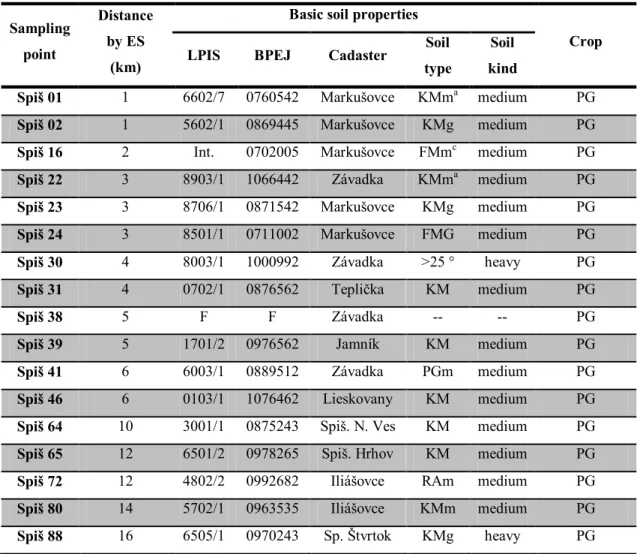
In the present work, we focused on monitoring the level of contamination of permanent grassland (PG) in the middle Spiš area - districts Spišská Nová Ves, Gelnica, Rožňava and Levoča. In 2012, we monitored levels of selected risk metals in soil and PG. Delivery points are precisely defined by GPS coordinates. Table 1 shows the basic soil conditions of the soil samples chosen, which have a significant impact on the behaviour of the risk elements. The identical sites, we sampled soil depth from 0.0 to 0.20 m PG samples. In the samples (n = 17) we performed basic soil agrochemical analysis: pH - H2O (ISO 10390),
pH - CaCl2 (ISO 10390) and humus, which have a significant effect on the distribution of
regia extract (STN ISO 11466). To assess the risk of the reference area because of the possibility of heavy transition metals were sampled identical sampling sites of PG.
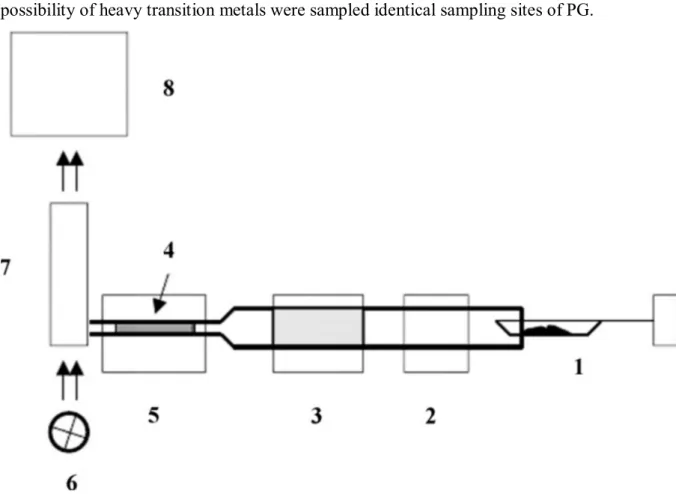
Figure 1Scheme of the AMA 254 spectrometer. (1) Sampling boat, (2) decomposition furnace, (3)
catalytic column, (4) gold amalgamator, (5) releasing furnace, (6) mercury cathode lamp, (7) optical cell system, and (8) detector (Spěváčková et al., 2004).
RESULTS AND DISCUSSION
Table 1 Basic characteristics of the soil samples and the types of crops grown on the land interest
Sampling point
Distance by ES
(km)
Basic soil properties
Crop
LPIS BPEJ Cadaster Soil
type
Soil kind
Spiš 01 1 6602/7 0760542 Markušovce KMma medium PG
Spiš 02 1 5602/1 0869445 Markušovce KMg medium PG
Spiš 16 2 Int. 0702005 Markušovce FMmc medium PG
Spiš 22 3 8903/1 1066442 Závadka KMma medium PG
Spiš 23 3 8706/1 0871542 Markušovce KMg medium PG
Spiš 24 3 8501/1 0711002 Markušovce FMG medium PG
Spiš 30 4 8003/1 1000992 Závadka ˃25 ° heavy PG
Spiš 31 4 0702/1 0876562 Teplička KM medium PG
Spiš 38 5 F F Závadka -- -- PG
Spiš 39 5 1701/2 0976562 Jamník KM medium PG
Spiš 41 6 6003/1 0889512 Závadka PGm medium PG
Spiš 46 6 0103/1 1076462 Lieskovany KM medium PG
Spiš 64 10 3001/1 0875243 Spiš. N. Ves KM medium PG
Spiš 65 12 6501/2 0978265 Spiš. Hrhov KM medium PG
Spiš 72 12 4802/2 0992682 Iliášovce RAm medium PG
Spiš 80 14 5702/1 0963535 Iliášovce KMm medium PG
Spiš 88 16 6505/1 0970243 Sp. Štvrtok KMg heavy PG
The most significant effect on the translocation of heavy metals in the system of solid
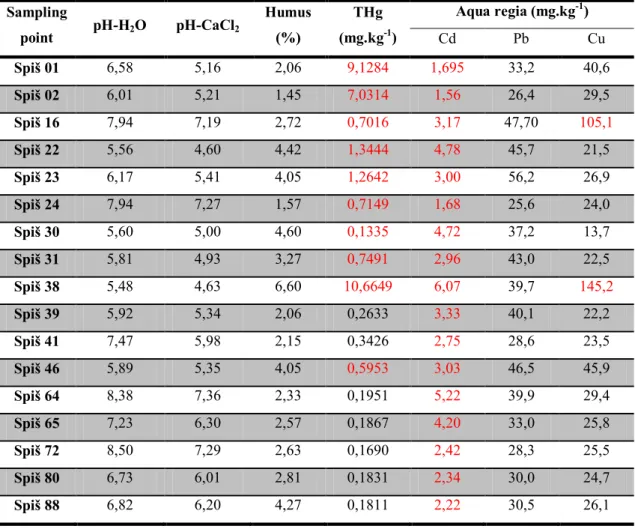
phase - liquid phase has a pH. The studied sites are active at pH varied averaging 6.58 ± 1.03 (median ± standard deviation) and exchange activity 5.41 ± 0.96. The obtained
and emission source THg content in the sample. Total contents of other elements observed in
the upper soil horizon were in the following intervals: Cd - 3.00±1.32 mg.kg-1,
Pb - 37.2±8.73 mg.kg-1 and Cu - 25.80 ± 34.20 mg.kg-1. Exceeding the limit values defined by
the law 220/2004 was recorded in cadmium (0.70 mg.kg-1) in all cases. The maximum
overshoot was recorded at the point of delivery "Spiš 38" and up to 767%. At other sampling sites were below the excess. In the case of copper we had exceeded the limit of 60 mg.kg-1 for the two sampling locations and the point of delivery "Spiš 16", where the measured value exceeds the limit of 75% and at the point of delivery "Spiš 38", where the value was exceeded increased by 142%. For lead, we exceeded the limit of 70 mg.kg-1 recorded.
Table 2 The resulting value of the underlying agrochemical indicators, total mercury and
total other watched heavy metals in aqua regia extracts of soil Sampling
point pH-H2O pH-CaCl2
Humus (%)
THg (mg.kg-1)
Aqua regia (mg.kg-1)
Cd Pb Cu
Spiš 01 6,58 5,16 2,06 9,1284 1,695 33,2 40,6
Spiš 02 6,01 5,21 1,45 7,0314 1,56 26,4 29,5
Spiš 16 7,94 7,19 2,72 0,7016 3,17 47,70 105,1
Spiš 22 5,56 4,60 4,42 1,3444 4,78 45,7 21,5
Spiš 23 6,17 5,41 4,05 1,2642 3,00 56,2 26,9
Spiš 24 7,94 7,27 1,57 0,7149 1,68 25,6 24,0
Spiš 30 5,60 5,00 4,60 0,1335 4,72 37,2 13,7
Spiš 31 5,81 4,93 3,27 0,7491 2,96 43,0 22,5
Spiš 38 5,48 4,63 6,60 10,6649 6,07 39,7 145,2
Spiš 39 5,92 5,34 2,06 0,2633 3,33 40,1 22,2
Spiš 41 7,47 5,98 2,15 0,3426 2,75 28,6 23,5
Spiš 46 5,89 5,35 4,05 0,5953 3,03 46,5 45,9
Spiš 64 8,38 7,36 2,33 0,1951 5,22 39,9 29,4
Spiš 65 7,23 6,30 2,57 0,1867 4,20 33,0 25,8
Spiš 72 8,50 7,29 2,63 0,1690 2,42 28,3 25,5
Spiš 80 6,73 6,01 2,81 0,1831 2,34 30,0 24,7
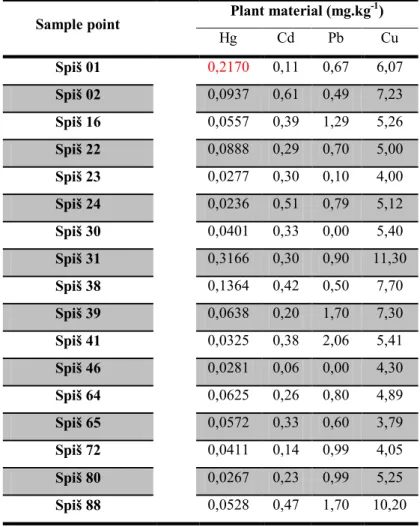
Table 3 The resulting values of the monitored content of risk elements in PG
Sample point Plant material (mg.kg
-1)
Hg Cd Pb Cu
Spiš 01 0,2170 0,11 0,67 6,07
Spiš 02 0,0937 0,61 0,49 7,23
Spiš 16 0,0557 0,39 1,29 5,26
Spiš 22 0,0888 0,29 0,70 5,00
Spiš 23 0,0277 0,30 0,10 4,00
Spiš 24 0,0236 0,51 0,79 5,12
Spiš 30 0,0401 0,33 0,00 5,40
Spiš 31 0,3166 0,30 0,90 11,30
Spiš 38 0,1364 0,42 0,50 7,70
Spiš 39 0,0638 0,20 1,70 7,30
Spiš 41 0,0325 0,38 2,06 5,41
Spiš 46 0,0281 0,06 0,00 4,30
Spiš 64 0,0625 0,26 0,80 4,89
Spiš 65 0,0572 0,33 0,60 3,79
Spiš 72 0,0411 0,14 0,99 4,05
Spiš 80 0,0267 0,23 0,99 5,25
Spiš 88 0,0528 0,47 1,70 10,20
To assess the level of contamination of the food chain are identical sampling points collected plant material. Since they were grassy vegetation, plant material was instantiated. In all cases, we performed analyzes to ascertain the risk elements observed in the aboveground biomass, which is an objective indicator of the level of contamination of air pollutants affected areas. (Takáč, et al., 2009). Mercury content in the monitored aboveground biomass fluctuated within a relatively wide range. We found concentrations which were in the range of 0.0557 ± 0.0780 mg.kg-1. A high standard deviation indicates a wide interval, which is
confirmed by the measured minimum and maximum values (from 0.0236 to 0.3166 mg.kg-1).
The maximum amount of THg for compound feed (0.1 mg.kg-1) (also MLA), which
NPM. The cadmium and lead are exceeded or NPM recorded at one sampling site. The maximum amount of copper Act 438/2006 Coll mentioned.
CONCLUSION
In the present work we aimed to determine the level of contamination of the top soil layer, intended for production of food ingredients. Total contents of risk elements studied show increased concentration in the extract aqua regia, which generally evaluates the monitored area as risky. High-risk area is located mainly within 5 km from the emission source to the west and southwest. We gained contents of heavy metals in the soil which are closely correlated with the contents of the PG, where in the case of mercury was recorded exceeding the MLA. For a more thorough assessment of the level of risk of the reference area should be thorough and long-term monitoring of all factors that greatly contribute to reducing the quality level of the ecosystem, which is even longer (19 year) idle source of contamination, high hit.
Acknowledgments: This work was supported by the project VEGA 1/0724/12 "Specific
points, diffusion and profiled mercury contamination of production areas in central Spiš, northern Gemer inputs and minimize the possibility of Hg in plant products."
REFERENCES
ALLOWAY, B. J. – AYRES, D. C. 1997. Chemical principles of environmental pollution. In
Blackie Academic and Professional, London 1997, 395 p.
BENCKO, V. – CIKRT, M. – LENER, J. 1995. Toxic metals in the environment and the working environment human. In Grada Publishing, 1995. 288 p. ISBN 80-7169-150-1.
CARDOSO, A. G. A. - BOAVENTURA, G. R. - SILVA FILHO, E. V. - BROA, J. A. 2001. Metal distribution in sediments from the Ribeira Bay, Rio de Janeiro - Brazil. In J. Braz. Chem. Soc., vol. 12, no. 6, p. 767 – 774.
CUI, Y. J. – ZHU Y. G. – ZHAI, R. H. – HUANG, Y. – QIU, Y. – LIANG, J. Z. 2005. Exposure to metal mixtures and human health impacts in a contaminated area in Nanning, In
HOVMAND, M. F. – NIELSEN, S. P. – JOHNSEN, I. 2008. Root uptake of lead by Norway spruce grown on 210Pb spiked soils. In Environmental Pollution, doi:10.1016/j.envpol.
2008.09.038.
CHOPIN, E. I. B. – ALLOWAY, B. J. 2007. Distribution and mobility of trace elements in soils and vegetation around the mining and smelting areas of Tharsis, Rıótinto and Huelva, Iberian Pyrite Belt, SW Spain. In Water, Air & Soil Pollution, vol. 182, 2007, p. 245–261. OMAR, N. Y. M. J. – ABAS, M. R. B. – RAHMAN, N. A. – TAHIR, N. M. – RUSHDI, A. I. – SIMONEIT, B. R. T. 2007. Levels and distributions of organic source tracers in air and roadside dust particles of Kuala Lumpur, Malaysia. In Environmental Geology, vol. 52, 2007, p. 1485–1500.
PÓTI, P. – PAJOR, F. – BODNÁR, Á. – BÁRDOS, L. 2012. Accumulation of some heavy metals (Pd, Cd and Cr) in milk of grazing sheep in north-east Hungary. In Journal of microbiology, Biotechnology and Food Sciences, vol. 2, no. 1, p. 389 – 394.
SPĚVÁČKOVÁ, V. - KORUNOVÁ, V. - CĚJCHANOVÁ, M. - VOBECKÝ , M. 2004. Sampling procedure and a radio-indicator study of mercury determination in whole blood by using an AMA 254 atomic absorption spectrometer. In Anal. Bioanal. Chem., vol. 380, 346– 350.
TAKÁČ, P. – SZABOVÁ, T. – KOZÁKOVÁ, Ľ. – BENKOVÁ, M. 2009. Heavy metals and their bioavailability from soils in the long-term polluted Central Spiš region of SR. In Plant Soil Environ., vol. 55, no. 4, 2009, p. 167 – 172.
WILSON, B. – PYATT, F.B. 2007. Heavy metal dispersion, persistence, and bioaccumulation around an ancient copper mine situated in Anglesey. UK. In Ecotoxicology and Environmental Safety, vol. 66, 2007, p. 224 – 231.