___________________________
Corresponding author:Jasmina Nikodinovi -Runi ,Institute of Molecular Genetics and Genetic Engineering, University of Belgrade, Vojvode Stepe 444a, P.O.Box 23, 11010 Belgrade, Serbia Telephone: +381 11 3976034,bFax: +381 11 3975808,E-mail: [email protected] [email protected]
UDC 575 DOI: 0.2298/GENSR1303703M
Original scientific paper
LIMITED AROMATIC PATHWAY GENES DIVERSITY AMONGST AROMATIC COMPOUND DEGRADING SOIL BACTERIAL ISOLATES
Gordana MINOVSKA, Tanja NARAN I , Mina MANDI , Lidija ŠENEROVI , Branka VASILJEVI and Jasmina NIKODINOVI -RUNI
Institute of Molecular Genetics and Genetic Engineering, University of Belgrade, Belgrade, Serbia
Minovska G., T. Naran i , M. Mandi , L. Šenerovi , B.Vasiljevi and J. Nikodinovi -Runi (2013): Limited aromatic pathway genes diversity amongst aromatic compound degrading soil bacterial isolates. Genetika, Vol 45, No. 3,
703 -716.
Identification and characterization of novel genes belonging to microbial aromatic biodegradation pathway is of great importance as they have been proven versatile biocatalysts. In this study, the selection of 19 environmental bacterial isolates capable to degrade a wide range of aromatic compounds has been screened for the presence of five genes from the lower and the upper aromatic biodegradation pathway using PCR methodology. In the case of 4-oxalocrotonate tautomerase and toluene dioxygenases, although present in the most of environmental isolates, very limited diversity of the genes has been encountered. Highly conserved sequences of these genes in environmental samples revealed high homology with gene sequences of the characterised corresponding genes from Pseudomonas putida species. The screen using
degenerate primers based on known catechol- and naphthalene dioxygenases sequences resulted in a limited number of amplified fragments. Only two catechol 2,3-dioxygenase from two Bacillus isolates were amplified and showed
environmental samples isolated from the contaminated environment suggested horizontal gene transfer while limited success in PCR detection of the other three genes indicates that these isolates may still be a source of novel genes.
Key words: Biodegradation, aromatic compounds, 4-oxalocrotonate
tautomerase
INTRODUCTION
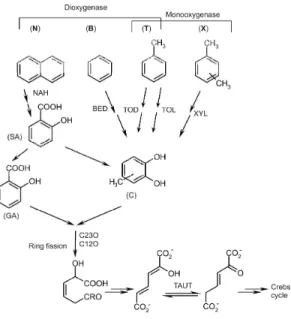
Aromatic hydrocarbon-polluted sites represent a long-term source of pollution and pose a severe risk to environmental health. In addition, these sites are rich source of microorganisms that have the metabolic pathways for their biodegradation (Fig. 1) (ANDREONI and GIANFREDA, 2007; NARANCIC et al.,2012A). Microbial degradation of these pollutants is regarded as a promising approach to clean up contaminated sediments (ANDREONI and GIANFREDA, 2007). Genes for the degradation of many contaminants are often plasmid encoded (DIGIOVANNI et al.,
1996; TOP and SPRINGAEL, 2003). It has been established that plasmid DNA plays an important
role in genetic adaptation as it represents a highly mobile form of DNA which can be transferred via conjugation or transformation and can confer novel advantageous phenotypes, including hydrocarbon- oxidizing ability, to recipient organisms (LEAHY and COLWELL, 1990). More
recently, microbial oxygenases, especially ones from the aromatic degradation pathways, are receiving growing attention due to their applicability in biocatalysis (HOLLMANN et al., 2011;
NOLAN and O’CONNOR, 2008).
It has been recognized that one of the most challenging reactions in organic synthesis is the regiospecific hydroxylation of the aromatic ring (ULLRICH and HOFRICHTER, 2007). The ring-hydroxylating dioxygenases of prokaryotes are nonheme iron enzymes that convert aromatic compounds to dihydrodiols in the presence of dioxygen and NADH. The ability of oxygenases and oxidases to regiospecifically hydroxylate the aromatic ring or side chain substituent of an aromatic substrate presents opportunities for biocatalysis to synthesize compounds such as dihydrodiols and catechols that are otherwise difficult to synthesize (BURTON, 2003; NOLAN and O’CONNOR, 2008). Furthermore, enzyme mediated oxidations
operating under mild conditions with usually high selectivity are increasingly resorted to as more environmentally suitable option (HOLLMANNet al., 2011).
The new addition to green-chemistry tool-box is 4-oxalocrotonate tautomerase (4-OT; TAUT), encoded by xylH gene. As a part of aromatic compounds degradation pathway in Pseudomonas putida mt-2 it naturally catalyzes the conversion of
2-hydroxyhexa-2,4-dienedioate into 2-oxo-3-hexendioate (HARAYAMA et al., 1989). This particular enzyme has recently been suggested as an important bridging link between organo- and biocatalysis (ZANDVOORT et al., 2012a). Due to its promiscuous activity, 4-OT was described to catalyse Michael-type addition of acetaldehyde to -nitrostyrene , the isomerisation of cis-nitrostyrene to
trans-nitrostyrene as well as aldol condensation and dehydratation activities with good
enantioselectivity (ZANDVOORT et al., 2012a; ZANDVOORTet al., 2012b). This ability makes this
enzyme exceptionally desirable target for further development into applicable biocatalyst. The aim of this work was to identify potentially novel genes for biocatalysis, preferably novel 4-oxalocrotonate tautomerases and dioxygenases amongst different bacterial isolates with the established ability to degrade 15 different aromatic compounds (NARANCIC et al., 2012a;
variants of aromatic pathway genes as they were mostly Gram-positive species that are usually not known as aromatic degraders. Firstly, we have screened for the potentially novel 4-OT genes belonging to lower aromatic degradation pathway and followed by the screen for oxygenase genes (C23O, C12O, NAPH and TOD) from the upper aromatic degradation pathway (Fig. 1).
Figure 1. Schematic presentation of the microbial aerobic degradation of aromatic compounds: napthalene (N), benzene (B), toluene (T) and xylenes (X). Napthalene is initially oxygenated by napthalene dioxygenase (NAH) and further degraded to yield salicylate (SA). SA is metabolised either through gentisic acid (GA) or through catechol (C). Similarly, monoaromatic compounds are initially oxygenated via dioxygenases (BED and TOD) or monooxygenases (TOL and XYL) to yield catechols. Ring fission is carried out by catechol dioxygenases (C23O). Further in the degradation pathway, the enzyme that converts 2-hydroxymuconate to 2-oxo-3-hexenedionate is called 4-oxalocrotonate tautomerase (TAUT or 4-OT).
MATERIALS AND METHODS
Reagents
extract and other media components were purchased from Becton Dickinson (Sparks, MD, USA).
Microorganisms and culture conditions
All 19 TN bacterial strains were previously isolated and characterized as aromatic carbon compounds degrading bacteria from the sediment collected from the Tamis river banks in close proximity to petrochemical industry effluents collector (NARANCIC et al., 2012a). Isolates have been taxonomically identified and sequences for 16S rRNA genes were deposited in GenBank under Accession numbers: JN800323-JN800341.
Pseudomonas putida KT2440 (ATCC 47054) and Pseudomonas aeruginosa PAO1
(ATCC 47085) strains were from the American Type Culture Collection (ATCC), while
Pseudomonas putida mt-2 (NCIMB10432), toluene and m- and p-xylene degrader, was obtained
from NCIMB culture collection (Aberdeen, Scotland, UK) and used as the source of xylH gene
(WORSEY and WILLIAMS, 1975).
All strains were maintained in mineral salts medium (MSM) containing Na2HPO4×12H2O (9 g l-1), KH2PO4 (1.5 g l-1), NH4Cl (1 g l-1), MgSO4×7H2O (0.2 g l-1), CaCl2
(0.002 g l-1), trace element solution (1 ml l-1) (SCHLEGEL et al., 1961) and glucose (10 g l-1) as a
carbon source. Strains were grown at 30°C for 5 days on the orbital shaker at 180 rpm. When necessary, the medium was solidified by adding 1.5% (w/v) bacteriological agar Becton Dickinson (Sparks, MD, USA).
Escherichia coli DH5 (Invitrogen, Darmstadt, Germany) was used for subcloning and was maintained in Luria-Bertani (LB) complex medium (SAMBROOK et al., 1989). Ampicillin
(50 g ml-1) was routinely used to select and maintain ampicillin resistance (ampR).
Isolation of genomic DNA and PCR based screening for genes involved in the aromatic compounds degradation pathway
Total genomic DNA from pure bacterial cultures was isolated according to the procedure previously developed for Streptomyces strains (NIKODINOVIC et al., 2003) and was applied to all bacterial strains without modifications. DNA concentration was quantified spectrophotometrically (A260/280; NanoVue, GE Healthcare, Buckinghamshire, UK).
4-Oxalocrotonate tautomerase and core regions of naphthalene dioxygenase and toluene dioxygenase were amplified using previously described primers (Table 1) and using total gDNA as template (400- 500 ng). Reaction volume was 50 l with 2 mM dNTPs, 2.5 mM MgCl2 and
3% (v/v) DMSO in final concentration. PCR was done on a 2720 Thermal Cycler (Applied Biosystems, Foster City, USA) using the following method: 95°C for 3 min; 30 cycles of 95°C for 30s, 49°C for 40s, and 72°C for 1 min; and a final extension at 72°C for 10 min.
Core regions of catechol 2,3-dioxygenase and catechol 1,2-dioxygnase were amplified using step down PCR program whereby the initial DNA denaturation cycle of 95°C for 3 min was followed by 10 cycles of 95°C for 30s, 61°C for 30s, 15 cycles of 95°C for 30s, 55°C for 30s, 15 cycles 95°C for 30s, 51°C for 30s, and 72°C for 1 min; and a final extension at 72°C for 10 min (ROUX and HECKER, 1997).
on an Applied Biosystems 3130 Genetic Analyser (Foster City, USA) using universal M13f/M13r primers (YANISCH-PERRON et al., 1985). Sequence homologues were identified by the BLASTN algorithm (ALTSCHUL et al., 1997).
Table 1. Oligonucleotide primers used for PCR detection of genes from the microbial aerobic degradation pathway of aromatic compounds.
Primer Target gene Sequence (5’ – 3’) Reference
TAUT-F
4-Oxalocrotonate tautomerase
ATACATATGCCTATTGCCCAGATC
(POELARENDS et al., 2006)
TAUT-R CATGGATCCTCAGCGTCTGACCTTGCT
C23Of Catechol 2,3-dioxygenase
AAGAGGCATGGGGGCGCACCGGTTCGA TCA
(SEI et al., 1999)
C23Or CCAGCAAACACCTCGTTGCGGTTGCC
C12Of
Catechol 1,2-dioxygenase
GARTGGCCNYTNTTYYTNGAYGTN
(AN et al., 2001)
C12Or NARRTGNARRTGNGCNGGNCCCA
NAH-F
Naphthalene dioxygenase
CAAAARCACCTGATTYATGG
(BALDWIN et al.,
2003)
NAH-R AYRCGRGSGACTTCTTTCAA
TOD-F Toluene dioxygenase
ACCGATGARGAYCTGTACC (BALDWIN et al.,
2003)
TOD-R CTTCGGTCMAGTAGCTGGTG
RESULTS AND DISCUSSION Screen for novel 4-OT genes amongst carbon degraders
Aromatic hydrocarbon degrading microorganisms have been isolated from the various environments, mostly from the polluted sites, but they are widespread in the marine and freshwater habitats (SEO et al., 2009). From Tamis river sediments that were affected by the
proximity of a petrochemical industrial site 19 bacterial isolates were characterized to be able to degrade and utilize 15 different aromatic compounds as sole source of carbon and energy (NARANCIC et al., 2012a). These isolates included Gram-positive Rhodococcus sp. (6 isolates), Bacillus sp. (6 isolates), Gordonia sp. (2 isolates), Arthrobacter sp. (2 isolates), Staphylococcus
sp. (1 isolate), and two representatives of Gram-negative representatives - Pseudomonas sp.
TN301and Acinetobacter sp. TN302. As all of the isolates had the ability to utilize p- and o
-xylene as a carbon source, we have decided to screen them for the presence of 4-OT gene, using primers designed to amplify the whole xylH 200 bp fragment from P. putida mt-2 (Table 1).
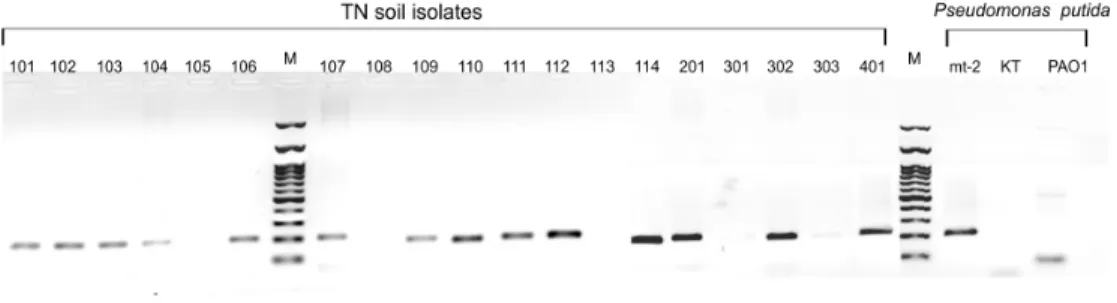
15 out of 19 isolates (Fig. 2). The PCR products were not observed in two Rhodococcus sp.
strains (namely TN105 and TN113) in Gordonia sp. TN108 and Bacillus sp. TN303. In
addition, no PCR product was observed when gDNA from P. putida KT2440 was used as
template and unspecific fragments of less than 100 bp and approximately 600 bp were observed when gDNA from P. putida PAO1 was used as template (Fig. 2). PCR fragments from TN
isolates were successfully cloned in pGEM-T Easy vector and sequenced. Sequencing and analysis revealed 98-100% identity with xylH gene from P. putida mt-2 (data not shown; obtained sequences supplied as on-line Supplemental Information).
Having in mind that 4-OT is one of the enzymes with the smallest subunits (each subunit has only 62 amino acids)with six identical subunits arranged into three dimmers , it is likely thatthe slight differences in amino acid sequence could easily result in the novel overall conformation of the active site neighbourhood and affect the protein activity. Therefore we have carried out the screen for potentially novel 4-OT genes with likelihood of novel promiscuous activities. However, all detected fragments were highly conserved and identical to already described 4-OT from P. putida mt-2 (HARAYAMA et al., 1989).
4-OT is encoded by xylH gene that is found on pWW0 or TOL plasmid which is the
best characterised catabolic plasmid encoding all the enzymes responsible for toluene degradation, as well as degradation of m- and p-xylene and related compounds to acetaldehyde
and pyruvate (CERDAN et al., 1994). This plasmid of 116.5 kb was originally described in
Pseudomonas putida (arvilla) mt-2, with numerous TOL plasmids described since with most encoding similar biochemical pathways and regions of high DNA sequence homology to pWW0 (WILLIAMS et al., 2002). Detailed sequence analysis of this plasmid (GenBank accession number
AJ344068) has revealed its complex evolution and that multiple transposition and recombination events have made a major contribution to its present structure (GREATED et al., 2002; WILLIAMS et al., 2002). TOL plasmids have generally been associated with Gram-negative Pseudomonas
and related species (ANDREONI and GIANFREDA, 2007; WACKETT, 2003). In addition, ‘chromosomal location’ of TOL plasmid was confirmed by conjugation experiments in
Pseudomonas putida MW1000 with 56 kb fragment conferring the ability to grow on toluene in
this strain found to be almost identical to homologous sequence of pWW0 (SINCLAIR et al., 1986).
Figure 2. PCR detection of 4-OT gene (192 bp) in 19 aromatic compounds degrading bacterial isolates and three Pseudomonas species. M; 100 bp Nippon Genetics H3 RTU DNA ladder with the heaviest
PCR screen forcatechol dioxygenases
Having established highly conserved 4-OT sequence amongst representatives of 7 different bacterial genera, indicating potential horizontal gene transfer via one of TOL plasmids, we have decided to assess diversity of catechol dioxygenases as enzymes further up in the aerobic metabolic pathway of aromatic compounds (Fig. 1). Catechol undergoes ring fission that can take place between the two hydroxyl groups, involving action of catechol 1,2-dioxygenase (C12O), or proximal to one of the two hydroxyl groups, involving action of catechol 2,3-dioxygenase (C23O). They are widely distributed in nature, involved in variety of other pathways and exhibit high diversity (ELTIS and BOLIN, 1996; VAILLANCOURT et al., 2006). On
the other hand, they are also biotechnologically important enzymes with C23O (EC 1.13.11.2) mostly used for the biotreatment of wastewaters (GUZIK et al., 2009) and C12O (EC 1.13.11.1) in
production of adipic acid, a raw material for manufacture of resins, pharmaceuticals and agrochemicals (DI NARDO et al., 2009; YOSHIKAWAet al., 1993).
The PCR screen for catechol dioxygenases was performed by using primers designed for the detection of core regions of catechol 2,3-dioxygenase in bacterial populations capable of degrading aromatic compounds via catechol cleavage pathways (SEIet al., 1999). PCR frament
of the expected size of 380 bp was successfully amplified in P. putida mt-2 and P. putida
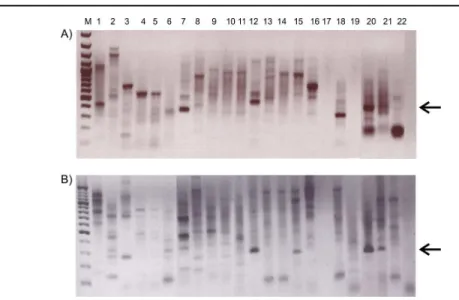
KT2440. Sequencing of the products revealed expected 100% identical sequence with corresponding sequence of xylE fom P. putida mt-2 strain (GenBank accession number M64747) while sequence obtained for the fragment amplified from KT2440 indicated unspecific priming (data not shown). Meanwhile, the correct size fragment was amplified in only two TN isolates, namely Rhodococcus sp. TN101 and Rhodococcus sp. TN112 (Fig. 3A). However, sequencing
data indicated unspecific binding to transcriptional regulators with the highest homology
Rhodococcus erythropolis PR4 gene sequence for putative TetR family transcriptional regulator
(GenBank accession number AP008957, nucleotide region 2286389-2286958) (SEKINE et al.,
2006). Interestingly, two PCR products that appeared shorter in length of approximately 300 bp, amplified using the gDNA from two Bacillus strains (TN107 and TN303, the 7th and 18th line in
the gel after the marker; Fig. 3A) upon sequencing and comparison to the GenBank database showed no significant similarities with C23O dioxygenases from characterized organisms, but between 80-90% identities with partial C23O sequences from uncultured organisms (GenBank accession number AB286741.1) obtained in an effort of functional gene analysis and characterization of the microbial community degrading nonylphenol originating from sewage sludge (Tadashi Shoji, unpublished work). However, the two sequences shared 99% nucleotide sequence identity, again indicating possible gene transfer events amongst TN isolates (Fig. 4). PCR fragment of the correct size of 280 bp was successfully amplified in four TN isolates and both Pseudomonas putida strains (Fig. 3B) using step down PCR methodology due to high
degree of redundancy in C12Of/r sequence (Table 1). However, sequencing data revealed that only PCR product obtained when gDNA of Pseudomonas sp. TN301 was used as template had
significant similarity (95% homology) with core region of catechol 1,2-dioxygenase catA gene
from Pseudomonas putida F1 (ZYLSTRA and GIBSON, 1989). Sequence of PCR products from
Bacillus sp. TN102, Gordonia sp. TN103 and Rhodococcus sp. TN112 had no significant
Figure 3. PCR screen for catechol dioxygenases: A) catechol 2,3-dioxygenase (C23O) and B) catechol 1,2-dioxygenase (C12O). Arrows are pointing to the product of the expected size. M; Fermentas O`Gene 100 bp DNA ladder.
Figure 4. Nucleotide alignment of two core regions of catechol 2,3-dioxygenase (C23O) genes obtained by PCR amplification from Bacillus sp. TN107 and Bacillus sp. TN303 strains.
The correct size fragment was amplified when each gDNA was used as template from
Generally, the aromatic ring-cleaving oxygenases are well studied in terms of the distribution, evolution and reaction mechanisms (VAILLANCOURT et al., 2006). The alignment of 35 different extradiol dioxygenases revealed only nine conserved residues of which, three were metal ligands (ELTIS and BOLIN, 1996). Therefore, they do not appear to be of highly conserved sequence and it seems that they have evolved in accordance to substrate specificity. More recent findings have implicated them in catabolic pathways that do not necessarily involve aromatic compounds (FETZNER, 2012). Genes encoding catechol dioxygenase could be both plasmid and chromosomally encoded. The most of the characterized catechol dioxygenases are encoded by genes located on plasmids as in Pseudomonas sp. HV3, Pseudomonas sp. EST1001, Pseudomonas putida (TOL plasmid), Planococcus sp. S5, Rhodococcus rhodochrous (pTC1
plasmid) (CANDIDUS et al., 1994; CERDAN et al., 1994; HUPERT-KOCUREKet al., 2012; YRJALAet al., 1994). On the other hand, in Pseudomonas putida PaW85, Pseudomonas sp. KL28, Comamonas testosteroni TA 441 and Alcaligenes eutrophus CH34 catechol dioxygenases are
found to be encoded chromosomally (ARAI et al., 2000; JEONGet al., 2003). In versatile aromatic
degrader Cupriavidus necator JMP134 these genes are more or less equally distributed between
chromosomes 1 and 2 indicating probable evolution from ancestral plasmids (LYKIDIS et al., 2010). Although both C23O and C12O catechol dioxygenases have been identified in members of all 7 different genera that TN isolates belonged to using PCR screening approach we were able to detect and confirm only three catechol dioxygenases amongst TN isolates indicating that these aromatic-degrading isolates may possess catechol dioxygenase genes with low sequence homology with those previously published.
PCR based detection of NAPH and TOD dioxygenases
With limited number of catechol dioxygenases detected amongst TN strains, we have expanded the diversity assessment to enzymes belonging to upper aromatic aerobic degradation pathway and included naphthalene and toluene dioxygenase (NAPH and TOD, Fig. 1). Both of these enzymes are versatile biocatalysts (BOYD et al., 2001; BOYD et al., 2006; NOLAN and
O’CONNOR, 2008).
Naphthalene dioxygenase specific primers used in this study (Table 1) target the N.2.A subfamily of naphthalene dioxygenases with high sequence identity to nahAc from Pseudomonas putida G7 (GeneBank accession number M83949) and were expected to amplify fragment of 377 bp (BALDWIN et al., 2003). As expected these primers did not amplify any fragments in three control Pseudomonas strains (Fig. 5A), while under tested reaction conditions discrete PCR
fragments of 800 bp, 600 bp, 300 bp were amplified using gDNA from Gordonia sp. TN108, Bacillus sp. TN109, Pseudomonas sp. TN301 respectively. In addition, two PCR fragments of
200 bp and 600 bp were amplified using gDNA from Acinetobacter sp. TN302 (Fig. 5A).
Sequencing of these fragments revealed unspecific binding of these primers with none of the fragments exhibiting any similarity to known naphthalene dioxygenases. For example the discrete fragment obtained when gDNA from Bacillus sp. TN109 was used as template showed
98% homology with surfactin synthetase from Bacillus subtilis (data not shown). Napthalene
degradation in Bacillus thermoleovorans Hamburg 2 strain with dioxygenation at the 2,3 position
The genes encoding the enzymes required for the catabolism of naphthalene are often carried on plasmids, such as the NAH plasmids (YEN and GUNSALUS, 1982). However, some organisms, such as Pseudomonas stutzeri AN10, carry these genes on their chromosome (BOSCH et al., 1999).
On the contrary, the expected PCR fragment size of 757 bp was successfully amplified in 10 out of 19 TN isolates, and was not amplified in the three control Pseudomonas strains (Fig. 5B). Sequencing of these fragments# revealed high 87-99% homology with known todC1 gene from Pseudomonas putida F1 strain (GenBank accession number J04996; ZYLSTRA and GIBSON,
1989). TOD can also be encoded chromosomally such as in P. putida F1 and P. mendocina
KR1, while it is often found on toluene degradation plasmids (HOAKI and SUZUKI, 2001; ROMINE et al., 1999). From our data of highly conserved sequences of TOD genes amongst TN isolates,
events of horizontal gene transfer via plasmid could be anticipated.
Figure 5. PCR screen for A) napthalene dioxygenase (NAPH; 377 bp) and B) toluene dioxygenase (TOD; 757 bp) in 19 environmental isolates and three Pseudomonas putida strains. M; 100 bp Nippon Genetics H3 RTU DNA ladder with the heaviest band of 500 bp.
In this study, we have tried to isolate the novel genes from the aromatic degradation pathway from the microbial strains originating from the contaminated environment with a view of diversifying biocatalysis toolbox. However, we were able to confirm limited diversity of the targeted genes such as TAUT and TDO, suggesting association of these genes to catabolic plasmids and the sharing of this information amongst the strains. Considering that the large number of aromatic compounds catabolic genes is plasmid associated, the level of their diversity and evolution are under strong influence of the selective pressure such as the presence of certain pollutants in the environment (ANDREONI and GIANFREDA, 2007). Exposure of natural microbial populations to aromatic hydrocarbons may impose a selective advantage to strains possessing plasmids encoding enzymes for hydrocarbon catabolism, resulting in an overall increase in the plasmid frequency in the community (LEAHY and COLWELL, 1990). On the other hand, inability
variability in genes responsible for naphthalene biodegradation amongst versatile aromatic degraders isolated from the contaminated environment and employed in this study. Indeed, as with other areas of microbial ecology, the emergent technology of high-throughput pyrosequencing and metagenomic approach have the potential to dramatically impact the study of aromatic biodegradation and to reveal gene clusters with low similarity to homologous genes from already described organisms and thus to result in novel biocatalysts.
# Selection of obtained sequences from this study is supplied as on-line Supplemental
Information.
ACKNOWLEDGEMENT
This work was supported by Ministry of Education and Science of the Republic of Serbia (Grant no.173048).
Received July 16th, 2013
Accepted October 05th, 2013
REFERENCES
ALTSCHUL, S. F., T. L ,MADDEN, A. A. SCHAFFER, J. ZHANG, Z. ZHANG, W. MILLER, and D. J.LIPMAN (1997): Gapped BLAST and PSI-BLAST: a new generation of protein database search programs. Nuc. Acids Res. 25, 3389-3402.
ANDREONI, V. and L. GIANFREDA (2007): Bioremediation and monitoring of aromatic-polluted habitats. Appl. Microbiol. Biotechnol. 76, 287-308.
ANNWEILER, F., H. RICHNOW, G. ANTRANIKIAN, S. HEBENBROCK, C. GARM, S. FRANKE, and W.MICHAELIS (2000): Naphthalene degradation and incorporation of naphthalene-derived carbon into biomass by thermophile Bacillus thermoleovorans. Appl. Environ. Microbiol. 66, 518-523.
ARAI, H., T. OHISHI, M. Y.CHANG, and T. KUDO (2000): Arrangement and regulation of the genes for meta-pathway enzymes required for degradation of phenol in Comamonas testosteroni TA441. Microbiology 146, 1707– 1715.
BALDWIN, B. R., C. H. NAKATSU and L. NIES (2003): Detection and enumeration of aromatic oxygenase genes by multiplex and real-time PCR. Appl. Environ. Microbiol. 69, 3350-3358.
BOSCH, R., E. GARCIA-VALDES and E. R. MOORE (1999): Genetic characterization and evolutionary implications of a chromosomally encoded naphthalene-degradation upper pathway from Pseudomonas stutzeri AN10. Gene 236, 149-157.
BOYD, D. R., N. D.SHARMA and C. R. C. ALLEN (2001): Aromatic dehydrogenases: molecular biocatalysis and applications. Curr. Opin. Biotechnol. 12, 564-573.
BOYD, D. R., N. D. SHARMA, N. I. BOWERS, H. DALTON, M. D. GARRETT, J. S. HARRISON, and G. N.SHELDRAKE (2006): Dioxygenase-catalysed oxidation of disubstituted benzene substrates: benzylic monohydroxylation versus aryl cis-dihydroxylation and the meta effect. Org. Biomol. Chem. 4, 3343–3349.
BURTON, S. G. (2003): Oxidising enzymes as biocatalysts. Trend. Biotechnol. 21, 543-549.
CANDIDUS, S., K.-H.VAN PEE, and F.LINGENS (1994): The catechol 2,3-dioxygenase gene of Rhodococcus rhodochrous CTM : nucleotide sequence, comparison with isofunctional dioxygenases and evidence for an active-site histidine. Microbiology 140, 321-330.
DI NARDO, G., C. ROGGERO, S. CAMPOLONGO, F. VALETTI, F.TROTTA, and G. GILARDI (2009): Catalytic properties of catechol 1,2-dioxygenase from Acinetobacter radioresistens S13 immobilized on nanosponges. Dalt. Trans. 33, 6507-6512.
DIGIOVANNI, G. D., J. W. NEILSON, I. L.PEPPER, and N. A.SINCLAIR (1996): Gene transfer of Alcaligenes eutrophus JMP134 plasmid pJP4 to indigenous soil recipients. Appl. Environ. Microbiol. 62, 2521–2526.
ELTIS, L. D. and J. T. BOLIN (1996): Evolutionary relationships among extradiol dioxygenases. J. Bacteriol. 178(20), 5930-5937.
FETZNER, S. (2012): Ring-cleaving dioxygenases with cupin fold. Appl. Environ. Microbiol. 78, 2505-2514.
GREATED, A., L. LAMBERTSON, P. A. WILLIAMS, and C. M. THOMAS (2002): Complete sequence analysis of the IncP-9 TOL plasmid pWW0 from Pseudomonas putida. Environ. Microbiol. 4, 856-871.
GUZIK, U., I. GREN, D.WOJCIESZYNSKA, and S. LABUZEK (2009): Isolation and characterization of a novel strain of Stenotrophomonas maltophilia possessing various dioxygenases for monocyclic hydrocarbon degradation. Braz. J. Microbiol. 40, 285-291.
HARAYAMA, S., M. REKIK, K. L. NGAI, and L. N. ORNSTON (1989): Physically associated enzymes produce and metabolize 2-hydroxy-2,4-dienoate, a chemically unstable intermediate formed in catechol metabolism via meta cleavage in Pseudomonas putida. J. Bacteriol. 171, 6251-6258.
HOAKI, T. and A.SUZUKI (2001):Method of identifying, detecting and monitoring microorganisms by an aromatic ring hydroxylase dioxygenase gene. U. P. Office US 6265162 B1.
HOLLMANN, F., I. W. C. E ,ARENDS, K. BUEHLER, A.SCHALLMEY, and B.BÜHLE (2011): Enzyme-mediated oxidations for the chemist. Green Chem. 13, 226-265.
HUPERT-KOCUREK, K., U. GUZIK, and D.WOJCIESZYNSKA (2012): Characterization of catechol 2,3-dioxygenase from Planococcus sp. strain S5 induced by high phenol concentration. Acta Biochim. Polon. 59, 345–351. JEONG, J. J., J. H ,KIM, C.-K ,KIM, I. HWANG, and K.LEE (2003): 3- and 4-alkylphenol degradation pathway in Pseudomonas
sp. strain KL28: genetic organization of the lap gene cluster and substrate specificities of phenol hydroxylase and catechol 2,3-dioxygenase. Microbiology 149, 3265–3277.
LEAHY, J. G. and R. R.COLWELL (1990): Microbial degradation of hydrocarbons in the environment. Micobiol. Rev. 54, 305-315.
LYKIDIS, A., D. PEREZ-PANTOJA, T. LEDGER, K. MAVROMATIS, I. J. ANDERSON, N. N. IVANOVA, S. D. HOOPER, A. LAPIDUS, S. LUCAS, B. GONZALEZ, and N. C.KYRPIDES (2010): The complete multipartite genome sequence of Cupriavidus necator JMP134, a versatile pollutant degrader. PLoS One 5, e9729.
NARANCIC, T., L. DJOKIC, S. T. KENNY, K. O’CONNOR, V. RADULOVIC, J. NIKODINOVIC-RUNIC, and B.VASILJEVIC (2012a): Metabolic versatility of Gram-positive microbial isolates from contaminated river sediments. J. Hazard. Mater. 215-216, 243-251.
NARANCIC, T., S. T. KENNY, L. DJOKIC, B. VASILJEVIC, K. E.O’CONNOR, and J. NIKODINOVIC-RUNIC (2012b): Medium chain length polyhydroxyalkanoate production by newly isolated Pseudomonas sp. TN301 from a wide range of poly- and monoaromatic hydrocarbons. J. Appl. Microbiol. 113, 508-520.
NELSON, K. E., C. WEINEL, I. T. PAULSEN, R. J. DODSON, H. HILBERT, MARTINS DOS V. A. SANTOS, D. E. FOUTS, S. R. GILL, M. POP, M. HOLMES, L. BRINKAC, M. BEANAN, R. T. DEBOY, S. DAUGHERTY, D. KOSACK, D. MOESTL, H.WEDLER, J. LAUBER, D. STJEPANDIC, J. HOHEISEL, M. STRAETZ, S. HEIM, C. KIEWITZ, J. A. EISEN, K. N. TIMMIS, A. DUSTERHOFT, B.TUMMLER, and C. M. FRASER (2002): Complete genome sequence and comparative analysis of the metabolically versatile Pseudomonas putida KT2440. Environ. Microbiol. 4, 799-808.
NIKODINOVIC, J., K. D.BARROW, and J. A. CHUCK (2003): High yield preparation of genomic DNA from Streptomyces. Biotechniques 35(5), 932-936.
ROMINE, M. F., L. C. STILLWELL, K. K. WONG, S. J. THURSTON, E. C. SISK, C. SENSEN, T. GAASTERLAND, J. K. FREDRICKSON, and J. D. SAFFER (1999): Complete sequence of a 184-kilobase catabolic plasmid from Sphingomonas aromaticivorans F199. J. Bacteriol. 181, 1585-1602.
ROUX, K. H. and K. H.HECKER (1997): One-step optimization using touchdown and stepdown PCR. In PCR Cloning Protocols (ed B. A. White). New Jersey, USA: Humana Press.
SAMBROOK, J., E. F.FRITSCH, and T.MANIATIS (1989): Molecular cloning: a laboratory manual. Cold Spring Harbor, NY: Cold Spring Harbor Laboratory.
SCHLEGEL, H. G., H. KALTWASSER, and G. GOTTSCHALK (1961): A submersion method for culture of hydrogen-oxidizing bacteria: growth physiological studies. Arch. Mikrobiol. 38, 209-222.
SEI, K., K. ASANO, N. TATEISHI, K. MORI, M. IKE, and M. FUJITA (1999): Design of PCR primers and gene probes for the general detection of bacterial populations capable of degrading aromatic compounds via catechol cleavage pathways. J. Biosci. Bioeng. 88, 542-550.
SEKINE, M., S. TANIKAWA, S. OMATA, M. SAITO, T. FUJISAWA, N. TSUKATANI, T. TAJIMA, T. SEKIGAWA, H ,KOSUGI, Y. MATSUO, R. NISHIKO, K. IMAMURA, M. ITO, H. NARITA, S. TAGO, N. FUJITA, and S.HARAYAMA (2006): Sequence analysis of three plasmids harboured in Rhodococcus erythropolis strain PR4. Environ. Microbiol. 8, 334-346. SEO, J.-S., KEUM, Y.-S. and Q. X. LI (2009): Bacterial degradation of aromatic compounds. Int. J. Environ. Res. Pub. Health
6, 278-309.
SINCLAIR, M. I., P. C. MAXWELL, B. R.LYON, and B. W. HOLLOWAY (1986): Chromosomal location of TOL plasmid DNA in Pseudomonas putida. J. Bacteriol. 168, 1302-1308.
TOP, E. M. and D. SPRINGAEL (2003): The role of mobile genetic elements in bacterial adaptation to xenobiotic organic compounds. Curr. Opin. Biotechnol. 14, 262–269.
ULLRICH, R. and M. HOFRICHTER (2007): Enzymatic hydroxylation of aromatic compounds. Cell. Mol. Life Sci. 64, 271-293.
VAILLANCOURT, F. H., J. T. BOLIN, and L. D.ELTIS (2006): The ins and outs of ring-cleaving dioxygenases. Crit. Rev. Biochem. Mol. Biol. 41, 241-267.
WACKETT, L. P. (2003): Pseudomonas putida - A versatile biocatalyst. Nat. Biotechnol. 21, 136-138.
WILLIAMS, P. A., R. M.JONES, and L. E. SHAW (2002): A third transposable element, ISPpu12, from the toluene-xylene catabolic plasmid PWWO of Pseudomonas putida mt-2. J. Bacteriol. 184, 6572–6580.
WORSEY, M. J. and P. WILLIAMS (1975): Metabolism of toluene and xylenes by Pseudomonas (putida (arvilla)) mt-2: Evidence for a new function of the TOL plasmid. J. Bacteriol. 124, 7-13.
YANISCH-PERRON, C., J.VIEIRA, and J. MESSING (1985): Improved M13 phage cloning vectors and host strains: nucleotide sequences of the M13mp18 and pUC19 vectors. Gene 33, 103-119.
YEN, K.-M. and I. C. GUNSALUS (1982): Plasmid gene organization: Naphthalene/salicylate oxidation. Proc. Natl. Acad. Sci. USA 79, 874-878.
YOSHIKAWA, N., K. OHTA, S. MIZUNO, and H. OHKISHI (1993): Production of cis,cis-muconic acid from benzoic acid. Bioprocess. Technol. 16, 131-147.
YRJALA, K., L. PAULIN, S.KILPI, and M. ROMANTSCHUK (1994): Cloning of crnpE, a plasmid-borne catechol 2,3-dioxygenase-encoding gene from the aromatic- and chloroaromatic-degrading Pseudomonas sp. HV3. Gene 138, 119-121.
ZANDVOORT, E., E. M ,GEERTSEMA, B. J. BAAS, W. J. QUAX, and G. J. POELARENDS (2012a): Bridging between organocatalysis and biocatalysis: Asymmetric addition of acetaldehyde to b-nitrostyrenes catalyzed by a promiscuous Proline-based tautomerase. Ang. Chem.-Int. Ed. 51, 1240-1243.
ZYLSTRA, G. J. and D. T. GIBSON (1989): Toluene degradation by Pseudomonas putida F1. Nucleotide sequence of the todC1C2BADE genes and their expression in Escherichia coli. J. Biol. Chem. 264, 14940-14946.
OGRANI EN DIVERZITET GENA IZ PUTEVA RAZGRADNJE AROMATI NIH JEDINJENJA ME U ZEMLJIŠNIM BAKTERIJSKIM IZOLATIMA SA
SPOSOBNOŠ U RAZGRADNJE AROMATI NIH JEDINJENJA
Gordana MINOVSKA, Tanja NARAN I , Mina MANDI , Lidija ŠENEROVI , Branka VASILJEVI and Jasmina NIKODINOVI -RUNI
Institut za molekularnu genetiku i geneti ko inženjerstvo, Univerzitet u Beogradu, Beograd, Srbija
Izvod
Identifikacija i karakterizacija novih gena koji pripadaju putevima mikrobiološke razgradnje aromati nih jedinjenja je od velikog zna aja, jer su se pokazali kao izuzetno dobri biokatalizatori. U ovoj studiji, koriš enjem PCR metodologije, analizirano je prisustvo pet razli itih gena iz biodegradativnog puta aromati nih jedinjenja me u 19 sredinskih izolata sa sposobnoš u razgradnje širokog spektra aromati nih jedinjenja. U slu aju 4-oksalokrotonat tautomeraze i toluen dioksigenaze, koji su detektovani kod ve ine sredinskih izolata, sekvence fragmenata su ukazivale na veoma ograni en diverzitet ova dva gena i visoku homologiju sa ve poznatim sekvencama opisanim kod vrsta roda Pseudomonas. Koriš enjem degenerisanih
prajmera konstruisanih na osnovu poznatih katehol- i naftalendioksigenaznih gena vrlo mali broj fragmenata je amplifikovan kod sredinskih izolata. Samo dve katehol 2,3-dioksigenaze iz dva izolata roda Bacillus su sekvenciranjem ukazale na razli itost u odnosu na poznate sekvence, a
pokazale me usobnu sli nost od 80-90%. Potencijalno tri nove katehol 1,2-dioksigenaze su identifikovane kod Bacillus sp. TN102, Gordonia sp. TN103 i Rhodococcus sp. TN112. Visok stepen homologije tautomeraza i toluen dioksigenaza me u sredinskim izolatima izolovanim iz zaga ene sredine ukazuje na horizontalni transfer gena, dok je ograni en uspeh u detektovanju preostala tri gena ukazao na potencijal da se me u ovim izolatima mogu na i nove varijante gena iz puteva razgradnje aromati nih jedinjenja.