A new model for EEZ surveillance and
management in Portugal
João Joanaz de Melo, Pedro Santana
Department of Environmental Science and Engineering, New University
of Lisbon, Portugal
Abstract
Portugal has an EEZ of 1.6 million square kilometres. The importance of the EEZ is primarily related to economic activities such as fisheries and tourism, and eventually offshore mining; but also to broader issues such as environment, internal security and geo-strategy. Maritime surveillance is a keystone for the control of the EEZ. The authors discuss strengths and flaws of the Portuguese maritime surveillance scheme, plus opportunities for better management of the EEZ. Maritime surveillance has not been a priority in Portugal, hence available means are insufficient; the responsibilities of a maritime authority are distributed among several institutions, relatively low on State hierarchy and with inadequate co-ordination. Although the essential functions of a maritime authority are performed, efficiency is poor and existing means are not used to full capacity. EEZ management exists only as desegregated policies.
Introduction
For centuries the Oceans have been used for multiple purposes by humankind. Such use has been intensified according to population growth and technology. Conflicts of interests have arisen: the oldest conflicts, still relevant nowadays, were related to fisheries, rights of way and security; more recently, new uses and problems have come to the foreground, such as mineral extraction, pollution (both maritime and tellurian), nature conservation and tourism. Often such uses are incompatible, or the resources are insufficient for all interested parties, thus leading to more or less open conflicts. Solution of conflicts has involved different means, including technological advances that increase available resources, a trend of resource appropriation by coastal states, agreements and conventions of every description, and often outright war.
In the last years an overall philosophy has been emerging in the international scientific and political community, being widely discussed both in academia and in international fora. Based and support by United Nations Law of the Sea (UNCLOS, 1982) [1], Pacen In Maribus (PIM) conferences [2] and the Independent World Committee on the Oceans [3].
Some relevant points of this new philosophy, as the authors interpreted it, are the following:
- The Oceans are a common heritage of all humankind. Therefore, the Oceans as a common resource are both a right and a responsibility of all, including non-coastal states and peoples;
- Ocean resources are scarce and subject to multiple sources of degradation. They have therefore to be cared for and managed. The establishment of a jurisdiction over part of the Ocean carries with it some rights, but also added responsibility;
- The source of jurisdiction should always be negotiation, not armed conflict. Such negotiation should always take into account the interests of all relevant parties;
- Discussion over rights and resource allocation should not be restricted to states, but be a transparent process, open to all stakeholders and to the general public. Too often, such negotiations have been totally dominated by economic interests conveyed by national governments, to the exclusion of all other considerations (social, environmental, political in the broad sense); - The sheer complexity and inter-relation of the issues at stake — national
security and jurisdiction, mineral extraction, navigation, fisheries, tourism, environmental protection both at local and global level — recommends an integrated approach to the management of Ocean resources;
- Because there are no borders on the Ocean, for many issues more than formal agreement between parties is needed for meaningful management — effective co-operation is necessary as well;
knowledge and try to improve it; on the other hand, we should recognise that, very often, we have not used our best knowledge in decision-making; - International law should provide means of enforcement. The stakes are
simply too high — politically, economically, environmentally — to rely solely on goodwill. Experience shows that goodwill alone does not provide any significant release of the deep problems of the Oceans;
- Current national international institutions do not respond well to the above stated desiderata. A reformulation of Ocean-related institutions is therefore necessary to accomplish the desired goals.
The authors agree with this new philosophy for the governance and management of the Oceans. The question that follows is of course how to put it to practice.
Maritime surveillance is a keystone for Ocean control and management, along with a strong policy on Ocean affairs. There is definitely an "arms race" on, for better research, surveillance and control of coastal waters and EEZ. Many coastal states have now quite adequate maritime surveillance devices and invest heavily in marine scientific research, namely in Europe. Coastal radar systems, usually integrated with Vessel Traffic Management Information Services (VTMIS), exist in nearly all European coastal states. Many have a Coast Guard or a strong "umbrella" institution that co-ordinates agencies charged with maritime surveillance and management.
However, there is not much evidence that any country is actually successfully performing an integrated management of their exclusive economic zone (EEZ). Efforts are made principally in coastal management, although there are some examples of attempts of integrated ocean management such as in the Canadian Pacific coast [4].
In this paper, the authors review briefly the state of Ocean management and maritime surveillance in Portugal, identifying their strengths and weaknesses. A new management model is proposed, under the light of the above-mentioned emerging international philosophy.
The authors then proceed to propose the creation of an information system that, combined with existing facilities and institutions, should provide significant increase in the Portuguese capabilities regarding Ocean policy and management.
EEZ management and maritime surveillance in Portugal
The importance of the EEZ is primarily related to economic activities such as fisheries and tourism, and eventually off-shore mining; but also to broader issues such as environment, internal security and geo-strategy.
As for EEZ management, there is no integrated policy or management to speak of. There are vertical policies and operations regarding specific issues. For instance, there is no integration between environment protection, fisheries, tourism planning and control of hazardous maritime traffic near the coast. Indeed, many of the values of the EEZ, such as pollution control or mineral extraction, have little pro-active policy or management activities, just a reactive approach whenever problems arise. Besides the (lack of) political importance commonly attributed to the issue, the difficulty in managing the EEZ lies on the dispersion of competencies and information among a myriad of agencies from some nine ministries (Defence, Environment, Agriculture and Fisheries, Public Works, Planning, Economy, Internal Administration, Foreign Affairs, Health), two autonomous regions and dozens of local authorities, not to mention the non-governmental organisations and the private sector. Each agency gathers some information to perform its allocated duties, but co-ordination among them is scarce, and information exchange is difficult at best, for lack of both technological facilities and coherent procedures.
Maritime surveillance has not been a priority in Portugal, hence available means are insufficient; the responsibilities of a maritime authority are distributed among several institutions, relatively low on State hierarchy and with inadequate co-ordination (as a matter of fact, this is a scenario common in many countries, according to the literature [3] [6] ).
The formal role of maritime authority is committed to the System of Maritime Authority (SAM), whose central agency is the directorate-general for the Navy (Direcção-Geral de Marinha, DGM) under the Ministry of Defence. However, many of the functions of a maritime authority are in practice performed by other agencies and institutions, such as the military commands of the Navy and the Air Force, the ports authority (Instituto Marítimo-Portuário, IMP), the border police (Brigada Fiscal da Guarda Nacional Republicana, BF-GNR) and others. Although the essential functions of a maritime authority are definitely performed, coverage and efficiency are poor and existing means are not used to full capacity, for lack of co-ordination or for lack of adequate funding for current operations. [7]
Model for EEZ surveillance and management
The authors suggest that the Portuguese State should bestow high priority on a national Ocean Policy, under the new international philosophy discussed above. We feel that this is the only way that adequate means will be allocated to maritime control and management. However, this is an eminently political issue that is out of the scope of this work.
The first goal of an EEZ management system should be to obtain good knowledge, in depth and coverage, about all activities and resource usage in the Portuguese EEZ. This information should then support a variety of more specific objectives: internal policy making, national position to international fora, resource management, and enhancing the capacity of response to emergencies. Knowledge about the EEZ is largely a matter of regular maritime surveillance. Maritime surveillance is indeed a keystone for any EEZ management activities. How that surveillance is performed, with what means and what level of co-ordination and integration among interested agencies determines how much useful information will be available for EEZ management.
Fields of interest include fisheries, maritime pollution, nature conservation, tourism, maritime safety, border control, national defence, and more generally law enforcement and compliance with international commitments. One should note at this point that information useful for the work of one agency may well be gathered by another.
In our conceptual model, we have defined three major aspects of EEZ surveillance and management: “institutions”, “hardware” and “software”. Now we shall examine each one.
By “institutions” we mean the administrative and decision-making structures. As stated above, current institutional arrangements for maritime surveillance and management in Portugal are less than adequate. Some institutional rearrangement might be useful, but this is a matter of policy that we are ill-equipped to discuss and it is definitely not the central issue. However, we believe that two things are essential:
- The creation of an authority, high in State hierarchy, charged with implementation of the Ocean Policy and armed with a mandate to muster and co-ordinate the means scattered through different agencies. This organisation should have a clear chain of command, with immediate access to all services and involved agencies, through permanent or easily reachable representatives [8].
- The attribution of priority maritime surveillance missions, and the corresponding means, to agencies for whom those are currently secondary missions.
oceanic patrol vessels; acquisition of multi-purpose helicopters; and the effective application of satellite imagery analysis [7].
By “software” we mean detailed operation protocols, procedures, data acquisition and exchange and information systems. In Portugal, this works on a piece-meal, agency-compartmented basis. Regular co-operation protocols are non-existent or inoperative; information systems, when they exist, have had no concerns of compatibility. For instance, a recent protocol between the Ministries of Environment and Defence for maritime pollution surveillance by the Air Force worked in 1999, but was not yet activated in 2000. The authors suggest an approach adapted from the C3I concept — Command, Control, Communications and Intelligence [8] [9]. The idea is that co-ordination and management activities in real time are possible through networking, linking all available information in a geographic information system and database friendly environment. Unlike a classic C3I system, however, this approach implies different end users with different information needs.
The proposed information system is discussed in detail in the next chapter.
General Public
Policy making
and planners
Operational
agencies
Remote sensors
Databases
On-line info
Off-line info
Main Database
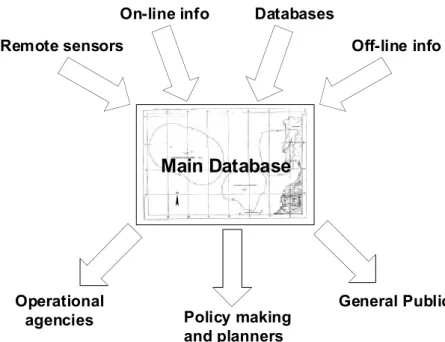
Figure 1 — Information System for EEZ surveillance and management
INFOZEE - an Information System for EEZ surveillance and management
INFOZEE is a computer-based information system designed to support EEZ management activities (Figure 1).
surveillance and management. It is the authors´ chief contribution to improve the status of EEZ management in Portugal.
The INFOZEE system has been conceived with the following criteria:
- Following the international philosophy and the suggested surveillance and management model, as discussed above;
- Creating an information system that complements existing and projected ones and facilitates information exchange among interested parties;
- Providing technical staff, managers, planners and decision makers with a user-friendly information tool that improves their performance in practical terms; - Taking full account of the current status of EEZ management and surveillance in Portugal;
- Need to use minimal additional resources and to optimise existing ones; - Need to create information and management tools independent of institutional structure;
- Emphasis on co-ordination and networking: the system should systemise available information and gather new one to cover existing gaps;
- Full consideration of geographic information through the use of a geographic information system.
- The system may also be used to allow public access to available information, as appropriate. This is very important to raise the public awareness needed to implement proper EEZ management.
The scope of the work is limited to the Portuguese coastal waters and EEZ, because of practical and jurisdictional considerations. Nevertheless, the authors are well aware that conditions on land and on international waters may also be of significance for EEZ management.
Although the system is multi-purpose by design, it is using maritime pollution as the primary case study. This choice rose from a number of reasons:
- The INFOZEE project was born originally because of environmental concerns; it was expanded because it was found that meaningful maritime surveillance must be integrated;
- Maritime shipborne pollution is very important in Portugal, because our EEZ is crossed by some of the busiest traffic lanes for the Mediterranean, north of the Europe, Africa and America, plus it interferes significantly with fisheries, nature conservation and tourism. In the last few decades, significant pollution incidents originating from ships have averaged about once a year;
- All stakeholders, information availability and needs are well identified;
- No agency is currently charged with environmental protection of the seas, and information on the subject is mostly scattered and inaccessible.
Information system architecture
We may consider four main sources of information:
come directly from the remote sensors; it is processed in the databases of the responsible agency and filtered for confidential/sensitive content;
- On-line info from all interested parties. This may include images of specific events, actualisation of the system databases, resource or equipment status, received in real time. For instance: data on the means and deployment of pollution combat tools (boats and vessels, floating barriers, man power, readiness status);
- External databases. Links to databases of independent information systems, international and national. The array of relevant databases includes the national historical databases of the VTMIS, Hidrography Institute, Meteorology Institute and Harbours authorities. The international databases of interest should include shipping agents, vessel registrars, neighbouring VTMIS systems, Paris MOU (Memory of Understanding) records, shipowners association, IMO (International Maritime Organisation) records and international means of pollution combat. -Off-line info. Non periodical information input to the system, normally concerning actualisation of knowledge, arising from results of scientific knowledge. (system upgrade).
The system will have its own Main Database, to synthesise, store and provide ready information to end users. Geographic information will be stored in different layers, which may be available or useful to different users. Through the GIS, the end users may access more easily to information in the databases, both internal and external. The system may also support different kinds of mathematical models: correlation for pattern detection, prediction models (e.g. for oil spill behaviour), management models.
We may also distinguish three main types of information users to witch correspond different levels of information treatment and access:
- Operational agencies (IMP, DGM, Air Force, Navy, BF-GNR, etc); - Policy makers and planners;
- General public: scientific community, commercial users, non-governmental organisations and interested people in general.
Acknowledgements
coleague of the MARVIL project, Engº Tomás Ramos; and to GEOTA for inspiration and contacts.
References
[1] United Nations Convention On The Law Of The Sea (UNCLOS), Jamaica, 1982.
[2] International Ocean Institute, 1999 “Pacen In Maribus” (PIM) Conferences
http://is.dal.ca/~ioihfx/location.html (07-02-2000).
[3] Comissão Mundial Independente para os Oceanos (Independent World Committee on the Oceans), The Ocean …Our Future, Cambridge University Press, 1998.
[4] Ministry of Fisheries and Oceans, Integrated Management in the Offshore Region in http://www.pac.dfo-mpo.gc.ca/oceans/im/offshore.htm (07-02-2000) [5] International Maritime Organisation, “International Convention For The Prevention Of Pollution From Ships”, (MARPOL 73/78) , London , 1973. [6] Vallejo, S.M., New structures for decision-making in integrated ocean policy.
Ocean governance: sustainable development of the Seas ; Peter Bautista Payoyo (Editor); United Nations University Press; 1994 http://www.unu.edu/unupress/ unupbooks/uu15oe/uu15oe00.htm#Contents (07-02-2000).