Faculdade de Ciências
Departamento de Biologia Vegetal
Clostridium difficile Infection: molecular and
epidemiological study
Joana Vanessa Duarte Isidro
Dissertação orientada pela Doutora Mónica Oleastro (INSA) e pelo
Professor Doutor Manuel Gomes (FCUL)
Mestrado em Biologia Molecular e Genética
2015
Faculdade de Ciências
Departamento de Biologia Vegetal
Clostridium difficile Infection: molecular and
epidemiological study
Joana Vanessa Duarte Isidro
Dissertação orientada pela Doutora Mónica Oleastro (INSA) e pelo
Professor Doutor Manuel Gomes (FCUL)
Mestrado em Biologia Molecular e Genética
2015
The work presented in this dissertation was conducted in the National Reference Laboratory for Gastrointestinal Infections, Department of Infectious Diseases, of the National Health Institute Doutor Ricardo Jorge, Lisbon, Portugal.
I
Table of Contents
Acknowledgements ... III List of Tables ... IV List of Figures ... IV List of Symbols and Abbreviations ... V Abstract ... VII Keywords ... VIII Resumo ... IX Palavras-chave ... XI Publications ... XII I - Introduction ... 1
1. Clostridium difficile as the etiologic agent of pseudomembranous colitis ... 1
2. Transmission and pathogenesis ... 1
3. C. difficile changing epidemiology ... 2
4. Risk factors for CDI ... 3
5. Diagnosis and treatment ... 3
6. C. difficile virulence factors ... 4
6.1. Pathogenicity Locus ... 4
6.2. Binary toxin ... 6
7. Antimicrobial susceptibility of C. difficile ... 6
7.1. Antibiotics and mechanisms of resistance ... 7
8. Aims and objectives ... 8
II - Methods ... 8
1. Samples and data collection ... 8
2. C. difficile culture ... 8
3. Antibiotic susceptibility testing by Etest ... 9
4. Antibiotic susceptibility testing by agar dilution ... 9
5. Molecular characterization of strains ... 9
5.1. Pathogenicity factors ... 12
5.1.1. Toxin typing ... 12
5.1.2. tcdC analysis ... 12
II
5.3. Mechanisms of antimicrobial resistance ... 13
5.3.1. ermB, tetM and catD ... 13
5.3.2. gyrA, gyrB and rpoB ... 13
5.3.3. Penicillin-binding proteins ... 13
6. Statistical analysis ... 13
III – Results ... 14
1. Patients’ characteristics ... 14
2. Molecular characterization of strains ... 15
2.1. Ribotypes ... 15
2.2. Toxin typing and tcdC mutations ... 16
3. Antimicrobial susceptibility ... 17
4. Mechanisms of antimicrobial resistance ... 19
4.1. ermB, tetM and catD ... 19
4.2. GyrA and GyrB mutations ... 20
4.3. RpoB mutations ... 20
4.4. PBP mutations ... 21
IV – Discussion ... 22
V – Conclusion ... 27
III
Acknowledgements
First of all, I want to express my gratitude to Mónica Oleastro, my advisor at INSA, for the privilege of working under her guidance in this project, for the tireless support and motivation, for always taking my suggestions into account and doing everything within her power so I could accomplish my objectives, and for improving my scientific and critical reasoning with the immense knowledge transmitted. At last but not least, I want to thank the everyday enthusiasm, the kindness and understanding that go far beyond the scientific field.
I am extremely thankful to Cláudia Júlio for being the first person to receive and supervise me in INSA, making possible everything else that followed, including this dissertation.
To my advisor in FCUL, Professor Manuel Gomes, I thank the constant availability to answer all of my questions (even the most insignificant ones), the precious help with the statistical analysis and the suggestions and dissertation review.
To Andrea Santos, who I also consider as an (informal) advisor at INSA, I want to thank the constant support and availability, the never-ending patience to teach me and clarify all of my doubts and the theoretical and practical knowledge she passed onto me and without which I couldn’t have possibly done this work.
I am grateful to Lúcia Reis and João Carlos Rodrigues for welcoming me in their laboratory and for being constantly ready to help.
I am thankful to Leonor Silveira for welcoming me in her laboratory, the place where I wrote the majority of this dissertation, and for accompanying and cheering up these months of work with our conversations and peaceful silences.
I also want to express my gratitude to all the other people, including Maria Raquel Rocha and Rui Matias, that, in some way, contributed to my integration in the everyday routine and brought joy to my days in INSA.
I want to thank Rafael for being by my side in every moment, for the motivation, for listening to my concerns and helping me face the problems calmly, as only he can do. Above all, for making me believe and strive for a better tomorrow.
To my brother, my always and forever friend, I am grateful for the concern and everyday interest in this work, for the talks and laughs, for the patience, kindness and love.
To my parents, to whom I owe much of who I am, I want to thank the unconditional support and love and for allowing me to dream unrestrictedly and get to where I am today. I thank to my mom, in particular, for always being there in the difficult moments, for believing in me, for the infinite optimism and, most of all, for the irreplaceable friendship and love.
Finally, to all my family and friends, thank you for constantly helping me remember the most important things in life.
IV
List of Tables
Table 1. Primers used in this study and their respective sequences, targets and references. ... 10 Table 2. Primer pairs used in this study, final concentration used in PCR mixture, amplicon size, PCR
annealing temperature and electrophoresis conditions. ... 11
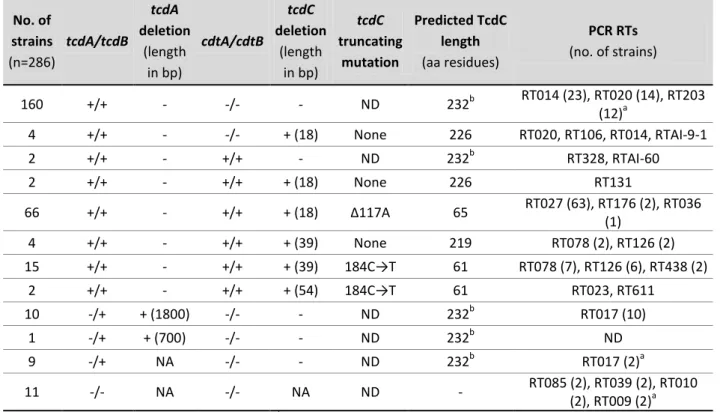
Table 3. Characteristics of the patients diagnosed with CDI included in this study. ... 14 Table 4. Distribution of toxin genes profiles, tcdC deletions and mutations and the most common RTs
in each genotype. ... 16
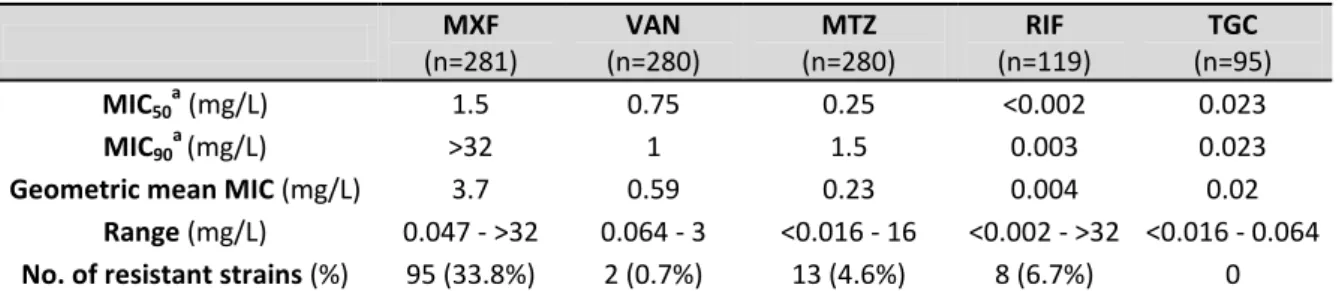
Table 5. Strains susceptibility, geometric mean MIC and number of strains with resistant to MXF,
VAN, MTZ, RIF and TGC. ... 17
Table 6. MTZ susceptibility of strains from RT027 vs strains from other ribotypes. ... 18 Table 7. Comparison of MICs of IMP determined by Etest with MICs determined by the agar dilution
method. ... 18
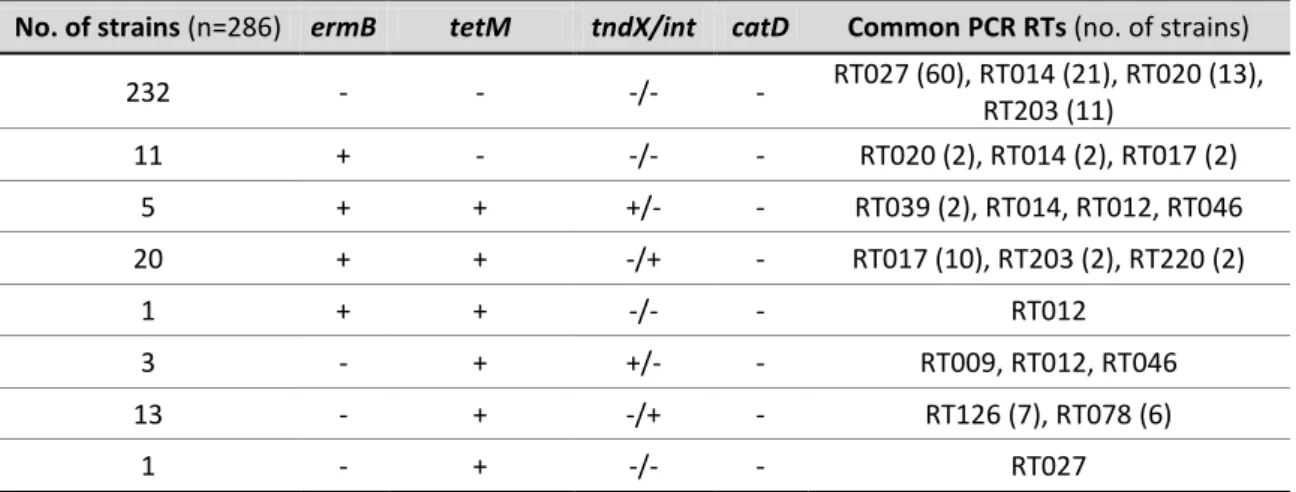
Table 8. Distribution of resistance determinants profiles and common PCR RTs associated. ... 19 Table 9. Predicted amino acid substitutions in GyrA and GyrB associated with MXF resistance and
common PCR RTs associated. ... 20
Table 10. Predicted amino acid substitutions in RpoB found in 21 RIF-resistant strains and common
PCR RTs associated. ... 21
Table 11. Predicted amino acid substitutions found in five IMP-resistant strains, their respective RTs
and MICs of IMP. ... 21
List of Figures
Figure 1. C. difficile pathogenicity locus (PaLoc) (a) and binary toxin locus (CDT locus) (b) (adapted
from Rupnik et al., 2009). ... 4
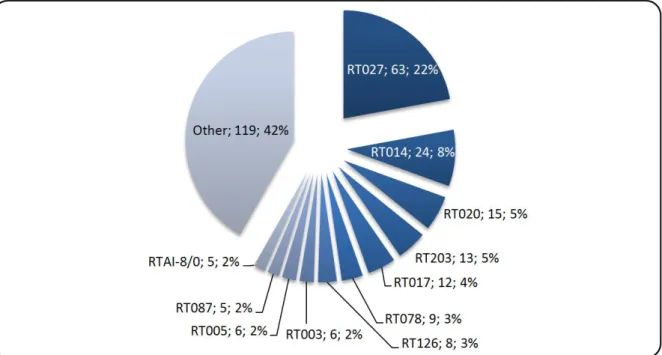
Figure 2. Frequencies of PCR ribotypes - RT; number of strains; % (Other – Includes 73 RTs with 4 or
less strains). ... 15
Figure 3. Localization of the amino acid substitutions (in black) found in PBP1 of five IMP-resistant
strains (the conserved motifs are highlighted in grey; S – amino acid sequence in the IMP-susceptible strains). ... 21
V
List of Symbols and Abbreviations
Δ deletion
% percentage
°C degree Celsius
aa amino acid residue
bp base pair
CFU colony-forming unit
h hour
kb kilo base pair
kDa kilodalton L liter min minute mg milligram mL milliliter mm millimeter no. number V volt μL microliter μM micromolar CA Community-associated
CDI Clostridium difficile infection
CDT Clostridium difficile transferase
CO-HCFA Community onset health-care facility-associated
DNA Deoxyribonucleic acid
EUCAST European Committee on Antimicrobial Susceptibility Testing
HO-HCFA Health-care onset health-care facility-associated
IMP Imipenem
INSARJ Portuguese National Institute of Health Dr. Ricardo Jorge
MIC Minimum inhibitory concentration
MLSB Macrolide, Lincosamide and Streptogramin B
MLST Multi-locus sequence typing
MTZ Metronidazole
MXF Moxifloxacin
PCR Polymerase chain reaction
PBP Penicillin-binding protein
QRDR Quinolone resistance-determining region
RIF Rifampicin
RNA Ribonucleic acid
RT PCR Ribotype
TGC Tigecycline
VAN Vancomycin
VII
Abstract
Clostridium difficile is the leading cause of antibiotic-associated diarrhea in developed
countries. Elderly hospitalized patients taking antibiotics are the main group at risk of infection. Since 2000, several countries have reported an increased incidence and severity of CDI associated with the emergence of the epidemic RT027. This clone produces Toxin A (TcdA), Toxin B (TcdB) and an additional binary toxin, Clostridium difficile transferase (CDT), has a deletion at position 117 in the
tcdC gene (negative regulator of toxin production) and is highly resistant to fluoroquinolones.
However, CDI epidemiology is highly variable, as other hypervirulent RTs have also started to emerge, and is still largely unknown in our country. In the present study, 286 C. difficile strains sent from 22 Portuguese hospitals were characterized regarding PCR ribotype, toxin profile, tcdC mutations, antimicrobial susceptibility to MXF, VAN, MTZ, IMP, RIF and TGC, and mechanisms of antimicrobial resistance. Most patients (73.4%) were aged ≥65 years and at least 54.9% had taken antibiotics in the previous months; 76.5% of the cases were healthcare facility-associated (HCFA) and 12.6% were community-associated (CA). Among the 84 distinct RTs found, RT027 was the most frequent (22%), followed by RT014 (8%), RT020 (5%), RT203 (5%), RT017 (4%), RT078 (3%) and RT126 (3%). RT027 was also predominant in the HCFA cases (26%), while RT014 was the most common in CA cases (16.7%). Most strains (96.1%) were toxinogenic, 31.8% were cdtA/cdtB+ and 29% had an extensively truncated TcdC, either due to the deletion Δ117A (23.1%) or the substitution 184C→T (5.9%) in tcdC. Twenty strains were tcdA-/tcdB+. In total, 11 were non-toxinogenic. MXF-resistance was observed in 95 (33.8%) strains, mainly from RT027 (62/95) and RT017 (9/95) but also from common RTs (RT014, RT020) and other non-RT027 cdtA/cdtB+ strains. Most MXF-resistant strains had mutations in GyrA, one of which, D-81→N, not previously described. RIF-resistance was found in 6.7% of the strains, most from RT017, and all exhibited previously described mutations in RpoB. Low level MTZ-resistance was found in 13 (4.6%) strains and RT027 exhibited reduced susceptibility to MTZ when compared to other RTs (geometric mean MIC of 0.79 mg/L vs 0.16 mg/L; t test, p<0.01). Two strains were low-level VAN-resistant and all were TGC-susceptible. The ermB and tetM genes were present in 37 (12.9%) and 43 (15.0%) strains, respectively, being that 26 (9.1%) contained both genes and most RT027 strains (60/63) were ermB-/tetM-. All strains were catD-. The IMP-resistance rate was 19.3% and seven mutations (not previously described) were identified near the conserved motifs of PBP1 in five IMP-resistant strains. These results raise awareness for the high frequency of RT027 but also for the emergence of other hypervirulent RTs, such as RT078 and RT126 that exhibited a truncated TcdC, as well as for the circulation of MXF-resistant strains. Antimicrobial resistance was also observed in other RTs, particularly the multidrug resistant TcdA-/TcdB+ RT017.
VIII
Keywords:
Clostridium difficile infection, epidemiology, PCR ribotype 027, antimicrobial susceptibility, resistance
IX
Resumo
Clostridium difficile é uma bactéria de gram-positivo, anaeróbia obrigatória e produtora de
esporos que representa atualmente a principal causa de colite pseudomembranosa e de diarreia infeciosa em países desenvolvidos, estando associada ao meio hospitalar e à toma de antibióticos. Esta bactéria foi descoberta em 1935 nas fezes de recém-nascidos e identificada como não-patogénica e integrante da flora colónica saudável. Como tal, o seu papel etiológico na colite pseudomembranosa só foi identificado mais tarde, em 1978, na sequência de múltiplos trabalhos conduzidos na década de 1970, quando esta patologia se tornou mais frequente devido ao aumento no consumo de antibióticos. Os principais fatores de risco para a aquisição da infeção por C. difficile (ICD) são idade superior a 65 anos, hospitalização recente e toma de antibióticos. Desde 2000, vários países começaram a reportar um aumento na incidência da ICD assim como vários surtos, aumento da gravidade da infeção e taxas de reincidência e mortalidade superiores às registadas até então. Esta mudança na epidemiologia da ICD foi associada à emergência de uma nova estirpe epidémica denominada ribotipo 027 (RT027) que surgiu inicialmente no Canadá, mais tarde nos EUA e posteriormente na Europa. Esta estirpe é principalmente caracterizada por i) uma elevada resistência às fluoroquinolonas, cuja aquisição foi concomitante com o início da sua propagação epidémica; ii) produzir ambas as Toxinas A (TcdA) e B (TcdB), que constituem os principais factores de patogenicidade em C. difficile; iii) produção de uma toxina binária (CDT) que apenas está presente em determinadas estirpes e cujo papel na patogénese de C. difficile é ainda desconhecido; e ainda por ter uma deleção na posição 117 do gene tcdC, que é o regulador negativo da produção de TcdA e TcdB, levando à produção de uma proteína truncada e consequentemente à produção de elevadas quantidades de TcdA e TcdB, comparativamente com estirpes que não têm esta mutação.
A epidemiologia da infeção por C. difficile é altamente variável entre países, nomeadamente em relação aos ribotipos predominantes e aos padrões de resistência a antimicrobianos. O primeiro surto associado ao RT027 em Portugal foi reportado em 2014, contudo existem poucos estudos sobre esta questão no nosso país e o paradigma da infeção a nível nacional é desconhecido. No presente estudo, 286 amostras de fezes (correspondentes a 286 pacientes diagnosticados com infeção por C. difficile) foram enviadas de 22 hospitais portugueses abrangendo as cinco regiões de Portugal Continental. As estirpes de C. difficile isoladas destas amostras foram caracterizadas molecularmente e fenotipicamente quanto ao ribotipo de PCR, genes das toxinas, mutações no gene
tcdC, suscetibilidade à fluoroquinolona moxifloxacina (MXF), vancomicina (VAN), metronidazol
(MTZ), imipenem (IMP), rifampicina (RIF) e tigeciclina (TGC), aferida por Etest e também pelo método de diluição em agar no caso do IMP, e mecanismos de resistência a antimicrobianos.
X
A maioria dos pacientes (73.4%) tinha ≥65 anos e pelo menos 54.9% tinha tomado antibióticos nos três meses precedentes ao diagnóstico de ICD; 76.5% dos casos foram associados ao meio hospitalar e 12.6% foram associados à comunidade. Entre os 84 diferentes ribotipos encontrados no total das estirpes, o RT027 foi o mais frequente (22%), seguido do RT014 (8%), RT020 (5%), RT203 (5%), RT017 (4%), RT078 (3%) e RT126 (3%). O RT027 foi também o mais frequente entre as estirpes de casos associados ao meio hospitalar (26%), ao passo que o RT014 foi o mais comum nos casos associados à comunidade (16.7%). A maioria das estirpes eram toxinogénicas, 31.8% eram também cdtA/cdtB+ e 29% continham um TcdC extensamente truncado com apenas 61 ou 65 resíduos de aminoácidos (comparativamente com o TcdC não-truncado de 232 resíduos), quer devido à deleção Δ117A (23.1%), típica do RT027, quer devido à substituição 184C→T (5.9%), presente noutros ribotipos hipervirulentos, como RT078 e RT126, que levam à inserção de codões stop prematuros. Vinte estirpes eram TcdA-/TcdB+, 12 das quais pertencentes ao RT017, sendo que 10 dessas estirpes continham uma deleção de cerca de 1800 pb em tcdA e em duas não houve amplificação em tcdA, indicando uma deleção mais extensa no gene. No total, 11 estirpes eram não-toxinogénicas. Observou-se resistência à MXF em 95 (33.8%) estirpes, a maioria das quais pertencente aos RT027 (62/95) e RT017 (9/95), contudo também foram identificadas estirpes de outros ribotipos comuns (RT014, RT020) e outros cinco ribotipos CDTA/CDTB+ que não o RT027. A maioria das estirpes resistentes à MXF continha mutações em GyrA, nomeadamente as já descritas T-82→I e D-426→N e uma ainda não descrita anteriormente, D-81→N, encontrada numa estirpe do RT020. A resistência à RIF foi observada em 6.7% das estirpes, sendo a maioria do RT017. Em 14 estirpes resistentes à RIF, 13 continham as mutações H-502→N e R-505→K em RpoB (já anteriormente descritas), e uma continha apenas a mutação R-505→K. Observou-se um baixo nível de resistência ao MTZ (3-16 mg/L) em 13 estirpes (4.6%), sete das quais pertencentes ao RT027. Para além disso, o RT027 registou uma suscetibilidade reduzida ao MTZ comparativamente às estirpes de outros ribotipos (média geométrica da concentração mínima inibitória = 0.79 mg/L vs 0.16 mg/L; teste t, p<0.01), como já tinha sido observado anteriormente noutros estudos. Apenas duas estirpes exibiram um baixo nível de resistência à VAN, sendo as restantes sensíveis, e todas foram sensíveis à TGC. Os genes ermB e tetM, que conferem resistência à clindamicina/eritromicina e tetraciclina, respetivamente, foram encontrados em 37 (12.9%) e 43 (15.0%) estirpes, respetivamente, sendo que 26 estirpes (9.1%) continham ambos os genes e a maioria das estirpes do RT027 (60/63) não continham nenhum deles. O gene catD, que confere resistência ao cloranfenicol, não foi encontrado em nenhuma estirpe. A taxa de resistência ao IMP, quando determinada pelo método de diluição em agar, foi de 19.3%. Em cinco estirpes resistentes ao IMP foram encontradas sete mutações distintas não descritas anteriormente (E-520→K, K-524→E, L-543→H, K-553→T, A-555→T, M-557→I e T-674→I). Todas estas mutações encontram-se localizadas próximo dos motivos conservados da PBP1
XI
e não foram encontradas nas estirpes sensíveis, sendo provável que contribuam para o fenótipo de resistência observado. Contudo são necessários mais estudos que demonstrem que as mutações são funcionais.
Os resultados aqui apresentados alertam para a elevada frequência do clone epidémico RT027 nos hospitais portugueses comparativamente com os restantes ribotipos e também com os resultados de outros estudos europeus recentes que descrevem uma frequência inferior deste ribotipo e inclusivamente a diminuição da sua incidência. Como tal, é necessário aplicar medidas de prevenção da transmissão de C. difficile no contexto hospitalar, nomeadamente através do diagnóstico e tratamento de todos os pacientes com ICD. Contudo, a grande variedade de ribotipos encontrados sugere que existem outras vias de transmissão de C. difficile para além do contacto com o meio hospitalar, pelo que outras potenciais fontes devem ser analisadas futuramente, nomeadamente alimentos e animais, uma vez que a transmissão zoonótica já foi anteriormente descrita para o RT078. A emergência de resistência à MFX noutros ribotipos além do RT027, nomeadamente ribotipos comummente encontrados, incluindo RT014 e RT020, ou hipervirulentos, em que a proteína reguladora da expressão das toxinas, TcdC, está truncada, nomeadamente RT078 e RT126, sugere que o potencial epidémico observado em RT027 em resultado destes factores pode também surgir nestas estirpes emergentes. Finalmente, dada a frequência de estirpes multirresistentes observada, das quais o RT017 é o caso mais relevante, este estudo contribui para alertar para a necessidade de uma utilização adequada dos agentes antimicrobianos.
Palavras-chave:
Infeção por Clostridium difficile, epidemiologia, ribotipo 027, suscetibilidade aos antimicrobianos, mecanismos de resistência
XII
Publications
The present study contributed to the publication of the following works:
Article
Santos, A., Isidro, J., Júlio, C., Oleastro, M. (2015). Clostridium difficile: diversidade genética e perfis de suscetibilidade aos antimicrobianos. Boletim Epidemiológico Observações. Janeiro-março, 4(11), 15-18.
Poster
Isidro, J., Santos, A., Júlio, C., Boaventura, L., Diogo, J., Faustino, A., Oleastro, M. (2014, December). Genótipos e perfis de suscetibilidade a antimicrobianos de estirpes de Clostridium difficile isoladas de hospitais portugueses. Poster session presented at the Congresso Nacional VIH, Doenças Infeciosas e
Microbiologia Clínica, Lisbon, Portugal.
Oral Communication
Isidro, J. (2014, December). Genótipos e perfis de suscetibilidade a antimicrobianos de estirpes de
Clostridium difficile isoladas de hospitais portugueses. Best of Posters session at the Congresso Nacional VIH, Doenças Infeciosas e Microbiologia Clínica, Lisbon, Portugal.
1
I - Introduction
1. Clostridium difficile as the etiologic agent of pseudomembranous colitis
Clostridium difficile is the leading cause of nosocomial antibiotic-associated infectious
diarrhea and pseudomembranous colitis in developed countries (Rupnik, et al., 2009). This gram-positive, spore-forming obligate anaerobic bacterium was first isolated in 1935 from the stools of neonates as part of the normal colonic flora and hence thought to be non-pathogenic. At the time, Hall and O’Toole (1935) named the bacterium Bacillus difficilis due to its difficult isolation and slow growth in culture.
C. difficile infection (CDI) is a colonic disease caused by the action of C. difficile toxins on the
inner surface of the colon which, in severe forms of the disease, can result in pseudomembranous colitis. This inflammatory condition, characterized by the formation of inflammatory lesions and pseudomembranes in the colon in response to the toxins (Rupnik, et al., 2009), was first described in 1893. However, the later discovery of C. difficile in 1935 didn’t lead to its immediate association with the disease since it was thought to be non-pathogenic and the interest on this infection only arose after the 1950s, when pseudomembranous colitis became a common disease due to the rise in antibiotic use. The subsequent publication of various independent studies in the 1970s finally converged into the identification of C. difficile as the etiologic agent of pseudomembranous colitis in 1978(Bartlett, 1994).
2. Transmission and pathogenesis
C. difficile spores are the main route for the spreading of CDI due to their high resistance to
cleaning measures and disinfection agents, such as alcohol-based antiseptics that are largely used by healthcare workers as a substitute for the conventional hand washing, allowing spores to persist in the environment for many months or years. The main route of transmission of C. difficile is the direct contact between individuals, either direct contact with an infected patient (symptomatic or asymptomatic) or with a healthcare professional. Alternatively, C. difficile may be acquired from contaminated surfaces or objects in healthcare settings (Cohen et al., 2010).
Although healthcare facilities have been considered the main source of C. difficile, in two recent studies investigating ward-based transmission by multi-locus sequence typing (MLST) and whole-genome sequencing (WGS), only 25% and 19% of the isolates, respectively, could be linked to a hospital contact. These results thus point to the existence of other routes of transmission and reservoirs of the microorganism outside the hospital setting (Bauer and Kuijper, 2015).
2
C. difficile enters the host via the fecal-oral route following the ingestion of the gastric
acid-resistant spores that later germinate into vegetative cells in the intestines. Antibiotic treatments may disrupt the normal colonic flora and, hence, a C. difficile strain that is resistant to the antibiotic has a selective advantage and is more likely to cause infection. When the treatment stops and the level of antibiotic diminish, the microbiota remains unbalanced for an undetermined period of time during which infection is possible either by a susceptible or a resistant strain. In such depleted microbiota conditions, C. difficile is able to proliferate and produce its two main virulence factors, toxin A and toxin B that consequently trigger the infection by disruption of tight junctions and loosening of the epithelial barrier of the colon. The clinical outcomes of CDI can range from an asymptomatic colonization to diarrhea, abdominal pain, and fever and, in more severe states of the disease, pseudomembranous colitis, ileus, toxic megacolon, bowel perforation, sepsis, shock, and death (Rupnik, et al., 2009).
3. C. difficile changing epidemiology
CDI rates and disease severity have been increasing since 2000, mainly in elderly patients with a recent hospitalization or living in a long-term care facility. Carriage rates of C. difficile in healthy adults is about 5-15% and can reach more than 80% and 50% in healthy infants and residents in long-term care facilities, respectively (Surawicz et al., 2013).
In 2002, several hospitals in Quebec, Canada, registered a major increase in the incidence of CDI with a concomitant increase in disease morbidity and mortality. Notably, the incidence increased from 35.6 cases per 100 000 population in 1991 to 156.3 per 100 000 in 2003 and was even greater in patients aged 65 years or more, increasing from 102.0 to 866.5 cases per 100 000 (Pépin et al., 2004). The same increase in incidence, severity and mortality occurred in the US, with outbreaks reported in several states. Soon after, the first reports arose in Europe, with particularly severe outbreaks in the UK that led to a six-fold increase in CDI-related mortality from 499 deaths in 1999 to 3393 in 2006 (Clements et al., 2010; Kelly and LaMont, 2008). Since then, several European countries have registered the same pattern in C. difficile epidemiology with increasing rates of infection (Freeman et al., 2010).
These North American and European outbreaks were associated with the emergence of a new epidemic, hypervirulent C. difficile strain, categorized as group BI by restriction endonuclease analysis, North American pulse-field type 1 by pulse-field gel electrophoresis and as 027 by PCR ribotype (BI/NAP1/027) (Warny et al., 2005) that will be, from here on, simply referred to as ribotype (RT) 027. Notably, in 2008, RT027 was detected in 16 European countries and by 2009 it had already been responsible for outbreaks in at least 11 of those countries (Freeman et al., 2010). In 2014, the
3
first outbreak was reported in Portugal with a CDI-attributable mortality rate of 11.3% and a crude mortality rate at 6 months of 64.2%. However, since data on CDI in Portugal is still scarce, the previous occurrence of RT027 in Portuguese hospitals is unknown (Oleastro et al., 2014).
The epidemic RT027 produces both toxins A and B, carries a mutation in the negative regulator of toxins expression (TcdC) and produces an additional binary toxin (CDT) (Rupnik et al., 2009). Furthermore, this spread of the epidemic RT027 is concomitant with an acquired resistance to fluoroquinolones, such as moxifloxacin (MXF), presumably due to selection pressure since this was the most prescribed class of antibiotics in the US, in 2002 (Pépin et al., 2005).
Nonetheless, the increase in CDI rates can’t be attributed to RT027 only since its prevalence is decreasing in some countries (Bauer et al., 2011) and other RTs, such as RT078 in Europe, and RT244 in Australia, have also been associated with outbreaks and severe cases (Rupnik et al., 2009; Lim et al., 2014).
4. Risk factors for CDI
The use of antibiotics is the main risk factor for CDI since C. difficile can only colonize the gut if the normal microbiota is disrupted. Other risk factors include advanced age (≥65 years), recent hospitalization (because it increases the risk of exposure to the microorganism), use of medications that reduce gastric acid (like proton-pump inhibitors), and severe comorbidities (Surawicz et al., 2013).
Elderly hospitalized patients taking antibiotics constitute the main group at risk of infection. However, there has been an increase in the incidence of infection in populations previously thought to be at low risk, namely pregnant women and healthy and younger people in the community with no previous contact either with the hospital environment or with antibiotics. This change towards an increase in community-associated cases raises the need to consider CDI as a possibility when diagnosing any symptomatic patient and not only those initially at risk (Rupnik et al., 2009) and also demonstrates that the epidemiology of CDI is constantly changing.
5. Diagnosis and treatment
Since C. difficile can be carried asymptomatically by healthy individuals and this carriage may be increased in patients taking antibiotics, only the stools from patients with diarrhea should be tested for the presence of the microorganism.
The best standard laboratory method for CDI diagnosis is yet to be established. Firstly, C.
4
this method does not distinguish toxigenic from non-toxigenic strains. Secondly, the two reference methods, C. difficile cytotoxin neutralization assay and toxigenic culture, are time consuming techniques that require specialized staff and equipment. As such, diagnostic testing has evolved to yield a faster diagnosis. A two or three-stepwise screening algorithm is recommended in which a first positive test must be followed by one or two confirmatory tests, e.g., the stools can be tested with an enzyme immunoassay to detect glutamate dehydrogenase (GDH), thus confirming the presence of
C. difficile, followed by an enzyme immunoassay to detect free Toxins A and B or, preferentially, due
to higher sensitivity, a nucleic acid amplification test to detect the toxins genes, thus confirming the presence of a toxigenic strain (Rupnik et al., 2009; Surawicz et al., 2013).
Disease treatment is stratified according to disease severity. Briefly, patients with mild-to-moderate disease should be treated with metronidazole (MTZ) and severe disease with vancomycin (VAN); in cases of severe and complicated disease, surgical therapy should also be considered in addition to antibiotic therapy; fecal microbiota transplant is an alternative treatment in cases of recurrent infection and ineffective antibiotic therapies (Surawicz et al., 2013).
6. C. difficile virulence factors 6.1. Pathogenicity Locus
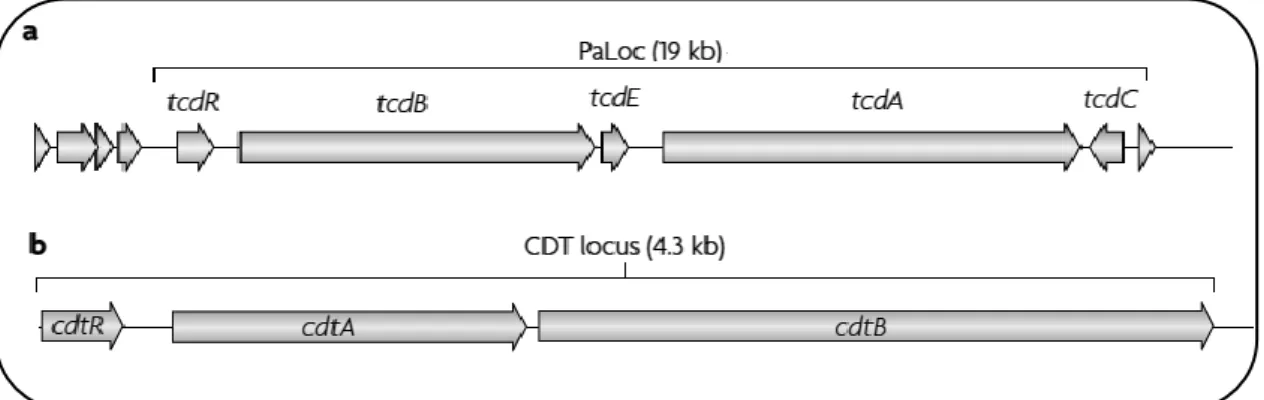
C. difficile main virulence factors are the enterotoxin TcdA and the cytotoxin TcdB, and both
toxin genes are encoded in the 19.6 kb pathogenicity locus (PaLoc) along with other three genes,
tcdR, tcdE and tcdC (Figure 1a). In non-toxigenic strains, the entire PaLoc is replaced by a 115 bp
sequence (Rupnik et al., 2009).
TcdA, a 308 kDa protein and TcdB (~270 kDa) are encoded by the genes tcdA (8130 nt) and
tcdB (7098 nt), respectively, and are members of the large costridial cytotoxin family. Due to their
Figure 1. C. difficile pathogenicity locus (PaLoc) (a) and binary toxin locus (CDT locus) (b) (adapted
5
close proximity, high sequence similarity (66%), functional homology and common conserved domains, it has been proposed that these two genes may have arisen through gene duplication.
TcdA and TcdB are both intracellular bacterial toxins that glucosylate small GTPases. After entering the intoxicated cell through receptor-mediated endocytosis, these toxins are able to hydrolyze UDP-glucose in the cytosol and transfer the released sugar moiety to the GTP-binding domain of small GTPases, such as Rho, Rac and Cdc42 that are implicated in the regulation of the actin cytoskeleton, hence inactivating these small regulatory proteins. This leads to loss of cell structural integrity and destruction of the intestinal epithelium through disruption of the actin cytoskeleton and tight junctions, resulting in fluid accumulation and inflammatory responses (Hunt and Ballard, 2013; Rupnik et al., 2009; Voth and Ballard, 2005).
Several conserved functional domains have been identified in TcdA and TcdB. Namely, the N-terminal enzymatic domain, responsible for the glycosyltransferase activity; a cysteine protease domain that carries out the autoproteolytic processing that releases the enzymatic domain of the toxin in the cytosol after receptor-mediated endocytosis; a hydrophobic region (near the middle of the toxins) associated with membrane insertion and translocation; and the C-terminal, receptor-binding domain, composed of combined repetitive oligopeptide repeats (CROPs) known to bind glycans (Hunt and Ballard, 2013; Voth and Ballard, 2005).
The CROP region is more extensive in TcdA, however it is unknown how this difference interferes in the toxins tropism. In fact, there are variations in cell targeting between the two toxins, as TcdB intoxicates a broader range of cell types. In fact, TcdB, that was initially thought to be secondary in C. difficile disease, is a more potent cytotoxin than TcdA and has been shown to be sufficient per se to cause the same disease pattern when compared with both toxins simultaneously, which indicates that TcdB may also function as an enterotoxin (Hunt and Ballard, 2013).
TcdA and TcdB production occurs during late log and stationary phases and their production depends on the strain and environmental factors (nutrients available, temperature, etc.), being regulated by other genes, namely tcdR and tcdC, both located in the PaLoc (Rupnki et al, 2009).
TcdC is an anti-sigma factor expressed during exponential growth that appears to negatively regulate TcdA and TcdB expression through disruption of TcdR interaction with RNA polymerase. This protein (232 aa, 25.5 kDa), encoded by the tcdC gene (696 nt), has been given much attention since several variations identified in the tdcC sequence are related to increased virulence in some C.
difficile strains, namely the epidemic RT027 known to produce increased amounts of TcdA and TcdB
(Hunt and Ballard, 2013; Warny et al., 2005). These epidemic strains carry an 18 bp deletion and a single nucleotide deletion at base 117 that induces a frameshift resulting in a premature stop codon that truncates TcdC, consequently yielding a protein with 65 residues. Other deletions and mutations have also been identified in non-RT027, namely 39 bp and 36 bp deletions and a nonsense mutation
6
(transition C to T) in position 184 that also leads to a truncated TcdC (Curry et al., 2007; Hunt and Ballard, 2013).
6.2. Binary toxin
Some specific strains of C. difficile also produce an additional toxin, the binary toxin CDT that belongs to the family of binary ADP-ribosylating toxins. It is composed of two independent components, the proteins CDTa and CDTb, whose respective genes, cdtA and cdtB, are located in the CDT locus that also contains the regulatory protein gene, cdtR, located upstream of cdtA and cdtB (Figure 1b). Such as the PaLoc, the CdtLoc also presents variability between strains, ranging from a complete locus to its complete absence, in which case it is replaced by a 68 bp insert (Hunt and Ballard, 2013).
Regarding the CDT mechanism of action, it has been proposed that CDTb, the binding component of the binary toxin, binds to a receptor on the surface of host cells, and then translocates the enzymatic component, CDTa, into the cytosol. There, CDTa ADP-ribosylates actin causing depolymerization of the actin cytoskeleton which results in the formation of long microtubule protrusions. Electron microscopy studies have shown that this protrusions increase the adherence of bacteria to the surface of epithelial cells (Gerding et al., 2014).
Nevertheless, the role of CDT as a virulence factor in CDI is still unclear. Until recently, its pathogenic potential had been disregarded since many disease-causing strains do not produce CD; however this view began to change (Hunt and Ballard, 2013) as, for instance, CDT-producing strains, including RT027 and RT078, among others, have been associated with an increased fatality rate (Bacci et al., 2011).
7. Antimicrobial susceptibility of C. difficile
Antimicrobial stewardship has been proven effective in the prevention of CDI. Clindamycin, cephalosporins and fluoroquinolones are the antibiotics that pose the greater risk for infection. However, virtually any antibiotic can cause the disease (Surawicz et al., 2013) and the risk is further enhanced if the strain is resistant to the antibiotics used (Rupnik et al., 2009). This has been particularly evident with the epidemic RT027 whose emergence was concomitant with the acquirement of resistance to fluoroquinolones. In a study conducted in Canada (Pépin et al., 2005), the use of this class of antibiotics was identified as the most important risk factor for the development of CDI. In a study including strains from thirteen European countries, several non-027
7
RTs, namely the hypervirulent RT078, showed resistance to fluoroquinolones (Spigaglia et al., 2008), raising awareness for the emergence of new hypervirulent strains.
Overall, and since antimicrobial resistance varies widely between countries (Huang et al., 2009), it is important to monitor the susceptibility of C. difficile strains to antibiotics, particularly to those used in CDI treatment.
7.1. Antibiotics and mechanisms of resistance
Resistance to clyndamicin and/or erythromycin is the most common phenotype in C. difficile. Resistance to these MLSB antibiotics (inhibitors of protein synthesis) in C. difficile is generally due to
the presence of the erythromycin ribosomal methylase gene B (ermB) that methylates the 23S ribosomal RNA, thus altering the antibiotic binding site (Huang et al., 2009).
Resistance to tetracycline, a protein synthesis inhibitor as well, has also been observed in C.
difficile strains with varying rates between countries. This phenotype is often due to the presence of
the tetM gene that confers ribosomal protection and is carried by a Tn5397 or a Tn916-like conjugative element (Huang et al., 2009). Resistance to chloramphenicol in C. difficile is generally also mediated by a transposon-associated resistance determinant, the catD gene that encodes a chloramphenicol acetyltransferase responsible for inactivating the antibiotic (Spigaglia et al., 2011).
Alternatively, mutations in some antimicrobial target genes are involved in the resistance to fluoroquinolones and rifampicin (RIF). Fluoroquinolones are a family of broad-spectrum antibiotics (including MXF) that inhibit DNA synthesis and, as stated previously, are associated with increased risk for CDI. The principal mechanism of resistance in C. difficile is the substitution of amino acids residues in the quinolone resistance-determining region (QRDR) of the target enzymes, specifically the DNA gyrase subunits GyrA or GyrB (Huang et al., 2009). RIF is an inhibitor of RNA synthesis that has been proposed to treat relapses of CDI. However, resistance to this antibiotic has already been described in C. difficile and is associated with point mutations in rpoB, the gene encoding the beta subunit of RNA polymerase (Curry et al., 2009).
Resistance to imipenem (IMP), a carbapenem that binds to penicillin-binding proteins (PBPs) inhibiting cell wall synthesis (Papp-Wallace et al., 2011), has also been described in C. difficile isolates with varying rates (7.41% to 25%), much dependent on the antimicrobial susceptibility method used (Kim et al., 2010; Freeman et al., 2015). However, no resistance mechanism has been described yet.
Resistance to MTZ and VAN in C. difficile is rarely found and the underlying mechanisms are still unknown. However, the emergence of reduced susceptibility to MTZ has been reported in some frequent RTs, such as RT027, compared to other less common RTs, as well as in recent isolates vs historic isolates (Freeman et al., 2010; Freeman et al., 2015).
8
8. Aims and objectives
CDI is a major concern in developed countries. However, the differences in surveillance systems, infection ascertainment and laboratory diagnosis between and within countries have been limiting the understanding of CDI epidemiology. The present dissertation concerns the study of the epidemiology of CDI in Portugal, where few studies have been conducted on this topic, aiming to a better understanding of this infection. The main objectives of this work are: i) the molecular and phenotypic characterization of C. difficile strains, namely through identification of the predominant RTs, comparison of the prevalence of RTs identified in hospital settings vs community setting and detection and characterization of pathogenicity factors; ii) analysis of antimicrobial susceptibility patterns and identification of mechanisms of resistance; iii) analysis of patients’ epidemiological data to identify potential risk factors.
II - Methods
1. Samples and data collection
From September 2012 to May 2015, diarrheal faecal samples belonging to patients aged above 2 years, exhibiting typical CDI symptoms and with a positive test for the presence of C. difficile toxins and/or GDH were sent to the National Reference Laboratory of the Portuguese National Institute of Health Dr. Ricardo Jorge (INSARJ) from 22 different Portuguese hospitals from the five regions of Continental Portugal. Each sample was accompanied by a short questionnaire on the patient’s clinical and epidemiological data, including age, sex, place (hospital or community) and time of symptoms onset, and antibiotics consumption within the three months prior to diagnosis of CDI. According to time of symptoms onset and history of hospitalization, CDI cases were classified as health-care onset health-care associated (HO-HCFA), community onset health-care facility-associated (CO-HCFA), community-facility-associated (CA) or unknown, as described by Surawicz and colleagues (2013).
2. C. difficile culture
Faecal samples were treated with ethanol in a 1:1 proportion, vortexed and left to rest for 1 hour to select the C. difficile spores. Roughly 1-2 drops were then cultured on the selective and chromogenic medium chromID™ C. difficile agar (bioMérieux) and incubated at 37°C for 48 h, under anaerobic atmosphere generated with AnoxomatTM (MART Microbiology BV) with catalyst. C. difficile
9
colonies were identified based on the typical morphology (5-7 mm in diameter, flat with a filamentous edge) and black colour.
3. Antibiotic susceptibility testing by Etest
Minimum inhibitory concentrations (MICs) of MXF, VAN, MTZ, IMP, RIF and tigecycline (TGC) were determined by Etest (bioMérieux) on Brucella Agar (BA) with 5% Sheep Blood, Hemin and Vitamin K1 (BD, BBL™). Briefly, one colony from each cultured sample was selected and cultured on brain-heart infusion (BHI) broth and incubated anaerobically at 37°C for 48 hours. Broth cultures were then adjusted with sterile broth, to an opacity equivalent to the 1 McFarland (3x10⁸ CFU/mL) and inoculated by flooding onto prereduced BA plates, according to the manufacturer’s instructions. After the surface was completely dry, an Etest strip was applied to each plate. The plates were incubated anaerobically at 37°C for 48 h. The MICs were read where growth intersects the strip. The breakpoints used were > 4 mg/L for MXF, > 2 mg/L for VAN and MTZ, > 8 mg/L for IMP, > 0.004 mg/L for RIF, and > 0.25 mg/L for TGC, as stipulated by the EUCAST guidelines. (European Committee on Antimicrobial Susceptibility Testing, 2015, http://www.eucast.org/clinical_breakpoints/). Two strains (RT027 and RT001) belonging to the ECDC collection, gently given to INSARJ by Dr Ed Kuijper from Leiden University Medical Centre, were used as controls.
4. Antibiotic susceptibility testing by agar dilution
To confirm the susceptibility to IMP, some strains were also tested by the agar dilution method on Wilkins-Chalgren (Oxoid) agar, as described by Freeman et al. (2005). Procedure was according to the EUCAST recommendations. Briefly, Wilkins-Chalgren plates were prepared with three distinct IMP concentrations, namely 8, 16, and 32 mg/L, plus drug-free control plates. Selected strains were raised in BHI broth anaerobically at 37°C for 48h. Broth cultures were adjusted to a 0.5 McFarland standard (≈ 108 CFU/mL) and further diluted 1:10 with sterile broth in a 96-well microtiter plate to obtain a concentration of approximately 107 CFU/mL. Subsequently, to yield a cell density of around 104 CFU/spot, 1 μl of the suspension was inoculated per spot. Plates were incubated anaerobically at 37°C and read after 48 h. The breakpoint used was the same as for the Etest method (> 8 mg/L).
5. Molecular characterization of strains
DNA was extracted with NucliSENS® easyMAG® (bioMérieux) using the Generic 2.0.1 protocol. The strains were characterized by PCR assays, PCR ribotyping and nucleotide sequencing.
10
Table 1.Primers used in this study and their respective sequences, targets and references.
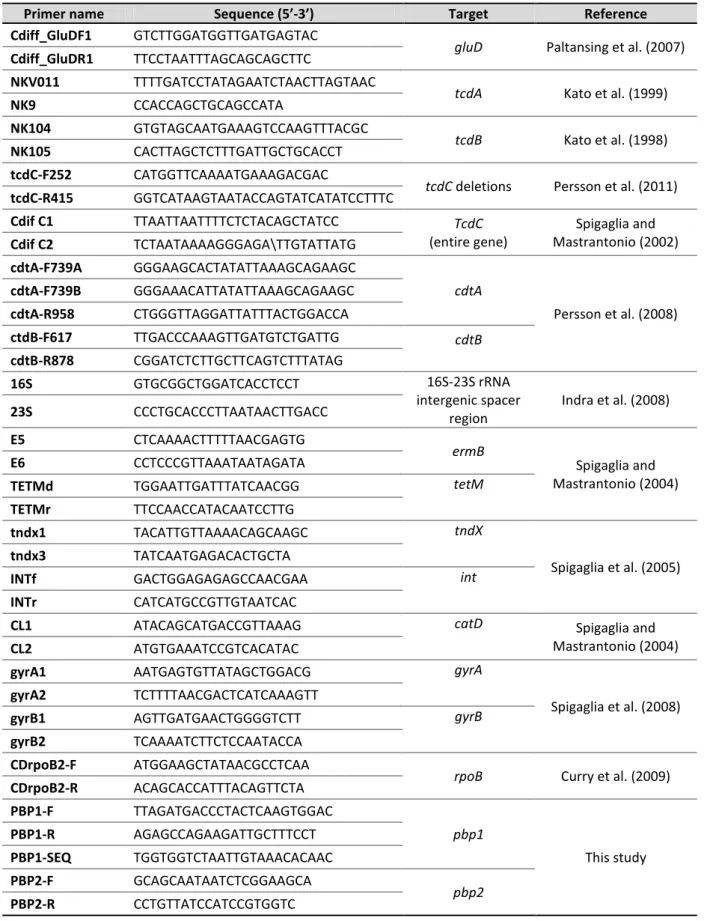
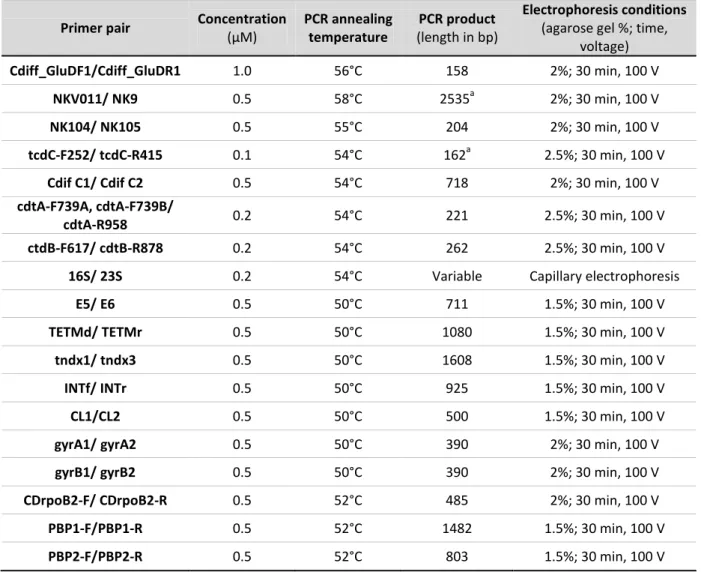
The primers used in this study, their respective sequences, specificity and references are presented in Table 1. The primers’ final concentrations used in the PCR mixtures, the expected PCR product length, PCR thermocycling and gel electrophoresis conditions are all described in Table 2. For
Primer name Sequence (5’-3’) Target Reference Cdiff_GluDF1 GTCTTGGATGGTTGATGAGTAC
gluD Paltansing et al. (2007)
Cdiff_GluDR1 TTCCTAATTTAGCAGCAGCTTC
NKV011 TTTTGATCCTATAGAATCTAACTTAGTAAC
tcdA Kato et al. (1999)
NK9 CCACCAGCTGCAGCCATA
NK104 GTGTAGCAATGAAAGTCCAAGTTTACGC
tcdB Kato et al. (1998)
NK105 CACTTAGCTCTTTGATTGCTGCACCT
tcdC-F252 CATGGTTCAAAATGAAAGACGAC
tcdC deletions Persson et al. (2011)
tcdC-R415 GGTCATAAGTAATACCAGTATCATATCCTTTC Cdif C1 TTAATTAATTTTCTCTACAGCTATCC TcdC (entire gene) Spigaglia and Mastrantonio (2002) Cdif C2 TCTAATAAAAGGGAGA\TTGTATTATG cdtA-F739A GGGAAGCACTATATTAAAGCAGAAGC cdtA Persson et al. (2008) cdtA-F739B GGGAAACATTATATTAAAGCAGAAGC cdtA-R958 CTGGGTTAGGATTATTTACTGGACCA ctdB-F617 TTGACCCAAAGTTGATGTCTGATTG cdtB cdtB-R878 CGGATCTCTTGCTTCAGTCTTTATAG 16S GTGCGGCTGGATCACCTCCT 16S-23S rRNA intergenic spacer region Indra et al. (2008) 23S CCCTGCACCCTTAATAACTTGACC E5 CTCAAAACTTTTTAACGAGTG ermB Spigaglia and Mastrantonio (2004) E6 CCTCCCGTTAAATAATAGATA
TETMd TGGAATTGATTTATCAACGG tetM
TETMr TTCCAACCATACAATCCTTG
tndx1 TACATTGTTAAAACAGCAAGC tndX
Spigaglia et al. (2005)
tndx3 TATCAATGAGACACTGCTA
INTf GACTGGAGAGAGCCAACGAA int
INTr CATCATGCCGTTGTAATCAC
CL1 ATACAGCATGACCGTTAAAG catD Spigaglia and Mastrantonio (2004)
CL2 ATGTGAAATCCGTCACATAC
gyrA1 AATGAGTGTTATAGCTGGACG gyrA
Spigaglia et al. (2008)
gyrA2 TCTTTTAACGACTCATCAAAGTT
gyrB1 AGTTGATGAACTGGGGTCTT gyrB
gyrB2 TCAAAATCTTCTCCAATACCA
CDrpoB2-F ATGGAAGCTATAACGCCTCAA
rpoB Curry et al. (2009)
CDrpoB2-R ACAGCACCATTTACAGTTCTA PBP1-F TTAGATGACCCTACTCAAGTGGAC pbp1 This study PBP1-R AGAGCCAGAAGATTGCTTTCCT PBP1-SEQ TGGTGGTCTAATTGTAAACACAAC PBP2-F GCAGCAATAATCTCGGAAGCA pbp2 PBP2-R CCTGTTATCCATCCGTGGTC
11
PCR positive controls, both DNA from strains from the ECDC collection and DNA gently given by Paola Mastrantonio, from Istituto Superiore di Sanità, were used.
PCR thermocycling was performed in a GeneAmp PCR System 9700 thermocycler (Applied Biosystems). According to the manufacturers’ instructions, HotStarTaq Master Mix (Qiagen) was used for PCR ribotyping; BioTaq DNA polymerase (Bioline) was used to detect gluD, tcdB, cdtA and cdtB, and tcdC; GoTaq® Flexi DNA polymerase (Promega) was used for screening ermB, catD and tetM genes and respective transposons; RANGER DNA Polymerase (Bioline) was used to detect tcdA and amplify pbp1 for sequencing; finally, the amplicons of gyrA, gyrB, rpoB and pbp2, and the whole tcdC gene were amplified with BIO-X-ACT Short DNA Polymerase (Bioline) followed by sequencing.
Table 2.Primer pairs used in this study, final concentration used in PCR mixture, amplicon size, PCR annealing temperature and electrophoresis conditions.
a
PCR product length when no deletion is present
Before sequencing, all PCR products were treated with ExoSAP-IT (USB Corporation) according to the manufacturer’s instructions.Capillary sequencing was performed using the Big Dye Terminator Reaction in an ABI 3130xl Genetic Analyzer (Applied Biosystems) at Unidade de
Primer pair Concentration
(µM) PCR annealing temperature PCR product (length in bp) Electrophoresis conditions
(agarose gel %; time, voltage)
Cdiff_GluDF1/Cdiff_GluDR1 1.0 56°C 158 2%; 30 min, 100 V
NKV011/ NK9 0.5 58°C 2535a 2%; 30 min, 100 V
NK104/ NK105 0.5 55°C 204 2%; 30 min, 100 V
tcdC-F252/ tcdC-R415 0.1 54°C 162a 2.5%; 30 min, 100 V
Cdif C1/ Cdif C2 0.5 54°C 718 2%; 30 min, 100 V
cdtA-F739A, cdtA-F739B/
cdtA-R958 0.2 54°C 221 2.5%; 30 min, 100 V ctdB-F617/ cdtB-R878 0.2 54°C 262 2.5%; 30 min, 100 V
16S/ 23S 0.2 54°C Variable Capillary electrophoresis
E5/ E6 0.5 50°C 711 1.5%; 30 min, 100 V
TETMd/ TETMr 0.5 50°C 1080 1.5%; 30 min, 100 V
tndx1/ tndx3 0.5 50°C 1608 1.5%; 30 min, 100 V
INTf/ INTr 0.5 50°C 925 1.5%; 30 min, 100 V
CL1/CL2 0.5 50°C 500 1.5%; 30 min, 100 V
gyrA1/ gyrA2 0.5 50°C 390 2%; 30 min, 100 V
gyrB1/ gyrB2 0.5 50°C 390 2%; 30 min, 100 V
CDrpoB2-F/ CDrpoB2-R 0.5 52°C 485 2%; 30 min, 100 V
PBP1-F/PBP1-R 0.5 52°C 1482 1.5%; 30 min, 100 V
12
Tecnologia e Inovação (Departamento de Genética Humana, National Institute of Health Dr. Ricardo Jorge, Lisbon, Portugal). The corresponding amino acid sequences were obtained with the ExPASy
Translate tool (http://web.expasy.org/tools/translate/) and further analyzed and aligned with wild-type sequences obtained in the NCBI database, using the Multalin software (http://multalin.toulouse.inra.fr/multalin/).
5.1. Pathogenicity factors 5.1.1. Toxin typing
The primer pair NKV011/NK9 was used to identify both the tcdA gene and the deletions in its repeating regions, resulting in a 2535 bp amplicon when no deletion is present, and ≈1800 bp or ≈700 bp amplicons when deletions are present. For detection of tcdB gene, the primer pair NK104/NK105 was used to amplify a 204 bp amplicon.
The binary toxin, CDT, was identified through amplification of a 221 bp amplicon of the cdtA gene using the primers cdtA-F739A, cdtA-F739B, and cdtA-R958, and amplification of a 262 bp segment of cdtB with the primers ctdB-F617 and cdtB-R878, as described by Persson et al. (2008) (Table 1). Only the strains with both amplicons were considered cdtA/cdtB+.
5.1.2. tcdC analysis
The primer pair tcdC-F252 and tcdC-R415 was used to identify the internal in-frame deletions of the tcdC gene, as described by Persson et al. (2011) (Table 1). Non-deleted strains show a 162 bp amplicon, whereas amplicons of 144, 126 and 108 bp are obtained in result of deletions of 18, 39 and 54 bp, respectively. Strains in which a deletion was detected were selected for amplification of the entire tcdC gene using the primers C1 and C2, followed by sequencing of the purified DNA fragment with both primers in order to confirm the dimension of the deletion and identify other mutations.
5.2. Ribotyping
RTs were determined by capillary gel electrophoresis-based PCR ribotyping using the fluorescein-labelled forward primer 16S and the non-labelled reverse primer 23S, as described by Indra et al. (2008) (Table 1). The PCR RTs were determined by uploading the data to the Webribo database (https://webribo.ages.at/).
13
5.3. Mechanisms of antimicrobial resistance 5.3.1. ermB, tetM and catD
The ermB, tetM and catD genes were detected by PCR amplification using the primer pairs E5-E6, TETMd-TETMr and CL1-CL2, respectively. To determine the element harboring the tetM gene in tetM+ strains, the primer pairs INT1-INT2 and tndx1-tndx2 were used to detect the int gene, marker for the Tn916-like elements, and the tndX gene, marker for the Tn5397-like elements, respectively.
5.3.2. gyrA, gyrB and rpoB
Mutations conferring resistance to MXF were identified using the primer pairs gyrA1-gyrA2 and gyrB1-gyrB2 to amplify the QRDRs of gyrA and gyrB, respectively, followed by nucleotide sequencing of the purified PCR product using the forward primers, gyrA1 and gyrB1, respectively.
The primers CDrpoB2-F and CDrpoB2-F were used to amplify a region of the rpoB gene already known to contain mutations associated with RIF resistance (Curry et al., 2009). The resulting PCR products were purified and sequenced using the forward primer CDrpoB2-F.
5.3.3. Penicillin-binding proteins
To identify mutations that confer resistance to IMP in C. difficile, two genes encoding PBPs were selected for analysis. Primers were designed using the NCBI Primer-BLAST tool (http://www.ncbi.nlm.nih.gov/tools/primer-blast/index.cgi?LINK_LOC=BlastHome) based on the genes CD630_07810 (2694 bp; NCBI Gene ID: 4915584) and CD630_12290 (1665 bp; NCBI Gene ID: 4914157) from the genome of C. difficile strain 630 (GenBank accession no. NC_009089.1), encoding for pbp1 and pbp2, respectively. Primer design was aimed to amplify a region of the genes that included the consensus sequences encoding the penicillin-binding motifs SXXK, SXN and KT/SG, since mutations in, or adjacent to, these regions have already been reported to be related to carbapenems resistance in S. pneumoniae (Davies et al., 2008). For quality assurance, the primers were blasted against other C. difficile genomes in the NCBI database.
6. Statistical analysis
Patients’ data and the results from the characterization of the strains were recorded and analysed with a MS EXCEL™ spreadsheet. Student’s t test was done with OpenEpi (http://www.OpenEpi.com).
14
III – Results
1. Patients’ characteristics
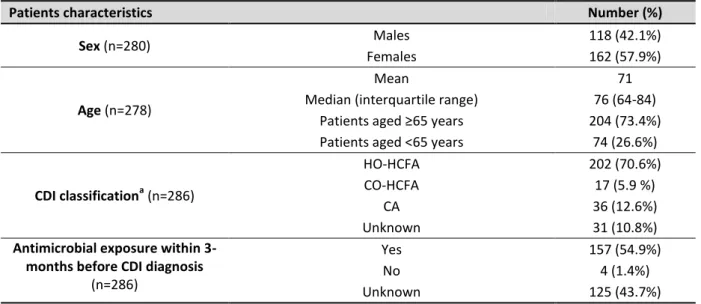
From September 2012 to May 2015, 286 diarrheal samples belonging to 286 patients diagnosed with CDI were sent to the Reference Laboratory of INSARJ. The number of samples sent by each of the participating hospitals was extremely variable (ranging from 1 to 67 samples sent by a single hospital). The available data on the patients’ characteristics is summarized in Table 3. All the cases were from non-outbreak settings.
Table 3. Characteristics of the patients diagnosed with CDI included in this study.
Patients characteristics Number (%) Sex (n=280) Males 118 (42.1%)
Females 162 (57.9%)
Age (n=278)
Mean 71
Median (interquartile range) 76 (64-84) Patients aged ≥65 years 204 (73.4%) Patients aged <65 years 74 (26.6%)
CDI classificationa (n=286)
HO-HCFA 202 (70.6%) CO-HCFA 17 (5.9 %)
CA 36 (12.6%)
Unknown 31 (10.8%)
Antimicrobial exposure within 3-months before CDI diagnosis
(n=286)
Yes 157 (54.9%)
No 4 (1.4%)
Unknown 125 (43.7%)
The majority of the patients (73.4%) were aged above 64 years and at least 54.9% were exposed to antimicrobials during the 3 months preceding the diagnosis, being that only 1.4% had not been exposed to this risk factor.
There was a higher frequency of female patients compared to males (rate ratio = 1.37; 95% CI: 1.09-1.75), which was particularly evident in the community-associated cases, where 26 out of 36 patients were females. Males and females, however, shared the same mean age (71 years).
Regarding CDI classification, 219 (76.5%) cases were health-care facility-associated, of which 202 had an hospital-onset (HO-HCFA) and 17 had community-onset (CO-HCFA). Thirty-six cases were associated with the community setting (12.6%) and 31 cases were classified as unknown due to lack of data. The patients with a community-associated infection had a slightly lower mean age (69 years) compared to those with hospital-associated infections (71 years).
a
CDI classification was done according to place and time of symptoms onsetHO-HCFA - health-care onset health-care facility-associated; CO-HCFA – community onset - health-care facility-associated; CA – community associated
15
2. Molecular characterization of strains
All isolates were genetically confirmed to be C. difficile by PCR detection of the gluD gene, which encodes the highly conserved C. difficile-specific glutamate dehydrogenase (Carman et al., 2012), using the previously published primers GluDF1 and GluDR1.
2.1. Ribotypes
A total of 78 already named PCR RTs and six unknown profiles were found among 285 of the 286 strains studied, being that only one isolate couldn’t be ribotyped due to lack of amplification. The frequencies of the RTs varied among hospitals, with some displaying predominant RTs and others showing a high diversity without a predominant type. The frequencies of RTs are shown in Figure 2.
The most prevalent RT was RT027, representing 22% of the strains, followed by RT014 (8%), RT020 (5%), RT203 (5%), RT017 (4%), RT078 (3%) and RT126 (3%). The distribution of the RTs varied widely between hospitals. In particular, the 63 strains belonging to the RT027 were obtained from 10 of the 22 hospitals and 24 of these strains came from a single hospital; nonetheless, RT027 is still the prevalent RT among the strains from the remaining hospitals (17.8%; 39/219). RT027 was also predominant RT in the health-care facility-associated cases (HO-HCFA and CO-HCFA), accounting for 26.0% of the strains (57/219), while RT014 was the most common in community-associated cases, representing 16.7% of the strains (6/36).
16
2.2. Toxin typing and tcdC mutations
The majority of the strains were toxinogenic (96.1%; 275/286), of which 255 had both tcdA and tcdB genes and 20 were tcdA-/tcdB+. Ninety-three (32.5%) strains carried a mutated tcdC gene, 83 (29.0%) of which were extensively mutated, and 91 (31.8%) were cdtA/cdtB+, all of which were
tcdA+/tcdB+. The 12 different genotypes found are described in Table 4.
The toxin profile most frequently found included 166 strains (55.9%) harboring both tcdA and
tcdB genes, no binary toxin and no deletion in the tcdC gene. This genotype included some of the
most common RTs, such as RT014, RT020 and RT203.
The second most common profile included strains that were positive for all toxin genes, carried an 18 bp in-frame deletion and a single nucleotide deletion at position 117 in the tcdC gene that results in a frameshift that introduces a premature stop codon and consequently leads to a truncated TcdC protein (65 residues). This group was mainly constituted by RT027 strains (63/66). The three remaining strains belonged to ribotypes RT176 (n=2) and RT036 (n=1).
Table 4. Distribution of toxin genes profiles, tcdC deletions and mutations and the most common RTs in each
genotype. No. of strains (n=286) tcdA/tcdB tcdA deletion (length in bp) cdtA/cdtB tcdC deletion (length in bp) tcdC truncating mutation Predicted TcdC length (aa residues) PCR RTs (no. of strains) 160 +/+ - -/- - ND 232b RT014 (23), RT020 (14), RT203 (12)a 4 +/+ - -/- + (18) None 226 RT020, RT106, RT014, RTAI-9-1 2 +/+ - +/+ - ND 232b RT328, RTAI-60 2 +/+ - +/+ + (18) None 226 RT131 66 +/+ - +/+ + (18) Δ117A 65 RT027 (63), RT176 (2), RT036 (1) 4 +/+ - +/+ + (39) None 219 RT078 (2), RT126 (2) 15 +/+ - +/+ + (39) 184C→T 61 RT078 (7), RT126 (6), RT438 (2) 2 +/+ - +/+ + (54) 184C→T 61 RT023, RT611 10 -/+ + (1800) -/- - ND 232b RT017 (10) 1 -/+ + (700) -/- - ND 232b ND 9 -/+ NA -/- - ND 232b RT017 (2)a 11 -/- NA -/- NA ND - RT085 (2), RT039 (2), RT010 (2), RT009 (2)a a
Only the most common PCR RTs are presented; b Theorethical value
NA - no amplification; ND - not determined; aa – amino acids Δ117A – deletion of an adenine in position 117 of the tcdC gene
The third most common genotype included strains mainly belonging to RT078 and RT126 exhibiting all toxin genes that carried a 39 bp in-frame deletion in tcdC and a single base substitution in position 184 that introduces a stop codon leading to a 61-residues long TcdC. Another four strains, also from RT078 and RT126, shared the same genotype as the group previously mentioned, except
17
for the fact that, even though they exhibited the 39 bp in-frame deletion, they didn’t have the truncating mutation in tcdC, 184C→T, which probably leads to the TcdC with 219 residues.
The fourth most common genotype was exclusively composed of RT017 strains that were
tcdA- (1800 bp deletion), tcdB+, cdtA/cdtB- and had no deletion in tcdC. Other two strains from this ribotype yielded no tcdA amplification indicating a larger deletion in the gene. Notably, these two RT017 strains were MXF-susceptible, contrasting with the remaining RT017 strains, suggesting they belong to a different clonal lineage, in accordance to their different hospital origin.
3. Antimicrobial susceptibility
The results of antibiotic susceptibility testing to all drugs, except for IMP, are summarized in Table 5. The antibiotic that registered the highest resistance rate was MXF, with 33.8% (95/281) of highly resistant strains. These belonged to 18 distinct RTs of which the most common was RT027 (65.2%; 62/95), followed by RT017 and RT126, representing 9.5% (9/95) and 4.2% (4/95) of the MXF-resistant strains, respectively. In addition to RT027, at least one MXF-resistant strain was found in five cdtA/cdtB+ RTs (RT036, RT078, RT126, RT131 and RT176), all of which also showed a mutated tcdC.
Table 5. Strains susceptibility, geometric mean MIC and number of strains with resistant to MXF, VAN, MTZ,
RIF and TGC. MXF (n=281) VAN (n=280) MTZ (n=280) RIF (n=119) TGC (n=95) MIC50a (mg/L) 1.5 0.75 0.25 <0.002 0.023 MIC90a(mg/L) >32 1 1.5 0.003 0.023
Geometric mean MIC (mg/L) 3.7 0.59 0.23 0.004 0.02
Range (mg/L) 0.047 - >32 0.064 - 3 <0.016 - 16 <0.002 - >32 <0.016 - 0.064
No. of resistant strains (%) 95 (33.8%) 2 (0.7%) 13 (4.6%) 8 (6.7%) 0 a
MIC50 and MIC90 - minimum concentration necessary to inhibit 50% and 90% of the strains, respectively
MXF resistance was ubiquitous in RT027; however, the majority of the remaining MXF-resistant strains belonged to RTs in which this phenotype was not a common trait. For instance, only two of 19 RT020 strains (one of which had the only 18 bp deletion in tcdC detected in the RT) and one of 24 RT014 strains (also the only case within this RT with the 18 bp tcdC-deletion) were resistant to MXF. Additionally, only one of nine strains (11.1%) from RT078 and four of eight strains (50%) from RT126 were resistant to MXF. Overall, this indicates an emergence of MXF-resistance in non-RT027.
Eight out of 119 strains were highly resistant to RIF (>32 mg/L), six of which belonged to RT017, being that three were also MXF-resistant. All the remaining strains had very low MICs and were classified as susceptible.
18
MTZ-resistance was observed in 13 strains, of which the majority were low-level resistant (3-6 mg/L), seven belonged to RT027 and one to RT017 (Table 6). Notably, the MIC50, MIC90 and
geometric mean MIC of RT027 strains were superior to those observed in other RTs. The difference between means, tested after logarithmic transformation of the values for normalization, was statistically significant (t-test, P<0.01) which, overall, points to a reduced susceptibility to MTZ in RT027 strains.
Table 6. MTZ susceptibility of strains from RT027 vs strains from other ribotypes.
RT027 (n=61) Other RTs (n=219)
MIC50a (mg/L) 1.0 0.19
MIC90a (mg/L) 3.0 0.75
Geometric mean MIC (mg/L) 0.79b 0.16b
Range (mg/L) 0.016 - 16 <0.016 - 6 a
MIC50 and MIC90 - minimum concentration necessary to inhibit 50% and 90% of the strains, respectively
b Difference between meansis statistically significant (t-test, P<0.01)
Almost all strains (99.3%) were susceptible to VAN and only two isolates (RT001 and RTAI-58) showed a low-level resistance to this antibiotic (3 mg/L). The MICs of VAN for RT027 strains were similar to those observed in the remaining RTs (MIC50=0.5 vs 0.75 mg/L, for RT027 vs other
RTs; MIC90= 1.0 mg/L and geometric mean MIC= 0.6 mg/L for both groups).
All strains were highly susceptible to TGC, with very low MICs (Table 5).
IMP susceptibility determined by Etest yielded unclear results since almost every strain exhibited macrocolonies inside the inhibition, which would indicate an IMP-resistant phenotype and hence suggested the existence of heterogeneous resistance. However, the colonies only appeared at 48h of growth, but not at 24h, and the selection of these hypothetically resistant colonies and subsequent Etest didn’t result in homogeneous resistance but instead yielded the same heterogeneous resistance appearance with macrocolonies inside the inhibition ellipse. As such, the reference agar dilution method was applied to a subset of 57 strains to test the hypothetical resistance and compare the results to those obtained by Etest (Table 7). Since only the concentrations of 8, 16 and 32 mg/L were tested, it was not possible to ascertain the MICs of the susceptible strains, which are simply described as ≤8 mg/L.
Table 7. Comparison of MICs of IMP determined by Etest with MICs determined by the agar dilution method.
IMP MICs determined by Etest (n=110) IMP MICs determined by agar dilution (n=57) Considering colonies inside ellipse Ignoring colonies inside ellipse MIC50 (mg/L) 8 4 8 MIC90 (mg/L) >32 >32 16
Geometric mean MIC (mg/L) 8.68 4.55 ND
Range (mg/L) 0.19 - >32 0.19 - >32 ≤8 - 32
No. of resistant strains (%) 53 (48.2%) 22 (20.0%) 11 (19.3%)