Patrícia dos Santos Gonçalves
The impact of institutional recognition on motivation, satisfaction, commitment and investment of volunteers
Patrícia dos Santos Gonçalves
The impact of institutional recognition on motivation, satisfaction, commitment and investment of volunteers
Dissertação de Mestrado
Mestrado Integrado em Psicologia
Trabalho efectuado sob a orientação da Professora
Doutora Joana Arantes e da Professora Doutora Ana Paula Soares
Nome: Patrícia dos Santos Gonçalves
Endereço electrónico: [email protected] Número do Cartão de Cidadão: 14004892
Título da dissertação: The impact of institutional recognition on motivation, satisfaction, commitment and investment of volunteers
Orientadoras: Professora Doutora Joana Arantes e Professora Doutora Ana Paula Soares Ano de conclusão: 2018
Designação do Mestrado: Mestrado Integrado em Psicologia
É AUTORIZADA A REPRODUÇÃO INTEGRAL DESTA DISSERTAÇÃO APENAS PARA EFEITOS DE INVESTIGAÇÃO, MEDIANTE A DECLARAÇÃO ESCRITA DO INTERESSADO, QUE A TAL SE COMPROMETE;
Universidade do Minho, 31/01/2018
ii Index Aknowledgements ... iii Resumo ... iv Abstract ...v Introduction ...6 Our Study ... 10 Methodology ...11 Participants ... 11 Procedure ... 11 Measures ... 11 Results ...14 Data analysis ... 14
Influence of having Institutional Recognition in volunteering activities ... 14
Motivation, satisfaction, commitment and investment to volunteer ... 14
Demographic variables ... 15
Influence of gender in volunteerism ... 16
Correlational Analysis ... 17
Motivation scale (VFI) ... 17
Satisfaction scale ... 18
Commitment scale ... 18
Investment scale ... 19
Discussion ...21
Limitations and future research ... 24
References ...26
Index of Figures Figure 1 -Differences between volunteers with recognition and no recognition in the "Understanding" functional motive ... 15
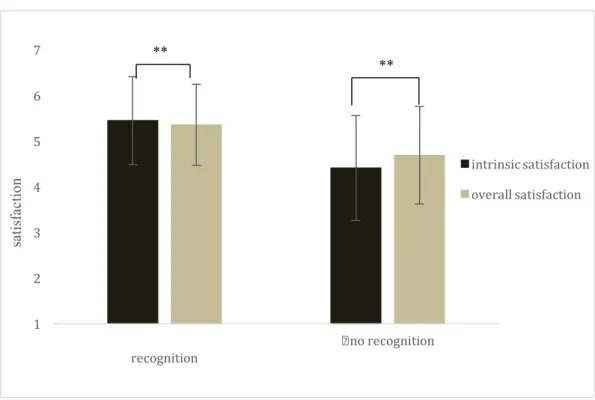
Figure 2 - Differences between volunteers with recognition and no recognition in the intrinsic satisfaction and overall satisfaction ... 15
Figure 3 - Differences in age between volunteers with recognition and no recognition ... 16
Figure 4 - Differences between volunteers with recognition and no recognition in ... 16
Figure 5 - Influence of gender in the hours dedicated to the volunteering activity per week ... 16
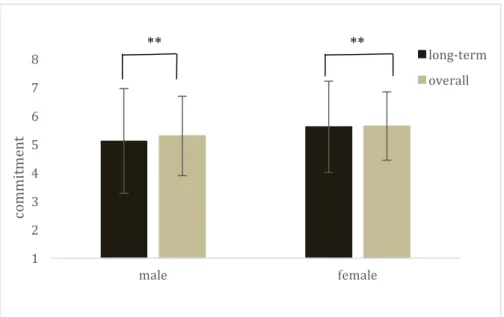
Figure 6 - Influence of gender in long-term and overall commitment of volunteers ... 17
Index of Tables Table 1 –Correlational analysis between motivation, satisfaction, commitment, investment, age of the participants, duration of the volunteering activity and hours spent (week) ... 20
iii Aknowledgements
A realização desta dissertação de mestrado contou com apoios importantes sem os quais não se teria tornado uma realidade e aos quais estarei eternamente grata.
À Professora Doutora Joana Arantes, pela orientação prestada ao longo da realização da dissertação, pela partilha de conhecimentos e aprendizagem, e pela compreensão.
À Professora Doutora Ana Paula Soares, pela disponibilidade e pelas sugestões que contribuíram para o aperfeiçoamento desta dissertação.
À Inês Sá e ao João Costa pelo contributo valioso para este trabalho, pela ajuda, e pelos estímulos em alturas de desânimo.
Aos meu amigos e família por estarem ao meu lado durante esta fase, pelo companheirismo, força e apoio em certos momentos difíceis.
Aos meus pais pelo apoio, incentivo e paciência demonstrados, e pelas oportunidades que, por vezes, derivaram dos seus sacríficios. É a vocês que dedico todo o meu percurso académico.
Às organizações de voluntariado que prestaram uma contribuição fundamental para que este estudo fosse possível e para o avanço da investigação científica nesta área.
À rede Erasmus Student Network, por mudar a minha vida e fazer de mim uma cidadã mais activa e participativa em sociedade.
To all volunteers that continue to inspire my daily life with their commitment and passion to build a better and more inclusive world. May our efforts contribute to a future free of prejudice, poverty and war.
iv Resumo
O reconhecimento da atividade de voluntariado foi incluído em diversas agendas europeias e é um dos pontos de pressão dos estados membros até o final do próximo ano. Embora o reconhecimento do voluntariado seja entendido como um precursor importante para avaliação de competências e maior taxa de empregabilidade, não há, até agora, um estudo que mostre o impacto desta variável no envolvimento de voluntários dentro das suas organizações. O presente estudo tem como objetivo analisar a influência do reconhecimento institucional na motivação, satisfação, compromisso e investimento de voluntários. O estudo foi realizado em 352 voluntários usando 4 escalas numa plataforma digital para medir cada uma dos construtos. Os resultados mostram que os voluntários que recebem reconhecimento institucional demonstram, em média, maior satisfação com a atividade de voluntariado, estão geralmente mais motivados e passam mais horas por semana na busca da atividade de voluntariado. Também é visível que motivação, satisfação, compromisso e investimento se correlacionam positivamente. Finalmente, os resultados mostram que os participantes mais velhos estão motivados a prosseguir a atividade de voluntariado por causa da expressão dos valores altruístas de um indivíduo através do voluntariado.
Palavras-chave: voluntário, reconhecimento, motivação, satisfação, comprometimento Título: O impacto do reconhecimento institucional na motivação, satisfação e
v Abstract
The recognition of the volunteering activity has been included in many european agendas and it’s one of the pressure points of member states by the end of next year. Although the recognition of volunteerism is recognised as an important precursor for skills assessment and a higher employability rate, there is, until now, no study that shows the impact of this variable in the engagement of volunteers. The present study aims to analyse the influence of institutional recognition in the motivation, satisfaction, commitment and investment of volunteers. The study was carried out on 352 volunteers using 4 scales to measure each one the constructs using a digital platform. The results show that volunteers receiving institutional recognition demonstrate, on average, more satisfaction with the volunteering activity, are generally more motivated and spend more hours per week pursuing the volunteering activity. It is also visible that motivation, satisfaction, commitment and investment positively correlated. Finally, results show that older participants are motivated to pursue to volunteering activity because of the expression of an individual’s altruistic values through volunteering.
Keywords: volunteer, recognition, motivation, satisfaction, commitment
Title: The impact of institutional recognition on motivation, satisfaction and commitment of volunteers
6
Introduction
Prosocial behavior has since long mystified social psychologists (Wilson, 2000). Until the 1930s, research focused mainly on the type of prosocial behavior related to sporadic acts of kindness of individuals helping a distressed target (Penner, 2002). Only later did research focus more on behavior that is extended in time and happening within an organisation - volunteerism (e.g. Schroeder, Penner, Dovidio, & Piliavin, 1995). According to Penner, volunteerism can be defined as “long-term, planned, prosocial behaviours that benefit strangers and occur within an organisational setting’’ (Penner 2002, p. 448).
In a world that is fastly changing, amidst a political and economical crisis, volunteering is seen as a valuable asset in developing social cohesion by promoting solidarity, active citizenship and intercultural learning (Brown, 2018). The sector of non-governmental organisations (NGOs) has witnessed a tremendous growth over the last three decades (Borzaga & Santuari, 2003). What was before a more informal setting of philanthropy, has now become a key actor in political movements (Bekkers, 2005).
Indeed, volunteerism is such a valuable asset to society that is even regarded as its’ third pillar, due to its high impact in job creation and its pivotal role in making individuals who volunteer become more engaged in society (e.g. Billis & Davis, 1996). This fact is also expressed on the number of people volunteering. According to the first study done on volunteer work in Portugal by the National Institute of Statistics in 2012, 11.5% of the portuguese population with ages above 15 had participated in volunteering actions at least once. This represented 5% of the total amount of hours worked by the Portuguese population and corresponded to 1% of the country’s Gross Domestic Product (GDP). However, even though these numbers seem considerably high, half of these 11.5% engaged in volunteering occasionally, without being in an organisational setting and on a short-term basis. The number of volunteers worldwide may well exceed one billion, even though the measures of volunteerism suffer from insufficient academic resources and documented volunteer experiences (United Nations Volunteerism Report, 2015).
Looking at volunteerism from the perspective of a sustained and ongoing helpfulness actions, raises up the questions: Why do people commit themselves and their resources to voluntarily helping and how do they sustain their involvement in volunteerism over an extended period of time. According to Latham and Pinder (2005), motivation is a complex psychological process that results from an interaction between the individual and their
7
surrounding environment. Some authors affirm that there are motivations underlying the development of voluntary activities which can be divided into various categories (e.g. Paço & Nave, 2013).
A major contribution has been made by Clary and colleagues on the functional motives behind why people volunteer (Clary & Snyder, 1999; Clary et al., 1996, 1998). The scale the authors constructed is based on a functionalist perspective that emphasizes the adaptive and purposeful strivings of individuals towards both personal and social goals (Houle, 2005). According to these authors (Clary & Snyder, 1999; Clary et al., 1996, 1998), volunteering motivation is divided into six different motives: “Values”, “Understanding”, “Social”, “Career”, “Protective” and “Enhancement”. The first functional motive “Values” relates to the expression of an individual’s altruistic values through volunteering. The second functional motive “Understanding” expresses the desire to learn or practice skills and abilities through volunteering. For the “Social” motive, Clary et al. (1998) link it to the opportunities that volunteering may offer in the context of being one‘s friends or to engage is an activity that is perceived as favorable by important others. Regarding the “Career” motive, volunteering is seen as a way to create or enhance professional career opportunities. Volunteering as a mean to compensate for personal negative feelings, such as guilt or sorrow, is encompassed in the “Protective” motive. In the context of the “Enhancement” motive, volunteering is a means to enhance self-esteem, personal satisfaction and/or growth. From this perspective, volunteering is seen as a behavior that results from different types of motives, or combinations of them, which can be fulfilled by being involved as a volunteer in a non-profit organisation (Clary et al., 1996).
In conclusion, the functions served by volunteerism manifest themselves by influencing critical events associated with the initiation and maintenance of voluntary helping behavior. Therefore, it is important to understand the volunteers’ motivations, as they may allow organisations to make adjustments to their different profiles and motivations, in order to bring benefits to both involved parts (Paço & Nave, 2013).
Regarding the functional approach, Snyder and Cantor (1998) also state that volunteers are more likely to engage in volunteerism if they feel it responds to the motives that attracted them. However, not all volunteer organisations can meet these motives. According to Lewin (1936), volunteers’ behaviour in the organisation may decrease if the activities they pursued do not offer satisfaction regarding their functional motives, thus leading to high turnover rates. On the contrary, this approach affirms that volunteers will be
8
more satisfied if the context of the organisation provides them with motivations that continue to engage them in volunteering (Stukas et al., 2009).
The difference between satisfaction and motivation is that satisfaction is the experience of subjects and feelings towards the work conditions or results, while motivation includes goal-oriented behavior to achieve the conditions or results (Cunha, 2001). The concept of job satisfaction is reached when gratifying the needs attached to one’s motives (Locke, 1976). Therefore, when measuring satisfaction, it is important to measure this construct in regards to the motivational aspect and functions of management (Ferreira, 2012). However, although the satisfaction of paid workers has been extensively addressed, we know relatively little about the satisfaction of volunteers and its predictors (Gagne & Deci, 2005).
In addition, the individual's motivations for volunteering also play a role in the intentions of volunteers to remain committed to the organisation (Clary et al., 1998). Clary and colleagues (1998) designed a study to analyse the impact of motivations on long term and short intentions - commitment - of staying in organisations and concluded that volunteers who received functionally relevant benefits revealed more intentions to continue as volunteers in the organisation when compared to those who did not receive functionally relevant benefits. Satisfaction is also a function that drives, at least in part, commitment to an organisation (Elstad, 1996; Farrell et al., 1998; Kuhn & Guzley, 2001; Rusbult, 1980). This interlinkage of constructs is why human resources usually integrate them in Human Resources Management questionnaires to study the performance and engagement of volunteers inside the organisation (e.g. Tella, Ayeni & Popoola, 2007).
Another construct closely related with the commitment and satisfaction of a job relationship is the investment made by the job holder. Initially developed by Rusbult (1980) to study romantic relationships and later on expanded to the job market, the investment model scale (IMS) is based on the notions of rewards and costs and it explains how individuals maintain and promote their romantic relationship, and why some individuals decide to leave their current relationship. The model also states that the investment of resources serves to increase the commitment by increasing the costs of leaving a said relationship (Rusbult, 1980). Unfortunately, the construct of investment was not applied to the context of volunteerism. Even so, considering that the concepts of investment, commitment and satisfaction are related and integrated in the same scale, it would be interesting to adapt it’s concept to the volunteer context and to see if they correlate the same way.
In conclusion, the driving force of volunteerism can be diverse and is not purely linked to altruistic motives. In line with this argument, Smith (2010) proposes that volunteers
9
acquire knowledge, skills and competencies valuable for their human capital and that volunteerism is a context to foster these skills and enhance employability. These benefits can be one of the motivations for volunteers to initiate and sustain their volunteering activity (e.g. Clary et al, 1998; Souto-Otero & Shields, 2016). However, the voluntary sector lacks a formal validation system for this type of non-formal learning that might bridge the gap between the skills developed through volunteering and effective employability (Sleahtitchi & Neacsu, 2013)
Even though research in volunteerism has increased over the last decade, studies that analyse the competencies gained through non-formal education (NFE), where volunteerism practice is integrated, continue to be close to none (CEDEFOP, 2011, 2015 & 2016; European Commission, 2016; Official journal of the European Union, 2012). Non-formal education can be defined as any planned programme outside of the formal education system designed to improve a range of social and personal skills and competencies (Council of Europe, 2002). Recognition can be defined as the process to make visible the learning of individuals (CEDEFOP, 2016). This process helps a learner to share the outcomes of his learning for future learning or employment opportunities and is specially important in non-formal learning since the competencies gained in this context are often ignored (UNESCO Institute for
Lifelong Learning, 2015). By assessing the learning outcomes acquired through non-formal
learning, individuals can receive recognition in the form of a document certifying the competencies developed, credits leading to a qualification, or other (Council of Europe, 2012). Although certifications, also called recognition of non-formal education, appear as a top priority in many european agendas (e.g. European Commission et al, 2014), there is no scientific literature to sustain the importance of certification in the engagement of volunteers in NGOs.
Yet another construct that could be related with the individual’s engagement for volunteering, is the construct of gender. In scientific literature, gender appears as a mediator factor for various psychological processes. Regarding the context of volunteerism, there are more women engaged in volunteering activities than men and literature has shown that women are more risk aversive that a change in environment could produce and that impacts their commitment in a relationship (Dwyer, Gilkeson & List, 2002). Finally, regarding age, we can observe that in a substantial number of countries, young people exhibit the highest level of volunteering, according to the report on volunteering carried out by the European Commision (2010). Additionally, it's also young people that are most likely to show motivation to engage
10
in volunteering, in order to gain experience that will help them to improve their personal skills (Gidron, 1978).
Our Study
The purpose of this study is to analyse the impact of certification on the motivations, satisfaction, commitment and investment to volunteer and to study how the different constructs relate to each other. The study will also consider the socio-demographic variables and their relationship with the referred constructs.
As mentioned before, volunteering extends well beyond the altruistic motives that were attributed in the last century (Shiarella, McCarthy & Tucker, 2000). Additionally Souto-Otero and Shields (2016) found that the importance of volunteerism is not only acquiring knowledge and skills that can be relevant for the labor market. In fact, those can be one of the precursors - functional motives - (“Career”) for volunteers to initiate and maintain their volunteering activity (Clary et al., 1998). It would therefore be logical that, if a document certifying the volunteer activity is issued, then a volunteer would be more motivated to engage in the volunteer activity. That is why our first hypothesis is that i) when volunteers receive institutional recognition, their motivation will be higher when compared to those who do not receive institutional recognition. Additionally, the second hypothesis is that ii) when volunteers receive institutional recognition, their motives will be more career-oriented.
We also noted that satisfaction (Stukas et al., 2009), motivation (Clary et al., 1998) commitment (Elstad, 1996; Farrell et al., 1998; Clary et al., 1998) and investment are closely linked to each other and that these constructs are usually integrated together in Human Resources Management questionnaires (Bekkers, 2005) and in the Investment Model Scale (Rusbult, Martz & Agnew, 1998). They are typically used to analyse the engagement of the workers in the labour market and in the development and maintenance of job and romantic relationships (Rodrigues & Lopes, 2013). In our analysis we also use this model as the basis for including investment, since it might be interesting to expand it to the volunteering context. In this line of thought, the third hypothesis is iii) when volunteers receive institutional recognition, their satisfaction would be higher, iv) when volunteers receive institutional recognition, their intention to stay in the same organisation would be enhanced and v) when volunteers receive institutional recognition, their investment in the volunteer activity would be greater. It is naturally derived from these hypotheses that vi) the constructs of motivation, satisfaction, commitment and investment are positively related to each other.
11 Methodology
Participants
The participation in the study was voluntary and was conducted with 352 individuals. Our initial sample was constituted by 378 participants of which two were excluded because they did not identify themselves as “volunteers” according to the definition of volunteering in the Portuguese Constitution and 18 were eliminated because they did not fill in at least 50% of the questionnaire. The minimum age required to participate was 18 years old and the overall mean age of the participants was 34.1 years - ranging from 18 to 72 ; SD=14.3.. The majority of the participants were females (n = 219; 62.2 %) and 132 of the participants were males.
Procedure
Participants’ responses were recorded anonymously on an Internet webpage using Qualtrics (www.qualtrics.com). Demographic questions were presented first, followed by the Volunteer Functions Inventory (VFI), satisfaction, commitment and investment scales in counterbalanced order. More than 100 non-profit organisations were contacted using the data from the Portuguese Institute of Youth and Sports’ (IPDJ - Instituto Português do Desporto e Juventude) youth portal, resulting in the participation of volunteers from over 60 portuguese based organisations. The questionnaire was sent by email to the volunteers that accepted the invitation to participate in the study.
Measures
Demographic questionnaire. Participants provided responses to demographic questions,
including age (M = 34.06; SD = 14.3), sex, nationality, duration (in years) of their volunteering activity (M = 2.93; SD = 1.06), hours per week spent volunteering (M = 9.82; SD = 12.47), educational background, name of the non-profit organisation and if they received any type of certification from an institution acknowledging their volunteering activity (university, the government, the Portuguese Institute of Sports and Youth and/or their organisation). This last variable was later codified as institutional recognition as yes (29.55%) or no.
Volunteer Functions Inventory (VFI) (Clary et al., 1998). This questionnaire was used to
assess the motivation underlying volunteerism and was validated for the portuguese population by Paço and colleagues (Paço & Nave, 2013; Paço, Agostinho & Nave, 2014). The
12
items of the VFI were derived from conceptualizations of the six functions served by involvement in volunteer work (values, understanding, career, social, protective, and enhancement).
The six functional motives “Values” (e.g. "I am genuinely concerned about the people who were helped.”), “Understanding” (e.g. “I learned more about the cause for which I worked."), “Social” (e.g. "People close to me learned that I did volunteer work."), “Career”(e.g. "I made new contacts that might help my business or career."), “Protective” (e.g. "I was able to work through some of my own personal problems.") and “Enhancement” (e.g. ' 'My self-esteem was enhanced.”) were assessed across 30 questions, 5 for each of the motives. These questions were randomised so participants could not derive from the order the motives were being assessed. Respondents rated their motivation using a 7-point Likert scale from “not at all important” to “extremely important”. Regarding the original study of Clary et al. (1998), the Cronbach's alphas of the VFI subscales ranges from .80 to .89. The Portuguese version of the VFI (Paço & Nave, 2013) also revealed good reliability of the VFI subscales ranging from .62 to .86. Similarly to these studies, our VFI revealed good internal reliability values for the six subscales (α = .74, values; α = .86, understanding; α = .80, enhancement; α = .79, social; α = .83; protective; α = .93, career).
Satisfaction questionnaire - Silverberg, Marshall and Ellis (2001); Dávila (2003); Vecina, Chacón and Sueiro (2009); Stukas et al. (2009)
This satisfaction questionnaire aims to assess satisfaction across 21 items and using a 7-point Likert scale taking into account two aspects – the satisfaction derived from the fulfillment of the motives to engage in the volunteering activity (or intrinsic satisfaction) (e.g. “My volunteering activity enables me to learn new and interesting things.”) and the satisfaction obtained from contextual factors (managerial satisfaction) (e.g. “I am satisfied with the recognition I receive from my volunteering work.”. This questionnaire was adapted and validated to the portuguese population by Ferreira (2012) and was adapted from a set of subscales from Silverberg, Marshall and Ellis (2001), Dávila (2003), Vecina, Chacón and Sueiro (2009) and Stukas and colleagues (2009). The questionnaire shows good internal reliability (α = .81, intrinsic satisfaction; α = .91, managerial satisfaction). Our questionnaire also shows good internal reliability for internal satisfaction (.77) and managerial satisfaction (.86)
13 Commitment questionnaire (Clary et al., 1998)
The commitment was assessed by a questionnaire of 5 questions constructed by Clary and colleagues on his VFI study (Clary et al., 1998), measuring short-term intentions (e.g. "I will work at the same site next semester") and long-term intentions (e.g. “I will be a volunteer 1 year from now”) to stay in the organisation on a 7-point Likert scale (1= extremely unlikely, 7= extremely likely). Item 2 from the commitment questionnaire “I will volunteer somewhere else next semester” was reversed. Our questionnaire shows good internal reliability for average investment (α = .7).
Since the Commitment questionnaire had not previously been used with a Portuguese-speaking population, we followed standard procedures for adapting scales in cross-cultural research (Geisinger, 1994). After contacting the original authors, we translated the items individually into European Portuguese and discussed language adequacy for all items. The scales were then translated back into English by a bilingual researcher and compared with the original scales. No major discrepancies were noted. Finally, all items were discussed with other members of our lab for linguistic and theoretical adequacy.
Investment questionnaire (Rego et al., 2016)
For the investment questionnaire, participants answered a questionnaire derived from the Investment Model Scale (Rusbult, Martz & Agnew, 1998) and adapted from Rego and colleagues (Rego et al., 2016), assessing investment made in the volunteering activity in terms of “time”, “money” and “effort”. Participants were asked 3 questions, one related to how much they had invested in terms of “time”, another one related to how much they had invested in terms of “money” and another one related to how much they had invested in terms of “effort” until that moment in their volunteering activity on a 7-point Likert scale ranging from 1 (“Nothing”) to 7 (“Everything I have”). Cronbach's alpha revealed good reliability for investment (.77).
14 Results
Data analysis
The collected data was exported to an Excel® spreadsheet and later on analysed with the Statistical Package for Social Sciences (SPSS, version 23.0). The following analysis includes the results of the i) independent t-tests to examine the effect of institutional recognition in the motivation, satisfaction, commitment and investment to volunteer and in the age of the participants, years since starting the volunteering activity and hours spent volunteering per week; ii) independent t tests to investigate the effect of gender across the motivation, satisfaction, commitment and investment to volunteer and in the age of the participants and hours spent volunteering per week; iii) Pearson‘s correlations between motivation, satisfaction, commitment, investment, age of the participants, duration of the volunteering activity and hours spent volunteering per week. A criterion of p < .05 was used for significance tests.
Influence of having Institutional Recognition in volunteering activities
Motivation, satisfaction, commitment and investment to volunteer
Figure 1 shows that participants who received institutional recognition scored higher on the “Understanding” functional motive (M = 5.74; SD = 1.05) than participants without institutional recognition (M = 5.59; SD = 1.27), t(350) = -1.20, p < .05. However, there were no differences between participants with institutional recognition and no institutional recognition and the functional motive “Career” (M = 3.73; SD = 1.94, and M = 3.54; SD = 1.85, respectively), t(350) = -0.98, p > .05 and the overall motivation of the participants (M = 4.47; SD = 1.04, and M = 4.31; SD = 1.07, respectively), t(350) = -1.4, p > .05.
On the other hand, participants that received institutional recognition scored higher on the intrinsic satisfaction (M = 5.45; SD = 0.96) than participants that did not receive institutional recognition (M = 4.41; SD = 1.15), t(350) = -9.10, p < .05. Regarding the average of satisfaction, participants receiving institutional recognition scored higher than those not receiving institutional recognition (M = 5.36; SD = 0.89, and M = 4.69; SD = 1.07, respectively), t(350)= -6.44, p < .05, as shown by figure 2.
In addition, no statistical differences were found between participants with institutional recognition and no institutional recognition and the overall commitment and investment of the participants in volunteering activities (M = 5.36; SD = 0.89, and M = 4.69; SD = 1.07, respectively), t(347)= 1.68, p > .05 ;t(347)= -1.02, p > .05.
15
Demographic variables
Figure 3 also shows that participants who received institutional recognition for their volunteering work were older (M = 34.95; SD = 15.07), in comparison with the volunteers who did not receive institutional recognition (M = 33.36; SD = 13.48), t(350) = -1.04, p < .05. Similarly, participants who received institutional recognition spent more hours volunteering per week (M = 15.2; SD = 11.05) when compared to volunteers who did not receive institutional recognition (M = 8.72; SD = 9.31), t(338) = -1.72, p < .01, as shown by figure 4.
1 2 3 4 5 6 7 unde rs ta ndi ng (V FI ) recognition no recognition ** ** 1 2 3 4 5 6 7 recognition no recognition sa ti sf ac ti on intrinsic satisfaction overall satisfaction ** **
Figure 2 - Differences between volunteers with recognition and no recognition in the intrinsic satisfaction and overall satisfaction
Figure 1 -Differences between volunteers with recognition and no recognition in the "Understanding" functional motive
16 0 5 10 15 20 25 30 male female hour s spe nt vol unt ee ri ng (w ee k) *
Influence of gender in volunteerism
Figure 5 shows that male participants spent more hours per week volunteering (M = 12.66; SD = 14.87) than female participants (M = 8.12; SD = 10.42), t(3.3) = 337, p < .01. On the contrary, female participants had more intentions of staying committed to their volunteer organisation on the long-term (M = 5.61; SD = 1.61) than male participants (M = 5.11; SD = 1.84), t(-2.68) = 349, p < .05. Similarly, female participants had more commitment to their volunteer organisation when compared to male participants (M = 5.64; SD = 1.20, and M = 5.29; SD = 1.40), t(-2.44) = 349, p < .01, as shown by figure 6. 0 10 20 30 40 50 Age (years) A ge ( ye ar s) recognition no recognition ** 0 5 10 15 20 25 30
hours spent volunteering (week)
hour s spe nt vol unt ee ri ng recognition no recognition *
Figure 3 - Differences between volunteers with recognition and no recognition in hours spent volunteering Figure 4 - Differences in age between volunteers with recognition and no recognition
17 Figure 6 - Influence of gender in long-term and overall commitment of volunteers
1 2 3 4 5 6 7 8 male female co m m it m en t long-term overall ** ** Correlational Analysis
Pearson‘s correlations between motivation, satisfaction, commitment and investment, the age of the participants, duration of the volunteering activity (in years) and hours per week spent volunteering were conducted (see Table 1.).
Results show that there is a positive correlation between age and duration of the volunteering activity (in years) (r = .177, p < .01). Meaning that older participants had been volunteers for longer.
Motivation scale (VFI)
Table 1 shows that there was a positive correlation between the functional motives “Values”, “Understanding”, “Enhancement”, “Social”, “Protection” and “Career” and the average “Satisfaction” (r =.139, p < .01; r = .152, p < .01; r =.217, p < .01; r = .131, p < .01; r = .138, p < .01; r = .159, p < .01) and “Investment” (r =.206, p < .01; r = .300, p < .01; r =.256, p < .01; r = .338, p < .01; r = .250, p < .01; r = .303, p < .01) towards the organisation. This means that participants who scored high across all the functional motives of the VFI were more satisfied in general with their volunteer activity and invested more in their volunteer organisation and activity.
Additionally, there was a positive correlation between the functional motive “Values” and the intentions to stay in the organisation (r =.171, p < .01). On the contrary, there was a
18
negative correlation between the functional motives “Social” and “Career” and the intentions to commit to the volunteer organisation (r =-.204, p < .01; r = -.299, p < .01). This means that participants whose main motivation for engaging in volunteering was related with the organization's values had more intentions of staying committed, and those who were more motivated towards the social component and the career component, had less intentions of committing to the organisation.
There was a negative correlation between the functional motives of “Understanding” (r = -.294, p < .01), “Enhancement” (r = -.230, p < .01), “Social” (r = -.360, p < .01), “Protection” (r = -.198, p < .01), and “Career” (r = -.595, p < .01) and the age of the participants. In other words, older individuals tended to have lower scores in the “Understanding”, “Enhancement”, “Social”, “Protection”, “Career” motives of the VFI scale.
Conversely, there was a positive correlation between the functional motives “Enhancement” (r = .160, p < .01), “Social” (r = .250, p < .01), “Protection” (r = .222, p < .01) and “Career” (r = .216, p < .01) and the hours spent volunteering per week. That is, individuals that had higher scores in “Understanding”, “Enhancement”, “Social”, “Protection”, “Career” motives of the VFI scale spent more hours per week volunteering.
Satisfaction scale
Regarding the satisfaction scale, there was a positive correlation for managerial satisfaction and intentions to stay in the organisation (r = .162, p < .01). This means that individuals who were more satisfied with the management factors of their organisation, had more intentions of staying in their volunteer organisation. Additionally, there was a positive correlation between the average satisfaction and the investment made (r = .169, p < .01). In other words,
individuals who were more satisfied with their volunteering activity invested more in their volunteering activity.
Commitment scale
Results show that there is a positive correlation between intentions of staying in the organisation and age of the volunteers (r = .320, p < .01) and duration of the volunteering activity (in years) (r = .256, p < .01). In other words, older participants and participants who had been volunteers for longer planned to stay longer in the organisation where they were
19
currently volunteering.
Investment scale
Regarding the average investment made by the participants, there is a positive correlation between time spent volunteering per week (r = .325, p < .01) and the duration of the volunteering activity (in years) (r = .338, p < .01). On the other hand, there is a negative correlation between investment and age of the participants (r = -.149, p < .01). This means that older individuals tended to invest less in their volunteering activity and planned to stay longer in the organisation where they were currently volunteering.
20
Table 1 –Correlational analysis between motivation, satisfaction, commitment, investment, age of the participants, duration of the volunteering activity and hours spent (week)
Variables 1 2 3 4 5 6 7 8 9 10 11 12 13 14 15
1. Age - .18*** -.06 -.104 -.29** -.23** .-36** .-19** .-59** .-42** .32** -.06 -.04 -.01 -.15**
2. Duration of volunteering activity (years) - .08 .06 - .05 .07 .09 .02 -.04 .05 .26** .07 .07 .08 .34**
3. Hours spent volunteering (per week) - .05 .08 .16** .25** .22** .22** .23** - .09 .08 .07 .09 .33**
4. VFI – “Values” - .47*** .35** .18** .28** .14** .48** .17** .17** .29** .14** .21** 5. VFI – “Understanding” - .63** .56** .44** .52** .78** -.44 .15** .31** .15** .30** 6. VFI – “Enhancement” - .66** .69** .5** .85** -.06 .21** .19** .22** .26** 7. VFI – “Social” - .58** .64** .82** -.20** .15** .21** .13* .34** 8. VFI – “Protection” - -.48** .78** -.09 .17** .15** .14** .25** 9. VFI – “Career” - .78** -.29** .21** .19** .16** .30** 10. Motivation (mean) - -.15** .24** .28** .21** .37** 11. Commitment - -.05 .16** -.02 .04 12. Intrinsic satisfaction - -17** .84** .20** 13. Managerial satisfaction - 13* 16** 14. Satisfaction (mean) - .17** 15. Investment - p < .001 ***; p < .01 **; p < .05 *
21 Discussion
The main goal of the present study was to understand whether receiving institutional recognition influences the engagement of volunteers in terms of motivation, satisfaction, commitment and investment. To that purpose, participants were asked if they received institutional recognition or not, and were requested to fill in four questionnaires to rate their levels of motivation, satisfaction, commitment and investment to volunteer.
The results did not confirm our initial hypothesis which stated that receiving institutional recognition would positively affect the overall motivation to volunteer. As mentioned before, volunteering extends well beyond the altruistic motives that were attributed in the last century (Shiarella, McCarthy & Tucker, 2000). According to Clary and colleagues, volunteers initiate and engage in their volunteering activity because of adaptive and purposeful strivings towards both personal and social goals. It would therefore be logical that, if a document certifying the volunteer activity was given, than a volunteer would be overall more motivated to engage in the volunteer activity. However, this was not shown in our results. Our findings also did not corroborate the hypothesis that volunteers with institutional recognition are more career-oriented. Nevertheless, the functional motive of “Understanding”, which was defined as the desire to learn or practice skills and abilities through volunteering (Clary et al., 1996), was higher in volunteers with institutional recognition when compared to those who did not receive it. As Souto-Otero & Shields (2016) pointed out - only through motivation in developing one's skills, can an individual enhance his or her career opportunities. Therefore, we can argue that “Understanding” is closely linked to “Career”, as both constructs show reasons for volunteering that are self-focused (Briggs, Peterson & Gregory, 2009) and, additionally, that they are positively correlated, as supported by our results. What might also explain the inexistence of significance differences between volunteers that receive recognition and those who do not receive recognition in terms of average motivation and the “Career” functional motive, is that the certificates of recognition in volunteering are not a common practice in our country, in part because we have one of the lowest percentage of volunteering in Europe (National Institute of Statistics, 2012) and thus the culture to strive toward results might be lower. Additionally, the labor market is not aware of this form of recognition because there was not enough lobbying made between the institutional entities and the companies. These factors can make volunteers
22
less motivated towards the career path that volunteering might offer, because they know that even if they receive a certificate it might not get translated into better career opportunities.
Our results corroborate the third hypothesis that participants who received institutional recognition would have overall higher satisfaction scores. We based this hypothesis on previous findings that incentives and rewards of volunteering activity increased the satisfaction of the volunteer (Kumar, Kellen & Mathew, 2009). Even though participants who received recognition for their volunteering activity had higher overall satisfaction and higher intrinsic satisfaction then participants with no institutional recognition, the satisfaction with the managerial conditions wasn’t significantly higher for volunteers with institutional recognition than for those without recognition. Taking into account that intrinsic satisfaction is a consequence of the fulfillment of the volunteers’ motivation in the organisation, as Stukas and colleagues (2009) defended, volunteers will be more satisfied if the context of the organisation provides them with the necessary motivations to continue engaging in volunteering. Regarding the satisfaction with managerial factors, the fact that we didn’t observe any significant differences goes against the literature supporting that extrinsic satisfaction factors, such as recruitment and selection management, training, and recognition are important for the commitment of volunteers (e.g. Ferreira, 2012). However, the aforementioned study only focused on the verbal recognition of the volunteers’ activity and therefore, the effects can be different from a reward in a certificate form.
Another interesting result which partly corroborates our hypothesis of investment, is that volunteers that received institutional recognition spent more hours per week volunteering, when compared to those who did not receive institutional recognition. Although the variable: “hours per week spent volunteering” showed that investment in terms of time increases when the volunteers receive institutional recognition, the investment scale measuring time, money and effort put into the volunteering activity did not show this. This finding is sustained by Snyder and Cantor (1998), whom, in an overall analysis, state that volunteers are more likely to engage in volunteerism if they feel it responds to the motives that attracted them. It would be logical to expect the same results in the scale measuring investment in terms of time, but this was not sustained by our data.
Results did not support our hypothesis that participants who received institutional recognition for their volunteering activity had higher commitment to the volunteer organisation. Furthermore, results also show that people who received institutional recognition were older than those who did not receive this type of recognition. It can be the case that older participants had more experience in the volunteering field and consequently
23
had more knowledge about how to receive certification recognising the competences acquired through their volunteering activity than younger participants.
An additional analysis was carried out to see if these results were mediated by the effect of the independent variable “gender”. Results show that, although male participants spent more hours per week - on average - volunteering, female participants revealed - on average - more commitment. These findings regarding the intention of female participants to stay in the organisation may be connected to the risk aversion that a change in environment from changing to another organisation would produce (Dwyer, Gilkeson & List, 2002).
The major finding of this experiment is that the correlation hypothesis - the constructs of motivation, satisfaction, commitment and investment being positively related to each other - was corroborated by the present results.
The positive correlation shown between motivation, satisfaction and commitment is consistent with previous literature (Clary et al., 1998; Clary & Snyder, 1998; Paula & Neves, 2008) that shows that functions served by volunteerism manifest themselves by influencing critical events associated with the initiation and maintenance of voluntary helping behavior. Therefore, it is important to understand the volunteers’ motivations since this a main precursor of what will drive volunteers to fulfill their agendas (Clary et al., 1998) and, as a result, provide satisfaction (Gagne & Deci, 2005) and increase their intention to stay committed to the organisation and eventually work to achieve the organisation's goals. These results allow us to understand that motivation to volunteer, satisfaction with the volunteering activity and with the management factors of the organisation and intention to commit to the organisation, are closely linked and should be studied together in order to reach a more holistic view of what volunteer engagement means. This will, consequently, allow organisations to make adjustments regarding their different profiles and motivations in terms of recruitment and selection processes, training programmes - just to mention a few - and bring benefits to both involved parts (Paula & Neves, 2008). We have examples of scales incorporating some of these variables in literature such as the Investment Model Scale (IMS) (Rusbult et al., 1998) which measures commitment level, satisfaction level, quality of alternatives and investment size, but it has only been tested in romantic relationships (e.g. Rodrigues & Alves, 2012; Rego, Arantes & Magalhães, 2016). Still, participants who scored high across all the functional motives of the VFI were more satisfied in general with their volunteer activity and invested more in their volunteer organisation and activity. This fact is
24
also important for Human Resources Management since, according to Lewin (1936), volunteers’ behaviour in the organisation may change if the activities they pursued do not offer satisfaction regarding their functional motives, thus leading to high turnover rates. On the contrary, this approach affirms that volunteers will be more satisfied if the context of the organisation provides them with motivations that continue to engage them in volunteering (Stukas et al., 2009).
Correlational analysis also shows that participants whose main motivation for engaging in volunteering was related with the organization's values, had more intentions of staying committed and those who were more motivated towards the social component and the career component, had less intentions of committing to the organisation. This is particularly important in the area of volunteer management since it gives us a perception of how to promote our NGO through the recruitment process according to the profile we want to select. In addition, results demonstrate that older individuals tended to have lower scores in the “Understanding”, “Enhancement”, “Social”, “Protection”, “Career” motives of the VFI scale but not on the values, showing that the most altruistic component of volunteering - the “Values” functional motive - is higher in the older generation. This goes in line with the affirmations made by Gidron (1978), which state that for most young people, the motivations for engaging in this type of activity are linked to a strong desire to gain experience that will help them to improve their personal skills. It is for this group that the signalling value of volunteering experience is likely to count the most, given that they have little experience in the labour market (Hall et al. 2006; Katz and Rosenberg 2005).
Limitations and future research
As mentioned before, although the recognition of volunteering appears in many of the decision-making institutions’ agendas, there is scarce literature in this area that regards the impact of receiving recognition in the engagement of volunteers. The limited research is the reason why we did not use a scale that integrated the constructs of motivation, satisfaction, commitment and investment to volunteer in our study, as there is no existing scale that meets these requirements. If research advances in this area, it would be advised to use a validated scale with these constructs incorporated instead of using different scales by different authors, since concepts may overlap and the theoretical basis may be different which can introduce a bias. It would be also interesting to study the effect of the different fields of Action of the
25
NGOs (e.g. culture, education, religion) and investigate whether it connects to the different functional motives of volunteering.
Another limitation is the fact that these scales were used using self-reporting of individuals, is never a direct measure of the invidual’s behaviour, and therefore it will always have limitations, despite the good internal consistency qualities reported for the scales (MacDonalds Jr. et al, 1972). The recognition variable itself may take different forms, such as some type of issued certification by the NGO or a national or international authority, or, on the other hand a form of verbal recognition. These forms of recognition makes it harder to authenticate the results as an independent variable.
Finally, very little is known about the engagement and job satisfaction area of volunteers and its predictors (Gagne & Deci, 2005). In the future, we hope to see more studies in this area taking into account that gender and age may also mediate these relationships. A broader study of the effect of institutional recognition in Non-formal education and specifically in the area of volunteerism may also be worth of consideration, since it is expected from member states to implement a process of validating the competencies derived from these activities by 2018.
26 References
Bekkers, R. (2005). Participation in voluntary associations: Relations with resources, personality, and political values. Political Psychology,26(3), 439-454.
Brander, P., Keen, E., Gomes, R., Lemineur, M., Oliveira, B., Ondrackova, J., Suslova, O. (2012). Compass - Manual for human rights education with young people(1st ed.). Strasbourg: Council of Europe.
Briggs, E., Peterson, M., & Gregory, G. (2009). Toward a Better Understanding of Volunteering for Nonprofit Organizations: Explaining Volunteers’ Pro-Social Attitudes.Journal of Macromarketing,30(1), 61-76. doi:10.1177/0276146709352220
Brown, E. J. (2015). Understanding and Engaging with Development through International Volunteering. Journal of International Development,30(1), 102-117.
Cedefop (2011). VET for the common good – The macrossocial benefits of VET. Luxembourg: Publications Office, 104.
Cedefop (2015). European guidelines for validating non-formal and informal learning. Luxembourg: Publications Office, 13.
Cedefop (2016). Monitoring the use of validation of non-formal and informal learning. Thematic report for the 2016 update of the European inventory on validation. Luxembourg: Publications Office. doi: 10.2801/693927
Clary, E. G., & Snyder, M. (1999). The Motivations to Volunteer. Current Directions in Psychological Science,8(5), 156-159.
Clary, E. G., Snyder, M., & Stukas, A. (1996). Volunteers' Motivations: Findings from a National Survey. Nonprofit and Voluntary Sector Quarterly,25(4), 485-505.
Clary, G. E., Snyder, M., Ridge, R. D., Copeland, J., Stukas, A. A., Haugen, J., & Miene, P. (1998). Understanding and assessing the motivations of volunteers: A functional approach. Journal of Personality and Social Psychology,74(6), 1516-1530.
Cross-border voluntary activities in the EU European Parliament resolution of 12 June 2012 on recognising and promoting cross-border voluntary activities in the EU (2011/2293(INI)), Journal of the European Union. doi: 10.2801/008370
Davila, J., Karney, B. R., Hall, T. W., & Bradbury, T. N. (2003). Depressive Symptoms and Marital Satisfaction: Within-Subject Associations and the Moderating Effects of Gender and Neuroticism. Journal of Family Psychology, 17(4), 557-570.
27
Dwyer, P. D., Gilkeson, J. H., & List, J. (2002). Gender differences in revealed risk taking: evidence from mutual fund investors. Economics Letter,76(2), 151-158.
Elstad, B. (1996). Volunteer perception of learning and satisfaction in a mega-event: The case of the XVII Olympic Winter Games in Lillehammer. Festival Management & Event Tourism, 4, 75–83
European Commission (2010). Volunteering in the European Union(Publication). Brussels: GHK.
Farrell, J. M., Johnston, M. E., & Twynam, D. G. (1998). Volunteer motivation, satisfaction, and management at an elite sporting competition. Journal of Sport Management, 12, 288–300. Ferreira, M. (2012). Motivações e gestão do voluntariado no setor hospitalar em
Portugal(Unpublished doctoral's thesis). Faculty of Economy, University of Porto.
Gagné, M., & Deci, E. L. (2005). Self-determination theory and work motivation. Journal of Organizational Psyhcology,26(4), 331-362. doi:10.1002/job.322
Gagné, M., & Deci, E. L. (2005). Self-determination theory and work motivation. Journal of Organizational Psyhcology,26(4), 331-362. doi:10.1002/job.322
Geisinger, K. F. (1994). Cross-cultural normative assessment: Translation and adaptation issues influencing the normative interpretation of assessment instruments. Psychological assessment, 6(4), 304.
Gidron, B. (1978). Volunteer work and its rewards. Volunteer Administration,11(3).
Hall, M., Lasby, D., Gumulka, G., & Tryon, C. (2006). Caring Canadians, involved Canadians: Highlights from the 2004 Canada Survey of Giving, Volunteering and Participating. Ottawa, Statistics Canada.
Houle, B. J., Sagarin, B. J., & Kaplan, M. F. (2005). A functional approach to volunteerism: Do volunteer motives predict task preference? Basic and Applied Social Psychology,27(4), 337-344.
Kay R. (1996) What Kind of Leadership do Voluntary Organisations Need? London: Voluntary Agencies.
Kuhn, R. G., & Guzley, R. M. (2002). The Volunteer Satisfaction Index - Construct Definition, Measurement, Development, and Validation. Journal of Social Service Research,28(1), 45-68. doi:https://doi.org/10.1300/J079v28n01_03
Kumar, V. and Wilton, P. (2008) Briefing note for the McLeod Review, Chartered
Latham, G. P., & Pinder, C. C. (2005). Work Motivation Theory and Research at the Dawn of
the Twenty-First Century. Annual Review of Psychology,56, 485-516.
28
Lewin, K. (1936). Pyschology of Success and Failure. Journal of Counseling & Development,14(9), 926-930.
MacDonald Jr, A. P., Kessel, V. S., & Fuller, J. B. (1972). Self-disclosure and two kinds of trust. Psychological reports, 30(1), 143-148. DOI: 10.2466/pr0.1972.30.1.143
Mukwashi , A. (2015). State of the World’s Volunteerism Report (United Nations, United Nations Development Programme). London: United Nations Volunteers (UNV) programme. Otero, M., Souto, & Shields, R. (2016). The investment model of volunteering in the EU-27
countries: volunteering, skills development and employability. A multi-level analysis. European Societies,18(5), 487-513.
Paço, A. D., & Nave, A. C. (2013). Corporate volunteering. Employee Relations,35(5), 547-559. Paço, A. D., Agostinho, D., & Nave, A. (2013). Corporate versus non-profit volunteering - do
the volunteers' motivations significantly differ? International Review on Public and Nonprofit Marketing,10(3), 221-233.
Paço, A. D., Agostinho, D., & Nave, A. (2013). Corporate versus non-profit volunteering-do the volunteers' motivations significantly differ? International Review on Public and Nonprofit Marketing, 10(3), 221-233.
Penner, L. A. (2002). Dispositional and Organizational Influences on Sustained Volunteerism: An Interactionist Perspective. Journal of Social Issues,58(3), 447-467.
Rego, S., Arantes, J., & Magalhães, P. (2016). Is there a sunk cost effect in committed relationships? Current Psychology,1-12. doi:10.1007/s12144-016-9529-9
Rodrigues, D., & Lopes, D. (2013). The Investment Model Scale (IMS): Further Studies on Construct Validation and Development of a Shorter Version (IMS-S). Journal of General Psychology,140(1), 16-28.
Rusbult, C. E. (1980). Commitment and Satisfaction in Romantic Associations: A Test of the investment Model . Journal of Experimental Social Psychology ,16, 172-186.
Rusbult, C. E., Martz, J. M., & Agnew, C. R. (1998). The Investment Model Scale: Measuring commitment level, satisfaction level, quality of alternatives, and investment size. Personal Relationships,5(4), 357-387. doi:10.1111/j.1475-6811.1998.tb00177.x
Schroeder, A. D., Penner, A. L., Dovidio, F. J., & PiliavIn, J. A. (1995). The psychology of helping and altruism. New York: McGraw-Hill.
Shiarella, A. H., Mccarthy, A. M., & Tucker, M. L. (2000). Development and Construct Validity of Scores on the Community Service Attitudes Scale.Educational and Psychological Measurement,60(2), 286-300. doi:10.1177/00131640021970510
29
Silverberg, K. E., Marshall, E. K., & Ellis, G. D. (2001). Measuring Job Satisfaction of Volunteers in Public Parks and Recreation. 79Journal of Park and Recreation Administration,19(1), 79-92.
Sleahtitchi, M., & Neacsu, M. G. (2013). Patterns of recognition of the competences acquired through volunteering. Romania-Republic of Moldova comparative study. Procedia - Social and Behavioral Sciences,76, 765-769.
Smith, V. (2010). Review article: Enhancing employability: Human, cultural, and social capital in an era of turbulent unpredictability. The Tavistock Institute,63(2), 279-300. doi:https://doi.org/10.1177/0018726709353639
Snyder, M., & Cantor, N. (1998). Understanding personality and social behavior: A functionalist strategy. The handbook of social psychology,1(4), 635-679.
Stukas, A., Worth, K. A., & Clary, E. G. (2009). The Matching of Motivations to Affordances in the Volunteer Environment: An Index for Assessing the Impact of Multiple Matches on
Volunteer Outcomes. Nonprofit and Voluntary Sector Quarterly,38(1), 5-28.
doi:10.1177/0899764008314810
Tella, A., Ayeni, C. O., & Popoola, S. O. (2007). Work Motivation, Job Satisfaction, and Organisational Commitment of Library Personnel in Academic and Research Libraries in Oyo State, Nigeria . Library Philosophy and Practice.
UIL, CEDEFOP & ETF (2015). Global Inventory of Regional and National Qualifications Frameworks. Hamburg: UNESCO: Institute for Lifelong Learning.
Vecina, M., Chácon, F., & Abad, M. (2009). Satisfacción en el voluntariado: Estructura interna y relación con la permanencia en las organizaciones. Psicothema,21(1), 112-117.
Wilson, J. (2000). Volunteering. Annual Review of Sociology,26, 215-240. doi: 10.1146. 26.1.215