Brazilian Journal of Food Research, Campo Mourão, v. 9 n. 3, p. 18-33, jul./set. 2018. Página | 18
https://periodicos.utfpr.edu.br/rebrapa
Ethyl butanoate from butanoic acid and
ethyl alcohol esterification catalyzed by the
lipase CALB
ABSTRACT Nádia Ligianara Dewes Nyari
[email protected] http://orcid.org/0000-0003-0237-5116
Universidade Regional Integrada do Alto Uruguai e das Missões, URI, Erechim, Rio Grande do Sul, Brasil.
Alessandro Rogério Paulazzi
Universidade Regional Integrada do Alto Uruguai e das Missões, URI, Erechim, Rio Grande do Sul, Brasil.
Raquel Vera Zamadei
Universidade Regional Integrada do Alto Uruguai e das Missões, URI, Erechim, Rio Grande do Sul, Brasil.
Jamile Zeni
Universidade Regional Integrada do Alto Uruguai e das Missões, URI, Erechim, Rio Grande do Sul, Brasil.
Rogério Marcos Dallago
Universidade Regional Integrada do Alto Uruguai e das Missões, URI, Erechim, Rio Grande do Sul, Brasil.
The Candida antarctica lipase B immobilized on polyurethane catalyzed of esterification butanoic acid with ethyl alcohol in mechanical and ultrasonic system in a system solvent-free, was studied. The maximum of ethyl butanoate esterification obtained 666.40 and 585.84 U.g-1, whit 6 cycles de reuse in mechanical agitation (160 rpm) and mechanical
ultrasound system (maximum power 1800 A, US 40 KHz, US 132 W) after 180 minutes of reaction time. The process was considered efficient with significant reduction of the reaction time, low instrumental requirements and improve the bioprocess performance. Until now, there were no studies available in the open literature in relation to the ester synthesis catalyzed by immobilized lipase in polyurethane as support in the ultrasound system. In addition, considered an environmentally correct and economically viable technology, it can be used in cosmetics, pharmaceuticals and food industry.
Página | 19
INTRODUCTION
Butanoate esters (in particular ethyl butanoate obtained via esterification of butanoic acid and ethyl alcohol), due to their characteristic pineapple like smell and flavor, are usually short chain and of great commercial importance used as an additive in many production processes, especially in pharmaceutical industries, cosmetics, beverages and foods (KHAN AND RATHOD, 2015; ZHANG AND NAKAJINA 2015; MATTE et al., 2016).
To Markets and Markets (Food Flavors Market and Type) (2020) the food flavor market is projected to grow at a CAGR (Compound Annual Growing Rate) of 5.4% from 2015 to 2020. The production of this kind of compounds has been traditionally achieved by chemical synthesis, since extraction from plant materials or the production by fermentation is at present too expensive for commercial exploitation.
Aroma esters are obtained by two main processes chemical synthesis and extraction of natural sources. The classical process for esters production occurs through acid catalysis, where the fatty acid and catalyst residues can be removed by alkaline treatment, which increases the environmental impact emitting non-biodegradable waste and the production energy cost. Furthermore, chemical synthesis can lead to the formation of undesirable secondary products and impurities, limiting their use mainly in the food industry (DHAKE et al., 2012; ROMERO et al., 2005; DOS SANTOS et al., 2017).
The enzymatic route using lipase as biocatalyst has certain advantages, such as: mild reaction conditions, wide pH range, the system can operate in the absence of organic solvent, thus reducing the residues and the environmental impact. In addition, receive the connotation of being natural-like aromas, whose demand is growing rapidly, in response to consumers for new ingredients (KAPOOR AND GUPTA, 2012; MADARÁSZ et al., 2015; HIRATA et al., 2016; NARWAL et al., 2016; SJÖBLOM et al., 2016; DOS SANTOS et al., 2017).
In this sense, enzymatic catalysis has been used as an alternative to obtain aromatic esters, such as ethyl butanoate, reducing the production of undesirable reactions and cost, not requiring the use of solvents (JIN et al., 2015; KHAN AND RATHOD, 2015; PALUDO et al., 2015; ZHANG AND NAKAJINA, 2015; MATTE et al., 2016).
One of the cheap and commercially available nonmicrobial lipases is Candida antarctica lipase B which has high thermostability, such as high selectivity and specificity, mild reaction conditions, wide pH range, activity in anhydrous reaction mixtures as demonstrated for esterification and transesterification reactions, allowing to obtain products with high purity, reduction of co-products and/or toxic waste, consequently reducing the environmental impact (TOMIN et al., 2010; DHAKE et al. 2013; HIRATA et al. 2016; ĆOROVIĆ et al., 2017).
The ultrasonic system is considered a green technology, little explored yet, is an alternative technology for the conventional mechanical agitation that provides significant reductions in the processing time and can increase esterification yields. These characteristics can be explained by the better mass transfer between substrates and enzyme (ABOU-OKEIL et al., 2010; MATTE et al., 2016).
Página | 20
In this context, the present study aims to maximize the esterification of ethyl butanoate using CALB immobilized in polyurethane, in mechanical and ultrasonic agitation in a solvent-free system, in addition to analyze the reusability in repeated cycles.
MATERIALS AND METHODS MATERIALS
Lipase B de Candida antarctica - CALB (Novozyme NZL-102), butanoic acid, (Vetec, 99%), ethyl alcohol (Merck, P.A) and polyether polyol were kindle donated by Manes Industry (Santa Catarina, Brazil).
ESTERIFICATION OF ETHYL BUTANOATE
The esterification of acetic acid and isomyl alcohol to isoamyl acetate ester was carried out in triplicate (n=3) in 50 mL glass flask keeping constant mass substrate in 5 g. 500 μL aliquots, performed in triplicate, were taken from the reaction mixture. 15 mL of acetone-ethanol solution was added in each sample. Titration with NaOH 0.05 mol L-1 was the method used to determine the amount
of butanoate acid that have reacted until the system reach the pH 11. The blank samples were made by mixing 500 μL of standard mixture and 15 mL of acetone-ethanol solution.
The immobilization methodology of lipase CALB in polyurethane (PU) support was performed second to described by Nyari et al. (2016). Enzyme activity unit was defined as the amount of catalyst that is able to convert 1 µmol of fatty acid per minute, calculated by the equation (1).
𝐴𝐸 = (𝑉𝑏− 𝑉𝑎) × 𝑀 × 1000 × 𝑉𝑓 𝑡 × 𝑀𝐸𝐿× 𝑉𝐶
(1)
Where: Esterification (U g-1); Va: Volume of NaOH consumed during the
sample titration (mL); Vb: Volume of NaOH consumed during the blank sample titration (mL) M: Molarity of NaOH solution; Vf: Final Volume of the reaction medium; t: time (min); m: free mass or immobilized catalyst mass (g); Vc: Aliquot volume of the reaction medium with drawal from the titration (mL).
MECHANICAL AND ULTRASONIC SYSTEMS
The kinetic study was conducted to evaluate the effect of the reaction time (0 to 400 min) in terms of esterification to ethyl butanoate. For the system with mechanical agitation, the variables studied were molar ratio butanoic acid and ethyl alcohol (1:1.64-1:8.36), catalyst mass (0.036-0.564 g) and reaction temperature (24.8-75.2°C), keeping mechanical stirring at 160 rpm and 180 min of reaction time. For the ultrasonic system, the variables studied were molar ratio butanoic acid and ethyl alcohol (1:1.64-1:8.36), reaction temperature (24.8-75.2°C) and ultrasonic power (26.4-93.6%), relative to maximum power 1800 A, US 40 KHz,
Página | 21
US 132 W), keeping constant catalyst mass (0.5 g) the reaction time was fixed in 180 min (NYARI et al., 2018).
OPERATIONAL STABILITY
The study of the operating cycles number for the immobilized catalyst used in the ethyl butanoate ester synthesis was evaluated using optimized condition from CCRD. After each reaction, the catalyst was filtered to remove the reaction medium and reused in a new reaction. This process was successively repeated until esterification less than 50% of initial activity esterification. The results were expressed in terms of esterification, considering the initial esterification to 100%.
STATISTICAL ANALYSIS
Each experiment was done in triplicate. Data were expressed as means ± standard deviation, and subjected to one-way analysis of variance (Tukey) using Statistic 8.0 (StatSoft) software. A significance level of 95% (p < 0.05) was used.
RESULTS AND DISCUSSION MECHANICAL SYSTEM
The Figure 1 shows the evolution of ethyl butanoate esterification of butanoic acid and ethyl alcohol (400 minutes), for the free and immobilized catalyst second the condition designed by the full DCCR 22 (Table 1).
Figure 1. Kinetics of ethyl butanoate for mechanical system immobilized and free
catalyst.
NOTE: * Fixed parameters: substrate mass 5 g, 50 °C temperature, 1:5 molar ratio, mass enzyme 0.3g and 160 rpm of mechanical agitation.
Página | 22
From the results, it was observed the maximal esterification of 358.78 U/g and 456.03 U/g, for the catalyst free and immobilized, respectively after 180 minutes of reaction time.
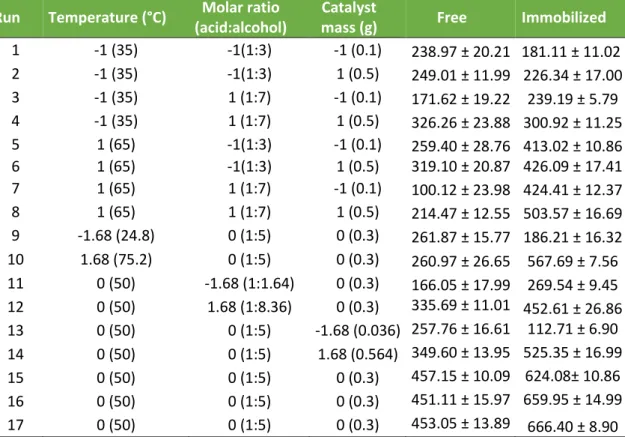
Table 1 shows the full DCCR 23 for the esterification of butonoic acid and ethyl
alcohol, as a function of the studied variables, molar ratio acid alcohol, catalyst mass and temperature (°C).
Table 1. Matrix of full 23 DCCR experimental design (real and coded values) using a free
and immobilized catalyst in terms of ethyl butanoate esterication by mechanical system.
Run Temperature (°C) Molar ratio
(acid:alcohol)
Catalyst
mass (g) Free Immobilized
1 -1 (35) -1(1:3) -1 (0.1) 238.97 ± 20.21 181.11 ± 11.02 2 -1 (35) -1(1:3) 1 (0.5) 249.01 ± 11.99 226.34 ± 17.00 3 -1 (35) 1 (1:7) -1 (0.1) 171.62 ± 19.22 239.19 ± 5.79 4 -1 (35) 1 (1:7) 1 (0.5) 326.26 ± 23.88 300.92 ± 11.25 5 1 (65) -1(1:3) -1 (0.1) 259.40 ± 28.76 413.02 ± 10.86 6 1 (65) -1(1:3) 1 (0.5) 319.10 ± 20.87 426.09 ± 17.41 7 1 (65) 1 (1:7) -1 (0.1) 100.12 ± 23.98 424.41 ± 12.37 8 1 (65) 1 (1:7) 1 (0.5) 214.47 ± 12.55 503.57 ± 16.69 9 -1.68 (24.8) 0 (1:5) 0 (0.3) 261.87 ± 15.77 186.21 ± 16.32 10 1.68 (75.2) 0 (1:5) 0 (0.3) 260.97 ± 26.65 567.69 ± 7.56 11 0 (50) -1.68 (1:1.64) 0 (0.3) 166.05 ± 17.99 269.54 ± 9.45 12 0 (50) 1.68 (1:8.36) 0 (0.3) 335.69 ± 11.01 452.61 ± 26.86 13 0 (50) 0 (1:5) -1.68 (0.036) 257.76 ± 16.61 112.71 ± 6.90 14 0 (50) 0 (1:5) 1.68 (0.564) 349.60 ± 13.95 525.35 ± 16.99 15 0 (50) 0 (1:5) 0 (0.3) 457.15 ± 10.09 624.08± 10.86 16 0 (50) 0 (1:5) 0 (0.3) 451.11 ± 15.97 659.95 ± 14.99 17 0 (50) 0 (1:5) 0 (0.3) 453.05 ± 13.89 666.40 ± 8.90
NOTE: *Fixed parameters: substrate mass 5 g, reaction time 180 min and 160 rpm of mechanical agitation.
According to the results, the maximum esterification in terms of butanoic acid was obtained in the assay 15, 16 and 17 of 457.15 and 666.40 U/g to free and immobilized catalyst after 180 minutes of reaction time. The results (Table 1) observed was that esterification to free and immobilized catalyst, was directly proportional to the positive effect of the temperature reaction (assays 1 and 5, 2 and 6) and (assays 1 and 5, 2 and 6, 3 and 7, 4 and 8, 9 and 10), respectively.
This positive effect of temperature is consistent with the endothermic (ΔH +) nature of the esterification reactions, which is characterized by the reversibility, that is, it presents a chemical equilibrium, indicates that it occurs with heat absorption, and that the increase of temperature provides an equilibrium in the reaction system, shifting the reaction for the products side, increasing reaction yield. Another variable of extreme importance, combined with temperature was the mass catalyst content, the Table 1 (assays 1 and 2, 3 and 4, 5 and 6, 7 and 8, 13 and 14) to free and immobilized catalyst, respectively.
Página | 23
In general, all tests using the immobilized catalyst showed higher esterification of butanoic acid in relation to the free catalyst, which is the main advantage through an efficient immobilization method, as presented in our study, besides the possibility of reuse and reduction of inactivation by distortion of its native structure by the influence of temperature, pH and solventes.
To Nyari et al. (2016), this performance involves factors such as: any enzyme added in the immobilization process is adhered to the support, there is no leaching caused by the reaction medium and the interaction of the support material with the active center of the enzyme, leading to the opening of the hydrophobic lid and leaving the exposed site, providing an increase in the activity of the esterification reaction. Orellane-Coca et al. (2005) and Colombo et al. (2015), an excess in the catalyst content is necessary to keep the enzyme activity during the reaction time. This positive effect of temperature molar ratio to free and immobilized catalyst (assays 2 and 4, 11 and 12) and (assays 1 and 3, 2 and 4, 5 and 7, 6 and 8, 11 and 12) in the acetic acid esterification, respectively.
Martins et al. (2014) factors of displacement of the chemical equilibrium and reduction of the medium acidity. Azudin et al. (2013) reversible reaction (esterification), where the excess of alcohol (nucleophile/acyl receptor) leads to high esterification levels due to the excess of nucleophile to substrate transfer. Also positively affects by equilibrium displacement to the products, besides the ethyl alcohol being of branched structure, being able to hinder the micelles formation around the immobilized catalyst, thus facilitating the product solubility and the mass transfer in the reaction system. From this results, it was possible to relate the initial reaction velocity with the agitation type. Liu et al. (2008), the reduction in the reaction time can be linked to the increase in the reaction rate, which can be obtained using ultrasonic agitation system, mainly due the formation of microscopic droplets in the system, increasing the interfacial area by increasing surface contact reducing mass transference limitations between substrate and catalyst.
Equation 2 and 3 presents the second-order coded model, which describes the ethyl butanoate esterification as a function of the independent variables (factors) analyzed (molar ratio butanoic acid:ethyl alcohol, temperature and mass catalyst) within the studied range.
Esterification activity (U/g) = 437.59-7.79T-77.09T2-82.12R2+39.22M-55.71M2-34.25T.R+24.75R.M (2)
Esterification activity (U/g) = 663.23+23.09T-66.05T2-46.39R–210.91R2+59.87M 147.82M2+32.12T.R-17.37R.M (3)
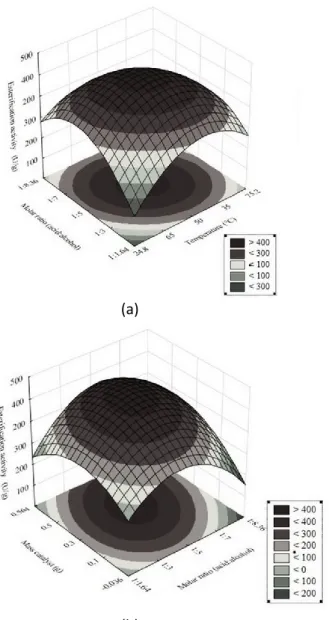
Where: R = Molar ratio acid:alcohol, M = Mass catalyst and T = temperature (°C). The correlation coefficient obtained (0.94) with Fcal (6.07) > Ftab (4.01) and Fcal
(7.57) > Ftab (4.01) allowed the construction of the surface response presented in
Figure 2 for free (a) and immobilized (b) catalyst.
Figure 2 shows the contour plot for the interactions between the variables: molar ratio acid:alcohol, mass catalist and temperature for the batch reaction under the mechanical stirring. It was observed that the higher esterification for the ethyl butanoate were achieved to free catalyst (Figure 2 (a)) in the temperature range of (45-55°C), mass catalyst range (0.3 and 0.55 g) and molar ratio
Página | 24
acid:alcohol range (1:6-1:7) (central point condition). To immobilized catalyst (Figure 2 (b)) in the temperature range (40-60°C), mass catalyst (0.3 and 0.55 g) and molar ratio acid:alcohol 1:5-1:7 (central point condition).
(a)
(b)
Figure 2. Surface response using a free (a) and immobilized (b) catalyst in terms of
ethyl butanoate esterification by mechanical system.
ULTRASONIC SYSTEM
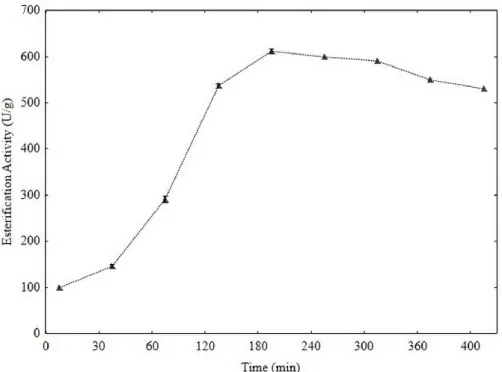
Figure 3 shows the evolution of ethyl butanoate esterification of butanoic acid and ethyl alcohol (400 minutes), for the catalyst free and immobilized according to the condition designed by the full DCCR 23 (Table 2). From the results, it was
observed the maximal esterification of 520.11 U/g after 180 minutes of reaction time.
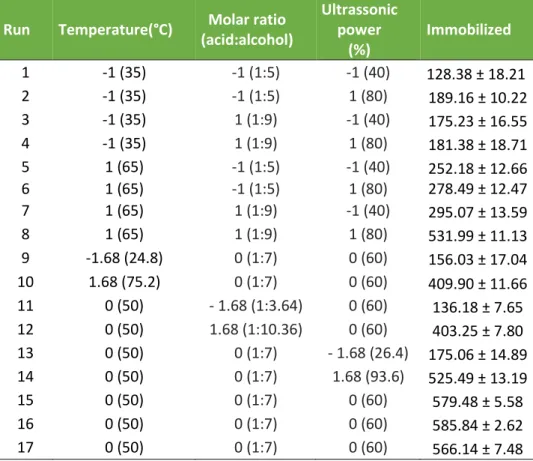
Table 2 shows the full DCCR 23 for the esterification of ethyl butanoate in
ultrasonic system, as a function of the studied variables, temperature (ºC), molar ratio acid:alcohol and ultrasonic power (%). The highest esterification, 585.84 U/g was observed in the assay 15, 16 and 17 (central point - 50°C, acid:alcohol 1:7 and
Página | 25
ultrasonic power of 60%). In general, as in the study conducted with mechanical agitation, the variables evaluated, when analyzed independently, had a positive effect.
Figure 3. Kinetics of ethyl butanoate esterification for ultrasonic system.
NOTE: * Fixed parameters: substrate mass 5 g, 50°C temperature, 1:7 molar ratio, mass enzyme 0.5g and 60% ultrassonic power.
The increase in temperature (Table 2) (assays 1 and 5, 2 and 6, 3 and 7, 4 and 8, 9 and 10), molar ratio (assays 1 and 3, 2 and 4, 5 and 7, 6 and 8, 11 and 12) and ultrasonic power (assays 3 and 4, 5 and 6, 7 and 8, 13 and 14), they were favorable for increasing the esterification ethyl butanoate. This positive effect of temperature is consistent with the endothermic (ΔH +) nature of the esterification reactions, which is characterized by the reversibility, that is, it presents a chemical equilibrium, indicates that it occurs with heat absorption, and that the increase of temperature provides an equilibrium in the reaction system, shifting the reaction for the products side, increasing reaction yield. Apart from of the reduction in the system viscosity, reducing the mass transfer limitation.
According Martins et al. (2014) the positive effect of concentration molar ratio butanoic acid: ethyl alcohol can be linked to two factors, as displacement of the chemical equilibrium and reduction of the medium acidity. Azudin et al. (2013) the reversible reaction of esterification, where the excess of alcohol (nucleophile/acyl receptor) leads to high conversion levels due to the excess of nucleophile to substrate transfer. Also positively affects the conversion by equilibrium displacement to the products, besides the ethyl butanote being of branched structure, being able to hinder the micelles formation around the immobilized enzyme, thus facilitating the product solubility and the mass transfer in the reaction system.
Página | 26
Table 2. Matrix of full 23 DCCR experimental design (real and coded values) in terms of
ethyl butanoate esterication by ultrasonic system.
Run Temperature(°C) Molar ratio
(acid:alcohol) Ultrassonic power (%) Immobilized 1 -1 (35) -1 (1:5) -1 (40) 128.38 ± 18.21 2 -1 (35) -1 (1:5) 1 (80) 189.16 ± 10.22 3 -1 (35) 1 (1:9) -1 (40) 175.23 ± 16.55 4 -1 (35) 1 (1:9) 1 (80) 181.38 ± 18.71 5 1 (65) -1 (1:5) -1 (40) 252.18 ± 12.66 6 1 (65) -1 (1:5) 1 (80) 278.49 ± 12.47 7 1 (65) 1 (1:9) -1 (40) 295.07 ± 13.59 8 1 (65) 1 (1:9) 1 (80) 531.99 ± 11.13 9 -1.68 (24.8) 0 (1:7) 0 (60) 156.03 ± 17.04 10 1.68 (75.2) 0 (1:7) 0 (60) 409.90 ± 11.66 11 0 (50) - 1.68 (1:3.64) 0 (60) 136.18 ± 7.65 12 0 (50) 1.68 (1:10.36) 0 (60) 403.25 ± 7.80 13 0 (50) 0 (1:7) - 1.68 (26.4) 175.06 ± 14.89 14 0 (50) 0 (1:7) 1.68 (93.6) 525.49 ± 13.19 15 0 (50) 0 (1:7) 0 (60) 579.48 ± 5.58 16 0 (50) 0 (1:7) 0 (60) 585.84 ± 2.62 17 0 (50) 0 (1:7) 0 (60) 566.14 ± 7.48
NOTE: * Fixed parameters: substrate mass 5 g, catalyst mass 0.5 g and reaction time 180 min.
Choudhury et al. (2013) and khan et al. (2015) the relation to ultrasonics power, was observed from the results that increasing ultrasonics power was possible to increase ethyl butanoate esterification and the cavitation bubbles increasing the solubility of the molecule consequently increasing the reaction rate, and providing a low energy use (KWIATKOWSKA et al., 2011; MARTINS et al., 2013). The literature reports several concerns regarding the application of the ultrasonic system as a tool in the reactions of ester synthesis. Nyari et al. (2018) he temperature usually influences the chemical equilibrium of endothermic systems due to diffusional effect, while the enzyme content increases the active sites in the reaction medium. Regarding ultrasonic power, its increase also increases acetic acid conversion
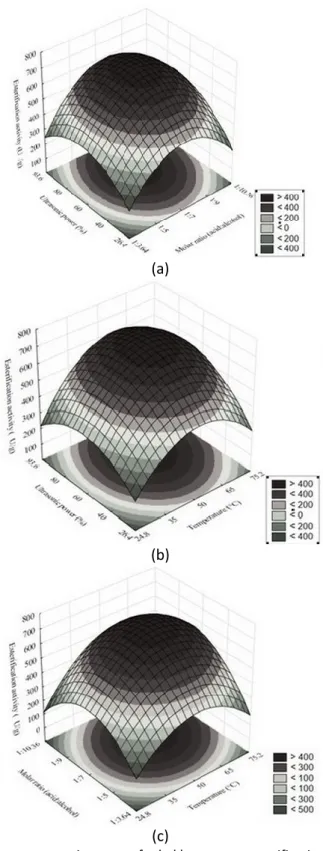
Equation 4 presents the second-order coded model, which describes the ethyl butanoate esterification as a function of the independent variables (factors) analyzed (molar ratio acid:alcohol), temperature and ultrasonic power) within the studied range. The correlation coefficient obtained (0.94) with Fcal (6.79) > Ftab
(4.01) allowed the construction of the contour plot presented in Figure 4.
Esterification activity (U/g) = 579.83+86.81T–114.46T2+59.40R-121.00R2+68.67P-80.51P2
Página | 27
Where: T = temperature (°C) R = molar ratio acid:alcohol and ultrasonic power (%). The highest esterification for the synthesis of ethyl butanoate were achieved in the region corresponding to high temperature range of (35-65°C), molar ratio acid:alcohol range of (1:6-1:1.9) and ultrasonic power range of (40-80%) (central point condition).
(a)
(b)
(c)
Figure 4. Surface response in terms of ethyl butanoate esterification by ultrasonic
Página | 28
OPERATIONAL STABILITY
Figure 5 shows the operational stability (number of reuse cycles) for the esterification of ethyl butanoate (mechanical agitation and ultrasonic system).
Figure 5. Operational stability for the esterification of ethyl butanoate using
mechanical system and ultrasound system.
NOTE: * Fixed parameters: substrate mass 5 g, 50°C temperature, 1:5 and 1:7 molar ratio, mass enzyme 0.3g and 0.5 g, 160 rpm of mechanical agitation and 60% ultrassonic
power.
It was observed that the mechanical and ultrasound (Figure 5) system showed 6 cycles with residual activity of 50% of residual activity. The observed reduction in the esterification during the reuse cycles may be related to the biocatalyst loss of mass between cycles, by the leaching of the enzyme from the support and by the catalyst denaturation (Carvalho et al., 2015; Bansode and Rathod, 2014; Waghmare et al., 2015). Nyari et al. (2016) and (2018) the reduction in acetic acid conversion during sequential reuse cycles may be related to loss of mass of CALB after reuse, as well as the leaching of the enzyme from the support and catalyst denaturation.
CONCLUSIONS
The mechanical system the maximum esterification of butanoic acid with ethyl alcohol in mechanical used immobilized catalyst was 666.40 and 585.84 U/g, whit 6 cycles de reuse after 180 minutes of reaction time in mechanical ultrasound system used Candida antarctica lipase B immobilized on polyurethane in a system solvent-free. The process was considered efficient with significant reduction of the reaction time, low instrumental requirements and improve the bioprocess performance. Until now, there were no studies available in the open literature in relation to the ester synthesis catalyzed by immobilized lipase in polyurethane as support in the ultrasound system. In addition, considered an environmentally correct and economically viable technology, it can be used in cosmetics, pharmaceuticals and food industry.
Página | 29
Butanoato de etila da esterificação com
ácido butanóico e álcool etílico catalisada
pela lipase CALB
RESUMO
Foi estudada a Candida antarctica lipase B imobilizada em poliuretano catalisado de ácido butanóico de esterificação com álcool etílico em sistema mecânico e ultrassônico em um sistema isento de solventes. A esterificação máxima de butanoato de etila obteve 666,40 e 585,84 U / g, com 6 ciclos de reutilização em agitação mecânica (160 rpm) e sistema de ultrassom mecânico (potência máxima 1800 A, US 40 KHz, US 132 W) após 180 minutos de tempo de reação . O processo foi considerado eficiente, com redução significativa do tempo de reação, baixos requisitos instrumentais e melhora no desempenho do bioprocesso. Até o momento, não havia estudos disponíveis na literatura aberta em relação à síntese de ésteres catalisada pela lipase imobilizada em poliuretano como suporte no sistema de ultrassom. Além disso, considerada uma tecnologia ambientalmente correta e economicamente viável, pode ser usada em cosméticos, produtos farmacêuticos e indústria de alimentos
PALAVRAS-CHAVE: Candida antarctica; Butanoato de etila; síntese; catálise;
Página | 30
REFERENCES
ABOU-OKEIL, A., EL-SHAFIE, A., EL ZAWAHR, M.M. Ecofriendly laccase–hydrogen peroxide/ultrasound-assisted bleaching of linen fabrics and its influence on dyeing efficiency. Ultrason. Sonoch. v. 17, p. 383-390, 2010.
AZUDIN, N.Y., DON, M.M., SHUKOR, S.R.A. Production and Kinetics of Isoamyl Acetate from Acetic Anhydride using Candida antarctica Lipase B in a Solvent-Free System. J. Food Quality. v. 36, p. 441-445, 2013.
BANSODE, S.R. and RATHOD, V.K. Ultrasound assisted lipase catalyzed synthesis of isoamyl butyrate. Process Biochem. v. 49, p. 1297-1302, 2014.
CARVALHO, A.K., FARIA, E.L., RIVALDI, J.D., ANDRADE, G.S., DE OLIVEIRA, P.C., DE CASTRO, H.F. Performance of whole-cells lipase derived from Mucor circinelloides as a catalyst in the ethanolysis of non-edible vegetable oils under batch and continuous run conditions. Ind. Crops Prod. v. 67, p. 287-293, 2015.
CHOUDHURY, H.A., MALANI, R.S., MOHOLKAR, V.S. Acid catalyzed biodiesel synthesis from Jatropha oil: mechanistic aspects of ultrasonic intensification.
Chem. Eng. J. v. 231, p. 262-270, 2013.
COLOMBO, T.S., MAZUTTI, M.A., DI LUCCIO, M., DE OLIVEIRA, D., OLIVERA, J.V. Enzymatic synthesis of soybean biodiesel using supercritical carbon dioxide as solvent in a continuous expanded-bed reactor. J. Superc. Fluids. v. 97, p. 16-22, 2015.
ĆOROVIĆ, M., MIHAILOVIĆ, M., BANJANAC, K., CAREVIĆ, M., MILIVOJEVIĆ, A., MILOSAVIĆ, N., BEZBRADICA, D. Immobilization of Candida antarctica lipase B onto Purolite® MN102 and its application in solvent-free and organic media esterification. Bioprocess Eng. v. 40, p. 23-34, 2017.
DHAKE, K.P., DESHMUKH, K.M., WAGH, Y.S., SINGHAL, R.S.E, BHANAGE, B.M. Investigation of steapsin lipase for kinetic resolution of secondary alcohols and synthesis of valuable acetates in non-aqueous reaction medium. J. Mol. Cat. v. 77, p. 15-23, 2012.
DOS SANTOS, P., MEIRELES, M.A.A., MARTÍNEZ, J. Production of isoamyl acetate by enzymatic reactions in batch and packed bed reactors with supercritical CO2. J. Sup. Fluids. v. 127, p. 71-80, 2017.
FOOD FLAVORS MARKET BY TYPE (Chocolate, Vanilla, Fruits, Nuts, Others), Origin (Natural, Synthetic), Application (Beverages, Savory & Snacks, Bakery &
Página | 31
2020. http://www.marketsandmarkets.com/Market-Reports/food-flavors-market-93115891.html
HIRATA, D.B., ALBUQUERQUE, T.L., RUEDA, N., VIRGEN-ORTÍZ, J.J., TACIAS-PASCACIO, V.G., FERNANDEZ-LAFUENTE, R. Evaluation of different immobilized lipases in transesterification reactions using tributyrin: Advantages of the heterofunctional octyl agarose beads. J. Mol. Catal. B: Enz. v. 133, p. 117-123, 2016.
JIN, Z., NTWALI, J., HAN, S., ZHENG, S. LIN, Y. Production of flavor esters catalyzed by CALB-displaying Pichia pastoris whole-cells in a batch reactor. J. Biotechn,
Elsevier. v. 159, n. 1, p. 108-114, 2012.
KAPOOR M. and GUPTA M.N. Obtaining monoglycerides by esterification of glycerol with palmitic acid using some high activity preparations of Candida
antarctica lipase B. Process Biochem. v. 47, n. 3, p. 503-508, 2012.
KHAN, N.R., JADHAV, S.V., RATHOD, V.K. Lipase catalysed synthesis of cetyl oleate using ultrasound: Optimisation and kinetic studies. Ultrasonics Sonochem. 2015.
KHAN, N.R. and RATHOD, V.K. Enzyme catalyzed synthesis of cosmetic esters and its intensification: A review. Process Biochem. v. 50, p. 1793-1815, 2015.
KWIATKOWSKA, B., BENNETT, J., AKUNNA, J., WALKER, G.M., BREMNER, D.H. Stimulation of bioprocesses by ultrasound. Biotech. Adv. v. 29, p. 768-773, 2011.
LIU, Y.Q., JIN, L., SHAN, Y., LIU, W., SHEN, X., WANG A. The effect of ultrasound on lipase-catalyzed hydrolysis of soy oil in solvent-free system. Ultrason. Sonoch. v. 15, p. 402-409, 2008.
MADARÁSZ, J., NÉMETH, D., BAKOS, J., GUBICZA, L., BAKONYI, P. Solvent-free enzymatic process for biolubricant production in continuous microfluidic reactor.
Journal of Cleaner Production. v. 93, p. 140-147, 2015.
MARTINS, A.B., FRIEDRICH, J.L., CAVALHEIRO, J.C., GARCIA-GALAN, C., BARBOSA, O., AYUB, M.A., FERNANDEZ-LAFUENTEC, R., RODRIGUES, R.C. Improved
production of butyl butyrate with lipase from Thermomyces lanuginosus immobilized on styrene–divinylbenzene beads. Bioresour Techn. v. 134, p. 417-423, 2013.
MATTE, C.R. BORDINHÃO, C. POPPE, J.K. RODRIGUES, R.C. HERTZ, P.F. AYUB, M.A. Synthesis of butyl butyrate in batch and continuous enzymatic reactors using
Página | 32
Thermomyces lanuginosus lipase immobilized in Immobead 150. J. Mol. Catal. B Enz. v. 127 p. 67-75, 2016.
NARWAL, S.K., SAUN, N.K., DOGRA, P., GUPTA, R., RUSSIAN, G. Synthesis of isoamyl acetate via silica immobilized novel thermophilic lipase from Bacillus
aerius. J. Bioorg. Chem. v. 42, p. 69-71, 2016.
NYARI, N.L.D., FERNANDES, I.A., BUSTAMANTE-VARGA, C.E., STEFFENS, C., ZENI, J., DALLAGO, R.M. In situ immobilization of Candida antarctica B lipase in polyurethane foam support. J. Mol. Catal. B Enz. v. 124, p. 52-60, 2016.
NYARI, N., PAULAZZI, A., ZAMADEI, R., STEFFENS, C., ZABOT, G. L., TRES, M. V., ... & DALLAGO, R. M. Synthesis of isoamyl acetate by ultrasonic system using
Candida antarctica lipase B immobilized in polyurethane. Journal of Food Process
Engineering, e12812, 2018.
ORELLANA-COCA, C.U., TÖRNVALL, D., ADLERCREUTZ, B., MATTIASSON, R., HATTI-KAUL, A. Chemo-enzymatic epoxidation of oleic acid and methyl oleate in solvent-free medium. Biocat. Biotransf. v. 23, p. 431-439, 2005.
PALUDO, N., ALVES, J.S., ALTMANN, C., AYUB, M.A., FERNANDEZ-LAFUENTE, R.E., RODRIGUES, R.C. The combined use of ultrasound and molecular sieves improves the synthesis of ethyl butyrate catalyzed by immobilized Thermomyces
lanuginosus lipase. Ultrason Sonochem. v. 22, p. 89-94, 2015.
ROMERO, M.D., CALVO, L., ALBA, C., HABULIN, M., PRIMOŽIČ, M., KNEZ, Ž. Enzymatic synthesis of isoamyl acetate with immobilized Candida antarctica lipase in supercritical carbon dioxide. J. Superc. Fluids. v. 33, p. 77-84, 2005.
SJÖBLOM, M., MATSAKAS, L., CHRISTAKOPOULOS, P., ROVA, U. Catalytic upgrading of butyric acid towards fine chemicals and biofuels. FEMS Microbiol
Letters. v. 363, p. nw064, 2016.
TOMIN, A. HORNYÁNSZKY, G. KUPAI, K. DORKÓ, Z. ÜRGE, L. DARVAS, F. POPPE, L. Lipase-catalyzed kinetic resolution of 2-methylene-substituted cycloalkanols in batch and continuous-flow modes. Process Biochemistry. v. 45, p. 859-865, 2010.
ZHANG, T.C. and NAKAJINA, M. Advances in applied biotechnology. Springer.
Proceedings of the 2nd International Conference on Applied Biotechnology (ICAB 2014), volume II (2015).
Página | 33
Recebido: 14 set. 2017. Aprovado: 05 abr. 2019. DOI: 10.3895/rebrapa.v9n3.7057 Como citar:
NIARY, N. L. D. et al. Ethyl butanoate from butanoic acid and ethyl alcohol esterification catalyzed by the lipase CALB. Brazilian Journal of Food Research, Campo Mourão, v. 9, n. 3, p. 18-33, jul./set. 2018. Disponível em: https://periodicos.utfpr.edu.br/rebrapa
Correspondência: Nádia Ligianara Dewes Nyari
Universidade Regional Integrada do Alto Uruguai e das Missões, URI, Erechim, CEP: 99700-000, Rio Grande do Sul, Brasil.
Direito autoral: Este artigo está licenciado sob os termos da Licença Creative Commons-Atribuição 4.0 Internacional.