www.solid-earth.net/5/901/2014/ doi:10.5194/se-5-901-2014
© Author(s) 2014. CC Attribution 3.0 License.
Sedimentological characteristics of ice-wedge polygon terrain in
Adventdalen (Svalbard) – environmental and climatic implications
for the late Holocene
M. Oliva1, G. Vieira1, P. Pina2, P. Pereira3, M. Neves3, and M. C. Freitas4
1Institute of Geography and Spatial Planning – Centre for Geographical Studies, University of Lisbon, Lisbon, Portugal 2CERENA/University of Lisbon, Lisbon, Portugal
3Environmental Management Center, Mykolas Romeris University, Ateities St. Vilnius, Lithuania 4Universidade de Lisboa, Faculdade de Ciências, Centro de Geologia, Lisbon, Portugal
Correspondence to: M. Oliva ([email protected])
Received: 31 March 2014 – Published in Solid Earth Discuss.: 7 May 2014 Revised: 10 July 2014 – Accepted: 11 July 2014 – Published: 1 September 2014
Abstract. Ice wedges are widespread periglacial features in the landscape of Adventdalen, Svalbard. The networks of ice wedges have created areas with well-developed polygonal terrains in the lowest fluvial terraces in this valley. We have examined the sedimentological characteristics of the north-ern and southnorth-ern banks of the Advent river for palaeoen-vironmental purposes. The base of two sedimentary sec-tions reported radiocarbon dates of 3.3 and 3.9 ka BP, respec-tively. The northern site is constituted by three very differ-ent lithostratigraphical units, which suggests that their for-mation should be related to different environmental and cli-mate conditions. By contrast, the southern section shows a rather homogeneous composition, with no significant varia-tions in grain size and organic matter content. In both cases the uppermost sediments are constituted by a thick aeolian deposit. According to our data, warmer climate conditions may have prevailed during the mid Holocene until 3.3 ka BP with widespread peat formation in the valley bottom. Subse-quently, a period with alternating soil formation and aeolian sedimentation took place from 3 to 2.5 ka BP, probably due to increasing climatic severity. During the last millennium a long-term cooling trend has favoured aeolian deposition in the lowest part of Adventdalen.
1 Introduction
Permafrost environments support a wide range of periglacial landforms. One of the most scenic and widespread fea-tures characteristic of the periglacial landscape are ice-wedge polygon terrains. Nowadays, ice wedges only form at high latitudes, not in mid-latitude mountain environments. The presence of ice wedges is indicative of permafrost conditions, though they can be active or inactive under the present-day climate regime. The process of formation of ice-wedge poly-gons has been mainly investigated in Arctic permafrost envi-ronments, with a focus on the role of sediments and climate conditions in the development of these landforms (French, 2007). Over the last two decades several studies have fo-cused on the interaction between air and soil temperatures in the process of cracking (Burn, 1990; Mackay 2000; Chris-tiansen, 2005; Fortier and Allard, 2005). Other papers have examined the sedimentary record in areas where terrestrial polygonal networks are well-developed (Fortier and Allard, 2004; Fortier et al., 2006) as well as the isotopic composi-tion of the ice (Schwamborn et al., 2006; Opel et al., 2011) as two complementary sources from which to infer past en-vironmental conditions.
This research is focused on Adventdalen (Spitsbergen Is-land, Svalbard), an area where ice-wedge polygon terrains are widespread. The high Arctic is precisely one of the ar-eas on Earth that has recorded the strongest warming trend over the last decades: since the beginning of the 20th century mean annual air temperature (MAAT) in Svalbard increased
902 M. Oliva et al.: Late Holocene environments in Svalbard 0.23◦C per decade (Humlum et al., 2011a). In parallel,
ground temperatures have shown a gradual increase during the last decade in Svalbard, the region recording the warmest permafrost temperatures in the high Arctic (Christiansen et al., 2010). Thus, significant changes in the dynamics of the terrestrial ecosystem are expected in response to this climate trend. The formation of ice wedges may also be affected by this fast-changing climate scenario; in this context, over re-cent years, several studies have monitored the cracking pro-cess in Svalbard (Christiansen, 2005; Watanabe et al., 2013). In order to better understand the environmental dynam-ics in ice-wedge polygon terrains, it is of crucial importance to take into account the topographical and geomorphologi-cal characteristics of these areas as well as the sedimento-logical properties and past environmental evolution in the area where polygons are distributed. Present-day landscape in Adventdalen is a consequence of Pleistocene glaciations and post-glacial (Holocene) environmental dynamics. The Lower Adventdalen remained covered by ice with a thick-ness of at least ca. 1000 m during the last glaciation (Lønne and Nemec, 2004). Enhanced orbital forcing during the early Holocene induced higher temperatures in the high Arctic that produced shrinking and upvalley retreat of Svalbard glaciers. This process favoured the post-glacial rebound of the valley bottom, which has been quantified as being 60–70 m over the Holocene (Lønne and Nemec, 2004). Evidence of warmer conditions in Svalbard until 4 ka BP come from a wide range of sedimentary records, such as marine cores (Salvigsen, 2002; Forwick and Vorren, 2010), lacustrine records (Birks, 1991; Svendsen and Mangerud, 1997; Snyder et al., 2000) or glaciers (Liestøl, 1988; Humlum et al., 2005). Humlum (2005) proposes MAAT as high as 0–3◦C for coastal
ar-eas, which means that permafrost conditions at lower alti-tudes should have developed only during the mid and late Holocene. According to data retrieved from lake sediments, warm conditions extended from 8 to 4–5 ka BP (Birks, 1991; Holmgren et al., 2010), with a maximum of ca. +2◦C around 6 ka BP (Wanner et al., 2008; Sundqvist et al., 2010). Af-ter 4 ka BP, temperatures started dropping in the Northern Hemisphere, particularly in the North Atlantic Region, as re-flected by Greenland ice cores (Vinther et al., 2006), with a declining linear temperature trend of −0.52◦C per 1000 years (Humlum et al., 2011b) and enhanced climate variabil-ity (Moberg et al., 2005). Over the late Holocene, ocean cir-culation changes have determined a succession of colder and warmer periods in the high Arctic (Skirbekk et al., 2010; Mo-ros et al., 2012), which favoured glacier advances and retreats in Svalbard (Hald et al., 2001; Grinsted et al., 2006; Divine at al., 2011; Velle, 2012) as well as landscape changes in the major valleys (Härtel, 2011).
The study of the sediments in areas with ice-wedge polyg-onal networks provides insights on their formation and phys-ical and chemphys-ical weathering processes, allowing us to un-derstand the local palaeoenvironmental and palaeoclimatic evolution. There is no agreement on whether, in cold
re-gions, weathering is mainly driven by temperature or wa-ter availability. According to Hall et al. (2002) the weather-ing processes are more limited by moisture availability than by temperature; therefore, weathering can be intense even at low temperatures (Hall, 1997, 2004; Matsuoka and Murton, 2008). The water fluxes in cold-climate environments are as-sumed to be important because weathering is dominated by physical processes (Egli et al., 2014); thus the intensity and the frequency of freeze–thaw cycles are factors of critical im-portance. Chemical weathering in periglacial areas is also an important mechanism in terms of geomorphic work (Allen et al., 2001; Thorn et al., 2001), being controlled by the type of lithology, biological activity, organic matter, topography, aspect, water availability, the structure of the hydrologic sys-tem and the age of exposure/deglaciation (Egli et al., 2014). Previous work developed indexes, such as the chemical in-dex of alteration (CIA) (Daviel et al., 2011), to assess soil weathering based on geochemical properties, .
The purpose of this paper is to present new data about the environmental dynamics in the ice-free area of the Advent-dalen floor during the mid and late Holocene and its connec-tion with climate variability. To do so, this research aims at
1. examining the sedimentological record and weather-ing processes in two exposures from both the northern and southern banks of Adventelva where polygonal net-works are present;
2. characterizing the geochemical record in one of the studied profiles (ADV.20);
3. reconstructing the environmental evolution in the area and its connection with palaeoclimatic trends in Sval-bard.
2 Study area
This research is focused on the Lower Adventdalen, in west-ern central Spitsbergen Island (Svalbard archipelago). The study area is located in proximity to Longyearbyen, the largest settlement of the archipelago, at a latitude of 78◦N (Fig. 1). The climate corresponds to a polar tundra cli-mate (ET) in the Köppen clicli-mate system. The MAAT be-tween 1961 and 1990 in Longyearbyen was −6.7◦C rising to −4.6◦C between 1981 and 2010, with a large interannual variability, especially during winter months (Førland et al., 2011). No significant trends have been inferred for precipita-tion over the last decades, with a mean annual precipitaprecipita-tion of 190 mm mainly concentrated during the summer season.
Topography in the study area consists of peaks, ridges and plateaus cut by Adventdalen, which runs SE–NW towards Isfjorden. Adventdalen is a typical U-shaped glacial valley covered by unconsolidated glacial, colluvial, alluvial, ma-rine and aeolian deposits dating to the Holocene. Tertiary coal seams are exposed on the slopes, composed mainly of
Figure 1. Location of Adventdalen in Svalbard (right) and position of the sites (left).
Jurassic to Triassic deposits (Major et al., 2001). Tributary streams draining to Adventelva have built large alluvial fans along the valley sides. One of the study areas is, in fact, lo-cated in Todalen alluvial fan, on the left margin of the river (Fig. 1).
The equilibrium line altitude of the glaciers in Svalbard varies from 200 m a.s.l. along the coast to > 600 m in the cen-tral eastern parts of Spitsbergen (Hagen et al., 1993). In the ice-free areas of Svalbard (~ 40 % of the island) permafrost is continuous, reaching a thickness of ~ 100 m in coastal ar-eas and up to ~ 400–500 m in the highlands (Liestøl, 1976). Permafrost in the valley floors and coastal areas probably dates to the late Holocene, whereas in the mountains it dates back to the last glaciation or is even older (Humlum et al., 2003). The warmest permafrost conditions in the high Arc-tic are recorded in Svalbard despite a significant temperature increase detected during the last years (Christiansen et al., 2010).
Vegetation in the valley floor is typical of high-Arctic tun-dra environments, with a mixture of grasses. Aeolian sedi-ments cover the lowest glaciofluvial terraces of Adventelva (Fig. 1), where ice-wedge polygonal networks are a highly common form of patterned ground (Sørbel and Tolgensbakk, 2002; Ulrich et al., 2011; Pina, 2014). Here, the thermal-contraction cracking of the ground is responsible for the for-mation of ice-wedge polygonal networks. This process oc-curs during cold spells in winter when air temperatures drop to below −20◦C and ground temperatures to below −15◦C near the top of the permafrost above the ice wedge
(Chris-tiansen, 2005). Between 2000 and 2007 the thickness of the active layer at the end of the summer season at the bottom of Adventdalen oscillated between 74 and 104 cm (Christiansen and Humlum, 2008).
The average dimension (mean axis) of the polygons in the study areas is about 12 m, but their sizes range from ca. 2 to 70 m. Also, most of the polygons are low-centred and have 5, 6 and 7 neighbours, although polygons with a number of neighbours in the range of 3 to 11 have been identified. The majority of networks exhibit a non-orthogonal pattern, but spatial clusters of orthogonal behaviours of the troughs were also detected in some networks. Consequently, the trivalent vertices (intersection of three troughs) largely prevail over the tetravalent ones (four troughs) in the analysed networks (Saraiva et al., 2012).
Two sites have been examined: (1) a sedimentary sequence on the lowest part of the Todalen alluvial fan, on the southern bank of Adventelva; (2) a sedimentary sequence located in a glaciofluvial terrace on the northern bank of the river (Fig. 2). The first area, where the alluvial fan of Todalen river meets Adventelva, constitutes a case study where several ongoing experiments are conducted on a very detailed scale to identify the factors conditioning the distribution of periglacial land-forms and to understand the process of ice-wedge and mud-boil formation. Their distribution shows a consistent spatial pattern across the study area and is well-related to changes in the sedimentological properties across the alluvial fan (Watanabe et al., 2012a). The topographical position with re-spect to the Todalen river and Adventelva conditioned the
904 M. Oliva et al.: Late Holocene environments in Svalbard
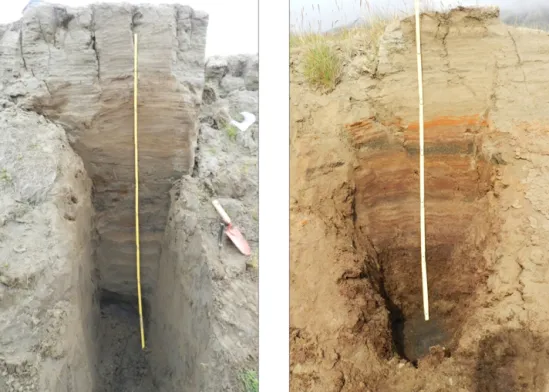
Figure 2. Pictures of the two long sections studied: ADV.20 (left) and ADD.4 (right).
sources of the sediments as well as the geomorphological features distributed in this alluvial fan (Härtel, 2011). To-dalen alluvial fan is a high-energy environment where coarse sediments (gravels and boulders) were deposited throughout the Holocene; in fact, the formation of alluvial fan deltas in Adventdalen is thought to have started during the early Holocene (Lønne and Nemec, 2004). While tens of mudboils are distributed in the upper part of the alluvial fan, ice-wedge polygons are abundant in the distal part. Recent investigation has shown that the areas where mudboils are present expe-rienced large amount of frost heave associated with inten-sive ice segregation in comparison with the ice-wedge poly-gon sites (Watanabe et al., 2012a). Therefore, gravels are ex-pulsed to the surface and generate these mudboils. At specific study sites Watanabe at al. (2012b) have shown that soil com-position, soil moisture conditions and winter ground thermal regime together with snow depth are crucial factors control-ling the formation of mudboils and ice-wedge polygons in this Arctic tundra landscape.
3 Materials and methods
Fluvial erosion has exposed sections on the river terraces where sediment exposures can be examined at high resolu-tion. Samples from two sections in the northern (ADD.4) and southern margins (ADV.20) of the river were collected according to the different lithostratigraphic units observed in
the field and characterized for palaeoenvironmental recon-struction.
3.1 Laboratory analysis
Soil organic matter content was determined by Loss on Ig-nition (LOI) at 550◦C (3 h). For grain size measurements, samples were first pretreated with hydrogen peroxide (H2O2) to eliminate the organic fraction and subsequently analysed with a Malvern Mastersizer 2000. Analyses were undertaken at the laboratory of the Geology Center of the University of Lisbon. Ten samples (plant fragments) from both sedimen-tary sequences were AMS14C Accelerator mass spectrom-etry (AMS) dating at the Centro Nacional de Aceleradores of Sevilla (Spain) in order to establish the geochronological time frame. All radiocarbon ages discussed in this research have been converted to calendar ages with the program CALIB 7.0 (Reimer et al., 2013). The geochemical com-position of ten samples (fine-grained fraction (Ø <2 mm)) from different lithostratigraphical units of the ADV.20 sec-tion was acquired by X-ray fluorescence (XRF) at the Insti-tute of Geosciences of the Federal University of Rio Grande do Sul (Brazil) following standard analytical procedures. The chemical index of alteration was calculated using the follow-ing formula: CIA= [(Al2O3+CaO+Na20+K2O)/Al2O3] x 100 (Nesbit and Young, 1982).
3.2 Statistical analysis
Some descriptive statistics of the studied variables were ex-amined; specifically, these were the following: mean (M), minimum (Min), maximum (Max), standard deviation (SD) and coefficient of variation (CV). The normal data assess-ment was carried out with the Shapiro–Wilk test. Since not all distributions respected the Gaussian distribution, data were transformed using logarithms in order to meet normal distribution requirements. A one-way ANOVA (analysis of variance) was carried out in order to identify significant dif-ferences between soil profiles in LOI, sand, silt and clay per-centages. With the transformed data, Pearson correlation co-efficients were calculated to identify relations between depth and the studied variables. Significant differences between soil profile and correlations between variables and soil depth were considered at a p < 0.05.
4 Results
4.1 Sedimentological characteristics in the northern bank of Adventelva (ADD.4)
The studied sedimentary sequence has a thickness of 1.3 m, since permafrost was found at 1.2 m depth and it was not possible to examine the deeper lithostratigraphic units. Three very different units were observed in this section (Fig. 3):
– Unit A: 82–130 cm. The basal layer of this section is constituted by a slightly decomposed peat layer with very high organic matter content (LOI > 50 %). The mineral particles existing in this unit correspond mainly to silts, which constitute ca. 70 % of the total.
– Unit B: 41–82 cm. The intermediate unit contains an alternation of more organic layers (15–20 % LOI) and silty layers with lower organic matter proportion (10– 15 %). These layers show a variable thickness ranging from 2 to 8 cm. Slight differences in terms of grain size have been observed. An overall trend towards a lower proportion of organic matter in the sediments is detected the higher up one goes in this unit, LOI values declining from above 20 % to 10 % in the upper layers.
– Unit C: 0–41 cm. The top of the section is composed by aeolian silts and fine sands interbedded with thin lay-ers of medium sands. Several parallel vertical cracks are observed down to 50 cm depth. The proportion of sand reaches 60 % of the mineral fraction in some pockets, while in the rest it constitutes ca. 40 %. The percentage of organic matter is very low and stable along this up-permost unit (LOI 2–3 %).
The chronological framework of this section is based on eight AMS 14C datings (Table 1), although some of them have been discarded. The basal peaty layer shows two very
similar datings for the bottom and the top of this unit (3.3 ka BP). After this period, a phase with alternating aeo-lian deposition and organic formation took place. However, the two uppermost datings in this section did not offer con-sistent results, so no precise age control for the beginning of the deposition of the thick aeolian cover was obtained. 4.2 Sedimentological characteristics in the
southern bank of Adventelva (ADV.20)
In contrast to the section from the northern margin of the river, no peat layer was observed at this site despite the fact that permafrost was much deeper than in ADD.4. Permafrost was found at 1.9 m depth, which constituted the bottom of this section. Two slightly different lithostratigraphic units were observed (Fig. 4):
– Unit A: 95–190 cm. This unit is constituted by several relatively organically rich bands 2–3 cm thick that show slight increase in the organic matter content (LOI 5– 7 %) interbedded in a matrix of silty poorly-organic sed-iments (LOI 3–4 %). No significant grain size changes were observed along this unit, with a proportion of sands ranging from 25 to 30 %.
– Unit B: 0–95 cm. The upper metre is composed by a silty matrix that shows a gradual increase in sand con-tent towards the surface, reaching 30–35 % of the total. Some pockets of sand were also observed in the upper-most sediments, constituting 40 % of the sediments in these layers. Here, cracks related to frost and desicca-tion cracking are very common. In this unit the LOI per-centages are even lower than at the base (2–4 %), with very few plant fragments.
Only two samples from this section were 14C dated. The bottom organic band returned a date of 3913 ± 81 years BP and the upper organic layer yielded a date of 1008 ± 75 years BP.
Soil organic matter content was significantly higher in ADD.4 than in ADV.20 section (F = 15.76, p < 0.001). Sand content was much higher in ADV.20 (F = 9.46, p < 0.01) and the silt proportion was more greater in ADD.4 (F = 10.19, p < 0.01). No significant differences were ob-served in the percentage of clay between the two soil pro-files (F = 3.26, p > 0.05). The CV of these parameters was higher in ADD.4 than in ADV.20. Regarding the evolution of these variables with soil profile depth, significant positive correlations were observed in LOI, silt and clay percentages in ADD.4, while sand content showed a significant negative correlation. In ADV.20 only a significant positive correlation of LOI with soil depth was identified (Table 2).
Geochemical properties were only analysed in ADV.20. On average, SiO2and Al2O3were the most abundant min-erals in the ADV. 20 sequence, with percentages of 73.1 % and 11.3 %, respectively, while MnO (0.04 %) and Cr2O3
906 M. Oliva et al.: Late Holocene environments in Svalbard
Figure 3. Lithostratigraphic section ADD.4 together with14C datings, LOI and grain size properties.
Table 1. AMS14C datings performed on the samples. Radiocarbon ages have been calibrated using the CALIB 7.0 program and the IntCal13 curve (Reimer et al., 2013).
Sample Laboratory code Dated material Depth (cm) Conventional age (BP) Calibrated age
ADD4.1a CNA1401 Plant fragments 115 3108 ± 33 3321 ± 76
ADD4.1d CNA1402 Plant fragments 85 3111 ± 35 3322 ± 80
ADD4.3 CNA1403 Plant fragments 81 3468 ± 41 3739 ± 103
ADD4.11 CNA1405 Plant fragments 73 2935 ± 65 3095 ± 172
ADD4.14 CNA1404 Plant fragments 65 2507 ± 106 2562 ± 219
ADD4.18 CNA1406 Plant fragments 57 3495 ± 31 3772 ± 82
ADD4.26 CNA1407 Plant fragments 50 – –
ADD4.27D CNA1408 Plant fragments 20 583 ± 28 616 ± 33
ADV20.3 CNA1409 Plant fragments 165 3612 ± 38 3913 ± 81
Figure 4. Lithostratigraphic section ADV.20 together with14C datings, LOI and grain size properties.
Table 2. Descriptive statistics of the studied elements (% of LOI, sand, silt and clay) in sections ADD.4 and ADV.20. Significant differences
are indicated by *(p < 0.05) and ** (p < 0.001); n.s. stands for “not significant” at a p < 0.05.
M Min Max SD CV(%) R: depth
ADD.4 (N = 38) LOI 15.68 3.15 64.19 15.52 98.97 0.88∗∗ sand 23.06 5.5 68.43 16.75 72.63 −0.63∗∗ silt 63.08 25.49 80.94 12.33 19.54 0.76∗∗ clay 13.83 5.38 25.33 5.46 39.47 0.35∗ ADV.20 (N = 27) LOI 4 2.6 6.8 0.9 21.7 0.62∗∗∗ sand 32.7 27.6 47.6 4.3 13.2 −0.11n.s silt 55.4 42.1 60.3 3.9 7.1 0.21n.s clay 11.9 8.8 16.2 1.5 12.9 −0.08n.s
908 M. Oliva et al.: Late Holocene environments in Svalbard
Table 3. Descriptive statistics and correlation with the depth of the
geochemical elements and trace elements analysed in the ADV.20 section. Significant differences at p < 0.05∗, p < 0.001∗∗, n.s. not significant at a p < 0.05 (N = 10).
M Min Max SD CV(%) R: depth
SiO2 73.09 70.45 74.28 1.10 1.51 −0.76∗∗ Al2O3 11.25 10.68 11.72 0.35 3.07 0.68∗ Fe2O3 4.09 4.11 3.80 4.43 3.94 0.32n.s K2O 2.24 2.14 2.31 0.05 2.37 0.20n.s Na2O 1.68 1.53 1.82 0.10 5.83 −0.22n.s MgO 0.70 0.65 0.76 0.03 4.74 0.50n.s CaO 0.36 0.33 0.39 0.02 6.35 0.77∗∗ MnO 0.04 0.03 0.04 0.01 14.34 0.00n.s P2O5 0.12 0.07 0.17 0.03 26.93 0.14n.s Cr2O3 0.011 0.010 0.012 0.001 6.60 −0.05n.s CIA 72.44 71.39 73.30 0.65 0.89 0.71∗ Ba 539 487 583 27.01 5.01 −0.17n.s Ce 54.30 33 96 19.11 35.19 −0.06n.s Cu 16.30 11 20 2.75 16.88 0.45n.s Nb 14.70 7 22 4.62 31.42 0.54n.s Ni 45.78 25 75 15.96 34.87 −0.23n.s Sc 8.40 8 9 0.52 6.15 0.28n.s Sr 161.30 152 171 5.95 3.69 −0.51n.s
(0.01 %) were the less abundant. With regards to the trace elements, sediments were richer in Ba (539 ppm) and Sr (161.3 ppm) and poorer in Sc (8.4 ppm).
The CIA ranged from 71.39 to 73.30, with an average of 72.44. The CV (%) was higher in P2O5 (26.93) and MnO (14.34) and lower in SiO2(1.51). A significant positive cor-relation of CaO and CIA with soil depth was detected as well as a significantly negative correlation in the case of SiO2 (Ta-ble 3). The distribution of the elements along this section is shown in Fig. 5. Regarding the CIA index, there was a clear decreasing trend from the bottom layers upwards, though it increased sharply from 65 cm depth to the surface (Fig. 5c).
5 Discussion
Previous research has already identified a large number of periglacial landforms in the landscape of Adventdalen – such as pingos, palsas, sorted circles and ice wedges – which are indicative of permafrost conditions in the area (Humlum et al., 2003). In both margins of Adventelva, where the relief is relatively flat, polygonal networks of different size and mor-phologies are distributed. These areas hide a complex inter-nal sedimentary structure of Holocene age (Härtel, 2011). 5.1 Palaeoenvironmental evolution in Adventdalen
floor
The research presented in this paper focuses on lower Ad-ventdalen, an area that has been ice-free since the beginning of the Holocene (Lønne and Nemec, 2004). Ice-free areas in Svalbard experienced significant environmental changes
dur-a) b)
c) d)
Figure 5. Profile distribution of the geochemical elements studied.
ing the middle and late Holocene (Birks, 1991; Svendsen and Mangerud, 1997; Humlum, 2005).
The sedimentological characteristics of two long sedimen-tary sequences located in two areas where ice-wedge polyg-onal terrains are widespread morphological features have been studied. The bases of these sequences correspond to the level of the frozen ground at the beginning of Septem-ber 2011. Permafrost was found at 1.9 m in the southern site ADV.20 and at 1.3 m in the northern site ADD.4. Apart from differences in aspect, the presence of a peat layer in ADD.4 contributed to thermally insulating the ground and was favourable for a permafrost table closer to the surface than in ADV.20, where no peat layer was observed. The two exposures include sediments deposited from the middle to the late Holocene transition period until the present day. Ac-cording to the basal datings, ADD.4 encompasses the last 3.3 ka BP and ADV.20 the last 3.9 ka BP.
Section ADD.4 shows two very different sedimentolog-ical environments separated by a transition period, denot-ing that significant environmental changes have occurred in this area over the last three millennia. The stabilization of geomorphic activity at the distal part of alluvial fans in contact with Adventelva around 3.6 ka BP was favourable for peat formation in these areas (Jeppesen, 2001; Härtel,
2011). According to data obtained in ADD.4, the combina-tion of climate and topographical condicombina-tions in the northern margin of the river continued to be favourable to peat de-velopment until ca. 3.3 ka BP. The two basal 14C dates in ADD.4 yielded similar ages despite being vertically sepa-rated by 30 cm (3322 ± 80 years and 3321 ± 76 years respec-tively). These dates fit within the range of 2.8–3.4 ka BP re-ported in other sites of Adventdalen for the formation of this widespread thick peat layer (Härtel, 2011). A very rapid peat growth is assumed during this period, probably driven by a warmer climate regime. Favourable climate conditions for peat growth in the high Arctic are strongly controlled by temperatures and soil moisture content (Ellis and Rochefort, 2006). Evidence from marine records indicates warmer tem-peratures in Svalbard from the beginning of the Holocene until ca. 3.5 ka BP due to increased inflow of warm Atlantic water with summer sea surface temperatures probably 1–3◦C
warmer than today (Salvigsen et al., 1992; Salvigsen, 2002). Around 85 cm depth there is a clear change, with a sharp decrease in the organic matter content (LOI drops from > 50 % to 15 %). A sample from this level was radiocarbon-dated to 3739 ± 103 years BP. However, this age is too old with respect to the chronological sequence and should be re-jected. According to the lower (3322 ± 80 years BP) and up-per14C datings (3095 ± 172 years BP) this change with sig-nificant environmental consequences in the area must have occurred around 3.2 ka BP. This time frame is consistent with other records in Svalbard that indicate a deterioration of the warm conditions: evidence of glacier expansion starting at 3 ka BP until 2.5 ka BP has been inferred from proglacial lake sediments (Svendsen and Mangerud, 1997) and fjords in western Svalbard (Kempf et al., 2013).
Climate variability and possible modifications in the lo-cal geomorphologilo-cal setting must be taken into account when interpreting sedimentological changes in site ADD.4. The changing fluvial activity in Adventelva during the last millennia may have entailed variations in the deflation pro-cesses reaching ADD.4 since this fluvial braided system con-stitutes the source of the uppermost sediments of this se-quence, which are interpreted as loess based on their parti-cle size. Bryant (1982) already described these deposits as loess. Variations in the source of the sediments with respect to the location of the site ADD.4 may have been favourable for peat formation or aeolian deposition. However, the fact that other regional proxies point to a change in the climate conditions prevailing in Svalbard until ca 3 ka BP (Svend-sen and Mangerud, 1997, Kempf et al., 2013) suggests that this change to less dense vegetation cover and increased ae-olian deposition may also be connected to climate variabil-ity. From 3 ka BP onwards climate conditions became pro-gressively more favourable to tundra-type vegetation, with no peat development, less grass cover and increasing min-eral sedimentation. However, this long-term pattern was di-vided into a series of periods in which soil formation alter-nates with aeolian sedimentation. A similar
sedimentologi-cal pattern is observed in ice-wedge polygons between 2.75 and 2.35 ka BP in the eastern Canadian Arctic (Fortier et al., 2006). Probably, in Svalbard these phases were driven by changing moisture conditions. Marine records show chang-ing patterns in ocean circulation in the North Atlantic region during this period (Skirbekk et al., 2010; Moros et al., 2012). These changes must have brought about environmental shifts in the terrestrial ecosystem. Birks et al. (1991) also detected a change in the vegetation zones around 2.5 ka BP due to in-creasing climatic severity. A change towards declining sed-imentation rates is also recorded in proglacial lakes around 2.4–2.5 ka BP (Svendsen and Mangerud, 1997).
However, the samples at 50 and 60 cm depth did not yield consistent14C ages and, therefore, an accurate calendar for the moment at which aeolian deposition became dominant at ADD.4, with no development of organic-rich soils, can not be provided. For this specific site we can only assume that it took place after 2.5 and before 0.6 ka BP. Since then, ae-olian processes have deposited a 40–45 cm thick loess cover on this glaciofluvial terrace, where ice-wedge polygons are, today, well-developed.
In the southern margin of Adventelva the thick aeolian de-posit covering the lowest terraces has buried the coarser sed-iments of the Todalen alluvial fan. Deeper levels in ADV.20 show a rather homogeneous lithostratigraphical sequence with little variation in terms of grain size and organic matter content. Only four levels were identified with slightly higher organic matter percentages but without significant grain size changes. The basal layers for ADV.20 yielded an age of 3913 ± 81 years. This date may appear to be too early since the widespread peat layer dated to 2.8–3.4 ka BP at other sites from Adventdalen was not found in the first 1.9 m depth ex-amined in this section. Uncertainties in14C dating are com-mon in this area – and have already been described in other Quaternary chronological studies – due to the presence of Tertiary coal strata contaminating the samples, thus provid-ing older ages than expected (Humlum et al., 2005; Härtel, 2011).
In section ADV.20 a sample at 105 cm depth yielded an age of 1008 ± 75 years, which suggests a deposition rate of 1 mm yr−1for the upper sediments. An increase of the loess accumulation rates has been inferred for the last millennium in parallel to colder and possibly windier and dryer con-ditions in Svalbard (Härtel, 2011). A windier climate must have also entailed higher evaporation rates, thus reinforcing the effect of aeolian processes. This colder climate regime was more intense during the winter season (Divine et al., 2011), and particularly between AD 1500 and the end of 1800 (Isaksson et al., 2005). This cooling was favourable for widespread glacier growth in Svalbard during the Little Ace Age (LIA), particularly since the 13–14th centuries (Svend-sen and Mangerud, 1997; Hald et al., 2001; Humlum et al., 2005). In other areas of the high North Atlantic region, loess deposition was also more intense during the LIA, such as in Iceland between 0.6 and 0.1 ka BP (Jackson et al., 2005).
910 M. Oliva et al.: Late Holocene environments in Svalbard The increase of the mean annual temperatures recorded
after the LIA as well as the significant warming of the last decades (Humlum et al., 2011a) led to important envi-ronmental changes in the terrestrial ecosystem in Svalbard (Lønne and Lyså, 2005). However, the impact of these higher temperatures is not detected in the sedimentary record of the two studied sections. The pattern of the prevailing sedimen-tological processes is the same as during the LIA, with high loess deposition enhanced by the sparse vegetation cover in these areas.
5.2 Site-specific controls on sedimentological processes Significant differences in the studied variables are observed between the two sections, which may be attributable to di-verse environmental responses in both local settings. ADV.20 section is located on a south-facing bank of the river, con-trary to ADD.4 that is located on a northern slope exposi-tion. The aeolian cover on the southern bank is constituted by sediments 40–45 cm thick, while in the northern site this layer can reach a thickness of 1.5–2 m. A deposition rate of 1 mm yr−1 has been calculated for the upper aeolian sedi-ments in ADV.20, which is in agreement with Optically stim-ulated luminescence (OSL) datings from neighbouring sites (Härtel, 2011). Therefore, loess sedimentation rates in the lowest terraces of the southern side of Adventdalen are much higher than on the northern side.
Furthermore, the fact that ADV.20 had significantly higher percentages of sand content and ADD.4 showed larger pro-portions of silt content may be evidence of the different sources and/or energy of transport prevailing in both areas. Aeolian transport is not a uniform process and can occur in different forms depending on the source area characteris-tics and transport height and distance (Vandenberghe, 2013). Changes in wind strength and/or direction are very likely re-sponsible for the different grain size transport in loess en-vironments (Zech et al., 2008). This pattern is even more significant in braided systems, where variations in fluvial dy-namics through time may condition changes in the size of the particles mobilized and subsequently deposited in the sur-rounding areas. On a local scale, wind circulation is very complex especially in irregular topographic areas, which can increase or decrease wind intensity (Jonassen et al., 2012). Previous work on loess deposits observed that local wind sys-tems in valleys can be important in the formation of aeolian deposits (Sun and Liu, 2000).
Indeed, slope position and exposure have implications on the process of soil formation in loess areas (Finke, 2012; Finke et al., 2013). On a microscale level this fact has im-plications on soil development and on the degree of surface vegetation cover. Weak soil formation and sparse vegetation cover facilitate sediment transport (Vandenberghe, 2013), en-hanced by favourable wind circulation. These environmental conditions must have facilitated the transport and deposition of fine-grained sediments from the Adventelva floodplain,
especially in the ADV.20 area with a higher percentage of sands in this sequence.
The correlations between soil depth and LOI, silt and clay in the ADD.4 profile were significantly positive, while sand showed a significant negative correlation. Regarding the ADV.20 section, only LOI had a significant positive correla-tion. No significant correlation was observed for the other variables. These results showed higher LOI values at the bottom than at the top of both section (Figs. 3, 4). How-ever, in ADD.4, the positive significant correlation in silt and clay showed that they were predominant in the bottom layers, while sand was common in the top layers. In rela-tion to ADV.20, no correlarela-tions were observed. The CV (%) of LOI, sand, silt and clay was higher in ADD.4 showing that variability of sediment organic matter and texture was higher than in ADV.20. Thus, grain size variations reflected the changes between accumulation rate and pedogenesis in the period after the deposition (Huang et al., 2012).
5.3 Geochemical properties of the sediments
The major element concentration in loess and paleosols re-flects their properties directly from their source properties, but also their evolution after deposition (Jahn et al., 2001). Silica and Al2O3 were the most common minerals in the ADV.20 profile, denoting the presence of aluminosilicate minerals such as micas and feldspars (Ujvari et al., 2008). The predominance of these elements in loess deposits was observed in previous studies in similar regional settings (Drewnik et al., 2014; Gallet et al., 1998). The variability of the studied geochemical elements showed little variation along the section. This is indicative of no major changes in the pedogenic processes at this site, as well as stability in the source of the sediments deposited in ADV.20 during the last millennia.
Regarding the weathering processes, high values of CIA are related to strong chemical weathering, while low values are connected with weak soil formation (Zech et al., 2008). Previously, Gallet et al. (1998) observed in a meta analysis of loess deposits in several parts of the world that CIA values were in the range of 50–70. The authors concluded that these deposits had a similar alteration history and were subjected to moderate weathering. For cold-climate regions, Daviel et al. (2011) inferred an average value of 74.4 in a paleosol located in central Yukon; these authors propose that values near 75 show a considerable proportion of primary minerals converted into clay minerals. In Siberia, Zech et al. (2008) identified values of CIA > 63 that they interpreted as being related to intense weathering processes. For this site in Sval-bard, the average of CIA gives a value of 72.44. Taken into account the limited literature on these topics, weathering at the ice-wedge polygon terrain in Adventdalen can be consid-ered moderate or slightly high. The variability of CIA was re-duced (89 % of CV), suggesting that the chemical alteration was almost homogeneous along all of the profile, confirming
small variations in pedogenic intensity during the time span covered in this section. However, a significant positive cor-relation with depth is detected, which suggests that weath-ering processes were slightly more active in the sediments located in the deeper layers. In our case, the high levels of CIA in the bottom layers may be related with the presence of higher soil organic matter concentrations during periods of weak soil formation.
In ADV.20, on average, the most common trace element was Ba. Previous work on loess deposits also observed that there was a higher Ba relative to other trace elements (Gallet et al., 1998; Jahn et al., 2001; Varga et al., 2011). In this case, the high content of Ba in ADV.20 can be strongly influenced by the deposition of marine aerosols from the adjacent sea and an in situ enrichment due the higher mobility of other el-ements (Zach et al., 2008). The distribution of Ba can be also related to the intensity of the soil formation. The accumula-tion of Ba is supported by illuviaaccumula-tion including the forma-tion of new clay minerals, variaforma-tion of redox condiforma-tions and translocation of elements and minerals (Galovic et al., 2011). The low variability of this element across the profile is an ev-idence that weathering process and soil formation were not variable (Bokhorst et al., 2009).
5.4 Implications for ice-wedge polygon terrains In Adventdalen, the lowest glaciofluvial terraces covered by loess close to the Adventelva braided plain are the environ-ments where ice-wedge polygon terrains are more abundant. The fact that, today, the process of cracking in ice-wedge terrain in Svalbard is active under present-day climate con-ditions (Christiansen, 2005; Watanabe et al., 2012a, 2013) suggests that these flat areas covered at present by a thick layer of aeolian sediments constitute very appropriate envi-ronments for the development of ice wedges.
Studies in other areas of the high Arctic have shown that the development of ice-wedge polygon terrains during the Holocene is strongly conditioned by the characteristics of the sediments as well as by climate variability (Fortier and Allard, 2004; Fortier et al., 2006). The properties of the host sediments may have conditioned the geometry of the poly-gons: homogeneous host materials generate hexagonal inter-sections while heterogeneous sediments form orthogonal in-tersections (Lachenbruch, 1962; Härtel, 2011).
In Svalbard, for the southern Adventdalen area, Härtel (2011) has detected the presence of a segregated ice layer marking a transient layer at the level of the peat layer. This indicates that permafrost was present at the time that peat was forming. The formation of permafrost in a peaty environment may also act as a feedback process to maintain the permanent frozen conditions in the ground thanks to the insulator effect of the overlying peat layer. This, in turn, is also favourable for ice-wedge formation. Therefore, one likely interpretation is that, in the northern terrace, ice wedges could have started developing when peat was forming at 3.3 ka BP. This process
continued throughout the late Holocene and was reinforced particularly during the last millennium, with the environmen-tal shift towards prevailing aeolian deposition and thick loess accumulation. Indeed, colder conditions, particularly in win-ter (Divine et al., 2011), must have reinforced the process of ice-wedge formation.
6 Conclusions
In this paper, two sedimentary sequences located in the north-ern and southnorth-ern glaciofluvial terraces of Adventelva where ice-wedge polygonal networks are abundant have been ex-amined. The northern section (ADD.4) is much more hetero-geneous than the southern one (ADV.20), where sediments show little variations in grain size or organic matter content. Climate conditions must have been decisive to imprint these changes on the sedimentation processes, together with the geomorphological setting, which may also explain the differ-ences observed between the two sections.
In ADD.4 the existence of very different lithostratigraphic units must be a consequence of environmental changes in this periglacial environment during the last three millen-nia. A period of widespread peat formation in Adventdalen took place until 3.3 ka BP. This period of geomorphic stabil-ity was driven probably by warmer conditions than today. After 3.2 ka BP a phase with alternating soil formation and loess deposition took place, subsequently changing to a pe-riod of predominance of aeolian deposition. Unfortunately, our records do not allow us to establish a precise timing for this change (between 2.5 and 0.6 ka BP), although other stud-ies indicate that this pattern intensified during the last millen-nium (Härtel, 2011). In both sections a thick loess cover con-stitutes the uppermost sediments, ranging from 40 to 45 cm thickness in the northern site to 1–2 m on the southern bank of Adventelva. Here, the upper 1 m of loess sediments were deposited during the last 1 ka. The post-LIA warming has not promoted any significant change in the sedimentological processes prevailing in both areas.
In the eastern Canadian Arctic, syngenetic ice-wedge polygons developed in windblown silt and organic sediments during the late Holocene (Fortier and Allard, 2004). In the Adventdalen floor, recent studies suggest that the formation of ice wedges could have started when peat was forming (Härtel, 2011). Therefore, the landscape of the present-day ice-wedge polygonal terrains may have its origin in the tran-sition from the middle to late Holocene; gradually, as envi-ronmental conditions shifted to prevailing aeolian deposition, the process of ice-wedge formation became more intense in the lowest glaciofluvial terraces in Adventdalen.
Soil organic matter content and grain size differences be-tween ADD.4 and ADV.20 suggest that their development was dependent on the topographical and geomorphological characteristics at microsite level. The location of the two sites conditioned soil formation and/or aeolian deposition
912 M. Oliva et al.: Late Holocene environments in Svalbard on both banks of Adventelva where ice-wedge polygons are
distributed. Regarding the geochemical composition at site ADV.20, the most abundant major minerals were SiO2and Al2O3, and Ba the was the trace element found in higher amounts. However, the magnitude of the changes detected in the studied variables is generally small. This fact can be in-terpreted as a consequence of little variation in the intensity of the pedogenic processes at this site as well as in the sedi-ment sources prevailing in the area during the late Holocene.
Acknowledgements. The first author thanks the Agency for the Management of University and Research Grants (AGAUR) of Catalonia and the AXA Research Fund for funding a postdoctoral fellowship, during which this paper was written. This research has been supported by the Portuguese Science Foundation (FCT) under the project ANAPOLIS (PTDC/CTE-SPA/99041/2008). We would like to acknowledge the logistic support in field activities provided by The University Centre in Svalbard through Hanne Christiansen as well as Adriane Machado (University of Coimbra) for carrying out the XRF measurements.
Edited by: A. Navas
References
Allen, C. E., Darmody, R. G., Thorn, C. E., Dixon, J. C., and Schlyster, P.: Clay mineralogy, chemical weathering and land-scape evolution in Artic-Alpine Sweden, Geoderma, 99, 277– 294, 2001.
Birks, H. H.: Holocene vegetational history and climatic change in west Spitsbergen – plant macrofossils from Skardtjørna, an Arc-tic lake, Holocene, 1, 209–218, 1991.
Bokhorst, M. P., Beets, C. J., Markovic, S. B., Gerasimenko, N. P., Matviishina, Z. N., and Frenchen, M.: Pedo-chemical climate proxies in Late Pleistocene Serbian-Ukrainian loess sequences, Quatern. Int., 198, 113–123, 2009.
Bryant, Y. D.: Loess deposits in Lower Adventdalen, Spitsbergen, Polar Res, 2, 93–103, 1982.
Burn, C. R.: Implications for paleoenvironmental reconstruction of recent ice-wedge development at Mayo, Yukon territory, Per-mafrost Periglac., 1, 3–14, 1990.
Christiansen, H. H.: Thermal regime of ice-wedge cracking in Ad-ventdalen, Svalbard, Permafrost Periglac., 16, 87–98, 2005. Christiansen, H. H. and Humlum, O.: Interannual variations in
ac-tive layer thickness in Svalbard, Proceedings of the Ninth Inter-national Conference on Permafrost, University of Alaska, Insti-tute of Northern Engineering Fairbanks, USA, 257–262, 2008. Christiansen, H. H., Etzelmüller, B., Isaksen, K., Juliussen, H.,
Far-brot, H., Humlum, O., Johansson, M., Ingeman-Nielsen, T., Kris-tensen, L., Hjort, J., Holmlund, P., Sannel, A., Sigsgaard, C., Åkerman, H. J., Foged, N., Blikra, L., Pernosky, M. A., and Ødegård, R. S.: The thermal state of permafrost in the Nordic area during the International Polar Year 2007–2009, Permafrost Periglac., 21, 156–181, 2010.
Daviel, A., Sanborn, P., Tarnocai, C., and Smith, C. A.: Clay min-eralogy and chemical properties of argilic horizons in central Yukon paleosols, Can. J. Soil. Sci., 91, 83–93, 2011.
Divine, D., Isaksson, E., Martma, T., Meijer, H. A., Moore, J., Pohjola, V., van de Wal, R. S., and Godtliebsen, F.: Thousand years of winter surface air temperature variations in Svalbard and northern Norway reconstructed from ice-core data, Polar Res., 30, 73–79, 2011.
Drewnik, M., Skiba, M., Szymanski, W., and Zyla, M.: Mineral composition vs. soil forming in loess soils – a case study from Krakow (Southern Poland), Catena, doi:10.1016/j.catena.2014.02.012, 2014.
Egli, M., Dahms, D., and Norton, K.: Soil formation rates on silicate parent material in alpine environments: Different approaches – different results?, Geoderma, 213, 320–333, 2014.
Ellis, C. J. and Rochefort, L.: Long-term sensitivity of a High Arctic wetland to Holocene climate change, J. Ecol., 94, 441–454, 2006. Finke, P. A.: Modelling the genesis of livisols as a function of topo-graphic position in loess material, Quatern. Int., 265, 3–17, 2012. Finke, P. A., Vanwalleghem, T., Opolot, E., Poesen, J., and Deck-ers, S.: Estimating the effect of tree uprooting on variation of soil horizon depth by confronting pedogenetic simulations to mea-surements in a Belgian loess area, J. Geophys. Res., 118, 1–16, 2013.
Førland, E. J., Rasmus, B., Hanssen-Bauer, I., Haugen, J. E., and Skaugen, T. E.: Temperature and precipitation de-velopment at Svalbard 1900–2100, Adv. Meteorol., 893790, doi:10.1155/2011/893790, 2011.
Fortier, D. and Allard, M.: Late Holocene syngenetic ice-wedge polygons development, Bylot Island, Canadian Arctic Archipelago, Can. J. Earth. Sci., 41, 997–1012, 2004.
Fortier, D. and Allard, M.: Frost-cracking conditions, Bylot Island, eastern Canadian Arctic archipelago, Permafrost Periglac., 16, 145–161, 2005.
Fortier, D., Allard, M., and Pivot, F.: A late-Holocene record of loess deposition in ice-wedge polygons reflecting wind activity and ground moisture conditions, Bylot Island, eastern Canadian Arctic, Holocene, 16, 635–646, 2006.
Forwick, M. and Vorren, T. O.: Stratigraphy and deglaciation of the Isfjorden area, Spitsbergen, Norw. J. Geol., 90, 163–179, 2010. French, H.: The periglacial environment, Wiley, West Sussex,
Eng-land, Third Edition, 2007.
Gallet, S., Jahn, B., Van Vliet-Lanoë, B., Dia, A., and Rosello, E.: Loess geochemistry and its implications for particle origin and composition of the upper continental crust, Earth Planet. Sc. Lett., 156, 157–172, 1998.
Galovic, L., Frechen, M., Peh, Z., Durn., and Halamic, J.: Loess/palaeosol section in Sarengrad, Croatia – a qualitative dis-cussion on the correlation of geochemical and magnetic suscep-tibility data, Quatern. Int., 240, 22–34, 2011.
Grinsted, A., Moore, J. C., Pohjola, V., Martma, T., and Isaks-son, E.: Svalbard summer melting, continentality, and sea ice ex-tent from the Lomonosovfonna ice core, J. Geophys. Res., 111, doi:10.1029/2005JD006494, 2006.
Hagen, J. O., Liestøl, O., Roland, E., and Jørgensen, T.: Glacier atlas of Svalbard and Jan Mayen, Norsk Polarinst, Map 129, 1993. Hald, M., Dahlgren, T., Olsen, T., and Lebesbye, E.: Late Holocene
palaeoceanography in Van Mijenfjorden, Svalbard, Polar Res., 20, 23–35, 2001.
Hall, K., Thorn, C. E., Matsuoka, N., and Prick, A.: Weathering in cold regions: some thoughts and perspectives, Prog. Phys. Geog., 26, 577–603, 2002.
Hall, K.: Rock temperatures and implications for cold region weath-ering. I: New data from Viking valley, Alexander Island, Antarc-tica, Permafrost Periglac., 8, 69–90, 1997.
Hall, K.: Evidence for freeze-thaw events and their implications for rock weathering in Northern Canada, Earth. Surf. Proc. Land., 29, 43–57, 2004.
Härtel, S.: Formation and dynamics of Holocene ice-wedge poly-gons in Lower Adventdalen, Svalbard, M. S. thesis, University of Svalbard, Norway, 114 pp., 2011.
Holmgren, S., Bigler, C., Ingolfsson, O., and Wolfe, A. P.: The Holocene-Anthropocene transition in lakes of western Spitsber-gen, Svalbard (Norwegian High Arctic): Climate change and ni-trogen deposition, J. Paleolimnol., 43, 393–412, 2010.
Huang, C. Q., Zhao, W., Li, F. Y., Tan, W. F., and Wang, M. K.: Mineralogical and pedogenetic evidence for paleoenvironmen-tal variations during the Holocene on the Loess Plateau, China, Catena, 96, 49–56, 2012.
Humlum, O.: Holocene permafrost aggradation in Svalbard. Geo-logical Society of London Special Publication, 242, 119–129, 2005.
Humlum, O., Instanes, A., and Sollid, J.L.: Permafrost in Svalbard: a review of research history, climatic background and engineer-ing challenges, Polar Res, 22, 191–215, 2003.
Humlum, O., Elberling, B., Hormes, A., Fjordheim, K., Hansen, O. H., and Heinemeier, J.: Late-Holocene glacier growth in Sval-bard, documented by subglacial relict vegetation and living soil microbes, Holocene, 15, 396–407, 2005.
Humlum, O., Solheim, J. E., and Stordahl, K.: Spectral analysis of the Svalbard temperature record 1912–2010, Advances in Mete-orology, 175296, doi:10.1155/2011/175296, 2011a.
Humlum, H., Solheim„ J. E., and Stordahl, K.:. Identifying natu-ral contributions to late Holocene climate change, Global Planet. Change, 79, 145–156, 2011b.
Isaksson, E., Divine D., Kohler, J., Martma, T., Pohjola, V., Mo-toyama, H., and Watanabe, O.: Climate oscillations as recorded in Svalbard ice core δ18O records between AD 1200 and 1997, Geogr. Ann. A., 87, 203–214, 2005.
Jackson, M. G., Oskarsson, N., Trønnes, R. G., McManus, J. F., Oppo, D. W., Grönvold, K., Stanley R. Hart, S. R., and Sachs, J. P.: Holocene loess deposition in Iceland: Evidence for millennial-scale atmosphere-ocean coupling in the North At-lantic, Geology, 33, 509–512, 2005.
Jahn, B. M., Gallet, S., and Han, J.: Geochemistry of the Xining, Xifeng and Jixian sections, Loess Plateau of China: eolian dust provenance and paleosol evolution during the last 140 ka, Chem. Geol., 178, 71–94, 2001.
Jeppesen, J. W.: Ice wedges and host sediments as palaeoclimatic indicators in central Spitsbergen, Svalbard (in Danish), M.S. the-sis, University of Copenhagen, Denmark, 101 pp., 2001. Jonassen, M. O., Olafsson, H., Reuder, J., and Olseth, J. A.:
Multi-scale variability winds in the complex topography of southwest-ern Norway, Tellus, 64, 11962, doi:10.3402/tellusa.v64i0.11962, 2012.
Kempf, P., Forwick, M., Laberg, J. S., and Vorren, T. O.: Late Weichselian – Holocene sedimentary palaeoenvironment and
glacial activity in the high-Arctic van Keulenfjorden, Spitsber-gen, Holocene, 23, 1605–1616, 2013.
Lachenbruch, A. H.: Mechanics of thermal contraction cracks and ice-wedge polygons in permafrost, Geol. Soc. Am., 70, 1–68, 1962.
Liestøl, O.: Pingos, springs and permafrost in Spitsbergen, Norsk Polarinst. Skri., 1975, 7–29, 1976.
Liestøl, O.: The glaciers in the Kongsfjorden area, Spitsbergen, Norsk Geogr. Tidsskr., 42, 231–238, 1988.
Lønne, I. and Lyså, A.: Deglaciation dynamics following the Little Ice Age on Svalbard: implications for shaping of landscapes at high latitudes, Geomorphology, 72, 300–319, 2005.
Lønne, I. and Nemec, W.: High-arctic fan delta recording deglacia-tion and environmental disequilibrium, Sedimentology, 51, 553– 589, 2004.
Mackay, J. R.: Thermally induced movements in ice-wedge poly-gons, western arctic coast: a long-terms study, Geogr. Phys. Quatern., 54, 41–68, 2000.
Major, H., Haremo, P., Dallmann, W. K., and Andresen, A.: Geo-logical Map of Svalbard 1, 100,000, Norsk Polarinst, Map C9G Adventdalen, 31–32, 2001.
Matsuoka, N. and Murton, J.: Frost weathering: recent advances and future directions, Permafrost Periglac., 19, 195–210, 2008. Moberg, A., Sonechkin, D. M., Holmgren, K., Datsenko, N. M.,
and Karlenm, W.: Highly variable Northern Hemisphere temper-atures reconstructed from low- and high-resolution proxy data, Nature, 433, 613–617, 2005.
Moros, M., Jansen, E., Oppo, D.W., Giraudeau, J., and Kuijpers, A.: Reconstruction of the late-Holocene changes in the Sub-Arctic Front position at the Reykjanes Ridge, north Atlantic, Holocene, 22, 877–886, 2012.
Nesbitt, H. W., and Young, G. M.: Early Proterozoic climates and plate montions inferred from major element chemistry of lutites, Nature, 229, 715–717, 1982.
Opel, T., Dereviagin, A. Yu., Meyer, H., Schirrmeister, L., and Wet-terich, S.: Palaeoclimatic information from stable water isotopes of Holocene ice wedges on the Dmitrii Laptev Strait, northeast Siberia, Russia, Permafrost Periglac., 22, 84–100, 2011. Pina, P.: Polygonal pattern analysis on Mars based on Svalbard
ana-logues, Proceedings of the V Iberian Conference of the Interna-tional Permafrost Association, University of Barcelona, in press, 2014.
Reimer, P. J., Bard, E., Bayliss, A., Beck, J. W., Blackwell, P. G., Bronk Ramsey, C., Buck, C. E., Cheng, H., Edwards, R. L., Friedrich, M., Grootes, P. M., Guilderson, T. P., Haflidason, H., Hajdas, I., Hatté, C., Heaton, T. J., Hoffmann, D. L., Hogg, A., Hughen, K. A., Kaiser, K. F., Kromer, B., Manning, S. W., Niu, M., Reimer, R. W., Richards, D. A., Scott, E. M., Southon, J. R., Staff, R. A., Turney, C. S. M., and van der Plicht, J.: IntCal13 and Marine13 radiocarbon age calibra-tion curves 0–50,000 years cal BP, Radiocarbon, 55, 1869–1887, 2013.
Salvigsen, O.: Radiocarbon-dated Mytilus edulis and Modiolus modiolus from northern Svalbard: climatic implications, Norsk Geogr Tidsskr, 56, 56–61, 2002.
Salvigsen, O., Forman, S. L., and Miller, G. H.: Thermophilous molluscs on Svalbard during the Holocene and their paleocli-matic implications, Polar Res., 11, 1–10, 1992.
914 M. Oliva et al.: Late Holocene environments in Svalbard
Saraiva, J., Lousada, M., Pina, P., Bandeira, L., and Vieira, G.: Ge-ometric and topologic characterization of periglacial polygonal networks in Adventdalen, Svalbard, Norway, EGU General As-sembly, Vienna, Austria, 22–27 April 2012, EGU2012-10818-1, 2012.
Schwamborn, G., Meyer, H., Fedorov, G., Schirrmeister, L., and Hubberten, H. W.: Ground ice and slope sediments archiving Late Quaternary paleoenvironment and paleoclimate signals at the margins of Elgygytgyn Crater, NE Siberia, Quaternary Res., 66, 259–272, 2006.
Skirbekk, K., Klitgaard-Kristensen, D., Rasmussen, T. L., Koç, N., and Forwick., M.: Holocene climate variations at the entrance to a warm Arctic fjord: evidence from Kongsfjorden trough, Sval-bard, in: Fjordic Depositional Systems and Archives, Geological Society of London Special Publication, 344, 289–304, 2010. Snyder, J. A., Werner, A., and Miller, G. H.: Holocene cirque glacier
activity in western Spitsbergen, Svalbard: sediment records from proglacial Linnévatnet, Holocene, 10, 555–563, 2000.
Sørbel L. and Tolgensbakk, J.: Ice-wedge polygons and solifluc-tion in the Adventdalen area, Spitsbergen, Svalbard, Norsk Ge-ogr. Tidsskr., 56, 62–66, 2002.
Svendsen, J. I. and Mangerud, J.: Holocene glacial and climatic variations on Spitsbergen, Svalbard, Holocene 7, 45–57, 1997. Sun, J. M. and Liu, T.: Multiple origins and interpretations of
mag-netic susceptibility signal in Chinese wind-blow sediments, Earth Planet. Sc. Lett., 180, 287–296, 2000.
Sundqvist, H. S., Zhang, Q., Moberg, A., Holmgren, K., Kör-nich, H., Nilsson, J., and Brattström, G.: Climate change between the mid and late Holocene in northern high latitudes – Part 1: Survey of temperature and precipitation proxy data, Clim. Past, 6, 591–608, doi:10.5194/cp-6-591-2010, 2010.
Thorn, C. E., Darmody, R. G., Dixon, J. C., and Schlyter, P.: The chemical weathering regime of Karkevagge, arctic-alpine Swe-den, Geomorphology, 41, 37–52, 2001.
Ulrich, M., Hauber, E., Herzschuh, U., Härtel, S., and Schirrmeis-ter, L.: Polygon pattern geomorphometry on Svalbard (Norway) and western Utopia Planitia (Mars) using high-resolution stereo remote-sensing data, Geomorphology, 134, 197–216, 2011. Újvári, G., Varga, A., and Balogh-Brunstad, Z.: Origin, weathering,
and geochemical 20 composition of loess in southwestern Hun-gary, Quaternary Res., 69, 421–437, 2008.
Vandenberghe, J.: Grain size of fine-grained windblow sediment: a powerfull proxy for process indentification, Earth. Sci. Rev, 121, 18–30, 2013.
Varga, A., Ujvari, G., and Raucsik, B.: Tectonic vs. climatic con-trol on the evolution of a loess-paleosol sequence at Bermend, Hungary: an integrated approach based on paleoecological, clay mineralogical, and geochemical data, Quatern. Int., 240, 71–86, 2011.
Velle, J. H.: Holocene sedimentary environments in Smeeren-burgfjorden, Spitsbergen, M.S. thesis, University of Tromsø, Norway, 128 pp., 2012.
Vinther, B. M., Clausen, H. B., Johnsen, S. J., Rasmussen, S. O., Andersen, K. K., Buchardt, S. L., Dahl Jensen, D., Seier-stad, I. K., Siggaard-Andersen, M. L., Steffensen, J. P., Svens-son, A., Olsen, J., and Heinemeier, J.: A synchronized dating of three Greenland ice cores throughout the Holocene, J. Geophys. Res., 111, D13102, doi:10.1029/2005JD006921, 2006.
Wanner, H., Beer, J., Butikofer, J., Crowley, T.J., Cubasch, U., Fluckiger, J., Goosse, H., Grosjean, M., Joos, F., Kaplan, J. O., Kuttel, M., Muller, S. A., Prentice, I. C., Solomina, O., Stocker, T. F., Tarasov, P., Wagner, M., and Widmann, M.: Mid-to Late Holocene climate change: an overview, Quaternary Sci. Rev., 27, 1791–1828, 2008.
Watanabe, T., Matsuoka, N., and Christiansen, H. H.: Mudboil and ice-wedge dynamics investigated by electrical resistivity tomog-raphy, ground temperatures and surface movements in Svalbard, Geogr. Ann. A., 94, 445–457, 2012a.
Watanabe, T., Matsuoka, N., and Christiansen, H. H.: Controls on patterned ground variability at a continuous permafrost site, cen-tral Spitsbergen, Proceedings of the Tenth International Confer-ence on Permafrost, 1, 433–438, 2012b.
Watanabe, T., Matsuoka, N., and Christiansen, H. H.: Ice- and soil-wedge dynamics in the Kapp Linné Area, Svalbard, investigated by two- and three-dimensional GPR and ground thermal and ac-celeration regimes, Permafrost Periglac., 24, 39–55, 2013. Zech, M., Zech, R., Zech, W., Glaser, B., Brodowski, S., and
Amelung, W.: Characterisation and paleoclimate of a loess-like permafrost paleosol sequence in NE Siberia, Geoderma, 143, 281–295, 2008.