Aurélie Pinto Rodrigues
Effects of environmental contaminants and natural stressors
on feral Carcinus maenas: influence of the exposure history
Tese de Candidatura ao grau de Doutor em Ciências Biomédicas submetida ao Instituto de Ciências Biomédicas Abel Salazar da Universidade do Porto.
Orientador – Doutora Laura Guimarães, Investigadora auxiliar do Centro Interdisciplinar de Investigação Marinha e Ambiental da Universidade do Porto
Coorientador – Prof. Alexandre Lobo da Cunha, Professor Catedrático do Instituto de Ciências Biomédicas Abel Salazar da Universidade do Porto
The present Thesis was developed in the scope of CRABTHEMES Project, funded by the Portuguese Foundation for the Science and Technology (FCT) (FCOMP-01-0124-FEDER-007383, Compete Program). The work was partially funded by “Pest-C/MAR/LA0015/2013” and the Project ECORISK (NORTE-07-0124-FEDER-000054 co-financed by the North Portugal Regional Operational Programme (ON.2 – O Novo Norte), under the National Strategic Reference Framework (NSRF), through the European Regional Development Fund (ERDF). The author was also supported by a PhD grant (SFRH/BD/65456/2009) from FCT with European social funds and national funds of the Portuguese Ministry of Science, Technology and Higher Education (QREN-POPH, Tipology 4.1).
“Fairy tales are more than true: not because they tell us that dragons exist, but because they tell us that dragons can be beaten.”
Coraline,
Neil Gaiman
“The statistics on sanity are that one out of every four people is suffering from a mental illness. Look at your 3 best friends. If they're ok, then it's you.” Rita Mae Brown
Acknowledgements
During the last four years, many people and institutions contributed to the achievement of the present Thesis. I would like to acknowledge to all.
First of all, I would like to express my sincere gratitude to my supervisors Dr. Laura Guimarães (CIIMAR) and Professor Alexandre Lobo da Cunha (ICBAS and CIIMAR) for all the support during this adventurous journey. Special thanks to Laura for all the knowledge, advice, friendship, encouragement, enthusiasm and patience (and patience, and patience, ...) during crucial and critical situations! You contribute to my growth as a scientist and as person. Thank you for all (my Mother also thanks you )! I would like to thank Professor Alexandre for the availability and advises, particularly during the most difficult situations.
I want to acknowledge the institutions that contributed for this Thesis, the Institute of Biomedical Sciences Abel Salazar (ICBAS) and the Interdisciplinary Centre of Marine and Environmental Research (CIIMAR), University of Porto, and also the Portuguese Foundation for Science and Technology (FCT) for the financial support through a PhD grant (SFRH/BD/65456/2009) during the last four years.
I would like to express my special gratitude to Professor Maria Armanda Reis Henriques and to all the team of her work group LETox for the kind reception and support during the most sensitive times. Thank you for the hospitality and for making me feel at home!
I would like to express my recognition to Professor Lúcia Guilhermino for all the opportunities in the ECOTOX group and to Patrícia Oliveira that contributed to this work.
I am also very thankful to Professor Cristina Delerue-Matos and Professor Maria Teresa Oliva–Teles for their assistance and encouragement, and to REQUIMTE team that gently received me and assisted my “smelly” work.
I acknowledge to Dr. Kari Lehtonen and Dr. Carlos Gravato for their teachings, technical assistance and encouragement! Dr. Kari you are
always welcome to Portugal and Carlos I will never forget to check the buffer temperature!
I would like to express my sincere gratitude to many people that helped me in this journey: Professor Natividade Vieira, Dr. Marta Ferreira, Dr. Teresa Neuparth, Luis Luis, Marisa Silva, Marta Correia, Sofia Mesquita.
Thanks to all that helped me during my fishing campaigns, particularly Dr. Joana Campos and their team, Catarina Monteiro, Catarina Neto and Isabel Abreu. We all survived!
Thanks to the BOGA Team, Hugo Santos, Olga Martinez e Ricardo Branco, for all the support during the bioassays.
Thanks to all that helped in the revision of this Thesis, and to all the journal editors and reviewers that helped to improve the papers with their pertinent comments.
A very special acknowledgement goes to Cristiana Oliveira and Joana Reis Almeida. Meus amores, muito obrigadinha por tudo (e tudo é muita coisa!), mas especialmente pela amizade!
I want also to thank to all my friends for being patiently there, for listening about my unclear and strange work and specially, for all the times that I wasn’t there and you care!
To my family: porque sem vocês nada disto seria possivel ou faria sentido! Obrigada por tudo. Obrigada por serem muito parte da minha vida! Muito obrigada aos meus “passarinhos”: Pai e Mãe, Beta, Alexandre, Sofia e Pikie, e Rui. A very special and final word goes to Rui Barreira! Thanks for your support and dedication, patience and love.
Author’s declaration
In agreement with the Portuguese law though the article 4th of the “Regulamento Geral dos Terceiros Ciclos de Estudos na Universidade do Porto” of January 4th (GR.04/01/2014), the author states devotion in a major contribution to the conceptual design and technical execution of the work, interpretation of the results and manuscript preparation of the published or under publication articles included in this Thesis and presented below.
Publications
The following published or under publication papers were prepared under the scope of this thesis:
Rodrigues AP, Oliveira P, Guilhermino L, Guimarães L. 2012. Effects of salinity stress on neurotransmission, energy metabolism, and anti-oxidant biomarkers of Carcinus maenas from two estuaries of the NW Iberian Peninsula. Marine Biology 159:2061–74.
Rodrigues AP, Lehtonen KK, Guilhermino L, Guimarães L. 2013. Exposure of Carcinus maenas to waterborne fluoranthene: Accumulation and multibiomarker responses. Science of The Total Environment 443:454– 463.
Rodrigues AP, Gravato C, Guimarães L. 2013. Involvement of the antioxidant system in differential sensitivity of Carcinus maenas to fenitrothion exposure. Environmental Science: Processes & Impacts 15:1938–48.
Rodrigues AP, Santos LH, Ramalhosa MJ, Delerue-Matos C, Guimarães L. Sertraline accumulation and effects in an estuarine decapod: importance of the history of exposure to chemical stress. Submitted to Journal of Hazardous Materials.
Rodrigues AP, Santos LH, Oliva-Teles MT, Delerue-Matos C, Guimarães L. Joint effects of salinity and the antidepressant sertraline in an estuarine decapod. Submitted to Environmental Pollution.
Rodrigues AP, Oliva-Teles MT, Mesquita SR, Delerue-Matos C, Guimarães L. Spatial and temporal variation in integrated biomarker responses of a decapod in estuaries with varying levels of abiotic stress and heavy metal contamination. In preparation.
i
Contents index
Abstract... vii
Resumo... xiii
Figures index... xix
Tables index... xxv
Acronyms and abbreviations... xxvii
CHAPTER I. INTRODUCTION 1 1. Sustainable development... 3
2. Estuarine contamination... 7
2.1. Environmental contaminants... 8
2.2. Natural stressors... 13
3. Environmental biomarkers, monitoring, and risk assessment... 16
3.1. Environmental biomarkers... 16
3.2. Environmental monitoring and risk assessment... 20
4. The NW Portuguese estuaries of the Minho and Lima Rivers... 23
5. The green crab Carcinus maenas... 25
5.1. Morphology... 26
5.2. Physiology... 28
5.3. Life cycle... 29
5.4. C. maenas – model organism in ecotoxicological studies... 30
6. Study biomarkers... 32
7. Thesis objectives and outline... 35
8. References... 37
CHAPTER II. EXPOSURE OF CARCINUS MAENAS TO WATERBORNE FLUORANTHENE: ACCUMULATION AND MULTIBIOMARKER RESPONSES 53 Abstract... 55
1. Introduction... 56
2. Material and methods... 59
2.1. Crab sampling and acclimation... 59
2.2. Chemicals... 60
2.3. Exposure experiments... 60
2.4. Determination of FLU in soft tissues of crabs and water samples... 61
2.5. Measurement of biomarkers... 62
ii
3. Results... 66
3.1. FLU content in water samples and whole-body soft tissues.. 66
3.2. FLU-type compounds... 68
3.3. Lysosomal membrane stability... 68
3.4. Biotransformation, anti-oxidant defences, and oxidative damage... 68 3.5. Neurotoxicity... 70 3.6. Energy metabolism... 70 3.7. Energy storage... 72 4. Discussion... 72
4.1. FLU content in water samples and whole-body soft tissues.. 72
4.2. FLU-type compounds... 74
4.3. Lysosomal membrane stability... 75
4.4. Biotransformation, anti-oxidant defences, and oxidative damage... 75 4.5. Neurotoxicity... 77 4.6. Energy metabolism... 78 4.7. Energy storage... 79 5. Acknowledgements... 80 6. References... 81
CHAPTER III. EFFECTS OF SALINITY STRESS ON NEUROTRANSMISSION, ENERGY METABOLISM, AND ANTI-OXIDANT BIOMARKERS OF CARCINUS MAENAS FROM TWO ESTUARIES OF THE NWIBERIAN PENINSULA 87 Abstract... 89
1. Introduction... 90
2. Material and methods... 94
2.1. Study sites... 94
2.2. Crab sampling and acclimation... 95
2.3. Experimental design... 96
2.4. Chemicals... 97
2.5. Tissue sampling and the determination of stress biomarkers... 97
2.6. Data analysis... 100
3. Results... 100
3.1. Effects of salinity on biomarkers of neurotransmission and energy metabolism... 100
3.2. Effects of salinity on biomarkers of biotransformation and anti-oxidant defences... 104
iii
3.3. Effects of salinity on oxidative damage... 106
4. Discussion... 107
4.1. Neurotransmission and energy metabolism... 107
4.2. Biotransformation and anti-oxidant defences... 110
4.3. Oxidative damage... 112
5. Acknowledgements... 114
6. References... 114
CHAPTER IV. INVOLVEMENT OF THE ANTI-OXIDANT SYSTEM IN DIFFERENTIAL SENSITIVITY OF CARCINUS MAENAS TO FENITROTHION EXPOSURE 121 Abstract... 123
1. Introduction... 124
2. Material and methods... 127
2.1. Study sites... 127
2.2. Crab sampling and acclimation... 127
2.3. Chemicals... 128
2.4. Biochemical characterisation of muscle ChEs... 128
2.5. In vitro effects of FEN on muscle AChE activity... 130
2.6. Biomarker responses of C. maenas to FEN... 131
2.7. Data analysis... 133
3. Results... 134
3.1. Biochemical characterisation of muscle ChEs... 134
3.2. In vitro effects of FEN on muscle AChE activity... 135
3.3. Biomarker responses of C. maenas to FEN... 137
4. Discussion... 142
5. Acknowledgements... 148
6. References... 149
CHAPTER V.ACCUMULATION AND EFFECTS OF SERTRALINE IN AN ESTUARINE DECAPOD: IMPORTANCE OF THE HISTORY OF EXPOSURE TO CHEMICAL STRESS 155 Abstract... 157
1. Introduction... 158
2. Material and methods... 161
2.1. Study sites, crab sampling, and acclimation... 161
2.2. Chemicals... 163
2.3. Biochemical properties of ganglion ChEs... 163
2.4. SERT accumulation and effects in C. maenas... 164
iv
3. Results... 168
3.1. Biochemical properties of ganglion ChEs... 168
3.2. SERT accumulation and effects in C. maenas... 168
4. Discussion... 176
5. Acknowledgements... 184
6. References... 185
CHAPTER VI. JOINT EFFECTS OF SALINITY AND THE ANTIDEPRESSANT SERTRALINE ON THE ESTUARINE DECAPOD CARCINUS MAENAS 191 Abstract... 193
1. Introduction... 194
2. Material and methods... 196
2.1. Crab sampling and acclimation... 196
2.2. Exposure experiments... 197
2.3. Chemical analysis... 198
2.4. Measurement of biochemical biomarkers... 198
2.5. Data analysis... 199
3. Results... 200
4. Discussion... 207
5. Acknowledgements... 212
6. References... 212
CHAPTER VII. SPATIAL AND TEMPORAL VARIATIONS IN INTEGRATED BIOMARKER RESPONSES OF A DECAPOD IN ESTUARIES WITH VARYING LEVELS OF ABIOTIC STRESS AND HEAVY METAL CONTAMINATION 219 Abstract... 221
1. Introduction... 222
2. Material and methods... 225
2.1. Chemicals... 225
2.2. Water, sediments, and crab sampling... 225
2.3. Chemical analysis of sediments and tissue samples... 227
2.4. Biomarkers determination... 230
2.5. Data analysis... 231
3. Results... 232
3.1. Water abiotic parameters... 232
3.2. Chemical analysis... 233
3.3. Biomarkers... 233
4. Discussion... 245
v 6. References... 253
CHAPTER VIII.GENERAL DISCUSSION, CONCLUSIONS AND FINAL REMARKS 259
1. Discussion and conclusions 261
2. Final remarks 272
3. Future perspectives 274
vii
Effects of environmental contaminants and natural stressors on feral Carcinus maenas: influence of the exposure history
Abstract
Over the years several environmental protective measures have been discussed and applied to maintain or improve the quality of aquatic ecosystems and to regulate environmental discharges of pollutants. Nevertheless both classical and new compounds are daily produced, reaching at a given moment environmental compartments. Estuaries are unique ecosystems, with high biological productivity and richness, and extreme natural fluctuations due to their transitional characteristics. Frequently, estuaries exhibit intense urban and industrial occupation, with consequent environmental degradation. Thus, estuarine organisms are often subjected to environmental contaminants and abiotic fluctuations that may induce specific biological responses, which depend among others on characteristics of affected sites and species. However, available data concerning biological effects of chemical and natural stressors on invertebrates is still scarce considering this is the most numerous species group. Due to their ability to cause severe detrimental effects in biota many classical contaminants have been included in priority lists and knowledge on their impact in estuarine invertebrates, and temporal and spatial contamination trends, is much required. Regarding emerging compounds, their ecotoxicological effects are poorly understood and there is a lack of empirical data to improve prediction of environmental risk.
Biomarkers-based environmental monitoring provides an integrated assessment of the effects of the mixture of contaminants present in affected sites on the health and functioning of sentinel species. Moreover, biomarkers provide early-warning signs of detrimental effects useful to anticipate protective measures and prevent the impact of contaminants at higher levels of organisation when changes are often irreversible and lethal. However, this requires understanding on two important issues. One is the susceptibility of the biomarkers employed to abiotic variation. The
viii
other is the possible differential sensitivity and adaptation to pollution of the populations under study. Organisms chronically exposed to pollution may develop adaptive responses to deal with the chemical challenge. Such responses are vital to the sustainability of populations, communities and ecosystems, but may difficult interpretation of monitoring data. Further, increased sensitivity to new stressors often occurs in tolerant organisms. These situations may influence data interpretation and decision about the need to implement remediation measures. They may also complicate the environmental risk assessment of hazardous substances to the aquatic environment.
The central objective of this Thesis was to investigate responses and susceptibility of the key crustacean Carcinus maenas to environmental contaminants and to salinity (as abiotic stressor), in relation to its previous history of exposure to contamination. To reach the central objective, green crabs from Rivers Minho (low impacted) and Lima (with a history of moderate pollution levels) with different levels of contamination and anthropogenic pressure were used as experimental organisms. Laboratory experiments lasting for seven days, and seasonal and inter-annual chemical-biological effects monitoring, were performed using a battery of environmental biomarkers related to the mode of action of the test substances and suitable to investigate differential sensitivity to contamination, as well as temporal and spatial trends in health status.
Exposure to waterborne fluoranthene was first carried out with crabs collected at the Minho estuary. Biomarkers assessing bioaccumulation, cell damage, energy production and availability, and pathways of neurotransmission, detoxification and oxidative stress were employed. Relevant bioaccumulation was observed after the short exposure. Adding to this, increases in detoxification and enzymatic anti-oxidant defences in the digestive gland, as well as neurotoxic effects in the muscle, translated in inhibition of acetylcholinesterase activity, were observed at environmentally relevant concentrations. The study further provided new knowledge on exposure and assessment and effects of this priority
ix contaminant. It also allowed derivation of a useful battery of sensitive biomarkers for use in subsequent investigations.
Biomarkers of biotransformation and oxidative stress, as well as of neuromuscular transmission were next shown to be influenced by salinity, contributing with original knowledge on the effects of this natural stressor on physiological responses of C. maenas and alerting for the need to address this when using such parameters in environmental monitoring programmes. Exposure to salinity levels ranging from 4 to 45 psu of crabs from the Minho and the Lima (with a history of moderate contamination by heavy metals and polycyclic aromatic hydrocarbons among others) estuaries revealed that depending on the biomarkers and the site of origin of the crabs both hypo- and hypersalinity could influence the responses observed. Salinity stress also had more negative effects in crabs originating from the moderately polluted estuary.
Differential sensitivity of crabs from these estuaries to contamination was subsequently confirmed in exposures to the model organophosphate fenitrothion. Here crabs collected at the Lima estuary were found to be more tolerant of fenitrothion exposure showing lower lethality and inhibition of acetylcholinesterase activity. New insight was provided on the possible mechanisms of enhanced tolerance in decapods. Differential sensitivity appeared to occur by way of enhanced activity of the glutathione redox system. The data were consistent with the occurrence of physiological acclimation rather than genetic adaptation. The work raised further questions on how would Lima crabs respond to exposure to emerging contaminants of concern and whether differences observed relative to Minho crabs would be important in terms of environmental risk assessment. Because in the near future depression is predicted to be one of the three leading causes of burden of disease worldwide, the effects of sertraline in C. maenas were then investigated.
The experiments carried out brought up important new insight on sertraline effects and its interaction with salinity in a key decapod, with impact for environmental risk assessment. Sertraline is a widely prescribed antidepressant, which bioaccumulation potential and effects on estuarine
x
invertebrates are sparsely known. Exposure of crabs from both estuaries revealed that sertraline was able to bioaccumulate and elicit relevant alterations in biomarkers of neurotransmission (related to ventilatory and locomotory functions), anti-oxidant defences and oxidative damage, indicating their usefulness to assess environmental contamination by this psychopharmaceutical. However, crabs from the polluted estuary were much more sensitive than those from the low impacted one (by four orders of magnitude) and than the most sensitive freshwater species tested up– to–date using reproduction as endpoint (by about three orders of magnitude). Moreover, combined antagonistic and synergistic effects of sertraline and salinity were observed. For some biomarkers these were dependent on the concentration level tested and also influenced by the estuary of origin of the crabs. Interestingly, from the results obtained, sertraline appeared to modulate cholinergic neurotransmission in C. maenas. This modulation may possibly occur through the Na+/K+-ATPase α subunit, which is also involved in C. maenas osmoregulatory processes.
Finally, a monitoring study was carried out to elucidate about spatial and temporal variation in abiotic stressors and heavy metal contamination in sediments and biota, provide baseline data on these estuaries, and compare with the findings of laboratory experiments. The data indicated a decrease in metal levels in sediments and crabs’ tissues from 2010 to 2012, suggesting an improvement of the quality of the polluted estuary. Despite the enhanced tolerance to fenitrothion detected previously, decreased health status of crabs from the contaminated estuary were found, consistent with their higher sensitivity to salinity stress and the emerging compound tested.
Overall, the present investigations indicated that chronic exposure in even moderately contaminated sites may elicit differential sensitivity to contamination in this decapod, even though the species has a high ability to adapt to different environments, which favours its well known invasive behaviour. Acclimation processes leading to both enhanced tolerance or sensitivity appeared to occur by way of altered responses of biotransformation and anti-oxidant defences, including the glutathione
xi redox system. These should be taken into consideration to improve site-specific monitoring and environmental risk assessment. Routine monitoring of the estuaries investigated in this thesis should be carried out in the future to confirm whether there is a sound improvement of environmental quality in the Lima estuary or just a transient amelioration. Finally, to improve the ecological relevance of risk estimations, ecotoxicological testing for purposes of environmental risk assessment should be broadened to include assessments of feral organisms from different backgrounds, from local representative taxonomic groups, and more sensitive biomarkers related to their mode of action, in site-specific programmes.
xiii
Efeitos de contaminantes ambientais e stressores naturais em
Carcinus maenas selvagem: influência da história de exposição
Resumo
Ao longo dos anos várias medidas de proteção ambiental têm sido discutidas e aplicadas para manter ou melhorar a qualidade dos ecossistemas aquáticos e para regulamentar as descargas de poluentes no ambiente. No entanto, compostos clássicos e novos são produzidos diariamente, atingindo em algum momento os ecossistemas aquáticos. Os estuários são ecossistemas únicos, com elevada produtividade e riqueza biológicas, e flutuações naturais extremas devido às suas características de sistemas de transição. Frequentemente, os estuários apresentam intensa ocupação urbana e industrial, com consequente degradação ambiental. Desta forma, os organismos estuarinos estão frequentemente expostos a contaminantes ambientais e flutuações abióticas capazes de induzir respostas biológicas específicas, dependentes entre outras das características locais e dos organismos afetados. No entanto, os dados disponíveis sobre os efeitos biológicos de stressores químicos e naturais em invertebrados são ainda escassos tendo em conta que se trata do grupo de espécies mais numeroso. Devido à sua capacidade de causar efeitos nefastos no biota, vários contaminantes clássicos estão incluídos na lista de compostos prioritários, sendo necessário o estudo do seu impacte em invertebrados estuarinos, e de tendências temporais e espaciais de contaminação. No que diz respeito aos compostos emergentes, os seus efeitos ecotoxicológicos são ainda pouco conhecidos, havendo falta de dados empíricos para melhorar a previsão de avaliação de risco.
A monitorização ambiental baseada em biomarcadores fornece uma avaliação integrada dos efeitos da mistura de contaminantes na saúde e funcionamento de espécies-sentinela de locais afetados. Além disso, os biomarcadores fornecem sinais de alerta precoces e úteis de efeitos
xiv
prejudiciais, de modo a antecipar medidas de proteção e prevenir o impacte de contaminantes a níveis mais elevados de organização, onde as alterações são muitas vezes irreversíveis e letais. No entanto, a monitorização requer a compreensão de dois tópicos importantes. O primeiro referente à suscetibilidade a fatores abióticos dos biomarcadores usados. O segundo diz respeito à eventual sensibilidade diferencial e adaptação à poluição das populações em estudo. Os organismos cronicamente expostos à poluição podem desenvolver respostas adaptativas para lidar com o stresse químico. Essas respostas são fundamentais para a sustentabilidade das populações, comunidades e ecossistemas, mas podem dificultar a interpretação dos dados de monitorização. Além disso, o aumento da sensibilidade a novos stressores ocorre frequentemente em organismos tolerantes. Estas situações podem influenciar a interpretação dos dados e a decisão sobre a necessidade de implementar medidas de remediação, e complicar as avaliações de risco ambiental de substâncias perigosas para o ambiente aquático.
O objetivo central da presente Tese foi investigar as respostas e a suscetibilidade do crustáceo-chave Carcinus maenas a contaminantes ambientais e à salinidade (enquanto stressore abiótico), em relação à sua história prévia de exposição à contaminação. Para atingir o objetivo central, caranguejos provenientes dos estuários dos Rios Minho (pouco impactado) e Lima (com níveis moderados de poluição) foram usados como organismos experimentais. Exposições laboratoriais com a duração de sete dias e monitorização sazonal e interanual de efeitos químico-biológicos foram realizadas, utilizando uma bateria de biomarcadores ambientais relacionados com o modo de ação das substâncias testadas e adequado para investigar a sensibilidade diferencial à contaminação, bem como as tendências temporais e espaciais no estado de saúde.
A exposição a fluoranteno foi realizada com os caranguejos provenientes do estuário do Rio Minho. Foram determinados biomarcadores para avaliar a bioacumulação, o dano celular, a produção e disponibilidade de energia, e ainda a neurotransmissão, detoxificação e stresse oxidativo. Observou-se bioacumulação relevante de fluoranteno
xv após o período de exposição. Adicionalmente, o aumento da detoxificação e defesas antioxidativas enzimáticas na glândula digestiva ocorreram a concentrações ambientalmente relevantes, bem como efeitos neurotóxicos no músculo, ilustrados pela inibição da atividade da acetilcolinesterase. O estudo forneceu novos conhecimentos sobre a exposição e efeitos deste tóxico prioritário. Também possibilitou a derivação de um conjunto de biomarcadores útil e sensível para utilizar em investigações futuras.
Em seguida, verificou-se que a salinidade influenciou os biomarcadores de biotransformação e stresse oxidativo, bem como de transmissão neuromuscular, contribuindo com novos conhecimentos sobre os efeitos deste stressore natural em respostas fisiológicas de C. maenas e alertando para a necessidade de o considerar aquando do uso destes parâmetros biológicos em programas de monitorização ambiental. A exposição de caranguejos dos Rios Minho e Lima a níveis de salinidade entre 4 e 45 psu revelou que, dependendo dos biomarcadores e do local de origem dos organismos, as respostas biológicas poderiam ser influenciadas por condições de hipo- e hipersalinidade. O stresse salino teve mais efeitos nefastos em caranguejos provenientes do estuário moderadamente poluído.
A sensibilidade diferencial dos caranguejos destes estuários foi posteriormente confirmada em exposições ao organofosforado-modelo fenitrotião. Os caranguejos capturados no estuário do Rio Lima foram mais tolerantes à exposição a fenitrotião, exibindo menor mortalidade e inibição da atividade da acetilcolinesterase. Obteve-se uma nova perceção sobre os possíveis mecanismos que aumentam a tolerância em decápodes. A sensibilidade diferencial parece ocorrer devido ao aumento da atividade do sistema redox da glutationa. Os dados obtidos são consistentes com a ocorrência de aclimatação fisiológica em vez de adaptação genética. O trabalho levantou mais questões sobre como os caranguejos do Rio Lima responderiam à exposição a contaminantes emergentes de interesse e se as diferenças observadas em relação aos caranguejos do Minho seriam importantes em termos de avaliação de risco ambiental. Dado que se prevê que no futuro próximo a depressão constitua uma das três principais
xvi
causas de doença a nível mundial, os efeitos da sertralina em C. maenas foram então investigados.
As experiências realizadas contribuíram com novos e importantes conhecimentos sobre os efeitos da sertraline e da sua interação com a salinidade num decápode chave, com impacte na avaliação de risco ambiental. A sertralina é um antidepressivo amplamente prescrito, cujo potencial de bioacumulação e efeitos em invertebrados estuarinos são pouco conhecidos. A exposição de caranguejos provenientes dos dois estuários em estudo revelou que a sertralina bioacumulou e que foi capaz de induzir alterações relevantes nos biomarcadores de neurotransmissão (relacionada com ventilação e locomoção), defesas antioxidativas e danos oxidativos, indicando a sua utilidade para avaliar a contaminação ambiental por este psicofármaco. No entanto, os caranguejos do estuário poluído foram bastante mais sensíveis do que os do estuário pouco impactado (por quatro ordens de magnitude) e do que as espécies de água doce mais sensíveis utilizando o parâmetro reprodução (por cerca de três ordens de magnitude). Além disso, foram observados efeitos sinergísticos e antagonísticos resultantes da combinação da sertralina e salinidade. Para alguns biomarcadores os efeitos foram dependentes da concentração testada e também influenciados pelo estuário de origem dos caranguejos. Curiosamente, dos resultados obtidos, a sertralina pareceu modular a neurotransmissão colinérgica em C. maenas. Esta modulação pode possivelmente ocorrer através da subunidade α da Na+/K+-ATPase, que também está envolvida nos processos de osmorregulação em C. maenas.
Finalmente, um estudo de monitorização foi realizado para elucidar sobre a variação espacial e temporal de stressores abióticos e de contaminação por metais pesados em sedimentos e biota, fornecer dados basais destes estuários e comparar com os resultados provenientes das exposições laboratoriais. Os dados indicaram uma diminuição nos níveis de metais em sedimentos e tecidos dos caranguejos do ano 2010 para 2012, sugerindo uma melhoria da qualidade do estuário poluído. Apesar da maior tolerância ao fenitrotião verificada anteriormente, a diminuição do estado de saúde dos caranguejos do estuário contaminado foi
xvii detetada, consistente com o aumento da sensibilidade ao stresse salino e ao composto emergente testado.
No geral, os presentes estudos indicaram que a exposição crónica, mesmo em locais moderadamente contaminados, pode provocar sensibilidade diferencial à contaminação neste decápode, apesar da sua ampla capacidade de adaptação a diferentes ambientes, o que favorece o seu reconhecido comportamento invasor. Os processos de aclimatação que conduzem ao aumento da tolerância ou sensibilidade parecem ocorrer por meio de alteração das respostas de biotransformação e defesas antioxidativas, incluindo o sistema redox da glutationa. Estes devem ser levados em consideração para melhorar a monitorização e a avaliação de risco ambiental. Devem-se realizar no futuro monitorizações de rotina nos estuários investigados na presente Tese, para confirmar se se trata de uma melhoria consistente da qualidade ambiental no estuário do Lima ou apenas de uma melhoria transitória. Finalmente, para melhorar a relevância ecológica de estimativas de risco, os testes ecotoxicológicos para fins de avaliação de risco ambiental devem ser alargados para incluir avaliações de organismos selvagens de diferentes origens, de grupos taxonómicos representativos locais e biomarcadores mais sensíveis relacionadas com o seu modo de ação, em programas específicos para os locais.
xix
Figures index
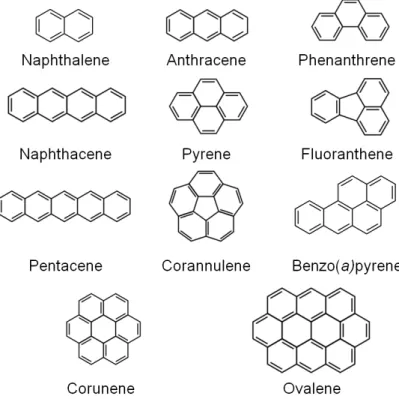
Fig. I.1. Structure of low and high molecular weight polycyclic aromatic hydrocarbons...10 Fig. I.2. Geographical localisation of Minho and Lima Rivers in the Northwest
of the Iberian Peninsula...24 Fig. I.3. External morphology of Carcinus maenas. (A) Dorsal view of the
carapace and appendages. (B) Differences between male and female abdomen. (C) Abdomen colours from green to red...27 Fig. I.4. World distribution of Carcinus maenas, the native and invasive
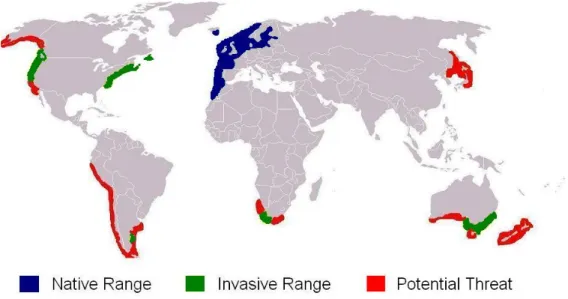
ranges. Source: Carnivora...28 Fig. I.5. Life cycle of Carcinus maenas (Crothers, 1967). Scanning electron micrographs of zoea IV larvae, megalopa larvae and first instars juvenile crab (adapted from Ekerholm, 2005)...30 Fig. II.1. Fluoranthene (FLU) concentrations in C. maenas at the end of 7
days of exposure. FLU residues (GC–MS) in the whole soft tissues analysed as a function of water concentrations (A). FLU–type compounds (fixed wavelength fluorescence) in digestive gland (●) and muscle (▲) as a function of water concentrations (B). Relationship between FLU–type compounds in digestive gland (●) and muscle (▲) and FLU residues in the whole soft tissues analysed (C). Values represent the mean with the corresponding standard error. **Indicates statistical significance as indicated at p<0.01...67 Fig. II.2. Biomarkers of cell damage, anti–oxidant defences and oxidative stress assessed in crabs exposed for 7 days to waterborne fluoranthene. Lysosomal membrane stability, assessed through the neutral red retention assay (NRR, A). Activity of the enzymes glutathione S–transferases (GST, B), glutathione peroxidase (GPx, C), and glutathione reductase (GR, D). Levels of total glutathione (TG, E) and lipidic peroxidation (LPO, F). Values represent the mean with the corresponding standard error. **Indicates statistical significance as indicated at p<0.01 either by the Dunnett's test or linear contrast analysis ...69 Fig. II.3. Biomarkers of neurotoxicity and energy metabolism assessed in crabs exposed for 7 days to waterborne fluoranthene. Activity of the enzymes acetylcholinesterase (AChE, A), NADP+–dependent isocitrate dehydrogenase (IDH, B) and lactate dehydrogenase activity (LDH, C). Values represent the mean with the corresponding standard error. **Indicates statistical significance as indicated at p<0.01 either by the Dunnett's test or linear contrast analysis...71
xx
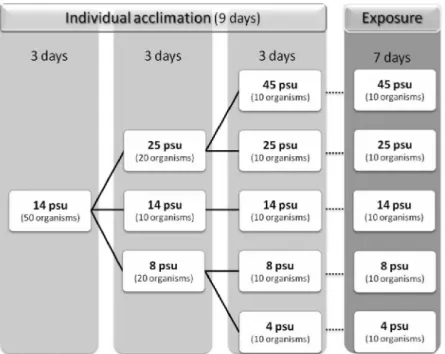
Fig. III.1. Location of the estuaries of Rivers Minho and Lima, in the Northwest Iberian coast. The sampling sites are indicated by stars...95 Fig. III.2. Schematic representation of the strategy adopted for salinity acclimation and exposure periods of crabs from the cohorts of the Minho and the Lima estuaries...97 Fig. III.3. Mean and corresponding standard error of cholinesterase (ChE)
activity determined in the muscle of crabs from the Minho (low pollution) and the Lima (contaminated) cohorts exposed for 7 days to different salinity levels. For each sampling site, 10 crabs were exposed per salinity level, in a total of 100 animals analysed. Significant differences between sampling sites within each salinity level are identified by different capital letters (two-way ANOVA with planned pairwise comparisons, p<0.05); significant differences among salinity levels within each estuary are identified by different small letters (two-way ANOVA and Sidak test, p<0.05)...101 Fig. III.4. Mean and corresponding standard error of lactate dehydrogenase (LDH) and NADP+–dependent isocitrate dehydrogenase (IDH) activities determined in the muscle of crabs from the Minho (low pollution) and the Lima (contaminated) cohorts exposed for 7 days to different salinity levels. For each sampling site, 10 crabs were exposed per salinity level, in a total of 100 animals analysed. Significant differences between sampling sites within each salinity level are identified by different capital letters (two–way ANOVA with planned pairwise comparisons, p<0.05); significant differences among salinity levels within each estuary are identified by different small letters (two–way ANOVA and Sidak test, p<0.05)...102 Fig. III.5. Glutathione S–transferases (GST), glutathione reductase (GR) and
peroxidase (GPx) activity, and levels of total glutathione (TG), determined in the digestive gland of crabs from the Minho (low pollution) and the Lima (contaminated) cohorts exposed for 7 days to different salinity levels. Values represent the mean with the corresponding standard error. For each sampling site, 10 crabs were exposed per salinity level, in a total of 100 animals analysed. Different capital letters identify significant differences between sampling sites within each salinity level (two–way ANOVA with planned pairwise comparisons, p<0.05); different small letters identify significant differences among salinity levels within each estuary (two–way ANOVA and Sidak test, p<0.05). For GST and GPx, only a significant effect of the estuary of origin on the enzymatic activity could be depicted. GR activity was significantly affected by the salinity level only...105
xxi Fig. III.6. Lipid peroxidation (LPO) levels determined in the digestive gland of
crabs from the Minho (low pollution) and the Lima (contaminated) cohorts after a 7–day exposure to different salinity levels. Values represent the mean with the corresponding standard error bars. For each sampling, 10 crabs were exposed per salinity level, in a total of 100 animals analysed. Significant differences between sampling site within each salinity level are identified by different capital letters (two–way ANOVA with planned pairwise comparisons, p<0.05); significant differences among salinity levels within each estuary are identified by different small letters (two–way ANOVA and Sidak test, p<0.05)...106 Fig. IV.1. Effects of the specific inhibitors, eserine sulphate (top), BW284C51
(middle), iso–OMPA (bottom), on cholinesterase (ChE) activity (mean ± standard error in % of control) of C. maenas from the Minho (black triangles) and the Lima (white triangles) estuaries using acetylthiocholine as the substrate. For iso–OMPA the control and the control–solvent were considered together as no significant differences were found between them...136 Fig. IV.2. Acetylcholinesterase (AChE) activity (mean ± standard error in % of
control) after in vitro exposure to fenitrothion of supernatants prepared with C. maenas collected from the Minho (black triangles) and the Lima (white triangles) estuaries, using acetylthiocholine as the substrate...137 Fig. IV.3. Mean and corresponding standard error of acetylcholinesterase
(AChE), lactate dehydrogenase (LDH), and NADP+–dependent isocitrate dehydrogenase (IDH) activity determined in the muscle of crabs from the Minho and the Lima estuaries exposed for 7 days to fenitrothion. Significant differences between sampling sites within each condition are identified by different capital letters (two–way ANOVA with planned pairwise comparisons, p<0.05). The asterisks indicate significant differences within each estuary compared to the respective control group (two–way ANOVA followed by contrast analysis, p<0.05)...138 Fig. IV.4. Mean and corresponding standard error of glutathione S–
transferases (GST), glutathione peroxidase (GPx) and reductase (GR), and catalase (CAT) activity, and total glutathione (TG) and lipid peroxidation (LPO) levels determined in the digestive gland of crabs from the Minho and the Lima estuaries exposed for 7 days to fenitrothion. Significant differences between sampling sites within each condition are identified by different capital letters (two–way ANOVA with planned pairwise comparisons, p<0.05). The asterisks indicate significant differences within each estuary compared to the
xxii
respective control group (two–way ANOVA followed by contrast analysis, p<0.05)...141 Fig. V.1. Effects of the specific inhibitors (eserine sulphate, BW284C51,
iso-OMPA), on cholinesterase (ChE) activity (mean ± standard error in % of control) in the thoracic ganglion of C. maenas from the Minho (black triangles) and the Lima (white squares) estuaries. Acetylthiocholine was used as substrate...170 Fig. V.2. Mean and corresponding standard error of the activity of enzymes
glutathione S-transferases (GST), glutathione peroxidase (GPx) and reductase (GR), and catalase (CAT) activity, and the levels of total glutathione (TG) and lipid peroxidation (LPO) in the digestive gland of C. maenas from the Minho and the Lima estuaries exposed for 7 days to sertraline. Significant differences between sampling sites within each treatment are identified by different letters; the asterisks indicate significant differences within each estuary compared to the respective control group (two-way ANOVA followed by contrast analysis; * p<0.05, *** p<0.001)...171 Fig. V.3. Mean and corresponding standard error of ganglion and muscle acetylcholinesterase (AChEg and AChEm, respectively) activity determined in C. maenas from the Minho and the Lima estuaries exposed for seven days to sertraline. Significant differences between sampling sites within each treatment are identified by different letters; the asterisks indicate significant differences within each estuary compared to the respective control group (two-way ANOVA followed by contrast analysis; * p<0.05, *** p<0.001)...174 Fig. V.4. Mean and corresponding standard error of lactate dehydrogenase (LDH) and NADP+-dependent isocitrate dehydrogenase (IDH) activity determined in the muscle of C. maenas from the Minho and the Lima estuaries exposed for seven days to sertraline. Significant differences between sampling sites within each condition are identified by different letters; the asterisks indicate significant differences within each estuary compared to the respective control group (two-way ANOVA followed by contrast analysis; *p<0.05, ***p<0.001)...176 Fig. V.5. Integrated Biomarker Response (IBR) index (in % of control)
calculated with the biomarkers evaluated in C. maenas from the Minho and Lima estuaries exposed to sertraline (top). Contribution of each biomarker to the IBR value and the discrimination among treatments in each sampling site (star plots). AChEg, ganglion acetylcholinesterase; AChEm, muscle acetylcholinesterase; LDH, lactate dehydrogenase; IDH, NADP+-dependent isocitrate
xxiii dehydrogenase; GST, glutathione S-transferases; GR, glutathione reductase; GPx, glutathione peroxidase; CAT, catalase; TG, total glutathione; LPO, lipid peroxidation...178 Fig. VI.1. Biomarkers determined in C. maenas from the Minho and Lima estuaries. Activity of acetylcholinesterase in ganglion (AChEg) and muscle (AChEm), lactate dehydrogenase (LDH) and NADP+ -dependent isocitrate dehydrogenase (IDH) in muscle. Error bars represent the standard error of the mean. BW (control), brackish water (14psu); SW, seawater (35psu); LowS, low sertraline level (0.05 µg L-1); HighS, high sertraline level (5.0 µg L-1); Pv, predicted value; S, synergism; A, antagonism...202 Fig. VI.2. Biomarkers determined in C. maenas from the Minho and Lima estuaries. Activity of glutathione S–transferases (GST), glutathione reductase (GR), glutathione peroxidase (GPx), and catalase (CAT), and the levels of lipid peroxidation (LPO). Error bars represent the standard error of the mean. Legend provided in Fig. VI.1...203 Fig. VII.1. Location of the sampling sites at the estuary of (A) Minho River (Seixas and Moledo), and at the estuary of (B) Lima River (Porto Velho and Cabedelo). Graphics represent the integrated biomarker response (IBR) indices of each sampling site in winter and summer 2010 (W10 and S10, respectively) and 2012 (W12 and S12, respectively)...226 0
Fig. VII.2. Mean and corresponding standard error of acetylcholinesterase (AChE) activity determined in the muscle of crabs from the Minho (Seixas, MU and Moledo, MD) and the Lima estuaries (Porto Velho, LU and Cabedelo, L
D) in the winter and summer 2010 (W10 and S10, respectively) and 2012 (W
12 and S12, respectively). Significant differences are identified by asterisks (one–way ANOVA followed by planned contrasts; *p<0.05)...236 Fig. VII.3. Mean and corresponding standard error of lactate (LDH) and NADP+–dependent isocitrate (IDH) dehydrogenases activity determined in the muscle of crabs from the Minho (Seixas, M
U and
Moledo, MD) and the Lima estuaries (Porto Velho, LU and Cabedelo,
L
D) in the winter and summer 2010 (W10 and S10, respectively) and
2012 (W12 and S12, respectively). Significant differences are identified by asterisks (one–way ANOVA followed by planned contrasts; *p<0.05)...237 Fig. VII.4. Mean and corresponding standard error of glutathione S– transferases (GST), glutathione reductase (GR) and glutathione peroxidase (GPx) activity, and the total glutathione (TG) level
xxiv
determined in the digestive gland of crabs from the Minho (Seixas,
MU and Moledo, MD) and the Lima estuaries (Porto Velho, LU and Cabedelo, L
D) in the winter and summer 2010 (W10 and S10,
respectively) and 2012 (W12 and S12, respectively). Significant differences are identified by asterisks (one–way ANOVA followed by planned contrasts; *p<0.05)...239 Fig. VII.5. Mean and corresponding standard error of lipid peroxidation (LPO) levels determined in the digestive gland of crabs from the Minho (Seixas, M
U and Moledo, MD) and the Lima estuaries (Porto Velho, LU and Cabedelo, L
D) in the winter and summer 2010 (W10 and S10, respectively) and 2012 (W12 and S12, respectively). Significant differences are identified by asterisks (one–way ANOVA followed by planned contrasts; *p<0.05)...241 Fig. VII.6. Star plots representing the biomarkers assessed in the present study (acetylcholinesterase, AChE, lipid peroxidation, LPO, glutathione S–transferases, GST, glutathione peroxidase, GPx, glutathione reductase, GR, total glutathione, TG, lactate dehydrogenase, LDH, and NADP+–dependent isocitrate dehydrogenase, IDH) used to compute the IBR/n index that were measured in Minho (○) and Lima () estuaries during the winter and summer 2010 (W10 and S10, respectively) and 2012 (W12 and S12, respectively)...242 Fig. VII.7. Results of the PCA defined by the biomarkers in C. maenas, the abiotic variables and the concentrations of metals in sediments and tissues. Legend provided in Tables VII.1. and VII.3...244
xxv
Tables index
Table I.1. Conventions established to protect the aquatic ecosystems, the participating countries, and their main objectives...6 Table II.1. Energy reserves available in C. maenas exposed for 7 days to waterborne fluoranthene. Values represent the mean ± standard error (within parentheses) of protein (mJ mg−1), glycogen (mJ mg−1), and lipid (mJ mg−1) contents, as well as total energy available (Ea, mJ mg−1)...73 Table III.1. Water physico–chemical parameters (mean ± SD) measured (in
triplicate) in each site during crab sampling...96 Table III.2. Results of the fullfactorial two-way ANOVA performed to investigate the effects of salinity and the sampling site on the biomarkers analysed...103 Table IV.1. Water temperature (T), pH, dissolved oxygen (DO), and salinity (S) measured (in triplicate) in Minho and Lima estuaries during crab sampling. Values represent the mean ± standard deviation (SD)...129 Table IV.2. Kinetic parameters (Michaelis-Menten constant, K
m; maximal velocity, V
max; catalytic efficiency, ratio Vmax /Km) obtained by assaying cholinesterase activity, with each tested substrate, from
Carcinus maenas collected at the Minho and the Lima estuaries.
Values represent the mean ± standard error. Different letters indicate statistical significance at p<0.05...135 Table IV.3. Results of the full–factorial two–way ANOVA carried out to assess the effects of fenitrothion exposure and the sampling site on the biomarkers assessed...140 Table V.1. Variation of salinity (S), temperature (T), pH, and dissolved
oxygen (DO) values during the assays duration in freshly prepared medium (0h) and old (48h) test medium (mean ± SD)...165 Table V.2. Kinetic parameters (Michaelis-Menten constant, K
m; maximal velocity, V
max; catalytic efficiency, ratio Vmax /Km) of cholinesterase activity from C. maenas collected at the Minho and the Lima estuaries. Values represent the mean ± standard error. Different letters indicate statistical significance at p<0.05...169 Table V.3. Concentration (mean ± SD, ng g-1ww) of sertraline and
xxvi
Minho and the Lima sampling sites, after a seven-day exposure experiment...173 Table V.4. Results of the full-factorial two-way ANOVA to assess the effects
of sertraline exposure and the sampling site on the biomarkers assessed...175 Table V.5. Summary of the changes observed in the parameters evaluated in
C. maenas from the Minho and Lima estuaries exposed to
sertraline. Increase (↑), decrease (↓) and no alteration (~) are indicated for each endpoint in relation to the respective control group...177 Table VI.1. Results of the full-factorial two-way ANOVA to assess the effects
of sertraline exposure, salinity, and the sampling site on neurotransmission biomarkers...204 Table VI.2. Results of the full-factorial two-way ANOVA to assess the effects
of sertraline exposure, salinity, and the sampling site on energy metabolism...205 Table VI.3. Results of the full-factorial two-way ANOVA to assess the effects
of sertraline exposure, salinity, and the sampling site on biotransformation and anti-oxidant defences...206 Table VI.4. Results of the full-factorial two-way ANOVA to assess the effects of sertraline exposure, salinity, and the sampling site on oxidative damage...207 Table VII.1. Seasonal and inter–annual variation in the water abiotic
parameters measured...228 Table VII.2. Morphometric measures of the crabs collected from the Minho and Lima estuaries...229 Table VII.3. Concentration of metals (µg g-1 dry weight) determined in
sediment samples collected from the Minho and Lima estuaries...234 Table VII.4. Concentration of heavy metals (µg g-1 dry weight) determined in
tissues of C. maenas collected at the Minho and Lima estuaries. Legend provided in Table VII.3...235
xxvii
Acronyms and abbreviations
5-HT Serotonin
ABC proteins ATP binding cassette proteins AChE Acetylcholinesterase
AChEg Ganglion acetylcholinesterase AChEm Muscle acetylcholinesterase ANOVA Analysis of variance
APHA American Public Health Association ATCh Acetylthiocholine BChE Butyrylcholinesterase BTCh Butyrylthiocholine BW Brackish water BW284C51 1,5-bis-(4-allyldimethyl-ammoniumphenyl)-pentan-3-one dibromide CAT Catalase
CBD Convention of Biological Diversity
CbE Carboxylesterase
CDNB 1-chloro-2,4-dinitrobenzene CFCs Chlorofluorocarbons
ChE Cholinesterase
CLC Civil Liability Convention CNS Central nervous system CYP 450 Cytochrome P450
DO Dissolved oxygen
DTNB 5,5’-dithio-bis-2-nitrobenzoate
dw Dry weight
Ea Energy available
EAP Environmental Action Program
ECs Emerging contaminants
ECPD Environmental and Consumer Protection Directorate
ERL Effects range-low
ERM Effects range-median
ESI Electrospray ionisation source
EU European Union
xxviii
FF Fixed wavelength fluorescence
FLU Fluoranthene
GC–MS Gas chromatography–mass spectrometry
GHG Greenhouse gases GPx Glutathione peroxidase GR Glutathione reductase GSH Reduced glutathione GSSG Oxidised glutathione GST Glutathione S–transferases HighS High salinity
HMW High molecular weight
HPLC High–performance liquid chromatography
IA Independent action
IBR Integrated biomarker responses IC Inhibition concentration
IDH NADP+–dependent isocitrate dehydrogenase IMO International Marine Organisation
IPCC Intergovernamental Panel on Climate Change iso-OMPA Tetramonoisopropyl pyrophosphortetramide
K
m Michaelis-Menten constant
LC Lethal concentration
LDH Lactate dehydrogenase
LMS Lysosomal membrane stability LMW Low molecular weight
LOD Limit of detection
LowS Low salinity
LPO Lipid peroxidation
MDL Method detection limit
MOA Mode of action
MRM Multiple reaction monitoring
MSFD Marine Strategy Framework Directive
NORS Norsertraline
NR Neutral red dye
NRR Neutral red retention
OECD Organisation for Economic Co–operation and Development
xxix OSPAR Convention Oslo and Paris Conventions for the Protection of the Marine
Environment of the North-East Atlantic PCA Principal Component Analysis
PAHs Polycyclic aromatic hydrocarbons
PC Principal component
PChE Pseudocholinesterase PDMS Polydimethylsiloxane
PEC Predicted environmental concentration PNEC Predicted no effect concentration
PPCPs Pharmaceuticals and personal care products PrChE Propionylcholinesterase
PSS Physiological saline solution PTCh Propionylthiocholine
ROS Reactive oxygen species
SD Standard deviation
SE Standard error
SEM Standard error of the mean
SERT Sertraline
SeSa Sertraline × Salinity SOD Superoxide dismutase SPE Solid phase extraction
SSD Species sensitivity distribution
SSRI Selective serotonin reuptake inhibitor
SW Saltwater
T Temperature
TBARS Thiobarbituric acid reactive substances
TG Total glutathione
UDP Uridine 5'–diphospho–glucuronosyltransferase
UHPLC-MS/MS Ultra high-performance liquid chromatography-tandem mass spectrometry
UNCCD United Nations Convention to Combat Desertification
UNCED United Nations Conference on Environment and Development UNEP United Nations Environmental Programmes
UNFCCC United Nations Framework Convention on Climate Change USEPA United States Environmental Protection Agency
xxx V
max Maximal velocity
WCED World Commission on Environment and Development WFD Water Framework Directive
1
Chapter I
3
Introduction
1. Sustainable development
In 1972 the Stockholm Declaration (1972) stated the need for common orientations to conserve and enhance the human environment, and the right to a healthy environment. This summit represented a milestone in what concerns environmental protection. A cascade of other actions was subsequently taken to address a number of preoccupations that had been raised mostly by the publication of the book “Silent Spring” by Rachel Carson (1962). The book presented many case studies related to harmful effects of chemical pesticides on the environment. The controversy and awareness instilled created the conditions that led to the 1972 agreement. From this point forward, the environment has been considered a major issue for which coordinated legislation was required to ensure a sustainable development. Consequently, in 1973 the European Union (EU) founded the Environmental and Consumer Protection Directorate (ECPD) and the first Environmental Action Program (EAP) was instituted. Later, the principles of the Stockholm Declaration constituted the basis of a new report “Our Common Future” from the United Nations World Commission on Environment and Development (WCED, 1987). Also known as Brundtland Report in honour of the WCDE chair, the Norwegian Prime Minister Gro Harlem Brundtland, it defined sustainable development as the “development that meets the needs of the present without compromising the ability of future generations to meet their own needs” (WCED, 1987). Since then, it has been recognised that sustainable development requires the integration of interrelated domains like environmental, economic, social, and political sustainability. Following these initiatives, and worrying acknowledgement of increasing environmental degradation, a crucial meeting occurred in 1992, during the United Nations Conference on Environment and Development (UNCED). This summit was held in Rio de Janeiro (Brazil), where Agenda 21 was adopted (UNCED, 1992).
Chapter I
4
Reduction of toxic compounds and harmful wastes produced replacement of fossil fuels by alternative sources of energy, reduction of vehicle/traffic emissions to limit atmospheric pollution, and water scarcity were some of the points included in Agenda 21 (UNCED, 1992). Furthermore, the greatest challenges for sustainable development were pointed out and other agreements prepared to face climate change, loss of biodiversity and desertification: the United Nations Framework Convention on Climate Change (UNFCCC), the Convention of Biological Diversity (CBD) and the United Nations Convention to Combat Desertification (UNCCD). The UNFCCC aim was to stabilise the atmospheric concentrations of greenhouse gases (GHG) at levels below the dangerous interference with the climate systems and was followed by the Kyoto Protocol (1997). The latter established legal obligations for develop countries to reduce GHG emissions. The CBD aimed to protect the biodiversity and promote its sustainable use, as well as the equal division of its benefits. The UNCCD focused on particular regions of the planet (arid, semiarid, and dry sub– humid areas) with the most vulnerable ecosystems and peoples. Since then, many programs have been implemented in order to promote sustainable development and environmental protection.
At the same time the specific concerns raised about environmental contamination gave place to important developments over the years. Indeed, effective measures to protect environmental quality and sustainability emerged relatively recently. However, before and still after them, many contaminants originating from both natural and anthropogenic sources have been introduced or occur in the natural environment in continuously increasing levels. Moreover, water covers approximately 70% of Earth’s surface (Drinkwater et al., 2009). Thus, aquatic ecosystems are the final destination for most contaminants. Contaminants may reach these systems intentionally or accidentally, through direct discharges (e.g., industrial and domestic effluents), surface runoff (e.g., agriculture landfills), atmospheric deposition (e.g., ashes from forest fires), and spills of oils (e.g., Prestige and Erika oil spills) and hazardous and noxious substances (Neuparth et al., 2011), among others
Chapter I
5 (Schiedek et al., 2007). Depending on their physico–chemical characteristics, contaminants may either stay in the water column or accumulate in sediments and food webs.
Hence, following the increase in awareness and knowledge about chemical contaminants, as well as their properties and behaviour, many organisations started working to protect aquatic systems and the marine environment (e.g., the International Marine Organisation – IMO, the United Nations Environmental Programmes – UNEP). In Europe, the Torrey Canyon accident (1967) on the SW coast of United Kingdom, which released over 100,000 tonnes of oil with heavy consequences for the environment, marked the beginning of international cooperation against marine pollution (Table I.1.). International regulations such as the Civil Liability Convention (CLC) and the Agreement for Cooperation in Dealing with Pollution of the North Sea by Oil and Other Harmful Substances (the “Bonn Agreement”), signed in 1969, represented the turning point regarding the international cooperation on marine pollution. Later, in the sequence of the intensively media-covered incident with the Dutch ship Stella Maris (1971) that tried to dump chlorinated wastes in the North Sea, several countries signed in 1972 the Convention for the Prevention of Marine Pollution by Dumping from Ships and Aircraft (the “Oslo Convention”). Concern was extended to terrestrial discharges of harmful substances discharged and in 1974 the Convention for the Prevention of Marine Pollution from Land–Based Sources (the “Paris Convention”) was signed. In 1992, the Convention for the Protection of the Marine Environment of the North–East Atlantic joined the Oslo and Paris Commissions (the “OSPAR Convention”). Within the “OSPAR Convention” additional annexes were prepared to protect and conserve the maritime area of the convention, its ecosystems and biodiversity (Table I.1.). Other protection programs covering more restricted areas were also created, like the “Helsinki Convention” (1974), the “Barcelona Convention” (1976) and the “Bucharest Convention” (1992), to protect the Baltic Sea, the Mediterranean Sea and the Black Sea, which were convened to achieve coordinated management of source catchments and receiving marine areas. Within the international
Chapter I
6
agreements to achieve environmental sustainability, a proposal for a European Directive on the Ecological Quality of Surface Waters was also made. This proposal led to adoption by many countries of monitoring schemes and environmental quality objectives and standards for inland and coastal waters (Hering et al., 2010). The proposal itself was never adopted but eventually resulted in the draft document of the Water Framework Directive (WFD, Directive 2000/60/EC) (Hering et al., 2010).
Table I.1. Conventions established to protect the aquatic ecosystems, the participating countries, and their main objectives.
Convention name
(year) Participating countries Main objectives
Oslo Convention (1972)
Belgium, Denmark, France, Finland, Germany, Iceland, Ireland, The Netherlands, Norway, Portugal, Spain, Sweden, United Kingdom
Prevention of marine pollution by dumping from ships and aircrafts
Paris Convention (1974)
Austria, Belgium, Denmark, France, Germany, Iceland, Luxembourg, The Netherlands, Norway, Portugal, Spain, Sweden, Switzerland, United Kingdom
Prevention of marine pollution from land–based sources
HELCOM (1974) Denmark, Estonia, EU, Finland, Germany, Latvia, Lithuania,
Poland, Russia, Sweden
Protect the marine environment of the Baltic Sea from all sources of pollution
The Regional Seas Programme (1974)
Black Sea, East Asian Seas, Eastern Africa,
Mediterranean, Pacific, Red Sea, Gulf of Aden, ROPME Sea Area, South Asian Seas, South-East Pacific, Western Africa, Wider Caribbean
Sustainable management and use of the marine and coastal environment
Barcelona C onv enti on (1976)
Albania, Algeria, Bosnia–Herzegovina, European Community, Croatia, Cyprus, Egypt, Israel, Lebanon, Libya, Malta, Morocco, Serbia and Montenegro, Slovenia, Syria, Tunisia, Turkey
Protect the Mediterranean Sea against pollution
OSPAR Commission (1992)
Belgium, Denmark, Finland, France, Germany, Iceland, Ireland, Luxembourg, The Netherlands, Norway, Portugal, Spain, Sweden, Switzerland, United Kingdom
Protect the marine environment of the North–East Atlantic
Bucharest C onv enti on (1992)
Bulgaria, Georgia, Romania, Russia, Turkey, Ukraine Protect the Black Sea against pollution
WFD (2000) European Commission countries Achieve the good qualitative and
quantitative status of all water bodies
MSFD (2008) European Commission countries Achieve the good environmental status