Using sport marketing to reach consumers
Bojan Jovanović
Project (Descriptive Study) submitted as partial requirement for the conferral of
Master in Marketing
Supervisor:
Henrique Conceição, Sport Lisboa e Benfica, Diretor de Inovação e Desenvolvimento de Negócio
2
Abstract
Sport marketing, especially sponsorship is of great importance since it is a part of a promotional mix that supports the interest of the company by associating it with a specific player, team or event. Moreover, sponsorship may be the major or only marketing effort for some companies whereby it is important to consider it as a powerful option when deciding upon marketing tools. The purpose of this thesis is therefore to provide a better understanding of sport marketing with great focus on sport sponsorship. In order to reach this purpose, the study provide a better understanding of sport marketing mix and a sport sponsorship as a most effective and most used tool.
Theoretical part of the study is based on existing academic publications about sport marketing mix, promotion of sport marketing and sports sponsorship. This study was investigated by conducting a various research strategies in the course of compiling a final research document. These strategies included sending out by electronic way questionnaires to a wide number of random people in order to get as much different opinions is possible. The analysis of the data was performed through quantitative data analysis methods.
The research provided the framework to investigate the effect of sponsorship awareness, corporate image and intention to purchase sponsor products. The main findings of the research are that sport sponsorship has a positive effect on sponsorship awareness and on corporate image. However, no significant positive effect was found of sport sponsorship on customer intention to purchase sponsor product.
Keywords: sport marketing, sponsorship, brand awareness, purchase decision, sponsorship recognition
JEL: M310 - Marketing
3
Abstrato
No Marketing desportivo, o patrocínio assume um papel de extrema importância, uma vez que é uma parte de um "mix" promocional que suporta o interesse da empresa em associar-se a um determinado clube, jogador ou evento. Além disso, o patrocínio pode ser o maior ou o único esforço de marketing para algumas empresas, pelo que é ainda mais importante considerá-lo como uma forte opção ao decidir sobre ferramentas de marketing. O objetivo deste trabalho é, portanto, proporcionar um melhor entendimento do marketing desportivo, com grande foco no patrocínio desportivo. Para alcançar este objetivo, o trabalho procura explanar uma melhor compreensão sobre o marketing desportivo e o patrocínio desportivo como a ferramenta mais usada e mais eficaz.
A parte teórica do trabalho é baseada em publicações académicas existentes sobre marketing desportivo, promoções de marketing desportivo e patrocínios desportivos. Este estudo foi feito através da realização de várias estratégias de pesquisa com o propósito da elaboração de um documento final de pesquisa. Estas estratégias incluíram o envio de questionários eletrónicos para um grande número de pessoas aleatórias, a fim de obter o máximo possível de respostas diferentes. A análise dos dados foi realizada através de métodos de análise de dados quantitativos.
A pesquisa forneceu a estrutura para o estudo do efeito da perceção do patrocínio, a imagem corporativa e a intenção de comprar produtos de patrocinadores.
As principais conclusões do estudo provam que o patrocínio desportivo esta positivamente correlacionado com a perceção do cliente sobre o respetivo patrocínio e na imagem da empresa. No entanto, nenhum efeito positivo significativo foi encontrado sobre a intenção de compra de produtos do patrocinador pelo cliente.
Palavras-chave: marketing esportivo, patrocínio, reconhecimento da marca, de decisão de compra, o reconhecimento de patrocínio
JEL: M310 - Marketing
4
Acknowledgment
First and foremost, I have to thank my research supervisor, Henrique Conceição. Without his assistance and dedicated involvement in every step throughout the process, this descriptive study would have never been accomplished.
I would like to show gratitude to my family, girlfriend and friends for their patience and support demonstrated during the last couple of months of the writing.
I would also like to express my special gratitude to my parents who made the Master in Marketing program possible.
My thanks and appreciations also go to people who have willingly helped me out with their abilities.
5 INDEX
1. Background ... 9
1.1. Extent of sport marketing ... 9
1.2. Need for Sports‟ Marketing ... 10
1.3. Definition of Sports‟ Marketing ... 11
2. Literature review ... 13
2.1. The Sports‟ marketing mix ... 13
2.2. Promotion of Sports Marketing ... 14
2.3. Sport Sponsorship ... 17
2.3.1. Objectives of Sports Sponsorship ... 18
2.3.2. Selecting a specific sports sponsorship ... 22
2.3.3. Measuring the sports sponsorship effectiveness ... 27
3. Conceptual Framework ... 31
3.1. Sport marketing mix ... 31
3.2. Objectives of Sports Sponsorship ... 32
3.3. Selecting a Specific Sports Sponsorship ... 33
3.4. Measuring the Sports Sponsorship Effectiveness ... 35
4. Methodology ... 36
4.1. Research purpose ... 36
4.2. Research approaches ... 37
4.3. Research strategy ... 38
4.4. Data collection method ... 39
4.5. Population ... 40
4.6. Sample ... 40
4.7. Validity and reliability ... 41
4.8. Questionnaire ... 42
5. Results ... 43
5.1. Response rate ... 43
5.2. Description of the respondents ... 43
5.3. Gender/age with brand awareness comparison ... 45
5.4. Gender/age comparison with brand purchase decision ... 49
5.5. Price and quality affecting the purchase decision ... 55
5.6. Respondent‟s attitude towards sponsor company ... 56
5.7. Sponsorship recognition, factors and connection with consumers ... 59
6. Conclusion ... 65
6.1. Limitations of the study ... 68
6.2. Future research ... 68
References ... 69
6
Sumário Executivo
A indústria do desporto é um dos setores em maior expansão. Todos nós somos testemunhas das transferências inacreditáveis que decorrem nos dias de hoje no mundo do futebol e de todas as ações promovidas pelas organizações desportivas com o propósito de serem bem sucedidas e reconhecidas. A chegada de investidores oriundos do Oriente aos grandes clubes europeus de futebol e o gasto de quantias astronómicas de dinheiro tornaram-se uma tendência nos últimos anos. Com todos aqueles “jogadores” em volta, o marketing de desporto está a ficar saturado e as empresas e marcas estão a procurar outras maneiras criativas e inovadoras de chegar aos seus consumidores. Também, responsáveis de marketing enfrentam cada vez mais dificuldades ao tentar implementar novas estratégias em novos mercados por causa de todas as diferenças socias e culturais entre pessoas em todo o mundo. O principal problema das empresas atualmente consiste em encontrar algo único, original e diferente que consiga atrair a atenção do consumidor numa área já cheia de inovações. Isto representa um grande desafio para os "marketers" que têm de ter em atenção cada passo que dão se quiserem ser bem sucedidos e aceites pelo público alvo. Com o objetivo de valorizar o seu negócio muitas empresas recentemente envolveram-se em patrocínio do desporto por inúmeros objetivos. O patrocínio do desporto tem ganho quota de mercado nos gastos gerais de marketing tendo nos últimos anos alcançado a liderança como a ferramenta mais utilizada.
A tese estabelece assim, uma visão geral do marketing do desporto com uma profunda explicação do patrocínio desportivo como uma ferramenta e o efeito que o patrocínio tem sobre o cliente (o reconhecimento do patrocinador e a intenção de comprar produtos do patrocinador).
A definição de marketing desportivo é a aplicação de conceitos de marketing a produtos e serviços de desporto e o marketing de produtos não relacionados com desporto a uma associação ao desporto (C.T. Smith.2008).
O patrocínio é uma forma de promoção onde os objetivos devem ligar-se ao mais amplo processo de planeamento promocional e seus objetivos. Estes objetivos servem para atingir os mais altos objetivos de marketing que por sua vez originam os objetivos da organização. Objetivos corporativos relacionados, objetivos de marketing, objetivos de meios de comunicação e objetivos pessoais são quatro objetivos comuns no processo de patrocínio do desporto. Cada um destes objetivos inclui um certo número de sub-objetivos que são
7 explicados detalhadamente na revisão da tese. Depois de definidos os objetivos as empresas precisam de decidir qual modalidade desportiva irão patrocinar. Sendo esta uma escolha adequada à marca da empresa, relacionando-se com os seus atributos, benefícios ou com a sua imagem numa forma natural. A escolha deste patrocínio desportivo deve estar estreitamente relacionado com os interesses do mercado-alvo. A última etapa do programa de patrocínio desportivo é o cálculo da eficácia do mesmo. Nesta altura, as empresas devem medir o retorno do programa investido.
Além disso, foi realizada uma pesquisa, um questionário foi enviado por via eletrónica para uma grande número de pessoas aleatórias na finalidade de obter o máximo possível de opiniões diferentes. As unidades de análise, foram pessoas da Croácia, que responderam com vista a dois objetivos. Classificarem a eficácia do patrocínio desportivo na decisão de compra e descobrir a opinião dos mesmos em relação ao patrocínio desportivo no seu todo.
Após os resultados demográficos serem apresentados, os resultados dos dados analisados, mostram-nos o efeito do patrocínio desportivo no reconhecimento da marca. Tabelas de tabulação cruzada irão nos fornecer a informação sobre a inter-relação entre, o reconhecimento da marca, a idade do entrevistado e o posicionamento do patrocinador. Os resultados mostram-nos que a maioria dos entrevistados sabe quem é o patrocinador do seu desporto/clube preferido e dizem-nos que a colocação do patrocinador é muito importante em relação à perceção da marca.
Além disso, o efeito do patrocínio na intenção de compra de produtos de patrocinadores foi investigado. Aqui a pesquisa quis mostrar se o "amor" por um clube/jogador/desporto pode afetar a sua decisão de comprar um produto de um patrocinador do seu clube/jogador/desporto favorito. Esta é a razão porque as empresas usam clubes/jogadores como uma ferramenta para atrair clientes, pois que melhor maneira de comprar um produto do que o relacionar com o clube/jogador favorito?
Os resultados que esta pesquisa fornece não são muito satisfatórios, se olharmos do ponto de vista das empresas patrocinadoras. Os resultados ainda nos mostram que o patrocínio nao parece ter qualquer efeito na decisão final de compra dos productos do patrocinador e por isso mesmo o patrocínio nao tem sentido e nao traz ao patrocinador fundos adicionais. Há algumas razões que nos explicam esta situação e uma delas é a má situação da indústria do desporto croata. Visto que a maioria dos entrevistados são cidadãos croatas deve-se ter em consideração esta razão como a causa principal deste mesmo resultado.
8 Na última parte do questionário, os entrevistados deram a sua opinião sobre as empresas investigadas, aí os resultados mostraram-nos uma opinião extremamente positiva em relação ao patrocínio desportivo em geral e aos seus respetivos patrocinadores. Os entrevistados têm uma opinião positiva sobre as marcas patrocinadoras e a sua maioria apoia as empresas patrocinadoras do seu clube/jogador preferido.
Olhando para estes resultados, podemos ver que o patrocínio desportivo é um método bastante eficaz no que respeita à notoriedade da marca e da sua imagem. No entanto, em relação ao efeito do patrocínio na intenção do cliente comprar produtos da marca do patrocinador, podemos ver uma queda significativa.
9
1. Background
Sport, the so-called “first secondary thing in every man life” has a universal reach. It is a type of entertainment that can be accessed and understood by everyone. Most importantly, sport connects people emotionally. Marketers have been using this emotional connection to market their brands for over a 100 years. Brands are linked with sports to get better attention from potential customers. With the growth of sport marketing expenditures, and partly as a result of it, sport has developed from just a way for people to spend their free time, into an enormous industry. It has been claimed that as sport is ultimately a way for all people to satisfy a variety of deep human needs, it provides an attracting means for international corporations to reach wide audiences. In addition to its commercial potential, sport is a tempting target for marketing because it is inextricably part of people‟s lives and the level of emotion is high when it comes to people‟s relationship with sport. Therefore, by linking their product to a well-known athlete or team by the means of sports marketing, companies aim to transfer associations from the sponsored property to their own brand. It is hoped that the goodwill that people feel toward the sports property will rub off on firms‟ brands leading to favorable attitudinal change.
1.1. Extent of sport marketing
Roman patriarchs often sponsored gladiator games for political reasons (Sandler and Shani 1993). The public administration that followed support of such gladiator games helped to protect the fortunes of the sponsoring families and increase their popularity. The games were initially stage a way of celebrating military triumphs, however officials soon realized that they could be useful to gain popularity. In 65 BC Caesar put together a massive "troop" to stage the biggest gladiatorial games ever, in memory of his recently deceased father. The size of the enormous troop scared political leaders and they agreed on legislation against the formation of large groups. Political candidates were forbidden from sponsoring such events (Sandler and Shani 1993). This example clearly defines the sport marketing, which is the minimum cost for the most benefits, in order to get notoriety and to have a positive impact on the population so as to reach a brand recall.
Sport marketing as it is today, first came in the 1870s in the form of Tobacco cards that featured the baseball players of that era. In 1939 for the first time, a major Baseball League match was broadcasted on television that helped Babe Ruth to become the first 6-figure
10 athlete in the world of professional sport. The actual and considerable growth in sports marketing was in 1971, when the US government banned cigarette advertising on TV and radio. Sports marketing, particularly sponsorship of auto racing and tennis, presented a means of keeping cigarette brand names in front of the spectators and television viewers through broadcasted coverage of sponsored events (Shannon 1999).
Sponsorship has gotten more and more important over the last years. In 1985, worldwide investment in sponsorship was estimated at more than US $ 3.6 billion, in 2002 US $ 24 billion, 2006 US $ 33.7 billion and in year 2013 to $53.3 billion (IEG, 2002.2006.2013.). However, sports sponsorship dominates the sponsorship activities and it amounts to 67% of the total spending of sponsorship companies (Mullin, Hardy and Sutton 2000). This is explained by the attraction and the impact that sports have on the audience (Copeland, 1996). Augmented attention put on sports has continued this focus of sport as big business. With payrolls in multimillion dollar range newer and more extravagant facilities, as well as the cost of sports franchises escalating up to hundreds of millions of dollars sport is undoubtedly a true business venture (Shannon 1999).
1.2. Need for Sports‟ Marketing
The sports fan pays a price for the right to enjoy an emotional experience with others. The fan goes to the game to be with others to share the experience in this social exchange. More broadly speaking, unlike most other retail settings, large crowds have positive psychological effects. Consumers‟ awareness level is lowered and perceived surroundings are not scrutinized to the extent, by the rigorous intellectual filter. Positive emotional affections are associated with everything that is perceived in the environment. These settings provide a unique opportunity for marketer to „sell‟ its marketing mix.
Sponsorship is, among all the marketing mix available – including new media – probably the best medium to reach people‟s emotion and interest. Brands can build their own equity and awareness by leveraging off the equity of sports events and teams. Sponsoring sports allows brands to create activation campaigns that allow consumers to take part and interact with the brand, further increasing that emotional connection. Sponsorship activation in this way is a more powerful way of communicating than a passive message in, for example, a TV commercial. It enables stronger, more measurable marketing effectiveness.
11 Red Bull is one great example of a brand successfully marketing through sports. As well as sponsoring sports and tapping into some of the most important attributes of successful sports people – fast reactions, concentration and endurance – Red Bull has also created new unique sports properties ostensibly to sell more of its product. Another example for representing the concept of marketing through sports would be the case of the Spanish bank, BBVA Bancomer, and the Spanish Football league, or Turkish Airlines who established a well-planned sports marketing strategy through several sports categories with highly reputed teams, celebrity players and sport associations including FC Barcelona, top star NBA player Kobe Bryant, Turkish Top Football Teams, Turkey National Football Team and others. All this stands to show the broad area of opportunities for companies to position themselves through sports marketing and thus highlighting the importance of that field.
1.3. Definition of Sports‟ Marketing
Today‟s consumers have higher expectations than ever before. Dramatic improvements in media, communication and transport have made the world‟s economy more connected. Products developed in one country have become increasingly attractive in other parts of the world. However, entering markets in other parts of the world is not an easy task. Entrants face many different challenges as they try to develop their brand profile. This is especially evident in mature markets like European and US markets. These markets have a number of long established brands. The awareness and brand loyalty that exists for established brands form a barrier to entry for new organizations.
Sports‟ marketing is defined by the application of marketing concepts to sports products and services and the marketing of non-sport products through an association to sport (C.T. Smith. 2008). Sports‟ marketing, therefore, has two key features. First, it is the application of general marketing practices to sport-related products and services. Second, it is the marketing of other consumer and industrial products or services through sport. Like any form of marketing, sports marketing seeks to fulfill the needs and wants of consumers. It achieves this by providing sports services and sport-related products to consumers. However, sports‟ marketing is unlike conventional marketing in that it also has the ability to encourage the consumption of non-sport products and services by association. It is important to understand that sports‟ marketing means the marketing of sport as well as the use of sport as a tool to
12 market other products and services (C.T.Smith. 2008). In other words, sports‟ marketing involves the marketing of sport and marketing through sport. For example, the marketing of sports products and services directly to sports consumers could include sporting equipment, professional competitions, sports events and local clubs. Other simple examples include team advertising, designing a publicity stunt to promote an athlete, selling season tickets, and developing licensed apparel for sale. In contrast, marketing through sport happens when a non-sport product is marketed through an association to sport. Some examples could include a professional athlete endorsing a breakfast cereal, a corporation sponsoring a sport event, or even a beer company arranging to have exclusive rights to provide beer at a sport venue or event (C.T.Smith. 2008).
13
2. Literature review
The purpose of this literature review is to provide an overview of the literature regarding the topics of sports‟ marketing mix and sports‟ sponsorship as the most used sports‟ marketing mix tool. The chapter is divided into two parts. Firstly, sports‟ marketing mix is discussed in general as a marketing communications instrument. Secondly, sports‟ sponsorship as the biggest and most used tool is detailed explained with its objectives, measurements and a conceptual framework is provided.
2.1. The Sports‟ marketing mix
Schwarz and Hunter (2008) say that the heart of the sports market is the sports marketing mix. Central to understanding of the sports marketing mix are three areas of marketing analysis – the consumer, the company, and the competition. These areas must be understood so that the marketing mix can be controlled, coordinated, and implemented within the overall marketing effort.
When components of a sports market are understood the next step is the elements of the marketing mix. Randall (2001) defines the marketing mix as “the mixture of the marketing variables which we can control, and more precisely the amount of which we choose for a particular situation”. Marketing mix has come to be known as the 4Ps, introduced by McCarthy in 1975. The 4Ps comprise product, price, place, and promotion. Promotion translates to the communications of the firm to its different stakeholders, marketing communications or communications mix, whose implicit purpose is “the stimulation of market demand” (Meenaghan, 1983).
Promotion has typically been further divided into advertising, public relations, sales promotions and personal selling (Pickton& Broderick, 2001). Sponsorship has classically been included under the general heading of public relations (Randall, 2001) but more current texts place it under promotion as its own entity alongside the traditional as well as other contemporary elements of the communications mix (De Pelsmacker, 2007, Kitchen & De Pelsmacker, 2004).
14
Figure 1. : Sport Marketing mix
Source: Adapted from De Pelsmacker (2007) and Kitchen & De Pelsmacker (2004)
2.2. Promotion of Sports Marketing
According to C.T.Smith (2008), in sports marketing the word promotion covers a range of interrelated activities. All of these activities are designed to attract attention, stimulate the interest and awareness of consumers and encourage them to purchase a sports product. Promotion is about communicating with and educating consumers. Promotion involves all forms of communication with consumers. It is best-seen as the way that sports marketers communicate with consumers to inform, persuade and remind them about a product. The aim of promotion is to encourage consumers to develop a favorable opinion about a sports product which is aligned to a predetermined positioning strategy, and then to stimulate consumers to try the sports product.
There are a number of approaches to promotion that are open to organizations. Mainly they are divided into two groups, above-the-line promotion and below-the-line promotion. Terms „Above The Line‟ and „Below The Line‟ came into existence way back in 1954 with the company Proctor and Gamble paying their advertising agencies a different rate and separately from the agencies who took on the other promotional activities (J.Baker 2003).
Above-the-line promotions use mass media methods. This type of promotion focuses on advertising to a large audience. It includes print, online media, television and cinema advertising. Above-the-line activities include adverts in the press. Companies also produce online banner advertisements, place advertisements on billboards and use their websites to meet the needs of their consumers. It should be mentioned that Above-the-line promotion
Marketig mix
Price Place Product Promotion
Sales promotion Personal Selling Public Relations Direct Marketing e-communica tion Sponsorship Advertising
15 over the years is less used tool since it is very difficult to tailor a promotion to a specific group of consumers through above-the-line promotions. This is because it is viewed by a mass audience with different tastes and needs. Above-the-line promotion is also very expensive.
Below-the-line methods are very specific, memorable activities focused on targeted groups of consumers. They are under the control of the organization. Companies use these techniques to target clearly defined consumer groups rather than a mass audience like its above-the-line activity. Companies also support a variety of environmental issues, shown through below-the-line promotions. Partnership with charity and social responsible organizations companies show their social responsible side and create social cohesion through inspiring people to do social responsible actions as for example plant and love trees. Environmental issues are especially high on the public agenda. Partnerships like these are an important way for companies to demonstrate its commitment to supporting public concerns. These channels include blogs and social networking sites such as Facebook. Companies also have its own YouTube channel to emphasize its brand presence amongst target consumers. This enables them to develop CRM, allowing companies to collect data from customers and use it in a variety of ways for interaction. It also helps to create the basis for viral marketing. This is when messages are so widely received that they are passed on either electronically or by word of mouth to other customers.
The purpose of these activities has been to develop the brand by creating awareness and building a brand profile.
Below-the-line methods include:
• Sponsorship • Sales promotions • Public relations • Personal selling • Direct marketing
16 Tools that have most significant role in sports promotion are advertising and sponsorship. In decades past, advertising executives could buy vast quantities of commercial airtime on network television and bombard viewers with ads with the clear goal– whoever spent more, won. According to Forbes magazine (2013) advertising nowadays starts to be an old form of communication and it is a well-known promotional tool, and in recent time consumers have been over-saturated with advertisement both on television and on the print media and majority cannot recall most of the commercials they come across. Consumers also watch less live television and the selection of viewing options has increased exponentially, brands are forced to shift advertising spend to find new ways of engaging potential customers and clients. Forbes magazine (2013) stated also that as advertising and marketing strategy has evolved over the last 30 years, no one tactic that companies and organizations use to reach consumers has undergone more transformation than sponsorship. Sponsorship has gone from in many ways a mere novelty in which brands paid to be associated with “cool” properties in sports, arts, and entertainment, to arguably the most important weapon in the more than $100 billion world of advertising (Forbes,2013.). Sponsorships have helped a lot of companies to raise their profile amongst key target markets. Traditional press releases work alongside newer forms of marketing. Sponsorship involves positioning and matching brands together. It develops a relationship that is both comfortable and positive for both businesses.
As indicated, the popularity of sponsorship as a marketing communications tool has been constantly increasing. Compared to other instruments of marketing communications, a North American study (IEG, 2013) reports that the growth rate of sponsorship has been ahead of the pace experienced by advertising and sales promotion in most years during the past two decades and a similar trend is also likely to continue. For instance, in 2012 the average annual growth rate of sponsorship spending in North America was 4.4%; the same rates for advertising and sales promotion were only 3.5% and 3.2%. For 2013 IEG projected average annual growth rate of sponsorship of 5.5% and for advertising and sale promotion 2.6% respectively 3.0%.
17
2.3. Sport Sponsorship
Sponsorship can be defined as a corporate or commercial method of communication implemented by an organization which aims at establishing - among different target publics - a privileged link between the institution, its brands or products, and a vehicle (often sporty or cultural) in return of support provided to this vehicle The sporting organization can then exploit this link to achieve corporate or marketing objectives (Pham, 1992).
Meenaghan(1991) states that the typical progression of a sponsoring firm is illustrated by the stages of sponsorship goals and participation. The first level is simply a donor giving money to the sponsor to gain attention without more sophisticated goals and sponsor-objective selection criteria. In the next level, the sponsor develops more specific goals and becomes more interested in receiving a return on investment. On the third level, the firm assumes the role of an „impressario‟, energetically involved in controlling activities (Bronn, 2002). As firms move up the progression, their sponsorship goal setting, coordination and effect measurements should allow increasing sophistication of incorporating sponsorship within their marketing strategies.
Pope (1998) is more specific about exactly what can be sponsored and about the various types of objectives sponsorship can achieve in his definition. He defines sponsorship as “the provision of resources (money, people, equipment) by an organization (the sponsor) directly to an individual, authority or body (the sponsee), to enable the latter to pursue some activity in return for benefits contemplated in terms of the sponsor‟s promotion strategy, and which can be expressed in terms of corporate, marketing or media objectives.” In his definition, Pope eludes to the fact that both parties benefit from a sponsorship. The idea of creating mutually beneficial relationships has become a major theme in sports marketing thought. Authorities in the industry continuously stress the importance of creating a “win-win” situation for sponsor and sponsee.
18
2.3.1. Objectives of Sports Sponsorship
When designing a sponsorship program the first stage is to carefully outline the sponsorship objectives (Meenaghan. 1991, Olkkonen. 1999, Shank. 1999). Due to the different range of definitions and classifications of sponsorship, the concept of sponsorship also offers several objectives which can be utilized in different kinds of situations (Olkkonen. 1999). Olkkonen (1999) and Shank (1999) state that sponsorship is one form of promotion where the sponsorship objectives should be linked to the broader promotional planning process and its objectives. These objectives serve in order to achieve the higher marketing goals which in turn originate from the objectives of the organization.
Meenaghan (1991) states also that a company has an extensive variety of audience with whom it wishes to communicate, such as the internal public, the key decision-makers and the company‟s target markets. Meenaghan also explains that sponsorship play major roles in encouraging staff pride, rewarding effort and in communicating the values of the organization to its staff. In addition, Shank (1999) and Meenaghan (1991) state that when considering the key decision-makers, sponsorship also has the ability to create goodwill among opinion-formers and decision-makers as sponsorship most commonly is built around a particular event and has moreover the ability to offer corporate hospitality to the guests of the occurrence.
As sponsorship is a part of the promotional mix, the sponsorship objectives must be linked to the objectives of the promotional planning process. The promotional objectives help to accomplish the marketing goals, which in turn must originate from the organizational goals. Sponsorship objectives can be divided into two groups, namely direct or indirect objectives. Direct sponsorship objectives pay attention to sales increase and have a short term influence on customer attitude. Indirect sponsorship objectives are, on the other hand, objectives that ultimately result in the desired goal of increasing sales, such as for example to meet competition, build relations, create awareness, improve the image, as well as to get in touch with new target markets.(Shank, 1999)
Pope (1998) and Dolphin (2003) state that media objectives, corporate objectives, marketing objectives and personal objectives are four broad categories of sponsorship objectives that generally are acknowledged and accepted in the literature of sport marketing.
19
Table 1: Sponsorship objectives
Corporate objectives Marketing objectives Media objectives Personal objectives
Public awareness Business relations Generate visibility Management interest Public perception Reach target market Generate publicity
Corporate image Brand positioning Enhance ad campaign Community
involvement
Increase sales Avoid clutter
Financial relations Sampling Target specificity Government relations
Client entertainment Employee relations Competition
Source: Adapted from Pope (1998)
The most basic objective with sponsorship is to generate awareness. Enhancing awareness and recognition of the brand among customers often is the main objectives of sponsorship (Dolphin 2003, Meenaghan 1991). Firms usual confirm their market leadership or increase awareness of their new products with the help of sponsorship. According to Olkkonen (1999), sponsorship may be of particular value in the development of brand awareness whereas its direct impact on purchase intention may be more modest. Brand awareness can be compared with a path from which a customer must pass in a chronological order, from unawareness to purchase. The end goal of creating awareness is to create a positive atmosphere around the audience and the sponsoring company so later companies can easily locate prospective consumers. Great example is the London Olympics 2012 where Nike pulled off one of their most successful marketing strategies. Rivals Adidas were one of the official sponsors of the games but even so Nike launched their “find greatness” campaign through Twitter. Many giant billboards featuring images of people involved in sports with the words 'find greatness' were placed around London. Adidas had a similar campaign featuring Team GB Athletes on billboards with the words “take the stage”. Data from Social baker‟s Cheer Meter revealed that between 27th of July to 2nd August there were over 16,000 tweets associating the keyword Olympic with Nike while Adidas received 9,295 tweets in the same period. Adidas gained over 80,000 new Facebook fans during the Olympics compared to more than 166,000 for Nike.
20 Public perception of a company is an important objective for companies‟ sponsorship involvement. A company can take advantage of the specific personality attributes of that sponsorship in order to achieve a desired image (Meenaghan, 1983). Company can benefit from image association by connecting itself to a specific product or event like currently Nissan and PlayStation are doing with Champions League. Sponsored action can help to change consumers‟ perception on companies profile or it can also help to reinforce companies‟ image.
Shank (1999) claims that it is important to build relationships with the community when sponsoring a sporting event. To position the company, to be respected and have well-known publicity, is one more objective companies have with their sports sponsorship involvement. Through sponsorship, the company shows its consciousness for local concern in order to influence potential customers, as well as local social and governmental agencies. Very often we can see companies involved in charity services helping community with time, material, resources and finance donations in order to improve their living.
The opportunity to host clients at an event sometimes pays for the entire sponsorship. Hospitality is used by firms to encourage their clients to increase the product utilization and consumption, but also to renew or sign new agreements. It is moreover used to reward the company‟s personnel. The firm gains exclusive opportunities that most often are unavailable in the marketplace, such as hard to obtain tickets in prime locations for sports events that, as a result, are distributed among their clients. Hospitality is very common in European sponsorship programs and makes up as much as 25 percent of the corporate partner expenditure.
The era of the mass audience is gone. Instead, companies are narrowcasting, tailoring specific messages to small, targeted segments. Sponsorship is an effective vehicle for this type of individualized communication. Opportunities are divisible by age, income, geography and gender. They segment markets along geographic, ethnic, psychographic and demographic lines. Sponsorship allows companies to hone in on a niche market without any waste.
The main aim of marketing objective with sports sponsorship is to reach target markets. Sports sponsorship has the capacity to reach people that share a mutual interest sports. The opportunities for sponsors are to target disabled people and women that participate in sports (Shank. 1999).
21 Abratt, Clayton and Pitt (1987) underline the fact that “an increase of sale is always the ultimate objective of a sponsoring company”. However, Meenaghan (1991) derives from these statements and states that the increase of sales is not a major short term objective. As for Olkkonen (1999) and Shank (1999), they accept the theory according to which the increase of sales is a part of the reached objectives, but points out that it is only a secondary aim by far leaded by the desire of awareness increase and image improvement. If we look in general, increase of sale is the most used objective for sport sponsorship programs, since organizations certainly would not spend money to lend their names to stadiums or events if they did not know that they would get something in return for their investment. Meenaghan (1983) claims that a sponsorship can be extended to most elements of the marketing communication mix, with the ability to assist the movement of the buyer towards the point of an actual sale. Sponsorship, therefore, has an important role when purchasing is seen as a stage, multi-influence activity, in the same way as it may multi-influence sales in a more direct manner. Regardless of the various sponsorship objectives, organizations must evaluate how the sponsorship will help them achieve their unique marketing objectives, whereby increased sales of the sponsorship activity is the most comprehensible method for the measurement (Olkkonen. 1999: Shank. 1999). Meenaghan (1983) additionally state that the use of sponsorship in order to create public awareness of the company, further may assist the prospecting and selling tasks of the sales force.
The achievement of media coverage is also an important objective for companies who are involved in sponsorship. This objective is especially of great importance in the tobacco and drinks industry since they use sponsorship as an access to media cover. Moreover, the coverage of an event is extremely important, particularly for companies who consider brand awareness and company awareness as the main reason for entering into the sponsorship (Meenaghan. 1983). Sponsorship also provides various opportunities of creating publicity in the news media. World-wide events such as major golf, football and tennis tournaments supply the platform for global media coverage. The publicity opportunities of a sponsorship can promote a superior awareness shift.
Sponsorship has the capacity of delivering personal satisfaction that no other marketing communication tool can offer. It has been shown that the delivery of personal satisfaction is of significant importance (Meenaghan, 1983). Meenaghan (1983) found also that among Irish sponsors, one-third of the decision-makers had strong personal interest, or participated in the sponsored event.
22 For the consumer, it is hard to avoid seeing for example sports team logo since those are present in media and in sports event. However, consumers react differently to sports team logo than to company advertisement. Sports team logo subconsciously reminds and creates feelings. With these subconscious, positive feelings and memories, sponsors try to affect consumer‟s image and feelings of their company brand and image of their product (Meenaghan. 1991).
2.3.2. Selecting a specific sports sponsorship
Fact that sponsorship today involves huge sum of money (Meenaghan. 1999) it is of high importance for companies to utilize some kind of systematic selection process in order to find a right partner with which to establish a functioning relationship. Selecting an appropriate choice is about matching the brand to a choice that is related to the brand‟s attributes, benefits, or image in a natural way. Choice of sports sponsorship should be closely related to the interests of the target market.
Shank (1999) states that in order to understand the evaluation and selection of sponsorship opportunities, a conceptual model of the corporate decision making-process of sports sponsorship acquisition is commonly used by sponsoring companies. When specific firms want to enter in sport sponsorship activities, first they must decide whether to sponsor a sport, league or a team, an athlete or an event (Shank. 1999).
Sport, league – Companies can further choose to sponsor sports or leagues in addition to sponsoring teams. General Motors has for example chosen to sponsor the WNBA, with the advantage that few companies are sponsoring women‟s sports or leagues, and that those that do so create a unique position in order to differentiate themselves. Thus, leagues have lately been trying to organize themselves in order to be attractive to sponsors. (Shank. 1999)
Team - Companies can also start their activities on teams at any level of competition, on professional, University, high school or small league teams.
Athlete - Some athletes have considerable credibility with the target market. Thus, they can create a direct association between themselves and the sponsor or its brand. Also, many companies may also use individual athletes in their promotion only to boast.
23 Event –Events are the athletic platform most commonly associated with sports marketing. Since events as an athletic platform provide advantages as increasing awareness and enhance the image of the sponsor. Moreover, an event often allows the consumer a forum to purchase the products. Disadvantages, like other athletic platforms, are although the sponsorship clutter, sponsors competing with other sponsors of the attention of the target audience. A way to go beyond this problem is thus to become the official sponsor (the title sponsor) of an event. (Shank. 1999)
When an appropriate platform is selected, more specific selection is needed. Companies must be very careful by choosing the right platform for the right company. Shank (1999) presented few questions for selecting a sponsorship:
• Does the sponsorship offer the correct positioning? • Does the sponsorship provide a connection to the brand? • Is the sponsorship difficult for competitors to imitate? • Does the sponsorship reach the right audience?
• Does the sponsorship appeal to the target lifestyle, personality, and values?
• In what ways does the sponsorship merge into current corporate goals and strategies?
• Can the sponsorship be used for hospitality to embrace important potential and current customers?
• Can employees be involved in the sponsorship? • How will the sponsorship effectiveness be evaluated? • Is the sponsorship affordable?
• How easy will it be to plan the sponsorship annually?
24 According to Meenaghan (1983) once the decisions regarding the choice of sponsorship and the specific athletic platform is made, a marketer should carefully consider the choices of sponsorship before moving on. Meenaghan (1983) has presented 14 criteria questions that are in most of the cases part of the selection process when companies select a specific sponsorship.
• The ability to fulfill objectives
• Image association potential of the particular sponsorship • Sponsorship Choice and Company/Product Compatibility • Media Coverage Potential
• The Funding Requirement • Target Audience Coverage
• The Opportunities for Guest Hospitality • Executive Preference
• Geographical Coverage of the defined Audience • Staff Knowledge of the Proposed Sponsorship • Sponsorship type
• Solus Position
• The Possibility for Adverse Publicity • The Organization of the Sponsored Activity
Meenaghan (1991) states also that the ability to fulfill objectives, coverage of the defined target audience, the level of coverage of the target audience, and the costs associated with the sponsorship program is a classification of sponsorship criteria that are generally used as a ground to the selection decisions of individual companies.
The ability to fulfill objectives - Events can help companies gain more than one of their goals. It is essential to rank the objectives by order of importance, but also to consider the link between certain objectives.
Coverage of the defined target audience - It is of significance to match the sponsorship activity with the defined target market. The matching process includes demographic, geographic and lifestyle variables and three types of audience that can be considered: the immediate event audience, the extended media audience and immediate audience.
25 The level of coverage of the target audience - The amount of exposure, as well as the size of the audience likely exposed to the companies' message, is further important determinants in the selection process. The potentially exposed audience can be measured in terms of participants, on-site fans and media coverage depending on the sponsoring activity being proposed. Media coverage also represents a useful bonus for companies seeking corporate hospitality, or a basis of involvement for branded goods companies.
The costs associated with the sponsorship program - The cost of the actual sponsorship activity is by nature a key criterion when selecting sponsorships. The cost of leveraging a sponsorship program includes the additional effort, largely promotional which must be invested by title sponsor in order to make use of tile opportunity provided as a result of securing title rights of a particular sponsorship.
IEG (2008) posted an interesting article about why companies sponsor. They state that companies do not use sponsorship to replace advertising, public relations or sales promotion campaigns. The main benefits sponsorship offers are different and the medium works best as part of an integrated marketing communications effort that includes the use of all marketing methods.
IEG further presented most common reason why companies sponsor:
Increase brand loyalty - Loyal customers are a company‟s most valuable asset. The absence of tangible differences among products in every category has a simple but inescapable consequence: emotional logic is the single most important business driver. Without emotion, a product or service is just like every other product or service.
Create awareness & visibility - The wide exposure properties enjoy in both electronic and print media provides sponsors with vast publicity opportunities.
Change/reinforce image - Sponsorship can create, change or reinforce a brand image.
Drive retail traffic - Companies use the assets of their sponsorships to create traffic-building promotions.
Showcase community responsibility - Customers are speaking, and they are saying they are willing to reward or punish companies with their wallets based on corporate citizenship. In
26 some countries, social responsibility is one of the most important – more even than brand quality or business fundamentals.
Drive sales - Companies use sponsorship as a hook to drive sales and in some cases sales can also come directly from the property.
Sample/display brand attributes - Sponsorship allows companies to showcase product benefits.
Entertain clients - Properties‟ hospitality components can be highly relevant to companies that value the opportunity to spend a few hours with clients and prospects and solidify business relationships.
Narrowcasting - Sponsorship allows companies to hone in on a niche market without any waste.
Recruit/retain employees - Sponsorships are also considering for their ability to provide incentives for a company‟s workforce.
Merchandising opportunities - Point-of-purchase promotions themed to a sport, event or cause can bring excitement, color and uniqueness to in-store displays. Sponsorship also gives longevity to merchandising programs. Marketers can promote their tie weeks or months in advance.
Differentiate product from competitors - This objective is what is driving much of the sponsorship by service industries like banking, insurance and telecommunications. Sponsorship provides companies a competitive selling advantage because it offers opportunities for category exclusivity and can be used as a platform for creating currency with customers. Sponsors take the rights associated with their properties and make them work for the customer to help achieve their needs and objectives. It is a value-added promotion that the competition cannot duplicate.
Combat larger ad budgets of competitors - The cost-effectiveness of sponsorship relative to traditional media advertising allows smaller companies to compete with the giants of their industry.
27 Achievement of multiple objectives - Sponsorship offers the possibility of achieving several goals at once; most companies expect the medium to deliver a combination of the above benefits.
2.3.3. Measuring the sports sponsorship effectiveness
According to Shank (1999) the return of sport sponsorship can be measured, where the explanation is based on defining the objectives, establishing a pre-sponsorship benchmark against which to measure, as well as maintaining consistent levels of promotion and advertising so it is possible to differentiate the effect of sponsorship only problem is lack of a universal method for measuring sponsorship, not because of missing measurement value, but because no one has actually measured the value. The absences of a single standardized measurement an opportunity as it means sponsors can tailor their measurement systems to determine their specific objectives.
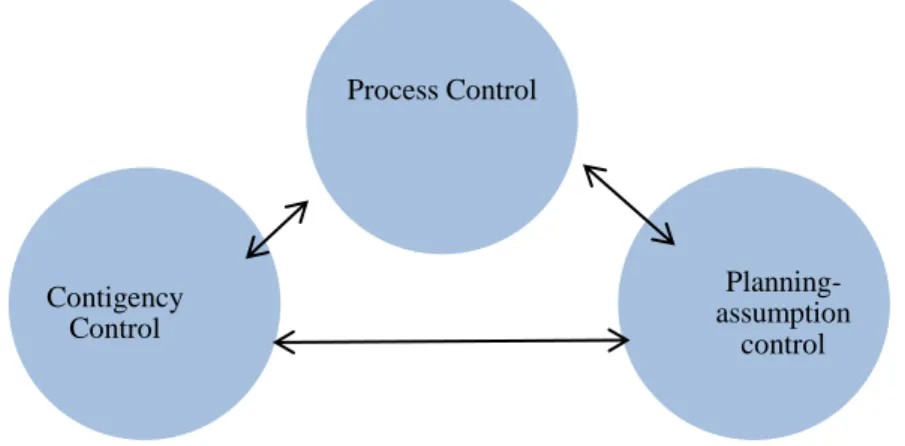
In order to measure the effectiveness of a sport sponsorship activity, Shank (1999) has outlined three types of strategic control in the strategic sports marketing process: planning- assumption control, process control and contingency control
.
Figure 2: Types of strategic control
Source: Adapted from Shank (1999)
Shank (1999) explains that for planning-assumption control often is necessary during the planning phase to make assumptions about future events or contingencies about which there are no complete information, since individual planners may perceive and interpret data differently. Process Control Planning-assumption control Contigency Control
28 Shank (1999) continues by stating that the process control measures and evaluates the effects of actions that already have been taken in an effort to execute the plan. The benefit of this control is that marketers may minimize the allocation of resources into a strategic plan, or leading implementation process to achievements of objectives and goals deemed important by the sports organization. Monitoring strategic thrusts, receiving milestones and financial analysis are measures commonly used during tile process control phase.
The third form of control, contingency control, is according to Shank (1999) based on the assumption that sports marketers operate in an uncertain and unpredictable surrounding and that the constantly changing internal and external environments may lead to the need to reevaluate of strategic choices. The goal of contingency control is thus: to constantly scan the relevant environments for internal and external contingencies that could affect the marketing planning process
Meenaghan (1991) states that once the sponsorship has been chosen and implemented, it is of high importance to evaluate the sponsorship program. Meenaghan (1991) further suggests that the evaluation can take place during three stages in a sponsoring program.
• At the outset: to determine the company‟s present position in terms of awareness and image among the target audience.
• Interim tracking: detect movement on the chosen dimension of awareness: image and market attitude.
• Final evaluation: when the sponsorship is completed the performance should be compared to stated objectives.
Meenaghan (1991) also mentions five main methods in which the results of a sponsorship‟s effectiveness can be measured:
1. Measuring the level of media coverage gained
Sponsors often use the level media coverage gained from sponsorship involvement as an indicator of performance, mostly because it is practical. The evaluation of this could be measured in: the duration of television coverage, monitored radio coverage, and the extent of
29 press coverage in terms of single column inches. What is important to recognize by using this method is that the level of media coverage only indicates the extent of the publicity gained from a particular sponsorship. Thus, it does not measure the effectiveness of the gained exposure (Meenaghan. 1991).
2. Measuring the communications effectiveness of sponsorship involvement
There is a tendency among sponsors to evaluate the results in communication since sponsorship is used to achieve basic communication objectives such as awareness and image. The level of awareness achieved, attitudes created, perceptions changed or associations suggested are measured against stated objectives. There are also some sponsors that attempt to measure the results from a sponsorship by focusing on the degree by which respondents associate the company or the product with the sponsored activity (Meenaghan. 1991).
3. Measuring the sales effectiveness of sponsorship
Sponsorship is faced with the same problem as in the case of advertising or all other marketing communications in general, that of keying sales results to given expenditures. This is due to a variety of reasons:
• The simultaneous usage of other marketing inputs
• The carry-over effect of previous marketing communications efforts
• Uncontrollable variables in the business environment such as competitor activity or changing economic conditions
However, many sponsors use sales results as evidence of a sponsorship investment, even if conclusive proof of this effect is hard to measure (Meenaghan. 1991).
4. Monitoring guest feedback
In the case where guest hospitality is stated as an objective in sponsorship, monitoring guest feedback can provide a good measurement of a sponsorship impact. Furthermore, guest feedback can also be considered a useful measure of effectiveness where the company‟s staff or local communities are being targeted. Other sources of feedback can be derived from participants, spectators and activity organizers, as well as the company‟s own sales force (Meenaghan. 1991).
30 5. Cost-benefit analysis
When companies have more philanthropic than commercial motives towards their sponsorship then the companies should go beyond the traditional marketing measurement when evaluating the effects. In this kind of situation, it might be necessary to view the collective opinions of the senior management as a basis for evaluation (Meenaghan.1991).
31
3. Conceptual Framework
A conceptual framework exp1ains the major things to be studied such as the key factors, constructs or variables, as well as a conceptual framework explains the presumed relationship between them. (Miles & Huberman. 1994)
The theories chosen for the study are based on the three integrated parts of sponsorship. This can be explained as the effectiveness evaluation is linked to the objectives since an evaluation without clearly stated objectives is difficult. In the same way, the objectives are connected with the selection process, given that when objectives are well defined a company may find it easier to select a particular sponsorship. Moreover, when evaluating the effectiveness of a sponsorship, measurement can be done on the chosen sponsorship selection criteria.
3.1. Sport marketing mix
Regarding the Sport marketing mix, we are basing our conceptualization stated by(De Pelsmacker, 2007, Kitchen & De Pelsmacker, 2004) where sponsorship is placed under promotion as its own entity alongside the traditional as well as other contemporary elements of the communications mix.
Sports marketing mix:
• Place • Product • Price
• Promotion (sales promotion, personal selling, public relations, direct marketing, e-communication, advertising, sponsorship)
32
3.2. Objectives of Sports Sponsorship
Regarding the sponsorship objectives, we will use objectives presented by Pope (1998) since they summarize the most common objectives of sports sponsorship. Pope and other authors brought up in our literature review section such as Meenaghan, Shank, Dolphin and Oikkonen. Corporate objectives Public awareness Public perception Corporate image Community involvement Financial relations Government relations Client entertainment Employee relations Competitions Marketing objectives Business relations
Reach target markets
Brand positioning Increase sales Sampling Media objectives Generate visibility Generate publicity Enhance ad campaign Avoid clutter Target specification
33 Personal objectives
Management interest
3.3. Selecting a Specific Sports Sponsorship
In order to explain how organizations select the specific sport sponsorship first we introduced the selection of sport sponsorship opportunities, where Shank (1999) state that when specific firms want to enter in sport sponsorship activities, first they must decide whether to sponsor a sport, league, team an athlete or an event.
After the platform is selected Shank (1999) presents a few questions for selecting a sponsorship:
• Does the sponsorship offer the correct positioning? • Does the sponsorship provide a connection to the brand? • Is the sponsorship difficult for competitors to imitate? • Does the sponsorship reach the right audience?
• Does the sponsorship appeal to the target lifestyle, personality, and values?
• In what ways does the sponsorship merge into current corporate goals and strategies?
• Can the sponsorship be used for hospitality to embrace important potential and current customers?
• Can employees be involved in the sponsorship? • How will the sponsorship effectiveness be evaluated? • Is the sponsorship affordable?
• How easy will it be to plan the sponsorship annually?
34 In order to make this study more extensive, conceptualization on Meenaghan‟s (1983) 14 criteria was presented. This was found to be the most extensive list of considerations and they are shown in the list below.
The ability to fulfill objectives
Image association potential of the particular sponsorship
Sponsorship Choice and Company Product Compatibility - Product usage, product image, company image
Media Coverage Potential
- Matching the audience profile of an event with the company‟s target market
The Funding Requirement
- Enough funds to properly engage in a sponsorship
- Cost considerations taken in terms of physical resources, staff time and talent
Target Audience Coverage
The Opportunities for Guest Hospitality
Executive Preference
Geographical Coverage of the defined Audience
Staff Knowledge of the Proposed Sponsorship
Sponsorship Type
- A new or established event
- One time event activity or repeated commitment - The sea seasonality
Solus Position
- Sponsor exclusivity or co-sponsored event
The Possibility for Adverse Publicity
35
3.4. Measuring the Sports Sponsorship Effectiveness
In order to measure the effectiveness of a sport sponsorship activity, Shank (1999) has outlined three types of strategic control in the strategic sports marketing process: planning- assumption control, process control and contingency control.
Meenaghan (1991) present three steps crucial for the sponsor to consider in order evaluating the effects of a sports sponsorship program. Meenaghan (1991) present three steps crucial for the sponsor to consider in order evaluating the effects of a sport sponsorship program.
At the outset
- awareness levels and attitudes to brand among the target audience
Tracking process
- how the sponsorship activity is going, and if there are anything to adjust or change
Final evaluation
- If the objectives have been met, and how these have been evaluated and measured
Furthermore, Meenaghan (1991) presents five main methods in which the results of a sponsorship‟s effectiveness can be measured:
Measuring the level of media coverage gained
Measuring the communications effectiveness of sponsorship involvement
Measuring the sales effectiveness of sponsorship
Monitoring guest feedback
36
4. Methodology
The chosen research method for the present study is described and validated in this chapter. Consequently, a brief discussion on the choice of descriptive research method follows first. Then, the selection of research approaches is outlined, followed by an examination of the collection of data, precisely questionnaires. The description of the data analysis process is also included, and the chapter ends with a discussion on the reliability and validity of the research.
4.1. Research purpose
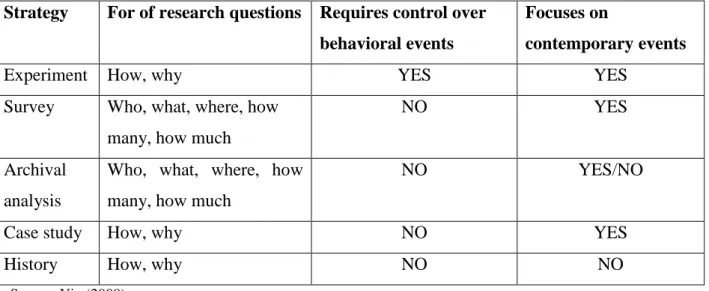
According to Saunders (2009), the purpose of developing an academic research may be exploratory, descriptive and explanatory.
Exploratory studies consist on investigations whose primary objective is to discover new insights on specific themes or measure phenomena in innovative ways. This research method is developed to be flexible and adjustable in order to allow researchers to change their research approach when new data or insights arise (Saunders, 2009).
Explanatory studies generate theory that may be used to clarify the empirical generalizations that emerged in the descriptive phase, giving place to the construction, testing and reformulation of a certain theory (Foster, 1998).
Descriptive studies are the construction of careful descriptions of models originated from exploratory research, being that these studies may have the purpose of developing empirical generalizations (Foster, 1998). These empirical generalizations may lead according to Foster (1998) to long-term theory development leading to the previously referred exploratory stage.
The main objective, as quoted by Miles and Huberman (1994) “making complicated things understandable by reducing them to their component parts”.
In this thesis, we can find parts of all three of these. We are exploring the sponsorship relation on both sides in order to gain a deeper understanding of our research area, describing when we discuss what the objectives are, how to the select the right sports entity to sponsor and how to measure the effect of the sponsorship and explaining when we are answering our research questions. However, although we have parts of all three, this thesis is mainly descriptive.
37
4.2. Research approaches
Quantitative research
In research methodology there are two main approaches, one is quantitative and the other is qualitative research. The chosen research method depends on the kind of information studied. The qualitative method consists of transforming what is observed, reported or registered into words. Most generally the qualitative method results in interviews, observations, pictures. The main purpose of this method is to get a better understanding of a problem area but also to gain a deeper insight (Saunders 2009).
The quantitative approach differs from the qualitative one because it is both structured and formal. Using quantitative methods means that information from each object is collected when several objects are studied, which makes is possible to draw conclusions. With a quantitative approach, the main purpose is to explain a phenomenon with numbers to get a result.
The quantitative technique which is often used in studies is a questionnaire where the analysis of data is often done with graphs, statistics, and plots. Quantitative data will be used in this research since this questionnaire will hand out the answers that will generate numbers that will be analyzed.
As mentioned, for this thesis, the author has chosen a quantitative approach. Reason for this choice is the explanation of the elements that influence brand recall, corporate image, and intention to buy sponsor products.
It needs to be mentioned also the statement of Johns and Lee Ross (1998) who state that a quantitative data should never be accepted as the truth because the results simply depend on too many variables. The result can give us an overview, but the result may vary depending on which organization conducted the research, which sponsors were active, what is the interpretation of the conclusions and the way the questions were posed.