MESTRADO INTEGRADO MEDICINA DENTÁRIA
Are Tobacco Heating Systems less harmful to
periodontal tissues when compared to
conventional smoking?
TERESA MANUELA NUNES AIRES
MI
2019
Are Tobacco Heating Systems less harmful to
periodontal tissues when compared to
conventional smoking?
MONOGRAFIA DE INVESTIGAÇÃO
MESTRADO INTEGRADO EM MEDICINA DENTÁRIA DA UNIVERSIDADE DO PORTO
AUTORA: Teresa Manuela Nunes Aires
Aluna do 5º ano do Mestrado Integrado em Medicina Dentária da FMDUP
ORIENTADORA: Doutora Luzia da Conceição Martins Mendes Gonçalves
Professora Auxiliar Convidada da FMDUP
COORIENTADORA: Doutora Marta dos Santos Resende
Professora Auxiliar Convidada da FMDUP
I
A toda a minha família,
Por serem o exemplo de resiliência e união.
Ao Rui, Marisa, Anita, Nana, Rita, Joana, Kebab, Guimas, Patrícia, Filipa, Verdura, Inês, Brito, Nuno, Galhardo, Kong, Gazela,
Pela verdadeira amizade, companheirismo e lealdade destes anos.
À Professora Doutora Luzia e à Professora Doutora Marta,
Pelo equilíbrio entre a exigência e a tolerância, potenciando o meu esforço e empenho.
II
RESUMO
Introdução: Nos últimos anos a indústria do tabaco tem procurado desenvolver
alternativas menos prejudiciais à saúde que os cigarros convencionais.
Objetivo: Avaliar a evidência científica atual sobre o impacto dos sistemas de tabaco
aquecido no periodonto.
Materiais e métodos: Foram pesquisadas as bases de dados PubMed (Medline), ISI
web of knowledge (Thompson Reuters) e Scopus (Elsevier) até março de 2019. Foram seleccionados os estudos que abordavam o impacto dos produtos de tabaco aquecido na cavidade oral ou nos tecidos orais.
Resultados: Foram lidos integralmente seis, dos 25 estudos encontrados. O objectivo
de três desses seis estudos não estava relacionado com o objectivo desta revisão sistemática e foram, por isso, excluídos. Os três estudos restantes, selecionados para análise, foram realizados in vitro utilizando culturas de epitélio oral/gengival humano. As culturas bucais e gengivais expostas aos aerossóis dos sistemas de tabaco aquecido THS2.2 e CHTP1.2 exibiram uma menor citotoxicidade, menores alterações morfológicas, menores efeitos no processo inflamatório e menor nível de stress oxidativo, quando comparadas com as culturas expostas ao fumo dos cigarros convencionais. Estes resultados apoiam a ideia de os produtos de tabaco aquecido serem mais inofensivos. Contudo, estes estudos foram financiados pela Philip Morris International, o que aumenta o risco de viés associado aos resultados.
Conclusão: Os aerossóis dos sistemas THS2.2 e CHTP1.2 tiveram um impacto menor
nas culturas epiteliais após uma exposição aguda. No entanto, para se comprovar um menor impacto ao nível dos tecidos periodontais, são necessários mais estudos clínicos independentes.
PALAVRAS-CHAVE
: Produtos de tabaco com risco modificado, tabaco aquecido, tabaco, fumar, periodonto, tecidos periodontaisIII
ABSTRACT
Background: Products with the potential to present less risk compared with
conventional cigarettes have been developed.
Aim: The aim of this systematic review is to evaluate the scientific literature to
ascertain the impact of Heat-not-Burn systems on the periodontium.
Methods: The databases PubMed (Medline), ISI web of knowledge (Thompson
Reuters) and Scopus (Elsevier) were searched up to March, 2019. Studies that reported impact of heated tobacco products on oral cavity or oral tissues were selected.
Results: The screaning of 25 title/abstracts elected 6 for full text reading. Three papers
had a study purpose not related to the aim of this systematic review and were excluded. The three included studies were in vitro studies performed on human organotypic oral/gingival epithelial cultures. Buccal and gingival culture exposed to THS2.2 and CHTP1.2 aerosols exhibited less cytotoxicity, minor morphological alterations, reduced effects on inflammation-related process and smaller oxidative stress, when compared with cigarret smoke. Thus, supporting the concept of less harmful tobacco products. However, the studies were self-funded by Philip Morris International, increasing the risk of bias.
Conclusion: The THS2.2 and CHTP1.2 aerosols presented reduced acute exposure
effects on oral/gingival epithelial cultures. However, evidence of less damage for periodontal tissues is pending independent clinical studies. Further studies are needed.
KEYWORDS
: Modified risk tobacco product, heated tobacco products, tobacco, smoking, periodontium, periodontal tissuesIV
CLINICAL RELEVANCE
Scientific rationale for study: Tobacco industry claims that heated tobacco products
are less harmful to global health. The aim of this systematic review is to evaluate the scientific literature to ascertain the impact of tobacco heated systems on the
periodontium. Principal findings: Results from three in vitro studies revealed that the
exposure to the aerosols of the tobacco heated systems had minor biological and metabolic impact on oral/gingival human epithelium cultures. However, these studies were all funded by the tobacco industry increasing the risk of bias. Practical
implications: Due to the in vitro study design and the high risk of bias a clear benefit
statement is pending independent clinical studies. Meanwhile, the heat-not-burn technology is discouraged.
V
ABBREVIATIONS
3R4F Reference cigarettes from University of Kentucky, Lexington, KY, USA (Kentucky Tobacco Research & Development Center)
AK Adenylate kinase
CHTP Carbon- heated tobacco product CSF2 Colony stimulating factor 2 CS Cigarette smoke
CYP1A1 Cytochrome P450, family 1, subfamily A, polypeptide 1
CYPA1B1 Cytochrome P450 1B1
ENDS Electronic nicotine delivery systems
HTPs Heated tobacco products
Ig Immunoglobulin
IL Interleukin
MMP Metalloproteinases
MRTP Modified risk tobacco product
OHAT National Toxicology Program - Office of Health Assessment and
Translation
PBS Phosphate buffered saline
THS Tobacco heatedsystem
VI
TABLES
Table 1-OHAT risk-of-bias-tool for in vitro studies ... 12
Table 2–Quality analysis using Science in Risk Assessment and Police (SciRAP) web source... 13
SUPPLEMENTAL DATA Table 3 - Reporting quality for study #1 ... 2
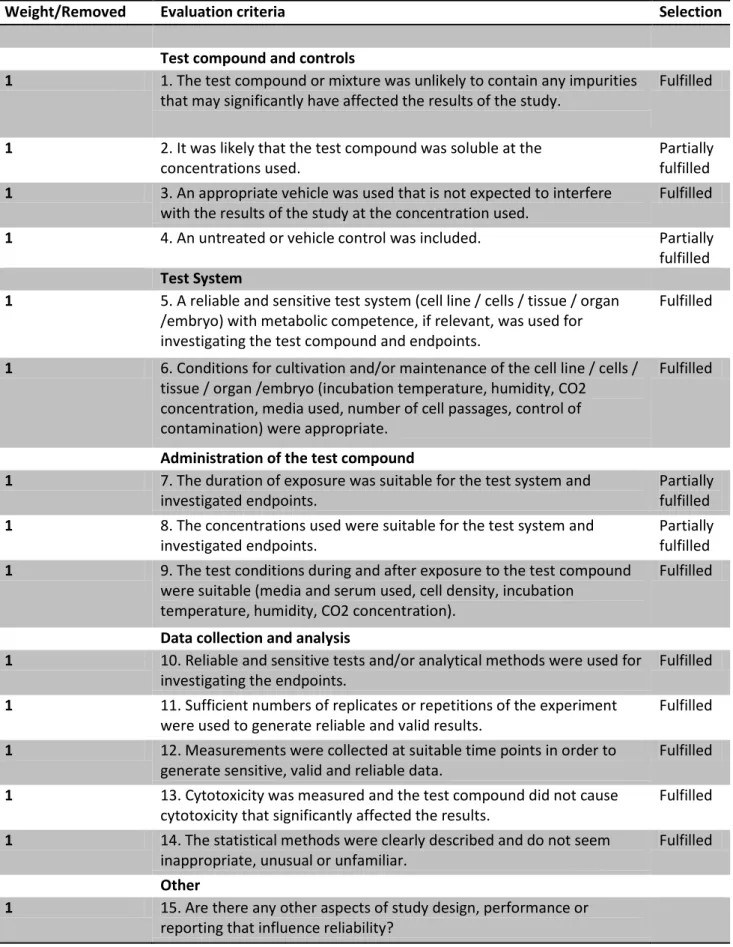
Table 4 - Methodological quality for study #1 ... 3
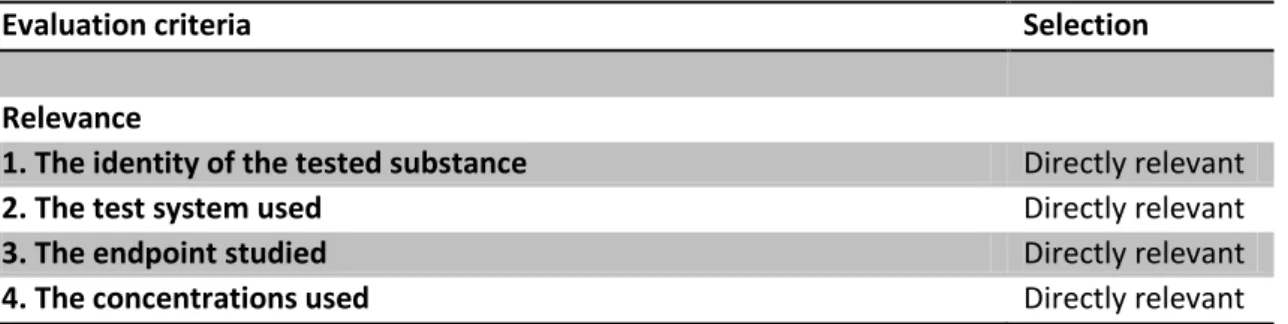
Table 5 - Evaluation of relevance for study #1 ... 4
Table 6 - Reporting quality for study #2 ... 6
Table 7 - Methodological quality for study #2 ... 7
Table 8 - Evaluation of relevance for study #2 ... 7
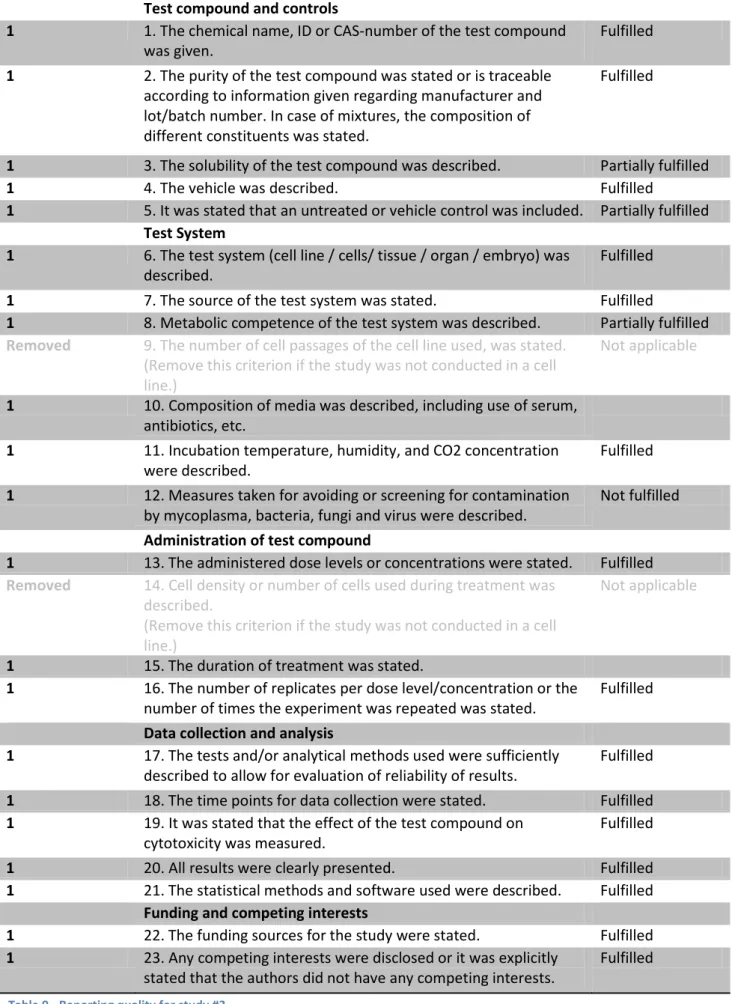
Table 9 - Reporting quality for study #3 ... 8
Table 10 - Methodological quality for study #3 ... 9
Table 11 - Evaluation of relevance for study #3 ... 10
FIGURES
Figure 1 – Flowchart of literature search and selection ... 6VII
Index
RESUMO ... II PALAVRAS-CHAVE ... II ABSTRACT ... III KEYWORDS ... III CLINICAL RELEVANCE ... IV ABBREVIATIONS ... V TABLES ... VI FIGURES ... VI Introduction ... 1Materials and Methods ... 4
Eligibly Criteria ... 4
Search Strategy ... 4
Screening and selection ... 4
Data extraction and analysis ... 5
Quality analysis and assessment of risk of bias ... 5
Results ... 7
Search and selection results ... 7
General trial characteristics and heterogeneity ... 7
Quality analysis and risk of bias ... 8
Outcome measurements ... 8
Discussion ... 14
Main results ... 14
Limitations ... 15
Clinical relevance ... 16
Conclusion and future perspectives ... 18
References ... 19 SUPPLEMENTAL DATA………..
1
Introduction
In 2015, over 1.1 billion people smoked tobacco. Although it is declining worldwide, the prevalence of tobacco smoking appears to be increasing in Mediterranean and African regions. Tobacco kills more than seven million people each year. More than six million of those deaths are the result of direct tobacco use while around 890 000 are
the result of non-smokers being exposed to second-hand smoke.(1)
Tobacco smoke contains over 3800 chemicals, including carbon monoxide, hydrogen cyanide, and reactive oxidizing radicals, and sixty of these chemicals are suspected to be carcinogens.(2) Smoking is a common risk factor in a number of chronic diseases, including cancer, lung and cardiovascular diseases, and it’s also related with low birth
weight.(3) The impact of long-term use of tobacco on the periodontal and dental status
has been demonstrated and the direct causal relationship between smoking and the
prevalence and the severity of periodontal disease has been firmly established.(2)
Clinical studies have demonstrated that smokers have more severe periodontal disease, with increased bone loss (almost four times greater), greater periodontal attachment loss (2.5 to 3.5 times greater risk), severe furcation involvement, more
gingival recession and periodontal pocket formation.(4-8) As a consequence, greater
tooth loss is expected when compared to non-smokers. The effect of smoke on alveolar bone is dose-dependent. That means that bone loss is accelerated by a higher
amount and longer duration of tobacco consumption.(9) Smokers also have a higher
prevalence of necrotizing ulcerative gingivitis.(10) Additionally, smokers have a worse response to surgical and/or surgical periodontal therapy when compared to
non-smokers.(4) Smoking also has a strong negative impact on regenerative therapy,
including osseous grafting and guided tissue regeneration, or a combination of both. Gingival grafting for root coverage are also less successful in smokers.(7) Currently, it seems that smokers still have a poorer periodontal status, even if they have a good oral hygiene and plaque control, when compared to non-smokers with the same habits.(6)
2
Several factors contribute to the deleterious periodontal effects of smoking, including alterations in both microbial and host response factors.(3, 5, 6) Smoking seems to increase the prevalence of periopathogens and hamper their elimination. A study by Hanioka et al. showed that tobacco smoke lowers the haemoglobin saturation in healthy gingiva. Therefore, the lower oxygenconcentration on the pockets may favour the growth of anaerobic bacteria such as Porphyromonas gingivalis, Aggregatiobacter
actinomycetemcomitans and Prevotella intermédia which are associated to
periodontal disease.(6) Tobacco also modifies fibroblasts function and attachment,
produces vascular alterations, negative local effects on cytokines, impairs growth factor production and neutrophil function, decreases the production of
immunoglobulin G (IgG) and the proliferation of lymphocytes.(2) Tobacco has a
vasoconstrictive effect which is strongly dose-dependent, thus smokers usually present a marked lower bleeding on probing and less gingival redness when compared to non-smokers. A study based on immunocytochemical staining of blood vessels suggests that the inflammatory response in smokers may not have the enough increase of
vascularity which may lead to an impaired healing.(11)
There is clinical and histological evidence demonstrating that the negative effect of smoking on periodontal tissues may be reverted after quitting smoking.(4) Therefore, smoking cessation is the main option to revert the harmful effects of tobacco on the
periodontium and general health. The dental practitioner has a unique opportunity and
professional obligation to be a positive influence to help patients avoid tobacco initiation and encourage patients in tobacco cessation, by explaining to them the tobacco-induced damage on periodontal supporting tissues.
There has been a sustained effort in recent years to develop products with the potential to present less risk compared with conventional smoking. The use of these tobacco substitutes remains an area of controversy and public health debate but these products are gaining popularity in some countries.(12) Electronic nicotine delivery systems (ENDS), developed since 2000, for example, are tobacco-free battery-powered devices with a reservoir for a solution containing nicotine. When the user vapes the
device, an aerosol is generated, inhaled and subsequently exhaled.(13) These ENDS had
3
xerostomia, hairy tongue, nicotine stomatitis and angular cheilitis.(14, 15) A more recent
alternative for adult smokers unable to quit are the Modified risk tobacco products (MRTP).(16) The main ones are the heated tobacco products (HTPs) like iQOS (Philip Morris International, Ploom TECH (Japan Tobacco International), Glo (British American Tobacco), and PAX (PAX Labs) which are marketed since 2017. HTPs mimic the behaviour of smoking conventional cigarettes and produces aerosols containing nicotine and other chemicals, which are inhaled through the mouth. HTPs are addictive once they have nicotine and other non-tobacco additives and are often flavoured. HTPs heat tobacco up to 350°C (lower than 600°C as in conventional cigarettes) to produce the nicotine-infused vapor using battery-powered heating-systems. The device requires charging and the user uses the mouthpiece at intervals to inhale volumes of the aerosol through the mouth. Although tobacco industry claimed that there are significant reductions in the formation and exposure to harmful and potentially harmful constituents, there is currently no evidence to demonstrate that HTPs are less harmful than conventional tobacco products for general health. Also, until now there is no evidence about the effects of second-hand emissions produced by HTPs. Therefore, the World Health Organization doesn’t recommend their use as an
alternative to conventional tobacco.(1)
The aim of this systematic review is to evaluate the scientific literature to ascertain the impact of HTPs on the periodontium and realize if this technology reduces the negative impact of tobacco on periodontal tissues of adult smokers unable to quit.
4
Materials and Methods
This systematic review intended to answer the question: Are tobacco heating systems less harmful to periodontal tissues when compared to conventional smoking? It was
conducted in accordance with the guide lines of Cochrane Collaboration(17) and
Transparent Reporting of Systematic Reviews and Meta-Analyses (PRISMA statement).(18)
Eligibly Criteria
All studies that reported the impact of HTPs on oral cavity or oral tissues were considered eligible. No restrictions were applied with regard to the article type (except for reviews and letters), or year of publication. Only were included articles written in English, Spanish or Portuguese.
Search Strategy
To do the research for this systematic review the PubMed (Medline), ISI web of knowledge (Thompson Reuters) and Scopus (Elsevier) databases were searched using a structured strategy, up to March, 2019.
The keywords used were “Modified risk tobacco product” (MRTP), “Heated tobacco products”, “MRTP”, “tobacco”, “gum”, “oral”, “perio*”. These keywords were used individually and combined with Boolean operators and the asterisk symbol was used as truncation: [modified risk tobacco product] AND [perio*], [heated tobacco products] AND [perio*], [MRTP] AND [oral], [heated tobacco products] AND [gum].
Screening and selection
Retrieved titles and abstracts were screened for eligible papers. In the process, the titles and abstracts not related with this review were automatically excluded. The
5
remaining were selected for full text reading and analysed in relation to study purpose and reported data to choose the appropriate ones to achieve the aim of this systematic review. Using the reference list of the selected papers, an additional hand search was made in an attempt to find other useful and eligibly papers.
Data extraction and analysis
From the selected papers, data about study design, aims of the studies, type of cells, experimental and control groups, type and characteristics of intervention, duration, main results, statistical analysis and funding were collected.
Quality analysis and assessment of risk of bias
Quality analysis and risk of bias tools are scarce and not well established. As so, we combined two tools that we find more suitable for our purpose. The reporting and methodological quality was assessed by the Science in Risk Assessment and Police (SciRAP) web-based resource, developed by the Department of Environmental Science and Analytical Chemistry, Stockholm University in conjunction with the Institute of
Environmental Medicine, Karolinska Instituet.(19) And, the risk of bias was assessed by
the National Toxicology Program - Office of Health Assessment and Translation (OHAT)
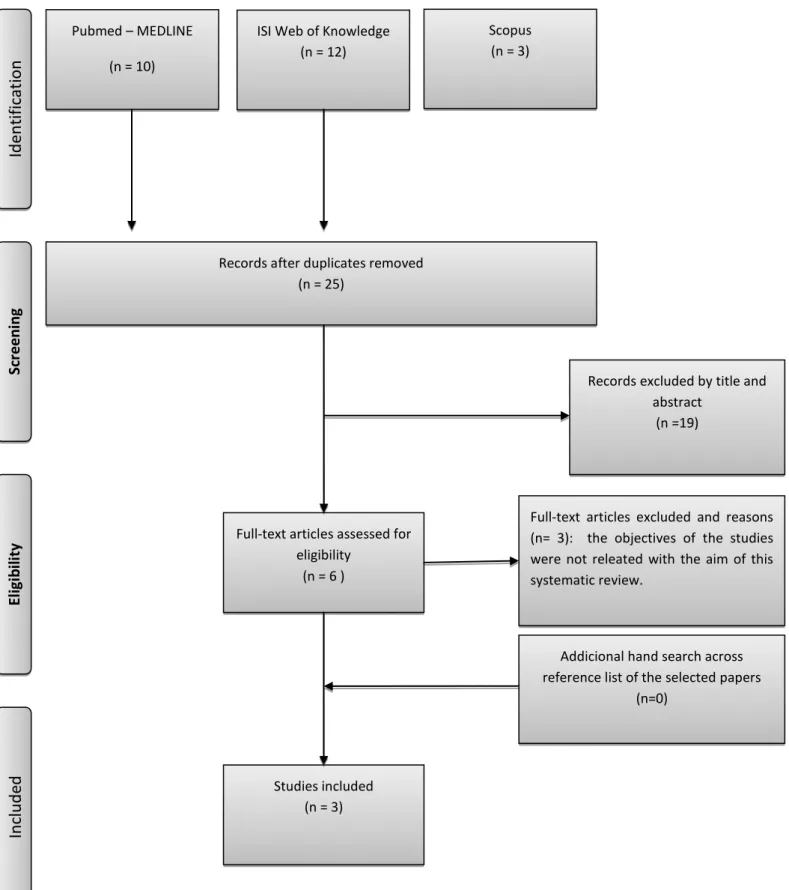
6 Pubmed – MEDLINE (n = 10) Sc re en in g In clu d ed El ig ib ili ty Id en tif ic at ion
ISI Web of Knowledge (n = 12)
Records after duplicates removed (n = 25)
Records excluded by title and abstract
(n =19)
Full-text articles assessed for eligibility
(n = 6 )
Full-text articles excluded and reasons (n= 3): the objectives of the studies were not releated with the aim of this systematic review.
Studies included (n = 3)
Scopus (n = 3)
Addicional hand search across reference list of the selected papers
(n=0)
7
Results
Search and selection results
The combined search strategy found 25 unique papers, but only six of these papers respected the eligibility criteria and were selected for a full text reading. The others were excluded based on the title and abstract. The full text reading revealed that three of the six eligible papers had an objective not related to the aim of this systematic review, which led to their exclusion, as well. The additional hand search didn’t find any other relevant papers. Therefore, only three papers were included in the present review (for details see Fig. 1).
General trial characteristics and heterogeneity
The three included studies are in vitro studies performed by the same group of researchers. The purpose was the same in all of them: to realize the effects and biological impact of two different potential modified risk tobacco products on human organotypic oral/gingival epithelial cultures.
The organotypic culture models used during the test were all purchased from MatTek and maintened under the same conditions. In the study #1(21) a model of a human oral epithelial culture, EpiOral™ was used. In study #2(22), the model used was a human gingival epithelial organotypic model, Epi-Gingival™. And, in the study #3(23), both models were used.
For all three studies the reference item was cigarette smoke (CS) from 3R4F reference
cigarettes from University of Kentucky, Lexington, KY, USA (Kentucky Tobacco Research & Development Center). The test item was the aerosol generated by sticks from the Tobacco Heating System (THS) 2.2 in study #1 and #2. In study #3 the aerosol was generated by a carbon-heated tobacco product 1.2 (CHTP1.2). Both test items are from Philip Morris international R&D, Neuchatel, Switzerland.
8 The outcomes assessed were: adenylate kinase (AK) release, histopathological alterations, cytochrom P450 activity, metabolomics generation and analysis, measurement of secreted proinflammatory mediators, transcriptomics and computational evaluation of mRNA/miRNA generation and expression. The samples sizes were 10 test items and 10 control items.
For study #1, the researchers did an acute cell exposure to THS2.2 aerosol or 3R4F CS, at comparable nicotine concentrations, during 28min. On study #2, the exposures were made under the same conditions but during three days, 28min exposure per day. The study #3 was more complex, the EpiOral™ cultures had an acute exposure during 28 min and the Epi-Gingival™ cultures had 3-days repeated exposures of 28 mins (one per day). All the experiments were repeated at least three times.
Quality analysis and risk of bias
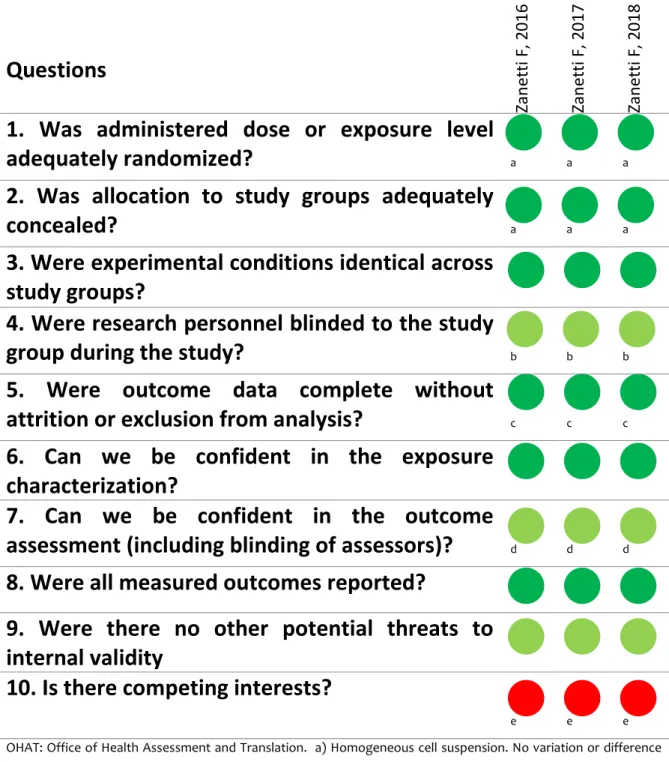
Once all the studies were performed by the same study group under very similar conditions, the risk of bias and the quality analysis assessment are identical, as shown in tables 1 (risk of bias) and 2 (quality analysis). Overall, all three studies were well conducted and reported. Additionally, the test system used seems a relevant model for measuring modes of action of products related to human health outcomes and endpoints of interest were addressed (for details see table 2 and supplemental data). However, all three studies are industry-funded, increasing the risk of bias.
Outcome measurements
Histopathological impact
Epithelium typically responds to irritation challenges through morphological alterations. Both #1 and #2 studies showed less pronounced histological modifications in cell cultures exposed to THS2.2, when compared to CS exposure. Unlike CS exposure
9
where tissue models appeared severe damaged, THS2.2 exposure only showed sporadic atrophy and loss of clear distinction between stratum granulosum and corneum, proportional to the THS2.2 aerosol concentration. Similar observations were made regarding hyperkeratinisation; CS exposure leaded to an increased keratinization and desquamation on the cultures and THS2.2 shown no hyperkeratinisation, despite the presence of keratohyalin granules. Interestingly, study #3 shown that morphology of CHTP1.2 aerosol-exposed samples was similar to that of air-exposed controls rather than to the CS exposed samples.
Immunohistochemical staining, in all studies, also shown that E-cadherin abundance was highly reduced by CS exposure in a dose-dependent manner. On the other hand, THS2.2 and CHTP1.2 aerosols were found to slightly reduce E-cadherin expression only at the high concentrations. The expression of genes involved in cellular adhesion was evaluated, in all studies, and, corroborate these findings. Exposed samples globally showed down regulation facing CS exposure with few genes being upregulated; while the THS2.2 and CHTP1.2 exposed samples followed the same pattern, but at a reduced extent.
Biological impact
Measurements of cytotoxicity using the AK assay indicated that 4h after the repeated exposures to CS and THS2.2 cell death was very limited, in both studies #1 and #2, allowing the investigation of toxicity-specific mechanisms associated with exposure. So, comparison for impact on gene regulation was established 4h after exposure. On the other hand, study #3 shown that exposure to any concentrations of CHTP1.2 aerosol did not induce significant cytotoxicity in either culture model.
Toxicity-specific mechanisms associated with exposure were based on measurements of transcriptional changes on networks covering the main biological processes, in order to capture the response of exposed oral/gingival cultures. Overall, all studies corroborate that the response to THS2.2 and CHTP1.2 was always much lower than to CS, at comparable nicotine concentrations.
10
Impact on proinflammatory mediators
Similarly, all studies support that CS exposure can cause an upregulation in the gene expression of many proinflammatory mediators, namely IL-8, MMPs 1, 2, 3, 10, CSF2, TNFA and interleukin 1 alpha (IL-1α) which are related with the development of periodontal disease. The same regulation patterns were observed after THS2.2 and CHTP1.2 exposure, however in a reduced extent. Also, concentrations of proinflammatory mediators were measured in the basolateral medium of cell cultures, at different times after exposure in studies #1 and #3, and at 24h postexposure study #2. Despite some mixed responses in all studies, the global trend shows that exposure to THS2.2 and CHTP1.2 aerosols led to milder magnitude changes in the secretion of proinflammatory mediators, than did exposure to CS.
Impact on oxidative stress
The oxidative stress response was also evaluated, mainly in study #2. Both CS and THS2.2 up-regulated the oxidative stress response genes with the THS2.2 showing 20-48% less up-regulation of strong responding genes, for low concentrations. When analysing the metabolic profiling, CS exposure significantly affected several metabolites, namely glutathione, that directly reflect the oxidative challenge, contrasting with the limited effects on levels of these metabolites observed after THS2.2 exposure. Study #3 also showed that CS had a higher impact on gene expression related to oxidative stress than the CHTP1.2 aerosol, and a higher impact on buccal samples compared with gingival samples.
Impact on xenobiotic metabolism
The combined activity of CYP1A1 (Cytochrome P450, family 1, subfamily A, polypeptide 1) and CYPA1B1 (Cytochrome P450 1B1) enzymes was measured in studies #1 and #2. Cytochrome CYP450 enzymes metabolize several toxicants present in CS and can be induced in the buccal epithelium. Interestingly, and despite the strong up-regulation of the gene expression at all concentrations for both CS and THS2.2 aerosol, CYP activity
11
(24h postexposure) was significantly higher in cultures exposed to THS2.2 than exposed to CS, in study #1 and higher but not statistically significant in study #2. Study #3 also showed a strong upregulation of CYP1A1/CYPA1B1 genes following CHTP1.2 exposure, and similar to CS exposure.
12
Questions
Zan etti F, 2 01 6 Zan etti F, 2 01 7 Zan etti F, 2 01 81. Was administered dose or exposure level
adequately randomized?
a a a2. Was allocation to study groups adequately
concealed?
a a a3. Were experimental conditions identical across
study groups?
4. Were research personnel blinded to the study
group during the study?
b b b5. Were outcome data complete without
attrition or exclusion from analysis?
c c c6. Can we be confident in the exposure
characterization?
7. Can we be confident in the outcome
assessment (including blinding of assessors)?
d d d8. Were all measured outcomes reported?
9. Were there no other potential threats to
internal validity
10. Is there competing interests?
e e e
OHAT: Office of Health Assessment and Translation. a) Homogeneous cell suspension. No variation or difference between groups. No need for randomization; b) Robotic systems eliminate need. Some non-blinding human handling, e.g., histological evaluation; c) No evidence of well or plate loss without explanation; d) Automated systems eliminate the need. Some non-blinding human handling, e.g., histological evaluation; e) Self-funded by manufactures.
Definitely Low Probably Low Probably High Definitely High
13
Study
Scirap Score
#1
#2
#3
Relevance
100%
100%
100%
Methodological
Quality
75%
89,29%
85,71%
Reporting
Quality
80,95%
88,10%
88,10%
14
Discussion
The aim of this systematic review was to evaluate the scientific literature about the impact of the tobacco heated systems on periodontal tissues and realize if these modified risk tobacco products are less harmful and, consequently, a better alternative for smokers unable to quit.
Main results
A comprehensive literature search was made in the most relevant scientific databases but only three studies met the eligible criteria. They are in vitro studies that assessed the acute exposure effects of two aerosols from two potential MRTP, (THS2.2 and CHTP1.2), compared with CS from the 3R4F reference cigarette, on oral organotypic cultures derived from the buccal and gingival epithelium of a human donor.
Overall, results from all three studies showed that, the aerosols of the tobacco heated systems had reduced acute exposure effects on both oral organotypic culture models, when compared to the cigarette smoke, at the same nicotine concentrations. Buccal and gingival culture exposed to THS2.2 and CHTP1.2 aerosols exhibited less cytotoxicity and minor morphological alterations, thus, supporting the concept of less harmful tobacco products. Similar observations were made regarding THS2.2 exposure effects on human lung epithelial cells.(24) Also a study performed using small airway epithelium models showed lower cytotoxicity and changes in the secretion of pro-inflammatory mediators after THS2.2 exposure than CS. Furthermore, the effects were mostly transient and diminished rapidly after the exposure.(25) These results support a previous study on buccal, bronchial and nasal human epithelia, which
concluded that THS2.2 had less biological impact and more transient effects.(26)
They also showed reduced effects on inflammation-related process and smaller oxidative stress, which are pivotal processes on the development of periodontal
disease.(27, 28) The up-regulation and secretion of MMPs and IL-1A, for example,
15
resorption, respectively.(29, 30) Cells exposed to THS2.2 were able to maintain the levels
of glutathione (the master antioxidant of the oxidative stress process), while CS exposure caused a reduction. This may have a strong influence on periodontitis once glutathione is the main redox regulator that controls the inflammatory process.(31) Thus, the lower impact on these mechanisms support the hyposthesis that MRTPs are less harmful for periodontal tissues.
However, these studies were self-funded by Philip Morris International. In a recent systematic review, Lundh A. et al., observed that sponsorship of drug and device studies by the manufacturing company leads to more favourable results than sponsorship by other sources. Those observations suggest the existence of an industry
bias that cannot be explained by standard ‘risk of bias’ assessments.(32) Accordingly, we
introduced the competing interests’ topic in the OHAT risk-of-bias tool.
In fact, conflicting results about the aerosol composition of the tobacco heating
products has heated the debate between independent and sponsored study groups.
(33-35)
Limitations
Only in vitro studies were analysed, thus, the less impact that MRTPs seemed to have on the periodontium, was obtained under very specific and controlled conditions which doesn’t reproduce the reality, once the difficulty to establish the cultures with the
same metabolic activity and genes regulation that used to had in vivo.(36) Also, due to
their complex organization and architecture, tissues have compensatory mechanisms to stress situations that may not occur in vitro.(37) In 2013, Tice et al., resumed the limitations of in vitro studies in five main points: difficulties to include xenobiotic metabolism into in vitro assays, problems to extrapolate from in vivo doses to in vitro concentrations, difficulties to capture interactions between different cell types, difficulties in extrapolating from perturbed pathways or biomarkers in vitro to adverse effects in vivo and difficulties in simulating the consequences of long term exposures in
16
For the three studies, the epithelial cells were collected from a 46 years old healthy and non-smoker male. Therefore, the conditions were very similar between them, which doesn’t allow a full research about the effects of the tobacco heated systems compared to conventional tobacco in another kind of patients (smokers of conventional cigarettes, younger or older patients).
The organotypic cultures selected to the studies were formed only by keratinocytes, which limit the described effects to a single cell-type. Future studies including fibroblasts (very important cells in the development of periodontal disease), for example, are needed. A greater protein expression measurement could also be beneficial for future studies, since levels of mRNA and proteins expression are not directly proportional. Thus, mRNA analysis may indicate a metabolic response that doesn’t reflect the actual protein levels. (22, 23)
The first and second study used the same heat-not-burn tobacco system (THS2.2) while the third study used a different one (CHTP1.2). Additionally, on the third study, the gingival and buccal cultures had different exposure designs, concentrations applied and presence/absence of apical phosphate buffered saline (PBS). This creates an intra and inter-study variability that hampers comparisons within and between the results from the included studies.
The analysed studies only allow extrapolations about the tecidual damage and host immune-inflammatory response after acute exposures. These kinds of studies don’t evaluate long-term effects and impact of consecutive exposures over years, which is typical in adult smokers.
Clinical relevance
In the last few years, tobacco multi-nationals have invested millions to develop alternatives to conventional cigarettes. They claim less harmfulness and a reduction off the negative impact of tobacco in general health. Once these innovations are constantly appearing, many countries don’t have, yet, legal provisions to regulate the marketing, selling and consume of it. For example, in 2016, in the amendment to the
17
Tobacco Act, Singapore banned all emerging tobacco products.(39) Korean Ministry of
Food and Drug Safety conducted an investigation during 11 months on heat-not-burn cigarettes and the results proved the production of harmful substances related to
cancer and more tar compared to the combustible cigarettes.(40) In 2018, the Ministry
of Health of New Zealand move a charge against Philip Morris International for selling the sticks for the tobacco heated systems arguing that was illegal under the country laws. The tobacco corporation won the case using the argument that heated tobacco are safer than conventional cigarettes based on their own studies.(41) This helps us understanding how variable is the regulation of these products depending to the country, their updating on tobacco legislation and scientific evidence used. In Portugal, for example, 12 scientific and medical societies made a point about the use of tobacco heated products, based on the evidence available until now. The purpose was to emphasize that HTPs are being sold as “less harmful”, but there are no evidences of that. Tobacco doesn’t have a minimal level of consumption from which starts to damage health. Even the sporadic consumption lead to a greater risk of developing diseases. Even though marketing campaigns claim that HTPs are less toxic, it doesn’t mean that it is free of risks. Furthermore, HTPs still has addictive substances like nicotine and others, which may lead to a change in the way of tobacco consumption instead of reduce it. The opposition of the associations to these products are based on independent studies that demonstrate higher levels of toxic substances in HTPs than in
convention cigarettes or a small reduction of it.(33, 42, 43) Also the European Respiratory
Society doesn’t recommend HPTs once it harms the lungs and general health.(44) The European Commission underline that the rules for the marketing and commercialization are the same for all types of tobacco in the European Union,
therefore, HTPs cannot be sold and less harmful than others.(45) FDA’s Tobacco
Products Scientific Advisory Committee recently rejected Philip Morris’ claims because of their marketing and advertising which doesn’t educate consumers about the risks of IQOS.(46)
18
Conclusion and future perspectives
Our systematic revivew showed that there is insufficient evidence to support a less harmfully profile of the tobacco heating systems on the periodontium. The current literature on the topic is scarce and has a non-negligible risk of bias. Futher research should rely on clinical studies conducted by independent study groups to better understand the biological impact of the aerosols of heated tobacco systems on periodontal tissues and its relationship with periodontal diseases.
19
References
1. Organization WH. Heated tobacco products (HTPs) - information sheet May, 2018. Available from: https://www.who.int/tobacco/publications/prod_regulation/heated-tobacco-products/en/.
2. Chahal G, Chhina K, Chhabra V, Chahal A. Smoking and its effect on periodontium – Revisited. Indian Journal of Dental Sciences. 2017;9(1):44-51.
3. Tevatia S, Sharma N, Chopra R, Dodwad V, Mukund V, Shah V. EFFECT OF SMOKING ON PERIODONTAL TISSUE HEALTH – A REVIEW2016. 2291-9 p.
4. Cesar Neto JB, Rosa EF, Pannuti CM, Romito GA. Smoking and periodontal tissues: a review. Brazilian oral research. 2012;26 Suppl 1:25-31.
5. Chaffee BW, Couch ET, Ryder MI. The tobacco-using periodontal patient: role of the dental practitioner in tobacco cessation and periodontal disease management. Periodontology 2000. 2016;71(1):52-64.
6. Zee KY. Smoking and periodontal disease. Australian dental journal. 2009;54 Suppl 1:S44-50.
7. Johnson GK, Slach NA. Impact of tobacco use on periodontal status. Eur J Dent Educ. 2001;65(4):313-21.
8. Bergstrom J, Eliasson S, Dock J. A 10-year prospective study of tobacco smoking and periodontal health. Journal of periodontology. 2000;71(8):1338-47.
9. Ashril NY, Al-Sulamani A. The effect of different types of smoking habits on periodontal attachment. Journal of the International Academy of Periodontology. 2003;5(2):41-6.
10. Johnson BD, Engel D. Acute necrotizing ulcerative gingivitis. A review of diagnosis, etiology and treatment. Journal of periodontology. 1986;57(3):141-50.
11. Rezavandi K, Palmer RM, Odell EW, Scott DA, Wilson RF. Expression of ICAM-1 and E-selectin in gingival tissues of smokers and non-smokers with periodontitis. Journal of oral pathology & medicine : official publication of the International Association of Oral Pathologists and the American Academy of Oral Pathology. 2002;31(1):59-64.
12. Foulds J, Ramstrom L, Burke M, Fagerstrom K. Effect of smokeless tobacco (snus) on smoking and public health in Sweden. Tobacco control. 2003;12(4):349-59.
13. Sultan AS, Jessri M, Farah CS. Electronic nicotine delivery systems: Oral health implications and oral cancer risk. Journal of oral pathology & medicine : official publication of the International Association of Oral Pathologists and the American Academy of Oral Pathology. 2018.
14. Farsalinos KE, Romagna G, Tsiapras D, Kyrzopoulos S, Voudris V. Characteristics, perceived side effects and benefits of electronic cigarette use: a worldwide survey of more than 19,000 consumers. Int J Environ Res Public Health. 2014;11(4):4356-73.
15. Bardellini E, Amadori F, Conti G, Majorana A. Oral mucosal lesions in electronic cigarettes consumers versus former smokers. Acta odontologica Scandinavica. 2018;76(3):226-8.
16. Jaccard G, Tafin Djoko D, Moennikes O, Jeannet C, Kondylis A, Belushkin M. Comparative assessment of HPHC yields in the Tobacco Heating System THS2.2 and commercial cigarettes. Regulatory toxicology and pharmacology : RTP. 2017;90:1-8.
17. Godlee F. The Cochrane collaboration. British Medical Journal Publishing Group; 1994. 18. E P. Transparent reporting of systematic reviews and meta-analyses. 2015.
19. Science in Risk Assessment and Police (SciRAP) web-based resource A, available from: http://www.scirap.org/.
20. https://ntp.niehs.nih.gov/ntp/ohat/pubs/riskofbiastool_508.pdf ORoBTJ.
21. Zanetti F, Sewer A, Mathis C, Iskandar AR, Kostadinova R, Schlage WK, et al. Systems Toxicology Assessment of the Biological Impact of a Candidate Modified Risk Tobacco Product
20 on Human Organotypic Oral Epithelial Cultures. Chemical research in toxicology. 2016;29(8):1252-69.
22. Zanetti F, Titz B, Sewer A, Lo Sasso G, Scotti E, Schlage WK, et al. Comparative systems toxicology analysis of cigarette smoke and aerosol from a candidate modified risk tobacco product in organotypic human gingival epithelial cultures: A 3-day repeated exposure study. Food and chemical toxicology : an international journal published for the British Industrial Biological Research Association. 2017;101:15-35.
23. Zanetti F, Sewer A, Scotti E, Titz B, Schlage WK, Leroy P, et al. Assessment of the impact of aerosol from a potential modified risk tobacco product compared with cigarette smoke on human organotypic oral epithelial cultures under different exposure regimens. Food and chemical toxicology : an international journal published for the British Industrial Biological Research Association. 2018;115:148-69.
24. Gonzalez-Suarez I, Martin F, Marescotti D, Guedj E, Acali S, Johne S, et al. In Vitro Systems Toxicology Assessment of a Candidate Modified Risk Tobacco Product Shows Reduced Toxicity Compared to That of a Conventional Cigarette. Chemical research in toxicology. 2016;29(1):3-18.
25. Iskandar AR, Martinez Y, Martin F, Schlage WK, Leroy P, Sewer A, et al. Comparative effects of a candidate modified-risk tobacco product Aerosol and cigarette smoke on human organotypic small airway cultures: a systems toxicology approach. Toxicology Research. 2017;6(6):930-46.
26. Iskandar AR, Titz B, Sewer A, Leroy P, Schneider T, Zanetti F, et al. Systems toxicology meta-analysis of in vitro assessment studies: biological impact of a candidate modified-risk tobacco product aerosol compared with cigarette smoke on human organotypic cultures of the aerodigestive tract. Toxicology Research. 2017;6(5):631-53.
27. Giannopoulou C, Cappuyns I, Mombelli A. Effect of smoking on gingival crevicular fluid cytokine profile during experimental gingivitis2003. 996-1002 p.
28. Guentsch A, Preshaw PM, Bremer-Streck S, Klinger G, Glockmann E, Sigusch BW. Lipid peroxidation and antioxidant activity in saliva of periodontitis patients: effect of smoking and periodontal treatment. Clinical oral investigations. 2008;12(4):345-52.
29. De Nardin E. The Role of Inflammatory and Immunological Mediators in Periodontitis and Cardiovascular Disease. Ann Periodontol. 2001;6(1):30-40.
30. Popat R, V Bhavsar N, R Popat P. Gingival crevicular fluid levels of Matrix Metalloproteinase-1 (MMP-1) and Tissue Inhibitor of Metalloproteinase-1 (TIMP-1) in periodontal health and disease2014. 59-64 p.
31. Bains VK, Bains R. The antioxidant master glutathione and periodontal health. Dental research journal. 2015;12(5):389-405.
32. Lundh A, Sismondo S, Lexchin J, Busuioc OA, Bero L. Industry sponsorship and research outcome. The Cochrane database of systematic reviews. 2012;12:Mr000033.
33. Auer R, Concha-Lozano N, Jacot-Sadowski I, Cornuz J, Berthet A. Heat-Not-Burn Tobacco Cigarettes: Smoke by Any Other Name. JAMA internal medicine. 2017;177(7):1050-2. 34. Katz MH. No Smoke—Just Cancer-Causing ChemicalsNo Smoke—Just Cancer-Causing ChemicalsLetters. JAMA internal medicine. 2017;177(7):1052-.
35. Caruso M, Polosa R. Perplexing Conclusions Concerning Heat-Not-Burn Tobacco CigarettesPerplexing Conclusions Concerning Heat-Not-Burn Tobacco CigarettesLetters. JAMA internal medicine. 2017;177(11):1699-.
36. Ghallab A. In vitro test systems and their limitations. EXCLI journal. 2013;12:1024-6. 37. Hoehme S, Brulport M, Bauer A, Bedawy E, Schormann W, Hermes M, et al. Prediction and validation of cell alignment along microvessels as order principle to restore tissue architecture in liver regeneration. Proceedings of the National Academy of Sciences of the United States of America. 2010;107(23):10371-6.
38. Tice RR, Austin CP, Kavlock RJ, Bucher JR. Improving the human hazard characterization of chemicals: a Tox21 update. Environmental health perspectives. 2013;121(7):756-65.
21 39.https://www.moh.gov.sg/content/moh_web/home/pressRoom/pressRoomItemRelease/20 16/singapore‐enhances‐tobacco‐control‐measures.html MoHSetcmJAa.
40. Kim T-I. Heat-not-burn cigarettes heat up controversy. Journal of periodontal & implant science. 2018;48(4):201-.
41. Rychert M. New Zealand court dismisses Ministry of Health case against ‘heat-not-burn’ tobacco products, highlighting the need to future-proof tobacco control laws. Addiction. 2018;113(10):1953-4.
42. Urban HJ, Tricker AR, Leyden DE, Forte N, Zenzen V, Feuersenger A, et al. Reduced exposure evaluation of an Electrically Heated Cigarette Smoking System. Part 8: Nicotine bridging--estimating smoke constituent exposure by their relationships to both nicotine levels in mainstream cigarette smoke and in smokers. Regulatory toxicology and pharmacology : RTP. 2012;64(2 Suppl):S85-97.
43. Stabbert R, Voncken P, Rustemeier K, Haussmann HJ, Roemer E, Schaffernicht H, et al. Toxicological evaluation of an electrically heated cigarette. Part 2: Chemical composition of mainstream smoke. Journal of applied toxicology : JAT. 2003;23(5):329-39.
44. Tobacco Eppohtp-AspbtE, Control Committee dehweot-sne-p-o-h-t-p.
45. Answer given by Mr. Andriukaitis on behalf of the Commission Pq, http://www.europarl.europa.eu/sides/getAllAnswers.do?reference=P-2016- de, 2017 lEdJ. 46. from:https://www.healio.com/family-medicine/addiction/news/online/%7B5eb266a0- b348-4c94-8d19-b06329c6a329%7D/fda-committee-rejects-most-label-claims-for-reduced-risk-cigarette Fcrmlcfr-rcA.
1
SUPPLEMENTAL
2
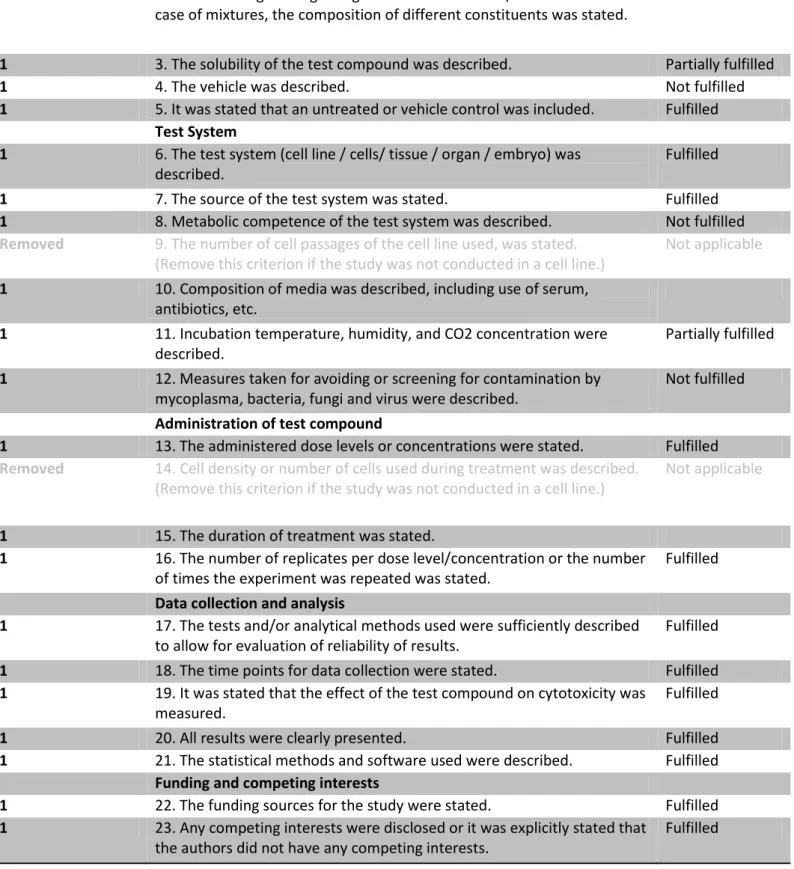
Weight/Removed Evaluation criteria Selection
Test compound and controls
1 1. The chemical name, ID or CAS-number of the test compound was given.
Fulfilled 1 2. The purity of the test compound was stated or is traceable according
to information given regarding manufacturer and lot/batch number. In case of mixtures, the composition of different constituents was stated.
Fulfilled
1 3. The solubility of the test compound was described. Partially fulfilled
1 4. The vehicle was described. Not fulfilled
1 5. It was stated that an untreated or vehicle control was included. Fulfilled Test System
1 6. The test system (cell line / cells/ tissue / organ / embryo) was described.
Fulfilled
1 7. The source of the test system was stated. Fulfilled
1 8. Metabolic competence of the test system was described. Not fulfilled
Removed 9. The number of cell passages of the cell line used, was stated.
(Remove this criterion if the study was not conducted in a cell line.)
Not applicable 1 10. Composition of media was described, including use of serum,
antibiotics, etc.
Fulfilled 1 11. Incubation temperature, humidity, and CO2 concentration were
described.
Partially fulfilled 1 12. Measures taken for avoiding or screening for contamination by
mycoplasma, bacteria, fungi and virus were described.
Not fulfilled Administration of test compound
1 13. The administered dose levels or concentrations were stated. Fulfilled
Removed 14. Cell density or number of cells used during treatment was described.
(Remove this criterion if the study was not conducted in a cell line.)
Not applicable
1 15. The duration of treatment was stated. Fulfilled
1 16. The number of replicates per dose level/concentration or the number of times the experiment was repeated was stated.
Fulfilled Data collection and analysis
1 17. The tests and/or analytical methods used were sufficiently described to allow for evaluation of reliability of results.
Fulfilled 1 18. The time points for data collection were stated. Fulfilled 1 19. It was stated that the effect of the test compound on cytotoxicity was
measured.
Fulfilled
1 20. All results were clearly presented. Fulfilled
1 21. The statistical methods and software used were described. Fulfilled Funding and competing interests
1 22. The funding sources for the study were stated. Fulfilled 1 23. Any competing interests were disclosed or it was explicitly stated that
the authors did not have any competing interests.
Fulfilled
3
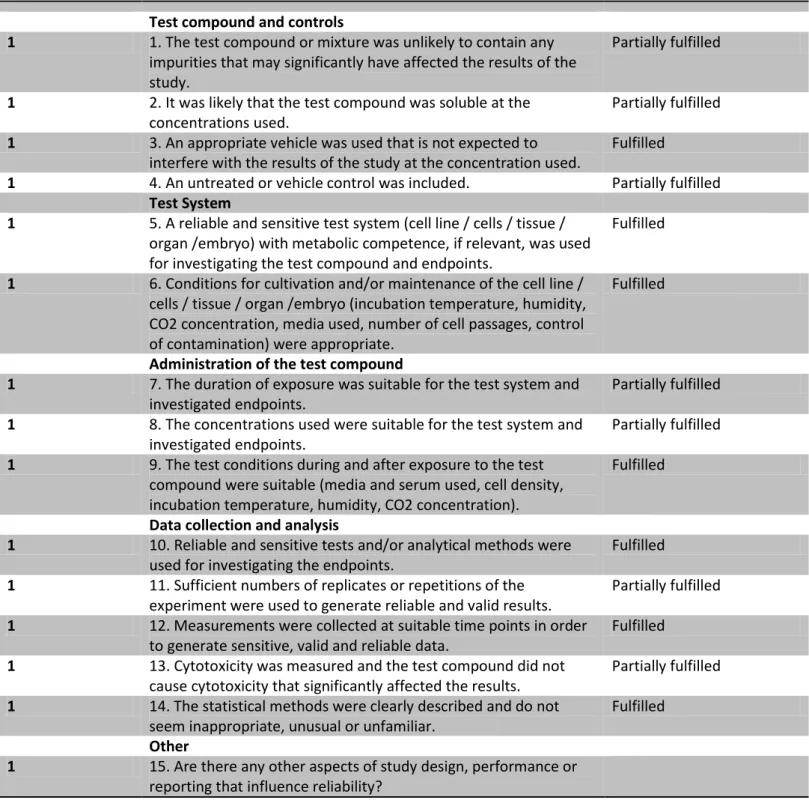
Weight/Removed Evaluation criteria Selection
Test compound and controls
1 1. The test compound or mixture was unlikely to contain any impurities that may significantly have affected the results of the study.
Partially fulfilled
1 2. It was likely that the test compound was soluble at the concentrations used.
Partially fulfilled 1 3. An appropriate vehicle was used that is not expected to
interfere with the results of the study at the concentration used.
Fulfilled
1 4. An untreated or vehicle control was included. Partially fulfilled Test System
1 5. A reliable and sensitive test system (cell line / cells / tissue / organ /embryo) with metabolic competence, if relevant, was used for investigating the test compound and endpoints.
Fulfilled
1 6. Conditions for cultivation and/or maintenance of the cell line / cells / tissue / organ /embryo (incubation temperature, humidity, CO2 concentration, media used, number of cell passages, control of contamination) were appropriate.
Fulfilled
Administration of the test compound
1 7. The duration of exposure was suitable for the test system and investigated endpoints.
Partially fulfilled 1 8. The concentrations used were suitable for the test system and
investigated endpoints.
Partially fulfilled 1 9. The test conditions during and after exposure to the test
compound were suitable (media and serum used, cell density, incubation temperature, humidity, CO2 concentration).
Fulfilled
Data collection and analysis
1 10. Reliable and sensitive tests and/or analytical methods were used for investigating the endpoints.
Fulfilled 1 11. Sufficient numbers of replicates or repetitions of the
experiment were used to generate reliable and valid results.
Partially fulfilled 1 12. Measurements were collected at suitable time points in order
to generate sensitive, valid and reliable data.
Fulfilled 1 13. Cytotoxicity was measured and the test compound did not
cause cytotoxicity that significantly affected the results.
Partially fulfilled 1 14. The statistical methods were clearly described and do not
seem inappropriate, unusual or unfamiliar.
Fulfilled Other
1 15. Are there any other aspects of study design, performance or reporting that influence reliability?
4
Evaluation criteria Selection
Relevance
1. The identity of the tested substance Directly relevant
2. The test system used Directly relevant
3. The endpoint studied Directly relevant
4. The concentrations used Directly relevant
5
Weight/Removed Evaluation criteria Selection
Test compound and controls
1 1. The chemical name, ID or CAS-number of the test compound was given.
Fulfilled 1 2. The purity of the test compound was stated or is
traceable according to information given regarding manufacturer and lot/batch number. In case of mixtures, the composition of different constituents was stated.
Fulfilled
1 3. The solubility of the test compound was described. Partially fulfilled
1 4. The vehicle was described. Fulfilled
1 5. It was stated that an untreated or vehicle control was included.
Partially fulfilled Test System
1 6. The test system (cell line / cells/ tissue / organ / embryo) was described.
Fulfilled 1 7. The source of the test system was stated. Fulfilled 1 8. Metabolic competence of the test system was
described.
Partially fulfilled Removed 9. The number of cell passages of the cell line used, was
stated.
(Remove this criterion if the study was not conducted in a cell line.)
Not applicable
1 10. Composition of media was described, including use of serum, antibiotics, etc.
Fulfilled 1 11. Incubation temperature, humidity, and CO2
concentration were described.
Fulfilled 1 12. Measures taken for avoiding or screening for
contamination by mycoplasma, bacteria, fungi and virus were described.
Not fulfilled
Administration of test compound
1 13. The administered dose levels or concentrations were stated.
Fulfilled Removed 14. Cell density or number of cells used during treatment
were described.
(Remove this criterion if the study was not conducted in a cell line.)
Not applicable
1 15. The duration of treatment was stated. Fulfilled 1 16. The number of replicates per dose
level/concentration or the number of times the experiment was repeated was stated.
Fulfilled
Data collection and analysis
1 17. The tests and/or analytical methods used were sufficiently described to allow for evaluation of reliability of results.
Fulfilled
1 18. The time points for data collection were stated. Fulfilled 1 19. It was stated that the effect of the test compound on
cytotoxicity was measured.
Fulfilled
6
Weight/Removed Evaluation criteria Selection
Test compound and controls
1 1. The test compound or mixture was unlikely to contain any impurities that may significantly have affected the results of the study.
Fulfilled
1 2. It was likely that the test compound was soluble at the concentrations used.
Partially fulfilled 1 3. An appropriate vehicle was used that is not expected to
interfere with the results of the study at the concentration used.
Fulfilled
1 4. An untreated or vehicle control was included. Partially fulfilled Test System
1 5. A reliable and sensitive test system (cell line / cells / tissue / organ /embryo) with metabolic competence, if relevant, was used for investigating the test compound and endpoints.
Fulfilled
1 6. Conditions for cultivation and/or maintenance of the cell line / cells / tissue / organ /embryo (incubation
temperature, humidity, CO2 concentration, media used, number of cell passages, control of contamination) were appropriate.
Fulfilled
Administration of the test compound
1 7. The duration of exposure was suitable for the test system and investigated endpoints.
Fulfilled 1 8. The concentrations used were suitable for the test system
and investigated endpoints.
Partially fulfilled 1 9. The test conditions during and after exposure to the test
compound were suitable (media and serum used, cell density, incubation temperature, humidity, CO2 concentration).
Fulfilled
Data collection and analysis
1 10. Reliable and sensitive tests and/or analytical methods were used for investigating the endpoints.
Fulfilled 1 11. Sufficient numbers of replicates or repetitions of the
experiment were used to generate reliable and valid results.
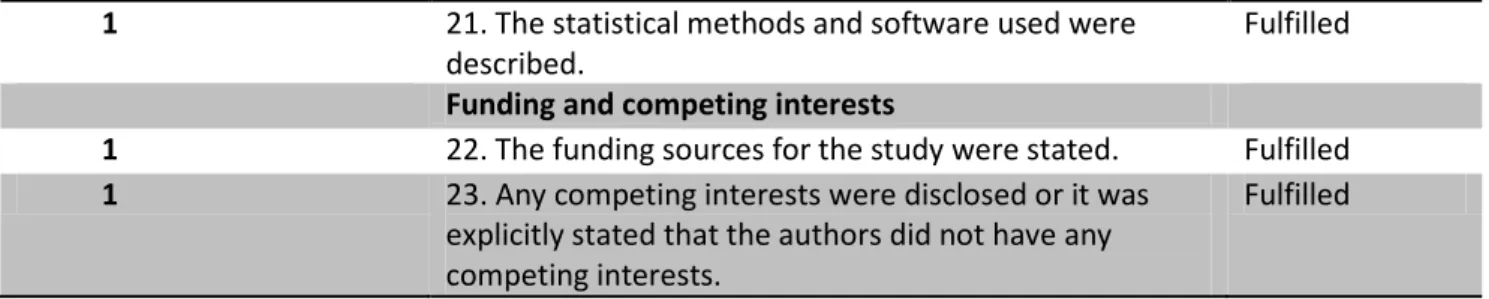
Fulfilled 1 21. The statistical methods and software used were
described.
Fulfilled Funding and competing interests
1 22. The funding sources for the study were stated. Fulfilled 1 23. Any competing interests were disclosed or it was
explicitly stated that the authors did not have any competing interests.
Fulfilled
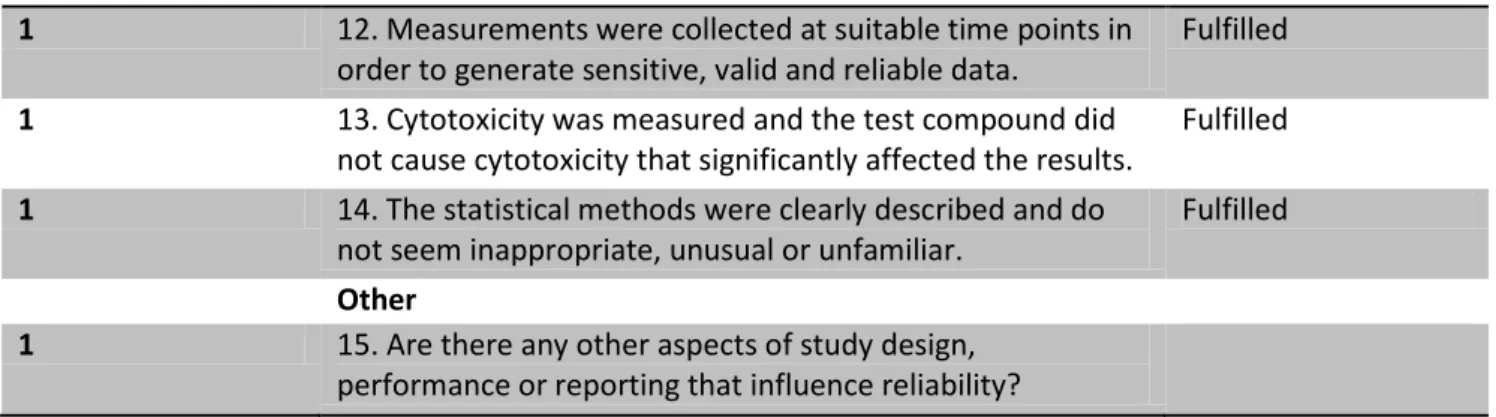
7 1 12. Measurements were collected at suitable time points in
order to generate sensitive, valid and reliable data.
Fulfilled 1 13. Cytotoxicity was measured and the test compound did
not cause cytotoxicity that significantly affected the results.
Fulfilled 1 14. The statistical methods were clearly described and do
not seem inappropriate, unusual or unfamiliar.
Fulfilled Other
1 15. Are there any other aspects of study design, performance or reporting that influence reliability?
Table 7 - Methodological quality for study #2
Evaluation criteria Selection
Relevance
1. The identity of the tested substance Directly relevant
2. The test system used Directly relevant
3. The endpoint studied Directly relevant
4. The concentrations used Directly relevant
8
Weight/Removed Evaluation criteria Selection
Test compound and controls
1 1. The chemical name, ID or CAS-number of the test compound was given.
Fulfilled 1 2. The purity of the test compound was stated or is traceable
according to information given regarding manufacturer and lot/batch number. In case of mixtures, the composition of different constituents was stated.
Fulfilled
1 3. The solubility of the test compound was described. Partially fulfilled
1 4. The vehicle was described. Fulfilled
1 5. It was stated that an untreated or vehicle control was included. Partially fulfilled Test System
1 6. The test system (cell line / cells/ tissue / organ / embryo) was described.
Fulfilled 1 7. The source of the test system was stated. Fulfilled
1 8. Metabolic competence of the test system was described. Partially fulfilled
Removed 9. The number of cell passages of the cell line used, was stated. (Remove this criterion if the study was not conducted in a cell line.)
Not applicable
1 10. Composition of media was described, including use of serum, antibiotics, etc.
Fulfilled 1 11. Incubation temperature, humidity, and CO2 concentration
were described.
Fulfilled 1 12. Measures taken for avoiding or screening for contamination
by mycoplasma, bacteria, fungi and virus were described.
Not fulfilled Administration of test compound
1 13. The administered dose levels or concentrations were stated. Fulfilled
Removed 14. Cell density or number of cells used during treatment was
described.
(Remove this criterion if the study was not conducted in a cell line.)
Not applicable
1 15. The duration of treatment was stated. Fulfilled
1 16. The number of replicates per dose level/concentration or the number of times the experiment was repeated was stated.
Fulfilled Data collection and analysis
1 17. The tests and/or analytical methods used were sufficiently described to allow for evaluation of reliability of results.
Fulfilled 1 18. The time points for data collection were stated. Fulfilled 1 19. It was stated that the effect of the test compound on
cytotoxicity was measured.
Fulfilled
1 20. All results were clearly presented. Fulfilled
1 21. The statistical methods and software used were described. Fulfilled Funding and competing interests
1 22. The funding sources for the study were stated. Fulfilled 1 23. Any competing interests were disclosed or it was explicitly
stated that the authors did not have any competing interests.
Fulfilled
9
Weight/Removed Evaluation criteria Selection
Test compound and controls
1 1. The test compound or mixture was unlikely to contain any impurities that may significantly have affected the results of the study.
Fulfilled
1 2. It was likely that the test compound was soluble at the concentrations used.
Partially fulfilled 1 3. An appropriate vehicle was used that is not expected to interfere
with the results of the study at the concentration used.
Fulfilled
1 4. An untreated or vehicle control was included. Partially
fulfilled Test System
1 5. A reliable and sensitive test system (cell line / cells / tissue / organ /embryo) with metabolic competence, if relevant, was used for investigating the test compound and endpoints.
Fulfilled
1 6. Conditions for cultivation and/or maintenance of the cell line / cells / tissue / organ /embryo (incubation temperature, humidity, CO2
concentration, media used, number of cell passages, control of contamination) were appropriate.
Fulfilled
Administration of the test compound
1 7. The duration of exposure was suitable for the test system and investigated endpoints.
Partially fulfilled 1 8. The concentrations used were suitable for the test system and
investigated endpoints.
Partially fulfilled 1 9. The test conditions during and after exposure to the test compound
were suitable (media and serum used, cell density, incubation temperature, humidity, CO2 concentration).
Fulfilled
Data collection and analysis
1 10. Reliable and sensitive tests and/or analytical methods were used for investigating the endpoints.
Fulfilled 1 11. Sufficient numbers of replicates or repetitions of the experiment
were used to generate reliable and valid results.
Fulfilled 1 12. Measurements were collected at suitable time points in order to
generate sensitive, valid and reliable data.
Fulfilled 1 13. Cytotoxicity was measured and the test compound did not cause
cytotoxicity that significantly affected the results.
Fulfilled 1 14. The statistical methods were clearly described and do not seem
inappropriate, unusual or unfamiliar.
Fulfilled Other
1 15. Are there any other aspects of study design, performance or reporting that influence reliability?
10 Relevance
1. The identity of the tested substance Directly relevant
2. The test system used Directly relevant
3. The endpoint studied Directly relevant
4. The concentrations used Directly relevant