ScienceDirect
Available online at www.sciencedirect.com
Procedia Computer Science 138 (2018) 621–629
1877-0509 © 2018 The Authors. Published by Elsevier Ltd.
This is an open access article under the CC BY-NC-ND license (https://creativecommons.org/licenses/by-nc-nd/4.0/)
Selection and peer-review under responsibility of the scientific committee of the CENTERIS - International Conference on ENTERprise Information Systems / ProjMAN - International Conference on Project MANagement / HCist - International Conference on Health and Social Care Information Systems and Technologies.
10.1016/j.procs.2018.10.083
10.1016/j.procs.2018.10.083
© 2018 The Authors. Published by Elsevier Ltd.
This is an open access article under the CC BY-NC-ND license (https://creativecommons.org/licenses/by-nc-nd/4.0/)
Selection and peer-review under responsibility of the scientific committee of the CENTERIS - International Conference on ENTERprise Information Systems / ProjMAN - International Conference on Project MANagement / HCist - International Conference on Health and Social Care Information Systems and Technologies.
1877-0509
ScienceDirect
Procedia Computer Science 00 (2018) 000–000
www.elsevier.com/locate/procedia
1877-0509 © 2018 The Authors. Published by Elsevier Ltd.
This is an open access article under the CC BY-NC-ND license (https://creativecommons.org/licenses/by-nc-nd/4.0/)
Selection and peer-review under responsibility of the scientific committee of the CENTERIS - International Conference on ENTERprise Information Systems / ProjMAN - International Conference on Project MANagement / HCist - International Conference on Health and Social Care Information Systems and Technologies.
CENTERIS - International Conference on ENTERprise Information Systems /
ProjMAN - International Conference on Project MANagement / HCist - International
Conference on Health and Social Care Information Systems and Technologies,
CENTERIS/ProjMAN/HCist 2018
Acceptance of an agile methodology in the public sector
Afonso Ribeiro*, Luísa Domingues
ISCTE-IUL, Av. das Forças Armadas 36, 1649-026 Lisboa, Portugal
Abstract
Software development methodologies have been growing up and suffering a maturation during the past years. The older methods, called traditional methods, are gradually being substitute by the new agile practices. Despite that, in the public sector, that evolution is not as clear as in the private sector. The lack of information regarding the usage of these new methods in the public sector take us to the following question: In what conditions, agile methods, are the best solution to software development in the public sector? These types of organizations have a culture and a modus operandi very different from the private sector, that can make the implementation of these methodologies a challenge. The goal here is to present the process of implementation of a specific agile methodology based in Scrum, in a particular Portuguese public company and test its acceptance.
© 2018 The Authors. Published by Elsevier Ltd.
This is an open access article under the CC BY-NC-ND license (https://creativecommons.org/licenses/by-nc-nd/4.0/) Selection and peer-review under responsibility of the scientific committee of the CENTERIS - International Conference on ENTERprise Information Systems / ProjMAN - International Conference on Project MANagement / HCist - International Conference on Health and Social Care Information Systems and Technologies.
Keywords: Change Management; Project Management; Agile Methodologies; Public Sector.
* Corresponding author. Tel.:912135226.
E-mail address: [email protected]
Available online at www.sciencedirect.com
ScienceDirect
Procedia Computer Science 00 (2018) 000–000
www.elsevier.com/locate/procedia
1877-0509 © 2018 The Authors. Published by Elsevier Ltd.
This is an open access article under the CC BY-NC-ND license (https://creativecommons.org/licenses/by-nc-nd/4.0/)
Selection and peer-review under responsibility of the scientific committee of the CENTERIS - International Conference on ENTERprise Information Systems / ProjMAN - International Conference on Project MANagement / HCist - International Conference on Health and Social Care Information Systems and Technologies.
CENTERIS - International Conference on ENTERprise Information Systems /
ProjMAN - International Conference on Project MANagement / HCist - International
Conference on Health and Social Care Information Systems and Technologies,
CENTERIS/ProjMAN/HCist 2018
Acceptance of an agile methodology in the public sector
Afonso Ribeiro*, Luísa Domingues
ISCTE-IUL, Av. das Forças Armadas 36, 1649-026 Lisboa, Portugal
Abstract
Software development methodologies have been growing up and suffering a maturation during the past years. The older methods, called traditional methods, are gradually being substitute by the new agile practices. Despite that, in the public sector, that evolution is not as clear as in the private sector. The lack of information regarding the usage of these new methods in the public sector take us to the following question: In what conditions, agile methods, are the best solution to software development in the public sector? These types of organizations have a culture and a modus operandi very different from the private sector, that can make the implementation of these methodologies a challenge. The goal here is to present the process of implementation of a specific agile methodology based in Scrum, in a particular Portuguese public company and test its acceptance.
© 2018 The Authors. Published by Elsevier Ltd.
This is an open access article under the CC BY-NC-ND license (https://creativecommons.org/licenses/by-nc-nd/4.0/) Selection and peer-review under responsibility of the scientific committee of the CENTERIS - International Conference on ENTERprise Information Systems / ProjMAN - International Conference on Project MANagement / HCist - International Conference on Health and Social Care Information Systems and Technologies.
Keywords: Change Management; Project Management; Agile Methodologies; Public Sector.
* Corresponding author. Tel.:912135226.
622 2 Afonso Ribeiro / Procedia Computer Science 00 (2018) 000–000 Afonso Ribeiro et al. / Procedia Computer Science 138 (2018) 621–629
1. Introduction
In order to follow the market changes, the software development methodologies have also adapted, becoming more flexible. Despite of these new methods have been well received by the private sector, in the public this didn’t happen. In the public sector the adoption has been slower and the attention given to the empirical studies that identify and describe the challenges regarding the implementation and execution of these new methods has been scarce [1]. Convoy, in accordance, refers the challenges in the adoption of Agile methods and requires for more investigation regarding the effects of the application of the methodology [2].
The relevance of this paper derives from the premise that is necessary a bigger contribute to the scientific knowledge in this area. The goal is to analyze the acceptance level of a customized agile methodology applied to a Portuguese public company. To accomplish that is intended to explore the current software development practices in the company and the current agile methodologies used in this sector. Then one methodology will be adapted to the current software development, in order to maximize their software development efficiency and minimize the change resistance. To introduce the new methodology, a workshop was presented. In this workshop there were three phases: presentation of the methodology, a practice exercise and an evaluation form. The acceptance will be measured by the form results and the practice exercise was included so the participants could evaluate the methodology as aware as possible.
This paper is composed by four chapters. The first is a literature review regarding the agile methodologies, the second is the company context, the third is a description of the methodology implemented and the fourth are the results of the methodology implementation.
2. Literature Review
2.1. Agile Methodology
The concept of agile methodology acquired visibility in February of 2001 when the agile software development manifest was published software [3]. Despite the principles and practices of the agile software development weren’t completely new, the way they were articulated and integrated in one theoretical framework was [4].
The agile methodologies were created to mitigate the software development traditional methods limitations, like the excess of documentation or the time to market ineffectiveness [5]. Basically, they emerged to respond to the inefficiency off the current software development methods [6].
These methodologies arise in a period where the client exigency regarding the products and services contracted suffer a change. This phenomenon is, among other reasons, consequence of the increase of business competitiveness. This led the clients to appreciate aspects like fastness in the delivery and cost reduction in the software development [7]. Beyond this changes in the clients perceived value in the software development, the suppliers intend to obtain more profit with less resources with the goal of complete more projects in a shorter period of time [8].
2.2. Agile methodologies in the public sector
Despite the increased implementation of agile methodologies in the past years, their adoption in the public sector has been slow. This fact is also reflected in the literature, as are scarce the studies regarding the adoption of an agile methodology in the public sector [9]–[11]. Nowadays, the usage of agile methodologies is gaining notoriety in public institutions, however, the attention given to empirical studies describing the challenges of the implementation and execution of agile methodologies in this context are few [1]. The same way, Convoy refers the challenges of adoption of agile practices and request for more research about the effects of their implementation [2]. Besides that, Conforto et al. considers important more research in agile project management and in the use of agile practices in other industries [12]. Thomas and Niederman also refer the importance of more research regarding the implementation of agile methods in different contexts [13].
Public organizations have some characteristics that make the acquisition of software more challenging comparatively with the private organizations. In addition to the existence of legal regulation in the acquisition of
1. Introduction
In order to follow the market changes, the software development methodologies have also adapted, becoming more flexible. Despite of these new methods have been well received by the private sector, in the public this didn’t happen. In the public sector the adoption has been slower and the attention given to the empirical studies that identify and describe the challenges regarding the implementation and execution of these new methods has been scarce [1]. Convoy, in accordance, refers the challenges in the adoption of Agile methods and requires for more investigation regarding the effects of the application of the methodology [2].
The relevance of this paper derives from the premise that is necessary a bigger contribute to the scientific knowledge in this area. The goal is to analyze the acceptance level of a customized agile methodology applied to a Portuguese public company. To accomplish that is intended to explore the current software development practices in the company and the current agile methodologies used in this sector. Then one methodology will be adapted to the current software development, in order to maximize their software development efficiency and minimize the change resistance. To introduce the new methodology, a workshop was presented. In this workshop there were three phases: presentation of the methodology, a practice exercise and an evaluation form. The acceptance will be measured by the form results and the practice exercise was included so the participants could evaluate the methodology as aware as possible.
This paper is composed by four chapters. The first is a literature review regarding the agile methodologies, the second is the company context, the third is a description of the methodology implemented and the fourth are the results of the methodology implementation.
2. Literature Review
2.1. Agile Methodology
The concept of agile methodology acquired visibility in February of 2001 when the agile software development manifest was published software [3]. Despite the principles and practices of the agile software development weren’t completely new, the way they were articulated and integrated in one theoretical framework was [4].
The agile methodologies were created to mitigate the software development traditional methods limitations, like the excess of documentation or the time to market ineffectiveness [5]. Basically, they emerged to respond to the inefficiency off the current software development methods [6].
These methodologies arise in a period where the client exigency regarding the products and services contracted suffer a change. This phenomenon is, among other reasons, consequence of the increase of business competitiveness. This led the clients to appreciate aspects like fastness in the delivery and cost reduction in the software development [7]. Beyond this changes in the clients perceived value in the software development, the suppliers intend to obtain more profit with less resources with the goal of complete more projects in a shorter period of time [8].
2.2. Agile methodologies in the public sector
Despite the increased implementation of agile methodologies in the past years, their adoption in the public sector has been slow. This fact is also reflected in the literature, as are scarce the studies regarding the adoption of an agile methodology in the public sector [9]–[11]. Nowadays, the usage of agile methodologies is gaining notoriety in public institutions, however, the attention given to empirical studies describing the challenges of the implementation and execution of agile methodologies in this context are few [1]. The same way, Convoy refers the challenges of adoption of agile practices and request for more research about the effects of their implementation [2]. Besides that, Conforto et al. considers important more research in agile project management and in the use of agile practices in other industries [12]. Thomas and Niederman also refer the importance of more research regarding the implementation of agile methods in different contexts [13].
Public organizations have some characteristics that make the acquisition of software more challenging comparatively with the private organizations. In addition to the existence of legal regulation in the acquisition of
projects [14], the technological systems from these types of entities, by rule, are big and complex [15]. The innovation and development speed, usually are also slower than in the private sector [15]. Parker and Bradley refer that organizational culture in the public sector is often very hierarchical with rules and politics with poor flexibility and with formal, communication oriented documentation [16] .
The study done by [17], identifies two challenges in the implementation of agile methodologies. The lack of involvement and participation of the final user in the project and the lack of flexibility to integrate requirements during the project development. Jouko Nuottila and Kirsi Aaltonen in their 2016 article identify seven categories of challenges in the implementation of agile methodologies in the public sector [1]:
• Documentation – Employees miss understood lack of documentation with no documentation;
• Education, experience and dedication – It is necessary to instruct the company with the agile practices; • Communication and stakeholders involvement – It is important to identify the stakeholders in the beginning of
the project and communicate when necessary each of them all the important decisions;
• Roles in project – The methodology change leads to roles changes and that can cause lack of responsibilities when the employees don’t understand their new roles;
• Development team localization – It was identified that teams, in some projects, worked away making the coordination and communication more difficult;
• Legislation – The study identifies some confrontations between the legislation and the principles of agile methodologies. Delivery dates, costs, information confidentiality, etc.
• Architecture complexity of software systems – Due to the complexity of the systems, the study reported some difficulty in the integration of the old systems.
Despite this, [11] reports a case of success in the adoption of the agile practices in the public sector. A study performed by Seville University [18] presents the results of the application of an agile methodology (Scrum, in this case) in a public organization. In this study it was used a planning and estimation technique to the projects and it was verified that the estimations of the projects with this methodology were, in almost all the cases, achieved. Other study by [19] that had has goal evaluate the adoption conditions of an agile methodology in the public sector, concluded that there is a slide preference for agile practices when confronted with.
3. Company context
The study was applied in a public Portuguese enterprise. The company is responsible for all information systems of a specific public sector. Their responsibilities are assuring the execution and maintenance of the technological resources and information systems of the correspondent sector, ensuring the management and administration, in articulation with other systems from that sector, and supporting the users. Assuring the information systems adequacy to the needs of the management and operability of the organs, services and organisms of the sector. Prepare strategic proposals of the information systems, taking in account the technological evolution. Prepare, develop and coordinate proposals of investment projects, regarding computer science and services communication to organisms in the sector. And finally, promote information management solutions in this sector.
Regarding a software development, it was identified an absence of a methodology in the company, each sector and team had the freedom to choose the way they wanted to work. Some problems were identified due to the inexistence of a methodology. For example, the dependencies between the projects were compromised because the communication was scarce and the dependencies were not planned and executed in time, leading to delays. The synergies between the project execution and the infrastructures departments are other example of a limitation of the absence of a methodology. Sometimes the lack of preparation and planning lead to an unstable application environment.
There are two types of projects developed by the company, the ones that are accomplished internally and others externally (turnkey). The projects implemented internally have an internal project manager and an internal team. All resources are in the company facilities and close to each other.
The turnkey projects, are developed by an external team. The team receives a specification and the goal is to deliver the product in the agreed date. The communication during the project execution is very scarce and the internal support is not always the best, primarily because the resource that is managing the project from inside has other responsibilities and the project gets to second plan.
624 Afonso Ribeiro et al. / Procedia Computer Science 138 (2018) 621–629
4 Afonso Ribeiro / Procedia Computer Science 00 (2018) 000–000
4. Agile methodology
After the contextualization of the enterprise the goal was to choose a methodology that would mitigate as much as possible the problems identified previously.
It was verified that XP and Scrum are the methodologies most used in general and Scrum, specifically, in the public sector. Furthermore, Scrum is an incremental, iterative and flexible methodology. These kinds of characteristics mitigate the control and management problems identified previously. It capacity to change the requirements at any time of the project, allows the new legislations be added to the project with no friction to the normal operation of it.
The remaining methodologies present some limitations regarding de correction of those problems. Crystal gives too much liberty to the team to decide how they want to work, once again, in non-standardized project management (14). FDD works with features, something that does not show advantages to this case since it does not integrate practices that allow the suppression of existing problems in the organization [20]. DSDM does not approach the monitoring the project topic (14). ASD is more indicated to complex problems and doesn’t give the necessary importance to costs and resources, important aspects in the company project management [20].
With that in mind, it was decided to apply a customized Scrum. The reason why Scrum wasn’t applied has a whole is the change resistance that was identified in chapter 2.3 as one of the major problems in the implementation of agile methodologies in the public sector.
The methodology is defined in three dimensions: roles, information workflow and documentation. In the next subchapters they will be explained in detail.
4.1. Roles
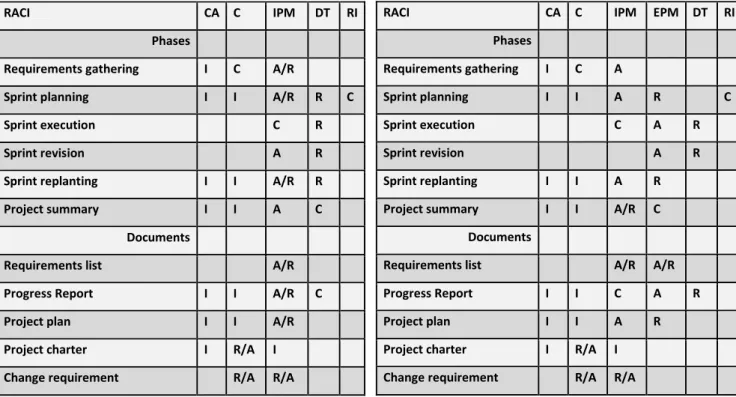
It is intended that all those involved in the project know which role and responsibility they have. In this sense, they will be accountable for accomplish the phases and documentation of the methodology. In order to present the roles and responsibilities, it is necessary to identify the stakeholders involved in the project.
Table 1. RACI table for internal type projects Table 2. RACI table for turnkey type projects
RACI CA C IPM EPM DT RI
Phases Requirements gathering I C A Sprint planning I I A R C Sprint execution C A R Sprint revision A R Sprint replanting I I A R
Project summary I I A/R C
Documents
Requirements list A/R A/R
Progress Report I I C A R
Project plan I I A R
Project charter I R/A I
Change requirement R/A R/A
RACI CA C IPM DT RI
Phases
Requirements gathering I C A/R
Sprint planning I I A/R R C
Sprint execution C R
Sprint revision A R
Sprint replanting I I A/R R
Project summary I I A C
Documents
Requirements list A/R
Progress Report I I A/R C
Project plan I I A/R
Project charter I R/A I
A …….: Accountable C …….: Consulted R …….: Responsible I ……..: Informed
• Development team (DT) – Team of developers that develop the project functionalities;
• Internal project manager (IPM) – Internal manager that control the project and is responsible for the success of the project;
• External project manager (EPM) – External manager that control the development team and is responsible for the well execution of the functionalities;
• Responsible for the infrastructure (RI) – Employee with authority and power to make decisions regarding the infrastructure necessities for the project execution;
• Company administration (CA) – It should be nominated a person accountable for the project. • Client (C) – It is the entity that that requests the services.
4.2. Documentation
Scrum, in accordance with the other agile methodologies, advocates the reduction of documentation compared to that elaborated by traditional methodologies. The goal is to produce only the necessary documentation to develop the project, privileging the technical evolution of the solution. The documentation was based in the PMBOK, project management standard guidelines and in the OpenPM², project management methodology designed by the European Commission.
It is proposed the following documents:
• Requirements list – This document should include all functionalities, bugs, defects, updates, documentation and improvements that the product will have. This document should allow the stakeholders to access the progress of the developments of the projects;
• Progress report – In the end of every sprint, this document should be filled. It intends to centralize the
information regarding the state of the project after the end of the sprint. The goal is to understand if the sprint was completed with success or if something wasn’t well done;
• Project plan – The project plan contains all the information of the project. All modifications to the requirements and sprints should be documented in this template. Scope, stakeholders, assumptions and dependencies are information that should also be included in the document, as well as, software development life cycle, deliveries and milestones.
In addition to these documents, depending the adequacy, risks and complexity of the project the following documents should be included:
• Usage support – Depending of the project, if it is pertinent, it should be developed a utilization manual o f the system with the goal of helping the users using the system.
• Technical documentation – The developed code should include comments. This point has special importance when the algorithms are complex and can lead to miss understandings;
• Project Charter – This document should be developed by the client that requests the project. It contains basic information about the project so that the beginning of it could be angelized and some components could be clarified, as well.
• Change requirement – This document has information about the requirement that it is intended to change or add to the project. Changes that are significant, should be asked formally in this document, however, it not
mandatory.
4.3. Information workflow
The information flow will define how and when the information will be passed, who will receive it and how it will be delivered. There are two information flows, as it happened to the role dimension, one for each type of project (internal and turnkey).
In the Fig 1 there are six phases. The requirements gathering phase is supposed to be develop by the project manager together with the client. It has available project information (scope of the project is assumed done) as input and it generates the requirements, list of documents and the functional analysis (if applicable) as output. Ideally the
626 Afonso Ribeiro et al. / Procedia Computer Science 138 (2018) 621–629
6 Afonso Ribeiro / Procedia Computer Science 00 (2018) 000–000
client should deliver the project charter document. After the requirements list, it’s the sprint planning phase. In this phase, the team and the project manager should work together to construct the project plan document and prioritize the requirements list. The development team is responsible for the execution phase that aims to develop the requirements agreed and defined for that sprint.
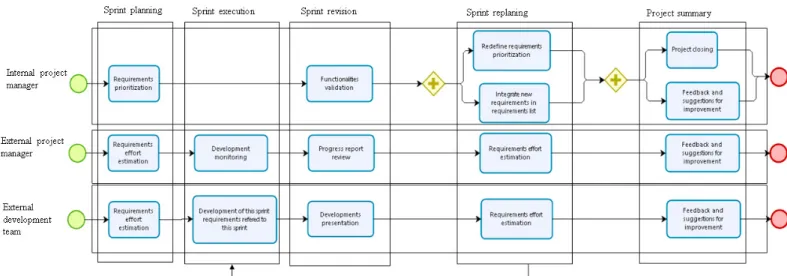
Fig 1. Detailed internal project workflow
After the execution there should be a sprint meeting where the work done should be revised and the progress report should come as the output. If it is the last iteration, then the next phase is the closing project where the project balance is analyzed and lessons are learned. Otherwise, the next phase is the replanting meeting where it can add or update requirements and sprints.
The information flow for the turnkey type of projects is the following:
Fig 2. Detailed turnkey project workflow
As it is possible to verify in the Fig 3, to the turnkey type projects the development phases are almost the same as the other type. The differences are the responsibilities, roles and tasks of the stakeholders in the project. In this type of projects there is
5. Results
In order to verify the acceptance of these methodology in the public company analyzed, there was a workshop session where the methodology was presented. In the end, they filled an anonymous form with eleven closed questions (all mandatory) and one space for comments. They evaluated the methodology as a whole and each document and practice individually. There were sixteen participants, corresponding to 90 percent of the project managers of the company and covering all departments of it. From that sixteen, eleven answered the quiz, the others didn’t find availability and had to leave. The questions are the following:
K1: Do you consider that there is a need to adopt a software development methodology in this company? K2: Do you consider that the methodology presented is appropriate to the context of t he company? K3: Classify the relevance of the following documents regarding software development in the company? K4: Rate the appropriateness of the following documents to the company project management needs? K5: Please rate the following documents according to the ease of filling?
K6: Classify the relevance of the following practices /phases in software development in this company?
K7: Classify the appropriateness of the following practices/phases to project management needs in the company? K8: Do you consider that this methodology benefits the organization?
K9: Do you consider that this methodology makes the development of software in the company more efficient? K10: Do you consider that this methodology lived up to your expectations?
K11: Would you be willing to use this methodology in the future?
There are two types of questions. The ones whose answer is an ordinal scale with five levels (ascending sort) and the ones whose answer is yes-no-maybe.
The results of the questions are presented in the following table:
Table 3. Acceptance of the methodology results of yes/no/maybe questions Questions Number of
yes replies Number of maybe replies Number of no replies Percentage of yes replies Percentage of maybe replies Percentage of no replies
K1 8 3 0 73% 27% 0% K2 6 3 2 55% 27% 18% K8 6 5 0 55% 45% 0% K9 6 4 1 55% 36% 9% K10 10 \ 1 91% \ 9% K11 6 5 0 55% 45% 0%
628 Afonso Ribeiro et al. / Procedia Computer Science 138 (2018) 621–629
8 Afonso Ribeiro / Procedia Computer Science 00 (2018) 000–000
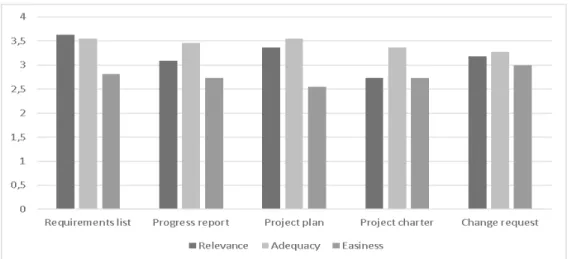
Fig 4. Documents acceptance of the methodology
Regarding the documents relevance it was verified that the most relevant is the requirements list followed by the project plan. In congruence with these data are the results of the adequacy of the documents. In this case, the list of requirements and the project plan are also considered the most appropriate. Unlike these, there is the Project charter with an average of 2.7 values in terms of relevance and the change requirement with 3.3 values in adequacy. In the ease of filling question, the change requirement document is highlighted as the easiest to fill.
Regarding the mandatory practices, they were all considered on average to be relevant (3.5 values). The same happens with respect to the adequacy of the methodology to the context of the company whose average is 3.3 values.
Approximately 73% of the participants consider that there is a need to adopt a software development methodology and the rest consider that it may be necessary, with none negative responses. The same happened to the questions regarding benefits, efficiency and willingness to use the methodology all with 55% of positive answers. In these cases, only the efficiency had one negative answer (9%) and 36% answers maybe, while the remaining two factors did not have any negative answer and ended up with 45% answers maybe.
Regarding the adequacy of this methodology to the context of the organization, 55% of the respondents considered that it suits and 27% considered that it might suit. Only 18% (two people) do not consider that it suits the context.
In addition to this, in the form, it was received some qualitative feedback: • A more explicit test phase should be included;
• The client should be more accountable for some of the phases and decisions; • The infrastructure should have a more present role in this life cycle;
• It should be possible to include the non-functional, project and technical requirements.
6. Conclusions and future work
Despite the identification of some resistance and disagreement regarding this agile methodology, the overall results were positive. No one was unwilling to use this methodology in the future and only two persons don’t think this methodology is appropriate to this context. This is totally understanding since we received some constructive feedback to improve the methodology. Although the change in the public sector companies is considered larger, 73% of the participants in the quiz consider that it is important to have a uniform software development methodology in the company, something that doesn’t exist nowadays. This means that despite the reluctance to change they think the usage of a methodology is very important. The methodology presented also revealed very suitable to the company context with more than 50% of acceptance by the participants in the quiz. Furthermore, the practices and documents showed to be very relevant and suitable, all being, in average, above the 3 values in 4.
In general, and based on the data above quoted, the company evidenced much receptivity regarding the methodology adoption since all the respondents referred that they were willing to use the methodology in the future.
The next steps that complement the study carried out are the inclusion of the feedback that it is considered relevant to software development in the methodology, in order to improve it and the implementation of it in a prototype project. The goal is to analyse, empirically, the success factor of this agile methodology in the public context.
References
[1] J. Nuottila, K. Aaltonen, and J. Kujala (2016) “Challenges of adopting agile methods in a public organization,” IJISPM-INTERNATIONAL J.
Inf. Syst. Proj. Manag., vol. 4, no. 3, pp. 65–85.
[2] K. Conboy and X. Wang (2007) “Agile practices in use from an innovation assimilation perspective: a multiple case study,”.
[3] “What is Agile Software Development? | Agile Alliance.” [Online]. Available: https://www.agilealliance.org/agile101/. [Accessed: 15-Dec-2017].
[4] L. Williams and A. Cockburn (2003) “Guest Editors’ Introduction: Agile Software Development: It’s About Feedback and Change,”
Computer (Long. Beach. Calif)., vol. 36, no. 6, pp. 39–43.
[5] S. Jalali, C. Wohlin, and L. Angelis (2014) “Investigating the applicability of Agility assessment surveys: A case study,” J. Syst. Softw., vol. 98, pp. 172–190.
[6] J. A. Highsmith 2002 Agile software development ecosystems, vol. 13. Addison-Wesley Professional.
[7] T. Dybå and T. Dingsøyr (2008) “Empirical studies of agile software development: A systematic review,” Inf. Softw. Technol., vol. 50, no. 9–10, pp. 833–859.
[8] K. Madadipouy, (2015) “An Examination and Evaluation of Agile Methodologies for Systems Development,” Australas. J. Comput. Sci., vol. 2, no. 1, pp. 1–17.
[9] D. Powner (2012) “Software Development: Effective Practices and Federal Challenges in Applying Agile Methods.” United States Government Accountability Office, Washington, DC.
[10] A. Kaczorowska (2015) “Traditional and agile project management in public sector and ICT,” in Computer Science and Information Systems
(FedCSIS), 2015 Federated Conference on, pp. 1521–1531.
[11] A. Karaj and J. Little (2013) “Transforming a Public Sector Company: From Stone Age to Agile,” in Agile Conference (AGILE), pp. 74–81. [12] E. C. Conforto (2014) F. Salum, D. C. Amaral, S. L. da Silva, and L. F. M. de Almeida, “Can agile project management be adopted by
industries other than software development?,” Proj. Manag. J., vol. 45, no. 3, pp. 21–34.
[13] P. Y. Thomas, R, Niederman F, (2017) “Exploring the Role of Agile Approaches for the Management of Projects,". [14] C. Edquist, L. Hommen, and L. Tsipouri, (2000) “Policy implications,” Public Technol. Procure. Innov., pp. 301–311.
[15] T. Brown (2001) “Modernisation or failure? IT development projects in the UK public sector,” Financ. Account. Manag., vol. 17, no. 4, pp. 363–381.
[16] R. Parker and L. Bradley (2000) “Organisational culture in the public sector: evidence from six organisations,” Int. J. Public Sect. Manag., vol. 13, no. 2, pp. 125–141.
[17] N. Wisitpongphan and T. Khampachua (2016) “Agile in public sector: Case study of dairy farm management projects,” 2016 13th Int. Jt.
Conf. Comput. Sci. Softw. Eng., pp. 1–5.
[18] C. J. Torrecilla-Salinas, J. Sedeño, M. J. Escalona, and M. Mejías (2013) “Agile in Public Administration: Oxymoron or reality? An experience report,” in CEUR Workshop Proceedings, vol. 1017, pp. 1–8.
[19] L. K. Roses, A. Windmöller, and E. A. do Carmo (2016) "Favorability conditions in the adoption of agile method practices for software development in a public banking,” J. Inf. Syst. Technol. Manag., vol. 13, no. 3, pp. 439–458.
[20] P. Abrahamsson, O. Salo, J. Ronkainen, and J. Warsta (2002) “Agile software development methods: Review and analysis,” Espoo, Finl.
Tech. Res. Cent. Finland, VTT Publ., p. 478.
[21] A. Cockburn (2002) Agile software development, vol. 177. Addison-Wesley Boston. [22] R. S. Pressman (2005) Software engineering: a practitioner’s approach. Palgrave Macmillan.