UNIVERSIDADE DO ALGARVE
THE IMPACT OF THE EVENT INDUSTRY ON LOCAL
ECONOMIC DEVELOPMENT: INTERNSHIP AT INTERTASK
CONFERENCES
CHRISTELLE GRONDIN
Internship Report for obtaining the Masters Degree in Tourism
Economics and Regional Development
Work made under the supervision of:
Pedro Miguel Guerreiro Patolea Pintassilgo
Blair Tryon
ii
UNIVERSITY OF ALGARVE
FACULTY OF ECONOMICS
THE IMPACT OF THE EVENT INDUSTRY ON LOCAL
ECONOMIC DEVELOPMENT: INTERNSHIP AT INTERTASK
CONFERENCES
CHRISTELLE GRONDIN
Internship Report
Masters in Tourism Economics and Regional Development
Work made under the supervision of:
Pedro Miguel Guerreiro Patolea Pintassilgo
Blair Tryon
iii
Authorship and Copyright Declaration
THE IMPACT OF THE EVENT INDUSTRY ON LOCAL
ECONOMIC DEVELOPMENT: INTERNSHIP AT INTERTASK
CONFERENCES
Work Authorship Declaration
I declare to be the author of this work, which is unique and unprecedented. Authors and works consulted are properly cited in the text and are in the listing of references included.
Grondin Christelle
Copyright
©Copyright: Grondin Christelle
The University of Algarve has the right, perpetual and without geographical boundaries, to archive and make public this work through printed copies reproduced in paper or digital form, or by any other means known or to be invented, to broadcast it through scientific repositories and allow its copy and distribution with educational or research purposes, noncommercial purposes, provided that credit is given to the author and Publisher.
iv
Dedication and Acknowledgement
Thank you to the Intertask Group of Companies team that supported me during the internship and the research project. More especially thank you to Blair Tryon for offering the internship opportunity.
I would also like to thank Professor Pedro Pintassilgo, supervisor of the research project, for his support and advice along the writing process.
v
RESUMO
O estágio teve lugar na empresa Intertask Conferences localizada em Ottawa, Canadá. Esta empresa faz parte do grupo Intertask, o qual inclui três empresas: Intertask Conferences, JpdL e ImageHouse Limited. Os recursos destas três empresas e os seus escritórios situados em Toronto, Niagara Falls, Montreal, Ottawa, Quebeque e Tremblant tornam o grupo Intertask o maior organizador de eventos no Canadá.
A atividade principal da Intertask Conferences consiste na gestão de conferências, congressos, convenções, colóquios, seminários, encontros profissionais e reuniões anuais de empresas. Isto inclui a gestão de operações (e.g. alojamento, transporte, refeições, instalações do evento) e a coordenação de todos os atores que desempenham um papel no evento (e.g. participantes, fornecedores, autoridades locais, público). Há ainda a considerar o aspeto financeiro, nomeadamente o estabelecimento de um orçamento com o cliente e a sua execução. Trata-se de um processo complexo que exige colaboradores competentes e proactivos. As outras duas empresas do grupo Intertask realizam tarefas complementares. A JPdL especializa-se na planificação de eventos e a ImageHouse Limited no design gráfico, web sites e plataformas online para a inscrição nos eventos.
Fundada em 1973, a Intertask Conferences organizou mais de 400 conferências e eventos especiais em todas as regiões do Canadá para ministérios e organismos governamentais, empresas e associações. Em alguns eventos, a Intertask Conferences trabalhou para proeminentes organizações mundiais tais como: as Nações Unidas, a OTAN (Organização do Tratado do Atlântico Norte), a APIC (Aliança para a Preservação do Inglês no Canada), a OCDE (Organização para a Cooperação e Desenvolvimento Económico), a OMT (Organização Mundial do Turismo), o IICA (Instituto Interamericano de Cooperação para a Agricultura), a OIT (Organização Internacional do Trabalho) e o Secretariado da Commonwealth.
A metodologia adaptada para o estágio foi a de observador participante. Este método implicou a imersão na empresa acompanhada, uma ativa participação nas suas atividades e a observação objetiva da população estudada, a qual é composta por três grupos de atores da indústria de organização de eventos: os participantes dos eventos, a agência organizadora e as comunidades que acolhem os eventos.
vi
O investigador participou em três conferências organizadas pela Intertask Conférences, o que lhe permitiu perceber todas as etapas da planificação e da organização de um evento. O estágio permitiu perceber o que está em jogo na indústria de organização de eventos e adquirir uma visão de conjunto sobre a mesma. No que se refere ao caso de estudo, a empresa Intertask Conferences é líder de mercado no estado de Ontário pelo que as suas atividades podem ser consideradas como representativas do setor.
As responsabilidades do investigador durante o estágio consistiram em inserir as informações dos clientes em bases de dados, ajudar no tratamento dessa informação, preparar documentos relativos aos eventos e participar como colaboradora nas conferências, prestando apoio aso participantes.
O sector de organização de eventos pode desempenhar um importante papel no turismo e na dinâmica do território. Organizar um evento exige a colaboração entre numerosos atores, de áreas diferentes e culmina com receção de participantes, muitas vezes turistas. Este processo requere uma gestão específica e um trabalho de longa duração que, por vezes, começa vários anos antes da data efetiva do evento.
A indústria de organização de eventos pode ser considerada como um instrumento de marketing para promover uma cidade e/ou região. Desta forma, a indústria de organização de eventos faz parte integrante do sector do turismo. A longo prazo, o turismo decorrente dos eventos pode revelar-se uma importante alavanca para o desenvolvimento da economia local.
Acolher eventos representa um grande potencial em benefícios económicos e também em externalidades positivas, pois a organização de eventos tem a capacidade de estimular a economia local. É de salientar que este sector de atividade tem tendência a atrair visitantes com um elevado poder aquisitivo, como é o caso dos turistas de negócios.
A organização de um evento participa na dinâmica do território que o acolhe porque atrai visitantes e envolve a comunidade local. Os participantes nos eventos usam transportes, serviços de alojamento, restaurantes e o comércio local. Para além disso, quando uma cidade/região acolhe eventos importantes tal promove investimentos, nomeadamente em transportes, comunicação e tecnologia.
A indústria de organização de eventos tem ganho um peso crescente na economia mundial. De igual modo, o turismo que lhe está associado tem-se assumido como um segmento de importância crescente no setor do turismo. Medir os impactos económicos
vii
e os benefícios de um evento é, pois, uma tarefa fundamental, tendo em vista o seu planeamento, marketing e gestão. O consumo e produção de bens e serviços pelos participantes e/ou organizadores de eventos têm um efeito multiplicativo em variáveis económicas como a produção, o valor acrescentado e o emprego devido à interdependência entre os diferentes setores da economia. Entre os sectores-chave que mostram fortes efeitos multiplicadores associados à realização de eventos destacam-se a hotelaria, a restauração, os transportes, as telecomunicações, a alimentação e bebidas, e o comércio a retalho.
A indústria de organização de eventos tem revelado um potencial tão elevado que muitos governos em todo o mundo incorporam-na nos seus planos estratégicos para o desenvolvimento regional. A realização de eventos tem impactos a longo prazo na renovação urbana, desenvolvimento cultural e coesão das comunidades. Isto explica a importância que os conceitos de cooperação e rede assumem neste sector em particular. As ligações entre as empresas desta indústria são essenciais para o sucesso dos eventos.
Este estágio revela a importância da indústria de organização de eventos como um ator do sector turístico e como uma alavanca para o dinamismo da economia local. Para que tal seja potenciado é necessária uma boa articulação entre os numerosos e diversos atores da indústria e a definição de estratégias de longo prazo. A investigação efetuada destaca a importância da compreensão (e, em seguida, a previsão) do comportamento dos turistas de eventos, bem como da comunidade de acolhimento.
O estágio proporcionou um melhor conhecimento sobre o planeamento de eventos e a sua gestão, bem como uma visão abrangente sobre a indústria de organização de eventos especiais. O presente relatório estrutura-se em oito secções. A primeira corresponde à introdução e a segunda a uma revisão da literatura. A terceira secção centra-se na metodologia utilizada. Na quarta procede-se à descrição das características da indústria de eventos. Na quinta são descritos os objetivos e atividades do estágio. Na sexta são abordados os impactes económicos da indústria de eventos. Na sétima é feita uma autoavaliação das atividades executadas. Finalmente, na oitava são apresentadas as conclusões.
viii
ABSTRACT
The event industry is a growing sector of the economy and offers many opportunities for local economic development. It creates positive externalities in different sectors of the economy and develops tourism.
The internship undertook within the company Intertask Conferences located in Ottawa, Canada, gave a thorough insight of the event industry and its main challenges. As an intern in the company, the method adopted to address this subject has been the participant observant method. It has been revealed that the Meetings, Incentives, Conferences and Exhibitions (MICE) industry is an ever-changing field; it must remain up to date, especially in regards to new technologies and social media. A main challenge that the industry faces is to match the budget set by the client and their expectations. When that match is not achieved, it is the job of the event planner to either meet the expectations or find concessions with the client. Communication with the client is of paramount importance to gain their loyalty, and for the good progress of the event.
Key words: MICE, Local Economy, Economic Development, Tourism, Event Planning
ix
GENERAL INDEX
Authorship and Copyright Declaration ... iii
Dedication and Acknowledgement ... iv
RESUMO ... v
ABSTRACT ... viii
GENERAL INDEX ... ix
TABLE INDEX ... xii
ABBREVIATION LIST ... xiii
1. INTRODUCTION ...1
2. LITERATURE REVIEW ...3
2.1. MICE Tourism ...3
2.2. Economic Impact of the MICE Industry ...6
3. METHODOLOGY ...8
3.1. The Research Design ...8
3.2. The Conduct of the Study: The Participant Observation Method ...8
3.3. Data Collection ...9
3.4 The Studied Population ...10
3.4.1 The Event Planning Team: Intertask Conferences ...10
3.4.2 The Attendees ...10
3.4.3 The Host Population and The Client of Intertask Conferences ...11
4. DESCRIPTION OF THE SECTOR ...12
4.1. A Presentation of Intertask Conferences ...12
4.1.1. History and Context of the Company ...12
x
4.2. The Characteristics of the Event Industry ...17
4.2.1. A Typology of Events...17
4.2.2. Event Planning ...18
4.2.3. The Determinants of Attendance to Events ...18
4.2.4. The Operational Level of Events...20
5. A DESCRIPTION OF THE OBJECTIVES AND ACTIVITIES OF THE INTERNSHIP ....22
5.1. General Pre-Event Planning ...22
5.1.1. Transportation ...24
5.1.2. Accommodation ...24
5.1.3. Venue and Related Services ...24
5.2. On-Site Event Coordination Services ...26
5.3. Post-Conference Reporting and Debriefing ...27
6. THE ECONOMIC IMPACT OF THE EVENT INDUSTRY ...29
6.1. The Tourism Sector in Canada ...29
6.1.1. Competitive Advantages and Weaknesses ...30
6.1.2. The Role of the Canadian Tourism Commission ...31
6.1.3. The Example of the Ottawa Convention Center ...32
6.2. Economic Impact of Events ...33
6.2.1. Transportation ...34 6.2.2. Accommodation ...35 6.2.3. Government Revenue ...35 7. SELF-ASSESSMENT ...36 8. CONCLUSIONS ...38 BIBLIOGRAPHY ...40 ANNEXES ...43
xi
Annex 2: Media advisory VASCULAR 2013 ...44
Annex 3: Sponsorship Level Vascular 2013 ...46
APPENDICES...47
Appendix 1: Organigram of the Intertask Group of Companies ...48
Appendix 2: CCIL: Canadian Council on International Law ...49
Appendix 3: Vascular 2013 ...51
xii
TABLE INDEX
TABLE 1: SWOT ANALYSIS OF INTERTASK CONFERENCES ...16
TABLE 2: STAFF REQUIREMENT FOR VASCULAR 2013 ...28
TABLE 3: ECONOMIC DIMENSION OF TOURISM IN CANADA ...30
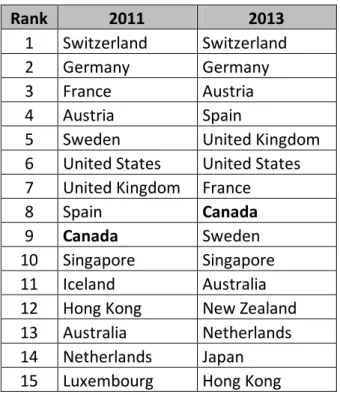
TABLE 3: TRAVEL AND TOURISM COMPETITIVENESS INDEX (2011 AND 2013) ...31
TABLE 5: RESULTS FROM BOOKED BUSINESS EVENT ...32
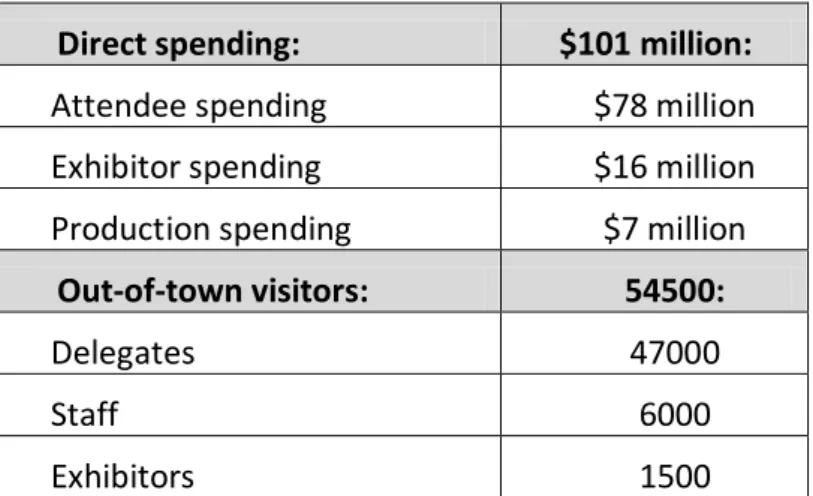
TABLE 6: OTTAWA CONVENTION CENTER - ECONOMIC IMPACT STUDY 2012 ...33
TABLE 7: OTTAWA CONVENTION CENTER - THE YEAR 2012 IN REVIEW ...33
xiii
ABBREVIATION LIST
APEC: ASIA-PACIFIC ECONOMIC COOPERATION BEC: BUSINESS EVENT CANADA
CCC: CANADIAN CARDIOVASCULAR CONGRESS
CCCN: CANADIAN COUNCIL OF CARDIOVASCULAR NURSES CCS: CANADIAN CARDIOLOGISTS SOCIETY
CMP: CERTIFIED MEETING PROFESSIONAL CTC: CANADIAN TOURISM COMMISSION
DMO: DESTINATION MANAGEMENT ORGANIZATIONS ECE: ECONOMIC COMMISSION FOR EUROPE
HTC: HYPERTENSION CANADA
ICT: INFORMATION, COMMUNICATION, TECHNOLOGIES
IICA: INTER-AMERICAN INSTITUTE FOR COOPERATION ON AGRICULTURE ILO: INTERNATIONAL LABOUR ORGANIZATION (UNITED NATIONS) MICE: MEETINGS, INCENTIVES, CONFERENCES, AND EXHIBITIONS NATO: NORTH ATLANTIC TREATY ORGANIZATION
NPAO: NURSE PRACTITIONER’S ASSOCIATION OF ONTARIO OAS: ORGANIZATION OF AMERICAN STATES
OCC: OTTAWA CONVENTION CENTRE
OECD: ORGANIZATION FOR ECONOMIC CO-OPERATION AND DEVELOPMENT PPP: PURCHASING POWER PARITY
SWOT: STRENGTHS; WEAKNESSES; OPPORTUNITIES; THREATS WTO: WORLD TOURISM ORGANIZATION
1
1. INTRODUCTION
The internship took place in Intertask Conferences which is situated in Ottawa, Canada. It is part of the Intertask Group of Companies which also includes two other companies: JPdL and Imagehouse (see Annex 1). The subsidiary Imagehouse Limited - Creative Design and Production provides publications production, graphic design, web site design and management. JPdL DMC Ottawa is also an internal subsidiary that provides event planning and transportation systems for conventions, tours and sightseeing excursions for delegates. This cooperation creates the largest event management organization in Canada. It has offices in Quebec City, Montreal, Tremblant, Ottawa, Toronto, and Niagara Falls. All the operations are integrated to provide high quality service to the clients.
The internship was a professional experience which aimed to provide a direct contact with the Meetings, Incentives, Conferences and Exhibitions (MICE) industry. This experience lead to apply the knowledge acquired during the Master courses. It was also beneficial to develop human and socio-professional relations. The MICE sector is a business-oriented segment involving tourism. It attracts about 2 million visitors each year to Canada that generates direct expenditure of $1.7 billion (International Meetings Review, 2013). Canada ranks 11th in the worldwide rankings for the number of meetings held in the country (ICCA, 2011). According to the Ontario Ministry of Tourism, business tourists, even though only representing 1% of the tourists in Ontario, spend 5% of the total visitors’ expenditure (Ministry of Tourism, Culture and Sport, 2013). There is thus high potential and opportunities for local economic development driven by the MICE sector.
This study aims at understanding how Intertask Conferences is able to successfully provide clients with MICE services. The study highlights the importance of understanding (and then forecasting) the behaviour of this particular type of clientele/ tourists as well as the behaviour of the host community in regards to the event industry. This internship contributes to a better knowledge on special event planning and management and provides a comprehensive overview of the special event industry within its particular local economy.
2
This internship report is structured as follows. In section 2 a literature survey is undertaken. Section 3 addresses the methodological aspects. Section 4 highlights the main characteristics of the event industry. Section 5 describes the objectives and activities of the internship. Then, section 6 addresses the economic impact of events. Section 7 provides a self-assessment of the activities executed. Finally, section 8 provides the main conclusions.
3
2. LITERATURE REVIEW
The MICE industry is recognized as being a growing sector in the economy worldwide (Dwyer and Mistilis, 1999). It is also a growing and dynamic segment within the tourism sector (Getz, 2008). This section provides a literature review in which the MICE industry is approached regarding different aspects.
2.1. MICE Tourism
The link between MICE and tourism is undeniable and presents many opportunities especially with regards to local economic development (Dwyer et al., 2005). The role of events is important for a city and its region. The uniqueness of each individual event implies that it is necessary to attend it in order to fully live the experience (Shone and Parry, 2004). Events are a crucial driver of tourism and are part of the development and marketing of tourism destinations (Wootton and Stevens, 1995). As such, this sector participates in the urban renewal, cultural development and the cohesion of the community. This explains the importance of the concept of cooperation and network in this particular sector. The links between the individual firms of the industry are essential so as the progress of the operation of the special events to occur in ideal conditions.
Hence, it is essential to analyze the role of this sector following an integrated approach. In this vein, Getz (2008) views events tourism as a system that integrates marketing plans and evaluations making the industry work more effectively. This fact also implies the collaboration from the whole industry and other qualified institutions such as Destination Management Organizations (DMO). It is important to understand the outcomes of the relationships between individual actors of the industry so as to evaluate how to maximize those ties. Thus, cooperation and networking in this field is an essential key for success as it can lead to a maximization of the number of attendees, an increase of visitors’ night stay and an improvement of the participant’s experiences. The cooperation between individual firms of the sector can take the form of resource sharing concerning physical assets, social capital, and knowledge capital, for example.
4
These aspects participate in enhancing a destination as a competitive MICE destination (Mackellar MBus, 2008).
Information, Communications and Technologies (ICT) are another tool of prime importance for the proper development of the operation in event planning and process. Lau, Milne and Johnston (2005) highlight the role of ICT in boosting the MICE sector and its impacts on the local economic development. The ICT have a considerable potential to help and promote linkages between the MICE industry and the local economies. Moreover, it is argued that the potentials of ICT are not fully employed. It is especially the case of the Web that is mainly used as a marketing tool when it could actively participate in the improvement of the MICE’s performance internally and externally, particularly with regards to the local development.
If the Web were to be fully integrated into facility planning and development, the MICE industry could have a similar role as a hub that would benefit the whole economy but also would improve its internal performances (Lau et al, 2005). A hub company is a center of activity and interest. It can be defined as a unit of the economy that is highly connected to external actors (suppliers, competitors, and markets for example).
The MICE industry has challenges to take into account in order to work efficiently within the local economy and stay competitive. Dwyer and Mistilis (1999) define five challenges that concern the supply side of this sector. Those five main points of focus are the promotion of cooperative behaviour among stakeholders of the industry; the gain of the government’s support; the implementation of appropriate public and private infrastructure; the improvement of the training and service; and a marketing strategy so as to boost the MICE tourism in the local economy. These aspects are required to maximize the scale and scope of benefits generated by the sector. The point concerning the cooperation within the industry is of great importance but also the most challenging one. The individual actors of the industry need to be aware of the potential opportunities and benefits that such cooperation efforts could bring forth. This point also relates to the importance of estimating the economic impact of the sector.
The MICE industry involves many other sectors of the economy which denotes its high potential for economic development at very different levels. For example the MICE sector requires purpose-built facilities, transportation, accommodation, catering
5
services, social programs and tour opportunities, and technical services. It is this complementary in those activities that highlight the necessity for cooperation for the appropriate process and maximization of the operation of the MICE activities. The cooperation can take the form of association, training, transferring of technology, exchanging of ideas, marketing, and planning. However, public support is necessary to give incentives and orientation to these particular activities of the economy. Government intervention is indispensable to overcome market failure that this sector may encounter, such as externalities, and the level of risks and uncertainties. Government support provides appeal to the MICE industry for private investors because without its intervention, these investors may not have enough confidence to invest.
The rapid development of the MICE industry in parallel to other tourism sectors implies the requirement of a diversity of skills in order to manage this sector successfully. In that sense, more and more Master degrees offer programs in event management, tourism, leisure, sport, and hospitality. This variety of educational programs responds to the demand and need for polyvalent and flexible professionals in the special event industry. It is also important to set professional standards so that the industry conforms to it.
Getz (2008, p.404) defines event management as “the applied field of study and area of professional practice devoted to the design, production and management of planned events”. It includes festivals and special events, from leisure to political, scientific, sport, and artistic events. It can concern business and corporate affairs, with events taking place such as meetings, conventions, fairs, and exhibitions. Private events encompass weddings and parties, and social events. The management of the MICE activities in order for it to be sustainable requires an integrated marketing plan that focuses on the planning process as well as the communication with the participants of the event. Tinnish and Mehta Mangal (2012) reveal the growing interest from participants and planners of events towards sustainable meetings. Events imply large scale production, and thus for a very short term because such production is often ad hoc. This aspect of the event planning, and the product itself highlight the need to take into account the social, cultural and environmental components into the marketing plan so as to engage sustainable practices.
6
It is also related to the ever-changing nature of the demand of clients in this sector. Those components are too often neglected from the event impacts. For example, big-scale events have considerable costs and events in general as a driver to tourism consumes energy in big quantities and irreversibly impacts the environment, particularly via pollution (Getz, 2008).
Special events have the potential and/or have proven to be tourism attractions. Management and marketing strategies need to identify the socio-demographic characteristics of tourists and participants attending events. It is also essential to analyze their social and economic behavior during these events (spending and activities). This is particularly important to better target the clients and maximize tourism revenue. It can also be an asset to attract tourist and increase revenue during off-peak seasons (Getz, 2008). In the same way, Tkaczynski and Rundle-Thiele (2011) reveal the significance of segmenting the MICE market in order to pinpoint the profile and characteristics of attendees. Each type of attendee has different needs, motivations, and demands. Event planners must be aware of these particularities in order to provide better service. It is also a way to maximize the return and profitability of each event.
2.2. Economic Impact of the MICE Industry
It is essential to have an accurate estimation of the economic impacts and net benefits of this sector so as to adapt the planning, marketing, and management. Economic impact analysis is also the most used instrument in order to assist investment decision-making and resource allocation by policy makers (Della Lucia, 2013). To be more effective the planning should be formulated within public-private cooperation. The MICE industry attracts beneficial business activity to the cities or region and is very profitable to local economies. The special event industry has the capacity to increase economic activity and create new jobs (Dwyer, Forsyth, and Spurr, 2005).
The MICE industry demonstrates so much valuable potential that many governments worldwide have incorporated it into their strategic plan for regional development. Whitford (2009) criticizes the too often ad hoc and uncoordinated policy making. Rather, policy makers must target the style and category of events; understand what the vehicles of events are; make sure to remain competitive; develop a brand and promote
7
the image of the destination. These initiatives will tend to increase tourism, improve the well-being of the community, and actively participate in the development of the region.
Consumption and production of goods and services by attendees and/or event planners have a multiplicative effect on “sales, production, income, added value and employment through the interdependence of the different sectors of the economic system.” (Della Lucia 2013: p.92). The direct effects relate to the spending originated from attendees and event planners. The indirect multiplicative effects refer to the production of input supplied to participants and event planners. The induced effects correspond to the improvement of standard of living via particularly, the generation of income (Della Lucia, 2013). In other words, Hanly (2012) highlights key sectors that show strong multiplier effects considering the conference spending. Those key sectors are the hotel and restaurant services, transportation services, post and telecommunications, food and beverages, and retail trade.
8
3. METHODOLOGY
This section describes the main methodological aspects of the internship. It covers the research design, the conduct of the study and the studied population.
3.1. The Research Design
The research design chosen for this study is an internship in order to gain a better understanding of the human behaviour in the event industry and to increase the knowledge about this field.
This research design serves to understand the main issues at stake for the event industry and particularly the case of Intertask Conferences. This company is a leader in the event industry in Ontario. As a consequence, their practices can be considered as providing a comprehensive insight of the industry. This type of research relies largely on qualitative methods such as observation, conduct of unstructured interviews or informal discussions. However, quantitative data on the events were also gathered.
3.2. The Conduct of the Study: The Participant Observation Method The method used for the research in the context of an internship is the method of participant observation. This method offered the advantage to collect information with regards to the interactions between clients and event planners, but also with regards to the infrastructure available in the city and its ability to host special events, the amenities of the events, the quality of the service in this industry, and the promotion and advertising of the area as a MICE destination (Ribeiro & Foemmel, 2008).
Such a method requires keeping the research as objective as possible. It is important to keep in mind that the findings are related to Intertask Conferences only. Generalising the results would require data on other firms of the sector. The steps for the participant observation method are the collection of data and a thorough observation the studied populations.
9
3.3. Data Collection
Data collection comprises two main methodologies: literature review and immersion in the field. The literature review is used in order to acquire a better understanding of the main issues of the event industry. To deepen the review of the scientific literature on the topic is decisive so as to have relevant research questions and a broad understanding of the studies already undertaken. Moreover, as the work progressed, the existing literature was used as a reference to acquire further data and to strengthen and support the findings.
The participant observation method implied a prolonged immersion in the field of study in order to learn all the relevant aspects of the special event industry in Ottawa. A gradual acquaintance with the physical environment as well as better skills in human-relation interactions were gained via an active participation in the tasks performed in the company. A daily report of the data collected was made in order to register the main elements accurately.
The data collection was based on daily immersion in the company. The method chosen implies that the researcher takes part in the daily tasks. The level of involvement implied by the internship entails the choice of the fourth type of research described by Ribiero and Foemmel (2008, p.379), namely “the researcher may become a complete participant”. The researcher investigates as well as collects data through the immersion in the field of study. As a consequence the method chosen is qualitative. There are also quantitative aspects as some data, mainly on the events, were collected. .
Field notes and their interpretation allow a thorough description of the field of the event industry and more particularly of the unfolding of an event (the researcher takes part in the work: pre-congress, on-site during the event, and post-congress). The researcher worked on-site for three main conferences organized by Intertask Conferences (see Appendices 2, 3, and 4; and Annex 2). An important aspect of the method selected lies in finding key informants. Following the acquisition of data, a selection of the key findings and their analysis is done to highlight the information relevant for the research.
10
3.4 The Studied Population
The research method relies on reporting attitudes, values, and/or motivations. It aims at understanding human behaviour, and more particularly the studied population. The social world, within which the event industry exists, brings together the event planning agency, the attendees, and the service / facility / attraction (host population). There are particular linkages that are created between these three agents and the physical environment where the interaction takes place. These linkages can be as diverse as the diversity of event type, for example, market research, marketing, buying, selling, employing, visiting, learning, planning, investing, etc...
The studied population are the employees of Intertask Conferences where the internship took place, the participants of events, and the host populations of those events.
3.4.1 The Event Planning Team: Intertask Conferences
The main focus was given to the planning of the event as the internship took place within Intertask Conference and the immersion was within the planning team (see Appendix 1). Each employee is specialized in one aspect of the event industry, even though all have a general understanding of the industry as a whole.
3.4.2 The Attendees
The attendees are the participants of events and the principal customers of exhibitors. The terms event-goers, delegates, participants, and attendees refer to the same group of people. The level of participation of attendees is of great importance for the overall outcome of the event, and so is the way delegates experience the event (satisfaction, complaints, and observation). Learning, educating and networking are key elements of the attendance.
11
3.4.3 The Host Population and The Client of Intertask Conferences The host population includes the city that host the event and all the infrastructures used and services provided for the purpose of the event. Facilities (the venue for example) and services (such as food and beverage, hotel, audio-visual company) are required by the unfolding of an event. A discussion with the contact of Intertask Conferences in the Montréal Tourism Bureau provided relevant information and data for the research through a semi-structured interview.
The client of Intertask Conferences is not necessarily included in the host population as the event can be hold in another city. In other word, the client is the agent that is purchasing the services from Intertask Conferences to organize their event.
12
4. DESCRIPTION OF THE SECTOR
In this section the company on which the internship was undertaken is described. The history of the company and its present structured are detailed, followed by a SWOT analysis. Then, the main characteristics of the event industry are addressed.
4.1. A Presentation of Intertask Conferences 4.1.1. History and Context of the Company
The internship took place within the Intertask Group of Companies comprised of three companies: Intertask Conferences, JPdL, and Imagehouse. Each company is specialized in a different area of conference and event management services (see Annex 1). There are offices in Quebec City, Montreal, Tremblant, Ottawa, Toronto, and Niagara Falls.
Intertask Conferences is a full-service conference planning and management company. The extent of services provided differs from client to client and normally includes all or a selection of the following areas of expertise: exhibit and sponsor sales and management; project management; food and beverage; budget/finance management; audio visual and logistics. The research focuses on this company.
Intertask Conferences has strategic partnership with Canadian Society of Association Executives; Financial and Insurance Conference Planners; Global Events Partners; International Association of Professional Congress Organizers; International Congress and Conventions Associations; Meeting Professional International; Ottawa Capital du Canada; Professional Convention Management Association; and Tourisme Outaouais.
Intertask Conferences was created in 1973. The first event planned by Intertask Conferences was the Royal Tour and Commonwealth Heads of Government Meeting presided by the Queen. Intertask Conferences plans and manages conferences and special events (over 400 since its creation) for the Government of Canada, the provinces, associations and private sector clients. They have worked with some of the
13
major international organizations in the world such as: the Asia-Pacific Economic Cooperation (APEC), the Commonwealth Secretariat, the Economic Commission for Europe (ECE), the Inter-American Institute for Cooperation on Agriculture (IICA), International Labour Organization (ILO), North Atlantic Treaty Organization (NATO), Organization of American States (OAS), Organization for Economic Co-Operation and Development (OECD), the United Nations, and the World Tourism Organization (WTO). A papal visit as well as a Royal tour was coordinated by Intertask Conferences. This institution is composed of a full-time, permanent staff of 23, and a seasonal staff of about 30. Most of the staff is at least bilingual and has a university degree (see Appendix 1).
Intertask Conferences organizes many medical events, but also governmental and academicals ones. Its clients are mainly in those sectors of activity. Here is a list of some of the main events organized by the Intertask Group of Companies:
BirdLife International World Congress – 2013 (Ottawa) Congress Neurological Sciences Federation – 2013 (Montréal) World Canals Conference, Parks Canada – 2008
29th International Conference of Data Protection and Privacy Commissioners – 2007
Primary Health Care Transition Fund: Legacy of Change National Conference – 2007
7th and 8th Canadian Immunization Conferences, Public Health Agency of Canada – 2006 and 2008
39th and 40th Annual Spring Educational Meeting for the Intellectual Property Institute of Canada – 2005 and 2006
60th and 61st Annual Canadian Library Association Conference and Trade Show – 2005 and 2006
Canada-China Governance Dialogue Seminars – 2005 and 2007
Climate Change Solutions Showcase organized for the United Nations Climate Change Conference – 2005
International Conference of the United Nations on Climatic Change – 2005 (Montréal)
14
78th and 79th Annual Meetings, Intellectual Property Institute of Canada – 2004 and 2005
Forum on Biometrics – Implications and Applications – 2003
Aboriginal Policy Research Conference and Gala Dinner – 2002 and 2006 Canadian Cardiovascular Congress – since 2002
National Summit on Innovation and Learning – 2002 Bridging the Investment Gap Conference – 2001 Scotiabank Place Career Fairs – 2001 and 2002 Festival of Architecture – 2000
IIPE Year 2000 International Conference – 2000
The 28th World Congress of the International Society of Hematology (ISH 2000) – 2000
The 8th Global Harmonization Task Force (GHTF) Conference – 2000 The Canadian Bar Association Canadian Legal Conference and Expo – since
1999
National Policy Research Conference and Awards Dinner – 1998 to 2002 National Conference on Physician Human Resources – 1992 and 2006
International Conference on Statistics of Transport and Tourism – WTO – 1991 Conference on Tourism between Canada and Japan (for the CTC) – 1990 Canadian Conference of Aviation – From 1988 to 1992
Parliament Hill Lights and Sounds Show – 1988
Tour Canada (International Conference on Tourism) – 1987 and 1988 (Ottawa) Papal Visit Jean Paul II in Canada – 1984 (Ottawa)
Meetings on the Transport and Incentives Industry – 1983 (Ottawa) International Conference on Museums – 1981 (Ottawa)
Rendez-vous Canada – since 1978
Meeting of the Top Leaders of the Commonwealth – 1973 (Ottawa) Visit of the Queen Elizabeth II – 1973 (Ottawa)
4.1.2. Activity and Structure of the Company
The Intertask Group of Companies represents the largest and most experienced event planning organization in Canada, with three companies complimentary to each other (see Annex 1). In this section the activities of each company are detailed.
15
The main activity of Intertask Conferences is the creation of conferences, congress, conventions, seminars, professional exhibitions, and annual business meetings. It comprises the management of the operations and the coordination of all the actors taking part in the event (e.g., renting of the facility, facility staff, suppliers, audience) as well as the management of the technical side of the event (e.g., technical team to ensure the smooth running of the event, audio-visual technician team, duty manager).
Intertask Conferences provides full-services for every step of a conference process. For example, it takes care of the online Web applications which are specifically adapted to each event, in order to rationalize complex functions, such as registration. Intertask Conferences also ensures a good management of budget and finance, business negotiation, and sub-contracting of specialists. It aims at client satisfaction with time and cost savings as well as excellent results. This is usually achieved as clients that have worked with Intertask in the past usually hire the company to organize future events.
JPdL Ottawa is a destination management company (DMC) who develops events; incentives and accompanying persons programs; galas; and team-building events for clients coming to Ottawa. They plan programs that require theme development, logistics and operational coordination for ground transportation, tours, golf programs, galas, hospitality programs and other special events. Their clients include numerous associations and corporations.
Imagehouse Limited is a graphic design company that works with clients to develop marketing materials, electronic publications and websites. They also specialize in programming online conference registration websites, and managing the logistics of delegate and exhibitor registration/accommodation. In addition, they provide design solutions to the conference, exhibition, and tourism industries.
In this context, a SWOT analysis of Intertask Conferences company was undertaken by the researcher and is shown in Table 1.
16 Table 1: SWOT Analysis of Intertask Conferences
STRENGHTS OPPORTUNITIES
Its activity is very comprehensive thanks to the complimentary of the three companies of the group.
It has 40 years of experience in diverse fields.
Collaboration with the Ottawa Convention Centre (OCC)
Intertask Conferences is the only event company certified by the Professional Congress Organizers (PCO).
Ottawa, Canadian Capital, benefits from its strategic location. It is a political decision center and the ideal location for the organization of events related to the government, which constitutes a client with large resources.
The sectors of activity (scientific, medical, governmental, academic) that the
company targets as clients is growing within Ottawa and its region.
WEAKNESSES THREATS
Within the group, companies tend to compete rather than collaborate.
The visibility of the website and the use of Internet are insufficient.
Decision making may be delayed or hindered when too many decision makers are involved (See Appendix 1: there is the CEO of the group, then there is the Managing director, and also there are general manager for each company).
Intertask Conferences tends to search for big scale events, however, many small sized competitors entered the market and accepted smaller events. As a
consequence, they tend to invest in the market more and more.
17
4.2. The Characteristics of the Event Industry
The characteristics of events can be assimilated to services, particularly in the field of hospitality and leisure. Shone and Parry (2004) grouped these characteristics as being: “uniqueness; perishability; labour-intensiveness; fixed time scales; intangibility; personal interaction, ambiance”.
Events have a particular role in human society. They are defined as unique phenomena that interrupt the routine of the daily life. They are structured around a group of people and can have different aims such as education, entertainment, and/or celebration. Presently, these events have a major part as tourist attractors. Events have the capacity to retain income, especially tourist income (Shone and Parry, 2004).
4.2.1. A Typology of Events
Events can be characterized by their variety, aim, role, and the way they are being run. Shone and Parry (2004) classify events in four categories according to their objectives. There are leisure events (sporting event for instance); cultural events (such as art, folklore, or ceremonies); personal (such as weddings or birthdays) or organizational (such as sales or political events). These categories tend to overlap.
Leisure and cultural events do not have a particular target. However, Meetings, Incentives, Conferences, and Exhibitions (MICE) is a category of event that targets companies. Incentives are a type of reward or benefit for employees. The other events, meetings, conferences, and exhibitions, have a professional or educative purpose. For example, in these categories there are gala balls, often used for charity purposes or to promote a new product. For each type of event, the size varies from several dozens of people to several thousands.
Crowther (2011) explains that an event’s aim is to create a unique experience in order to develop a particular relationship with the attendees. Indeed an event’s main characteristic lies in the personal interaction and perception that develops particular
18
bonds with delegates. This aspect of the event industry empowers a better communication with their internal and external stakeholders.
The uniqueness characteristic of the event leads to the fact that the event sector is very heterogeneous in terms of event types, event sizes, and event locations. The competition in this sector is high and the barriers to entry are low (Musgrave, 2011). It is thus important for event planners to remain flexible, and manage time, costs and risks effectively (Pelham, 2011).
4.2.2. Event Planning
According to Agyekum-Mensh et al (2012), time, cost and quality are the main goals, both for the event planners and the client of the event project. Trade-offs have to be made and priority given to one over another, as these three objectives tend to conflict.
The conference is planned to occur in a specific date and all details of the event must be accounted for and everything has to be ready by the commencement of the event. As a consequence, event planners work under pressure to meet a deadline. It is even more important as event planners also work with suppliers, and they must ensure that everything is in place and ready on their side as well. Moreover, at the beginning of the project the client allocates a budget for the event that needs to be agreed upon by the event planner. The client expects this budget to be met.
4.2.3. The Determinants of Attendance to Events
Whitfield and Webber (2011) define the exhibitors, the attendees and the exhibition organizers according to their motivation to attend an event. The exhibitors are the ones that exhibit during a special event. They attend an event so as to promote their image, products and/or services, and networking for instance. Indeed, the exhibit hall is the meeting place of stakeholders; purchasers; suppliers; competitors; partners; support services providers; exhibition organizers; and delegates. The opportunity to network is thus high. The attendees are the participants of events. The main motivation for them to
19
attend a particular event is to gain information. Event-goers make the decision to attend considering positive testimonials and the number of attendees at the event from the previous year. The exhibition organizers are the ones that plan the event. Their presence on-site is important so as to manage the unfolding of the event. They ensure the quantity and quality (in terms of targeted audience) of attendance.
Determinants that drive the events attendance are social (integration), psychological (interaction), economic, political, philanthropic (Shone and Parry, 2004). According to Whitfield and Webber (2011), exhibitors are prompt to exhibit to a specific event considering elements such as past experience (i.e. they attend every year), the number of exhibitors attending and positive testimonials. The quality and the quantity of exhibition booths are decisive in the decision making of exhibitors to attend an event.
The presence of a competitor entails exhibitors to give exposure to their products and/or services over the ones of their competitor. Moreover, attending an event gives the possibility to the exhibitor to promote their company more efficiently as they have a direct contact with the client. This enables them to provide information and this is important because attendees are also looking for information about companies, products, industry, and technology when attending such an event. In the case of Vascular 2013 Conference, among the delegates, there were students, nurses, doctors, physicians, etc… all potential clients for the companies that exhibited.
Different patterns for international and domestic event-goers can be observed. A yearly rotation can also be noticed for the domestic event-goers. As a result, they do not especially need incentives or information related to the city in order to come back to a particular city. However, participants coming from overseas need more information concerning the particular city. “Attendance building” of a congress can be increased by promoting it during the previous edition of the congress. For example, last year the Canadian Cardiovascular Congress (CCC) took place in Toronto and Tourisme Montréal had a booth there to promote their city (see Annex 2). The promotion is done via leaflets mainly (Biron, Montréal Tourism Bureau, 2013).
Many elements are not possible to be controlled or forecasted by the organizers. This is the case for traffic, weather, and electricity for example. That is why it is important that the employees of the organizing team need to be rigorous, diligent and attentive to
20
details. The staff is required to be able to avoid and foresee any kind of unexpected incident or to be able to problem solve efficiently (Shone and Parry, 2004).
4.2.4. The Operational Level of Events
Events and mega-events have an important impact on the local economy, the environment and the host population. The production, planning and event process involves the consumption of many resources (Ponsford, 2011). This section describes the main operations required for an event.
The ambiance of the event greatly influences the success of the event. Indeed, decoration, room layout, signage, stage set-up, audio-visual equipment, quality of the food and beverage participate in the outcome of the overall event (Shone and Parry, 2004). As a consequence, a lot of furniture and materials such as food and beverages, décor, packaging, or gifts are required to run an event; most of these being ad hoc. These characteristics proceed from the fact that the venue of the event is often different than the location of the agency planning the event, and/or the furniture would not be adequate for other events.
The production of event requires the use of energy. The energy consumption concerns the use of the facilities, such as electricity (mainly through the use of high technologies). Water is used for catering, cleaning, and gardening. Consumption also implies the production of waste. By nature, events produce a large amount of wastes: papers due to flyers, maps, newsletters, kit inserts in delegate bags, and all types of marketing materials; bottles and cans from beverages; organic waste and packaging due to food (Whitfield, 2011).
Finally, the event industry requires a wide range of services all along the planning, production and progress of the event. For example, catering to supply food and beverages; transportation; the venue that host the event; accommodation; promotion of the event. Many services provided are ad hoc, and as such can be used only once. This is the case for signage, carpeting for the exhibit hall, furniture, barriers, stages, audio/visual, lighting, and high-tech instruments. These services are of great importance
21
on the impact it has on the attendees. The quality of the provision of these services directly impacts the likelihood for attendees to repeat visitation of the event.
As an example, an operational budget for an event organized (governmental type of event) in 2009 by Intertask Conferences is provided. The estimate of the total costs for this event was $520,000.
Here are the details of the spending as a percentage of the budget: - Food and beverage: 32.7%
- Management of the staff (transportation, accommodation, food particularly if they work out-of-town): 19.6%
- The logistics management of the event: 15.7% - Services of interprets and equipment services: 5%
- Expenses related to offices supplies for the conference (secretariat, registration office, banking costs): 4%
- Services related to the design and graphic of the event: 4% - Financial services: 3.1%
- Secretariat and general office operations: 2.8% - Signage: 2.7%
- Part-time workers and security services: 3.1% - Signage for sponsors: 1.6%
- Leisure and entertainment on-site: 1.3%
22
5. A DESCRIPTION OF THE OBJECTIVES AND
ACTIVITIES OF THE INTERNSHIP
In this section, a description of the fields in which the activities were carried out is given. For each field, the objectives and activities undertaken by the researcher are explained. Firstly, the activities related to the pre-event planning will be exposed in broad terms, and in a second subsection, in more detail; thirdly the on-site coordination services will be described, and finally the post-conference activities will be revealed.
5.1. General Pre-Event Planning
The general pre-event planning is of great importance in determining the success of the event. Establishing and/or clarifying event objectives and designing program content and formats with the client are the first steps to start planning the event. Then the planning agency needs to work with organizing groups and individuals to determine the purpose, parameters, policies and procedures of the event. For example, Intertask Conferences had weekly meetings with the board committee members of the Vascular 2013 so as to define the key decisions related to event design, objectives and content, negotiations, personnel, financial management, and contingencies. This process allows a better preparation and/or execution of the plan that meets the defined needs and culture of the organization holding the event. It also allows an evaluation of the impact of the event on the image and success of the client organization. The general pre-event planning also involves negotiating sponsorship, partnership, and official supplier arrangements. The exhibitor coordinator needs to find companies willing to be exhibitors during the event (see Annex 3).
The project manager has to undertake various tasks associated to a specific project/event. Among these tasks, the project manager has to get supplier quotations so as to budget the overall spending of the event; confirm services ordered; and prepare logistic information for the suppliers and the client.
23
The contact with the client is very important in the context of event planning. The interaction between the client and the organizing team is frequent and determinant for the outcome of the event (Shone and Parry, 2004).
It is sometimes necessary for the planning agency to travel with or without the client on reconnaissance and advance trips to event locations. The planning team presence on-site is required for the smooth unfolding of the event.
The planning agency needs to establish, monitor and manage the financial objectives of the event. It is essential to establish set amounts for reimbursements to participants using specific guidelines. Also, the planning agency has to establish billing procedures, review bills from subcontractors, and ensure payments for expenses as required. Moreover, it needs to provide a detailed risk management plan during the early planning stages of the event, oversee and modify the plan as necessary during events, and update the plan as required throughout the duration of the project.
Establishing and coordinating registration procedures is part of the pre-event planning. Indeed, before the actual event, the planning agency also takes care of the online registration system/database in order to assist delegates in registering for the conference. This aspect of the pre-event planning was the main activity carried out by the research for the first period (see Appendix 3 and 4). Its objectives were to learn and acquire the knowledge to become an informant. The role of the researcher was mainly to assist the delegates and solve any issue that may occur during or after the registration process. The research was also responsible to guide and help potential delegate through the registration. On the registration side of the event, it is necessary to collate and distribute conference kits, as well as to prepare name badges.
The tasks are assigned to each employee. The project manager assists the client with program and session planning, including formatting, timelines, and agenda preparation. The logistic coordinator is in charge of developing logos, letterheads, and signage. The exhibition coordinator develops floor plans and assigns exhibit space. The research assisted the employee in charge of this operation. The project manager prospects and negotiates for services which are required in order to execute events.
The time scale of an event depends on the type of event. For a conference such as Vascular 2013, it is planned one year ahead. Seasonality can be noticed in the event
24
planning industry. For example, Intertask Conferences has recurrent clients that have events around the same period every year. Events are concentrated around October – November, and then March through June. So the season is a bit low over January and February, even though the company still has to plan ahead for any upcoming events.
5.1.1. Transportation
Transportation is an important element of an event planning. Indeed, many delegates come from outside the event location, and sometimes from overseas. Even the client and the planning agency are not necessarily located in the city where the event takes place. Delegates must be able to easily access the venue. In that sense, for some events the event agency may be in charge of arranging for commercial air transportation including group check-ins and boarding assistance. The event agency may have to acquire ground transportation (coach buses or trains, rental cars, vans, buses, shuttles, or taxis). The event agency may be in charge of arranging the transportation of event materials (such as delegate bags). The researcher was responsible for the booking of the flights for one of the event (see Appendix 4). She was also in charge of insuring the transportation needs of some speakers or broad members of the organization.
5.1.2. Accommodation
Event planning also relies on the accommodation sector. For one of the event, the researcher was responsible for the block booking rooms at hotels (most of the time it would be a hotel chosen by the client as official partners of the event). Then, the event agency has to provide final rooming lists to the hotel. It was also the responsibility of the researcher to provide information and instructions to delegates on the hotel services.
5.1.3. Venue and Related Services
The selection of the venue is important as it can participate positively or negatively to the overall success of the event. The place should be secured at least a year in advance (sometimes three years in advance depending on the city and the event). The choice of the city will greatly impact the success of the event itself. Moreover, being able to choose the venue is important to tell whether it has the capacity to host and
25
accommodate the event. The selection of the venue will be done after comparison of the request for proposal (RFP) provided by each venue. The research was in charge of assisting the logistic manager in the comparison of four RFPs for a coming event. The choice is made upon a certain number of criteria such as the number of meeting rooms, the meals, and the hotel. These criteria give a package value, and then the client and the event agency decide which venue best meets the budget and needs of the particular event.
The site visit prior to the event is necessary for several reasons. The floor plan tends to not be revealing enough and being on-site gives one a better perspective of the capacity of the rooms and how the event can be accommodated. The logistic manager will be able to tell where to set up the food and beverage station, where extra lighting is needed, check the signage authorizations, and locate the electrical appliances. The researcher planned the schedule and transportation for a site visit for a coming event in Banff, Alberta. During the site visit, the exhibition manager looks for details that are not obvious on the floor plan. The exhibition manager meets with the display company responsible for setting up the booth prior the arrival of the exhibitor. This decides what the Exhibitor Manual will include, that is to say, what will be the information required for the exhibitor. In the end, the exhibition manager is able to decide about the placement of booth, and to see if carpeting is needed.
The event agency has to conduct space planning, layouts and staging. The logistic coordinator arranges for the rental of space for the event (including identifying and negotiating with selected sites and facilities authorities). The provision of venue accoutrements needs to be ensured (podiums, decorations, banners, tables, chairs, tents, etc). The researcher assisted the logistic manager in the selection of the items (quantity and type) for a coming event.
For one of the event it was the researcher’s role to coordinate the requirements for facilitators/speakers/moderators and to arrange for note takers (see Appendix 2 and 4). It may be necessary to arrange for the provision of simultaneous interpretation and/or on-site translation (in English, French, or another language as requested by the client). Planning and managing audiovisual requirements (i.e. web-casting, video-conferencing) is important to ensure that the sessions run smoothly. The logistic manager may also
26
have to arrange for a photographer and/or videographer. For another conference, the researcher was the logistic coordinator, and as such was in charge of the room set-up and requirements. The researcher was also available onsite for any speakers’ specific requirement (see Appendix 2).
In addition, the logistic manager needs to arrange and provide for on-site security during and after event hours. The researcher assister the logistic manager in this task by scheduling the hours in which security was required. It is also necessary to arrange for cell phones for the on-site event. Indeed, the use of cell phones eases the communication between each service on-site (registration, logistic, exhibitor, client) and allows an efficient response if problems occur as a decision can be made more rapidly. The logistic manager also needs to support services such as a Business Service Centre (with fax, printer, monitor, internet capability, etc.) desk top publishing, conference publishing, IT hardware and software, and electronic polling. The researcher prepared the order for this material for a coming event.
5.2. On-Site Event Coordination Services
It is essential for the planning agency to be on-site to brief, direct, and assist the client on-site; so as to maintain logistical control of the events. Being on-site is necessary to assist with delegate and exhibitor registration and / or logistics for conferences, events, tours, and transportation. The registration team coordinates the registration procedures (both paper-based and automated environments) as well as collects registration fees. The planning agency is also responsible for hiring, training, motivating, and leading volunteers.
The exhibitor coordinator manages exhibits and sets up the booth. The logistic coordinator manages the hospitality, food and beverage; and coordinates speakers / presenters / facilitators, note takers, simultaneous interpreters and translators, security staff, audio-visual staff, and photographer/videographer.
The researcher worked on-site for three events (see Appendix 2, 3 and 4) and had a different role for each of them. At the Vascular 2013 Congress, the researcher was in charge of the training and the supervision of three employees for the on-site registration aspect of the event. At the Nurse Practitioner’s Association of Ontario (NPAO) conference, the researcher was the registration coordinator as well as the coordinator for
27
speakers and moderators. As such, she was in charge of the set-up of the registration desk and was in the front line during the registration process. As a speaker and moderator coordinator, she had to insure the presentations were ready to run prior to arrival of the speaker, and assisted the moderators.
The organization of an event implies the use of labour in an intensive way. The pre-event stage is labour-intensive, and even more-so during the pre-event itself. The organizers need to be able to provide services efficiently. For example, for big scale events such as Vascular 2013 (see Appendix 3 and Annex 2) that hosted about 6500 delegates, 129 exhibitors, 25 sponsors, the staff requirement is specific to each level of operation and depends on the step of the process of the event. Table 2 displays the staff requirement for Vascular 2013.
5.3. Post-Conference Reporting and Debriefing
The post-event tasks consist of preparing final reports for the event including a final budget. The researcher assisted the employee in charge of this task by comparing the expected costs and the final bills, that often differed, and thus further communication with the supplier was to be done in order to process new invoices with the correct amounts. The planning agency debriefs the Project Authority and other client officials regarding the final outcomes of the event, including lessons learned, and final numbers (such as total number of attendees). Next, the event agency conducts follow-ups for registration, delegate services (payments, summaries, delegate lists, event proceedings, etc.) via different means (paper, electronic, web). Follow up with suppliers for billing, services adjustments and final payments are also undertaken.