Perceptions of entrepreneurial ecosystems in remote
islands and core regions
Carmen Freitas
Department of Management & Economics, University of Madeira, Portugal [email protected](corresponding author)
Michael Kitson
Cambridge Judge Business School, University of Cambridge, UK [email protected]
ABSTRACT:The existence of an effective entrepreneurial ecosystem is important for economic
development and growth. This study considers how entrepreneurial ecosystems are perceived and operate in different locations focusing on remote islands compared to core/central regions. In particular, this study focuses on two remote island economies (the Canary Islands, in Spain, and Madeira, in Portugal), compared with Catalonia and Lisbon which are two core regions in Spain and Portugal. The evidence, based on a large-scale survey, shows that firms in remote islands perceive that they operate in a less favourable entrepreneurial ecosystem compared to firms in core regions although the findings show that there are significant variations across sectors of activity. Thus, the appropriate strategies for entrepreneurial action and for policy makers will vary depending on the characteristics of the ecosystem.
Keyword: entrepreneurial ecosystems, entrepreneurship, islands, new firm formation, regional policy, remote and core regions.
https://doi.org/10.24043/isj.44
© 2018 – Institute of Island Studies, University of Prince Edward Island, Canada.
Introduction
Entrepreneurship is a fundamental factor of economic and social development which helps explain regional disparities in economic growth (Audretsch & Thurik, 2004; Wennekers & Thurik, 1999). Regional economic and institutional conditions not only vary but will play a crucial role in the entrepreneurial process (Gartner, 1985). In particular, new firms are directly influenced by their locality, their survival being dependent on their adaptability and ability to maximize entrepreneurial efforts within a specific environmental setting (Aldrich & Martinez, 2001; Baldacchino et al., 2008; Romanelli, 1989). Recent research has cast this process in the context of local or regional entrepreneurial ecosystems; a concept first coined by Moore (1993) which, according to Isenberg (2010, p. 43) “consists of a set of individual elements—such as leadership, culture, capital markets, and open-minded customers—that combine in complex ways” to promote the entrepreneurial activity.
2003) respectively. Although remote islands may be expected to have a unique and uncertain ecosystem for entrepreneurial activity, there is limited analysis of entrepreneurship in this type of region (Baldacchino & Fairbairn, 2006; Burnett & Danson, 2017; Danson & Burnett, 2014; Garcia-Rodriguez et al., 2016; Lovelock et al., 2010; Yusuf, 1995). For Read (2008), one of the reasons for this gap in the literature is the low absolute volume of capital flows. This study helps to address the gap by investigating the following research questions: what do entrepreneurs perceive to be the differences in the entrepreneurial ecosystem between remote islands and core regions; and what differentiates the new firm formation process in remote islands compared with core regions? In doing so, we contribute to the study of entrepreneurship by analysing the uniqueness of the phenomenon in the specific context of island economies.
This paper is structured as follows. The next section analyses the concept of the entrepreneurial ecosystem and discusses the differences between remote and core regions to help develop the research hypotheses. The third section outlines the research methodology and the data collection process. The fourth section presents the main results of the study. The final section concludes and includes the implications for policy.
Spatial differences in entrepreneurship ecosystems: theory and hypotheses
Economic and entrepreneurial activity on remote islands
According to Sufrauj (2011, p. 20), “Size and geography contribute largely to shaping the economic structure of nations […] smallness and remoteness are features that are likely to deter the economies of islands.” Briguglio (1995) identified two important vulnerabilities of remote islands: small size; and insularity and remoteness. These vulnerabilities impact economic activity in remote islands due to:
Limited natural resource endowments leading to a high import content; limitations on import-substitution possibilities due to the small size of the domestic market; dependence on a narrow range of products and services; limited ability to influence domestic prices of exports and imports; limited ability to exploit economies of scale, mostly due to indivisibilities and limited scope for specialization; (and) limitations on domestic competition (Briguglio, 1995, pp. 1616-1617).
Therefore, the specific characteristics of the remote islands will result in a “rent-seeking economic structure, limited industrialization, a relatively large bloated public sector, and a very small private sector” (Baldacchino, 1999, p. 80) and have adverse effects on their economic growth (Read, 2004). Thus, the nature of entrepreneurial activity will be constrained by resources and conditions and, consequently, will generally be oriented to imports, trade, and consumption (Baldacchino, 2005).
Entrepreneurial ecosystems
Entrepreneurial ecosystems in remote and core regions: some hypotheses
Remote and core regions are at two ends of the location spectrum: the location of the former potentially leads to low economic development and growth; whereas the latter may have all the necessary resources to flourish—economically, socially, and culturally. Kaufmann and Malul (2015, p. 1345) define a core region “as a region with strong, concentrated economic activity that exhibits economies of scale and specialization.” Whereas a remote region, which can be rural and/or peripheral, is at the “edge of a communication system, where they are away from the core or controlling centre of the economy” (Goodall, 1987, p. 350). Anderson (2000) emphasizes that peripheral regions are best understood as a subordinate to a core region, and are usually characterized as: separated in space from the core regions; with limited markets, income, growth, scale of production, and skilled labour, which condemns peripheral firms to remaining small; and different in cultural terms when compared to core regions. Additionally, the peripherality may also create the added barrier of limited access to information (Beer, 2004).
The notion of remoteness is a relative concept, and in the specific case of small islands this concept is magnified due to: the limited extent of labour market, a small population that might be further reduced by the emigration of skilled labour, and a small domestic market which fosters the formation of local oligopolies and monopolies (Sufrauj, 2011). These regions will also suffer from inadequate access to technology and investment capital (Baldacchino, 1999), from limited economic interactions (Sufrauj, 2011), and from limited accessibility, being in disadvantage “compared with the mainland for transport choice, travel time and costs” (Spilanis et al., 2013, p. 2016). However, the discussion of peripherality and remoteness in the small island context is not straightforward. As Grydehøj et al. (2015, p. 4) emphasize, the field of island studies needs to understand:
islands on their own terms precisely by combatting the futile provincialisations of an island rhetoric that tacitly accepts the dominance of the centre in its championing of the periphery. Only by permitting ourselves to regard islands as centres within complex networks of centrality and peripherality—rather than simply as peripheries or as mystical centres unto themselves—can we transcend the savage inequalities of how we speak about and act upon both islands and mainlands. Only then can we place islands in context and place context on islands.
Moreover, not all authors agree with the “vulnerability paradigm” surrounding small islands (e.g. Baldacchino, 2015). Baldacchino and Bertram (2009) present different development alternatives, where the specificities of island economies are not insurmountable obstacles but are characteristics that can lead to dynamic flexibility. However, a strong stream of literature argues that remote islands have deficiencies in their entrepreneurial ecosystems compared to core regions, making the former less attractive for economic activities (Spilanis et al., 2013) leading to the following hypotheses.
● Hypothesis 1: firms in core regions will perceive that they operate in a more favourable entrepreneurial ecosystem compared to firms that operate in remote islands (where ‘entrepreneurial ecosystem’ domains are social and demographic, economic, technological, financial, infrastructural, and policy).
as asset and liability.” Given the unique characteristics of island economies discussed above, especially a limited access to information (Beer, 2004); limited resources and capacities to participate in relevant network activities; low density of research, development, and innovation; and technology and skills gap (European Union, 2017), it is hypothesised that:
● Hypothesis 2: firms in core regions will perceive it to be easier to identify a business opportunity in their sector of activity compared to firms that operate in remote islands.
Importance of government policy for remote islands
Isenberg (2011, p. 13) argues that the main function of government is to cultivate a virtuous cycle of entrepreneurship, and that the shortest path is to “directly create, enhance, cultivate, evolve—a geographically concentrated ecosystem that is conducive to entrepreneurship and its success.” To achieve effective results, policy measures need to be customized and tailored to the local area (Cheng & Li, 2011; Dubini, 1989; Frederick & Monsen, 2009; Fritsch & Storey, 2014). This differentiation is required because there are considerable differences in regional entrepreneurship ecosystems, and policy needs to be adapted to island specificities (Spilanis et al., 2013). In remote islands, governmental policy can influence the development of entrepreneurial activity as it can address gaps in resources and competence needs of entrepreneurial firms (Amorós et al., 2013; Levie & Autio, 2008). Therefore, island entrepreneurs consider government support a critical factor for their success (Yusuf, 1995). It is thus hypothesised that:
● Hypothesis 3: in terms of new firm formation, the support from governmental policy will be more important for firms in remote islands compared with firms in core regions.
New firm formation process is the action undertaken by entrepreneurs to legally create an entity to explore a business opportunity. Support from government to assist new entrepreneurs includes low legal requirements to establish a business and attractive fiscal incentives.
Geographic and economic constraints of remote islands
Regions that have good access to resources, a large market size, and an encouraging entrepreneurial culture may be expected to have more dynamic entrepreneurial activity compared to regions that have geographic and economic constraints, defined as: 1) high transportation costs, 2) small regional market, 3) low economic diversity, 4) high geographic distance from customers, and 5) high geographic distance from suppliers. Thus, it can be hypothesized that:
● Hypothesis 4: when establishing new firms, entrepreneurs in remote islands will place more emphasis on problems linked to geographic and economic constraints compared to entrepreneurs establishing firms in core regions.
Data and methods
The questionnaire methodology followed established procedures to ensure empirical validity and reliability. It should be stressed, however, that the survey was concerned with the perceptions of the respondents and not independently observable evidence of entrepreneurial behaviour. This subjective approach provides a unique perspective. First, the respondents in the survey were experts in their sector of activity to provide valid and useful information for our research. Second, perceptions are primary drivers of entrepreneurial activity—what individuals perceive are important determinants of subsequent behaviour.
Data collection and reliability
Using the online Yellow Pages, a database of firms in Spain and Portugal was created at the beginning of 2010. This method was deployed as there was no other database with the required information, and this online platform allowed search by location and sector of activity. The questionnaire was created to be used online and thus required respondents to have an e-mail account. All firms that did not had an e-mail account, on the yellow pages or on their institutional website, were excluded from the database. The final database included the information (name, activity, postal address, telephone and fax number, e-mail address, and (normally) URL) of 2,694 firms from Spain and 1,006 firms from Portugal. The definition of ‘firm’ adopted in conducting this research was a legal entity which has at least one employee, thus excluding self-employed people from the study. The 3,700 firms were contacted by e-mail, requesting their participation in the online questionnaire; followed, if required, by a telephone reminder. In the case of the manufacturing sector in Madeira, which only had a total of 17 firms, a paper version of the questionnaire was delivered to each firm’s premises.
A total of 595 completed surveys were collected from all four regions. The total response rate was of 16%: varying from 7.7% in Catalonia to 44.3% in Madeira. It is important to note that the participation of firms from the manufacturing sector was limited by their low access to information technology and that the higher response rate in Madeira was due to the help provided by the local chamber of commerce that encouraged firms to participate in the study. Nevertheless, despite the random selection, there were differences between regions regarding the response rate, which made it necessary to test for potential non-response bias. The Armstrong and Overton (1977) approach was used to estimate the non-response bias by comparing early respondents with late respondents (where late respondents were used as proxies for non-respondents). The Mann-Whitney U test between these two groups of responses in all four regions did not reveal statistical significant differences. Additionally, a comparison between the sample structure with the overall population of firms shows that the respondent firms were representative of their localities.
The survey instrument
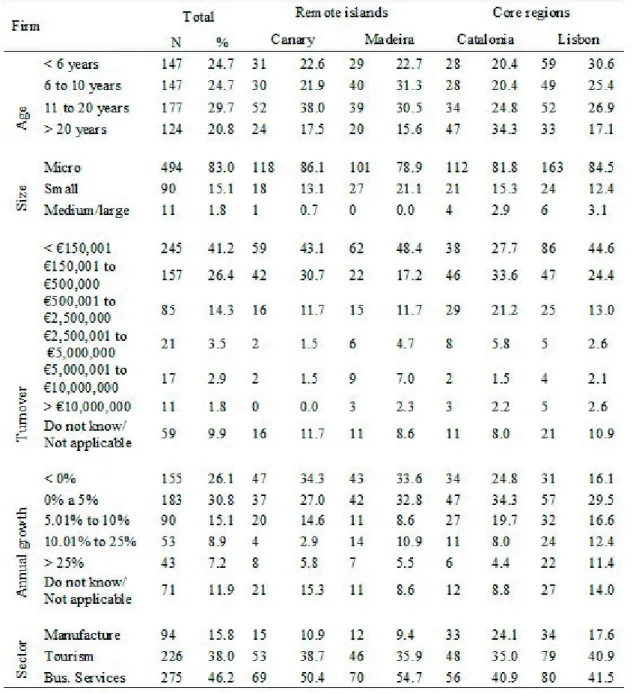
Table 1: Firms’ sample composition (N= 595).
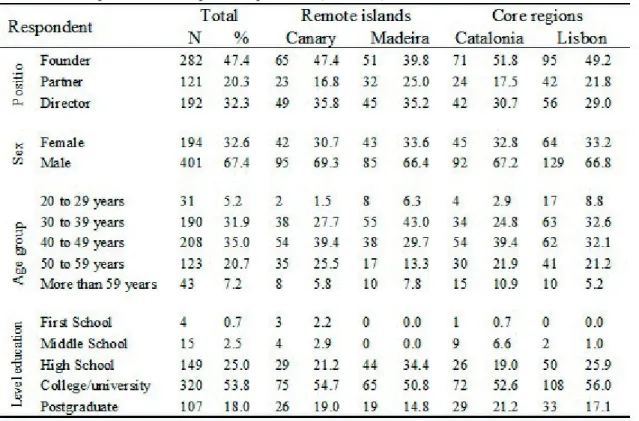
The characteristics of the sample
Table 2: Respondents’ sample composition (N= 595).
Results and discussion
Hypotheses 1 and 2: Canary Islands versus Catalonia
To test for statistical differences between the characteristics of the ecosystems in remote islands and core regions we use the non-parametric Mann-Whitney U test. Table 3 shows that there are statistically significant differences in 12 of the 15 factors that characterize the entrepreneurial ecosystem, when comparing the assessment made by firms in Canary Islands with those in Catalonia. The majority of the factors have higher mean scores in Catalonia, the exception being fiscal incentives, which may reflect a higher public policy support in the remote region. Overall, the results support Hypothesis 1.
Table 3 also shows that there are significant differences between two sectors in the ease to identify a business opportunity: manufacturing achieved a higher mean score in Catalonia; whereas tourism obtained the higher mean score in the Canary Islands. These results, therefore, only partially support Hypothesis 2.
Hypotheses 1 and 2: Madeira versus Lisbon
Table 3: Mann-Whitney U test results to the assessment of the entrepreneurial ecosystem in
Table 4: Mann-Whitney U test results to the assessment of the entrepreneurial ecosystem in
Hypothesis 3: Important factors in new firm formation—Remote Islands versus Core Regions
The Kruskall-Wallis H test was used to check for statistically significant differences between remote islands and core region in the assessment of the most important factors and major problems in new firm formation, by region and sector of activity. To interpret Tables 5 and 6 there are three important points to note. First, an asterisk in the first line of a variable indicates statistical significant differences between all sectors within the same region in that specific variable. Second, an asterisk in the mean score line of a variable indicates statistical significant differences between all regions. Third, an asterisk in last column (average score) of a variable indicate statistical significant differences between all regions within the same sector.
In Table 5 the factors with the highest scores are: identified a business opportunity; background experience and knowledge of the business; have the necessary capital; and have a good business idea. The evidence shows that the assessment of the most important factors for new firm formation are similar across the different regions.
Deepening the analysis, it is possible to identify significant statistical differences between all regions in five of the 11 factors, including: identifying a business opportunity is more important for new firms in Catalonia and Lisbon compared to the remote islands, and lack of other jobs are relatively more important in the Canary Islands, which may reflect the high structural unemployment in the region. Another interesting result is that the majority of mean scores of the answers diverge from the middle of the scale suggesting that entrepreneurs consider that a wide range of factors are important for new firm formation—reflecting both individual characteristics and those of the broader ecosystem.
Regarding the results by sector, firms in the manufacturing sector consider that formal educational levels are an important factor for new firm formation. Looking at the three factors used to assess governmental policy; only one had statistical significantly differences, the attractive fiscal incentives, which obtained a higher score in the Canary Islands. Therefore, the results only partially support Hypothesis 3.
Hypothesis 4: The major problems in new firm formation—remote islands versus core regions
Despite having relatively low scores, the five problems linked to geographic and economic constraints obtained a statistically higher mean score in the remote islands compared to core regions. This suggests that the specific locational characteristics of remote islands impose more problems for new firm formation in comparison to core regions, therefore supporting Hypothesis 4.
Conclusions and implications for policy
economic development. Furthermore, firms in remote islands assigned lower scores to most of the factors in the technological domain compared to firms in core regions. This is consistent with Baldacchino’s (1999) argument that remote (and island) regions suffer from inadequate access to technology; and reflects the lower levels of public and private sector investment in research and development (R&D) in these regions.
Overall, evidence from the survey shows that there are statistical significant differences between these remote islands and core regions in the majority of the six domains of the entrepreneurial ecosystem, and that the majority of the factors in these domains were considered to be more favourable in the two core regions, supporting much of the literature on entrepreneurial ecosystems and regional development. It should be stressed, however, that there are some aspects of the entrepreneurial ecosystem that were more favourable in the remote islands. Firms in remote islands perceive that support from governmental programmes (in the case of Madeira) and fiscal incentives were higher than assessed by firms in core regions. These findings show that local governments’ actions will have an important role to play supporting local entrepreneurs in regions where distance, peripherality, and small size (and islandness) are major problems.
Regional development theory stresses that: limited access to resources, high transportation costs, and the difficulty in obtaining economies of scale in remote islands may limit the development of some sectors such as manufacturing. Additionally, the entrepreneurship literature emphasizes that the entrepreneur’s perception of the scarcity or abundance of critical resources needed within a region will be a crucial element in his/her decision to create a new firm (Begley et al., 2005). Thus, the service sector, especially tourism, is perceived as offering more business opportunities to entrepreneurs in island regions. The analysis disaggregated by sector, in the case of the Canary Islands and Catalonia, shows that entrepreneurial opportunities vary across the regions depending on the sector of activity. This confirms Shane’s (2003) view that the industrial, economic, political, and cultural context in which a person operates influences the decision to exploit entrepreneurial opportunities. Moreover, these results confirm Winters and Martins (2004) view that the development of some economic activities in remote islands—such as manufacturing—is particularly difficult. The results also support the argument that tourism is a critical area of activity in many small island states (Read, 2004); having a higher probability of success compared to other sectors (Chancellor et al., 2011).
Implications for policy makers
The results show the important role that governments can play in the promotion and development of entrepreneurship, especially in remote islands. This study has identified practical aspects where governments can act in order to improve their entrepreneurial ecosystem. First, governments need to promote the adaptation of new technologies including use of the internet among local entrepreneurs, which will help businesses promotion and the identification of new business opportunities. Second, government should help create appropriate logistical conditions and support higher education in the information technology sector, to encourage the entrance of new entrepreneurs in this sector which is characterized by high growth businesses. Third, governments should promote interaction and cooperation between universities/research centres and firms to improve knowledge exchange and the absorptive capacity of local firms. Moreover, when attempting to strengthen local entrepreneurial ecosystems, policy makers must take into account local characteristics and the potential of the local economy—one policy will not fit all. As emphasized by Fritsch and Storey (2014, p. 950), policy “needs to reflect these differences (between rural and urban areas) and has to be tailored to local circumstances.”
Acknowledgements
We thank Dr. Breda Kenny and the participants of the ECSB postdoctoral writing workshop at RENT XXVIII for their helpful comments and suggestions on an earlier draft of this paper.
References
Ács, Z., Szerb, L., & Autio, E. (2015). The Global Entrepreneurship Index 2015. Washington: The Global Entrepreneurship and Development Institute.
Aldrich, H., & Martinez, M. (2001). Many are called, but few are chosen: An evolutionary perspective for the study of entrepreneurship. Entrepreneurship Theory and Practice, 25(4), 41-56. Amorós, J., Felzensztein, C., & Gimmon, E. (2013). Entrepreneurial opportunities in peripheral
versus core regions in Chile. Small Business Economics, 40(1), 11-139.
https://doi.org/10.1007/s11187-011-9349-0
Anderson, A.R. (2000). Paradox in the periphery: an entrepreneurial reconstruction?. Entrepreneurship & Regional Development, 12(2), 91-109. https://doi.org/10.1080/089856200283027
Armington, C., & Acs, Z. (2002). The determinants of regional variation in new firm formation. Regional Studies, 36(1), 33-45. https://doi.org/10.1080/00343400120099843
Armstrong J., & Overton, T. (1977). Estimating nonresponse bias in mail survey. Journal of Marketing Research, 14(3), 396-402. https://doi.org/10.2307/3150783
Audretsch, D. & Thurik, R. (2004). A Model of the Entrepreneurial Economy. International Journal of Entrepreneurship Education, 2(2), 143-166.
Baldacchino, G. (Ed.) (2015). Entrepreneurship in small island states and territories. New York: Routledge. Baldacchino, G. (2006). Innovative development strategies from non-sovereign island jurisdictions? A global review of economic policy and governance practices. World Development, 34(5), 852-867. https://doi.org/10.1016/j.worlddev.2005.10.004
Baldacchino, G. (2005). Successful small-scale manufacturing from small islands: comparing firms benefiting from locally available raw material input. Journal of Small Business & Entrepreneurship, 18(1), 21-37. https://doi.org/10.1080/08276331.2005.10593330
Baldacchino, G. (1999). Small business in small islands: a case study from Fiji. Journal of Small Business Management, 37(4), 80-84.
Baldacchino, G., & Bertram, G. (2009). The beak of the finch: insights into the economic development of small economies. The Round Table, 98(401), 141-160.
Baldacchino, G., & Fairbairn, T. (2006). Entrepreneurship and small business development in small islands. Journal of Small Business and Entrepreneurship, 19(4), 331-340.
https://doi.org/10.1080/08276331.2006.10593374
Baldacchino, L., Cassar, V., & Caruana, A. (2008). Start-up success in a small island state: a study among entrepreneurs in Malta. Island Studies Journal, 3(1), 73-96.
Beer, S. (2004). Information flow and peripherality in remote island areas of Scotland. International Journal of Libraries and Information Services, 54(3), 148-157. https://doi.org/10.1515/LIBR.2004.148
Begley, T., Tan, W., & Schoch, H. (2005). Politico-economic factors associated with interest in starting a business: a multi-country study. Entrepreneurship Theory & Practice, 29(1), 35-55.
https://doi.org/10.1111/j.1540-6520.2005.00068.x
Bosma, N., Acs, Z., Autio, E., Coduras, A., & Levie, J. (2009). Global entrepreneurship monitor: 2008 executive report. Babson Park: Babson College.
Briguglio, L. (1995). Small island developing states and their economic vulnerabilities. World Development, 23(9), 1616-1632. https://doi.org/10.1016/0305-750X(95)00065-K
Bull, I., & Winter, F. (1991). Community differences in business births and business growths. Journal of Business Venturing, 6(1), 29-43. https://doi.org/10.1016/0883-9026(91)90004-W
Burnett, K.A., & Danson, M. (2017). Enterprise and entrepreneurship on islands and remote rural environments. International Journal of Entrepreneurship and Innovation, 18(1), 25-35.
https://doi.org/10.1177/1465750316686237
Chancellor, C., Yu, C., & Cole, D. (2011). Exploring quality of life perceptions in rural Midwestern (USA) communities: an application of the core–periphery concept in a tourism development context. International Journal of Tourism Research, 13(5), 496-507.
https://doi.org/10.1002/jtr.823
Cheng, S., & Li., H. (2011). Spatially varying relationships of new firm formation in the United States. Regional Studies, 45(6), 773-789. https://doi.org/10.1080/00343401003713415
Choi, Y., & Phan, P. (2006). The Influences of Economic and Technology Policy on the Dynamics of New Firm Formation. Small Business Economics, 26(5), 493-503.
https://doi.org/10.1007/s11187-005-5989-2
Cosh, A., & Hughes, A. (2007). British enterprise: thriving or surviving?: SME growth, innovation and public policy 2001–2004. Cambridge: ESRC Centre for Business Research, University of Cambridge.
Cosh, A., Hughes, A., Bullock, A., & Milner, I. (2008). Financing UK small and medium-sized enterprises: the 2007 survey. Cambridge: Centre for Business Research, University of Cambridge.
Cromie, S. (1987). Motivations of aspiring male and female entrepreneurs. Journal of Occupational Behaviour, 8(3), 251-261. https://doi.org/10.1002/job.4030080306
Danson, M., & Burnett, K. (2014). Enterprise and entrepreneurship on islands. In: C. Henry & G. Mcelwee (eds.), Exploring rural enterprise: new perspectives on research, policy & practice (pp. 151-174). Bingley: Emerald.
Davidsson, P. (1991). Continued entrepreneurship: ability, need, and opportunity as determinants of small firm growth. Journal of Business Venturing, 6(6), 405-429.
https://doi.org/10.1016/0883-9026(91)90028-C
Davidsson, P., Lindmark, L., & Olofsson, C. (1994). New firm formation and regional development in Sweden. Regional Studies, 28(4), 395-410. https://doi.org/10.1080/00343409412331348356
Dubini, P. (1989). The influence of motivations and environment on business start-ups: some hints for public policies. Journal of Business Venturing, 4(1), 1-6. https://doi.org/10.1016/0883-9026(89)90031-1
European Union (2017). Entrepreneurship on islands and other peripheral regions. Bruxells: European Committee of Regions.
Frederick, H., & Monsen, E. (2009). New Zealand’s perfect storm of entrepreneurship and economic development. Small Business Economics, 37(2), 187-204.
https://doi.org/10.1007/s11187-009-9234-2
Fritsch, M., & Schindele, J. (2011). The contribution of new businesses to regional employment— an empirical analysis. Economic Geography, 87(2), 153-180. https://doi.org/10.1111/j.1944-8287.2011.01113.x
Fritsch, M., & Storey, D. (2014). Entrepreneurship in a regional context: historical roots, recent developments and future challenges. Regional Studies, 48(6), 939-954.
https://doi.org/10.1080/00343404.2014.892574
García-Rodríguez, F., Gil-Soto, E., Ruiz-Rosa, I., & Gutiérrez-Ta-o, D. (2016). Entrepreneurial process in peripheral regions: the role of motivation and culture, European Planning Studies, 25(11), 2037-2056. https://doi.org/10.1080/09654313.2016.1262827
Gartner, W. (1985). A conceptual framework for describing the phenomenon of new venture creation. Academy Management Review, 10(4), 696-706.
Goodall, B. (1987). The Penguin dictionary of human geography. Harmondsworth: Penguin. Goodbody (2002). Entrepreneurship in Ireland. Dublin: Goodbody Economic Consultants. Greve, A., & Salaff, J. (2003). Social networks and entrepreneurship. Entrepreneurship Theory &
Practice, 28(1), 1-22. https://doi.org/10.1111/1540-8520.00029
Grydehøj, A., Pinya, X., Cooke, G., Doratli, N., Elewa, A., Kelman, I., Pugh, J., Schick, L., & Swaminathan, R. (2015). Returning from the horizon: introducing urban island studies. Urban Island Studies, 1, 1-19. https://doi.org/10.20958/uis.2015.1
Isenberg, D. (2010). How to start an entrepreneurial revolution. Harvard Business Review, 88(6), 40-50. Isenberg, D. (2011). The entrepreneurship ecosystems strategy as a new paradigm for economic policy: principles for cultivating entrepreneurship. The Babson Entrepreneurship Ecosystem Project, May 11th. Retrieved from http://entrepreneurial-revolution.com/2011/05/11/the- entrepreneurship-ecosystem-strategy-as-a-new-paradigm-for-economic-policy-principles-for-cultivating-entrepreneurship/
Kaufmann, D., & Malul, M. (2015). The dynamic brain drain of entrepreneurs in peripheral regions. European Planning Studies, 23(7), 1345-1356. https://doi.org/10.1080/09654313.2014.929639
Kirchhoff, B., Newbert, S., Hasan, I., & Armington, C. (2007). The influence of university R&D expenditures on new business formations and employment growth. Entrepreneurship Theory and Practice, 31(4), 543-559. https://doi.org/10.1111/j.1540-6520.2007.00187.x
Klappera, L., Laevena, L., & Rajanc, R. (2006). Entry regulation as a barrier to entrepreneurship. Journal of Financial Economics, 82(3), 591-629. https://doi.org/10.1016/j.jfineco.2005.09.006
Levie, J., & Autio, E. (2008). A theoretical grounding and test of the GEM model. Small Business Economics, 31(3), 235-263. https://doi.org/10.1007/s11187-008-9136-8
Lovelock, B., Lovelock, K., & Normann, O. (2010). The big catch: negotiating the transition from commercial fisher to tourism entrepreneur in island environments. Asia Pacific Journal of Tourism Research, 15(3), 267-283. https://doi.org/10.1080/10941665.2010.503616
Martin, P. (2003). Public policies and economic geography. In B. Funck & L. Pizzati (Eds.), European integration, regional policy, and growth (pp. 19-32). Washington: World Bank. Mason, C., & Brown, R. (2014). Entrepreneurial ecosystems and growth oriented
entrepreneurship. Background paper presented at the workshop organised by the OECD LEED Programme and Dutch Ministry of Economic Affairs, The Hague, 7 November. Mason, C., & Harvey, C. (2013). Entrepreneurship: contexts, opportunities and processes. Business
History, 55(1), 1-8. https://doi.org/10.1080/00076791.2012.687542
Moore, J., (1993). Predators and Prey: A new ecology of competition. Harvard Business Review, 71(3), 75-86.
OECD (2004). Fourth community innovation survey. OECD, 20 October. Retrieved from
Orhan, M., & Scott, D. (2001). Why women enter into entrepreneurship: an explanatory model. Women in Management Review, 16(5), 232-243. https://doi.org/10.1108/09649420110395719
Quince, T., & Whittaker, H. (2002). Entrepreneurs and their business. Cambridge: Centre for Business Research, University of Cambridge.
Read, R., (2008). Foreign direct investment in small island development states. Journal of International Development, 20(4), 502–525. https://doi.org/10.1002/jid.1477
Read, R., (2004). The implication of increasing globalization and regionalism for the economic growth of small island states. World Development, 23(2), 365-378.
https://doi.org/10.1016/j.worlddev.2003.08.007
Reynolds, P., Storey, D., & Westhead, P. (1994). Cross-national comparisons of the variation in new firm formation rates. Regional Studies, 28(4), 443-456.
https://doi.org/10.1080/00343409412331348386
Romanelli, E. (1989). Environments and strategies of organisation start-up: effects on early survival. Administrative Science Quarterly, 34(3), 369-387. https://doi.org/10.2307/2393149
Shane, S. (2003). A general theory of entrepreneurship: the individual-opportunity nexus. Cheltenham: Edward Elgar. https://doi.org/10.4337/9781781007990
Shane, S. (2000). Prior knowledge and the discovery of entrepreneurial opportunities. Organization Science, 11(4), 448-469. https://doi.org/10.1287/orsc.11.4.448.14602
Shane, S., & Venkataraman, S. (2000). The promise of entrepreneurship as a field of research. Academy of Management Review, 25(1), 217-226. https://doi.org/10.5465/AMR.2000.2791611
Spilanis, I., Kizos, T., Vaitis, M., & Koukourouvli, N. (2013). Measuring the economic, social and environmental performance of European island regions: emerging issues for European and regional policy. European Planning Studies, 21(12), 1998-2019.
https://doi.org/10.1080/09654313.2012.722970
Sufrauj, S. (2011). Islandness and remoteness as resources: evidence from the tourism performance of small remote island economies (SRIES). European Journal of Tourism, Hospitality and Recreation, 2(1), 19-41.
Sutaria, V., & Hicks, D. (2004). New firm formation: dynamics and determinants. The Annals of Regional Science, 38(2), 241-262. https://doi.org/10.1007/s00168-004-0194-9
Tamásy, C. (2006). Determinants of regional entrepreneurship dynamics in contemporary Germany: a conceptual and empirical analysis. Regional Studies, 40(4), 365-384.
https://doi.org/10.1080/00343400600612137
Welter, F. (2011). Conceptualising entrepreneurship in a transition context. International Journal of Entrepreneurship and Small Business, 3(2), 165-184.
Wennekers, S., & Thurik, R. (1999). Linking entrepreneurship and economic growth. Small Business Economics, 13(1), 27-55. https://doi.org/10.1023/A:1008063200484
Winters, I., & Martins, P. (2004). When comparative advantage is not enough: business costs in small remote economies. World Trade Review, 3(3), 347-383.
https://doi.org/10.1017/S1474745604001922