Major Article
Corresponding author: Dra. Cintia Mariana Romero.
e-mail: [email protected]
Received 5 February 2016
Accepted 14 October 2016
Biofi lm inhibition activity of traditional medicinal plants
from Northwestern Argentina against native pathogen
and environmental microorganisms
Cintia Mariana Romero
[1],[2], Cristian Germán Vivacqua
[1], María Belén Abdulhamid
[1],
Mario Domingo Baigori
[1],[2], Alberto Carlos Slanis
[3], María Cristina Gaudioso de Allori
[2]and María Laura Tereschuk
[4][1]. Planta Piloto de Procesos Industriales Microbiológicos, Consejo Nacional de Investigaciones Científi cas y Técnicas, San Miguel de Tucumán, Tucumán, Argentina. [2]. Facultad de Bioquímica, Química, Farmacia y Biotecnología, Universidad Nacional de Tucumán, San Miguel de Tucumán, Tucumán, Argentina. [3]. Facultad de Ciencias Naturales e Instituto Miguel Lillo, San Miguel de Tucumán, Tucumán, Argentina. [4]. Cátedra de Química
Orgánica, Facultad de Ciencias Exactas y Tecnología, Universidad Nacional de Tucumán, San Miguel de Tucumán, Tucumán, Argentina.
Abstract
Introduction: Plants have been commonly used in popular medicine of most cultures for the treatment of disease. The in vitro antimicrobial activity of certain Argentine plants used in traditional medicine has been reported. The aim of this study was to investigate the antimicrobial, anti-biofi lm, and anti-cell adherence activities of native plants (Larrea divaricata, Tagetes minuta, Tessaria absinthioides, Lycium chilense, and Schinus fasciculatus) collected in northwestern Argentina.Methods:The activities of the fi ve plant species were evaluated in Bacillus strains and clinical strains of coagulase-negative Staphylococcus isolated from
northwestern Argentina and identifi ed by 16S rDNA. Result: Lycium chilense and Schinus fasciculatus were the most effective
antimicrobial plant extracts (15.62µg/ml and 62.50µg/ml for Staphylococcus sp. Mcr1 and Bacillus sp. Mcn4, respectively).
The highest (66%) anti-biofi lm activity against Bacillus sp. Mcn4 was observed with T. absinthioides and L. divaricate extracts.
The highest (68%) anti-biofi lm activity against Staphylococcus sp. Mcr1 was observed with L. chilense extract. T. minuta, T. absinthioides, and L. divaricata showed percentages of anti-biofi lm activity of between 55% and 62%. The anti-adherence
effects of T. minuta and L. chilense observed in Bacillus sp. Mcn4 refl ected a difference of only 22% and 10%, respectively,
between anti-adherence and biofi lm inhibition. Thus, the inhibition of biofi lm could be related to cell adherence. In Staphylococcus
sp. Mcr1, all plant extracts produced low anti-adherence percentages. Conclusion: These fi ve species may represent a source of alternative drugs derived from plant extracts, based on ethnobotanical knowledge from northwest Argentina.
Keywords: Anti-biofi lm. Traditional medicinal plant. Bacillus. Staphylococcus.
INTRODUCTION
Resistance to antibiotics has become a major public health
problem worldwide as it reduces the effectiveness of treatments
and increases morbidity, mortality, and health-care costs(1). This
challenge is a natural consequence of the adaption of infectious
pathogens to the types of antimicrobials used in multiple areas, including medicines, plants and animals raised as food, and disinfectants used in farms, hospitals, and households(2) (3).
Research on plants as potential sources of new and effective antimicrobials with novel modes of action is well established. Although active constituents may occur in plants in low concentrations, plant extracts may, in many cases, represent a
superior source of antimicrobial compounds than synthetic drugs(4).
The use of plants for the treatment of multiple ailments
has been a common practice in the popular medicine of most
cultures, even where the precise causation of a disease and/or the mechanisms of its cure have not always been understood(5) (6). Exploratory research on plants as sources of new antimicrobial
compounds has led to a joint interest in fundamental research
in the fi elds of agriculture, chemistry, and medicine. However, studies on the antimicrobial activity of plant extracts have
been largely restricted to the analysis of their bacteriostatic and bactericidal properties(7).
There are some existing reports on the in vitro antimicrobial activity of ethanolic extracts of some Argentine plants used
in traditional medicine(8) (9),although few studies evaluating
antimicrobial activity as well as anti-biofilm activity in
relation to pathogenic microorganisms have been reported(10) (11).
of cells, encased in a self-synthesized polymeric matrix and
attached to a tissue or surface(12). This mode of growth protects bacteria from environmental stresses, that is, the treatment of
biofi lms with antibiotics or other biocides is often ineffective
for eradication(13). Biofilm formation is therefore a major
challenge in many contexts, ranging from industrial corrosion
and biofouling(14) to chronic and nosocomial infections(15).
The purpose of the present work was therefore to investigate and demonstrate the presence of antimicrobial, anti-biofi lm,
and anti-adherence activities in native plants collected in
northwestern Argentina (specifi cally, Larrea divaricata, Tagetes minuta, Tessaria absinthioides, Lycium chilense, and Schinus fasciculatus), which have been traditionally used for a variety
of folk medicinal purposes.
METHODS
Microorganisms and fermentation conditions
Bacillus strains were isolated from a variety of sources
in northwestern Argentina, such as soils contaminated with hydrocarbons and natural soils from a riverbank. Soil suspensions were created and heated at 80°C for 15 min, plated onto Luria-Bertani (LB) agar, and incubated at 37°C. Clinical
isolates of coagulase-negative Staphylococcus (CoNS) were
also obtained from a dialysis center in the City of San Miguel de Tucumán. All isolated bacteria were characterized using
conventional biochemical methods, namely catalase, bacitracin
susceptibility, and coagulase testing. Liquid cultures of Bacillus
and CoNS were prepared in 125-ml fl asks containing 10ml of LB medium on an orbital shaker at 37°C.
Molecular characterization
Total deoxyribonucleic acid (DNA) was extracted from cells harvested in the mid-exponential growth phase as
described previously(16). Polymerase chain reaction (PCR)
amplifi cation was performed in a 25-µl reaction mix containing 2.5µl 10X STR reaction buffer (Promega, Wisconsin, United States), 20ng total DNA, 0.5µM of each primer, and 1U Taq DNA polymerase (Promega). Primers of the sequence 27F (5´-AGAGTTTGATCMTGGCTCAG-3´) and 1492R (5´-GGTTACCTTGTTACGACTT-3´) were used to generate partial sequences of 16S ribosomal DNA (rDNA). Amplifi cation conditions were as follows: 5 min at 94°C; 35 cycles of 1 min at 94°C, 2 min at 50°C, and 2 min at 72°C; and 7 min at 72°C for the fi nal extension. PCR products were analyzed by electrophoresis on 2% (wt/vol) agarose gels.
DNA sequencing was performed by Macrogen Services(Seoul, South Korea). Sequences were compared and aligned with the GenBank database using Basic Local Alignment Search Tool (BLAST) software. Partial nucleotide sequences of the 16S rDNA
gene of Bacillus sp. and CoNS Staphylococcus sp. were deposited
in the GenBank database under accession numbers KP872905 and KP872906, respectively.
Plant material and extraction
In the present study, samples of fi ve native plants from four families were collected in order to evaluate their antibacterial
and/or anti-biofi lm activities (Table 1)(17)(18) (19) (20) (21) (22) (23) (24)
(25) (26) (27) (28) (29) (30) (31). The leaves of these plants were collected in the locality of Tafí del Valle in the province of Tucumán in northwestern Argentina (Figure 1A). We focused our study
on leaves because they represent a sustainable resource and,
although bark has been traditionally used, leaf extracts tend to show higher activity. The identity of the plant material was confi rmed and voucher specimens were entered into the Miguel Lillo Herbarium at the National University of Tucuman. Botanical and vernacular names, traditional uses, and reported chemical compositions are shown in Table 1. The collected leaves were dried at room temperature in a well-ventilated room and ground to fi ne powder using a mortar and pestle. This powder was then macerated in 80% ethanol for 48h and then fi ltered through Whatman n° 1 fi lter paper.
The solid residue was suspended in 50% ethanol until dissolution. The extracts were then concentrated to dryness using a rotary evaporator (Figmay, Córdoba Argentina) under reduced pressure and at a temperature not exceeding 50°C. For antimicrobial and anti-biofi lm studies, several concentrations of each prepared powder were evaluated (8-500μg/ml).
Determination of sub-inhibitory concentration and mini-mum inhibitory concentration
The microorganisms used in this study were cultured in Mueller-Hinton (MH) broth and incubated at 37°C for 24h prior to assays. All cultures were standardized by standard dilution in MH broth (4°C) and characterized by experimental transmittance [T=30, optical density (OD)610]. Growth at 4°C was stopped by immersion in ice-cold water. From this standard dilution, a 50 ml working suspension was prepared with corrected transmittance T=95 (25µl of T=30 in 5ml of refrigerated MH broth), corresponding to 1.5 × 10⁸ colony-forming units (CFU)/ml for the Bacillus sp. strain and 1.2 ×
108 CFU/ml for the Staphylococcus sp. strain. This dilution was maintained at 4°C to ensure cellular quiescence. Inoculum (100µl) was added to each well containing sample plant extracts.
The effect of plant extracts on the growth of Bacillus and
CoNS Staphylococcus isolates was evaluated using a standard
broth microdilution methodology. Serial dilution was employed
to determine the minimum inhibitory concentration(MIC) [the
lowest plant metabolite concentration (µg/ml) that inhibited bacterial growth] and sub-inhibitory concentration (SIC) [the highest extract concentration (µg/ml) below the MIC that did not inhibit bacterial growth] concentrations in the range 8-500µg/ml after 24h of growth. The plant extracts at each concentration were prepared in dimethyl sulfoxide (DMSO) solvent, aliquoted into multi-well polystyrene plates, and dried to allow DMSO evaporation (to avoid the toxic effects of DMSO on bacteria). Negative controls (cells + MH broth), positive controls [cells + MH broth + antibiotics (chloramphenicol and gentamicin)], and media controls (MH) were included. Positive controls for antibiotics were prepared at 8-500µg/ml using serial dilution. All tests were performed in quadruplicate.
TABLE 1
Botanical and common names, traditional uses, and reported chemical compositions of fi ve native plants (Larrea divaricata, Tagetes minuta, Tessaria absinthioides, Lycium chilense, and Schinus fasciculatus) from Tafi del Valle, Tucumán, northwestern Argentina.
Botanical name Family Collection Coordinates Voucher ID Chemical Ethnobotanical
site composition uses
Larrea divaricata Cav. Zygophyllaceae Ampimpa S26º 36,519’ Slanis et al. 3427 Lignans, fl avonoids Tuberculosis,
(Dpt. Tafí del Valle) W65º 50,678’ (LIL) as quercetin(17) common cold,
antitumor,
antifungal(18)
Lycium chilense Miers Solanaceae Amaicha S26º 35,632’ Slanis et al. 3429 Alkaloids, Antioxidant, ex Bertero (Dpt. Tafí del Valle) W65º 54,953’ (LIL) nortropanes antitumor,
alkaloids, fl avones, antibacterial, and fl avonoids, antifungal glycosylated activity(19) fl avonoids(19)
Schinus fasciculatus L. Anacardiaceae Amaicha S26º 35,632’ Slanis et al. 3427 Sesquiterpene, Antibacterial and
(Dpt. Tafí del Valle) W65º 54,953’ (LIL) terpenoids, antifungal fl avonoids, activity(22)
saponins, sterols, essential oils, gums and resins (20) (30) (5) (21)
Tagetes minuta L. Asteraceae Road 307 km 53 S26º 53’6,49’’ Slanis et al. 3125 Essential oils, Antimicrobial (25) (26)
(Dpt. Tafí del Valle) W65º 41’28,40’ (LIL) terpenoids, antioxidant(27 (6),
fl avonoids as repellent(28),
quercetagetin, and acaricide patiletin, activity(29)
isorhamnetin(23) (24)
Tessaria absinthioides Asteraceae Los Zazos S26º 36,189’ Slanis et al. 3428 Sesquiterpene, Antiviral (Hook &Arn.) ex DC. (Dpt. Tafí del Valle) W65º 54,074’’ (LIL) sulfur compounds, activity(31)
fl avonoids, essential
oils(30)
(Thermo ScientificTM MultiskanTM GO Ultraviolet-Visible microplate spectrophotometer,United States ). To determine the effects of the extracts, a formula was used to calculate percent inhibition. The mean percentage of inhibition from the replicates was used to determine the fi nal MIC and SIC values(7).
ODt24 = optical density (610 nm) of the test well at 24 hours post-inoculation
ODt0 = optical density (610 nm) of the test well at 0 hours post-inoculation
ODgct24 = optical density (610 nm) of the growth control
well at 24 hours post-inoculation ODgct0 = optical density
(610 nm) of the growth control well at 0 hours post-inoculation
Biofi lm formation and anti-biofi lm effects of plant extracts
Biofilm production was carried out with the method in polystyrene multi-well cell culture plates. The biofi lm-producing CoNS Staphylococcus strains 263 and 1174 (isolated
from bovine mastitis and provided by the Faculty of Veterinary Medicine, Buenos Aires University) and a non-producing CoNS
Staphylococcus strain (ATCC 12228) were used as controls(1).
medium was extracted by inversion and wells were washed twice with phosphate-buffered saline (PBS) (8.1mM Na2HPO4, 1.5mM KH2PO4, 140mM NaCl, and 3mM KCl; pH 7.2). The contents of wells were emptied by inversion and plates were dried upside-down on absorbent paper. Once dry, biofi lms appeared as whitish, opaque membranes and were fi xed with methanol for 7 min(32). Plates were emptied again by inversion and air-dried. Once dry, an aqueous solution of 0.1% safranin was used as a stain. After 4 min, plates were again inverted, washed with water, dried upside-down(1).
Biofi lm formation was evaluated using a microplate reader at 490nm (Thermo Scientifi cTM MultiskanTM GO Ultraviolet-Visible microplate spectrophotometer,United States) . The strains considered as the best producers of biofi lm were those with OD490 values greater than those of the control strains (OD490 ˃ 0.08)(1).
Next, the selected bacterial strains were analyzed in the absence and presence of plant extracts. To determine the effects of plant extracts on biofi lm formation, SIC of plant extracts (10-100µg/ml as appropriate for each microorganism) were added to the test wells and allowed to dry prior to inoculation. Inoculum (corresponding to 9 × 10⁸ CFU/ml for Bacillus sp. strain and 1.6 × 10⁸ CFU/ml
for Staphylococcus sp. strain) was added in the form of a bacterial
suspension at the zero hour time point of biofi lm formation, and biofi lms were allowed to develop for 24h as described above. Each bacterial strain inoculated in the absence of a plant extract was considered as a positive control for biofi lm formation.
Bacterial adhesion assay
Inoculum was prepared as a 1:10 dilution of microorganism cultures (24h) using fresh LB broth followed by incubation at 37°C for 2h with shaking at 100rpm (inoculum had OD610=0.100, corresponding to 1.5 × 10⁸ CFU/ml). Inoculum of 200µl was then added to multi-well polystyrene plates at 37°C for 3h in the presence and absence of plant extracts at SIC. Next, the medium wasextracted by inversion, plates were washed twice with PBS, and bacterial adhesions were fi xed with 25% formaldehyde for 30 min. Wells were then dried and stained with 0.1% safranin. Cell adherence measurement was carried out in a microplate reader at 490nm. The percentage of inhibition of bacterial adhesion was determined as described above.
Statistical analysis
Statistical analysis was performed using SigmaPlot 12.0 and Minitab (Minitab, Inc.) software version 14 for Windows. Normality distribution was evaluated by Shapiro-Wilk test and analysis of variance (ANOVA) was used to evaluate the mean differences among treatments. Two-way ANOVA and subsequent comparisons were performed using the Holm-Sidak test and Bonferroni post-test as appropriate. Results were presented as the mean Standard Deviation (SD), and differences were accepted as signifi cant for p < 0.05 (5% of the signifi cance level).
RESULTS
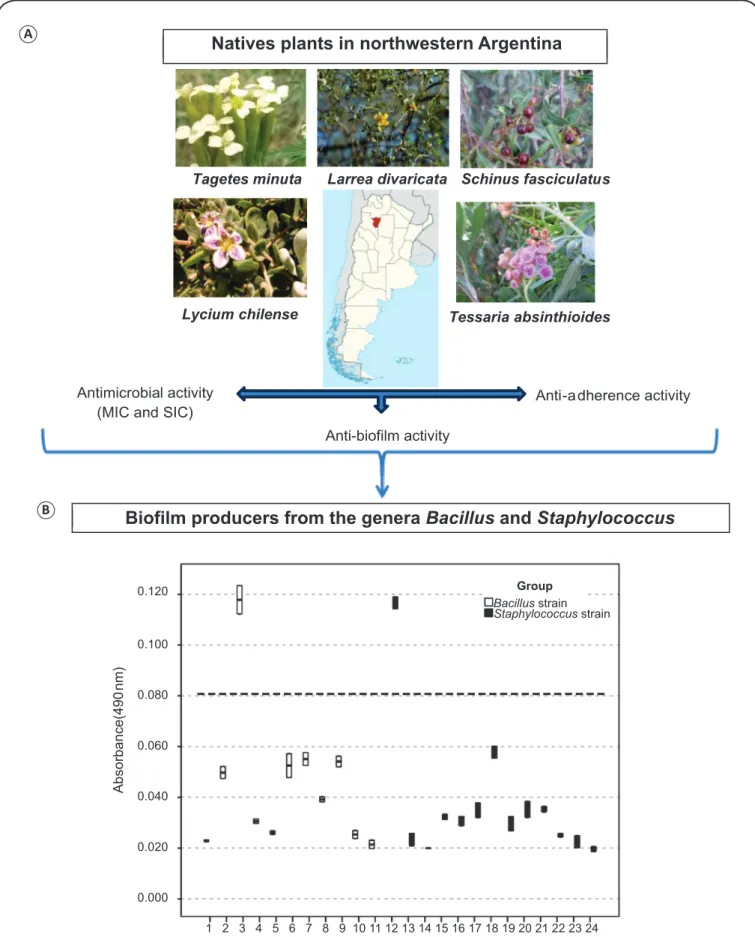
Isolation and selection of indigenous spore-forming bacteria and coagulase-negative Staphylococcus strains A total of 53 spore-forming bacteria were isolated from natural environments, and 22 CoNS strains were isolated from
a dialysis center(1). From this total of 75 native isolates, 24
were selected as biofi lm producers and the Mcn4 and Mcr1 strains were identifi ed as the best biofi lm producers compared with control strains (Figure 1B). Partial sequencing of the 16S rDNA gene confi rmed the biochemical and morphological characterization of both strains. A BLAST search and alignment analysis showed a similarity of 99% for strain Mcn4 with
Bacillus licheniformis, hereinafter referred to as Bacillus sp.
Mcn4; and strain Mcr1 with Staphylococcus sciuri, hereinafter referred to as Staphylococcus sp. Mcr1.
Determination of sub-inhibitory concentration and minimum inhibitory concentration
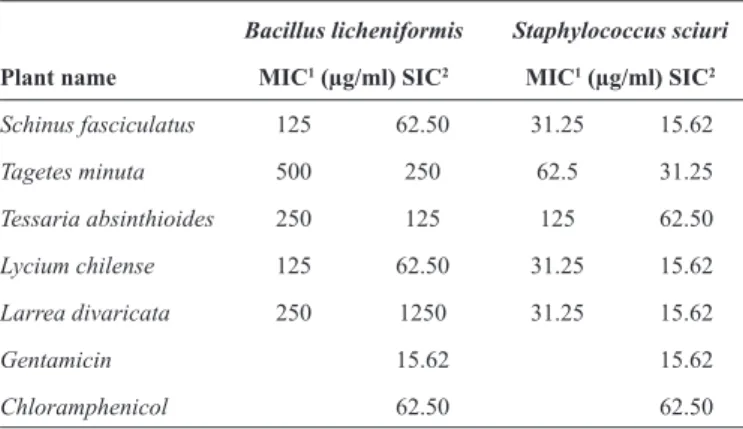
Table 2 shows the SIC and MIC values obtained for the fi ve plant extracts. These results refl ect a variable degree of
antibacterial activity against the Bacillus and Staphylococcus
genera, and indicate that dose-dependent antimicrobial activity
was observed for all plant extracts.
Extracts from L. chilense and S. fasciculatus showed the
best antimicrobial properties, with SIC values of 62.50µg/ml
for Bacillus sp. Mcn4 and 15.62µg/ml for Staphylococcus sp.
Mcr1 for both extracts (Table 2). Furthermore, both L. chilense
and S. fasciculatus showed antimicrobial activity against Bacillus strains, with an SIC value of 62.50µg/ml, the same
SIC observed for chloramphenicol (Table 2). The antimicrobial activities shown by the genera Schinus and Lycium against
Staphylococcus sp. Mcr1 included SIC values equal to those
observed for gentamicin (15.62µg/ml).
A moderate level of antimicrobial activity (SIC 125-250µg/ ml) was observed against Bacillus sp. Mcn4 for T. minuta,
T. absinthioides, and L. divaricata (Table 2). However, these
plant extracts showed high antimicrobial activity against
Staphylococcus sp. Mcr1. It is notable that all plant extracts
TABLE 2
Effects of Larrea divaricata, Tagetes minuta, Tessaria absinthioides, Lycium chilense, and Schinus fasciculatus on the viability of bacteria from
the genera Bacillus and Staphylococcus.
Bacillus licheniformis Staphylococcus sciuri
Plant name MIC1 (µg/ml) SIC2 MIC1 (µg/ml) SIC2 Schinus fasciculatus 125 62.50 31.25 15.62
Tagetes minuta 500 250 62.5 31.25
Tessaria absinthioides 250 125 125 62.50
Lycium chilense 125 62.50 31.25 15.62
Larrea divaricata 250 1250 31.25 15.62
Gentamicin 15.62 15.62
Chloramphenicol 62.50 62.50
MIC (µg/ml) and SIC (µg/ml) were determined, with values expressed as means from triplicate assays. 1MIC = the lowest plant metabolite concentration
(µg/ml) that inhibited bacterial growth. 2SIC = the highest extract concentration
FIGURE 1. (A): Anti-microbial and anti-biofi lm activity of medicinal plants from Northwestern Argentina against native isolates from the genera Bacillus and
Staphylococcus. (B): A total of 53 spore-forming bacteria were isolated from natural environments and 22 coagulase-negative Staphylococcus (CoNS) were
isolated from a dialysis center. Of these, 24 were selected as biofi lm producers. The best biofi lm producing strains were identifi ed as Bacillus sp.+ Mcn4 (strain
3) and Staphylococcus sp. Mcr1 (strain 12) (p < 0.01). MIC: miminimum inhibitory concentration; SIC: sub-inhibitory concentration. 0.120
0.100
0.080
0.060
0.040
0.020
0.000
A
b
s
o
rb
a
n
c
e
(490
n
m
)
Strains Antimicrobial activity
(MIC and SIC)
Anti-Biofilm activity
Anti-a dherence activity Tagetes minuta
Lycium chilense
Larrea divaricata Schinus fasciculatus
Tessaria absinthioides
1 2 3 4 5 6 7 8 9 10 11 12 13 14 15 16 17 18 19 20 21 22 23 24
Group
Bacillusstrain Staphylococcusstrain
Natives plants in northwestern Argentina
Biofilm producers from the genera
Bacillus
and
Staphylococcus
Anti-biofilm activity A
showed SIC values between 15.62-62.5µg/ml against this
microorganism.
The L. divaricata extract showed remarkable activity against
the genus Staphylococcus, with an SIC value equal to that of
gentamicin (15.62µg/ml), which was used as the reference
antibiotic. Furthermore, T. absinthioides extract showed similar
antimicrobial activity against Staphylococcus sp. Mcr1 to that
of chloramphenicol (Table 2).
Effect of plant extracts on biofi lm formation The anti-biofi lm activity of the plant extracts on Bacillus sp. Mcn4 and Staphylococcus sp. Mcr1 was also tested at selected
SIC values.
The best anti-biofi lm activity (66%) against Bacillus sp.
Mcn4 was observed with the extract from T. absinthioides at
100µg/ml (Figure 2A) and with L. divaricata extract across
the entire range evaluated (10-100µg/ml), with no signifi cant differences observed for the latter extract across the extract concentrations evaluated (p = 0.67) (Figure 2A).
Lycium chilense showed biofi lm inhibition of 45% and
47% at 10µg/ml and 50µg/ml, respectively, and the difference between these two concentrations was not significant (p = 0.09). With T. minuta extract, the greatest inhibition (50%)
was observed at 100µg/ml, while for S. fasciculatus extract, no
signifi cant biofi lm inhibition was observed (Figure 2A).
Anti-biofi lm activity against Staphylococcus sp. Mcr1 was
also evaluated at selected SIC values (Figure 2B). The highest anti-biofi lm activity was observed with L. chilense extract (68%).
In this case, anti-biofi lm activity was dose dependent, with the highest inhibition observed at 50µg/ml (p = 0.02). Tagetes minuta, T. absinthioides, and L. divaricata showed percentages
of anti-biofi lm activity with values between 55% and 62% (Figure 2B). For these extracts, no signifi cant difference was observed between the two concentrations evaluated (10µg/ml and 50µg/ml: p = 0.17, p = 0.05, and p = 0.59 for T. minuta, T. absinthioides, and L. divaricata, respectively). As also observed
against the genus Bacillus, S. fasciculatus extract showed only a
low level of biofi lm inhibition activity (Figure 2B).
Effect of plant extracts on cell adherence
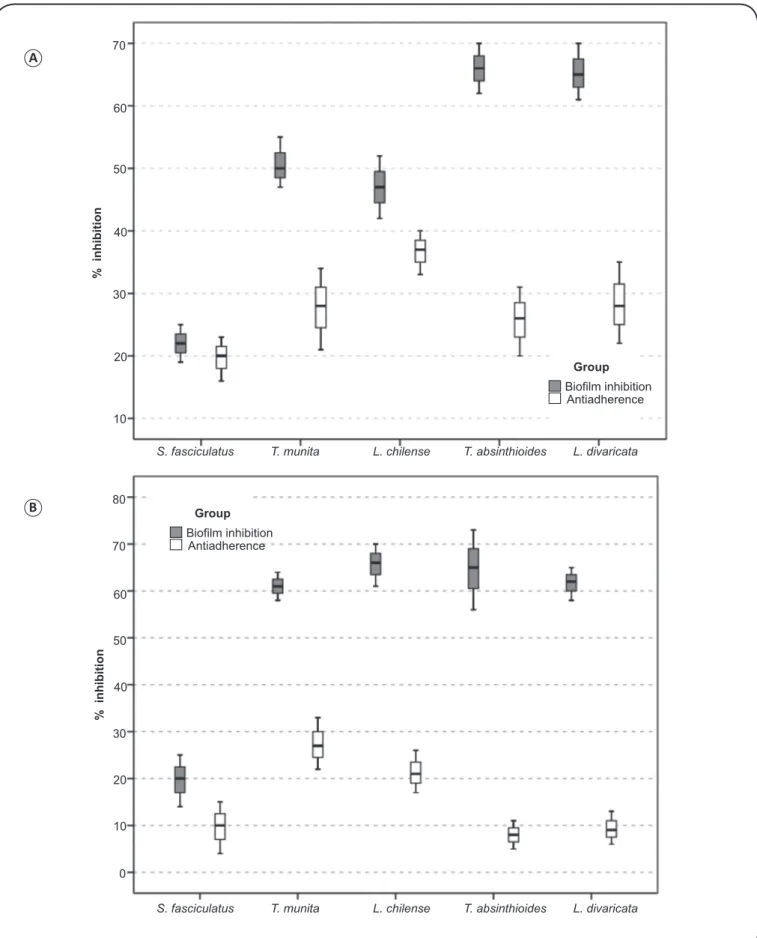
The anti-adherence effects of the plant extracts were also evaluated. Samples selected for testing included the plant extract concentrations that had previously shown the most effective inhibition of biofi lm (Figure 2).
The anti-adherence effects of T. absinthioides and
L. divaricata extracts against Bacillus sp. Mcn4 were found to be
lower than their anti-biofi lm activity, indicating that their ability to inhibit biofi lm formation took place during a step subsequent to cell adherence (Figure 3A). The percentage of anti-adherence observed with T. minuta and L. chilense extracts refl ected a
difference only of 22% and 10%, respectively, between anti-adherence and biofi lm inhibition (Figure 3A).
Schinus fasciculatus showed the same percentage of
anti-adherence effect as its percentage of anti-biofi lm activity, with no signifi cant difference observed between these (p = 0.55). Thus, for this plant extract, the inhibition of biofi lm formation
could be related to cell adherence.
In contrast, all plant extracts tested showed low
anti-adherence percentages against Staphylococcus sp. Mcr1,
suggesting that their biofi lm inhibition abilities may be related to a later step in biofi lm formation. In all of these cases, the biofi lm effect was more than 50% higher than the
anti-adherence effect (Figure 3B).
DISCUSSION
The more potent antimicrobial activities observed for plant extracts were against the Staphylococcus strain. The
antimicrobial activities produced by extracts of the genera
Schinus and Lycium against Staphylococcus sp. Mcr1 were
comparable to those observed for gentamicin. This antimicrobial
effect of the genus Schinus against Staphylococcus was also
observed by Yao et al.(19) and Gehrke et al. (33), with both of these
sources reporting an MIC value of 125µg/ml. However, in the present work, a more effective MIC of 31.25µg/ml (Table 2)
was observed. The similarities in the activities observed for
S. fasciculatus and L. chilense could be due to the presence of
fl avonoids in both extracts. The antibacterial properties of these compounds are increasingly being reported, and raw extracts from plants with a history of use in traditional medicine have now been screened for antimicrobial activities by numerous
research groups(34) (35). However, it is also possible that the high
antimicrobial activity shown by S. fasciculatus was due to
disruption of the bacterial membrane caused by the presence
of terpenoids, which inhibitAdenosine triphosphate (ATP)
synthesis(36) (37).
However, ethanolic extract of L. divaricata showed potent
antimicrobial activity against Staphylococcus sp. Mcr1.
Davicino et al.(18) have reported that the fraction obtained from
an ethanolic extract of L. divaricata contained several phenolic
compounds, which may be responsible for the cytotoxicity
observed against the Staphylococcus genus.
The antimicrobial activity observed with T. minuta and
T. absinthioides may be due to the presence, not only of
fl avonoids, but also of essential oils of the family Asteraceae (to
which these species belong; Table 1), which have been reported as compounds with antimicrobial activity(38) (39).
The SIC values determined for each plant extract were used to evaluate biofi lm inhibition.
Biofi lm eradication is diffi cult to achieve because of host
defenses and inherent resistance to antibiotics and biocides.
Furthermore, there are several mechanisms used to explain the resistance of biofi lms to antimicrobials(40), which makes it diffi cult to predict the behavior of biofi lm cells. In the present study, the anti-biofi lm activity of plant extracts at SIC was evaluated after 24h and the percentage of biofi lm inhibition were observed (Figure 2). By comparing the values obtained, it can be seen that plant extract concentrations signifi cantly affected the removal and/or inactivation of biofi lms.
Extracts from these medicinal plants may infl uence biofi lm
formation by damaging microbial membrane structures(4),
inhibiting peptidoglycan synthesis, and/or modulating quorum
sensing(41). With regard to the last of these mechanisms,
70
% Biofilm inhibition
60
50
40
30
20
Dose (µg/ml)
10
10 50 100
0
S. fasciculatus T. munita L. chilense T. absinthioides L. divaricata
70 80
% Biofilm inhibition
60
50
40
30
20
Dosis (ug/ml)
10 10
50
0
S. fasciculatus T. munita L. chilense T. absinthioides L. divaricata
FIGURE 2. Anti-biofi lm effects of extracts of traditional medicinal plants from Northwestern Argentina against. (A):Bacillus sp. Mcn4 and (B): Staphylococcus
sp. Mcr1. Sub-inhibitory concentrations from 10-100μg/ml were used. The values are expressed as percentages of bacterial biofi lm inhibition by each plant extract, compared with the control (no plant extract) and expressed as means ± standard deviation of triplicate assays.
A
A
B
70
% inhibitio
n
60
50
40
30
20
10
S. fasciculatus T. munita L. chilense T. absinthioides L. divaricata
Group
Biofilm inhibition Antiadherence
70 80
% inhibition
60
50
40
30
0 10 20
Group
Biofilm inhibition Antiadherence
S. fasciculatus T. munita L. chilense T. absinthioides L. divaricata
FIGURE 3. Anti-adherence effects against (A):Bacillus sp. Mcn4 and (B): Staphylococcus sp. Mcr1 cells. Values are expressed as percentages of cell
been studied and they represent the most recent strategies to
counteract staphylococcal infections, among others. Quorum
interference can be achieved by several alternative strategies,
including quorum sensing disruption through inhibition of
signal molecule biosynthesis, signal molecule inactivation,
and blockage of signal transduction(41) (42). In fact, fl avonoids are among the compounds that exert anti-biofi lm effects via quorum sensing inhibition(43). In the present study, all plant extracts that showed biofi lm inhibition contain fl avonoids, and as such, these compounds may be responsible for the biofi lm inhibition observed, although further studies are required to
investigate this.
Biofi lm formation occurs stepwise, and one step of relevant
importance is cell adhesion that occurs prior to biofilm formation(44). In view of the importance of this step in biofi lm
production, the anti-adherence effects of the plant extracts under study were also evaluated.
For S. fasciculatus, the inhibition of biofi lm formation
observed may be related to cell adherence. Considering that
adherence is a prerequisite for colony formation, preventing bacterial adhesion would appear to be an ideal strategy for reducing biofi lm formation(44).
For the plant extracts evaluated in this study, anti-biofi lm
and anti-adherence properties against the genus Bacillus and
anti-biofi lm activity against CoNS isolates have not been
previously reported. These fi ndings may represent novel,
alternative approaches to biofilm control, especially in
relation to infectious diseases caused by CoNS(1). Furthermore,
the biodeterioration of metals in industrial processes has
detrimental effects on the environment with economic implications. The production of biofi lm by Bacillus spp. affects the level of metal corrosion in industrial processes(45). Thus, the development of a preventive strategy against bacterial-mediated corrosion is necessary.
The plant extracts studied here showed antimicrobial activity as well as biofi lm inhibition against the genera Bacillus and
Staphylococcus. These fi ndings may represent the fi rst of many
steps towards the development of new antimicrobial and anti-biofi lm drugs using extracts from plants used in traditional folk medicine in northwestern Argentina. Given the importance of developing new strategies for controlling the growth of biofi lm because of its pathogenic association with several diseases or infl uence on the level of metal corrosion in industrial processes, further investigation of the natural biofi lm inhibition exhibited by Argentinean plant extracts is clearly warranted.
Acknowledgments
We offer our deepest thanks to the institutions that provided technical support for the development and implementation of this studyNational Scientifi c and Technical Research Council (CONICET) and National University of Tucumán (UNT).
Confl ict of Interest
The authors declare that they have no confl icts of interest.
Financial Support
The present work was supported by Agencia de Promoción Científi ca y Tecnológica (PICT 2012-2914) Préstamo del Banco Internacional de Desarrollo (BID) and Programa de Investigación de la Universidad Nacional de Tucumán (PIUNT E 548).
REFERENCES
1. de Allori MCG, Jure MA, Romero C, de Castillo MEC. Antimicrobial resistance and production of biofi lms in clinical isolates of coagulase-negative Staphylococcus strains. Biol Pharm
Bull 2006; 29:1592-1596.
2. Bloomfi eld SF. Signifi cance of biocide usage and antimicrobial resistance in domiciliary environments. J Appl Microbiol 2002; 92:144-157.
3. Monte J, Abreu AC, Borges A, Simões LC, Simões M. Antimicrobial activity of selected phytochemicals against Escherichia coli and
Staphylococcus aureus and their biofi lms. Pathogens 2014; 3:473-498.
4. Cox SD, Mann CM, Markham JL, Bell HC, Gustafson JE, Warmingto JR, et al. The mode of antimicrobial action of the essential oil of Melaleuca alternifolia (tea tree oil). J Appl Microbiol.
2000; 88:170-175.
5. Erazo S, Delporte C, Negrete R, Garcia R, Zaldivar M, Ittura G, et al. Constituents and biological activities of Schinus polygamus. J Ethnopharmacol 2006 107:395-400.
6. Pérez RM, Hernández H, Hernández S. Antioxidant activity of
Tagetes erecta essential oil. J Chil Chem Soc 2006; 51:883-886.
7. Quave CL, Plano LRW, Pantuso T, Bennett BC. Effects of extracts from Italian medicinal plants on planktonic growth, biofi lm formation and adherence of methicillin-resistant Staphylococcus aureus. J Ethnopharmacol 2008; 118:418-428.
8. Tereschuk ML, Baigorí MD, de Figueroa LIC, Abdala LR. Flavonoids from argentine species of Tagetes (Asteraceae) with
antimicrobial activity. Methods Mol Biol 2004; 268:317-330. 9. Zampini IC, Cudmani N, Isla MI. Actividad antimicrobiana
de plantas medicinales argentinas sobre bacterias antibiótico-resistentes. Acta Bioq Clin Latinoam 2007; 41:385-393.
10. Vacheva A, Mustafa B, Staneva J, Marhova M, Kostadinova S, Todorova M, et al. Effects of extracts from medicinal plants on biofi lm formation by Escherichia coli urinary tract isolates. Biotechnol Biotec Eq 2011; 25 (suppl):92-97.
11. Hobby GH, Quave CL, Nelson K., Compadre CM, Beenken KE, Smeltzer MS. Quercus cerris extracts limit Staphylococcus aureus
biofi lm formation. J Ethnopharmacol 2012; 144:812-815.
12. Costerton JW, Cheng KJ, Geesey GG, Ladd TI, Nickel JC, Dasgupta M, et al. Bacterial biofi lms in nature and disease. Annu Rev Microbiol 1987; 41:435-464.
13. Hall-Stoodley L, Stoodley P. Evolving concepts in biofi lm infections. Cell Microbiol 2009; 11:1034-1043.
14. Lopez D, Vlamakis H, Kolter R. Biofi lms. Cold Spring Harb Perspect Biol 2010; 2:a000398.
15. Rendueles O, Kaplan JB, Ghigo JM. Antibiofi lm polysaccharides. Environ Microbiol 2013; 15:334-346.
16. Miller JH. Experiments in molecular genetics. New York: Cold Spring Harbor Laboratory, Cold Spring Harbor; 1972. 466p. 17. Palacio L, Lloret CV, Baeza C, Ortiz L, Brunetti P, Cantero JJ, et al.
Determinación de metabolitos de interés farmacológico en plantas micropropagadas de Larrea divaricata Cav. Bol Latinoam y del
18. Davicino R, Martino R, Anesini C. Larrea divaricata Cav: scientifi c
evidence showing its benefi cial effects and its wide potential application. Bol Latinoam y del Caribe Plantas Med y Aromat 2011; 10:92-103.
19. Yao X, Peng Y, Xu LJ, Li L, Wu QL, Xiao PG. Phytochemical and biological studies of Lycium medicinal plants. Chem Biodivers
2011; 8:976-1010.
20. Yuequin Z, Recio MC, Manez S, Giner RM, Cerda-Nicolas M, Rios JL. Isolation of two triterpenoids and a bifl avanone with anti-Infl ammatory activity from Schinus molle fruit. Planta Med 2003;
69:893-898.
21. Díaz C, Quesada S, Brenes O, Aguilar G, Cicció JF. Chemical composition of Schinus molle essential oil and its cytotoxic activity
on tumour cell lines. Nat Prod Res 2008; 22:1521-1534.
22. Gupta MP. 270 Plantas medicinales iberoamericanas. Talleres de Editorial Presencia Ltda; Santa Fe de Bogotá: Colombia; 1995. p. 347. 23. Tereschuk ML, Riera MVQ, Castro GR, Abdala LR.
Antimicrobial activity of fl avonoids from leaves of Tagetes minuta. J Ethnopharmacol. 1997; 56:227-232.
24. Scrivanti RL, Zunino MP, Zygadlo JA. Tagetes minuta and Schinus areira essential oils as allelopathic agents. Biochem Syst Ecol 2003;
31:563-572.
25. Srinivasan D, Nathan S, Suresh T, Permalsamy PL. Antimicrobial activity of certain Indian medicinal plants used in folkloric medicine. J Ethnopharmacol. 2001; 74:217-220.
26. Lima B, Aguero MB, Zygadlo J, Tapia A, Solis C, Rojas De Arias A, et al. Antimicrobial activity of extracts, essential oil and metabolites obtained from Tagetes mendocina. J Chil Chem Soc 2009; 54:68-72.
27. Schmeda-Hirschmann G, Tapia A, Theoduloz C, Rodríguez J, Lopez S, Feresin GE. Free radical scavengers and antioxidants from
Tagetes mendocina. Z Naturforsch C 2004; 59:345-353.
28. Gleiser RM, Bonino MA, Zygadlo JA. Repellence of essential oils of aromatic plants growing in Argentina against Aedes aegypti
(Diptera: Culicidae). Parasitol Res 2011; 108:69-78.
29. García MV, Matias J, Cavalcante Barros J, Pires de Lima D, da Silva Lopes R, Andreotti R. Chemical identifi cation of Tagetes minuta
Linnaeus (Asteraceae) essential oil and its acaricidal effect on ticks. Rev Bras Parasitol Vet 2012; 21:405-411.
30. García CC, Talarico L, Almeida N, Colombres S, Duschatzky C, Damonte EB. Virucidal activity of essential oils from aromatic plants of San Luis, Argentina. Phytother Res 2003; 17:1073-1075. 31. Visintini Jaime MF, Redko F, Muschietti LV, Campos RH, Martino
VS, Cavallaro LV. In vitro antiviral activity of plant extracts from Asteraceae medicinal plants. Virology J 2013; 10:245.
32. Christensen GD, Simpson WA, Younger JJ, Baddour LM, Barrett FF, Melton DM, et al. Adherence of coagulase-negative staphylococci to plastic tissue culture plates: a quantitative model for the adherence
of staphylococci to medical devices. J Clin Microbiol 1985; 27: 956-1006.
33. Gehrke ITS, T Neto A, Pedroso M, Mostardeiro CP, Da Cruz IBM, Silva UF, et al. Antimicrobial activity of Schinus lentiscifolius
(Anacardiaceae). J Ethnopharmacol 2013; 148:486-491.
34. Aristimuño Ficoseco ME, Vattuone MA, Audenaert K, Catalán CA, Sampietro DA. Antifungal and antimycotoxigenic metabolites in Anacardiaceae species from northwest Argentina: isolation, identifi cation and potential for control of Fusarium species. J Appl
Microbiol. 2014; 116:1262 -1273.
35. Cushnie TP, Lamb AJ. Antimicrobial activity of fl avonoids. Int J Antimicrob Agents 2005; 26:343-356.
36. Gyawali R, Ibrahim SA. Impact of plant derivatives on the growth of foodborne pathogens and the functionality of probiotics. Appl Microbiol Biotechnol 2012; 95:29-45.
37. Morán A, Gutiérrez S, Martínez-Blanco H, Ferrero MA, Monteagudo-Mera A, Rodríguez-Aparicio LB. Non-toxic plant metabolites regulate Staphylococcus viability and biofi lm
formation: a natural therapeutic strategy useful in the treatment and prevention of skin infections. Biofouling 2014; 30:1175-1182. 38. Ali NA, Sharopov FS, Al-Kaf AG, Hill GM, Arnold N, Al-Sokari
SS, et al. Composition of essential oil from Tagetes minuta and its cytotoxic, antioxidant and antimicrobial activities. Nat Prod Commun 2014; 9:265-268.
39. Kouidhi B, Mohammed Y, Qurashi AA, Chaieb K. Drug resistance of bacterial dental biofi lm and the potential use of natural compounds as alternative for prevention and treatment. Microb Pathog 2015; 80:39-49.
40. Sillankorv S, Oliveira R, Vieira MJ, Sutherland I, Azeredo J. Bacteriophage Φ S1 infection of Pseudomonas fl uorescens
planktonic cells versus biofi lms. J Biofouling 2004; 20:133-138. 41. Hartmann A, Rothballer M, Hense BA, Schröder P. Bacterial
quorum sensing compounds are important modulators of microbe-plant interactions. Front Plant Sci 2014; 5:131.
42. Rampioni G, Leoni L, Williams P. The art of antibacterial warfare: deception through interference with quorum sensing-mediated communication. Bioorg Chem. 2014; 55:60-68.
43. Manner S, Skogman M, Goeres D, Vuorela P, Fallarero A. Systematic exploration of natural and synthetic fl avonoids for the inhibition of Staphylococcus aureus biofi lms. Int J Mol Sci 2013;
14:19434-19451.
44. Kostakioti M, Hadjifrangiskou M, Hultgren SJ. Bacterial biofi lms: development, dispersal, and therapeutic strategies in the dawn of the postantibiotic era. Cold Harb Perspect Med 2013; 3:a010306. 45. Lin J, Madida BB. Biofi lms affecting progression of mild steel
corrosion by Gram positive Bacillus sp. J Basic Microbiol 2015;