
Research Open Access
A combination of various functional food ingredients as a weight management
program: randomized, placebo-controlled, and double-blind human clinical
studies
Harunobu Amagase
FreeLife International, Inc., Phoenix, AZ, USA
Corresponding Author: Harunobu Amagase, Ph.D., Chief Scientific Officer, FreeLife International, Inc. 4950 South 48th Street, Phoenix, AZ 85040, USA
Submission date: November 9, 2011; Acceptance date: December 11, 2011; Publication date: December, 30, 2011
ABSTRACT:
Background: Lycium barbarum increased the postprandial energy expenditure (PPEE). Negative energy balance caused by the systematic procedure (TAIslim® System), including increasing metabolic rate through physical activity, use of Lycium barbarum-containing TAIslim
(Product A), and decreasing caloric intake by consuming a chewable confection (TAIslim
SKINNY=Product B), and a meal replacement shake (TAIslimSHAKE=Product C), would be successful for weight loss.
Methods: We examined TAIslim System on anthropometrics, appetite in Study 1 and PPEE in Study 2, both in a randomized, placebo-controlled, double-blind manner. 1) A total of 67 participants were randomized into 2 groups (placebo or TAIslim System). Intake procedures were: Product A, 60 ml (20 kcal) b.i.d. immediately before breakfast and lunch, Product B, 1 chew (20 kcal) t.i.d. between meals and after dinner; Product C, 40.5 g (158 kcal) as breakfast. A calorie-restricted diet with multi-vitamin supplementation and daily exercise was required. Anthropometric parameters were assessed at baseline, 4, 8, and 12 w. 2) Appetite was measured using a subjective visual analog scale during the initial 3-7 days of intake. 3) For PPEE evaluation, 12 participants consumed a single bout of TAIslim System products or placebo, and took part in 6 study sessions. EE was measured by an indirect calorimeter immediately before (baseline) and at 1, 2, and 4 h post-intake of samples.
System also significantly suppressed appetite, by 39%, compared to the baseline and placebo (P<0.05) (11% reduction in the placebo). 3) PPEE was significantly increased by TAIslim
System compared to placebo and baseline levels. Compared to the baseline EE, placebo increased only by 0.8±0.9%, but 7.2±1.2 % with TAIslim System (P<0.01).
Conclusions: It is suggested that TAIslim System exhibits significant weight loss and stimulating effects on caloric expenditure, and thus may be a useful and effective weight loss program.
Keywords: Lycium barbarum, Goji, Fiber, Phenylalanine, N-Acetyl-L-Tyrosine, Tea, Polyphenols, Human clinical trial, Energy expenditure, Resting metabolic rate, Waist circumference, Appetite, Body mass index, TAIslim.
BACKGROUND:
Obesity is a major problem in our modern society. In the US, over 65% of the population is either overweight or obese [1]. Functional foods or dietary supplements that help promote a negative energy balance could have an impact on the weight trajectories of a large proportion of the population. Functional foods are foods that have health benefits above and beyond their nutritional value. For weight management, this may be enhancement of postprandial thermogenesis or satiety relative to similar food products or ingredients. Although numerous functional food ingredients have been individually studied, it is not known whether the combined intake of various functional foods leads to greater effectiveness than the sum of their individual effects.
Our recent clinical trials have shown that consumption of Lycium barbarum (goji) fruit juice (GoChi®) standardized for bioactive polysaccharides (LBP), stimulated postprandial energy expenditure (PPEE) through adrenocortical hormone control [2-4]. The rise in PPEE following
Lycium barbarum consumption may in part explain the improvements in anthropometric parameters - especially waist circumference - observed in our clinical trials [2-4]. Lycium barbarum is a Solanaceous defoliated shrubbery and the fruit is a well-known traditional medicine in Asian countries where it has been used for medicinal purposes and as a functional food for over 2,500 years [5]. In support of its traditional use, Lycium barbarum is known to increase energy metabolism [6], improve glucose control and other symptoms in diabetics [7,8], and to exhibit anti-oxidant properties [9], immune modulation [10] and anti-inflammatory effects [11].
sensitivity [16,17,19], suppress appetite [29-31], reduce fasting lipids [20,27], improve serum glucose control [16,17,19], and improve the balance of intestinal flora [25-28]. In our previous double-blind, placebo-controlled human clinical study, TAIslim intake was shown to cause a statistically significant reduction in anthropometric parameters including body weight, BMI, total body fat, blood pressures, pulse, and fasting glucose levels during the 30 to 90 day consumption with a moderate exercise and diet control [32].
Furthermore, to make TAIslim work well and help individuals achieve negative caloric balance on a daily basis, we also developed two additional products to take in combination with the TAIslim liquid supplement: a meal replacement product (TAIslim SHAKE) based on meta analysis of partial meal replacement [33]; and a confectionary chew snack (TAIslim SKINNY), which contains indigestible soluble glucomannan fiber based on its effects in weight management area [23-28]. The total fiber content of all 3 products of the TAIslim Total Body Weight System (TAIslim System) is 23 g/day, when used as directed. Along with regular exercise and a healthy diet, the TAIslim System is expected to help individuals reach and maintain a healthy weight.
This is the first 12-week clinical study using all 3 products as TAIslim System to investigate effects of the System on the body weight, and related anthropometric parameters, appetite, energy metabolism which are related to body weight control evaluated by in healthy overweight human adults under calorie restriction and exercise program.
MATERIALS AND METHODS:
Test Product preparations. FreeLife International located in Phoenix, Arizona supplied all products and placebo samples in TAIslim System. TAIslim System was a combination of liquid dietary supplement (TAIslim=Product A) with chewable confection (TAIslim SKINNY=Product B) and meal replacement shake (TAIslimSHAKE=Product C). Test and placebo products were isocaloric/isoenergetic, identical in color, viscosity, texture, taste and energy content and differed only in the presence or absence of active ingredients.
TAIslim (Product A, Lot No. APP1063X) contained various functional food ingredients, such as Lycium barbarum, appetite-suppressing amino acids, a special blend of green, black, oolong, and white tea extracts that achieves a total of 200 mg of tea polyphenols, including 90 mg of EGCG and 100 mg of caffeine, and modified soluble indigestible maltodextrin dietary fiber blend as listed in Figure 1. Lycium barbarum fruit juice (GoChi®) was produced from fresh ripe fruit and standardizedwith LBP. Description and standardization procedures of GoChi were previously described [34]. One serving (60 ml) of caloric amount of TAIslim was 20 kcal. Placebo control material (Lot No. APP1063A) matched the color, flavor and taste of TAIslim, and packaged in the same type of container; however, it provided no active ingredients, such as
Lycium barbarum, amino acids, tea blend and modified dextrin dietary fiber blend.
TAIslim SHAKE (Product C, Lot No. 003390X) was a meal replacement powder shake, and its ingredients were listed in Figure 1. The placebo powder (Lot No. 003390A) had same flavor, taste and texture, but did not contain any active material, such as enzyme-activated fatty acids and medium chain triglycerides from coconut, canola and sunflower oils, or glucomannnan fiber.
Supplement Facts
Serving Size: 2 fl. oz. (60 mL) Servings Per Container: Approx. 16Amount Per Serving % Daily Value
Calories 20
Total Carbohydrates 7 g 2†
Dietary Fiber 5g 20†
Sugar 2 g *
Sodium 20 mg 1%
Potassium 15 mg <!%
Appitol Plus™ (appetite controlling complex)
700 mg *
L-Phenylalanine N-Acetyl-L-tyrosine
Lipitol Ultra™ (fat burning complex) 330 mg *
Standardized extracts of green, black, oolong and white tea leaf providing 200 mg polyphenols (90 mg as EGCG) and 100 mg caffeine
GojiSol™ (advanced soluble fiber complex)
5.7 g *
Modified dextrin with whole fruit goji fiber
GoChi® 0.5 fl. oz.
(15 mL) *
HIMALAYAN GOJI®Juice (reconstituted goji juice from fresh whole
Lycium barbarum fruit utilizing our exclusive Spectral Signature
LBP Process™**), white grape juice concentrate, red grape juice
concentrate, pomegranate juice concentrate, and natural flavor)
†Daily Values based on a 2000 calorie diet.
*Daily Value not established.
Other ingredients: Ultra-purified reverse osmosis water, natural flavors, potassium sorbate and sodium benzoate (to maintain freshness), malic acid (for tartness) and sucralose.
Supplement Facts
Serving Size: 1 SKINNY Servings Per Container: 60Amount Per Serving % Daily Value
Calories 20
Calories from Fat 5
Total Fat 1 g 2%*
Saturated Fat 1g 5%*
Trans Fat 0g
Cholesterol 0mg
Sodium 10mg <1%*
Potassium 15mg <1%*
Total Carbohydrate 5g 2%*
Dietary Fiber 1g 4%*
Sugars 0g
Protein 0g
GojiMannan 1g
Proprietary blend of patented, clinically tested Glucomannan fiber
with standardized goji berry (Lycium barbarum) polysaccharide
extract.
†Daily Values based on a 2000 calorie diet.
*Daily Value not established.
Other ingredients: Palm fruit oil, cocoa powder, natural flavor, cacao mass (pure liquid chocolate), vegetable-source emulsifiers (soybean oil mono- and diglycerides, soybean lecithin) and salt, in a natural-source sugar-free base of polyglycitol syrup, isomalt, and rebaudioside-A (purified stevia extract).
TAI
slim
(Product A)
TAI
slim
SKINNY (Product B)
Nutrition Facts
Serving Size: 1 scoop (40.5 g) Servings Per Container: 15 Amount Per ServingCalories 156
Calories from Fat 40
% Daily Value**
Total Fat 4 g* 6%
Saturated Fat (from MCT/EFA complex) 1 g* 5% Trans Fat 0 g
Cholesterol 29mg* 10%
Sodium173 mg* 7%
Potassium 1000mg* 29%
Total Carbohydrate 19 g* 6%
Dietary Fiber 5 g* 20%
Sugars 14 g*
Protein 10 g 20%
Vitamin A 35%
Vitamin C 35%
Calcium 30%
Iron 17%
Vitamin D 35%
Vitamin E 35%
Thiamin 35%
Riboflavin 35%
Niacin 35%
Vitamin B6 35%
Folate 35%
Vitamin B12 33%
Biotin 35%
Pantothenic acid 35%
Phosphorus 20%
Iodine 35%
Magnesium 35%
Zinc 33%
Selenium 25%
Copper 25%
Manganese 50%
Chromium 28%
Molybdenum 35%
*Amount in Mix. Skim milk provides additional nutrients. **Percent Daily Values are based on a 2,000 calorie diet. Your
daily values may be higher or lower depending on your calorie needs:
TAIslimSHAKE (Product C)
INGREDIENTS: Micro-filtered cold-processed whey protein concentrate, cane juice crystals, MCT/EFA Complex (enzyme-activated fatty acids and medium chain triglycerides from coconut, canola and sunflower oils), GojiMannan™ Fiber Blend [microcrystalline cellulose, patented glucomannan fiber, standardized goji berry (Lycium barbarum), cellulose gum, xanthan gum and carrageenan], potassium citrate, natural vanilla with other natural flavors, dibasic potassium phosphate, calcium citrate, calcium carbonate, salt, magnesium oxide, soy lecithin, ferrous gluconate, ascorbic acid, Atlantic kelp (Ascophyllum nodosum), zinc oxide, niacinamide, vitamin E acetate, manganese carbonate, calcium pantothenate, pyridoxine hydrochloride, cupric oxide, riboflavin, thiamine mononitrate, vitamin A palmitate, sodium selenate, chromic chloride, folic acid, sodium molybdate, biotin, cholecalciferol and cyanocobalamin.
Figure 1. Label description (Supplement Fact Information) of TAIslim® (Product A), TAIslim
SKINNY (Product B) and TAIslim SHAKE (Product C).
Study population. In all present clinical studies, all participants were recruited based on the same criteria but then provided separate protocols for each study. Randomized participants in the 12 w intervention (Study 1) was n=67, and in the EE testing (Study 2) was n=12 (Figure 2). Participants in Study 2 were independent from Study 1 and not a subgroup.
control purpose, and/or appetite suppression, had gastrointestinal disease or problems including chronic symptoms, had cardiac problems, were in a weight control diet program, exhibited unstable body weight (more than 2% loss/gain over the previous 3 months), or had any acute or chronic medical or psychiatric condition. All participants were fully informed of the purpose of the study, and signed the Human Participants Informed Consent forms approved by the Internal Review Board organized at FreeLife International under the Helsinki Declaration. In the background of the participants, groups did not differ in pre-study diet on the parameters of dietary intake, average Lycium barbarum consumption history, and consumption patterns for other beverages such as sweetened beverages (soda), coffee, tea and alcoholic beverages, or smoking history.
B
1 -w e e k w a s h -o u t in te rv a l Day 1 S tu d y p e rio d (~ 4 2 d a y s ) ………. ………. Day 8 Day 42Assessed for eligibility (n=12) Allocated to Study 2 (PPEE Measurement)
Completed and Analyzed (n=12)
A
Assessed for eligibility for Study 1 (Anthropometric parameters) (n=79)
Randomized (n=67)
Allocated to Active group = TAIslim
System (n=34)
Excluded (n=12) •Not meeting inclusion criteria
•Refused to participate
•Lost interest
Allocated to Placebo group (n=33)
Lost to follow-up (n=5) •Lost interest
•No show-up
•Relocation
Lost to follow-up (n=5) •Lost interest
•No show-up
•Relocation
Analyzed (n=29) Analyzed (n=28)
E n ro llm e n t A llo ca tio n F o llo w -up A n a ly sis O v e rni gh t f a s ting (>1 2 h) E n e rg y E x p e n d it u re M e a s u re m e n t (B a s e line ,1 , 2 , a nd 4 h P os t-int a k e ) 0 h
Resting Period (10-15 min) Testing Period (10-15 min)
Liquid meal + Test sample
Isocaloric 1 h
2 h
4 h
Research Protocol. Following enrollment, in all present studies, all participants completed wash-out period at least two weeks during which time they were to discontinue use of any weight-loss or weight-control products, any fiber, Lycium barbarum or Lycium barbarum -containing foods, any dietary supplements, energy drinks, caffeinated beverages or green tea. This was continued throughout the study based upon the self-declaration in the daily dietary diary and verbal confirmation. The pre-intervention period ensured that participants in the study were motivated to continue the study for its entire duration.
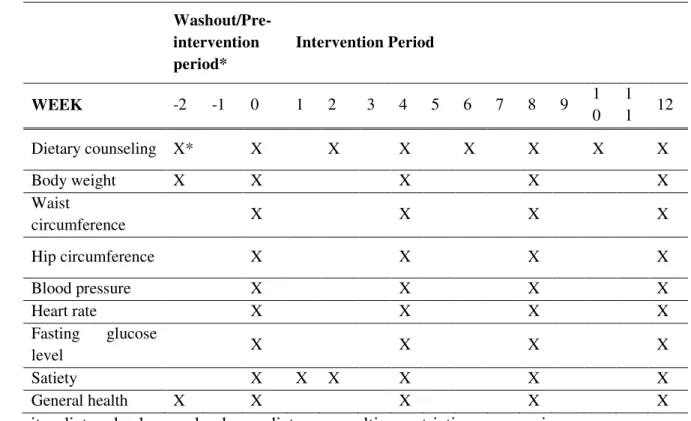
1) Anthropometric changes. TAIslim System was studied in a randomized, placebo-controlled, double-blind manner to evaluate its effects relative to placebos on the anthropometric parameters (Study 1). A total of 67 male and female adults were randomized into either one of the two treatment groups followed by at least 2 weeks pre-intervention period (Figure 2A and Table 1). These were the TAIslim System (Product A+B+C) treatment group, or placebo control with the use of a random digit table followed by the pre-intervention period. Men and women were randomized separately to ensure an equal number of men and women in each treatment group. The participants and all investigators and staff involved in this study were blinded to the
subject’s treatment assignment. Tested products were assigned a number or letter code. This code remained unrevealed to the investigators involved in the study until after completion of the data analyses. Upon randomization, participants started the 12-week weight loss period. The weight loss diet emphasized consumption of low-calorie, nutrient-dense foods such as fruits and
vegetables, complex carbohydrates and lean proteins. The interventions were
isocaloric/isoenergetic. All participants were given a medical exam, and physical anthropometric measurements were collected at the pre-, middle-, and post-intervention period following an overnight 12 h fast and included: body weight, BMI (Seca 703, Hamburg, Germany), waist circumference at umbilical level [35,36], and total body fat (Tanita BF-679W, Tokyo, Japan). All participants were monitored daily to ensure full compliance with the protocol including sample consumption and restriction of dietary intake. In the intervention trial, we evaluated the effect of TAIslim System or placebo samples under free-living conditions. Based upon our previous preliminary studies [2-4,9,10,34], a sample size of 57 participants was deemed to be sufficient to detect effectiveness of Product A alone with 95% confidence and 80% power. Daily intake procedures of all test samples are shown in Table 1B. A calorie-restricted isocaloric diet with multi-vitamin supplementation and daily exercise was required. Participants were encouraged to keep food records as a means of controlling food intake. Participants were counseled to reduce their energy intake to about 1,200 kcal/d including study samples, which supplied approximately 420 kcal/d. Testing products completely replaced breakfast but a healthy lunch and dinner were recommended. The remaining calories were consumed in the form of healthy snacks, such as fruit or yogurt. Sample menus for lunch and examples of healthy snacks were discussed during the counseling sessions. Participants were also requested not to eat after dinner within 3 hours of bedtime.
session, the extra products were used and extra products to cover 1 week were given at the subsequent session. This ensured that each subject always had a 1-week back-up supply of samples. Participants started taking the TAIslim System or placebo products after baseline measurements were taken. Empty containers were returned to the researcher at the following counseling session for compliance check. Anthropometric parameters, fasting blood glucose level (mg/dl) measured by conventional test kit (True trackTM, Code# 2612, Home Diagnostics, Ft. Lauderdale, FL) and subjective gastrointestinal questionnaire were assessed in the fasted state at baseline, 4, 8 and 12 w (Table 1).
Table 1. (A) Test procedures of the Study for Anthropometric changes by TAIslim System and (B) Study samples and intake procedures.
A
Washout/Pre-intervention period*
Intervention Period
WEEK -2 -1 0 1 2 3 4 5 6 7 8 9 1
0 1
1 12
Dietary counseling X* X X X X X X X
Body weight X X X X X
Waist
circumference X X X X
Hip circumference X X X X
Blood pressure X X X X
Heart rate X X X X
Fasting glucose
level X X X X
Satiety X X X X X X
General health X X X X X
*monitor dietary background only, no dietary consulting restriction, or exercise
B
Study product
Breakfast Snacks Lunch Snacks Dinner Snacks
TAIslim (Product A) a
60 mL 60 mL
SKINNY (Product B) b
1 chew 1 chew 1 chew as
needed SHAKE
(Product C) c
1 scoop with 240 ml of water Self-selected
meal
Per counseling
Per counseling
Per counseling
a
60 ml with the SHAKE for breakfast, 60 ml at lunch immediately before meal, taken with 240 ml of water. Placebo for TAIslim contained 20 kcal/serving same with the active, but provided no active ingredients.
b
One chew in the mid-morning (10-11 am), and 1 mid-afternoon (3-4 pm), approximately 1-2 hours before meals with 240 ml of water. Another 1 chew taken with 240 ml of water during the evening, if hungry and desired as a snack, but not immediately before bedtime. Placebo for the SKINNY (Chew) contained 20 kcal/serving same with the active, but provided no active ingredients.
c
One serving (40.5 g) mixed with 240 ml of water, once a day as a meal replacement for breakfast. Placebo for the SHAKE contained 158 kcal/serving same with the active, but provided no active ingredients.
At each testing day and endpoint of the weight loss period (weeks 0, 4, 8 and 12), participants were weighed without shoes and had their resting blood pressure and heart rate measured. Participants were instructed to consume no food or beverage, except for water, for 12 h before their scheduled test. These measurements were taken with the subject seated and after a 3- to 5-minute rest period. Waist and hip circumferences were also measured by a single investigator. Waist circumference was measured on the skin at the umbilical level. Hip circumference was measured at the level of the widest circumference over the buttocks. Subjective gastrointestinal indices were assessed by ranked scale questionnaire (0-10) for flatulence, rumbling sounds caused by gas moving through the intestines, abdominal distension, abdominal pain, loose stools and sum of these symptoms, and fecal conditions [37]. Dietary background was collected from food diary for energy intake (kcal/day), fat intake (g/day), carbohydrate intake (g/day), and protein intake (g/day). Five participants dropped out from each group, but none of them were related to the samples or adverse effects (Figure 2A). However, there was no statistical difference demographically in those that completed the study between both groups.
3) Appetite suppression measurement. In several randomized, double-blind, placebo-controlled human clinical studies, satiety was assessed in the initial 3 days through first 2 weeks using a visual analog scale (VAS) [38,39]. Participants were asked to rate their general feelings of appetite and satiety, desire to eat and hunger over the previous week. Questions asked included: Over the past 7 days, 1) how hungry do you feel?; 2) how satisfied do you feel?; 3) how full do you feel?; 4) how much do you think you can eat?; 5) how energetic do you feel?; and 6) how sluggish do you feel? Participants rated their feelings on a 100-mm scale, with 0 being “not at
all” and 100 being “very much so”. An open-ended question on general feelings of health was
answered. We also asked participants to provide information about their general health, side effects, and medication use on a bi-weekly basis. Adverse events were to be recorded on a separate form should any event occur.
using hand-held indirect calorimeter (MedGem® test kit, Microlife®, Golden, CO) [40] in a separate independent study from Study 1. Test procedures are shown in Figure 2B.
A total of 12 healthy adult participants (21-51 y, age=34.5±7y, body mass index (BMI=28.2±2 kg/m2) were enrolled to a randomized, double-blind, placebo-controlled study and took part in 6 study sessions (Figure 2B). All test participants randomly consumed all test sample preparations on a separate day. The tests were repeated with a same sample in a triplicate manner. Test days were held at least 1 week apart. After basal RMR was measured, participants consumed isocaloric total 198 kcal consisted with a single bout of consuming one serving of Product A (60 ml) (20 kcal) + 1 chew of Product B (20 kcal) and 158 kcal of Product C, or all of these placebo with liquid meal (Boost Plus®, Nestle Healthcare Nutrition Inc., Minneapolis, MN). RMR and PPEE were measured immediately before (baseline), 1, 2 and 4 h post-sample intake after at least 12 h fast [41-43].
Statistical analyses. In the 12-week intervention study (Study 1), all data obtained at pre-intervention, baseline, week 4, 8 and 12 (endpoint) were used in the statistical analyses. This ensured standardized conditions between time points (all data obtained on those days fasted). We keep data from participants who completed the study. Data were analyzed using mixed models analysis of variance with age, race, gender, baseline body weight (or appropriate body composition compartment) as variables in the model. Any non-significant variables were removed from the models. The main variables for inclusion in all models were treatment (TAIslim System or placebo, in blinded fashion), time (week -2, 0, 4, 8 and 12), and treatment-by-time interaction. The treatment-treatment-by-time interaction was also tested as a 3-way interaction with gender to test whether men and women might respond differently to our intervention. The treatment-by-time interaction was the main variable of interest. This statistical analysis plan was performed on absolute and percent change in body composition variables from the measurements, body weight, BMI, total body fat, waist circumference, hip circumference, blood pressures, and fasting blood glucose levels. The percentage of participants losing at least 5% of their initial body weight was also to be used as efficacy data and was compared between groups using unpaired t-test. Descriptive statistics were calculated for pre-intervention and each measurement period for all dependent measures and summarized as means and standard errors. For all clinical symptom questions under all categories (appetite, GI condition, and others), each question was graded and the scores analyzed for changes between pre-intervention and each measurement with the nonparametric Wilcoxon matched pairs tests. Differences were considered significant at P<0.05.
RESULTS:
1) Anthropometric changes.
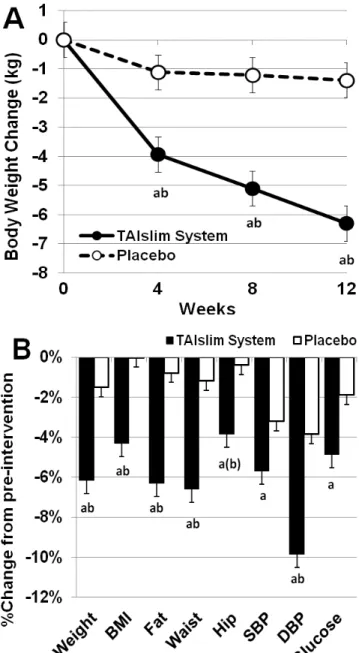
group was lowered by 1.5±0.4% compared to the pre-intervention at 12 w post-intervention, but no significant difference was detected.
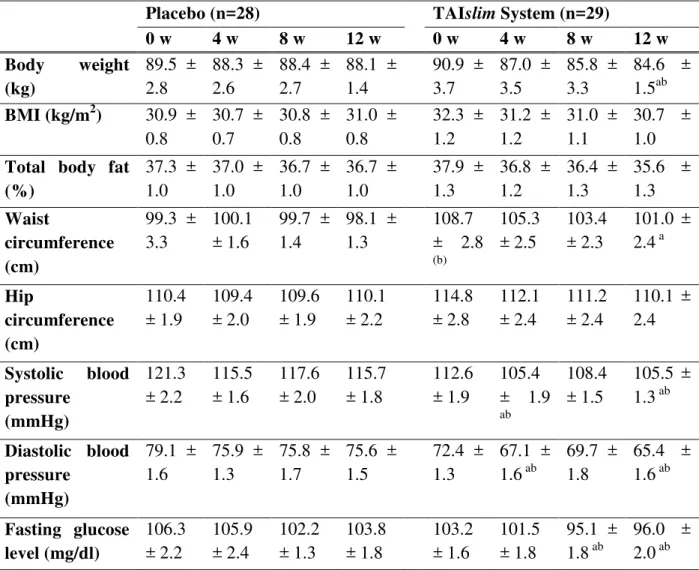
Table 2. Impact of TAIslim System on various anthropometric parameters, such as body weight, body mass index (BMI), total body fat, waist circumference, hip circumference, systolic blood pressure (SBP), diastolic blood pressure (DBP), and fasting blood glucose level in the overweight human participants in a randomized, placebo-controlled, double-blind, human clinical study. Each value indicates mean±SEM. a, b, and ab indicate P<0.05, and (b) indicates P<0.10 compared to the pre-intervention and placebo control, respectively analyzed by ANOVA.
Placebo (n=28) TAIslim System (n=29)
0 w 4 w 8 w 12 w 0 w 4 w 8 w 12 w
Body weight (kg)
89.5 ± 2.8
88.3 ± 2.6
88.4 ± 2.7
88.1 ± 1.4
90.9 ± 3.7
87.0 ± 3.5
85.8 ± 3.3
84.6 ± 1.5ab BMI (kg/m2) 30.9 ±
0.8
30.7 ± 0.7
30.8 ± 0.8
31.0 ± 0.8
32.3 ± 1.2
31.2 ± 1.2
31.0 ± 1.1
30.7 ± 1.0
Total body fat (%)
37.3 ± 1.0
37.0 ± 1.0
36.7 ± 1.0
36.7 ± 1.0
37.9 ± 1.3
36.8 ± 1.2
36.4 ± 1.3
35.6 ± 1.3
Waist
circumference (cm)
99.3 ± 3.3
100.1 ± 1.6
99.7 ± 1.4
98.1 ± 1.3
108.7 ± 2.8 (b)
105.3 ± 2.5
103.4 ± 2.3
101.0 ± 2.4 a
Hip circumference (cm) 110.4 ± 1.9 109.4 ± 2.0 109.6 ± 1.9 110.1 ± 2.2 114.8 ± 2.8 112.1 ± 2.4 111.2 ± 2.4
110.1 ± 2.4
Systolic blood pressure (mmHg) 121.3 ± 2.2 115.5 ± 1.6 117.6 ± 2.0 115.7 ± 1.8 112.6 ± 1.9 105.4 ± 1.9 ab
108.4 ± 1.5
105.5 ± 1.3 ab
Diastolic blood pressure
(mmHg)
79.1 ± 1.6
75.9 ± 1.3
75.8 ± 1.7
75.6 ± 1.5
72.4 ± 1.3
67.1 ± 1.6 ab
69.7 ± 1.8
65.4 ± 1.6 ab
Fasting glucose level (mg/dl) 106.3 ± 2.2 105.9 ± 2.4 102.2 ± 1.3 103.8 ± 1.8 103.2 ± 1.6 101.5 ± 1.8
95.1 ± 1.8 ab
96.0 ± 2.0 ab
Figure 3. (A) Impact of TAIslim System on body weight change, and (B) percent changes from the pre-intervention in body mass index (BMI), total body fat, waist circumference, hip circumference, systolic blood pressure (SBP), diastolic blood pressure (DBP), and fasting blood glucose level in the overweight human participants in a randomized, placebo-controlled, double-blind, human clinical study. Each value indicates mean±SEM. a, b, and ab indicate P<0.05, and (b) indicates P<0.10 compared to the pre-intervention and placebo control, respectively analyzed by ANOVA.
Regarding gastrointestinal conditions, some participants in the TAIslim System group noticed abdominal rumbling, soft stool or slight constipation at the beginning of the intervention, but these effects were minor with no need to stop taking the TAIslim System products. No severe conditions were found in either group.
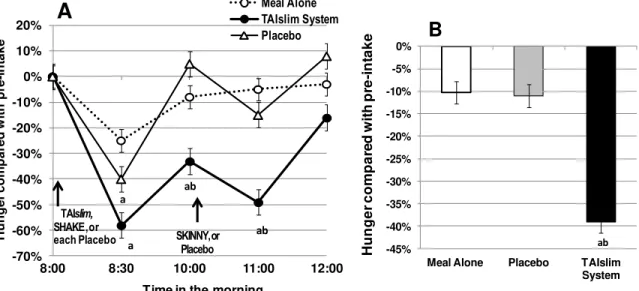
(Figure 4A). However, the degree of the effects by the products was different. TAIslim System was the most effective to suppress appetite among the treatments (Figure 4A). On average, appetite was significantly reduced by 38.6±6.5% compared to the baseline level by TAIslim
System, better than meal alone or placebo (P<0.05). In the placebo group, 11% reduction was seen but no statistical difference was detected (Figure 4B). TAIslim System significantly delayed time of the meal intake and population of delayed participants (P<0.05) (data not shown).
-70% -60% -50% -40% -30% -20% -10% 0% 10% 20%
8:00 8:30 10:00 11:00 12:00
Meal Alone TAIslim System Placebo ab H u n g e r c o m p a re d w it h p re -i n ta k e a
A
ab aTime in the morning TAIslim,
SHAKE , or
each Placebo SKINNY, or
Placebo -45%
-40% -35% -30% -25% -20% -15% -10% -5% 0%
Meal Alone Placebo TAIslim System H u n g e r c o m p a re d w it h p re -i n ta k e ab
B
Figure 4. Effect of TAIslim System, placebo and meal alone on appetite evaluated by subjective questionnaire (0-10 visual analogue scale, VAS) in (A) the course of intake and (B) average.
Each value was obtained from the average of 4-times repeatedly asked VAS for the first 3-7 days of the studies, and indicates mean±SE.
3) Energy Expenditure stimulation. Kinetic behavior of TAIslim System on breath oxygen volume (VO2) or PPEE, and area under the curve (AUC) 0 through 4 h after the consumption measured by the indirect calorimeter were all significantly increased by single bolus intake of TAIslim System products. The baseline RMR level in average VO2 of all participants before intake of samples was 230.5 ± 9.3 ml/min, which was equivalent to 1,605 ± 66 kcal/d. TAIslim
Figure 5. (A) Kinetic analysis and (B) area under the curve (AUC) 0 through 4 h post-intake of TAIslim System (TAIslim + SKINNY + SHAKE/Product A+B+C) on breath oxygen volume (VO2) [resting metabolic rate (RMR)] measured by the hand-held indirect calorimeter. Product A+B+C or control (nutritional beverage only (158kcal) equivalent calorie to Product C plus each placebo) was taken orally after over 12 h fasting. Each value indicates mean±SEM. a, ab indicate P<0.05 vs Control and baseline level analyzed by ANOVA.
Area under the curve (AUC) during the 4 h study was shown in Figure 5B. AUC of the PPEE throughout 0-4 h post-consumption was increased by 7.2±1.2 % in TAIslim System group, which is significantly higher than the control group (0.8±0.9%) (Figure 5B). Placebo control did not show any significant increases over the baseline.
This acute PPEE increase was kept at the similar level throughout the 12-w intervention period in Study 1, and baseline RMR has not been statistically changed in 12 w by TAIslim
System intake (data not shown).
DISCUSSION:
The present preliminary small scale pilot trials have shown that negative caloric intake by taking TAIslim System products may be effective to reduce the body weight and other anthropometric parameters related to metabolic syndrome. These results suggest that TAIslim System may control appetite and help to reduce caloric intake and stimulate energy expenditure.
way. In the present studies, several functional food ingredients which have reported positive effects on weight management were combined to achieve negative caloric balance. This may be useful for weight management from various aspects based on their mechanisms of action. Daily consumption of this combination has been shown in the present studies to increase energy expenditure, which may be caused by improving caloric metabolism, As a result, body weight, waist circumference and other anthropometric parameters seem to be significantly reduced. These results suggest that a combination of the ingredients in TAIslim System may work in collaboration to increase PPEE, with effects lasting until the next meal time. Based upon the reported effects of the formulated individual ingredients [2-4, 12-24] and current study results, it is suggested to provide increased metabolism/thermogenesis. Although these effects may be exhibited by the hypothesis that TAIslim increased fat burning, decreased absorption of dietary fats and starches by inhibiting lipase and amylase enzymes, improved insulin sensitivity, appetite suppression, blood lipid reduction, blood glucose control and remodeling of intestinal flora to eliminate those implicated in obesity, it is left to a future studies to show such effects, as we have not measured these blood markers including cholesterol, triglycerides, insulin, the satiety-inducing gut hormones and visceral fat content, except for fasting blood glucose level. It is assumed that these additional parameters might be influenced by taking TAIslim System products based on various previously published studies [2-4, 12-28] for each ingredient. Due to the limitation of the current pilot trials, extended scale of the study is necessary to confirm the effects found in the current trials, and furthermore, more detailed analysis of several key blood biochemical markers, such as CCK, adiponectin, blood lipids, and other related indications are needed to confirm the above hypothesis and the mechanism of the actions.
PPEE was significantly increased by TAIslim System intake shown in the present studies. Since one serving of TAIslim (60 ml) is only about 20 kcal, an insufficient calorie level to exhibit observed level of PPEE increase in the present studies, it may not explain the significant and extended increase of PPEE. Since Lycium barbarum has been shown to increase PPEE in our previous studies [2-4], it was expected that we would see PPEE increase. However, a dose of
Lycium barbarum in TAIslim (15 ml) is about 12.5% of previously tested highest dose of Lycium barbarum (120 ml) [3]. Therefore, the dose of Lycium barbarum in TAIslim may not be sufficient to significantly increase PPEE shown in the present studies. Thus, there may be a synergistic effect with other ingredients. Furthermore, duration of the PPEE stimulation was extended compared to high dose of Lycium barbarum alone. A high dose of Lycium barbarum
For the energy expenditure study, due to the limitation of the subject numbers, we enrolled crossover design for the present pilot trials. It is well-known, the primary strengths of the repeated measures design is that it makes a study more efficient and helps keep the variability low. This helps to keep the validity of the results higher, while still allowing for smaller than usual subject groups. On the other hand, a disadvantage to the repeated measures design is that it may not be possible for each participant to be in all conditions of the experiment, due to time constraints, location of experiment, and others. Thus, we tested single bolus intake of test samples repeatedly in the different time at the same location. While it has not been established well for Lycium barbarum or TAIslim, we assumed that 1-week wash-out interval between the single-bolus intake of TAIslim may be sufficient based on the previous clinical studies [2-4, 9, 10, 32, 34, 44], as these previous studies suggest 2 weeks to 1 month may be sufficient to wash-out many of the significant effects of Lycium barbarum indicated by various general well-being scores. We have also confirmed that the baseline RMR was stable and consistent in all kinetic analyses. Further future studies to clarify any useful biomarkers of the duration of the effects of TAIslim System would be helpful.
Considering the overall effects of TAIslim System, it seems that this combination may be useful for a weight control program when combined with exercise and diet control program.
CONCLUSIONS:
The present studies suggest that TAIslim System controls appetite and PPEE, which may be caused by improving caloric metabolism and as a result, body weight, waist circumference and other anthropometric parameters, which seem to be reduced significantly from the pre-intervention. It is suggested that combining these products may be useful as part of a weight loss program. Detailed analysis of biochemical markers in the blood may clarify the mechanism of the actions of TAIslim System.
List of abbreviations: Body Mass Index (BMI), Epigallocatechin Gallate (EGCG), Lycium barbarum Polysaccharide (LBP), Postprandial Energy Expenditure (PPEE), Resting Metabolic Rate (RMR)
Competing interests: Corresponding author is an employee of FreeLife International.
Author’s contributions: Author is the principle investigator for these studies providing oversight and contributed to all research activities, preparing manuscripts.
Acknowledgements and funding: All sources of support were from FreeLife International. The collaboration, suggestions, and guidance related to these studies of Marie-Pierre St-Onge, Ph.D. at Columbia University is greatly appreciated.
REFERENCES:
1. Ogden CL, Carroll MD, Curtin LR, McDowell MA, Tabak CJ, Flegal KM. Prevalence of
2. Amagase H. A controlled clinical study showed waist circumference reduction by a standardized Lycium barbarum (goji) juice, GoChiTM [abstract]. FASEB J 2008;22:LB771.
3. Amagase H, Nance DM. Lycium barbarum increases caloric expenditure and decreases waist circumference in healthy overweight men and women: Pilot Study. J Am Coll Nutr 2011;30(5):304-309.
4. Amagase H. Comparison of Lycium barbarum-containing Liquid Dietary Supplements to Caffeinated Beverages on Energy/Caloric Metabolism Activity and Salivary Adrenocortical Hormone levels in Healthy Human Adults [abstract]. FASEB J 2010;24:540.13.
5. Amagase H and Farnsworth NR. A Review of Botanical Characteristics, Phytochemistry,
Clinical Relevance in Efficacy and Safety of Lycium barbarum Fruit (Goji). Food Res Int 2011;44:1702–1717.
6. Zhang M, Wang J, and Zhang S. Study on the composition of Lycium barbarum
polysaccharides and its effects on the growth of weanling mice. Wei Sheng Yan Jiu (J Hygiene Res) 2002;31(2):118-9.
7. Li W, Wang L, Deng X, Jiang L, Zhang C and Zhang C. Study of the Fragility and Abnormality Rate of Red Blood Cells in Patients with Type-2 Diabetes and the Effects of
Lycium barbarum Polysaccharides. Hebei J Trad Chin Med 2000 August;22(8):585-6.
8. He J, Zhou W, and Qiu Y. The changes in immunologic functions of red blood cell in the patients with diabetic retinopathy and the effect of Lycium barbarum L. in the treatment. J Chin Trad Med Ophthalmol 1998;8:70–73.
9. Amagase H, Sun B, and Borek C. Lycium barbarum (goji) juice shows significant in vivo
antioxidant effects in human serum in a randomized, double-blind, placebo-controlled clinical study. Nutr Res 2009;29:19-25.
10. Amagase H, Sun B, and Nance DM. Immunomodulatory Effects of a Standardized
Lycium barbarum Fruit Juice in Chinese Older Healthy Human Subjects. J Med Foods 2009;12(5):1159-1165.
11. Nance DM, Amagase H and Luczy-Bachman G: 94. Effects of Lycium barbarum on basal and LPS-induced cytokine production [abstract]. Brain Behav Immun 2009;23(Suppl 2):S51.
12. Rumpler W, Seale J, Clevidence B, et al. Oolong tea increases metabolic rate and fat
oxidation in men. J Nutr 2001;131:2848-52.
13. Komatsu T, Nakamori M, Komatsu K, et al. Oolong tea increases energy metabolism in Japanese females. J Med Invest 2003;50:170-5.
14. Dulloo AG, Duret C, Rohrer D, et al. Efficacy of a green tea extract rich in catechin polyphenols and caffeine in increasing 24-h energy expenditure and fat oxidation in humans. Am J Clin Nutr 1999;70:1040-5.
16. Fibersol-2: a Soluble, Non-digestible, Starch-derived Dietary Fibre. Advanced Dietary Fibre Technology, Edited by B.V. McCleary & L. Prosky, Oxford, UK, Blackwell Science; 2001:509-523.
17. Effects of resistant maltodextrin on metabolism of glucose and lipids. Dietary Fibre - bio-active carbohydrates for food and feed, Edited by J.W. van der Kamp et al., The Netherlands: Wageningen Academic Publishers; 2004:219-230.
18. Satouchi M, Wakabayashi S, Okuma K, Fujiwara K, and Matsuoka A. Effects of indigestible dextrine on bowel movements. Jpn J Nutr 1993; 51(1):31-37.
19. Wakabayashi S, Kishimoto Y and Matsuoka A. Effects of indigestible dextrin on glucose tolerance in rats. J Endocrinol 1995; 144:533-538.
20. Kishimoto Y, Wakabayashi S, and Takeda H. Hypocholesterolemic effect of dietary
fiber: Relation to intestinal fermentation and bile acid excretion. J Nutr Sci Vitaminol 1995; 41:151-161.
21. Kishimoto Y, Wakabayashi S, and Tokunaga K. Effects of long term administration of indigestible dextrin on visceral fat accumulation. J Jpn Assoc Dietary Fiber Res 2000;4(2):212-218.
22. Katcher HI, Legro RS, Kunselman AR, et al. The effects of a whole grain-enriched hypocaloric diet on cardiovascular disease risk factors in men and women with metabolic syndrome. Am J Clin Nutr 2008;87:79-90.
23. Salas-Salvado J, Farres X, Luque X, et al. Effect of two doses of a mixture of soluble fibres on body weight and metabolic variables in overweight or obese patients: a randomised trial. Br J Nutr 2008;99:1380-7.
24. Burton-Freeman B. Dietary fiber and energy regulation. J Nutr 2000;130:272S-275S.
25. Walsh DE, Yaghoubian V and Behforooz A. Effect of glucomannan on obese patients: A clinical study. Int J Obes 1984;8:289-293.
26. Reffo GC, Chirardi PE, and Forattini C. Glucomannan in hypertensive outpatients: Pilot
clinical trial. Cur Ther Res 1988;44(1):753-758.
27. Arvill A, Bodin L. Effect of short-term ingestion of konjac glucomannan on serum cholesterol in healthy men. Am J Clin Nutr 1995;61:585-589.
28. Mizutani T, Shimizu Y. Effect of Konjac mannan on intestinal microflora and tumorigenesis. Gastroenterol Int 1988;11(Suppl 1):52-55.
29. Ballinger AB, Clark ML. L-phenylalanine releases cholecystokinin (CCK) and is
associated with reduced food intake in humans: evidence for a physiological role of CCK in control of eating. Metabolism 1994 Jun;43(6):735-8.
30. Hoffer LJ, Sher K, Saboohi F, Bernier P, MacNamara EM, Rinzler D. N-acetyl-L-tyrosine as a N-acetyl-L-tyrosine source in adult parenteral nutrition. JPEN J Parenter Enteral Nutr 2003 Nov-Dec;27(6):419-22.
31. Rasmussen DD, Ishizuka B, Quigley ME and Yen SSC. Effects of Tyrosine and Tryptophan Ingestion on Plasma Catecholamine and 3,4-Dihydroxyphenylacetic Acid Concentrations. J Clin Endocrinol Metab 1983;57(4):760-763.
Phenylalanine, N-Acetyl-Tyrosine, Caffeine, Tea Polyphenols and Lycium barbarum on Body Weight and Other Anthropometric Parameters in a Controlled Cross-over Human Clinical Study [abstract]. FASEB J. 2010; 24:936.13.
33. Heymsfield SB, van Mierlo CAJ, van der Knaap HCM, Heo M, Frier HI. Weight management using a meal replacement strategy: meta and pooling analysis from six studies. Int J Obesity 2003; 27:537–549.
34. Amagase H, Nance DM. A Randomized, Double-blind, Placebo-controlled, Clinical Study of the General Effects of a Standardized Lycium barbarum (Goji) Juice, GoChiTM. J Alternat Complement Med 2008;14(4):403-412.
35. The National Institute of Health and Nutrition. [http://www.nih.go.jp/eiken/].
36. National Obesity Forum. [http://nationalobesityforum.org.uk/content/view/171/168/].
Teuri U, Vapaatalo H, Korpela R. Fructooligosaccharides and lactulose cause more symptoms in lactose maldigesters and subjects with pseudohypolactasia than in control lactose digesters. Am J Clin Nutr 1999; 69:973-9.
37. Kissileff HR, Wentzlaff TH, Guss JL, Walsh BT, Devlin MJ, Thornton JC. A direct measure of satiety disturbance in patients with bulimia nervosa. Physiol Behav 1996; 60:1077-1085.43.
38. Garcia JM, Garcia-Touza M, Hijazi RA, Taffet G, Epner D, Mann D, Smith RG, Cunningham GR, Marcelli M. Active ghrelin levels and active to total ghrelin ratio in cancer-induced cachexia. J Clin Endocrinol Metab 2005; 90:2920-6.
39. McDoniel SO. A systematic review on use of a handheld calorimeter to assess energy
needs in adults and children. Int J Sport Nutr Exer Metab 2007; 17:491-500.
40. McDoniel SO, Nelsonb HA, Thomson CA (2008) Employing RMR Technology in a
90-Day Weight Control Program. Obes Facts 1:298-304.
41. St-Onge MP, Rubiano F, DeNino WF, Jones A Jr, Greenfield D, Ferguson PW, Akrabawi S, Heymsfield SB: Added thermogenic and satiety effects of a mixed nutrient vs a sugar-only beverage. Int J Obes Relat Metab Disord. 2004; 28(2):248-53.
42. St-Onge MP, Jones PJ. Physiological effects of medium-chain triglycerides: potential agents in the prevention of obesity. J Nutr 2002; 132:329-32.

![Figure 5. (A) Kinetic analysis and (B) area under the curve (AUC) 0 through 4 h post-intake of TAIslim System (TAIslim + SKINNY + SHAKE/Product A+B+C) on breath oxygen volume (VO 2 ) [resting metabolic rate (RMR)] measured by the hand](https://thumb-eu.123doks.com/thumbv2/123dok_br/18325059.350200/14.918.129.720.93.410/figure-kinetic-analysis-taislim-taislim-product-metabolic-measured.webp)
