SAGE Open
January-March 2015: 1 –6 © The Author(s) 2015 DOI: 10.1177/2158244015576057 sgo.sagepub.com
Creative Commons CC BY: This article is distributed under the terms of the Creative Commons Attribution 3.0 License
(http://www.creativecommons.org/licenses/by/3.0/) which permits any use, reproduction and distribution of the work without further permission provided the original work is attributed as specified on the SAGE and Open Access page (http://www.uk.sagepub.com/aboutus/openaccess.htm). Article
Perceiving that dangerous groups of people lurk in your midst can strain intergroup interactions and relations. When predominantly White participants in Western countries are asked to shoot individuals who may carry weapons in com-puter games, they show a greater bias to shoot at people who are Black than White (Correll, Park, Judd, & Wittenbrink, 2002), Middle Eastern than White (Unkelbach, Forgas, & Denson, 2008), wearing Muslim headgear than those not wearing Muslim headgear (Unkelbach et al., 2008, Unkelbach, Goldenberg, Müller, Sobbe, & Spannaus, 2009), and male than female (Plant, Goplen, & Kunstman, 2011). Thus, when presented with targets from distinct social cate-gories, people display the greatest shooter bias toward out-group members and members of the categories stereotyped as relatively more dangerous. The aim of the present research was to quantify the extent to which ethnic group membership and culturally appropriate or inappropriate headgear would influence perceptions of dangerousness by people living in the Middle East.
Past research on the shooter bias has exclusively exam-ined Western cultures (i.e., North America, Western Europe, and Australia). Consistent with the strong stereotypes that Black men are dangerous (Devine, 1989), the original shooter bias research found that both Black and White Americans displayed a bias to shoot Black targets over White targets (Correll et al., 2002). Prior research has reliably shown that
perceived danger (in addition to ingroup bias) plays a critical role in biases to shoot (Correll, Urland, & Ito, 2006; Correll, Wittenbrink, Park, Judd, & Goyle, 2011; Miller, Zielaskowski, & Plant, 2012). For instance, participants show a greater bias to shoot targets superimposed on dangerous compared with safe backgrounds (Correll et al., 2011). Western participants also show a stronger neural marker of threat (P200) to Black than White faces in the shooter task (Correll et al., 2006). Individuals who believe that the world is a dangerous place even shoot at outgroup members not stereotyped as danger-ous more than ingroup members (Miller et al., 2012). Moreover, the shooter bias is not solely attributable to simple outgroup bias because Black Americans shoot more at Black than White targets, and men shoot more at male than female targets (Correll et al., 2002; Kahn & Davies, 2010; Plant et al., 2011).
1
University of New South Wales, Sydney, Australia 2
University of Kentucky, Lexington, USA 3
King Fahd University of Petroleum and Minerals, Dhahran, Saudi Arabia
Corresponding Author:
Timothy P. Schofield, Centre for Research on Ageing, Health & Wellbeing, Australian National University, Canberra, Australian Capital Territory 2601, Australia.
Email: [email protected]
Brief Report: Evidence of Ingroup Bias on
the Shooter Task in a Saudi Sample
Timothy P. Schofield
1, Timothy Deckman
2,
Christopher P. Garris
3, C. Nathan DeWall
2,
and Thomas F. Denson
1Abstract
When predominantly White participants in Western countries are asked to shoot individuals in a computer game who may carry weapons, they show a greater bias to shoot at outgroup members and people stereotyped as dangerous. The goal was to determine the extent to which shooter biases in the Middle East would vary as a function of target ethnicity and culturally appropriate or inappropriate headgear. Within a sample of 37 male Saudi Arabian residents, we examined shooter biases outside of Western nations for the first time. Targets in this task were either White or Middle Eastern in appearance, and wore either American style baseball caps or a Saudi Arabian style shemagh and igal. Our results replicated the bias to shoot racial outgroup members observed in Western samples; we found a bias to shoot White over Middle Eastern targets. Unexpectedly, we also found a bias for Saudi participants to shoot at people wearing culturally appropriate traditional Saudi headgear over Western style baseball caps. To explain this latter finding, we cautiously speculate that relative perceptions of dangerousness in the Middle East may be influenced by media exposure and changing social conditions in the region.
Keywords
Outgroups are often perceived as dangerous (Stephan & Stephan, 2000). The little attitudinal data from within the Middle Eastern, Arabic, and Islamic world shows that Western outgroups are perceived as dangerous. Muslims, and particularly those Muslims living in non-Western countries, view people in Western countries as violent (Pew Global Attitudes Project, 2006). In fact, Muslims are more likely to view Westerners as violent than Westerners are to view Muslims as violent (Pew Global Attitudes Project, 2011). In line with the previously discussed work showing the danger-ousness basis of shooter biases, we expected that Middle Eastern participants would show biases to shoot at targets containing markers of a Western outgroup. In the present research, two distinct markers were used: race and clothing (specifically headgear).
We hypothesized that the race bias (Unkelbach et al., 2008) and headgear bias (Unkelbach et al., 2008; Unkelbach et al., 2009) typically observed in Western nations toward Middle Eastern targets would be reversed in a Saudi Arabian sample. This reversal would be consistent with the percep-tions of Westerners as dangerous among Muslims in non-Western countries. More specifically, we hypothesized that Saudi men would display
1. A relatively greater bias for shooting White targets over Middle Eastern targets and
2. A relatively greater bias for shooting those wearing American style baseball caps over those wearing the culturally appropriate shemagh and igaal.
No interaction was hypothesized. Prediction of an interac-tion would mean that we believed that the meaning of head-gear varies by target race (or race by target headhead-gear): While possible, we saw no reason to make this prediction. Both race and headgear should exert independent, additive effects on shooter biases. White race and baseball caps should both be indicative of the outgroup for Saudi participants and therefore induce greater shooter biases.
Method
Participants and Design
Forty-four non-White male residents of the Kingdom of Saudi Arabia participated in the experiment (Mage = 22.8 years, SD = 1.4) after giving written informed consent. The study protocols were approved by the department chairman, who was independent from this research project. Participants were reimbursed the equivalent of AU$10 for their participa-tion. An a priori power analysis suggested that 34 partici-pants were required to provide a target power of .80 to detect a medium effect (d = .50) with α set at .05 (Faul, Erdfelder, Lang, & Buchner, 2007). Although power of .80 is conven-tion, given the rarity of this sample, it was important not to have a Type 2 error, and as such, it was deemed important to
recruit as many students as possible in the semester: A sam-ple of 44 participants gives power of .90. Moreover, this sample size assured power of at least .80 after filtering par-ticipants. Most of the participants were Middle Eastern (79.5%), some were Asian (typically Pakistani; 9.1%), one reported being of more than one race (2.3%), and some did not report their race (9.1%). Prior large-scale surveys have shown that 97.0% of the Saudi population is Muslim and that 82.2% view cultural invasion by the West as a serious or very serious issue (World Values Survey Association, 2005).
Materials and Procedure
Shooter task. The shooter task was based on the computer game described in Unkelbach et al. (2008) and is similar to the shooter tasks used in other experiments (Correll et al., 2002; Kahn & Davies, 2010; Miller et al., 2012; Plant et al., 2011; Unkelbach et al., 2009). In the shooter task, partici-pants are asked to shoot if an armed person appears but not if an unarmed person appears. In the present task, targets appeared superimposed on one of six randomly selected locations along the balconies of a three-floor apartment building. Three target properties were manipulated within-participants: the presence of a weapon (gun vs. object), target race (White vs. Middle Eastern), and target headgear (Saudi Arabian shemagh and igal vs. American baseball cap).
gun (black gun, or silver gun) or a harmless object (black soft-drink bottle, silver thermos; see Unkelbach et al., 2008).
Participants commenced each trial by pressing the space bar. After a 300-ms delay, the background of the three-floor apartment block appeared alone for 600 ms. The target then appeared, and participants had up to 800 ms to decide whether to “shoot” or “not shoot.” The correct decision was to shoot suspects carrying guns but not to shoot those carry-ing objects. Correct decisions scored points, whereas errors subtracted them. The points were weighted such that shoot-ing was favorable over not shootshoot-ing (Correll et al., 2002). Specifically, correctly shooting an armed target earned 10 points, correctly not shooting an unarmed target earned 5 points, incorrectly shooting an unarmed target deducted 20 points, incorrectly not shooting an armed target deducted 40 points, and being too slow to make a decision deducted 10 points. At the end of each trial, participants were displayed their current points total.
Participants completed eight practice trials with novel tar-gets, before completing 20 trials of each Race × Headgear × Object type combination.
Statistical Analyses
Signal detection theory has been crucial to understanding the decision to shoot (Correll, Hudson, Guillermo, & Ma, 2014), as it allows differences in the respondent’s sensitivity to the pres-ence of a gun and their bias to shoot to be modeled separately.
Without signal detection procedures, it is impossible to tell whether an individual who successfully shoots at all armed targets was able to readily discriminate between guns and objects or simply held a bias to make the decision to shoot. Individuals who can readily tell apart the guns and objects are said to be highly sensitive to the presence of a weapon. High sensitivity emerges when participants readily hit armed targets and correctly reject the opportunity to shoot unarmed targets. Sensitivity here is reported as d’, with higher scores indicating a better ability to discriminate guns from objects. Individuals who do not require a lot of evidence to shoot are said to have set a low criterion for shooting, that is, they are biased to shoot. We report bias to shoot via the β parameter, with lower scores indicating a bias toward shooting and that less evidence is required for a shoot response.
Measures of d’ and β were calculated separately for each Race × Headgear combination in line with the formulas pub-lished by Stanislaw and Todorov (1999). Summaries of the raw hit rates and false alarm rates used to calculate d’ and β are presented in Table 1. Because raw hit rates of 1 and false alarm rates of 0 need to be adjusted before signal detection analyses, hit rates of 1 became 1 − (1 / 2n), and false alarm rates of 0 became 1 / 2n, where n is the number of on-time responses for that trial type.
For at least one target type, three participants could not discriminate between guns and objects (i.e., d’≤ 0), sug-gesting that these participants were unlikely to be respond-ing based on what the target was carryrespond-ing. As it is most likely that these participants were responding indiscrimi-nately, these three participants were removed from the analyses. A further four participants scored greater than ±3
SDs from a sample β mean, and hence were outliers. Their data were removed from the analyses to prevent the undue influence. None of the reported results change if outlying scores on β means were winsorized to prevent their undue influence instead. Final analyses were conducted using 2 (race: White vs. Middle Eastern) × 2 (headgear: shemagh and igal vs. baseball cap) repeated measures ANOVAs. The weapon factor was not explicitly included in the analysis as it is used to calculate the measures of discrimination and bias.
Table 1. Raw Means and Standard Errors in the Shooter Task.
Arab White
Baseball cap
Shemagh and igal
Baseball cap
Shemagh and igal
Hit rate .89 (.02) .92 (.01) .93 (.02) .91 (.02) False alarm rate .14 (.03) .13 (.02) .11 (.02) .15 (.02)
Note. These means are used to calculate the signal detection measures of sensitivity and response bias. Participants hit when they decided to shoot, rather than not shoot, an armed target. Participants made a false alarm when they decided to shoot, rather than not shoot, an unarmed target.
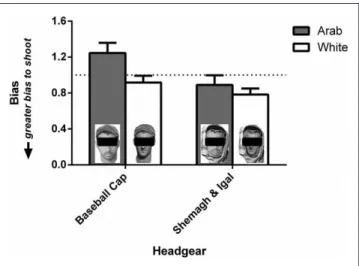
Figure 1. Response bias (β) as a function of target type in
Experiment 1.
Results
Shooter Bias
Consistent with Hypothesis 1, participants showed a greater bias to shoot at White targets than Middle Eastern targets,
F(1, 36) = 4.43, p = .042, ηp2 =.11 (Figure 1). Contrary to Hypothesis 2, participants were also more biased to shoot at targets wearing the shemagh and igal than targets wearing a baseball cap, F(1, 36) = 4.48, p = .041, ηp2 =.11. The Target Race × Headgear interaction was not significant, F(1, 36) = 1.18, p = .284, ηp2 =.03.
Supplementary analyses. The patterns reported above were internally replicated using (a) a different set of participant inclusion criteria and (b) reaction times. Overall, the supple-mentary analyses demonstrate internal consistency across cut-offs and methods of analysis in the observed response biases.
A different set of participant inclusion criteria. Rather than filter outliers and those who could not discriminate guns from objects, Unkelbach et al. (2008) excluded participants who failed to respond within the response window more than 20% of the time. Two participants in the present sample met this exclusion criteria; neither of these individuals was fil-tered in the original analyses. Under these conditions, there was a bias to shoot White targets over Middle Eastern tar-gets, F(1, 41) = 3.26, p = .078, ηp2 =.07, and participants were more biased to shoot at targets wearing the shemagh and igal than targets wearing a baseball cap, F(1, 41) = 6.06,
p = .018, ηp2 =.13. There was no interaction, F(1, 41) = 2.03, p = .161, ηp2 =.05.
Reaction times. Faster reaction times indicate a more accessible decision than longer reaction times (see Correll et al., 2014). Latency results consistent with the observed response biases would be either (1) faster hit latencies or (2) slower correct rejection latencies for (a) White targets than Middle Eastern targets and (b) the shemagh and igal rather than baseball caps. All responses made within the response window were used to calculate participants’ mean latencies: These latencies are reported in Table 2. Given the relative infrequency of incorrect latencies (i.e., misses and false alarms), these were not analyzed. Faster hit latencies were
observed for White targets than Middle Eastern targets, F(1, 36) = 3.25, p = .080, ηp2 =.08, but there was no effect of
headgear, F(1, 36) = 2.06, p = .164, ηp2 =.05, and no
inter-action, F(1, 36) = 1.89, p = .171, ηp2=.05. Slower correct
rejection latencies were observed for targets wearing the shemagh and igal than baseball caps, F(1, 36) = 4.14, p = .049, ηp2 =.10, but there was no effect of race, F(1, 36) =
1.46, p = .235, ηp2 =.04, and no interaction, F(1, 36) = 0.45,
p = .833, ηp2=.00. Thus, the reaction time data is consistent with the observed response biases.
Weapon Discrimination
The ability to discern the presence of a weapon was not affected by target race, F(1, 36) = 1.27, p = .268, ηp2=.03,
but was marginally higher when the target wore the shemagh and igal rather than a baseball cap, F(1, 36) = 3.79, p = .059, ηp2 =.10. This was qualified by a significant interaction
between target race and headgear, F(1, 36) = 7.57, p = .009, ηp2 =.17. Follow-up comparisons revealed that participants
were significantly more sensitive to the presence of guns when the target was White and wearing a baseball cap (M = 2.92, SD = 0.88) than each other Race × Headgear combina-tion, Fs(1, 36) ≥ 5.41, ps≤ .026, ηp2 ≥.13. There were no significant differences in discrimination between the other Race × Headgear combinations (White with shemagh and igal, M = 2.59, SD = 0.95; Middle Eastern with shemagh and igal, M = 2.71, SD = 0.81; Middle Eastern with baseball cap,
M = 2.61, SD = 1.00), Fs(1, 36) ≤ 0.77, ps≥ .386, ηp2 ≤.02.
Discussion
We found support for Hypothesis 1 (race bias) in that Saudi Arabian men were more likely to shoot at their racial out-group than inout-group. This pattern of behavior is identical to that observed in racial majorities in Western samples (Correll et al., 2002; Miller et al., 2012; Unkelbach et al., 2008). Contradicting Hypothesis 2 (headgear bias), Saudis unex-pectedly displayed greater bias toward shooting targets wear-ing the shemagh and igal over those wearwear-ing baseball caps. This result replicates prior research in which Western partici-pants displayed greater shooter bias toward people wearing Arab headgear (Unkelbach et al., 2008) but failed to support our hypothesised reversal of the effect in Saudi Arabia. The results were internally consistent. Participant inclusion crite-ria did not alter the conclusions of the study, and reaction-time-based analyses supported the conclusions drawn from the signal detection analyses.
In the present Saudi Arabian sample, we found the hypoth-esized link between being a member of the racial ingroup and increased likelihood of shooting the racial outgroup member. Although these results may appear intuitive, it must be emphasized that racial biases in non-Western populations have not been the subject of much quantitative investigation. Shooter biases are relative effects and do not necessarily
Table 2. Mean Latencies in the Shooter Task.
Arab White
Baseball cap
Shemagh and
igal Baseball cap
Shemagh and igal
Hit latency 615.95 (6.31) 614.94 (8.20) 614.88 (6.51) 605.35 (8.72) CR latency 653.28 (5.88) 659.64 (8.98) 656.95 (5.89) 665.10 (5.94)
indicate that White people and the shemagh and igal are per-ceived as dangerous in absolute terms. Rather, we cautiously speculate that the present findings may indicate that White targets may have been perceived as relatively more danger-ous (or less safe) than Middle Eastern targets. Moreover, tar-gets wearing the shemagh and igal may have also been perceived as relatively more dangerous (or less safe) than targets wearing American style baseball caps.
It is important to consider why we may have found the predicted ingroup–outgroup pattern for race but not cultural markers. One possibility for this surprising finding is that it was a Type 1 error: Future research should try to replicate this effect in both Saudi Arabia and the Middle East more broadly. However, given the same pattern emerged in the analyses of response times, it is worth considering non-sta-tistical explanations. The bias toward shooting targets wear-ing the shemagh and igal more than baseball caps may be a result of favorable shifts toward the Western world or nega-tive shifts away from traditional-conservanega-tive values. Young Saudis are increasingly technologically engaged, and Westernized (Samin, 2012) especially in their clothing choices (Assad, 2008). Due to the immutability of race, these social changes should not shift danger and safety perceptions of White targets relative to Middle Eastern targets: however, increasing globalization may have changed perceptions of Western cultural markers relative to traditional Saudi cultural markers of the shemagh and igal.
The alternate possibility is that Saudi clothing is becom-ing more negatively perceived for the traditional-conserva-tive values it represents. Such a shift could be a result of Saudi Arabian participants internalizing Western media ste-reotypes about Arabs, Muslims, and/or those from the Middle East. These stereotypes are resoundingly negative, with only 5% of Hollywood films presenting Arabs in normal roles (Shaheen, 2003). Exposure to this type of stereotyped media is known to increase anti-Arab bias in Western samples (Saleem & Anderson, 2013). Consequently, exposure to these Western stereotypes may have resulted in their inter-nalization, and development of an anti-Arab bias among Saudi youth. This process may be similar to Black partici-pants’ internalized stereotypes about Blacks explaining their bias to shoot at Black targets (Maddox & Gray, 2002; Plant et al., 2011). Contrary to this explanation, however, are observations of relatively minimal mass demonstrations in Saudi Arabia during Arab spring (Samin, 2012) and the defense of traditional-conservative values on Saudi Internet message boards (Samin, 2008).
In an increasingly globalized society, it is important to know how one’s race and culture may be perceived not only at home but also abroad. Due to the Western bias in experi-mental research on racial hostility, this information had not been previously available. The present findings may be help-ful for White people traveling or interacting with people in Middle Eastern countries like Saudi Arabia. For instance, rather than conforming to a culturally normative dress-code,
it may be better to dress in a stereotypically Western manner. Furthermore, the present findings provide unique insight into social perception processes that may be affected by the rap-idly changing cultural milieu in the Arab world. However, because our study consisted of only male University stu-dents, caution must be practiced when generalizing to the broader Saudi population.
Conclusion
Consistent with research in the West, our participants showed a greater bias to shoot at a social outgroup: in this case, White targets. This mirrors the effect shown in Western countries in which participants show a greater bias to shoot Middle Eastern targets (Unkelbach et al., 2008). However, when examining clothing, we found that people wearing culturally appropriate Saudi attire may have been perceived as more dangerous. Our findings highlight the necessity of consider-ing cultural variation in social perceptions of social categories.
Authors’ Note
Timothy P. Schofield is now located at the Centre for Research on Ageing, Health and Wellbeing at the Australian National University, Canberra, Australia.
Christopher P. Garris is now located at the Metropolitan State University of Denver, Colorado, USA.
Declaration of Conflicting Interests
The author(s) declared no potential conflicts of interest with respect to the research, authorship, and/or publication of this article.
Funding
The author(s) received no financial support for the research and/or authorship of this article.
References
Assad, S. A. (2008). The rise of consumerism in Saudi Arabian society. International Journal of Commerce and Management,
17, 73-104.
Correll, J., Hudson, S. M., Guillermo, S., & Ma, D. S. (2014). The police officer’s dilemma: A decade of research on racial bias in the decision to shoot. Social & Personality Psychology Compass, 8, 201-213.
Correll, J., Park, B., Judd, C. M., & Wittenbrink, B. (2002). The police officer’s dilemma: Using ethnicity to disambiguate potentially threatening individuals. Journal of Personality and Social Psychology, 83, 1314-1329.
Correll, J., Urland, G. R., & Ito, T. A. (2006). Event-related poten-tials and the decision to shoot: The role of threat perception and cognitive control. Journal of Experimental Social Psychology,
42, 120-128.
Correll, J., Wittenbrink, B., Park, B., Judd, C. M., & Goyle, A. (2011). Dangerous enough: Moderating racial bias with sec-ondary threat cues. Journal of Experimental Social Psychology,
Cousineau, D. (2005). Confidence intervals in within-sub-ject designs: A simpler solution to Loftus and Masson’s method. Tutorial in Quantitative Methods for Psychology,
1, 4-45.
Devine, P. G. (1989). Stereotypes and prejudice: Their automatic and controlled components. Journal of Personality and Social Psychology, 56, 5-18.
Faul, F., Erdfelder, E., Lang, A.-G., & Buchner, A. (2007). G*Power 3: A flexible statistical power analysis program for the social, behavioral, and biomedical sciences. Behavior Research Methods, 39, 175-191.
Kahn, K. B., & Davies, P. G. (2010). Differentially dangerous? Phenotypic racial stereotypicality increases implicit bias among ingroup and outgroup members. Group Processes & Intergroup Relations, 14, 569-580.
Maddox, K. B., & Gray, S. A. (2002). Cognitive representations of Black Americans: Re-exploring the role of skin tone.
Personality and Social Psychology Bulletin, 28, 250-259. Miller, S. L., Zielaskowski, K., & Plant, E. A. (2012, June 18).
The basis of shooter biases: Beyond cultural stereotypes.
Personality and Social Psychology Bulletin, 38, 1358-1366. Pew Global Attitudes Project. (2006, June). The great divide: How
Westerners and Muslims view each other. Washington, DC: Pew Research Center.
Pew Global Attitudes Project. (2011, July). Muslim-Western ten-sions persist. Washington, DC: Pew Research Center.
Plant, E. A., Goplen, J., & Kunstman, J. W. (2011). Selective responses to threat: The roles of race and gender in decisions to shoot. Personality and Social Psychology Bulletin, 37, 1274-1281.
Saleem, M., & Anderson, C. A. (2013). Arabs as terrorists: Effects of stereotypes within violent contexts on attitudes, perceptions and affect. Psychology of Violence, 3, 84-99.
Samin, N. (2008). Dynamics of Internet use: Saudi youth, religious minorities and tribal communities. Middle East Journal of Culture and Communication, 1(2), 197-215.
Samin, N. (2012). Saudi Arabia, Egypt, and the social media moment. Arab Media & Society, 15. http://www.arabmediaso-ciety.com/?article=785 (accessed February 27, 2015).
Shaheen, J. G. (2003). Reel bad Arabs: How Hollywood vilifies a people. The Annals of the American Academy of Political and Social Science, 588, 171-193.
Stanislaw, H., & Todorov, N. (1999). Calculation of signal detec-tion theory measures. Behavior Research Methods, Instruments & Computers, 31, 137-149.
Stephan, W. G., & Stephan, C. W. (2000). An integrated threat the-ory of prejudice. In S. Oskamp (Ed.), Reducing prejudice and discrimination (pp. 23-45). Mahwah, NJ: Lawrence Erlbaum. Unkelbach, C., Forgas, J. P., & Denson, T. F. (2008). The turban
effect: The influence of Muslim headgear and induced affect on aggressive responses in the shooter bias paradigm. Journal of Experimental Social Psychology, 44, 1409-1413.
Unkelbach, C., Goldenberg, L., Müller, N., Sobbe, G., & Spannaus, N. (2009). A shooter bias in Germany against people wearing Muslims headgear. International Review of Social Psychology,
22, 181-201.
World Values Survey Association. (2005). Publicly available data-sets. Available from http://www.worldvaluessurvey.org
Author Biographies
Timothy P. Schofield is a research fellow at the Australian National University. His research covers a broad spectrum of social, cogni-tive, and health psychology, as well as epidemiology.
Timothy Deckman was awarded his PhD from the Department of Psychology at the University of Kentucky, and now works for Roger Green and Associates.
Christopher P. Garris is a social psychologist with experience in Saudi Arabia. He has expertise in cross-cultural social psychology, and is currently at the Metropolitan State University of Denver.
C. Nathan DeWall is an associate professor in the Department of Psychology at the University of Kentucky. His research focuses on social exclusion and acceptance, and self-regulatory depletion.