Chagas disease in the Amazon Region
Hugo Marcelo Aguilar, Fernando Abad-Franch*, João Carlos Pinto Dias**,
Angela Cristina Veríssimo Junqueira***, José Rodrigues Coura***/
+Organismo Andino de Salud, Quito, Ecuador *Instituto Leônidas & Maria Deane-Fiocruz, Manaus, AM, Brasil **Centro de Pesquisas René Rachou-Fiocruz, Belo Horizonte, MG, Brasil ***Instituto Oswaldo Cruz-Fiocruz, Av. Brasil 4365,
21045-900 Rio de Janeiro, RJ, Brasil
The risk that Chagas disease becomes established as a major endemic threat in Amazonia (the world´s largest tropical biome, today inhabited by over 30 million people) relates to a complex set of interacting bio-logical and social determinants. These include intense immigration from endemic areas (possibly introducing parasites and vectors), extensive landscape transformation with uncontrolled deforestation, and the great di-versity of wild Trypanosoma cruzi reservoir hosts and vectors (25 species in nine genera), which maintain in-tense sylvatic transmission cycles. Invasion of houses by adventitious vectors (with infection rates > 60%) is common, and focal adaptation of native triatomines to artificial structures has been reported. Both acute (~ 500) and chronic cases of autochthonous human Chagas disease have been documented beyond doubt in the region. Continuous, low-intensity transmission seems to occur throughout the Amazon, and generates a hypoendemic pattern with seropositivity rates of ~ 1-3%. Discrete foci also exist in which transmission is more intense (e.g., in localized outbreaks probably linked to oral transmission) and prevalence rates higher. Early detection-treatment of acute cases is crucial for avoiding further dispersion of endemic transmission of Chagas disease in Amazonia, and will require the involvement of malaria control and primary health care systems. Comprehensive eco-epidemiological research, including prevalence surveys or the characterization of trans-mission dynamics in different ecological settings, is still needed. The International Initiative for Chagas Disesae Surveillance and Prevention in the Amazon provides the framework for building up the political and scientific cooperation networks required to confront the challenge of preventing Chagas disease in Amazonia.
Key words: Chagas disease - Trypanosoma cruzi - epidemiology - surveillance - Amazonia
AMAZONIA: OVERVIEW OF A COMPLEX BIOME
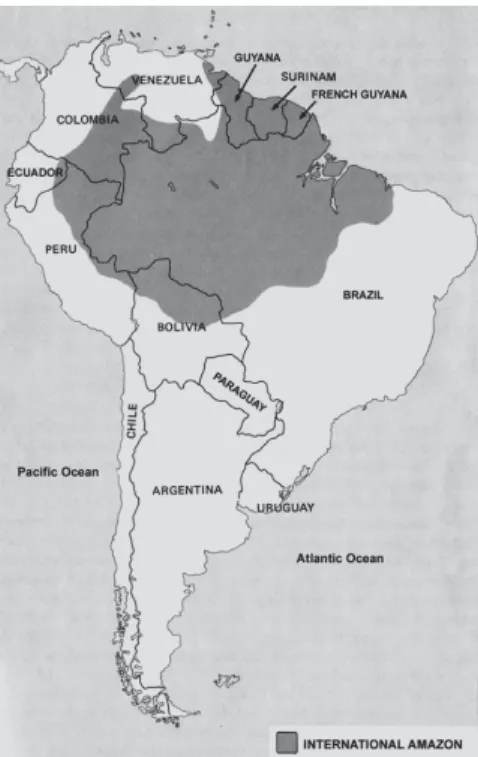
The greater Amazon lies on the largest hydrographical basin of the world, comprising 44% of the South Ameri-can subcontinent (Fig.1, Table). It contains about 20% of all liquid freshwater on the planet, distributed over 300,000 km2 of aquatic ecosystems. The Amazon River runs for ~ 6270 km, receiving waters from ~ 10,000 highly heterogeneous tributaries. The humid tropical cli-mate of Amazonia varies significantly in space and time, with mean annual rainfall ranging from 1200-2000 mm in the northern and southern fringes of the region to up to 6000 mm in the vicinity of the Andes and in the Bra-zilian states of Pará and Amapá. The vast Amazonian flu-vial network irrigates the largest tropical biome on Earth (6.5 million km2). Far from being homogeneous, the Amazon biome takes the shape of a complex mosaic of highly diverse ecosystems, including over 25 terrestrial eco-regions comprising no less than 180 distinct land systems. Tropical humid forests are widely predominant,
but certain semi-arid formations, sandy soil campinas
and campinaranas, várzea pioneer formations, and a variety of anthropic landscapes are also present. The for-ests and savannahs of the Amazon harbour the largest biological diversity (in absolute terms) on the planet (cf. Abad-Franch et al. 2006).
Over 30 million people live in the Amazon region (< 5 inhabitants/km2). In the Brazilian Amazon alone, over 6 million people live in traditional, mostly rural societ-ies. An estimated 260,000 Amerindians, speaking some 170 native languages, live in the region. Caboclos, ri-beirinhos, rubber-tapers, and other traditional colonists typically establish themselves in small communities along river banks, depending on subsistence farming, fish-ing, and forest extractivism. During the second half of the XX century, government policies of colonization and development, linked to huge infrastructure projects, fos-tered unprecedented immigration movements towards the Amazon. In Brazil, population density increased from 1.5 to 4.5 inhabitants/km2 between 1950 and 2000. Road opening, especially in the southern fringe of the region, set off a process of disordered colonization that resulted in annual deforestation rates between 15,000 (1993) and almost 25,000 km2 (2002). By 1970, about 65% of the population of the Brazilian Legal Amazon lived in rural settings; 30 years later, 70% of the 21 million inhabitants of the region lived in cities (cf. Abad-Franch et al. 2006).
The forests with their biological diversity, the stocks of strategic resources (minerals, water, energy, genes, chemicals, timber, and land), and native peoples and cul-Finalcial support: The WHO TDR Special Programme (ID #
A20441), Fiocruz, ECLAT, Fapeam, CNPq (Proc. 400274/2006-0) + Corresponding author: [email protected]
tures threatened by a homogenizing civilization are among the major concerns underlying the current global geopolitical interest on Amazonia. It is in this context that Amazonian nations have changed their view of the region over the last two decades. Differential investment and tax incentive policies in several countries or inter-national collaboration initiatives in various domains (politics, security, economics and trade, energy, science and technology, higher education, etc.) are all the ex-pression of this trend. The new international dimension of the region has effectively relocated Amazonia from the periphery of each individual country (with Amazo-nian territories typically less developed than the rest) to the center of the continent. However, and despite sub-stantial efforts of some countries over recent years, so-cial policy planning in the region is still far from ideal. International health initiatives such as those aimed at reducing the burden of endemic infectious diseases may in fact have a wider impact than that related to its specific objectives, promoting the integration and co-ordination of national science and technology policies across Amazonian countries. In addition to malaria, which is highly prevalent, major communicable diseases that are common in the region include different viral in-fections (such as viral hepatitis and dengue fever), leish-maniasis, leprosy, and tuberculosis.
The epidemiological status of human Chagas disease in Amazonia is only superficially understood. The dis-ease used to be considered rare until it was labelled as emergent in two recent publications (Teixeira et al. 2001, Coura et al. 2002). With the advent of the International
Initiative for Chagas Disesae Surveillance and Preven-tion in the Amazon (AMCHA), officially launched under the auspices of the PAHO-WHO in 2004, public health researchers and officials became engaged in renewed efforts to elucidate the actual significance and transmis-sion dynamics of the disease in the Amazon region (Guhl & Schofield 2004, Anonymous 2005, PAHO 2005). In this paper we present a summary of the epidemiological status and trends of Chagas disease in Amazonia, reflect-ing on the relative roles of social and biological factors in the complex dynamics of Trypanosoma cruzi transmis-sion to people across the region, and emphasize the current progress of international control-surveillance initiatives.
Fig. 1: location of Amazon region in South America.
CHAGAS DISEASE IN AMAZONIA: GENERAL PICTURE
The risk that Chagas disease becomes established as a major endemic threat to Amazonian populations relates to a complex set of interacting biological and social de-terminants. Among the latter, intense human migration from endemic areas into the Amazon (with the possibil-ity of unintentionally introducing foreign parasite strains and vectors) and extensive landscape transformation with uncontrolled deforestation are probably the most impor-tant. Biological factors are linked to the great diversity of wild T. cruzi reservoir hosts (marsupials, bats, rodents, edentates, carnivores, primates, etc.) and vectors (over 25 species in nine genera), which results in intense syl-vatic transmission cycles (cf. Abad-Franch et al. 2006). Invasion of houses by adventitious vectors (with infec-tion rates usually above 60%) is common, and focal ad-aptation of native triatomines to human dwellings has been reported from several areas. Fig. 2 illustrates a wide-spread risk situation: a rural house in the Brazilian Ama-zon was built close to palm trees occupied by triatomines and marsupials – both frequently infected with T. cruzi. Hundreds of acute cases of human Chagas disease have been reported from across the Amazon. Chronic forms of the disease are however considered to be rela-tively rare in the region. The first acute cases were
re-TABLE
Amazon region and the percentage of the area occupied by each country and the population density in this region
km2 of % of
Countries Amazon region Amazon area Hab/km2
Brazil 4871.5 57.23 1.46
Peru 764.2 59.45 1.32
Colombia 504.6 44.28 0.17
Bolivia 391.6 35.61 0.46
Venezuela 175.7 19.18 0.12
Ecuador 128.7 47.05 1.30
Guyana 215.0 97.00 3.43
Surinam 143.0 100.00 2.31
French Guiana 81.0 100.00 0.64
ported by Floch and Tasqué (1941) and Floch and Camain (1948) from French Guiana. Shaw et al. (1969) described four further acute cases in Belém, capital city of the state of Pará, in Northern Brazil. Since then, about five hun-dred acute cases have been recorded, most of them in the Brazilian states of Pará, Amapá, and Amazonas (e.g., Valente & Valente 1993, Valente et al. 1999, Pinto et al. 2004, Perez-Gutierrez et al. 2006, PAHO 2006a). Over-all prevalence of infection is relatively low (1-3%), but seems to be substantially higher in some subregions (Camargo et al. 1984, Dias & Coura 1997). Serological studies carried out by the Fundação Nacional de Saúde (Funasa) from 1975 to 1980 and by Coura and his col-laborators from 1971 to 2002 in the Brazilian Amazon revealed prevalence rates from ~ 2 to 13% (Camargo et al. 1984, Coura et al. 1999, 2002).
suggests oral T. cruzi transmission in many of the out-breaks of acute cases recorded in Brazil (Valente & Valente 1993, Valente et al. 1999, Pinto et al. 2004, Coura 2006, Perez-Gutierrez et al. 2006, PAHO 2006a). This epidemiological picture (relatively low prevalence, in-cidence, morbidity, and mortality rates – but by no means absence of the disease) is also supported by data on prevalence of T. cruzi infection among blood donors and by the rarity of hospital admissions and death due to Chagas disease in the Brazilian Amazon (Dias et al. 2002).
COUNTRY SUMMARIES
In this section, we summarize data on the status of Chagas disease in the nine Amazonian countries provided by official technical representatives (Brazil, Colombia, Ecuador, and Peru) or ECLAT experts (Bolivia, French Guiana, Guyana, Suriname, and Venezuela). This over-view is based on reports presented at the 2002 and 2005 AMCHA meetings (Dias et al. 2002, Guhl & Schofield 2004, Abad-Franch et al. 2006), with contributions from further sources and updated information. Systematized, in-depth information on the epidemiology of Chagas dis-ease in the Amazon is clearly insufficient; well-defined research priorities and organized control programs are also lacking in all the countries of the region.
Bolivia
Two-thirds of the country are at risk of vector-borne Chagas disease transmission, basically because of high rates of household infestation by Triatoma infestans. Some estimates suggest that incidence reached 180,000 new cases/year in the late 1990s. At that time, at least 30% of blood donations were infected, and only a few blood banks were screening them before transfusion. Congenital transmission of the disease was also com-monplace. The Amazon region (Departments of La Paz, Beni, and Pando) is considered non-endemic, even if several sylvatic vectors are present (Rhodnius pictipes,
R. robustus, R. stali, Panstrongylus geniculatus, Mi-crotriatoma trinidadensis, and Eratyrus mucronatus, among others)and immigration from endemic areas is growing. This situation clearly calls for systematic epi-demiological research, including an assessment of the risk of passive introduction of T. infestans. Bolivia pri-oritized Chagas disease control in 1999, and set up an ambitious program for which US$ 25 million were bor-rowed from the Interamerican Development Bank. The aims were to spray 700,000 dwellings, to screen all blood donations, and to provide specific treatment for all acute cases and infected children under 15 years. Pre-liminary data indicated that by 2002 about 350,000 dwell-ings had been sprayed, with a 90% reduction of house-hold infestation by T. infestans in intervention areas. After completing full coverage of the endemic area, the Bolivian program foresees the expansion of research-surveillance activities to the Amazon (Dias et al. 2002). Of particular concern are the rising trends of immigra-tion from the endemic highlands into the Amazon, fos-tered by the decline of the Andean mining industry and the parallel intensification of fossil fuel extraction and cattle ranching. Focal domestic-peridomestic infesta-Fig 2: palm trees habitat of triatomines and oppossum infected with
Trypanosoma cruzi invading huts in the Amazon region.
tion by populations of R. stali in several sub-regions also deserves careful investigation (cf. Abad-Franch et al. 2006).
Brazil
While records of triatomines and infected wild res-ervoirs are common ever since the times of Carlos Chagas, human disease cases still seem to be relatively rare in the Brazilian Amazon. Various Rhodnius and
Panstrongylus species (mainly R. pictipes, R. robustus,
and P. geniculatus, often with high rates of natural in-fection by T. cruzi) are present in a wide variety of natu-ral ecotopes throughout the Brazilian Amazon. Invasion of houses by adult specimens is frequently recorded, while truly domestic vector populations occur only in geographically restricted foci e.g., T. maculata in Ro-raima. Symptomatic disease cases are rare, but small family or neighborhood outbreaks of acute Chagas dis-ease, probably resulting from oral transmission, have been detected in the states of Pará, Amapá, Amazonas, Maranhão, and Acre over recent years (cf. PAHO 2006a). The national serological survey (1975-1980) revealed an overall prevalence rates of 2.4% in Acre, 1.9% in Amazonas, 0.5% in Pará, 0.4% in Rondônia, 0.3% in Roraima, and 0% in Amapá, but age classes and migra-tion history were not recorded(Camargo et al. 1984). Seroprevalence data and entomological records sug-gested a disproportionately high risk of Chagas disease transmission in some municipalities, justifying their compulsory inclusion in the second national prevalence survey (Valente et al. 1998, Dias et al. 2002). This new survey, now in progress, was planned to cover children less than 5 years old in 132 municipalities of the Brazil-ian Legal Amazon, plus over 190 municipalities in the neigh-boring states of Tocantins, Maranhão, and Mato Grosso.
Most of the ~ 440 acute cases recorded in the Bra-zilian Amazon did not present clinical evidence of the portal of entry of the parasite, and tended to respond satisfactorily to specific treatment with benznidazole. Many patients lived in urban and periurban areas, and T. cruzi infection was often detected in malaria thin smears. Infection rates among blood donors are steadily decreas-ing, and the Ministry of Health reports that serological screening covers practically all blood donations in the region. Sporadic cases of heart enlargement and chronic cardiopathy due to Chagas disease have been recorded, but the rates of hospitalization and mortality due to the disease are relatively low. T. cruzi isolates from autoch-thonous cases, vectors, and natural reservoirs from Amazonia generally belong to group 1, which is more difficult to isolate and maintain in laboratory cultures. There is a tendency for conventional serological tests to yield false-positive results in the region, and confir-mation of suspect cases by means of complementary techniques such as Western blot is recommended.
There is no regular program for Chagas disease con-trol in the Brazilian Amazon. The Funasa (Ministry of Health) traditionally investigated suspect cases, sporadi-cally detecting acute T. cruzi infections in febrile pa-tients during routine malaria diagnosis procedures throughout the Amazon region. In the mid 1990s, 3500 Funasa laboratory technicians were working in the
Bra-zilian Amazon; they were carrying out about two million thick and thin smear examinations on febrile patients every year. As a result of decentralization policies, most of these technicians currently work for municipal health departments. The Secretaria de Vigilância em Saúde (De-partment for Health Surveillance) of the Ministry of Health is currently the only federal public health agency widely present throughout the Amazon. Its activities are focused on malaria and dengue control, but it has recently supported the training of malaria technicians for T. cruzi
identification in blood smears. These activities involved reference centers and public health laboratories in all the state capitals of the Brazilian Amazon, and were car-ried out in collaboration with Médecins sans Frontières and the Department of Tropical Medicine of the Instituto Oswaldo Cruz-Fiocruz. Research institutions such as the Instituto Evandro Chagas (IEC, Ministry of Health), Instituto Nacional de Pesquisas da Amazônia (Inpa, Min-istry of Science and Technology), and Fiocruz (MinMin-istry of Health) have had leading roles in raising public aware-ness in relation to Chagas disease in the Brazilian Ama-zon. Researchers at the IEC in particular pioneered train-ing of malaria laboratory technicians for T. cruzi diag-nosis, showing that the approach was viable and increased acute Chagas disease detection rates. The effective in-volvement of state and municipality health agencies has however become essential in the current context of po-litical decentralization. In particular, the implementation of sustainable control-surveillance interventions in the Amazon crucially depends on the strengthening of pub-lic health management capabilities at the regional and local levels.
Colombia
The Colombian Amazon region encompasses almost 40% of the country. It is mainly comprised of humid broadleaf rainforests, sparsely populated (1625 million inhabitants), very poor, and considered to be at low risk of Chagas disease. It is in the preparatory phase for epi-demiological studies and control interventions (Guhl 2005). Human settlements are mainly located along the rivers, and there is a reasonable primary health network with some regional hospitals. Triatomines recorded in the region include R. robustus, R. pictipes, R. prolixus,
Schofield 2004). The Instituto Nacional de Salud (INS) is in charge of epidemiological intelligence and public health planning in Colombia. The INS has implemented training activities for malaria microscopists and is fos-tering the use of regional medical services and febrile disease sentinel units for acute Chagas disease case de-tection and epidemiological surveillance (cf. Guhl & Schofield 2004).
Ecuador
The Amazon region corresponds tothe eastern most part of Ecuador, and represents about one third of the country area. Tropical broadleaf rainforests predominate, but montane life zones are also present on the Andes foothills. The extremely high biological diversity of the area is also reflected in its triatomine fauna. Sylvatic populations of at least 10 species (R. pictipes, R. robustus, P.geniculatus, P. lignarius/herreri, T. dispar,
T. carrioni, T. venosa, C. pilosa, and E. mucronatus) have been reported from the region. Isolated records of
T. dimidiata and R. ecuadoriensis in the Amazon are probably due to mislabelling of specimens collected elsewhere. Research conducted over the past 15 years in the Ecuadorian Amazon illustrates particularly well the dynamics of T. cruzi transmission to humans in the region. Following the early description of autochthonous acute disease cases from the Napo River in the late 1980s, a serological survey conducted in the northern Ecuador-ian Amazon revealed that sera from about 6% of over 1000 riverine peasants, many of them native Quechuas, were reactive for anti-T. cruzi antibodies (cf. Aguilar et al. 1999). Later on, MJ Grijalva, the late J Racines and their collaborators conducted a population-based, cross-sectional survey involving 6886 individuals from 162 communities (Grijalva et al. 2003). The distribution of seroreactivity (2.4% overall) by age class and residence history showed that (i) T. cruzi transmission to humans was taking place in several communities across the re-gion, with nearly random geographical distribution, (ii) transmission was active at the time of the survey, and (iii) transmission had most likely been constant (and in-fection endemic) for at least the previous 50 years. In-dividual risk factors included life-long residence in the Amazon, inhabiting open households, and reporting pre-vious contact with triatomines (Grijalva et al. 2003). When the residents of one community actively partici-pated in vector surveillance, adult triatomines were col-lected inside 60% of houses within a two-month period (MJ Grijalva, pers. commun.). In the northern Ecuador-ian Amazon, palm tree infestation (50% out of 110 palms surveyed) by Rhodnius spp. was significantly more fre-quent (and the density of vector colonies significantly higher) in deforested rural areas than in preserved for-ests or urban settings (FS Palomeque & FA-F, unpub-lished data). Taken together, these data and observations are fully compatible with low-intensity, constant T. cruzi
transmission to people, most likely maintained by adult triatomines that invade rural and periurban houses from nearby infested palms. These dynamics generated an epi-demiological profile typical of a hypoendemic area.
French Guiana
Isolated detection of acute cases and serologically reactive individuals, together with the presence of more than 40,000 Brazilian workers in the country, resulted in increasing public interest on the disease. Prevalence of T. cruzi infection may reach over 5% in some areas, and a few chronic cases have been documented among Brazilian immigrants and native afro-descendants. Acute infections have also been reported in domestic dogs in Cayenne, the capital city, suggesting urban transmission. Sylvatic cycles involve many mammals (rodents, eden-tates, primates, opossums and others) and a rich tri-atomine fauna. At least 12 species of Rhodnius, Tri-atoma, Panstrongylus, Microtriatoma, and Cavernicola
occur in the country, with overall natural T. cruzi infec-tion rates over 60% (cf. Guhl & Schofield 2004).
Guyana
Information on Chagas disease is scarce and fragmen-tary. Triatomines recorded in the country include R. prolixus, R. pictipes, R. robustus, E. mucronatus, P. ge-niculatus, P. lignarius, and T. maculata (Carcavallo et al. 1997, Guhl & Schofield 2004). The first acute case (an Amerindian child) was recorded in 1984. Anti-T. cruzi
antibodies were detected in sera from 1% of 395 Ame-rindian individuals, while 500 blood donations all tested negative (cf. Guhl & Schofield 2004).
Peru
The Peruvian Amazon, where isolated cases of Chagas disease have been recorded, is a very sparsely populated area with both lowland and montane life zones, includ-ing drier inter-Andean valleys. Chagas disease control activities have only been enforced in the southwestern departments of Tacna, Arequipa, Moquegua, and Ica, where T. infestans maintains domestic transmission cycles. Sporadic records indicate however that chronic Chagas disease is also present in the T. infestans-free areas of Northwestern Peru and the Amazon region, where no control interventions have officially been implemented (cf. Guhl & Schofield 2004). Several triatomine species occur in these areas, and at least four of them have been reported to infest human households.
P. herreri-lignarius is a domestic pest in the Marañón River Valley, and R. ecuadoriensis, P. chinai, and T. carrioni colonize houses and peridomestic structures in the Andean and coastal regions. The presence of T. dimidiata, once common in houses of Northwestern Peru, has not been recorded during the last 10 years. Triatomine records from Amazonian departments include, among others, R. pictipes, R. robustus, P. geniculatus,
Belminus peruvianus, and E. mucronatus (cf. Guhl & Schofield 2004).
Surinam
mu-cronatus, P. geniculatus, P. rufotuberculatus, and P. lignarius (cf. Guhl & Schofield 2004).
Venezuela
Venezuela has a long and dynamic history of Chagas disease research and control activities (cf. Feliciangeli et al. 2003). The main endemic areas correspond to the open lands of the Llanos and the Andes foothills within the Orinoco River basin. R. prolixus is abundant in those areas, heavily infesting rural houses with palm fiber roofs. The endemic area encompassed almost 600 mu-nicipalities, with prevalence rates from 5% to over 40%, before the implementation of the national control pro-gram. The Amazon region is the least populated part of the country, and Chagas disease prevalence rates are rela-tively low. T. maculata is domestic and may transmit T. cruzi in some areas, and several Rhodnius species (R. pictipes, R. brethesi, and forms of R. robustus, with occasional findings of R. prolixus) are also found in the region. Other sylvatic vectors include Psammolestes arthuri, C. pilosa, E. mucronatus, P. lignarius, and P. geniculatus. Starting in the late 1950s, an exemplary house construction and improvement program was implemented in rural Venezuela. Some 500,000 house-holds were built or improved. In parallel, extensive chemical control interventions against domestic triatomines were implemented throughout the country, concentrating on highly endemic areas. Screening of blood donations also came into general practice, reach-ing nearly full coverage. This control program worked continuously until the late 1980s and had a large epide-miological impact, with an overall prevalence rate of only 3% by 1985. Prevalence among children under 10 years of age fell from 20% in the early 1960s to 0.8% in the late 1990s. Regrettably, political and economic changes in the country, together with a complex decentralization process, have significantly decreased the coverage of vector control interventions. Over the last years, domes-tic foci of R. prolixus have reappeared, along with sev-eral acute cases of Chagas disease. Seroprevalence trends suggest that T. cruzi transmission slightly increased in the late 1900s. Sylvatic, palm tree-living R. prolixus
populations are probably involved in the infestation and re-infestation of human residences in different parts of the Orinoco basin, likely contributing to residual dis-ease transmission (cf. Feliciangeli et al. 2003). The southern distribution limits of these R. prolixus popula-tions probably lie within the greater Amazon biome, and the possibility that they establish domestic transmission foci in the region must be carefully monitored. A form of R. robustus genetically very close to R. prolixus is occasionally collected inside houses in both the Ama-zon and Orinoco basins, but seems unable to thrive in artificial environments. In the absence of detailed epi-demiological data, most specialists argue that the appar-ent absence of endemic Chagas disease in the Venezu-elan Amazon needs to be thoroughly investigated. The expertise, area coverage and infrastructure of the Ven-ezuelan malaria control program could be crucial for establishing a surveillance network for Chagas disease in the region in which the decentralized primary health care system should also play a major role.
INTERNATIONAL INITIATIVES FOR THE PRE-VENTION OF CHAGAS DISEASE IN AMAZONIA
In July 2002, an international meeting on Chagas dis-ease surveillance in the Amazon was held in Palmari (Amazonas, Brazil) under the auspices of the ECLAT (European Community-Latin American Triatominae) network. Since then, three further meetings were held with the aim of fostering research and public health ac-tion on Chagas disease in Amazonia.The AMCHA was officially launched in Manaus, Brazil, in September 2004 (Anonymous 2005, PAHO 2005). A second AMCHA meet-ing was held in Cayenne, French Guiana, in November 2005 (Abad-Franch et al. 2006), and a third meeting took place in Quito, Ecuador, in September 2006 (PAHO 2006b).
Delegates from the nine Amazonian countries agreed that the PAHO in Brazil should take on the tasks of the Technical AMCHA Secretariat. The initial AMCHA rec-ommendations called for (i) an assessment of the risk of Chagas disease becoming endemic in the Amazon re-gion, (ii) research aimed at developing surveillance and prevention interventions, and (iii) an international co-operation system for the surveillance and prevention of Chagas disease in the Amazon region (PAHO 2005). In 2005, AMCHA delegates explicitly treated Chagas dis-ease as a public health problem in Amazonia, stressing the endemic status of T. cruzi transmission to humans in the region and defining the control of both autochtho-nous and imported transmission as the shared objective of national initiatives (Abad-Franch et al. 2006). Progress reported at the 2006 meeting included the implementa-tion of epidemiological-entomological research and sur-veillance activities in Ecuador, Brazil, and Colombia, the training of malaria control personnel for T. cruzi diag-nosis throughout the Brazilian Amazon, and the identifi-cation of strategic opportunities to improve the avail-ability of diagnostic tests and drugs for specific treat-ment in regional health centers (PAHO 2006b). A new joint meeting of the Amazonian and Andean Initiatives was sched-uled for the second semester of 2007 in Lima, Peru.
THE EPIDEMIOLOGICAL PATTERNS OF CHAGAS DISEASE IN AMAZONIA
in epidemiological maps are really free of transmission (Coura et al. 2002).
Natural cycles of T. cruzi transmission are abundant and complex in the Amazon. Some 25 triatomine spe-cies (essentially sylvatic) have been reported from the region. All of them should be considered as potential vectors, but only a few (R. prolixus, R. pictipes, R. robustus, R. stali, P. geniculatus, P. herreri, and T. maculata) seem to pose a risk for the population. Under some circumstances, Amazonian sylvatic triatomines can invade houses, contaminate foodstuffs, or attack forest workers. Some populations of T. maculata, P. geniculatus, P. herreri, and R. stali are adapted to arti-ficial ecotopes in a few areas. Prevalence of human T. cruzi infection may be estimated as 1-2%, but reaches about 5% in some places (cf. Guhl & Schofield 2004). The identification of ~ 300 acute cases associated with family outbreaks (probably inked to the ingestion of contaminated food) has changed the traditional view of the Amazon as a region free of human Chagas disease. The number of acute cases without any relation with those outbreaks (over 125) suggests that vector-borne trans-mission via direct contact between humans and sylvatic triatomines is more important than compulsory case re-porting indicates. Autochthonous cases of dilated myo-cardiopathy with fatal evolution have been documented, and severe acute cases are reported with increasing fre-quency. Most of these cases are associated with infec-tion by T. cruzi 1, which circulates widely both in the Amazon and in other endemic regions (Mexico, Central America, Venezuela, and Colombia) where chronic symp-tomatic disease is present.
Human Chagas disease may be regarded in the Ama-zon as an aggregate of two major epidemiological pro-files that overlap in space and time. T. cruzi transmis-sion to humans depends in both cases on the capacity of active dispersal of sylvatic vectors that fly from their natural ecotopes into houses and establish contact with humans or contaminate their food. A third risk profile is related to the synanthropic trends of some vector popu-lations in geographically restricted areas within Ama-zonia, and includes the possibility of introduction of domestic vector populations from outside the region.
1. In the first situation, continuous, low-intensity transmission generates a hypoendemic pattern with se-ropositivity rates of about 1 to 3%. This profile is widely distributed and moderately heterogeneous, and concerns most of the rural (and a fraction of the urban) population of the Amazon. Thus, between 100,000 and 300,000 people could be infected by T. cruzi in the region. The main mechanism underlying this background transmission is the sporadic invasion of domiciles by adult sylvatic vec-tors (mainly R. pictipes, R. robustus, and P. geniculatus), which may be promoted by the presence of palm trees near households. Deforestation, the reduction of wild vertebrate populations, the proliferation of opportunis-tic mammals (rodents and opossums) in degraded envi-ronments, and the introduction of electric light are other factors potentially involved. Low visibility is inherent to some of the characteristics of these dynamics (low political weight of the populations involved, inadequate
health resources, low absolute incidence, absence of house colonization by vectors, etc.). Thus, most cases probably go undiagnosed (and untreated), and informa-tion on clinical patterns and evoluinforma-tion is scarce.
2. The second profile involves focal, relatively in-tense transmission in discrete subregions. Most reported cases are linked to piaçava fiber extractivism or to the consumption of contaminated fruit juices. The fibers of the palm tree Leopoldinia piassaba are used in the manu-facture of brooms and handicrafts. Fiber collection is a relevant economic activity in the middle-upper Negro River (Brazil, Colombia, and Venezuela). Whole fami-lies travel for days in small boats to reach the huge natu-ral palm tree stands (piaçavais) that grow deep in the forests of northwestern Amazonia. They live there for several months, sleeping in open-walled, thatched huts surrounded by palms infested by R. brethesi, a particu-larly aggressive triatomine. Fibre collectors and their families are often attacked by these vectors, and the prevalence of anti-T. cruzi antibodies in this group reaches 5% (Coura et al. 2002). The massive consump-tion of agro-extractivist forest products without sani-tary certification is probably involved in the family out-breaks of acute Chagas disease reported from different areas of central and eastern Amazonia. Fruit juices ap-parently become contaminated when infected triatomines are ground in the fruit-processing machines. This prob-ably results in oral transmission, with high infective loads leading to severe acute disease (cf. PAHO 2006a).
3. Several foci of domestic vector populations have been described in different sub-regions throughout the Amazon: T. maculata in both rural and urban areas of Roraima, Brazil, P. geniculatus in Pará, Brazil, R. stali
in the Alto Beni, Bolivia, and P. herreri in the Marañón Valley, Peru. The epidemiological risk associated with these situations has not been properly assessed. The risk of introduction of domestic vectors is also a concern in several areas. The main candidate species are R. prolixus,
T. infestans, and T. dimidiata. The presence of R. prolixus in the Amazon-Orinoco transitional region is particularly worrying. This efficient vector is adapted to houses in different ecological zones from Mexico to Colombia and Venezuela, and may spread southwards following land transport routes linking Venezuela with Brazil and the Guyanas. T. infestans reached the south-ern limits of Amazonia in Brazil, but was subsequently eliminated from the area. Sylvatic populations occur in Bolivian Andean valleys that drain into the Amazon, but both empirical data and ecological models suggest that this species has a limited ability to survive in the humid tropics (Gorla 2002). T. dimidiata is an ecologically ver-satile species that can adapt to very diverse climates and ecotopes. Domestic populations occur west of the Andes in Colombia, Ecuador, and some parts of Venezuela, and could easily reach Amazonia following road networks.
CONCLUSIONS
ecotopes, and are frequently infected by the parasite. The occurrence of both acute and chronic cases of autoch-thonous human Chagas disease has been documented beyond any doubt in the region. Continuous, low-inten-sity transmission seems to occur throughout the Ama-zon, but discrete foci exist in which transmission is more intense and prevalence rates higher. The emergence and expansion of endemic Chagas disease in Amazonia is linked to the complex ecological and social dynamics that interact in the process of occupation of this huge forested region, today inhabited by over 30 million people. Avoiding further dispersion and intensification of endemic transmission of Chagas disease in the Ama-zon requires the establishment of a preventive surveil-lance system capable of diagnosing and treating autoch-thonous and imported cases. The effective involvement of malaria control services and the primary health care system will be essential for achieving this goal. The need for comprehensive eco-epidemiological research, in-cluding prevalence surveys, the characterization of trans-mission dynamics in different ecological settings or the monitoring of synanthropic behavioral trends among au-tochthonous vectors, must also be emphasized. The in-ternational AMCHA initiative provides the framework for building up the political, scientific, technological, and economic cooperation networks required to confront the challenge of preventing Chagas disease in Amazonia.
REFERENCES
Abad-Franch F, Bazzani R, Salvatella R 2006. Memorias de la 2ª Reunión de la Iniciativa Intergubernamental de Vigilancia y Prevención de la Enfermedad de Chagas en la Amazonia, Cayena, Guyana Francesa, Noviembre 2005. IDRC-OPS-Fiocruz. Available at http://www.idrc.ca/es/ev-103576-201-1-DO_TOPIC.html.
Aguilar VHM, Abad-Franch F, Racines VJ, Paucar CA 1999. Epidemiology of Chagas disease in Ecuador. A brief review.
Mem Inst Oswaldo Cruz94 (Suppl. 1): 387-393.
Albajar P, Laredo SV, Terrazas MB, Coura JR 2003. Miocardio-patia dilatada em pacientes com infecção chagásica crônica. Relato de dois casos fatais autóctones do Rio Negro, Estado do Amazonas. Rev Soc Bras Med Trop36: 401-407.
Anonymous 2005. Reunião Internacional sobre Vigilância e Prevenção da Doença de Chagas na Amazônia. Imple-mentação da Iniciativa Intergovernamental de Vigilância e Prevenção da Doença de Chagas na Amazônia. Ver Soc Bras Med Trop38: 82-89.
Camargo ME, Silva GR, Castilho EA, Silveira AC 1984. Inquérito sorológico da prevalência da infecção chagásica no Brasil, 1975-1980. Rev Inst Med Trop São Paulo 26: 192-204.
Carcavallo RU, Galíndez Girón I, Jurberg J, Lent H 1997. Atlas of Chagas Disease Vectors in the Americas, Vol. I, Fiocruz, Rio de Janeiro.
Coura JR 2006. Transmissão da infecção chagásica por via oral na história natural da doença de Chagas. Rev Soc Bras Med Trop39 (Supl. IV): 113-117.
Coura JR, Junqueira ACV, Boia MN, Fernandes O 1999. Chagas disease: from bush to huts and houses. Is it the case of the Brazilian Amazon? Mem Inst Oswaldo Cruz94 (Suppl. 1): 379-384.
Coura JR, Junqueira ACV, Fernandes O, Valente SAS, Miles MA 2002. Emerging Chagas disease in Amazonian Brazil.
Trends Parasitol18: 171-176.
Dias JC, Prata A, Schofield CJ 2002 Doença de Chagas na Amazônia: esboço da situação atual e perspectivas de prevenção. Rev Soc Bras Med Trop 35: 669-678.
Feliciangeli MD, Campbell-Lendrum D, Martinez C, Gonzalez D, Coleman P, Davies C. 2003 Chagas disease control in Venezuela: lessons for the Andean region and beyond.
Trends Parasitol 19: 44-49.
Fernandes O, Santos SS, Cupollilo E, Mendonça B, Derré R, Junqueira ACV, Santos LC, Sturm NR, Naif RD, Barrett TV, Campbel DA, Coura JR 2001. A mini-exon multiplex poly-merase chain reaction to distinguish the major groups of
Trypanosoma cruzi and T. rangeli in the Brazilian Amazon.
Trans R Soc Trop Med Hyg 95: 97-99.
Floch H, Camaim R 1948. Deux nouveaux cas de maladie de Cha-gas en Guyane Française. Bull Soc Path Exot47: 22-25.
Floch H, Tasque P 1941. Un cas de maladie de Chagas en Guyane Française. Bull Soc Path Exot36: 37.
Gorla D 2002. Variables ambientales registradas por sensores remotos como indicadores de la distribución geográfica de
Triatoma infestans (Heteroptera: Reduviidae). Ecol Aus-tral 12: 117-127.
Grijalva MJ, Escalante L, Paredes RA, Costales JA, Padilla A, Rowland EC, Aguilar HM, Racines J 2003. Seroprevalence and risk factors for Trypanosoma cruzi infection in the Amazon region of Ecuador. Am J Trop Med Hyg69: 380-385.
Guhl F 2005. Primer Taller Internacional sobre Control de la Enfermedad de Chagas, Corcas Edires Ltda, Bogotá, Co-lombia, 435 pp.
Guhl F, Schofield CJ 2004 Proceedings of the ECLAT-AMCHA International Workshop on Chagas Disease Surveillance in the Amazon Region, Palmari, Brazil, Universidad de los Andes, Bogotá, Colombia, 174 pp.
Guhl F, Aguilera G, Pinto N, Vergara D 2005 Destribución de las especies de triatominos en los departamentos endémicos para la enfermedad de Chagas en Colombia Primer Taller Internacional sobre Control de la Enfermedad de Chagas, Bogota, Colombia, 2-6 majo, p. 25-31.
PAHO-PanAmerican Health Organization 2005. International Meeting on Surveillance and Prevention of Chagas Disease in the Amazon Region (Manaus, Amazonas State, Brazil, 19-22 September 2004). Implementation of the Intergovernmen-tal Initiative for Surveillance and Control of Chagas Disease in the Amazon Region (AMCHA). Document OPS/DPC/ CD/321/05, 16 pp. Available at http://www.paho.org/english/ AD/DPC/CD/dch-amcha-2004.pdf.
PAHO-PanAmerican Health Organization 2006a. Informe de la Consulta Técnica en Epidemiología, Prevención y Manejo de la Transmisión de la Enfermedad de Chagas como Enfermedad Transmitida por Alimentos (ETA), Rio de Janeiro, Brasil, Mayo 2006, 46 pp. Available at http://bvs.panaftosa. org.br/textoc/informe_eta.pdf.
Perez-Gutierrez E, Salvatella R, Figueroa R, Prata A, Figueiredo AVD, Junqueira ACV, de Castro AKF, Silveira AC, Abad-Franch F, Hoffmann HC, Nascimento JAD, Herrera J, Dias JC, Coura JR, Brant LMD, Aguilar M, Shikanai Yasuda MA, Albajar P, Coelho R, Claumann RDN, Nicholls S, Valente SAS, Pedroso SCS, Andrade SG, dos Santos SO 2006. Consulta técnica em epidemiologia, prevenção e manejo da transmissão da doença de Chagas como doença transmitida por alimentos. Rev Soc Bras Med Trop 39: 512-514.
Pinto AY, Valente SA, Valente VC 2004. Emerging acute Chagas disease in Amazonian Brazil: case reports with serious car-diac involvement. Braz J Infect Dis 8: 454-460.
Shaw J, Lainson R, Fraiha H 1969. Considerações sobre a epidemiologia dos primeiros casos autóctones de doença de Chagas registrados em Belém, Pará, Brasil. Rev Saúde Públ 3: 153-157.
Teixeira ARL, Monteiro PS, Rebelo JM, Argañaraz ER, Vieira D, Lauria-Pires L, Nascimento R, Vexenat CA, Silva AR, Ault SK,
Costa JM 2001. Emerging Chagas disease: trophic network and cycle of transmission of Trypanosoma cruzi from palm trees in the Amazon. Emerg Infec Dis 7: 100-112.
Valente SAS, Valente VC 1993. Situação da doença de Chagas na Amazônia. Rev Soc Bras Med Trop (Supl. 2): 68-70.
Valente SAS, Valente VC, Fraiha Neto H 1999. Considerations on the epidemiology of Chagas disease in the Brazilian Ama-zon. Mem Inst Oswaldo Cruz 94(Suppl. 1): 395-398.
Valente VC, Valente SAS, Noireau F, Carrasco HJ, Miles MA 1998. Chagas disease in the Amazon basin: association of
Panstrongylus geniculatus (Hemiptera: Reduviidae) with domestic pigs. J Med Entomol35:99-103.