Evaluation of eicacy, eiciency and efectiveness of
community projects of visual health in the population of
the amazon riversides
Vagner LoducaI, José Ricardo RehderI, Halmelio Sobral NetoI, Guilherme DaherI, Marina GraciaI, Priscilla A. JorgeII, Newton Kara-JuniorII
DOI: 10.5935/MedicalExpress.2016.03.08
I Faculdade de Medicina do ABC, Santo André, SP, Brazil. II Faculdade de Medicina da USP, São Paulo, SP, Brazil.
OBJECTIVE: To estimate the prevalence of eye diseases in the Amazon region and evaluate the eicacy, eiciency and efectiveness of community projects of visual health in underserved communities.
METHODS: Retrospective, observational and ecological study, which covers the underserved communities of the Brazilian Amazon by the Amazon Project Vision 2000. The data were retrieved from a total sample of 1,276 patients. A questionnaire was applied to patients with 22 questions divided into general and health data. All patients were submitted to a complete eye examination. All project data were stored in a database for later evaluation.
RESULTS: Of the 1,276 patients evaluated, 65% were female, 51.9% said they had never had an eye examination and 91% believed to have some visual problem. Emmetropia was detected in 3.8% and 47.2% had presbyopia. Cataract (16.2%) and pterygium (23.6%) were the prevalent diseases. During the project, cataract surgeries were performed in 27.6% and pterygium in 6.9% of patients. When asked why they had not operated before, 24.1% said they had no inancial conditions and 55.2% because there was no specialized doctor nearby.
CONCLUSION: Refractive errors, pterygium and cataract were the most common ocular indings in the population evaluated. The Amazon Project Vision 2000 provided the equipment and resources for the activities proposed, reaching the pre-deined goal.
KEYWORDS: Cataract, indigenous health services, vision, low, blindness.
Loduca V, Rehder JR, Sobral-Neto H, Daher G, Gracia M, Jorge PA, Kara-Junior N. Evaluation of eicacy, eiciency and efectiveness of community projects of visual health in the population of the amazon riversides. MedicalExpress (São Paulo, online) 2016;3(3):M160308.
Received for Publication on April 4, 2016; First review on April 14, 2016; Accepted for publication on May 2, 2016; Online on May, 15, 2016
E-mail: [email protected]
■
INTRODUCTIONDeveloping countries comprise the majority of people with low income and also a large number with
visual impairment.1-3 The Amazon region in South
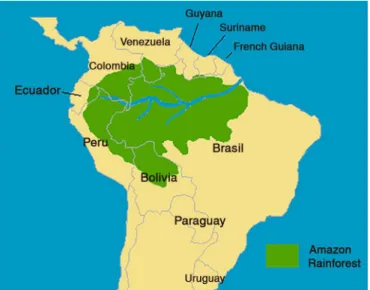
America is predominantly within the limits of the Brazilian territory and has a unique geomorphological, biological and social reality which has no counterpart in the world. Figure 1 depicts the geographical extension of the region. Its great extension and low population density
makes it difficult for people to have access to transport
and communication. Displacement for the majority of the population is by boat, foot or bicycle, in spite of the
long distances. According to the latest Brazilian census conducted in 2010, the Brazilian Amazonic population is approximately 3.4 million, of which 20% are located in rural areas.4 There is considerable variation in the
frequency of blindness and visual impairment within the region, as well as in the proportions of blindness and visual impairment from different diseases and conditions.5 Any development plans and health promotion
strategies are a challenge to professionals in this region.1-6
A questionnaire was applied to patients by a local
health official previously trained by the ophthalmologist
team. It contained 22 questions divided into general and health data. The questionnaire was based on that applied by Kara-José & Temporini in a study of cataract in the State of São Paulo, Brazil.7 Following this, a complete eye
examination was performed, including the measurement of visual acuity, static refraction, slit lamp examination, tonometry, fundus direct exam and/or retinal mapping.
If indicated by the ophthalmologist, specific tests were
additionally conducted, such as ultrasound and ocular biometry. Patients with surgical needs were submitted to
the appropriate procedures at the floating eye hospital and
special cases were referred to reference centers. All project data were stored in a database for later evaluation.
The sample evaluated in this study comprises a total of 1,276 patients. The study variables including demographic and socioeconomic data and eye examination data.
■
RESULTSOf the 1,276 patients evaluated, 65% were female. Age distribution showed a relatively young population, with a majority (51%) between 31 and 60 years and 30% were under 30 years. Regarding the number of their offspring, 12.2% had none, 55% had 1-5 children, 26.1% had 6-10 and 6.7% were over 10 children. Regarding the education level 18.4% were illiterate, 55% had incomplete 1st degree and
26.6% had 2nd degree or higher education. At the time of the
examination, 52.6% patients did not work and 26.3% said they earned up to $60.00 monthly. Concerning sanitation, 80.7% had piped water but only 24.5% had sewage. Electrical network covered almost 90% of households. Over 75% had television and fewer than 1% had computers in their homes. For 64.6% of patients transport was by foot whereas 26.1% used bikes .
With regard to ocular health 51.9% said they had never had an eye examination and 91% believed to have some visual problem. The frequency of general medical care available in the community reported by patients was 52.1% for daily service, with 5.4% receiving fortnightly attention; 12.1% had no regular service. No regular specialized eye care was available. The visual acuity exam showed 65.2% of patients with 0.5 or better levels on the Snellen chart, while 11% had a value of 0.1 or worse. Intraocular pressure was checked by bidigital exam in 43.5%: aplanation tonometry showed that 47.6% of the evaluated sample had intraocular pressure between 10 and 20 mmHg, while 8.9% had pressures above 20 mmHg.
Among the ocular abnormalities, cataracts were detected in 16.2%, pterygium was detected in 23.6%, corneal opacity in 2.3%, pingueculae and eyelid changes were found in 1.6% each. Figure 2 shows that presbyopia Figure 1 - A map of the Amazonian region (courtesy of www.peru-explorer.com)
prevention program available to the riverside population of the Amazon and to groups of indigenous villages; the end-goal was to implement eye health actions at the primary care level. The Project used hospital support ships of the Ministry
of Health, transforming them into floating eye hospitals,
with the ability to range from consultations and preventive guidance to the most complex surgeries and eye treatments. The trips were scheduled to forecast all the necessary logistical resources, with an average duration of 20 days.
Based on epidemiological characteristics of the population and with the object of gauging the material eye and human resources employed in the Project, this study estimated the prevalence of cataract, glaucoma, refractive errors and other causes of preventable and treatable blindness. The habits, beliefs and customs of the population, coupled with the uniqueness of the Amazonic climate can lead to different rates of prevalence of eye diseases in comparison with other regions of the country. Thus, and especially in order to optimize the therapeutic capacity for future projects, the objective of this study was to estimate the prevalence of eye diseases in the region and evaluate the
efficacy, efficiency and effectiveness of community projects
of visual health in underserved communities, checking the solving of problems and the application of human and material resources used in the execution of projects.
■
MATERIALS AND METHODSwas the most prevalent refractive error, with 47.2%, followed by compound hypermetropic astigmatism (33%) and hypermetropia (14.6%); 21% of patients were free from metropic problems. Regarding surgical ocular changes, 48.3% knew they had cataracts and 27.6% knew they had pterygium. Among these, 86.2% knew that these changes needed surgery. When asked why they had
not operated before, 24.1% said they had no financial
conditions and 55.2% because there was no specialized doctor nearby. Figure 3 shows that cataract and/or pterygium made 24% of patients stop working, while 21% depended on someone to eat and get out of the house; 18% of patients were not affected. During the execution of this project, cataract surgeries were performed in 27.6% and pterygium in 6.9% of the patients. Of these, 25% intended to return to work.
■
DISCUSSIONThe Brazilian Council of Ophthalmology Census data shows that the northern region has the lowest number of ophthalmologists in the country, and despite the increasing
number detected in the latest census, the eye doctor/ inhabitant ratio was down, because population growth occurred more rapidly. In addition, specialized care in rural areas is very poor.8,9 In this study, the sample consisted
of a relatively young population with low education, low
income and poor sanitation. These parameters reflect the
reality of the region as shown by the Brazilian Institute of Geography and Statistics census, which also features the indigenous population pyramid with a wide base that will
rapidly reduce with age, in a pattern that reflects their high rates of fertility and mortality; this also reflects the pattern
of the rural Amazonic population.10
In Brazil, the prevalence of blindness is estimated to be 1.3% of those over the age of 50 years. The Botucatu
Eye Study11 showed low vision and blindness were found
in 5.2% and 2.2% of the studied population, respectively. The Sao Paulo Eye Study showed a prevalence of visual impairment at about 4.74% and of bilateral blindness at
1.51%.12 In another study made in Campinas, Sao Paulo,
Brazil, blindness was found in 1.98% of inhabitants.13 This
represents not only a significant burden to those who are
affected, but it also represents a large social and economic cost to the State.14,15
Figure 2 - Frequency of occurence of objective static refraction alteratins. M: myopia; SHA: simple hypermetropic astigmatism; SMA: simple myopic astigmatism; MIXEDA: mixed astigmatism; H: hypermetropy; CHA: compound hypermetropic astigmatism; CMA: compound myopic astigmatism; PRES: presbyopia; EMM: emmetropia; N: none diagnosed
The main visual impairment founded in the popu-lation studied in this project was represented by refrac-tive errors. Uncorrected refracrefrac-tive errors are one of the leading causes of blindness and visual impairment in the
world.13,16-18 A large number of patients with ametropia
were treated with prescription of glasses. As the peak age of patients was between 41 and 50 years, nearly half of the refractive errors was presbyopia. The study showed low prevalence of elderly eye diseases, even though a previous report has shown an increase of visual impairment with
age.19 The singularity of the Amazon region can maybe
explain these results.
Cataract and pterygium were the most common surgical pathologies found, in agreement with previous reports.20-22 Both affected significantly patients’ lives, with
impairments upon work and daily activities such as eating or leaving the house. In response to the questionnaire at the time of the examination, the prevailing factors for not
performing cataract surgery were financial and logistical.
Vision services in most of the Latin American countries cover less than 10% of the populations. These results may be compared to a recently described epidemiological study of rural population in the state of Pernambuco.23 This, in itself
shows the need to facilitate the access of this population to cataract surgery by decentralizing social services and by developing community projects to prevent blindness.11,13,24,25
The main limitation of this paper is the fact that the data is old, because the Project was conducted in 2001. However, the Amazon Project Vision 2000 provided the equipment and resources for the activities proposed, detecting and solving the mainly ocular diseases, and
reaching the pre-defined goal. Nevertheless, there is still an
urgent need to implement programs to promote continuous eye health and blindness prevention, as well as improved access of marginalized populations to these services, in joint actions with government agencies.
■
SUMMARYThe Project on visual health covering the Amazonian riverside population found cataract, pterygium and refractive errors as the prevalent diseases. The resources for execution the Project were enough to solve the problems and are reproducible for others projects.
■
AUTHOR CONTRIBUTIONLoduca V: conception and design, acquisition of data, analysis and interpretation of data; critical revision of the manuscript for important intellectual content;
final approval of the submitted manuscript. Rehder JR: conception and design, acquisition of data; critical revision
of the manuscript for important intellectual content; final
approval of the submitted manuscript. Sobral Neto H:
conception and design, acquisition of data; critical revision
of the manuscript for important intellectual content; final
approval of the submitted manuscript. Daher G: substantial contribution to analysis and interpretation of data; critical revision of the manuscript for important intellectual content,
drafting of the manuscript and final approval of the submitted
manuscript. Gracia M: substantial contribution to analysis and interpretation of data, critical revision of the manuscript
for important intellectual content and final approval of the
submitted manuscript. Jorge PA: substantial contribution
to conception and design, analysis and interpretation of data, drafting of the manuscript, critical revision of the
manuscript for important intellectual content and final
approval of the submitted manuscript. Kara-Junior N:
substantial contribution to conception and design, analysis and interpretation of data, drafting of the manuscript, critical revision of the manuscript for important intellectual content
and final approval of the submitted manuscript.
■
CONFLICT OF INTERESTAuthors declare no conflict of interest regarding
this project.
AVALIAÇÃO DA EFICÁCIA, EFICIÊNCIA E EFETIVIDADE DOS PROJETOS COMUNITÁRIOS DE SAÚDE VISUAL NA POPULAÇÃO RIBEIRINHA AMAZÔNICA
OBJETIVO: Estimar a prevalência de doenças
oculares na região amazônica e avaliar a eficácia, eficiência e efetividade dos projetos comunitários de saúde visual em
comunidades carentes.
MÉTODOS: Estudo retrospectivo observacional
e ecológico, que abrange as comunidades carentes da Amazônia brasileira pelo Projeto Amazônia Visão de 2000. Os dados foram obtidos a partir de uma amostra completa de
1276 pacientes. Um questionário foi aplicado aos pacientes com 22 questões divididas em dados gerais e de saúde. Todos
os pacientes foram submetidos a um exame oftalmológico completo. Todos os dados de projeto armazenados em um banco de dados foram para posterior avaliação.
RESULTADOS: Dos 1276 pacientes avaliados,
65.0% eram do sexo feminino, 51,9% disseram que nunca tinham feito exame de vista e 91.0% acreditavam ter algum problema visual. Emetropia foi detectada em 3,8%; 47,2% tinham presbiopia. A Catarata (16,2%) e o pterígio (23,6%) foram as doenças prevalentes. Durante o projeto, cirurgias de catarata e pterígio foram realizadas em 27,6% e 6,9% da população estudada, respectivamente. Quando indagados sobre o porque de não haverem sido operados antes, 24,1%
disseram que não tinham condições financeiras e 55,2%
13. Arieta CE, de Oliveira DF, Lupinacci AP, Novaes P, Paccola M, Jose NK, et al. Cataract remains an important caise of blindness in Campinas, Brazil. Ophthalmic Epidemiol. 2009;16(1):58-63. DOI:10.1080/09286580802575032
14. Marback R, Temporini E, Kara Junior N. Emotional factors prior to cataract surgery. Clinics. 2007;62(4):433-8. http://dx.doi. org/10.1590/S1807-59322007000400010
15. Kara Junior N, Parede TR, Santhiago MR, Espindola RF, Mazurek MG, Carvalho RS. Social costs of two cataract surgical techniques in Brazil. Revista de Saude Publica. 2010;44(5):957-62. DOI: 10.1590/s0034-89102010005000025
16. Gallarreta M, Furtado JM, LansinghVC, Silva JC, Limburg H. Rapid assessment of avoidable blindness in Uruguay: results of a nationwide survey. Rev Panam Salud Publica. 2014;36(4):219-24.
17. Bourne R, Price H, Taylor H, Leasher J, Keeffe J, Glanville J, et al. New systematic review methodology for visual impairment and blindness for the 2010 Global Burden of Disease Study. Ophthalmic Epidemiol. 2013;20(1):33-9. DOI:10.3109/09286586.2012.741279
18. Lopez M, Brea I, Yee R, Yi R, Carles V, Broce A, et al. Survey on avoidable blindess and visual imparment in Panama. Rev Panam Salud Publica. 2014;36(6):355-60.
19. Creuzot-Garcher C, Binquet C, Daniel S, Bretillon L, Acar N, de Lazzer A, et al. The Montrachet Study: study design, methodology and analysis of visual acuity and refractive errors in an elderly population. Acta Ophthalmologica. 2016;94(2):e90-7. doi: 10.1111/aos.12842.
20. Limburg H, Silva JC, Foster A. Cataract in Latin America: findings from
nine recent surveys. Rev Panam Salud Publica. 2009;25(5):449-55. http://dx.doi.org/10.1590/S1020-49892009000500011.
21. Xiao B, Guan C, He Y, Le Mesurier R, Mueller A, Limburg H, et al. Cataract Surgical Outcomes from a Large-scale Micro-surgical Campaign in China. Ophthalmic Epidemiology. 2013;20(5):288-93. http://dx.doi. org/10.3109/09286586.2013.794901
22. Limburg H, Espinoza R, Lansingh VC, Silva JC. Functional low vision in
adults from Latin America: findings from population-based surveys in
15 countries. Rev Panam Salud Publica. 2015;37(6):371-8.
23. Jorge PA, Jorge D, Ventura CV, Ventura BV, Lira W, Ventura MC, Santhiago
MR, et al. Case-control study for clinical findings on intraocular lens
opacity. MedicalExpress (São Paulo, online). 2014;1(6):356-8. http:// www.dx.doi.org/10.5935/MedicalExpress.2014.06.12
24. Jadoon Z, Shah SP, Bourne R, Dineen B, Khan MA, Gilbert CE, et al. Pakistan Natl Eye Survey Study, Cataract Prevalence, cataract surgical coverage and barriers to uotake of cataract surgical services in Pakistan: the Pakistan National Blindness and Visual Impairment Survey. British Journal of Ophthalmology. 2007;91:1269-73. http:// dx.doi.org/10.1136/bjo.2006.106914
25. Chiang PP, O’Connor PM, Le Mesurier RT, Keeffe JE. A global
survey of low vision service provision. Ophthalmic Epidemiol. 2011;18(3):109-21. http://dx.doi.org/10.3109/09286586.2011.56 0745
CONCLUSÃO: Erros de refração, pterigyum e catarata foram os achados mais comuns na população avaliada. O Projeto Amazônia Visão 2000 forneceu equipamento e recursos para as atividades propostas, atingindo a meta
pré-definida.
PALAVRAS-CHAVE: Catarata, serviços de saúde indígenas, visão, baixo, cegueira.
■
REFERENCES:1. Rao GN, Khanna RC, Athota SM, Rajshekar V, Rani PK. Integrated model of primary and second eye care for underserved rural areas: The L V Prasad Eye Institute experience. Indian Journal of Ophthalmolgy. 2012;60(5):396-400. DOI: 10.4103/0301-4738.100533
2. de Senne FMB, Cardillo JA, Rocha EM, Kara-Jose N. Long-term visual outcomes in the Cataract-Free Zone Project in Brazil. Acta Ophthal-mologica Scandinavica. 2002;80(3):262-6. DOI: 10.1034/j.1600--0420.2002.800306.x
3. Singh N, Eeda SS, Gudapatui BK, Reddy S, Kanade P, Shantha GPS, et al. Prevalence and Causes of Blindness and Visual Impairment and Their Asso-ciated Risk Factors, in Three Tribal Areas of Andhea Padesh, India. Plos One. 2014;9(7):e100644. http://dx.doi.org/10.1371/journal.pone.0100644 4. http://www.ibge.gov.br/home/estatistica/populacao/censo2010/
tabelas_pdf/total_populacao_amazonas.pdf, 2013.
5. Furtado JM, Lansingh VC, Carter MJ, Milanese MF, Peña BN, Ghersi HA, et al. Causes of blindness ans visual impairment in Latin Ameria. Surv Ophthalmol. 2012;57(2):149-177. DOI: http://dx.doi.org/10.1016/j. survophthal.2011.07.002
6. Temporini E, Kara-Jose N. Cirurgia de catarata: o porquê dos excluídos. Rev Panam Salud Publica. 1999;6(4):242-8. http://dx.doi. org/10.1590/S1020-49891999000900003
7. Temporini ER, Kara N, Newton Kara J, Holzchuh N. Popular beliefs regarding the tratment od senile cataract. Rev Saude Publica. 2002;36(3):343-9. http://dx.doi.org/10.1590/S0034-89102002000300014
8. http://www.cbo.com.br/novo/medico/pdf/censo_2011.pdf. 9. http://www.cbo.com.br/novo/medico/pdf/jo/ed136/9.pdf. 10. http://www.ibge.gov.br/indigenas/indigena_censo2010.pdf. 11. Schellini SA, Durkin SR, Hoyama E, Hirai F, Cordeiro R, Casson RJ,
et al. Prevalence and causes of visual impairment in a Brazilian population: the Botucatu Eye Study. BMC Ophthalmol. 2009;9:8. DOI: 10.1186/1471-2415-9-8