Original Article
Artigo Original ISSN 2317-1782 (Online version)
This is an Open Access article distributed under the terms of the Creative Commons Attribution License, which permits unrestricted use, distribution, and reproduction in any medium, provided the original work is properly cited.
Use of digital audio players by high school
students: measurement of use intensity and
usage habits
Utilização de estéreos pessoais por alunos
do ensino médio: mensuração da intensidade
utilizada e hábitos de uso
Eduarda Dandolini da Silva1Júlio Alexandre de Matheucci e Silva Teixeira2 Renata Coelho Scharlach1
Keywords
Hearing Loss Digital Audio Players Adolescent Behavior Health Promotion Awareness
Descritores
Perda Auditiva Provocada por Ruído MP3-Player Comportamento do Adolescente Promoção da Saúde Conscientização
Correspondence address: Eduarda Dandolini da Silva Campus Reitor João David Ferreira Lima, s/n, Trindade, Florianópolis (SC), Brasil, CEP: 88040-900. E-mail: [email protected]
Received: June 13, 2017
Accepted: April 08, 2018
Study conducted at Universidade Federal de Santa Catarina – UFSC - Florianópolis (SC), Brasil.
1 Departamento de Fonoaudiologia, Faculdade de Fonoaudiologia, Universidade Federal de Santa Catarina –
UFSC - Florianópolis (SC), Brasil.
2 Departamento de Engenharia Mecânica, Universidade do Extremo Sul Catarinense – UNESC - Criciúma (SC),
Brasil.
Financial support: nothing to declare. Conflict of interests: nothing to declare. ABSTRACT
Purpose: The main goal of this study was to measure the sound pressure level of digital audio players of high school students and investigate their auditory and non-auditory complaints, and their hearing habits. Another goal was to consider the concern with hearing health and the knowledge sources used by young people to gather information about the subject. Methods: This is an observational, descriptive, quantitative, and cross-sectional
study, which had the participation of high school students. The first step was an examination of transient-evoked
optoacoustic emissions, followed by the application of a questionnaire and the measurement of the volume of audio players. Results: The results showed harmful habits of young people regarding hearing health, such as an excessive time of use (hours, days and years) and high volume levels of digital audio players (DAPs), as well as symptoms that may point to hearing loss. It was found that most young people seem to be concerned about their hearing; however, there is no change of attitude to such situations. Conclusion: The students develop the habit of using DAPs at very early ages and, in many cases, this habit is practiced with the equipment operating at high intensities, which can cause several hearing losses in these students.
RESUMO
Objetivo: Esta pesquisa teve como objetivo mensurar em um ambiente ruidoso o nível de pressão sonora dos estéreos pessoais de jovens do ensino médio, levantar suas queixas auditivas e extra-auditivas e seus hábitos de uso. Considerando-se ainda a preocupação com a saúde auditiva e as fontes utilizadas pelos jovens para obtenção de informações sobre o assunto. Método: Trata-se de um estudo observacional, descritivo, quantitativo, de delineamento transversal, do qual participaram jovens do ensino médio. Inicialmente foi realizado o exame de emissões otoacústicas evocadas por estímulos transientes, seguido da resolução de um questionário e a mensuração do nível de pressão sonora dos reprodutores de música utilizados em situação ruidosa simulada.
Resultados: A partir da mensuração dos estéreos pessoais, foram encontradas as intensidades mínima, de 69 dB(A), e máxima, de 93 dB(A). Os resultados mostraram hábitos nocivos à saúde auditiva sendo realizados pelos jovens, tais como tempo de uso (horas, dias e anos) e intensidade utilizada nos estéreos pessoais, assim como sintomas que podem indicar suscetibilidade a perdas auditivas. Observou-se que os jovens, em sua
maioria, afirmam preocupar-se com sua audição, no entanto não há mudança de atitude diante dessas situações.
INTRODUCTION
Nowadays, as a result of technological advances and easy access to digital audio players, a large number of people have been using these devices for leisure purposes. However, depending on time of use, volume and type of device, music listening behaviors may harm people’s health. Therefore, several studies have begun to seek and report the risks posed by this habit(1,2).
Previous research has stressed that repeated exposure to loud sounds may lead to early onset of symptoms of hearing
problems in the population. Different studies have reported
some hearing problems arising from exposure to noise, e.g., intolerance to intense sounds, dizziness, earache, tinnitus, hearing loss, hyperacusia and ear fullness, in addition to physiological problems in other systems of the body, thus causing stress,
irritability, increased blood pressure, insomnia, difficulty in
comprehension and gastrointestinal disorders(3-5).
Clearly, young people have hearing complaints that resemble those of adults and the elderly. This is due to daily habits of many young people; many of them actually listen to loud music for two to six hours per day, on average, using earphones(6-8).
Another very common habit is going to places with a high level of noise exposure. Previous studies have reported that more than half of their study populations attend these environments occasionally. Considering their young age and the aforementioned use of digital audio players (DAPs), such habit is extremely worrying because of loud noise exposure(1,5).
Young people are exposed to high sound pressure levels even at school. Noise levels in Brazilian schools, in the early grades, range between 67 and 103 dB sound pressure level (SPL). High noise values are known to cause not only auditory and extra-auditory problems but also learning disabilities in
students as well as in staff(9).
Noise-Induced Hearing Loss (NIHL) is essentially
sensorineural, and outer hair cells are usually the first part affected. When stimulated by high intensity sounds, these cells may suffer damage which produces presumably reversible
changes to the cilia, and these changes lead to an increase of the auditory threshold. However, if these stimuli are repeated, they may cause irreversible damage and, hence, hearing loss. There is no treatment available for such hearing damage. Therefore, all that people can do is to stop it from increasing by avoiding noisy places and habits that are harmful to hearing (5).
Schools are environments where people develop personal values, concepts and ways of getting to know the world, and they directly interfere in the social production of health. Therefore, implementing projects for prevention of hearing problems in this environment and raising students’ awareness and greater understanding of this matter could reduce the risk of early hearing loss and help maintain the auditory health of adolescents.
Schools are privileged spaces for implementation of public policies, especially health education ones, as they allow the promotion of auditory health and prevention of hearing loss in adolescents(10,11).
Current proposals for prevention programs include
Dangerous Decibels and Wise Ears!, which were set up in the
United States. One of the goals of these programs is to try to
include awareness in school curricula, thus increasing public awareness about the mechanisms of hearing and NIHL as well as decreasing its incidence in school environments(12). In Brazil,
there are campaigns, e.g., the International Noise Awareness Day (INAD), Passe Adiante Esta Ideia (“Float this idea”) and
Dangerous Decibels Brasil, whose objective is to promote
hearing health(2).
In 2007, the Programa de Saúde na Escola (PSE, or “School Health Program”) was created in Brazil with a view to assisting in the education of students by means of disease prevention and health promotion, as well as campaigns and screenings in schools, in order to educate students and detect problems that interfere with their learning, including auditory health (13).
However, in addition to disease prevention programs in
schools, the population should be offered relevant information
about their hearing health everywhere they go. Thus, more people
can become aware and be educated on the negative effects of
noise through simple actions of their daily routine(8,9).
The objective of this research was to evaluate, in a noisy environment, the sound pressure level of sound stimuli of digital audio players used by high school students, to identify their auditory and extra-auditory complaints, as well as their usage habits. Another objective was to consider the concern with auditory health and the sources used by young people to gather information about the subject.
METHODS
It is a descriptive, quantitative, observational, cross-sectional study, which was reviewed and approved by the Research Ethics Committee of the Federal University of Santa Catarina (UFSC), under protocol number 931.110.
Eight schools - two public schools and six private schools - in a capital city in the south of Brazil were selected at random and visited with the objective of presenting the research plan to the principals and instructing them on how to communicate the research to senior high school students. The students were asked by their respective school teachers about their interest in participating in the study.
These were the inclusion criteria for participation in the research: to be a student enrolled in the senior year of high school at the participating schools and to use digital audio players on a regular basis. The exclusion criteria were: to have a congenital or acquired hearing impairment and/or any obstruction of the external acoustic meatus (cerumen or malformation). These
criteria were verified by means of questions and otoscopy.
The steps of the study consisted of hearing screening through examination of transient-evoked otoacoustic emissions (TEOAE), completion of a questionnaire and characterization of the sound stimulus used in the participants’ DAPs in noisy situations.
Before the start of data collection, the students’ parents or legal guardians signed an Informed Consent Form (ICF) while the students signed an Informed Assent Form (IAF). These documents contained information on how the research was going to be conducted.
conducted in the Vibration and Acoustic Laboratory, Federal University of Santa Catarina, where all participants underwent otoscopy. Later, the students underwent transient-evoked otoacoustic emission screening, and they also received a brief explanation about it. The examination was performed in a quiet room of the lab with an AccuSscreen OAE/ABR screener (Otometrics). The criterion used to consider the presence of response was a signal-to-noise ratio greater than 3 dB in the 1000, 2000, 3000 and 4000 Hz frequency bands. The presence of response in this exam suggests normal cochlear function (outer hair cells)(14). Students who presented a lack of
response in the exam were advised by e-mail to have a complete hearing assessment at the Audiology Clinic at UFSC.
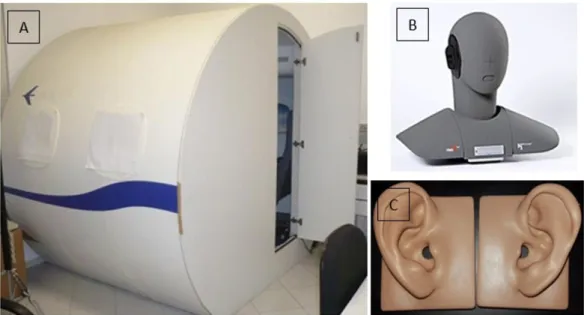
After that, the students were asked to enter a noise and vibration simulation booth (mock-up) located in the same place and they answered a questionnaire. The questionnaire contained 16 questions designed by the authors about auditory and extra-auditory complaints, as well as listening behavior and use of digital audio players.
The booth was used to simulate an urban bus, in terms of acoustics and vibration, because students take the bus very often. The simulation exposes individuals to mean acceleration of approximately 0.2 m/s2 and sound pressure level of 75 dB(A).
These stimuli were collected in a previous study whose purpose was to simulate the same type of vehicle(15).
To characterize the simulated environment, a sound pressure level meter and a previously calibrated triaxial accelerometer were used to measure the stimuli played in the mock-up and compare them with the values measured on the bus.
The noise used in the booth during the study had been collected in a previous study(15) and measured at four positions
from four predetermined city bus in Florianópolis (SC), where recordings and analysis were made (around sixty seconds in length). Together with the measurements, bus noise was recorded
with a SONY Steady Shot DSC-W52 camera. This sound was
reproduced in the simulation booth, and the same procedure was performed for the vibration.
The first part of the questionnaire (questions 1 to 11) was
about the participants’ level of education, characteristics of use of DAPs (time of use, environment and volume of use), and reason for increasing the volume of the device. The questions were answered inside the simulation mock-up (Figure 1). They were presented to the respondents on a touchscreen, through a software program designed by the researchers particularly for this purpose. Concomitantly, the participants went through a period of adaptation to the acoustic environment. Because the auditory system takes a while to adapt to external sound stimuli(16), the questionnaire was answered inside the booth
while the vibration and noise were on, so that such length of time could be used for the participants to adapt their hearing, undergo the simulation and get ready to listen to their device under these conditions of use.
The second part of the questionnaire (questions 12 to 16) was about the respondents’ hearing complaints, concerns and use of DAPs, acoustic environments they go to and use of hearing protection strategies. Because the questions were directly related to the impact of earphone use on individuals and the prevention of hearing impairments, the students might have been inclined to change their answers and reduce the volume in their devices at the time of the test in order to simulate healthier daily habits. Thus, these questions were only answered after the end of the measurement of the sound pressure level produced by the earphones.
After completion of the first part of the questionnaire
(questions 1 to 11) and adaptation to noise, without leaving the booth, the participants were instructed to turn on their digital audio players and listen to them as they do on a daily basis. For this measurement, each participant brought their own digital audio player and the earphone they use most often.
The participant stayed inside the booth and listened to a song of their choice at a volume of their choice, and background noise, as mentioned earlier, was still on. After the participant had been listening to the sound stimuli for two minutes, a warning was shown on the screen to let the student know that they could get out of the booth but had to leave their device inside, with the track set at the same volume being used. The sound stimulus of the player and the background noise were captured by means of a
HEAD HMS III Binaural Recording System fitted to a computer
using the software HEAD Audio Recorder. They were later analyzed by the software Artemis, also of the HEAD Acoustics, and correlated with the answers to the questionnaire. The values were given by the sound pressure level weighted by curve A, and the mean was equal to the equivalent level.
The Binaural Recording System (BRS) is a recording system that uses two omnidirectional microphones placed in the ears of a dummy head and torso. In order to simulate the external acoustic meatus and the impedance of the human ear, an ear simulator was inserted in the dummy (Figure 1).
Finally, the students of the selected schools - both users and non-users of DAPs - participated in an initiative for auditory health promotion and hearing impairment prevention, based on the results found in the previous steps. In the classroom, they attended lectures and talks whose goal was to raise awareness and increase the understanding of the study population about these matters. These events covered subjects such as hearing physiology, pathophysiology of NIHL and hearing protection measures.
All data were tabulated in an Excel spreadsheet and then they underwent statistical analysis with the software programs
Statistical Package for Social Science (SPSS) for Windows
version 13.0 and Matrix Laboratory (MATLAB), as well as descriptive and inferential analysis. The statistical test used in
this research was the Chi-square test, and a significance level
of 5% (p ≤ 0.05) was used.
RESULTS
The age of the 57 young people who participated in this study ranged from 16 to 18 years, with a mean age of 16.7 (standard deviation of 0.63 years). TEOAE were performed in all participants for screening purposes in order to investigate the functioning of the outer hair cells of the cochlea of each individual. Four participants (7%) showed no responses; two of them had bilateral absence of response.
All mean values for sound pressure level cited in this paper refer to the highest value found between the two ears after measurement in the devices of individuals who participated in the study, when they were exposed to a noisy environment (an urban bus simulator), as described in the method section. In this situation, a mean value of 80 (standard deviation of 4.8) dB(A) was found for the DAPs: the minimum value was 69 dB(A) and the maximum value was 93 dB(A).
Among the participants in this study, 31% reported not having any kind of hearing health complaint, whether they were
auditory or extra-auditory. Headache, anxiety and difficulty
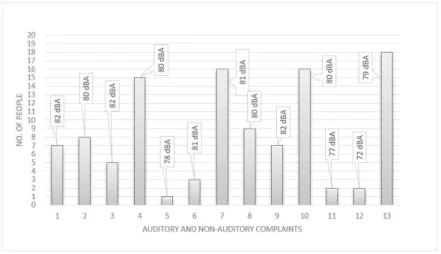
in understanding speech in noise had the highest prevalence (27%). Based on the mean value of the SPL of each reported complaint, the highest value (82 dB(A)) was found for tinnitus, insomnia and hearing loss, as shown in Figure 2. The students could select more than a complaint on the questionnaire.
The people who use the highest sound pressure levels on their devices reported complaints of headache and insomnia (93 dB(A)) and ear fullness, sensation of hearing loss and headache (90 dB(A)). The individuals who selected the option “other complaints” use their devices at lower levels (72 dB(A)) than the other young people in this research.
Another relevant finding was that the people who have been using their DAPs for more than five years complained about
the feeling of hearing loss more often (p<0.02). However,
there was no statistically significant association between the
presence of complaints or number of complaints and the range of the volume used in the DAPs (p>0.3 and 0.5, respectively),
Caption: Auditory and non-auditory complaints: 1- tinnitus; 2- feeling of occlusion; 3- sensation of hearing loss; 4- difficulty in understanding speech in noise; 5- dizziness; 6- earache; 7- headache; 8- stress; 9- insomnia; 10- anxiety; 11- itchy ear; 12- other; 13-none
hours of use (p>0.2 and 0.5, respectively), general perception of hearing (p>0.5 and 0.9, respectively) and hearing protection measures (p> 0.8 and 0.3, respectively).
As regards habits of use of digital audio players, when the students were asked about the environment in which they prefer to use their device, 77.2% of youths reported situations of noise
and 22.8% of silence. When they took the test in the simulation
booth, the mean levels recorded on the DAPs of these young people were 81 dB(A) and 77 dB(A), respectively. In addition, based on their answers to the questionnaire, it was found that the participants who make more use of their DAPs in situations of noise also claimed that they do so in a higher volume, i.e. above
50% of maximum power and this was statistically significant
when compared with the group that uses their DAPs in quieter situations (p<0.001). Another relevant fact is that 65% of the individuals who prefer to use their DAPs in noise reported that they increase the volume of their device in this situation.
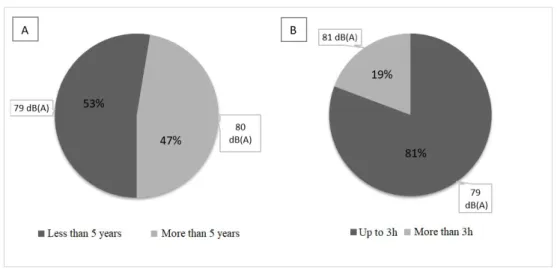
Next, Figure 3 shows the distribution of young participants considering time of use (in years and days) of digital audio players, as well as the resulting sound pressure level when the DAPs were used in the simulation booth.
The answers to the questionnaire and the data on time of use in years showed that the young people who have been using
their DAPs for more than five years (47.3%) are currently doing
that at a volume above 50% of the total power of the device.
This percentage is statistically different in comparison to the group
that has been using their DAPs for less than 5 years (p<0.01). In addition, 92.5% of those who have been using their DAPs
for more than five years do those more than three days a week.
It was found that more than half (87.2%) of the adolescents who reported using their DAPs more often (more than three days a week) reported that they use their DAPs at a volume greater than 50% of the total capacity of the device. Moreover, 80% of the young people who use their DAPs less often (up to three days a week) said that they use their equipment at this volume; 90.2% of the individuals aged less than 18 years as well as 50% of the young people aged 18 years reported that they use their
devices at a minimum volume of 50% of the capacity of the device. The statistical analysis, based on the Chi-square test,
showed that this difference was statistically significant (p<0.01). Table 1 shows the habits of use of DAPs and the students’
worries about their hearing health. When they were asked
whether or not they worried about their hearing health, little more than half of the students (59.6%) answered that they do worry. However, when they were asked about protection measures to prevent hearing impairments, a large part of the study population (78.9%) reported not using any means to protect their hearing (e.g., using hearing protection devices, or avoiding getting close to speakers, or some other measure. In addition, there was no
statistically significant difference in volume setting that the
youths reported using in their DAPs (less than 50% and 50% or more of the total power of the device) among those who claimed to worry about their hearing and those who claimed not to worry (p>0.8).
These young people receive information about the risks of misusing their DAPs in several ways (Figure 4): 49.1% have already received some kind of information from their parents; 42.1% from television advertisements; 33.3% from their school; 28% from the Internet; and 8.7% from other means not investigated in the present study. Because this question allowed more than one answer, it was found that 52.6% had received
information from only one source, 24.5% from two different sources, 7% from three different sources, 5.4% from four different sources and 3.5% from five different sources. The highest mean
sound pressure levels measured in this group, in the simulation situation proposed in this research, were emitted by the DAPs of the young people who had previously received information
from three and five different sources (80 dB(A) and 81 dB(A),
respectively).
In the group studied in this research, four individuals (7%) reported never having received information from any means, and their DAPs were measured with mean SPL of 83 dB(A).
Within this subgroup, 75% declared in the questionnaire that
they did not worry about their hearing.
Caption: dB(A) = Sound Pressure Level weighted by curve A.
DISCUSSION
The data found in this study suggest the attitudes of these adolescents towards exposure to noise and SPL resulting from
the use of their devices in an environment that reflects their
reality. The high incidence of individuals who take buses (42%) shows that this simulation environment was suitable to measure the SPL produced by their devices, because it is more similar to the real environment these people are familiar with.
In this research, 7% of the participants showed absence of TEOAE. TEOAE allow the early detection of impairments in the outer hair cells even before they are found in pure-tone audiometry(17), hence they are an important method for early
identification of possible disorders in the peripheral auditory
system.
Some studies that used the same methodology for measurement of the SPL of DAPs(15,18) found higher means than the present
study. However, the study population has a different age: the
other studies were performed in young adults above 18 years old.
In the studies cited above, as well as in this one, the earphones were measured in a noisy environment. Nowadays, the use of technology enables the elimination of one of the main causal factors for the increase in the volume of digital audio players, namely, external noise. Noise-cancelling earphones were designed with that goal. This device creates a situation in which the ambient sound is canceled by means of signal processing, and users can listen to music without the need to increase the volume of their device. However, this is far from being a real solution, this equipment is extremely expensive, and hence a
large part of the population cannot afford it.
Currently, many cell phones warn users about a maximum volume limit to avoid harm to health, and there are earphones that inhibit the main reason to increase the volume. However, this is not enough if users do not change their usage habit, because
when using other equipment that do not offer this feature, they
will be faced with a situation of risk again.
Sound pressure level measurements do not necessarily reflect actual values used on a day to day basis, hence it is difficult to
generalize them for all situations. However, as previously stated, it is worrying that, in a simulated situation, some young people have already used their device at intensities above 85 dB(A).
When exposure is combined with other harmful listening habits, it can trigger different auditory and extra-auditory
symptoms in users of DAPs (Figure 2). In this study, more than half of the young people (69%) reported having some type of auditory or extra-auditory complaint; therefore, considering the mean age of the population, the large number of people with complaints is disturbing, and such complaints may be due to habits that are harmful to hearing health. Tinnitus, as well as other manifestations of the body, may be related to a person’s particular predisposition to possible hearing loss (19,20).
In a study conducted with professional musicians who are often exposed to intense noise, insomnia was one of the most frequent complaints(21). As previously mentioned, exposure
to noise not only affects hearing, but can also bring several symptoms that affect the body as a whole, e.g., gastrointestinal Table 1. Association between the students’ concern with their auditory health and the variables time of use, volume used by the subjects in their DAPs and auditory protection measures (n=57)
Concern with auditory health
p- value YES = 34 NO = 23
DAYS OF USE (days per week) N % N %
Up to 3 6 17.6 4 17.4 p>0.95
More than 3 28 82.4 19 82.6
LENGTH OF DAILY USE (hours per day)
Up to 3 28 82.3 18 78.3 p>0.5
More than 3 6 17.7 5 21.7
VOLUME OF DIGITAL AUDIO PLAYERS
Less than 50% of maximum volume 5 14.7 3 13 p>0.8
50% or more of maximum volume 29 85.3 20 87
USES HEARING PROTECTION DEVICES
Yes 7 20.5 5 21.7 p>0.9
No 27 79.5 18 78.3
Chi-square test (significance level of p < 0.05)
disorders, increased blood pressure, insomnia, sleep disorders,
attention difficulties, learning difficulties and stress(4,22).
Using digital audio players (DAPs) in noisy environments and increasing the volume when one is in this type of environment, are examples of negative habits developed by this population. The main problem in the use of DAPs is precisely how to use them. People are usually unaware of the consequences when choosing the volume and time of use(8,23). An analysis is needed
of the place where these devices are being used, because the external environment has a high correlation with the volume settings in DAPs(19). Society has become increasingly exposed
to intense and repeated noise, which causes cumulative damage to health and negative consequences that remain throughout life and may worsen if exposure is not ceased(24,25).
In the present study, 14% of the young people claimed that they used their DAPs at a volume which is considered to be low (below 50% of the total capacity of the device) and 52.7% (Figure 3A affirmed that they have been using them for more than 5 years. Corroborating these data, a study in 2013(16) also
found a higher percentage of young people using their DAPs for over 5 years and at a high volume. This comparison may suggest the persistence of negative habits in this population.
One of the problems of noise is cumulative exposure that occurs during the day. In this case, in addition to mean length of exposure to devices with earphones, young people are subject to other ambient noises that, together, can result in complications(25,26).
Awareness that the characteristics of exposure (time, frequency), sound pressure level and the susceptibility of each individual are
factors that can influence the occurrence of NIHL, it is crucial
to highlight some of the habits of use of DAPs by this group. It was found that the population that uses these devices more days per week, also uses a high average volume (50% or more of the capacity of the device). A previous nationwide study was also performed with young people(2), and it was found that
34% of the population had the habit of using earphones at a high volume on a daily basis. This group has two factors which may be harmful to health; thus, it is a risk group for possible hearing loss, mainly because exposure starts earlier and earlier.
Another important fact is that 70% of the population of the
present study claimed to listen well. This finding is similar to
that of a previous study(4). NIHL cannot be identified simply,
because hearing loss is temporary at first. After it has progressed, it affects high frequencies; hence it does not compromise speech
intelligibility(22).
Another behavior addressed in this study, and also in a previous study(27), is the use of hearing protector devices.
When questioned, 78.9% of the participants reported not
having this habit. In a study carried out in Germany, 72% of the participants also reported not using any form of protection in order to avoid hearing problems(27). Paradoxically, over half
(59.6%) of the participants in the present study stated that they do not worry about their hearing health (Table 1). The behavior of these young people shows that, although they are aware of
and worried about their hearing, their actions do not reflect that.
Those who claimed to be worried about their hearing do not
have different habits from those of individuals who claimed not
to worry, because they had a similar behavior with respect to usage habits (volume, hours of daily and weekly use).
Their behavior was similar as regards sources of information (Figure 4), regardless of the informant and the number of times that the subject received an explanation about the improper use of DAPs. It is therefore clear that only providing information to the groups is not enough if there is no change in behavior.
Everyone has a personal conviction of what is right and wrong, and for this belief to change, individuals have to become knowledgeable about the subject so that they can change their behavior and to ensure that such change is not momentary but rather a long-lasting habit(7,8,28).
Music brings several benefits to people, e.g., stress reduction, pain reduction, reduced anxiety, etc. When someone hears a song
they like, their brain interprets the stimuli as a feeling of pleasure, which triggers the release of dopamine, a neurotransmitter closely associated with the sense of well-being. However, even if an activity is enjoyable, it can also be extremely harmful to hearing when performed carelessly(18).
Because music is often not considered to be a harmful
stimulus, it is difficult to propose damage prevention activities
to a group that is exposed to high sound pressure levels but enjoys a particular type of music(9). Although there is an entire
population susceptible to risks of hearing loss because of the routine of the current society, young people have extremely worrying habits and ignore the health risks they may face when they use these new technologies carelessly(2). Regardless of
what young people listen to and how they do that, they need to understand that exposure to noise at high sound pressure levels is detrimental. This does not depend on the type of sound that
they listen to, i.e., from traffic noise to one’s favorite music,
hearing loss can occur if sounds are listened to carelessly(8,9).
A possible solution lies in proposals for prevention; however, they should be implemented on the basis on theoretical
knowledge, in simplified form, particularly aimed at the target
audience in a continuous and objective manner. Young people must identify their habits based on the feedback they receive and feel the interest in discussing the matter with their peers. This way, they can change their habits and attract the attention of others around them.
For such guidance to be effective, each individual must
understand what they are told in order to reconsider their personal habits and accept such information and start to rethink about their habits and change them into healthier ones(29,30). However,
only providing information about the dangers caused by certain
choices do not necessarily have any effect on the population.
Even though young people may be aware that a particular habit is inappropriate, one cannot tell how they will react when facing a situation in which they have to choose between a healthy attitude and a detrimental one. Quite often, even though a certain attitude is harmful, a person is not prone to changing it because their interpersonal relationships have the same bad habit. Therefore, at that particular moment, the correct decision may seem to follow them.
Most young people still believe that they will not lose their hearing before reaching an older age(19). While there is
young people, when teenagers have to make a choice, they will still have complaints and hearing losses because of exposure to loud noise.
Based on all the information mentioned above, health and
education professionals can find and explore possible ways to
change this situation.
Some obstacles faced in this study were the reduced interest
of schools in participating in the research and offering time availability for completion of the proposal. Another difficulty was
the fact that young people often failed to come to the study site. The usage habits and symptoms arising in this group, since their early onset, reinforce the importance of this research and
the need to rethink proposals for more effective prevention.
Future research could focus on the habits of a younger population than the one investigated in this study. Moreover, longitudinal studies should be conducted on this topic.
CONCLUSION
The values of sound pressure levels found in this study ranged between 69 dB(A) and 93 dB(A). Most young people participating in this study have been using their digital audio
players for more than five years, preferably, in noisy environments.
The most prevalent auditory and extra-auditory complaints in
the study group were: difficulty in understanding speech in
noise, headache and anxiety.
ACKNOWLEDGEMENTS
The Vibration and Acoustic Laboratory, Federal University
of Santa Catarina for offering its premises and materials. The
schools Colégio Bom Jesus and Colégio Catarinense, in the city of Florianópolis, Santa Catarina, for accepting to participate in the research.
REFERENCES
1. le Clercq CM, van Ingen G, Ruytjens L, van der Schroeff MP. Music-induced hearing loss in children, adolescents, and young adults: a systematic review and meta-analysis. Otol Neurotol. 2016;37(9):1208-16. http://dx.doi. org/10.1097/MAO.0000000000001163. PMid:27466893.
2. Lacerda ABM, Gonçalves CGO, Zocoli AMF, Diaz C, Paula K. Listening habits and behavior of teenagers versus noisy leisure activities. Rev CEFAC. 2011;13(2):322-9. http://dx.doi.org/10.1590/S1516-18462010005000129. 3. Martins JPF, Magalhães MC, Sakae TM, Magajewski FRL. Evaluation of noise-induced hearing loss in musicians from Tubarão-SC. Arq Catarin Med. 2009;37(1):69-74.
4. Luz TS, Borja ALVF. Hearing symptoms personal stereos. Int Arch Otorhinolaryngol. 2012;16(2):163-9. http://dx.doi.org/10.7162/S1809-97772012000200003. PMid:25991931.
5. Kumar UA, Deepashree SR. Personal music systems and hearing. J Laryngol Otol. 2016;130(8):717-29. http://dx.doi.org/10.1017/S0022215116001031. PMid:27221308.
6. Santos I, Colella-Santos MF, Couto CM. Sound pressure level generated by individual portable sound equipment. Braz J Otorhinolaryngol. 2014;80(1):41-7. http://dx.doi.org/10.5935/1808-8694.20140010. PMid:24626891. 7. Serpanos YC, Berg AL, Renne B. Influence of hearing risk information
on the motivation and modification of personal listening device use. Am J Audiol. 2016;25(4):332-43. http://dx.doi.org/10.1044/2016_AJA-15-0062. PMid:27829082.
8. Gilliver M, Macoun D, Rosen J, Williams W, Carter L. Music to whose ears? The effect of social norms on young people’s risk perceptions of hearing damage resulting from their music listening behavior. Noise Health. 2012;14(57):47-51. http://dx.doi.org/10.4103/1463-1741.95131. PMid:22517303.
9. Momensohn-Santos TM. Ruído em escolares e adolescentes. In: Marchesan IQ, Silva HJ, Tomé MC, organizadores. Tratado das especialidades em fonoaudiologia. São Paulo: Guanabara Koogan, 2014. p. 987-993. 10. Balanay JA, Kearney GD. Attitudes toward noise, perceived hearing
symptoms, and reported use of hearing protection among college students: influence of youth culture. Noise Health. 2015;17(79):394-405. http:// dx.doi.org/10.4103/1463-1741.169701. PMid:26572699.
11. Lacerda ABM, Soares VMN, Gonçalves CGO, Lopes FC, Testoni R. Educational workshops as a strategy to promote hearing heath of adolescents: an exploratory study. Audiol Commun Res. 2013;18(2):85-92. http://dx.doi. org/10.1590/S2317-64312013000200006.
12. Knobel KAB, Lima MCPM. Effectiveness of the Brazilian version of the Dangerous Decibels educational program. Int J Audiol. 2014;53(Suppl 2):S35-42. http://dx.doi.org/10.3109/14992027.2013.857794. PMid:24564691. 13. Lüders D, França DMV, Lobato DCB, Klas RM, Gonçalves CGO, Lacerda ABM. Analysis of audiologic profile in school-age children. Distúrb Comun. 2015;27(1):151-61.
14. Fiorini AC. Emissões otoacústicas evocadas. In: Marchesan IQ, Silva HJ, Tomé MC, organizadores. Tratado das especialidades em fonoaudiologia. São Paulo: Guanabara Koogan, 2014. p. 888-891.
15. Reiner AH, Teixeira JAMS, Jordan R. Avaliação do risco na utilização de fones de ouvido em reprodutores de música pessoais. In: 29° Encontro Internacional de Audiologia; 2014 Abr 13-16; Florianópolis. Anais. São Paulo: Academia Brasileira de Audiologia; 2014.
16. Feder K, Marro L, Keith SE, Michaud DS. Audiometric thresholds and portable digital audio player user listening habits. Int J Audiol. 2013;52(9):606-16. http://dx.doi.org/10.3109/14992027.2013.798687. PMid:23859060. 17. Silva VG, Sampaio ALL, Oliveira CACP, Tauil PL, Jansen GMB. Hair
cell alteration prevalence rates in students of a school in Distrito Federal. Braz J Otorhinolaryngol. 2012;78(4):91-7. PMid:22936143.
18. Scharlach RC, Hellesheim D, Texeira JAMS. Usuários de estéreos pessoais: níveis de pressão sonora utilizados e suas implicações na saúde. In: 31° Encontro Internacional de Audiologia; 2016 Maio 26-28; São Paulo. Anais. São Paulo: Academia Brasileira de Audiologia; 2016.
19. Hanazumi A, Gil D, Iório MCM. Hearing habits and audiological evaluation in adults. Audiol Commun Res. 2013;18(3):179-85. http://dx.doi.org/10.1590/ S2317-64312013000300007.
20. Santana BA, Alvarenga KF, Cruz PC, Quadros IA, Jacob-Corteletti LCB. Prevention in a school environment of hearing loss due to leisure noise. Audiol Commun Res. 2016;21:1-8.
21. Santoni CB, Fiorini AC. Pop-rock musicians: assessment of their satisfaction provided by hearing protectors. Braz J Otorhinolaryngol. 2010;76(4):454-61. PMid:20835532.
22. Quaglia TCRC. Bbzzz, você está ouvindo? In: Abreu CN, Eisenstein E, Estefenon SGB, organizadores. Vivendo esse mundo digital: impactos na saúde, na educação e nos comportamentos sociais. Porto Alegre: Artemd, 2013. p. 243-246.
23. Correa BM, Silveira AF, Bonfante D, Costa MJ, Biaggio EPV. Habits and hearing complaints of teenagers users of personal stereos. Rev CEFAC. 2016;18(2):348-54. http://dx.doi.org/10.1590/1982-0216201618217315. 24. Martin WH, Griest SE, Sobel JL, Howarth LC. Randomized trial of
four noise-induced hearing loss and tinnitus prevention interventions for children. Int J Audiol. 2013;52(Suppl 1):41-9. http://dx.doi.org/10.3109/ 14992027.2012.743048. PMid:23373742.
25. Imam L, Hannan SA. Noise-induced hearing loss: a modern epidemic? Br J Hosp Med. 2017;78(5):286-90. http://dx.doi.org/10.12968/hmed.2017.78.5.286. PMid:28489444.
highfrequency audiogram thresholds. J Int Adv Otol. 2015;11(2):104-9. http://dx.doi.org/10.5152/iao.2015.699. PMid:26380997.
27. Keppler H, Ingeborg D, Sofie D, Bart V. The effects of a hearing education program on recreational noise exposure, attitudes and beliefs toward noise, hearing loss, and hearing protector devices in young adults. Noise Health. 2015;17(78):253-62. http://dx.doi.org/10.4103/1463-1741.165028. PMid:26356367.
28. Levey S, Fligor BJ, Ginocchi C, Kagimbi L. The effects of noise-induced hearing loss on children and young adults. CICSD. 2012;39:76-83.
29. Welch D, Reddy R, Hand J, Devine IM. Educating teenagers about hearing health by training them to educate children. Int J Audiol. 2016;55(9):499-506. http://dx.doi.org/10.1080/14992027.2016.1178859. PMid:27196113.
30. Grings-Pillin B, Herr CEW, Reiter C, Hendrowarsito L, Schmid R, Gerstner D, et al. Exposure of pupils to recreational noise from portable listening devices and possible preventive measures. Gesundheitswesen. 2017;79(4):e39-49. PMid:27097312.
Author contributions