Escola de Engenharia
Cedric Fernandes Pimenta
Gamification in social environments to
promote behaviours regarding energetic
sustainability
Dissertação de Mestrado
Escola de Engenharia
Departamento Informática
Cedric Fernandes Pimenta
Gamification in social environments to
promote behaviours regarding energetic
sustainability
Mestrado em Engenharia Informática
Trabalho realizado sob orientação de
Cesar Analide e Fábio Silva
Many thanks to my supervisors, Cesar Analide and Fábio Silva, for providing me with this great opportunity, participating in my academic growth and being always available to support and guide me through this experience.
To all my friends, made during these last five years, thanks for this that has been a great experience and for all support showed when I was more low-spirited. A special thanks to all the friends that were admitted, with me in Informatics Engineering, in the far away year of 2008; thank you for accompanying me in this adventure.
To every single friend that tagged along with me, during these last intensive weeks, a deep thank you; know that without your companionship and support, I would not be at the stage that I am now.
Additionally, I take this opportunity to thank my oldest friends who have always been supportive and understanding about the fact that I could not be as present as I normally would.
To my parents, António and Arminda, and my brother, Bruno, who always supported me, provided all the conditions for me to be who I am today and were always ready to help whenever deemed necessary, a profound and sincere thank you.
A small word of gratitude towards my uncle and aunt, José and Graça, and my cousins, Adelaide, Cristina, Delfim and both Paulo’s, for everything but, most of all, for, during these last two years, simply being there and always caring for me.
ERDF - European Regional Development Fund through the COMPETE Pro-gramme (operational proPro-gramme for competitiveness) and by National Funds through the FCT - Fundação para a Ciência e a Tecnologia (Portuguese Founda-tion for Science and Technology) within project FCOMP-01-0124-FEDER-028980.
Com a evolução da tecnologia e o aumento do número de aparelhos usados e o respetivo impacto no consumo de energia, assiste-se a um aumento na quanti-dade de energia gasta, suplantando os esforços efetuados na produção de aparelhos com consumo de energia mais eficiente. Este aumento tem vindo a ser verificado desde há alguns anos e os números atingidos são cada vez mais preocupantes, re-sultando numa crescente aposta no desenvolvimento de sistemas que promovam a sustentabilidade. Estes sistemas, até agora desenvolvidos, têm, sobretudo, atuado sobre os ambientes e os seus aparelhos eletrónicos, deixando de parte os hábitos dos utilizadores destes mesmos ambientes. Uma vez identificada esta lacuna, este projeto propõe-se a atuar sobre os hábitos desses utilizadores, aplicando o con-ceito de Gamification, de modo a, não só fomentar um maior compromisso entre o utilizador e o sistema desenvolvido, mas também incentivar uma competição saudável entre os utilizadores do sistema, com o intuito de estes melhorarem os comportamentos não sustentáveis ou promover os bons comportamentos; posteri-ormente, é importante obter uma forte difusão de informação acerca destes bons comportamentos e de quem os pratica para que se possa influenciar outros uti-lizadores. A plataforma a ser desenvolvida para atingir o objetivo deste projeto será modular e desenvolvida com o intuito de poder ser integrada em outros pro-jetos que atuem nesta área de forma a complementar os esforços efetuados por estes, para optimização do ambiente, atuando sobre os utilizadores.
With the technology’s evolution and the rise of the number of electronic de-vices used, we are noticing an increase in the quantity of electric energy consumed, supplanting the efforts that are being made to build electronic devices with more efficient energy consumptions. This increase has already been in process since a few years ago and the numbers reached are increasingly worrying, resulting in an enhanced focus on the development of systems that promote sustainability. The systems, developed so far, have, mainly, acted upon the own environments and their electric devices, leaving aside the very own habits of the users of these envi-ronments. Once identified this gap, this project proposes to act on the habits of those users, applying the concept of Gamification as to, not only foster a higher engagement between the user and the system developed, but also incentivise a healthy competition between the system’s users, with the goal of improving non-sustainable behaviours or promoting the non-sustainable ones; subsequently, it is im-portant to achieve a strong diffusion of information about these good behaviours and the users who practice them in order to be able to influence other users. The platform to be developed to achieve the goal of this project will be modular and developed with the purpose of allowing it to be integrated within other projects that act in this area as a way of complementing the efforts accomplished by these, towards the optimization of the environment, acting upon its users.
Acknowledgements i Resumo iii Abstract iv List of Figures ix List of Tables xi Abbreviations xii 1 Introduction 1 1.1 Motivation . . . 2 1.2 Objectives . . . 4 1.3 Work Plan . . . 5 1.4 Research Methodology . . . 6
1.5 Structure of the Document . . . 7
2 State of the Art 9 2.1 Energetic Sustainability . . . 9
2.1.1 People Help Energy Savings and Sustainability . . . 12
2.1.2 IRoom . . . 13
2.1.3 Pattern of User Behaviour System . . . 14
2.1.4 Adaptative Energy Management System . . . 14
2.1.5 Overall Analysis . . . 15 2.2 Gamification . . . 16 2.2.1 Foursquare . . . 22 2.2.2 MEECO . . . 23 2.2.3 Schoooools.com . . . 23 2.2.4 Enterprise Gamification . . . 24 2.2.5 Overall Analysis . . . 24 2.3 Information Diffusion . . . 25 2.3.1 Twitter . . . 27 v
2.3.2 Facebook . . . 27 2.3.3 Overall Analysis . . . 28 3 Technologies 29 3.1 Programming Language . . . 29 3.2 Web Component . . . 30 3.3 Communication Component . . . 31 3.4 Server . . . 33 3.5 Overall Analysis . . . 34 4 Prototype Implementation 37 4.1 Data Model . . . 39 4.2 Communication . . . 43 4.2.1 Ontology . . . 45
4.2.2 Asynchronous Communication Agent . . . 48
4.2.3 Information Manager Agent . . . 50
4.2.4 Gamification Manager Agent . . . 50
4.2.5 JADEGateway Agent . . . 52
4.3 Gamification Elements and Dynamics . . . 52
4.3.1 Points . . . 53
4.3.2 Levels . . . 54
4.3.3 Achievements . . . 55
4.3.4 Leaderboards . . . 56
4.3.5 Community and Feedback . . . 56
4.4 Platform . . . 58 4.4.1 Admin Interface . . . 58 4.4.2 Player Interface . . . 60 4.5 Overall Analysis . . . 62 5 Case Study 65 5.1 Methodology . . . 65 5.2 Data Treatment . . . 67 5.3 Data Analysis . . . 68 6 Conclusion 75 6.1 Work Synthesis . . . 75 6.2 Relevant Work . . . 77 6.3 Future Work . . . 78 Appendix A 78
1.1 Scheduling . . . 5
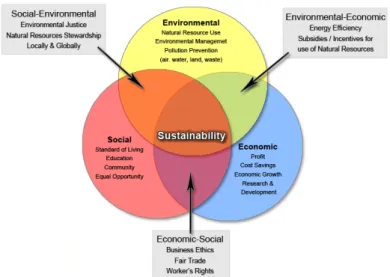
2.1 Sustainability Indicators . . . 11
2.2 Gamification between the dimensions whole/parts and playing/gam-ing . . . 22
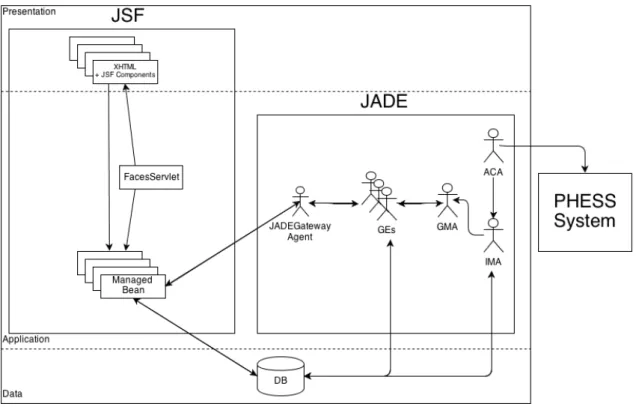
4.1 Architecture of the Platform . . . 38
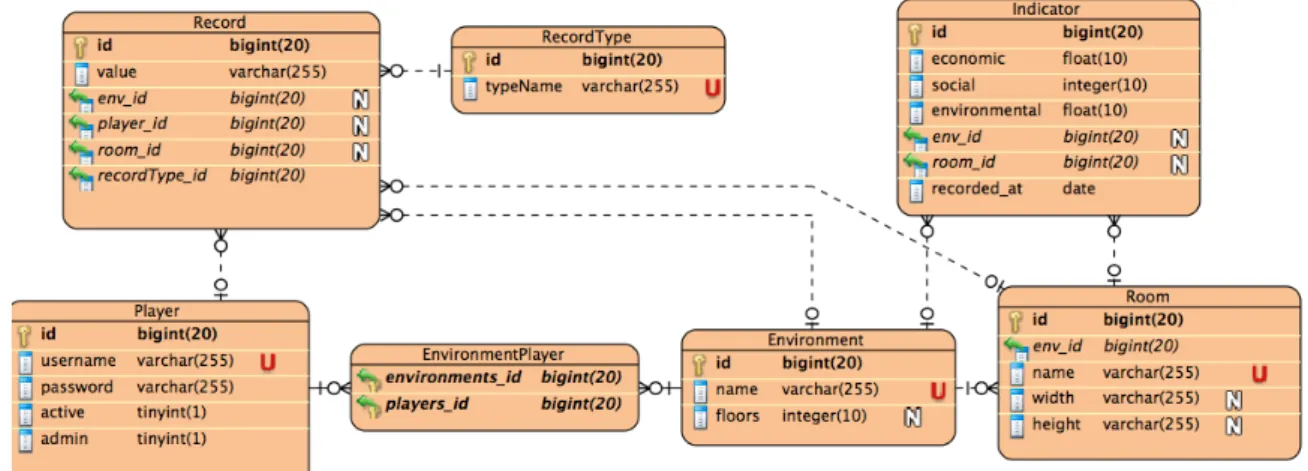
4.2 Logical data model for storing PHESS information . . . 39
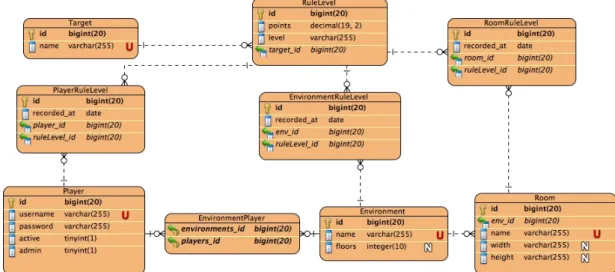
4.3 Logical data model for implementation of points element . . . 40
4.4 Logical data model for implementation of levels element . . . 41
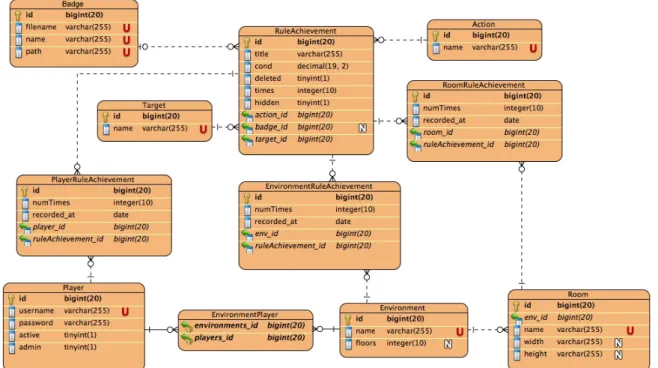
4.5 Logical data model for implementation of achievements element . . 42
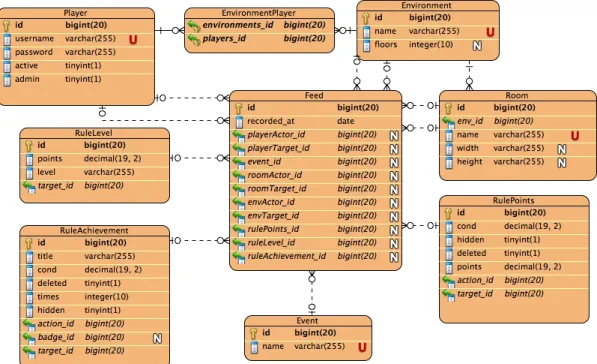
4.6 Logical data model for implementation of events feed . . . 43
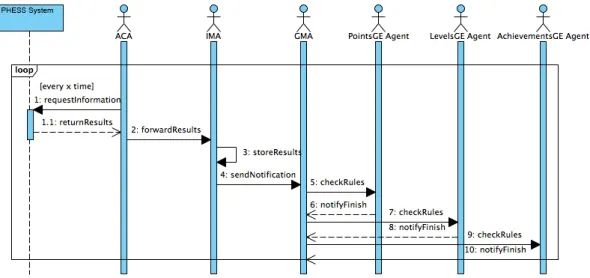
4.7 Sequence Diagram representing the communication in the system between agents . . . 44
4.8 Ontology used to communicate with PHESS system in Crow’s Foot notation . . . 46
4.9 Ontology used by the agents of the platform in Crow’s Foot notation 47 4.10 Communication of the Asynchronous Communication Agent . . . . 49
4.11 Communication of the Gamification Manager Agent . . . 51
4.12 Admin page to choose the Gamification Elements . . . 59 ix
4.13 Admin page for the management of Achievements . . . 59
4.14 Profile page for player pedro . . . 60
4.15 Leaderboards page with player paulo . . . 61
4.16 Feed of Events . . . 61
4.17 Detailed view of the Apprentice Achievement . . . 62
5.1 Graphic representation of Pedro’s results . . . 69
5.2 Graphic representation of Rui’s results . . . 69
5.3 Graphic representation of Bruno’s results . . . 70
5.4 Graphic representation of DI’s results . . . 71
5.5 Graphic representation of DPS’ results . . . 72
A.1 Logical data model for implementation of points element . . . 79
A.2 Logical data model for implementation of levels element . . . 80
A.3 Logical data model for implementation of achievements element . . 80
2.1 Levels of Game Design Elements, according to Deterding[18] . . . . 20
5.1 Values set for players and environments regarding energy spent per day . . . 67 5.2 Number of points achieved by player Pedro, Rui and Bruno at the
end of each day . . . 67 5.3 Number of points achieved by environment DI and DPS at the end
of each day . . . 68
ACA Asynchronous Communication Agent AmI Ambient Intelligence
API Application Programming Interface A-EMS Adaptative Energy Management System FIPA Foundation for Intelligent Physical Agents GMA Gamification Manager Agent
GE Gamification Element
HCI Human-Computer Interaction HTTP HyperText Transfer Protocol IMA Information Manager Agent IT Information Technology JADE Java Agent DEvelopment Java EE Java Enterprise Edition JPA Java Persistence API JRE Java Runtime Environment JSF JavaServer Faces
MVC Model-View-Controller
PHESS People Help Energy Savings and Sustainability PUBS Pattern of User Behaviour System
P2P Peer-to-Peer
Introduction
In recent years, one can observe a tendency to promote energetic sustainability and an increasing need of saving. In this context, and by taking advantage of the fast evolution in technology, several projects that seek support in the new tech-nologies to improve the mentioned concept of energetic sustainability are starting to appear. This project arises to promote the same idea, with a new approach consisting on the use of Gamification’s concept, which has gained notoriety, lately, and has been applied to different areas like education[55], driving behaviour[38], ecology[61], intelligent systems[35], health[64] and even at business enterprises[29]. The approach is very similar between the different areas, consisting on the appli-cation of game mechanics and model techniques of games, with the main purpose of increasing the users’ engagement and changing the behaviours of these users.
Furthermore, there has been a strong interest in the application of intelligent systems to improve the energy efficiency, mostly by focusing in the improvement of a system[27, 39] and neglecting the users’ behaviours.
Another emerging concept is the information diffusion, mostly in social net-works, with various projects dedicated to study their effectiveness[3, 8] and demon-strating that they can be used to influence peers and increase the collaboration between a community[7]. Taking into account that social networks are one of the most used channels for information diffusion nowadays and Gamification will
be applied with the objective of changing human behaviours regarding a major aspect of everyone’s life, both social networks and Gamification are strongly in-tertwined. This relation is due to the fact that community and feedback can be important dynamics of Gamification, peer pressure can be very influential to the behavioural change and social networks can be integrated to increase the reach of these dynamics.
1.1
Motivation
The development of a sustainable environment is one of the main concerns identified by a United Nations’ survey, conducted around the world, about major issues that can impact the future[62]. It becomes natural that more and more projects appear towards energetic sustainability but, after reviewing the literature, our findings showed that most of these projects try to tackle the problem in the system and not the one in the human behaviour.
This is a comprehensive stance since tackling the system is often engineered in the area of IT (Information Technology) as well as Mechanics or Electronics, mostly through the optimization of systems, and addressing this problem means determining what should be the system’s behaviour. On the other hand, trying to change human behaviour is directly related with psychology and sociology; changing human behaviour or encouraging the persistence of recently acquired behaviours can be a complicated and difficult aspect to be worked in IT and that is, perhaps, the reason why it has been left a bit aside.
Our motivation comes from the possibility of filling in this gap by helping users improve their behaviours/actions as well as providing a good component to address behavioural changes to other projects who act upon energetic sustainability but prefer to focus on the gather of information about the environment. In order to conciliate IT and Intelligent Systems with this sociological component, we chose to use the recent concept of Gamification which has the following definition as the most accepted one: the use of game elements in non-game contexts[18].
This concept proves to be important because, although people seek to adopt sustainable behaviours, their actions, go against this claim many times and the reason found has to do with the fact that most humans are more willing to change their behaviour if they get to see the results of these changes in a near future[37], which is hard to happen in a context like the one addressed here. With the application of Gamification, we want people to receive feedback when adopting correct behaviours and see the consequences of their actions translated to more quantifiable ones like the attainment of points or the acknowledgement of good deeds; besides, it is also our intention to stimulate a sense of progression and duration in the user by the application of, for example, levels and late rewards. This way, even though the consequences related to energetic sustainability remain difficult to observe, it will be possible for the user to see the consequences of his behaviour in our platform. The approach to this concept is extremely motivating for being a recent concept, with a recognised potential and, taking into account the literature reviewed, for having obtained very promising results[16, 55] in other areas of application.
Another concept that will be addressed is the information diffusion, mainly occurring in Social Networks. Once taking into consideration the growing suc-cess of these, their integration in everyday life and how the issue that we want to tackle concerns most people, the possibility of making the platform more dy-namic and with a greater capacity for information dissemination, by implementing a social component to it, are points of great importance. Furthermore, with this implementation, there is a strong possibility of some users being capable of in-fluencing other peers or users feeling more committed to our platform due to the feeling of community and belonging and the greater exposure to the public that a social component yield, much like it happens in some of the most known Social Networks[3, 22].
In sum, the approach to such modern concepts as Gamification and Informa-tion Diffusion, as well as, the development of a system that attempts to promote and change human behaviour in a problem of increasing concern like energetic sus-tainability, provides much of the necessary motivation when developing a project
like this one.
1.2
Objectives
People have habits and behaviours so marked that, many times, these are very difficult to change, even more so when it comes to energetic sustainability and people have no awareness of the urgent need to improve it. Nevertheless, nowadays we live in a technological world where it is possible to gather a vast amount of information about any environment and its users.
The main objective of this project is the development of a platform with the ability to create and manage a competition on social environments through the application of elements of Gamification. Regarding the choice of elements that are to be implemented, this is a decision that must be weighted. Furthermore, this competition will be based in the data collected from the environment of each user and/or from the behaviours identified; since there are already many projects that aim to collect the type of information needed in this platform, it was decided that this platform would integrate a communication component to be able to receive the aforementioned information and use it to sustain the competition, instead of having the ability to collect the data itself. For the purposes of testing the platform, we decided to use a project being developed at the University of Minho, People Help Energy Savings and Sustainability, that possess the capacities to collect the data needed.
Since the bigger purpose of this platform will be to change misconduct be-haviours or promote the sustainable ones, the engagement between the users and the platform is a priority. In order to achieve a high level of engagement, and since not only users but also rooms and whole environments will be managed, a sub-objective of the project is to provide the platform with the ability to adapt different types of competitions according to each of these entities, fostering both competition and teamwork between the users and the environments to whom they belong. One way of fostering these features in the project can be through the
social component of this platform, resulting in a diffusion of information about the the actions adopted by the users and attracting more people to engage this competition.
One sub-objective, that derives from the main objective of this project, is the development of a platform with the capacity to be modular regarding the elements of Gamification to be applied, because the right application of this concept may be dependent on the context where it will be integrated as well as the players that will participate on the competition, so it would be interesting to provide a customizable platform.
1.3
Work Plan
The development of this dissertation evolved through five well-defined stages that are shown in Figure 1.1 below. By deciding upon these stages, it was our goal to better establish what was necessary to do and in which period as well as defining a development process for this dissertation. It is important to note that there was a constant awareness about the iterative nature of this process resulting, consequently, in periodic updates of each stage.
Figure 1.1: Scheduling
In Figure 1.1, it is easy to visualise the five outlined stages for the development of the dissertation. A brief description of each stage follows:
1. The first stage refers to the analysis of the state of the art over the main con-cepts approached like Energetic Sustainability, Ambient Intelligence, Gami-fication and Information Diffusion.
2. The second stage consists in the specification of the solution for the plat-form’s development while already taking into consideration the concepts already reviewed in the first stage.
3. The third stage consist on the development of a prototype, implementing the features mentioned above and the analysis of the results obtained. 4. The fourth stage, which will be done in parallel with other stages, concern
the writing of scientific articles regarding the concepts applied in this dis-sertation.
5. The fifth stage, also done in parallel with the other stages, regards the writing of this dissertation’s document.
1.4
Research Methodology
This dissertation has been developed according to an action research methodol-ogy in which a problem is identified, so it can be analysed and better specified[56]. During the development process, information about the problem is gathered and analysed, continuously, so as to provide a support for the solution to the problem. Once this is done, the results achieved, during the observation, must be interpreted and valuable conclusions should be settled. In order to apply this methodology, a set of steps must be followed. First, a problem must be specified along with its characteristics, followed by a constant update of the state of the art must be done as well as the design and implementation of the system. The next step is the analysis of the results gathered and the conclusions achieved. Finally, the validation of the system must be done and the acknowledge acquired should be shared with the scientific community.
1.5
Structure of the Document
This document will be divided into six main chapters where the first chapter, the current one, describes all the motivations for the development of the project and what this project proposes to offer at its final stage, as well as, the steps outlined for this process and the type of research that was used as a guideline.
The second chapter describes the analysis made to the state of the art, in which are included the main sections of Energetic Sustainability, Gamification and Information Diffusion. In each of these sections, it is explained their main idea, how it relates to our project and some of the related work being done in each of those areas that can be used to improve our work, followed by an overall analysis to each of the projects reviewed.
In the third chapter, it is described all the technologies that were applied while developing this project. Moreover, it is explained all the decisions regarding the choosing of each technology, along with the reasons that led to those choices. Ultimately, a brief analysis to these choices is made where it is assessed the validity of them and if they proved to be correct.
The fourth chapter details the platform developed, in a comprehensive way. It starts with an explanation about the architecture from which we structured the platform, followed by the description of all the important communication that takes place between the different agents that are responsible for this component. Additionally, all the Gamification elements and dynamics implemented are ex-plained and the interface created is shown, along with the respective decisions that were taken.
A careful analysis on the data collected and the results accomplished is made on the fifth chapter. It is described the methodology as well as the treatment process applied to the data collected and the results are analysed in order to infer valuable conclusions.
In the last chapter, it is put together a review of all the work developed and the results obtained. Furthermore, all the important contributions authored, while
working on the project, are enumerated, along with all the future work that can be done to improve this platform and to better validate the results.
State of the Art
In this chapter, we will do an analysis to the work that has been done in the dif-ferent areas that our project approaches. First, we are going to define the concept of Sustainability by examining the work done in this area and, afterwards, a small evaluation to some projects that support Sustainability, through the application of Ambient Intelligence, as well as an overall analysis is carried out. This same process is repeated to the concepts of Gamification and for Information Diffusion.
2.1
Energetic Sustainability
Energy efficiency represents the optimal use of energy to meet the goals and needs that arises from the people, the environment and the interaction between them. According to Herring’s studies[28], over the past 25 years, energy con-sumption has increased and, even though the efficiency of electronic devices has also increased, this one has been voided by the growing number of energy con-sumption devices used. Actually, the energy concon-sumption within commercial and non-commercial buildings is said to be between 20% and 40% of total energy consumption[45]. Initial reports from the energy efficiency policies state that small changes in behaviour can save up to 10% in home energy consumption. Although users have difficulties in changing their own behaviours for psychologic reasons, as
was mentioned in the Motivation section, the awareness of their total consump-tion and the individual consumpconsump-tion of each appliance is a great starting point for the users to become more predisposed to accept behavioural recommendations for energetic efficiency and to reduce their expenses[13].
On the other hand, sustainability is a multi-disciplinary concept related to the ability to support something at a certain percentage or level. The United Nations has defined this concept as the meeting between the needs of the present without compromising the capacity of future generations to meet their own needs.
Due to the importance of energetic sustainability, different authors presented measures to evaluate and characterise it. A common consensus is based on 3 different indicators (social, economic and environmental, as it is depicted in Figure 2.1) which are used to assess the energetic sustainability of a given environment [60]. In this approach, a system can only be classified as sustainable if the values from all the 3 indicators are met; this is the only restriction of a sustainable environment. From this point of view, energetic sustainability concerns a sensitive balance between these indicators and actions regarding the optimization of one indicator can affect the other two; as an example, if a person decides to turn on all the electric appliances, the social indicator will be maximised but both the economic and the environmental indicators will be lowered. As a result, planning for energetic sustainability becomes a complex problem where the best solution may not be the optimization of individual indicators but rather a compromise between all of them.
Figure 2.1: Sustainability Indicators
Additionally, some authors propose a fourth dimension, institutional, that represents the governing decision power within an environment, an entity that must make sustainable decisions about the environment and stand as a way to protect and support sustainability.
Though they are different concepts, both energetic sustainability and energy efficiency work towards a better environment and are both very important to it. By fitting them together, it is possible to identify two clear objectives: to be efficient in the way the resources are consumed, since it is not necessary to consume more than what is necessary to meet our needs; and the other one, relating to energetic sustainability, concerns the feasibility of our actions in the present, as well as, in the future. During the design of energy efficient systems, both objectives must be addressed to assess whether the solutions are sustainable and if these solutions try to achieve efficiency, even when energetic sustainability has been reached.
From an IT perspective, although it is not possible to directly solve the prob-lem of energetic sustainability, we can plan and develop solutions to automatically assess the energetic sustainability of an environment. This is not possible with-out obtaining information, with a reasonable quality, from the users and their environment. The scientific research that has been done in the field of Ambient Intelligence supplies us with a wide range of methodologies and opportunities to
acquire the data needed in a non-intrusive way, in addition to the capacity of cat-egorizing data inputs, organizing these same inputs according to certain interests and offering useful knowledge from the information gathered.
Ambient Intelligence is an emerging area that is having an increased growth by taking advantage of the technological evolution that is happening nowadays, mostly in the evolution concerning mobile devices. This area is based on the idea that via technological enriching of an environment, through the integration of sen-sors and devices connected to a network, a system can be built to act as a "virtual helper" with the ability to feel the characteristics of the users and the environment, to reason over this information collected and, ultimately, choose which actions it should take in order to assist the users in that same environment[14]. Next, the projects People Help Energy Savings and Sustainability, IRoom, Pattern of User Behaviour System and Adaptative Energy Management System will be reviewed, in this order, regarding their purposes in this context.
2.1.1
People Help Energy Savings and Sustainability
As it has been mentioned along this document, the area of energetic sustain-ability has suffered a strong interest from a wide range of entities, resulting in the development of many projects. One of these projects is the People Help Energy Savings and Sustainability[53], a research project developed at the University of Minho which seeks to assess the sustainability of an environment and its users. The main approach is focused on the user and his interactions with the environment, measuring their impact concerning energetic sustainability. The main objective is to build an ambient intelligent platform that through the use of indicators will promote an overall energy efficiency and sustainability.
As such, the assessment of energetic sustainability used in this project was integrated in a multi-agent system with the main goal of managing the data gath-ered and the flow of information among the user community, coupled with the promotion of sustainable behaviours.
This project is built upon a multi-agent system divided into three major com-ponents: data gathering, reasoning and actuating. The first component comprises software agents, like sensing agents that are responsible for the constant moni-toring of an environment and supply the data to the reasoning component. This reasoning component is where all data transformations occur as well as the def-inition of the indicators and their respective calculations, for each environment and its users. In this component, there are two types of agents: a modeling agent that models the data gathered by the sensing agents and the reasoning agents that are accountable for the use of ambient data and model information in testing hypothesis of recommendations, to users, regarding the promotion of energetic sus-tainability on the environment where the system is operating. Lastly, the acting component uses the information processed by the reasoning component to promote changes in the environment and alert the users with recommendations related to their behaviours and the effect on the environment.
As already mentioned, the platform developed in this dissertation will possess the ability to communicate with other projects in order to obtain data collected from the environment and its users. The choice of selecting this project to com-municate with the prototype to be implemented is due to the fact that PHESS (People Help Energy Savings and Sustainability) is being developed in proximity to the authors of this dissertation, is being developed in a multi-agent system (as will be explained later, in this document, was also an option for our platform) and is capable of providing environment information already modeled, making this choice the most logical one.
2.1.2
IRoom
The project denominated "Intelligent Room"[5] is focused in the development of an experimental platform for the research in AmI (Ambient Intelligence) sys-tems. The platform will act in a room prepared with sensors and actuators, like sensors for luminosity, temperature, motion detectors, remote control of electrical switches, loudspeakers and displays, and which includes real furniture, such as
sofas, tables, telephones and televisions. These sensors and actuators allow the gathering of information, not only from the environment, but also from the people that use the room, and it can provide valuable information for these people so they can take more thoughtful actions in the environment.
2.1.3
Pattern of User Behaviour System
In this system, the authors’[2] main focus is the efficiency of the environment itself. The developed system aims to provide an intelligent environment with the ability to find frequent behavioural patterns. For this to succeed, it is essential to collect and model, over time, the information about the environment that is gathered through the use of the existing sensors in that environment. For the gathering of data, a wide range of sensors are used: from sensors on appliances to context sensors like temperature, luminosity and humidity and motion sensors; these last ones, the motion sensors, have the goal of figuring out the location of the user. Thus, from the assessment of the data gathered, the system wants to infer users’ behaviours and optimise the environment according to these same behaviours.
2.1.4
Adaptative Energy Management System
The A-EMS[40] is a project that aims to control energy consumption by con-verging heterogeneous networks like power line communications, Wi-Fi networks, ZigBee and all types of sensors that are, nowadays, used in the context of AmI. This projects arises from other projects already existent in the field of Home/Build-ing Energy Management System[11, 66] which had the same goal, however their lack of adaptability made them rejected by its targeted users. A-EMS purposes to integrate an adaptive capacity into this field through the use of P2P Univer-sal Computing Consortium technology that is capable of connecting sensors and other devices to each other while detecting the services and the devices using the
P2P (Peer-to-Peer) network. The ability to adapt to different lifestyles is guaran-teed through a phased architecture where the number of phases implemented in a building depends on the required level of management or the sensors/actuators devices available. The system works with a sensor cloud-based feedback system that gathers data from sensor nodes for luminescence, temperature, humidity and motion, plus an installed smart power trip to return the electrical values and in-formation about the appliances. Besides, depending on the type of the installed smart power trip, the system may take actions like switching off the standby ap-pliances for energy saving. At a higher level, if exists healthcare sensors installed like body temperature, heartbeat or weight, operations can be executed to sat-isfy comfort levels or specific conditions. Lastly, the living climate control can have awareness about the equilibrium between the natural and artificial control since it can take advantage of the information on the heterogeneous networks and from the weather sensors and the micro-grid. If fully implemented, this system not only collects information from the environment and its users, but also shows this information and advises them and acts upon the environment according to its reasoning.
2.1.5
Overall Analysis
The similarities between these projects concerning the use of different types of sensors prove that AmI is getting increasingly resourceful. Furthermore, it is possi-ble to see how easily it is to gather different sources of data about an environment, its users and their interactions; with PUBS (Pattern of User Behaviour System) as an example, we can see how projects are now trying, and succeeding, in the optimization of the environment so it becomes more efficient and act according to the users’ behaviours or, in the case of A-EMS, it is possible to verify how smooth the integration between AmI and the environment can be and how unobtrusive it can be for the user thanks to the ability to adapt itself to the users’ behaviours and to reason over the data collected. However, these systems have drawbacks like interfering directly with the behaviour of the system which can be considered
an invasion of privacy, so some projects like PHESS and IRoom prefer to gather this information from the environment but, instead of acting according to the data collected, they opt for displaying the modeled data to the users, leaving them re-sponsible for having the initiative to improve their own environment. This is a big difference in the projects because these latter projects make the interaction with other systems more smooth since they do not act directly upon the environment and do not change it, while PUBS and A-EMS are full-fledged systems that aim for a higher interaction with the environment by trying to predict and recognise behaviours and manage the system according to the patterns detected, features that may be regarded as downsides, since there are a lot of variables that need to be taken into consideration when identifying human behaviour, the amount of information that needs treatment is enormous and the changes on the system may not satisfy the user.
Concerning the last point, that was another important reason for the integra-tion with PHESS project since it does not actuate over the environment so the effect of Gamification can be better assessed because the data recorded is directly dependent of the users’ behaviour.
2.2
Gamification
The concept of Gamification has already been applied since several years back but it only appears documented for the first time, under this denomination, in the year of 2004, with Nick Pelling using the term Gamification as a part of his business consultancy[44] although, at the time, it carried a different meaning from the current one, and the term only began to be widely adopted in the second half of 2010 when the game designer and teacher at Carnegie Mellon, Jesse Schell gave a presentation where he stated that game elements will invade part of our daily life and will gain more prominence over time[52]. Even though it is a recent concept, it has been applied with several purposes and there is much debate regarding its exact definition. The current and more consensual definition, and one with which
we agree and chose to follow, is "the use of game design elements in non-game contexts"[18].
While the concept is recent, the idea from which it is based is not. The notion that the design of the user interface can be build by other design practices has a great tradition in HCI (Human-Computer Interaction); during the first peak in the development of computer games, in the early 80s, some authors[12, 36] analysed game designs in order to create more interesting and pleasing visual interfaces. With the solidification of videogames and a wider adoption of these by people, the game design suffered a thorough research and their interest grew. Following this tendency, researchers explored the concept of playfulness as an attractive user experience and the best way to outline it; however, no consensual solution was achieved. Many attempts were made, from Gaven that tried to describe "activities motivated by curiosity, exploration and reflection rather than externally-defined tasks"[24] by calling them "ludic activities" to Korhonen, Montola and Arrasvuori that combined the "pleasure experience" framework of Costello and Edmonds [15] with an advanced study on user experiences with video games and created the Playful Experience Framework that was able to classify 22 playful experiences[34], probably an overly complex analysis that prevented it from reaching a consensus. Likewise, none of the alternative terms were widely accepted.
In the 2000s, researchers in the field of HCI became very interested in investi-gating the design and experiences of video games in proper conditions so, through the development of methods to measure metrics like user experience, playability heuristics and game experience, they achieved ways to quantify and classify a video game concerning the experiences it provided[6, 30, 59].
Thus, the games developed with a main objective other than entertainment, usually training or educating users and named as "serious games"[1], date back a few millennia in the military sector and has reached the education and business in the second half of the 20th century. In the early 2000s, the increasing growth and consumption of digital games revitalised this area, making it a solidified industry with an own field of research.
In regard to the future of Gamification, the previsions, made by some enti-ties responsible for analysing the world markets, are extremely promising. On one hand, M2 Research predicts that Gamification market will reach $2.8 billion in US, by the year of 2016[47], while Gartner reveals that by 2015, 40% of Global 1000 organizations are going to use Gamification as the main component to transform business operations[23]. Even though these are only predictions, they came to contradict some critics of Gamification that refer to this concept as a trend with-out intrinsic value and that it can have negative effects like the design of simple game-like interactions as an end goal, instead of creating a complete product with value[43], or the losing of important elements like the capacity to tell a story or providing experiences that are essential to make a game effective and engaging, or even the simple adding of one game element to a product instead of the application of solid game mechanics[46, 49]. However, a brief analysis to these critics show that they can be refuted by arguing that they are referring to how Gamification has been applied in diverse applications, frequently applied incorrectly, and not to the concept itself, which we intend to follow and employ correctly.
Deepening the analysis to the definition from Deterding, Gamification can be put closer to games and further from playfulness; as stated in game studies, the difference between game and play is strongly related to the differences between the Caillois’ concepts of paidia and ludus as two extremes of the play activities’ dimension[10]. In these studies, paidia, associated with playing, is characterised by free-form and expressive behaviours while ludus, associated with gaming, is identified by a structured set of rules followed by the players and the existence of a competition between these players towards a clear goal. The classic definitions of game studies also follow this thought and declares that games are defined by an explicit system of rules and the struggle of players towards a discrete goal or outcome[51].
On the other hand, we are addressed to the elements present in games. Here, it is worth noting how the concept of Gamification differs from the concept of "se-rious games"; while the former confines itself to the integration of some elements of games, the latter means the construction of games with a very high degree of
maturity and build with non-recreational purposes. However, the line that sepa-rates a game from an application with game elements is, most of the time, poorly defined; so, for this reason, the following considerations will be taken: an applica-tion as well as the social elements of a game must be taken into consideraapplica-tion and applications’ elements must be designed with the objective of providing gameful experiences instead of being gameful by nature. After this, only remains the need to define which elements belong to the set of games’ elements. There is great uncertainty about the composition of this set because there are many kinds of games and, even between digital and non-digital games; furthermore, the way the elements of games can be perceived are dependent on the user role. Everything considered, Deterding defines as elements of games the ones that are characteristic to games, which means the elements that can be found in most games but not necessarily in all of them, the elements that are rapidly associated with games and that play an importante role in the gameplay, like, for example, points, rewards, virtual currency, leaderboards and badges.
Another fundamental point in the definition followed is the design since the ap-plications that apply Gamification are not the only ones where elements of games saw their purpose altered. In different fields of IT, video game designs are used with different purposes so, for the sake of an existing clarity, both conceptual and terminological, it is helpful to reserve the term "Gamification" for the description of game design and not game-based technologies or practices. Through the liter-ature reviewed, it was found that such game design elements can be classified at different levels of abstraction and, according to Deterding, all those levels should be included in definition and can be ordered from the more concrete to the more abstract (as depicted in Table 2.1)
Level Description Example Game interface design
patterns
Common and successful interaction design com-ponents and design solu-tions for a known prob-lem in a context, includ-ing prototypical imple-mentations
Badges, leaderboards, levels
Game design patterns and mechanics
Commonly recurring parts of the design of a game that concerns gameplay
Time constrains, limited resources, turns
Game design principles and heuristics
Evaluative guidelines to approach a design prob-lem or analyse a given design solution
Enduring plays, clear goals, variety of game styles
Game models Conceptual models of the components of games or game experience
Challenges and Mechan-ics, DynamMechan-ics, Aesthet-ics
Game design methods Game design-specific practices and processes
Playtesting, playcentric design
Table 2.1: Levels of Game Design Elements, according to Deterding[18]
Looking at the examples provided for each level of this table, we can see how all the projects analysed had implemented leaderboards, mostly a consequence of all projects using points as a reward, and levels, also called as status, and used with the purpose of distinguishing different kind of users. At the second level, we find elements that are not used very often like time constraint and turns that, from the projects reviewed, could only be seen at UbiAsk[35] where you earned points by answering question, a kind of turns, and the fastest the answer, the better - time constraint. At the third level, we have the type of play and clear goals, elements that are also seen in a variety of projects, although due to the fact that Enterprise Gamification [29] is intended to be generic, there is no clear goal as it depends on what context the framework is applied. Finally, the fourth and fifth level are too much abstract too be defined as elements of Gamification, also the validity of these examples regarding any application is dependent on the type of user.
of elements puts interface design patterns at a different level of abstraction when compared to game design patterns or game mechanics. Even though they are re-lated to the concept of pattern languages, contrary to interface design patterns, game mechanics and game design patterns do not refer to any kind of implemen-tation and this can verified by the fact that both can be implemented with various and different interface elements.
Last but not least, comes the explanation about non-game contexts. As the "serious games", Gamification also makes use of elements of games for other goals than the ones we would expect from a game, assuming that games are still devel-oped with the main goal of entertaining its users. Thus, a good user experience and engagement are the primary purposes on which Gamification is used, even more when considered that gameful experiences are, most probably, a design goal. By taking this into consideration, it is possible to start looking to Gamification as a concept to be applied only to specific usage contexts, purposes or scenarios, something that should be avoided since this limitation does not bring any obvious advantage.
When Gamification refers to the use of design elements, it is putting those terms against the implementation of a specific technology or the development of a full-fledged game, and when it mentions the non-game contexts, it means a wide approach to any type of context without taking into consideration any specific usage purpose. This definition puts Gamification against various concepts dis-cussed here and it can be categorised in a two dimension universe[18]. First, the dimension with the opposites playing/gaming that represent the nature of a given concept regarding the type of behaviour that the users exhibit; in this case, and ac-cording to its definition, Gamification belongs to the "gaming" quadrant whereas, regarding to the second dimension represented by the extremes whole/parts, it is set in the "parts" quadrant since the purpose is to take advantage of some el-ements characteristic to games and not to develop full-fledged games. Through the cross of both dimensions, "parts" and "gaming" (Figure 2.2), it is possible to distinguish Gamification from other concepts that emerge in this context, such as "serious games" or playfulness.
Figure 2.2: Gamification between the dimensions whole/parts and play-ing/gaming
Since this is such a recent and increasingly discussed concept, one can find many examples of applications that implement game design elements in non-game contexts. The projects that we are going to present were selected to represent the broad range of areas where there has been a steady growth of interest in Gamification.
2.2.1
Foursquare
Probably the most known example of Gamification and one of the first ap-plications to be recognised through the use of this concept. Foursquare[16] is a location-based social networking website where users can check in where they are physically. The user is rewarded for doing these check-ins via virtual points, and acquire the status of "mayor" for the user who has most points in a certain place; furthermore, users can obtain badges by checking in at venues or by completing specific tasks. Real world companies can take advantage of the mechanics of games applied by Foursquare to improve their own business and, as an example, we have Starbucks that offers $1 discount to each of the Starbuck’s store "mayor". As it is possible to verify, we have game elements like badges, points and status in a context of social networking. The huge success of this implementation is proved by their 30 million users and the millions of check-ins made everyday.
2.2.2
MEECO
MEECO[61] was developed as the final thesis project in a Multimedia Cre-ation, Design and Engineering Master’s degree. The problem that this project seeks to solve is the lack of encouragement given to people that try to adapt their lifestyle to a more eco-friendly one, for advantages at a global scale, by offering perceivable individual benefits. Despite the fact that more and more countries are becoming aware of ecology’s importance and most people know of the advantages, in a global perspective, of adopting better behaviours, there is still much that needs to be done.
To change these behaviours, this framework allows its users to share their daily actions and tips, analyse and explore actions from other users, support their friends’ actions and promotes a competition among the users for a position in the top rank; it is also possible for users to learn more about eco-consciousness by playing mini-games and puzzles or by challenging themselves into building a green status through the collection of items.
Through the use of game elements like points, rankings, teaming up and col-lection of items, in addition to the integration of a social competition, developers hope to keep their users highly engaged in their framework and start adopting the correct behaviours. Lastly, after the users have posted their actions, they re-ceive feedback from the system and from other users, providing them a feeling of acknowledgement for the actions realised.
2.2.3
Schoooools.com
Schoooools.com[55] is a social learning on-line platform that purposes to offer a collaborative and social learning environment and it is targeted to students from 6 to 12 years old and their respective teachers. This platform provides Gamification features as tools for teachers so that they can gamify their classes; herewith, the authors try to take some elements of games that foster an engagement and apply them in a school environment in order to verify if the students become more
engaged in the studies which is a context where, usually, most of them is not engaged at all. Several Gamification features were implemented, among them is the possibility of providing immediate feedback and rewards to students when they perform their assigned tasks and these same students can reward other peers and appraise them; moreover, students will be able to get academic achievements in their profile, organise themselves in teams in order to better accomplish a given task and share/gift rewards between them as a way of congratulating.
2.2.4
Enterprise Gamification
This is another example reviewed in the literature in which the authors[29] developed a service-oriented and event-oriented architecture framework where all participants communicate via events over a message broker. This system is com-posed by a set of game rules that defines all types of game elements such as immediate feedback, rankings/levels, time pressure, team building, virtual goods and points - karma/experience points. Every time a user "completes" a game rule, an event is triggered and the rule engine assigns a reward event for the user over the message broker. Furthermore, there is an analytical component that may be used to analyse user behaviour and in pursuance of an improvement to the game rules and optimization of the long-term engagement. As it is possible to notice, this framework does not provide any specific context, besides the generic area of enterprise, where this system can be applied; it is, however, reasonable to state that most common games’ elements are present and that the whole system can be employed independently of the context.
2.2.5
Overall Analysis
Through the examination of all these examples, we can see that their approach is very similar regarding the use of games’ elements for the Gamification of each application. The Enterprise Gamification project can be set in a higher level since
it provides a wider range of elements to be integrated, however this has the down-side of bringing generic elements into play without giving them a strong context, something that various critics point as one of the negative effects of Gamification. On the other hand, we have Schoooools.com that chose a small set of elements and brought them all together with the primary objective of creating the feeling of community and engagement in their students. MEECO appears here as a mixture between both projects because, even though they use a good variety of games’ elements, they are well integrated within the project context and their mission has a clear purpose beyond the simple interaction with the users. Additionally, all projects avoid the pitfall of implementing just one element; instead they im-plement full game dynamics for the users’ enjoyment. At a total different level is Foursquare that, thanks to its huge success, makes the task of indicating clear failures, regarding the Gamification of their application, very difficult; plus, one of the things that we can learn from them is how the strife between users and the social component are important features in this context.
From the projects’ strengths and weaknesses, it is important to learn that the number of elements used is not very relevant but a strong connection between the ones implemented is, along with a good context and the integration of the social component. The stimulation of a competition between users is another important notion when trying to develop a strong sense of community within the application. Furthermore, we should avoid implementing just elements and, alternatively, de-velop Gamification dynamics and set a solid end goal where Gamification acts as a means to achieve the goal set.
2.3
Information Diffusion
Another considerably recent and important concept that will be part of this dissertation research is the information diffusion, in this specific case, through social networks. This concept relates to how the information is disseminated through the peers and if this dissemination occurs as influence of external peers.
Even though the studies about information diffusion on social networks are new, the study about different types of information diffusion is not. In 1962, Everett Rogers[50] advanced with the theory that there are four main elements that are directly tied to the spread of an idea: the innovation, communication channels, time and a social system. Each element plays a role in the information diffusion where the innovation refers to the idea, practice or object to be adopted, commu-nication channels are the ways through where one message travels from one person to another, time is the length of time required to pass by the process of deciding about the innovation and the social system is "defined as a set of interrelated units that are engaged in joint problem solving to accomplish a common goal".
Along the years, new social systems have emerged while others became ob-solete. The most common social systems nowadays are blogs[26], social networks and social media like newspapers, advertisements and magazines; since all these social systems became much more effective thanks to the use of Internet, their role in the information diffusion also became more impactful.
With the increasing number of social networks and the increasing success of these, as it can be seen by the growing number of users of Facebook or Twitter, it is important that the interactions in these social systems can be replicated in our application as a way of increasing the level of engagement of its users and stimulate a strong feeling of community.
Once examined the literature, several studies were found[41, 65] proving that social networks have a great potential to spread information at an elevated rate as well as allowing people to influence their peers. However, this strong ability to influence brings downsides like the power of this influence being strongly tied to the different types of users or the sharing of incorrect information that may mislead other users; by taking into account that we seek to address a problem that affects everyone, it becomes important that we maximise the information diffusion and make the users themselves play an active role in this diffusion.
2.3.1
Twitter is a real-time information network where you can follow other users and discover stories, ideas and opinions tweeted /posted by those users. Thanks to the more than 500 million users registered and a highly connected network, a lot of information is spread through the use of this social system. Studies[17] show that the integration of user context such as activities or locations, in a post, performs better in the discovery of diffusion, a fact that can be associated with the concept of user homophily which states that users engaged in social activity appear to easily associate themselves with other users that are similar to them within a certain set of characteristics. Furthermore, the diffusion characteristic can be very different across different themes, thus the shared content can have more/less impact depending on how it is done. Even though a high rate of information diffusion was verified, the results are limited to the scope of the dataset, which was only a small part in the study previously mentioned.
2.3.2
Facebook is a social network with the biggest number of users registered, over one billion users since 2012. Since a user is connected to other users and can see what they post, each user is exposed to different types of information and they can share this information themselves, affecting other people. Due to this complex network, several studies were made through the use of a small dataset from Facebook in order to account for the possible influence that may happen and how successful is the information diffusion. Bakshy et al.[3] analysed a dataset from Facebook and concluded that it is very difficult to determine if a given action was influenced by an apparent spread of information since social networks may influence an individual’s behaviour but also reflect its own behaviour, opinions and interests. Nevertheless, by taking into consideration these 3 possibilities: a user shares one link because another friend also shared it, two users shared the same link because they visited the same website independently and, third scenario, a
user shares a link within and external to Facebook and another users shares the same link through the external influence, it is possible to infer some of the influence that users are subjected to. Through the analysis of the first and third cases, the authors found that the majority of influence results from exposure to individual weak ties, which indicates that most information diffusion on this context is driven by simple contagion. Even accounting for the limitation of this study regarding the detection of interactions external to Facebook, it is possible to predict that social networks have the potential to increase a user’s exposure to new information and cause the effect of information diffusion in social networks.
2.3.3
Overall Analysis
All the examples reviewed above show evidence that information diffusion happens within social networks and, even though these are not the only means of information diffusion, lately they have been used with great success. It is also important to note the difficulty of assessing, with great accuracy, the rate of this information diffusion since it is almost impossible to determine if an action of a user was influenced or not by another peer. Another important point to retain is that there are different ways of implementing a social component on platforms and there is no data about which are the best. Due to the fact that the use of social networks as social systems in information diffusion is recent and there is still much to be explored in this field, our best option is to identify the main characteristics that contribute to the success of the existing social networks, implement them in our platform and adapt them to our context with the objective of increasing dynamics like community and peer pressure, in addition to spread the information diffusion concerning the sustainable behaviours.
Technologies
To fully understand the work developed in this project, this chapter will give a detailed explanation about all the different types of technologies used by the platform. Each section refers to an individual type of technology used that had a major impact in this platform and the reasons that led to our decision of adopting them.
3.1
Programming Language
The choice of the programming language in which we would develop the back-end system fell into Java. Java is a versatile, class-based and object-oriented programming language that supports concurrency. It was developed by James Gosling at Sun Microsystems and released in 1995[25]. Since then, it has taken big steps in its evolution and counts, now, with eight different main versions. It is design to be simple although it can be very verbose and is related to C and C++, even though its organisation can be considered differently, and it is strongly and statically typed. For this reasons, or some others, the fact is that Java is one of the most popular programming languages being used nowadays, with the number of users ascending to millions.
Even though these are valid reasons, they were not the important ones we 29
took into consideration when adopting Java. However, being largely adopted for so many users and having a high degree of portability resulted in the development of a broad number of frameworks and this was, in fact, the main reason for the adoption of this programming language - as it will be explained below, our platform was mainly implemented through the use of two of these frameworks. Due to the fact that all our choices for implementations relate to Java, we know that they will be available, working and maintained in all the Java EE (Java Enterprise Edition) containers for some time, a characteristic that can prove to be invaluable when remembering that one of the main objectives is the development of a platform capable of interacting with other platforms available.
As it happens with all other programming languages, Java has its own flaws. The main criticism to it concerns the slow performance and highly memory-consuming processes, when comparing to other prospective programming lan-guages like C++[21]. However, the need for a Java Runtime Environment makes possible the cross-platform advantages that Java offers, meaning that it can be developed on any advice and run on any other as long as this last one has a Java Virtual Machine[20].
In sum, the adoption of Java was a conscious decision, taking into considera-tion both its advantages and disadvantages and, knowingly, trading some perfor-mance of the system by a cross-platform capacity and a wide range of different implementations.
3.2
Web Component
Taking into account the objectives defined previously, it becomes clear that the platform to be developed needed a web component in order to better fulfill the re-quirements set. Within this spectrum, there were many and different alternatives and, after an analysis to the possibilities, the Java specification JavaServer Faces was chosen. JSF is a component based MVC (Model-View-Controller) framework, built on top of the Servlet API (Application Programming Interface) and provides
one single controller, the FacesServlet, to handle all the HTTP (HyperText Trans-fer Protocol) requests and responses; as a side note, JSF started to be formalised in 2004 by the Java Community Process. Another important feature of JSF is the use of Facelets as its default view declaration language, which is heavily based in the components of the User Interaction available in JSF and it is focused in the built of the component tree that reflects the views of a JSF application[9]. Once chosen JSF, we could opt between two implementations: Oracle Mojarra and Apache MyFaces; after an analysis to each implementation, it was concluded that both were pretty equal regarding performance, support and maintenance so there was no wrong option and we went with Apache MyFaces.
This was the choice made since, even though we had never had any contact with it, JSF is a standard part of the Java EE meaning that it is well integrated with the other parts of Java EE and it has some very powerful component li-braries that makes the development of a prototype much faster and consistent. On the other hand, the downsides to this specification, from the analysis of dif-ferent opinions that were found, include the fact that it is not suitable for high performance applications and that is not very scalable. Regarding the component libraries available, again we had several choices where the main ones were Prime-faces, RichFaces and ICEFaces, and Primefaces was preferred for its simplicity, easy integration and because it has been having evolving at a good pace.
Obviously, these drawbacks are impactful but, in our case, we only pretend to develop a prototype in order to validate our theory so these have less importance when considering the great versatility given by Java specifications and its easy to use components’ libraries that makes for a simple and faster development.
3.3
Communication Component
Given that it is our intention, from the beginning, to develop this project with a broad capacity of communication with other ones - as it was already stated, PHESS will be one but we want to make it possible for others - and we want this
capacity without compromising the modularity of the framework so it is possible to easily adapt itself to other environments, the choice for the communication technology carries an enormous importance.
The integration with the PHESS project, mentioned above, forced us with the the adoption of the JADE (Java Agent DEvelopment) framework to communi-cate with it[54]. However, after analysing this framework, several other factors contributed to this option, with the most important ones being the ability of this framework to operate in a heterogeneous, networked environment such as the In-ternet and the capacity to provide monitoring services, besides the fact that we had already had a previous experience working with this framework and the im-pressions left on us were positive. Other important features also taken into account were the autonomy, modularity and interoperability that are built into the systems developed through this framework [48]. Additionally, and another point in favor of this choice, is the ability to extend the traditional channels of communication that a system have, by the implementation of communication via exchange messages between agents, guaranteed by the framework as well as the ability of JADE agents to access and control Web Services, since the use of these were strongly taken into consideration[42]. Furthermore, the adoption of this framework had a strong influ-ence on the adoption of Java and JavaServer Faces so all major technologies could be well integrated and communicate easily with each other. To better understand the use of this framework, it is important to understand the paradigm of agent. An agent is a particular component with autonomy to provide an interoperable interface to a system and to behave like a human agent; additionally, an agent is characterised for being autonomous, social, reactive and proactive since it can act without direct human intervention, it can cooperate with others, it has a per-ception of the environment where he is and can respond to stimuli and it takes initiative. An important ability of these agents is their capacity to communicate with each other, the social characteristic, by only requiring an ontology and it is this capacity that gives JADE the ability to extend the traditional channels of communication that was mentioned above[4].
In order to ensure the features already mentioned, we looked at some imple-mentations in JADE during the final stage of this analysis. In MADIP, the authors [58] developed a mobile platform, based in a multi-agent system with the goal of allowing physicians to detect abnormalities in their patients and the ability to see, in real-time and ubiquitously, the patient’s data using a PDA, a laptop or a computer; on the other hand, the patients can have their vital signals measured and these results submitted to their physician automatically and autonomously through their mobile device. Their choice of developing this platform in JADE arose from the need to, not only operate the system in a distributed and hetero-geneous environment like different operative systems or mobile devices, but also have an open architecture and good scalability to favor the platform’s evolution by the integration of new components, since applications developed in JADE are extensible and open; moreover, they sought a secure infrastructure which is pro-vided by the framework since it ensures message integrity and the confidentiality and authorization verifications when agents perform an action. Another impor-tant requirement is related to the complexity of the health-monitoring field that makes the modularity provided by JADE essential to achieve extensibility by the partition of functions in smaller logical units that can be changed independently. Another example reviewed was a multi-agent system that aims to restore a distribution network of electric energy and is capable of performing fast and effi-cient swaps to isolate faults, restore power to "de-energesied" areas and minimise the existence of internal overloads[32]. In this project, the authors chose to de-velop a multi-agent system because of its adaptability, capacity of self-knowledge, autonomy, quick response to the environment and the ability to offer a rapid and timely solution; inside the universe of multi-agent systems, JADE was selected due to its wide support in industry and its open-source status.
3.4
Server
The last technology going to be discussed, in this chapter, is the Web container used to deploy our platform. Among the alternatives, the main contenders were
![Table 2.1: Levels of Game Design Elements, according to Deterding[18]](https://thumb-eu.123doks.com/thumbv2/123dok_br/17761209.835663/35.892.110.732.115.581/table-levels-of-game-design-elements-according-deterding.webp)