INSTITUTO DE INVESTIGAÇÃO E FORMAÇÃO AVANÇADA
ÉVORA, NOVEMBRO 2014 ORIENTAÇÃO:Professora Doutora Maria do Rosário Gamito de Oliveira Professor Doutor Nuno Manuel Cabral de Almeida Ribeiro Doutor Peter Surový
Tese apresentada à Universidade de Évora para obtenção do Grau de Doutor em Gestão Interdisciplinar da Paisagem
Cati Oliveira Dinis
Sistema Radical do Sobreiro (Quercus suber L.): Uma
Abordagem Estrutural-Funcional 3D
CORK OAK (Quercus suber L.)
ROOT SYSTEM:
A STRUCTURAL-FUNCTIONAL 3D
APPROACH
A doutoranda Cati Oliveira Dinis beneficiou de uma Bolsa de Doutoramento pelo Programa Bento Jesus Caraça, concedida pela Universidade de Évora (Instituto de Investigação e Formação Avançada), entre o período de Janeiro de 2011 a Dezembro de 2013
i
Cati Dinis, 2014
No decorrer desta tese muitas foram as pessoas que direta ou indiretamente colaboraram para que a sua conclusão fosse possível. O meu sincero agradecimento a todas elas. Contudo, não poderia deixar de destacar e agradecer, particularmente:
À minha orientadora e mentora, Professora Maria do Rosário Oliveira, por todo o seu apoio, disponibilidade, sentido crítico e conhecimento transmitido quer a nível científico quer a nível pessoal.
Aos meus co-orientadores Doutor Peter Surový e Professor Nuno Ribeiro por me terem “lançado” este desafio e pelo seu acompanhamento incansável ao longo destes anos de trabalho conjunto! Pela transmissão de conhecimentos técnicos e científicos,
brainstorms, apoio, confiança, paciência, entusiasmo e, amizade.
A todos os colegas que passaram pela equipa de investigação: Susana, Rita, Paulo, João, Marco, Isilda, Constança, Radek, Marketa, Ana, Gabriela, Chris, Hugo, Manuela. O vosso apoio foi essencial nos trabalhos de campo assim como nas temporadas laboratoriais, sempre com motivação, profissionalismo e…boa disposição!
A toda a equipa da empresa TRA pelo apoio prestado, garantindo a execução de parte desta investigação.
Ao Professor Cermak por me ter recebido em Brno, República Checa, partilhando o seu conhecimento, em ambiente de campo, acerca dos métodos de escavação de raízes. “Quem estuda raízes tem que ter um pouco de loucura dentro de si!”. E ao Professor Robert Marusak por ter cedido emprestar o equipamento necessário ao tratamento laboratorial de raízes finas.
À Doutora Teresa Soares David pela sua disponibilidade e transmissão de conhecimentos na área das raízes.
Às técnicas D. Zetinha e D. Maria das Dores, pelo inestimável apoio nas longas horas passadas no laboratório.
Aos vários docentes e investigadores da Universidade de Évora, principalmente do Departamento de Fitotecnia, que me acompanharam durante este processo. Quer seja ao nível dos ensinamentos transmitidos nos mais variados temas abordados nesta investigação, quer seja pelas palavras sábias, experientes e motivacionais nos momentos certos, o meu Muito Obrigado! Um especial Obrigado ao Professor Rui Machado e ao Professor Alfredo Gonçalves Ferreira.
ii
Cati Dinis, 2014
durante as “nossas conversas”.
À minha Amiga Susana Palminha que me acompanhou nos primeiros tempos desta aventura… muitos meses passados a escavar raízes! E embora nos tenhamos separado a nível profissional a sua amizade incondicional, apoio, compreensão, espírito crítico e motivação ao longo do tempo de elaboração desta tese ajudaram-me incansavelmente a seguir em frente.
A todos os meus amigos do coração, eles sabem quem são! Obrigada por compreenderem as minhas ausências, os momentos de impaciência e, por vezes o mau humor momentâneo; pelas palavras amigas e por nunca deixarem de acreditar em mim. Um agradecimento especial às minhas “5 chacras” (Jaqueline, Raquel, Sara, Su, Maria Inês) por me terem sempre ajudado a manter o equilíbrio, cada uma à sua maneira… e um agradecimento especial também aos meus amigos da “La Família”! Tenho um lugar no coração para cada um de vocês!
À minha família! Obrigada por tudo e principalmente obrigada pela vossa paciência e compreensão. Obrigada por nunca me deixarem esquecer quem sou, de onde venho e que o mundo é do tamanho dos meus sonhos. Um obrigado carinhoso aos meus sobrinhos Tomás e André pelo seu amor… e desculpem por tantas vezes terem dito “Oh, a tia está sempre a trabalhar!”.
Aos meus pais, as minhas RAÍZES! Os que acompanharam verdadeiramente este processo do início ao fim… os bons e os maus momentos, as dúvidas, as incertezas, as quebras de força, os momentos de ânimo… foram vocês que sempre estiveram lá! Obrigada por me terem incutido os valores e princípios de que eu tanto me orgulho e que me fizeram chegar aqui! Ao meu Pai, o meu pilar de segurança, que por mais que eu abane nunca me deixa cair ou levantar de mais, sempre com as palavras certas no momento certo, essencial para manter a mente e o espírito sãos! E à minha Mãe, uma força da natureza, uma guerreira da vida…um exemplo que quero seguir! O seu amor foi um porto de abrigo para mim neste processo. Muitas vezes fazendo-me acreditar que tenho todas as forças do mundo para zarpar e chegar onde quiser e outras vezes, puxando-me para a “costa” e fazendo-puxando-me ver a realidade como ela é! Apesar de muitas vezes eu ter sentido que gostavam de me ter ajudado mais, acreditem… vocês estiveram sempre lá quando eu precisei! E mais importante que tudo, obrigada por nunca terem deixado de acreditar em mim! Esta tese é dedicada a vocês!
iii
Cati Dinis, 2014
The last decades have witnessed the decline and sudden death of the cork oak (Quercus
suber L.) in Montado. The complexity of this production system management has lead to
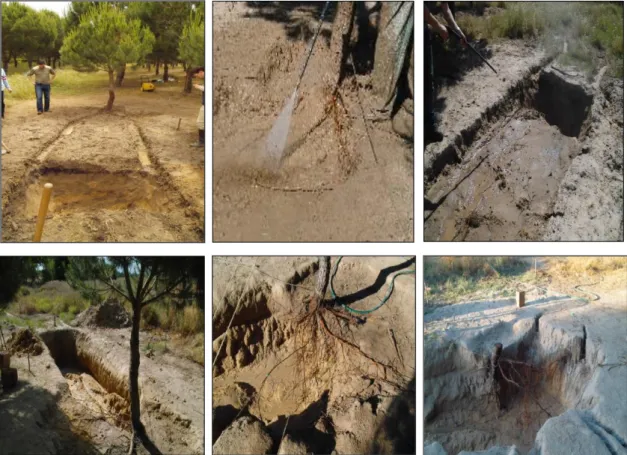
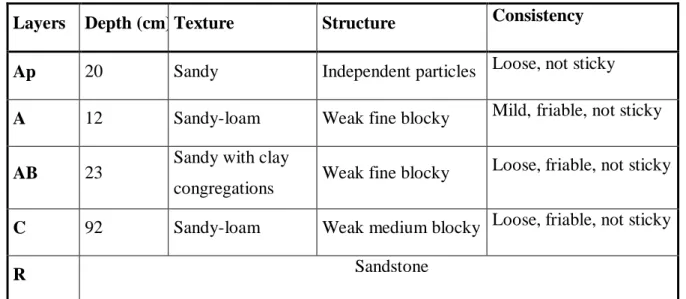
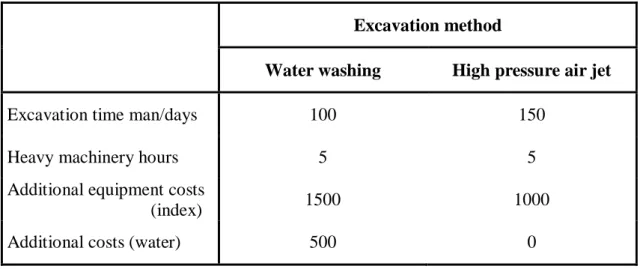
a large set of solutions which have been absent by scientific based research findings (such as those related with the cork oak root system) deriving mainly from empirical knowledge application. The present integrated research approach permits a better understanding of the production system vulnerabilities that can result in management modification proposals which will be useful in a near future. To contribute to a more realistic and integrated forest management and planning, a study relying on a morphological evaluation of cork oak root system in a Cambissoil soil, using a 3D digitizing method was performed. Cork oak showed a dimorphic root system with a relative high quantity of sinkers distributed all over the soil profile, one root subsystem at a superficial level until 40 cm depth and another at a deeper level, around 1.20 m depth. Tree biomass allocation was similarly distributed between aerial and root systems. Previously, a study on methodologies for roots excavation - profile washing with water and excavation through high pressure air jet – was carried out. Results showed that for sandy soils the most suitable method is the excavation by high pressure air jet. Both methods showed to be inadequate for clayed soils. Following the evidence that soil compaction could be an important factor for root growth, a study was conducted, in a greenhouse, with cork oak seedlings. Results showed that tap root length and total root biomass (coarse and fine roots) are negatively affected by soil compaction in depth. In regard to the low survival rate of cork oaks regeneration that has been observed in Montado, another complementary study was conducted in a greenhouse where fertilisation, inoculation with mycorrhizal fungi and aminoacids supply were tested. It was concluded that seedlings subjected to fertilisation and inoculation had a more equilibrated growth between shoot and root components. It is expected that the research developed in the present thesis can provide an essential tool for future forest planning and management and for the natural and artificial regeneration processes in cork oak stands, ensuring the maintenance of the typical Montado landscape.
v
Cati Dinis, 2014 Resumo
Desde as últimas décadas que se tem vindo a testemunhar o declínio e a morte súbita do sobreiro (Quercus suber L.) no Montado. A complexidade da gestão deste sistema de produção engloba um grande conjunto de soluções que, por terem sido ausentes de validação científica (tal como a relacionada com o sistema radical do sobreiro), tem vindo a ser suportado, principalmente, pela aplicação do conhecimento empírico. A presente abordagem integrada permite uma melhor compreensão das vulnerabilidades deste sistema que pode resultar em propostas de alteração de gestão que serão úteis num futuro próximo. De forma a contribuir para uma gestão e planeamento florestal mais realistas e integrados, foi realizado um estudo acerca da avaliação morfológica do sistema radical do sobreiro num cambissolo, usando o método de digitalização 3D. O sobreiro mostrou um sistema radicular dimórfico com uma elevada quantidade relativa de sinkers distribuídos por todo o perfil do solo. Foi observado um subsistema à superfície, até aos 40 cm de profundidade e outro mais profundo, a cerca de 1.20 m. Observou-se também que a biomassa da árvore foi distribuída de forma similar entre os sistemas aéreo e radical. Anteriormente foi conduzido um estudo sobre as metodologias de escavação de raízes - lavagem de perfil com água e escavação por meio de jato de ar de alta pressão. Os resultados mostraram que para solos arenosos, o método mais adequado é o método por meio de jato de ar de alta pressão e, que ambos os métodos mostraram ser inadequados para os solos argilosos. Após a observação de que a compactação do solo pode ser um fator importante para o crescimento das raízes, um estudo foi realizado em ambiente de estufa com plântulas de sobreiro. Os resultados mostraram que o comprimento da raiz principal e a biomassa total de raízes (raízes grossas e finas) foram negativamente afetados pela compactação do solo em profundidade. No que diz respeito à baixa taxa de sobrevivência da regeneração dos sobreiros, outro estudo complementar foi realizado em ambiente de estufa onde a fertilização, a inoculação com fungos micorrizos e o suplemento de aminoácidos foram testados. Concluiu-se que as plântulas submetidas à fertilização e inoculação tiveram um crescimento mais equilibrado entre as componentes aéreas e radicais. Espera-se que a investigação apresentada nesta tese possa proporcionar uma ferramenta essencial para o planeamento e gestão florestal futuros e, contribuir para
vi
Cati Dinis, 2014
Palavras-chave: Sobreiro; Arquitetura 3D do sistema radical; Declínio do Montado; Regeneração
vii Cati Dinis, 2014 CONTENT Agradecimentos... i Abstract……….. ... iii Resumo……… ... v List of Figures ... xi List of Tables ... xv Preface……… ... xvii
CHAPTER 1 GENERAL INTRODUCTION ... 1
1.1 Background ... 3
1.2 Objectives... 11
1.3 Review of Relevant Literature ... 12
1.3.1 Montado Landscape ... 12
1.3.2 Cork Oak Decline... 14
1.3.3 The Tree Root Systems – A Complementary Review ... 18
1.3.3.1 Terminology... 18
1.3.3.2 Roots Formation and Functions ... 20
1.3.3.3 Root Soil Interface ... 24
1.3.3.4 Root Models ... 26
1.4.4 The Role of Cork Oak Root System on the Landscape Dynamics ... 29
References ... 31
CHAPTER 2 COMPARISON OF TWO METHODS TO ASSESS THE ROOT ARCHITECTURE AS A POTENTIAL FACTOR INFLUENCING THE DIVERSITY OF A STAND ... 43
2.1 Abstract ... 45
2.2 Introduction ... 45
2.3 Methodology ... 47
2.4 Results ... 51
2.5 Discussion and Conclusion ... 54
viii
Cati Dinis, 2014
3.1 Abstract ... 59
3.2 Introduction ... 60
3.3 Material and Methods ... 65
3.3.1 Field site and environmental conditions ... 65
3.3.2 Plant material ... 66
3.3.3 Field survey ... 67
3.3.3.1 3D Digitizing ... 67
3.3.3.2 Plant material collection ... 68
3.3.4 Laboratory measurements ... 70
3.3.4.1 Shoot system ... 70
3.3.4.2 Root system ... 72
3.4 Results and Discussion ... 75
3.4.1 Soil characteristics ... 75
3.4.2 Cork oak tree architecture and morphological evaluation... 76
3.4.3 Cork oak root system architecture and morphology ... 82
3.4.4 Depth distribution and azimuths distribution of roots... 92
3.4.5 Parameters evaluation through tree branching order distribution ... 98
3.4.5.1 Shoot system ... 99 3.4.5.2 Root system ... 102 3.4.5.2.1 Coarse roots ... 103 3.4.5.2.2 Fine roots ... 105 3.5 Conclusions ... 107 References ... 108
CHAPTER 4 THE EFFECT OF SOIL COMPACTION AT DIFFERENT DEPTHS ON CORK OAK SEEDLINGS GROWTH ... 115
4.1 Abstract ... 117
4.2 Introduction ... 118
4.3 Material and Methods ... 121
4.3.1 Design of the experiment... 121
4.3.2 Data collection ... 123
ix
Cati Dinis, 2014
4.4.2 Depth distribution of the fine roots ... 128
4.5 Discussion ... 129
4.6 Conclusions ... 132
References ... 133
CHAPTER 5 CORK OAK SEEDLINGS GROWTH UNDER DIFFERENT SOIL CONDITIONS FROM FERTILISERS,MYCORRHIZAL FUNGI AND AMINOACIDS APPLICATION ... 137
5.1. Abstract ……….……… 139
5.2 Introduction ... 140
5.3. Material and Methods ………...……….. 142
5.3.1. Plant material and growing conditions ……….... 142
5.3.2. Experimental design ………...………...….. 143 5.3.3 Data collection ... 144 5.3.4. Statistical analysis ………... 145 5.4 Results ... 146 5.5 Discussion ... 153 5.6 Conclusions ... 158 References ……… 159
CHAPTER 6 GENERAL DISCUSSION AND CONCLUSIONS ... 163
xi
Cati Dinis, 2014
CHAPTER 1 GENERAL INTRODUCTION
Figure 1. Explanatory model of research background. ... 9 Figure 2. Main factors associated to cork oak stands decline
in Portugal …...………..…16 Figure 3. Example of a schematic diagram of root system composition, representing the
branching order classification according to root formations. ... 19
CHAPTER 2 COMPARISON OF TWO METHODS TO ASSESS THE ROOT ARCHITECTURE AS A
POTENTIAL FACTOR INFLUENCING THE DIVERSITY OF A STAND
Figure 1. Stone pine root system excavation through profile washing with water
method. ... 49 Figure 2. Cork oak root system excavation by high pressure air jet metod. ... 51
CHAPTER 3 MORPHOLOGICAL EVALUATION OF CORK OAK ROOT SYSTEM USING A 3D APPROACH
Figure 1. Ombrotermic diagram for Pegões station (mm).………..66 Figure 2. Mean monthly potential evapotranspiration (mm) evaluated by the
hornthwaite method, for Pegões station. ... 66Figure 3. Cork oak used in the study ... 67
Figure 4. Linear regression model between leaf area (dependent variable) and leaves biomass (independent variable)……...………..……...71
Figure 5. Measurements of fine roots using Comair Root Length equipment.……...…73 Figure 6. Different angle views from cork oak 3D architecture (aerial and root system)
a) from North, b) from East, c) from South and d) from West. ... 79 Figure 7. Spatial distribution of cork oak systems……….. 80 Figure 8. Difference between typical length and length measured through line segment
axes (method adopted on Fastrak Polhemus 3D digitizer)……… 811
Figure 9. 3D architecture of cork oak shoot system………..… 81 Figure 10. ABoveground biomass distribution of cork oak (%) ……… 82 Figure 11. Cork oak dimorphic root system……….………...… 84
xii
Cati Dinis, 2014
Figure 14. Horizontal tap root development at 1.40 m depth. ... 85
Figure 15. a), b), c), d), e) Different views of cork oak root system 3D architecture. ... 87
Figure 16. Maximum horizontal root distance observed. ... 88
Figure 17. Root graft with no intergrowth, observed between 2 coarse roots from cork oak. ... 89
Figure 18. Example of root behavior after root cut injury. ... 89
Figure 19. Tap root (R22)... 91
Figure 20. Root R6. ... 91
Figure 21. Root R8. ... 91
Figure 22. Root R21. ... 92
Figure 23. Root horizontal growth near the surface. ... 92
Figure 24. Root volume distribution in depth (m), obtained through 3D digitizing... 95
Figure 25. Root length distribution in depth (m), obtained through 3D digitizing ... 95
Figure 26. Root fineness (cm cm-3) through depth layers………...………96
Figure 27. Spatial distribution by azimuths of roots. ... 97
Figure 28. a) Root Length (RL3D), b) Root Volume (VL3D) and c) Root Fineness (cm cm-3) through azimuths, evaluated from 3D digitizing. ... 98
Figure 29. Root shoot biomass ratio per branching order. ... 99
Figure 30. Shoot biomass allocation per branching order (%). ... 100
Figure 31. Cork oak aboveground biomass partition, per branching order... 100
Figure 32. New branches and leaves biomass, per branching order. ... 101
Figure 33. Total cork oak leaf area (m2) and leaf area per branching order. ... 102
Figure 34. Maximum mean diameter verify for coarse roots, by branching order. ... 103
Figure 35. a) Sum of biomass (Kg) and b) biomass distribution (%), obtained by branching order, for coarse roots (diameter>0.2 cm). ... 104
Figure 36. a) Sum of length (m) and b) Length distribution (%), by branching order, for coarse roots (diameter>0.2 cm). ... 105
Figure 37. Total specific coarse root surface area (SRA; m2 Kg-1) and per branching order. ... 105
Figure 38. Sum of fine roots distribution of a) biomass (g), b) Specific root length (SRL; cm g-1) and c) Specific root area (SRA; cm2 g-1).. ... 106
xiii
Cati Dinis, 2014
Figure 1. Schematic view of the experiment………..122
Figure 2. Destruction process resulting in the separation of leaves, branches and stem, tap root and fine roots………..………...124
Figure 3. Effects of the treatments on the stem, aboveground and belowground biomass (g) of cork oak seedlings……….……128
Figure 4. Distribution of the fine roots biomass (g) in depth cm).………... 129
CHAPTER 5 CORK OAK SEEDLINGS GROWTH UNDER DIFFERENT SOIL CONDITIONS FROM FERTILISERS,MYCORRHIZAL FUNGI AND AMINOACIDS APPLICATION Figure1. Effect of tretament on fine root dry weight to total root dry weight percentage ………. 148
Figure 2. Effect of treatment on root:shoot dry weight ratio ………... 150
Figure 3. Fine root length per seedling biomass ratio (cm g-1) ……… 151
Figure 4. Leaf area per seedling biomass ratio (cm2 g-1) ………. 151
xv
Cati Dinis, 2014
CHAPTER 2COMPARISON OF TWO METHODS TO ASSESS THE ROOT ARCHITECTURE AS A
POTENTIAL FACTOR INFLUENCING THE DIVERSITY OF A STAND
Table 1. Evaluation of study location characteristics. ... 48 Table 2. Profile layers description of the soil in the study area... 52 Table 3. Comparative results of application of both methods evaluated. ... 52 Table 4. Comparison of total costs for water washing and high pressure air jet
methods………..….. 53
CHAPTER 3 MORPHOLOGICAL EVALUATION OF CORK OAK ROOT SYSTEM USING A 3D
APPROACH
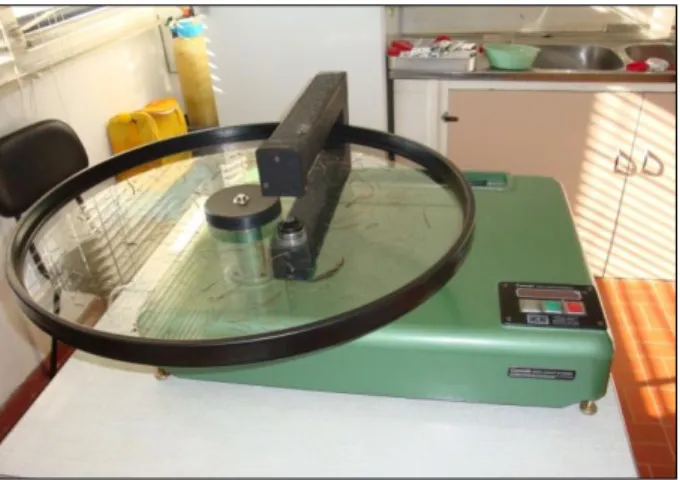
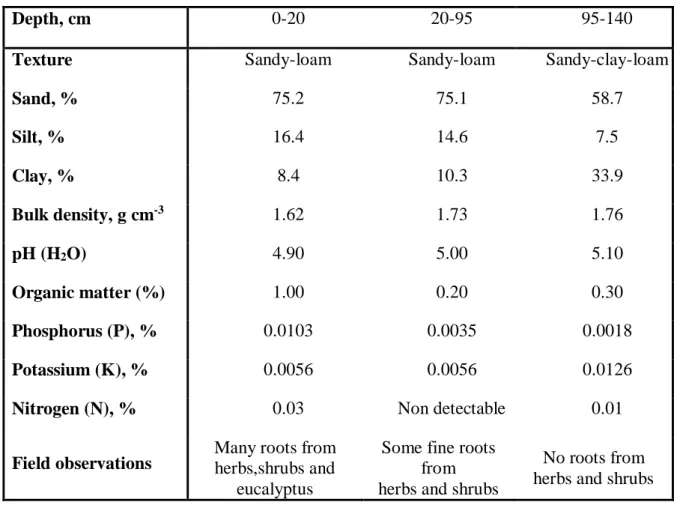
Table 1. Physical and chemical characteristics and field observations of soil profile. ... 76 Table 2. Total tree biomass and length (aerial and root system). ... 80 Table 3. Biomass (leaves, new branches, branches, trunk) and length (branches and
trunk) of aerial system. ... 82 Table 4. Biomass (Kg) and length (m) of cork oak root system categories. ... 90
CHAPTER 4 EFFECTS OF SOIL COMPACTION DEPTHS ON CORK OAK SEEDLINGS GROWTH
Table 1. Aboveground part evaluation of cork oak seedlings developed under different depths of soil compaction... 126 Table 2. Belowground part evaluation of cork oak seedlings developed under different
depths of soil compaction………... 127 Table 3. Evaluation of plant functionality variables……….. 127
CHAPTER 5 CORK OAK SEEDLINGS GROWTH UNDER DIFFERENT SOIL CONDITIONS FROM FERTILIZATION,MYCORRHIZAL FUNGI AND AMINOACIDS APPLICATION
Table 1. Soil characteristics ……….… 142 Table 2. Effect of treatment on seedlings height and dry weight (leaf, wood, aboveground,
tap root, fine root, belowground and total seedling) ………. 147 Table 3. Effect of treatment on seedling area (tap root, fine roots, belowground, leaf, wood
and aboveground) ……….. 149 Table 4. Effect of treatment on parameters used to evaluate the seedlings growth /specific
xvi
xvii
Cati Dinis, 2014
This thesis is structured in seven chapters. Chapter 1 consists of a general introduction with the main objectives of the research highlighted. This chapter also provides a relevant literature review about the decline of Montado, tree root systems and the role of cork oak root system as a structural and functional element in the Montado landscape dynamic, justifying the relevance of this study at the landscape level. This additional literature is focused mainly on topics that are not extensively mentioned in the literature reviews of the remaining chapters. Chapters 2, 3, 4 and 5 correspond to the main research studies, which are presented through scientific articles format (published, submitted or ready for submission for future publication), including a theoretical framework (introduction), methods, results, discussion and conclusions. A number of illustrations that were not included in the articles, due to high publication costs, are presented in this thesis in order to emphasize important research points. The studies presented in these chapters integrate the research project: "Determination of Methodologies for Adult Cork Oak Trees Transplantation". Chapter 2 includes a study about comparison of methods to access tree root systems. Specifically, soil profile washing with water and high pressure air jet methods were tested. The results of this study provide important information regarding the choice of which method should be applied according to soil characteristics. Chapter 3 presents one of the most important parts of the research undertaken, consisting of an intensive study about the functional structural evaluation of the cork oak root system development in a Cambissoil soil. The approach applied in this study was the use of three-dimensional scanning techniques and the evaluation of important variables to describe the morphology of the roots (biomass, length, volume, etc.). One of the major contributions of this study is the quantity and quality of information generated, non-existent to date, which can be used as a basis for future decision support systems in planning and management of cork oak stands. The experimental study described in Chapter 4 emerged from the evidence observed during the study of cork oak root system (Chapter 3), that is, that soil compaction in depth can be a determining factor for the tree root system morphology and, consequently, contribute to the lack of natural regeneration observed in Montado. Following these observations, an experimental study was carried out under greenhouse conditions. This study assessed the effects of soil compaction at different depths in the cork oak seedlings growth. Still regarding the lack of natural
xviii
Cati Dinis, 2014
an additional study on cork oak seedlings was carried out in a controlled environment (Chapter 5) . This study served to test the influence of fertilization, mycorrhizal fungi and aminoacids applications on cork oak seedlings growth. The main purpose was to promote a reduction in the time required for regeneration and, simultaneously, to reduce the stress effects of post-transplant. Chapter 6 presents the general discussion and conclusions regarding all the results from the previous chapters. The final remarks and some technical improvements, suggested for future forest management and planning, are in chapter 7, which also highlights the relevance of this work and some perspectives for future research lines.
CHAPTER 1 General Introduction
CHAPTER 2 Comparison of Two Methods to Assess the Root Architecture as a Potential Factor Influencing the Diversity of a Stand
CHAPTER 3 Morphological Evaluation of Cork Oak Root System Using a 3D Approach
CHAPTER 4 Effects of Soil Compaction Depths on Cork Oak Seedlings Growth
CHAPTER 5 Cork Oak Seedlings Growth under Different Soil Conditions from Fertilisers, Mycorrhizal Fungi and Aminoacids Application
CHAPTER 6 General Discussion and Conclusions CHAPTER 7 Final Remarks
Cati Dinis, 2014 1
C
HAPTER
1
Cati Dinis, 2014 3
1.1 Background
The awareness that the dependence of the relationship between the use of territory by human and the natural cycle’s dynamics (water and carbon) is what enables and supports the existence of life on earth, has promoted a growing concern about environmental issues by the society. Nowadays, notions about scarcity of natural resources are increasingly present and the search for sustainable solutions to conservation is rising. Globally, targets and measures to ensure the sustainability of these resources for future generations have been imposed.
Existing concerns about water and greenhouse gases, have taken a growing relevance worldwide. To achieve the desired goals in the regulation of these parameters it is essential to increase the knowledge not only about the natural cycle’s dynamics but also about the influence of ecosystem management in these cycles. Forests are recognized as having a crucial role in sustaining water and nutrient cycles. An elevated biodiversity, expressed through different degrees of tree cover (trees of different ages), shrub and herbaceous entitling a wide variety of vertical and horizontal vegetation structure, benefits the functionality of the referred cycles. The maintenance of these vegetation structures through low impact forestry operations allows a stability that is crucial to the quality and durability of ecosystems.
With the Water Framework Directive (Directiva 2000/60/CE - Jornal Oficial das Comunidades Europeias, 2000) Portugal, as all member states, aims to achieve by 2015 a good qualitative status of its water resources through a series of ambitious goals. These goals, which are reflected at watershed management plans scale and include the polluter-payer principle, are quite demanding. The two major goals outlined in this policy are the characterization of the maximum ecological potential conditions for the main water reservoirs, and the creation of a method for potential ecological evaluation. For environmental protection purposes this document also dictates a better integration of the qualitative and quantitative aspects of surface and ground water, regarding the natural water flow conditions within the hydrological cycle. Thus, the purposed challenge requires a greater knowledge about the hydrological balance functioning within the forest systems. The specific issue of quantification of how much water the forest uses and resets
Cati Dinis, 2014 4
to the system constitutes a stimulating challenge that could be integrated into watershed management plans.
The same can be applied to carbon sequestration. It is generally known that forests capture and sequester more carbon compared to what they release to atmosphere, but the knowledge about the quantification and therefore the attempt to assign real value to indirect use of this service is minimal. The European carbon markets in functioning since 2005 and, at the same year, the Kyoto Protocol (http://www.apambiente.pt/), bring new dynamics and interest regarding carbon cycle knowledge.
For Portugal to adopt a competitive strategy it is essential and fundamental to know how much carbon is captured and sequestered by our forest ecosystems. However to accomplish this target it is necessary to understand the forest systems dynamics, assuming the multifunctionality of their uses. It is also important to highlight that the management of forest multifunctionality is what enables forest goods and services provision to society, both facilities or amenities.
In the south of Portugal co-exist, among others, two different vegetation stand structures. Where the tree density is high and the goal is forest productivity (cork, wood, etc.) the system is defined as cork oak (Quercus suber L.) or holm oak (Quercus rotundifolia Lam.) stands. When the system integrates several functions it is called cork oak or holm oak woodland referred in Portugal as Montado (Dehesa in Spain). The Montado supports multiple land uses, combining the exploitation of tree cover, and a rotation of grazing, cultivation and fallow in the undercover. This agro-silvo-pastoral system has existed for centuries in a more or less developed and intensively managed form (Surova & Pinto-Correia, 2008). Montado ecosystem has a variety of different vegetation structures, the most predominant of which is a savannah-type landscape mainly composed by scattered trees of Quercus species, cork oak (Quercus suber L.) and holm oak (Quercus ilex subsp.
rotundifolia Lam), without shrubs and only with an herbaceous substrate. It is common
to use this herbaceous layer with cereal production. In areas of less accessibility, such as in high slopes, stands are more closed and the shrub layer develops under the tree canopies.
Cork oak (Quercus suber L.) is a large and long-living tree, spatially distributed across the Mediterranean basin, which is part of the Mediterranean Montado structure. This
Cati Dinis, 2014 5
ecosystem has a high national importance not only due to the production of cork, but also because of their vegetation formations that have an extraordinary ability to adapt to the specific climatic conditions of the Mediterranean climate (Moreno & Oechel, 1995). These formations have the capacity to support large climatic variations over the year, a long period of dry conditions in summer and cold and humid conditions in the winter (Otieno et al., 2006).
In Portugal, the current area occupied by Montado of cork oak is about 715 922 ha of which 601 90 6ha are in the south, in the Alentejo region (AFN, 2010). This area represents 22% of the total country forested area and 33% of the total world area occupied by cork oaks (Ribeiro et al., 2010). Due to the high density of this species in the country, Portugal is currently the world leader in cork production and exportation (representing 54% of the cork annual average world production). Portugal is also responsible for the transformation, by the cork industry, of 70% of the cork produced globally.
The Montado ecosystem is classified as a "High Nature Value Farming System" according to the European classification proposed by the European Environment Agency (Paracchini et al., 2008). Ecologically, this ecosystem promotes a high amount of benefits and services. The elasticity and resilience of Montado is good, but can be disturbed by extreme changes of various nature. According to Ribeiro et al. (2004) this may happen both by (1) random, external variables that relate to tree mortality, tree damage and intensity of natural regeneration, and (2) management-based variables that can affect the system at tree level physiology (debarking, crown pruning and root pruning) and at site level mainly by soil structure modifications (soil mobilization, erosion risk, organic matter depletion, fertility loss, etc.).
For Portugal, Montado ecosystem has a high ecological representativeness contributing to biodiversity, watershed protection, CO2 fixation, soil improvement and flood
protection, among others (Millenium Ecosystem Assessment, 2003). Montado benefits rely on nutrients and soil formation cycles hence their trees have the ability to capture large quantities of nutrients not only at superficial soil layers but also at major depths, which otherwise would be inaccessible to vegetation (Millenium Ecosystem Assessment, 2003). Biota of the ecosystem plays an important role in nutrients storage and recycling. The trees provide a lot of material that rots in the soil as humus, enriching it with nutrients. As mentioned before an important Montado benefit and regulatory function is carbon
Cati Dinis, 2014 6
fixation through the reduction of greenhouse gas emissions (all plants store carbon dioxide - CO2 - captured from atmosphere). Healthy cork oak stands with reasonable tree
cover can sequester annually 1 – 3 tons of carbon per hectare (Pinto-Correia et al., 2013). These values are close to the Central European forest’s mean, although the variability is very high. Carbon balance values tend to decrease with aging and sick trees (after reaching a maximum); water deficit; fire and high impact forestry operations which increase soil erosion. Each time cork is removed and cork oak trees are pruned, they absorb more CO2 (Pinto-Correia et al., 2013). Other benefit of this system is the control
of erosion, by wind and rainfall. Forest vegetation increases the rate of infiltration and evapotranspiration (namely rainfall interception and transpiration), decreasing the amount of streamflow and aquifer recharge, compared to short vegetation.
Montado is also presented as a singular Mediterranean forest ecosystem, extremely
valuable in biodiversity and is identified as of upmost importance for nature conservation at national and European level. What is the contribution of the Montado for water cycle and carbon sequestration? How does forest management of this multifunctional system can enhance this contribution? And how can the trees role in these dynamic cycles be studied? Knowing that the tree water and nutrients uptake is made through its root system, the functioning of the referred cycles in Montado can be evaluated through the understanding of the relationship between tree root system and the surrounding matrix. In an attempt to valuate these benefits and functions it is necessary to increase the resolution scale to an individual level scale – the tree. Only after understanding the relationship between roots and the surrounding matrix it is possible to assess the tree contribution to the water and carbon cycles. Expectedly, the ideal would be to extrapolate these models to Montado and watershed scale.
Current climate change scenarios point to an intensification of dry periods in Mediterranean climate regions (Vaz, 2005). This fact will lead to an intensification of vegetation drought stress in these regions and thus carbon assimilation and transpiration will be severely restricted (Pereira et al., 2004) which may jeopardize the survival of the trees. Otieno et al. (2006) assume that, in regard to Montado ecosystem, the establishment of only certain specific species, their distribution, and their mortality appear to be partially controlled by edafoclimatic conditions. Plants that have the ability to keep physiologically active for long periods of summer dryness must have access to deep soil layers which
Cati Dinis, 2014 7
remain wet for a longer period of time (Rambal, 1984). Also the plants must have the ability to exploit large volumes of soil (Breda et al., 1995) and redistribute water within the soil profile through roots (Ryel et al., 2003; David et al., 2013).
Trees act as propulsion pumps of nutrients, enabling the uptake of nutrients from deeper soil areas and lateral areas underneath the canopy projection, depositing them in the most superficial soil layers (Joffre, 1999). In general, the trees rooting depth is greater in dry environments with seasonal drought (Canadell et al., 1999; Otieno et al., 2006; Schenk & Jackson, 2005). David et al. (2007, 2013) and already in 2005, Lubczynski and Gurwin reported that the evergreen trees from Mediterranean Montado depends greatly on groundwater tables.
Ecophysiologicaly the processes of resistance to the summer drought stress by the cork oaks are certainly related to maintaining internal water homeostasis (Losch & Schulze, 1995; Kurz - Besson et al., 2006; Otieno et al., 2006; Palace et al., 2009) and to ensure the carbon balance (Pereira et al., 2004; Unger et al., 2009). Lima (2008) in his review about cork oak root system, listed the following strategies for this species: 1) interruption of shoot growth during the summer when the dawn water potential in the upper soil layer (where more fine roots are present) is about -1.5MPa, 2) emission of deeper fine roots to capture the water available in the soil, 3) secondary production of narrower conducting vessels in the summer, to replace the large vessels produced earlier in the spring, preventing the xylem cavitation, 4) maintenance of an efficient transport of water between roots and leaves and; 5) extraction of water from the soil at a reduced mean transpiration rate associated to minimal seasonal stomatal conductance. In this ecosystem that depend on the groundwater, the lowering of the water table level can increase the tree water stress and, consequently, promote the leaf fall which may lead to the death of trees (Zencich et
al., 2002; Cooper et al., 2003).
As mentioned, cork oak must have structural, functional and ecophysiological response patterns which allow the withstanding of the seasonal effect of intense water stress, imposed by the Mediterranean climate during summer (Aranda et al., 2007; Costa et al., 2009; David et al., 2004; 2013; Gouveia & Freitas, 2008; 2009; Ja et al., 2011; Kurz-Besson et al., 2006; Otieno et al., 2007). It is thus crucial to understand the access of cork oak root system to groundwater to evaluate the water balance of the tree and consequently of the Montado (Lacambra et al., 2010). For that purpose it is necessary to identify what
Cati Dinis, 2014 8
structural and functional mechanisms occur in the root system and what is the relationship between roots and the surrounding matrix, at different growth stages (seedling and adult stages).
Seedling stage is one of the crucial steps in the tree development. The behavior of mature shoot and root systems are the result of the growth conditions at the initial phase. In addition to the intrinsic factors inherent to plant growth, extrinsic factors are decisive for the development of the tree. Essentially, the morphological structure of mature root system is a result of the roots soil exploitation strategy at the first stages. This initial root growth strategy is related with the rhizosphere characteristics where the plant develops. During their growth, roots explore the soil searching for water and essential elements which promote the structural functional support of the tree (Coder, 2007). Is this initial growth and development strategy that will define the morphological structure of mature root and shoot system.
Knowing that the root system is responsible not only for the tree fixing and support but also for water and nutrients uptake and transport to the shoot, it is easy to understand the importance of root systems on the dynamics of Montado. Because we are not dealing with a static and timeless ecosystem, to understand the root system development it is necessary to relate the belowground system (root) with the aerial system (shoot); with the biophysical parameters of the surrounding matrix (soil type, water and nutrients availability); with ecophysiological parameters (water and nutrients uptake and transport and carbon assimilation); and with the soil tillage applied (disking, clear cuts, traction) (Figure 1). It is important to mention soil tillage techniques because bad forest management practices or aggressive farming techniques can induce the destruction of vegetation, roots and fungi which are essential to provide a good state of Montado conservation. These facts, together with soil erosion, can lead to the weakening and diminish of the tree water and nutrients absorption capacity promoting the tree water stress (internal dry) which consequently will affect directly the water balance.
Cati Dinis, 2014 9 B io d iv e rs ity ( M edi terran ean spec ifi c ec o sy st em , im p o rt an t v eg et at io n an d an im al h ab it at , ex tensi v e ag ri cu lt u re ) E co n om y (Fo rest p ro d u ct s, li v e st o ck, P o rt u g al wor ld l id er o f co rk p ro d u ct io n ) S o ci a l (so ci al i d ent it y o f so u th P o rt u g al , h u n ti n g an d we ll n ess ac ti v it ies, et c. ) M on tad o C O R K O A K R O O T S YS T E M Sh o o t sy st em So il T y p e So il p ert u rb at io n C arb o n sequ est rat io n an d sha ri n g Wat er an d n u tri ent s ab so rp ti o n an d tran spo rt Wat er Bal an ce C arb o n Bal an ce Fo rest p lan n in g an d m an ag em ent 3D St ru ct u ral A rc h it ec tu re Ro o t Dy n a m ic s So il P lan t In terfac e E CO S YS T E M V AL O RA T IO N
Cati Dinis, 2014 10
The knowledge about this topic is almost nonexistent either at national or international level. The difficulty and time consuming nature of obtaining root data, as well as the costs associated with this type of research, explains the lack of research focusing on this topic. However, as mentioned before, the need to improve the knowledge of root systems and their relations with the subsoil, which are clearly conditioned by the surrounding matrix processes, is increasingly relevant. In the specific case of cork oak, forests researchers but also plant physiologists have studied more intensively the shoot system. The only studies identified that relate to adult cork oak root system are: i) Surový et al. (2011) where 12-years old root systems were partially accessed to verify the influence of field installation process (planting and seeding) on the morphology of root systems. These authors compared the distribution of roots along the soil depth profile; ii) Metro and Sauvage (1957) where the root systems of some adult cork oaks of different ages from Mamora forest were fully described in terms of horizontal and vertical distribution; iii) Kurz-Besson et al. (2006); Nadezhdina et al. (2008) and David et al. (2013) who focused their studies on the structural and/or functional aspects of cork oak root system, namely on root hydraulic redistribution.
Tree root systems can be studied having different approaches, according to the specific objectives of the study. A structural functional approach is essential to understand the development strategy of roots in the soil. Recent methods to evaluate root systems, such as tridimensional digitizing, have the possibility to bring new insights about this research area. This method is largely discussed in Chapter 3 which represents the main research study of this thesis.
Cati Dinis, 2014 11
1.2 Objectives
This research was developed under the research project “Determination of Methodologies for Adult Cork Oak Transplantation". This project was financed by a consortium between the University of Évora and a private company, TRA (Transplant Trees, Ltd). This project presents itself as innovator and pioneer in the research area of cork oak root system as it will not only add to the existent studies but will also potentially enable the development of a new range of scientific and technological research studies.
Also the understanding of these underground structures will influence different research fields, such as environment, ecology, ecosystem valuation, economy, etc...
The main objectives of this thesis are:
i) To evaluate the morphological, structural and architectural characteristics of cork oak root system through the three-dimensional digitising method; ii) To understand the root distribution pattern on depth and extend and
accordingly to soil conditions;
iii) To relate the cork oak root system behavior with the surrounding matrix focusing mainly on soil type, soil mechanical impedance and effects of nursery cultivation for future field establishment (fertilisation, mycorrhizal fungi inoculation and aminoacids supply).
For a common and universal evaluation of the results obtained during this research process, it was decided to adopt the world soil classification from FAO (2006).
Cati Dinis, 2014 12
1.3 Review of Relevant Literature
1.3.1 Montado Landscape
The definition of landscape has been evolving over time. According to the review made by Filho (1998) the concept of landscape has changed due to an attempt to integrate all the system´s constituents. In the abovementioned review the author emphasizes the Bertrand (1968) landscape definition as “a particular portion of space that results from
the dynamic combination of physical, biological and human elements which interact dialectically on each other form a single and inseparable set in perpetual evolution". In
1972, Zonneveld (in Filho, 1998) described landscape “as a part of space on Earth's
surface covering a systems set characterized by geological, air, plants, animals and human and their resulting physiognomic forms, which may be recognized as entities".
More recently, according to the European Landscape Convention (2000), landscape was defined as "the result, observed by Man, of a complex and dynamic system of many
natural and cultural factors that influence each other and change over time". All the
definitions abovementioned identify the need of thinking about the landscape as a dynamic system in constant variation of their multiple system “components".
A landscape can be in equilibrium or exist in different states of equilibrium, depending on its resistance level to disturbance and also on the ability to recover from a disturbance process. Moderate disorders of the landscape elements (such as vegetation) provide more patches in the landscape. However, severe disturbances of those elements can eliminate the presence of patches, resulting in a complete landscape change. For instance, adverse climatic and environmental conditions and certain soil uses may promote a patched distribution that is totally distinctive from the original landscape distribution.
Biodiversity is an integral part of the landscape allowing for variability. This variability can be expressed into economic, social and environmental improvements. Bioindicators are essential tools for planning and according to Quine and Watts (2009) and Di Giulio
et al. (2009) these bioindicators should be applied at different spatial scales, describing
the variation of the landscape functions, and taking into account the specifications of the spaces that are to be managed. The application of bioindicators at different temporal scales should also be taken into account in the context of the landscape multifunctionality.
Cati Dinis, 2014 13
For instance, in agricultural systems the management can be made in certain cases at short-medium term, but if we are dealing with a forest system management it should be planned for a medium - long term. It is of the upmost importance to face the composition of a space as a set of existent processes that occur in that space. It is also necessary to be aware that the loss of a certain potential at any of the system levels will be expressed as a loss of value on the entire space.
Forest ecosystems are one of the existing landscape types. The forest ecosystem can be considered as a set of biological communities and the abiotic environment in which they live. These ecosystems are places of high metabolic activity where the water and energy fluxes are strongly influenced by the existence of trees and by their density. Tree canopies absorb large amounts of solar radiation for food production, but can also shade other plant species, which will influence the type and diversity of species occurring below the canopy. Trees also modify substantially the forest ecosystem’s microclimate. In this type of ecosystems the relations with the soil are strong, not only because the soil serves as a source of raw materials for the tree, but also because the level of organic processes occurring in it will influence the soil quality and the productivity of trees. The main characteristics of the forest ecosystem are the strong dependence of the natural environment, the difficulty to distinguish between productive capital and incomes, the production of long-term benefits, productive externality, residual value of products, goods and services, production variability, impact of forest operations on the vegetation and fauna and management of marginal productive spaces, among others. The human species although sheltered by culture and technology from the immediate effects of environment, is ultimately dependent on a number of ecosystem services (Millennium Ecosystem Assessment, 2003). In this context ecosystem services are defined as all the benefits that people get from ecosystems: food, fiber and water; regulation services; cultural services (relating to aesthetic, spiritual or recreational experiences); and support services (such as biogeochemical cycles, soil formation and primary production of ecosystems) (Millenium Ecosystem Assessment, 2003). However in these multifunctional ecosystems (forests) there are still issues in the definition of multifunctionality for each space. To focus on forest multifunctionality it is necessary to know previously what model space will be evaluated and particularly, concerning to forest planning and management, it is necessary to be aware of the temporal scale.
Cati Dinis, 2014 14
There are few natural forest systems still in existence worldwide. Most of them have been influenced by humans thus becoming humanized such as the case of Montado. The
Montado ecosystem is a specific landscape type that is constantly changing without being
noticeable on the scale of human life. This type of landscape is characterized by a savanna forest type with the existence of open spaces, allowing a high biodiversity, both locally and at a regional level. The presence of many endemic species in these landscapes is also highlighted. Montado can be divided into three categories: Montado of cork oak (Quercus
suber), dominated by cork oak species; Montado of holm oak (Quercus rotundifolia) in
which the predominant species is the holm oak; and mixed Montado in which the coexistence of the two species is observed in the same space. Additionally to cork oak and holm oak their association with other species, such as the stone pine (Pinus pinea) and olive trees (Olea europaea) is often observed. The Montado ecosystem is legally protected in Portugal by the Law No. 169/200137 and in Europe through the Directive 92/43/CEE38.
Due to the desertification observed essentially in the south of the country, the components of ecological biodiversity linked to the trees and land use management, turned the
Montado ecosystem into a heterogeneous, dynamic and sustainable landscape with
increasing contrast mosaics (Pinto-Correia et al., 2011). As mentioned before, cork oak
Montado in Portugal are dominated by cork oak tree which is a native oak species,
evergreen and is distinguished from other oak species because of their typical bark – the cork.
1.3.2 Cork Oak Decline
The last decades (since the 80’s) have been witnessing the decline and sudden death of the cork oak in Portugal (Ja et al., 2011; Ribeiro & Surový, 2008; Sousa et al., 2007). However, the factors involved in this phenomenon are not fully understood. Inadequate control of shrub removing operations in the Montado during the second half of the 20th
century; pathogens establishment and increased aggressiveness; and drought stress have been suggested as some of the factors related to the cork oak vulnerability (Azul, 2011).
Cati Dinis, 2014 15
However as early as the 50’s, Natividade (1950) highlighted the importance of facing and evaluating this typical ecosystem through a new perspective: "The intensive tree and soil
exploration, a seductive and misleading cultural technique, badly adjusted to the agro climate conditions of the country; the disinterest on the deciduous trees replacement; the premature cut or the no use of very valid and promising wood; the enlargement of crop cultures; the expansion of pine and olive forests; the diseases and pests and the climate fatalities, weakened and continuous to weaken day after day the Portuguese cork heritage and threaten its future". Nowadays, the declining signs of cork oak trees patches
throughout the country are indisputable and the lack of natural and/or artificial regeneration is visible. These trends may result, among many other factors, from various aspects carried out for decades, many of which still continue to be observed nowadays in the conduction of Montado. The over exploration of the tree constitutes a threat with the excessive pruning to produce firewood, wood and coal as well as the bad practices applied on the debarking causing irreparable mutilation of trees, leading them to death. The soil over exploration through intensive cultural practices; the use of heavy machinery; the soil mobilization with impact on tree roots; misuse of pesticides and an excess on the number of animals (especially occurring due to the previously replacement of pigs and sheeps for cows, causing a major impact) lead to the weakening and decreasing of the tree´s ability to absorb water and nutrients, creating a situation of water “stress" on the tree (internal dry) and consequently, causing its death (Matias, 2008). Other causes of cork oak decline include bad management practices with the use of aggressive farming techniques destroying vegetation, roots and fungi, essential to a good soil preservation. This fact together with soil exploration enhances the soil erosion, decreasing soil water availability. These factors will interfere on the tree water, carbon and nutrient cycles.
Initially cork oak decline was only associated to pest and disease infestation (Phytophthora cinnamomi Rands and Armillaria mellea (Vahl:Fr.) Kumm on the root system; Botryosphaeria spp., Biscogniauxia mediterranea (De Not.) Kuntze (Syn
Hypoxylon mediterraneum (De Not.) Mill.), Coryneum modomium (Sacc.) Griff &
Maubl. and Endothiella gyrosa Sacc. on the trunk and branches) . However due to the high complexity of the ecosystem, many other factors that could act directly on the imbalance of the system, including physical and chemical properties of soil and climatic factors (mainly the drought periods) are starting to be considered as well. These factors have been reported to be determinants for cork oak decline evaluation (David et al., 2004;
Cati Dinis, 2014 16
Sousa et al., 2007). Sousa et al. (2007) also identified the human activities on forest and stands management, the air pollution and the forest fires as possible factors related to cork oak decline (Figure 2).
Figure 2. Main factors associated to cork oak stands decline in Portugal (adapted from: Sousa et al,. 2007).
The misconception that cork oak trees presenting thermophilic and xerophilic characteristics would be better adapted to extreme conditions of temperature, associated with climate changes, and the consequent potential increase of the area of this species has been discarded. Matias (2008) states that, given the scenarios of increased droughts and taking into account that, currently, many stands are already debilitated, this increase could lead to a further decline in the stands, especially in warm and dry areas of the interior of the country.
Regarding human actions on the management of the stands, in the second half of the century they were characterized by bad farming practices and excessive use of heavy machinery. These actions probably caused an intensive damage on tree roots, especially
Cati Dinis, 2014 17
in dry regions or during the drought seasons when trees become more dependent on their extensive shallow root systems to survive (Acácio, 2009; David et al., 2004). The destruction of acorns and regeneration plants, due to the excessive pressure of cattle in settlements observed in recent decades (Campos et al., 1998), combined with the factors mentioned before, contributed decisively to the observed cork oak decline.
Ribeiro and Surový (2008) in their study regarding the cork oak mortality in Portugal, identified a set of interactions occurring between the trees and the biophysical environment, based on diagnostic features. They observed that a close relationship exists between these interactions and the observed decline. Some conclusions of this study are: 1) on land with slopes between 15 and 35%, cumulative effects of soil erosion (conditioned by shrubs control made with mobilization of soil) led to a loss of soil thickness usable by trees; 2) on sloping land (between 15 and 35%) combined with a depth soil limit (textural discontinuity, effective thickness and expandable depth), the effects of soil tillage are more intensively felt limiting even more the volume of soil available for trees; and 3) soil tillage creates a debilitating interaction between soil volume loss (slow process and dependent on the slope value) and the loss of a significant amount of the root system (quick process that occurs periodically during the moment of soil mobilization). The referred root loss is an important issue hence cork oak trees have a surface and deep thick root distribution in which about 80% of fine roots are distributed in the first 30cm depth. Ribeiro and Surový (2008) also referred that the effects of cuts, further healing and later replacement of damaged roots consume a significant amount of tree resources facilitating the appearance of multiple infection points, especially by
Cati Dinis, 2014 18
1.3.3 The Tree Root Systems – A Complementary Review
1.3.3.1 Terminology
Throughout this thesis some specific terms about root systems will be used. Thus, in order to clarify the interpretation and harmonize the terms used, a short summary of the definitions is presented (adapted from Lyford, 1980).
Root system: The whole structure of fine and coarse roots that extends horizontally, vertically and diagonally in the subsoil. Tap root: first root to be formed. It is an individual and central root that presents a vertical growth through depth. This root emerges from the acorn. Initially, during the acorn germination phase, it is called radicle. This root is often regarded as the extension of the trunk in the subsoil. Lateral root: any root originated from another root. The primary lateral roots originate in the tap root. Parental root: root that originates another root. Replacement root: any lateral root that was formed due to injuries in the parental root. For most species, the replacement roots follow its elongation growth in the same direction that the injured root was taken. The replacement roots are usually classified with the same order of the root that was previously damaged. Root cap: terminal root zone that protects the apical meristem from the abrasive action of the soil during the root elongation. Root tip: terminal portion of the root that contains live cortical tissue that extends from the terminus of the root cap back to either the first lateral root or if, lateral is non-existent, until the parent root. May or may not have mycorrhiza. These root portions are divided into 4 distinct areas: 1) cap; 2) Region of cell division (production zone of new cells promoting the root growth); 3) elongation region (zone where cells grow and elongate in size towards the root axis); and 4) maturation region (zone where differentiation of root tissues occurs and where root hairs appear, promoting an increase in the surface area available for water and nutrients absorption and uptake).
Branching order: degree of bifurcation. Lateral roots of first order originate from tap root; second order lateral roots originate from 1st order lateral roots and so on (Figure 3).
Longitudinal spacing: distance between lateral roots along the root axis. Central root system): group of roots located on the central tree basis which can extend laterally and in
Cati Dinis, 2014 19
depth, about 2meters. In this system are included the tap root and a high portion of lateral and vertical coarse roots. This system includes the majority of first order roots and is responsible for the tree fix and support in the ground. Outer root system: all the rest of roots that extend far behind the central root system. Due to the high distance between these roots and tap root, they present smaller diameters becoming more flexible and consequently, more subject to an easier break in adverse conditions (eg., strong winds).
Figure 3. Example of a schematic diagram of root system composition, representing the branching order
classification according to root formations.
Woody or coarse roots: woody roots with rough and thick structure due to secondary xylem. Usually woody or coarse roots of forest trees present diameters greater than 2mm. Non-woody or fine roots: fine and flexible roots with diameters less than 2mm. Structural roots: thicker roots that are responsible for tree supporting (structure). These roots can be simultaneously structural and functional. Functional roots: roots that have as primordial role the maintenance and functionality of the tree. These roots are responsible for water and nutrients transport, from water caption in the root/soil interface to water achieving the trunk column, promoting the balance between root and shoot system. Sinker roots: roots usually from secondly or thirdly order originated from parental roots that develop horizontally. These specific roots present a woody structure and develop vertically into depth and parallel to tap root. Normally they can reach higher depths than tap root. Their main function is to capture water from low water table levels and transport it to the trunk
Cati Dinis, 2014 20
or, when necessary, transport the water from deepest levels and release it in first horizon layer, process called hydraulic lift.
Root grafts: small structures formed by the conexion of two coarse roots that grow closely to each other or that in some point cross each other. This conexion can be so strong that sometimes roots can even share their internal tissues (xylem, phloem and cambium), resulting in a root intergrowth. These root grafts can occur between roots of the same tree or can be formed by the conexion with roots from neighboring trees. Turnover: life time of fine roots since their formation until their death. Turnovers vary according to tree species, root diameters, soil type, etc.
1.3.3.2 Roots Formation and Functions
Generally, the initial root systems of all seeds develop along a single axis that grows in depth, the tap root, from which the lateral roots develop. These roots will form a complex root network of various orders that develop either horizontally, vertically and diagonally, originating the root system of the adult tree (Hodge, 2009). However, in most of the tree species the tap root dominance will decrease as tree grows, with that dominance replaced by secondary roots (Sutton, 1980).
All the roots from the most various species of plants have a common characteristic: the continuous root growth takes place from the division and subsequent extension or elongation of the cells from the apical meristem (Oliveira, 1988; Hodge, 2009; Pacheco-Villalobos & Hardtke, 2012). During the formation of the lateral roots a group of pericycle cells become meristematic and form a salient lateral root primordium that grows through the endodermis, cortex and epidermis (Guyomarch et al., 2012; Nibau et al., 2008). Before breaking through the surface tissue of the parental root the lateral root develops a well-defined apical meristem and a root cap. Both the surrounding tissue digestion and the mechanical pressure seem to be involved in the lateral roots growth through the cortex (Kozlowski, 1971; Malamy, 2005).
Cati Dinis, 2014 21
Despite the lack of knowledge concerning root growth, opportunism seems to be the main cause of its growth both in terms of time and in terms of orientation. Growth occurs when and where water, oxygen, nutrients and minerals are available (Guyomarch et al., 2012; Malamy, 2005). The roots grow most of the year stopping only when soil temperatures are too low (Kozlowski, 1971). The roots can be woody and perennial (thick roots) or with absorptive characteristics and annuals (fine roots). Fine roots die and are replaced by others also with absorptive functions. These roots are usually horizontally arranged forming a network mainly in the first soil layers. Woody roots become thicker every year (Gautam et al., 2003) and can grow to a greater or lesser depth, in order to enable the tree establishment on the soil.
In a simplistic way the root systems structural architecture consists of a tap root; lateral coarse roots (greater than 2mm diameter) which can have horizontal or vertical direction and different orders; and fine roots (with less than 2mm diameter). Each order is characterized by its unique set of parameters that describe the frequency of branching, elongation rate, growth direction, biomass deposition rate and time. These parameters will determine firstly the functional properties in terms of support, water and nutrient uptake and transport; and secondly determine its influence on the rhizosphere (Tobin et
al., 2007).
The first studies about root systems, as the one of Büsgen et al. (1929 in Perry, 1982), already identified that in some species the tap root persists until adult stage and that these structures present higher diameters just below the trunk zone. A drastic decrease of tap root diameters was verified with depth. These authors identified three types of root systems. Despite the fact that these definitions are considered as generalist, they continue to be use nowadays: i) sharped root systems, characterized by the dominance of a primary root that develops vertically in depth on the same axis as the trunk (eg., Quercus robur L., Pinus sylvestris L. and Abies alba Mill); ii) fasciculated root systems, characterized by the presence of thick roots of different diameters that descended diagonally in relation to stem axis (eg., Betula spp., Fagus spp., Larix spp., Tilia spp., Acer platanoides L.); and iii) surface root systems, characterized by the existence of thick roots that grow both horizontally and vertically, just below the soil surface line, and from which smaller roots develops vertically in depth (eg., Fraxinus spp., Populus spp., Picea abies Karst., Pinus