M
ESTRADO
C
IÊNCIAS
E
MPRESARIAIS
T
RABALHO
F
INAL DE
M
ESTRADO
TRABALHO DE PROJETO
“THE
LEAN
STARTUP”
APPROACH
-
A PRACTICAL
METHODOLOGY IMPLEMENTATION FOR CONSUMER GOODS
PRODUCTS IN THE HEALTHY SNACK INDUSTRY
P
OR
R
EBECA
M
ARTINS
M
CLEOD
M
ESTRADO
C
IÊNCIAS
E
MPRESARIAIS
T
RABALHO
F
INAL DE
M
ESTRADO
TRABALHO DE PROJETO
“T
HE
L
EAN
S
TARTUP
”
APPROACH
-
A
PRACTICAL
METHODOLOGY IMPLEMENTATION FOR CONSUMER GOODS
PRODUCTS IN THE HEALTHY SNACK INDUSTRY
POR REBECA MARTINS MCLEOD
O
RIENTADORES
:
PROFESSOR DOUTOR NUNO FERNANDES CRESPO
PROFESSOR DOUTOR PEDRO VERGA MATOS
i
Acknowledgements
There are many people I would like to thank for the effort, time, support, criticisms and all the encouragement through my academic years.
First, a warm thank to my dearest parents, Maria Paula and Andrew, for proving me the best education and for the support through the tough times in my academic path. For all the hours motivating me and helping me find my way, without any barriers. Also, my sweet sister, Sara, for all her love and support. For putting up with me when I was tired and for always being someone I can count on. Also, thank you to my beautiful grandmother, Maria da Conceição, for asking me every single week if I was happy with my choices, because if I was not I had to look for another way. This helped me focus on what was important. All of you are the best family I could ask for.
The deepest gratitude to Martim Caldeira. Words could not express all the help and support he gave me. To help me there’s no limit to the things he did! All the words were said at the right time to keep me focused. Thank you for all the hours spent reading and revising my work, for the patience and resilience. You are one of a kind.
To my dear professors, professor Nuno Crespo and professor Pedro Matos, thank you for the support, orientation and for the time. Your expertise and knowledge were essential and an inspiration.
Finally, I would like to thank all the people who dedicated time to respond to my interview and survey. Your contribution was priceless.
ii
Abstract
The Lean Startup Methodology was used to develop a business solution in the healthy snacking business sector. While using this approach, a business model was created and then tested against customer feedback. During early customer development process, business model pivoting occurred with initial customer feedback. Given sharp pattern recognition of customers’ pain, three new problem statements were tested: “Available snacks in your work place don’t fulfill your nutritional needs and aren’t aligned with your dietary goals”, “Snacking healthy is really time consuming and hard to come by”, and “Snacking healthy daily isn’t financially viable”. All problem hypothesis was confirmed by qualitative and quantitative analysis of all interview results. For product development, an initial product prototype was rendered and displayed to customers through an online survey. Collected data from the online questionnaire further confirmed the problem hypothesis and validated both solution benefits and features.
Despite problem and solution fit, the pursued business opportunity is still shot from market maturity. In fact, by showing early promising validation results and sparking customer interest, this business solution is plausible, but many assumptions are yet to be confirmed to achieve product-market fit and project viability.
Key-Words: Customer-Centric Development, Entrepreneurship, Minimum Viable
iii
Resumo
A metodologia Lean Startup foi utilizada para desenvolver uma solução de negócio no setor da alimentação saudável. Ao recorrer a esta abordagem, foi criado um modelo de negócios que posteriormente foi testado, de forma a obter feedback dos possíveis clientes. Durante o processo inicial de desenvolvimento o plano de negócios sofreu muitas alterações resultantes dos inputs dos clientes. Dado o padrão no feedback recolhido, foram testadas três hipóteses de problema: “Os snacks disponíveis no local de trabalho não satisfazem as necessidades nutricionais e não estão alinhados com os objetivos alimentares”, “Comer saudável é demorado e difícil” e "Comer snacks saudáveis diariamente não é financeiramente viável". Todas estas hipóteses foram confirmadas através de uma análise qualitativa e quantitativa, ou seja, através de entrevistas presenciais e de um inquérito online. Para o desenvolvimento da solução, foi apresentado um protótipo do produto aos inquiridos. Os dados recolhidos do inquérito confirmaram o problema e validaram os benefícios apresentados da solução.
Apesar da solução encontrada resolver o problema estudado, esta oportunidade de negócio ainda necessita de uma maior maturidade de mercado. Efetivamente, analisando os resultados, a solução encontrada é plausível. No entanto, para provar a viabilidade do projeto, os pressupostos ainda precisam de ser confirmados através de um maior estudo e alcance de mercado.
Palavras-Chave: Desenvolvimento Centrado no Cliente, Empreendedorismo, Produto
iv INDEX ACKNOWLEDGEMENTS I ABSTRACT II RESUMO III LIST OF FIGURES V LIST OF TABLES V LIST OF ABBREVIATION V
1 PROBLEM DEFINITION AND OBJECTIVES 1
1.1 Problem Statement ... 3
1.2 Research Questions ... 3
2 LITERATURE REVIEW 4 2.1 Entrepreneurship, Opportunities and Startups ... 4
2.2 Product Centered Development and Customer-Centric Development... 6
2.3 The Lean Startup Movement ... 9
2.3.1 Lean Origin 9 2.3.2 The Lean Startup 10 2.3.3 Build, Measure, Learn 11 2.4 Agile Development for Solution Development... 12
2.5 Implementing Lean Tools ... 14
2.5.1 The Minimum Viable Product 14 2.5.2 Persevere or Pivot 15 3 METHODOLOGY AND DATA 17 4 QUALITATIVE VALIDATIONS AND QUANTITATIVE VERIFICATION 20 4.1 The Problem Interview ... 20
4.2 The Problem Interview Results Analysis ... 21
4.3 The Solution Survey ... 25
4.4 The Solution Survey Results Analysis ... 26
5 CONCLUSION AND DISCUSSION 29
REFERENCES 31
v
List of Figures
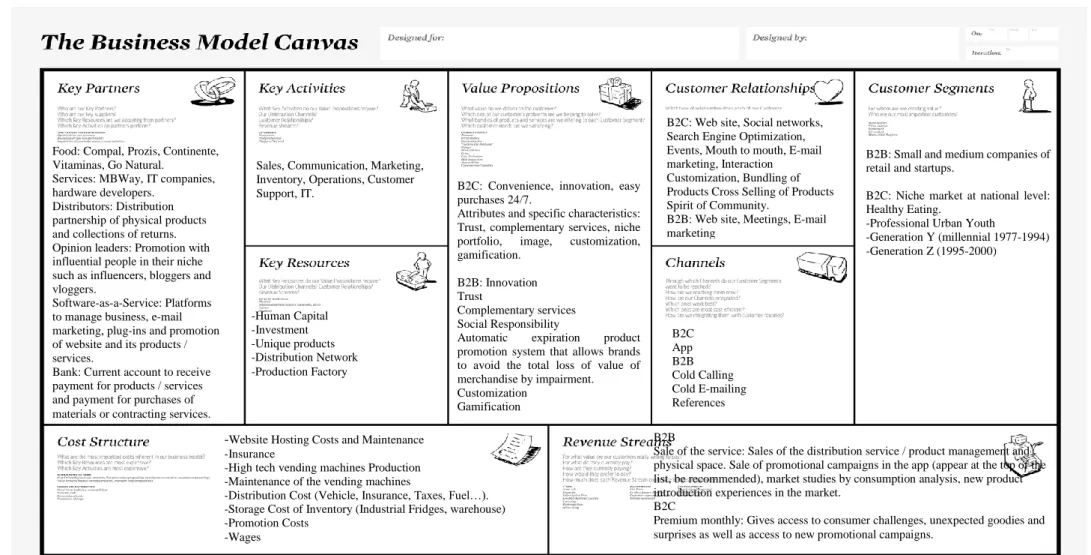
Figure 1 – First Version of The Business Model Canvas ... 36
Figure 2 - Final Version of The Business Model Canvas ... 37
Figure 3 – First Version of The Lean Canvas ... 38
Figure 4 - Final Version of The Lean Canvas ... 39
Figure 5 - Acure Vending Machine ... 45
List of Tables Table I ... 23
List of Abbreviation
BMC – Business Model Canvas
GEM – Global Entrepreneurship Monitor JIT – Just-in-Time
MVP – Minimum viable product TLC – The Lean Canvas
TLS –The Lean Startup
1
1 Problem Definition and Objectives
Today, there are more entrepreneurs operating than at any previous time in history (Ries, 2011). Many of them still take the traditional approach when doing their business models. According to Sarasvathy (2001), traditional planning will not be enough in rapidly changing and uncertain environments (Sarasvathy, 2001; Andries, Debackere and Looy, 2013). Indeed, a research by Harvard Business School showed that 75% of all start-ups fail (Ghezzi, Cavallaro, Rangone, and Balocco, 2015) from various causes such as shortage of financial and human resources but also from exogenous factors such as environmental and industry specific characteristics (Townsend, 2010; Ghezzi, Cavallaro, Rangone and Balocco, 2015). According to insights from the report of Canada’s National Angel Capital Organization, other factors may contribute to startups death, namely revenue scarcity, market opportunities misinterpretation, insufficient sales efforts and poor marketing decisions, inadequate timing, unawareness towards existing competitors and changing market conditions (Barber and Crelinsten, 2009; Ghezzi, Cavallaro, Rangone and Balocco, 2015).
According to Ries (2011), to avoid all forms of management, process and discipline, restless entrepreneurs take the “just do it” approach as a shortcut towards their vision. Impatient to get started and not taking enough time to analyse their strategy, eager entrepreneurs, suffering from overconfidence bias, rush to product development with just a few preliminary customer conversations (Ries, 2011), overestimating their knowledge, abilities and accuracy of customer feedback (Bhandari and Deaves, 2006: 5; York and Danes, 2014: 28).
This thesis main purpose is to take advantage of The Lean Startup (TLS) principles, such as generating validated knowledge through hypothesis testing and running incremental product iterations backed up by customers’ insights (Ries, 2011), to develop an idea of a new product in the healthy snacking sector. This way, product-market fit risks are theoretically mitigated, thus maximizing chances of success. Product-Market fit requires three criteria: customers’ willingness to pay for the product, acquiring the customer is less expensive than what they pay for the product and, at last, there’s a sufficient evidence indicating the market is large enough to support the business (Cooper and Vlaskovits, 2010: 24).
2
Indeed, according to Ries (idem), the problem with most entrepreneurs is not strategic but rather working with inaccurate and invalid business assumptions as product development guidelines.
Given the healthy foods trend and increasing awareness to a balanced lifestyle in recent years (Nunes and Pereira, 2016) the product development process will probably evolve in the retail and e-commerce sectors of healthy foods and lifestyle, but inherently subject to change upon interview analysis. In Portugal, according to Nielsen (2017), 72% of consumers believe in superfoods’ contribution to healthier diets and 73% admit that they would be willing to buy them despite their higher prices. Furthermore, most consumers surveyed by Nielsen (idem) would consider natural juices over available soft drinks given their unhealthy sugar levels. Hence, the problem for customers is to find healthy and affordable snacks at convenient locations such as colleges, gyms and company offices. Indeed, surveyed customers argued that it is difficult to find healthy foods in their daily life and retailer services director of Nielsen, Ana Paula Barbosa, stresses that Portuguese consumers are increasingly more available to buy healthy products and to pay a premium for them (Nielsen, 2017). The lack of healthy snacks on the market is not the probable cause of this issue, since a wide array of these snacks are available at specialized stores and online websites, nor is the absence of willingness to pay for these, distribution comes to mind as the main culprit of customers’ daily struggle.
Hence, taking into consideration the existence of healthy snacks and customers’ willingness to pay for them, implementing a solution to address the healthy snack availability problem through TLS principles comes to be the thesis focus.
3
1.1 Problem Statement
This study purpose is to take advantage of TLS principles to develop a new product in the healthy snacking industry. Although most startups using TLS principles expect to have higher chances of success, the liberal implementation of these principles is still to be standardized to a comprehensive and thorough methodology from which startups could draw substantial value (Maurya, 2012). Away from technological products, TLS immature implementation process will be adapted from various sources to enable smooth product development in the physical consumer goods sector.
1.2 Research Questions
How can TLS methodology increase this opportunity probability of success?
What are the advantages of applying Lean Startup principles in this project?
What are the disadvantages of applying Lean Startup principles in this project?
What are the difficulties of applying the TLS approach in this project?
According to TLS methodology, should this opportunity be explored?
Employing TLS methodology, can we build a sustainable business around this opportunity?
4
2 Literature Review
2.1 Entrepreneurship, Opportunities and Startups
While entrepreneurship is a complex concept described by many different broad terms, to the Global Entrepreneurship Monitor (GEM), which is the leading study of entrepreneurship that began in 1999 and collects data from all around the world to provide high quality information (The Global Entrepreneurship Monitor, 2018), entrepreneurship is “any attempt at new business or new venture creation, such as self-employment, a new business organization or the expansion of an existing business, by an individual, a team of individuals, or an established business.” (Acs, Amorós, Bosma and Levie, 2009:3). Stevenson and Jarillo (1986) define entrepreneurship as “the process by which individuals – either on their own or inside organizations – pursue opportunities without regard to the resources they currently control” (Stevenson and Jarillo, 1986: 3; Wang and Chugh, 2014: 29). Later, Stevenson (2012: 4), specifies entrepreneurship as “the pursuit of opportunity without regard to resources currently controlled”. This definition empathises the challenges all entrepreneurs face: shortage of resources such as financial capital, human capital, intellectual property and access to distributors (Collins, 2016).
Indeed, people find ingenious ways to solve their struggles daily, however, entrepreneurs need to be careful since successful exploitation of entrepreneurial opportunities requires its translation into viable business models (Amit and Zott, 2001; Andries, Debackere and Looy, 2013: 288). Given this, not every opportunity in one’s life is a business opportunity worth engaging in. In fact, only problems that touch a sizeable customer segment can be qualified as business opportunities. Successful entrepreneurs have not only to recognize problems afflicting an exploitable group of people but also to take into consideration the opportunity cost of doing so.
Indeed, an often-neglected concept is opportunity cost, which can be defined as the cost of not doing B when the alternative A is undertaken. Therefore, each choice creates mutually exclusive outcomes since limited and unrecoverable resources are consumed in the process (Collins, 2016). Furthermore, Collins (idem) argues the importance of choosing viable opportunities which translate in the existence of a clear and sustainable competitive advantage over the present market. Indeed, a good strategy design comes as
5
a safer approach to distinguish markets that promise lasting success from those that offer only the illusion of substantial returns (Collins, 2016).
Additionally, Casson (1982), Shane (2003) and Venkatarman (2000) define entrepreneurial opportunities as “situations in which new goods, services, raw materials, markets and organizing methods can be introduced through the formation of new means, ends, or means-ends relationships.” (Wang and Chugh, 2014: 29). Moreover, Dutta and Crossan (2005: 426) define entrepreneurial opportunities as “being a set of environmental conditions that lead to the introduction of one or more new products or services in the marketplace by an entrepreneur or by an entrepreneurial team through either an existing venture or a newly created one.”.
These new ventures are called startups. Ries defines startups as being “human institutions designed to create a new product or service under conditions of extreme uncertainty” (Ries, 2011: 27). The environment of extreme uncertainty and the search for the best opportunities are key variables to take into consideration by entrepreneurs. Furthermore, the uncertainty inherently linked to entrepreneurial activities makes opportunity costs harder to perceive, therefore deceiving entrepreneurs to take greater risks on new ventures than they were hoping for.
Another definition of a startup comes from Blank (2010), which presents “startup” as being an organization that seeks a repeatable and scalable business model (Blank, 2010). Combining both definitions, startups can be described as institutions operating in a scenario filled with unknown variables, seeking for a business model that is repeatable and scalable and above all, profitable.
In addition, Blank claims that startups fall into one of four basic categories: bringing a new product into an existing market, bringing a new product into a new market, bringing a new product into an existing market and trying to re-segment that market as a low-cost entrant or bringing a new product into an existing market and trying to re-segment that market as a niche entrant (Blank, 2007). The product to be developed in this thesis will fit within bringing a new product to an existing and growing market category.
6
2.2 Product Centered Development and Customer-Centric Development When using product centered development, entrepreneurs write down a business model, which is a system of interconnected activities that determine how a company does business with its customers, partners and vendors (Amit and Zott, 2012; Standing and Mattsson, 2016: 1), pitch it to possible investors, form a team, create the product and start selling as hard as they can (Blank, 2013).
Entrepreneurs write a static business plan predicting income, profits and cash flow for the next five years. Often, they do this in isolation, without consulting customers’ opinions, the ultimate user of products (Blank, 2013). In other words, entrepreneurs following the product centered development approach will see their vision fulfilled disregarding customers’ actual wants and real needs. This drive is the most dangerous force for an entrepreneur, since it can cloud their rational judgement (Cooper and Vlaskovits, 2013). Given the uncertain environment startups live in, these predictions are nothing more than polite guesses lacking corroborative evidence backing them up. After witnessing many mistakes over the years, Blank (2013) shares critical takeaways entrepreneurs need to know to be successful. One of them is, that business plans rarely survive their first contact with customers. This happens to show that business plans are not static. Hence, business models should be seen only as one freeze frame of a whole movie, they are merely punctual representations of an ever-evolving plan that changes along the startup development. Thus, startups are not smaller versions of established companies. Indeed, those companies can usually afford to plan and follow their course of action given their business environment certainty. In contrast, startups are submitted to critical decisions on a daily basis. Therefore, financial estimations of startups future incomes, cash flows and costs are remarkably hard to assess and usually reveal themselves to be a waste of time and human resources.
Furthermore, Blank says in his book “The Four Steps to Epiphany” (2007) that product centered development only fits when an entrepreneur is launching a product on an established, well-defined market where the basis of competition is understood, and where its customers are known. However, most startups do not have the luxury of evolving in such environments.
Customer development and product development are two distinct, but interrelated and iterative processes (Cooper and Vlaskovits, 2010; Blank, 2007). Customer development
7
is focused on customer-centric activities outside the building such as customer interviews, and Product Development is focused on the product-centric activities taking place inside the company such as building a prototype. To increase their chances of success, startups would benefit from synchronizing both Customer and Product Development (Blank, 2007).
Eric Ries, creator of “The Lean Startup” methodology, and also co-founder and former chief technology officer of IMVU (3D animated chat software based in Mountain View, California), describes that the product development team is responsible for actually building the product. But, before that, the customer development team already tested the assumptions about who the customers are and which problem they need to solve (Ries, 2011; Cooper and Vlaskovits, 2010). Taking Eric’s perspective into consideration, while entrepreneurs iterate product design in Product Centered development processes, simultaneously, within the customer development processes, iterations on core business assumptions, product functionalities, customer acquisition channels and customer conversion rates assumptions are empirically validated through hypothesis driven experiments (Ries, 2011; Cooper and Vlaskovits, 2010).
The customer development model considers four interrelated and recursive stages. The first step is customer discovery (understanding customers’ problems and needs), the second step is customer validation (identifying a scalable and repeatable sales model), followed by customer creation (creating and driving user demand) and, finally, company building (organizational transition from hypothesis based to efficient execution through validated learning and discovery) (York and Danes, 2014). The customer development process relies on direct contact with customers with the purpose to prove the existence of a profitable and scalable business for the company (Blank, 2007). In customer development there is the need for significant degree of certainty in the product-market fit before a company loses time in making a formal business plan (Blank and Dorf, 2012; York and Danes, 2014).
Furthermore, by placing customers in the focal point of the company’s business model, competitive advantage manifests itself not only as fully understanding customers’ needs but also serving them in a fast but also transparent and credible way (Simon, Driest and Wilms, 2016). Indeed, because customers are not patient, they want real-time answers and solutions, making “speed” a business-critical element. Moreover, given increasing
8
customer sensibility, the company’s transparency relative to their businesses operations is taken into account to a greater extent in the customers’ mind.
Hence, by focusing on customer needs and concerns, companies are able to increase their revenues when delivering personalized value propositions based on data-driven insights (Simon, Driest and Wilms, 2016). Furthermore, the customer development approach targets most profitable customer segments and studies them not only for relevant information but also for validated learning acquisition (Fader, 2012; Simon, Driest and Wilms, 2016: 161).
In conclusion, the customer development approach helps entrepreneurs on the decision-making process by providing valuable and validated information on customers’ expectations. However, given their emotional attachment to their initial vision, and despite customer development approach benefits, entrepreneurs may still shy away from this methodology because it will probably change a startups course of action repeatedly. (Cooper and Vlaskovits, 2010).
9
2.3 The Lean Startup Movement
2.3.1 Lean Origin
A name stands out in History when tracing back to the origins of the Lean Production philosophy, Taiichi Ohno. When confronted to the western production systems inefficiencies, Ohno diagnosed several production flaws which rendered the whole process ineffective. Indeed, high inventory levels, which consumed precious storage space, and high production defect rates, which disrupted assembly line fluency, were identified as the main culprits. Furthermore, “the inability to accommodate consumer preferences for product diversity” (Holweg, 2007: 422) limited consumers’ variety of choice. To Ohno, if a process did not add value to the final product in the customer perspective, it should be considered as waste due to misallocation of human and financial resources. Given this, Ohno identified other types of recurring manufacturing waste such as inadequate production logistics, overproduction and extra processing steps (Poppendieck, 2011).
Despite being recognized as the father of the Toyota Production System, Taiichi Ohno was not the only actor responsible for its realization at Toyota. Indeed, other Toyota managers such as Kiichiro Toyoda and Eiji Toyoda, played major roles in its implementation. The Toyota management team perfected the Ford’s system by lowering inventory levels, implementing quick changeover techniques to allow product diversity, establish assembly lines continuous production flow, systems integration with quality checkpoints, and a pull production system (Shah and Ward, 2003). Thus, the Toyota Production System shouldn’t be portrait as purely original nor as imitative, being essentially a hybrid (Fujimoto, 1999: 50).
As Womack (1990:13) explains, the lean production is lean not only because it uses “half the human effort in the factory, half the manufacturing space, half the investment in tools, half the engineering hours to develop a new product in half the time”, but it also delivers more value to customers by achieving lower defect rates, and producing a greater and ever growing product variety.
According to Womack and Jones (2003), the Engineering Employers’ Federation concluded that in 2000-2001, 70% of surveyed organizations that adopted Lean Principles increased their performance and 25% felt pressured to pursue the lean path. The authors (idem) claim that the lean system is the superior way of producing manufactured goods.
10
Moreover, the lean production system evolution resulted in philosophies and methodologies that companies sought to follow in order to maximize their performance. These methods went from specifying what customers truly perceive as value, identifying which steps of the value stream aren’t adding value to the product from the customer’s perspective, making value flow from the beginning to end of production, establishing a production pull system and finally, striving for perfection (Womack and Jones, 1996). Some of these Toyota Production System principles were later on adapted to startups development. Eric Ries’ author of The Lean Startup book, introduces the Lean Startup methodology, which should theoretically help companies maximize their chances of success. This methodology combines the customer development approach (Blank, 2007) with agile software development techniques and lean management practices (Womack & Jones, 2003).
2.3.2 The Lean Startup
The introduction of new products or innovative business models in the market is inherently subjected to high levels of uncertainty and therefore, risk. “The Lean Startup” movement appears in the entrepreneurial context as guiding lines in order to help entrepreneurs have greater chances of success (Ghorashi, 2015). Not being a fail proof recipe for success, TLS is not simply a collection of individual tactics but instead a principled approach to improve new product development processes (Ries, 2011). Maurya (2012), author of the “Running Lean”, points to the misinterpretation of the methodology name. Indeed, “Lean” is frequently misunderstood as a proxy for “being cheap”. On the contrary, “Lean” comes from the Toyota Production System as Lean is about eliminating waste or being more efficient with the use of resources (Maurya, 2012). TLS relies upon the customer development process and is rapidly being adopted by universities, entrepreneurship programs and accelerators (York and Danes, 2014). Additionally, TLS balances the path that comes from a founder’s vision with the need for redirection that follows from market feedback (Eisenmann, Ries and Dillard, 2013; Ghezzi, Cavallaro, Rangone, and Balocco, 2015: 198).
It can be said that TLS methodologies reconceives startups effort to design scientific experiments that test its strategy assumptions to understand which aspects are plausible and which are erroneous (Ries, 2011).
11
According to Ries (idem), the TLS sits upon five key axioms. First, entrepreneurs are everywhere, hence entrepreneurs do not need to work in garages when developing their startup to earn their entrepreneur title. Secondly, entrepreneurship is a type of broad management. Indeed, entrepreneurs need to juggle a lot of responsibilities, oversee many processes and make critical decisions with uncertain information. Thirdly, “Validated Learning” which is acquired through hypothesis testing, is to be the pillar to all startups development. In fact, startups should be engineered to create knowledge in order to build sustainable and profitable businesses. The fourth principle is the Build-Measure-Learn Loop, an iterative process in which startups turn ideas into products, measure how customers respond to incremental changes and then learn whether to pivot or perverse with their strategy. Lastly, to improve entrepreneurial outcomes, to hold entrepreneurs accountable and to allow them to accurately monitor their progress, Ries introduces the concept of “Innovation Accounting” (Ries, 2011; Nardes and Miranda, 2014: 258). This new terminology holds that conventional business metrics, such as revenue, number of customers, return on equity and market share, are useless to assess startups progress. Indeed, startups should use specific (precisely defined), measurable (can be expressed by a number) and actionable (that can be translated later on into a decision) metrics that reflect their growth and business model validation like for instance retention rates, referral rates, revenue per customer, number of customer interviews and customer acquisition costs (Ries, 2011).
2.3.3 Build, Measure, Learn
According to Ries (idem), to understand the framework presented in TLS, it is important to understand the three stages of this feedback loop because they are central in the TLS model.
Having an initial idea, the “Build Stage” represent essentially the creation of an early prototype to test some key business model hypothesis with the least amount of effort and resources. After presenting this prototype to customers, and gathering their feedback, new features might come to light and other could be discarded. In the “Measure Checkpoint”, entrepreneurs need to identify which key performance indicators are measuring customer satisfaction relative to the product development incremental changes, and if those improvements are actually delivering more value in the customers’ perspective. In the
12
final stage, “Data Evaluation” should report entrepreneurs to either persist with their current direction or to adjust their course of action. Entrepreneurs should then incorporate the validated learning into their operations, for instance as new features, to complete the loop (Ghorashi, 2015).
Ries (idem) recommends entrepreneurs to treat the Build-Measure-Learn Loop (BML) as a scientist, by applying the scientific method and thinking in terms of experiments in the early stages. For this, entrepreneurs must formulate falsifiable hypotheses and thereafter run multiple experiments, to prove them validated or rejected. Since new data is created, new hypotheses can be formulated from these new leads (Bosch, Olsson, Björk and Ljungblad, 2013). The Minimum Viable Product (MVP) is one of various techniques used to speed up the BML Loop (Bosch, Olsson, Björk and Ljungblad, 2013). TLS recommends the creation of an early product prototype, a MVP, and its constant improvement through direct customer feedback (Ghorashi, 2015).
2.4 Agile Development for Solution Development
Agile methodology helps organizations to achieve higher levels of success by delivering proficiently value and diminishing costs. By doing this, these methods generate an increase of return on investment (Shore, 2007). Ethics and teamwork are the main principles of agile methodology (Highsmith and Cockburn, 2001).
Agile development is a strategic mechanism that responds to change and has the ability to find a balance between flexibility and structure. It also encourages creativity and innovation in teamwork and empower organizations to succeed through market turbulence and uncertainty (Highsmith and Cockburn, 2001).
In 1995, Goldman, Nagel and Preiss defined agility as “dynamic, context-specific, aggressively change embracing, and growth-oriented. It is about succeeding and about winning: about succeeding in emerging competitive arenas, and about winning profits, market share, and customers in the very centre of the competitive storms many companies now fear.” (Goldman, Nagel and Preiss, 1995; Gunasekaran, 2001: 26).
To apply agile development for a product development it is important to understand its history. The term “agile” was first used for software development methodologies such as “Scrum” and “Extreme Programming”, which became popular in the software engineering community. These programming methods helped organizations to realize
13
which was the best software system that would fit their business and user’s needs. (Lankhorst, Janssen, Proper and Steen, 2012) According to the agile principles, developers “create business value by delivering working software to users at regular short intervals.” (Dingsøyr, Nerur, Balijepally and Moe, 2012: 1214).
Agile practices take advantage of short iterations, between two- to six-week range during which “the team makes constant trade-off decisions and adjusts to new information” in the product development cycle (Highsmith and Cockburn, 2001: 121). These practices place product development teams on environments that foster greater creativity and productivity, delivering superior value to customers. Customers’ feedback is repeatedly integrated in the product software development process to ensure value is being added to the product.
Furthermore, agile focuses on promoting individuals’ skills and competences, by “fostering a high degree of interaction among team members and project’s customers”. Indeed, agile development uses teams’ skills and strengths to “adapt the product development process to the team and not shaping the team to the process” (Highsmith, 2002: 5).
Agile is a philosophy of doing fast the first time and using customers’ feedback to upgrade the product later on. This “perfect is enemy of good” philosophy ensures cost reduction through process reorganization (Highsmith, 2002: 5).
There are other definitions of agile development. For instance, Henderson-Sellers and Henderson-Sellers & Serour (2005) argue that agility involves not only the ability of adapting to change but also improve and development processes as required. For
Agarwal, Shankar and Tiwari (2006), agile treats leanness as a qualifier by focusing on the development of objective responses with valued outcomes and simultaneously reducing cost by eliminating wasteful activities.
14
2.5 Implementing Lean Tools
2.5.1 The Minimum Viable Product
The “Minimum Viable Product” (MVP) and the pivot concept are widely used in the TLS methodology. MVP is a fundamental concept of TLS methodology. Ries defines MVP as “a version of a new product, which allows a team to collect the maximum amount of validated learning about customers with the least effort” (Ries, 2011; Lenarduzzi and Taibi, 2016). To Blank, MVP is an early product version that “has just those features (and no more) that allow the product to be deployed” (Blank, 2010; Lenarduzzi and Taibi, 2016).
The MVP is an early product prototype with the purpose of assessing early adopters’1 reactions and collect truthful feedback to proceed with the product development process (Frederiksen and Brem, 2017). It is the early version of the product that is actually usable by customers to solve a real problem (Cooper and Vlaskovits, 2010).
The MVP evolves from the stages between product conception and product-market fit. Ries stresses that fundamentally a lean startup is a series of MVP’s, each designed to answer specific questions (hypothesis) to generate validated learning (Ries, 2011 in Cooper and Vlaskovits, 2010). As Copper and Vlaskovits (2013: 171) say: “If you are still learning you should not be building features; you should be building experiments (which may contain features). It’s an important distinction.”.
Hence, because entrepreneurs don’t know in advance what is needed to be viable, they should not waste precious resources in the packaging, features and kickstand of their products, but instead focus on running experiments to create as much validated learning as possible about their customers and the problems that trouble them (Cooper and Vlaskovits, 2013).
The advantages of doing the MVPs is, first, developing an early version of the product with a smallest set of features to learn customers’ requirements before investing a lot of money in building a product no one wants. Secondly, once the entrepreneur releases small versions off the product, it will be easier in the future to test results and diagnose problems. To accurately do so, it is essential to identify early adopters since they will be
1 The first to pursue the product for its intrinsic benefits, even if it is the first version without all features
15
the customers to buy the early version of the product even if it doesn’t have the product’s lack of costly-to-develop “nice to have” features (Eisenmann, Ries and Dillard, 2012).
2.5.2 Persevere or Pivot
Persevere in the current direction if the MVP validates business model hypothesis and feedback is encouraging. In this situation entrepreneurs can either keep validating hypotheses or prepare to scale (if all hypotheses are validated) (Eisenmann, Ries and Dillard, 2013).
If the MVP rejects the business model hypothesis or customer feedback directs entrepreneurs to other advantageous possibilities, then entrepreneurs may decide to pursue alternative courses of actions (Eisenmann, Ries and Dillard, 2013). This recurring phenomenon in startups development, seen as a critical business model modification is defined as "pivot" (Comberg, Seith, German and Velamuri, 2014).
Ries defines a pivot as a major change, a structured course correction “designed to test a new fundamental hypothesis about the product, business model, and engine of growth” (Ries, 2011: 149; Comberg, Seith, German and Velamuri, 2014: 4). To Ries (2011: 209) engine of growth “are designed to give startups a relatively small set of metrics on which to focus their energies.”. In other words, The Engine of Growth is how the company will foster its growth and how it will measure it. There are three types of Engines of Growth. The first one is The Sticky Engine of Growth and is related to the retention rate of customers, hence companies should stay focus on the number of customers engaged with the product (Moogk, 2012). The second is the Paid Engine of Growth. To promote this type of growth companies should invest in advertisement to acquire new customers (Ries, 2011). The last engine is the Viral Engine of Growth and can be defined as the “network-enhanced word of mouth” (Jurvetson, 2000: 1) and can be measured by the viral coefficient (number of new customers signing up as a result of one new customer) (Ries, 2011).
As entrepreneurs learn more about their customers and their environment, changing elements of the customer-problem-solution hypothesis or business model considering new data happens regularly, making “pivot” an essential concept in the entrepreneurial world (Cooper and Vlaskovits, 2010).
16
As Ries (idem) asserts, successful pivots put entrepreneurs on the right track toward growing a sustainable business. The author also believes that by pivoting when faced with failed hypothesis, entrepreneurs head in to new directions keeping all previous and useful validated learning.
17
3 Methodology and Data
This study’s purpose is to develop a product using TLS methodology.
Designing the Lean Canvas (TLC) (see appendix, figure 3), which allows to pinpoint our current vision in a holistic and illustrative fashion, was the first step taken in this methodology. As a result of TLC, the initial vision, the problem and the falsifiable business model hypotheses were written according to what was believed to be the problem. TLC comes as the perfect tool for brainstorming possible business models, understanding where to start and tracking ongoing learning (Maurya, 2012). Indeed, TLC comes as a visual representation of a business and how all components of the business connect. This is why in early new product development stages, it is imperative to create validated knowledge since all information entrepreneurs have is a possible problem, a possible solution and a vague intuition of a customer segment.
The original vision is defined according to the problem and its potential solution following the entrepreneurs’ assumptions. After its development, it is possible to translate it into falsifiable business model hypotheses, meaning that these hypotheses can be rejected or accepted through decisive experiments. These experiments will primarily take the form of interviews to potential customers. As Cespedes, Eisenmann and Blank (2012) say first, entrepreneurs need to formulate hypotheses about potential customers’ problems and its solution. These hypotheses are essential when developing the segment “customer value proposition” of the business model. Also, these initial hypotheses are required to understand how potential customers will become aware of the product, who are actually the customers, and who else will influence product purchase.
The first step when developing a Lean Canvas is to define clearly the problem the entrepreneur is trying to solve. Afterwards, the main problem should be segmented in three sub-problems in a mutually and exclusively fashion. In order to validate these initial assumptions, problem interviews should be conducted to potential customers. Indeed, the purpose of problem interviews is to understand if the problem to be solved is a legitimate pain customers’ need to go through. It is all about validating the hypotheses, and measure how customers react to the three top problems (Maurya, 2012). The outcomes of problem interviews can be total or partial validation or
18
rejection of the three hypothesized sub problems. The interviews are designed in such a way qualitative metrics are used for validation. Indeed, the decision to reject or validate a hypothesis should rely upon statistical models from the interview’s outcomes. Throughout the interview process, a deeper understanding on customers’ identity and which problems he struggles with, become much clearer. Since the product to be developed is a healthy and carriable snack, interviews will mainly take place in universities, companies’ offices and gymnasiums in order to reach the targeted customer segment. The first interview stage will count with at least twenty inquired customers. The problem interview original template is not static. Indeed, if a pattern is exposed along the interviewing process, the script may suffer changes to accommodate the previously disclosed behaviour.
At this point we needed to pivot TLC (see appendix, figure 4), according to the results of the first interviews. Thus, after understanding what is the real problem customers are struggling with and by having a deeper knowledge of the customer segment, product development gives place to the second phase of interviews, the solution interview. The purpose of Solution Interviews is to test a first solution iteration before spending resources in building a product still short from what customers want. By doing so, it is possible to help customers visualize the solution and understand if their problem will be solved (Maurya, 2012). For the solution interview, it is important to specify MVP Tests. Indeed, entrepreneurs get more reliable feedback when putting prototype products in their customers’ hands. This project’s MVP will not be physical due to lack of resources. Therefore, MVPs will be mainly videos, landing pages with A/B split testing, presentations, and websites.
When developing MVPs, it is important for hypothesis to be prioritized. Indeed, riskier and critical assumptions should be tested first because their rejection will have heavy business model implications (Eisenmann, Ries and Dillard, 2012). According to feedback from customers, the business model will persevere or pivot in the light of new validated knowledge. When all hypotheses are validated, product-solution fit has been achieved.
At this stage, it is still important to carry additional interviews to understand if problem and solution hypotheses are frictionless and balanced in the customers’ perspective. Moreover, strategy optimization (pricing, partnerships, communication, sales and
19
financing for example) and product building should also be tested at this moment (Maurya, 2012). After this, Product-Market fit which means the customer is willing to pay for the product, there is an economically viable way to acquire customers, and the market is large enough for the business (Cooper and Vlaskovits, 2010) can be further investigated. Once product-market fit is secured, innovation is validated.
20
4 Qualitative Validations and Quantitative Verification
4.1 The Problem Interview
Before formulating a solution, it was important to understand our customers’ perception, since without proper testing of assumptions and hypotheses, the project was in danger of becoming a faith-based passion endeavor without a systematic roadmap. For this it was critical to write down the initial vision and sharing it with other people. But, who were the customers?
In order to understand this, a first Business Model Canvas (BMC) (see appendix, figure 1), and TLC was made, which is essentially an iterated version of the BMC, adapted by Ash Maurya.
As a result of the lean canvas and taking into account what has been said before about the product being a healthy and carriable snack, university colleagues, company employees and healthy eating or gymnasium individuals were interviewed. The initial problem interview was conducted with twenty-two inquired possible customers.
This product first customers segment can be described as young adults, from twenty to thirty years’ old, who are first time workers, or still students, care about their health, practice regularly sports, try to eat healthy, don’t have too much spare time, don’t like to spend too much money on supplementation and find it difficult to access a healthy diet. The second customer segment is made up of adults from thirty to fifty years’ old who care about their health, practice sports weekly, try to eat healthy, don’t have too much spare time and also find it hard to follow a healthy diet. This segment was also interviewed. To validate the problem this project is trying to solve, three main hypotheses were formulated: “Available snacks generally don't fulfil your nutritional needs.”, “Eating healthy snacks is time consuming and hard to come by” and “Eating healthy daily isn’t financially viable”.
To solve these sub problems a possible solution is an already prepared snack that does not get spoiled easily once out of the cold, made from soya yogurt, fruit, dry fruits, cereals and seeds (100% added sugar, banned substances and preservatives free) and also without milk derived products (mainly derivatives with lactose). The packaged was a top sprout sterilized soft resistant aluminum pouch that could be delivered at home on a weekly basis.
21
4.2 The Problem Interview Results Analysis
All interviews were administered face-to-face and in a semi-structured method and were held between the first of February 2018 to the first of March 2018.
In total, twenty-two customers were “problem” interviewed, 5 men and 17 women, among which 20 did sports and 2 didn’t. Nevertheless, despite not doing sports, these 2 people try to eat healthy. On the other hand, 18% of the interviewees were from 22 to 23 years old, 9% were between 25 and 26 years old, and 5% were from 27 to 57 years old.
Regarding to the occupation of the interviewees, 82% are full time workers and 18% are students.
In order to categorize qualitative answers, keywords-based answers subgroups were created for analysis. For example, when the interviewees were asked about what were their nutritional cares and they replied “Eating salad for dinner”, they were classified as “Light dinners”. Another example is, if the interviewees answered “apple” or even “melon” to the following question: “In your opinion what is a healthy snack?” they were classified as “Fruit”.
From the preliminary data collected on the “Problem Interviews”, 86% of the interviewees avoided sweets, drinks and fried food, 59% of the interviewees had more than three meals a day, 32% of the interviewees drank more than one and half litre of water a day and 54% of the interviewees avoided lactose, had light meals, ate fruit, consciously consumed more protein (cheese, meat and protein powder) and replaced sugar with other sweeteners.
The interviewees were then asked if it was important to eat in between meals: 55% of interviewees agreed to the importance of eating between meals, 44% of interviewees said that is it important but not essential, and the remaining 1% don’t find it important at all. Not included directly in the preliminary questions of the “Problem Interview”, interviewees were asked to briefly give their own definition of a healthy snack. In general, a healthy snack was described as not containing added sugars and being prepared from fruits. Interviewees also expressed that a healthy snack could be considered has being low in calories and being prepared with eggs, oats, tea, and skinny cheese. This additional question was paramount to identify interviewees’ perception of healthy snacks since a broad adjective like “healthy” can have different meanings according to each one’s eating habits.
22
Once demographic and psychographic characterization was made, interviewees were presented to the three sub-problems (“Available snacks in your work place don’t fulfil your nutritional needs and aren’t aligned with your dietary goals”, “Snacking healthy is really time consuming and hard to come by”, “Snacking healthy daily isn’t financially viable”) and asked to order them by relevance from the most annoying to the least annoying. Half the interviewee sample agreed that the main problem is that available snacks in their work place don’t fulfil their nutritional needs and aren’t aligned with their dietary goals, followed by the fact that like most student or worker’s available healthy snacks are too expensive and the least important is that snacking healthy is really time consuming and hard to come by. More than one third of interviewees (36%) agreed that the main problem is that snacking healthy is really time consuming and hard to come by, followed by the price of healthy products and ending with the fact that available snacks in their work place don’t fulfil their nutritional needs and aren’t aligned with their dietary goals.
In order to understand the proposition that afflicts more respondents, each problem statements were classified according to the accrued ranking in the respondents’ answers. Each time a statement was positioned first, it earned 3 points, when in second it scored 2 points and in third, only gained 1 point. The results for each statement are displayed in the table below.
23 Table I
Problem Statement Classification
Problem Statement Occurrence
s in 1st place Occurrences in 2nd place Occurrences in 3td place Total points Score 1) Available snacks in your work place don’t fulfil your nutritional needs and aren’t aligned with your dietary goals.
12 0 10 12*3=36 10*1=10 36+10= 46 1 2) Snacking healthy is really time consuming and hard to come by.
8 3 11 8*3=24 3*2=6 11*1=11 24+6+11= 41 3 3) Snacking healthy daily isn’t financially viable. 2 19 1 2*3=6 19*2=38 1*1=1 6+38+1= 45 2
After setting interviewees sub-problem priorities, a deeper analysis of each sub problem was conducted. The statement “Available snacks generally don’t fulfil your nutritional needs” was first addressed. This drill-down approach intention was to determine precisely the composition of healthy snacks, to assess interviewees’ perception of available snacks and to tap into customers’ ideal solution to solve their need to snack healthy.
Fruit was the snack that most interviewees thought fulfilled their nutritional needs, followed by yogurts without added sugars and snacks with high level of protein content. Relative to customers’ quality perception of available snacks, contrary to the belief that available snacks are mainly made with refined sugar and processed fats, the interviewees answered that in their opinion there are a lot of healthy snacks available in the market but not in the right places.
Finally, to evaluate interviewees dream solution to satisfy their need for healthy snacks, they were asked to describe which snacks they would like to magically appear each time they were hungry. When hungry, all interviewees chose has their perfect snack selection either fruits, yogurts, eggs or low-fat, sugar free snacks.
The second sub problem to be considered was “Snacking healthy is time consuming and hard to come by”. This statement takes into consideration the time and space dimensions
24
of eating healthy snacks. Indeed, to eat healthy snacks one has to come by a sales point (space) or invest labour into their production at home (time).
More than a fifth of interviewees (22%) bring their snacks from home because there are no healthy snacks sales points where they work and almost half (45,5%) of interviewees take their lunch and snacks already prepared from home to save up some money. Almost one third of interviewees (31,8%) disclosed they wouldn't take either prepared food nor snacks to their workplace. For those that try to buy snacks at their workplace (54% of interviewees), it usually takes them about 10 minutes in a daily basis.
Nine out of ten interviewees (90%) agreed on the difficulty to find healthy snacks in their daily life. Indeed, according to the interviewees, most workplaces don’t sell healthy snacks, and the ones that have them only offer expensive products or snacks with a lot of refined sugars, processed ingredients and high level of carbohydrates.
Last but not least, the sub problem of “Snacking healthy isn’t financially viable” was addressed thoroughly. Indeed, the pricing strategy of healthy snack is usually a purchase deal breaker and steers consumers to less healthy but more budget friendly opportunities. When asked if snacking healthy was important, 90% of interviewees agreed but only 45% of them actually buy those snacks regularly. The willingness to pay for a healthier product exists as demonstrated by Nielsen's study (Nielsen, 2017) and when asked about how much they were willing to pay for a healthier alternative on regular basis, interviewees answers ranged from 5€ to 1,40€ with an average of 2,40€ and a standard deviation of 1,2€. Interviewees whose healthy snacks purchasing behaviour was irregular (36% of interviewees), had a lower willingness to pay. This attitude contradicts the notion that if one buys a consumable product less often then he would have a higher willingness to pay each time of purchase. For these individuals, their average price range for healthier snacks acquisition was 1,9€ with a standard deviation of 0,9€ and when as low as 1€.
When closing the interview, 54% of the interviewees said they would be prone to pay more for a snack that was handy and healthy.
Given the interview data, all three sub problem hypothesis were confirmed. Indeed, almost all of interviewees resonated with the problem statements and showed interest in knowing more about what was going to be developed in order to solve them. The problem interview script revealed itself sturdy to ensure smooth data collection but also flexible
25
enough to allow unexpected interviewees comments and opinions. No script changes were made during the whole interview process.
4.3 The Solution Survey
After problem hypothesis validation, with problem interview data, an online solution survey was developed to test solution hypothesis and business model assumptions. According to Maurya (2012), surveys are not the best solution to support initial learning, however they are a very effective tool to verify the information we have learned from customer interviews. Indeed, this questionnaire objective were not only to test solution-problem fit and business model components but also to indirectly retest the solution-problem hypothesis. This survey intention was then to test these two main hypotheses:
H1: “It’s difficult to eat healthy in between meals because there is not a good distribution
of snacks.”
H2: “The solution presented is viable to customers.”, to solve the problem stated in the
first hypothesis.
The questionnaire was timed just under 3 minutes, developed in Qualtrics and was active for almost a month (from June 25, 2018 to July 15, 2018) closing with 115 valid and complete responses. Also, the survey was diffused via email and social media such as Facebook and Instagram.
Before survey activation, validation thresholds were arbitrarily set. The intervals were demanding enough to rule out weak validity but flexible enough to allow some variability in customers’ feedback. In fact, only if more than 80% of the responses to the problem hypothesis were positive, it was considered as verified and only if more than 85% of answers to solution-problem fit hypothesis were positive, the solution was concluded as validated.
The survey design process was logical and deliberate with the intention of, in a first instance, to segment respondents as “healthy lifestyle individuals”, “neither healthy nor unhealthy individuals” or “not significantly healthy lifestyle-oriented individuals”. For this study, people who do not practice sports, but underwent a healthy diet, were considered as “healthy lifestyle individuals” since a healthy lifestyle can be defined as a set of habits that lowers one's risk of over soon illness or early death (WHO, 1999) and contributes to the well-being of a person, either emotionally and physically (Nordqvist,
26
2018). To do so, prospects were asked about their lifestyle habits with questions such as “How many times do you practice sports?”, “How often do you have healthy meals?”, “How many times do you prepare home snacks during the week?”. This way it was possible to emphasize answers from respondents that belonged to the solution customer segment.
After lifestyle characterisation, respondents were inquired about their relationship toward the problem hypothesis, followed by questions to test their affinity towards the proposed solution and respective benefits, represented by a short text description with illustrative images. For sample characterization, demographics were collected to study respondents’ age, gender, occupation and educational degree distribution.
Microsoft Excel was used, after survey answer collection, for analysis. Excel was chosen over SPSS due to time constraints since a cost/benefits analysis revealed to be impractical to bear the mild learning curve of a new software program as complex as SPSS. Furthermore, Rose, Spinks and Canhoto (2015: 2) add that “another benefit, particularly for those new to data analysis, is to remove the need to learn a software program as well as getting to grips with the analysis techniques” and “excel remains a very valuable tool for quantitative data analysis” (Rose et al., 2015: 2). In the scope of this analysis, no other statistics programs were required.
4.4 The Solution Survey Results Analysis
After transferring the survey results from Qualtrics to Excel, 20 incomplete answers were deleted. Moreover, other 6 answers were not considered since respondents did not relate to the problem statement and did not belong to this product customer segment. This insight inferred significantly reduced answer validity in the scope of this product development technique. Therefore, only 86 valid answers were considered from a total of 115 responses.
From these 89 responses, 7 respondents did not agree with the problem identified, however they were considered for this study because they belong to this product customer segment and gave consistent inputs about the solution benefits.
Regarding demographics, 36% of the considered respondents were aged between 18 and 24, 16% were aged between 25 and 34 years old, 27% were aged between 35 and 44 years old and the remaining 21% were aged between 45 and 65 years old.
27
Validation of the survey first hypothesis: “It’s difficult to eat healthy in between meals because there is not a good distribution of snacks” was verified as 92% of considered respondents, above the 80% threshold stated beforehand, resonated with the identified problem.
To validate the displayed solution, a more complex methodology was employed. Indeed, the solution was a combination of many features that resulted into a set of benefits. Therefore, to validate the proposed solution, two separate conditions had to be meet. Not only more than 85% of considered respondents had to express the desire to have a solution like machine in their workplace, but also more than 80% of product benefits had to be validated. Benefit validation was considered when more than 50% of considered respondents classified the respective benefit as either “important” or “very important”. Hence, the sum of respondents that classified a benefit as “important” or “very important”, had to be greater than 50%.
These conditions were easily satisfied as 100% of the 89 considered respondents expressed attraction for the presented solution and would like to have one on their working place and more than 80% of benefits were validated.
Despite not agreeing to the problem statement, even the 7 disqualified interviewees showed enthusiasm toward a product like the one described in the survey and declared their willingness to have such a device on their working place.
To pinpoint which benefits resonated most with respondents, a closer analysis of each benefit relevance distribution was conducted.
More than 90% of considered respondents agreed that having easy payment (99% of considered respondents), a wide selection of healthy snacks without refined sugars (94% of considered respondents) and the possibility of eating healthy snacks between meals (94% of considered respondents) were validate as product desired benefits.
The benefit of having “daily nutritional recommendations” was also validate, with 70% of considered respondents classifying it as “very important” and “important”.
Despite lower relevance ratio, granting access to nutritional information of snacks before purchase as a nutritional table, providing gluten free products, and cater lactose free product were validate as a product benefits with respectively 57%, 56% and 64% of the respondents classifying them as either “important” and “very important”.
28
Providing access to feedback from other consumers before trying a snack was also validated (52% of considered respondents) though with lower relevance indicators as 29% of considered respondents ranked it as “indifferent”. Indeed, some respondents value the opinion of other customers before trying out new products, but others believe that is not necessary.
Therefore, it is possible to conclude, with survey data, that both the problem and solution were validated with more than 90% of respondents agreeing with the problem and 100% of solution benefits being validated.
29
5 Conclusion and Discussion
The thesis main purpose was to use TLS principles to validate a new product idea in the healthy snacking sector by taking into paramount consideration customer’s inputs before even taking any product development steps. To accomplish this goal, no shortcuts were used when validating the problem and its proper solution.
First and foremost, the TLS principles were identified and understood for appropriate application. Despite recent literature about the methodology, pioneered by Steve Blank and further developed by Eric Ries, insights and evidence of its actual benefits and clear improvement upon startups probability of success is still to be proven. However, this methodology has definitely shown its potential with its customer development approach. Indeed, it was through customer interactions that both the initially theoretical problem and the speculative solution were validated. However, many business assumptions are still to be validated such as customer relations, sales channels and revenue streams. Hence, it is still too early to assume that this business opportunity will be successful, if exploited.
A major problem of TLS methodology was experienced. Indeed, when almost every business model choice must be validated, and because this process relies on customer interaction and therefore upon their availability and willingness to share their personal concerns, both paralysis by analysis and entrepreneur’s frustration, materialized.
Undoubtedly, taking the time to schedule and gather enough customer insights to take action is tiresome. Moreover, getting used to leaning solemnly on customer feedback to take every business decision can hinder entrepreneurs drive to pursue a vision and condition one’s mission to customers’ dispositions. Therefore, customers’ insights should be employed to validate and not to dictate. In fact, if the entrepreneurs truly believe in an assumption, and this assumption has some kind of validation through other means such as benchmarking, then the entrepreneur should choose to pursue its original hypothesis instead of pivoting. Another problem of the TLS methodology, because it builds on statistical analysis of customer qualitative feedback is analysis by paralysis which can be defined as the consequence of not being able to move forward with an action because satisfaction with current inputs is never enough (Investopedia, 2018). In this case, this problem was overcome with the survey answering period deadline. Upon the deadline the
30
survey had 89 valid answers, which was enough for statistical significance but not a representative sample of the customer segment population. Additionally, despite being easier to analyse, surveys are not as insightful as interviews due to its rigid structure. To reduce this design limitation, open text inputs where arranged along the survey for unrestricted feedback.
The TLS methodology was implemented with success to answer the main question. When put to the test, the TLS principles where efficient to level out initial enthusiasm which can mislead entrepreneurs to the “build and they will come” philosophy. However, this methodology required great emotional intelligence to cope with unexpected and frequently contradictory customer feedback, and to question permanently one’s beliefs and preconceptions which can be problematic to younger, and eager entrepreneurs. Given this purely rational approach, the problem statement, “it’s difficult to eat healthy in between meals because there is not a good distribution of snacks”, was clearly validated. From this common problem, a possible solution was crafted theoretically and afterwards also validated. Despite proven product-solution fit, to build a business upon this idea, further validation needs to happen to confirm business model assumptions. For further research, and to test product-market fit, validation on customer relationships development, revenue streams pricing strategies and distribution channels action are required to not only assess customers’ responsiveness to the new value proposition but also their willingness to pay for the new product.