Faculdade de Medicina da Universidade de Lisboa
Mestrado Integrado em Medicina
Systematic review and meta-analysis of randomized
controlled trials to evaluate the placebo and nocebo
responses in Restless Legs Syndrome
Maria A Silva, Gonçalo S Duarte, Raquel Camara, MD, Filipe B Rodrigues, MD, Ricardo M Fernandes, MD, PhD, Daisy Abreu, João Costa, MD, PhD, Claudia Trenkwalder, MD, PhD, Joaquim Ferreira, MD, PhD
Laboratório de Farmacologia Clínica e Terapêutica
Aluna: Maria de Azevedo António Machado da Silva, nº 12832 Orientador: Prof. Dr. Ricardo FernandesCoordenador: Prof. Dr. Joaquim Ferreira 2015/2016
2 RESUMO
Introdução: A síndrome das pernas inquietas (RLS) é um distúrbio sensitivo-motor caracterizado pela
necessidade incontrolável de mover as pernas. Estudos anteriores revelaram uma resposta significativa ao placebo. Objectivo: Quantificar a resposta ao placebo no RLS. Pesquisa: As bases de dados MEDLINE, EMBASE, CENTRAL, ICTRP da OMS e Clinicaltrials.gov da FDA foram pesquisados em Outubro de 2015. As listas de referências dos estudos incluídos foram analisadas para identificação de estudos adicionais. Critérios de selecção: Ensaios aleatorizados com pelo menos um outcome de interesse extraível no braço placebo. Colheita e análise de dados: Dois autores extraíram os dados e avaliaram o risco de viés de forma independente, sendo os conflitos resolvidos após discussão. A medida de efeito escolhida foi o effect size. Foi realizada uma metaanálise dos braços placebo segundo o método dos efeitos aleatórios. Resultados: Dos 85 estudos incluídos (5046 participantes), 64 reportaram avaliações validadas da gravidade, 62 dos quais aplicando a International RLS Study Group
rating scale (IRLS). O effect size foi -1.41 (95%CI: -1.56; -1.25), correspondendo a -6.58 pontos na
IRLS. A resposta nocebo (efeitos adversos no braço placebo) foi 45.36%. As respostas placebo e nocebo foram superiores em estudos mais longos, ensaios não publicados e com intervenções farmacológicas, formas idiopáticas e financiamento pela indústria. O efeito placebo foi menor nos
outcomes objectivos. Conclusões: A resposta ao placebo no RLS é superior ao limiar de significância
clínica. A frequência de efeitos adversos teve magnitude considerável. Estes resultados devem ser considerados no desenho e interpretação de futuros ensaios clínicos.
3 ABSTRACT
Background: Restless legs syndrome (RLS) is a common sensorimotor disorder characterized by an
urge to move the legs. Previous research in the field suggests a substantial placebo response.
Objective: To quantify the placebo and nocebo responses in RLS. Search methods: The databases
MEDLINE, EMBASE, CENTRAL, WHO ICTRP and FDA Clinicaltrials.gov, were searched up to October 2015. Reference lists were cross-checked for additional studies. Selection criteria: Randomized, double-blind, placebo-controlled trials studying RLS were included if quantitative data for least one of the outcomes of interest was extractable in the placebo arm. Data collection and
analysis: Two reviewers independently extracted data and assessed risk of bias. Conflicts were solved
by discussion. The chosen effect measure was effect size. A random-effects meta-analysis was used to pool data from the placebo arms of the included studies. Results: Of the 85 included trials (5046 participants), 64 reported a validated RLS severity assessment, 62 of which applied the International RLS Study Group rating scale (IRLS). The effect size was -1.41 (95%CI: -1.56; -1.25), corresponding to -6.58 in IRLS. The nocebo response (adverse events in placebo arm), was 45.36%. Placebo and nocebo responses were greater in trials with longer duration, pharmacological interventions, idiopathic RLS, industry funding and in unpublished studies. The placebo response was smaller in objective outcomes. Conclusions: The magnitude of the placebo response in RLS is above the threshold for clinical significance. The frequency of adverse events was considerable. These results are relevant to inform the design and interpretation of future clinical trials. PROSPERO Protocol registration
4 BACKGROUND
Restless legs syndrome (RLS) or Willis-Ekbom disease is a neurologic disorder characterized by an urge to move the legs, usually associated with sensory symptoms1. In 1995, the International RLS Study Group (IRLSSG) introduced standardized clinical diagnostic criteria2, which were revised in 20021. The four essential criteria are: (1) an urge to move the legs, often associated with uncomfortable
sensations in the legs, with possible additional involvement of the arms or other body parts, (2) beginning or worsening during periods of rest or inactivity, (3) being partially or totally relieved by movement and (4) only occurring or being worse in the evening or night.
The importance of RLS relates to its chronic course, impairing both quality of life and sleep in patients and their spouses, and to its prevalence, which may reach 10% of the population3.
The etiology of RLS may be described as idiopathic (primary) or secondary, whose causes include iron deficiency anemia4, pregnancy5 and end-stage renal disease6.
The pathophysiology of RLS is not well understood, though abnormal processes in the central and peripheral nervous systems (CNS and PNS, respectively) have been empirically studied. In the CNS the main findings relate to two mechanisms: (1) the role of reduced iron stores, found consistently in patients with RLS, in the cerebrospinal fluid7 and in the substancia nigra8, suggesting a disruption in iron homeostasis and (2) a more contentious role played by a possibly impaired dopaminergic system9. In the PNS perhaps the most important finding relates to central sensitization to A-delta fibers mechanoreceptor input, showing a static hyperalgesia but a normal dynamic mechanical algesia10. In addition to responses to both dopaminergic and opioid agents, several clinical trials in RLS have reported considerable improvements under placebo11. Despite the absence of a consensual definition12, the placebo response may be defined as “any effect attributable to a pill, potion or procedure, but not to its pharmacodynamics or specific properties”13,14.
In clinical research it is standard practice to use placebo as a comparator for the establishment of the true effect of an active intervention14. Additionally, the characterization of the placebo response is an
important tool in study design, namely in sample size calculations15, and in the interpretation of
results14.
A systematic review studying the placebo effect in RLS was performed in 2008, demonstrating a considerable symptomatic improvement of participants in the placebo arm of randomized controlled trials (RCTs)11. Previous research failed to characterize the nocebo response, i.e., a negative outcome resulting from an inert substance or sham procedure16, which will be addressed in the present review.
5 OBJECTIVES
To quantify the magnitude of placebo and nocebo responses in RLS. To identify the determinants of placebo and nocebo responses in RLS.
To define the sample size required for an adequately-powered trial to detect a difference between placebo and any active intervention.
METHODS
We followed PRISMA guidelines for the reporting of systematic reviews and meta-analyses17.
The review protocol was registered with PROSPERO (International prospective register of systematic reviews). Protocol registration number: CRD42015027992.
Inclusion criteria
Types of studies
Randomized, double-blind, controlled trials in RLS, regardless of design or setting, with at least one active treatment arm and a placebo arm. We excluded trials with an active run-in period before intervention with placebo. No language or year of publication limitation was applied.
Types of participants
Patients required a diagnosis of RLS according to the International Restless Legs Syndrome Study Group (IRLSSG) diagnostic criteria1,2 or another specified method of diagnosis, if the study was
conducted before the IRLSSG criteria publication. Patients were accepted regardless of RLS etiology, comorbid conditions or age.
Types of interventions
We accepted any intervention labelled as placebo, sham, dummy or fake. The placebo response data were derived from the within-group response in the placebo arm of RCTs.
Types of outcome measures
Studies had to report quantitative data on at least one of the following outcomes, measured by validated instruments, within the placebo arm:
Primary efficacy outcome: “Placebo response”, defined as the within-group change from baseline, using any rating scale measuring RLS severity or disability.
Primary safety outcome: “Nocebo response”, defined as the proportion of patients experiencing all-cause adverse events in the placebo arm.
Secondary efficacy outcomes: change from baseline in the following endpoints:
1. Subjective appraisal of clinical status assessed by physicians with Clinical Global Impression - Improvement scale18;
6
2. Subjective appraisal of clinical status assessed by patients with Patient Global Impression - Improvement scale;
3. Quality of life assessments; 4. Self-rated quality of sleep; 5. Daytime somnolence; 6. Sleep efficiency;
7. Number of periodic limb movements (PLM) per hour of sleep or of time in bed (PLM of Sleep Index – PLMSI – and PLM Index – PLMI, respectively).
Secondary safety outcomes:
1. Proportion of patient withdrawals due to adverse events;
2. Proportion of patients experiencing augmentation, defined as “the worsening of RLS symptoms, attributable to a specific therapeutic intervention for RLS”1.
Search methods
We searched the MEDLINE, EMBASE and the Cochrane Register of Controlled Trials (CENTRAL) bibliographic databases from inception to October 2015. Clinical trial registries (International Clinical Trials Registry Platform of WHO and Clinicaltrials.gov of FDA) were also searched. The developed search strategy for all databases combined the terms (placebo OR sham OR dummy) with (Restless Legs Syndrome OR RLS OR Ekbom Syndrome OR Periodic Leg Movement OR Periodic Limb Movement OR Nocturnal Movement) and was adapted from Cochrane systematic reviews for RLS19,20.
The Cochrane Highly Sensitive Search Strategy for identifying RCTs on MEDLINE: sensitivity- and precision-maximizing version (2008 revision) was used21. The search strategy was restricted to
humans. All terms were searched as free-text and controlled vocabulary (i.e.: Medical Subjects Headings). Reference lists from identified articles were cross-checked in order to detect additional eligible studies. Unpublished studies, identified by clinical trials registries searches or through references cross-checking, were considered for eligibility as well.
Data collection and analysis
Two reviewers (MS and GD) independently screened the titles and abstracts yielded by the search against the inclusion criteria and a third reviewer (FR) resolved any disagreements. Two reviewers (MS and GD) analyzed full text reports for potential inclusion. We recorded the motives for exclusion only at the full-text screening stage. None of the review authors were blinded to the journal titles or to the study authors or institutions.
7
Two reviewers (RC and MS) independently extracted individual study data onto a previously piloted and tailored Microsoft Excel spreadsheet.
RLS severity was assessed on the International RLS Study Group rating scale (IRLS), Clinical Global Impression – Severity (CGI-S) and by a Visual Analogue Scale (VAS, 0-100). IRLS consists of 10 items rated by patients from 0 to 4 (with a total score of 0 to 40), with higher values representing greater severity22. CGI-S is a domain of CGI scale with scores between “not at all ill” (1) and “extremely severe ill” (7)18,23.
Change in subjective appraisal of clinical status was defined as the percentage of patients rated as “much improved” or “very much improved” by physicians in Clinical Global Impression - Improvement Scale (CGI-I)18 or by themselves in Patient Global Impression – Improvement Scale
(PGI-I).
Quality of life was assessed by the Johns Hopkins Quality of Life questionnaire (RLSQoL)24 and by a 12-question disease-specific Restless Legs Syndrome Quality of Life questionnaire25. Quality of sleep was rated using the following domains of the respective scales: sleep adequacy of the Medical Outcomes Study Sleep Scale (MOS)26, satisfaction with sleep of the RLS-6 scale27, overall sleep quality of the Post Sleep Questionnaire (PSQ)28, sleep quality of the Pittsburg Sleep Quality Index (PSQI)29, quality of sleep of the questionnaire Schlaffragebogen A (SF-A)30, quality of sleep of the RLS Quality of Life Instrument (RLS-QLI)31, sleep quality of the Subjective Post-Sleep Diary (SPSD)32 and VAS assessments. Daytime somnolence was accessed by MOS (daytime somnolence domain), RLS-6 (daytime tiredness item), PSQI (daytime dysfunction domain), IRLS (item 5: tiredness or sleepiness) and Epworth Sleepiness Scale (ESS)33.
Sleep efficiency, PLMSI and PLMI, designated in this review as objective outcomes, were measured by polysomnography. Furthermore, we accepted PLMI obtained by actigraphy34 and sleep efficiency
measured by validated sleep detection devices35.
Each included study was classified as low, high or unclear risk of bias in the following domains: randomization, allocation concealment, blinding of participants and personnel, blinding of outcome assessment, incomplete outcome data (according to the following domains: patient and clinician-reported outcomes and objective measures) and selective reporting, as suggested by the Cochrane Collaboration’s tool for assessing risk of bias21. Other sources of bias were also considered, including
reports on funding, exclusive inclusion of very specific or enriched populations and risk of carry-over effect in cross-over trials. Two authors (MS and GD) independently assessed risk of bias after a piloting process. Disagreements were solved by consensus or by a third independent party (RF). Globally, studies were judged as “low risk” if the risk of bias was considered low in all of the following
8
domains: randomization, allocation concealment and blinding of participants and personnel. Reviewers were not blinded to titles, authors or results when performing risk of bias assessment. The chosen effect measure for continuous outcomes was effect size (ES) with 95% confidence intervals (95%CI). Negative changes indicate improvement in RLS severity, daytime somnolence, PLMSI and PLMI, while positive differences illustrate benefit in quality of sleep, quality of life and sleep efficiency. The ES was preferably calculated as the quotient of the mean change from baseline divided by the standard deviation (SD) of baseline. All effect sizes were corrected for small sample bias36. Additionally, we also performed the analyses with the mean change from baseline and SD,
using the natural units of the most commonly applied scale for each outcome. When a different scale was used, linear rescaling to the chosen instrument was conducted37. Finally, in order to facilitate
sample size definition in future RCTs in the field, we performed sample size calculations to detect differences from placebo group of 5, 10, 15 and 20%, according to our results, using R (package pwr). In case of insufficient reported data, we contacted trial authors as a first approach. In the lack of a positive response, absent mean changes from baseline and SDs were extracted from unpublished material. In some trials, SD was obtained from standard error or confidence intervals. When such values were not reported, imputation methods were applied as recommended by Cochrane21. When articles reported mean, SD of baseline and of final value but not SD of change from baseline, this value was calculated according to SDchange =√ SDbaseline2 + SDendpoint 2 - (2 r SDbaseline SDendpoint) with r being the correlation between baseline and endpoint21. On the other hand, if study reports do not mention SD
of baseline, an effect size based on SD of change from baseline (ESdiff) was calculated and converted
into ES, according to ES= ESdiff [2(1-r)] 1/211. In both cases, for each outcome, the correlation between baseline and endpoint was computed from other included trials, as recommended by Cochrane21. For the primary efficacy outcome, r was estimated for the six largest included studies in which sufficient information was reported38-43. The obtained values were confronted with all included studies results and the best correlation was selected (r =0.44)42. The smallest40 and largest38 correlations obtained were applied and the resulting imputed measurements were used to perform sensitivity analyses. For secondary continuous outcomes, the correlation was imputed from the largest included study. The estimated correlations were 0.61 for quality of life43; 0.86 for quality of sleep42; 0.92 for daytime somnolence42; 0.82 for sleep efficiency; 0.94 for PLMSI44 and 0.43 for PLMI42.
Heterogeneity statistic (x2) and degree of inconsistency (I2) across studies were calculated using an inverse-variance random effect model.
Publication bias was assessed through visual inspection of funnel plots, concerning the primary efficacy outcome.
9
We used the Stata Software for data analysis. We pooled data using random-effects, inverse variance meta-analysis methods.
Dichotomous outcomes are reported as percentages with 95%CI and were analyzed with a random effects model using the method of DerSimonian and Laird45. Variances were stabilized using Freeman-Tukey Double Arcsine Transformation46.
Subgroup analyses were conducted in case of significant heterogeneity. Defined variables for subgroup analyses were published versus unpublished trials, study intervention (pharmacological versus non-pharmacological intervention and mode of administration of non-pharmacological interventions), study population (idiopathic versus secondary RLS as well as naïve versus previously treated patients) and time to assessment (less than 6, 6 to 11 weeks and 12 or more weeks). In addition, to assess the influence of study quality on the conclusions, subgroup analyses of studies with a low risk of bias versus those with unclear or high risk of bias were performed, as well as high risk of bias versus low or unclear risk of bias, for each risk of bias domain.
The subgroup analyses were performed exclusively for the primary outcomes, with the subgroups being compared using a fixed effect method.
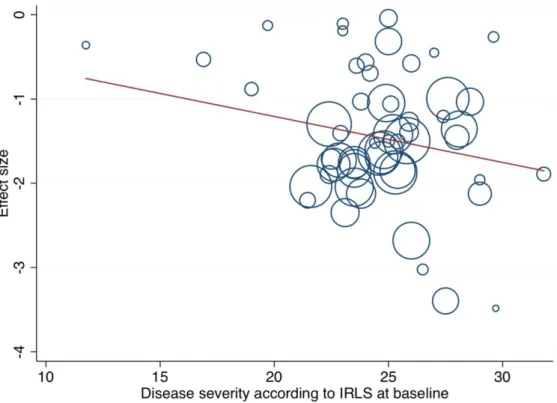
For the primary outcomes, sensitivity analyses were conducted excluding studies where imputation methods were applied and with cross-over designs. Finally, meta-regressions were performed for the primary efficacy outcome according to year of publication and to disease severity at baseline.
Since our objective was to estimate the placebo response, no formal comparisons were made between placebo and active interventions.
RESULTS
Description of studies
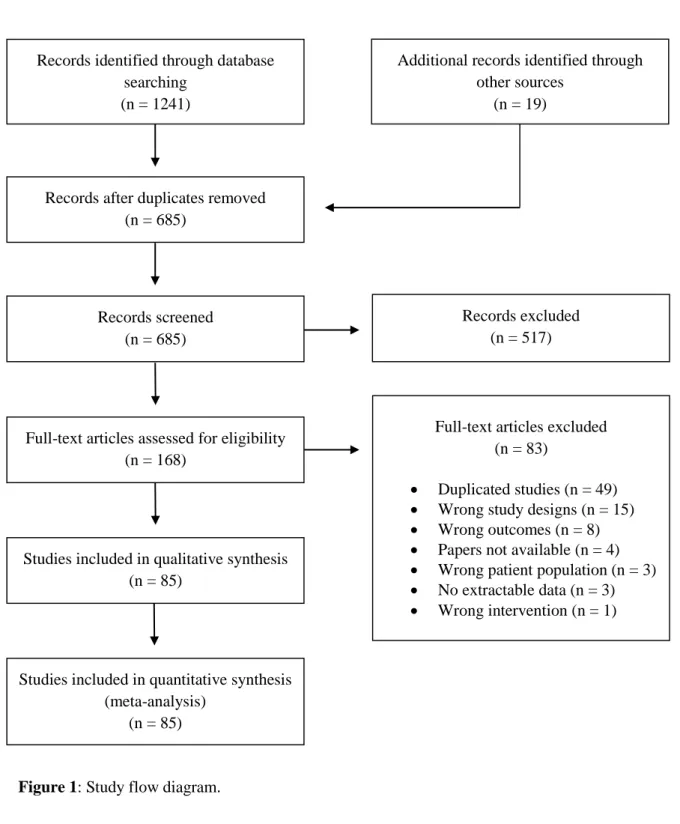
See Figure 1 for the study flow diagram. Eighty five RCTs were included in the analysis (5046 participants). Sixty five trials had a parallel design while 20 were cross-over studies. In 5 included studies the active intervention was a non-pharmacological procedure, including direct current stimulation (2 studies), magnetic stimulation, infrared light and pneumatic compression. The remaining were pharmacological clinical trials, 65 of which with oral interventions. The most common studied drugs were ropinirole (13 studies), pramipexole (12 studies), rotigotine (10 studies) and gabapentin-enacarbil (10 studies). Five of the included studies were performed exclusively in end-stage renal disease patients under hemodialysis with secondary RLS. The majority of studies exclusively enrolled patients with idiopathic RLS. Overall, the average age was 54.21 years and 62.24% of patients were female. The mean IRLS score at baseline was 24.51 points. See Table 1 for characteristics of included studies.
10
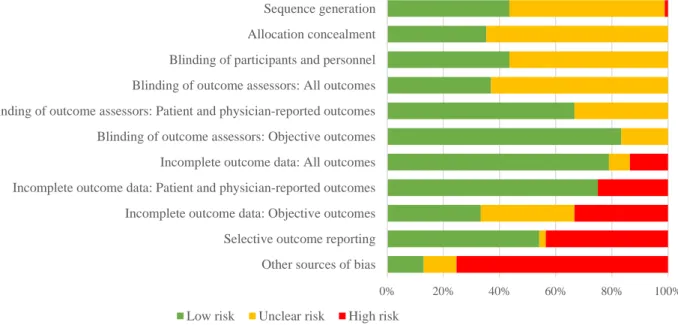
Risk of bias assessment showed an adequate random sequence generation in 37 studies, allocation concealment in 30 and blinding of participants and personnel in 37. Twenty five studies were considered as having a low global risk because all of these three domains were judged as such. One study was judged as having a high risk of bias in sequence generation because there was no clear mention to randomization. Blinding of outcome assessment was considered satisfactory in all outcomes in 33 studies. Risk of bias due to incomplete outcome data was rated as low in 65 trials and as high in 12. Thirty seven reports were judged as having a high risk of selective outcome reporting and 46 as low risk. All remaining studies were assessed as having an unclear risk of bias in the mentioned domains.
Additional sources of bias were accounted for. Studies were judged as having high risk of other sources of bias if they were totally or partially sponsored by a pharmaceutical company (61 studies) and as unclear if sources of funding were not reported (8 studies). Studies were also considered as high risk if they exclusively included very specific populations, such as, hemodialysis patients (5 studies), or enriched population, excluding patients who responded to a placebo run-in phase (4 studies). In addition, cross-over trials were assessed as having an unclear risk of bias if there was no mention made on a carryover or sequence effect analysis (8 trials). No other potential source of bias was identified. A summary of review authors’ judgements about each domain of the risk of bias analysis is presented in Figure 2, while individual studies’ evaluation is provided in Figure 3.
Effects of interventions
Primary efficacy outcome: placebo response
64 studies reported a validated RLS severity assessment that could be included in the primary efficacy outcome analyses (4111 patients), 62 of which used the IRLS. Among studies that did not use the IRLS, two used severity assessments that were eligible for inclusion: one using CGI-S and the other a VAS assessment. Both studies results were rescaled for comparison to IRLS scores. The pooled ES was -1.41 (95%CI: -1.56 to -1.25; Figure 4), corresponding to a mean IRLS reduction of 6.58 points (95%CI: -8.29 to -4.86).
Given the substantial heterogeneity (I2=88.1%), we conducted all planned subgroup analyses with the exception of naïve versus previously treated patients due to inadequate reporting in the majority of studies. None of the subgroup analysis could explain the heterogeneity found (Table 2).
Subgroup analysis revealed a greater improvement with placebo in studies with 12 or more weeks comparing with trials of less than 6 weeks (difference between subgroups (ESdiff): 0.78; 95%CI: 0.59 to 0.97). Studies with pharmacological interventions reported a larger severity improvement with placebo than those with no pharmacological procedures (ESdiff: 0.71; 95%CI: 0.43 to 0.99). RCTs performed in idiopathic patients documented larger placebo responses comparing to studies in
11
secondary RLS (ESdiff: 0.76; 95%CI: 0.37 to 1.16). Finally, unpublished trials reported larger improvements under placebo, when compared to published manuscripts (ESdiff: 0.42; 95%CI: 0.26 to 0.59). Subgroup analyses of oral versus non-oral pharmacological interventions did not reveal differences between groups. No difference was found between studies with low and high or unclear global risk of bias. In terms of the multiple domains of risk of bias assessment, no differences were observed, with the exception of funding. Industry-supported studies reported larger placebo responses than RCTs with governmental or unspecified funds (ESdiff: 0.60 with 95%CI: 0.43 to 0.77). Subgroup analysis of studies that excluded patients who responded to a placebo run-in phase (3 studies, 223 patients) versus those without such exclusion criteria did not obtain difference on the placebo response. No differences were observed in sensitivity analyses (Table 2) nor in meta-regressions regarding both disease severity at baseline (Figure 5) and year of publication (Figure 6).
Primary safety outcome: nocebo response
The number of patients experiencing adverse events, which was reported in 72 trials, was 2573, out of 4648 patients. Overall, 45.36% (95%CI: 40.47% to 50.29%) of patients experienced adverse events (Figure 7).
The proportion of patients experiencing any adverse events was greater in studies of 12 or more weeks, comparing to studies of less than 6 weeks (difference between subgroups (diff): 32.47%; 95%CI: 27.49% to 37.45%; Table 2). Pharmacological studies reported superior adverse events rates than trials with non-pharmacological interventions (diff: 44.30%; 95%CI: 38.13% to 50.47%), as well as RCTs in idiopathic patients, comparing to trials in the secondary form of the disease (diff: 24.69%; 95%CI: 9.60% to 39.78%). Additionally, unpublished trials documented greater rates of adverse events than published studies (diff: 10.66%; 95%CI: 5.09% to 16.23%).
No difference was observed concerning the global risk of bias. However, when considering the financial support of studies, differences were noted. Industry-funded trials reported larger overall proportions of participants with adverse events, comparing to studies with other sources of funding (diff: 34.42%; 95%CI: 28.74% to 40.10%).
Secondary efficacy outcomes
Responses on CGI-I and PGI-I
17 studies reported both CGI-I and PGI-I, 24 only reported GCI-I and 3 other applied PGI-I, with a total of 3749 patients for CGI-I and 1807 for PGI-I. 45.46% of clinical assessments (95%CI: 42.42% to 48.52%; I2=68.0%) and 40.00% of patients (95%CI: 34.90% to 45.21%; I2=77.7%) reported a response of “much improved” or “very much improved” under placebo.
12
Quality of life
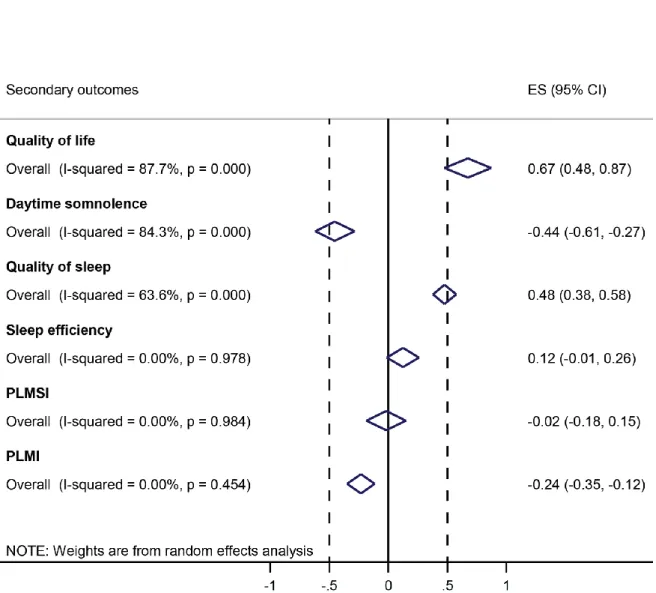
21 studies reported quality of life assessments in an extractable manner (1919 patients). 14 trials applied RLSQoL and 7 used the Restless Legs Syndrome Quality of Life questionnaire. Placebo was associated with an improvement in overall quality of life (ES: 0.67; 95%CI: 0.48 to 0.87; I2=87.7%) (Figure 8).
Daytime somnolence
31 studies (2138 patients) addressed daytime somnolence, 16 of which applied MOS, 9 ESS, 4 RLS-6, 1 PSQI and 1 item-5 of IRLS. There was a reduction in daytime somnolence associated with placebo (ES: -0.44; 95%CI: -0.61 to -0.27; I2=84.3%).
Quality of sleep
Quality of sleep was rated in 35 studies (2555 patients), 17 of those applying MOS, 6 RLS-6, 3 PSQ, 2 PSQI, 2 SF-A, 2 VAS assessments, 1 RLS-QLI, 1 SPSD and 1 reported MOS, but with a different range of scale. A significant improvement was obtained (ES: 0.48; 95%CI: 0.38 to 0.58; I2=63.6%). Objective outcomes
Sleep efficiency, defined as the proportion of total sleep time during time in bed, was reported in 16 studies (417 participants). All such studies measured total sleep time by polysomnography, with the exception of one trial in which a validated sleep detection device (SenseWearTM)35 was used. PLMSI was reported in 14 studies (278 patients) and PLMI in 12 studies (553 participants). 4 studies assessed PLMI with actigraphy (260 patients). The remaining measurements were performed with polysomnography.
Sleep efficiency revealed an ES of 0.12 (95%CI:-0.01 to 0.26). Regarding PLM, an improvement was observed in PLMI (ES: -0.22; 95%CI: -0.35 to -0.12), but not in PLMSI (ES: -0.02; 95%CI: -0.18 to 0.15).
Secondary safety outcomes
Study discontinuation due to adverse events in the placebo arm was reported in 81 studies. A total of 208 withdrawals, among 4797 participants, was counted, with a proportion of 2.07% patients (95%CI: 1.39% to 2.85%; I2=38.2%). In 13 patients, among 1863 of 22 studies, augmentation was reported. The remaining reports did not address this RLS treatment complication.
Sample size calculation
From the primary efficacy outcome, we obtained a 6.58-point reduction on average in IRLS under placebo. We calculated the number of participants required for an adequately-powered trial to detect a difference between placebo and any active intervention, based on the IRLS (Table 3).
13 DISCUSSION
This systematic review, which included 85 RCTs (5046 participants), demonstrated a substantial placebo response in RLS, with an ES of -1.41, corresponding to a mean reduction in IRLS of 6.58 points. Due to the high heterogeneity found in our main analysis (I2=88.1%), previously defined subgroup analyses were performed. However, they fail to explain the significant heterogeneity (Table 2).
Concerning the nocebo response, we documented a high rate of adverse events in the placebo arm (45.36%).
Subgroup analyses revealed placebo and nocebo effects with similar patterns of variation: both responses were increased in studies with longer placebo administration, pharmacological interventions, idiopathic forms of the disease, industry funding and in unpublished trials. The differences found in non-pharmacological studies may be influenced by the fact that most of the studies included in this subgroup had a duration inferior to 6 weeks.
All continuous self-rated outcomes, namely quality of life, quality of sleep and daytime somnolence, revealed significant improvements with placebo (Figure 8). Forty percent of patients and 45.5% of physicians reported responses of “much/very much improved” under placebo.
In the objective outcomes, PLM per hour of time in bed revealed a small improvement. The number of PLM per hour of sleep remained unchanged, suggesting that placebo might reduce PLM rate only when the patient is awake. The magnitude of change under placebo was consistently smaller in objective outcomes, comparing to self-rated endpoints (Figure 8).
Our findings are highly consistent with a previous systematic review11. Substantial placebo responses in subjective outcomes, more evident in longer controlled trials, were observed in 2008 and corroborated by our findings. The results of the present review were, however, slightly more expressive in terms of the improvement in quality of life and quality of sleep.
In contrast to our results, an analysis of the predictors of placebo response in 6 RCTs in RLS (883 participants) revealed greater placebo responses in more severe cases and did not obtain differences concerning study duration47.
This review allowed a quantification of the change under placebo in several outcomes in RLS. However, two important questions remain: was that change clinically significant? And was it purely due to placebo administration?
For RLS severity, the first question could be answered by the establishment of a minimal clinically important difference (MCID) for IRLS. Despite of the absence of a consensual MCID for this scale, post hoc analyses of two trials included in this review48,49 obtained a MCID of 550 and 651 points in
14
IRLS. In addition, through the analysis of sample size calculation descriptions in included trials, 15 of the 21 studies which reported a minimal significant difference used a value inferior to the pooled difference found in our review. The mean of minimal changes across the 21 studies was 5.6 points. Hence, it is reasonable to state that the placebo response found in this review reached the threshold for clinical significance.
The answer to the second question has not a clear answer, since we cannot identify in what extension were our findings affected by the natural course of the disease. A meta-analysis evaluating both placebo and no-treatment control groups in clinical trials, regardless of the condition being studied, did not found that placebo interventions have clinically meaningful effects when compared with no treatment52. To the best of our knowledge, such investigation was never performed specifically for
RLS. Only by the inclusion of both no-treatment and placebo arms in RCTs, will we be able to assess if our findings are indeed due to the placebo effect and not related to the natural course of the illness, patient-doctor relationship or perhaps to the expectation of being involved in a clinical trial.
Our exhaustive research of the available evidence, using a sensitive strategy and including online clinical trial registries, allowed the inclusion of both published and unpublished RCTs. We can therefore assume that there are not many additional eligible studies. Four of the references generated by the search could not be retrieved53-56. Even if they corresponded to includable RCTs, those references are unlike to report a validated RLS severity assessment, since they were published before IRLS validation. Thus, they probably would not have an influence on our primary efficacy outcome. Despite of the inclusion of 85 studies, with a total of 5046 participants, there are aspects of interest in this review which were generally not reported.
The vast majority of included RCTs did not report separated results for naïve and previously treated patients. An analysis of two large RCTs found that pre-treatment for RLS was associated with a smaller placebo response in the placebo arm, in comparison to naïve patients57. The authors postulate that
previous treatment may contribute to the conscious or unconscious “unblinding” of participants. Unfortunately, due to insufficient reporting, we could not perform a subgroup analysis on this matter and thus we are not able to corroborate those results.
Another field lacking sufficient evidence is RLS in children. Only one small trial could be included and it had the confound factor of only including Attention Deficit Hyperactivity Disorder patients, which is sometimes a misleading diagnosis in RLS children58. Hence, we are not able to draw any conclusions concerning RLS in this age group.
Secondary RLS is also an insufficiently addressed matter, with the vast majority of RCTs excluding secondary forms of the disease. Five of the included trials were performed exclusively in end-stage
15
renal disease patients under hemodialysis. Those were mostly small trials (total of 62 patients, 32 of which being evaluated for our primary efficacy outcome). Hence, due to the small number of uremic RLS patients, our conclusions on this matter should be regarded with caution. No trials in pregnant women with RLS nor exclusively in patients with iron deficient anemia were detected by our research. Therefore, it is reasonable to state that there is a considerable lack of evidence concerning secondary RLS.
Finally, it is important to notice that less than half of the included studies reported augmentation (22 RCTs, 1846 patients). Typically augmentation is regarded as a complication of long-term treatment, however, it may occur at any time, including the first week of pharmacological intervention1. Thus, the absence of report on this outcome, including in 14 RCTs with a duration of 12 or more weeks, may be regarded as a diminishing factor of the quality of the included body of evidence.
Regarding the methodological quality of included studies, there was an incomplete description of study procedures in a considerable number of studies, with only 25 RCTs being judged as low risk of bias simultaneously in sequence generation, allocation concealment and blinding of participants and personnel. Additionally, 38 trials were considered as having high risks of bias in incomplete outcome data and/or selective reporting, mainly because of the absence of report on reasons for study discontinuation and incomplete data description, precluding the inclusion of one or more outcomes in the analysis.
Efforts were made to prevent bias resulting of our search process, namely by the inclusion of unpublished material and all eligible RCTs regardless of their publication language. However, despite of contacting authors for missing data, we did not request some information that could have been useful, such as, separated results for naïve/previously treated patients and methodologic aspects whenever they were judged as having unclear risks of bias. Moreover, we only extracted results of final evaluations of each trial, even if more than one time point during the study was reported. Another limitation of our review, which could be further explored in future work, is the absence of an analysis of which adverse effects occurred under placebo. Despite of our focus in the nocebo response, we only accounted for global adverse events rates, regardless of their nature and of being attributed to the study intervention or not.
In terms of the meta-analysis itself, we performed a sensitivity analysis for every process that could be, in our regard, a source of bias. The exclusion of every study where imputation methods were applied revealed no difference in the results. Sensitivity analysis were performed exclusively for the primary efficacy outcome. Thus, we are not certain of the influence of imputation methods in other
16
outcomes, particularly in quality of life, quality of sleep and daytime somnolence, in whose these methods were frequently applied.
AUTHORS’ CONCLUSIONS
The magnitude of the placebo response in RLS is substantial, reaching the threshold for clinical significance. The nocebo response is likewise considerable. Placebo and nocebo responses show similar patterns of variation, both being increased in longer RCTs, studies with pharmacological interventions, trials in idiopathic RLS, industry-sponsored studies and unpublished trials. The improvement under placebo is substantially smaller in objective outcomes.
ACKNOWLEDGEMENTS
We thank the Portuguese Cochrane Collaborating Centre for technical support in the conduction of this systematic review. We also acknowledge Ana Teresa Santos (Laboratory of Clinical Pharmacology and Therapeutics) for assistance in the research and Francesca Fiorentino (Centre for Evidence Based Medicine - CEMBE) for support in the analysis.
CONTRIBUTIONS OF AUTHORS
Research project:
Conception: RF, JF
Designing search strategies: GD, FR Screening search results: MS, GD, RC Extracting data: MS, RC
Contacting authors for additional information: MS Judging risk of bias: MS, GD
Statistical Analysis:
Design: GD, FR, RF, JC Execution: MS, GD, FR, DA Review and Critique: RF, JC Manuscript:
Writing of the first draft: MS
Review and Critique: GD, FR, RC, RF, JC, JF Providing general advice on the review: RF, JC, CT, JF
(MS: Maria Silva, GD: Gonçalo Duarte, RC: Raquel Camara, FR: Filipe Rodrigues, RF: Ricardo Fernandes, DA: Daisy Abreu, JC: João Costa, CT: Claudia Trenkwalder, JF: Joaquim Ferreira)
DECLARATIONS OF INTEREST
JF received speaker and consultant fees from GlaxoSmithKline, Novartis, TEVA, Lundbeck, Solvay, Abbott, Bial, Merck-Serono, Grunenthal and Merck Sharp and Dohme. The other authors do not have any conflict of interests to disclose.
17 REFERENCES
1. Allen RP, Picchietti D, Hening Wa, et al. (2003) Restless legs syndrome: Diagnostic criteria, special considerations, and epidemiology. A report from the restless legs syndrome diagnosis and epidemiology workshop at the National Institutes of Health. Sleep Medicine. 4: 101-119.
2. Walters AS. (1995) Toward a better definition of the restless legs syndrome. The International Restless Legs Syndrome Study Group. Movement Disorders. 10: 634-642.
3. Berger K, Luedemann J, Trenkwalder C, John U, Kessler C. (2004) Sex and the risk of restless legs syndrome in the general population. Archives of Internal Medicine. 164: 196-202.
4. Ekbom K. (1945) Restless legs: a clinical study. Acta Medica Scandinavica. 158: 1-123.
5. Lee Ka, Zaffke ME, Baratte-Beebe K. (2001) Restless legs syndrome and sleep disturbance during pregnancy: the role of folate and iron. Journal of Women's Health & Gender-based Medicine. 10: 335-341.
6. Winkelman JW, Chef-tow GM, Lazarus JM. (1996) Restless Legs Syndrome in End-Stage Renal Disease. American Journal of Kidney Diseases. 28: 372-378.
7. Earley CJ, Connor JR, Beard JL, Malecki EA, Epstein DK, Allen RP. (2000) Abnormalities in CSF concentrations of ferritin and transferrin in restless legs syndrome. Neurology. 54: 1698–1700.
8. Allen RP, Barker PB, Wehrl F, Song HK, Earley CJ. (2001) MRI measurement of brain iron in patients with restless legs syndrome. Neurology. 56: 263–265.
9. Earley CJ, Allen RP, Connor JR, Ferrucci L, Troncoso J. (2009) The dopaminergic neurons of the A11 system in RLS autopsy brains appear normal. Sleep Medicine. 10: 1155–1157.
10. Stiasny-Kolster K, Magerl W, Oertel WH, MoÈller JC, Treede R-D. (2004) Static mechanical hyperalgesia without dynamic tactile allodynia in patients with restless legs syndrome. Brain : a journal of neurology. 127: 773-782.
11. Fulda S, Wetter TC. (2008) Where dopamine meets opioids: A meta-analysis of the placebo effect in restless legs syndrome treatment studies. Brain : a journal of neurology. 131: 902-917.
12. Macedo A, Farré M, Baños JE. (2003) Placebo effect and placebos: What are we talking about? Some conceptual and historical considerations. European journal of clinical pharmacology. 59: 337-342.
13. Wolf S. (1959) The pharmacology of placebos. Pharmacol Rev. 11: 689-704.
14. Guyatt G, Rennie D, Meade MO, Cook DJ. (2008) User's Guide to the Medical Literature: A Manual for Evidence-Based Clinical Practice. McGraw-Hill Education.
15. Rosner B. (2015) Fundamentals of Biostatistics. Cengage Learning.
16. Murray D, Stoessl AJ. (2013) Mechanisms and therapeutic implications of the placebo effect in neurological and psychiatric conditions. Pharmacology & therapeutics. 140: 306-318.
17. Moher D, Liberati A, Tetzlaff J, Altman D. (2009) The Prisma Group. Preferred Reporting Items for Systematic Reviews and Meta-Analyses: The PRISMA Statement. PLoS Med. 6: e1000097.
18. National Institute of Mental Health. Early clinical drug evaluation unit (ECDEU). (1976) Clinical Global Impressions. 218-222
19. Scholz H, Trenkwalder C, Kohnen R, Kriston L, Riemann D, Hornyak M. (2011) Levodopa for the treatment of restless legs syndrome. Cochrane Database of Systematic Reviews.
20. Cui Y, Wang Y, Liu Z. (2012) Acupuncture for restless legs syndrome. Cochrane Database of Systematic Reviews.
21. Higgins JPT, Green S. (2011) Cochrane Handbook for Systematic Reviews of Interventions. Version 5.1.0 [updated March 2011]. The Cochrane Collaboration.
22. Walters AS, LeBrocq C, Dhar A, et al. (2003) Validation of the International Restless Legs Syndrome Study Group rating scale for restless legs syndrome. Sleep Medicine. 4: 121-132.
23. Allen R, Oertel W, Walters A, et al. (2013) Relation of the International Restless Legs Syndrome Study Group rating scale with the Clinical Global Impression severity scale, the restless legs syndrome 6-item questionnaire, and the restless legs syndrome-quality of life questionnaire. Sleep Medicine. 14: 1375-1380.
18
24. Abetz L, Arbuckle R, Allen RP, Mavraki E, Kirsch J. (2005) The reliability, validity and responsiveness of the Restless Legs Syndrome Quality of Life questionnaire (RLSQoL) in a trial population. Health and quality of life outcomes. 3: 79-79.
25. Kohnen R, Benes H, Heinrich CR, Kurella B. (2002) Development of the disease-specific Restless legs Syndrome Quality of Life (RLS-QOL) questionnaire. Movement Disorders. 17: 743-743.
26. Allen RP, Kosinski M, Hill-Zabala CE, Calloway MO. (2009) Psychometric evaluation and tests of validity of the Medical Outcomes Study 12-item Sleep Scale (MOS sleep). Sleep Medicine. 10: 531-539.
27. Kohnen R, Oertel WH, Stiasny-Kolster K, Benes H, Trenkwalder C. (2004) Severity rating of restless legs syndrome: Validation of the RLS-6 scales. Sleep. 27: 304-304.
28. Canafax DM, Bhanegaonkar A, Bharmal M, Calloway M. (2011) Validation of the post sleep questionnaire for assessing subjects with restless legs syndrome: results from two double-blind, multicenter, placebo-controlled clinical trials. BMC neurology. 11: 48-48.
29. Carpenter JS, Andrykowski MA. (1998) Psychometric evaluation of the Pittsburgh Sleep Quality Index. Journal of Psychosomatic Research. 45: 5-13.
30. Goertelmeyer R. (1985) On the development of a standardized sleep inventory for the assessment of sleep. In: Kubicki S, Herrmann W editor(s). Methods of Sleep Research.
31. Atkinson MJ, Allen RP, DuChane J, Murray C, Kushida C, Roth T. (2004) Validation of the Restless Legs Syndrome Quality of Life Instrument (RLS-QLI): findings of a consortium of national experts and the RLS Foundation. Quality of Life Research. 13: 679-693.
32. Calloway M, Bharmal M, Hill-Zabala C, Allen R. (2011) Development and validation of a Subjective Post Sleep Diary (SPSD) to assess sleep status in subjects with Restless Legs Syndrome. Sleep Medicine. 12: 704-710. 33. Johns MW. (1992) Reliability and Factor Analysis of the Epworth Sleepiness Scale. Sleep. 15: 376-381. 34. Gschliesser V, Frauscher B, Brandauer E, et al. (2009) PLM detection by actigraphy compared to
polysomnography: A validation and comparison of two actigraphs. Sleep Medicine. 10: 306-311.
35. Sunseri M, Liden CB, Farringdon J, et al. (2005) The SenseWear ™ Armband as a Sleep Detection Device. Sleep (Rochester). 1-9.
36. Hedges LV, Olkin I. (1985) Statistical Methods for Meta-Analysis. Academic Press, Inc.
37. Thorlund K, Walter SD, Johnston BC, Furukawa TA, Guyatt GH. (2011) Pooling health-related quality of life outcomes in meta-analysis - a tutorial and review of methods for enhancing interpretability. Research Synthesis Methods. 2: 188-203.
38. Allen RP, Chen C, Garcia-Borreguero D, et al. (2014) Comparison of pregabalin with pramipexole for restless legs syndrome. The New England journal of medicine. 370: 621-631.
39. Ferini-Strambi L, Aarskog D, Partinen M, et al. (2008) Effect of pramipexole on RLS symptoms and sleep: A randomized, double-blind, placebo-controlled trial. Sleep Medicine. 9: 874-881.
40. Kushida Ca, Geyer J, Tolson JM, Asgharian A. (2008) Patient- and physician-rated measures demonstrate the effectiveness of ropinirole in the treatment of restless legs syndrome. Clinical neuropharmacology. 31: 281-286. 41. Montagna P, Hornyak M, Ulfberg J, et al. (2011) Randomized trial of pramipexole for patients with restless legs
syndrome (RLS) and RLS-related impairment of mood. Sleep Medicine. 12: 34-40.
42. Bogan RK, Fry JM, Schmidt MH, Carson SW, Ritchie SY. (2006) Ropinirole in the Treatment of Patients With Restless Legs Syndrome: A US-Based Randomized, Double-Blind, Placebo-Controlled Clinical Trial. Mayo Clinic proceedings. 81: 17-27.
43. GlaxoSmithKline. Clinical Trial R. Study ID: SK&F-101468/205. [updated 2008 April 17].
44. Garcia-Borreguero D, Larrosa O, Mphil AMW, et al. (2010) Treatment of restless legs syndrome with pregabalin: a double-blind, placebo-controlled study. Neurology. 74: 1897-1904.
45. DerSimonian R, Laird N. (1986) Meta-analysis in clinical trials. Controlled Clinical Trials. 7: 177-188.
46. Freeman MF, Tukey JW. (1950) Transformations Related to the Angular and the Square Root. The Annals of Mathematical Statistics. 21: 607-611.
19
47. Ondo WG, Hossain MM, Gordon MF, Reess J. (2013) Predictors of Placebo Response in Restless Legs Syndrome Studies. Neurology. 81: 193-194.
48. Hening Wa, Allen RP, Ondo WG, et al. (2010) Rotigotine improves restless legs syndrome: A 6-month randomized, double-blind, placebo-controlled trial in the United States. Movement Disorders. 25: 1675-1683. 49. Trenkwalder C, Beneš H, Poewe W, et al. (2008) Efficacy of rotigotine for treatment of moderate-to-severe
restless legs syndrome: a randomised, double-blind, placebo-controlled trial. The Lancet Neurology. 7: 595-604. 50. Ondo W, Roth T, Grieger F, Moran K, Kohnen R. (2013) Minimal Clinically Important Improvement in IRLS Total Score in Patients with Restless Legs Syndrome: A Post Hoc Analysis from a 6-Month Placebo-Controlled US-Based Study with Rotigotine Transdermal System. Neurology. 80: P02.059.
51. Kohnen R, Roth T, Grieger F, Moran K, Ondo W. (2013) Determination of the Minimal Clinically Important Improvement in IRLS Total Score in Patients with Moderate to Severe Restless Legs Syndrome Treated with Rotigotine Transdermal System: A Post Hoc Analysis from a 6-Month Placebo-Controlled European Study. Neurology. 80: P02.056.
52. Hróbjartsson A, Gøtzsche PC. (2010) Placebo interventions for all clinical conditions. Cochrane database of systematic reviews (Online). CD003974.
53. Stiasny K, Uberall M, Oertel W. (2002) Cabergoline in restless legs syndrome (RLS) - a double-blind placebo-controlled multicenter dose-finding trial. European journal of neurology. 9: 50.
54. Van Dijk JG, Bollen ELEM, Slootweg J, Van der Meer CM, Durian FW, Zwinderman AH. (1991) Hydroquinine and placebo equally effective in the restless legs syndrome. Nederlands Tijdschrift voor Geneeskunde. 135: 759-763.
55. Ausserwinkler M, Schmidt P. (1989) Successful clonidine treatment of restless leg syndrome in chronic kidney insufficiency. Schweizerische medizinische Wochenschrift. 119: 184-186.
56. Wetter T, Stiasny K, Pollmcher T, et al. (1995) Treatment of idiopathic and uremic restless legs syndrome with L-dopa: a double-blind cross-over study. Wiener medizinische Wochenschrift. 145: 525-527.
57. Fuente-Fernández Rdl. (2012) The powerful pre-treatment effect: placebo responses in restless legs syndrome trials. European journal of neurology. 19: 1305-1310.
58. Maheswaran M, Kushida CA. (2006) Restless Legs Syndrome in Children. Medscape General Medicine. 8: 79. 59. Koo YS, Min S, Lee C, et al. (2015) Transcranial direct current stimulation on primary sensorimotor area has no
effect in patients with drug-naïve restless legs syndrome: a proof-of-concept clinical trial. Sleep Medicine. 16: 280-287.
60. Zhang J, Liu B, Zheng Y, Chu T, Yang Z. (2015) Pramipexole for Chinese people with primary restless legs syndrome: a 12-week multicenter, randomized, double-blind study. Sleep Medicine. 16: 181-185.
61. Altunrende B, Yildiz S, Cevik A, Yildiz N. (2014) Repetitive transcranial magnetic stimulation in restless legs syndrome: preliminary results. Neurological Sciences. 35: 1083-1088.
62. Sica DA, Bauer A, Cassel W, et al. (2014) Randomized, Double-Blind, Placebo-Controlled Study Investigating Changes in Nocturnal Blood Pressure Elevations Associated with Periodic Leg Movements Following Treatment with Rotigotine in Patients with Restless Legs Syndrome (Willis-Ekbom Disease). Journal of the American College of Cardiology. 63: A1445.
63. GlaxoSmithKline. Clinical Trial R. Study ID: RXP114025 [updated 2014 July 3]. 64. Pharma UCB. Study ID: RL0003 [updated 2014 August 13].
65. Otsuka P. Study ID: 243-07-003 [updated 2014 March 26].
66. Winkelman J, Dauvilliers Y, Partinen M, et al. (2014) Efficacy and tolerability of rotigotine in patients with restless legs syndrome and end-stage renal disease requiring hemodialysis. Somnologie. Suppl 1: 33.
67. Trenkwalder C, Beneš H, Grote L, et al. (2013) Prolonged release oxycodone-naloxone for treatment of severe restless legs syndrome after failure of previous treatment: A double-blind, randomised, placebo-controlled trial with an open-label extension. The Lancet Neurology. 12: 1141-1150.
68. Inoue Y, Shimizu T, Hirata K, et al. (2013) Efficacy and safety of rotigotine in Japanese patients with restless legs syndrome: A phase 3, multicenter, randomized, placebo-controlled, double-blind, parallel-group study. Sleep Medicine. 14: 1085-1091.
20
69. Giannaki CD, Sakkas GK, Karatzaferi C, et al. (2013) Effect of exercise training and dopamine agonists in patients with uremic restless legs syndrome: a six-month randomized, partially double-blind, placebo-controlled comparative study. BMC Nephrology. 14: 194-194.
70. Giorgi L, Asgharian A, Hunter B. (2013) Ropinirole in Patients With Restless Legs Syndrome and Baseline IRLS Total Scores ≥24: Efficacy and Tolerability in a 26-Week, Double-Blind, Parallel-Group, Placebo-Controlled Study Followed by a 40-Week Open-Label Extension. Clinical therapeutics. 35: 1321-1336.
71. GlaxoSmithKline. Clinical Trial R. Study ID: ROR104836. [updated 2013 February 21].
72. Inoue Y, Hirata K, Uchimura N, Kuroda K, Hattori N, Takeuchi M. (2013) Gabapentin enacarbil in Japanese patients with restless legs syndrome: a 12-week, randomized, double-blind, placebo-controlled, parallel-group study. Current medical research and opinion. 29: 13-21.
73. Lal R, Ellenbogen A, Chen D, et al. (2012) A Randomized, Double-Blind, Placebo-Controlled, Dose-Response Study to Assess the Pharmacokinetics, Efficacy, and Safety of Gabapentin Enacarbil in Subjects With Restless Legs Syndrome. Clinical neuropharmacology. 35: 165-173.
74. GlaxoSmithKline. Clinical Trial R. Study ID: RXP111462 [updated 2011 June 2].
75. Sagheb MM, Dormanesh B, Fallahzadeh MK, et al. (2012) Efficacy of vitamins C, E, and their combination for treatment of restless legs syndrome in hemodialysis patients: A randomized, double-blind, placebo-controlled trial. Sleep Medicine. 13: 542-545.
76. Ma J-F, Wan Q, Hu X-Y, et al. (2012) Efficacy and safety of pramipexole in chinese patients with restless legs syndrome: Results from a multi-center, randomized, double-blind, placebo-controlled trial. Sleep Medicine. 13: 58-63.
77. Weinstock LB, Zeiss S. (2012) Rifaximin antibiotic treatment for restless legs syndrome: a double-blind, placebo-controlled study. Sleep and Biological Rhythms. 10: 145-153.
78. Bayard M, Bailey B, Acharya D, et al. (2011) Bupropion and restless legs syndrome: a randomized controlled trial. Journal of the American Board of Family Medicine. 24: 422-428.
79. Lee DO, Ziman RB, Perkins AT, et al. (2011) A Randomized, Double-Blind, Placebo-Controlled Study to Assess the Efficacy and Tolerability of Gabapentin Enacarbil in Subjects with Restless Legs Syndrome. Journal of Clinical Sleep Medicine. 282-292.
80. England SJ, Picchietti DL, Couvadelli BV, et al. (2011) L-Dopa Improves Restless Legs Syndrome and Periodic Limb Movements in Sleep But Not Attention-Deficit-Hyperactivity Disorder in a Double-blind Trial in Children. Sleep Medicine. 12: 471-477.
81. Manconi M, Ferri R, Zucconi M, et al. (2011) Pramipexole versus ropinirole: Polysomnographic acute effects in restless legs syndrome. Movement Disorders. 26: 892-895.
82. Högl B, Garcia-Borreguero D, Trenkwalder C, et al. (2011) Efficacy and augmentation during 6 months of double-blind pramipexole for restless legs syndrome. Sleep Medicine. 12: 351-360.
83. Benes H, Mattern W, Peglau I, et al. (2011) Ropinirole improves depressive symptoms and restless legs syndrome severity in RLS patients: A multicentre, randomized, placebo-controlled study. Journal of neurology. 258: 1046-1054.
84. Allen RP, Adler CH, Du W, Butcher A, Bregman DB, Earley CJ. (2011) Clinical efficacy and safety of IV ferric carboxymaltose (FCM) treatment of RLS: A multi-centred, placebo-controlled preliminary clinical trial. Sleep Medicine. 12: 906-913.
85. GlaxoSmithKline. Clinical Trial R. Study ID: 111463 [updated 2013 July 15].
86. Mitchell UH, Myrer JW, Johnson AW, Hilton SC. (2011) Restless legs syndrome and near-infrared light: An alternative treatment option. Physiotherapy theory and practice. 27: 345-351.
87. Oertel WH, Beneš H, Garcia-Borreguero D, et al. (2010) Rotigotine transdermal patch in moderate to severe idiopathic restless legs syndrome: A randomized, placebo-controlled polysomnographic study. Sleep Medicine. 11: 848-856.
88. Allen R, Chen C, Soaita A, et al. (2010) A randomized, double-blind, 6-week, dose-ranging study of pregabalin in patients with restless legs syndrome. Sleep Medicine. 11: 512-519.
21
89. Inoue Y, Hirata K, Kuroda K, et al. (2010) Efficacy and safety of pramipexole in Japanese patients with primary restless legs syndrome: A polysomnographic randomized, double-blind, placebo-controlled study. Sleep Medicine. 11: 11-16.
90. Walters AS, Ondo WG, Kushida Ca, et al. (2009) Gabapentin enacarbil in restless legs syndrome: a phase 2b, 2-week, randomized, double-blind, placebo-controlled trial. Clinical neuropharmacology. 32: 311-320.
91. Grote L, Leissner L, Hedner J, Ulfberg J. (2009) A randomized, double-blind, placebo controlled, multi-center study of intravenous iron sucrose and placebo in the treatment of restless legs syndrome. Movement Disorders. 24: 1445-1452.
92. Cuellar NG, Ratcliffe SJ. (2009) Does valerian improve sleepiness and symptom severity in people with restless legs syndrome? Alternative Therapies in Health and Medicine. 15: 22-28.
93. Wang J, O'Reilly B, Venkataraman R, Mysliwiec V, Mysliwiec A. (2009) Efficacy of oral iron in patients with restless legs syndrome and a low-normal ferritin: A randomized, double-blind, placebo-controlled study. Sleep Medicine. 10: 973-975.
94. Kushida CA, Becker PM, Ellenbogen AL, Canafax DM, Barrett RW, Group XPS. (2009) Randomized, double-blind, placebo-controlled study of XP13512/GSK1838262 in patients with RLS. Neurology. 72: 439-446. 95. Jama L, Hirvonen K, Partinen M, et al. (2009) A dose-ranging study of pramipexole for the symptomatic treatment
of restless legs syndrome: Polysomnographic evaluation of periodic leg movements and sleep disturbance. Sleep Medicine. 10: 630-636.
96. Lettieri CJ, Eliasson AH. (2009) Pneumatic compression devices are an effective therapy for restless legs syndrome: A prospective, randomized, double-blinded, sham-controlled trial. Chest. 135: 74-80.
97. Earley CJ, Horská A, Mohamed MA, Barker PB, Beard JL, Allen RP. (2009) A Randomized, Double-Blind, Placebo-Controlled Trial of Intravenous Iron Sucrose in Restless Legs Syndrome. Sleep Medicine. 10: 206-211. 98. Boehringer Ingelheim International Gmb H. Study ID: 248.616 [updated 2008 November 26].
99. GlaxoSmithKline. Clinical Trial R. Study ID: RRL103660. [updated 2008 March 20].
100. Oertel WH, Benes H, Garcia-Borreguero D, et al. (2008) Efficacy of rotigotine transdermal system in severe restless legs syndrome: A randomized, double-blind, placebo-controlled, six-week dose-finding trial in Europe. Sleep Medicine. 9: 228-239.
101. Garcia-Borreguero D, Winkelman J, Adams A, et al. (2007) Efficacy and tolerability of sumanirole in restless legs syndrome: A phase II, randomized, double-blind, placebo-controlled, dose-response study. Sleep Medicine. 8: 119-127.
102. Oertel WH, Stiasny-Kolster K, Bergtholdt B, et al. (2007) Efficacy of pramipexole in restless legs syndrome: A six-week, multicenter, randomized, double-blind study (effect-RLS study). Movement Disorders. 22: 213-219. 103. Oertel WH, Benes H, Bodenschatz R, et al. (2006) Efficacy of cabergoline in restless legs syndrome: a
placebo-controlled study with polysomnography (CATOR). Neurology. 67: 1040-1046.
104. Winkelman JW, Sethi KD, Kushida CA, et al. (2006) Efficacy and safety of pramipexole in restless legs syndrome. Neurology. 67: 1034-1039.
105. GlaxoSmithKline. Clinical Trial R. Study ID: ROP101892. [updated 2006 January 16]. 106. GlaxoSmithKline. Clinical Trial R. Study ID: SKF-101468/207. [updated 2005 February 28].
107. Stiasny-Kolster K, Benes H, Peglau I, et al. (2004) Effective cabergoline treatment in idiopathic restless legs syndrome. Neurology. 63: 2272-2279.
108. Allen R, Becker PM, Bogan R, et al. (2004) Ropinirole Decreses Periodic Leg Movements and Improves Sleep Parameters in Restless Legs Syndrome. Sleep. 27: 907-914.
109. GlaxoSmithKline. Clinical Trial R. Study ID: SKF-101468/191. [updated 2005 March 1].
110. Stiasny-Kolster K, Kohnen R, Schollmayer E, et al. (2004) Patch application of the dopamine agonist rotigotine to patients with moderate to advanced stages of restless legs syndrome: A double-blind, placebo-controlled pilot study. Movement Disorders. 19: 1432-1438.
111. Walters AS, Ondo WG, Dreykluft T, et al. (2004) Ropinirole is effective in the treatment of restless legs syndrome. TREAT RLS 2: A 12-week, double-blind, randomized, parallel-group, placebo-controlled study. Movement Disorders. 19: 1414-1423.
22
112. Trenkwalder C, Hundemer HP, Lledo A, et al. (2004) Efficacy of pergolide in treatment of restless legs syndrome: The PEARLS Study. Neurology. 62: 1391-1397.
113. Sloand JA, Shelly MA, Feigin A, Bernstein P, Monk RD. (2004) A double-blind, placebo-controlled trial of intravenous iron dextran therapy in patients with ESRD and restless legs syndrome. American Journal of Kidney Diseases. 43: 663-670.
114. Trenkwalder C, Garcia-Borreguero D, Montagna P, et al. (2004) Ropinirole in the treatment of restless legs syndrome: results from the TREAT RLS 1 study, a 12 week, randomised, placebo controlled study in 10 European countries. Journal of Neurology, Neurosurgery and Psychiatry. 75: 92-97.
115. Davis BJ, Rajput a, Rajput ML, Aul Ea, Eichhorn GR. (2000) A randomized, double-blind placebo-controlled trial of iron in restless legs syndrome. European Neurology. 43: 70-75.
116. Earley CJ, Yaffee JB, Allen RP. (1998) Randomized, double-blind, placebo-controlled trial of pergolide in restless legs syndrome. Neurology. 51: 1599-1602.
117. Telstad W, Sorensen O, Larsen S, Al E. (1984) Treatment of the restless legs syndrome with carbamazepine: A double blind study. British Medical Journal. 288: 444-446.
118. Garcia-Borreguero D, Patrick J, DuBrava S, et al. (2014) Pregabalin versus pramipexole: effects on sleep disturbance in restless legs syndrome. Sleep. 37: 635-643.
119. Heide AC, Winkler T, Helms HJ, et al. (2014) Effects of transcutaneous spinal direct current stimulation in idiopathic restless legs patients. Brain stimulation. 7: 636-642.
120. Rahimdel AG, Ayatollahi P, Zeinali A, Mehrabanian N, Mellat-Ardekani A. (2012) The effect of selenium administration on restless leg syndrome treatment. Iranian Red Crescent Medical Journal. 14: 14-19.
121. Winkelman JW, Bogan RK, Schmidt MH, Hudson JD, Derossett SE, Hill-Zabala CE. (2011) Randomized polysomnography study of gabapentin enacarbil in subjects with restless legs syndrome. Movement Disorders. 26: 2065-2072.
122. Kushida Ca, Walters AS, Becker P, et al. (2009) A randomized, double-blind, placebo-controlled, crossover study of XP13512/GSK1838262 in the treatment of patients with primary restless legs syndrome. Sleep. 32: 159-168. 123. Nahab FB, Peckham EL, Hallett M. (2008) Double-blind, placebo-controlled, pilot trial of botulinum toxin a in
restless legs syndrome. Neurology. 71: 950-951.
124. Polo O, Ylä-Sahra R, Hirvonen K, Karvinen J, Vahteristo M, Ellmén J. (2007) Entacapone Prolongs the Reduction of PLM by Levodopa/Carbidopa in Restless Legs Syndrome. Clinical neuropharmacology. 30: 335-344.
125. Eisensehr I, Ehrenberg BL, Solti SR, Noachtar S. (2004) Treatment of idiopathic restless legs syndrome (RLS) with slow-release valproic acid compared with slow-release levodopa/benserazid: A randomized, placebo-controlled, double-blind, cross-over study. Journal of neurology. 251: 579-583.
126. Adler CH, Hauser RA, Sethi K, et al. (2004) Ropinirole for restless legs syndrome: A placebo-controlled crossover trial. Neurology. 62: 1405-1407.
127. Saletu M, Anderer P, Hogl B, et al. (2003) Acute double-blind, placebo-controlled sleep laboratory and clinical follow-up studies with a combination treatment of rr-L-dopa and sr-L-dopa in restless legs syndrome. Journal of neural transmission. 110: 611-626.
128. Garcia-Borreguero D, Larrosa O, de la Llave Y, Verger K, Masramon X, Hernandez G. (2002) Treatment of restless legs syndrome with gabapentin: A double-blind, cross-over study. Neurology. 59: 1573-1579.
129. Thorp ML, Morris CD, Bagby SP. (2001) A crossover study of gabapentin in treatment of restless legs syndrome among hemodialysis patients. American Journal of Kidney Diseases. 38: 104-108.
130. Benes H, Kurella B, Kummer J, Kazenwadel J, Selzer R, Kohnen R. (1999) Rapid Onset Action of Levodopa in Restless Legs Syndrome: A Double-Blind, Randomized, Multicenter, Crossover Trial. Sleep. 22: 1073-1081. 131. Wetter TC, Stiasny K, Winkelmann J, et al. (1999) A randomized controlled study of pergolide in patients with
restless legs syndrome. Neurology. 52: 944-950.
132. Montplaisir J, Nicolas A, Denesle R, Gomez-Mancilla B. (1999) Restless legs syndrome improved by pramipexole: A double-blind randomized trial. Neurology. 52: 938-943.
133. Wagner ML, Walters AS, Coleman RG, Hening WA, Grasing K, Chokroverty S. (1996) Randomized, Double-Blind, Placebo-Controlled Study of Clonidine in Restless Legs Syndrome. Sleep. 19: 52-58.
23
134. Trenkwalder C, Stiasny K, Pollmächer T, et al. (1995) L-Dopa Therapy of Uremic and Idiopathic Restless Legs Syndrome: A Double-Blind, Crossover Trial. Sleep. 18: 681-688.
135. Walters AS, Wagner ML, Hening WA, Grasing K, Mills R, Chokroverty S. (1993) Successful Treatment of the Idiopathic Restless Legs Syndrome in a Randomized Double-Blind Trial of Oxycodone Versus Placebo. Sleep. 16: 327-332.
136. Walters AS, Hening WA, Kavey N, Chokroverty S, Gidro-Frank S. (1988) A Double-Bilnd Randomized Crossover Trial of Bromocriptine and Placebo in Restless Legs Syndrome. Annals of Neurology. 24: 455-458. 137. Boghen D, Lamothe L, Elie R, Godbout R, Montplaisir J. (1986) The treatment of the restless legs syndrome with
24 Records identified through database
searching (n = 1241)
Additional records identified through other sources
(n = 19)
Records after duplicates removed (n = 685)
Records screened (n = 685)
Records excluded (n = 517)
Full-text articles assessed for eligibility (n = 168)
Full-text articles excluded (n = 83)
Duplicated studies (n = 49) Wrong study designs (n = 15) Wrong outcomes (n = 8) Papers not available (n = 4) Wrong patient population (n = 3) No extractable data (n = 3) Wrong intervention (n = 1) Studies included in qualitative synthesis
(n = 85)
Studies included in quantitative synthesis (meta-analysis)
(n = 85)
25
0% 20% 40% 60% 80% 100%
Other sources of bias Selective outcome reporting Incomplete outcome data: Objective outcomes Incomplete outcome data: Patient and physician-reported outcomes Incomplete outcome data: All outcomes Blinding of outcome assessors: Objective outcomes Blinding of outcome assessors: Patient and physician-reported outcomes Blinding of outcome assessors: All outcomes Blinding of participants and personnel Allocation concealment Sequence generation
Low risk Unclear risk High risk
Figure 2: Risk of bias graph: each methodological quality item is presented as percentages across