ARTIGO DE REVISÃO
108
Revista Científica da Ordem dos Médicos www.actamedicaportuguesa.com AbstrAct
Introduction: The aim of this study was to perform a systematic review on the exercise trials post stroke.
Material and Methods: Therefore, we conducted a systematic review of randomized controlled clinical trials published in PubMed and PEDro. The inclusion criteria were: Studies – randomized or controlled clinical trials; Participants – Adults of any age with a clinical diagnosis of stroke; Interventions – any aerobic physical training aimed at improving cardiovascular capacity and/or function. Two inde-pendent reviewers categorized the selected trials, assessed methodological quality and extracted the relevant data. Various protocols were analyzed and used for both the assessment and physical training of post-stroke subjects.
results: According to clinical trials analyze, a wide range of instruments were used to measure functional capacity. Ergospirometry and ergometry were found to be main devices in the assessment of cardiovascular capacity. Cycle ergometer training was the most commonly used training strategy, and conventional physiotherapy (based on stretching, strengthening, balance, coordination and gait training) was the most frequent control therapy.
Discussion: Training duration ranged from 4 weeks to 6 months; the mean weekly frequency was 3 sessions per week while training intensity ranged from 40 to 80% of maximal heart rate or VO2 peak. Duration of training sessions ranged from 25 minutes to 1 hour. conclusion: Exercise training is a promising tool for the management of post-stroke patients, both in terms of improved cardiovascular and functional capacity. Further studies are needed to widen the scope of therapeutic management of this population.
Keywords: Exercise; Stroke; Walking; Exercise Therapy.
Aerobic Program in Persons with stroke:
A systematic review
treino Aeróbico em Indivíduos após Acidente Vascular cerebral:
Uma revisão sistemática
1. Human Movement Laboratory. São Judas Tadeu University. São Paulo/SP. Brazil. 2. Biomechanical Laboratory. University of São Paulo. São Paulo/SP. Brazil.
Recebido: 09 de Outubro de 2013 - Aceite: 10 de Janeiro de 2014 | Copyright © Ordem dos Médicos 2014
Juliana V. FRANCICA1, Aline BIGONGIARI2, Luis MOCHIZUKI2, Maria Luiza J. MIRANDA1, Bruno RODRIGUES1
Acta Med Port 2014 Jan-Feb;27(1):108-115
rEsUMO
Introdução: O objetivo deste estudo foi realizar uma revisão sistemática sobre o exercício após acidente vascular cerebral.
Material e Métodos: Para isso, foi realizada uma revisão sistemática de ensaios clínicos randomizados e controlados publicados no PubMed e PEDro. Os critérios para inclusão dos artigos foram: Estudos - ensaios clínicos randomizados ou controlados; participantes - adultos de qualquer idade com diagnóstico clínico de acidente vascular cerebral; intervenções - qualquer treino físico aeróbio que vise melhorar a capacidade e/ou função cardiovascular. Dois revisores independentes categorizaram os ensaios selecionados, avaliaram a qualidade metodológica e extraíram os dados relevantes. A análise realizada foi dos vários protocolos usados tanto para a avaliação e treino de indivíduos pós-acidente vascular cerebral.
resultados: De acordo com estudos clínicos analisados, uma vasta gama de instrumentos foi utilizada para medir a capacidade funcional dos pacientes. Ergometria e ergoespirometria foram os principais dispositivos da avaliação da capacidade cardiovascular. Treino\exercício na bicicleta ergométrica foi a estratégia de treino mais comumente usada, e fisioterapia convencional (baseada em alongamentos, fortalecimentos, treino de equilíbrio, coordenação e marcha) foi a terapia de controle mais frequente.
Discussão: A duração do programa variou de 4 semanas a 6 meses, a frequência semanal média foi de três sessões por semana, enquanto que a intensidade do treinamento variou de 40 a 80% da frequência cardíaca máxima ou VO2 máximo. A duração de ses-sões de treino variou entre 25 minutos a 1 hora.
conclusão: O treino físico é uma ferramenta promissora para o tratamento de pacientes pós-AVC, tanto em termos de melhoria da capacidade funcional e da capacidade cardiovascular. No entanto, mais estudos são necessários para ampliar a área de atuação terapêutica nesta população.
Palavras-chave: Exercício Físico; Acidente Vascular Cerebral; Marcha. INtrODUctION
Stroke is the third most common cause of mortality in developed countries1 and a leading cause of a permanent
disability.2 The long-term disability and institutionalization
of stroke sufferers pose a substantial economic burden in many countries.3 For this reason, it is necessary further
effective rehabilitation programs to improve the recovery of functional status and quality of life of individuals who have suffered a stroke.4
Several disabilities potentially follow stroke, including loss of motor, sensory and cognitive functions.1
Hemipa-resis is the main neurologic deficit, affecting an estimated
85% of acute stroke patients.5 In most of these individuals,
hemiparesis persists after 6 months of the onset, often re-sulting in impaired mobility and sedentary lifestyle.5
Con-sidering the motor sequelae, most studies have focused primarily on restoration of motor control and independence of the affected subject. However, the majority of post-stroke individuals also suffer from cardiac patology,6 and have low
exercise capacity as a consequence of immobility.7
The physical and functional benefits of stroke survivors’ engagement in various types of physical activity are now well established. These benefits may include improved
anos
35
35 ano s a p rom ov er as ciê ncia s bio méd ica s A CT A MÉ DI CA P ORT UGUE SA 1979 - 2014ARTIGO DE REVISÃO
35
35 ano s a p rom ov er PO RTUG UESArecovery, function and various aspects of fitness. As a re-sult, group exercise classes are emerging as a valuable strategy to promote engagement in regular exercise.8
Hill et al9 have argued that one factor limiting the
incor-poration of aerobic exercise into rehabilitation programs is the difficulty in obtaining an exercise stress test from a stroke patient. Neurologic deficits in gait and balance af-ter stroke often preclude exercise testing and training using traditional equipment such as treadmills and cycle ergo- meters. For this reason, adapted testing protocols and exer-cise training programs have been developed to evaluate the exercise tolerance e to promote physical benefits in patients after stroke.
Taking into account the range and effectiveness of diffe-rent training and physical capacity evaluation protocols in the literature, we decided to analyze the literature in this area to survey the techniques and procedures applied in stroke rehabilitation.
MAtErIAL AND MEtHODs
A systematic literature review was conducted from Au-gust through January 2013, using the PubMed (a service of the U.S. National Library of Medicine and the National Institutes of Health) and PEDro (Physiotherapy Evidence Database) electronic databases. The PEDro has free ac-cess, facilitating the use by professionals, students and researchers in the area. It is available in five languages: English, Mandarin, French, German and Portuguese, and offers a simple version without technical terms to consu-mers of physiotherapy services. The findings included the articles that contained the key words: ‘Stroke’ [Mesh] AND ‘Physical Training’ AND ‘Aerobic’ .
During the search, the 1950 studies observed presented quite different and sometimes conflicting results, so we de-cided to narrow our scope to the articles that a) dealt with the evaluation protocols for post-stroke aerobic training; b) used randomized controlled trials; c) were published in English; d) were published in the last 10 years (01/2002 to 10/2012); e) used only humans as research subjects;
f) and had keywords in the title and/or abstract. Additionally, studies which failed to adequately describe the characteris-tics of the evaluation or physical training were excluded. For the selection of articles, the compatibility between titles and abstracts of articles was independently analyzed by two re-searchers. Each researcher created a single list with a writ-ten justification for either inclusion or exclusion of articles, and the two lists were then compared and analyzed by a senior researcher who determined the potential relevance of the articles
This was followed by the reading of the articles in full, and two researchers independently performed data extrac-tion of informaextrac-tion about authorship, country of origin, jour-nal title, country of jourjour-nal, year of publication, impact factor of journal, and methodology used for evaluation and physi-cal training.
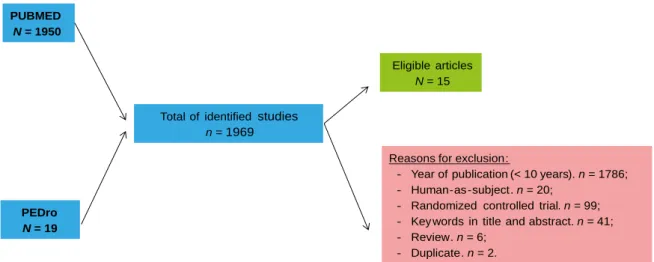
When we performed the first key word search in PubMed, we obtained a total of 1950 articles. This number fell to 165 when the 10 years of publication criteria was applied and to 145 when human-as-subjects requirement was addressed. After the criteria of randomized controlled trials and availability in English were applied the number of articles dropped to 46. Of these, 32 failed to meet the crite-ria of key words in the titles and abstracts. The remaining 14 articles fully met our inclusion criteria.
When keyword search was performed using the PEDro, 19 articles were selected, of which 6 were excluded be-cause they were reviews, 9 bebe-cause they lacked keywords in the title or abstract (mismatch with the research topic), 2 because they had appeared previously on our PubMed search, and 1 was excluded because it was published in 1999. Only one study could be used for analysis (Fig. 1).
rEsULts
When analyzing the authorship of articles, we found that all studies had multiple authors. 33.3% were written by 4 authors, 20% by 5 authors, 20% by 7 authors, and 13% by 8 authors, with an average 5.1 ± 1.8 authors per arti-cle. Country of origin was quite heterogeneous but UK and
PUBMED N = 1950
PEDro N = 19
Reasonsfor exclusion:
- Yearofpublication(< 10 years). n = 1786; - Human-as-subject. n = 20;
- Randomized controlledtrial. n = 99; - Key wordsin titleandabstract. n = 41;
- Review. n = 6; - Duplicate. n = 2.
Eligiblearticles N = 15 Total of identified studies
n = 1969
ARTIGO DE REVISÃO
110
Revista Científica da Ordem dos Médicos www.actamedicaportuguesa.com
Table 1 - Description of author and journal characteristics of choice for publishing
study AuthorsNº country of Author Journal country of Journal ImpactFactor
Globas et al15 8 Switzerland Neurorehabilitation and Neural Repair USA 4.495
Shin et al14 5 Korea J Phys Ther Sci Japan 0.292
Toledano-Zarhi et al16 4 Israel NeuroRehabilitation International 1.635
Ivey et al17 4 USA Stroke USA 5.729
Quaney et al18 7 USA Neurorehabilitation and Neural Repair USA 4.495
Rimmer et al13 5 USA Arch Phys Med Rehabil USA 2.282
Janssen et al11 7 Netherlands Arch Phys Med Rehabil USA 2.282
Lee et al12 7 Australia JAGS USA 3.737
Lennon et al19 4 Ireland Clinical Rehabilitation England 2.123
Ivey et al20 5 USA Stroke USA 5.729
Katz-Leurer & Shochina21 2 Israel NeuroRehabilitation International 1.635
Macko et al22 8 USA Stroke USA 5.729
Eich et al10 4 Germany Clinical Rehabilitation England 2.123
Katz-Leurer et al23 3 Israel Clinical Rehabilitation England 2.123
Katz-Leurer et al24 4 Israel Arch Phys Med Rehabil USA 2.282
American journals largely prevailed as sites of publication. These data are shown in Table 1.
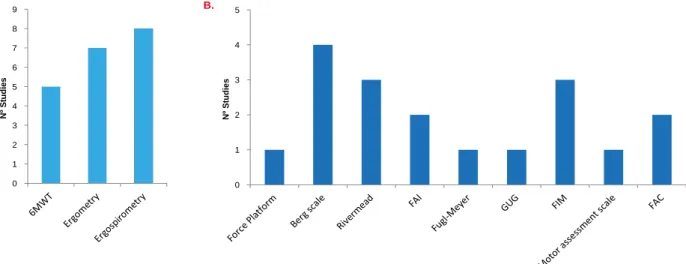
The most commonly found protocols for assessment of cardiovascular performance used three instruments which are well known in clinical practice: the six minutes wal- king test (6MWT - 5 studies) ergometry (7 studies) and er-gospirometry (8 studies). The articles showed a concern for quantifying not only the cardiorespiratory but also the functional ability of patients and for this purpose they used a series of tests designed to measure different functions, such as the Force Platform (one study), the Berg Balance Scale (4 studies), the Rivermead Mobility Index (3 studies), the French Activities Index (FAI - 2 studies), the Fugl-Meyer Sensorimotor Test (1 study), the Get up and Go (GUG - 1 study), the Functional Independence Measure (FIM - 3 studies), motor assessment scale (1 study), and the Func-tional Ambulation Category (FAC - 2 studies). These data are shown graphically in Fig. 2.
For a better understanding of the assessment protocols used in the studies analyzed, we chose to divide the results into: 1) Population characteristics (time of stroke, sample, age and gender); 2) Protocols of aerobic training (training
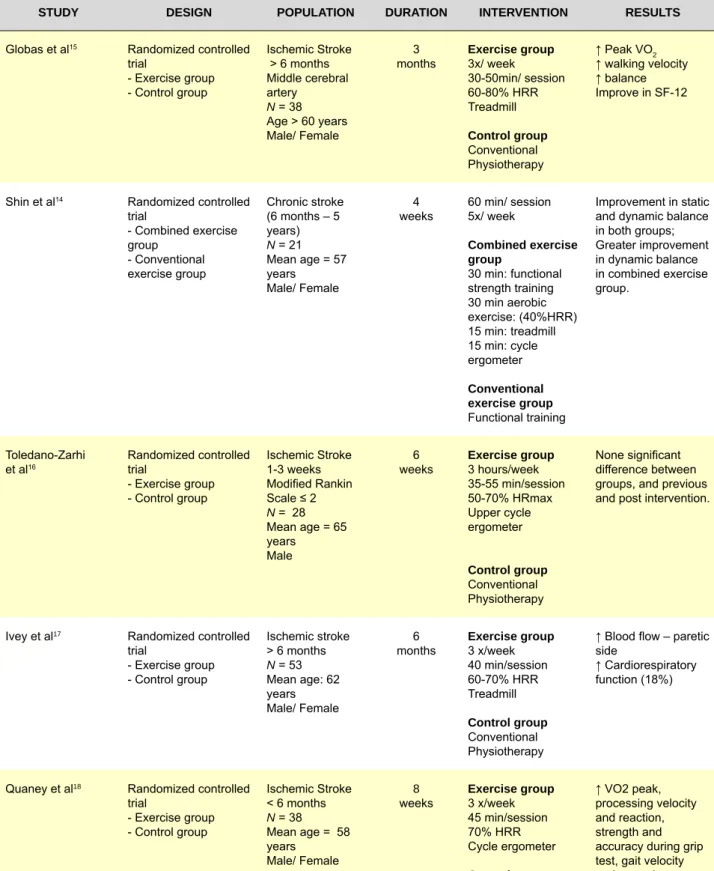
duration, weekly frequency, intensity, duration of sessions, type of training); and 3) Main results. Looking at the evalu-ation protocol, we found that all studies were randomized controlled trials, with one group being selected for aerobic training, and the other as a control group. As to the instru-ments used for aerobic training, we observed that 60% of studies used cycle ergometer, 33.3% used a treadmill and 6.7% a combination of the two. With regard to control group, 73.3% of studies used the conventional physiotherapy as a therapeutic option, 6.7% used functional training, and 20% had chosen alternative protocols,10-12 which are shown in
Table 2.
We also observed that the total duration of the training ranged between 4 weeks and 6 months (6.7% - 4 week / 20.1% - 6 weeks / 20.1% - 8 weeks / 6.7% - 10 to 12 weeks / 6.7% - 3 months / 6.7% - 14 weeks / 20.1% - 6 months). Regarding weekly frequency, in 9 studies the subjects derwent 3 x/week training, while in 3 studies subjects un-derwent 5x/week training. As to exercise intensity, 6 studies used fixed values, 40% (1 study), 60% (4 studies) and 70% (1 study) of maximal HR or VO2 peak. Other studies have chosen progressive load ranging from 50-60% (1 study),
ARTIGO DE REVISÃO
50-70% (2 studies), 60-70% (3 studies) and 60-80% (1 study). However, when we observed session length, 8 stu-dies chose 30 minutes fixed time (4 stustu-dies), 40 minutes (3 studies) and 45 minutes (1 study). Some researchers have chosen to create protocols with progression of time, such as 25-30 minutes (1 study), 30-50 minutes (1 study), 35-55 minutes (1 study) and 30-60 minutes (1 study). Three of the 15 studies had different time combinations,10,14,15 which can
be seen in Table 2.
Concerning the main results presented, we observed: improvement in cardiorespiratory capacity (11 studies), walking speed (3 studies), as well as functional improve-ment (3 studies), increase in balance (2 studies) and in muscle strength (1 study). Only one study did not show any improvement after training proposed. Other benefits de- monstrated were related to improved blood flow in the paretic muscles, improvement in hemodynamic and metabolic vari-ables (Table 2).
DIscUssION
Authorship analysis revealed a tendency towards mul-tiple authorship. This can be explained by the complexity of the studies and their clinical nature, composed of sam-ples involving a large numbers of subjects in both aerobic and conventional treatment. Of note was the heterogeneity of country of origin (at least 1 study by geographic conti-nent), possibly due to the magnitude of chronic sequelae of stroke-associated morbidities, which has crossed bor-ders and generated increasing interest in research involv-ing new therapeutic approaches for the affected population. We also observed a tendency for authors to publish their experiments in American or UK journals, a fact that can be explained by the high impact factor of these journals, since these journals follow a tradition of strict scientific selection criteria, promoting greater visibility to the studies.
In the assessment of cardiorespiratory capacity, we identified three methods most used, the 6MWT,
ergome-try and ergospiromeergome-try. However, we observed that the 5 studies using the 6MWT, occasionally used the results of this evaluation not to prescribe aerobic exercise, but as a parameter to measure the ability to walk, since the maximal HR data obtained from this evaluation was not taken into consideration for training prescription. However, different functional evaluations were used, and related to the spe-cific objectives for each experiment. For example, the Berg Scale was most frequently used to balance evaluation, Ri-vermead Mobility Index for mobility, GUG for agility, FIM and FAC for functional independence, and Fugl-Meyer to evalu-ate sensorimotor characteristics.
The main tool used for aerobic exercise training was cycle ergometer, probably because it is generally regarded as safe for a population with critical balance deficits. More-over, the choice of conventional physical therapy as control therapy is easy to understand, since in many situations it means a continuation of a treatment patients have been un-dergoing.
We were surprised to observe a mismatch between the periods, as 40.2% of articles reported short workouts (between 6 to 8 weeks) while 20.1% reported much longer ones (6 months). We detected a somewhat regular cycle, whereby once short-term studies have been proposed, then immediately there was an attempt to replicate, or even to overcome, the same effects by using a long-term protocol. Likewise, studies using long-term protocols were followed by short-term protocol studies, and so forth.
According to our data analysis, we observed that 1 month of aerobic training promoted significant improve-ment in balance. However, aerobic training between 1 and 3 months of duration promoted increase of cardiovascular capacity, walking speed, balance, strength and improved quality of life. Six months of training induced additional be-nefits, such as improvement in hemodynamic and metabolic parameters. 0 1 2 3 4 5 6 7 8 9 Nº Stu di es 0 1 2 3 4 5 Nº Stu di es A. B.
Figure 2 - A) Characteristics of evaluation protocol to determination of cardiorespiratory capacity; B) Characteristics of evaluation protocol to determination of functional capacity. Abbreviations: 6MWT = Six Minutes Walking Test; Berg scale = Berg Balance Scale; Rivermead = Rivermead Mobility Index; FAI = French Activities Index; Fugl-Meyer = Fugl-Meyer Sensoriomotor Test; GUG = Get up and Go; FIM = Functional Independence Measure; FAC = Functional Ambulation Category.
ARTIGO DE REVISÃO
112
Revista Científica da Ordem dos Médicos www.actamedicaportuguesa.com
In most studies, subjects underwent a 3x/week fre-quency of training, probably because this population pre-sented important physical deconditioning, needing a rest period between one session and another for full
physi-cal recovery. Regarding the duration of the session, it seems clear that, although many studies have chosen constant intensities (range 30-40 minutes), the majority opted for a progressive increase (range 25-60 minutes).
Table 2 - Description of type of study, population and aerobic training protocol characteristics, as well as summary of results
stUDY DEsIGN POPULAtION DUrAtION INtErVENtION rEsULts
Globas et al15 Randomized controlled
trial - Exercise group - Control group Ischemic Stroke > 6 months Middle cerebral artery N = 38 Age > 60 years Male/ Female 3
months Exercise group3x/ week 30-50min/ session 60-80% HRR Treadmill control group Conventional Physiotherapy ↑ Peak VO2 ↑ walking velocity ↑ balance Improve in SF-12
Shin et al14 Randomized controlled
trial - Combined exercise group - Conventional exercise group Chronic stroke (6 months – 5 years) N = 21 Mean age = 57 years Male/ Female 4
weeks 60 min/ session5x/ week combined exercise group 30 min: functional strength training 30 min aerobic exercise: (40%HRR) 15 min: treadmill 15 min: cycle ergometer conventional exercise group Functional training Improvement in static and dynamic balance in both groups; Greater improvement in dynamic balance in combined exercise group. Toledano-Zarhi
et al16 Randomized controlled trial
- Exercise group - Control group Ischemic Stroke 1-3 weeks Modified Rankin Scale ≤ 2 N = 28 Mean age = 65 years Male 6
weeks Exercise group3 hours/week 35-55 min/session 50-70% HRmax Upper cycle ergometer control group Conventional Physiotherapy None significant difference between groups, and previous and post intervention.
Ivey et al17 Randomized controlled
trial - Exercise group - Control group Ischemic stroke > 6 months N = 53 Mean age: 62 years Male/ Female 6
months Exercise group3 x/week 40 min/session 60-70% HRR Treadmill control group Conventional Physiotherapy
↑ Blood flow – paretic side
↑ Cardiorespiratory function (18%)
Quaney et al18 Randomized controlled
trial - Exercise group - Control group Ischemic Stroke < 6 months N = 38 Mean age = 58 years Male/ Female 8
weeks Exercise group3 x/week 45 min/session 70% HRR Cycle ergometer control group Conventional Physiotherapy ↑ VO2 peak, processing velocity and reaction, strength and accuracy during grip test, gait velocity and motor learn.
ARTIGO DE REVISÃO Table 2 - Description of type of study, population and aerobic training protocol characteristics, as well as summary of results (cont.)
stUDY DEsIGN POPULAtION DUrAtION INtErVENtION rEsULts
Rimmer et al13 Randomized controlled
trial - Intensity group - Duration group - Control group Ischemic Stroke < 6 months N = 55 Mean age 59.6 years Male/ Female 14
weeks 3x/week (all groups) Intensity group Moderate intensity 30 min/session 60-70% VO2 peak Cycle ergometer Duration group Progressive intensity 60 min/ session 40-70% VO2 peak Cycle ergometer control group Conventional Physiotherapy Intensity group ↓ SAP, DAP, triglycerides and total cholesterol
Duration group ↓ triglycerides
Janssen et al11 Randomized controlled
trial - Exercise group - Control group Stroke > 5 months N = 12 Age 54 ± 10 years Male/ Female 6
weeks 2 x/ week25-30 min/ session Exercise group (Cycling + maximally tolerable to electric stimulation) control group (Cycling + sensible electric stimulation) ↑ aerobic capacity and functional performance after short aerobic training.
Lee et al12 Randomized controlled
trial - Aerobic: cycle training - Progressive resistance training (PRT) Stroke > 3 months N = 52 Mean age = 63 years Male/ Female 10-12
weeks 30 sessions50-70% VO2 peak 30-60 min/ session 1) aerobic cycling plus sham PRT 2) sham cycling plus PRT 3) aerobic cycling plus PRT 4) sham cycling plus sham PRT ↑ aerobic capacity Improve functional performance, but strength was not different between groups, as well as, previous and post intervention.
Lennon et al19 Randomized controlled
trial - Exercise group - Control group Ischemic Stroke > 1 year N = 48 Mean age = 60 years Male/ Female 10
weeks Exercise group16 sessions 30 min/ session 50-60% HRR Cycle ergometer control group Conventional Physiotherapy ↑ VO2 peak
↓ cardiac risk score, perception exertion, major depression
Ivey et al20 Randomized controlled
trial - Exercise group - Control group Ischemic Stroke < 6 months N = 46 Age > 45 years Male/ Female 6
months Exercise group3 x/ week 40 min/ session 60-70% HRR Treadmill control group Conventional Physiotherapy ↑ 15% VO2 peak ↓ insulin Improvement in glucose response
ARTIGO DE REVISÃO
114
Revista Científica da Ordem dos Médicos www.actamedicaportuguesa.com
Similarly, we detected a clear disparity among researchers with respect to the intensity of exercises. Six studies used fixed intensity, while in other 7 studies progressive intensi-ties were chosen. One study did not set any intensity for training11 and another study compared three types of
proto-col, with 2 of them involving aerobic training, one with high intensity (60-70%) and one with low intensity (40-70%).13
Both duration and intensity may have been preferentially
chosen because they may facilitate the adaptation of the subjects to training, minimizing discomfort and the possibi-lity of withdrawal.
cONcLUsION
In our overall evaluation, aerobic exercise training emerged as a valuable strategy to improve cardiorespira-tory capacity, often associated with significant changes in
Table 2 - Description of type of study, population and aerobic training protocol characteristics, as well as summary of results (end)
stUDY DEsIGN POPULAtION DUrAtION INtErVENtION rEsULts
Katz-Leurer et al21 Randomized controlled
trial - Exercise group - Control group Acute ischiemic stroke N = 64 Mean age = 62 years Male/ Female 8
weeks Exercise group3 x/ week 30 min/ session 60% HRR Cycle ergometer control group Conventional Physiotherapy ↑ endurance and walking performance. No significant interaction effects between autonomic impairment and training.
Macko et al22 Randomized controlled
trial - Exercise group - Control group Stroke > 6 months N = 45 Age > 45 years Male/Female 6
months Exercise group3 x/ week 40 min/ session 60-70% HRmax Treadmill control group Conventional Physiotherapy ↑ 17% cardiovascular capacity
Eich et al10 Randomized controlled
trial - Exercise group - Control group Acute stroke Supratentorial N = 40 Age: 50-75 years Male/ Female 6
weeks Exercise group6 x/ week 30 min/ session treadmill 30 min/ session physioteherapy 60% HRR control group 60 min/ session Gait Bobath ↑ velocity and capacity to walking ↑ 30% performance 6MWT ↑ VO2 peak ↑ functional mobility
Katz-Leurer et al23 Randomized controlled
trial - Exercise group - Control group Acute Stroke (30 days) N = 92 Mean age = 63 years Male/ Female
8 weeks Exercise group 5 x/ week 30 min/ session 60% HRmax Cycle ergometer control group Conventional Physiotherapy ↓ rest HR
↑ load and working time
Katz-Leurer et al24 Randomized controlled
trial - Exercise group - Control group Acute stroke Follow-up 6 months N = 90 Mean age = 63 years Male/ female 8
weeks Exercise group5 x/ week 30 min/ session 60% HRmax Cycle ergometer control group Conventional Physiotherapy None significant difference between groups in daily activities, as well as previous and post exercise intervention.
ARTIGO DE REVISÃO
metabolism in post-stroke patients. The outlook seems to identify very favorable outcomes for both cardiovascular risk reduction and reduced risk of a new ischemic event. Also, the data offered a clearer understanding of the impact on functional variables provided by this training, which may be safely associated with conventional therapy or even as an alternative to it.
Exercise prescription has been hindered by the lack of standardized assessment and aerobic training proto-cols, which would otherwise help professionals to a fuller informed decision-making in the safe management of post-stroke patients. However, the data here presented seems
promising, both in terms of improved functional capacity and improved cardiovascular capacity. Further studies are needed to help standardize and expand the therapeutic tools for the treatment this population.
cONFLIcts OF INtErEst
The authors declare that there are no conflicts of interest.
FUNDING sOUrcEs
This research received no specific grant from any fun-ding agency in the public, commercial, or not for-profit sec-tors.
rEFErENcEs
1. Dias D, Laíns J, Pereira A, Aunes R, Caldas J, Amaral C, et al. Can we improve gait skills in chronic hemiplegics? A randomised control trial with gait trainer. Eura Medicophys. 2007;43:499-504.
2. Peurala SH, Tarkka IM, Pitkänen K, Sivenius J. The effectiveness of body weight – supported gait training and floor walking in patients with chronic stroke. Arch Phys Med Rehabil. 2005;86:1557-64.
3. Ng MF, Tong RK, Li LS. A pilot study of randomized clinical controlled trial of gait training in subacute stroke patients with partial body-weight support, electromechanical gait trainer and functional electrical stimula-tion: six-month follow-up. Stroke. 2008;39:154-60.
4. Di Carlo A. Human and economic burden of stroke. Age Ageing. 2009;38:4–5.
5. Shaughnessy M, Resnick BM, Macko RF. Reliability and validity testing of the short self-efficacy and outcome expectation for exercise scales in stroke survivors. J Stroke Cerebrovasc Dis. 2004;13:214-9.
6. Roth EJ. Heart disease in patients with stroke. Part 2: Impact and im-plications for rehabilitation. Arch Phys Med Rehabil. 1994;75:94–101. 7. Hafer-Macko CE, Ryan AS, Ivey FM, Macko RF. Skeletal muscle
chang-es after hemiparetic stroke and potential beneficial effects of exercise intervention strategies. J Rehabil Res Dev. 2008;45:261–72.
8. Morris JH, Williams B. Optimising long-term participation in physical ac-tivities after stroke: Exploring new ways of working for physiotherapists. Physiotherapy. 2009;95:227–33.
9. Hill DC, Ethans KD, Macleod DA, Harrison ER, Matheson JE. Exercise stress testing in subacute stroke patients using a combined upper- and lower-limb ergometer. Arch Phys Med Rehabil. 2005;86:1860-66. 10. Eich HJ, Mach H, Werner C, Hesse S. Aerobic treadmill plus bobath
walking training improve walking in subacute stroke: a randomized con-trolled trail. Clin Rehabil. 2004;18:640-51.
11. Janssen TW, Beltman JM, Elich P, Koppe PA, Konijnenbelt H, DE Haan A, et al. Effects of electric stimulation assisted cycling training in people with chronic stroke. Arch Phys Med Rehabil. 2008;89:463-9.
12. Lee MJ, Kilbreath SL, Singh MF, Zeman B, Lord SR, Raymond J, et al. Comparison of effect of aerobic cycle training and progressive resis-tance training on walking ability after stroke: a randomized Sham exer-cise–controlled study. J Am Geriatr Soc. 2008;56:976–85.
13. Rimmer JH, Rauworth AE, Wang EC, Nicola TL, Hill B. A preliminary study to examine the effects of aerobic and therapeutic (nonaerobic) ex-ercise on cardiorespiratory fitness and coronary risk reduction in stroke survivors. Arch Phys Med Rehabil. 2009;90:407-12.
14. Shin WS, Lee SW, Lee YW, Choi SB, Chang HS. Effects of combined exercise training on balance of hemiplegic stroke patients. J Phys Ther Sci. 2011;23:639-43.
15. Globas C, Becker C, Cerny J, Lam JM, Lindemann U, Forrester LW, et al. Chronic stroke survivors benefit from high-intensity aerobic tread-mill exercise: a randomized controlled trial. Neurorehabil Neural Repair. 2012;26:85–95.
16. Toledano-Zarhi A, Tanne D, Carmelia E, Katz-Leurer M. Feasibility, safety and efficacy of an early aerobic rehabilitation program for patients after minor ischemic stroke: A pilot randomized controlled trial. Neuro-Rehabilitation. 2011;28:85–90.
17. Ivey FM, Hafer-Macko CE, Ryan AS, Macko RF. Impaired leg vasodila-tory function after stroke: adaptations with treadmill exercise. Stroke. 2010;41:2913-17.
18. Quaney BM, Boyd LA, Mcdowd JM, Zahner LH, He J, Mayo MS, et al. Aerobic exercise improves cognition and motor function poststroke. Neurorehabil Neural Repair. 2009;23:879–85.
19. Lennon O, Carey A, Gaffney N, Stephenson J, Blake C. A pilot random-ized controlled trial to evaluate the benefit of the cardiac rehabilitation paradigm for the non-acute ischemic stroke population. Clin Rehabil. 2008;22:125–33.
20. Ivey FM, Ryan AS, Hafer-Macko CE, Goldberg AP, Macko RF. Tread-mill aerobic training improves glucose tolerance and indices of insulin sensitivity in disabled stroke survivors : a preliminary report. Stroke. 2007;38:2752-58.
21. Katz-Leurer M, Shochina M. The influence of autonomic impairment on aerobic exercise outcome in stroke patients. NeuroRehabilitation. 2007;22:267–72.
22. Macko RF, Ivey FM, Forrester LW, Hanley D, Sorkin JD, Katzel LI, et al. Treadmill exercise rehabilitation improves ambulatory function and cardiovascular fitness in patients with chronic stroke: a randomized, controlled trial. Stroke. 2005;36:2206-11.
23. Katz-Leurer M, Carmeli E, Shochina M. The effect of early aero-bic training on independence six months post stroke. Clin Rehabil. 2003;17:735–41.
24. Katz-Leurer M, Shochina, Carmeli E, Friedlander Y. The influence of early aerobic training on the functional capacity in patients with cere-brovascular accident at the subacute stage. Arch Phys Med Rehabil. 2003;84:1609-14.