UNIVERSIDADE DA BEIRA INTERIOR
Ciências da Saúde
Characterization of elderly and non-elderly
patients with Bronchial Asthma: assessment of
aspects of quality of life
Fábio Filipe Lopes Pais
Dissertação para obtenção do Grau de Mestre em
Medicina
(ciclo de estudos integrado)
Orientador: Prof. Doutor Luís Taborda Barata
Co-orientador: Prof. Doutor José Manuel Reis Gama
ii
Dedicatória
“Either write something worth reading or do something worth writing”
iii
Agradecimentos
Aos meus avós e aos meus pais, pelos valores com que me educaram, pelo esforço, dedicação, apoio incondicional, amor, e por sempre me apoiarem.
Ao meu Orientador, Professor Doutor Luís Taborda Barata, pela excelente orientação, disponibilidade constante e firme entusiasmo pelo projeto do “Clube da Asma”, do qual me orgulho muito. Agradeço, ainda, as sugestões, conselhos e críticas pertinentes durante a preparação, execução e finalização deste projeto.
Aos meus companheiros, Adriana, Bruna, Eduardo e Gonçalo, que contribuíram para tornar este projeto, em parte individual, num projeto mais estimulante e coletivo.
Ao Professor Doutor Jorge Gama, pela ajuda imprescindível, disponibilidade e paciência no tratamento dos dados e na análise estatística.
À Dra. Marli Loureiro, pela valiosa ajuda e apoio, no recrutamento de voluntários não asmáticos no centro de saúde.
À Dra. Maria de La Salete Beirão Valente, diretora do serviço de Pneumologia do CHCB, pelo apoio demonstrado desde a tarde em que entrei no seu consultório, para me ajudar no recrutamento de idosos e não idosos asmáticos.
A todos os voluntários que participaram, pois sem a disponibilidade deles o estudo não seria possível.
A todos os funcionários do CHCB que nos receberam nas instalações do CHCB, pela simpatia e colaboração.
À Marta Duarte, pela ajuda imprescindível nas burocracias do estudo e na logística de todo o processo.
iv
Resumo
Introdução: A qualidade de vida nos idosos asmáticos parece ser inferior, por um lado, à da
população asmática mais jovem, devido ao menor grau de controlo da doença e à presença de co-morbilidades, e por outro lado, aos idosos não asmáticos. Contudo, existem poucos estudos sobre Qualidade de Vida em idosos asmáticos. Assim, os objetivos deste estudo são avaliar a qualidade de vida de asmáticos idosos e determinar quais os fatores que a podem influenciar.
Métodos: A amostra incluiu indivíduos com mais de 18 anos, com o diagnóstico de Asma
Brônquica, seguidos em consulta hospitalar, e indivíduos com mais de 18 anos, não asmáticos, seguidos em consulta do centro de saúde. Após assinarem o consentimento informado, os voluntários responderam a questionários: Escala de Depressão Geriátrica (GDS-15), a Escala de Depressão do Centro de Epidemiologia (CES-D), o Mini-Mental State Examination (MMES), o Teste de Controlo da Asma (ACT), o Teste de Controlo da Asma e da Rinite Alérgica (CARAT), os níveis de controlo dos sintomas da asma (GINA), o Questionário de Qualidade de Vida na Asma (AQLQ), o Questionário do Hospital St. George sobre a Doença Respiratória (SGRQ), o Questionário do Estado de Saúde SF-36 e o Questionário EQ-5D-5L. Os dados foram analisados através do Pacote de Software para Ciências Sociais (SPSS), versão 22.0®, e um valor-p inferior ou igual a 0,05 foi considerado significativo em todos os testes estatísticos.
Resultados: Foram avaliados 392 voluntários. Destes, 92 eram idosos asmáticos, com idade
média de 72,9 anos, maioritariamente do sexo feminino, fumadores, com baixo nível de escolaridade e classe social e reformados da indústria têxtil. Predominaram idosos com asma não atópica, de início depois dos 18 anos, com história familiar de doença respiratória, com baixo grau de controlo da asma. Em geral, a qualidade de vida geral dos idosos asmáticos era de razoável a relativamente boa, mas inferior à dos idosos não asmáticos. Também a qualidade de vida relacionada com a asma brônquica era relativamente elevada, mas menor quando comparada com os não idosos asmáticos, sendo influenciada pelo grau de controlo da asma, pela presença de insuficiência cardíaca congestiva e diabetes mellitus.
Conclusão: A qualidade de vida geral e específica da asma brônquica dos idosos com a
doença, seguidos em consultas hospitalares, é relativamente elevada, embora seja inferior à de idosos não asmáticos e à de não idosos asmáticos. A qualidade de vida em asmáticos idosos está relacionada diretamente com o grau de controlo, e é influenciada por comorbilidades cardiovasculares e metabólicas.
v
Palavras-chave
Asma Brônquica, Idosos, Qualidade de Vida, Fatores Influenciadores, Questionário da Qualidade de Vida (AQLQ), Questionário do Hospital St. George sobre a Doença Respiratória (SGRQ), Questionário do Estado de Saúde SF-36, Questionário EQ-5D-5L
vi
Resumo alargado
Introdução: A asma brônquica é uma doença inflamatória crónica que se encontra entre uma
das doenças mais prevalentes em Portugal, atingindo cerca de 7% dos idosos, sendo pouco diagnosticada neste grupo etário, frequentemente por coexistir com outras doenças cardíacas e pulmonares, que podem mascarar a clínica da mesma. Adicionalmente, no idoso há uma menor perceção dos sintomas, bem como dificuldade em aceitar a dispneia como sendo um problema de saúde, e não devido ao avançar da idade. Existem poucos estudos que avaliem esta patologia em idosos, que usualmente é mais severa, devido às co-morbilidades existentes e à frequência dos sintomas, por um baixo controlo da doença, pelo tratamento inadequado, por exemplo. Como tal, a Qualidade de Vida nos idosos parece ser inferior, por um lado, à da população asmática mais jovem e, por outro lado, à população idosa não asmática. Contudo, existe pouca evidência científica neste tema, dado que os idosos são, não raras vezes, excluídos deste tipo de estudos. Desta forma, o objetivo deste estudo é avaliar a qualidade de vida dos asmáticos idosos, e determinar quais os fatores que a podem influenciar.
Métodos: A amostra recrutada incluiu indivíduos com idade igual ou superior a 18 anos,
adultos e idosos, com diagnóstico de Asma Brônquica e seguidos em consulta externa de especialidade de Imunoalergologia e de Pneumologia do Centro Hospitalar da Cova da Beira, e indivíduos com mais de 18 anos, adultos e idosos, sem diagnóstico de Asma Brônquica, seguidos em consulta no Centro de Saúde da Covilhã. Todos os voluntários, após assinarem o consentimento informado, foram entrevistados para responderem aos seguintes questionários: Escala de Depressão Geriátrica (GDS-15), a Escala de Depressão do Centro de Epidemiologia (CES-D), o Mini-Mental State Examination (MMES), o Teste de Controlo da Asma (ACT), o Teste de Controlo da Asma e da Rinite Alérgica (CARAT), os níveis de controlo dos sintomas da asma (GINA), o Questionário de Qualidade de Vida na Asma (AQLQ), o Questionário do Hospital St. George sobre a Doença Respiratória (SGRQ), o Questionário do Estado de Saúde SF-36 e o Questionário EQ-5D-5L. Os dados foram analisados através do Pacote de Software para Ciências Sociais (SPSS), versão 22.0®, e um valor-p inferior ou igual a 0,05 foi considerado significativo em todos os testes estatísticos. A análise descritiva foi utilizada para caracterizar a amostra e, após esta, usaram-se métodos paramétricos e não paramétricos para comparar os vários parâmetros avaliados.
Resultados: A investigação contou com 392 voluntários. Destes, 92 eram asmáticos idosos,
com idade média de 72,9 anos (65 a 93 anos) maioritariamente do género feminino. A maior parte dos idosos era fumador, tinha um baixo nível de escolaridade e classe social (Graffar
vii IV), vivia em área urbana e estava reformado da indústria têxtil. Globalmente, predominaram idosos com asma não atópica, com início após os 18 anos, com história familiar de doença respiratória e também de alergias, e com baixo grau de controlo. Em termos de co-morbilidades, a mais prevalente foi a hipertensão arterial. Na avaliação da técnica inalatória foi encontrada uma elevada percentagem de erros minor, mas também major. Na avaliação da qualidade de vida genérica, os resultados dos questionários EQ-5D-5L e SF36 mostraram scores razoáveis a relativamente elevados; porém, o questionário SF-36 mostrou uma qualidade de vida inferior quando comparados com os idosos não asmáticos. Na avaliação da qualidade de vida específica para a asma, os resultados dos questionários AQLQ e SGRQ, relevaram elevados scores. Apesar disso, ambos os questionários mostraram que os idosos não asmáticos têm pior qualidade de vida do que os não idosos asmáticos. Quando comparados os resultados do questionário AQLQ com possíveis fatores influenciadores, observou-se que a qualidade de vida dos idosos asmáticos é afetada, negativamente, pelo grau de controlo e pela presença de insuficiência cardíaca congestiva e diabetes mellitus, mas não pela presença de doença de refluxo gastro-esofágica e rinite, como sucede nos não idosos asmáticos.
Conclusão: A qualidade de vida genérica e específica da asma brônquica em idosos com a
doença é relativamente elevada sendo, contudo, menor quando comparada com idosos não asmáticos e não idosos asmáticos, respetivamente. A qualidade de vida geral e específica da asma brônquica contribuem para o conhecimento diferencial do controlo de sintomas e das comorbilidades na asma. A qualidade de vida dos idosos asmáticos está relacionada diretamente com o grau de controlo, isto é, quanto menor o grau de controlo menos a qualidade de vida. Esta medida de saúde também é influenciada negativamente pela presença de insuficiência cardíaca congestiva e diabetes mellitus. Assim, deverá ser dada enfâse no auto-conhecimento e tratamento tanto da asma brônquica como das co-morbilidades relevantes nos pacientes.
viii
Abstract
Introduction: Quality of life in elderly asthmatics seems to be lower, on the one hand, than
that in younger asthmatics, due to a lower degree of disease control and the presence of co-morbidities and, on the other hand, than that in elderly non asthmatics. However, there are very few studies on quality of life in elderly asthmatics. The objectives of this study were to assess quality of life of elderly asthmatics and to determine factors that might influence it.
Methods: The sample included individuals aged 18 and older, elderly and non-elderly adults,
with a confirmed diagnosis of Bronchial Asthma, followed up at hospital outpatient clinics, and individuals aged 18 and older, elderly and non-elderly adults without any symptoms or diagnoses of respiratory disease, followed up at Healthcare Centre outpatient clinics. After giving written informed consent, volunteers replied to some questionnaires: the Geriatric Depression Scale (GDS-15), the Center for Epidemiologic Self-Report Depression Scale (CES-D), the Mini-Mental State Examination (MMES), the Asthma Control Test (ACT), the Control of Allergic Rhinitis and Asthma Test (CARAT), the Global Initiative for Asthma (GINA), the Asthma Quality of Life Questionnaire (AQLQ), the St. George’s Respiratory Questionnaire (SGRQ), the Short Form (SF-36) Health Survey and the EQ-5D-5L Instrument. Data was analyzed using the Statistical Package for Social Sciences (SPSS), version 22.0®, and a p-value less than or equal to 0.05 was regarded as significant for all statistical tests.
Results: Three hundred and ninety two volunteers, including ninety two elderly asthmatic
patients, with a mean age of 72.9 years were studied. Most elderly patients were female, smokers, with low level of schooling and social class and retired from the textile/wool industry. Elderly patients with atopic and long standing asthma predominated, with a family history of respiratory disease, showing a low degree of asthma symptom control. Most patients had errors in their inhalational technique. General quality of life was relatively high but lower than that of elderly non-asthmatics. Asthma-specific quality of life was also relatively high, but lower than that of non-elderly asthmatic patients and it was influenced by the degree of asthma control, as well as by the presence of heart failure and diabetes mellitus, but not by rhinitis or gastroesophageal reflux disease, in contrast with non-elderly asthmatic patients.
Conclusion: General and asthma-specific quality of life in elderly asthmatics is relatively
high, but lower when compared with elderly non-asthmatics volunteers and non-elderly asthmatic patients, respectively. Generic and asthma-specific health-related QoL
ix differentially capture the impact of symptom control and comorbidity in asthma. Asthma-specific quality of life in the elderly is directly related to the degree of asthma control, and it is influenced by cardiovascular and metabolic co-morbidities. There should be a higher focus on the optimization of self-education and treatment of both BA and relevant co-morbidities in these patients.
Keywords
Bronchial asthma, Elderly, Quality of Life, Factors Influencing Quality of Life, Asthma Quality of Life questionnaire (AQLQ), St. George’s Respiratory Questionnaire (SGRQ), Short Form (36) Health Survey, EQ-5D-5L Instrument
x
Índice
Dedicatória Ii Agradecimentos iii Resumoiv Resumo alargado vi Abstract
viii Índice x Lista de figuras xi
Lista de tabelas xii
Lista de acrónimos xiii
Introduction 1
Materials & Methods 3
1. Study design and sample recruitment 3
2. Patient recruitment 3
3. Questionnaires 3
4. Operational definitions 5
5. Spirometry with Bronchodilation 5 5
4. Stastical analysis 5
Results
6
1. Recruitment of patients 6
2. Demographic and cognitive characterization of the population 7
3. Clinical characterization of the population 8
4. Assessment of the General Quality of Life 11
5. Assessment of the Asthma -Related Quality of Life 14
6. Factors affecting Asthmatics´Quality of Life 16
Discussion 18
Future prospects 23
References 24
Appendix
27
Appendix I: Informed Consents 27
Appendix II: Demographic and Clinical Characterization 31
Appendix III: GDS-15, CES-D and MMES 35
Appendix IV: ACT, CARAT, GINA 39
Appendix V: EQ-5D-5L, DF-36, AQLQ, SGRQ and STROBE 42
xi
Lista de Figuras
Figure 1 – Representative flowchart of the selection process and evaluation of asthmatic volunteers
xii
Lista de Tabelas
Table 1 – Demographic and cognitive characteristics of the sample
Table 2 – Clinical and functional characterization of the sample
Table 3 – EQ-5D-5L scores
Table 4 - Inferential analysis of EQ-5D-5L parameters between groups.
Table 5 – SF-36 Scores
Table 6 - Inferential analysis of SF-36 parameters between groups
Table 7 - AQLQ scores between asthmatics (elderly vs. non-elderly)
Table 8 - Inferential analysis of AQLQ parameters between asthmatics (elderly vs. non-elderly)
Table 9 - AQLQ scores between asthmatics (elderly vs. non-elderly)
Table 10 - Inferential analysis of AQLQ parameters between asthmatics (elderly vs. non-elderly)
Table 11 - Inferential analysis of factors potentially affecting QoL in elderly asthmatic and non-elderly asthmatic using Student's t Test
xiii
Lista de Acrónimos
AOA – Adult-onset asthma ASA – Acetylsalicylic acid
ACES CB – Cova da Beira Group of Healthcare Centers ACT – The Asthma Control Test
BA – Bronchial Asthma BB – Beta blocker BMI – Body Mass Index
CARAT – The Controlol of Allergic Rhinitis and Asthma Test CES-D – Center for Epidemiologic Self-Report Depression Scale CHCB – Cova da Beira Hospital
CHF – Congestive heart failure COA – Childhood-onset asthma
COPD – Chronic Obstructive Pulmonary Disease DM – Diabetes mellitus
FCS-UBI – Faculty of Health Sciences of the University of Beira Interior GDS–15 – Geriatric Depression Scale
GERD - Gastro-esophageal Reflux Disease GINA – Global Initiative for Asthma HBP – High Blood Pressure
HrQoL – Health related Quality of Life IC – Inhaled Corticosteroid
EA – Elderly asthmatic ENA - Elderly non-asthmatic LABA - Long-acting Beta2-Agonist
MMES – The Mini-Mental Examination State NEA – Non-elderly asthmatic
NENA - Non-elderly non-asthmatic OSA – Obstructive Sleep Apnea Syndrome QoL – Quality of Life
SABA – Short-acting Beta2-Agonist SF36 - Short Form Health Survey
SGRQ - St. George’s Respiratory Questionnaire SPSS - Software Package for Social Sciences UBI – Universidade of Beira Interior
1
Introduction
Asthma is an inflammatory disease with bronchial hyper-responsiveness to diverse stimuli, which is typically associated with pulmonary airflow obstruction that is reversible either spontaneously or upon appropriate treatment. Other symptoms such as cough, wheezing, dyspnoea and the feeling of chest tightness vary over time in their incidence, frequency and intensity (1).
According to the 4º Inquérito Nacional de Saúde, from 2005/06, asthma is one of the most frequent chronic illnesses in Portugal, with 5.5% of the population having a diagnosis of asthma. That study also showed that 7.2% of the elderly have asthma, most of whom (65.9%) are women (2).
Few studies of asthma have focused on elderly individuals (3). However, evidence suggests that asthma is more severe in the elderly since co-morbidities are more prevalent and there is a lower control of the disease, thereby having a greater negative impact on general well-being and quality of life, when compared with younger patients (4).
Quality of life is a multidimensional concept defined by World Health Organization (WHO) as the individual’s perception of their position in life in the context of the culture and value systems in which they live and in relation to their goals, expectations, standards and concerns. It is a broad-ranging concept affected in a complex way by the person’s physical health, psychological state, personal beliefs, social relationships and their relationship to salient features of their environment (5).
From this general concept arises the notion of health-related quality of life (HrQoL), which allows the determination of the impact of disease at personal level, that is, the limitations the disease imposes upon the daily life of the patients, information which cannot be obtained using laboratory or functional tests (6).
In bronchial asthma, quality of life correlates with disease control perceived by the patient, limitation of activities, asthma-related nocturnal awakenings and excessive use of rescue medication (7). Bronchial asthma-associated incapacity increases directly with disease severity, ageing and decreased disease control. Various questionnaires have been developed for studies of quality of life (QoL) in asthmatic patients. However, very few studies have addressed this issue in elderly patients (8). Nevertheless, results have shown that QoL seems to be lower in elderly asthmatics than in elderly non-asthmatics (9). In addition, QoL is also lower in elderly than in younger asthmatic patients (3,10). In fact, lower levels of general health and greater functional incapacity associated with lower QoL are frequent in elderly patients and QoL decreases even further in asthma since asthmatic patients tend to have higher levels of anxiety and depression (11,12). However, QoL in elderly asthmatics seems even more related to the perceived intensity of symptoms, particularly dyspnoea rather than to depression (7,9). In global terms, QoL in elderly asthmatics is most often low due to
2 difficulty in carrying out domestic activities, walking, climbing stairs, because these actions induce dyspnoea. Thus, it is possible that low QoL in elderly asthmatic patients is essentially related to sub-optimal control of asthma symptoms, due to eventual under-treatment (3).
Based on the facts mentioned above, the main objectives of the present study were: to assess the HrQoL in elderly and non-elderly asthmatics and in elderly and non-elderly non asthmatic volunteers; to assess and compare asthma quality of life between elderly and non-elderly volunteers, and to identify and characterize factors that potentially affect the QoL in elderly asthmatic patients.
3
Materials & Methods
1. Study Design and Sample Selection
This was an observational and descriptive study. The target population consisted of individuals with a confirmed diagnosis of Bronchial Asthma (BA), who were followed up at Immunoallergology or Pulmonology medical appointments at Cova da Beira Hospital, and individuals without BA, who were patients of the Cova da Beira Group of Healthcare Centers (ACES-CB).
All the volunteers were separated into two age groups: non-elderly (aged between 18 and 64) and elderly (aged 65 or older). The inclusion criterium for the target population was a clinical diagnosis of Bronchial Asthma and exclusion criteria were: concurrent Chronic Obstructive Pulmonary Disease (COPD); concurrent Restrictive Pulmonary Disease; therapy with immunomodulators; low Mini-Mental State Examination score. For the control population, the exclusion criteria were recent or past history of obstructive or restrictive pulmonary diseases; therapy with immunomodulators and a low Mini-Mental State Examination score. Volunteers were then stratified into four different sub-groups: non-elderly non-asthmatic (NENA), elderly non-asthmatic (ENA), non-elderly asthmatic (NEA) and elderly asthmatic (EA).
This study was approved by the Ethics Committee of the Cova da Beira Academic Hospital Centre (CHCB) and by the Ethics Committee of the Faculty of Health Sciences of the University of Beira Interior.
2. Patient Recruitment
All patients meeting the criteria were invited to participate in the study via a telephone call or approached directly after their medical appointments. All patients who accepted to participate were assessed at CHCB, ACES-CB or in the Faculty of Health Sciences of the University of Beira Interior (FCS-UBI), between March 2015 and March 2016. These volunteers signed a written informed consent form in accordance with the Ethics Committee of the CHCB, as well as an informed consent form of the Ethics Committee of the Faculty of Health Sciences (Appendix I), upon explanation of the study.
3. Questionnaires
All volunteers were interviewed by experienced study collaborators, following a uniform approach. A standardized, detailed questionnaire on socio-demographic and clinical
4 characterization of bronchial asthma was applied. Data about childhood and adulthood place of residence, home characteristics, past and current occupations, personal hobbies and educational qualifications, personal and family history of atopy and respiratory disease, current and past occupational exposure, co-morbidities, asthma triggers, medication and personal habits were obtained.
Standardized questionnaires, validated for the Portuguese population were used: Geriatric Depression Scale (GDS-15), the Center of Epidemiologic Study Depression Scale (CES-D), Mini-Mental Examination State (MMES) (Appendix IV), the Asthma Control Test (ACT), the Control of Allergic Rhinitis and Asthma Test (CARAT), the Global Initiative for Asthma (GINA) (Appendix V), Short Form Health Survey (SF-36), EQ-5D-5L Instrument, Asthma Quality of Life questionnaire (AQLQ) and St. George’s Respiratory Questionnaire (SGRQ) (Appendix VI).
The GDS-15 and the CES-D were used as instruments for the assessment of depression-specific symptoms in the elderly and non-elderly, respectively (13, 14). The MMSE was employed for the screening of cognitive deterioration, taking into consideration the interviewee’s degree of schooling (15). The ACT and GINA were applied in the assessment of the degree of asthma control and CARAT was also used to study global respiratory control assessment of control of rhinitis and asthma.
EQ-5D-5L and SF-36 were used to assess health related quality of life in all volunteers. The EQ-5D-5L descriptive system comprises five dimensions: mobility, self care, usual activities, pain/discomfort, anxiety/depression. Each dimension has five levels: no problems, slight problems, moderate problems, severe problems, and extreme problems. The lower the score the less disability. The higher the score the more disability. The SF-36 is a patient-reported survey of patient health. It consists of eight scaled scores: vitality, physical functioning, bodily pain, general health perceptions, physical role functioning, emotional role functioning, social role functioning and mental health. The lower the score the more disability. The higher the score the less disability. (16,17,18,19)
AQLQ and SGRQ were applied for the assessment of QoL in all asthmatic patients. The AQLQ was developed to measure the functional problems (physical, emotional, social and occupational) that are most troublesome to adults with asthma. There are 32 questions subdivided into 4 principal domains (symptoms, activity limitation, emotional function and environmental stimuli). The activity domain contains 5 ‘patient-specific’ questions. This allows patients to select 5 activities in which they are most limited. Patients are asked to think about how they have been during the previous two weeks and to respond to each of the 32 questions on a 7-point scale (7 = not impaired at all - 1 = severely impaired). The SGRQ, which was designed to measure health impairment in patients with asthma and COPD. It is in two parts, Part I produces the Symptoms score, and Part 2 the Activity and Impacts scores. The Activity score measures disturbances to daily physical activity. The Impacts score covers a range of disturbances of psycho-social function (19,20).
5
4. Operational definitions
For this study, Long Standing Asthma (LSA) was defined as being as equivalent to the Dutch definition of Early Onset Asthma (EOA) or Childhood Onset Asthma (COA), and involving the development of asthma symptoms and confirmed bronchial asthma before 18 years of age. We also defined Late Onset Asthma (LOA) as equivalent to Adult Onset Asthma (AOA), when symptoms of asthma developed after that age. Atopy was defined on the basis of the presence of at least one positive cutaneous response (> 3 mm) to aeroallergens and/or a positive serum test for screening aeroallergen-specific IgE (> 0.35 kUA/L. The in vitro test for determination of serum values of IgE specific for the standard screening battery of aeroallergens (Phadiatop aeroallergens) was performed using a fluorometric methodology (Unicap 100 Phadia Diagnosis®, Phadia, Sweden).
5. Spirometry with Bronchodilation
Spirometry was performed by certified technicians, at the Lung Function Department of Cova da Beira Academic Hospital centre, in volunteers without episodes of respiratory infections in the previous four weeks, with the patients sitting down, using the EasyOne spirometer (ndd Medical Technologies, Andover, MA, USA) before and 15 minutes after inhalation of 200 g of a short-acting beta2-agonist (salbutamol), via a metered dose inhaler and a spacer chamber. Only spirometric tests which met the American Thoracic Society (ATS) / European Respiratory Society (ERS) criteria were used for analysis. When bronchial obstruction was detected, bronchodilation was carried out and a positive response was recorded in the presence of an increase in FEv1 of at least 200 ml and 12%.
6. Statistical Analysis
Results were analyzed using the Software Package for Social Sciences (SPSS), version 22.0® statistical software. Descriptive analysis was used for characterization of the sample. Student’s t Test for independent samples was used for comparison between two groups. Kruskal-Wallis Test was used for comparing three or more groups. Multiple comparisons were performed for a significant Kruskal-Wallis test. The assumptions of parametric tests were carried out using Kolmogorov-Smirnov Lilliefors Test, Shapiro-Wilk Test and Levene’s Test. A
6
Results
1. Recruitment
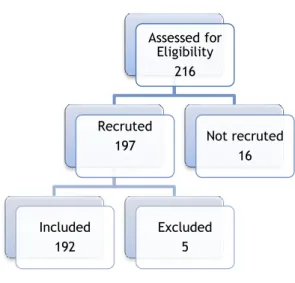
For the present study, out of a list of 112 elderly patients meeting the criteria for entry into the study, we were able to contact 100. Of the 112 elderly patients, 4 refused to participate, and we were not able to contact 8, even upon three attempts. In terms of non-elderly asthmatics, out of a list of 104, we were able to contact 100. Thus, 100 non-elderly
and 97 elderly individuals with a clinical diagnosis of asthma followed in Allergy and
Pulmonology outpatient clinics of CHCB, were interviewed. Five elderly asthmatics had to be excluded, one due to low MMSE score, two due to chronic obstructive pulmonary disease comorbidity and two due to questionnaire loss, originating a total number of 92 elderly asthmatics participating in the study (figure 1).
In addition, 211 volunteers, 107 elderly plus 104 non-elderly, without BA were sequentially recruited at outpatient clinics of ACES-CB. Of the 211 volunteers, 11 had to be excluded, due to respiratory disease. Two hundred of these were validated for inclusion in the statistical analysis.
Figure 1 – Representative flowchart of the selection process and evaluation of asthmatic volunteers.
Assessed for Eligibility 216 Recruted 197 Included 192 Excluded 5 Not recruted 16
7
2. Demographic and cognitive characterization of the study
population
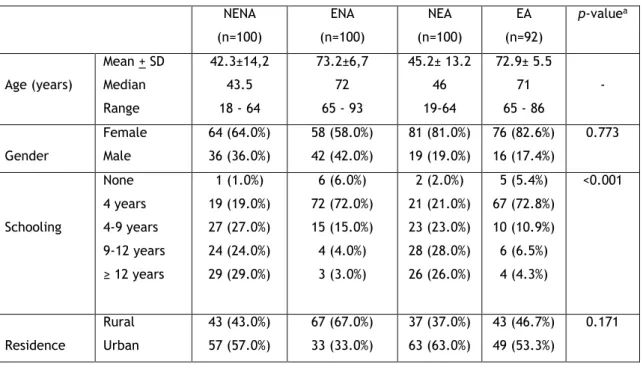
The mean age in the elderly asthmatic group was 72.9 years and there was a female predominance (82.6%). In this group, most of the patients had a low education level (4 years or less), low social class (class IV of the Graffar scale) and lived in an urban setting. In the non-elderly asthmatic group, the mean age was 45.2 years, also with a female predominance (81.0%). This group had a higher education level, with most individuals having 9 years or more of schooling, and a higher social class, most belonging to class III of the Graffar scale and the majority lived in an urban environment.
In the non-asthmatic group, the mean age in the elderly was 73,2 years, there was also a female predominance (58%) and the majority had a low education level (4 years or less), low social class (class IV of the Graffar scale) and lived in an rural setting. In the non-elderly non-asthmatic the mean age was 42.3 years, there was also a female predominance (64%) and the majority had 12 years or more of schooling, and a higher social class, most belonging to class III of the Graffar scale and the majority lived in an urban environment. Obviously, since it was an exclusion criteria, none of the patients had cognitive impairment on the MMSE. Most elderly asthmatics (70.7%) had no depressive humor on the GDS and only a minority (3.3%) had a severe impairment. Similarly, most of the non-elderly asthmatics (73.0%) had no depressive humor on the CES-D. The majority of the non-asthmatics had no depressive humor (84% of non-elderly and 72% of elderly).
Table 1 shows the demographic and cognitive characterization of all the volunteers, as well the remaining data for each of the four groups.
Table 1. Demographic and cognitive characteristics of the samples
NENA (n=100) ENA (n=100) NEA (n=100) EA (n=92) p-valuea Age (years) Mean + SD Median Range 42.3±14,2 43.5 18 - 64 73.2±6,7 72 65 - 93 45.2± 13.2 46 19-64 72.9± 5.5 71 65 - 86 - Gender Female Male 64 (64.0%) 36 (36.0%) 58 (58.0%) 42 (42.0%) 81 (81.0%) 19 (19.0%) 76 (82.6%) 16 (17.4%) 0.773 Schooling None 4 years 4-9 years 9-12 years ≥ 12 years 1 (1.0%) 19 (19.0%) 27 (27.0%) 24 (24.0%) 29 (29.0%) 6 (6.0%) 72 (72.0%) 15 (15.0%) 4 (4.0%) 3 (3.0%) 2 (2.0%) 21 (21.0%) 23 (23.0%) 28 (28.0%) 26 (26.0%) 5 (5.4%) 67 (72.8%) 10 (10.9%) 6 (6.5%) 4 (4.3%) <0.001 Residence Rural Urban 43 (43.0%) 57 (57.0%) 67 (67.0%) 33 (33.0%) 37 (37.0%) 63 (63.0%) 43 (46.7%) 49 (53.3%) 0.171
8 Graffar Scale Class I Class II Class III Class IV Class V 7 (7%) 27 (27%) 58 (58%) 8 (8%) 0 (0%) 1 (1%) 2 (2%) 33 (33%) 64 (64%) 0 (0%) 11 (11%) 25 (25%) 50 (50%) 14 (14%) 0 (0%) 0 (0%) 5 (5.4%) 24 (26.1%) 63 (68.5%) 0 (0%) <0.001 MMSE No cognitive defect Cognitive defect 100(100%) 0(0%) 100(100%) 0(0%) 100(100%) 0(0%) 92(100%) 0(0%) - CES-D Normal Depressive 84(84%) 16(16%) --- 73 (73.0%) 27 (27.0%) --- 0.058 GDS Normal Slightly Depressive Severely Depressive --- 72(72%) 23(23%) 5(5%) --- 65 (70.7%) 24 (26.1%) 3 (3.3%) 0.761 a:Chi-Square Test
3. Clinical characterization of the population
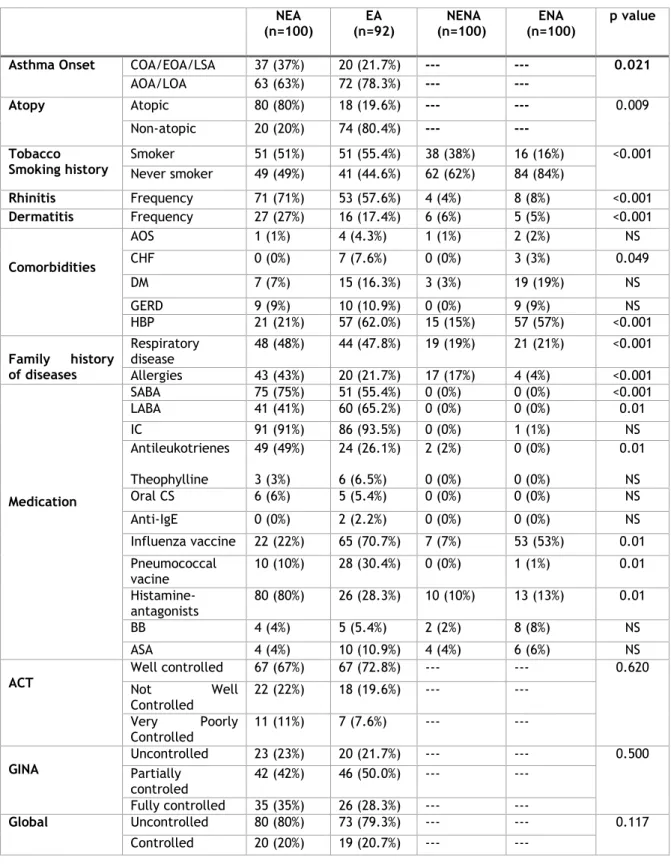
From the clinical assessment of the asthmatic patients, more volunteers had Adult-onset asthma (AOA/LOA) (63% of NEA, 78.3% of EA), and more than half had smoked (51% of NEA, 55.4% of EA) (Table 2). Most patients had rhinitis (76% of NEA, 59.8% of EA) but a minor proportion had dermatitis (27% of NEA, 17.4% of EA). There was a clear difference between both groups, in terms of atopy, with clearly a higher proportion of NEA than EA being atopic (80% versus 18%, respectively).
In terms of co-morbidities, most patients had high blood pressure (HBP) (21% of NEA, 62.0% of EA). Almost half of the asthmatic patients had family history of diseases and 43% of NEA and 21.7% of EA had a family history of allergies.
According to the ACT questionnaire, most of the Elderly Asthmatics had their asthma well controlled (72.8%), but still more than a quarter had their asthma either not well controlled (19.6%) or very poorly controlled (7.6%). However, according to the GINA questionnaire, most of the Elderly Asthmatics were partially controlled (50%), with the remaining 28.3% and 21.7% being well controlled and not controlled, respectively. Comparing these results with the ACT and GINA results from the Non-Elderly Asthmatics, there were no detectable significant differences in asthma control between the two age groups (p-value=0.620 for ACT and p-value=0.500 for GINA).
Most patients were on topical steroids, either on their own, or in association with leukotriene antagonists or in combination with a long–acting 2-agonist, in line with persistent, mild or moderate asthma.
Finally more than half of the EA (61.0%) had major errors (incorrect technique) and one quarter (25.4%) had minor errors (acceptable technique) in the inhalational technique.
9 Similar results were observed in the inhalational technique with NEA.
From the clinical assessment of the non-asthmatic, more volunteers had never smoked, only a minority had rhinitis and dermatitis. Also most patients had HBP. Only 19% of NENA and 21% of ENA had a family history of diseases and 17% of NENA and 4% of ENA had family history of allergies.
Table 2. Clinical and functional characterization of sample NEA (n=100) EA (n=92) NENA (n=100) ENA (n=100) p value Asthma Onset COA/EOA/LSA 37 (37%) 20 (21.7%) --- --- 0.021
AOA/LOA 63 (63%) 72 (78.3%) --- --- Atopy Atopic 80 (80%) 18 (19.6%) --- --- 0.009 Non-atopic 20 (20%) 74 (80.4%) --- --- Tobacco Smoking history Smoker 51 (51%) 51 (55.4%) 38 (38%) 16 (16%) <0.001 Never smoker 49 (49%) 41 (44.6%) 62 (62%) 84 (84%) Rhinitis Frequency 71 (71%) 53 (57.6%) 4 (4%) 8 (8%) <0.001 Dermatitis Frequency 27 (27%) 16 (17.4%) 6 (6%) 5 (5%) <0.001 Comorbidities AOS 1 (1%) 4 (4.3%) 1 (1%) 2 (2%) NS CHF 0 (0%) 7 (7.6%) 0 (0%) 3 (3%) 0.049 DM 7 (7%) 15 (16.3%) 3 (3%) 19 (19%) NS GERD 9 (9%) 10 (10.9%) 0 (0%) 9 (9%) NS HBP 21 (21%) 57 (62.0%) 15 (15%) 57 (57%) <0.001 Family history of diseases Respiratory disease 48 (48%) 44 (47.8%) 19 (19%) 21 (21%) <0.001 Allergies 43 (43%) 20 (21.7%) 17 (17%) 4 (4%) <0.001 Medication SABA 75 (75%) 51 (55.4%) 0 (0%) 0 (0%) <0.001 LABA 41 (41%) 60 (65.2%) 0 (0%) 0 (0%) 0.01 IC 91 (91%) 86 (93.5%) 0 (0%) 1 (1%) NS Antileukotrienes Theophylline 49 (49%) 3 (3%) 24 (26.1%) 6 (6.5%) 2 (2%) 0 (0%) 0 (0%) 0 (0%) 0.01 NS Oral CS 6 (6%) 5 (5.4%) 0 (0%) 0 (0%) NS Anti-IgE 0 (0%) 2 (2.2%) 0 (0%) 0 (0%) NS Influenza vaccine 22 (22%) 65 (70.7%) 7 (7%) 53 (53%) 0.01 Pneumococcal vacine 10 (10%) 28 (30.4%) 0 (0%) 1 (1%) 0.01 Histamine-antagonists 80 (80%) 26 (28.3%) 10 (10%) 13 (13%) 0.01 BB 4 (4%) 5 (5.4%) 2 (2%) 8 (8%) NS ASA 4 (4%) 10 (10.9%) 4 (4%) 6 (6%) NS ACT Well controlled 67 (67%) 67 (72.8%) --- --- 0.620 Not Well Controlled 22 (22%) 18 (19.6%) --- --- Very Poorly Controlled 11 (11%) 7 (7.6%) --- ---
GINA Uncontrolled Partially 23 (23%) 20 (21.7%) --- --- 0.500
controled 42 (42%) 46 (50.0%) --- --- Fully controlled 35 (35%) 26 (28.3%) --- --- C Global Uncontrolled 80 (80%) 73 (79.3%) --- --- 0.117 Controlled 20 (20%) 19 (20.7%) --- ---
10 A R A T Upper
respiratory tract Uncontrolled Controlled 84 (84%) 16 (16%) 60 (65.2%) 32 (34.8%) --- --- --- --- 0.308 Lower
respiratory tract Uncontrolled Controlled 67 (67%) 33 (33%) 74 (80.4%) 18 (19.6%) --- --- --- --- 0.893
Inhalational technique Correct technique 20 (15.4%) 16 (13.6%) --- --- 0.501 Acceptable technique 72 (55.4%) 72 (61.0%) --- --- Incorrect technique 38 (29.2%) 30 (25.4%) Lung function FEV1 (L/min) Mean + SD Median Range 2.60 + 0.64 2.55 1.74 - 4.31 1.72+0.53 1.68 0.87-3.19 >0.001 FEV1 (%) Mean + SD Median Range 104.2+16.2 103.1 70.0–147.2 101.9+25.7 104.6 40.3-141.5 0.833 VFC (L/min) Mean + SD Median Range 3.36 + 0.80 3.25 1.74 - 5.87 2.42+ 0.64 2.38 1.28 - 4.24 <0.001 VFC (%) Mean + SD Median Range 113.9+16.0 112.3 77.5–147.2 114.9+21.9 117.6 74.0–150.2 0.772 Patients with airway obstruction Mild Moderate Severe 100 (100) 0 (0) 0 (0) 67 (67.2) 17 (18.5) 8 (8.7) <0.001 Patients with reversibility (positive response to bronchodilation) 71 (71) 22 (24.3) <0.001
11
4. Assessment of the General Quality of Life
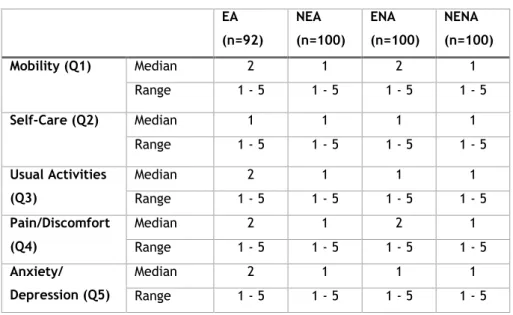
In the assessment of the volunteers´general QoL using EQ-5D-5L, in a possible score ranging from 1 to 5, elderly asthmatics (EA) had mild problems in walking about (median 2), carrying out their usual activities (median 2); they also had mild pain or discomfort (median 2), were slightly anxious or depressed (median 2) but had no problems in terms of washing or dressing themselves (median 1) (Table 3), thus reflecting a good general QoL.
Table 3. EQ-5D-5L Scores. EA (n=92) NEA (n=100) ENA (n=100) NENA (n=100) Mobility (Q1) Median 2 1 2 1 Range 1 - 5 1 - 5 1 - 5 1 - 5 Self-Care (Q2) Median 1 1 1 1 Range 1 - 5 1 - 5 1 - 5 1 - 5 Usual Activities (Q3) Median 2 1 1 1 Range 1 - 5 1 - 5 1 - 5 1 - 5 Pain/Discomfort (Q4) Median 2 1 2 1 Range 1 - 5 1 - 5 1 - 5 1 - 5 Anxiety/ Depression (Q5) Median 2 1 1 1 Range 1 - 5 1 - 5 1 - 5 1 - 5
When the five domains as well the general assessment of EQ-5D-5L were compared across the four groups, there were no significant diferences between EA and ENA (Table 4). However, there were significant differences in QoL parameters between EA and non-elderly non-asthmatics (NENA), as well as between EA and NEA (Table 4). Mobility, self-care, usual activities, pain/discomfort (but not anxiety or depression) and general assessment were worse in EA when compared with NENA or NEA. Curiously, NEA had decreased QoL (except anxiety or depression) when compared with ENA.
12
Table 4. Inferential analysis of EQ-5D-5L parameters between groups.
NENA-NEA
NENA-EA NENA-ENA NEA-EA NEA-ENA
ENA-EA Mobility (Q1) Test Statistic -16.315 -79.021 -89.150 -62.706 72.835 10.129
p-valuea 1.000 <0.001 <0.001 <0.001 <0.001 1.000
Self-Care (Q2) Test Statistic -5.940 -34.596 -31.655 -28.656 25.715 -2.941
p-valuea 1.000 0.001 0.002 0.007 0.018 1.000 Usual Activities (Q3) Test Statistic -22.840 -85.773 -72.375 -62.933 49.535 -13.398 p-valuea 0.500 <0.001 <0.001 <0.001 0.001 1.000 Pain/ Discomfort (Q4) Test Statistic -33.580 -93.120 -92.175 -59.540 58.595 -0.945 p-valuea 0.161 <0.001 <0.001 0.001 0.001 1.000 Anxiety/ Depression (Q5) Test Statistic -22.400 -43.602 -28.920 -21.202 6.520 -14.682 p-valuea 0.695 0.016 0.254 0.871 1.000 1.000
“Overall” Test Statistic -37.805 -107.243 -105.160 -69.438 67.355 -2.083
p-valuea 0.097 <0.001 <0.001 <0.001 <0.001 1.000
aKruskal-Wallis Test
In the assessment of the volunteers´general QoL using SF-36 (Table 5), EA had a fair general health (median 4), were slightly limited in their activities (median 2), their physical and emotional problems had interfered some time with their work or other regular daily activities (both medians 3) and slightly with their social activities (median 2). EA had had mild pain (median 3). They had had a lot of energy some time but also felt tired some time (median 3). Table 5. SF-36 Scores EA (n=92) NEA (n=100) ENA (n=100) NENA (n=100) General Health (Q1) 4 (1 - 3) 4 (1 - 5) 4 (1 - 5) 3 (1 - 5) Limitations of activities (Q3) 2 (1 - 3) 3 (1 - 3) 3 (1 - 3) 3 (1 - 3)
Physical health problems (Q4) 3 (1 - 5) 4 (1 - 5) 4 (1 - 5) 5 (1 - 5)
Emotional health problems (Q5) 3 (1 - 5) 5 (1 - 5) 5 (1 - 5) 5 (1 - 5) Social Function (Q6) 2 (1 - 5) 1 (1 - 5) 1 (1 - 5) 1 (1 - 5) Pain (Q8) 3 (1 - 6) 2 (1 - 6) 2 (1 - 6) 1 (1 - 6) Energy (Q9e,9l) 3 (1 - 5) 3 (1 - 5) 3 (1 - 5) 3 (1 - 5) Mental Health (Q9f,9h) 3 (1 - 5) 3 (1 - 5) 3 (1 - 5) 3 (1 - 5)
13 When the general assessments of SF-36 were compared across the four groups, there were significant diferences between EA and ENA, EA and NEA, and EA and NENA, indicating that general health was worse in elderly with BA, when compared with each of the other three groups.
Table 6. Inferential analysis of SF-36 parameters between groups. EA-NEA EA-ENA EA-NENA NEA
ENA-NENA
NEA-NENA “Overall” Test Statistic 88.888 60.913 99.013 -27.975 38.100 10.125
p-valuea <0.001 0.001 <0.001 0.481 0.103 1.000
14
5. Assessment of Asthma-Related Quality of Life
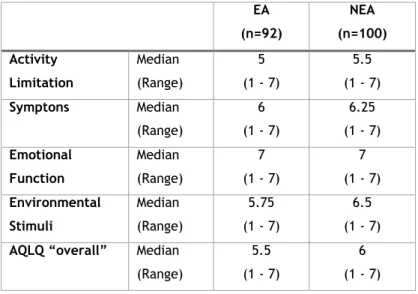
In the assessment of elderly asthmatics´s specific QoL using AQLQ, the median of responses in general assessment was 5.5, reflecting an excellent QoL (Table 7). These patients had a slight limitation in their daily activities (median 5), very few symptons (median 6) and these symptoms were almost never associated with the environment (median 5.75). Curiously, they had never had emotional problems with asthma (median 7).
Table 7. AQLQ scores between asthmatics (elderly vs. non-elderly) EA (n=92) NEA (n=100) Activity Limitation Median (Range) 5 (1 - 7) 5.5 (1 - 7) Symptons Median (Range) 6 (1 - 7) 6.25 (1 - 7) Emotional Function Median (Range) 7 (1 - 7) 7 (1 - 7) Environmental Stimuli Median (Range) 5.75 (1 - 7) 6.5 (1 - 7)
AQLQ “overall” Median (Range)
5.5 (1 - 7)
6 (1 - 7)
When the four domains as well the general assessment of AQLQ were compared between the two groups of asthmatic patients, there were no significant differences between EA and NEA in terms of symptoms and environmental stimuli, but there were significant differences with activity limitation, emotional function and “overall” scores being lower in the elderly asthmatics, indicating more affected aspects (Table 8).
Table 8. Inferential analysis of AQLQ parameters between asthmatics (elderly vs. non-elderly) Activity Limitation Symptoms Emotional Function Environmental Stimuli AQLQ “overall” EA-NEA 0.001a 0.216a 0.039a 0.180a 0.013a
aKruskal-Wallis Test
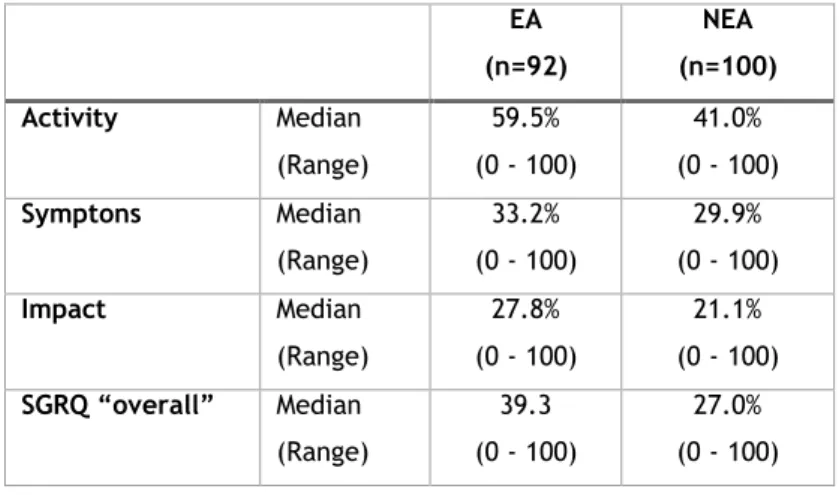
15 Using SGRQ, the median of responses in general assessment was 39.3, reflecting a good QoL. EA had more limitation in daily activities (median 59.5) than symptoms (median 33.2) and impact (median 27.8).
Table 9. SGRQ scores between asthmatics (elderly vs. non-elderly) EA (n=92) NEA (n=100) Activity Median (Range) 59.5% (0 - 100) 41.0% (0 - 100) Symptons Median (Range) 33.2% (0 - 100) 29.9% (0 - 100) Impact Median (Range) 27.8% (0 - 100) 21.1% (0 - 100) SGRQ “overall” Median (Range) 39.3 (0 - 100) 27.0% (0 - 100)
When the three domains as well the general assessment of SGRQ were compared between the two groups of asthmatics, there were no significant differences between EA and NEA with symptons, but there were significant differences with activity limitation, asthma impact and “overall”.
Table 10. SGRQ Inferential analysis of parameters between asthmatics (elderly vs. non-elderly) Activity Symptoms Impacts SGRQ “overall”
EA-NEA <0.001a 0.756a 0.005a <0.001a
16
6. Factors affecting Asthmatics´Quality of Life
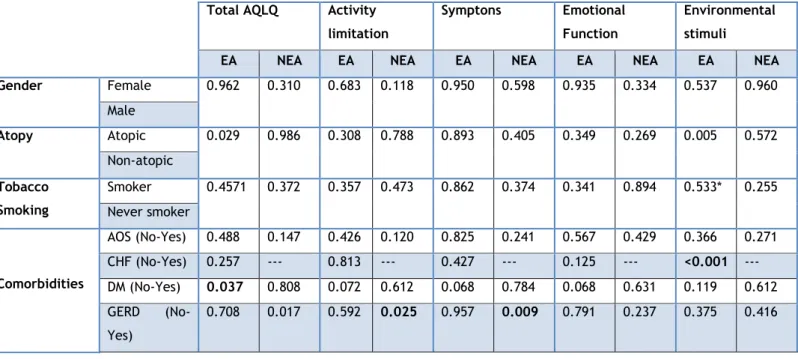
In EA, when item medians obtained using the AQLQ were compared against factors that might potentially influence QoL, asthma control as well co-morbidities such as diabetes mellitus (DM) and congestive heart failure (CHF) showed a significant effect (Table 11).
In terms of ACT-assessed asthma control, QoL was lower in the group classified as “non controlled” in general AQLQ profile and in the AQLQ symptons and emotional function domains. With GINA, QoL was also lower in the group classified as “uncontrolled” in general AQLQ profile and in all the AQLQ domains, when compared with “fully controlled”. There were also significant differences in QoL parameters between “partially controlled” and “fully controlled” patients, and “uncontrolled” and “partially controlled” patients, with exception in activity limitation and environmental stimuli. Similar results were obtained in terms of “uncontrolled” versus “controlled” patients, using total CARAT and the lower airway component of CARAT and the AQLQ means for all domains. However there were no significant differences in QoL parameters using upper airway component of CARAT, with exception in symptoms. Curiously, there were significant diferences in NIA, in this regard.
In terms of co-morbidities, the presence of chronic heart failure (CHF) significantly decreased QoL but only in the AQLQ environmental stimuli domain. Diabetes Mellitus (DM) significantly decreased QoL in general AQLQ profile in EA, but not in NEA. In the latter, the presence of Gastro-esophageal Reflux Disease (GERD) significantly decreased QoL.
For the remaining factors that were assessed, namely atopy and inhalational technique, no significant effect was observed on the overall or specific domains of AQLQ, either in EA or in NEA.
Table 11. Inferential analysis of factors potentially affecting QoL in elderly asthmatic and non-elderly
asthmatic using Student’s t Test
Total AQLQ Activity limitation
Symptons Emotional Function
Environmental stimuli
EA NEA EA NEA EA NEA EA NEA EA NEA Gender Female 0.962 0.310 0.683 0.118 0.950 0.598 0.935 0.334 0.537 0.960 Male Atopy Atopic 0.029 0.986 0.308 0.788 0.893 0.405 0.349 0.269 0.005 0.572 Non-atopic Tobacco Smoking Smoker 0.4571 0.372 0.357 0.473 0.862 0.374 0.341 0.894 0.533* 0.255 Never smoker Comorbidities AOS (No-Yes) 0.488 0.147 0.426 0.120 0.825 0.241 0.567 0.429 0.366 0.271 CHF (No-Yes) 0.257 --- 0.813 --- 0.427 --- 0.125 --- <0.001 ---DM (No-Yes) 0.037 0.808 0.072 0.612 0.068 0.784 0.068 0.631 0.119 0.612 GERD (No-Yes) 0.708 0.017 0.592 0.025 0.957 0.009 0.791 0.237 0.375 0.416
17 ACT Controlled GINA Uncontrolled- Partially controlled 0.002 <0.001 0.208 <0.001 <0.001 <0.001 0.006 <0.001 0.068 <0.001 Uncontrolled- Fully controlled <0.001 <0.001 0.026 <0.001 <0.001 <0.001 <0.001 <0.001 0.016 <0.001 Partially controlled - Fully controlled 0.013 <0.001 0.176 0.078 0.002 <0.001 0.024 0.008 0.162 0.250 C A R A T Global Uncontrolled- Controlled <0.001 <0.001 0.023 0.032 <0.001 <0.001 0.002 0.003 0.006 0.002 Upper respiratory tract Uncontrolled- Controlled 0.117 <0.001 0.631 0.040 0.005 <0.001 0.272 0.007 0.623 <0.001 Lower respiratory tract Uncontrolled– Controlled <0.001 <0.001 0.003 <0.001 <0.001 <0.001 <0.001 <0.001 0.001 0.008 Inhalational technique Major errors 0.749 0.718 0.951 0.148 0.745 0.915 0.907 0.156 0.482 0.642 Minor errors 0.967 0.774 0.865 0.336 0.804 0.785 0.593 0.751 0.936 0.660
18
Discussion
This is the first study carried out in Portugal, and one of the very few, internationally, to specifically assess QoL in elderly asthmatic patients and to draw comparisons and analyse differences with the general QoL of non asthmatic volunteers, and with the specific QoL of non elderly asthmatic patients, in a real life setting, as well to assess the factors that may influence influence the QoL. Elderly asthmatics had a generic QoL ranging from reasonable to good, but they also had a worse general QoL when compared with elderly non asthmatics volunteers. Elderly asthmatics had good asthma-specific QoL, but a lower QoL in global and domain-specific scores of activity limitation and emotional function impact when compared with non elderly asthmatic volunteers. We showed that in elderly asthmatics and also in non elderly asthmatics, the principal factor affecting QoL was the degree of disease control, since the lower disease symptom control was, the poorer was QoL. QoL also correlated with the presence of co-morbidities such as CHF and DM. By applying EQ-5D-5L in elderly asthmatic patients, we showed a good general level of QoL. Curiously, there were no significant differences between elderly asthmatics and elderly non asthmatics, in the general assessment or in the five domains. We also showed there were no significant difference between non elderly asthmatics and non elderly non asthmatics.
By using SF-36, we showed a reasonable general level of QoL in elderly asthmatic. With this questionnaire, there were significant differences between elderly asthmatics and elderly non asthmatics, with the former having worse general QoL. Also, elderly asthmatics had worse general QoL that non elderly asthmatics. We showed there were no significant differences between non elderly asthmatics and non elderly non asthmatics. As we can see, SF-36 showed that elderly asthmatics had worse general QoL when compared with elderly non asthmatics volunteers. This conclusion was not found with EQ-5D-5L. This may have happened because SF-36 has more domains, including general health, physical health problems and social function. Also, in SF36 domains, one can ask more specific questions and to better assess their limitations. In a study by Myers and Wilks, the objective was to compare the EuroQoL EQ-5D and SF-36 health questionnaires in patients with chronic fatigue syndrome. These researchers concluded that EQ-5D was strongly and significantly correlated with all dimensions of the SF-36, with the exception of physical limitation. (35)
By using SGRQ in elderly asthmatic patients, we showed a good asthma specific QoL. Scores were expressed as a percentage of overall impairment where 100 represent worst possible health status and 0 indicates best possible health status. In global score, we obtained 39.3%. Scores were worst in activity domain, suggesting a greater impact, probably because of BA control, but also the presence of co-morbidity. Scores were better in the symptoms and impact domain, suggesting a milder impact. When compared with non elderly asthmatic patients, elderly patients had a worse asthma specific QoL and also in the activity and impact domains. Asthma symptoms did not show any significant differences in QoL. The greatest
19 difference observed was in activity domain.
The study also showed a good level of QoL with AQLQ, both in global and domain-specific scores. Scores were lower for activity limitation, suggesting a greater impact, as explained above. In contrast, AQLQ scores in emotional function were higher, suggesting a milder impact or even no impact at all. In any case, although our patients had non-controlled or partially controlled symptoms in GINA and CARAT, respectively, QoL scores were higher than those seen in other similar studies. For example, in a study by Turner et al, carried out in 35 asthmatic patients with a mean age of 65.3±10.8 years, AQLQ scores (averaging 5) were lower (11). In another study, by Ross et al, involving 70 elderly asthmatics with a mean age of 73.3 years, QoL scores averaged 5.66±0.93 (23). Patients in that study were more symptomatic than our patients, which may account for the lower mean QoL detected in those volunteers. In addition, that study used the mini-AQLQ questionnaire, a shortened version of the AQLQ, and has a lower number of questions in each analyzed domain (24). This does not allow a full direct comparison with our study since the mini-AQLQ does not evaluate all parameters we analyzed. In fact, it has been shown that although Mini-AQLQ has good measurement properties they are not as strong as those of the original AQLQ (24).
Besides the AQLQ global scores, it is also important to analyze aspects regarding sub-domains of the questionnaire. For example, in our study we found lower AQLQ scores for the domain related to activity limitations, as was also found by Turner et al (11). However, the domain with the highest AQLQ score in that study was associated with symptom-related limitations, whereas in our study it was the domain regarding limitations due to emotional function. Various reasons may explain this difference. Firstly, our sample included older individuals who were also comparatively less physically active since we tried to reproduce a real-life setting whereas, in the study by Turner et al, patients who had significant activity limitations were excluded (11). In addition, our patients tended to less frequently go outdoors, which would make them less frequently exposed to environmental stimuli as patients of a younger age. On the other hand, our patients may have had a lower symptom-related limitation score in the AQLQ because, because their symptoms were probably less well controlled, as suggested by our results with CARAT and GINA. However, since a different measure for asthma symptom control was used in the study by Turner et al - the Asthma Control Questionnaire (ACQ), it is difficult to directly compare this possibility.
When compared with non elderly asthmatic patients, we showed that elderly patients had a worse asthma specific QoL in general and also in the activity and emotional function domains. Asthma symptoms and the impact of environmental stimuli did not show significant differences in QoL between the two goups. The greatest difference was in activity limitation, as explained above.
20 Similar results and conclusions were made with both asthma specific quality of life questionnaires, SGRQ and AQLQ. In spite of being initially approved for assessment of COPD QoL, we can also use SGRQ for assessment of BA QoL. However, a difference can be pointed out: the impact domain of SGRQ is better clarified with AQLQ domains of emotional function and environmental stimuli.
Various factors may affect QoL. One of the most important ones has to do with the frequency and control of asthma symptoms. Pereira ED et al (22) carried out a descriptive observational study to evaluate the association between degree of BA control and health-related QoL in patients with moderate or severe asthma, and the degree of BA control appears to have a significant impact on health-related QoL. In our study, we showed that, although most patients were not controlled or partially controlled, there were good global asthma specific QoL scores with a minor degree of limitations. This apparent discrepancy may be explained by the fact that ACT, CARAT and GINA assess the degree of asthma control in the previous four weeks whereas AQLQ has a shorter timespan since it focuses on limitations felt in the previous two weeks. This timeframe discrepancy may be associated with a potentially different memory bias. Nevertheless, in spite of the generally good AQLQ scores, the symptom-related activity domain was the one with the lowest QoL score. Furthermore, when we compared between the groups of asthma control (both in terms of global and lower airway CARAT scores as well as in terms of ACT and GINA scores), we showed that “non controlled” patients had significantly lower scores than those of “controlled” patients, for some of the AQLQ domains. These aspects are concordant with those seen in younger asthmatic patients, which showed that the symptom-related activity is one of the main factors influencing QoL in these patients (25–27). Also a Polish study involving 105 elderly patients with BA found a direct association between AQLQ and asthma control (28). Globally, these results suggest that elderly asthmatic patients frequently have not controlled BA, which influences their QoL. The same conclusion can be drawn with non elderly asthmatics. However the results also suggests that non controlled rhinitis does not influence QoL (with exception of the symptoms domain), as assessed with CARAT upper respiratory tract, in elderly asthmatic patients, but not in non elderly asthmatic patients. In this regard, for instance, a study in asthmatic adults showed that concurrent allergic rhinitis in patients with asthma significantly worsened QoL, as measured by the RHINASTHMA questionnaire (29). This may have been due to the fact that although most of our elderly patients had rhinitis (59.8%) they did not attribute much importance to it. However, a high proportion of non elderly patients had rhinitis (76%) and they believed this co-morbidity had a negative impact upon QoL.
Another aspect which may influence QoL is gender. A Swedish study, carried out in 16 to 69 year-old patients, with the Gothenburg Quality of Life Instrument, showed that QoL, particularly in the symptom and “mental” domains was lower in women than in men (25). Similar results were observed in other studies of asthmatic adults (30–32), using QoL questionnaires, namely in Portuguese adults, in terms of global AQLQ scores (27). In our
21 study, no significant differences were observed for any of the QoL domains, between men and women, either in elderly or in non elderly patients. To our knowledge, no other studies in elderly asthmatics have addressed this issue. Various aspects may justify the discrepancy between our results and those from studies in younger asthmatics. Firstly, in younger women emotional and symptom domains in QoL questionnaires may be more frequently affected since women are still in an active, working period of their lives and any asthma symptoms may be more frequently triggered and perceived (31). Secondly, with one exception (31), the other studies addressing gender differences in QoL of asthmatic patients did not use AQLQ and it is not easy to compare. Thirdly, in elderly patients, more co-morbidities are present in both men and women and these may equally affect QoL, thereby minimizing eventual gender-related, asthma-associated differences in QoL. In this regard, and in contrast to our study, the Swedish report using the Gothenberg QoL Instrument and which also included some elderly patients, excluded patients with co-morbidities, which may have accounted for their increased ability to detect gender-related differences in QoL. In any case, we believe that gender-related differences in QoL in our sample do not have a significant expression since no gender influence was detected in our inferential analysis controlling for other confounding factors.
Co-morbidities may also affect QoL. An Australian study which compared the presence of co-morbidities and their influence on QoL, using the SF-12 questionnaire, in patients older than 8 years, concluded that the presence of one or more co-morbidities associated with asthma decreased QoL, with heart disease as one of the most important factors (33). However, studies addressing this issue in elderly patients are very scarce and patients with cardiac disease are often excluded. We decided not to exclude patients with heart failure from our study, since we wanted to be representative of a real-life setting. In our study, we found that CHF negatively influenced QoL in terms of environmental stimuli. We know CHF has an impact on respiratory function and patients often mix cardiac disease- and asthma-related symptoms (31). Curiously, a high proportion of patients had HBP and this co-morbidity was not associated with lower QoL score.
We found that most patients had errors in the inhalational technique. We would expect this fact to be associated with lower asthma control and, indirectly, lower QoL. However, we did not find any significant association between the presence of inhalational errors and AQLQ scores, either in elderly or non elderly patients. This suggests that patients had low levels of anxiety in the inhaler use. In fact, they were not concerned with inhalers since they believed they were performing inhalational technique correctly. A Swiss study showed that an interdisciplinary programme focusing on giving patients higher levels of education on self-management of asthma improves QoL scores (38).
Environmental factors also impact upon QoL. For example, the Portuguese study on QoL, measured using AQLQ, in adult asthmatics with a mean age of 40 years (27) showed a moderate degree of limitation (scores around 4), which was worse in terms of environmental stimuli. In contrast, our elderly patients (mean age of 72.9 years) had a comparatively higher
22 AQLQ score in terms of environmental stimuli, but when compared with non elderly patients (mean age of 45.2 years), there were no significant differences in QoL. We were expecting that in these study groups, it would be more likely that environmental agents such as pollens or house dust would trigger BA symptoms and therefore, more frequently associated with lower QoL.
Our study had several limitations. One of the main limitations was that some of the questionnaires (EQ-5D-5L, SF-36, SGRQ and AQLQ) that were used have not yet been specifically validated for the elderly. So it is possible that some of the questions are not adapted for comprehension by older elderly patients, which may have biased some of the results obtained. However, we were careful enough to only use data from patients who had no or only slight cognitive deficits. Another possible limitation relates to the fact that most studies on QoL in asthmatics exclude patients with cardiac disease, and we did not. Our objective was to assess patients in a real life setting, with the various co-morbidities that are more prevalent in the age range in question. In any case, all possible confounding factors were included and controlled for in our inferential analysis. In spite of the limitations above, we believe that our study is important in that we were able to include a very good number of volunteers (392) and we carefully analyzed QoL and factors that may affect it in elderly asthmatic patients in which there are very few studies worldwide. Finally, our gender distribution is similar to worldwide and Portugal distribution of BA in elderly asthmatics, which may allow us a certain degree of extrapolation of our results.
In conclusion, our study showed that elderly asthmatics regularly seen at outpatient clinics have a generic QoL ranging from reasonable to good, but have a worse general QoL when compared with elderly non asthmatics volunteers with SF-36 questionnaire. On the other hand, elderly asthmatics have good asthma-specific QoL, but a lower QoL in global and domain-specific scores of activity limitation and emotional function impact when compared with non elderly asthmatic volunteers. Generic and asthma-specific health-related QoL differentially capture the impact of symptom control and comorbidity in asthma. QoL in elderly asthmatics is directly influenced by the degree of disease control, but also by co-morbidities such as CHF and DM. Thus, there should be a higher focus on the optimization of self-education and treatment of both BA and relevant co-morbidities in these patients.
23
Future prospects
In order to overcome limitations of the present study and to further analyze some of the results detected therein, we propose some future approaches.
It will be important to do some adjustments in terms of applied questionnaires, particularly because their parameterization and application have not yet been specifically validated for elderly patients. In this regard, it will be important to specifically analyze questions in the generic and disease-specific heath related QoL instruments, in order to ascertain their full validity when applied to elderly asthmatic patients. Is is important to advise that the selection of these QoL questionnaires for asthma studies should depend on the prevalence of comorbidity in the target population and the impact of the interventions on asthma control and comorbidity. Also there are some methodological aspects that should be discussed in greater depth, such as the necessity to express variations in the same perception, not as p-value but as effect-size. Subjective data is normally reported, but rarely commented on.
Secondly, it will also be important to further study QoL in these patients, in a longitudinal perspective, applying SF-36, SGRQ or AQLQ on a monthly basis, as well as asthma control questionnaires, in order to better understand the implications of having BA upon QoL on a more regular basis.
Finally, it would be important to carry out a longitudinal interventional study directed at asthma control in these elderly patients, including not only the adequate treatment of the patients but, above all, programmes focused on self-management of the disease. This would allow us to analyze the relationship between this approach and QoL in elderly asthmatics and to study the main points in which intervention is necessary for improvement of QoL.