Moldax – A Change Needed
Madalena Gomes Ferreira
Advisor: Nuno Magalhães Guedes
Dissertation submitted in partial fulfilment of requirements for the MSc in Strategy & Entrepreneurship, at the Universidade Católica Portuguesa, April 2017.
Abstract
This thesis is about Moldax, a Portuguese plastics manufacturing company that somewhere along its way felt the need to change. Moldax was born in 1993 and soon revealed the will to be the best in the market by being, for instance, a pioneer regarding the implementation of a quality system. But it is known that technology evolves at an unbelievably fast pace, and with it markets, employees, clients, shareholders…! To face these changes, companies need to be up to date – they must have state-of-the-art technology, machines, infrastructures, and their strategy must be aligned with their mission. What should companies do when the market starts to change?
International competitors (such as Chinese companies) started to enter the market and offering better prices. At the same time, clients were becoming more demanding. Due to these factors, the company was forced to seek a different strategy, and this could be based on differentiation and servitization. This will be the focus of this thesis.
The structure of this thesis is divided into three parts: Case Study, Literature Review and Teaching Note.
Resumo
Esta tese é sobre a Moldax, uma empresa de produção de plástico que, ao longo do seu percurso, sentiu a necessidade de mudar. A empresa Moldax foi fundada em 1993 e cedo revelou o desejo de ser a melhor no mercado, tendo sido pioneira na implementação de um sistema de qualidade. Mas todos sabemos que a tecnologia evolui a um ritmo incrivelmente rápido, e com ela os mercados, trabalhadores, clientes, acionistas…! Para fazer face a estas alterações, as empresas têm de estar atualizadas – têm de ter as melhores tecnologias, máquinas, infraestruturas, e a sua estratégia deve estar alinhada com a sua missão. O que devem as empresas fazer quando o mercado está a mudar?
Concorrentes internacionais começaram a aparecer (tais como empresas chinesas) e a oferecer melhores preços. Ao mesmo tempo, os clientes começaram a tornar-se mais exigentes. Devido a estes fatores, a empresa viu-se forçada a adotar uma estratégia diferente, que poderia estar ligada aos conceitos de diferenciação e à teoria que propõe a união de capacidades de produção e serviços. Este será o foco da presente tese.
Acknowledgements
I would also like to thank the General Manager of Moldax for his availability to open the company and shared important information with me.
I would also like to thank my thesis advisor Nuno Magalhães Guedes. I never had the pleasure to have him as a teacher, but being an exceptional advisor must be the ultimate proof of dedication to his students. I know several colleagues that wish to have Prof. Nuno has their thesis advisor, and this is just another proof of excellent work.
Finally, I must express my gratitude to my brother Manuel, my family and friends for the continuous encouragement throughout my years of study. I would like to dedicate my thesis to my Mom and Dad, and thank them for the education they gave me and for teaching me to be strong. I know you will always be looking after me. This accomplishment would not have been possible without the funny, and yet still hard, words of my father.
Table of Contents
INTRODUCTION ... 1
CASE STUDY ... 2
Background ... 2
Mission, Vision & Values ... 4
Main Competences ... 5
Human Resources Structure ... 6
Products, Clients & Suppliers ... 6
Competitors ... 8
Sales & Marketing ... 9
Financial Indicators ... 10
The Future ... 11
Exhibits ... 12
LITERATURE REVIEW ... 18
Manufacturing Servitization ... 18
Blue Ocean Strategy ... 22
Three Characteristics of a Good Strategy ... 23
The Four Actions Framework ... 23
Balanced Scorecard ... 24
The Value Chain and Organizational Structure ... 26
TEACHING NOTE ... 28 Case Overview ... 28 Learning Objectives ... 28 Assignment Questions ... 28 Class Plan ... 29 Analysis ... 29 CONCLUSION ... 40 REFERENCES ... 41
INTRODUCTION
This thesis was developed under the Business Strategy Case Studies dissertation seminar. The business case presented portrays the story of a Portuguese plastic manufacturing company that after many years decided to change its strategy so that the market and clients would perceive it differently. Moldax1 was founded in 1993 as a family business and soon started showing great potential, but along the way other competitors started to arise, both in national and international markets. In the plastics industry, labor costs are not key and it is easy to be a good manufacturer. The question lays in whether or not companies want to distinguish themselves and provide additional value to customers.
I believe that this topic is very relevant given the way the environment is evolving. Companies cannot rely on their strategies, products, processes, infrastructures, and employees forever. They need to be up-to-date and aligned with market trends; they must have state-of-the-art technology to have more efficient and effective processes; and all this must be aligned with their strategy, with what they want to be and what they want others to see.
This thesis deals with topics such as Servitization, Blue Ocean Strategy, the Balanced Scorecard framework, and the Value Chain and Organizational Structure.
This project is divided in three parts. The first is a Case Study, that allows us to understand Moldax’s history, main competences, products, clients and suppliers, sales, and financial indicators, and also to understand the market and its players. The second is the Literature Review, that help us to relate theoretical concepts with the actual case. Finally, the Teaching Note, that includes the analysis of the case, grounded on aspects developed in the Literature Review.
CASE STUDY
It was at the end of 2007 that João Silva (General Manager of Moldax2) and his team realized that the company’s business model was outdated. Moldax was a plastics manufacturing company based in Marinha Grande, Portugal (see Exhibit 1 for pictures of the company’s facilities). The company could not distinguish itself from its competitors and it was lacking the capacity of attracting new customers. João Silva thought that Moldax was getting too comfortable with its positioning and there were repercussions in the implementation of new methodologies and in the capacity to reach efficiency gains. Therefore, the team decided that a change in strategy was needed in order to achieve a closer relationship with the customers. Other companies were focusing on marketing and distribution, but Moldax thought that by betting in product engineering and controlling the products since their inception, it would deliver more quality to the client and thus increase its profit margins. Nevertheless, the company was still trying to figure out which strategy would work better.
Background
The plastic materials transformation sector included about 40.000 companies worldwide, mostly SME’s, that employed about one million people. Annual production capacity was more than 30 million tons of plastic material, which corresponded to a business of more than 100 billion euros. This industry served a vast range of final sectors, many of them extremely competitive due to cost, time and very demanding quality requirements.
Most industry players operated under subcontracted work or produced their own products. Until the late 40’s the plastics industry in Portugal had two major players, SIPE and Nobre & Silva, but soon other plastic manufacturing companies entered the market.
It was after the Second World War that the plastics industry started to grow in Portugal, helped not only by the tax exemption of this industry for several years, but also by new materials and technologies (e.g. thermoplastic, injection molding, and extrusion for other applications). The industry went from only two companies in 1937 to 45 in 1956, producing mainly for the electric, toys, domestic products and civil engineering sectors.
The major advantage of plastic when comparing to other materials like glass or ceramics had always been its versatility and endurance capacity.
By 2007, the Portuguese plastics industry had a lot of players, so it was hard to determine each company’s market share.
The market was providing new opportunities, such as the development of health, aeronautics and environmental sectors and there were also changes in the key automotive industry competitive factors. The decreasing labor cost, and the cooperation between the plastics industry and universities were also recent trends.
But companies were also facing some threats, like the limitations and cost of getting bank loans, the demanding labor legislation, the high bargaining power of clients, and the US dollar/Euro exchange rate. More importantly, the mold cost in Europe was increasing, which would rise the final price of the products, thus leading clients to seek for cheaper suppliers in the Asian markets. This was the biggest threat that Moldax was facing. Asian companies were offering the same manufacturing service at a lower price, and Moldax did not know yet how to overcome this huge threat. While Moldax continued to run its operations despite the loss of clients and decrease in sales from 2004 to 2006, other European companies were shutting down the business.
Moldax was a family company founded in 1993 by the Costa family and it started its activity by manufacturing and selling domestic plastic products, such as kitchen and table tools. In 2002, it began to manufacture complete products – coffee machines – and it developed competences in areas such as design, industrialization, and manufacture of plastics and related components. Moldax offered integrated solutions related to injection, assembly, printing and logistics services, for partial or complete products.
Since the beginning of its activity, Moldax had been following a policy based on a close relationship with its customers and a better understanding of their needs. However, clients did not always perceive this added value, and Moldax felt that the effort it was making by providing a service rather than a product was being wasted.
In 1995, it was a pioneer when implementing and certifying a Quality System according to the ISSO 9002 rules, and again in 1998 with the ISSO 9001 rule. In 2001, Moldax implemented and certified the Environmental Management System.
Later on, the company went through a process of renewal and substitution of its equipment, and of improving personnel training in order to develop personal and management skills.
In 2005 and 2006 the sales volume suffered a huge decrease, when two major projects that accounted in 2004 for around 2,5 million euros in sales were discontinued.
In 2007, the Quality and Environmental Management System was revised and updated to be integrated with the Quality Management System, Hygiene and Security at Workplace. Also, the company was trying to implement the Balanced Scorecard and Lean tools (such as SMED)3. The plastics industry was growing at a fast pace and becoming more and more automated. Meanwhile, Asian players were conquering territory and stealing customers away from Moldax, offering lower prices for complete plastic products. Even some of Moldax’s national competitors were getting stronger by broadening their value chain and investing in areas such as R&D, engineering, marketing and distribution.
On the demand side, customers no longer wanted the same type of products, and if they did, they were looking for new ways to make them (such as using materials different from plastics). Management thought that the company did not have a marketing plan that could distinguish it from the competition. Besides, in addition to the lack of capacity to acquire new clients, Moldax was heavily dependent on one single customer, the Seb Group, a French producer of small electric appliances, that represented more than 50% of the total sales volume.
Mission, Vision & Values
Moldax’s mission was to “increase the customer’s competitiveness”, by promoting a collaborative business relationship that generated integrated solutions adjusted to each project. The company also searched for value creation for its employees, shareholders, and suppliers, and to be an active player in the protection of the environment and its community. One of Moldax’s goals was to increase the cooperation with IPL4, by creating internships and research centers on the company’s.
Moldax’s vision was to be known by its clients as a benchmark company in the plastics industry, searching for better integrated solutions regardless the project’s complexity.
3 SMED (Single-Minute Exchange of Dies) is a system for reducing the time complete equipment changeovers. The essence of the SMED system is to convert as many changeover steps as possible to “external” (performed
Regarding its values, Moldax had an orientation towards clients, was professional and reliable with its partners, was aware of the importance of employees’ motivation, and was respectful towards the environment.
The company’s motto was “Moldax: your business partner”.
Main Competences
Moldax was an expert in injection molding, which was a manufacturing process for producing parts by injecting material into a mold. It owned 16 injection units from 75 tones to 800 tones,
two 75-ton and one 370-ton injection machines, a transportation system, dehumidification and
dosage materials, weld equipment by ultrasounds and thermic, tampo printing, and screen printing.
Moldax had a close relationship with its suppliers and the deliveries were always made on time. According to João Silva, other strong points of Moldax were its organizational culture and structure, balanced financial situation, and customer retention.
Moldax wanted to be close to its customers, providing a personalized service instead of being only a manufacturer. While its competitors were jumping ahead in the supply chain and creating its own brands, Moldax was still thinking how it could overtake both its national and international competitors.
Moldax had a partnership with CDRSP5, which was an investigation unit from IPL, that was classified as “excellent” by Fundação para a Ciência e Tecnologia6. The team of researchers was trying to transfer the results of their research to the industry, supporting companies in their research process. This allowed a small company like Moldax to benefit from the results of relevant advances and to develop innovative projects to boost the company’s competences and competitive advantage. Although this allowed the company not to invest in its own R&D department, it also created some dependence. Through this partnership, the company was able to develop an interesting project that united two relevant technologies in Portugal about the plastic injection on glass, that resulted from an identified market need.
Moldax also obtained the ISO/TS16949 certification, which was a technical specification aimed at the development of a quality management system that provided for continual improvement,
5Centre for Rapid and Sustainable Product Development
emphasizing defect prevention and the reduction of variation and waste in the automotive industry supply chain. Although Moldax did not have any clients in the automotive industry (besides the selling of warning triangles), this industry was always an inspiration for the company, in what concerned internal processes and good practices. In fact, some of Moldax’s clients also applied actions commonly used in the automotive industry. The company was yet to evaluate how this could impact its results.
Human Resources Structure
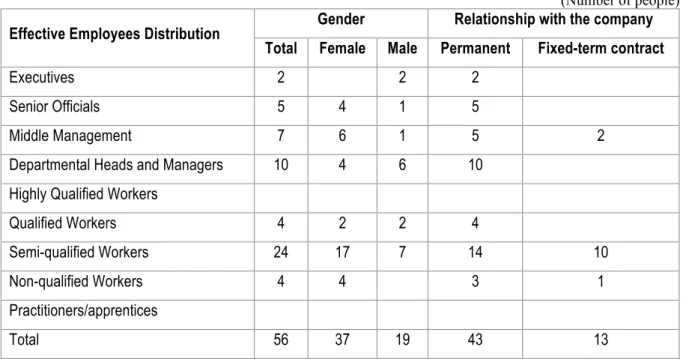
Moldax’s multidisciplinary team of semi-qualified workers, departmental heads and managers, and middle management included 56 employees, mostly women, with vast experience in the analysis, conception and implementation of innovative solutions.
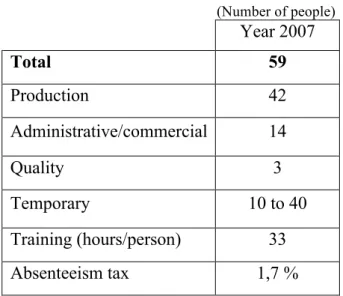
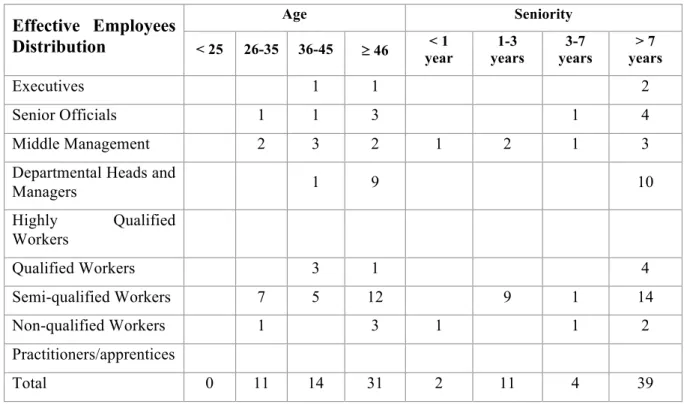
29% of the workers had only gone to primary school, and only 13% had in fact a master or doctorate degree. Furthermore, the majority of the workers (55%) were 46 years old, and around 70% of all workers had been working in the company for at least 7 years. The majority of its employees (70%) worked in the production department, followed by the commercial, administrative/financial, and other departments with around 10% of the total employees each (see Exhibit 2 for more information).
Moldax had a strong HR structure, supported by training programs that resulted in low dropout and turnover rates, although no formal evaluation system was in place. The inclusion of temporary workers was an important concern, as well as their motivation and flexibility. However, Moldax was not able to recruit employees with a high education level. Those it did recruit were resistant to go through external training initiatives to develop personal and management skills.
Products, Clients & Suppliers
Moldax was an experienced manufacturer in the production and selling of final plastic products and plastic components. The company was able to combine versatility and flexibility and so it was present in several markets throughout Europe – household appliances, plastic containers, electronics, among others.
Moldax’s range of products was wide: coffee machines (representing 66% of total sales), containers and can covers, warning triangles for vehicles, among others.
Moldax’s most important client, Seb Group, manufactured small household appliances, including coffee machines. The group controlled the Krups, Moulinex, Rowenta, and Tefal, among other brands.
Moldax also developed, manufactured and sold a vast range of domestic products – plastic table materials – mainly to France.
The logistics of such a wide range of products could be difficult to coordinate, but the fact was that Moldax had common methodologies and technologies that allowed the manufacturing of different types of products. It was important for the company to understand what each client valued most and the challenge that it implied. Clients could be very demanding in what concerned the service provided. The company’s strong financial structure would allow the company to diminish the raw material’s price fluctuation effects and to support the funding for molds and other tools acquisition.
The clients were also very demanding with deadlines and Moldax had to keep up with their expectations. To accomplish this and to prevent problems related to deadlines or prices’ fluctuation, the company had to increase its purchases from suppliers, playing safe on the stock level, thus increasing its working capital requirements.
Regarding the service provided, it could differ among competitors: companies could be more supportive about the product conception and development, and others could be more flexible when implementing corrective and improvement measurements.
Although generally in the plastics industry the relationship with clients was, by default, close and long lasting, Moldax always tried to search for new opportunities. As João Silva said “a company that was not our client yesterday may become a client tomorrow”. From his perspective, keeping a good relationship with potential clients was the key to one day turn them into actual clients.
The first step to search for new opportunities was to identify potential clients, and those could be distribution companies or companies whose products were plastic made (both final products or components of the final product). After this, Moldax would think of ways to reach them – by contacting them directly, or by being referred by former or current employees. Sometimes Moldax would realize that there wasn’t a business opportunity at that moment, but the company would always keep contacting the potential clients and developing a close relationship. The third step was to host a guided tour to Moldax’s facilities, to see the machinery, meet the team and know the company’s portfolio. At this point, Moldax would start to get a feeling of the
client’s interest in making business. It was at this stage that Moldax would show its value – the production machinery, the mindset and strategy to approach the market, and the client portfolio (the company would even show evidence of recommendations made by other clients). The last step would be to close the deal. From that point forward, the relationship with the client was tight – there were ongoing adjustments, constant upgrades to the product, and the client’s demands were also subject to change. The maintenance of the relationships with clients was reinforced through customer satisfaction surveys.
Occasionally, potential clients would also contact Moldax in order to get a proposal.
Moldax’s management hoped that this strategy would eventually work, regardless the current loss of territory for international competitors. However, Moldax did not understand clearly the needs and demands of its clients, and given that international companies were offering better prices, Moldax’s clients had reasons to seek better deals elsewhere.
Moldax’s suppliers were big multinational companies, and they related through commercial representatives that worked as a bridge between Moldax and the supplier itself. These suppliers were chemical, industrial polymers (such as Sabic, Clariant and Repsol), fertilizers and metals manufacturers. Moldax also worked with prototypes, printing, coloring, metal components, and corrugated paper suppliers. With these, Moldax had a closer relationship and it was possible to establish partnerships whenever it was relevant.
Competitors
The plastics industry in Portugal included a lot of players, among which it was possible to identify two main competitors – Carfi and Simplastic – that provided the same type of products and services as Moldax.
Carfi
Carfi had shown a strong growth since it was founded in 1981. Carfi specialized in supplying complete products for different markets (safety, consumer goods, health, and industrial equipment), offering its customers a specific and personalized service. Carfi had about 123 employees and was present in Germany, France, Netherlands, Ireland, England, Switzerland, Belgium, Italy, Poland, Japan, India, Brazil, USA and Libya. Its large warehouse capacity was an advantage in terms of customer service logistics.
Simplastic
Working with a wide range of international customers since 1977, Simplastic had earned a reputation of excellence in plastic injection and blowing, as well as in assembling components and finished products, providing time proven integrated solutions.
Simplastic was located near Marinha Grande, like Moldax, known worldwide as a mold-making center, with easy access from Lisbon, Oporto and Spain, through major highways.
Its large production facilities included a molding department, assembly lines, and wide storage of raw materials, components, and finished products.
Simplastic’s engineering team and skilled staff worked closely with customers at every stage of the project, from early development to manufacturing and assembling, to delivery worldwide.
Besides these two local competitors, Moldax faced a strong competition abroad, from countries such as France, but especially in the Asian market (such as China). Moldax was suspicious that the Chinese government was funding plastic manufacturing companies in what concerned mold design and production. This represented a huge disadvantage for Portuguese and European companies, who had to make vast investments in molds, thus increasing the price of the final product. In the end, this represented another reason for clients to abandon Portuguese suppliers.
Sales & Marketing
With a growth rate of 10% a year since 2000, Moldax’s sales volume was expected to reach 8 million euros in 2007 (see exhibit 3 for sales information). Exporting to countries like Germany represented 47% of its total sales. The company was also trying to establish a presence in the American continent, mainly in the USA and Mexico, although time and money requirements were sizeable.
In the company’s target markets – Germany, Portugal, Spain and France – competitors from Western Europe had been losing market share to eastern and Asian producers due to the low-cost labor advantage, and the euro/US dollar exchange rate disadvantage for European manufacturers.
Clients were starting to be more demanding regarding the products they wanted and the related improvements, so Moldax realized it had to be more flexible.
In terms of marketing strategies, the company did not have real plans nor participated in any industry related fairs. The marketing that was made was based on the company’s reputation and the personal relations of the General Manager, who belonged to the board of several local associations. The company was also well known amongst its financial institutions and partners, and relied on word-of-mouth between clients and employees. The only marketing actions were made in times of need, when the company would have a poor performance and wanted to show its clients a positive attitude. In those situations, Moldax would bet on posting news in the local newspapers about innovative discoveries.
Financial Indicators
In 2007, based on a single client 3-million-euro project, Moldax was expected to reach the highest sales volume in the company’s history, with a 35% growth compared with the previous year. This project was not expected to continue on the next years.
As a result, the EBITA grew strongly in 2007, but it was supposed to come back to normal in 2008. Nevertheless, the forecast was for the sales profitability rate to continue to grow. Moldax’s EBITA was around 15% and the company expected this number to grow to 20% by 2020 (see Exhibit 4 for more financial information).
The company had a solid financial autonomy (40%) regarding external funding from banks in the medium and long term, and a solid liquidity position in the short term. The average collection period was lower than the average payment period.
Moldax kept an eye on the financial autonomy indicator since it first heard of the Basel II accord. Since then, Moldax had been worried about its rating and the way the financial entities saw the company. Besides the financial autonomy indicator, which Moldax leveraged through capitalization and accumulation of results, the company also increased the working capital in order to have a generous treasury (that allowed, for example, to pay its suppliers, or to anticipate raw material purchases when prices increased).
One of Moldax’s financial objectives was to reach a financial autonomy of 50% in the following 3 years.
When thinking about the state of the market and the decrease of the demand for the plastics industry, Moldax foresaw a slightly decrease in 2009 sales volumes, and so it started to think of ways to revert or overcome those negative trends.
The Future
Moldax wanted a short-term strategy that would not require large investments and would make the company closer to its customers. In face of this, Moldax was considering to make an investment in differentiation, through a global customized service and by being ahead of the customers’ wills and expectations, offering excellence and customization since the very beginning of the process. But Moldax noticed that competitors were choosing a different strategy, that included investments in the last stages of the supply chain, thus reaching customers through marketing skills.
The company decided to invest in product development, in what engineering, 3D, and prototypes were concerned. To reach these competences, ABC would have to work closely with its partners – mold makers with R&D department, rheological7 studies, SLS8 and Polyjet9 regarding prototypes, and others related to the painting process.
The results would be improvements in reducing delivery times, decreasing the number of production series, shortening payment deadlines, and product proposals more adapted to the client’s needs.
The company decided that in a near future investments in equipment and facilities, methodologies and procedures, training and recruitment would be needed. This would allow the development of new competencies to operate in markets of high-precision technical parts. João Silva said that the team believed this was the business model that would generate more value in the target market. The goal was to assure that from the very beginning the product was being developed correctly and proactively. By doing this side by side with the customer, the company would be able to ensure an efficient and effective production of a very competitive final product.
7 Rheology is the study of the flow of matter, primarily in a liquid state, but also as 'soft solids' or solids under conditions in which they respond with plastic flow rather than deforming elastically in response to an applied force.
8
SLS is an additive manufacturing technique that uses a laser as the power source to sinter powdered material (typically metal), aiming the laser automatically at points in space defined by a 3D model, binding the material together to create a solid structure.
Exhibits
Exhibit 2 – Human Resources Indicators
(Number of people) Year 2007 Total 59 Production 42 Administrative/commercial 14 Quality 3 Temporary 10 to 40 Training (hours/person) 33 Absenteeism tax 1,7 %Table 1 – Human Resources
(Number of people)
Effective Employees Distribution 2004 2005 2006 2007
Executives 2 2 2 2
Senior Officials 4 4 4 5
Middle Management 12 9 10 6
Departmental Heads and Managers 10 10 10 10
Highly Qualified Workers 0 0 0
Qualified Workers 3 3 3 1
Semi-qualified Workers 22 19 19 30
Non-qualified Workers 6 2 2 2
Practitioners/apprentices 0 0 0
Total 59 49 50 56
(Number of people)
Effective Employees Distribution Gender Relationship with the company
Total Female Male Permanent Fixed-term contract
Executives 2 2 2
Senior Officials 5 4 1 5
Middle Management 7 6 1 5 2
Departmental Heads and Managers 10 4 6 10 Highly Qualified Workers
Qualified Workers 4 2 2 4
Semi-qualified Workers 24 17 7 14 10
Non-qualified Workers 4 4 3 1
Practitioners/apprentices
Total 56 37 19 43 13
Table 3 – Human Resources general characterization
Effective Employees Distribution Level of Education Less than primary school 1st cycle of primary school 2nd cycle of primary school 3rd cycle of primary school 4th cycle of sec. school Vocational Programs Bachelor Degree (old program) Bachelor Degree (new program) Master or Doctorate Degree Executives 1 1 Senior Officials 1 1 1 2 Middle Management 2 3 1 1 Departmental Heads and Managers 1 6 3 Highly Qualified Workers Qualified Workers 1 1 1 1 Semi-qualified Workers 2 8 7 4 3 Non-qualified Workers 1 1 2 Practitioners/apprenti ces Total 3 16 13 7 10 3 4
(Number of people)
Table 5 – Age structure and seniority
(Number of people)
Effective Employees
Distribution Production Commercial Administrative/financial Other
Executives 1 1
Senior Officials 2 3
Middle Management 1 4 2
Departmental Heads and
Managers 9 1 Highly Qualified Workers Qualified Workers 2 2 Semi-qualified Workers 24 Non-qualified Workers 2 1 1 Practitioners/apprentices Total 39 6 5 6
Table 6 – Effective employees’ distribution by functional area
Effective Employees Distribution
Age Seniority
< 25 26-35 36-45 ³ 46 year < 1 years 1-3 years 3-7 years > 7
Executives 1 1 2
Senior Officials 1 1 3 1 4
Middle Management 2 3 2 1 2 1 3
Departmental Heads and
Managers 1 9 10 Highly Qualified Workers Qualified Workers 3 1 4 Semi-qualified Workers 7 5 12 9 1 14 Non-qualified Workers 1 3 1 1 2 Practitioners/apprentices Total 0 11 14 31 2 11 4 39
Exhibit 3 – Sales Indicators (2007)
Product breakdown
Sales volume by country
66% 11% 9% 7% 3% 3% 1% Coffee machines Domestic products Plastic containers Household appliances Automotive acessories Other Molds Portugal 21% France 32% Germany 47%
Total Turnover
Exhibit 4 – Financial Indicators
2006 2007
Business Volume (k €) 6.149 8.337
Net Return on Sales 7,0% 7.0%
Net Return on Capital 1.45% 14.8%
Net Return on Assets 0.47% 5.26%
Stock Rotation 7.74 11.5
EBITA (k €) 579 873
Personnel Costs (k €) 961 1073
Net Profit (k €) 23 256
Indebtedness Ratio vs Financial Autonomy 17/33 26/38
Solvency 48.4% 62.6%
Liquidity 102.2% 122.5%
Average Collection Period 41 52
Average Payment Period 66 65
Financial Ratios 0 1000 2000 3000 4000 5000 6000 7000 8000 9000 2000 2006 2007 Total Export
LITERATURE REVIEW
Whether a company succeeds or fails depends on how well its strategies are developed and implemented, and this has becoming an important concern for top managers. To think about a strategy is to analyze where we, as a company, are in the present, where we would like to be, and how we can get there. This may sound easy, but companies must not forget that they are surrounded by many variables they cannot control.
The present Literature Review will focus on the concept of servitization of manufacturing companies and on tools that can be used to achieve a differentiation strategy – Blue Ocean Strategy, Balanced Scorecard, and the Value Chain and Organizational Structure.
Manufacturing Servitization
The service sector has grown since the 1950s, due to the automation and robotization of manufacturing and the introduction of electronics and information technology. Furthermore, markets have been changing constantly and quickly, thus making the distinction between products and services no longer clear. Gummesson (1994) even dared to state it is outdated. In several countries, the manufacturing output has remained relatively stable, whereas manufacturing profitability has been declining. This may be due to the emergence of alternative low-cost sources of supply, which affect every developed economy. Porter and Ketels (2003) suggested that manufacturing companies in developed economies move up the value chain and compete on value rather than on cost. This will require investments in R&D, skills, modern production and logistics technology, and IT, in order to support sustainable competitive advantages. These investments also include a change in perspective. The challenge is no longer to only drive cost down, but to create assets that support unique value propositions.
A lot of researchers have been interested in the role of services in sustaining the competitiveness of manufacturers. The term “servitization” was proposed by Vandermerwe and Rada (1988) to describe this phenomenon and subsequently became known as the “servitization of manufacturing”. But the combination of products and services is not a new concept. In fact, Schmenner (2009) states that servitization has antecedents that stretch back 150 years.
According to Dickson (1992), cost innovations are less likely to be detected and imitated than product or marketing strategy innovations, and it is possible to adapt that theory to product and
manufacturers to recognize the strategic integration of services as a source of sustainable competitive advantage and corporate profitability (Vandermerwe and Rada, 1988). In his research, Neely (2008) explained the servitization paradox by defining the challenges involved in the process. One of them is timescale, that includes the management of multi-year partnerships and the long-term risk and exposure. So, in theory, the implementation of product-service systems leads to higher revenues and margins, but firms must successfully overcome the different challenges involved, or losses will occur.
The combination of product manufacture and service providing is considered a differentiation strategy that can lead to higher revenues and margins. For product-oriented firms this may be difficult to achieve since a lot of transformations would need to be made. Reinartz and Ulaga (2008) suggested four steps to help speed the process and boost companies’ profits: (1) recognize the services the company already provides to its customers; (2) industrialize the back office; (3) create an adequate sales force; and (4) focus on customers’ processes.
There are several perspectives to look into servitization. One of which is vertical integration, in that it deals with a manufacturer moving forwards in its supply chain to manage customers' operations. The combination of these two subjects is yet to be explored by researchers, but there are already companies who successfully achieve this linkage. Choosing the appropriate position and extent of vertical integration is a complex decision. For example, Rolls-Royce has adopted this strategy, by being active in both original equipment production and product related services such as maintenance, repair and overhaul.
There is also another approach to link servitization to vertical integration. Although rare, there are companies that chose to integrate backwards, by owning design and production activities capabilities of the business.
These capabilities also provide the manufacturer with greater control over the cost of responding. Improvements in working practices and component design have impacts in effectiveness and cost of delivering an advanced service. Also, the cost of stock holding in the supply chain is reduced. The downside of this integration is that the company will have to invest more in management and resources, and this can negatively impact the cost of delivering an advanced services contract (Baines et. al, 2011).
Schmenner’s research (2009) showed that companies with innovative products but with poor manufacturing skills were the first to integrate products and services in the same supply chain.
On the other hand, companies that had developed significant manufacturing productivity were not either so quick or so complete in their integration of manufacturing and service.
While companies are acknowledging this shift, top managers still struggle to understand how they should best address and manage it. In some cases, it may require a new strategic direction based on a new business model (Kindström, 2010). The main challenges involved are related to internal organizational issues (Shah et al., 2006), and that includes a change of product mind-set to a process mind-mind-set. This new mind-mind-set should contemplate all processes and activities that contribute towards value creation for the customer. It is evident that, in order to shift towards a service-based business model, companies need to approach change in all areas of their business model. It is not enough just to change the value proposition (by innovating in the service offering), but further alignments must be made (both internal and external) to create and capture new value.
Manufacturing firms who seek to create more value should realize that the final offering will be the functionality that the user wants to achieve. Manufacturers moving to product-related services and to customer support should make this change gradually, by having integrated solutions such as process-oriented engineering, parts management, and maintenance activities (Baines et. al, 2009).
Ulaga and Eggert (2006) research indicated that personal interactions should be developed at all levels of the organizations. In particular, strong involvement of the vendor’s top management was viewed as an indicator of a good working relationship. Their findings also suggest that the core product and price become less important differentiators in customer-supplier relationships. Offering value through personal interaction and service, access to know-how, and increased time to market has become important in securing a key supplier position. Companies should also be able to take advantage of the customer’s inputs and use them to create new offerings (Kindström, 2010).
In his research, Kindström (2010) found out that companies had difficulties in communicating effectively their emerging value proposition. Most companies simply listed all the features and benefits of the services they offer, as if they were products, but this has rarely been enough to really convince customers. Demonstrations are also not just applicable at the sales stage, but can also be very effective during service delivery and post-delivery. The behaviour of service personnel during their interactions with customers also forms a very real part of the perceived
service process innovation. In general, companies need to design their value propositions around the customer’s business and their inherent processes.
Servitization frequently occurs as a response to financial difficulties, new customer demands and strategic product differentiation (Mathieu, 2001). It has been observed in successful cases that when organizations gain knowledge about their customers’ needs, they are able to develop more tailored offerings (Mathieu, 2001).
Manufacturing firms need to seek for innovative manufacturing techniques and start focusing on the service side of the business. Even in the traditional product market, competition keeps changing along with decreased sales margins due to commoditization. These factors are driving companies to extend their businesses with new offerings that include a relatively high degree of service content, with the goal of being competitive in the market.
However, some authors suggest it is no longer enough to offer traditional services such as guarantees and maintenance (Burger and Cann, 1995). There is a distinction between a traditional service, such as after-sale services, and a more advanced one, such as information technology consulting.
Frambach et al. (1997) have proposed that product services can be classified as either transaction related or relationship related, but this classification only comprises the distinction between post-sale and presale product services. Mathieu’s research (2001) proposed a distinction between a service which supports the supplier's product (after-sale service), and a service which supports the client's action in relation to the supplier's product (for example a training service). The first type of service relates to the traditional view of a service offering in the business market, whereas the second requires a more advanced perspective of the product services offer. The main goal of a service supporting the supplier's product (SSP) is to ensure the proper functioning of the product and/or to facilitate the client's access to the product. In contrast, by offering a service supporting the client's action (SSC), suppliers explore how services support particular client initiatives and advance the mission of customer organization. SSC relates to specific client activities during the new product development process, and they include the action during the R&D phase, the action during the production process, and the action during the commercial phase. The aim of this research was to discover for each of these phases, whether specific product services are tied to the phase, and also whether it would be beneficial to reinforce the product service offering. The results strongly emphasized the critical importance of close relationship, customization, and people for the development of an SSC. In particular, the research suggests that the ability of the suppliers to develop an SSC is linked to
the strength of the relationships they have formed with their clients. In addition, the study suggests that suppliers must embrace the client from a global point of view and actively assist them in advancing the organization's global competitiveness. Ultimately, the creation of an SSC by a supplier requires a combination of organizational and individual strengths.
Overall, this research suggests that marketers should give special attention to building skills in two important areas: relationship management and customization. The implementation of an SSC requires a good interaction between the client and the supplier. Such interaction should reflect cultural and cognitive proximity, but also of the supplier's capacity and willingness to meet the customer's expectations. This process may require highly trained personnel, possessing both relational and technical skills. Manufacturing managers must be convinced that people are the main asset. This is the major shift that is required to move from a manufacturing culture to a service culture, and also from an SSP offering to an SSC offering.
Blue Ocean Strategy
Most of the markets we know are extremely competitive and overcrowded, and are called, according to Kim and Mauborgne (2005), red oceans. In this type of market, companies try to outperform rivals and gain more clients and market share. As the market gets increasingly crowded, profit and growth possibilities diminish and products become commoditized. To overcome this issue, the authors recommend companies to create blue oceans, which are uncontested market spaces where the competition is irrelevant. In blue oceans, companies create and capture new demand, and offer customers something new while also reducing costs. As a result, companies are able to capture more profits and grow in a different way.
There are some rules about the way to “behave” in these markets. The first one is to never use competition as a benchmark. The second one is to reduce the costs while being able to offer customers more value than what they would get in the traditional market.
Technological advances have improved industrial productivity, allowing suppliers to produce a vast range of products and services. And as trade barriers are getting easier to overcome and information faster to send, extreme market situations (niche and monopoly) are disappearing. At the same time, supply is on the rise as global competition increases, while there is no clear evidence of an increase in demand worldwide, and statistics even point to declining populations in many developed markets.
Although creating blue oceans is gaining more relevance, it is known that the odds of success in these markets are lower. The question is how can companies maximize the opportunities while simultaneously minimizing the risks of creating blue oceans. Also, the fact that the Blue Ocean Strategy suggests companies to create uncontested market space may lead them to believe their product is unique when in fact it is not, and to ignore companies that offer similar or substitute products.
Another risk of adopting this strategy is that companies can enter markets that are beyond their competences, capabilities and resources, which can lead, in the long term, to failure.
Finally, when trying to seek for new value companies can enter markets that are “too blue”, markets that are not profitable or even existent.
Being aware of the risks associated with taking blue ocean strategy too serious can help to use it more wisely and develop more successful strategies.
Three Characteristics of a Good Strategy
According to Kim and Mauborgne (2005), a strong value curve has focus, divergence as well as a compelling tagline. If a value curve has focus, it means that the company does not diffuse its efforts across all key factors of competition. The shape of the value curve diverges from the other players’, a result of not benchmarking competitors but instead looking across alternatives. The tagline of the strategic profile (also known as value curve) is clear. Without these qualities, a company’s strategy will likely be muddled, undifferentiated, hard to communicate, and will have a high cost structure. The four actions of creating a new value curve should be well guided toward building a company’s strategic profile with these characteristics. These three characteristics serve as an initial test of the commercial viability of blue ocean ideas, and guide companies in carrying out the process of reconstruction to arrive at a breakthrough in value both for buyers and for themselves.
The Four Actions Framework
The Four Actions Framework, developed by the same authors, is used to reconstruct buyer value elements in crafting a new value curve or strategic profile. To break the trade-off between differentiation and low cost in creating a new value curve, the framework poses four key questions to challenge an industry’s strategic logic.
The first question is about eliminating factors that the industry has long competed on. The second question is about those factors that must be reduced, the ones that the company has given too much relevance. The third one is about increasing value and the last one is about creating new demand and shift the strategic pricing of the industry.
It is through the first two actions that a company gains insight on how to drop its cost structure comparing to its competitors. The last two factors allow a company to explore how it can reconstruct buyer value in new industries while also reducing costs.
The actions of eliminating and creating are particularly relevant, which push companies to go beyond value maximization exercises with existing factors of competition. Eliminating and creating prompt companies to change the factors themselves, hence making the existing basis of competition irrelevant.
When a company applies the four actions framework to the strategy canvas of an industry, it gets a revealing new look at old perceived truths.
Balanced Scorecard
The balanced scorecard (BSC) was first created in 1987 at Analog Devices to help improve organizational performance and competitiveness, particularly to overcome weaknesses of the financial accounting model.
Kaplan and Norton (1992) first applied this tool in the Harvard Business Review and since then several organizations have been using it as a strategic planning and performance measurement tool.
The BSC is a strategic planning and management tool that is used in several industries to align business activities to the vision and strategy of the organization. It helps to improve internal and external communications, and to monitor the organization’s performance. Kaplan and Norton (2000) upgraded this framework by linking strategic non-financial performance measures to traditional financial metrics.
The authors suggested four sets of parameters when creating a strategy map: customer perspective (the strategy for creating value and differentiation from the customer’s point of view), internal business processes perspective (the strategic priorities for various business processes that lead to customer and shareholder satisfaction), innovation and learning perspective (the priorities that support organizational change, innovation and growth), and
financial perspective (the strategy for growth, profitability, and risk viewed from the perspective of the shareholder).
The BSC lets executives see whether they have improved in one area at the expense of another. According to the authors, this will protect companies from posting suboptimal performance. Executives also understand that traditional financial accounting measures (such as return on investment and earnings per share) can give misleading signals for continuous improvement and innovation activities that are required by the market. The traditional financial performance measures worked well for the industrial era, but they no longer fit with what companies are trying to accomplish nowadays.
The BSC demands that managers translate their general mission statement on customer service into specific measures that reflect the factors that customers value the most.
The BSC puts strategy and vision at the center. It establishes goals considering that people will adopt the necessary actions to achieve those goals. The measures are designed to align people with the overall vision. Senior managers may know what the end result should be, but they cannot tell employees exactly how to achieve that result, for the simple reason that working conditions are constantly changing.
This new approach to performance measurement is already being applied in many companies through several activities, such as cross-functional integration, customer-supplier partnerships, global scale, continuous improvement, and team rather than individual accountability. By combining the financial, customer, internal process and innovation, and organizational learning perspectives, the BSC helps managers understand interrelationships. This can lead them to improved decision making and problem solving processes. The BSC keeps companies looking and moving forward instead of backward.
Lusk et al. (2006) believe that the BSC should be broader and include variables like social responsibility, which is something that also interests stockholders and corporate management. Tan et al. (2004) believe that this tool should be integrated with the Value Chain Analysis and the Quality Function Deployment10.
10 QFD is not only a quality tool but a planning tool for introducing new products and upgrading existing ones. It can also be considered a management tool to model the dynamics of the design process. Finally, QFD can also be seen as the voice of the customer, which should never be excluded from the designing process of a certain product or service.
The Value Chain and Organizational Structure
The value chain is not only a tool for finding a firm’s competitive advantage, but is also important when thinking about organizational structure. According to Porter (1985) in his book “Competitive Advantage: Creating and Sustaining Superior Performance”, there may be similarities among marketing or production activities that should be exploited by joining them together. This coordination is called integration, and its objective is to develop mechanisms that could optimize the related processes.
Vertical integration defines the division of activities between a firm and its suppliers, channels, and buyers. It is a strategy where a company expands its business operations into different steps on the same production path, such as when a manufacturer owns its supplier and/or distributor. Vertical integration can help companies reduce costs and improve efficiencies by, for example, decreasing transportation expenses and reducing turnaround time.
Vertical integration (VI) occurs when a company assumes control over several production or distribution steps involved in the creation of its product or service. VI can be carried out in two ways: backward integration and forward integration. A company that expands backward on the production path into manufacturing is assuming backward integration, while a company that expands forward on the production path into distribution is conducting forward integration. Backward integration is related with all manufacturing processes, including the product design. Vertical integration, according to Harrigan (1985), involves a variety of decisions concerning whether companies, through their business units, should produce certain goods or services in-house or purchase them from outsiders. Firms adopting VI as a diversification strategy must make decisions regarding the autonomy of their business units. In her study, Harrigan found evidence that vertical integration strategies differ across industries as well as within them. The author also found that some combinations of VI are more likely within certain settings, and that firms must consider demand, competitive volatility, and behavior of outsiders when developing strategies to obtain resources through integration.
Another conclusion of the previously mentioned study is that synergies between business units are key to a successful implementation of a vertical integration strategy. These synergies can be obtained through communication and cooperation, and shared inputs, outputs and R&D. If a firm’s management system is weak, there may be situations in which VI becomes a barrier and not an advantage. Firms use VI to control their need for certainty, but if market conditions
stages they engage in or their degree of integration. This study found that firms reduce their range of integrated activities and their number of stages in the early and late stages of their industry’s development. But if firms lack the internal mechanisms needed to exploit the advantages integration can provide then the adoption of VI will not be an advantage. Sometimes, less internal investment may be better than more when weak firms consider adopting VI for their corporate strategies.
TEACHING NOTE
Case Overview
Moldax is a Portuguese plastic manufacturing company that was founded in 1993 in the context of a family business, whose main activity is mold injection. During its course, it was always considered a good manufacturer with a good reputation amongst its many partners. As a result, the company serves clients with high business volumes, such as the Seb Group, that controls the brands Krups, Moulinex, Rowenta, and Tefal. The company competes both in national and international markets (including China producers). There are a lot of players in this business, which makes the competition fierce. Clients are becoming more demanding and it has been difficult for the company to demonstrate its true value. Due to changes in the environment, related to customers and competitors, the company has been forced to adopt a new position in the market.
To compete on a basis other than price, Moldax was led to adopt a differentiation strategy.
Learning Objectives
After analyzing this case study, the student should be able to:
1. Understand the influence of the external environment on the company’s business activity.
2. Understand the impact of the industry characteristics. 3. Identify the company’s core competences.
4. Identify the company’s strengths and weaknesses, as well as market opportunities and threats.
5. Identify and critically analyze strategic problems and challenges.
6. Relate and apply the identified problem with relevant strategic concepts and frameworks.
7. Identify and recommend available strategies and actions.
Assignment Questions
The following questions are suggested in order to help students prepare the case. 1. What were the main competences of Moldax until 2007?
3. What are your recommendations for Moldax?
Class Plan
1. Analyze in which way(s) market/external forces affected Moldax’s position. 2. Assess Moldax’s strengths and weaknesses.
3. Identify core competences and activities, including current relevant and valuable partnerships. Furthermore, explain how the ISO/TS16949 certification could impact the company.
4. Identify and critically analyze Moldax’s strategic problems, challenges and opportunities.
5. What alternatives are open for the company?
6. Recommend the strategy that Moldax should follow to overcome the identified problems.
Analysis
1. Analyze in which way(s) market/external force(s) affected Moldax’s position.
For several years, Moldax, a plastic manufacturing company, had nothing to worry about other than run its operations. It had a good structure, the competition was stable, and there was no need to take any extraordinary measures. But around 2007, the team started to feel that the market was changing – clients were either leaving or becoming more demanding, foreign companies were becoming stronger, and the known/actual competitors were already ahead. For an environment analysis, it is relevant to apply Porter’s Five Forces.
In the case of Moldax, the factor that most affected its activity was rivalry. International companies started to enter the plastics manufacturing business, offering lower prices for certain components, such as molds. This was the case of China, who counts on the government to fund mold making, an extremely expensive part of the plastic business. Portuguese companies like Moldax stood by watching customers leaving and looking for better deals, while at the same time wondering what could be done to overcome this situation. It is fair to assume that competitive rivalry was high.
Although suppliers were an important part of Moldax’s business, they were not powerful. There are a fair number of companies offering services such as prototypes, printing, coloring, metal components, and corrugated paper. Moldax had a good reputation regarding its financial
position, and this could mean that it paid its purchases on time, making it a good client for suppliers. Despite the inexistence of substitute products, suppliers bargaining power was low. On a related topic, the threat of new entrants is also considered low, since there are a lot of barriers to enter this kind of industry (such as facilities requirements that entail large investments). Also, because of the characteristics of this industry, it is fair to assume that supplier-client contracts are long lasting and involve a strong and close relationship. This also makes the entrance in this industry unattractive, since the new entrants would have to give up margin or face difficulties in acquiring clients that would already be satisfied and secured. Client dynamics were also what led Moldax to rethink its strategy. Due to the appearance of international competitors, clients were leaving Moldax despite the fact that those new companies could only offer a better price, without no additional or customized services. In this kind of industry, there are not a lot of clients, and the purchase quantities are very large. We also know that Moldax’s clients required very demanding deadlines, thus forcing the company to develop mechanisms to put up with this demand. All these factors lead to a high client’s bargaining power.
The existence of substitute products is not a substantial threat for Moldax. Although there have been increasing environmental concerns regarding the use of plastic materials, the available substitutes are still very expensive. For the kind of products that Moldax produces, like coffee machines, substitutes like glass are not adequate.
In conclusion, the industry is competitive for incumbent firms. However, it is not very attractive for new entrants. To compete within this industry, firms have two ways to compete: through differentiation (by having, for instance, a customized relation with customers, outstanding product quality, among others) or through cost leadership (like the Chinese companies). In order to achieve quality, firms need to establish relationships with suppliers and establish processes to create high quality materials. Also, although buyers don't have traditional switching costs, they are loyal to particular firms in the industry. Therefore, it would take a long time for firms to gain recognition and a long time to build a strong customer base, thus making this industry not very attractive for new entrants.
Regarding other aspects of the external analysis, it is important to refer the technological aspect. We have entered Industry 4.0, in which computers and automation will come together in an entirely new way. Industry 4.0 introduces the concept of “smart factory,” in which cyber-physical systems monitor the cyber-physical processes of the factory and make decentralized
decisions. For a factory or system to be considered Industry 4.0, it must include concepts such as interoperability, information transparency, technical assistance, and decentralized decision-making.
There are some challenges and dangers with the adoption of an Industry 4.0 model, such as data security issues, loss of high-paying human jobs, and technical problems that could cause expensive production outages. Regardless, the benefits of an Industry 4.0 model could outweigh the concerns for many production facilities. In very dangerous working environments, the health and safety of human workers could be improved dramatically. Supply chains could be more readily controlled when there is data at every level of the manufacturing and delivery process. Computer control could produce much more reliable and consistent productivity and output, and the results for many businesses could be increased revenues, market share, and profits. Moldax is already trying to overcome this challenge, by trying to implement the Lean Manufacturing Program, through SMED (Single Minute Exchange of Die). This tool is used to create very fast changeovers and setups that greatly reduce machine downtime and increase throughput. When implementing SMED it is helpful to recognize that there are two broad categories of improvement: human (achieved through preparation and organization) and technical (achieved through engineering).
Other characteristics of the market that harmed the company were the difficulty in getting bank loans, the demanding labor legislation, and the US dollar/Euro exchange rate.
2. Assess Moldax’s strengths and weaknesses.
One of Moldax’s strong points is the versatility and flexibility regarding the range of products. The company sells products or parts of products for markets such as household appliances, plastic containers, electronics, among others. Moldax’s clients are very different from each other, including the products they buy from the company. While most companies focus on one type of product, Moldax has the flexibility to do things differently. The company is able to develop common methodologies and technologies that allow the production of different types of products. Furthermore, the company has a great concern for its financial position. As a result, the company is able to minimize the fluctuation of raw material prices’ effects, and also to fund mold and other tools acquisition.
Moldax had a good relationship with its clients. More importantly, Moldax would make all its best efforts when trying to acquire new clients, as if the company was wooing them. This process demonstrated that Moldax was willing to take time and effort to serve clients.
Another strength of Moldax is its human resource structure, characterized by low dropout and turnover rates.
Moldax’s numbers also look good, with sales growing 35% in 2007. However, since this growth was the result of one single project that did not go on, it is not really a good number to look at. The company had a solid financial autonomy and the average collection period was lower than the average payment period.
Regarding Moldax’s weaknesses, the case states that the company did not have a marketing plan, which hampered the acquisition of new customers. This comes in line with the inexistence of any differentiation factors that could make it distinguishable from its competitors. Not only was the company unable to attract new customers, but it was also heavily dependent on the ones it already had, such as the Seb Group, whose sales represented more than 50% of the total volume.
Although Moldax has a good HR structure, the company fails to motivate its employees to engage in training sessions, whether these happen inside or outside the company’s facilities. Furthermore, there is no evaluation system is place. This could also contribute to the employees’ absence in training sessions.
Finally, the company incurred in high costs regarding mold making, leading to an increase in the final prices. This was a huge disadvantage that Moldax faced when comparing to Asian competitors, that could count on the government to fund such expenses. Despite the fact that Moldax developed a good financial structure to help support these costs, clients would still choose suppliers based on price. Once again, this was not really an option for the company, so the only way to attract customers would be through a differentiation strategy.
3. Identify core competences and activities, including current relevant and valuable partnerships. Furthermore, explain how the ISO/TS16949 certification could impact the company.
Moldax was an expert in injection molding, which is a manufacturing process for producing parts by injecting material into a mold. The company also held activities such as the integration of injection, assembling and finishing, including printing, welding, and painting. The company performed multiple activities and sold products to different industries, such as coffee machines, containers and can covers, warning triangles for vehicles, among others. The fact that the company is able to produce so many different products can lead us to conclude that has good