University of Münster
Doctoral DissertationParticipation & (Re)Settlement: Envisioning
Mobile Services with Young Forced Migrants
Inaugural dissertation in fulfillment of the academic degree of
Doctor of Natural Sciences (Dr. rer. nat.)
in the Department of Geosciences
of the Faculty of Mathematics and Natural Sciences of the Westfälische Wilhelms-Universität Münster
Submitted by
Ana Maria Bustamante Duarte from Bogota D.C., Colombia
Dean: Prof. Dr. Harald Strausß
First supervisor: Prof. Dr.-Ing. Christian Kray (first reviewer) Second supervisor: Prof. Dr. Michael Gould (second reviewer) Third supervisor: Prof. Dr. Tiago Oliveira
Day of defence: Day of promotion:
European Joint Doctorate in Geoinformatics: Enabling Open Cities
Marie Skłodowska-Curie Action (ITN-EJD)
Acknowledgements
It’s now my pleasure to thank several people for their fantastic support, their advice, and their trust through all this process. I would like to thank, first and foremost, my supervisor Christian Kray for having his doors always open for conversations and discussions, for his advice, feedback, and constant support. I would also like to thank Auriol Degbelo, for having always been there, for his continuous guidance, for his dedication, the talks, and discussions. From both of them, I have learned so much during these years. I will carry with me their teachings for the rest of my life. Also, a special thanks to my second supervisor Michael Gould for his feedback during the three years of the Geo-C project.
I am especially grateful to my friends in Colombia, Sofi, Mafe, and Joha, as well as to the fantastic people I have met in Münster. To my friends, Mehrnaz, Samuel, Fer, Diego, Shivam, Guiying, Thore, Nina, Gabriele, Ralf, and Marion, it was the most beautiful surprise to have met them through this adventure. They made my days here an unforgettable experience. To my friends and colleagues in Geo-C, I am happy to have shared this experience with all of them. To Markus, Apurva, Lasse, Albert, Max, Karsten, and Heike, special thanks for their support and collaboration on this project. To all my wonderful colleagues in the Sitcom Lab, and to the incredible people at the Institute for Geoinformatics, to all of them, all my gratitude.
Additionally, I’ve had the pleasure to get to know and work, outside IfGI and the Geo-C, with several amazing people through this research (too many to be all listed here). I am incredibly thankful for their trust, their time, and their collaborations. Their experiences and conversations not only supported this research but also inspired me.
I would also like to thank my incredible family, my parents, Johaira and Oscar, and my partner in crime, Javi, I am grateful for their love, their understanding, and their unconditional support (gracias por todo el amor, la comprensión y por su apoyo incondicional. Significan el mundo entero para mí).
This dissertation is funded by the European Commission within the Marie Skłodowska-Curie Actions (ITN-EJD). Grant Agreement num. 642332 - GEO-C - H2020-MSCA-ITN-2014.
Abstract
In recent years, digital services have played a crucial role in the forced migration phenomenon worldwide. Researchers and practitioners in Human-Computer Interac-tion (HCI) and InformaInterac-tion Science (IS) have explored the impact of digital soluInterac-tions and proposed new approaches to tackle the specific conditions of forced migration. Nonetheless, several of the currently available digital services developed for this purpose have had limited participation of this group in their development process. Digital services could benefit from forced migrants’ participation during their design and development process. It could enhance the services to address more effectively forcibly displaced communities’ needs and challenges in the different phases of their involuntary displacement.
This thesis focuses on the role and adaptation of participatory design (PD) ap-proaches to create “safe spaces” where young forced migrants can be co-researchers on and co-designers of mobile (geospatial) services to support them upon arrival and during the first stages of their (re)settlement in the host cities. In such particular context, the current research has three main contributions. First, it identified a set of initial challenges and needs of forced migrants upon arrival and in the first stages of their (re)settlement in Münster, North-Rhine Westphalia, Germany. Second, it pro-posed adaptations on PD’s practices to effectively encourage young forced migrants’ participation codesigning their digital services. Lastly, it developed two augmented geovisualizations prototypes to assist with their navigation of host cities in such situation. The proposed PD adaptations combined core concepts and strategies from participatory research (PR), didactics, and PD such as “safe spaces”, didactic reduction, reflective thinking, and workshops. The open-source prototypes are based on combinations of static and dynamic geospatial augmentations (images and augmented reality) which were combined with digital maps. These solutions were tailored based on the feedback from the forcibly displaced populations participating. Their main aim was to ease forced migrants arrival in host cities by supporting their spatial familiarization with unknown urban environments.
Overall, the contribution of this thesis advances on the generation of participa-tory approaches for forced migrants to design their digital services and technologies while supporting host cities in their processes towards generating more inclusive urban environments for all of its citizens.
Contents
1 Introduction 3
1.1 Motivation . . . 3
1.1.1 Forced Migration and “Arrival” . . . 3
1.1.2 Digital Technologies and Forced Migration . . . 5
1.1.3 Participatory Design and Forced Migrants . . . 6
1.2 Scope and Research Questions . . . 7
1.2.1 Scope . . . 7 1.2.2 Research Questions . . . 8 1.3 Methods . . . 9 1.3.1 Qualitative Methods . . . 10 1.3.2 Quantitative Methods . . . 12 1.4 Contributions . . . 13 1.5 Thesis Outline . . . 15
2 Exploring Forced Migrants (Re)settlement & the Role of Digital Services 19 2.1 Introduction . . . 19
2.2 Related work . . . 20
2.3 Approach and Methodology . . . 22
2.3.1 Interview Study with Forced Migrants and Other Relevant Actors 22 2.3.2 Survey Study of Existing Systems Supporting Forced Migrants 25 2.4 Findings . . . 26
2.4.1 Challenges and Needs of Forced Migrants . . . 26
2.4.2 Strategies for Information Sharing in the (Re)Settlement . . . 32
2.5 Discussion . . . 35
2.5.1 Emerging Challenges from the Interviews . . . 35
2.5.2 Key Gaps of Current Services . . . 35
2.5.3 Implications for Research on Collaborative Technologies for Forced Migrants . . . 36
2.5.4 Limitations . . . 37
2.6 Conclusion . . . 37
3 Participatory Design and Participatory Research: an HCI case study with young forced migrants 39 3.1 Introduction . . . 39
3.2 Related Work . . . 41 3.2.1 Participatory Design . . . 41 3.2.2 Participatory Research . . . 46 3.2.3 Summary . . . 52 3.3 Case Study . . . 54 3.3.1 Forced migration . . . 54
3.3.2 The Role of Technology and HCI in Forced Migration . . . 55
3.3.3 Context and Refugee Situation in Münster, Germany . . . 56
3.4 Methodological Considerations . . . 58
3.4.1 Activities Conducted . . . 58
3.4.2 Elements from Participatory Design . . . 63
3.4.3 Elements from Participatory Research . . . 67
3.4.4 Ethical Considerations . . . 70
3.5 Results . . . 71
3.5.1 Challenges of Participatory Design and Participatory Research 72 3.5.2 Opportunities of Participatory Design and Participatory Research 75 3.5.3 Limitations of the Case Study . . . 78
3.6 Lessons Learned . . . 80
3.6.1 Lessons Learned Regarding PD+PR Practices . . . 80
3.6.2 Lessons Learned Regarding PD+PR Theory . . . 85
3.7 Conclusions and Future Work . . . 87
4 “Safe spaces” in Participatory Design with Young Forced Migrants 91 4.1 Introduction . . . 91
4.2 Related Work . . . 92
4.2.1 ‘Safe spaces’ in Participatory HCI . . . 92
4.2.2 ‘Safe spaces’ in Educational Set-ups . . . 93
4.2.3 Digital Technologies and Forced Migration . . . 95
4.3 ‘Safe spaces’: A Case Study . . . 95
4.3.1 Context . . . 95
4.3.2 Components to Enable ‘Safe Spaces’ . . . 96
4.4 Findings . . . 102
4.4.1 Engagement . . . 102
4.4.2 ‘Comfortable’ Spaces and Trust Building . . . 104
4.4.3 Constant Reflections of Facilitators . . . 105
4.4.4 Aspects for Recalibration . . . 105
4.5 Lessons Learnt . . . 107
4.6 Conclusion . . . 110
5 Discussion 111 5.1 Forced Migrants Context and Mobile Digital Technologies . . . 111
5.3 “Safe spaces” and Young Forced Migrants . . . 117 5.4 Managing Ethical Issues in Participatory Processes with YFMs . . . . 118 5.5 Mobile Geospatial Services to Support Arrival . . . 121 5.5.1 Technical Aspects of the Prototypes’ Development . . . 123 5.6 Limitations and Generalizability . . . 124
6 Conclusion and Outlook 127
Bibliography 131
List of Figures
1.1 Overview of methods, contributions, and outline of this thesis . . . 17 2.1 Overview of main results of the survey study on operational existing
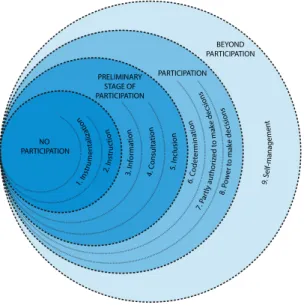
systems . . . 28 3.1 Stage model of participation based on M. Wright et al. (2010) (also
translated into English) . . . 49 3.2 Components from PD and PR considered for our case study. . . 53 3.3 Demographics of the young forced migrants participants. . . 57 3.4 Overview of methods used in the case study with young forced migrants
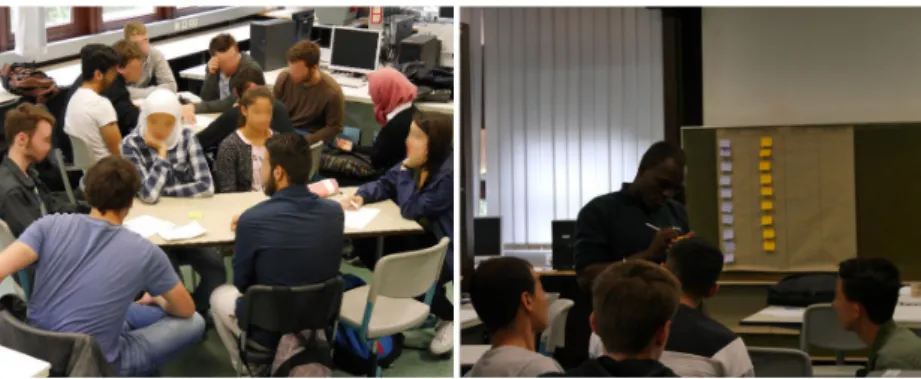
with limitations . . . 62 3.5 Images of Workshop No. 3 – joint activity between young forced
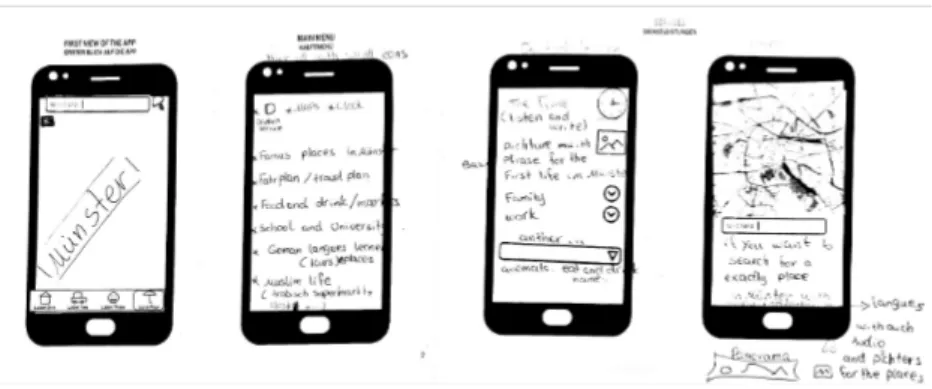
mi-grants and local students . . . 65 3.6 Image of a paper-based wireframe created by one of the participants of
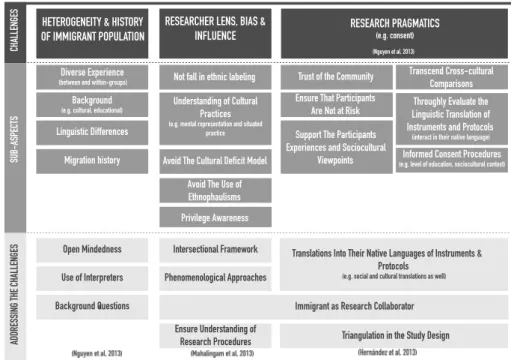
the YFMs group . . . 66 3.7 Ethical considerations with immigrant population based on Hernandez
et al. (2013) and Nguyen et al. (2013) . . . 71 4.1 Overview of ‘safe spaces’ characteristics in education and participatory
HCI . . . 94 4.2 Examples of material used in the workshops . . . 97 4.3 Spatial Layout: Before (left) and Modified (right) . . . 99 4.4 Participatory workshops (including group discussions, hands-on
activi-ties, privacy board, and paper prototypes) . . . 104 4.5 Overview of ‘safe spaces’ concept: four enablers and three factors for
measuring success. . . 108
List of Tables
0.1 List of publications part of this thesis. . . 1
List of Abbreviations
API Application Program Interface
AR Augmented Reality
EU European Union
FM Forced Migrants
GPS Global Positioning System HCI Human-Computer Interaction HTML HyperText Markup Language IDP Internally Displaced Population
ICT Information and Communication Technology IS Information Science
JSON JavaScript Object Notation NGO Non-Governmental Organization NoSQL Not Only Structured Query Language NRW North-Rhine Westfalia
LBS Location-Based Service
OSM OpenStreetMap
PAR Participatory Action Research PD Participatory Design
PR Participatory Research QDA Qualitative Data Analysis SKA Spatial Knowledge Acquisition SDK Software Development Kit UI User Interface
YFM Young Forced Migrants
List of Publications
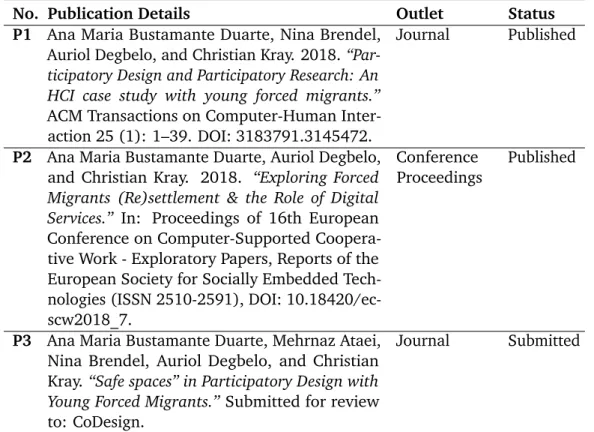
The present thesis is constituted by a accumulation of publications accepted and published, or under-review in several outlets. Chapter 2 corresponds to P2, Chapter 3 to P1, and Chapter 4 to P3. The complete list can be seen in Table 0.1 below.
No. Publication Details Outlet Status
P1 Ana Maria Bustamante Duarte, Nina Brendel, Auriol Degbelo, and Christian Kray. 2018.
“Par-ticipatory Design and Par“Par-ticipatory Research: An HCI case study with young forced migrants.”
ACM Transactions on Computer-Human Inter-action 25 (1): 1–39. DOI: 3183791.3145472.
Journal Published
P2 Ana Maria Bustamante Duarte, Auriol Degbelo, and Christian Kray. 2018. “Exploring Forced
Migrants (Re)settlement & the Role of Digital Services.” In: Proceedings of 16th European
Conference on Computer-Supported Coopera-tive Work - Exploratory Papers, Reports of the European Society for Socially Embedded Tech-nologies (ISSN 2510-2591), DOI: 10.18420/ec-scw2018_7.
Conference Proceedings
Published
P3 Ana Maria Bustamante Duarte, Mehrnaz Ataei, Nina Brendel, Auriol Degbelo, and Christian Kray. “Safe spaces” in Participatory Design with
Young Forced Migrants.” Submitted for review
to: CoDesign.
Journal Submitted
Tab. 0.1: List of publications part of this thesis.
Additionally to the publications above, the author of this thesis co-authored a feature article (Talhouk, Bustamante, et al., 2018) which reflected on experiences and insights of HCI researchers working on research projects with forced migrants. Some of the ideas there presented are briefly referred to on Chapter 5 Section 5.4 as part of this thesis discussion.
1
Introduction
„
“No one leaves home unless home is the mouth of a shark.”— Warsan Shire (in “Teaching My Mother How to Give Birth")
This thesis provides the reader with insights on the topic of participation in codesign process of mobile digital services with (young) forced migrants in their arrival to host cities. This introductory chapter provides the reader with the general context and relations created through each of the research project’s steps and activities. First, it presents a detailed explanation of the motivation underlying this thesis in Section 1.1. It looks into forced migration and the role and potential impact of digital technologies and participatory approaches in this scenario. The goal is to explore ways within participatory Human-Computer Interaction (HCI) to support the (re)settlement of forcibly displaced communities, particularly their youth, in host cities. Afterward, it explains the scope and research questions of this research in Section 1.2. Following, the diverse methods and how they connect to answer a mostly qualitative-driven research approach is introduced in Section 1.3. The final part of this section wraps up with a detailed explanation of the contributions of the thesis in Section 1.4.
1.1 Motivation
1.1.1 Forced Migration and “Arrival”
According to the 2014 UN report, 2.5 billion additional people, will move to cities in the upcoming years (UN DESA, 2014). Forcibly displaced populations are part of such a global phenomenon. They are forced to leave their countries to escape persecution, conflict, repression, disasters related to natural or human-induced hazards, as well as environmental situations that endanger their lives, livelihoods, and freedom (IOM, 2011).
In 2017, UNHCR (2017c) reported 68.5 million forcibly displaced people world-wide due to “persecution, conflict, or generalized violence” of which 52% are under-aged. 25.4 million people were considered refugees, 40.0 million as internally displaced population (IDPs), and 3.1 million as asylum-seekers (UNHCR, 2017c). The 2017 statistics on forced displacement show an increment of 2.9 million people in this situation compared to the 65.6 million reported by the same organization in 2016 (UNHCR, 2017a). Moreover, by the end of 2017, forced migrants, refugees specifically, were hosted in their majority by Turkey, Pakistan, Uganda, Lebanon, Iran, Germany, Bangladesh, and Sudan (UNHCR, 2017c). Europe reported having hosted 2.6 million refugees while Turkey had 3.5 million. From Europe’s total count of refugees, Germany had received, by the end of 2017, 970,400 people in this situation while 198,300 asylum applications were recorded (UNHCR, 2017c). The official German Ministry for Migration and Refugees reported 198,317 asylum applications (BAMF, 2017).
The previous numbers show the large scale of the forced migration phenomenon and its relevance not only in Europe but worldwide. It calls for strategies that explore ways to support forcibly displaced people in their different stages (pre-flight,
flight, and arrival (UNHCR, 1999)) of involuntary migration. In this search for safety,
forced migrants are confronted with various adverse situations circumstances. For example, several forced migrants worldwide are arriving mainly to diverse urban-like settlements (e.g., mid/large-scale camps, or cities). Upon arrival and during the first stages of (re)settlement they are facing issues such as cultural shock, potential social isolation, and restricted access to health care, among others (AbuJarour and Krasnova, 2017; Slonim-nevo, 2015; Almohamed, 2016; Talhouk, Ishtiaque Ahmend, et al., 2015; Talhouk, Mesmar, et al., 2016). It is in such a context where a diversity of approaches, tools, and services are needed for supporting this particular community.
Moreover, in terms of their information landscape three phases, which are cyclical and iterative, are identified: transitioning, settling in, and being settled (Kennan et al., 2011). The process of moving and transitioning from their home-countries to an unfamiliar urban environment where they will settle can be challenging (Stein, 1981). Regarding the information landscape, forcibly displaced populations are confronted with a series of challenges which can impact their social inclusion (Andrade and Doolin, 2016). Social inclusion is a process where constraints of space are overcome in different moments in time to gain access to the informal social networks (ibid). Some of the challenges which can be face upon arrival and in the (re)settlement stage include information poverty (Lloyd et al., 2013), limited proficiency in the local language (Kennan et al., 2011; Caidi, Allard, and Quirke, 2010; Danso, 2002), inability to assess the quality of the information or their sources(Kennan et al., 2011),
as well as sometimes unavailable guidance in the local (institutional) context (Danso, 2002).
The previously mentioned aspects are some of the several situations forced migrants to encounter when arriving to host cities. The complexity (unfamiliarity or structure) of these information landscapes can hinder their full participation in their host or new communities (Lloyd et al., 2013). Several strategies can help in improving forced migrants capabilities to navigate their information landscapes in the host cities (Lloyd et al., 2013). The development of digital technologies and services can support and strengthen these capabilities (Andrade and Doolin, 2016). These can also ease their participation in the host communities in ways they find valuable (ibid). A better information landscape navigation and mapping have the potential to affect positively forced migrants’ social inclusion in host cities Lloyd et al., 2013. Hence, all the above aspects have an impact on the urban agendas worldwide since most forced migrants are arriving and (re)settling in urban areas (Earle, 2016).
1.1.2 Digital Technologies and Forced Migration
One of the main “turning points” for the recent forced migration has been the exten-sive use of digital technologies, and in particular of smartphones (Gillespie, Osseiran, et al., 2018; Kaufmann, 2018; Kutscher and Kreß, 2016). Digital technologies and services have a great potential to ease (re)settlement of forcibly displaced population in several ways (Kaufmann, 2018; Brunwasser, 2015; Kutscher and Kreß, 2016; BenEzer and Zetter, 2014; Andrade and Doolin, 2016; Kennan et al., 2011). They can, for example, ease social connectivity (AbuJarour and Krasnova, 2017; Yerousis et al., 2015; Aal et al., 2014), favor communication by facilitating translation (D. Brown and Grinter, 2016), provide local information needed for daily life in the new city (Schreieck et al., 2017), and aid with language learning (Ngan et al., 2016; Hashemi et al., 2017). These technologies and services can also assist human mobil-ity and navigation (Baranoff et al., 2015; AbuJarour and Krasnova, 2017), as well as support sustainable structural and cultural integration (Weibert and Wulf, 2010). Furthermore, they can help reduce fears and uncertainties during (re)settlement (Harney, 2013). Specifically, for young forced migrants, digital technologies offer the possibility to imagine new scenarios beyond the constraints of their (re)settlement context (S. M. Gifford and R. Wilding, 2013).
Many different types of digital (mobile) services have been created for forced mi-grants e.g., InfoAid, Refugees Phrase Book, Ankommen, Refugees-Welcome, Refugees Center Online, Google’s Crisis Info Hub. Others were created for the general public, such as social media or navigation services, but have been frequently used by forced
migrants to address several of the situations they are confronted with during their involuntary displacements, e.g., Google Maps, WhatsApp, Facebook, and Google Translate (Kaufmann, 2018; AbuJarour and Krasnova, 2017). Moreover, further examples can be found in fields such as human-computer interaction (HCI) and information systems (IS). Mobile services such as Integrate (Schreieck et al., 2017), Lantern (Baranoff et al., 2015) or a human-in-the-loop translation tool for transient use (D. Brown and Grinter, 2016) have been developed to address, for example, information access and navigation upon arrival as well as to ease communication with locals for forced migrants. Nonetheless, the use and full potential of digital technologies and services is hindered by some factors (Irani et al., 2018; Kutscher and Kreß, 2018), and can present new drawbacks for forced migrants.
The use of digital technologies and services by forced migrants can be disrupted by the condition and availability of data and technical infrastructure. For example, uneven distribution of signal coverage for mobile phones affects the access to communication services in the Za’atari camp (Schmitt et al., 2016). Another example is the profound impact that restricted internet access has in Bangladesh (Bin Morshed et al., 2017). In a world moving towards digitalization, exploring and understanding how forced migrants use digital technologies and services and their needs regarding these, becomes essential. Addressing this matter not only supports forcibly displaced population during their (re)settlement (AbuJarour and Krasnova, 2017; Talhouk, Ishtiaque Ahmend, et al., 2015; Andrade and Doolin, 2016) in host cities. It could also contribute to the creation of inclusive and open digital cities. The advance in this agenda comes from practices where true equality in communities as co-decision makers occurs (Kaika, 2017). Thus, a more in-depth exploration and understanding of forced migration, (re)settlement and the role of digital technologies and services entails the direct and active participation of these communities in the process.
1.1.3 Participatory Design and Forced Migrants
As stated in the previous section, the participation of forced migrants’ communities can have a positive impact on the process of development of digital technologies and services that support them. For example, the benefits of participatory HCI approaches with young forced migrants such as participatory design (PD) or partici-patory action research (PAR), have been documented by several researchers in the HCI field (Talhouk, Montague, et al., 2017; Fisher, Yefimova, and Peterson Bishop, 2016; Fisher and Yefimova, 2016; Yerousis et al., 2015; Aal et al., 2014; Fisher, Peterson Bishop, Magassa, et al., 2014; Fisher, Peterson Bishop, Fawcett, et al., 2013; Weibert and Wulf, 2010).
PD has a long tradition in HCI for designing systems which support users’ actions (Greenbaum, 1991). It aims to build a proactive and mutually beneficial relationship between users and developers (Halskov and Brodersen, 2015). It is based on several principles which include a diversity of voices in the design process, democratic decision-making, mutual learning, effective knowledge acquisition, and iterative actions (Bødker, 2002; Greenbaum, 1991; Muller and Druin, 2012; Suchman, 2002; Kyng, 1996; Halskov and Brodersen, 2015). PD is particularly relevant when working with vulnerable or marginalized groups. It empowers misrepresented groups in design and development systems set-ups (Druin, 2002; Muller and Druin, 2012). For example, PD has been used frequently in HCI with elderly, children, homeless, young forced migrants. A more detailed discussion on this aspect can be found in chapters 3 and 4. Nonetheless, PD has major gaps which need to be addressed in future discussions (Vines, Clarke, Light, et al., 2015). Some of these refer to aspects such as what participation implicates, what are the researchers’ roles on it, power balance, representation of participants voices in the design process, among others (ibid).
Aiming to generate some initial insights on Vines, Clarke, Light, et al. (2015) gaps in PD, the current thesis focuses on the role, uses, and adaptations of participatory design (PD) approaches when doing HCI research side-by-side with young forced migrants. Mainly, we gather insights into the researchers and participants’ roles in these spaces and into the power balance of these by openly encouraging the creation of “safe spaces” through reflective processes. Such spaces are specifically planned to enable young forced migrants to become co-researchers and co-designers of mobile (geospatial) services to support them upon arrival and during the first stages of their (re)settlement in the host cities.
1.2 Scope and Research Questions
This subsection presents the scope and problem statement of this thesis and intro-duces the research questions guiding it.
1.2.1 Scope
Forced migration is a global phenomenon which has been a long part of the history of humanity. The work here presented aims to delve into the understanding of forced migrants’ context and the role of mobile (geospatial) services to support them upon arrival and first stages (re)settlement in their host cities. Germany was selected as the location for the research. Particularly, the city of Münster in the North-Rhine Westphalia (NRW) federal state. Two main reasons influenced this decision.
First, since 2014, the year that marked the beginning of the so-called refugee crisis, Germany has been the country receiving the largest amount of refugees and asylum seekers within the European Union (EU). Second, Münster, NRW the location of the researchers’ host institution. It is relevant to highlight that the federal state of NRW had received the largest percentage (26,90%) of asylum seekers arriving in Germany (BAMF, 2017) representing the 21,14% of the distribution scheme set-up for the country (Gemeinsame Wissenschaftskonferenz, 2018).
The research had as main participants two groups of forced migrants who had recently arrived or had been living for less than a year in Münster. The first group were forced migrants, between 22 to 46 years old, who were living in the temporary collective accommodations set-up for asylum seekers in the city. The second group were young forced migrants between 15 to 20 years old who were enrolled at a vocational high school in the city. Forced migrants from both groups had diverse countries of origin which included Syria, Afghanistan, Eritrea, Guinea, Iran, Iraq, Nepal, Somalia, Albania, and Nigeria. To have a better understanding on the forced migration local situation research activities were done in collaboration with other local relevant actors (young locals, a vocational high school, volunteers, and social workers, and staff members at the different temporary lodgings).
1.2.2 Research Questions
Based on the previously presented scope, this thesis specifically focuses on the role
of participatory approaches to support the design of mobile (geospatial) services with forced migrants for their arrival and first stages of their (re)settlement in Münster. To
address this, three main guiding questions were derived:
• Q1: What are the challenges forced migrants face along with the needs they have upon arrival and during the first stages of their (re)settlement in their host cities? What is the role of mobile digital services on address-ing these?
This question aims to provide an understanding of the forcibly displaced populations’ context (e.g., challenges, needs, expectations) in Münster, NRW. Its insights informed Q2 on the exploration of participatory approaches for designing (geospatial) technologies with these communities. Also, such an investigation entailed a further look into forced migrants’ use of digital mobile services during the (re)settlement stage in the host city. The understanding of forced migrants’ context in Münster and insights from their use of digital services can serve as a guide for forced migration’ researchers and relevant actors in Münster, and potentially in Germany. Data on this question are
gathered through semi-structured interviews with forced migrants in their first stages of (re)settlement as well as social workers and supporting staff in the temporary collective lodgings where they were residing.
• Q2: How can participatory design (PD) be adapted to design mobile (geospatial) services with young forced migrants?
Digital mobile services used or designed for forced migrants’ use require to directly and efficiently addressed their challenges and needs, as the ones iden-tified in Q1. Hence, forcibly displaced communities need to be an active part of the ideation and design processes of these services. PD emerges, due to its inherent characteristics, as a promising approach to design mobile (geospatial) services with young forced migrants in this situation. Nonetheless, PD has not been, to the best of our knowledge, explored in HCI and Information Science (IS) extensively for this particular purpose. Input and recommendations on this specific question were collected through two large iterations of participatory workshops in distinctive years. These were done with young forced migrants, from diverse backgrounds, enrolled at a vocational high-school in the Münster. These workshops, counted occasionally, with the participation of young people from the host community.
1.3 Methods
The current section provides an overview of the methods used during this thesis. The approach here presented is based, mainly, on qualitative research methods occasion-ally combined with quantitative strategies to address the defined research questions. The selected methods and research approaches on this thesis for data collection and analysis are drawn from diverse fields such as HCI, as well as education and other social sciences. It is relevant to highlight that methods in HCI are varied and they are already drawn from diverse disciplines such as sociology, computer science, psychol-ogy, communication, among others Lazar et al. (2010, p .2). Qualitative methods are extensively used in research with vulnerable communities, e.g., children (Greene and Hogan, 2005) or migrants (Hernandez et al., 2013), due to their capabilities to conduct more in-depth and sensitive research in socially complex and delicate contexts.
Q1 has been answered mainly through results obtained from semi-structured interviews done with diverse forced migrants as well as some relevant actors (in-dividual and group) and a systems survey for the digital mobile services available. Q2 was addressed using case studies (Lazar et al., 2010, p .147) as the overarching method. Lazar et al. (2010, p .147) mention that a case study allows examining
in more in-depth one or more particular situations with a small number of cases available. The author also states that case studies are mainly qualitative, but they can also count with quantitative methods to assess the situations in context. The case studies here presented followed these principles. They have a specific focus on participatory methods due to the angle of Q2 on PD. An overview of the qualitative as well as the quantitative methods are presented in the following subsections and are summarized on Figure 1.1.
Further and more in-depth details and discussion in the specific methods used in this thesis can be found in Chapters 2, 3, and 4.
1.3.1 Qualitative Methods
The present section presents a brief synopsis of the qualitative methods used to answer all three research questions of this thesis. Some of the qualitative methods used in the multi-method approach used to answer Q2 come from the participatory design (PD) and participatory research (PR) approaches in HCI and educational contexts, respectively (Chapter 3 and Chapter 4). PD and PR are considered in this thesis more than methodologies as research approaches due to their wide potential, complexity, and the large set of methods which co-exist within them. Each of the qualitative methods and a short description can be seen below:
Literature review. It was done an exploratory review to identify prior character-izations on forced migrants (youth) (re)settlement situation (e.g., challenges, needs, situation, and use of technology). It considered literature from research in diverse fields such as refugee studies, education, information science (IS), sociology, and HCI. The results from it served to address the Q1 of this thesis, i.e., the detailed insights gained can be seen in Chapter 2. Also, it provided insights to inform about Q2. Q2 was discussed by focusing on initial observations on PD and PR practices related to vulnerable communities such as children, forced migrants, and particularly young forced migrants (see Chapters 3, and 4).
Semi-structured interviews, as defined by (Lazar et al., 2010, p .189), were used in two different instances of the research. First, as part of a triangulation strategy on the results obtained from the literature review concerning challenges, needs, context, and use of technology of forced migrants during their (re)settlement. For it, individual and group-based interviews were done with forced migrants along with social workers and support staff working on temporary lodgings provided by the city council to newly arrived forced migrants in Münster. The interviews which were done in this first instance addressed Q1 of the present thesis. Second, group-based semi-structured interviews were done during the second iteration of participatory
workshops. They helped on gaining more in-depth information on the perception of young forced migrants in the participatory activities done as well as on the education content shared during this time. The results of these last interviews addressed Q2 of this thesis. More detailed explanations and insights on the results from the interviews held can be seen in Chapters 2 and 4. The qualitative data analysis (QDA) strategies utilized for the material gathered were based on the recommendations from (Saldaña, 2009; Uwe Flick, 2014).
Participatory workshops are one of the methods more extensively used in PD in HCI (Muller and Druin, 2012; Kensing and Madsen, 1992; Greenbaum, 1991). The first iteration of participatory workshops, done in 2016, focused on gaining closer feedback from young forced migrants in diverse aspects. First, on their challenges and needs upon arrival, particularly regarding the use of digital mobile services (Q1). Second, the two workshops’ iteration also permitted to use and adapt (in-situ and posterior) PD and PR actions and strategies targeting particularly, the design of digital (geospatial) services with our group of co-researchers (Q2). It specifically helped to explore in detail the concept of “safe spaces” and reflective “safe spaces”. Insights gained from the results obtained can be seen in Chapter 2 for Q1, Chapter 3 and Chapter 4 for Q2.
Diaries are a commonly used method in qualitative research. Researchers’ diaries were used in this thesis, in the first and second iteration of the participatory workshops, to document their experiences, observations, feelings and emotions during these activities (Kunz and Pfadenhauer, 2014, p .21). Semi-structured and open diaries allow gathering richer qualitative data by letting participants express themselves freely (Kenten, 2010). Participants’ diaries are recommended by (Greene and Hogan, 2005, p .14) to research with youth and children. In order to enable the diaries to become tools for not only annotating and observing the activities but also as reflection mediators, reflective questions were created based on Dewey (1997) definition of reflective thinking. The data collected and insights gained helped to address Q2 of this thesis. Particularly, they supported the discussion on the creation of “safe spaces” in PD research in HCI. Further insights can be found in Chapter 4.
Brainstorming activities with sticky notes in large-format papers were done as part of the participatory workshops in their two iterations. Peterson and Barron (2006) state sticky notes are beneficial to ease and check grouping and sorting of ideas, as well as to verify understanding of participants. Based on such considera-tions, in this thesis sticky notes were seen to be able to promote the communication when sharing ideas in a group-based set-up. It addresses the fast-paced dynamics and particularities of working with this community (e.g., limited common language proficiency, cultural diversity). The results from these activities helped to answer,
principally, Q2 of this thesis (Chapters 3, and 4) along with the open-source geospa-tial prototypes developed (Chapter 5).
Paper prototyping has been widely used in PD-based projects in HCI with children (Hershman et al., 2018; Alhumaidan et al., 2018; Fisher and Yefimova, 2016; Druin et al., 1998). In this thesis, paper prototyping was used with young forced migrants as part of the participatory workshops. The goal was to ease their familiarization with tools to co-design their digital services. This rapid and low-fidelity prototyping technique was selected due to its easy-to-learn and easy-to-use capabilities. The use of paper prototypes helped to address the Q2 of this thesis. It also played a vital role on the design and development of the open-source prototypes for geospatial services to support young forced migrants upon arrival. Further details on insights gained from this can be found in Chapter 5.
1.3.2 Quantitative Methods
This section offers a short overview of the quantitative methods used to address Q1, and briefly Q2, of this thesis. Additionally, usability testing was explicitly used to asses one of the two open-source geospatial prototypes developed. The techniques and descriptions are referenced as follows:
Questionnaires are a frequently used method in HCI (Lazar et al., 2010). In this work, they were used in two instances. First, to support the co-researchers anonymous assessment of the first iteration of the participatory workshops. Second, as part of the usability testing of one of the two open mobile geospatial prototypes developed. Likert-scales were used as the main resources to answer and provide feedback in each of the questionnaires built. The results of these helped to address Q2 of this research. More details on the use of questionnaires can be found in Chapters 2 and 3
A survey of mobile applications is commonly used by researchers in HCI (e.g., (Hoang et al., 2013; Felt et al., 2011)). In this thesis, such a survey was used to identify the key gaps in existing mobile digital services created for and used by forced migrants. Categories for the assessment built upon the results of the semi-structured interviews with the diverse actors.The data gathered as part of this survey helps to answer the Q1 of this thesis (Chapter 2).
Usability testing was used to do the initial evaluation of one of the two open-source mobile geospatial prototypes as part of Q2 of this thesis. It was selected since it “involves representative user attempting representative tasks in representative environments" (Lewis, 2000 in Lazar et al., 2010, p .252) which includes testing
prototypes in diverse stages of development (from low-tech to high-tech prototyping). Its primary goal is to find flaws in an interface/system to improve its quality (Lazar et al., 2010). Further explanations and feedback on this can be found in Chapter 5.
1.4 Contributions
The present thesis explores and reflects upon participatory approaches as a way to enable co-design processes with young forced migrants. Particularly, to design mobile digital services which can support them upon arrival and during the initial phases of their (re)settlement in host cities. The exploration was done based on concepts from the fields of Human-Computer Interaction (HCI), as well as Education. The contributions of this thesis are as follows:
Contribution No. 1 consists of a set of challenges and needs of forced migrants upon arrival and during the first stages of their (re)settlement. It helps to answer Q1 of this thesis. Six core challenges and needs were identified for the case of forced migrants upon arrival to Münster, Germany. First, the minimal proficiency in the local language and thus, the need for German learning. Second, the restricted internet access as the need for digital mobile services to work properly on offline mode. Third, information complexity due to two main factors: information overload and type of visualization. Fourth, the lack of trustworthy information and the need for reliable and timely information. Fifth, the occasional limited experience on the use of geospatial services. And sixth, the sporadic presence of limited functional literacy which affects the access to information and the use of certain services.
Additionally, four main types of strategies for information access and sharing in a new information landscape (Kennan’s transitioning and settling-in) were suggested during the interviews with forced migrants in Münster, Germany. These strategies were from forced migrant to/with: 1) other forced migrants (FM-FM), 2) local community and volunteers (FM-Local Community), and 3) members of official institutions (FM-Official Institutions). A fourth category was generated those forced migrants who stated they prefer to do not ask for guidance and to rely on the information they gathered by themselves.
Lastly, the exploratory assessment of currently available digital mobile services established gaps of these services in diverse areas. The analysis was based on the challenges, needs, and information sharing strategies mentioned above. The assessment indicated the need for mobile services to explore further multilingual features and interface modalities as a way to broaden their audience from Arabic-speaking forced migrants to others who speak other languages. The results from the
analysis done also highlighted the need for developing mobile services with fully available offline features. Third, it calls developers of mobile digital services for forced migrants to further delve into the possibilities open data presented as a way to address the issues regarding information timeliness and reliability.
Contribution No. 2 comprises a series of theoretical and on practices adaptations for participatory design (PD) in HCI. These adaptations are done to promote young forced migrants’ participation during the co-design process of digital mobile services supporting their (re)settlement. This contribution addresses the Q2 of this thesis.
At the theoretical level, it was done a combination of PD principles with partici-patory research (PR) to design (geospatial) technologies with young forced migrants in Münster. Based on it, this thesis contributes to four main elements. First, PD’s premise of “PD for useful systems” may not attain inclusion of all relevant actors. Second, “safe spaces”, a concept from PR, seems to be essential in PD endeavors as well. Third, “didactic reduction” is an effective strategy to ease communication of research-related issues with young forced migrants. Lastly, the combination of PD and PR can facilitate critical competencies of sustainable development.
When talking about PD practices, four general suggestions were defined to promote more informed practices related to PD adaptations. These were based on the insights from PR when designing digital services with young forced migrants. The first suggestion discusses the value of “safe spaces” when conducting participatory HCI research with young forced migrants. It also discusses diverse strategies to enable them in formal and non-formal educational set-ups. The second suggestion details a strategy to promote intercultural collaborations in participatory projects as a way to support young forced migrants upon arrival in host cities. The third one refers to the use of various didactic and visual resources to address communication issues due to the limited proficiency in the selected “lingua franca”. The last suggestion states that more flexibility in the ethics procedure is needed for the particularities of the young forced migrants’ communities. However, such flexibility needs to guarantee a properly informed research and consent with this population group.
Contribution No. 3 encompasses a theoretical approach to enable “safe spaces” in participatory HCI with young forced migrants. The introduction of this approach allows assessing the initial impact of “safe spaces” in facilitating the participa-tion of young forced migrants in co-design process of digital services to aid their (re)settlement. In such sense, “safe spaces”, in its four components is presented as a more social sensitive participatory concept which aids PD process. The four compo-nents are referred to 1) ethics, 2) content, 3) set-up, and 4) facilitators’ reflective processes. This contribution helps with the second part of the research question No. 2.
Some of the aspects of this approach referred to the use of reflective strategies to promote reflective and critical thinking in participants and researchers. It discusses elements such as appropriate compensation strategies with young forced migrants, the use of iterative and layered-up consent processes, as well as the use of partic-ipatory content strategies and the use of didactic reduction. It also assesses the impact of the location of the participatory activities, the use of a common language for the activities, the spatial distribution of the activities’ space, and facilitators’ behavioral agreements for building trust. The use of the “safe spaces” approach leads initially to more comfortable spaces in participatory HCI which during the activities ease the process of building trust among the diverse actors. Furthermore, the promotion of “safe spaces” raises the levels of engagement among young forced migrants participating in the co-design of digital mobile services to support them upon arrival and in their first stages of (re)settlement.
Contribution No.4 consists of two open-source geospatial prototypes for smart-phones which were developed and one of them evaluated. These were done based on contribution No. 1 and the practical results from the participatory workshops done for contributions No. 2 and 3. The first solution is a Map+AR prototype done as a location-based service (LBS). It had an augmented reality view combined with a 2D map route guidance system which triggers only at decision points to ease navigation of unfamiliar urban environments. This and the follow-up prototype displayed in the smartphone screen augmented layers based on a set of geospatial information identified as relevant during the interviews and workshops held.
Finally, all contributions here presented are the result of a transdisciplinary research approach which provides theoretical and practical contributions to PD in HCI with young forced migrants. It combines strategies, concepts and approaches from education theory, HCI, geoinformatics, and information science (IS).
1.5 Thesis Outline
The presented chapter provides an introduction to this thesis. The following four chapters answer the research questions of this thesis. They also present this thesis findings’ implications in participatory HCI with young forced migrants and the design of geospatial services for their arrival and first stages of (re)settlement. Figure 1.1 introduces the outline of this thesis.
Chapter 2 advances the understanding of forced migrants situation in Münster, NRW, Germany. It provides a closer look into challenges forced migrants face as well as the needs they have upon arrival and, in some cases, in the first steps of their (re)settlement in the host city. It also provides a first insight into their information
access and sharing practices during these stages. Subsequently, 36 digital mobile services used by or developed for forced migrants were identified. An assessment was done to determine initial gaps which are presented in this chapter.
Chapter 3 introduces PD and PR in the context of this research. Additionally, it presents theoretical and on practices adaptations to PD from combining it with PR. It also reflects upon the potential implications in HCI with young forced migrants and introduces concepts such as “safe spaces” and didactic reduction applied to a PD scenario. Chapter 4 develops further the concept of “safe spaces” and how to enable such spaces in participatory HCI research projects with young forced migrants. It details its main components and implications based on the case study carried out.
The final Chapter 5 of this thesis summarizes the main findings of it, and it addresses how each of the research questions are being answered. Moreover, it discusses the main implications of the findings on theory and practices in the field of participatory HCI, and especially when conducting participatory projects and research with young forced migrants. Lastly, in the chapter can be also found the core conclusions of this thesis and the possibilities for future work based on its results.
-L ite ra tu re review -S em i-st ru ct ur ed interviews -S ur ve yo fm ob ilea p p lic at io ns METHODS
Q1
C1
CONTRIBUTIONS CHAPTER Chapter 2 Set of challenges and needs of fo rced migrants upon arrival and first stages of their (re)settlement. P2 |“Exploring Fo rced Migrants (Re)settlement & the Role of Digital Services.”Q2
C2
As er ie so ft he or etical and practical adaptations for PD in HCI with young fo rced migrants.C3
C4
Two open-sou rce geospatial p rototypes for supporting fo rced migrants’ familiarization in their arrival. -C as es tu d y -L ite ra tu re review -P ar tic ip at or yw or ks ho p s -R efl ec tiv ed ia rie s At he or etical app roach to enable “safe spaces” in participatory HCI with young fo rced migrants. N/A Int roduced in one subsection on Chapter 5. Chapter 3 P1 |“Participatory Design and Participatory Resea rch: An HCI case study with young fo rced migrants.” Chapter 4 P3 |“Safe spaces” in Participatory Design with Young Fo rced Migrants.” -B ra in st or m in ga ct iv iti esw iths tic kyn ot es -P ap erp rototyping -Q ue st io nn ai res Fi g. 1. 1: Overview of methods, contributions, and outline of this thesis 1.5 Thesis Outline 172
Exploring Forced Migrants (Re)settlement
& the Role of Digital Services
This chapter was published in preparation to the 16th European Conference on Computer-Supported Cooperative Work - Exploratory Papers as Ana Maria
Busta-mante Duarte, Auriol Degbelo, and Christian Kray. 2018.“Exploring Forced Migrants (Re)settlement & the Role of Digital Services.” In: Proceedings of 16th European Con-ference on Computer-Supported Cooperative Work - Exploratory Papers, Reports of the European Society for Socially Embedded Technologies (ISSN 2510-2591).
It corresponds to the P2 in the List of Publications.
Abstract. In recent years, large numbers of forced migrants have arrived in urban
areas all around the world. Access to relevant information and suitable technology can help forced migrants, mainly refugees and asylum seekers, to cope with several of the challenges they face in this process. We conducted a qualitative study with ten forced migrants and six social workers and a staff member of a collective lodging for young forced migrants in Münster, Germany. The goal was to identify challenges and needs in this specific context, find criteria for assessing digital support services for forced migrants, and suggest general aspects of improvement. We analyzed 36 existing mobile applications and web services useful for forced migrants upon arrival and during (re)settlement. Our results highlight some critical issues to be addressed through digital services for forced migrants regarding information reliability, timeliness, and complexity, as well as an occasional lack of experience with geospatial services.
2.1 Introduction
Forced migration is a global phenomenon: around 65.6 million people in this situa-tion were registered in 2016 (UNHCR, 2017b). Germany, for example, registered 722.370 asylum applications for the same year (BAMF, 2017). Consequently, there is a need for a better understanding of this phenomenon and for strategies and (technology-related) tools to support forced migrants.
Forced migrants face distinct migration phases and information landscapes while going through diverse stages of awareness (Kennan et al., 2011). In this process, forced migrants show high levels of resilience and their strong collaboration and support dynamics (Fisher, Peterson Bishop, Fawcett, et al., 2013; Marlowe, 2010). Nonetheless, they also encounter several challenges such as social isolation (Almohamed, 2016; Andrade and Doolin, 2016), information poverty (Caidi, Allard, and Quirke, 2010), cultural barriers, limited proficiency in the local language (D. Brown and Grinter, 2016), lack of trust (Almohamed and Vyas, 2016), as well as limited access to services and health care (Talhouk, Ishtiaque Ahmend, et al., 2015; Talhouk, Mesmar, et al., 2016). Various technological solutions have been developed to help forced migrants tackle these challenges e.g., (D. Brown and Grinter, 2016; Talhouk, Montague, et al., 2017; Shankar et al., 2016; Xu and Maitland, 2016).
Despite prior findings regarding challenges and needs of forced migrants, further work is needed due to the heterogeneity of the group, and the large number of factors influencing their situation. In this paper, we contribute to research with forced migrants in two ways: (i) we gathered their challenges and needs upon arrival and during (re)settlement in Münster, Germany; (ii) we used these findings to conduct an exploratory analysis of 36 services designed for, or useful to forced migrants. This analysis identified strategies used by these digital services to address the challenges from forced migrants, as well as their current gaps. Our results can benefit forced migrants and all relevant actors as they work towards solutions aimed at helping forced migrants upon arrival, and during the first stages of the (re)settlement process.
2.2 Related work
As stated previously, forced migrants go through diverse information stages during their displacement. Kennan et al. (2011) suggested three stages (transitioning,
settling in, and being settled) which are defined as "cyclical and iterative". The transitioning phase occurs prior to forced migrants’ arrival to their host country. In
this stage they are "seeking" and receiving information about their host country. In the settling-in stage, forced migrants are "oriented" and no longer limited to the information that is being provided to them but they actively extend it in scope and sources. Finally, in the being settled phase forced migrants have a clearer understanding of the information landscape while "constructing an internal map" about it and sharing this information with others.
Technology, as stated by previous work, facilitate a sustainable integration of refugees in their new place. AbuJarour and Krasnova (2017) observed that tech-nology can enable numerous capabilities for Syrian refugees in Germany: social
connectivity, effective telecommunication, safety and emergency services, mobility, translation services, the participation in an information society and in educational programs, the communication with the government, crowdsourcing, as well as main-taining refugees’ cultural identity. Moreover, based on their experience with the Come_IN initiative in Germany, Weibert and Wulf (2010) concluded that computer technology is apt to promote both sustainable structural and cultural integration. The authors also suggested that a computer-based project can serve to establish and strengthen intercultural relationships in a neighborhood. Further work into the adaptation of the Come_IN approach to a refugee camp in the West Bank shows that computer clubs can promote mutual learning between children refugees and student volunteers (Yerousis et al., 2015; Aal et al., 2014). Children refugees may extend their perspective over the boundaries of the refugee camp while acquiring new skills and contacts; and student volunteers gain a better understanding of the needs and struggles of the camp inhabitants. Lastly, Bustamante Duarte et al. (2018) conducted workshops with young forced migrants and young locals in Münster, Germany in order to codesign a mobile tool to support the former upon arrival and first stages of (re)settlement. Their study pointed out that the combination of participatory design and participatory research strategies is useful for engaging and building trust with young forced migrants while designing digital services for them.
Moreover, technology can also be helpful for forced migrants during their daily life activities in their new environment. For example, Baranoff et al. (2015) proposed a mobile service, Lantern, which helps refugees to navigate and learn about their new environment obtaining context-specific help using Near Field Communication (NFC) technology. D. Brown and Grinter (2016) mentioned several benefits of Rivrtran, a tool to facilitate engagement between refugees and their mentors (i.e., American families) during the (re)settlement process. The tool helped forced migrants to articulate their needs better, jointly formulate goals with their mentors, and initiate communication. Schreieck et al., 2017 developed Integreat, a mobile app which aims to provide local information for forced migrants in several cities in Germany. In their work, they derived a series of design principles for applications which aim to transmit information to a culturally diverse audience. Also, Ngan et al. (2016) developed
Moin, a mobile app to support informal language learning and integration of young
refugees in Bremen, Germany. In a more general perspective, Harney (2013) pointed out that mobile phones offer the possibility of mobilizing personal networks and aid forced migrants reducing the fears and uncertainties they have about their new place of (re)settlement. S. M. Gifford and R. Wilding (2013) indicate that tech-nology offers new possibilities of imagining social horizons beyond the constraints of their settlement context to young people with refugee backgrounds. Phillips (2013) examined the impact of remote telephone interpreting in the (re)settlement experience of refugees. The author argued that despite the widespread view that on-site interpreters are always preferable to remote interpreters, refugees may be
better served by telephone interpreters. Telephone interpreting services offer two benefits for forced migrants: recognition of their individual needs by the polity, and the safe negotiation of identity through the (re)settlement process. Moreover, Hashemi et al. (2017) analyzed mobile apps for language training and information provision regarding the host society in Sweden through the Technological, Peda-gogical, Linguistic and Cultural model (TPLC-model). Their results evidenced that mobile digital services related to translation and language training are common but not apps regarding societal information for the Swedish case.
Despite the key role technology can play easing the lives of forced migrants, it can also cause further difficulties. For instance, Schmitt et al. (2016) examined the technical technology infrastructure of the Za’atari refugee camp. Some issues were identified such as the uneven spatial distribution of signal coverage and carrier congestion which affect the life of the refugees in the camp. According to Raelene Wilding and S. Gifford (2013), technology can make it easier for others to make demands from distance potentially straining social relationships between forced migrants, and the kin at their home country. As this section illustrated, technology plays an important role in the lives of forced migrants. Understanding challenges and needs of forced migrants (both contextual, and universal), and key gaps of services designed for them is therefore important for the development of applications which effectively support forced migrants at different stages of the migration process.
2.3 Approach and Methodology
This work aims to 1) identify challenges and needs of forced migrants in Münster, Germany; 2) explore strategies to assess how digital services are addressing these; and 3) define initial aspects for improvement in these services. To achieve this, we applied a three-step method. First, we carried out a qualitative study with forced migrants and actors involved in their process of (re)settlement. Second, we used the outcome of the first study to derive criteria for an exploratory systematic analysis of existing services aimed at supporting forced migrants in Münster.
2.3.1 Interview Study with Forced Migrants and Other Relevant Actors
Context
We conducted a series of interviews between January and November 2016 with forced migrants (N=10), social workers (N=6) and a collective lodging support staff member in Münster. We wanted to identify the needs, challenges and infor-mation communication strategies of forced migrants during their initial stages of
(re)settlement in Münster. In 2016, Münster registered 2412 asylum seekers. In 2017, 942 refugees were officially registered.
Participants
For this first study, we recruited participants from two groups: 1) forced migrants in Münster (four individual interviews and two on-site group interviews), and 2) social workers and lodging support staff members (four individual interviews and one on-site group interview). Forced migrants in this article refer to both refugees and asylum seekers. We used snowball sampling to recruit participants from both groups. Ten forced migrants (two females and eight males, aged between 19 and 46 years old) participated in the interviews. Eight participants were from Syria, while two were from Albania and Eritrea. All participants had completed high school education. Four participants had achieved university degrees or were pursuing university education before fleeing their country. At the time of the interview, participants had been in Münster between 7 and 17 months. The six social workers and the support staff member worked in two different types of residences for forced migrants: 1) collective short-term shelters (N=2), and 2) collective lodgings where forced migrants stay until their asylum claim response arrives (N=5).
Materials and Procedure
The interviews were semi-structured and included questions related to the forced migrants’ life in Münster: their challenges, needs, means for searching and accessing information and services in the host city, along with their education and technology background. The interviews lasted between 25 and 50 minutes. All interviews were conducted in English. One of the two group interview sessions with forced migrants was assembled organically on-site. Some participants brought other forced migrants living in the lodging to attend or translate to other languages.
Analysis
We used MAXQDA for the analysis of the collected qualitative data in three iterative cycles. We particularly focused on finding patterns related to forced migrants’ access and use of information for the transitioning and settling-in stages (Kennan et al., 2011). We followed a descriptive coding method (Saldaña, 2009) for the first and second iteration, which resulted in inductive (emerging) and deductive (a priori) categories (U. Flick et al., 2004). The deductive categories were based on the results of previous research on forced migrants and their information technologies and communication landscapes, i.e., (AbuJarour and Krasnova, 2017; Talhouk, Mesmar,
et al., 2016; D. Brown and Grinter, 2016; Andrade and Doolin, 2016; Kutscher and Kreß, 2016; Baranoff et al., 2015; Lloyd et al., 2013; Kennan et al., 2011; Caidi, Allard, and Quirke, 2010; Caidi and Allard, 2005). We defined seven categories (language, information, functional literacy, technology experience, forced migrants ask for..., information communication preferences, and information sharing) for the codes, which we clustered into three main themes: challenges, needs, and strategies
for information sharing during the (re)settlement. A validation of the adjusted coding
scheme (after the first iteration) was carried out by all authors.
The first theme challenges subsumes information related to difficulties forced migrants faced when performing certain tasks during their (re)settlement process. Its general categories were classified as a priori and confirmed by the data obtained from the interviews. These include challenges related to language (D. Brown and Grinter, 2016; Andrade and Doolin, 2016; Lloyd et al., 2013; Kennan et al., 2011; Danso, 2002), functional literacy (D. Brown and Grinter, 2016; Kennan et al., 2011; Lloyd et al., 2013; Caidi and Allard, 2005), information access and understanding (Lloyd et al., 2013; Caidi, Allard, and Quirke, 2010; Kennan et al., 2011; Caidi and Allard, 2005; Baranoff et al., 2015) and limited prior experience using technology (Talhouk, Mesmar, et al., 2016; Baranoff et al., 2015; Gillespie, Ampofo, et al., 2016; Lloyd et al., 2013; Kennan et al., 2011). Several subcategories emerged organically from the results of the interviews such as use of geospatial services, type of information visualization, and timeliness information.
The second theme needs was based on the main elements (resources, strategies, tools) forced migrants in the study mentioned as relevant to them when (re)settling in Münster. These aspects consisted of two categories. First, we found forced
migrants needs which refers to aspects they require to have a better and more
effective process of arrival and (re)settlement. The codes learning local language,
accessing formal education, offline services, and social interaction with local community
assigned to this category were defined deductively from prior research (Andrade and Doolin, 2016; Bin Morshed et al., 2017; Kutscher and Kreß, 2016; Caidi, Allard, and Quirke, 2010; Danso, 2002; Donnelly, 2000). Additional codes such as having
translators at the beginning, and other services, emerged from the interviews. Second,
it is the information communication preferences category which aimed to identify resources forced migrants found useful for communicating information to them through technology.
The third theme strategies for information sharing during (re)settlement pointed to the preferred (information) communication strategies – physical or digital – that forced migrants (FMs) have during the transitioning and settling-in phases. Four categories relate to communication processes for guidance: 1) FM with FM, 2) FM
with the local community, 3) FM with support staff (e.g., social workers), and 4) FM decides not to ask others for guidance. These codes emerged from the interviews.
2.3.2 Survey Study of Existing Systems Supporting Forced Migrants
Context
The main research question of this second study was "how do existing mobile services address the challenges and needs identified by forced migrants during the interviews?". Previous work (e.g., (AbuJarour and Krasnova, 2017; Schreieck et al., 2017; Andrade and Doolin, 2016; Gillespie, Ampofo, et al., 2016; Kutscher and Kreß, 2016; Rohde et al., 2016; Xu and Maitland, 2016)) has pointed out that mobile phones, particularly smartphones, are one of the main sources for forced migrants to access, manage and communicate information. Former studies have done specific evaluations of single services created for forced migrants (e.g., Integreat, Moin). However, there has been few, if any, broader systematic assessments for this group of services considering forced migrants’ challenges and needs. Our research team analyzed 25 mobile applications and 11 web platforms used by or potentially useful for forced migrants during their migration processes.
Procedure
We selected services following a two-step approach. First, we collected all services mentioned at lease twice by different participants in a list containing thirteen services as result. Second, we included services available on the web portal Apps for Refugees (http://www.appsforrefugees.com, accessed in March 27, 2017) which compiles services (23 mobile applications and nine web platforms) potentially useful for forced migrants. The final list contained 36 services (25 mobile applications and 11 web platforms). Since six services were dysfunctional - three web platforms (i.e., Refugeemap.com, LaGeSoNUM, and Hilfebuchen.de) and three mobile applications (i.e., helphelp2, Wülfrath hilft 2 and Hope for Austria), we only analyzed the
remaining 30 services.
Analysis
We assessed the 30 services based on the results from the interviews. From it, we generated the following classification and evaluated how the selected services tackled: 1) "Limited Proficiency on Local Language", 2) "Internet Access", 3) "Infor-mation Complexity and Reliability", 4) "Prior Experience of Forced Migrants with Technology", 5) "Functional Literacy", and 6) "Strategies for Information Sharing".
2.4 Findings
2.4.1 Challenges and Needs of Forced Migrants
Limited Proficiency in the Local Language
All forced migrants highlighted, as expected, language as a core challenge. Several participants related it to feelings of fear, uncertainty, and stress during their everyday interactions with the host community (e.g., doctor’s appointments, grocery shop-ping). Based on the collected narratives, this phenomenon does not only affect their individual communication with locals but also their access to services. For example, FM_P6 stated
"I was afraid of going to LIDL because I say, if they ask me something I don’t know the language and [then] what [can I] say to them?"
Such experiences can potentially have a negative impact on forced migrants’ awareness of the procedures from which they are part of. FM_P1 narrated about going to the doctor with her friend:
"[. . . ] after three times [of going there] she knows the doctors need this [..] but when they speak [to] her she cannot understand."
Additionally, having limited knowledge of the local language can be perceived by forced migrants as a loss of social status. FM_P4 stated about another resident at his collective accommodation:
“[. . . ] he was very powerful in Syria [...] but he comes [here] and he cannot [even] say “I want some food”.
The assessment of digital services showed that these mainly address this challenge through:
• Education services to learn the German language: Two mobile applications promote language learning in a structured way. Phase6 Hallo Deutsch Kinder has as main goal language learning, while Ankommen aims to provide relevant but general information to guide refugees in their host country. It also provides material for German language learning.
• Tools to perform translation of phrases: Four (4/30) services offered either real-time translation (Google Translate) or pre-translated sentences to be used