Faculdade de Ciências
Departamento de Química e Bioquímica
Search for coherent gene modules that predict
Streptococcus pneumoniae strain invasiveness
Rui Ribeiro Catarino
Mestrado em Bioquímica
Especialidade em Bioquímica
Dissertação de Mestrado orientada por
Doutor Francisco Pinto
2012
Quero agradecer antes de mais aos meus pais, já que, no final de contas, são os grandes responsáveis pelo percurso que segui. Fico também grato pelo sacrifício pessoal que fizeram ao suportar o meu ensino superior e qualquer ocasional má disposição. Espero poder agora começar a repagar esse esforço, começando por pagar um jantar assim que isto tudo esteja acabado.
Quero também agradecer ao grupo de enzimologia pelo ambiente de investigação saudável que me proporcionou. Em particular, um enorme agradecimento ao professor Francisco Pinto, não só por me ter iniciado numa área da qual eu pouco conhecia, pela atenção que sempre me cedeu sem restrições, mas acima de tudo pela amizade e excelente disposição a que me habituou e que, confio, se irá prolongar. O ano que se avizinha é a minha melhor oportunidade para devolver o trabalho que foi investido em mim, mas, num prazo mais curto, um jantar parece-‐me uma boa forma de começar.
Por fim, quero agradecer ao Daniel Fonseca que além de amigo e companheiro em toda duração (e em todas as vertentes) da vida universitária, sempre me estimulou intelectualmente em todas as áreas do saber que hoje prezo. Também a ele convidaria para jantar, não soubera que já não se irá encontrar em Portugal a essa data. Posto isto, deixo o convite para me convidares para jantar quando te for visitar.
Streptococcus pneumonia is a pathogenic bacterium responsible for several
human diseases, such as pneumonia, meningitis and sepsis. Any pneumococcal disease is preceded by an asymptomatic colonization stage in the human nasopharynx. The transition from colonization to invasion is known to depend on both human and pathogen factors. This work aims to computationally identify pneumococcal genetic factors that influence the likelihood of invasion events. For this purpose, we analyze microarray based comparative genomic hybridization data of 72 strains of pneumococcus. Each strain was classified as Invasive, Neutral or Colonizer according to a previous study that compared the frequencies with which strains were recovered from an asymptomatic carrier or from invasive disease episodes.
We propose to select genes that, individually or in a coordinated way, affect the frequency of invasion transitions among all colonization events, which we denominate as invasiveness. To detect coordinated sets of genes, we developed a method that uses networks of known interactions between genes to find gene modules that predict invasiveness. Each module is founded with a single gene and then grown with its closest neighbors in the network. Each module is then evaluated for its predictive power, statistical significance and robustness to data variability.
We tested the method with a network based on a distance score that integrates gene co-‐occurrence and co-‐invasiveness. Among others functions, the found modules implicate cell envelope, transport, sugar metabolism, osmotic response, aminoacid synthesis, spermidine synthesis and proteolysis functions in pneumococcal invasiveness.
iv
O Streptococcus pneumoniae, também chamado pneumococcus, é uma bactéria gram-positiva do subgrupo alfa-hemolítico do género Streptococcus. É um colonizador frequente do trato respiratório superior humano e embora possa ser encontrado em qualquer pessoa, tem maior prevalência em crianças e idosos. A colonização decorre tipicamente sem causar sintomas, mas pode por vezes culminar na invasão de outros tecidos e provocar doenças como pneumonia, meningite ou otite do ouvido médio. Sem tratamento, a infeção com pneumococcus tem uma taxa de mortalidade da ordem dos 30 por cento mas, atualmente, com o uso de antibióticos e vacinas, este número é muito mais reduzido. Contudo, a resistência a antibióticos tem vindo a ser reconhecida em pneumococcus e a vacinação, mais do que reduzir o número de doenças provocadas por pneumococcus, tem conduzido à substituição das estirpes que as originam. Por estes motivos, torna-se urgente entender o mecanismo de invasão e virulência do pneumococcus para que novas formas de combate a este patógeneo possam tomar forma.
Como em muitos outros organismos que habitam meios de composição pouco variável, na maioria patógenos, o pneumococcus tem um genoma reduzido. O genoma apresenta grande plasticidade, variando cerca de 10 por cento entre estirpes e contem apenas 60 a 80 por cento de genes mantidos em todas as estirpes. A totalidade dos genes do pneumococcus, o pangenoma, é consideravelmente mais vasto que o genoma de qualquer estirpe e juntamente com a capacidade de trocar genes entre a própria espécie, ou por vezes com espécies próximas, confere a esta bactéria uma grande adaptabilidade e resposta rápida a mudanças no seu meio ambiente. A transferência de genes horizontal é de facto uma idiossincrasia do pneumococcus e é, por vezes, acompanhada pela indução de morte de células da mesma espécie para que estas libertem DNA. Este fenómeno, conhecido como fratricídio, acontece quando a célula entra num estado de competência, também chamado estado X. O segundo nome foi proposto por ser mais abrangente, evitando que o estado fosse apenas associado à competência. Neste estado, o perfil de transcrição da bactéria é globalmente alterado e além de expressar genes que promovem a competência, expressa também bacteriocinas tóxicas para as células vizinhas e proteínas que protegem a própria célula dessas bacteriocinas. A facilidade de incorporação de DNA
vi uma espécie próxima, o Streptococcus Mitis.
A invasividade e virulência do pneumococcus varia de estirpe para estirpe e é função do conteúdo génico. A bactéria está especialmente adaptada para colonizar, visto passar a maior parte do tempo na nasofaringe e que o principal meio de transmissão ocorre por aerossol e quase exclusivamente durante a colonização. Embora não exista consenso sobre o motivo desta adaptação, é consensual que algumas estirpes são mais aptas para a invasão de outros tecidos e, consequentemente, causar doença. Entre os determinantes de virulência, o mais estudado é a cápsula polisacarídica ou serótipo. São conhecidos mais de 90 serótipos que diferem em estrutura e composição, mas apenas pouco mais de vinte estão associados a doença. A cápsula é um dos mais importantes mecanismos de defesa contra o sistema imunitário humano, já que, além de cobrir grande parte dos epítopos que seriam facilmente reconhecíveis, ainda inibe o sistema do complemento. Vários outros determinantes têm vindo a ser identificados mas o contexto genético tem sido descurado. Alguns dos genes associados com virulência numa estirpe, foram associados com colonização noutra, evidenciando a relevância das interações entre genes. A noção de que a invasividade pode ser conferida por interação entre genes complexifica tanto a busca de determinantes, como os próprios determinantes.
É possível identificar determinantes de invasividade procurando diferenças entre grupos de estirpes invasivas e grupos de estirpes colonizadoras. Estas diferenças podem ocorrer em diferentes níveis como o conteúdo génico ou a sua expressão. Dada a grande variabilidade do genoma do pneumococcus, é expectável encontrar determinantes de invasividade ao nível do conteúdo génico. Estas diferenças podem ser detetadas em larga escala por ensaios de microarrays de Hibridação Genómica Comparativa. É importante notar que esta abordagem é observacional e que, portanto, os resultados permitem apenas estabelecer correlações e não relações de causa efeito. Em contrapartida, permite observar múltiplas interações com diferentes backgrounds genéticos e a interação entre diferentes determinantes. Desta maneira, esta abordagem encaixa-se no paradigma da biologia de sistemas, visto estudar não só os genes individualmente, mas antes em interação com os demais.
é um problema de classificação, uma área da aprendizagem supervisionada. Existem já muitos algoritmos desenhados para resolver este tipo de problema. Tipicamente, o sucesso destes algoritmos é avaliado pela sua capacidade de classificar corretamente as estirpes a partir dos seus genótipos. Entre outros, algoritmos como as redes neuronais são conhecidos por uma elevada exatidão de classificação. No entanto, o foco deste trabalho não é a exatidão de classificação mas antes a compreensão dos mecanismos que conduzem à invasividade. Grande parte dos algoritmos existentes resultam num conjunto de regras difíceis de interpretar e ainda mais de traduzir para um nível biológico, em especial se considerarmos que as estirpes invasivas podem ser um grupo heterogéneo com diferentes mecanismos de invasividade. Por este motivo, surgiu a necessidade de desenhar um novo algoritmo que foque primordialmente identificar determinantes de invasividade.
A procura de determinantes que tenham em conta a interação de genes constitui um problema computacional acrescido. A busca de múltiplos genes, módulos de genes, que constituam um determinante transforma-se num problema combinatorial em que o número de possibilidades aumenta exponencialmente com o número de genes. Para evitar uma busca exaustiva de todas as combinações, o algoritmo usa informação sobre interações entre os genes que podem ser de cariz metabólico, regulatório, físico, entre outros, mas que podem ser facilmente descritas num formato comum – as redes. As redes têm a vantagem de expressarem facilmente padrões de interações complexos e de serem manipuláveis e pesquisáveis computacionalmente.
Os dados usados neste trabalho resultam de um estudo de microarray de Hibridação Genómica Comparativa com 72 estirpes que usou como controlos as estirpes Tigr4, G54 e R6. Estas estirpes foram previamente classificadas como invasivas, neutras ou colonizadoras, de acordo com a frequência com que foram identificadas em indivíduos saudáveis ou em indivíduos portadores de doença. A presença ou ausência dos genes nas estirpes foi organizado numa matriz denominada matriz de presença génica. As estirpes neutras não foram incluídas na matriz por terem um cariz incerto. A classificação de uma estirpe como neutra pode dever-se tanto a motivos biológicos como à insuficiência de poder estatístico para a classificar como invasiva ou colonizadora.
viii
frequência com que dois genes estão presentes individualmente comparativamente com a frequência com que estão presentes em conjunto. A coinvasidade é um parâmetro que avalia a semelhança de associação de cada um dos genes com a invasividade. Esta associação é medida usando um teste estatístico de Fisher. Juntos, estes parâmetros asseguram que dois genes com uma baixa distância são genes que coocorrem frequentemente e que têm uma associação com a invasividade semelhante. A matriz de distâncias é usada para criar módulos de genes que serão depois avaliados. Os módulos são criados a partir de um gene semente, ao qual são gradualmente adicionados mais genes. O gene adicionado é sempre o gene com menor distância ao gene semente.
Os módulos de genes são inicialmente avaliados quanto à sua presença dos seus genes em estirpes invasivas e colonizadoras através de um teste de runs. Este teste avalia se a distribuição das presenças pelas classes de estirpes é significativa ou se pode ser considerada aleatória, caso em que o módulo é abandonado. De seguida é definido um número de genes, limite, acima do qual o módulo é considerado presente numa estirpe. Este limite é definido de forma a que o módulo esteja presente exclusivamente em estirpes invasivas. Se tal limite não existir o módulo é abandonado. Caso tenha sido possível estabelecer um limite, é avaliada a significância do mesmo. Para tal é usado um teste unilateral que calcula a probabilidade do limite ter sido fixado com um valor tão ou mais baixo. Caso o limite não tenha significância estatística de 0.05 o módulo é abandonado.
Dado o método de formação dos módulos, é possível que nem todos os genes contribuam para a associação do módulo com a invasividade. Para eliminar essas situações é avaliada a associação individual de cada gene com as estirpes em que o módulo está presente usando um teste de Fisher. Os genes que não estiverem associados são eliminados do módulo. Após a remoção de genes o limite é recalculado e a sua significância é reavaliada. Terminado este passo, é selecionado apenas um módulo de entre os módulos criados a partir do mesmo gene semente. O módulo selecionado é aquele que for constituído pelo maior número de genes. Por fim realizou-se uma correção para testes múltiplos que estabeleceu a taxa de descobertas falsas em 5 por cento. Este passo eliminou todos os módulos com menos de 24 genes.
exigidos e que estão presentes exclusivamente nas estirpes invasivas. Embora os módulos sejam distintos, existe grande sobreposição entre eles. É possível observar submódulos que surgem repetidos em vários módulos e que eram possivelmente módulos por si, tendo sido eliminados pela correção por testes múltiplos.
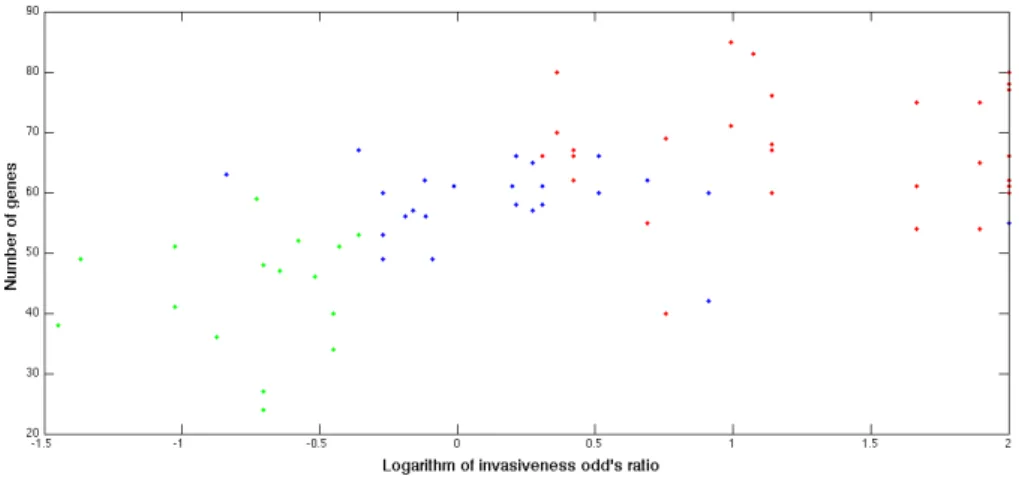
Para cada módulo, observou-se que a presença dos seus genes está correlacionada com o rácio de probabilidade da invasividade das estirpes. Esta correlação observa-se mesmo para as estirpes neutras, ainda que estas não tenham sido usadas como input no algoritmo. Embora as classes invasiva e colonizadora tenham sido usadas pelo algoritmo, os dados dos seus rácios de probabilidade de invasividade não foram. Em conjunto, os módulos usam um total de 111 genes e, usados em conjunto, é possível encontrar uma correlação semelhante. A correlação dos módulos, individualmente e em conjunto, com os rácios de probabilidade de invasividade e com as estirpes neutras é um resultado positivo que suporta a relevância e autenticidade destes módulos como determinantes de invasividade.
Os módulos são robustos contra pequenas alterações na matriz de presença de genes. A experiência de microarray a partir da qual os dados foram originados tem um erro inerente e esta alta robustez confere confiança na autenticidade dos resultados do algoritmo, mostrando que dificilmente são consequência de erros do microarray. A existência de um limite para definir presença de módulos, por oposição à exigência de presença de todos os genes em simultâneo, pode ser uma fonte de robustez contra perturbações nos perfis de presença dos genes.
Não foi encontrado enriquecimento de funções entre os genes selecionados pelo algoritmo nem entre os módulos. O enriquecimento das funções foi avaliado usando a anotação do JCVI. Apesar de não se ter verificado enriquecimento funcional usando a anotação da base de dados do JCVI, alguns genes têm claramente relações funcionais. O nrdD codifica um ribozima que é ativado pelo nrdG. Os genes Argh e ArgG codificam enzimas que catalisam reações sequenciais que constituem uma via alternativa da síntese da arginina. O enzima manitol-1-fosfato desidrogenase (mTLD) utiliza como substrato o manitol-1-fosfato, que é o produto do transporte de manitol pelo sistema PTS (MTLA e mtlF). O RuvB tem a sua atividade como estimulador de recombinação facilitada pela presença da proteína de ligação de DNA de cadeia simples ssb. Um transportador ABC requer a presença de vários componentes que
x
dúvidas na comunidade científica, já que a sua ação parece conduzir ao acumular de pressão de turgescência celular excessiva. O canal mecanosensível largo (MsCl) proporciona uma resposta eficaz para a pressão de turgescência e pode ser um contrapartida biológica da aqpZ. Poliaminas, como a espermidina e norespermidina, têm sido relatadas como possíveis substitutos da colina e são, por conseguinte, intervenientes importantes na estrutura da parede celular e possivelmente na ligação a proteínas que se ligam a colina.
A maioria dos genes selecionados foi previamente associada com a invasão ou tem alguma conexão plausível com os mecanismos de invasão. Proteínas da cápsula e proteínas que ligam colina desempenham um papel importante na proteção contra as defesas do hospedeiro. São importantes na inibição da ação do sistema imunitário, nomeadamente pela remoção das proteínas do complemento, ou pela ligação ao fator H, que é um inibidor do complemento. Vários elementos genéticos móveis foram identificados dentro ou perto do locus dos genes da cápsula e tem sido relatado o impacto destes elementos na regulação da transcrição de vários genes desse locus. A invasão de novos tecidos requer uma adaptação rápida a um ambiente novo, tanto às suas propriedades físicas como à disponibilidade de nutrientes. Foram selecionados genes de resposta a mudanças da pressão osmótica que parecem mais dirigidos a uma resposta rápida a grandes alterações da pressão do que à regulação fina da pressão e são, portanto, de particular interesse na adaptação a novos meios. Genes de resposta anaeróbica como o nrdD e o seu ativador, nrdG, dificilmente são funcionais na nasofaringe, uma vez que são estritamente anaeróbicos. No interior do organismo humano contudo, a concentração de oxigénio é reduzida, uma vez que este está quase sempre ligado a moléculas biológicas como a hemoglobina. Nestas circunstâncias o nrdD pode ser crucial para manter as funções dos enzimas aeróbios equivalentes. A capacidade de utilizar diferentes fontes de energia e de carbono é de extrema importância para a invasividade de uma estirpe. O elevado número de transportadores de açúcar está relacionado com a capacidade das estirpes invasivas sobreviverem em meios de variadas composições. Na mesma lógica, alguns genes foram selecionados que codificam para enzimas do metabolismo de diferentes açúcares, aumentando
provavelmente relacionadas com as necessidades nutricionais de aminoácidos.
A síntese de proteínas é um processo constante em todas as bactérias e exige uma disponibilidade permanente de aminoácidos e tRNA. Foram selecionados genes de síntese de aminoácidos que proporcionam vias alternativas para a síntese de aminoácidos, utilizando substratos alternativos. O algoritmo também selecionou genes ligados à síntese e ligação de tRNA ao aminoácido correspondente. Estes enzimas não foram caracterizados em Streptococcus pneumoniae e é difícil prever a sua influência na síntese proteica.
Por fim, a grande heterogeneidade dos genomas do pneumococcus advém da sua capacidade de recombinação. Alguns dos genes selecionados pelo algoritmo promovem a heterogeneidade do genoma, aumentando a recombinação com o DNA extracelular. Entre os genes selecionados é promovida a internalização de DNA, a sua estabilização e a recombinação com DNA não homólogo. O estado de competência do pneumococcus é acompanhado por uma apetência para induzir a apoptose em células vizinhas, aumentando a concentração de fragmentos de DNA no meio. Várias bacteriocinas foram associadas por este trabalho à invasividade, bem como genes que inibem a apoptose da própria célula. Esses genes dão à célula uma vantagem natural na competição com outros colonizadores.
Em suma, alcançou-se o objetivo pretendido de encontrar determinantes de invasividade. Estes determinantes são fruto de um estudo observacional e é portanto de notar que a relação que têm com a invasividade é apenas de correlação. Para determinar o impacto que estes módulos de genes têm na invasividade é necessário realizar estudos laboratoriais que averiguem em maior detalhe a função biológica dos genes e a sua relação com os mecanismos de invasão.
Agradecimentos i Abstract iii Resumo v Index xiii Figure index xv
Table index xvii
Streptococcus pneumoniae 1
Pneumococcal genome dynamics 3
Pneumococcal invasiveness determinants 4
Computational methods 7
Objectives 8
Methodology 9
Methodology overview 9
Gene module definition 9
Methodology description 10
Gene presence and strain classification data 10
Gene and Strain selection 11
Construction of a Gene-‐gene distance matrix 13
Selection of gene modules 15
Module trimming 19
False discovery rate 19
Module’s robustness 20
Implementation 20
Results and Discussion 21
Gene functional analysis 26
Anaerobic Response 27
Choline binding proteins 28
Transcription regulation 29 Insertion Sequences/Transposons 30 tRNA 31 Cell envelope 32 Spermidine metabolism 33 Osmotic Regulation 34 Co-‐enzymes 35 Proteolysis 36 Competence 37
xiv
Carbohydrate metabolism 41
Acetyltransferases 43
Toxins 44
Aminoacid metabolism 45
Functional interactions with invasiveness 46
Conclusion 49 Future perspectives 51 References 53
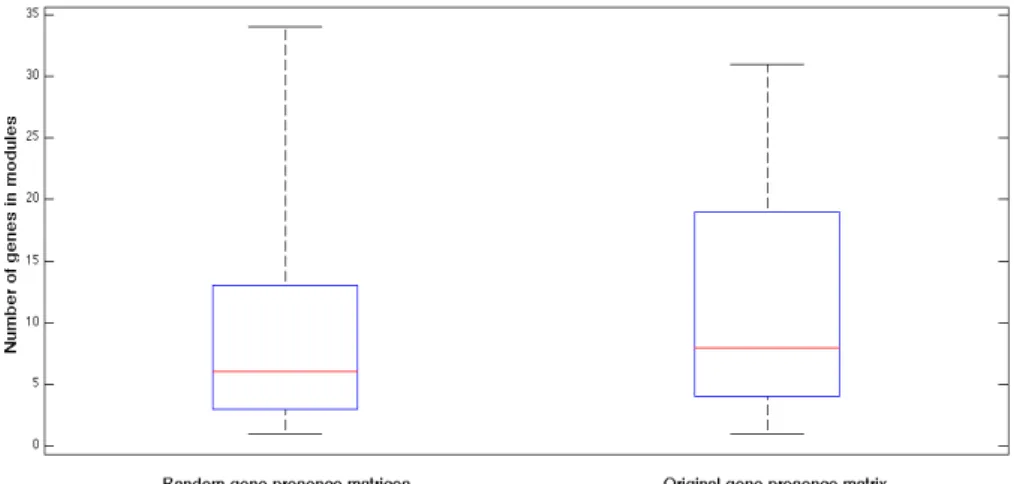
Figure 1 -‐ Gene distribution before gene and strain selection. 12 Figure 2 -‐ Gene Distribution after gene and strain selection. 12 Figure 3 -‐ Influence of module length on module presence in strains 16 Figure 4 -‐ Boxplot of module lengths with random and original gene presence matrices 20
Figure 5 -‐ Module Overlap 22
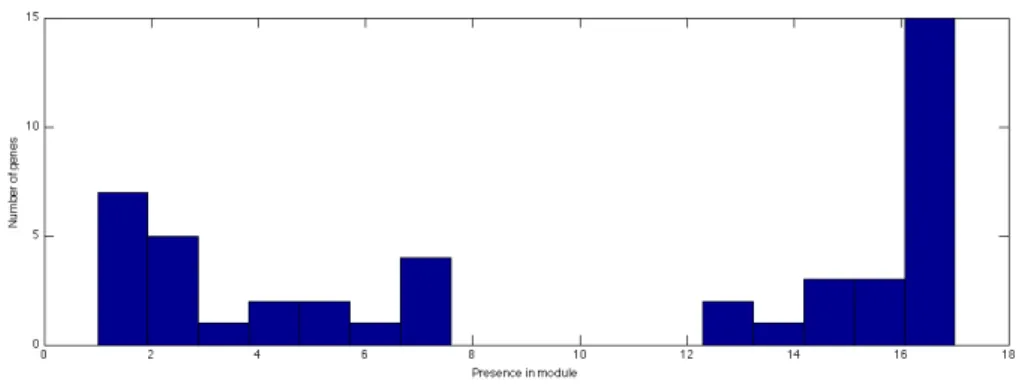
Figure 6 -‐ Presence of the selected genes in strains 22 Figure 7 -‐ Dendrogram of module based on gene composition. 23 Figure 8 -‐ Bimodal distribution of gene presence 23 Figure 9 – Correlation between individual module gene presence and invasiveness odd’s
ratio 25
Figure 10 – Correlation between global modules genes presence and invasiveness odd’s
ratio 26
xvi
Table 1 – Gene Presence vectors with highlights on the genes used to calculate the Jaccard
Distance 13
Table 2 -‐ Contingency table 14
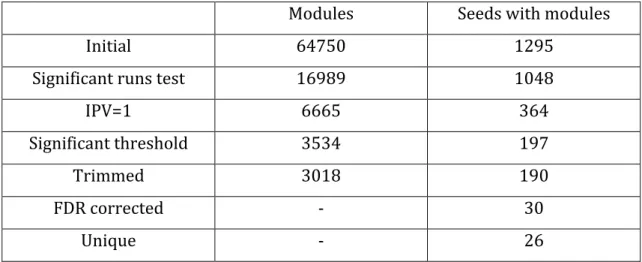
Table 3 – Evolution of the number of modules through the selection steps 21 Table 4 -‐ Genes associated with anaerobic response 27 Table 5 -‐ Genes associated with Choline binding proteins 28 Table 6 -‐ Genes associated with transcription regulation 29 Table 7 -‐ Genes associated with insertion sequences/transposons 30 Table 8 -‐ Genes associated with tRNA 31 Table 9 -‐ Genes associated with cell envelope 32 Table 10 -‐ Genes associated with spermidine metabolism 33 Table 11 -‐ Genes associated with osmotic regulation 34 Table 12 -‐ Genes associated with co-‐enzymes 35 Table 13 -‐ Genes associated with Proteolysis 36 Table 14 -‐ Genes associated with competence 37 Table 15 -‐ Genes associated with DNA recombination/repair 38 Table 16 -‐ Genes associated with transport 39 Table 17 -‐ Genes associated with carbohydrate metabolism 41 Table 18 -‐ Genes associated with acetyltransferases 43 Table 19 -‐ Genes associated with toxins 44 Table 20 -‐ Genes associated with aminoacid metabolism 45
Streptococcus pneumoniae
Streptococcus pneumoniae, also known as pneumococcus, is a human commensal
gram-‐positive bacterium. Although commonly found in the human upper respiratory tract in asymptomatic carriers, pneumococcus can spread to other organs and cause diseases such as pneumonia, meningitis or otitis media1,2.
Attempting to reduce its impact on human life, scientists have studied pneumococcus for more than a century and this effort resulted in ground-‐ breaking discoveries in major areas of life sciences 3,4.
Pneumococcus was first isolated in 1881 by Sternberg in the United States and on the same year by Pasteur in France 3-‐5. Both classified it as a diplococcus. It
would later come to note that the diplococcus form was a consequence of the liquid medium where it was isolated. The availability of new biochemical and molecular techniques for taxonomic identification led to the classification of this bacterium within the genus Streptococcus, as Streptococcus pneumoniae.
The association with pneumonia was not immediate. It was only in 1896 that Weichselbaum would come to settle the argument between Friedlander’s and Albert Fraenkel’s laboratories over pneumonia etiology. This argument is of special importance as it is the first time Christian Gram’s stain was used. Interestingly, it was created not to distinguish bacteria, as it is used today, but to facilitate the visualization of pneumococcal bacteria in histologic sections of the lung 3,5.
In 1904, Sir William Osler said about pneumococcus: “In the Mortality Bills, pneumonia is an easy second, to tuberculosis; indeed in many cities the death-‐ rate is now higher and it has become, to use the phrase of Bunyan 'the captain of the men of death.” 3,4,6. In that time, pneumococcal infection had a case fatality
rate of 30 to 35% and there was no successful therapy 3,7. However, several
discoveries would be made in the same decade resulting in serotherapy, reducing the case fatality rate to ~20% 3. Neufeld and Haendel identified
pneumococcal types 1 and 2. Klemperers recognized the protective value of antiserum against infections with homologous organism and Neufeld discovered the lytic effect of bile on pneumococci, facilitating diagnosis. Serotherapy
2
specificity to types of pneumococcus (serotypes) pushed the identification (typing) of pneumococcus 3,4.
In 1925, another contribution to immunology resulted from the study of pneumococcus. Dochez and Avery discovered that the capsular composition, which is the main immunogenic substance of pneumococcus, was not proteinaceous in nature but in fact a polyscharide, becoming the first non-‐proteic antigen identified 3,4.
The identification of DNA as the genetic vehicle is pointed by many as the single greatest impact in biology to come from the study of bacteria 4. It starts in the
early 1920s, when Griffith took advantage of the morphological differences between encapsulated (smooth) and unencapsulated (rough) pneumococcal strains and their discrepancies in virulence proficiency to discover the “transforming principle”. His experience consisted in injecting a mix of live rough (non-‐virulent) and dead smooth (virulent) pneumococcus in healthy mice, resulting in the death of the animals and the recovery of live smooth bacteria expressing the same capsular serotype as the dead strains 3,4.
Avery, McLeod and McCarty, recreated and extended this experiment in vitro and in 1944 identified the “transforming principle” as DNA. They took advantage of other pneumococcal property, its natural competent state to incorporate smooth DNA into rough strains. Previously unencapsulated strains acquired a capsule, becoming, in McCarty’s words, “sugar-‐coated bacteria” 3,4. Unfortunately
their work was received with scepticism and wasn’t even quoted when Watson and Crick published their seminal work, 9 years later 4.
Also in 1944, Tillet et. al published their paper on penicillin and its incredible efficacy in recovering patients with pneumococcal pneumonia (reducing case fatality rate to 5 to 8%) 8. The disease once feared was now regarded as casual
and typing sera, which was a byproduct of therapeutic sera ceased 3,4. The
second half of the century was marked by a shift in the scientific community opinion towards microbiology: one Nobel laureate asked, “Who cares anymore [about bacteria]?” and the US Surgeon General stated, “The war against infectious diseases has been won” 4. Not even reports in the 1960s of penicillin-‐
acquired resistance changed the view that pneumococcus was an overthrown bacteria and it was nearly abandoned from scientific research 3,4.
Today, the generalized use of penicillin and subsequent antibiotics resulted in growing reports of resistant strains and even multi resistant strains 9,10. From all
the antibiotics available, only vancomicine remains to select resistant mutations
3,4. Moreover, antibiotics unspecificity to serotypes and even to organism
disturbs the ecological equilibrium of the microflora. The resident flora inhibits colonization by S. pneumoniae, H. influenzae, S. aureus, and M. catarrhalis 1. Also,
S. pneumoniae itself can interfere with the growth of S. aureus and this effect has
been attributed to pneumococcal hydrogen peroxide 1. Nevertheless, antibiotics
importance is not to be underappreciated and will surely continue to be the major therapy form against pneumococcus. New drugs will need to be designed continuously as pneumococcal start to be resistant and therefore this approach doesn’t seem to bring forward a definitive strike on pneumococcus influence in human health.
An alternative approach to fight pneumococcal infection is through widespread immunization with vaccines 2. Vaccines against pneumococcus exist since 1940s
but, at the time, the newly discovered penicillin overshadowed them and forced the withdrawal from the market 3. Austrian and Gold denounced the decreasing
effectiveness of case management procedures and started to redesign the polyvalent polysaccharide pneumococcal capsule vaccines 11. Data from trials
with vaccines have showed decrease in infections with the targeted serotypes and carriage itself decreased 2. In particular, infections in younger hosts have
diminished. Vaccination has a clear impact on transmission dynamics as the colonization success rate decreases in half within hosts immune to the particular serotype 3. Nevertheless, recent data shows that the selective pressure against
some serotypes has allowed for others to strive resulting in a phenomenon called Serotype Replacement 12. Infection diseases caused by typically less frequent
strains evidence that widespread immunization isn’t leading to the predicted results.
Pneumococcal genome dynamics
As many organisms living in controlled environments, usually pathogens, pneumococcus has a reduced genome 13,14. Still, much plasticity exists within the
4
pneumococcus genome, with up to 10% variation between strains, and up to 5% of repeated sequences13. An average genome has around 2 to 2.2 Mbp (a typical
strain as TIGR4 has 2160837 bp) 15, and an average of 60 to 80% of each
sequence is conserved by all strains 16. In Donatti et al, the size of the total S.
pneumoniae gene pool accessible to the species, or pan-‐genome, was calculated using two different static descriptive methodologies, namely the finite supragenome model and the power law regression model 13. While the first
estimated the pan-‐genome to have 3000 to 5000 genes, the second estimated that the pan-‐genome is open, having a potentially infinite number of genes. It is conceivable that an open pan-‐genome, together with a mechanism to spread genes through unrelated strains, guarantees a quick and economical response to fluctuating environments 17,18. In fact, Horizontal Gene Transference (HGT) is an
idiosyncrasy in pneumococcus and it is sometimes preceded by fratricide, a phenomena where pneumococcus cells induce death on other pneumococcal cells 19. The dying cells release their DNA content, which may then be acquired
by the killer cells. Competence in pneumococcus is induced in response to detection by a two-‐component signalling system of a peptide pheromone (Csp) secreted by the bacterium 20. In microarray analyses, a large number of genes
whose expression is altered by CSP signalling were detected, but among 124 genes, only 23 are clearly necessary for transformation 21,22. This complex shift in
protein expression is not fully understood but plays a major role in pneumococcal adaptability and response to antibiotics 20. For example, genetic
variation resulting in resistance to penicillin is due to acquisition of fragments of the genes encoding penicillin-‐binding proteins from S Mitis, reducing the affinity of these proteins for the drug 9,23.
Pneumococcal invasiveness determinants
Being a commensal bacterium, pneumococcus is highly adapted to human nasopharynx environment and transmission between hosts occurs essentially during carriage, by aerosol droplets14,24. It is therefore puzzling why
pneumococcal is so proficient in causing infection. Some theories point that the main traits favouring virulence were acquired primarily to improve colonisation
and that infection is a by-‐product of effective colonisation14,24. Supporting this
theory is the finding of many necessary virulence factors in the core genome 13.
However, tissue specific virulence factors have also been reported, suggesting a real adaptation to invasiveness 14. One explanation regards infection as a means
to efficiently eliminate competitor bacteria and other portraits infection as stimuli of cough and mucus secretion as a mean to improve transmission 24.
While this remains an open question, it is undeniable that different pneumococcal strains show different aptitude for invasive behaviour. An inverse correlation between time of carriage and infection rate has been found and in most cases infection occurs shortly after colonization evidencing that some strains are especially virulent.
Search for invasiveness determinants or virulence factors is an widespread goal. Chief among virulence factor is the polysaccharide capsule or serotype 12,25.
There are at least 93 serotypes differing in structure and composition but infection is typically caused by only ~20 26. The capsule is responsible for
resisting complement-‐mediated opsonophagocytosis and providing camouflage to the highly immunogenic epitopes in cell 27. Capsular polysaccharide is highly
negatively charged and sterically inhibits the interaction between phagocytic complement proteins with receptors fixed to pneumococci 6,7.
Beside the capsule many other virulence factors have been identified. Special attention should be given to Signature-‐tagged mutagenesis (STM) studies, negative genetic screens that allow a complex mixture of mutagenized strains to be screened simultaneously in a host for attenuated mutants 28-‐30. Comparison of
the three STM studies determined that the majority of loci identified were hit by only one study 14. Although this may reflect differences in methodology, it is
likely that the use of three different strains of pneumococcus—G54 (serotype 19F); strain 0100993 (serotype 3); and T4 (serotype 4) —contributed to the discrepancy observed between the three STM studies. This disparity suggests that strain-‐dependent variations may influence single gene knock out impact on virulence. On a different study, an island of genes (RD5) was linked to invasive phenotype in serotype 6A, but also with non-‐invasive phenotype in serotype 14
26. It has been proposed that virulence factors may complement the capsular
6
coordinated way for tissue invasion to be successful 26,31. The notion that
virulence becomes from interaction between genes instead of single genes alone brings the search of invasiveness determinants to a new complexity level.
Quantification of virulence or its related measure, invasiveness, and identification of genetic factors that determine these properties has been broadly approached through have used mutagenesis and knock outs studies followed by in vivo tests in animal models to. Alternatively, these properties can be studied using epidemiological data where pneumococcal strains have been recovered from either disease carrying hosts or asymptomatic hosts. These strains can be grouped together in genetic homogenous groups using different types of molecular typing 31. Each group can be associated with a higher or lower
tendency to cause invasive disease – invasiveness. This property should not be confused with virulence, which quantifies the severity of the disease.
Identifying invasiveness determinants, which are potential virulence factors, consists in finding differences between invasive and non-‐invasive strains 32,33.
Differences may occur at gene content or gene expression. Since pneumococcal genome is highly variable and dynamic it is expectable that differences able to discriminate between both classes of strains may be found at the gene content level. Differences may be found performing PCR studies or, in a larger scale, with microarray based Comparative Genome Hybridization or with full genome sequencing 34.
Unlike the STM and other in vivo testing experiences, this approach is observational and, therefore, can only detect correlations or associations but not cause-‐effect relations. It has, however, the advantage of identifying several possible invasiveness determinants simultaneously observing them in multiple genetic backgrounds. Also, it is possible to study interaction between multiple invasiveness determinants and try to infer possible interactions between them. It is also possible to identify new determinants that become from the functional interaction between them and not from the action of the individual genes. This holistic approach and attention to genes interaction fits in a systems biology mold 35. Systems biology is growing area of life sciences that contrasts with
of systems biology is the study of properties that emerge from the interaction of elements, which would not be clear studying the elements in separate 37. The
famous sentence sums up the idea of systems biology: “the whole is bigger than the sum of its parts”.
Computational methods
With information over genetic content of several strains and over the tendency of these strains to cause invasive diseases, supervised learning algorithms could be used to infer classification rules 38-‐40. These algorithms are designed to solve
classification problems, such as genotype-‐phenotype associations, and are evaluated by accuracy of its predictions. Algorithms such as decision trees, neural networks and support vector machines are widely used and with extensive success 41. However, to the goal of biomolecular comprehension of the
mechanisms of invasion, it is more important the interpretation of the rules of classification that the classification accuracy itself. Neural networks in particular have been nicknamed as “black boxes” for it is particularly difficult to interpret their classification rules 42. Recognition that invasive strains class might not be
homogenous but rather achieve invasiveness through different mechanisms further thwarts the problem, as these mechanisms would probably be bundled in a complex function. In this work we attempt to create an alternative to these algorithms that efficiently unveils the mechanisms that lead to invasiveness. Search of gene modules as invasiveness determinants instead of individual genes represents a further increase of the computational difficulty 43. The number of
possible modules increases quickly with the size of the module. With 1000 individual genes, there are 1000 possible simple determinants, 499500 possible determinants with two genes and the number explodes in combinatory way as we keep searching for modules with more genes. To avoid an exhaustive search in such a huge number of possibilities, it is possible to use a heuristic approach, resorting to previously known interactions between genes 32,33,44. Interactions
may have any biological function affiliation (metabolic, physic, regulation) but are always easily codified in a universal format: networks 45. Networks are
8
handled and researched. To this specific problem, we propose that gene modules associated with invasiveness has some functional interaction between its genes.
Objectives
In this study we propose to identify invasiveness determinants. We define determinant as a group of one or more genes that, together, correlate with invasiveness.
We also propose to design a new algorithm that focus on unveiling rules of classification. Classification rules must be able to discriminate invasive class from non-‐invasive but are not required to predict all invasive strains. In the end, classification rules should clearly translate into meaningful biological functions.
Methodology
Methodology overview
The aim of this work is to devise an algorithm to find gene modules associated with pneumococcal invasiveness extracted from biological networks. The input information is the pattern of gene presence/absence in a set of strains that contains strains associated with both invasive disease and colonization behaviours. After a brief filtering of non-‐informative genes, a gene network is created from known biological information. In the present work, this network was based on the CGH presence data and on the invasiveness association of individual genes. Next, gene modules are selected from the network and are evaluated according to their combined association with subsets of invasive strains. In the end, false discovery rate is assessed comparing these modules with modules yielded from strains with random gene composition.
Gene module definition
The core of the methodology proposed in this thesis is the definition of gene module. The gene module is constituted by a set of genes that fulfil the following requirements:
1 -‐ are close neighbours according to a network of gene-‐gene interactions or to a matrix of pairwise distances between genes;
2 – when a strain contains more than t module genes in its genome, it has a high probability of being associated with invasive disease (or with colonization).
Given the information about gene presence/absence in strains known to be associated with invasive disease or colonization, it is possible to establish the optimal threshold t that maximizes the probability that strains containing the module are in fact associated with invasive disease (or with colonization). The proposed methodology evaluates if the value of t and the achieved predictive probability are statistically significant and robust to noise in the input data.
10
Noteworthy, the gene modules are not penalized by the number of strains associated with invasive disease that are not detected by the modules presence. The present methodology does not aim to uncover modules that justify the behaviour of all invasive strains. Being a complex phenotype, there may be several different cellular functions that, independently or synergistically, contribute to strain invasiveness.
Methodology description
Gene presence and strain classification data
This work is based on a data set obtained in a microarray based Comparative Genomic Hybridization (aCGH) experiment of 72 strains of pneumococcus. The microarray platform represented genes present in the sequenced genomes of strains Tigr4, G54 and R6. R6 is an avirulent strain descendent of the serotype 2 fully sequenced in 2001 46. It derives from D39, the strain used by Avery and co-‐
workers to prove that DNA is the genetic material. Used in laboratories ever since, the strain adapted and lost virulence traits including the capsule. R6 genes are targeted in 2839 spots for each strain. Tigr4 is a strain from the serotype 4 sequenced in 2002 and is highly invasive and virulent in mouse models 15. In the
microarray, 3015 spots target Tigr4 genes. G54 genome was drafted in 2001 47
and later fully sequenced in JCVI. In the microarray 2763 of its genes were primary targets.
The test group consisted of 72 pneumococcal strains. The association of these strains with invasiveness has been estimated in a previous study 48. There, two
collections of pneumococcal isolates were obtained in Portugal between 2001 and 2003. One of the collections contained carriage isolates and the other disease isolates. The study calculated the association of each group of genetically similar strains with invasive disease or colonization based on the number of isolates in either collection (Supplemental data). As a result, each group of genetically similar strains was classified as invasive, neutral or colonizer. Each of the 72 strains analysed by aCGH is a representative of a group of genetically
similar strains studied, and therefore, inherits its classification as invasive, neutral or colonizer.
After microarray data analysis, each gene was represented as vector v with a length of 72. The ith element of v, vi, will have the value 1 if the gene was detected
in the ith strain, and 0 if it was absent. This vector is here referred to as gene
presence vector and the collection of the genes presence profiles is compiled in a matrix g. The matrix element gij indicates if the ith gene is present (gij=1) or
absent (gij=0) in the jth strain. The matrix is here referred to as gene presence
matrix.
Gene and Strain selection
Due the uncertainty nature of the neutral class, strains with this classification were not used in the search for invasiveness modules. Neutral classification can be a consequence of two different scenarios, one of statistical nature and one with a biological subtext. Strains that appear with similar frequency in invasive disease and colonization collections need a higher statistical power to be significantly associated with either invasive of colonizer behaviours. These strain can share phenotypic traits with invasive or colonizer strains but the neutral class is assigned to them due to statistical power insufficiency. Contrasting with the previous scenario, neutral classification can, in fact, be appropriated to some strains. Neutral behaviour can be a consequence of the accessory genome composition, with a mix of genes promoting invasion with genes promoting colonization, or, the absence of genes promoting either behaviour. In other words, invasiveness may be a continuous property ranging from coloniser to invasive strains and, halfway the scale, neutral strains. We chose to use only invasive and non-‐invasive strains to train the gene module finding algorithm. The resulting modules can be searched for in the neutral strains, possibly discriminating the reason why the strain was previously classified as neutral.
Not all the genes in the matrix were used in the algorithm. Some of the probes used in the microarray were not specific to only one gene. To avoid a complex
12
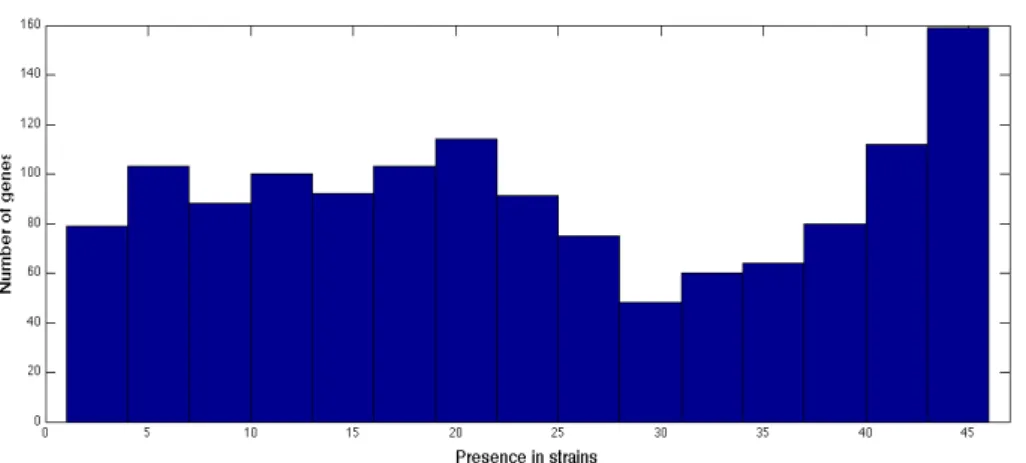
and dubious analysis of the results, all the probes that could hybridize with more than one gene per genome were not used. This accounted for 252 genes. Genes present in all strains (1693 genes) or absent in all strains (4 genes) were also removed. These genes are of no value in the analysis, as they don’t allow discrimination between strains and are but a computational weight. Additionally, genes with repeated gene presence vectors (376 genes) were clumped together. The resulting matrix has 47 strains and 1295 genes. The remaining genes have different presence profiles with both low and high presence frequency, which contrasts with the initial distribution (Figure 1 and 2).
Figure 1 -‐ Gene distribution before gene and strain selection.
Figure 2 -‐ Gene Distribution after gene and strain selection.
Construction of a Gene-‐gene distance matrix
The algorithm is devised to use networks like metabolic, transcription regulation or protein-‐protein interaction networks. In the absence of curated networks of these types for Streptococcus pneumoniae, this work is based on a distance matrix computed from the presence profile matrix and the association of each individual gene with the invasive class. The distance is evaluated through two components: co-‐occurrence and co-‐invasiveness. Co-‐occurrence is assessed using the Jaccard distance. This distance evaluates the frequency of co-‐ occurrence between genes in all the strains where at least one of the genes is present. Jaccard avoids low distance scores between two low frequency genes that don’t co-‐occur, as would happen with the Euclidean or the Hamming distance. Table 1 shows two gene presence vectors and the selection of strains to calculate the Jaccard distance. In equation 1, where Vi represents the set of
strains where gene i is present, the Jaccard distance Jij is calculated as the ratio
between the number of the genes present in only one of the strains and the sum of all genes present in at least one of the strains. Using the examples in table 1, the Jaccard distance is Jij=3/4=0.75.
Table 1 – Gene Presence vectors with highlights on the genes used to calculate the Jaccard Distance
Strain 1 Strain 2 Strain 3 Strain 4 Strains 5 Strain 6
Gene i 1 0 1 1 0 0 Gene j 0 0 1 0 1 0 Jij = Vi∪Vj − Vi∩Vj Vi∪Vj Equation 1
Co-‐invasiveness is also a distance and it evaluates the difference between two genes association to the invasive class, measured by Fisher’s exact test. Fisher’s exact test is a test of statistical significance applied to contingency tables (Table 2). In short, right tailed Fisher’s exact test calculates the probability that an association at least or more extreme than the one observed exists in a