2019
UNIVERSIDADE DE LISBOA
FACULDADE DE CIÊNCIAS
DEPARTAMENTO DE BIOLOGIA ANIMAL
Optimizing small mammal relative abundance measures using
non-invasive sampling and assessment of its contribution to
occupancy modelling of small carnivores in a dry woodland
savannah of South Africa
Beatriz Raposo Pereira da Rosa
Mestrado em Biologia da Conservação
Dissertação orientada por:
Dra. Margarida Santos-Reis
II
“If I have ever seen magic, it has been in Africa.”
III
Acknowledgments
First, I want to thank the National Research Foundation (NRF) and the African Institute for Conservation Ecology (AICE) for funding this project, which is part of Gonçalo Curveira-Santos’ PhD dissertation, enabling the implementation of a large-scale study in South Africa.
I want to thank Margarida Santos-Reis and Lourens Swanepoel for accepting to be my supervisors and for allowing me to live the greatest adventure. Live and work in the African savannah is a dream that most of biologists aspire one day, but few have the luck to see it come true. I have doubted my abilities several times through the past two years, but I was never undervalued by them and both supervisors belief were a strength to take this to the end. Lourens, thank you for accepting a stranger in your home and for trusting me this great project. Even though I was (and am) shy and unconfident, you were always so approachable, humble and kind to me, helping me and teaching me what you know. Even though I didn’t share much time with you on the field, the little I experienced was extremely interesting and fun. You are always super relaxed and that’s something I could learn from you and will try to improve. Thank you for being so genuine and helpful, I will forever remember you. Professor Margarida, thank you for accepting me and sharing your experience and knowledge with me. Mas most of all, thank you for not giving up on me even with all the personal and professional challenges I faced along the work. The fact that you never questioned whether I would make it to the end gave me strength to get to this point. Thank you to my team, Gonçalo Curveira-Santos, Winston Pretorius and Terrance for all the hard work put on five long months of sampling. Terrance, you only worked with us for about two months, but you were always very kind and strong (never saw someone chop wood like you), I will never forget the look on your face when you saw the ocean for the very first time. Winston, thank you for your superhero patience with me, for real, I had some hard times but you were always there with a friendly hand listening to my problems. Gonçalo, for someone so young you have taught me a lot and I have looked up to you since we arrived in SA. You were not only a great teacher but also a great friend. We had our problems, we fought a lot, but also had a lot of fun and some great moments, and in the end I think that’s what friendships are made of. Thank you for your patience, not only in SA but in Lisbon too, I know I can be hard to deal with sometimes (not the only one, hein?). Hope we can continue to be friends, let go of the hard times and keep only the good memories we have of the great adventure we shared.. Also, sorry Gonçalo and Winston for my terrible singing and the great amount of Disney songs you had to deal with. Thank you to the Mun-Ya-Wana conservancy, farmland owners and community chiefs for allowing the sampling to occur on their lands. Thank you to all Phinda staff, especially Simon Naylor and Craig Sholto-Douglas for letting us work in such an incredible reserve and see in first hand the incredible work in protecting African wildlife as I never thought would be possible. The magical moments they provided me were inspirational, and I will cherish it for the rest of my life. Thank you to the good friends I made in South African, from the manager to the volunteers, special mentions to: Simon Naylor who is the most inspirational conservationist I could ever meet, Craig Sholto-Douglas who not only is a great ecologist but also accepted us immediately as friends, Richard Steyn who was the dearest person at all times, Axel Hunnicut who is very passionate about is work, Nina Gray who was always super nice with me and helped me integrate in the family, Tamsin Naylor who is becoming a strong and kind young lady with a great future ahead, Nox Tabethe who translated zulu and was the funniest human being, and Tsandeka who was for a long time the only woman I saw and my confident through the five months. Every single person I met in the reserve was incredibly nice and I will forever carry this family in my heart.
IV Obrigada à minha pequena grande família (mãe, pai, avó) por todo o apoio que me deram a seguir este sonho. O maior obrigado que pode existir à minha mãe e à minha avó, vocês são a minha força todos os dias. Os 5 meses longe foram extremamente difíceis para as três, mas vocês apoiaram-me desde o primeiro momento até agora. Pensei em desistir tantas vezes, mas vocês deram-me sempre aquela força extra que eu já não tinha. Cheguei ao fim graças ao vosso apoio. Não há palavras para agradecer o amor que me dão, tudo o que desejo é que se orgulhem de mim pelo que consegui alcançar apesar das adversidades. Vocês são o que tenho de mais importante na vida.
Aos melhores amigos que a vida me podia dar: João e Pedro. Vocês são incríveis e eu adoro-vos do fundo do coração. Ainda nem acredito que foram às compras para o meu cosplay enquanto eu estava no fim do mundo, quem mais se não vocês? Obrigada ao Gustavo que, depois da desgraça que aconteceu, me deu toda a força para continuar, me apoia constantemente e me dá o melhor refúgio de todos sem o qual eu enlouqueceria.
À minha turma que é a mais incrível de sempre, unida como uma família onde o apoio é constante. Sei que posso contar convosco para tudo e que os laços de amizade que se formaram serão para a vida. Um obrigado especial à Patxó que que teve sempre uma palavra sábia para dar e me transmitiu a confiança que tantas vezes me falhou, e à Carolina que ouviu os meus desabafos vezes sem conta, muitas vezes repetidos. Ambas me encorajaram a continuar a lutar independentemente das dificuldades.
Um obrigado muito especial ao João que é a minha força todos os dias. Não só aguentaste 5 meses sem mim como apoiaste a minha decisão de ir para a África do Sul sem questionar. És a melhor pessoa que conheço, a tua capacidade de perdoar, aceitar, encorajar e ajudar é incrível. Viste-me desistir tantas vezes e chorar de desespero, mas pegaste em mim e emprestaste-me a tua força. Estou onde estou graças a ti. Graças à tua ajuda imprescindível e graças ao teu amor incondicional. Não creio que consiga retribuir o altruísmo que demonstraste, não sou são boa como tu, mas passarei o resto dos dias a retribuir o amor e apoio em tudo o que enfrentares. Contigo, sei que por mais adversidades a vida me traga, eu vou conseguir sempre passar por cima. Muito obrigada, do fundo do coração.
África estará para sempre no meu coração. A savana vasta, o rugir do leão que vibra em todas as células do corpo, o pôr-do-sol vermelho e intenso, as árvores gigantes que enchem os pulmões, as pessoas incríveis e tudo aquilo que não é descritível. Disseram-me que a primeira noite em África me ia mudar para sempre e mudou. Esteja onde estiver, terei sempre um pé em África.
V
Preface
The present study is part of a larger project of the University of Venda, Limpopo, South Africa, entitled “Large carnivore mediated ecosystem service change”. It focuses on understanding the influence of the presence or absence of large carnivores on the trophic chains and how this can ultimately influence the risk of zoonoses transmissions through mesocarnivore release.
VI
Abstract
Small mammals of the Order Rodentia represent a large portion of small carnivores’ diet, influencing their distribution, densities and activity patterns. However, small carnivore studies based on camera-trapping do not include small mammals’ relative abundance as prey covariate, mainly because of the large effort and cost associated with live-trapping at large scales. Alternatively, ink-tracking tunnels are a non-invasive, inexpensive and a low effort sampling method that can be used to monitor fluctuations in small mammals’ relative abundance across sites and time. I implemented ink-tracking tunnels in a y-design to understand its efficiency when compared to live-trapping and the utility of the track index as prey covariate in a carnivore distribution study across a landscape gradient of human disturbance. Tracks were successfully divided into functional groups according to track size and consequently rodents’ biomass. Track index of these groups was highly correlated with live-trapping abundance index, despite this correlation being abundance dependent, as the method is better at detecting large fluctuations of abundance when the group is very abundant than for low abundant species.
I applied the track index of the rodent functional groups as prey covariates to a single species – single season occupancy model for African small carnivore species, along with habitat and disturbance as alternative covariates. Results showed no preference for prey size and neither were prey covariates important for most combinations of species and areas. The only exception was the large-spotted genet at the highest level of disturbance, but only when prey was combined with habitat and disturbance variables. Therefore, the importance of prey covariates is species and context dependent, and it can be discarded from generalist multi-species distribution studies. However, prey should be considered together with habitat variables in studies of carnivore species that are rodent specialists or that rodents represent a large percentage of their diet.
Keywords: ink-tracking tunnels, rodents, track index, occupancy model, disturbance
Resumo
Os pequenos mamíferos são essenciais para a estrutura e funcionamento dos ecossistemas pelo papel que desempenham na dispersão de sementes, ciclo de nutrientes e como principal fonte de alimentos de diversos predadores de superfície e voadores. Enquanto presas, as flutuações na sua abundância de acordo com a disponibilidade de alimento e temperatura, influenciam os padrões de ocupação do espaço, as densidades e os padrões de atividade dos seus predadores. Contudo, e apesar de constituírem uma importante fonte de alimento para muitos pequenos carnívoros, os estudos acerca da distribuição destes são limitados pela não utilização de medidas de abundância das suas presas, em particular os roedores. Esta falha deve-se muito a limitações e constrangimentos dos métodos de amostragem para avaliação de abundância. O método de captura-recaptura por armadilhagem, largamente usado em estudos de roedores, além de invasivo requer um esforço amostral muito elevado, visto que as armadilhas devem ser verificadas duas vezes ao dia para evitar a morte indesejada de indivíduos, acarreta um elevado custo e necessita de licença de captura e manuseamento de animais selvagens. Estes fatores impedem o seu uso em estudos de larga escala, tais como estudos de distribuição de carnívoros. Como alternativa, os túneis de tinta são um método de amostragem que permite a estimativa de abundância relativa de pequenos mamíferos através das suas pegadas, sendo, portanto, não invasivo e evitando a necessidade de licença, têm reduzido baixo custo e, principalmente, são de fácil colocação e não requerem controlo diário.
VII Sendo objetivo da presente tese avaliar os padrões de distribuição dos pequenos mamíferos numa savana seca da África do Sul, numa primeira fase este estudo procurou avaliar a eficácia da amostragem de roedores com túneis de tinta para estimar a sua abundância relativa, comparativamente a um índice de abundância relativa obtido por armadilhagem. Numa segunda fase testou-se a utilidade do uso do índice de pegadas obtido com túneis de tinta como medida de abundância de presas no estudo da distribuição de pequenos carnívoros. A amostragem dividiu-se assim em duas etapas. Numa primeira etapa, em 19 locais selecionados num gradiente de perturbação antropogénica (Reserva Natural de Phinda, fazendas e comunidades rurais), os túneis de tinta foram colocados num desenho em Y de 3 x 3 com 10 m de distância entre si, lado a lado com uma grelha de 7 x 7 armadilhas Sherman. Na segunda etapa, os túneis foram colocados com o mesmo desenho em redor de cada uma das 192 câmaras de foto-armadilhagem para os pequenos carnívoros, dispostas em grelha (1311 m de distância média entre câmaras), cobrindo o mesmo gradiente de perturbação.
Considerando que os carnívoros podem mostrar preferência por presas de diferentes tamanhos de acordo com as suas necessidades energéticas, ainda que nas análises se tenham considerado os roedores no geral (variável presas), pegadas foram ainda divididas em grupos funcionais de acordo com o seu tamanho, refletindo consequentemente o tamanho dos roedores: roedores pequenos, médios e grandes. A partir desta divisão foi estimado o índice de pegadas por grupo funcional, que consiste numa proporção de túneis por local com pegadas de cada grupo. Ao comparar este índice com o índice de abundância obtido através da armadilhagem, foi possível observar uma forte correlação entre ambas as medidas, a qual é dependente da abundância local de roedores. Ou seja, o método é mais eficaz a capturar grandes diferenças na abundância relativa quando os roedores se encontram em elevada abundância, do que quando a sua abundância é reduzida. É de referir que os túneis de tinta não permitem uma estimativa rigorosa da abundância das populações, mas são úteis na monitorização de flutuações de abundância, permitindo uma comparação entre locais ou ao longo do tempo.
Os resultados previamente obtidos sustentaram a aplicação do método dos túneis de tinta para avaliação da abundância relativa de presas no estudo de foto-armadilhagem de pequenos carnívoros ao longo do referido gradiente de perturbação antropogénica. Os índices de pegadas de roedores pequenos e médios, e de roedores em geral, foram incorporados no processo de modelação da ocupação pelos pequenos carnívoros, juntamente com variáveis de habitat e perturbação. Os roedores grandes não foram considerados devido ao reduzido número de deteções. Os resultados mostraram que para os carnívoros em estudo a abundância relativa dos roedores (global ou por grupo funcional) não é um fator decisivo na sua distribuição. A única exceção foi registada relativamente à geneta-malhada, na paisagem com mais alto nível de perturbação (comunidades rurais), mas apenas quando as variáveis de presas foram combinadas com variáveis de habitat e perturbação. Assim, é possível concluir que a importância de roedores depende da espécie e do contexto, podendo a sua utilização ser pouco relevante no estudo da distribuição de espécies de carnívoros generalistas, no entanto, deve ser considerada juntamente com variáveis de habitat em estudos de carnívoros especialistas em roedores ou cuja dieta integre uma elevada percentagem de roedores.
VIII
Index
CHAPTER 1 – GENERAL INTRODUCTION ...1
CHAPTER 2 – STUDY AREA ...5
CHAPTER 3 – EFFICIENCY OF INK-TRACKING TUNNELS AS A METHOD TO ESTIMATE RELATIVE ABUNDANCE OF SMALL MAMMALS IN KWAZULU-NATAL (SOUTH AFRICA).9 Abstract ... 10
Introduction ... 10
Methods ... 12
Sampling design ... 12
Relative abundance measures from ink-tracking tunnels ... 14
Baseline relative abundance estimates from live-trapping ... 16
Comparison between ink-tracking tunnels (Track Index; TI) and live-trapping relative abundance indexes (Abundance Index; AI) ... 16
Results ... 17
Relative abundance measures from ink-tracking tunnels ... 17
Comparison between ink-tracking tunnels and live-trapping relative abundance indexes ... 20
Discussion ... 21
References ... 23
CHAPTER 4 – APPLICATION OF SMALL PREY RELATIVE ABUNDANCE MEASURES DERIVED FROM INK-TRACKING TUNNELS SAMPLING AS COVARIATE FOR SMALL CARNIVORE DISTRIBUTION STUDIES ... 26
Abstract ... 27 Introduction ... 27 Methods ... 29 Study area ... 29 Occupancy modelling ... 31 Covariates ... 31 Model selection ... 32 Results ... 33
Heterogeneity in detection probability ... 34
Ink-tunnel measures of prey relative abundance as drivers of carnivore occupancy ... 34
Discussion ... 37
References ... 38
CHAPTER 5 – FINAL CONSIDERATIONS ... 43
Conservation applications ... 44
Study limitations and future research ... 45
IX
SUPPLEMENTAL INFORMATION ... 51
I. Automatic particle counting analysis... 52
II. Captured species ... 53
III. Covariates correlations ... 54
IV. Detection optimization... 57
V. Tree cover optimization ... 57
VI. Global model fit ... 58
List of figures
Figure 2.1: Surveyed areas: Phinda Private Game Reserve, Farms and Rural communities ...6Figure 3.1: Sampling sites in the three areas. ... 13
Figure 3.2: Live-trapping and ink-tracking tunnels sampling design ... 13
Figure 3.3: The ink-tracking tunnel outside design and the inserted tracking card ... 14
Figure 3.4: Measuring method used to measure the 100 random tracks. ... 15
Figure 3.5: Example of forefeet tracks of the three functional groups ... 15
Figure 3.6: Relationship between the best setting and the manual counts. ... 17
Figure 3.7: Relationship between the best setting and the manual counting accroding to density ... 18
Figure 3.8: Track measures in mm of the three functional groups. ... 19
Figure 3.9: Number of individuals of medium rodents and small rodents ... 20
Figure 3.10: Relationship between abundance index and track index ... 20
Figure 4.1: Camera-trapping grid across the three surveyed areas ... 30
Figure 4.2: Sampling design of the ink-tracking tunnel around the camera-trap ... 30
Figure 4.3: The difference between the null model AIC and the prey candidate models. ... 35
Figure 4.4: Effect of prey covariates on small carnivores’ occupancy ... 37
List of tables
Table 2.1: List of species present or possibly present in the region ...8Table 3.1: Measures in mm for the three functional groups ... 18
Table 4.1: List of covariates used in the occupancy modelling ... 32
Table 4.2: Candidate models by area ... 33
Table 4.3: Number of records, naïve occupancy and null model detection estimation ... 34
Table 4.4: Candidate models with ΔAIC ≤ 2 by species and area ... 35
Table I.1: The 56 different settings from the automatic particle counting analysis tested ... 52
Table I.2: The three best correlation scores between the best settings ... 52
Table II.1: Species captured during live-trapping surveys ... 53
Table III.1: Correlation between the different covariates for the Farms ... 54
Table III.2: Correlations between the different covariates for Phinda ... 55
Table III.3: Correlations between the different covariates for the Rural communities ... 56
Table IV.1: ΔAIC and AIC weight of the detection model ranking ... 57
Table V.1: ΔAIC and AIC weight of the tree cover scale optimization ... 57
1
2
Predators and their effect on ecosystems
Predation is an antagonistic interaction where a predator kills and consumes an individual of another species – the prey –, constituting a strong selection process that leads to physical and behavioural changes in both predator and prey (Abrams, 2000; Fleischer, TerHorst & Li, 2018). During top-down regulation, predators (and predation rates) can deeply influence prey populations, ultimately impacting broader communities by, for example, influencing prey distribution and consequently the competition interactions within prey species that can cascade through the trophic levels (Belgrad & Griffen, 2016). In a stable community, processes induced by predators are as important as those induced by resource availability (Ruiz-Capillas, Mata & Malo, 2013). In contrast, during bottom-up processes, predator activity patterns, densities and distributions are affected by prey availability and distribution (Fuller & Sievert, 2001). Fluctuations in the abundance and biomass of prey populations, and their geographical distribution, play an important role in the viability of carnivorous populations, both in terms of reproduction and mortality from food shortages (Fuller & Sievert, 2001; Owen-Smith & Mills, 2008).
Factors affecting predator densities
Prey abundance therefore remains a key factor affecting the population densities of carnivores species (Fuller & Sievert, 2001; Balme, Hunter & Slotow, 2007; Červinka et al., 2013). For the vast majority of the carnivores’ species, short and long-term changes in their prey abundance, availability and distribution, are the most impactful forces on population viability, distribution and abundance (Fuller & Sievert, 2001).
Such variation in resource (prey) abundance is specifically pronounced in specialist carnivores (Andersson & Erlinge, 1977; Hanski et al., 2001). Specialist predators are adapted to hunt a specific type of prey, e.g. rodents, and their abundance is highly influenced by the prey availability (Andersson & Erlinge, 1977). Even though specialists can consume other food resources when their primary prey (e.g. rodents) is scarse (e.g. switching to insects), their ability to catch other types of prey is often limited. Therefore, their population is influenced by rodents abundance fluctuations (Andersson & Erlinge, 1977; Hanski, Hansson & Henttonen, 1991). In contrast, generalist predators can feed on different types of food sources (e.g. from rodents to insects or birds), where predation is most likely affected by resource availability. Thus, in habitats with a wide diversity of potential prey, generalist carnivores are little influenced by fluctuations in rodent density, while in habitats with limited alternatives, these predators abundance can oscillate with the abundance of rodents (Andersson & Erlinge, 1977).
Even though prey plays an important role in carnivore densities, studies have highlighted the impact of large carnivores on smaller carnivore densities (Caro & Stoner, 2003; de Satgé, Teichman & Cristescu, 2017; Ramesh, Kalle & Downs, 2017; Rich et al., 2017). Small carnivores are particularly vulnerable to the presence of larger carnivores (Caro & Stoner, 2003; de Satgé et al., 2017), due to competition for resources (Caro & Stoner, 2003; de Satgé et al., 2017), interspecific killing not necessarily by predation (Caro & Stoner, 2003; Ramesh et al., 2017) or simply harassment that can injure the smaller carnivores (Ramesh et al., 2017). This pressure influences small carnivores densities and distribution, often leading them to ponder a trade-off between food resources and avoidance of large carnivores (de Satgé et al., 2017; Ramesh et al., 2017; Rich et al., 2017).
Small carnivores
Given the importance of large carnivores in shaping terrestrial communities (Ramesh et al., 2017), their conflict with humans (Schuette et al., 2013) and low densities (Caro & Stoner, 2003), it is no surprise that the majority of research interest and funding is directed to large carnivores (Ray, Hunter & Zigouris, 2005). However, small carnivores (e.g. Families Ailuridae, Eupleridae, Herpestidae,
3 Mephitidae, Mustelidae, Nandiniidae, Procyonidae, Viverridae) (Schipper et al., 2008), often constitutes the majority of carnivore species in ecosystems (Roemer, Gompper & Valkenburgh, 2009) Their “lower risk” conservation status and a belief that they are common and widespread leads to low funding and research interest which makes them among the less studied carnivore species (Schipper et al., 2008; San
et al., 2013). Even though this group is quite common and diverse, there is a tendency to underestimate
their ecosystem importance. In fact, small carnivores fulfil important ecological roles which includes regulating the structure of small mammal and invertebrate communities (San et al., 2013), seed dispersal and seed predation (Guimarães, Galetti & Jordano, 2008; Roemer et al., 2009) scavenging and carrion removal (DeVault et al., 2011), and rodent pest control (Williams et al., 2018).
Small mammals are a key prey item for the majority of African small carnivores (Williams et al., 2018). Given the importance of prey in shaping carnivore abundance and distribution, it is surprising that the majority of small carnivore studies focus on habitat characteristics and human disturbance in addressing small carnivore distributions (Vanthomme et al., 2013; Widdows & Downs, 2015; Widdows, Ramesh & Downs, 2015). Diet and prey information is only included in diet studies, and not as factors shaping small carnivore distribution and abundance (Avenant & Nel, 1997; Atkinson, Macdonald & Kamizola, 2002; Klare et al., 2010; Ramesh & Downs, 2015). Hence, such studies incorporating small mammal abundance in small carnivore distribution models are still lacking.
Importance of small mammals
Incorporating small mammals into diversity and density studies is challenging since small mammals have such a great diversity (Caro, 2001; IUCN/SSC Small Mammal Specialist Group, 2019), have strong seasonal population signals (Krebs & Myers, 1974) and have fine scale habitat associations, which makes it very costly to effectively survey and quantify (Datiko, Bekele & Belay, 2007; Habtamu & Bekele, 2008; Kasso, Bekele & Hemson, 2010; Avenant, 2011). Small mammals (especially rodents) are key ecosystem components, affecting landscape architectures through their diet and faecal activity, which influences the distribution and occurrence of plant species. Their daily activity, such as construction of burrows, may offer shelter to other vertebrates and invertebrates (Ryszkowski, 1975; Hawkins & Nicoletto, 1992). They also provide a biocontrol to plant growth (e.g. seed predation), although they can become pests to certain habitats such as agriculture and pastures, where food is extremely abundant (Ryszkowski, 1975; Fischer et al., 2018). In fact, some studies in protected areas, indicate a higher rodent abundance in surrounding areas with medium disturbance and high food availability in comparison to pristine areas (Caro, 2001; Rautenbach, Dickerson & Schoeman, 2014). Moreover, the majority of small mammals are inserted in a trophic level that represents the link between many primary producers and secondary consumers of the ecosystem, as they are a key food resource for many avian, mammalian and reptilian predators (Ryszkowski, 1975).
Methods to estimate small mammals’ relative abundance
Estimating and monitoring small mammal relative abundances is largely divided into two different estimation techniques: mark-recapture and signals observation (Cavia, Cueto & Suárez, 2012). The most robust method is the mark-recapture technique through live-trapping (Wiewel, Clark & Sovada, 2007). The robust estimates from mark-recapture methods are due to the fact that it can accommodate individual physical traits (e.g. sex, age, ectoparasites) to deal with capture heterogeneity (King & Edgar, 1977; Wiewel et al., 2007). However, in large-scale studies, it becomes very time consuming and labour intensive as it requires monitoring every twelve hours (Glennon, Porter & Demers, 2002; Wiewel et al., 2007; Wilkinson et al., 2012; Chiron et al., 2018), may disturb the populations (Wilkinson et al., 2012) and is dependent on animal ethics authorization due to the manipulation of individuals (Chiron et al., 2018). As such non-invasive methods that estimate relative
4 abundance indexes are popular to investigate small mammal relative abundances, allowing a comparison between species and sites rather than a number of individuals or individual traits (Wilkinson et al., 2012). These include monitoring burrow system activity, detection of tracks and droppings, hair tubes, camera-trapping and ink-tunnels (Chiron et al., 2018). The use of ink-tunnels in particular seems to be a good non-invasive alternative method to live-trapping to monitor rodent relative abundances (King & Edgar, 1977; Wilkinson et al., 2012). Ink-tracking tunnels allow a permanent record of small mammal tracks and are inexpensive, easy to install and require low effort which allows covering a large area (King & Edgar, 1977; Glennon et al., 2002; Palma & Gurgel-Gonçalves, 2007; Wiewel et al., 2007; Wilkinson et al., 2012; Mills, Godley & Hodgson, 2016). Although this method can be used to monitor relative abundance, its use in distribution modelling is still untapped.
Study objectives
Applying a cheap, non-invasive method to estimate the distribution and abundance of small mammals will address the lack of prey covariates in small carnivore distribution models (Burton et al., 2012). In this study I therefore tested the feasibility to use ink-tracking tunnels as a sampling method to capture heterogeneity in small mammals’ relative abundance. I then compared relative abundance measures from tracking-tunnels with well-established mark-recapture studies from live-trapping. Finally, I tested the use of ink-tracking tunnels relative abundance measures as prey covariates in small carnivore camera-trapping studies. The study therefore addresses two main questions:
1. Can ink-tracking tunnel surveys be an efficient sampling method to assess relative abundance of small mammals in a woodland savannah?
2. Are small prey relative abundance measures derived from ink-tracking tunnels sampling important predictors of small carnivore distribution studies?
5
6
Study sites
Due to the high species richness and abundance of small carnivores in Africa and the increase of anthropogenic pressure (San et al., 2013), this study was conducted in the Maputaland region of northern KwaZulu-Natal in South Africa (Figure 2.1). Sampling occurred on a landscape gradient of human disturbance, which included: a protected area, farmlands and rural communities. By choosing a landscape gradient of disturbance it allowed to investigate responses of different carnivore species to prey in different landscapes, which allowed to quantify the context dependent aspects of predation on prey. For the lowest level of human disturbance, sampling was done at Phinda Private Game Reserve (hereafter Phinda) (27°40′S–27°55′S; 31°11′E–32°26′E), situated in the North-eastern point of KwaZulu-Natal at approximately 30 Km from the Indian Ocean shore (Balme et al., 2007; Rautenbach
et al., 2014). At intermediate levels of human disturbance, sampling was done on a matrix of game farms
on the south border of Phinda. At the highest level of human disturbance, sampling was done in a matrix of rural small holding farming and peri-urban Zulu communities on the eastern border of Phinda(Mduku and Nibela communities).
Figure 2.1: Surveyed areas: Phinda Private Game Reserve, Farms and Rural communities, which are located in KwaZulu-Natal province of South Africa, in the southern tip of the African continent.
Climate
This region experiences a hot and humid subtropical climate, with a dry winter from April to September and hot rainy summer from October to March (Balme et al., 2007). The average rainfall is about 510 mm per year, with its majority occurring in the summer. The temperature has an average of 30 °C in summer and can drop down to 10 °C in winter (Rautenbach, 2013).
Landscape
Geologically, Phinda has an altitude range between 50 m and 340 m which results from the Lebombo Mountains that run through the south-west side of the reserve. It has two seasonal rivers, the main one is the Mun-Ya-Wana river that divides the reserve in two at the middle (Phinda North and Phinda South), and the Mzinene river that makes a boundary in the South (Hunter, 1998). These characteristics have huge influence on the climate and consequently on the type of vegetation, resulting
7 in an heterogenous landscape. It encompasses multiple vegetation types (Balme et al., 2007; Van Rooyen & Morgan, 2007), but is essentially dominated by savannah woodlands of Acacia and
Terminalea species, grassland and wooded grasslands (Van Rooyen & Morgan, 2007)
Land-use
Phinda was established as a conservation area in 1990. The land previously consisted in different private lands used for plantations, livestock or as small game farms usually associated with recreational hunting (Hunter, 1998). To date, Phinda has re-introduced an array of different mammal groups, ranging from ungulates to elephants, rhinoceros, and large carnivores and is specially known for the successful re-introduction of cheetahs. With big efforts from the conservation team, sponsors, anti-poaching units, and all the people involved, Phinda is now an expanding reserve with 270 Km2 and well stablished populations of African animals and vegetation. Since it has re-introduced dangerous species, the whole reserve is surrounded by electrified game fencing, as prescribed by the country’s law, which means most of the large species cannot go beyond the limits of the reserve (Hunter, 1998). The carnivore species confirmed as present are the African lion (Panthera leo (Linnaeus, 1758)), cheetah (Acinonyx jubatus (Schreber, 1775)), leopard (Panthera pardus (Linnaeus, 1758)), spotted hyena (Crocuta crocuta (Erxleben, 1777)), large-spotted genet (Genetta maculata (Gray, 1830)), white-tailed mongoose (Ichneumia albicauda (G. Cuvier, 1829)), side-striped jackal (Canis adustus, Sundevall, 1847), banded mongoose (Mungos mungo (Gmelin, 1788)), common slender mongoose (Herpestes sanguineus (Rüppell, 1835)), honey badger (Mellivora capensis (Schreber, 1776)), striped polecat (Ictonyx striatus (Perry, 1810)) and marsh mongoose (Atilax paludinosus (G. Cuvier, 1829)).
On the surrounding farms, vegetation is similar to Phinda, while the topographical relief is less pronounced. The carnivore species expected are mainly the same except for the lion which is restricted by the electrical fencing. The game farms consist in extensions of natural vegetation where humans exist in low densities. While they are mainly use for game, some can have a mixed regime with domestic cattle.
On the Zulu tribal authority lands, vegetation is less diverse, and the terrain is mostly plain. Only small carnivores are expected to occur on this area due to the high level of human disturbance. The communities consist in scattered households, small crops, livestock and a semi-natural vegetation. Besides humans, domestic predators (i.e. cats and dogs) and other domestic animals (i.e. cows, goats, sheep, chickens) are very abundant throughout the whole area.
Small mammal species
Small mammals constitute a group that includes rodents, shrews and eulipotyphlans that weight less than one kilogram (Lim & Pacheco, 2016). According to the IUCN SSC Small Mammal Specialist Group (2019), there are more than 2800 species around the globe, of which 437 are considered threatened by the International Union for the Conservation of Nature. For this study, I identified the small mammal species that occur or may occur on the study area based on information from live-trapping studies (using both literature and field experience) (Table 2.1).
8
Table 2.1: List of species present or possibly present in the study area divided by size groups and their mean head to body length in mm (HB), hindfoot length in mm (HF) and weight in g (WT), with the two most abundant in bold (Kingdon et al., 2013; Rautenbach et al., 2014).
Functional
Group Species Common name HB HF WT Reference Small
rodents
Mus minutoides African pygmy mouse 54.4 12.5 6.2 Monadjem 2013a Dendromus mystacalis Chestnut climbing mouse 57.5 17.1 8 Monadjem 2013b Dendromus melanotis Grey climbing mouse 69 17.5 7.2 Monadjem 2013c Dendromus mesomelas Brants’ climbing mouse 75 20 11.3 Monadjem 2013d
Steatomys pratensis Fat mouse 94 16 32.9 Monadjem 2013e
Medium rodents
Mastomys natalensis Natal multimammate mouse
107 22 36.4 Leirs 2013 Grammomys dolichurus Woodland mouse 113 24 32.9 Happold 2013 Aethomys namaquensis Namaqua rock mouse 113 26 48 Kesner et al. 2013 Saccostomus campestris Pouched mouse 114 21 48.5 Perrin 2013 Lemniscomys rosalia Single-striped grass mouse 126.3 26 54.2 Monadjem 2013f
Gerbilliscus leucogaster Bushveld gerbil 128.6 33.5 69.8 Dempster 2013
Gerbilliscus brantsii Highveld gerbil 134.6 35 79.9 Dempster 2013b
Thallomys paedulcus. Sundevall’s acacia rat 140.3 25.3 72.3 Perrin 2013b Aethomys ineptus Tete veld rat 147 30 83 Linzey et al. 2013
Large rodents
Mystromys albicaudatus White-tailed mouse 153.5 26.5 76.5 Perrin 2013c Otomys irroratus Southern African vlei rat 161 32 144 Taylor 2013 Dasymys incomtus. Common shaggy rat 165 33 158 Pillay 2013
Rattus rattus Black rat 165.3 31.7 132 Happold 2013b
Petrodromus tetradactylus
Four-toed elephant shrew 192.9 54.8 198.3 Rathbun 2013
Small carnivore species
Southern Africa is endowed with a rich diversity of small, medium and large carnivores. The diversity includes over 80 carnivore species (Kingdon et al., 2013), ranging from the iconic lion to the slender mongoose. South Africa, in particular, is widely known for its high number of predatory species that co-exist in protected and non-protected areas. This study was focused on the small carnivore species detected on the camera-traps, which included: large-spotted genet, white-tailed mongoose, side-striped jackal, banded mongoose, common slender mongoose, honey badger and striped polecat. Although generalist, these species have different prey preferences. The large-spotted genet and the side-striped jackal feed primarily on rodents (Atkinson et al., 2002; Angelici & Luiselli, 2005), while the banded mongoose, striped-polecat and white-tailed mongoose prefer insects as main resource (Taylor, 1972; Rood, 1975; Rowe-Rowe, 1978; Waser & Waser, 1985; Larivière, 2002; Otali & Gilchrist, 2005; Hoffmann & Taylor, 2013), on the other hand, the honey badger’s primarily ingest reptiles (Begg et al., 2003).
9
CHAPTER 3 – EFFICIENCY OF INK-TRACKING TUNNELS AS A
METHOD TO ESTIMATE RELATIVE ABUNDANCE OF SMALL
MAMMALS IN KWAZULU-NATAL (SOUTH AFRICA)
10
Ink-tracking tunnels sampling method to estimate small mammals’ relative
abundance in a dry woodland savannah
Rosa, Beatriz P.1
1 Centre for Ecology, Evolution and Environmental Change (cE3c), Faculdade de Ciências, Universidade de Lisboa, Portugal
Abstract
Assessing small mammals’ relative abundance is important to understand what drives their population dynamics and the impact of its fluctuations in the ecosystem. To this end, the most common sampling method is live-trapping. However, its high cost and intensive labour makes its use in large-scale studies unfeasible. As an alternative, ink-tracking tunnels can monitor population abundance fluctuations and are non-invasive, inexpensive and require low effort. To evaluate ink-tracking tunnels efficiency to assess rodents’ relative abundance comparing to the live-trapping method, I implemented tunnels in a 3 x 3 y-design sampling in relation to a 7 x 7 grid of live-traps. I tested two measures of abundance: number of individual track records and proportion of tunnels with track records (track index), from which I tested a functional group division based on track size. As the automatic counting of particles showed a very low correlation to the actual number of tracks, it was immediately discarded. The group division in small rodents, medium rodents and large rodents proved to be well established, as the correlation with the live-trapping abundance index was high for medium rodents and rodents in general, and moderate for small rodents. The track index was better at capturing large fluctuations in relative abundance between sites, rather than small differences. However, this efficiency is abundance dependent, detecting better fluctuations for high abundant groups than for low abundant ones.
Keywords: rodents, fluctuations, live-trapping, functional group, track index
Introduction
Importance of assessing small mammals’ relative abundance
Small mammals from the Order Rodentia, comprise nearly 40 % of all the known mammal species and exist in a wide diversity of habitats, which makes it the most diverse and abundant mammal group in the world (Datiko et al., 2007). The distribution and abundance of rodents is primarily driven by food availability and vegetation cover (Datiko et al., 2007). Therefore, rodents’ abundance fluctuates seasonally ultimately due to rainfall and temperature (Rautenbach et al., 2014), achieving the peak in the wet season when resources availability is higher (Delcros, Taylor & Schoeman, 2015). This susceptibility to weather conditions to breed and increase abundance, renders rodents as good indicators of ecosystem conditions and climate change (Rautenbach et al., 2014; Delcros et al., 2015).
Small mammals are key components of the ecosystem, playing important roles such as seed dispersal, population regulation, cycling of nutrients through urine and faeces, and food sources of multiple terrestrial and volant predators (Ryszkowski, 1975; Delcros et al., 2015; Fischer et al., 2018). As prey of several species of carnivores, birds and reptiles, the fluctuations in rodent abundance can also influence the dynamics of its predators, depending on the level of specialization and mobility of the predator species (Andersson & Erlinge, 1977). Regarding predator-prey ecology, prey preferences can vary with the biomass and energy income of the prey (e.g. larger mice comparing to smaller mice),
11 hence it is important to account for heterogeneity of rodent’s biomass as a response to the different metabolic needs of predator species, instead of relative abundance of rodents per se (Mukherjee et al., 2004).
These facts highlight the importance of monitoring rodent abundance and understand their distribution patterns to better assess their ecosystem role and ultimately help the development of small carnivore conservation strategies (Widdows & Downs, 2015). Moreover, it can also aid in finding the best solutions for pest control (Williams et al., 2018).
Non-invasive small mammal sampling
Mark-recapture and signals observation have been the two most used techniques related to the estimation and monitorization of small mammals relative abundance and distribution (Cavia et al., 2012). The mark-recapture technique through live-trapping is known to be the most reliable method (Wiewel et al., 2007). This methodology produces more robust results due to individual physical traits accommodation (King & Edgar, 1977; Wiewel et al., 2007). However, daily monitoring (Glennon et al., 2002; Wiewel et al., 2007; Wilkinson et al., 2012; Chiron et al., 2018), potential population disturbance (Wilkinson et al., 2012) and animal ethics (Chiron et al., 2018) increases the time consumption and the labour intensity, more predominant in large scale studies.
The use of non-invasive camera-trapping sampling methods in the estimation of abundance of terrestrial mammals has grown in the last years since it provides permanent data on elusive species (Mills et al., 2016). While this method is effective in detecting large mammalian species, small species are plagued by low detection rates (Hofmeester et al., 2019). This is largely due to the field deployment method that differs between species (e.g. camera height) (Hofmeester et al., 2019). Therefore, the majority of studies that involve carnivores underestimate the presence and abundance of small mammals (Burton et al., 2012). Non-invasive methods that include observation of signs can also be used and are generally cheaper, from hair tubes and monitoring of burrow system activity to ink-tracking tunnels (Chiron et al., 2018).
The ink-tracking tunnel sampling method
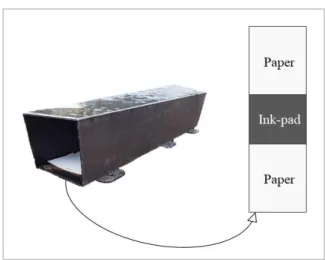
An alternative method less technical demanding to assess rodents’ relative abundance is the ink-tracking tunnel method (King and Edgar 1977). Essentially, in this method a rodent enters a baited tube, walks over a ink-pad which then leaves tracks on the paper when the rodent exits (King & Edgar, 1977). It has several advantages comparing to live-trapping, as it can be left uninspected in the field for days, is inexpensive, non-invasive, user friendly, reduces the risk of infection with zoonoses as there is no animal interaction (Glennon et al., 2002; Wiewel et al., 2007), allows sampling of several areas at the same time (King & Edgar, 1977; Glennon et al., 2002), can be used to study any kind of animal that fits inside the tunnel (e.g. small mammals, insects, reptiles) (King & Edgar, 1977) and leaves clear and permanent records (Palma & Gurgel-Gonçalves, 2007). By recording the tracks of individuals that enter the tunnel, this method enables monitoring studies such as distribution, habitat preferences and abundance fluctuations through time and space (King & Edgar, 1977; Glennon et al., 2002; Blackwell, Potter & Mclennan, 2006; Wiewel et al., 2007; Wilkinson et al., 2012).
There seems to be a strong correlation between ink-tunnels relative abundance and live-trapping estimates (Wilkinson et al., 2012). The correlation strength, however, depends on the sampling season, showing promising results to detect large fluctuations of abundance through time when the relative abundance is average in all sampling sites, and to detect differences between sites in the same sampling
12 season when relative abundance is low. However, the ink-tracking tunnels measures fail to record small fluctuations of abundance and to estimate relative abundance in seasons with low food availability, as rodents will be more attracted to the bait, whether its abundance is low or high (Wilkinson et al., 2012). Even though the method does not provide information on the individuals of the population as the live-trapping method, on monitoring studies and large-scale samplings, the ink-tracking tunnels are convenient and efficient by capturing significant differences in relative abundance of small mammals between sites and seasons (Wilkinson et al., 2012).
In Africa, ink-tracking tunnels advantages have not yet been explored. Given the high diversity of small carnivores that incorporate rodents in their diet (San et al., 2013) the use of ink-tunnels can be a convenient method to incorporate large-scale rodent distribution and relative abundance in small carnivore distribution models (Burton et al., 2012).
Study objectives
The main objective of this study is to assess the efficiency of ink-tracking tunnels as a sampling method to estimate relative abundance of small mammals in a woodland savannah compared to live-trapping abundance estimations. To achieve this, the study was divided in two sub-objectives:
1. Assess small mammals’ relative abundance using two different measures (track index and number of tracks)
2. Comparison between ink-tracking tunnels relative abundance measures and live-trapping relative abundance indexes
Methods
Sampling design
The field work was conducted in the North of the KwaZulu-Natal province of South Africa, specifically in Phinda Private Game Reserve (hereafter Phinda) and surrounding areas such as the farmlands in the southern border and the rural communities in the eastern border of the reserve, during August of 2017. Sampling sites were selected to provide the same habitat heterogeneity, which led to ten sites in Phinda – five (replicates) in the South and five in the North of the reserve. A similar sampling approach was followed for the farming area (five sampling replicates) and the rural settlement area (four sampling replicates) (Figure 3.1).
13
Figure 3.1: Sampling sites in the three areas, with 5 sites in the Farms, 10 sites in Phinda and 4 sites in the Rural communities.
In each sampling site I followed standard live-trapping method and deployed 49 Sherman traps (H. B. Sherman Traps, Inc., Tallahassee, Florida) in a 7 x 7 grid approximately 10 meters apart. Simultaneously, 9 ink-tracking tunnels (King & Edgar, 1977) were placed with a 3 x 3 y-design, also 10 m apart (Figure 3.2). Ink-tracking tunnels were sampled for four consecutive nights, while live-trapping sampling nights oscillated between five to seven. The y-design was chosen in order to simplify the sampling effort and therefore allow a larger sampling scale.
Both live-traps and tunnels were baited with peanut butter and oats. The live-traps were checked every morning. In contrast, the ink-tracking tunnels were not disturbed during the entire sampling period (4 nights).
Figure 3.2: A- sampling design of the live-traps with 7 x 7 grid, 10 m apart from each trap; B- sampling design of the ink-tracking tunnel in a 3 x 3 y-design also 10 m apart from each tunnel, numbers identify the line and letters identify the circumference around the unoccupied centre.
14 The ink-tracking tunnels used in this study were made of robust corrugated plastic, measuring 55 x 10 x 10 cm with both entries open, a size that allows small mammals to get inside, from small rodents to elephant shrews, but not small carnivores. On the sides, the six tabs with holes allowed metal stakes to be attached to the ground, preventing its dislocation. Inside the tunnel, a folded paper was placed measuring 55 x 10 cm, covering the base length of the tunnel. In the centre of the paper, a 12 x 10 cm card was stapled to it and used as the recipient for the ink (Figure 3.3). Since this card was waterproof, it allowed the ink to last longer and was able to be reutilized. The ink used was a long lasting, environmentally friendly and animal safe black ink, enabling its stay on the field during the sampling period without drying up. Above the ink-pad, a small PVC tube was attached to the tunnel as a container for the bait. At the end of the sampling, all papers from the ink-tunnels were photographed with a scale and an android mobile phone with the same height and light conditions.
Figure 3.3: The ink-tracking tunnel outside design and the inserted tracking card.
Relative abundance measures from ink-tracking tunnels
In ink-tracking tunnel studies, the proportion of the tunnels with records (track index; TI) is often used as a measure for rodent abundance (Wilkinson et al., 2012). However, to know if it is possible to obtain more information on rodent abundance from the number of individual tracks per tunnel, I also tested an automatic counting method to count individual tracks.
Functional grouping and track index
Track size can be an indication of rodent size (Palma & Gurgel-Gonçalves, 2007), and hence add some extra information on rodent relative abundance. This can be important for predator studies, because carnivore species have different metabolism and energy income needs, and available energy is associated with prey biomass and consequently with size. Rather than trying to identify rodent tracks, I opted to group tracks into functional size groups (Mukherjee et al., 2004). To achieve this, I compiled a list of potential species present in the area (Table 2.1) (Kingdon et al., 2013; Rautenbach et al., 2014). Based on species body-length we consider three possible functional groups – small rodents (54.4 to 94 mm), medium rodents (107 to 147 mm) and large rodents (which may include sengi) (153.5 to 192.9 mm). I obtained hindfoot sizes for each group from published morphological data (Kingdon et al., 2013) and assigned front and hind track measured on track plates to each group.
15 I measured one forefoot and one hindfoot track for each functional group in a random sample of 100 track papers using ImageJ software, applying a scale where 1 cm equals 200 pixels. Only footprints in good conditions were considered for measuring (e.g. no missing fingers). For each track I measured the length and width to nearest mm, however most tracks were incomplete, so measurements excluded heel pads as shown in Figure 3.4. Each track was then assigned to either a small, medium or large rodent (Figure 3.5).
Figure 3.4: Measuring method used to measure the 100 random tracks.
Figure 3.5: Example of forefeet tracks of the three functional groups: A-Large rodents, B-Medium rodents, C-Small rodents.
I then tested for differences in foot track length and width to validate the classification of the functional groups. Considering the small dataset, normality and homoscedasticity were tested using Shapiro-Wilk and Levene tests, respectively (Razali & Wah, 2011; Kim & Cribbie, 2018). Data for both width and length did not meet the ANOVA assumptions. I then used Kruskal-Wallis test (Ostertagová, Ostertag & Kováč, 2014; Ali & Bhaskar, 2016) for differences in track length and width for each functional group using IBM SPSS Statistics 25 (IBM, 2007).
I derived track index (TI) based on the proportion of tunnels with small mammal tracks (Wilkinson et al., 2012) of the three different functional groups plus general rodents (i.e. prey) per site.
Number of individual track records
To estimate the number of tracks per paper I used an automatic counting method, implemented by a particle analysis tool (Image processing software ImageJ 1.51j8; (Abràmoff et al. 2004). By transforming an image to 8-bit and adjusting its threshold, the software turns the image to black and white. The particle analysis tool image analysis (software settings) is dependent on the minimum pixel size and circularity of the particles (Hoeks, n.d.). Because resulting counts depend on the software
16 settings used (i.e. threshold, pixel size, and circularity), I first manually counted the number of individual tracks and compared it with automatically counted particles to derive the best software settings.
As the automatic method does not distinguish tracks, but only particles, the manual counts considered tracks of rodents in general. I randomly selected papers (using a Random File Picker 1.2 (Szeniak, 2015)) until reaching 100 papers with tracks, which resulted in a total of 157 papers. I then set up 56 different image software setting combinations (i.e. threshold, pixel size, and circularity which was used to count the tracks. The settings were chosen based on a step-by-step selective process and observation of correlation values. (see Supplemental Information I, Table I.1). These automated particle counts were then compared to the manual counts using a Pearson’s correlation test.
Since the automatic image processing can be affected by how dark the image is (e.g. high density of tracks), I also divided the papers in three groups according to the number of manual counted tracks. These include from 0 to 100 tracks, 100 to 300 tracks and more than 300 tracks. I then applied a Pearson’s correlation test between the manual counts in each group to the automated counts.
Baseline relative abundance estimates from live-trapping
The live-trapping abundance index was calculated by dividing the number of captured animals by the number of trap nights. Since the low number of recaptures did not allow to use capture-recapture estimates. The trap nights parameter was estimated by multiplying the number of sampling nights by the number of traps set up per site, as not all sites had the same sampling effort.
Comparison between ink-tracking tunnels (Track Index; TI) and live-trapping relative
abundance indexes (Abundance Index; AI)
To understand the efficiency of ink-tunnels to describe small mammal relative abundance indexes, I compared the track index (TI) with the live-trapping relative abundance index (AI) obtained using the sampling design described before (Figure 3.2). A Pearson correlation was performed between the track index and the abundance index of small rodents, medium rodents and rodents in general captured per site (19 sites). The large rodents’ group was not considered since the live-traps were smaller than the ink-tracking tunnels and therefore some larger individuals may not be captured by the live-traps. For the correlation, all species of the medium rodents and small rodents captured were considered, with an evaluation of the most abundant species per group. Statistical tests were performed on IBM SPSS Statistics 25 software (IBM, 2007), while scattered plots were performed on R software using package
17
Results
Relative abundance measures from ink-tracking tunnels
Number of individual track records
The Pearson correlation between the different settings of the automatic counting method and the manual counting (see Supplemental Information I, Table I.1) of the 157 random papers resulted in low correlation coefficients ranging from 0.04 to 0.31, however, when focusing on the r2, values were null.
The setting “55_15_0.90” (threshold, pixel size and circularity respectively) returned the best correlation coefficient (r2 = 0.098, n = 157, p = 0.000), followed by “55_15_0.80” ( r2 = 0.081, n = 157, p = 0.000), and the third best setting was “55_10_0.90” ( r2 = 0.063, n = 157, p = 0.001). Different thresholds for the same pixel size and circularity resulted in the same particle counts and therefore same correlation value.
Focusing on the null relationship between the automatic counting (using the best settings) and the manual counting, (Figure 3.6), in papers with approximately 500 tracks, the automatic method didn’t count as many particles as it would be expected. At lower densities this method shows higher accuracy, although there are also some outliers, where the automatic method counted multiple particles on the papers when in fact there are few tracks.
Figure 3.6: Relationship between the best setting (“55_15_0.90”) and the manual counts.
By dividing the papers in three groups of track density (Figure 3.7), correlation values with the manual counting varied. From 0 to 100 tracks the coefficient is very low (r2 = 0.133, n = 124, p = 0.000), from 100 to 300 tracks the coefficient is also very low (r2 = 0.112, n = 25, p = 0.102), and more than 300 tracks has a null correlation (r2 = 0.014, n = 8, p = 0.781).
18
Functional grouping
The three groups have distinct means for both length and width on the forefeet and hindfeet (Table 3.1). On the forefeet, small rodents have a length range from 1.57 to 2.41 mm and width range of 2.63 to 4.35 mm, medium rodents have a length range from 3.45 to 6.18 mm and a width range from 5.14 to 9.71 mm, and large rodents have a length range from 11.14 to 12.75 mm and a width range from 13.14 to 15.14 mm. On the hindfeet, small rodents have a length range from 2.06 to 4.35 mm and a width range from 2.63 to 4.91 mm, medium rodents have a length range from 4.52 to 8.74 mm and width range from 5.70 to 10.11 mm, and large rodents have a length range from 13.65 to 14.68 mm and a width range from 14.15 to 17.71 mm.
Table 3.1: Measures in mm, with respective mean, standard deviation, minimum and maximum of forefeet (FF) and hindfeet (HF) length and width for the three functional groups division proposed: small rodents (n = 45), medium rodents (n = 57) and large rodents (n = 5), measured for 100 random ink-tracking tunnel papers.
Measure
(mm) Functional group FF HF
Mean SD Min. Max. Mean SD Min. Max. Length Small rodents 1.955 0.186 1.570 2.410 3.331 0.663 2.060 4.350
Medium rodents 4.597 0.642 3.450 6.180 6.696 0.938 4.520 8.740
Large rodents 11.700 0.625 11.140 12.750 14.058 0.422 13.650 14.680
Width Small rodents 3.560 0.363 2.630 4.350 3.691 0.544 2.630 4.910
Medium rodents 6.961 1.096 5.140 9.710 7.731 1.070 5.700 10.110
Large rodents 14.326 0.902 13.140 15.140 15.832 1.314 14.150 17.710
According to Shapiro-Wilk test applied to the measures, data is normally distributed in all cases (p-value > 0.05) with exception for medium rodents forefoot length and small rodents hindfoot length (FF length: small rodents p = 0.964, medium rodents p = 0.154, large rodents p = 0.175; FF width: small rodents p = 0.739, medium rodents p = 0.005, large rodents p = 0.244; HF length: small rodents p = 0.050, medium rodents p=0.056, large rodents p=0.5; HF width: small rodents p=0.920, medium rodents p = 0.361, large rodents p = 0.877). Levene’s homogeneity of variances test resulted in p = 0.019 for hindfoot length and p = 0.000 for the rest, meaning variances are heterogeneous (Razali & Wah, 2011). By failing one of the ANOVA assumptions, the Kruskal-Wallis non-parametric test was applied (Ali & Bhaskar, 2016), whose results showed a significant difference (p = 0.000) between the three groups for all measures and both feet (Ostertagová, Ostertag & Kováč, 2014).
Small rodents’ forefoot length and width are smaller, do not vary much in length and a have a little more variation in width (Figure 3.8). Medium rodents have more heterogeneity of length and width, showing it englobes footprints of smaller and bigger sized rodents. Large rodents’ footprints are notably larger than all the other groups.
A B C
Figure 3.7: Relationship between the best setting (“55_15_0.90”) and the manual counting of three groups of track density: A: 0-100 tracks, B: 100-300 tracks, C: more than 300 tracks.
Manual Manual Manual
B es t se tt in g B es t se tt in g B es t se tt in g
19 Hindfoot length and width appear to be more heterogeneous for small rodents comparing to their forefeet (Figure 3.8). Medium rodents, similarly to their forefeet, have a large range of footprint sizes. Large rodents have much larger measures than the other groups.
Figure 3.8: Track measures in mm of the three functional groups: A – forefoot (FF) length, B – forefoot width, C –hindfoot (HF) length, D – hindfoot width.
Live-trapping
A total of 305 rodents were captured during the study. The highest number of rodents were captured on the Farms, followed by Phinda and then the Rural communities (Figure 3.9). Live captures comprehended a total of 10 species (see Supplemental Information II). In terms of functional groups, medium sized rodents were dominated by Mastomys natalensis (Smith, 1834), while small rodents were dominated by Mus minutoides Smith, 1834 (Figure 3.9).
A B
20
Figure 3.9: Number of individuals of medium rodents, Mastomys natalensis, small rodents and Mus minutoides captured by the live-trapping sampling method on the three surveyed areas.
Comparison between ink-tracking tunnels and live-trapping relative abundance indexes
There is a high and significant positive correlation (r2 = 0.728, n = 19, p = 0.000) between medium rodents’ abundance index and medium rodents track index, as does for rodents in general although lower (r2 = 0.516, n = 19, p = 0.001). Small rodents have a positive low correlation between measures, although
it is not significant (r2 =0.245, n = 19, p = 0.031) (Havlicek & Peterson, 1976).
The relationship between medium rodents’ track index and abundance index (Figure 3.10) shows that at low abundance, the track index can be low or medium, as some sites with null and low abundance index indicated a track index up to 0.4 (on a scale of 0 to 1). At medium and high abundance index, the track index was high.
For the small rodents, there are more discrepancies, as sites with the low and null abundance indexes resulted in low to high track indexes. For rodents in general, at low abundance index sites the track index was low to average, with an outlier where the track index was high. At medium to high abundance sites, the track index was high.
Figure 3.10: Relationship between abundance index (AI) and track index (TI): A- medium rodents, B- small rodents, C- rodents in general. 360 318 94 342 306 89 48 22 0 46 21 0 0 100 200 300 400
Farms Phinda Communities
N r ca pt ur ed indi v idua ls
Medium rodents M.natalensis Small rodents M. minutoides
A B C
Medium rodents AI Small rodents AI Rodents AI
M ed iu m r o d en ts T I S m all r o d en ts T I R o d en ts TI
21
Discussion
Of the two relative abundance measures tested, only the track index obtained from the proportion of tunnels with tracks was reliable and therefore compared with the live-trapping index. As the automatic particle counting was not able to represent the actual number of tracks, and counting the track of all tunnels was unfeasible, there was no confidence in using it as a measure of rodents’ abundance.
Dividing the rodents into functional groups was successful, providing more information that can be relevant when studying predators with different energy requirements (Mukherjee et al., 2004). Nevertheless, the high heterogeneity of medium rodent track sizes suggests that it may be possible to subdivide this group. The significant correlation between track index and abundance index of the medium rodents’ group and rodents in general is understandable (Glennon et al., 2002; Wiewel et al., 2007), as for groups that are more frequent contrasting, differences in abundance through the sites can be more easily detected (e.g. very abundant site versus least abundant site). There was however a lower correlation between small rodents’ track index and small rodents’ abundance index. This low correlation may not be due to low abundance index but rather low trapability. Considering that species may have different behaviours, it is possible that small rodent species are trap shy, avoiding live-traps but not ink-tunnels (Glennon et al., 2002). The higher abundance of rodents captured by ink-ink-tunnels frequently compared to live-trapping, can be related not only to trap shyness, but also to the fact that live-traps are limited to one entry while the tunnels can be visited by multiple species (Glennon et al., 2002). Moreover, the proximity between ink-tunnels, imposed by the need to minimize the risk of encounter with large predators, can overestimate abundance as the same animal may enter several tunnels.
Combined, these results suggest that the track index is better at detecting large relative abundance differences between sites of high abundant groups, which does not completely agree with Wilkinson et
al (2012) study that showed better detections at average abundance, rather than low or high. However,
Wilkinson’s study focused on one single species in a relatively small area.
Moreover, the fact that track index detects rodents in sites where the live-trapping did not, shows that when rodents abundance reduces, ink-tracking tunnels perform better than live-traps to detect species presence. Suggesting that ink-tracking tunnels are a better option for sampling species presence than the live-trapping method (Palma & Gurgel-Gonçalves, 2007; Wiewel et al., 2007).
This study opted for the y-design instead of the 7 x7 grid commonly used in ink-tunnel studies (Glennon et al., 2002; Wiewel et al., 2007; Wilkinson et al., 2012). The strong correlations obtained indicate that the simpler sampling effort applied can be used with confidence in small mammals monitoring studies. Although the 10m distance between each tunnel may cause pseudo-replication, since the same rodent can cross multiple tunnels, larger distances can reduce the accuracy of the track index (Blackwell et al., 2006; Wilkinson et al., 2012).
On the division of functional groups, the anatomical measurements of head to body and hindfoot length seems to show low relationship (e.g. as some smaller species have larger hind feet than some larger species), the results from ink-tunnels did indeed show positive group differentiation as expected (Palma & Gurgel-Gonçalves, 2007). This can be due to the fact that in anatomical studies, measurements were taken from ankle to the tip of the longest finger (Kingdon et al., 2013), while in this study measurements were taken from the tip of the longest finger to the palm edge. The different measurement approach causes better grouping, as rodents total hindfoot can vary between size groups adding heterogeneity. Suggesting that fingers/palm length and width (track size) of both forefeet and hindfeet