A ten years analysis of Quercus
suber L. afforestation projects in the
Mediterranean region of
centre-eastern of Portugal
Carlos TOMAZ1, José MASSANO MONTEIRO2, Cristina ALEGRIA2
and Maria CANAVARRO TEIXEIRA2
1Direcção Regional de Agricultura e Pescas do Centro, Ministério
da Agricultura, Mar, Ambiente e Ordenamento do Território
2Politechnical Institute of Castelo Branco, School of Agriculture,
2012 IUFRO – All D5 Conference Forest Products, 8-13 July 2012, Estoril, Portugal
The programme had two monitoring moments, until now: - Stands establishment stage: during 2000 - 2006
- Stands maintenance stage: 1st during 2006 - 2011.
Based on the data collected during field monitoring campaigns, the possible causes for both successful and unsuccessful afforestation were explored.
The aim of this study was to analyze the implementation of the “Afforestation of Agricultural Land” programme (RURIS-AAL) in a Mediterranean region of Portugal, with some desertification problems.
Methods
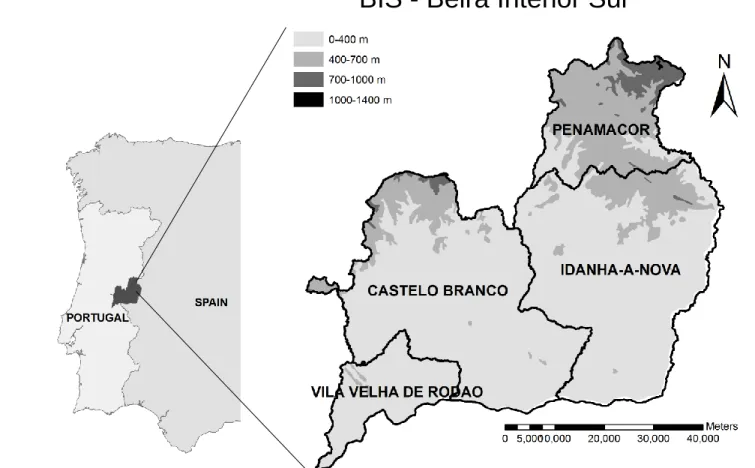
Fig. 1 Study area geographical location
Study area
Mediterranean region of centre-eastern of Portugal2012 IUFRO – All D5 Conference Forest Products, 8-13 July 2012, Estoril, Portugal
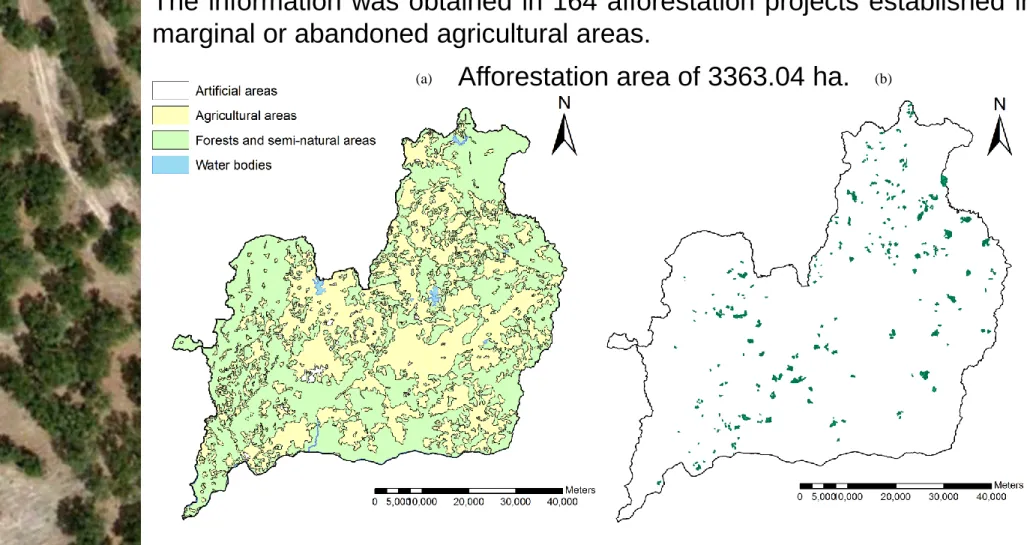
The information was obtained in 164 afforestation projects established in marginal or abandoned agricultural areas.
Data
Fig. 2 a) land cover in 2000; b) projects
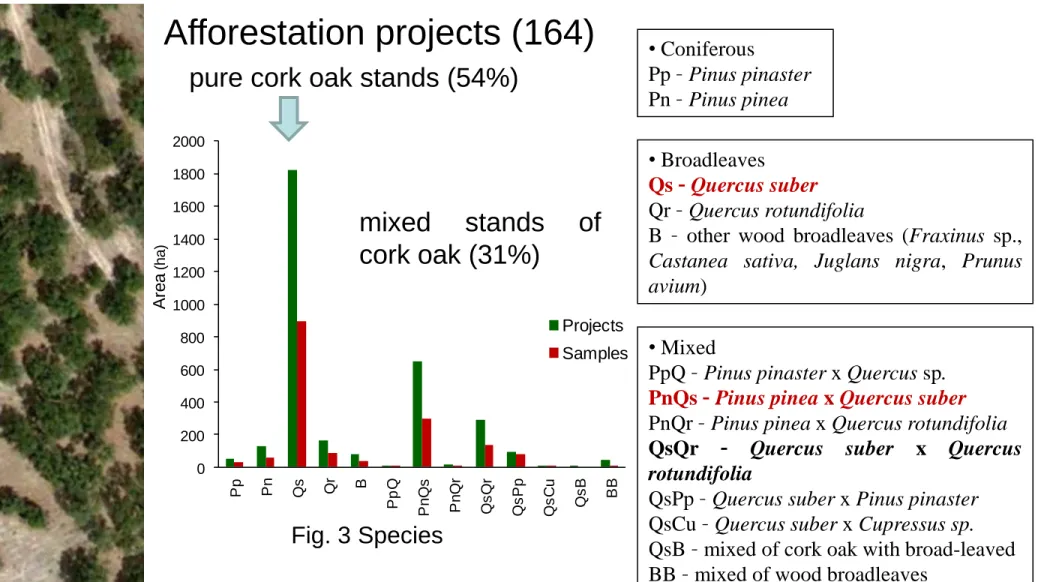
pure cork oak stands (54%)
• Mixed
PpQ – Pinus pinaster x Quercus sp.
PnQs – Pinus pinea x Quercus suber
PnQr – Pinus pinea x Quercus rotundifolia
QsQr – Quercus suber x Quercus rotundifolia
QsPp – Quercus suber x Pinus pinaster QsCu – Quercus suber x Cupressus sp. QsB – mixed of cork oak with broad-leaved BB – mixed of wood broadleaves
Fig. 3 Species
Afforestation projects (164)
• ConiferousPp – Pinus pinaster Pn – Pinus pinea • Broadleaves
Qs – Quercus suber
Qr – Quercus rotundifolia
B – other wood broadleaves (Fraxinus sp.,
Castanea sativa, Juglans nigra, Prunus avium) 0 200 400 600 800 1000 1200 1400 1600 1800 2000 Pp Pn Qs Qr B P p Q P n Q s P n Q r Q s Q r Q s P p Q s C u Q s B BB Are a (h a ) Species Projects Samples mixed stands of cork oak (31%)
2012 IUFRO – All D5 Conference Forest Products, 8-13 July 2012, Estoril, Portugal
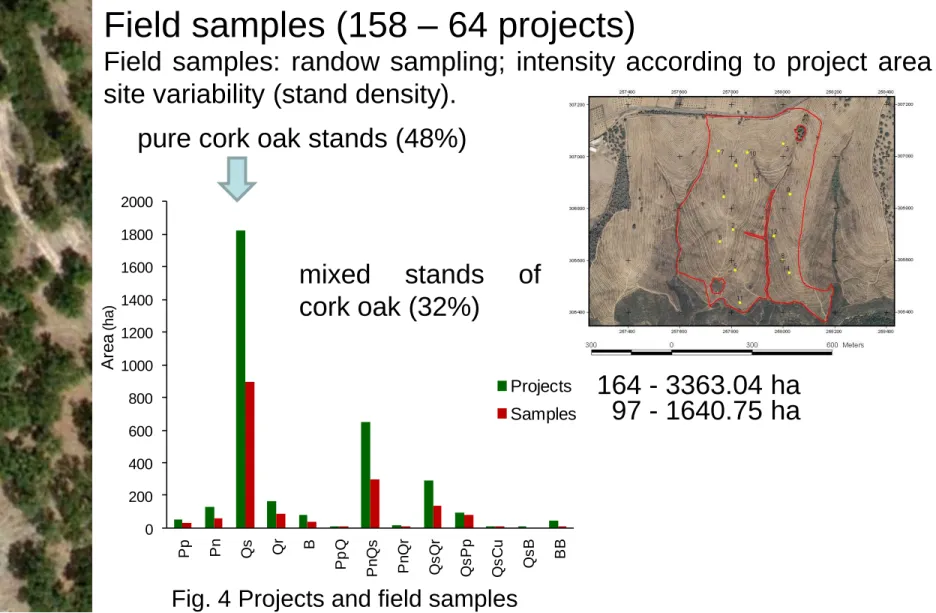
pure cork oak stands (48%)
Fig. 4 Projects and field samples
Field samples (158 – 64 projects)
0 200 400 600 800 1000 1200 1400 1600 1800 2000 Pp Pn Qs Qr B P p Q P n Q s P n Q r Q s Q r Q s P p Q s C u Q s B BB Are a (h a ) Species Projects Samples mixed stands of cork oak (32%) 164 - 3363.04 ha 97 - 1640.75 ha
Field samples: randow sampling; intensity according to project area and site variability (stand density).
It was collected information about stand density (N – number of trees per ha) to assess if minimum stand density was observed.
And, as well, some additional information concerning to: - previous land cover,
- stand regeneration, - site preparation, - species,
- stand composition, - elevation,
- soil type and depth,
- individual tree protection, - fences,
- animal damage
Information
2012 IUFRO – All D5 Conference Forest Products, 8-13 July 2012, Estoril, Portugal
Code Previous Land
Cover Soil type Soil depth Altimetry
level Species Composition
Site preparation Seedlings protection Animal damage 1 2 3 4 5 6 7 8 9 OO NIA NG F Sa Sc Gr S M D B sM M Pp Pn Qs Qr B QsQr QSPp/PnQs PnQr BB/PpQ P M MCRB MCS MCB MCHP NCT RP RB S N Y N Y Table 1 Variables and coding
MCRB – mechanical clearing, ripping and bedding MCS – mechanical clearing and subsoiling
MCB – mechanical clearing and bedding MCPH – manual clearing and planting holes NCT – non-commercial thinning
RP – ripping and plowing RB – ripping and bedding S – subsoiling
OG – olive groves
NIA – non-irrigated arable land NG – natural grassland F – forests Sa – sandstone Sc – schist Gr – granite S – superficial M – medium D – deep B - basal (0-400 m) sM – sub-montane (400-700 m) M – montane (700-1000 m) Y – yes N – no P – pure N – mixed
Principal Components Analysis (PCA) was used to find out, which variables were the most important on explaining:
- afforestation success (samples with regular status) and
- afforestation success failure (samples with irregular status due to lack of minimum stand density)
and how these variables were correlated.
Methodology
Field samples - project status • Regular
• Irregular - Lack of minimum stand density
2012 IUFRO – All D5 Conference Forest Products, 8-13 July 2012, Estoril, Portugal
Results
Forest area in BIS region
Fig. 5 Forests: a) National Forest Inventory - species areas; b) CLC 2006 - Forests National Forest Inventory
2005/06 CLC 2006 (a) (b) 0 10000 20000 30000 40000 50000 60000 Pp Ec Qs Qr Q Pn Cs C B Are a (h a ) Species BIS
Previous Land Cover % Soil type % Soil depth % Altimetry level % Site preparation % Seedlings protection % Animal damage % OO NIA NG F 5 25 67 3 Sa Sc Gr 5 71 24 S M D 62 32 2 B sM M 60 39 2 MCRB MCS MCB MCHP NCT RP RB S 36.2 0.4 1.9 0.2 3.0 7.5 39.5 11.3 N Y 34 66 N Y 21 69 Table 2 Afforestation projects
MCRB – mechanical clearing, ripping and bedding
MCS – mechanical clearing and subsoiling MCB – mechanical clearing and bedding MCPH – manual clearing and planting holes NCT – non-commercial thinning
RP – ripping and plowing
RB – ripping and bedding
S – subsoiling OG – olive groves
NIA – non-irrigated arable land
NG – natural grassland F – forests Sa – sandstone Sc – schist Gr – granite S – superficial M – medium D – deep B - basal (0-400 m) sM – sub-montane (400-700 m) M – montane (700-1000 m) v
2012 IUFRO – All D5 Conference Forest Products, 8-13 July 2012, Estoril, Portugal
Fig. 6 Afforestation projects status
0 200 400 600 800 1000 1200 1400 Stand density Plan Regular Irregular F ie ld s a m p le s a re a ( h a ) Status
• Lack of minimum stand density (10%)
• Deficiencies meeting management plan goals (13%) • Regular status (76%)
Fig. 7 Projects status – field samples areas 0 100 200 300 400 500 600 700 800 900 1000 Pp Pn Qr Qs B P p Q P n Q s P n Q r Q s Q r Q s P p Q s C u Q s B BB A re a ( h a ) species Plan irregular N irregular Regular 79% 95% 85% 76% • Regular status (%)
pure cork oak
stands
2012 IUFRO – All D5 Conference Forest Products, 8-13 July 2012, Estoril, Portugal
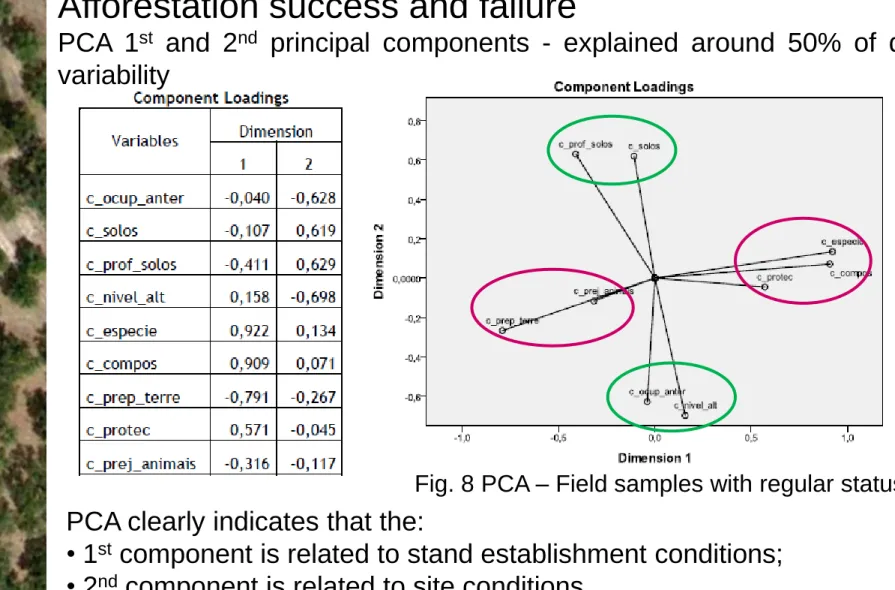
Fig. 8 PCA – Field samples with regular status PCA clearly indicates that the:
• 1st component is related to stand establishment conditions;
• 2nd component is related to site conditions.
Afforestation success and failure
PCA 1st and 2nd principal components - explained around 50% of data
Site preparation and animal damage were found to be negatively correlated to regular status samples. Species, composition and seedlings protection were found to be positively correlated.
Code Species Seedlings protection 1 2 3 4 5 6 7 8 9 Pp Pn Qs Qr B QsQr QSPp/PnQs PnQr BB/PpQ P M N Y Code Site preparation Animal damage 1 2 3 4 5 6 7 8 MCRB MCS MCB MCHP NCT RP RB S N Y
2012 IUFRO – All D5 Conference Forest Products, 8-13 July 2012, Estoril, Portugal Code Soil type Soil depth 1 2 3 Sa Sc Gr S M D Code Previous
Land Cover Altimetry level 1 2 3 4 OO NIA NG F B sM M
On the other hand, the soil type and depth were found to be positively correlated. While, previous land cover and altimetry level were negatively correlated.
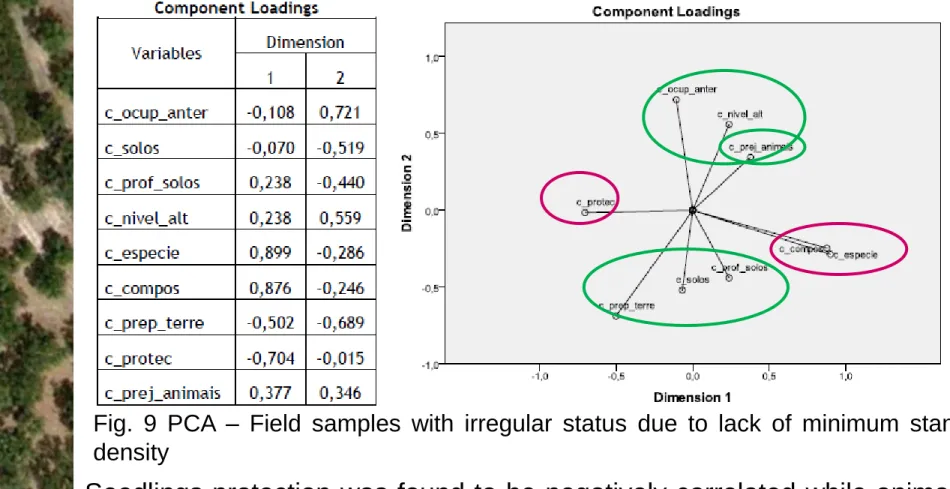
Fig. 9 PCA – Field samples with irregular status due to lack of minimum stand density
Seedlings protection was found to be negatively correlated while animal damage was positively correlated. Variables correlation in 2nd component
2012 IUFRO – All D5 Conference Forest Products, 8-13 July 2012, Estoril, Portugal
Afforestation will succeed badly in:
• mountain areas (elevation between 700 to 1000 m), • in sandy and superficial soils (< 30 cm),
• using mixed compositions and
• without any kind of animal damage tree protection.
In short, it seems that afforestation success is best ensured in: • sites of low elevation (0 to 400 m),
• previously occupied by olive orchards, • in granitic and depth soils (> 60 cm), • using species mixes with cork oak and
• Projects with regular status (76%); irregular status: Lack of minimum stand density (10%); Deficiencies meeting management plan goals (13%).
• Some kind of animal damage tree protection should always be used. •These findings are of great help for planning future afforestation in the region.
• They can also be used as guidelines for other similar Mediterranean regions.
• Other parameters such as those related to climate and to site (e.g. slope, aspect, … ) should be analyzed in future studies.
• Categorical data used in this study should also be validated with quantitative data (e.g. soil samples, …) and more reliable data collection.
Our participation was
supported by
Centro de Estudos de Recursos Naturais, Ambiente e Sociedade