Universidade de Lisboa Faculdade de Ciências Departamento de Biologia Vegetal
STUDIES ON THE BIODEGRADATION OF ATRAZINE IN SOILS CONTAMINATED WITH A COMMERCIAL FORMULATION CONTAINING ATRAZINE AND S-METOLACHLOR: SCALE-UP OF A BIOREMEDIATION
TOOL BASED ON PSEUDOMONAS SP. ADP AND EVALUATION OF ITS EFFICACY
Ana Catarina da Silva Portinha e Costa
Mestrado em Biologia Celular e Biotecnologia
Universidade de Lisboa Faculdade de Ciências Departamento de Biologia Vegetal
STUDIES ON THE BIODEGRADATION OF ATRAZINE IN SOILS CONTAMINATED WITH A COMMERCIAL FORMULATION CONTAINING ATRAZINE AND S-METOLACHLOR: SCALE-UP OF A BIOREMEDIATION
TOOL BASED ON PSEUDOMONAS SP. ADP AND EVALUATION OF ITS EFFICACY
Ana Catarina da Silva Portinha e Costa
Mestrado em Biologia Celular e Biotecnologia
Dissertação orientada por:
Doutora Cristina Anjinho Viegas
(Instituto Superior Técnico, Universidade Técnica de Lisboa)
Doutora Maria Isabel Caçador
(Faculdade de Ciências, Universidade de Lisboa)
ABSTRACT
Atrazine has been used worldwide since 1952 and is frequently detected above the levels established by regulatory authorities in consumption waters. Therefore, and because of its ecotoxicological properties, its use has been forbidden in most European countries, including Portugal. However, atrazine is still used in many countries worldwide.
The main purpose of the present work was to examine the efficacy of the atrazine-degrading bacteria Pseudomonas sp. ADP (P. ADP) as bioaugmentation agent in soils contaminated with high doses (~20x and ~50xRD; RD – Recommended dose) of the commercial formulation, Primextra S-Gold, that contains atrazine, and also S-metolachlor and benoxacor as main active ingredients. It was also tested the effect of combining bioaugmentation and biostimulation using soil amendment with trisodium citrate in open soil microcosms, with the purpose of scaling-up this bioremediation tool. Therefore, the effects of S-metolachlor and of benoxacor on P. ADP growth and activity were tested. Benoxacor was found to be innocuous to this bacterial strain and S-metolachlor to exert a slight to moderate inhibitory effect, especially for high concentrations in the soil (60 to 120 µg g-1 of soil). Subsequently, in mineralization experiments of 14C-UL-ring-atrazine in the presence of the high doses (~20x and ~50xRD) of Primextra S-Gold, lower levels of 14CO2 were liberated for higher doses of the commercial formulation. Soil amendment with trisodium citrate (Cs:Natz~50) allowed a slight augment in atrazine mineralization. These bioremediation treatments were also carried out in larger open soil microcosms proving to be efficient for the removal of atrazine from contaminated soils in only 5 days independent of citrate amendment.
In parallel, we made an in silico comparative study between Atz proteins from Pseudomonas sp. ADP and the respective orthologues from other soil bacteria, in order to try to get indications about the organization and evolution of atrazine catabolism in soil.
RESUMO
A atrazina tem sido utilizada mundialmente, desde 1952, sendo frequentemente detectada acima dos níveis estabelecidos pelas entidades reguladoras em águas de consumo. Devido à sua toxicidade, o seu uso foi proibido na maioria dos países europeus, incluindo Portugal. No entanto, este herbicida continua a ser amplamente usado em todo o mundo. O principal objectivo deste trabalho era a avaliação da eficiência da bactéria degradadora de atrazina Pseudomonas sp. ADP (P. ADP) como agente de bioaumento em solos contaminados com doses elevadas de Primextra S-Gold (~20x ou ~50xDR; DR – Dose recomendada), que contém atrazina, S-metolacloro e benoxacor como substâncias activas. Foi igualmente testado o efeito da bioadição juntamente com a biostimulação com citrato trisódico em experiências em microcosmos de solo aberto, tendo em vista o aumento da escala desta ferramenta de biorremediação. Assim, o efeito do S-metolacloro e benoxacor sobre o crescimento e actividade da P. ADP foi avaliado, sugerindo inocuidade do benoxacor para a bactéria e efeito inibitório de fraco a moderado por parte do S-metolacloro, como substância pura ou na formulação comercial. Em experiências de mineralização de 14C-UL-anel-atrazine na presença de Primextra S-Gold, ocorreu o abaixamento da quantidade de 14CO2 libertado para concentrações crescentes da formulação comercial. Estudos em solo suplementado com citrato trisódico (Cs:Nazt~50) mostraram um ligeiro aumento dos níveis de 14CO2 libertado. A uma escala maior, em microcosmos de solo aberto, verificou-se que esta ferramenta de biorremediação é eficiente na remoção de atrazina dos solos contaminados, em cerca de 5 dias, mesmo em solos não suplementados com citrato.
Paralelamente, foi realizado um estudo comparativo, in silico, entre as proteínas Atz de Pseudomonas sp. ADP e os respectivos ortólogos de outras bactérias do solo, de modo a tentar obter indicações acerca da organização e evolução do catabolismo da atrazina no solo.
RESUMO ALARGADO
A atrazina [2-cloro-4-(etilamino)-6-(isopropilamino)-1,3,5-triazina] é um herbicida pertencente à família das s-triazinas que tem sido utilizado mundialmente, desde 1952, para o controlo pré- e pós-emergência de plantas infestantes de diversas culturas agrícolas, nomeadamente milho, sorgo e cana de açúcar.
Tem na sua estrutura um anel aromático hexamérico, simétrico, constituído por três átomos de carbono e três átomos de azoto em posições alternadas. Os herbicidas da família das s-triazinas subdividem-se em três grupos: clorotriazinas, metiltiotriazinas e metoxitriazinas, consoante o grupo substituinte da posição 2 do anel. No caso da atrazina, o grupo substituinte é um Cl e por isso este herbicida pertence ao grupo das clorotriazinas. A atrazina actua por inibição da fotossíntese, impedindo o transporte electrónico ao nível do fotossistema II, provocando o amarelecimento das folhas que conduz à necrose dos tecidos em plantas intolerantes.
Aproximadamente 393 milhões de quilogramas de atrazina foram aplicados nos solos dos Estados Unidos da América entre 1980 e 1990 e em 1991 estimou-se que só neste país o uso anual deste herbicida estivesse entre os 34 e os 41 milhões de kg, fazendo deste o herbicida mais utilizado entre todos os pesticidas existentes. Mundialmente são utilizadas cerca de 100 000 de toneladas de atrazina.
Apesar da utilização da atrazina na agricultura resultar numa baixa taxa de contaminação dos solos, desde que aplicada nas doses correctas (dose standard de campo = 1 kg atrazina ha-1, equivalente a aproximadamente 1 µg g-1 de solo desde que distribuído por uma coluna com superfície de 5 cm de uma coluna com 5 cm de altura de solo), são encontradas concentrações muito mais elevadas devido ao uso excessivo, a derrames acidentais ou a descargas propositadas, tendo sido, nos dois últimos casos, reportadas concentrações de 400-29000 µg g-1 de atrazina em solos contaminados.
Nos últimos 40 anos, tem sido estudado o destino dos herbicidas comummente utilizados, tal como a atrazina. Verificou-se que, devido ao seu uso intensivo, a atrazina aparecia frequentemente em águas de superfície ou de profundidade, devido à facilidade com que ocorre a sua lexiviação, drenagem, runoff, etc. Como as águas de profundidade representam a maior fonte de água para consumo na maior parte dos países, e como a presença de atrazina foi frequentemente detectada nestas águas, foram estabelecidos limites máximos para a sua detecção em águas de consumo de 3 µg L-1 nos Estados Unidos (United States Environmental Protection Agency, U.S. EPA) e 0,1 µg L-1 na União
Europeia (Conselho da União Europeia). Na Europa, a detecção de atrazina em águas de consumo em níveis superiores aos limites máximos estipulados pelo Conselho da União Europeia, levou a que a utilização deste herbicida fosse proibida. No entanto, foi concedida uma prerrogativa autorizando o seu uso até ao final do ano de 2007, por parte de países como Portugal, Espanha, Irlanda e Reino Unido.Actualmente, a sua utilização é proibida em toda a União Europeia.
A U.S. EPA classificou a atrazina como um possível carcinogénico humano e este herbicida é um conhecido disruptor endócrino, tendo sido mostrado o seu impacto na função endócrina de ratos masculinos (espécies Xenopus laevi e Rana pipiens). No entanto, não só a atrazina é tóxica, como também o são os seus produtos de N-desalquilação, como a diaminocloroatrazina (DACT), a DEA (deetilatrazina) e a DIA (deisopropilatrazina) que influenciam o desenvolvimento sexual de ratos Wistar.
A remoção da atrazina do solo pode ocorrer quer por degradação microbiana quer por degradação química, sendo que a degradação microbiana é bastante mais eficiente. Esta degradação ocorre por reacções de N-desalquilação, desaminação ou declorinação hidrolítica.
As estratégias de biorremediação mais eficientes para a remoção da atrazina de solos contaminados são a bioadição (adição de microrganismos não-indígenas capazes de metabolizar o contaminante) e a biostimulação (suplementação dos solos contaminados com substâncias aceitadoras e/ou receptoras de electrões para alterar o estado físico do contaminante).
Durante os últimos anos, vários investigadores isolaram microrganismos capazes de degradar atrazina nos seus metabolitos DEA, DIA ou DEDIA (desalquilatrazina) por desalaquilação, ou em hidroxiatrazina (HA) por declorinação da atrazina que, ao contrário dos metabolitos desalaquilados, não é um herbicida, não sendo, prejudicial à saúde dos mamíferos, nem fitotóxica.
A Pseudomonas sp. ADP foi uma das primeiras bactérias com capacidade para realizar a declorinação da atrazina a ser descrita ao pormenor. Esta bactéria possui um plasmídio natural (pADP-1) que contém todos os genes (atzA, B, C, DEF) necessários à mineralização da atrazina em dióxido de carbono e amónia. Os primeiros três genes
encontram-se ladeados por sequências de inserção e degradam a atrazina até ácido cianúrico, e os últimos três genes encontram-se organizados num operão, e degradam o ácido cianúrico em CO2 e NH3. O facto dos genes atzA, B e C se encontrarem ladeados por sequências de inserção pode ter levado a uma maior transferência horizontal destes genes em particular, resultando na sua maior dispersão, comparativamente aos genes atzD, E e F.
Apesar da Pseudomonas sp. ADP ser a única bactéria que se conhece como tendo a capacidade de mineralização completa da atrazina em dióxido de carbono e amónia, existem outras com capacidade para realizar a declorinação completa deste herbicida, tais como a Arthrobacter aurescens strain TC1, Rhodococcus sp., Nocardioides sp. strain C190, Pseudomonas sp. strain NRL B-12227, entre outras. Algumas destas bactérias, nomeadamente a Arthrobacter aurescens TC1, possuem uma combinação de genes diferente da da Pseudomonas sp. ADP (trzN, atzB e atzC), uma vez que a proteína responsável pela declorinação da atrazina não é produto do gene atzA, mas sim do gene trzN.
Nos últimos anos têm sido estudadas estratégias de remediação de solos contaminados com atrazina, utilizando P. ADP, uma vez que esta se revelou bastante eficiente na biodegradação deste herbicida quando em doses relativamente baixas (33 µg g-1). No entanto, para concentrações de aproximadamente 100 µg g-1, esta bactéria foi bastante menos eficiente na mineralização da atrazina. No entanto, foram feitos estudos que demonstraram que, na presença de uma fonte de citrato adicional no solo (citrato trisódico) a degradação de 1500 µg g-1 aumentava de 17% (sem citrato) para 70% (com citrato).
Existem diversas formulações comerciais cuja substância activa (independentemente de ser a única ou não) é a atrazina. Neste trabalho foram testadas duas formulações comerciais, uma delas contendo atrazina como única substância activa (Atrazerba FL) e outra contendo, para além da atrazina, S-metolacloro e benoxacor como substâncias activas (Primextra S-Gold). O S-metolacloro é uma substância herbicida, pertencente à família das cloroacetanilidas, enquanto o benoxacor é um composto utilizado para aumentar a tolerância de alguns cereais ao S-metolacloro.
O objectivo deste trabalho foi avaliar o possível impacto do S-metolacloro e do benoxacor no crescimento e viabilidade da Pseudomonas sp. ADP em meio líquido ou em solo ESAC, bem como a capacidade desta bactéria para mineralizar solos contaminados com doses elevadas de Primextra S-Gold, simulando uso excessivo, derrames acidentais ou descargas propositadas, quer na presença ou ausência de citrato. Para tal foram realizadas experiências de mineralização em pequenos microcosmos de solo fechados ou em microcosmos de solo abertos (aumento da escala). Foi também analisada a distribuição das proteínas Atz de Pseudomonas sp. ADP, envolvidas no catabolismo da atrazina, noutras bactérias, realizando um estudo in silico, no qual se determinaram as homologias relativas e as relações filogenéticas entre proteínas Atz e alguns dos seus ortólogos.
Inicialmente, foi avaliado o possível efeito nocivo quer do S-metolacloro, quer do benoxacor no crescimento e viabilidade da Pseudomonas sp. ADP. Para tal, realizaram-se experiências nas quais realizaram-se manteve a concentração de atrazina em todos os tratamentos (24 µg de atrazina g-1 de solo – equivalente a 25x a dose recomendada para a formulação comercial) e apenas se alteraram as concentrações de S-metolacloro (30 µg g-1 – equivalente a 25xDR de Primextra S-Gold; 60 µg g-1 e 120 µg g-1) ou benoxacor (2 µg g-1; 4 µg g-1 e 6 µg g-1). Verificou-se que apenas para a concentração mais elevada de S-metolacloro, a viabilidade da bactéria diminuía mais rapidamente, apontando para um efeito inibitório moderado por parte deste herbicida. Em relação ao benoxacor, verificou-se que a sua preverificou-sença não afectava a viabilidade da bactéria, sugerindo a sua não influência na degradação da atrazina.
Foram também realizados ensaios em meio líquido na presença de diferentes concentrações de S-metolacloro (15 µg mL-1; 30 µg mL-1 – equivalente a 25xDR de Primextra S-Gold – e 60 µg mL-1), observando-se que este herbicida não exercia um efeito significativo na curva de crescimento da Pseudomonas sp. ADP.
De seguida, foram realizados ensaios de mineralização em solo ESAC, utilizando S-metolacloro como substância pura. O solo foi tratado com uma mistura de atrazina radioactiva e de atrazina pura de modo a se obeterem concentrações de 24 ou 48 µg g-1, e a cada um destes tratamentos foram adicionados 30 ou 60 µg mL-1 de S-metolacloro, respectivamente, simulando 25x ou 50xDR, correspondentemente. Os resultados obtidos mostraram uma maior acumulação de 14CO2 quando a concentração de S-metolacloro era
30 µg g-1, o que pode ser indicativo de um efeito inibitório de concentrações mais elevadas quer de S-metolacloro, quer de atrazina na mineralização de atrazina por parte da P. ADP.
Seguidamente, foram realizados ensaios para verificar se algum dos componentes presente na formulação comercial Primextra S-Gold poderia ser utilizado como fonte de carbono por parte da bactéria em estudo. Para isso, realizou-se um ensaio em meio líquido no qual o citrato presente no meio foi substituído por água desionizada (excepto nos controlos). Os resultados mostraram que, aparentemente, a quantidade de Primextra S-Gold adicionada ao meio de crescimento não era capaz d fornecer substância(s) capazes de serem utilizadas como fonte de carbono por parte da P. ADP. Também com este ensaio se verificou que a bactéria consegue usar atrazina quando fornecida por Primextra S-Gold, quer em concentrações baixas (100 mg L-1) quer em concentrações elevadas (300 mg L-1), apesar do início do crescimento ser mais rápido para a concentração mais baixa da formulação comercial, indicando que podem existir componentes (incluindo presumivelmente o S-metolacloro) a exercer um efeito inibitório moderado.
Mais tarde, foram realizados ensaios de mineralização em solos tratados com diferentes doses de Primextra S-Gold (5x, 20x e 50xDR), em conjunto com atrazina marcada, verificando-se uma maior taxa de mineralização para a menor dose da formulação comercial. Isto deve-se provavelmente a um decréscimo do número de células viáveis, que deverá ser maior quanto maior for a concentração de atrazina.
De seguida, foram realizados ensaios de mineralização em solos contaminados com doses elevadas de Primextra S-Gold e de Atrazerba FL (20x e 50xDR) com suplementação ou não de citrato, verificando-se uma maior taxa de mineralização para solos contaminados com Primextra S-Gold, quando comparado com Atrazerba FL, e uma maior taxa de mineralização para a menor dose de citrato, em ambos os tratamentos. No entanto, a taxa de mineralização foi relativamente baixa, provavelmente devido a capacidade limitada da P. ADP como agente de bioaumento nas condições testadas, ou para uma quantidade insuficiente de inoculo no solo.
Depois dos ensaios anteriores, foram realizados dois conjuntos de experiências em microcosmos de solo abertos contaminados com doses elevadas de Primextra S-Gold e de Atrazerba FL. Um deles consistiu na contaminação de solos com 20xDR de ambas as formulações comerciais e outro na contaminação de solos com duas doses diferentes de Primextra S-Gold (20x e 50xDR), com adição, ou não, de citrato, de modo a obter uma razão Cs:Natz de ~50, de modo a avaliar a sobrevivência da P. ADP. Seguiu-se, igualmente, a evolução dos níveis de atrazina nos solos após inoculação em todas as condições testadas.
A evolução da viabilidade da bactéria foi idêntica quer em solos tratados com Primextra S-Gold quer em solos tratados com Atrazerba FL, baixando aproximadamente 2 dias após inoculação.
Os níveis de atrazina, comparados com os valores iniciais, decresceram rapidamente, baixando para zero após aproximadamente 5 dias, quando os solos contaminados quer com Primextra S-Gold quer com Atrazerba FL foram inoculados com Pseudomonas sp. ADP, contrastando com o decréscimo de apenas 20% dos valores iniciais em solos não inoculados.
Nos solos contaminados com Primextra S-Gold (20x ou 50xDR) tratados com citrato, verificou-se um aumento da quantidade de células viáveis de P. ADP, aumentando aproximadamente 10x comparativamente com os valores iniciais, um dia após inoculação, mantendo-se ainda 3x maior que a de solos não tratados ao fim de 8 dias. Estes resultados mostram a importância da utilização da biostimulação conjuntamente com a bioadição. O decréscimo dos níveis de atrazina ao foi bastante rápido quer em solos suplementados com citrato quer em solos não suplementados, um dia após inoculação. Após 5-8 dias a remoção de atrazina do solo era quase completa. Estes resultados mostram que o citrato não é determinante para a mineralização da atrazina do solo por parte da P. ADP.
Para além dos níveis de atrazina, também os níveis de S-metolacloro foram medidos, mostrando um decréscimo dos níveis deste herbicida, ao mesmo tempo que havia um aumento na quantidade de metabolitos resultantes da sua degradação (ácido oxanílico e ácido etanosulfónico), principalmente o ácido oxanílico. No entanto, esta degradação do S-metolacloro foi, aparentemente, independente da adição do agente de bioaumento Pseudomonas sp. ADP ou da biostimulação com citrato trisódico.
Finalmente, realizou-se um estudo in silico para o estudo da distribuição dos genes responsáveis pela degradação da atrazina, atzA, B, C, D, E e F, na Pseudomonas sp. ADP. Segundo os resultados obtidos, existem pelo menos duas estirpes bacterianas, para além da P. ADP, com o conjunto de proteínas necessário para a degradação de atrazina a ácido cianúrico, tais como Arthrobacter aurescens TC1 e Herbaspirillum sp. B601. A A. aurescens TC1 possui uma proteína TrzN, em vez da AtzA, que é capaz de degradar uma gama mais alargada de substratos.
A árvore filogenética obtida mostrou, para a proteína TrzN, uma maior homologia com AtzB, quando comparada com AtzA, apesar de TrzN ser funcionalmente semelhante à proteína AtzA.
KEYWORDS Pseudomonas sp. ADP Soil bioremediation Atrazine S-metolachlor Primextra S-Gold Bioaugmentation Biostimulation
PALAVRAS-CHAVE Pseudomonas sp. ADP Bioremediação de solos Atrazina S-metolacloro Primextra S-Gold Bioadição Biostimulação
LIST OF ABBREVIATIONS
P. ADP Pseudomonas sp. strain ADP
rifR rifampicin resistant
ESAC Escola Superior Agrária de Coimbra
n.d. not determined RD Recommended dose DEA Deethylatrazine DIA Deisopropylatrazine DACT Diaminochlorotriazine HA Hydroxyatrazine
EDTA Ethylenediaminetetraacetic acid
MOPS 3-(N-morpholino)propanesulfonic acid
OA Oxanilic acid
ESA Ethanesulfonic acid
CFU Colony-forming unit
APA Agência Portuguesa do Ambiente
U.S. EPA United States Environmental Protection Agency
TABLE OF CONTENTS ABSTRACT ... 3 RESUMO... 4 RESUMO ALARGADO ... 5 KEYWORDS... 12 PALAVRAS-CHAVE ... 13 LIST OF ABBREVIATIONS ... 14 AKNOWLEDGEMENTS ... 17 LIST OF FIGURES ... 18 LIST OF TABLES ... 22 1. INTRODUCTION ... 23 1.1. Bioremediation ... 23 1.1.1. What is bioremediation... 23
1.1.2. Bioremediation types and main strategies... 24
1.2. Atrazine ... 24
1.2.1. What is Atrazine ... 24
1.2.2. Fate and effects of atrazine in the Environment ... 26
1.3. Bioremediation of soils contaminated with atrazine... 28
1.3.1. Bioaugmentation and biostimulation ... 29
1.3.2. Degradation pathways of atrazine by microorganisms ... 30
1.3.3. Applications of atrazine biodegradation using Pseudomonas sp. ADP 38 1.4. Commercial formulations containing atrazine... 39
1.4.1. Characteristics of S-metolachlor and benoxacor... 40
1.5. Objectives of the present work ... 43
2. MATERIALS AND METHODS ... 45
2.1. Chemicals... 45
2.2. Soil ... 47
2.3. Bacterial strain and preparation of the inoculum ... 47
2.4. Survival experiments in soil: effects of S-metolachlor and benoxacor on P. ADP rifR... 49
2.5. Growth experiments in liquid medium: effects of S-metolachlor on P. ADP rifR 50 2.6. Mineralization experiments... 50
2.7. Biodegradation experiments in the scaled-up open soil microcosms ... 51
2.8. Microbiological analysis... 52
2.9. Chemical analysis ... 52
2.10. Comparative genomics ... 53
3. RESULTS AND DISCUSSION... 55
3.1. Effects of Primextra S-Gold major active components, as pure substances, on P. ADP rifR survival in ESAC soil and growth in liquid medium . 55 3.1.1. Effect of different concentrations of S-metolachlor ... 55
3.2. Effect of S-metolachlor (as pure substance) on the mineralization of 14 C-ring-UL-atrazine by Pseudomonas sp. strain ADP rifR in ESAC soil ... 58 3.3. Mineralization of atrazine by P. ADP rifR in ESAC soil spiked with
Primextra S-Gold or Atrazerba FL... 60 3.3.1. Can the medium for P. ADP rifR inoculum growth be supplemented with the commercial formulations? ... 60 3.3.2. P. ADP rifR as a bioaugmentation agent in soils containing Primextra
S-Gold 62
3.3.3. Comparison of 14C-ring-UL-atrazine mineralization by Pseudomonas sp. ADP rifR in soils containing high doses of Primextra S-Gold or Atrazerba FL .. 63
3.4. Biodegradation of atrazine and survival of Pseudomonas sp. strain ADP rifR in scaled-up open soil microcosms... 65 3.5. Genetic organization of atrazine-catabolism in bacteria. A comparative study 69
4. CONCLUDING REMARKS ... 76 5. BIBLIOGRAPHY ... 78 6. APPENDIX... 85
AKNOWLEDGEMENTS
This work was partially funded by the POCI Programme, the PPCDT Programme and Fundação para a Ciência e Tecnologia (contracts POCI/AMB/56039/2004 and PTDC/AMB/64230/2006).
Firstly, I am truly thankful to my advisor Professor Cristina Anjinho Viegas for all the support, guidance, teaching, friendship and for always believing in me.
I am very thankful to Professor Arsénio Fialho for receiving me in IST, giving the opportunity to work in a very interesting and exciting project, and for suggesting and helping me in the in silico comparative study of the organization of atrazine-catabolism in bacteria.
I would like to thank to Engª. Paula Viana and Dr. Sandra André from Agência Portuguesa do Ambiente for carrying out the chemical analysis on my soil samples.
I would also like to thank Professor Isabel Sá-Correia for the opportunity to work with so many talented people.
Big thanks to my lab colleagues, who soon became friends, Tânia Cabrito, Mário Santos, Sofia Ferreira, Nuno Mira and Miguel Teixeira for all the patience guiding me through a whole new experience, for all the chilling out moments and lunches we shared, and for being amazing people.
To all the others members of the lab, I would like to thank you very much for your availability to help me every time I needed.
Gigantic thanks to my huge friend Diana Ribeiro for always making me feel proud of myself, for always being there for me and for all the crying and laughing moments we’ve been sharing since 1st grade.
Very big thanks to my friend/sister Inês Lourenço for 22 years of sincere friendship and for just being who she is.
I would also like to thank my dear friend Joana Boura for all her support and motivation in helping me do my best. She was also my long shopping spree and endless gossip buddy.
Huge thanks to my friends Cecília Ferreira, Filipa “Pipa” Carvalho, Marta Sousa, Daniel Novais and Fábio Neves for being amazing friends and for being there for me every time I need them to hold my hand.
And last, but surely not least, enormous thanks to my family, specially my parents and brothers, without whom I could have never got this far, for their unconditional love and daily support.
LIST OF FIGURES
Figure 1.1 – Chemical structure of s-triazine herbicide atrazine. ^^^^^^^..^^^25
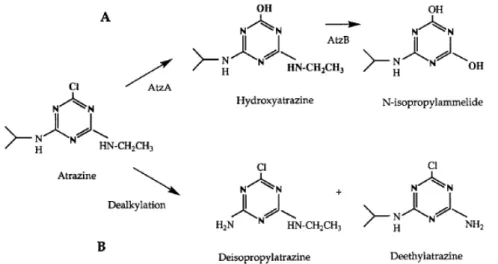
Figure 1.2 – Atrazine metabolic pathway in microorganisms. (A) The first two steps of the atrazine biodegradation pathway in Pseudomonas sp. strain ADP are catalyzed by AtzA and AtzB. (B) Previous reports of atrazine degradation by microorganisms emphasize a N-dealkylation that produces deethylatrazine (DEA), deisopropylatrazine (DIA) or both (Boundy-Mills et al., 1997). ^^^^^^^^^^^^^^^^^^^^^^^^.^^.31
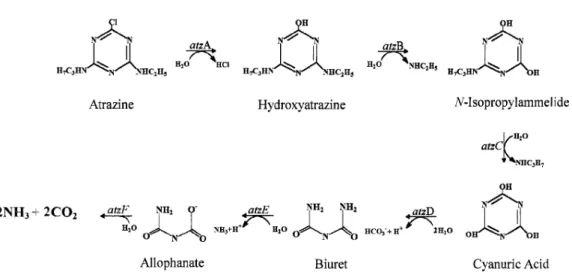
Figure 1.3 – Complete catabolic pathway for atrazine mineralization by Pseudomonas sp. strain ADP (adapted from Martinez et al., 2001). ^^^^^^^^^^^^^^^^^.33
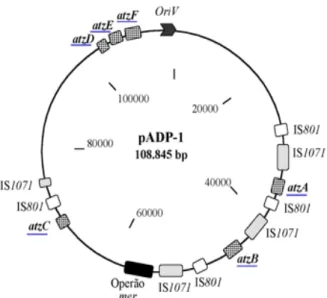
Figure 1.4 – Physical circular map of the catabolic plasmid pADP-1 from Pseudomonas sp. strain ADP. Shown are atrazine-catabolic genes (underlined), the narrow-spectrum mercury (mer) resistance operon, and insertion sequence (IS) elements. (adapted from Martinez et al., 2001). ^^^^^^^^^^^^^^^^^^^^^^^^^^..^^.34
Figure 1.5 – Proposed pathway of atrazine metabolism by Nocardioides sp. strain C190. Metabolite I is hydroxyatrazine, and metabolite II is N-ethylammelide (Topp et al., 2000a). ^^^^^^^^^^^^^^^^^^^^^^^^^^^^^^^^^^^^^^^35
Figure 1.6 – Complete catabolic pathway for atrazine degradation in A. aurescens strain TC1 (Sajjaphan et al., 2004). ^^^^^^^^^^^^^^^^^^^^^^^^^...36
Figure 1.7 – Chemical structure of herbicide S-metolachlor (2-chloro-N-(2-ethyl-6-methylphenyl)-N-[(1S)-2-methoxy-1-methylethyl]acetamide). ^^^^^^^^^^..^..40
Figure 1.8 – Chemical structure of benoxacor (4-(dichloroacetyl)-3,4-dihydro-3-methyl-2H-1,4-benzoxazine). ^^^^^^^^^^^^^^^^^^^^^^^^^^^^^^..42
Figure 2.1 – (A) Calibration curve using known concentrations of pure atrazine (1, 2.5, 5, 10 and 20 mg L-1) solubilised in deionized water, with curve equation and coefficient of determination (R2) and (B) absorption spectrums, covering the wavelength range 190-340
nm, of the solutions of pure atrazine used: black line, navy green line, red line, blue line and grass green line corresponding to 1; 2,5; 5; 10 and 20 mg L-1, respectively. The peak of maximal absorbance for atrazine is indicated with 2. ^^^^^^^^^^^^^...45
Figure 2.2 – Absorbance spectrum covering the wavelength range 190-340 nm from the commercial formulations (A) Atrazerba FL and (B) Primextra S-Gold. Atrazerba FL spectrum only presents a major peak at 223 nm, corresponding to atrazine, while Primextra S-Gold presents two peaks, one at 223 nm matching atrazine, and another one around 190 nm, presumably corresponding to S-metolachlor. ^^^^^^^^^^^...46
Figure 2.3 – Geometry of the scaled-up open soil microcosms (adapted from Lima et al., in press). ^^^^^^^^^^^^^^^^^^^^^^^^^^^^^^^^^^..52
Figure 3.1 – Influence of different concentrations of S-metolachlor on Pseudomonas sp. ADP rifR viability in soil to which 24 µg g-1 of atrazine were added. Different concentrations of S-metolachlor herbicide were used: 30 µg g-1 (○) – equivalent to 25xRD of Primextra S-Gold –, 60 µg g-1 (●) and 120 µg g-1 (◊). The control of this experiment was made without S-metolachlor (♦). ^^^^^^^^^^^^^^^^^^^^^^^^^^^^^^...56
Figure 3.2 – Influence of different concentrations of S-metolachlor in Pseudomonas sp. ADP rifR growth in liquid medium containing 24 µg mL-1 of atrazine (as N source). Different concentrations of this herbicide were used: 15 µg mL-1 (□), 30 µg mL-1 (○) – equivalent to 25xRD of Primextra S-Gold –, and 60 µg mL-1 (●). For control of this experiment, S-metolachlor was not added to the growth medium (♦). ^^^^^^^^^^^^^^^57
Figure 3.3 – Influence of different concentrations of benoxacor on the viability of P. ADP rifR in soil containing 24 µg g-1 of atrazine. Three concentrations were tested: 2 µg g-1 (□), 4 µg g-1 (▲) and 6 µg g-1 (○), including a control without benoxacor (♦). ^^...58
Figure 3.4 – Effect of S-metolachlor on the mineralization of atrazine by P. ADP rifR (0.7 ± 0.12 x 10⁸ CFU g-1 of soil). Two concentrations of this herbicide were tested: 30 µg g-1 (□) and 60 µg g-1 (○). Atrazine was added to the soil at concentrations of 24 µg g-1 or 48 µg g-1 of soil, respectively. Controls were carried out where S-metolachlor was not added to the soil (♦,▲, respectively). ^^^^^^^^^^^^^^^^^^^^^^^^^^^^.59
Figure 3.5 – Pseudomonas sp. strain ADP rifR growth in liquid atrazine medium in the following conditions: 300 mg L-1 of atrazine (as N source) from Atrazerba FL with citrate (as C source) (▲); 300 mg L-1 of atrazine from Primextra S-Gold with (□) or without citrate (♦); and 100 mg L-1 of atrazine from Primextra S-Gold with (○) or without citrate (◊). Citrate, when absent from the growth medium, was substituted by deionized water. ^^^^^^^^^^^^^^^^^^^^^^^^^^^^^^^^^^^^^^^61
Figure 3.6 – Mineralization of 14C-atrazine plus increasing doses of Primextra S-Gold by Pseudomonas sp. ADP rifR (0.8 ± 0.1 x 10⁸ CFU g-1 of soil). Doses of Primextra S-Gold added to the soil were equivalent to: 15 L ha-1 (♦) (5xRD), 60 L ha-1 (▲) (20xRD) and 150 L ha-1 (●) (50xRD). ^^^^^^^^^^^^^^^^^^^^^^^^^^^^^^.62
Figure 3.7 – Mineralization of atrazine by Pseudomonas sp. ADP rifR (0.8 ± 0.2 x 10⁸ CFU g-1 of soil) in soils contaminated with high doses (~20xRD) of Primextra S-Gold (♦) and Atrazerba FL (□). ^^^^^^^^^^^^^^^^^^^^^^^^^^^^^^^64
Figure 3.8 – Mineralization of atrazine by Pseudomonas sp. ADP rifR in soils contaminated with high doses (~50xRD) of Primextra S-Gold (A) and Atrazerba FL (B). Besides bioaugmentation with 2.4 ± 0.1 x 10⁸ CFU g-1 of soil of the atrazine-degrading bacteria, soils were amended with 5.8 mg g-1 (Cs:Natz~50) (□) or 11.6 mg g-1 (Cs:Natz~100) (▲) of trisodium citrate or not amended with citrate (♦). ^^^^^^^^^^^^^^^^^..64
Figure 3.9 – Bioremediation experiments on the open soil microcosms contaminated with approximately 20xRD of Atrazerba FL or Primextra S-Gold. Time-course evolution of (A) the concentration of viable cells of Pseudomonas sp. ADP rifR, and of the concentration of (B) atrazine (as % of its initial concentration in soil), in the soils bioaugmented (♦,▲) with P. ADP rifR (2.4 ± 0.1 x 10⁸ CFU g-1 of soil) after being contaminated with Primextra S-Gold (♦) or Atrazerba FL (▲). Results representative of the evolution of atrazine concentrations measured in the non-inoculated control soils (□) is also shown for comparison. ^^^^^^^^^^^^^^^^^^^^^^^^^^^^^^^^^^^^^^^66
Figure 3.10 – Bioremediation experiments in the open soil microcosms contaminated with approximately 20xRD (A, C, E) or 50xRD (B, D, F) of Primextra S-Gold. Soil was bioaugmented with Pseudomonas sp. ADP rifR (2.45 ± 0.07 x 10⁸ CFU g-1 of soil) either in
the presence of soil amendment with trisodium citrate (Cs:Natz~50) (□) or in its absence (♦), and the time-course variation of the concentration in soil (A, B) viable cells of the bacteria, (C, D) atrazine and (E, F) S-metolachlor were determined. (▲) corresponds to the control corresponds to the control, where the soil was amended with the additional C source, but not bioaugmented. ^^^^^^^^^^^^^^^^^^^^^^^^^67
Figure 3.11 – Orthologues of AtzA, B, C, D, E and F proteins from Pseudomonas sp. strain ADP in other soil microorganisms. The rectangles indicate Atz proteins and oval shapes represent Trz proteins. Percentage values indicate the identity of the other bacteria proteins when compared with the Atz proteins from Pseudomonas sp. ADP. Rectagles and oval shapes which have blank spaces indicate that there are some aminoacids in the sequence that differ considerably from those of Atz protein sequences from Pseudomonas sp. ADP, and so it has only been considered the identity percentage corresponding to the homologous area. The percentage of identity referring to Trz proteins was obtained when aligning Atz protein sequences with those from P. ADP with Trz from other bacteria. The octagon represents melamine deaminase. The numbers above the boxes represent the number of aminoacids in the homologous region in relation with the total number of aminoacids in the sequence of the protein (Search made in NCBI Protein Database on July 2008). ^^^^^^^^^^^^^^^^^^^^^^^^^^^^^^^^^...70
Figure 3.12 – Phylogenetic tree showing possible evolution relationships involving Atz proteins (from P. ADP and other soil bacteria) and other proteins, such as Trz proteins and melamine deaminase). ^^^^^^^^^^^^^^^^^^^^^^^^^^^^..73
LIST OF TABLES
Table 1.1 – Physical-chemical properties of atrazine. ^^^^^^^^^^^^^...25
Table 1.2 – Summary of the final products or metabolites from several bacterial strains reported in the literature as capable of degrading the herbicide atrazine (adapted from Silva, 2004). ^^^^^^^^^^^^^^^^^^^^^^^^^^^^^^^^^35
Table 1.3 – Main characteristics of commercial formulations Primextra S-Gold and Atrazerba FL, as indicated by the respective suppliers (Syngenta and Sapec, respectively). ^^^^^^^^^^^^^^^^^^^^^^^^^^^^^^^^^^^^^^...39
Table 1.4 – Physical-chemical properties of S-metolachlor. ^^^^^^^^^^^^..40
Table 1.4 – Physical-chemical properties of benoxacor. ^^^^^^^^^^^^^....42
1. INTRODUCTION
1.1. Bioremediation
1.1.1. What is bioremediation
Bioremediation refers to the use of biological processes that lead to the reduction or elimination of the concentration and toxicity of chemical pollutants in the Environment (Lima & Mota, 2003). It uses living organisms, such as bacteria, fungi and plants (Vidali, 2001; Zhou & Hua, 2004), and/or its enzymes to increase the rate or extension of degradation of a pollutant (Zhou & Hua, 2004), and its major goals are to restore the original natural surroundings and to prevent further pollution (Sasikumar & Papinazath, 2003).
To be considered an efficient process, bioremediation must allow the pollutants degradation to an innocuous state, and/or the reduction of their levels in the Environment until their levels are bellow the toxic levels or those established by regulatory authorities (Vidali, 2001).
Bioremediation using microorganisms was primarily used by George Robinson, in 1968, to
clean-up an accidental oil spill
(http://en.wikipedia.org/wiki/US_Microbics#George_Robinson, accessed on August 2008).
Techniques using microorganisms to degrade contaminants in polluted sites have been commercially available since the 1970s, but gained particular attention following the successful decontamination of the Alaskan beaches after the Exxon Valdez oil spill (Newcombe & Crowley, 1999).
Microorganisms degrade and/or mineralize pollutants (Lima & Mota, 2003): • Using them as a source of energy;
• Co-metabolizing them along with their source of energy; • Transforming them in other compounds easily to degrade;
1.1.2. Bioremediation types and main strategies
There are two types of bioremediation, in situ and ex situ. In situ techniques are defined as those that are applied to soil and groundwater at the polluted site with minimal disturbance. They are generally the most desirable options due to lower cost and because they provide the treatment in place, avoiding excavation and transport of contaminants (Vidali, 2001). It does not require excavation of the contaminated soil and hence proves to be cost effective, there is minimal site disruption, so the amount of dust created is less, and simultaneous treatment of soil and groundwater is possible. The main in situ bioremediation techniques are bioventing, biosparging, bioaugmentation (Vidali, 2001), intrinsic bioremediation and engineered in situ bioremediation (Sasikumar & Papinazath, 2003). Ex situ bioremediation processes require excavation of contaminated soil or pumping of groundwater to facilitate microbial degradation and depending on the state of the contaminant to be removed it can be classified as a solid phase system (includes treatment of organic wastes and domestic and industrial wastes, sewage sludge and municipal solid wastes) or as a slurry phase system (includes the addition of water and other additives to contaminated soil in a bioreactor) (Sasikumar & Papinazath, 2003). Solid phase treatment processes include landfarming, composting and biopiles and bioreactors are a slurry phase treatment process (Sasikumar & Papinazath, 2003).
1.2. Atrazine
1.2.1. What is Atrazine
Atrazine [2-chloro-4-(ethylamino)-6-(isopropylamino)-1,3,5-triazine] belongs to the s-triazine family, has been used worldwide since 1952 (Shapir & Mandelbaum, 1997) for pre- and post-emergence control of broad-leaved and grassy weeds (Pesticides Manual, 12th ed., 2000 in Silva et al., 2004) and is the most widely used herbicide in the United States (Kiely et al., 2004) in maize (Zea mays), sorghum (Sorghum bicolor), sugarcane (Saccharum officinarum), orchards and vineyards (Pesticides Manual, 12th ed., 2000 in Silva et al., 2004) It is also used for total weed control on noncrop land, such as railways
and roadsides, although in some countries this is now restricted (Hicks, 1998 in Silva et al., 2004).
Atrazine has in its structure a hexameric aromatic ring, symmetrical, composed by three carbon atoms and three nitrogen atoms in alternated positions (Figure 1.1).
The s-triazine family is subdivided in three groups, each having a different group substituent in the position 2 of the s-triazine ring: chlorotriazines Cl), metyltiotriazines (-SCH3) and metoxytriazines (-OCH3). Atrazine is a chlorotriazine. (Figure 1.1).
Figure 1.1 – Chemical structure of s-triazine herbicide atrazine.
Table 1.1 – Physical-chemical properties of atrazine.
Atrazine binds to the quinone-binding protein in photosystem II, inhibiting photosynthetic electron transport. Plants affected by atrazine show evidence of chlorosis (yellowish leaves), which leads to tissue necrosis. In tolerant plants, such as maize and sorghum,
Molecular formula C8H14ClN5 Relative molecular mass 215.7
Solubility: Water 30 mg L-1 (20ºC) Chloroform 52 g L-1 (27ºC) N-pentane 36 mg L-1 (27ºC) Dimethyl sulfoxide 183 g L-1 (27ºC) Ethyl acetate 27 g L-1 (27ºC) Methanol 18 g L-1 (27ºC) Density 1.187 g cm-3 (20ºC) Koc 122 L Kg-1 pKa 1.7 Log Kow 2.7 (20ºC; pH=7)
atrazine is efficiently metabolized in non-toxic forms by glutathione S-transferases (GSTs) (Prade et al., 1998).
Atrazine is moderately persistent in soil with estimated half-lives ranging from 77 to 101 days in the surface soil, and to over 900 days in the subsurface soils (Blume et al., 2004).
1.2.2. Fate and effects of atrazine in the Environment
About 2 billion kg of chemicals are used as pesticides each year in the United States, with agricultural usage accounting for ~77% (Park et al., 2003).
Approximately 393 million kg of atrazine were applied in the United States between 1980 and 1990 (Mandelbaum et al., 1995) and in 1991 the use of atrazine in the USA was estimated to be 34 to 41 million kg annually (Struthers et al., 1998). The U.S. Environmental Protection Agency (U.S. EPA) estimates that between 32 000 and 34 000 metric tons of atrazine were used in U.S. agricultural crop production in 1993, making it the most heavily used of all pesticides (Shapir et al., 1998). Its annual worldwide consumption is about 100 000 tons (Takáts et al., 2001).
Although agricultural use of atrazine herbicides may result in relatively low soil contamination if the right practices are rigorously applied (standard field dose = 1 kg atrazine ha-1, equivalent to approximately 1 µg g-1 of soil if distributed through a 5 cm surface of a 5 cm height soil column), much higher concentrations are found due to over-use or to accidental spillage during pesticide mixing and loading or to intentional dumping to disposal ponds. For example, concentrations of 400-29000 µg g-1 of atrazine have been reported for soils contaminated by accidental spills or deliberate disposals (Gannon, 1992; Strong et al., 2000).
The fate of commonly used herbicides such as atrazine in natural environments has been thoroughly investigated in the past 40 years (Shapir et al., 1998). The intensive use of pesticides in agriculture and/or spills or intentional disposal may lead to contamination of surface and groundwater by drift, runoff, drainage and leaching (Cerejeira et al., 2003; Fava et al., 2007). Groundwater represents the most important source of drinking water supply in many countries. In Portugal, 53% of the drinking water is extracted from groundwater. A frequent link between agricultural areas, where pesticides are applied, and
their occurrence in surrounding underground aquifers have been observed (Cerejeira et al., 2003).
The mobility of atrazine in soil (Fava et al., 2007) and the amount of the herbicide used has contributed to the contamination of not only soils, but also surface and groundwater (Mandelbaum et al., 1995; Takáts et al., 2001; Barbash et al., 2001; ). In the north-central United States, high atrazine usage combined with hydrologic factors (seasonal runoff and subsurface drainage) have resulted in water contamination by atrazine and atrazine metabolites (Blume et al., 2004).
Because of the reasons mentioned above, atrazine concentrations in groundwater and surface water frequently exceed the 3 µg L-1 (Mandelbaum et al., 1995) health advisory level set by the U.S. EPA (http://www.epa.gov) for drinking water. This agency reported that atrazine has been found in the groundwater of approximately 25 states due to both point and nonpoint sources (Struthers et al., 1998). The European Union (EU) established a detection limit for pesticides in drinking water of 0.1 µg L-1 (Conselho da União Europeia; Directiva 98/83/CE do Conselho de 3 de Novembro, 1998). Because these limits are frequently exceeded, the use of atrazine was forbidden in some countries, such as Italy, Finland, Austria, Germany and Denmark. In Portugal, the use of this herbicide has been abolished last year (Conselho da União Europeia; Directiva 2004/248/CE do Conselho de 10 de Março, 2004).
As a result of ground and surface water contamination with atrazine, humans and wildlife exposed to this herbicide may be in danger (Friedmann, 2002), and the public’s concern has increased (Blume et al., 2004). U.S. EPA classified atrazine as a possible human carcinogen and it is also a known endocrine disruptor (Oh et al., 2003). This herbicide has been reported to affect endocrine function in rat males by directly inhibiting Leydig cell testosterone production (Friedmann, 2002). It has also been shown that at concentrations above 0.01 ppb, in Xenopus laevis (African clawed frogs), atrazine produced gonadal abnormalities, and males exposed to atrazine (≥ 1 ppb) had reduced larynges (Hayes et al., 2002). Effects such as disrupted gonadal development in exposed larvae of Rana pipiens (American leopard frogs), testicular tubules poorly developed, reduced germ cells, and oocyte development in animals identified as hermaphrodites were more pronounced at the lower dose used (0.1 ppb) (Hayes et al., 2003) and all doses tested were relatively low and very frequent in the Environment (Hayes et al., 2002). Widespread atrazine contamination was accompanied by observations of hermaphroditic animals in the field, suggesting that atrazine impacts amphibians in the wild (Hayes et al., 2003). But it is not
only atrazine that it is toxic, its N-dealkylation products are also harmful and persistent in the Environment. The common atrazine metabolite diaminochlorotriazine (DACT) inhibits the aromatase activity responsible for estrogen synthesis in JEG-3 cells (Oh et al., 2003). DEA (deethylatrazine) and DIA (deisopropylatrazine) were found very frequently in agricultural streams of the U.S. Midwest with frequencies of detection of 81 and 74%, respectively (Kalkhoff et al., 2003). Stoker et al., (2002) tested atrazine metabolites DEA, DIA and DACT effect on male Wistar rats by administering them different doses of these atrazine metabolites, ranging from 6.25 to 200 mg kg-1. They observed preputial separation delay, reduction in ventral prostate, seminal vesicle and epididymal weight for the three of them. They also observed that all of these atrazine metabolites delayed puberty in a manner similar to that examined for atrazine, suggesting they affect CNS control of the pituitary/gonadal axis, like atrazine, which had been shown previously by the same research team (for more information see section 1.3.2) (Stoker et al., 2002).
In Portugal, research studies on groundwater contamination with pesticides have been performed since the beginnings of the 90s, to evaluate the levels of contamination with atrazine, which has been an active substance extensively used in Portuguese maize areas (Cerejeira et al., 2003). In Portuguese groundwater, atrazine reached a maximum concentration value of 30 µg L-1 in “Baixo Sorraia” agricultural area and is the most frequently detected herbicide (64%) in the agricultural areas studied such as “Baixo Sorraia”, “Lezíria do Tejo” and “Península de Setúbal”. In a total of 110 samples of water taken from these locations, atrazine was detected in 25 samples from drinking water wells and 85 samples of irrigation wells (Cerejeira et al., 2003).
1.3. Bioremediation of soils contaminated with atrazine
Some pesticides accumulate in nature because release rates exceed rates of dissipation, including microbial and chemical degradation (Park et al., 2003). Low biodegradation rates can be attributed to a variety of factors, including limited bioavailability of pesticides to microorganisms which may lead to unexpected pesticide persistence in soils, thereby increasing the likelihood of ground or surface water contamination (Park et al., 2003). The prevalence of atrazine in the environment has stimulated investigations into the
biodegradation of the class of compounds containing an s-triazine ring (Mandelbaum et al., 1995; Wackett et al., 2002; Ralebitso et al., 2002).
Atrazine removal from the soil environment can occur by several different mechanisms, such as biodegradation or chemical degradation. Normally, atrazine is only very slowly chemically hydrolysed (half-life of 200 days) to produce hydroxyatrazine, but microbial metabolism, as a degradation mechanism for atrazine, seems to be much more efficient (Mandelbaum et al., 1995; Wackett et al., 2002; Ralebitso et al., 2002).
Microbial systems have been proposed as a cost-effective method for cleanup of pesticide waste, in soils and ground or surface waters (Grigg et al., 1997). In situ and ex situ bioremediation techniques have been suggested to cleanup sites contaminated with atrazine (Grigg et al., 1997), although ex situ bioremediation processes can be extremely expensive because they involve the excavation and removal of contaminated soil from ground to a non-contaminated site (Grigg et al., 1997; Vidali, 2001; Sasikumar & Papinazath, 2003). So, in situ bioremediation techniques gained a new importance in the bioremediation of contaminated soils with atrazine, because they are cheaper and easier to apply to soils contaminated with atrazine.
Enrichment culture techniques have provided bacteria for investigations into the biochemistry and molecular biology underlying microbial s-triazine metabolism (Mandelbaum et al., 1995; Wackett et al., 2002; Ralebitso et al., 2002).
A more significant degradation mechanism for atrazine, compared with chemical remediation techniques, is microbial metabolism. Microbial degradation of atrazine has been demonstrated to occur via dealkylation, deamination or dechlorination reactions (for more information please see section 1.3.2).
For decontamination purposes, the most efficient strategies for transforming atrazine into a less harmful end-product may be based on biostimulation and/or bioaugmentation (Vogel, 1996; Grigg et al., 1997; Strong et al., 2000; Silva et al., 2004; Thompson et al., 2005).
1.3.1. Bioaugmentation and biostimulation
Many studies have examined the ability of indigenous microbial communities to degrade atrazine in soil (Mandelbaum et al., 1995; Shapir & Mandelbaum, 1997; Struthers et al., 1998). This herbicide has been a model xenobiotic pollutant for bioaugmentation studies,
because, in the past 30 years, it has been one of the most widely used herbicides in the world (Newcombe & Crowley, 1999).
Bioaugmentation, the addition of non-indigenous microorganisms capable of catabolizing the contaminant to enhance a specific biological activity, has been practiced intentionally for years in a number of areas, including agriculture and forestry and wastewater treatment (Vogel, 1996). Bioaugmentation is useful when effective pollutant-degrading populations are not present at a polluted site. Successful bioaugmentation requires that strains suitable for each polluted site be selected (Widada et al., 2002; Thompson et al., 2005). For example, at a polluted site, the strain introduced must be able to survive and retain high enough catabolic activity to degrade the pollutant (Vogel, 1996; Widada et al., 2002). In studies performed using non-sterile soil, the success of bioaugmentation was inversely related to population levels of indigenous atrazine-degrading microorganisms. In sterile soils devoid of indigenous atrazine-degrading bacteria, it has been reported that atrazine concentration was reduced by 70% (from 20 ppm to 6 ppm) in 30 days in soil amended with 8% chitin, 2% cornstalks and 0.1% triple superphosphate and incubated at 25ºC by Streptomyces sp. PS1/5 (Fadullon et al., 1998).
Biostimulation involves supplementing the contaminated soils with electron acceptors or electron donors (Widada et al., 2002) to change the physical state of the contaminant, thereby converting it to a bioavailable form (Atlas & Bartha, 1992), or supplying a nutritional supplement or co-substrate to increase the numbers and activity of the population of indigenous or introduced bacteria capable of catabolizing the contaminant (Whiteley & Lee, 2006). For example, Silva and co-workers (2004) showed that the amendment of soils contaminated with atrazine with an additional carbon source, such as succinate or citrate, lead to a higher rate of atrazine mineralization, by the bioaugmentation agent Pseudomonas sp. ADP.
1.3.2. Degradation pathways of atrazine by microorganisms
During the last decade, several researchers have reported the enrichment and the isolation from compromised sites in different geographical regions, of microorganisms which are able to degrade atrazine (Mandelbaum et al., 1993, 1995; Struthers et al., 1998; Topp et al., 2000a; Wackett et al., 2002; Ralebitso et al., 2002; Devers et al., 2007).
Nowadays, it is known that the microbial degradation of atrazine can occur via reactions of N-dealkylation, hydrolytic dechlorination and deamination. Several isolated bacteria or fungi or mixed communities in soils are able to dealkylate atrazine, resulting in the dealkylated metabolites DEA (deethylatrazine), DIA (deisopropylatrazine) or DEDIA (dealkylatrazine) (see Figure 1.2 B) (Wackett et al., 2002; Blume et al., 2004).
Figure 1.2 – Atrazine metabolic pathway in microorganisms. (A) The first two steps of the atrazine
biodegradation pathway in Pseudomonas sp. strain ADP are catalyzed by AtzA and AtzB. (B) Previous reports of atrazine degradation by microorganisms emphasize a N-dealkylation that produces deethylatrazine (DEA), deisopropylatrazine (DIA) or both (Boundy-Mills et al., 1997).
Before the 1990s, the frequent detection of these dealkylated metabolites in soil (Kalkhoff et al., 2003) established the idea that this was the major route of microbial atrazine catabolism (Wackett et al., 2002). However, in the 1990s and until now, a number of researchers isolated bacterial strains with the ability to catalyse an hydrolytic dechlorination reaction of atrazine and produce hydroxyatrazine (HA) as the first intermediate in the degradation pathway (Wackett et al., 2002) (see Figure 1.2 A).
The observation of a microbial transformation route from atrazine to hydroxyatrazine has important environmental implications, because hydroxyatrazine is not herbicidal, has no known negative impact on mammalian health and is apparently more strongly sorbed to soils than atrazine (Seybold & Mersie, 1996; Wackett et al., 2002). On the contrary, the chlorinated, dealkylated partial degradation products of atrazine (e.g. DEA, DIA, etc.) may possess some phytotoxic properties, have similar endocrine-disrupting potency as the parental compound (Oh et al., 2003) and may easily contaminate groundwaters due to their high mobility in soils (Seybold & Mersie, 1996; Fava et al., 2007).
1.3.2.1. Mineralization of atrazine by Pseudomonas sp. ADP (P. ADP rifR)
Pseudomonas sp. strain ADP was one of the first atrazine-dechlorinating bacteria to be described in detail (Mandelbaum et al., 1995) and has become the best-studied atrazine-mineralizing bacterium.
Pseudomonas sp. strain ADP was isolated from a herbicide spill site in a table mixed culture. That mixed culture was repeatedly subcultured, resulting in increasing rates of atrazine degradation (formation of clearing zones) on indicator agar plates containing 1000 ppm atrazine due to degradation of the precipitated herbicide. The purity of the culture was ensured by subculturing onto rich medium and then restreaking isolated colonies onto atrazine plates (Mandelbaum et al., 1995). Detailed taxonomic studies helped identifying the organism as a Pseudomonas sp., designated ADP (standing for “Atrazine Degrading Pseudomonas”), similar to currently known species (Mandelbaum et al., 1995).
This bacterial strain uses atrazine as a sole source of nitrogen for growth, and transforms the s-triazine ring and side-chain atoms to carbon dioxide and ammonia (Mandelbaum et al., 1995). Since this organism metabolized much more atrazine than required for its nitrogen assimilation and far exceeding its solubility in water, it was considered an important strain that would be useful for better understanding the microbiology and biochemistry of bacterial atrazine metabolism and with high potential for soil bioremediation (Mandelbaum et al., 1995).
The full atrazine catabolic pathway of Pseudomonas sp. ADP has been elucidated by Martinez et al. (2001) and is known to be hydrolytic and consists of four main steps: dehalogenation, N-dealkylation, deamination and ring cleavage (Fig. 1.3).
The atrazine catabolic pathway of Pseudomonas sp. strain ADP proceeds through six enzymatic steps encoded by the atzA, atzB, and atzC genes and the atzDEF operon. All six genes are harboured on the catabolic plasmid pADP-1 (see Figure 1.4) (Martinez et al., 2001).
This bacterium metabolizes atrazine to cyanuric acid via the three plasmid-encoded enzymes, AtzA (atzA gene product), AtzB (atzB gene product), and AtzC (atzC gene product) (Sadowsky et al., 1998; Martinez et al., 2001; García-González et al., 2003). The first enzyme, AtzA, catalyzes the hydrolytic dechlorination of atrazine, yielding hydroxyatrazine [2-hydroxy-4-(ethylamino)-6-(isopropylamino)-s-triazine] (see Fig. 1.3) (de Souza et al., 1996). Hydroxyatrazine is the first intermediate in the metabolism of atrazine by Pseudomonas sp. strain ADP, and is nonphytotoxic (de Souza et al., 1995 and 1996;
Boundy-Mills et al., 1997; Sadowsky et al., 1998).
Figure 1.3 – Complete catabolic pathway for atrazine mineralization by Pseudomonas sp. strain
ADP (adapted from Martinez et al., 2001).
The second gene in the degradative pathway is atzB (see Figure 1.4). This gene encodes an enzyme, hydroxyatrazine ethylaminohydrolase (AtzB) that catalyses the deamination of hydroxyatrazine to N-isopropylammelide [2,4-dihydroxy-6-(isopropylamino)-s-triazine] (Boundy-Mills et al., 1997; Sadowsky et al., 1998).
The gene, atzC, encodes an enzyme, N-isopropylammelide isopropylaminohydrolase (AtzC), which transforms N-isopropylammelide to cyanuric acid and isopropylamine. (Sadowsky et al., 1998). Cyanuric acid [2,4,6-trihydroxy-1,3,5-triazine] is a central intermediate in the catabolism of atrazine and other s-triazines (Wackett et al., 2002; García-González et al., 2005).
The first three genes belong to the same amidohydrolase family. The sequence identity in pairwise comparisons among AtzA, AtzB, and AtzC was only on the order of 20%, so the idea for even an ancient common evolutionary origin was initially missed.
Figure 1.4 – Physical circular map of the catabolic plasmid pADP-1 from Pseudomonas sp. strain
ADP. Shown are atrazine-catabolic genes (underlined), the narrow-spectrum mercury (mer) resistance operon, and insertion sequence (IS) elements. (adapted from Martinez et al., 2001).
The atzDEF operon (Figure 1.4) is involved in the mineralization of the central intermediate of the pathway, cyanuric acid (García-González et al., 2005). This operon encodes cyanuric acid amidohydrolase (AtzD), biuret hydrolase (AtzE) and allophanate hydrolase (AtzF) activities, involved in cleavage of the s-triazine ring and its conversion to carbon dioxide and ammonium, which is assimilated as a nitrogen source (see Fig. 1.3) (Martinez et al., 2001; García-González et al., 2005; Shapir et al., 2005). AtzE and AtzF proteins belong to the same amidase family (Martinez et al., 2001).
1.3.2.2. Atrazine degrading pathways in other soil bacteria
Are worth mentioning several soil bacteria with the ability to degrade atrazine besides Pseudomonas sp. strain ADP (Mandelbaum et al., 1995), such as Pseudomonas sp. strain NRL B-12227 (de Souza et al., 1996), Arthrobacter aurescens strain TC1 (Strong et al., 2002; Sajjaphan et al., 2004), Rhodococcus sp., Nocardioides sp. strain C190 (Boundy-Mills et al., 1997; Topp et al., 2000a; Sajjaphan et al., 2004), SP12 and C157 (Sajjaphan et al., 2004), among others.
Table 1.2 – Summary of the final products or metabolites from several bacterial strains reported in
the literature as capable of degrading the herbicide atrazine (adapted from Silva, 2004).
Reactions involved in atrazine metabolism in diverse microrganisms can lead to the partial degradation or to the complete mineralization of the herbicide. For example, Nocardioides sp. strain C190 converts atrazine through hydroxyatrazine to the end product ethylammelide by means of an atrazine chlorohydrolase and a hydroxyatrazine N-isopropylaminehydrolase (see Figure 1.5) (Topp et al., 2000a).
Figure 1.5 – Proposed pathway of atrazine metabolism by Nocardioides sp. strain C190. Metabolite
Arthrobacter aurescens strain TC1 was shown to contain trzN, atzB, and atzC genes and to accumulate cyanuric acid stoichiometrically (Sajjaphan et al., 2004). TrzN protein has 99% aminoacid identity to TrzN from Nocardioides sp. strain C190 and catalizes the dechlorination of atrazine (Sajjaphan et al., 2004).
Figure 1.6 – Complete catabolic pathway for atrazine degradation in A. aurescens strain TC1
(Sajjaphan et al., 2004).
However, TC1 strain is particularly efficient at metabolizing s-triazine compounds, being better than Pseudomonas sp. ADP either at substrate range and degradation extension (review: Shapir et al., 2007). This efficiency is apparently related with the broad-spectrum TrzN enzyme initiating metabolism and from the ability to rapidly assimilate the alkylamine fragments generated by AtzB and AtzC (Shapir et al., 2007).
The complete biodegradation pathways of atrazine in microorganisms can be found in the Database for the biodegradation of environmental pollutants “The University of Minnesota Biocatalysis/Biodegradation Database” (http://umbbd.ahc.umn.edu) (Ellis et al., 2003). This database is prepared and frequently updated with the goal to provide information on microbial biocatalytic reactions and biodegradation pathways for a relevant number of xenobiotic, chemical compounds (1128, July 2008).
1.3.2.3. Evolution of atrazine-catabolic pathways
Experiments conducted using polymerase chain reaction (PCR) and specifically designed primers, revealed gene sequences near identical (> 99%) to the atzA, B and C genes from Pseudomonas sp. ADP in atrazine-degrading bacteria isolated from geographically
separated sites in North America, Europe, Australia and Asia (de Souza et al., 1998; Wackett et al., 2002). Studies by de Souza et al. (1998a, 1998b) have suggested that atzA, atzB, and atzC genes may have diverged from a common ancestor and been assembled on a catabolic plasmid for the purpose of metabolizing the herbicide atrazine, as well as other chlorotriazines. Indeed, the genes atzA, B and C are highly conserved and widespread and plasmid-borne in a number of isolates from different parts of the world (de Souza et al., 1998a,b; Wackett et al., 2002; Aislabie et al., 2005).
In the mega-plasmid pADP-1, the atz A, B and C genes are not contiguous, being flanked by sequences with sequence identity to known transposable DNA elements (Figure 1.4) (Sadowsky et al., 1998). This and the observation that different-sized plasmids were found to harbour atrazine catabolism genes in Pseudomonas sp. ADP, Ralstonia M19-3, R. picketi and Agrobacterium J14, allowed Wackett and collaborators to suggest that plasmid transfer alone is not solely responsible for the dispersion of the atzA, B and C genes to these soil bacteria. The transposons may have been acting as vehicles to transfer these genes onto different plasmids in diverse organism playing a major role in the construction of atrazine catabolic plasmids in nature (Wackett et al., 2002). These should be important from an ecological point of view. For example, bacterial growth on cyanuric acid is thought to be a relatively common phenotype in soil bacteria and the spread of atzA, B and C genes may contribute to disseminate atrazine-mineralizing ability on bacteria already capable of metabolizing this natural N source (de Souza et al., 1998a,b; Wackett et al., 2002; Aislabie et al., 2005).
Recently, the genomic organization of the atrazine-degrading genes (i.e. atzA, B, C, D, E, F, trzN and trzD) and of IS1071 was analysed in 17 atrazine-degrading bacteria isolated from geographically different soils (Devers et al., 2007). This bacterial collection was analysed by (i) hybridizing their plasmid profiles with atz, trz and IS1071 probes (to determine their plasmidic or chromosomal location) and by (ii) screening their genomic DNA by Southern analysis to determine whether the atrazine-degrading genes were located in genomic DNA fragments containing IS1071 (Devers et al., 2007). Three main atrazine-degrading gene combinations were observed: (i) atzA,B,C,DEF; (ii) trzN-atzB, C (observed for the first time in a Gram-negative bacteria); and (iii) atzA,B,C-trzD. The atz and trz genes were often located on plasmids, suggesting that plasmid conjugation could play an important role in their dispersion. In addition, several experimental evidence also suggested that transposition may also play a role contributing to disperse the atrazine-degrading genes (Devers et al., 2007), thus contributing to the construction of new