The impact and implications of privatization and
residual ownership on performance: A cross-country
analysis of the Euro Zone
by Cand. Double Degree:Nuno Filipe Magalhães Moreira
ESCP Europe - Paris Campus (113389) & CLSBE (152111078)
Research Supervisor: Pramuan Bunkanwanicha
1 Abstract:
This study investigates and compares the different implications of Non-Residual and Residual privatization operations, recognizing its dynamic character. Focusing on the Euro Zone countries privatizations through Public Offers we are able to provide evidence that only Non-Residual operations are associated with improvements in profitability. However, while such improvements appear to come from an improved financial management, improvements in Operating Profits take place actually prior to privatization, suggesting that governments can be effective in restructuring SOEs. Regarding residual ownership of firms by the State, our evidence shows that it does not negatively impact profitability, which is supported by the fact that residual privatizations yields little changes. On the contrary, we argue that our findings add to the scarce empirical evidence stating that residual ownership may be beneficial for both governments and firms. This further leads us to conclude that an effective corporate governance system and market conditions are actually more relevant to performance than ownership nature. Finally, our results in terms of efficiency question previous literature stating that privatization results in improved efficiency as our findings of improvements seem to apply to both privatized firms and their peers. We thus support authors arguing for the failure of most proxy measures used in previous studies to capture changes in operating efficiency.
2 Acknowledgements
I would just like to leave a thank you note to my family and girlfriend, whose importance in my life can hardly be described, and dedicate them this work as they have always supported me in this new stage of my life.
Thank you as well to my Double Degree colleagues who have had an essential role in making this last year such an enriching and unique experience which will must definitely be remembered with great nostalgia.
Finally, I would also like to leave a few words of appreciation towards Professor Bunkanwanicha who has demonstrated great availability to answer all my questions and concerns during the last months and whose guidance was essential in reaching this final result.
3
Table of Contents
1 Introduction ... 5
1.1 Privatization in Western Europe ... 7
2 Literature Review... 9
2.1 State-Owned Companies ... 9
2.1.1 Performance of SOEs ... 10
2.1.2 Reasons for SOEs Underperformance ... 11
2.2 Reasons for Privatization ... 13
2.2.1 Classification of privatization methods ... 14
2.3 Performance of Privatized firms ... 15
2.3.1 Sources of Privatizations value creation ... 19
2.3.2 Maintaining influence after privatization ... 24
2.4 Partial privatization and residual state ownership ... 25
3 Research Question and Hypothesis ...27
3.1 Hypothesis Statement ... 27
3.2 Other Relationships Expected ... 29
4 Sampling Process and Data Gathering ...30
4.1 Sample Selection ... 31
4.2 Determining State's Ownership ... 33
4.3 Peers Selection ... 35
5 Methodology ...36
6 Results and Discussion ...39
6.1 Main Findings ... 39
6.2 Robustness Analysis ... 51
6.3 Discussion of results ... 52
6.4 Limitations and Further Research... 56
7 Conclusion ...58
4 Table of Figures
Figure 1 - Privatization in Western Europe: Total Revenues and Transactions ... 7
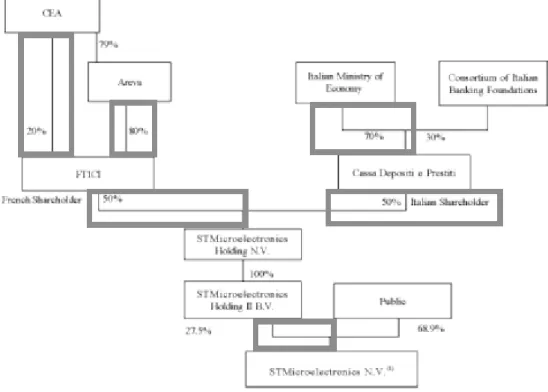
Figure 2 - Illustration of the shareholding structure as of December 31, 2009 ... 34
Figure 3 - Revenues in Western Europe vs Rest of the World (1977-2004) ... 64
Figure 4 - Privatization in Western Europe: Distribution of Revenues by Sector ... 64
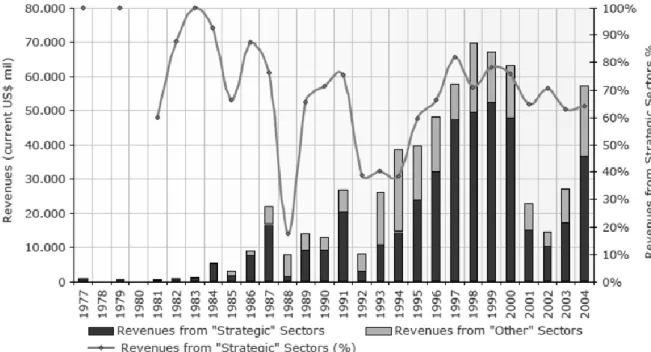
Figure 5 - Strategic vs Other Sectors (1977-2004) ... 65
Figure 6 - Model defined by Cuervo and Villalonga (2001) ... 65
Index of Tables Table 1 - Proxies used to measure operating performance ... 37
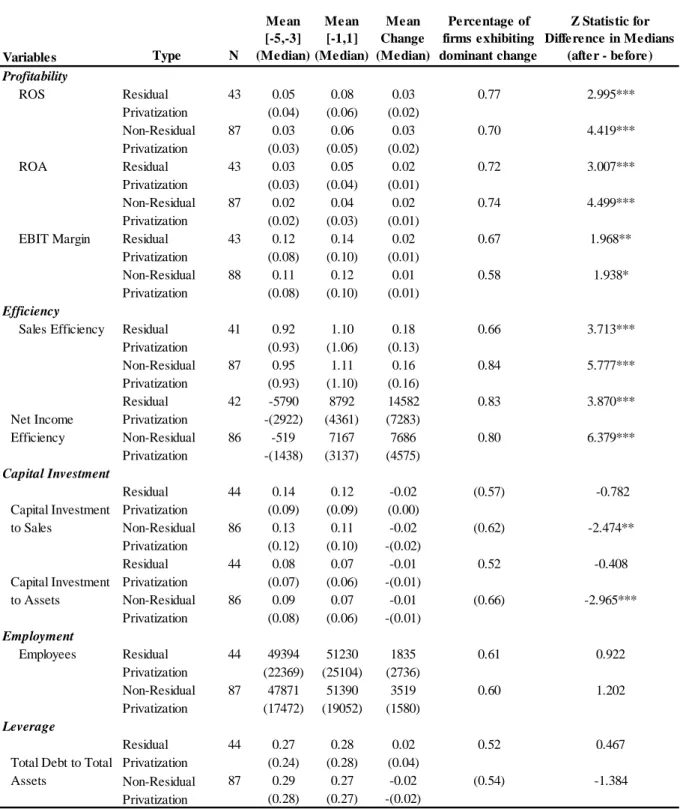
Table 2 - Comparison of Pre and Post Privatization Performance ... 40
Table 3 -Analysis of changes in performance prior to privatization ... 44
Table 4 - History of privatizations before the analyzed event ... 46
Table 5 - Analysis of post privatization convergence through DiD Regressions ... 47
Table 6 - Multivariate Regression analyzing impact of Residual Ownership ... 50
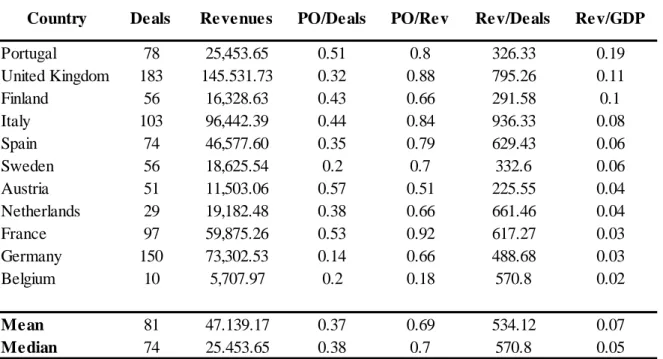
Table 7 - Privatizations in Western Europe per country (1977-2002) ... 66
Table 8 - Description of classification of classification of operations ... 66
Table 9 - Description of firms included in the sample ... 67
Table 10 - Description of Transactions Analyzed ... 68
Table 11 - Variables used in Multivariate Regression ... 69
Table 12 - Description of Multivariate Observations ... 69
Table 13 - Control Sample for Hypothesis 2 ... 70
Table 14 - Difference-in-Differences Robustness Analysis ... 71
Table 15 - Difference-in-Difference Regression with control variables ... 74
5 1 Introduction
The debate around state ownership and privatization is nowadays more relevant than ever and has been reopened with the recently observed worldwide intervention of governments following the recent financial crisis (Borisova et all, 2012). As a matter of fact, despite the wave of privatizations that took place in Western Europe in the beginning of the 1980s, driven mostly by United Kingdom's former Prime-Minister Margaret Thatcher and which soon extended to the rest of the Europe, SOEs and States' holdings in companies still represent a considerable share of their GDP1.
On top of this, this debate is even more relevant in Europe since a new wave of privatizations is in course as a result of the recent developments in the economic context, with the recent Euro crisis and the consequent need to solve the problems which have risen from large budgets deficits and high debt levels. For example, Greece and Portugal, under the intervention programs of the IMF, are among the countries who have defined a new privatization plan which is expected to generate nearly 50bn Euros or 22% of Greece's GDP in 2010 and 6,5bn Euros or 3,7% of Portugal's GDP, respectively2. Nevertheless, as stated in a report published by Deutsche Bank Research
the reasons for this new range of privatizations are not only related with the need to "help the government to reduce its debts" but also with the fact that "by relinquishing business activity the government can directly stimulate GDP growth, because it thus creates new opportunities for private-sector activity".
The same report goes on to argue that "experience tells us that private companies operate more efficiently and are more innovative". But is this really the case? Should, therefore, governments privatize firms completely as was the dominant case in the United Kingdom's privatization process or is it possible to conciliate the defense of national interests and strategic industries with those of efficiency and competition? In order to answer these, and other question, this research paper aims to develop a deeper understanding of the dynamics and impact of privatization on operating performance, with a focus on Residual Privatization, which is becoming a more frequent phenomenon and is here defined as the sale of residual and non-controlling stake in firms.
1 According to recent estimates Italy and France's corporate holdings, for example, represent respectively
approximately 5,2% and 4,6% of the GDP.
2 "Revenue, competition, growth - Potential for privatisation in the euro area", in EU Monitor 87 by Deutsche
6 Understanding this is crucial in making a critical assessment of whether or not Governments should fully exit privatized firms by selling their residual stakes.
The focus of the present work is then the Euro Area and former SOEs operating in what is denominated "strategic industries" as they account for 70% of our sample. With respect to previous research, this paper adds new evidence about the privatization process in Europe, contributing to fill the gap that "there is no study available in the literature investigating the performance of European privatized firms in a single and comprehensive statistical analysis" (Bortolotti and Milella, 2008). However, the most relevant contribution is perhaps the analysis made of the impact and implications of residual privatization and ownership in firms' performance, an issue hardly analyzed in previous literature. Hence, we expect to bring some additional light on whether or not selling residual, non-controlling stakes leads to performance improvements due to a decrease in the influence and involvement of Governments. Or if these type of operations only reasonable from a fiscal and financial point of view. By analyzing the first question we are also able to add new evidence to whether or not the real drivers of previously documented improvements in performance are the reduction of states' ownership or actually the changes that take place simultaneously with it.
The main findings of this paper are that Residual Privatization does not have a significant impact on performance, leading us to conclude that this is due to the fact that potential for improvements is lower since the profitability gap in respect to private firms appears to have been closed in previous privatization operations. Nevertheless, we do document improvements in performance in the years before residual privatization which leads us to advance the possibility that governments time these operations. In general, our findings and statistical analysis in this work provide no evidence to the argument that residual ownership has a negative impact on firms' profitability as long as an effective corporate governance system and sound economic and regulatory environment are in place.
Finally, we also offer some evidence questioning some of the previous studies' conclusions regarding the impact and importance of privatization in improving efficiency. Namely, our DiD and multivariate regression have been unable to find that a lower level of state-ownership is associated with improved efficiency or that privatized
7 firms are able to close the gap in terms of efficiency and our findings from our univariate analysis suggest that the detected improvements in profitability following privatization are obtained mostly due to a better management of financial resources and taxes. As a result, similarly to Arocena and Oliveros (2012) we also question previous studies methodologies and measurement of operating efficiency.
This paper is divided into 7 parts. The first one, entails a brief description of the privatization process in Western Europe and is followed by a thorough review of previous literature regarding privatization. We then move on to describe our main research questions and hypotheses. Section 4 explains how the sampling process and data gathering processes have been done and is followed by the description of the methodologies used in this work. In our 6th section we present our results and discuss
their specific and global implications. Finally, we conclude the present paper with a conclusion summarizing our main findings.
1.1 Privatization in Western Europe
Figure 1 - Privatization in Western Europe: Total Revenues and Transactions
Source: Elaborations on Securities Data Corporation by Bortolotti and Milella, 2008.
To start with, privatization can be defined as the sale of a State-Owned Enterprise (SOE) or assets by a Government to the private sector agents, resulting in a transfer of
8 ownership which reduces the role of the Government in the local economy and is intended at boosting the private sector. It is usually acknowledge that the first large privatization program was launched by the UK's Government of Margaret Thatcher in the 80s, resulting in a reduction of SOEs' weight in the UK's economy from 10% to almost 0%. However, ever since it we have been witnessing a considerable divestment of States holding in corporations through the implementation of equally large privatization programs all over the world, with this phenomenon becoming actually a global own with more than 100 countries worldwide engaged in their own privatization programs (Megginson and Netter, 2001).
Western Europe, in particular, has been extremely committed to such programs as it is possible to see from the fact that between 1997 and 2004 it accounted for 29 percent of global deals and was responsible for 48 percent of global revenues based on calculations performed by Bortolotti and Milella (2008). Indeed, while the UK pioneered such phenomenon the truth is that shortly after several countries began their own privatization programs, though mostly lacked the scope of the UK's one. For instance, Italy began a long process of privatizing the companies in its State holding company IRI in 1985 and was followed by France in the following year, with some large companies as Saint Gobain privatized. Most of the European countries joined them during the 90s with privatization programs that became particularly strong in the mid 90s. Moreover, the majority of privatization programs seemed to follow a certain order since in the beginning firms privatized operated mostly in the manufacturing, industrial and financial sector and only after were firms from the denominated strategic sectors (telecommunications, energy, transports and utilities) privatized, which is one of the reasons why revenues spurred in the late 90s.
Despite the size and scope of this phenomenon it is important to note that in several cases the government continued to have a role of influence in privatized firms, either by direct or indirect control through voting rights but also through the use Golden Shares and political connections.
9 2 Literature Review
2.1 State-Owned Companies
Following World War II the world witnessed a tremendous growth in the use of SOEs in several regions. Indeed, as Megginson and Netter (2001) note the Depression, World War II, and the final breakup of colonial empires led many governments, in particular in Western Europe, to assume a more active role in the economy, namely through the ownership of production and provision of several goods and services. This period until the late 70s was characterized by a strong debate about the extent to which the national governments should be an active part in the regulation of the economy and in which industrial sectors should they have an exclusive presence. The existence of many SOEs was justified by the need to solve or mitigate the several types of market failure and reach several non-economic goals such as the need for public control over natural resources, regional policies, employment or social issues (Grout and Stevens, 2003).
Indeed, public control over natural resources is commonly perceived as an argument for public ownership given the fact that profits related to extraction of natural resources, such as oil, are often considerably high, meaning that it may be important for the government to maintain the control of such rent to himself (Goldeng, Grünfeld and Benito, 2008). On the opposite side, the supply of public goods, which due to limited excludability contributes to lower profits (often the case of providing national defense and education) also supported the existence of SOEs in order to provide such goods at a socially optimal price level. Other reasons for the Government's presence in the corporate sector have also been stated, such as promoting the national interest (nationalist motives) or as a way to spur economic growth. However, most literature seems to converge, in general, to the two arguments of being a response of governments to certain market failures or as a tool to promote some economic and even non-economic objectives.
10 2.1.1 Performance of SOEs
The recent trend towards the reduction, and in some cases nearly disappearance, of government's presence in firms rises the question of whether SOEs do effectively underperform their private counterparts, as many politicians and economists have argued to support the large-scale privatization programs implemented.
In fact, despite the fact that the majority of empirical studies supports the argument that there are systematic performance differences between SOEs and POEs (Privately Owned Enterprises) the reality is that the answer to this question is not unanimous between researchers as a survey of available empirical studies conducted by Shirley and Walsh (2000) has concluded. Indeed, among the 52 studies the authors have analyzed there were actually five who indicated that SOEs outperformed POEs and other 15 studies which were not able to find clear and significant differences in performance. Nevertheless, it is important to mention that the aforementioned 5 studies were all regarding analyses of monopoly firms in the utility sectors, indicating that market structure is another important factor affecting firms' performance.
The meta-review of Villalonga (2000) draws a similar picture. The author splits its review into two groups: cross sectional studies of public-private ownership effects, which she argues has been the dominant type of studies in this field, and longitudinal studies of privatization effects. Indeed, based on her review Villalonga has concluded that the cumulative evidence is not fully conclusive, despite the fact that private ownership appears to, once again, have a clear edge in the literature (in the 153 studies surveyed 104 are in favor, 14 against and 35 neutral regarding the superior performance of private ownership). Similarly, these variance in the results may be attributed to the market structure in of each of the industries (and countries) where the firms operate and to the way efficiency is measured across the studies.
However, some of the most noteworthy and complete studies of public performance, such as Boardman and Vining (1989) and Dewenter and Malatesta (2001) have found that private corporations were significantly more profitable than government firms, which were also associated with higher debt levels. The latter, is particularly relevant not only because the authors have controlled for other possible explanatory factors, such as firm size, location, industry and business cycle, but also
11 because of the sample's characteristic which spanned across 20 years, and therefore several business cycles.
Moreover, in a more recent study, Goldeng, Grünfeld and Benito (2008) have tried to address the lack of attention characterizing most studies to the potential impact that the characteristics of the market may have on firms' performance. These authors conclude that the performance of SOEs in Norway, from where the sample is extracted, is indeed inferior to that of private firms, even when controlling for the market structure, and find a positive relationship between performance and the market share of companies as well as the market concentration.
Hence, the general belief that POEs perform better than SOEs has found considerable support among the majority of the empirical studies on the performance of SOEs, especially when they control for other factors such as market structure.
2.1.2 Reasons for SOEs Underperformance
So why do SOEs underperform their private counterparts? The answers to this question have been well summarized in the works of Shleifer (1998), Megginson and Netter (2001), Cuervo and Villalonga (2000) and Arocena and Oliveros (2012) and can be grouped within three categories of thought. Understanding the reasons of underperformance is particularly useful for also understanding the reasons why privatization has been so vastly used.
Agency theory argument
The first type of argument is derived from the agency theory, which considers the separation between ownership and control (management team) as the main source of the documented poorer performance of SOEs. Managers (agents) are expected to maximize their own utility, rather than that of the organization or its owners (principals), and it is argued that in POEs shareholders are better and more effective at aligning the objectives of the principal and the agent through a better monitoring of managers and the creation of incentives in order to maximize internal efficiency. Indeed, a better system of corporate governance and an increased number of external control
12 mechanisms, such as the market for managers or the capital markets, are important for SOEs to improve their performance (Vickers and Yarrow, 1989).
However, in the case of SOEs these mechanisms are virtually absent and the agency problem is further aggravated by the fact that there are actually two other agency relationships. Namely, the public as owners-to-politicians and politicians-to-managers. As a matter of fact, Stiglitz (1988) distinguishes between two categories of incentives available to lead managers to perform well. On the one side, we have Individual Incentives, in which even in the case where the only public objective is, for example, profitability the ability of maximizing such returns is hampered by the fact that returns from a SOE are channelled into a public budget that no specific individual can take advantage of as a principal, reducing the incentives to closely scrutinize the actions and efforts of managers. On top of this, the fact that the public sector is usually locked into a pay structure limits the ability to link management salaries, or workers’, to firm's performance. and the traditionally higher job security in the public sectors lead to lower efforts and incentives to perform well.
On the other side Stiglitz mentions the lack of Organizational Incentives, which consist mostly of the role played by the capital markets in constantly monitoring POEs. As a result, if managers of POEs fail to use resources efficiently, the market exerts pressure on them by withdrawing capital from the company, taking over the company and reallocating its resources (internally or externally) or reducing the value of its holdings.
Property rights theory argument
The second category lies on the property rights theory and states that managers' decisions in public firms are not subject to the same economic consequences as in private firms, decreasing their incentives to operate efficiently and maximize profits. Indeed, the managers of private firms are prevented from pursuing their own agenda by the threat of bankruptcy or takeover. In the case of SOEs, the state acts as an insurer, preventing them to go bankrupt through the existence of soft budget constraints, since any possible gap between income and expenditures is balanced by the government (Kornai, 1980). As a result, since the company does not need necessarily to cover its costs in order to ensure its sustainability the price mechanism no longer guides the
13 behaviour of managers and works as a deterrent to economic waste, leading to the emergence of problems such as overstaffing, excessive salaries or overinvestment.
Public Choice argument
The Public Choice argument is the third category and states that politicians, bureaucrats and government officials pursue their own utility rather than the general interest, being more concerned with the maximization of their own objectives, such as votes, power and prestige. Indeed, politicians may impose objectives on SOEs that might help them gain votes but might conflict with efficiency, resulting in a lower performance. One example is the protection of the interests of certain stakeholders, like trade unions, in detriment of the firm’s efficiency or in the pursuit of social objectives, such as wealth redistribution. Aggravating this is the fact that very likely the costs of monitoring SOEs behaviour is higher for the general public (the ultimate owners of the firm) than it is for interest groups as trade unions, making of SOEs an easy target for rent-seeking activities. Another example of such multiple objectives, is that SOEs may be pressured to hire politically connected people rather than those best qualified to manage them (Krueger, 1990).
2.2 Reasons for Privatization
While most privatizations are carried with the purpose of bringing performance improvements to privatized firms they can also be conducted for other political, economic or financial motives (Vickers and Yarrow, 1989). Indeed, such programs tend to have an impact on public finances, specifically the public deficit and the debt levels (as many states used the proceeds to reduce their debts). It may also be that governments want to increase the number of stockholders and facilitate the access of citizens to capital markets, which are very often stimulated with such programs. Moreover, given that privatization appears to be stronger in countries with higher per capita GDP and lower growth rates may be an indicator that governments use privatization as a tool to foster economic activity through the increase in private investment. (Bortolotti and Milella, 2008)
14 2.2.1 Classification of privatization methods
It is equally important to look at the different methods that have been employed by governments all over the world when carrying out privatizations processes. As pointed out in Megginson and Netter (2001) the decision regarding the method of privatization is not always simple as they tend to very politicized and encompass several complexities in determining the value and the pricing of the operation. In fact, according to them the method of privatization is very often influenced by factors such as the history of the firm's ownership, the financial and competitive position of the SOE, the government’s view of markets and regulation, the regulatory structure in the country and its evolution and the capital market conditions.
Moreover, in the work of Brada (1996) it is possible to find a very complete classification into four main groups of the existing privatization methods. However, it is important to note that there are still some variations within each of the categories and that some privatizations may use a combination of more than one of the different types of divestment. I here present the category most often used in Western Europe:
Privatization through sale of state property - Sell of the government's stake in
exchange of an explicit cash payment. This method is further subdivided into:
o Direct sales (or private sales) of stakes of SOEs to an individual, an existing corporation, or a group of investors.
o Share issue privatizations (or Public Offerings) through which some or all of a government’s shares in a SOE are sold to investors by means of a public share offering. They have some similarities with IPOs in the private sector, but while private IPOs aim primarily to raise revenues, SIPs are structured in order to raise money for the government and respond to some of the political factors already mentioned and discussed
According to data analyzed by Bortolotti and Milella (2008) while private sales accounted for the majority of transactions in Western Europe it has been through public offers that governments have raised the most revenues (only represented 28 percent of operations but 64 percent of revenues). This is due to the fact that such method is
15 frequently used for larger and often more profitable companies that are easier to floated in stock markets.
Finally, it is also important to note the difference between control privatization, which refers to privatizations where government ownership becomes less than 50%, and revenue privatization, which is the opposite case when government retains more than 50% after the privatization stage (D'Souza and Megginson, 1999). Indeed, this classification is very important because it clearly considers the level of 50% of ownership as a relevant cut-off in understanding the impact of privatization in firms' performance.
2.3 Performance of Privatized firms
So has privatization been successful in achieving its objectives? To answer this we focus our analysis on previous studies concerning the microeconomic impact of privatizations, disregarding on purpose the impact at the macroeconomic level, namely in the fiscal conditions of European countries, on the financial market development and on the benefits to consumers. To start with, the research within this field has been split into two types of studies. The first, which is considered the dominant approach, compares pre- and post-privatization performance of privatized firms and the second compares the performance of privatized firms with their private firms counterparts.
In one of the most comprehensive review of previous literature on privatization Megginson and Netter (2001) have concluded that the majority of evidence indicates that, in general, performance improvements are indeed registered after privatization. Indeed, in this review the authors mentions that nearly all the studies analyzed document significant improvements in privatized firms' performance. On the contrary, the level of employment after the privatization (a particularly sensitive issue in privatizations from a political point of view) does not exhibit a particularly trend of increase or decrease, leading the authors to conclude that the impact on employment is very contingent on the specific characteristics of the privatized firms.
Comparing pre- and post-privatization performance
A more detailed description of the main findings of some of the most well-known and cited studies using this methodology is now presented. The studies of Megginson,
16 Nash, and Randenborgh, V. (1994), Boubakri and Cosset (1998) and D’Souza and Megginson (1999), are particularly interesting to look at since they are directly comparable because they use exactly the same empirical proxies, testing methodology but used different samples, making it possible to analyze them collectively. All these tests present evidence of increases in output, efficiency, profitability and capital investment, accompanied by decreases in the leverage used by former SOEs. Indeed, apart from profitability, these are all socially beneficial outcomes as they represent a better use of resources by firms and an improvement in their financial health (Megginson, 2003).
The study of D’Souza and Megginson (1999) particularly adds that the analysis of different subsamples concluding that the mentioned improvements are stronger for cases in which governments transfer voting control and for noncompetitive industries. As a result, in the authors opinion "privatization "works," and it works in almost every institutional setting examined".
However, Dewenter and Malatesta (2001) have failed to find robust evidence of further improvement after privatization and concluded that privatization is, indeed, associated with improved profitability but those improvements largely occur in the three years before privatization. These findings, contradictory to previous research, appear to indicate that Governments can efficiently restructure to a certain degree firms before privatizing them, which appears to be the real driver of performance improvement and not the change in ownership per se. Hence, in order to justify privatization, the authors argue that governments' aim with privatizations may not be to achieve efficiency gains, but rather to perpetuate them in time and find some support to this finding in the observation of Yarrow (1986) that the improvements obtained from policy changes may dissipate over time without the added discipline of private ownership.
In a more recent study, Boubakri, Cosset and Guedhami (2009) analyze the impact of privatization in strategic industries, which are defined as including the financial, mining, steel, telecommunications, transportation, utilities, oil, and military-related production ones Megginson et al. (1994). According to these authors the same gains in profitability and operating efficiency of firms from strategic industries are
17 possible to be found in their sample, though it is equally interesting to note that their findings are consistent with no significant evidence regarding layoffs and reduction in the level of leverage, contrary to some previous studies and expectations regarding the specific nature of such industries. As a result, the gains in efficiency, similarly to La Porta and López-de-Silanes (1999), do not seem to result from reductions in the level of employment. These findings, argue the authors, can be attributed to the specific nature of these firms who not only are more constrained from a political point of view due to social welfare and stability issues but also because they carry larger amounts of debt than firms in non-strategic industries making it more complicated to observe an immediate reduction in the level of debt.
To end this section it is also worth mentioning some studies focusing on specific countries. Regarding the UK, who has mentioned was the pioneering in this field, Boussofiane, Martin and Parker (1997) have analyzed its privatization process and, similarly to Dewenter and Malatesta (2001), have concluded that the improvements in the efficiency of privatized firms takes place 2 or 3 years before the privatization and not with the change in ownership. Indeed, these findings were also corroborated in a previous study be Martin and Parker (1995) who found out the existence of a shake-out” effect, since several firms improved performance prior to being privatized but not after. In general the findings of these authors did not offer support to the benefits of the UK program, since even after adjusting for business cycle effects less than half the British firms studied performed better following privatization.
In relation to Spain, while Villalonga (2000) has shown that the effect of privatizations in the period of 1985 to 1995 has not always resulted in increases in efficiency, being very contingent on political and organizational factors, the study conducted by Arocena and Oliveros (2012) has found out that the efficiency of newly privatized firms significantly increased after their privatization, contrasting to their private competitors who did not show any significant improvement during the same post-privatization period. However, it is also worth noting that, before the privatization, there were no significant differences in efficiency between the SOEs and their private counterparts. Moreover, whilst in Italy, Goldstein (2003) only finds a modest, which is not statistically significant, increase in profitability as well as a decline, though also insignificantly, in efficiency. Similarly, but for Austria Dockner, Mosburger and
18 Schaffhauser-Linzatti (2005) fail to find significant differences between state ownership and privatization. Finally, it is also worth noting that Finland privatization also offers no evidence of improved performance, potentially because in this country SOEs were already well run and performed well (Willner, 2003).
Comparing privatized firms' with private firms
Within the second type of studies we have the work of La Porta and López-de-Silanes (1999) which has tried to assess performance improvements by comparing the privatized firms with their private counterparts. This process has the clear advantage of being able to separate the effects of privatization from economic or industrial wide effects. Using this methodology, the authors find that their sample (former Mexican SOEs) is capable of closing the existing performance gap in respect to their industry-matched private peers. Indeed, these firms go from being highly unprofitable to being very profitable following privatization, due to productivity gains resulting from better incentives. Moreover, this paper is one of the first to present evidence that privatization when combined with deregulation, namely the removal of price/quantity controls or trade barriers, is more effective in improving firms' performance.
In addition, the study of Arcas and Bachiller (2008), which has analysed the differences in performance between private firms and recently privatized firms in the European Union, presents some evidence to the fact that, for the sample as a whole, privatized firms are more profitable, less leveraged and less labor intensive than private firms. However, it is important to bear in mind that results are not homogeneous across the different geographical zones. For example, while in the French and Scandinavian zones3 privatized firms are indeed more profitable, less leveraged, in the German zone
differences only exist in leverage and labor intensity. On the contrary, in the British zone the results indicate that profitability is lower and leverage is higher for privatized firms. These differences may be due to different economic and legal environments or differences in the privatization process itself since not only the period of privatizations varies considerably as well as its objectives.
3
The French zone refers to Belgium, Holland, Italy, France, Portugal and Spain, the German zone includes Germany and Austria, the Scandinavian zone consists of Denmark and Sweden and the British zone is Ireland and UK. The study also included an Eastern Zone
19 In conclusion, despite the clear bias towards supporting the beneficial impact that privatization has in former SOEs' performance and efficiency there is still space within this debate. Either because the existing literature is not unanimous regarding this point, with some authors supporting the argument that the key to improvement is not privatization itself but rather the changes imposed on firms or others finding that improvements incur mostly prior and not after privatization, or because there are still some problems that the mentioned studies are not capable of fully addressing. Such problems can be methodological, namely in terms of the sample selected or the methodology used to assess efficiency and performance, or for not fully incorporating other determinant factors in their analysis, namely the market structure or the economic and regulatory environment in which firms operate. On top of this, the results also seem to differ from country to country, particularly within developed economies, preventing researchers to have advanced an "unambiguous answer about the role of privatization on the financial and operating performance of European SOEs" (Bortolotti and Millela, 2006).
2.3.1 Sources of Privatizations value creation
Having concluded that privatization, on average, leads to performance improvements in the performance of former SOEs a new question emerges: how do privatizations lead to such performance improvements? In trying to answer this Cuervo and Villalonga (2001) have proposed a model, whose underlying assumption is that privatization is a discrete and exogenous change that leads to several endogenous changes in the strategy and organization of the privatized firm, to explain the factors influencing the ultimate effect of changes that the privatization process might trigger on performance (for a summary of their model see the appendix). Hence, what are the changes that privatization operates and are behind the improvements in performance? The answers to these questions are essential in order to better understand the variance that was detected in the cited empirical tests.
Based on the analysis of Cuervo and Villalonga (2001) and D'Souza, Megginson and Nash (2007), often complemented with other's authors findings, it is possible to
20 summarize the following factors as the most relevant in leading to performance improvements:
1) Changes in ownership structure: Differences in state ownership, foreign ownership, and employee ownership are likely to affect the performance of privatized firms
a. Level of post-privatization ownership retained by the state should play a crucial role in the newly privatized firm's efficiency improvements. In fact, Boycko, Shleifer and Vishny (1996) expect efficiency gains from privatization only in the cases where control rights are transferred to private investors. This results from the fact that the likelihood of government interference and possible re-nationalization is increased when selling only a small stake. Nevertheless, despite such prediction the empirical evidence is not unanimous. For instance, while D’Souza and Megginson (1999) conclude that performance improves more when governments transfer the voting control for the private sector (control privatization), D’Souza et al. (2007) reach a different conclusion, as they are not able to find differences statistically significant when control is transferred. This finding is even more puzzling if we consider the results that the last authors obtain in their profitability regression, which reveals a significantly positive relationship between profitability and state ownership. As a result, in an attempt to explain this findings, the authors advanced that a large residual stake gives the government greater incentives to encourage performance improvements with the objective of maximizing proceeds from subsequent privatization rounds.
b. The presence of foreign investors, who may bring either new know-how or investment capacity and act as a more powerful monitor of firms' performance, and the amount of employee share ownership, who may be unlikely to support certain value maximizing initiatives if perceived as dangerous to their job security (Boycko et al., 1996), may also affect the degree of post-privatization performance. As a matter of fact, empirical evidence tends to favor the presence of foreign investor by suggesting that larger increases in performance take place when privatized firms are controlled by external investors. On the contrary, the empirical evidence regarding the influence of employees’ ownership on firms’ performance is not so conclusive.
c. Shareholding structure is also relevant as the move from a concentrated shareholding (with the state as major shareholder) to an intermediate level of
21 ownership concentration, where no large shareholder dominates and where the boards effectively performs their control role, improves the effectiveness of privatized firm's new goals and incentive schemes in triggering the desired performance gains.
2) Changes in upper management: The replacement of the management team, often politically appointed, with a professional businessperson should lead to performance improvements. This argument is further supported on the reasoning that not only may existing managers be reluctant to implement or even allow some of the necessary organizational changes (Martin and Parker, 1997) but also because the new team may bring in resources and capabilities which fit best the competitive market environment that accompanies privatization and deregulation, whereas the incumbent managers skills were more suited to dealing with politicians. In fact, D’Souza et al. (2007) are able to find statistical support to this assertion as they show that profitability increases significantly for firms with greater than 50% change in board of directors, whilst it decreases, insignificantly, for firms with less than 50% change.
3) Changes in the Strategy of the firm - Privatization prompts a firm to engage in scope-enhancing corporate strategies and in more innovative and less focused business strategies. This is due to the fact that very often managers in SOEs feel that any potential benefits from their investments can be expropriated and will not likely affect their compensation. On the contrary, losses may jeopardize their jobs. Thus, strategies requiring substantial investments are perceived as "high risk, low return", reducing considerably their appeal. In the case of the risk of losing the job is counterweighted with the increase in compensation which a good strategy can result. Hence, the incentives to invest under private ownership tend to be bigger than in SOEs. Furthermore, in SOEs both the location and the scope of activity are constrained politically and geographically by the state as owner, who tends to focus essentially on the home market. Under private ownership these limitations disappear and firms are free to engage in internationalization and entering new markets. Indeed, internationalization is one of the drivers of the growth registered by privatized firms, who try to leverage their, traditionally, strong position in the internal market.
4) Restructuring: Usually the main driver of value creation that comes from the privatization process are the transformations which take place within the former
22 SOEs either before or after privatization, which make it better equipped to compete as a private enterprise. Supporting this is the finding of D’Souza et al. (2007) that firms which restructure are the ones who register larger improvements in operating efficiency as it apparently leads to a more efficient deployment of resources.
a. Organizational/operational restructuring and Corporate Governance changes - This type of restructuring is concerned with the internal functioning of the organization, namely its production methods and management structure. The closing, consolidating, or overall reorganization of its production facilities or the modernization of operations are clear examples of such changes. However, the most relevant change is perhaps the introduction or improvement of the prevailing incentive schemes and control mechanisms, which become more outcome and market based.
According to the already described public choice and agency theorists goals and incentives (or control) are the central variables shaping the privatization-performance relationship. While goals in private firms are clear and related to profit maximization and value creation for shareholders, in state-owned firms the goals are usually blurred, multiple, conflicting and unstable (Cuervo, 1997). In addition, so are the incentive schemes and control mechanisms of private firms in general more effective than that of SOEs in private firms. This is due to the internal control departments and boards of directors in private firms being usually better informed than their counterparts in SOE, where the alignment of objectives with external agencies is in general weak. Hence, changes in incentives and controls are of great importance to trigger the performance improvements.
Moreover, privatization prompts the firm to adopt a more decentralized organizational structure and a greater customer orientation. Indeed, privatization may free managers, if not replaced, from politicians' control, allowing them to exercise their latent managerial talent (Shleifer & Vishny, 1994). In addition, the privatized firm's corporate culture can also be expected to change. For instance, with the adoption of financial goals and more outcome and market-based incentives, the firm will likely move from a production orientation to a customer orientation culture (Cuervo, 1997; Martin and Parker, 1997).
b. Acquisitions and divestments - The newly privatized firm may engage in acquisitions, representing a strategy to pursue the new growth opportunities created by
23 the transfer from state control, or in divestments, which are associated with efforts to focus on the most profitable segments, downsizing to a more efficient and sustainable functional form. On top of this, privatized firms may also merge with other private firms to capture potential synergies and increase scale
III- Financial restructuring - This method of restructuring typically involves a reduction in the leverage of the newly privatized firm. In the sample of D’Souza et al. (2007) firms' financial restructurings consisted essentially of debt payoffs, debt write-offs, and leverage-reducing recapitalizations, like debt-equity swaps
5) Macroeconomic and institutional environment:
a. The level of capital market development is also important in bringing the desired performance improvement since under the capital market scrutiny the monitoring of managerial performance is improved. In fact, the empirical tests conducted in the aforementioned paper indicate that firms in larger, more developed financial markets experience larger gains in efficiency
b. Political and economic environment can also be an important factor in influencing the transition to being private, with a sound and stable environment helping fostering the improvements in performance
c. The competitive forces can also stimulate greater efficiency and profitability. Vickers and Yarrow (1989) argue that while privatization should lead to efficiency gains when competitive environments exist there seems to be no advantage to private ownership when market power exists. Other empirical studies, such as Megginson et al. (1994) and La Porta and López-de-Silanes (1999), have identified that the efficiency gains are significantly greater for firms in competitive markets in comparison to regulated industries. For this reason, price deregulation and market liberalization are also correlated with higher performance gains
To sum up, it is important to note that it is the failure to induce some of the mentioned changes in the proper and most effective way or the inadequate conduction of the privatization process that hinder the former SOEs to achieve its full potential in terms of performance increasing.
24 2.3.2 Maintaining influence after privatization
As it is pointed by Bortolotti and Siniscalco (2004) "the sale of a majority holding is not itself a sufficient condition to avoid government interference in privatized companies", which can be a deterrent to the successful implementation of the changes described in the previous section. Indeed, on top of the fact that very often governments maintain a residual or even controlling stake in privatized firms (in the sample of N. Boubakri et al. (2009) 28% of firms continue to have the government as a controlling shareholder) it is also important to mention two additional mechanisms employed by governments to continue exerting their influence in former SOEs.
Boubakri, Cosset and Saffar (2008) examine the impact of the first of these mechanisms: political connections, which concerns the appointment of politicians to important positions in the privatized firm. Indeed, these authors' sample registers a total of 35.51% firms (87 out of 245) who continue to be politically-connected after privatization, identifying the size of residual government ownership and the presence of foreign investors as two factors driving the likelihood of a firm remaining politically-connected. As expected, such firms appear to underperform their non connected peers.
In addition, thanks to the use of the second mechanism, Golden Shares, governments are equally able to continue exerting its influence on privatized firms since "by exerting its rights, the “special” shareholder can often influence the choice of management, exert veto power over the acquisition of relevant stakes by private shareholders, even without owning the majority of stock in the company, or a single share of capital" (Bortolotti and Milella, 2008). Very often the use of such special rights are justified on the basis of protecting the "national interest". The same authors show that Golden Shares have been widely used by European Governments, especially in respect to strategic industries as according to their sample in 1996 golden shares were present in 100% of the privatized firms in the defense sector, 83% in the telecommunications, 62% in the oil and gas and 64% in the utilities sector. Nevertheless, it is also worth mentioning that the recent years have witnessed a substantial decrease
25 in the existence of these mechanisms in particular in Western Europe following pressures of the European Union in that direction4.
2.4 Partial privatization and residual state ownership
Having analyzed the drivers of performance improvements in privatization new questions arise: do states have to fully privatize firms in order for such changes to take place and in order for them to be perpetuated over time? Or, on the contrary, is partial privatization an equally effective solution to the underperformance that some SOEs exhibit? Among the reasons why governments retain residual ownership in privatized firms it is possible for us to point out their objective of maximizing revenues from future tranches as well as their goal of signaling to the market the value and commitment towards the privatized firm. On the other hand, it may also be due to the governments' reluctance to relinquish control of privatized firms in sectors which they consider economically and politically strategic (Boubakri, Cosset and Guedhami, 2005).
This issues have been partially addressed in some studies though the attention researches have devoted to understanding them and its implications has clearly been lower than in understanding the previous topics analyzed in this literature review. Nevertheless, as Gupta (2005), among others, has noted firms described as "partially privatized" or "public-private partnerships" have long represented a substantial percentage of all state divestments. As a matter of fact, this situation is well illustrated by Vaaler and Schrage (2009) who point out that the broad sweep of empirical research has never examined the performance impact of state ownership when it becomes a non-controlling minority (<50%) tranche or in other words maintains a residual state ownership.
More importantly, the existing literature regarding this topic, even though not abundant, has been particularly divided. On the one hand, a great amount of studies, some of which already presented previously, indicate that efficiency gains can only be obtained when control rights are passed from the government to the private sector; which has became known as the “political interference” hypothesis. Furthermore, a particularly relevant finding is presented in the work of N. Boubakri et al. (2009), whose
26 sample supports the assertion that residual state ownership has a detrimental effect on performance of strategic firms. However, this impact seems to be more moderated in the presence of better protected environments as well as in countries with right-wing regimes.
On the other hand, the number of authors arguing the opposite has been increasing. For instance, Perotti (1995) has developed the "credible privatization" theory, which states that governments can signal commitment by only selling a small portion of the firm at the beginning, namely of the state's willingness to intervene on their behalf and share their economic fate. This affects positively the necessary changes needed to improve performance as well as shareholder returns following strategic decisions. Moreover, Sun, Tong and Tong (2002) have argued that government shareholders may provide additional benefits to privatized firms, namely their political support and business connections.
On top of this, Bortolotti and Faccio (2006) have demonstrated that residual ownership leads to higher market valuations in their sample regarding OECD countries. Similarly, Liao and Young (2012) have found that residual government ownership can have a positive impact on Tobin's Q (approximated as book assets minus book equity plus market value of equity divided by book assets), providing evidence that residual government ownership has a positive impact on post-privatization performance, at least as far as China is concerned. This seems to be particularly true when the risk of expropriation by parent companies is high as government's can add value to the privatized firms by signaling their commitment to privatization through the residual stake.
Vaaler and Schrage (2009) have also questioned the prevailing studies arguing that privatizing firms' performance generally improves with decreasing state ownership and the passage of time. As a result, the author finds, through an event study, the potential supporting role residual state ownership can have, namely in enhancing former SOEs' strategic decision-making and financial performance. An effect which was particularly noticeable in the cases characterized by instability in the home-country investment policy environment.
27 3 Research Question and Hypothesis
As already discussed and analyzed previously although the impact of government ownership on firm performance has long been debated in the finance literature the findings remain inconclusive. It is still an empirical question whether government shareholders expropriate firms for the benefit of politicians and bureaucrats, or provide political and business support that benefits privatized firms. Hence, it is the objective of the present study and the following analysis to understand if when the State decides to further divest its residual and non-controlling stakes in privatized firms, reducing its influence on these firms, performance is affected.
In addition, we will also try to uncover several questions, based on our sample, that have not gathered consensus in previous research such as whether or not the state is capable of restructuring SOEs and if residual ownership by governments has a negative impact in performance. All this analyses will help understand, for instance, what is the ideal level of State ownership, namely whether or not the state should fully privatize firms or maintain a residual ownership.
Before moving on to the current study's hypothesis it is important to make some clarifications regarding the terminology here applied in order to avoid any potential confusion. Whenever we refer to residual privatization it concerns all the privatization transactions in which the state sells part or all of a residual and non-controlling position and the remaining transactions are denominated non-residual privatization (see appendix for more detailed description). This concept is different from partial privatization which entails privatizing part of the firm, but without the transfer of control.
3.1 Hypothesis Statement
Hypothesis 1: Privatization impact in operating performance and efficiency is stronger for initial stages of privatization
Hypothesis 1.1: Privatizations where the State has a non-controlling and residual stake do not have a significant impact in performance and efficiency
Following previous studies findings we expect an increase in the profitability and efficiency measures for non-residual transactions. On the contrary, we do not anticipate
28 changes in operating performance following residual stakes privatizations to be significant. This is due to the fact that most of the changes that lead to performance improvements, previously summarized in the literature review, have already taken place in the previous privatization operations. This hypothesis goes therefore on the same logic of Martin and Parker (1995) as well as Kole and Mulherin (1997) who have presented evidence supporting the view that SOEs are intrinsically no less efficient than private firms as long as they operate in the same competitive conditions as private. As a result, if such hypothesis is confirmed it may be an indicator that state ownership by itself is not detrimental to firms' performance since the reduction of state's ownership alone does not induce performance improvements, being the aforementioned changes the real trigger for increasing former SOEs performance.
Hypothesis 2: The government is capable of successfully restructuring SOEs, improving their performance, before privatization
Following the finding of Boussofiane, Martin and Parker (1997) and Dewenter and Malatesta (2001) that improvements in performance take place, not after the privatization, but in the 3 years before we also expect that privatizations improvements will also be found in the years immediately before the privatization, but only for operations classified as non-residual. Indeed, such expectation only applies to this subgroup as only in it do governments have majority control in order to be able to enforce restructuration in an attempt to make the firms to be privatized more attractive and hence maximize the proceeds coming from the privatization. For operations regarding residual stakes we continue to expect no significant improvement in the years in the years before the transaction, though these effects may be stronger if such operations where preceded by non-residual transactions before.
Hypothesis 3: Privatized firms close the performance gap in terms of profitability and efficiency regarding their private counterparts following privatization
Hypothesis 3.1: Firms where the state owns a residual stake do not underperform their private counterparts
As already explored one of the main arguments behind privatization is that SOEs underperform their counterparts and that privatization is a tool that will, in general,
29 lead to an improvement in firms' performance, allowing them to catch up with their peers. However, most of the literature, as pointed out by Arocena and Arocena (2012), fails to "properly compare the performance level of a formerly public firm before and after its privatization with that of achieved by its private competitors". We will therefore try to address this gap in literature by comparing the performance of privatized firms before and after each of the privatization operations. It is our hypothesis that, similarly to La Porta and López-de-Silanes (1999), our sample of privatized firms will be able to close the performance gap regarding their private counterparts.
Nevertheless, it is also important to mention our expectation that such gap will be closed essentially in the first stages of privatization, here defined as non-residual transactions. For residual privatization operations we do not expect that because the gap will have already disappeared, leaving little room for improvement. In this context, Gupta (2005) has found out that SOEs in India who were only partial privatized have also exhibited significant improvements in profitability, productivity and investment, which can be partially attributed to the often ignored role stock markets can have in ensuring an adequate monitoring and rewarding of manager's performance, even in the cases when government retains control. Hence, it is our expectation that residually owned firms will not underperform their counterparts, meaning that the impact of residual ownership to performance is residual.
3.2 Other Relationships Expected
Regarding capital investment we expect them to increase following initial stages of privatization and to remain relatively stable in the more advanced stages, namely in respect to residual stakes privatizations. This expectation is based on work of N. Boubakri et al. (2009) who have found, based on their sample that privatized firms operating in strategic industries increase their capital investment following privatization. This may be explained, according to the authors, by the fact that these are firms mostly capital intensive and technology-oriented who require high levels of capital investments and whose new private owners are capable of providing them.
On the one hand, N. Boubakri et al. (2009) argue that privatizations may involve lay-offs and labor shedding in SOEs due to the fact that they were previously overstaffed.
30 On the other hand, Megginson and Netter (2001) have concluded, based on their review of previous studies, that the impact on employment differs considerably from sample to sample. Hence, our only prediction is that our subsample of Residual Privatization will not exhibit reductions in employment and may probably be associated with increases in the number of employees as the firms grow in size and very often expand their operations geographically.
In terms of leverage, following the finding of previous studies, we expect that with the transfer of ownership to private hands a significant decline in leverage should be expected given the removal or reduction of the government’s debt guarantees, combined with the new possibility of privatized firms accessing of capital markets. As a result, we expect that the Non-Residual Group will be associated with significant leverage decreases. On the contrary, making predictions about the impact of residual privatization on leverage is far more complex because it is very contingent on the period in which it takes place. Despite this our expectation is that no effects will be found in such group due to the fact that the time since initial privatization is higher, which has allowed firms to operate their financial restructuring, and the government to gradually remove the debt guarantees.
4 Sampling Process and Data Gathering
To start with, it is important to note that, contrary to some of the previous studies who tend to "define the privatization event date to be that on which the government divests, for the first time, a certain amount of shares" (N. Boubakri et al, 2009), the focus of this paper, as already mentioned, is in the stages in which the government sells a residual stake in privatized firm. As a result, its scope goes beyond the first divesture made by governments, although such stages are also included in order to serve as a benchmark. This is done in order to recognize that more often than not, especially for strategic firms, governments privatize SOEs through several stages that may last several years and that they also tend to retain a residual ownership on former SOEs.
In addition, it is also important to note that our sample also includes other situations that allow us to infer the impact of state's ownership, such as reduction of control through capital increases (which has sometimes been an alternative to
31 privatization as to avoid going through the approval of local parliaments or in order to speed up the privatization process) or actual investments made by the government in previously private firms. Nevertheless, such operations represent less than 5% of our final sample.
4.1 Sample Selection
In order to study the mentioned questions a sample privatized firms until 2007 of the countries which belonged to the Euro Zone in 2005, with the exception of Luxembourg has been built. This sample was initially retrieved from Privatization Barometer Database, a database which contains all the privatizations transactions which took place from 1977 to the present.
Although a total of 1135 transactions concerning the studied countries are reported in this database our final sample, after several treatments, only includes 172 events. First, given the very specific nature of financial institutions these firms have been excluded from the sample, similarly to other authors as Arcas and Bachiller (2008), resulting in the exclusion of 263 privatization operations from the initial sample. Moreover, the present study also excludes firms privatized through Private Sale because the availability and reliability of data is higher for Public Offers. Indeed, obtaining the information from firms which were privatized through Private Sale is substantially more complicated and subject to several inaccuracies since such firms are not subject to the same requirements in terms of disclosing financial information and most of them actually cease to exist after the privatization because they are incorporated into their new owner.
In addition, we pretend to focus mostly in strategic firms, which are, in general, privatized by Public Offers as it allows the government to maximize the respective proceeds. We have chosen to do so due to the considerably higher implications state ownership has in such firms and because such debate is a far more sensitive issue and important as a result of their importance in the local economy, level of employment or in the governments' income, either as a flow of dividends or as taxes on income. Moreover, such subset of SOEs has some features particularly differentiating from other