Relatório de Estágio de Mestrado
em Ensino de Inglês no 3. º Ciclo do Ensino Básico e no Ensino
Secundário (especialidade em Inglês)
Writing in the ESL classroom:
challenges, tasks and feedback
Ana Cristina Félix Pires
Relatório da Prática de Ensino Supervisionada apresentado para cumprimento dos requisitos necessários à obtenção do grau de Mestre em Ensino de Inglês no 3. º Ciclo do Ensino Básico
e no Ensino Secundário, realizado sob a orientação científica da Professora Doutora Ana Gonçalves Matos.
Acknowledgements
These two years were the worst of my life. The silver lining were the results of my work, how much I learned and developed, and the people who helped me do it. I could not have done it alone!
I would like to thank Professor Ana Matos for her expert advice, useful observations, and encouragement throughout this project. Thank you for supporting me. I would also like to thank Professor Luz Baião, for guiding me through the practicum with patience and enthusiastic encouragement. Thank you for allowing me to learn from you.
I am extremely grateful to my students as well, both past and present. You have all taught me more than you will ever realize, and I thank you for that.
I would like to express my gratitude towards my colleagues and friends, who kept me sane when it all seemed like too much to handle. Thank you for the unconditional love and the fun memories.
Finally, I wish to thank my family for their support and encouragement throughout my study. I hope I can repay you someday.
WRITING IN THE ESL CLASSROOM: CHALLENGES, TASKS, AND FEEDBACK ANA CRISTINA FÉLIX PIRES
ABSTRACT
Writing is a pivotal skill that affects students beyond their years at school. Teaching students how to write in a foreign language is a challenging task that can be undertaken through different approaches. It is the teachers’ responsibility to develop teaching strategies and apply a variety of tasks to support students improve their writing skills. Teachers must consider the different perspectives on how feedback can be an effective instrument in developing these skills, as well as other competencies such as creativity and critical thinking, among others. Throughout my Practicum several activities following both product and process-based approaches were implemented and thorough feedback on linguistic and content-related aspects was provided using information and communication technologies (hereinafter, ICT). Students were surveyed and questioned on their perceptions on the writing skills developed as well as on their difficulties, which would then be contrasted with their qualitative outcome of writing activities and quantitative grades. As a result, an eclectic application of the theory researched seemed to provide the most benefit to students regarding language, content and organization of their writing.
Keywords: Teaching, English as a Second Language, Writing, Feedback
RESUMO
Escrever é uma competência fundamental que afeta os alunos para além dos anos na escola. Ensinar os alunos a escrever numa segunda língua é uma tarefa desafiadora que pode ser realizada através de diferentes abordagens. É responsabilidade dos professores desenvolver estratégias de ensino e aplicar uma variedade de tarefas para ajudar os alunos a melhorar suas habilidades de escrita. Os professores devem considerar as diferentes perspetivas de como o feedback pode ser um instrumento eficaz no desenvolvimento dessas habilidades, para além de outras como criatividade e pensamento crítico, entre outras. Nesta prática de ensino supervisionada, várias atividades que seguem abordagens baseadas em produtos e processos foram implementadas e feedback completo sobre aspetos linguísticos e relacionados com conteúdo foi fornecido, a partir do uso de tecnologias de informação e comunicação (doravante, TIC). Os alunos foram questionados sobre as suas perceções em relação às atividades de escrita aplicadas, bem como sobre o seu desenvolvimento, que seria contrastado depois com as suas notas quantitativas. Como resultado, uma aplicação eclética da teoria estudada pareceu proporcionar o maior benefício aos estudantes em relação à língua, conteúdo e organização na escrita.
Table of contents
1. Introduction ...1
2. Literature Review ...2
2.1. The importance of writing ...2
2.2. Challenges ...3
2.2.1. Anxiety and motivation ...3
2.2.2. Product and process approaches to writing ...4
2.3. Tasks ...7
2.4. Feedback ...8
2.4.1. The teacher’s focus ...9
2.4.2. Student perception ...11
3. Supervised Teaching Practice ...13
3.1. Context ...13 3.1.1. The school ...13 3.1.2. Supervision...13 3.1.3. Class 10th B1 ...14 3.1.4. Class 7th G...15 3.1.5. Other classes ...15 3.2. Methodology ...16 3.3. Pedagogical activities ...17 3.3.1. Writing feedback ...17
3.3.2. Writing an informal email with slang ...25
3.3.3. Writing a resumé ...27
3.3.4. Writing a poem ...29
3.4. Personal reflection ...36
4. Conclusion ...40
5. Bibliography ...42
6. Appendices ...46
6.1. Full survey on feelings towards writing on 10th B1 ...46
6.2. Descriptors for the assessment of written production ...49
6.3. Lesson plan number four and material used...51
6.4. Lesson plan number eight and material used ...53
6.5. Descriptors for the assessment of oral production ...55
6.6. World Poetry Day activity plan ...55
1. Introduction
This report was produced as the result of my supervised teaching practice and aims to articulate both theory about the teaching of writing with the practice of teaching writing production – in an actual classroom. Observation tasks were implemented and extensive notes were taken to, subsequently, analyze the different strategies towards teaching writing in order to identify common difficulties and challenges. A survey was taken with one of the classes I worked with, and some students were interviewed individually on their experience with specific writing tasks.
Having identified appropriate theoretical support, in particular regarding the way both teachers and learners face the writing skill, an action-research methodology was used to address how different tasks and activities can be explored to motivate and overcome students’ difficulties. Teacher’s difficulties were addressed as well regarding how to provide productive feedback and specific techniques to improve the way students understand and use the suggestions given to them to learn.
Concerning structure, this report is organized into two parts. In the following chapter, the choice of the topic is justified through the examination of existing relevant literature. In the fourth chapter, the implementation of different tasks is presented, together with the challenges which ensued and how they were mitigated. In each case, a critical reflection on the results achieved is given, whenever possible including students’ insights.
2. Literature Review
In this chapter, I will explain the rationale behind choosing to focus this report on written production and explore the existing information on the topic, in particular regarding the way both teachers and learners face writing, how different tasks and activities can be carried out to motivate students and aid them in overcoming obstacles, and how feedback in its various forms can be successfully implemented.
2.1. The importance of writing
Learning how to write well is a complex and challenging endeavor. This is true in one's native language, and thus even more so in a second or foreign language. The importance of writing well is clear, however, and teachers must prepare students for a time when communication with others is more facilitated and encouraged than ever before.
Writing is among the most important abilities for students to develop and writing skills are necessary for most professions, as well as a key means to exercise full citizenship. Even in less formal contexts, such as in instant written communication online for example, the importance of effective written expression cannot be denied, since written utterances will be perceived by others as a valuable source of information about the writer (Ur 150).
In the language classroom, writing is most commonly used as a tool for practicing the language students have been learning, inviting them to make use of new structures, vocabulary, or a new tense in context for instance (Harmer, How to Teach English 112). However, besides being a way to check if students can use the language and having very specific real-life uses, writing helps students improve various other skills as well, some of which have been deemed necessary to thrive in the 21st century (World Economic Forum).
These competencies are typically not taught through a book as they are not knowledge to be transmitted; rather, they are tools and strategies that will allow students to obtain knowledge autonomously. Writing can be an effective means to work on such learning skills, commonly referred to as “the 4 Cs”: critical thinking, creativity, communication, and collaboration.
Critical thinking is a skill that can be strongly related to writing, in particular in the context of formal education. Very often, a lack of writing skills can lead others to assume
that the writer does not possess thinking and reasoning skills. Essentially, poor writing can lead to a perceived lack of expertise and care regardless of actual competence from the writer (Weigle 5). Writing can be a way for students to explore and share personal views, opinions and experiences as well, with language being a means to their expressive creative abilities (Hyland, Second Language Writing 8), thus promoting self-reflection and the development of self-expression. As for collaboration with others, it cannot happen without communication, and writing, together with speaking, is its primary basis. A student who learns how to think critically and creatively and express their thoughts clearly and effectively will develop competences which are useful throughout their lives. Writing is a means to that end.
2.2. Challenges
While the importance of good writing skills seems to be acknowledged and consensual, it appears to be a difficult skill to learn. Reading and listening, as receptive skills, require understanding of the language but not necessarily the capacity to produce it (Spratt et al 31), making students passive perceivers of language. Writing, like speaking, is a productive skill, meaning students must construct ideas by themselves, organize and express them by using the language they are learning (Spratt et al 43). As such, when students begin writing, they must make several decisions and keep several aspects in mind: what type of text they intend to produce, what register to use, the vocabulary they need to get their point across, the grammatical rules they’ve been taught to follow, how to structure the text coherently, and the very ideas they mean to communicate (Spratt et al 37).
2.2.1. Anxiety and motivation
The dimension and complexity of a writing task can be daunting even to students who otherwise feel confident in English classes. It is an intensive and arduous skill to practice, with common complaints from students being not knowing what to write about, not having anything interesting to add to the suggested topic, not knowing how to begin their text or how to organize their ideas, and then feeling "stuck" by needing to use language they do not feel entirely confident with (Harmer, How to Teach Writing 61).
Linguistic difficulties are but one of the factors that affect students’ willingness towards engaging in writing tasks. With weaker students, all these factors may lead to avoidance of, or limited engagement in, said tasks, perpetuating the cycle of anxiety towards practicing the skill.
Most students observed in my practicum reported either indifference or a strong dislike towards writing tasks. In a survey taken from the 10th year class I observed and
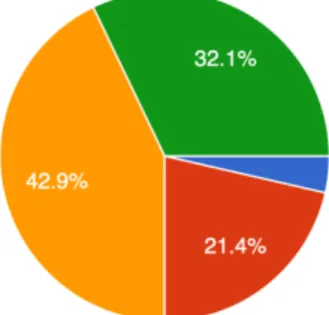
taught, students claimed their biggest difficulty with writing was related to organizing their ideas so that their text was well structured, as well as remembering vocabulary in English (appendix 1). In the same survey, when asked about what makes writing tasks easier for them, over half the students who responded said they felt more comfortable beginning a writing task when the topics were interesting and provided different aspects for them to approach (appendix 1). The answers obtained from these students mirror the anxieties outlined before, in that several factors contribute to students’ unwillingness to engage in writing.
2.2.2. Product and process approaches to writing
In order to dispute this tendency students have to dislike writing, it is important for teachers to review critically how they have been addressing this skill in the teaching process. Knowledge of the different conceptions of teaching and learning writing, and of the different methods available, together with an awareness of the diversity of materials and tasks available, can help teachers do exactly this and, at the same, improve students’ motivation for practicing and improving the use of this skill.
The first step teachers can take is to decide on the learning objectives to work on through writing. There are several different approaches and variants towards the practice of this skill but all fall within the dichotomy of whether writing tasks should have their focus on the end result of the learning process, or on the different stages of writing which promote language learning (Nunan Language Teaching Methodology 86).
A product approach to writing focuses on linguistic knowledge and, as such, writing is seen as a product that is built from the writer’s control of language and of its lexical and grammatical aspects (Hyland, Second Language Writing 3). This is not to say that content or
the final product is not important; however, the primary focus rests on how far students were able to express themselves in a fluent and clear manner (Nunan Language Teaching
Methodology 87).
Putting this approach into practice, students are usually shown a model text which is read and analyzed so as to familiarize them with its content, language, style, or other aspects. Having identified, as well as manipulated through controlled-practice exercises, the main characteristics of the text, students can produce their own text by imitating the model they were shown. From this perspective, a student who writes well is a student who follows the structural orientation given and is accurate in terms of language use (Hyland, Second
Language Writing 4).
A process approach, on the other hand, essentially focuses on the activities which are believed to lead to the development of language (Nunan Language Teaching
Methodology 87) and discourse construction. The creative process behind writing is seen as
the ideal focal point of any writing task, which allows students more freedom to consider what they mean to convey and more steps to go through so as to perfect the end product.
Of the possible variants of this approach, all include pre-writing tasks in which students brainstorm, select and organize ideas they want to address on their texts. This first instance means to encourage students to write down their thoughts without worrying about being accurate, and often allows that they work collaboratively on creating mind maps, lists or other strategies (Nunan, Language Teaching Methodology 87). When the writing stage begins, students are made aware that what they are writing is an initial draft, and that they will be given additional opportunities to improve, complete and revise their work after receiving feedback from the teacher, and even from their peers (Harmer, The Practice of
English Language Teaching 326).
These two approaches are not necessarily incompatible and may positively serve different students, depending on their individual learning styles (József 13); similarly, each approach contains weaknesses which the other mitigates (Hyland, Second Language Writing 2). A product approach towards writing allows students to be exposed to different genres and produce their own text with confidence since a model that can be imitated was previously provided. This model provides ideas that students may want to pursue in their
own writing, minimizes the potential for error, and sets a clear objective for what the end result of the text should be.
In order to write successfully, students need to be taught the basics of writing and perform tasks centered on the final product, those of which may be aimed towards more structural aspects such as coherence and cohesion, how to organize ideas into paragraphs, how to connect sentences, and so on. This allows students to apply specific aspects of language and discourse to their ideas and may help develop language as students resolve problems they encounter through writing (Harmer, How to Teach Writing 31). However, although necessary, this approach and its guided style of writing can be seen as stifling of students’ personal and creative potential, as they mimic a text and do not write truly independently (Harmer, The Practice of English Language Teaching 327).
This creative and personal potential is what process approaches claim writing tasks should arise from. Students are encouraged to collaborate with both peers and teachers in order to develop their ideas further and more can arise from brainstorming, mind mapping, or similar activities. Going through pre-writing activities can be helpful and motivating for students who feel anxious when asked to write, and the successive feedback received allows for students to reflect critically on their initial work (Nunan, Language Teaching
Methodology 88). However, a process such as this takes more time than a product-oriented
approach, and teachers may struggle at implementing it consistently due to time constraints and extensive curricula (Harmer, The Practice of English Language Teaching 326). Furthermore, process approaches constrict students mostly to narrative text types and do not allow for analyzing and learning specific genres which have fixed conventions that must be followed (Nunan, Language Teaching Methodology 87).
What approach to use depends on several factors, including students’ language proficiency, their personalities, and even the type of text to be written. Indeed, there are specific types of text that may translate more easily into students' own reality which, regardless of the approach taken, may simultaneously prove more motivating but also more limiting in terms of creativity. Likewise, a writing task that may take place only in the classroom, equally regardless of which approach it was carried out through, may allow for specific processes of acquisition that would otherwise not be available to students while also possibly being less motivating for them (Nunan, Designing Tasks 40). Finally, how
students prefer to work and how they feel about writing production should also be something to consider. For some, gradually working on a text might provide more confidence; for others, task accomplishment and the feeling of realization that comes with it might be more benefic (Harmer, The Practice of English Language Teaching 326). In my practicum, the feasibility of using both approaches in conjunction, as well as different purposes for writing, was tested.
2.3. Tasks
As no single approach can serve all students, the same can be said for tasks and classroom dynamics concerning writing activities. Writing tasks designed to follow a product-based approach may help students who need more support to produce a text, but they may also limit creativity, autonomy, and the possibility for improvement. In the same way, a task designed to follow a process-based approach may encourage more creativity, but may not be realistic for students of all levels and personalities. This means there is no ideal formula to teach and practice writing, and that teachers should be flexible and use a variety of tasks, organized through different approaches and attending to different purposes, in order to provide different students with work that suits their needs and helps them overcome their difficulties and insecurities.
Besides what approach is taken, the purpose of a writing task is a meaningful factor that can contribute to how much students are motivated to do it and to how engaging and effective it is. A writing task may be used as a tool to allow for the practice of a specific aspect of language and reinforce it in students' minds, and prove useful in doing so (Harmer,
How to Teach Writing 32). Similarly, writing is often used as an enabling activity, a step that
facilitates student engagement in a larger, ongoing activity such as a speaking one. The purpose of these writing tasks is pedagogical, as its goal is to help students build the competencies and confidence required to, at a later stage, apply these writing skills in context elsewhere (Hyland, Second Language Writing 113).
When, instead, students are asked to complete a writing task considering a specific real-world application, language is the tool that is put at their service to accomplish that task. Writing for the purpose of writing (Harmer, How to Teach Writing 34) in this manner,
for real-life situations and for specific contexts students are bound to encounter in their own lives (Hyland, Second Language Writing 113), makes clear to students that the intention of learning a language, and learning how to communicate well in this language through writing, in this case specifically, is a matter of value in and of itself.
While writing tasks vary on how they are organized according to what they are meant to focus on and the approach to be followed. Teachers must take in consideration several factors when designing and preparing any task so that it is effective and provides students both language practice and a stimulating learning experience (Hyland, Second
Language Writing 116). The tasks carried out and presented in this practicum had the
intention of providing a rich context for purposeful writing activities, as well as enough scaffolding that allowed for weaker students to accomplish their tasks successfully. These tasks, as well as their results and impressions from students, will be discussed in chapter 3.
2.4. Feedback
As a writing task, or a stage of a writing task, is accomplished by students, their focus will turn to how their work was perceived by their readers, especially by the teacher due to the authority on providing a grade. Feedback is an essential component of the learning process and written feedback specifically can have a substantial impact on how students regard their work and any issues that need be addressed in it.
There are alternatives to the practice of providing feedback in written form, as some feel that students, rather than analyzing their work and the teacher’s comments and corrections by themselves, benefit more from the immediacy of looking at their mistakes and acting on them with the teacher’s guidance in person (Harmer, How to Teach English 110). One such alternative is the face-to-face writing conference, which involves the teacher and the student discussing the work and what improvements can be made together. This alternative to written feedback may prove productive as it promotes negotiation and cooperation between both writer and reader, allowing both the teacher to further clarify ideas and concepts to students, and students to deepen their understanding of how their writing is perceived (Ferris 20).
While opinions on which is more efficient differ, both oral and written feedback are present in most ESL classrooms. Technology has played an essential role in making available new methods that teachers can rely on to provide feedback to students (Ferris 20), such as leaving comments on Word documents, e-mails, and even exchanging recorded comments. Regardless of the preferred system, what remains undisputed is that a teacher’s response to a student’s written work has a significant impact on their learning and performance levels.
2.4.1. The teacher’s focus
It is established that feedback is a valuable contribution to the development of students’ writing abilities, and grades are important as they are a specific measure for students to guide themselves by on their progression. Understanding how to provide useful feedback and fair assessment is crucial to help students improve their writing (Hyland,
Second Language Writing 212), but knowing exactly what to focus on when faced with a
written task done by a student has been considered a challenging issue.
Before the 1990s, teachers viewed themselves primarily as language teachers and, consequently, focused mostly on students' language errors and often failed to provide feedback to students based on other aspects such as organization, cohesion, coherence, creativity, and ideas. By focusing so strongly on how accurately students used language, teachers would often fail to address critical structure and content-related problems. Additionally, most teachers did not consider providing feedback and suggestions on written texts as fundamental. At that time, process-oriented approaches to writing were not well-developed and widespread, and it would not be sensible or useful to provide concrete feedback and suggestions on pieces of work which students had completed and were final. Most teachers did so only when justifying a grade (Ferris 21).
There is no denying that accuracy in writing is important because mistakes can fossilize in students' minds as they fall into habits of using incorrect language and are unable to change easily (Ferris 156). Being able to write English correctly is important for students who intend to further their education in university as they are likely to be required to produce written assignments, as well as for those who intend to begin working immediately after school, as communication becomes more and more common in English through
written means such as email. As discussed before, those who express themselves fluently as well as accurately are seen as more competent and professional and, potentially, taken more seriously and provided with more opportunities (Weigle 5).
Communicative Language Teaching proposes a positive approach to mistakes and errors, for example, noting these but not correcting, which significantly changes the way we may give written feedback, especially when considering writing as a process that requires different steps until a final product is achieved (Ferris 23). As students write, their ideas might mature and change and they may wish to add, remove or even reorganize content as their own understanding of what they are writing about progresses. If students are encouraged to be critical about their own work and improve on their initial ideas, then focusing on grammar at this point may prove a waste of time, as further revisions will likely polish the linguistic aspect of the text. More than a waste of time, premature attention to writing mistakes may affect students' ability to make significant changes to their writing styles (Ferris 23). Receiving a piece of written work filled with notes focusing solely on language mistakes may lead students to see and focus on their text as a series of sentences which must be corrected, as opposed to a unit with communicative intent (Ferris 21; Harmer, How to Teach English 120).
As process-based approaches to writing became more common, new perspectives in how teachers should address written work-in-progress emerged. Some defended that teachers should establish priorities depending on whether the work they are looking at is a draft, a revision, or the final product (Ferris 22). In this case, teachers should be selective and provide feedback based on what stage the student is at and what their critical needs for improvement are. This could mean, for instance, only providing feedback on content and organization in the first draft and addressing language mistakes only in a second version (Harmer, How to Teach Writing 110).
Another viewpoint suggests that teachers should simultaneously respond to and correct written tasks (Harmer, How to Teach Writing 108). Correcting would aim for a focus on language, by underlining misspelled words, crossing out incorrect verb tenses, or writing short comments on the margins for instance. Responding to students' work would imply commenting on what the student meant to say, providing suggestions, asking for clarification, or indicating where enhancements are needed. In this case, the teacher is not
only an examiner and evaluator, but also the audience who receives the text and provides qualitative feedback.
2.4.2. Student perception
A teacher’s reaction to a written task can shape a student’s attitude towards the foreign language. An enthusiastic response from the teacher may encourage students to want to continue developing their texts, whereas vague comments might leave students unsure as to how to proceed. Likewise, receiving work filled with notes focusing solely on language mistakes and with no acknowledgment of content can be dismaying (Harmer, How
to Teach Writing 108).
It is not easy to find a balance because, just as teachers must have concrete intentions on what aspects to concentrate on while providing feedback on students’ written tasks, students themselves, in particular at this level, will also have their own preferences and expectations on how their teachers should address the work they have done (Hyland,
Second Language Writing 41). Students who have never been exposed to a process-based
approach to writing may be confused as to how to improve their work when they already see it as the finished version. Similarly, students who are used to having their written tasks only corrected without any feedback on structure and content may find suggestions addressing content challenging. Instances in which the perspectives and expectations from both parties clash are bound to happen and teachers must be tactful when providing feedback.
Teachers must be accurate and truthful in their corrections and responses, but there is also the issue of how those will affect students, their self-esteem and motivation to continue working on their difficulties (Harmer, How to Teach English 120). Feedback which feels frank but considerate can encourage students towards writing, as it is gratifying to receive individual attention from the teacher, especially considering there are usually few opportunities for it in class. This manifestation of attention not only provides students with specific aspects they must improve and strategies they could apply in order to do so, it can also transmit encouragement and trust that they are capable of improving, developing self-confidence and a positive self-concept.
It is important that, on top of correcting students’ mistakes, teachers provide this sort of response that does not necessarily appraise students' writing but that can still teach and reinforce effective writing practices and behaviors (Hyland, “Sugaring the pill”). Students must be made aware of the negative aspects of their writing, but teachers must respond with consideration as to how their words may impact students’ morale.
Some teachers have embraced the practice of delivering feedback to students in the form of a suggestion, which allows avoiding direct critique. Instead, suggestions foster a feeling of cooperation and students can regard such suggestions as proposals for improvement. Apart from suggestions, teachers can also use hedges while appraising students’ performance levels. Hedges are linguistic devices which allow for the expression of polite uncertainty and can play an essential role in softening the force of criticism (Hyland, “Sugaring the pill”).
Essentially, having one's piece of writing seen by a teacher should not be a confidence-destroying ordeal. When students feel like their work is respected and considered in its different forms, they can accept the teacher’s feedback much more easily and can feel more motivated to improve their work, rather than just feeling overwhelmed and putting it away (Harmer, How to Teach English 122).
3. Supervised Teaching Practice
In this chapter, the result of combining the theory with the practice of teaching writing will be discussed. The context in which the practicum took place is described, and the methodology used to reflect on the issues surrounding writing explained. Finally, some of the different tasks implemented will be displayed.
3.1. Context 3.1.1. The school
The Secondary School with Third Cycle Romeu Correia is located in Feijó, a municipality of Almada, and it is the main school of the Romeu Correia cluster of schools. This school owes its name to a writer whose works often showcased social and economic issues, some of which are prevalent today as the majority of the population belongs to the lower middle class. Specifically, 84% of the population works in the tertiary sector and the majority (22%) has only reached the second cycle of basic education (Câmara Municipal de Almada).
In the 2018/2019 school year, 1673 students were enrolled in Romeu Correia. About 35% of students (596) benefited from governmental financial help with their education, receiving meals, coursebooks, school material and transportation passes either for free or at a lower cost. Additionally, a school group-wide project, Ecosol, supports students of low-income families. To further improve its students’ chances, the school underwent construction work in 2008, and now offers good working conditions and all the necessary infrastructures for the functioning of school activities. The school has 20 classrooms, all equipped with a computer and a projector, and some of which equipped with a smartboard.
3.1.2. Supervision
This practicum took place under the guidance of Professor Luz Baião. Upon our first meeting, it was determined that both student-teachers would spend about twenty hours in the school per week, according to NOVA FCSH Practicum regulations. In the first term, these hours were spent shadowing Professor Luz Baião. At first, this meant mostly observing her
lessons; later, we would take an active part in her class direction, the Citizenship subject, as well as participate in parent/teacher conferences, department meetings and end-of-term meetings for each class.
Besides observing, both student-teachers were assigned one class in particular which they would accompany more closely and eventually teach in the second and third terms. As such, I was assigned class 10th B1. It was also agreed that both student-teachers would
spend some time with 3rd cycle level teachers and their classes. I was assigned the class 7th G
under teacher Edna Guerreiro.
3.1.3. Class 10th B1
This was the class with which I worked the most throughout my practicum. This Sciences and Technologies course class was composed of twenty-eight students, sixteen boys and twelve girls, most of which fifteen years old as expected in this level. One student had been repeating the 10th year because her chosen course did not correspond to her
initial expectations and, by the end of the year, seven more students would either fail or choose to change courses as well. Nevertheless, 28 students attended the English classes regularly, as English is a mandatory subject in every course.
This was a mixed level group, with the majority of students being able to understand spoken English but having difficulty in participating in English in class. However, even those who seemed more comfortable with the language were often very quiet and reluctant to ask questions or participate. It did not seem they were uninterested in the subject, as they paid attention and participated when prompted. With time, I understood that these students were simply not used to participating actively during lessons, and did not know exactly how to do it. They seemed to be very immature, and equate being silent with being well behaved.
Concerning student behavior, there were different opinions among the teachers. In their English lessons, whether they were being taught at first by Professor Luz Baião or, later, by myself, students were orderly and respectful. The remaining teachers, however, often reported their discontent with the students’ playfulness during lessons and inappropriate attitudes. Additionally, in all subjects including English, students often arrived
late, a habit which systematically prevented teachers from beginning their lessons on time and undermined the quality of their lessons as they would be constantly interrupted by students entering the classroom. At the end of the second term, the class had made considerable improvements to their behavior, though punctuality would remain an issue until the end of the school year.
3.1.4. Class 7th G
This group was composed of twenty-seven students, twenty boys and seven girls, with ages ranging from eleven to sixteen years old. Several students had been held back one or more years during their schooling, and four were repeating the seventh grade.
I only began work with these students in the second term and had very few lessons with them, but immediately understood that this was a very heterogeneous class in many different ways. While most students seemed to have positive results on their tests, when questioned, they did not consider themselves good at the subject. Not all students could participate during lessons in English, some because they did not possess the required vocabulary to do so, others because they lacked confidence; a small group did not manage to follow the tasks along at all without extensive simplification and even use of L1 from the teacher.
Despite this, students were very receptive to my lessons. They were curious as to who the people observing their lessons were and, as I began teaching and explained to them what a student-teachers was, they seemed to want to help me so the lessons would go well. As much as possible, students cooperated in the activities suggested and showed interest in learning.
3.1.5. Other classes
Besides the two classes I taught, I observed many others and occasionally taught or assisted Professor Luz Baião or my colleague in their own classes, in particular 11th A3 and
11th B1, having taught one lesson by myself to the latter. Teacher Mónia Martins, another
well, specifically 9th B and 11th TAI2. Although I did not work as closely with these groups as I
did with 10th B1, my observations in the rest of this report will include my experience and
impressions with these classes as well.
3.2. Methodology
The primary objective of practica in teaching courses is for teaching student-teachers to apply the scientific, pedagogical, didactic and methodological knowledge they have acquired during the first year of their Master’s to the reality of teaching actual students with varying needs, behaviors, motivations and learning levels. When faced with a real school context, the links between theory and practice become clearer for those who are new to teaching. New challenges which had not been anticipated and can only be perceived in a classroom become apparent as well.
Considering these characteristics and objectives, a cyclical process of action research (Nunan, “Action Research”) in order to address the issues surrounding writing in English as a second language was carried out. Action research is “a form of self-reflective enquiry […] in order to improve the rationality and justice of [one’s] own practices, their understanding of those practices and the situations in which the practices are carried out” (Carr & Kemmis 162). This methodology is often used in education, where teachers act as researchers as they identify problematic issues to explore as they teach. Because it allows researchers to autonomously act on their findings and results, teachers who use this method are able to critically analyze their own practice and solve specific problems in their own classrooms.
The first step into this method through a practicum, naturally, would be to observe other teachers perform. Observing more experienced teachers allows student-teachers not only to witness someone else's actual implementation of the theory they've learned, but also to have someone guide them through the planning, teaching, and assessment of their own lessons. Following this process, new teachers can experience a silent phase in which they reflect critically on what they have studied and on what they are observing, and adapt these ideas to how they intend to teach.
It became apparent very quickly that observing and taking notes of all the complex processes that occur in a classroom is a challenging task. As much as possible, Professor Luz
Baião would let us know when she would be working on an activity related to our research topics, and that made creating observation tasks (Wajnryb) and taking very specific notes easier. Activities and tasks in which writing was produced were observed, registered and then analyzed, so that I could try potential solutions for improving writing production during my supervised teaching to take place during the second term.
3.3. Pedagogical activities
As the second term approached, the time came to begin planning and applying my own lessons considering theory and the curriculum to be followed. The lesson plans and activities implemented were always discussed with Professor Luz Baião prior to implementation in class. The tasks are addressed in the chronological order in which they were carried out, and any students referred to are named through initials.
3.3.1. Writing feedback
Feedback was a type of written homework that Professor Luz Baião had been implementing in her assessment of students for some years. For this homework, students would write and e-mail us a document in which they would summarize what happened in a specific lesson – a lesson which they would choose themselves – reviewing what was learned and explaining any key concepts, as well as provide their opinion on the lesson, justifying what parts or tasks they considered the most – or least – interesting and productive.
Figure 1 is an example of a process-based writing task, in which students would write their feedback and receive a grade, but then have the opportunity to improve their work according to the feedback received, and the grade would also be reviewed. Occasionally, students were asked to write a third version of their homework. Because students were allowed to alter and improve their work, many mistakes or shortcomings were not fixed by the teacher. Rather, suggestions were given so that students would correct and develop the work by themselves.
Fig. 1. An example of a piece of feedback sent in by student NT, together with my correction and response
On the student’s text itself, occasionally, mistakes were corrected by the teacher and highlighted in green so the student would know something was changed for them. This was used for language mistakes that the student might not be able to correct easily on his/her own, such as prepositional verbs which had not been revised yet, as seen in figure 1. Red highlight was used to indicate that something was wrong, content or form-wise. When there was a word or punctuation missing, a red question mark would be added as well. In order to clarify what the student might have to address, lateral comments were added.
Finally, there was a comment by the teacher with a more personal response designed to improve specific writing habits which seemed to be lacking in the text, but also to improve motivation and encourage students to continue the writing process. At the end, there would be the qualitative grade for that work, and students could follow the written
production grading scale (appendix 2) – which had been made available to them at the beginning of the school year – to ponder the different parameters being considered to help them improve their English, as well as their final grade.
The last grade, the one received after the improved version or versions of the homework were seen by the teacher, would be the only one considered. Working on their writing not only helped students develop their language skills, but it also served this more practical purpose as well. For students who did all their homework and made use of the possibility to improve, this could translate into one more point in the end-of-term grade.
There was also an ICT component to this homework as there were several guidelines students had to follow when writing and submitting their work. Files had to be named according to a model, and so the first student on the roster of class 10th B1 would have to
name their first feedback “1_10B1_feedback1”. There were specific text formatting guidelines too, concerning text alignment and spacing as well as font type and size. While this is not directly associated with writing practice, it is important that students are taught concrete ICT skills and become comfortable with the more technical aspects of writing on a computer. This is a transversal competence to all subjects.
This type of work was important in more than one way. It allowed us to evaluate and assess every student’s written expression as well as their respective evolution throughout the school year. Opinions from students on this type of work were divided, however, as can be seen in this question from a survey (appendix 1) taken at the end of the second term.
The majority of students (twelve) considered writing as an assignment, something they had to do to pass the subject. Six students also replied that these writing tasks were either too difficult or too boring. This is not surprising as writing is a time-consuming and arduous task, and many students lose motivation or simply do not understand the point of such tasks when they do not see immediate results in their fluency or accurate use of the language.
One student replied that he considered these tasks a waste of time. This student had never written a piece of feedback until that point – and he would never do so until the end of the year – so, at the beginning of the 3rd term, I spoke to RP privately and asked what sort
of tasks he would rather do, as his opinion might help and give me better ideas for the future. He answered that he simply did not like the course or the school he was in, and that he would be changing to a professional course in a different school the following year.
More encouragingly, nine students recognized that this sort of work was a good way to practice and improve their English. Nearing the end of the third term, two students, LR and RC, came to speak to me about feedback they had written. They wanted to know how the negative grade they had both received on their work might affect their final grade. I explained how, and expressed my surprise at how short and rushed their work was. Until this point, these two students had been gradually improving their grades in this type of work, and so they justified their negative grades with lack of time since they had many tests and assignments the week the feedback was due. I showed my disappointment but understood their situation and asked, regardless of this particular result on this piece of feedback, whether they felt this type of work had helped them. They both expressed that they had never written so much in English before or practiced the language so much in class, and believed their language skills had improved significantly since the beginning of the year. RC added that she felt more motivated to write and rewrite her work because the comments she received were so detailed and personal. In retrospect, this makes sense, as the different stages that constituted this type of process-based homework was the one in which I provided students the most individual attention. Besides, the feedback provided to their work addressed all language mistakes but also acknowledged students’ ideas. Like RC, the majority – though not all – were often eager to take the opportunity to improve the second version of their work.
Fig. 3. Survey question to 10th B1 on improving a text
The majority of students (eighteen) considered the process of rewriting and improving their work useful because it allowed them to get better grades. Five others would think the same but justify how it helped them practice English. Grades are important for students as they are a form of validation of their work, as well as considered for their future in the case of those interested in pursuing their studies in higher education.
Five students did not think rewriting their work was useful, four of which because they often did not understand how to improve their work. This concerned me in particular as it showed that the feedback provided was not being as efficient as it could be. Feedback which does not help students improve is not only a waste of time as it does not serve its most basic purpose, but also potentially damaging for students who may feel as if they are unable to improve due to their own inability.
At the beginning of the third term, I privately spoke to student SS, one of the four who had responded she did not understand how to improve her work, and asked her how she thought I could be clearer when trying to help students with my corrections and responses. SS said that she usually could not understand the red highlights when there was no accompanying lateral comment explaining what was wrong. She added that, even if the comments were included, they were sometimes too vague and she left her mistakes as they were because she could not understand what to change. I went and looked more closely at SS’s pieces of feedback from the first term and found some different instances in which a weaker student might feel at a loss on how to improve. The following are two examples.
We also learned what is culture shock.
Lateral comment: It’s not a question; so the structure is S + V + O
I would also like to follow the area of science in the future, being a more
complicated.
In both cases, the mistakes were highlighted in red. The first one shows a grammatical mistake and included a lateral comment explaining the correct sentence structure. The second example shows a fragmented sentence that neither Professor Luz Baião nor myself could understand, but no lateral comment. In these two examples, both with or without a comment, SS could not understand what was wrong with what we highlighted for her and was unable to improve her writing.
With these examples and what she had said in mind, I tried to make my feedback more detailed. The following is an example from SS’s last feedback on the third term.
Teacher Ana asked us what would be the best title for that table (1) and we ended up coining (2) that it would be the media.
Lateral comment 1: This structure is for a question, but you are declaring what was said. Look at this example and try to correct your sentence: “What is your name?” She asked me what my name was.
Lateral comment 2: “Coining a term” means you invent it. Try and choose a
better word here.
The feedback provided here was more comprehensive and intended to guide the student more closely towards how to improve. It was also worded more carefully with suggestions and hedges considering the conversation I had had with the student. It is worthwhile to note that SS repeated the same mistake she had made in the first term regarding sentence structure when reporting a question, which means she did not learn the
grammatical rule in that instance. However, with more specific comments, as shown above, she was able to correct herself and achieved her highest grade on a feedback assignment.
Providing very specific feedback and addressing every correction made may not be ideal. Students may feel disheartened as they look at their text covered in notes from the teacher. The opposite may also happen, in particular for stronger students who may not be challenged enough as they go through the teacher’s extensive notes as if through a list.
Fig. 4. Survey question to 10th B1 on feedback preferences
Students have different preferences on how teachers should correct and respond to their written work. The majority of 10th B1 prefers having every aspect pointed out to them,
but it is important to consider the remaining fifteen students who either prefer the teacher to focus on helping them improve their content and leave minor language mistakes for later or, in contrast, focus on language and leave the content exactly as it is. A balance must be found, and this is easier in cases such as the one described, in which the teacher can get to know their students and use strategies adapted to their specific needs.
This type of work was helpful in that it provided me insight into my students’ strengths and weaknesses, and it also allowed me to assess the impact of my own work, both in terms of content and methodology. One of the points students had to address on their feedback was whether they considered the lesson useful and interesting and what tasks were more productive for their learning.
Overall, I saw this class as a really helpful one, since we were able to explore such different sides of something as simple as technology and learn about the way people used to live before inventions like mobile phones and computers. If there was something I could add to this class, it would be a discussion about whether the world would be a better place with or without technology.
On a lesson about technology from the beginning of the second term (appendix 3) which focused primarily on oral interaction, feedback such as this by student LP provided important information on what motivates students. While not all will enjoy the same topics and the same strategies employed by the teacher, recognizing and acknowledging how they prefer to learn and valuing their experiences can influence their attitude towards the subject and, ultimately, their performance and results. Not only that, this type of written activity creates an atmosphere of cooperation between teachers and students and leads to a more positive dynamic in the classroom.
Many students like LP expressed that they value discussing topics orally during lessons or in small groups. Students appreciate being challenged and questioned on their opinions and beliefs and provided with opportunities that make them reflect on how they see the world around them. This is beneficial for the development of critical thinking skills and will also bring advantages for any writing tasks that follow the discussions.
Students find writing easier when they consider the topics interesting and easy to approach, and students from the class 10th B1 also cited thinking of what to write about as
their main difficulty. Exposing students to authentic and relevant materials during lessons and engaging them to think about and to discuss issues in depth makes it so writing becomes more effortless. When students enjoy lessons and feel like they were designed with relevant topics and discussions that require their opinions and needs in mind, they may work harder and be more persistent in developing this skill. A writing task after a lesson such as this is likely to wield more positive results.
Fig. 6. Survey question to 10th B1 on the obstacles of writing
This sort of homework fell perfectly within the topic of this report, and it provided me ample opportunities to see how students struggled with this skill, how certain methodologies could facilitate its development, and how efficient the feedback techniques I learned about could be. The majority of students improved their English skills, throughout the year – quantitatively considering their grades – and this habit of consistently writing and rewriting a text every month certainly provided students with enough practice that contributed to their progress.
3.3.2. Writing an informal email with slang
This writing task was done as homework following a lesson (appendix 4) on the topic
people in the global era (Ministério da Educação 26). Following the discussion about how
the English language has been changing because of technology, students were taught common abbreviations, acronyms, and informal English expressions. Students seemed to understand that, with technology and the media, the way they talk amongst themselves is more visible now, and that even expressions which are used mostly regionally in English-speaking countries have become global because of how widespread communication is. Students shared several expressions they knew and learned others.
At the end of the lesson, students were asked to write me an email using the vocabulary and expressions they learned or shared in class, telling me about their day, giving me their opinion on the day’s lesson, or anything they felt was appropriate. Two examples of the emails received follow.
FYI, my feedback is almost finished. IDK if it's ready tomorrow but I'll try to send it ASAP. BTW, I really liked the class today.
Hello teacher, I loved today’s class, it was cool beans! However, I think that I’m going to miss the next class because sometimes it is dry, ahahahaha jk, ofc I won’t do it, I love learning English and every language. Tbh, I think that I’m going to start learning Chinese asap because imo it is super cool and yolo. Bye teacher, cya on thursday!
At the end of the following lesson, the messages sent by students MB and JP, and others, were projected and read aloud. It was a lighthearted moment in which students got to show their sense of humor and laugh together with the teachers. Some students who had not sent me the email asked if they still could; they were told those emails would not be read in class but that I would be happy to read and reply.
The fun aspect of the task is clear as students would not usually communicate with their teacher using this register and vocabulary, and perhaps not even with each other to the same extent as they would in their native language. There was no feedback provided for
these texts, and no chance to improve the work. There were no grades provided; the homework was marked only as either sent in or not. This writing activity was meant solely to allow students a unique opportunity to use vocabulary that they otherwise might not and have a simple task in which they used writing for fun.
3.3.3. Writing a resumé
This activity was not designed or implemented by myself, but I include it here because I got to observe and interact with students as they accomplished it and, thus, got some insight on how they worked in pairs and small groups and on how they perceived it to be important. This task was done during a set of two lessons taught by my colleague student-teachers Ilina Cardoso to the 11th B1 class, under the topic The World of Work
(Ministério da Educação 28), in which students were asked to write a cover letter and a resumé considering a job offer she had made available to them.
Having discussed what they knew about job seeking and the necessary steps and documents, students were shown an example of a cover letter and a resumé, which were analyzed so as to clarify characteristics of each document. Students identified the information and register used in the letter, as well as the layout and aspects listed in the resumé, speculating on the reasoning behind each component, why it might be relevant for an employer, and noting how the candidates expressed themselves to increase their chances of being selected.
Students were then shown an advertisement they were to apply for in groups of four. Together, they invented a candidate and discussed what his/her background would be. Afterwards, students started writing, two of the students focusing on the cover letter, and the other two on the resumé. They were allowed to use their mobile phones for vocabulary and any other information they needed. As they worked, teacher Ilina Cardoso, Professor Luz Baião, and myself went around the room providing help and offering suggestions.
The first part of the task posed no problem for the students. Every group enthusiastically created a plan with bullet points describing their character. These lists were very general and unpolished, as they were only meant as guidelines for the cover letter and resumé to be in accordance, and would not be handed in for formal evaluation. Students
did not seem to need help but, as I approached, asked me whether I thought their ideas for the character were good or relevant for the job vacancy shown.
As they began to work in pairs, students who were working on the cover letters seemed to have some difficulty structuring their text, and most questions regarded how to move from one topic to another while still making the letter seem coherent while following their writing plan. As for the pairs who were working on the resumé, students’ questions focused mostly on how to phrase their ideas more concisely and formally, maintaining cohesion.
This writing task feels close to a real-world scenario in which the vast majority of students will find themselves in a close future. Preparing students to solve realistic tasks that have relevance to their lives not only makes them more motivated to work, since they can see the point of the tasks, it also brings benefits that go beyond language learning. I asked to read any feedback written by students on this lesson, and it appears students understand this. In her feedback, student ML realizes the importance of learning real-life skills in school and she mentions that it was useful to create a cover letter and a resumé rather than just learning about them as well.
To sum up, I believe these lessons were very useful, because instead of just saying what we should do, we’re given concrete examples. It’s also worrying to think most people don’t learn these basic things at school and they’re forced to learn it the hardest way, when they need to apply for university or a job. In my opinion, the education system should focus more on these practical aspects of adulthood, not only related to the world of work but also related to taxes and all those things.
The objective of this writing activity was to allow students to write for a practical, specific purpose, using formal English as a tool to achieve that task. In what concerns approaches, I found very interesting that the task was neither fully product nor process-oriented. Students were shown a text which they analyzed and mimicked when writing their own. Although this may somewhat suppress creativity, it was a logical way to proceed as certain text genres, such as these specific documents, have explicit rules or conventions they must follow. There was collaborative and creative work as well as all members of the group had to agree on the ideal candidate and on different ways to make them stand out.
While students presented their candidate and respective work in class, teacher Ilina Cardoso took notes using the oral presentation grading scale (appendix 5). Then, students received verbal feedback from the three teachers. While the presentation itself was assessed, students were also told they should type their work in the computer at home and send it in. Their resumés and cover letters would be assessed following the descriptors for written production (appendix 2) and, afterwards, students could improve it based on the feedback they received.
3.3.4. Writing a poem
For World Poetry Day, celebrated on the 21st of March, I was allowed to organize a
school-wide activity with different tasks that different English teachers could implement with their own classes (appendix 6). I decided to make this activity as inclusive and open as possible so that teachers of different cycles and levels could participate in the way that they considered most suitable to their students. Some of the tasks suggested were reading and analyzing poetry in class or reciting poems expressively for different audiences in the school, among others. Activities which focused on written production were suggested as well, in the form of having students write a poem on whatever topic was currently being approached in class, for instance, with the help of written or visual prompts.
There were no specific guidelines on how to implement these tasks; I wanted teachers to be free to implement them through a product or process-based approach, and to assess the results as they considered suitable. That I am aware of, no English teachers decided to have students produce poetry on their own; rather, teachers preferred to commemorate the day by including the reading of a poem in their lessons, either one chosen and shared by me, or one that they knew of themselves.
Some teachers, however, decided not to participate at all. One teacher explained that she did not have time to spare from her lessons as she was already behind considering how close the end of the term was. Using poetry or any literature in general when teaching English as a second language still tends to be considered difficult and time-consuming. However, there is flexibility in how teachers may address the different topics in the
curriculum, as well as a great variety of literary texts suggested for that purpose, but teachers tend to resist the opportunity to explore literary texts in EFL.
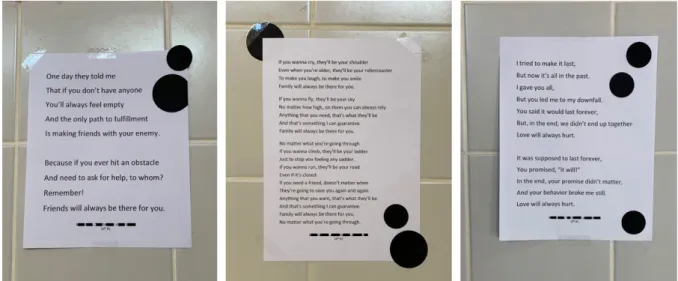
Fig. 7. One of the poems sent to teachers and displayed in the school, “Robot Boy” by Tim Burton
The lesson (appendix 7) that was put together as a preparation for World Poetry Day for 10th B1 came in the sequence of a discussion on values and ethics arising from the topic
The media and global communication (Ministério da Educação 26). It began with students
watching a video created for a poem entitled People need people by Benjamin Zephaniah. Not knowing the name of the poem and with the audio turned off, students speculated and guessed on what the images could mean. Only then did they watch the video again but with the poem being recited. Students easily interpreted the poem, contrasting their new ideas with the ones they had before listening to it, and associated several values with the text.
Students were then asked to write their own poems in small groups. After choosing a value they wanted to reflect on, students were to write a poem in which they either described or illustrated that value in some way. There were no guidelines given on how long the poem had to be or whether it had to rhyme. Students were also allowed to use their
mobile phones for vocabulary. Then, Professor Luz Baião, teacher Ilina Cardoso and I went around the room as the groups worked on their poems.
Finding a value to write about seemed easy for them, but students showed great reluctance when beginning to write the poem. They complained that they had no ideas and refused many suggestions from their group members because they felt their poems would not be good, which seemed natural considering that they were not used to reading, discussing, or writing poetry in English. They overcame this reluctance with some encouragement and all groups had a finished poem by the end of the lesson.
Writing tends to be seen as an individual process, but working this skill through pair or group work can be efficient as well. There are more people thinking and contributing to the task and that will mean there are more ideas on what to say, more options on how to begin, and less stress overall in addressing the writing activity. This was ideal for a creative activity such as writing a poem, which can be challenging enough in one’s own native language, let alone in a second language.
Feedback was provided as students wrote and teachers reached their groups, and the work was corrected and improved immediately. Most issues present were language-related; otherwise, being such a creative and free task, there was not much in terms of content that could be considered wrong. Suggestions were given on how to make certain sentences flow better and more appropriate vocabulary was recommended but, for the most part, students initial choices and approaches prevailed.
This poem is about A little blue bird That made his way out
From all the bad things he heard. In an endless stray
So fast, as if in a race, The bird flew far away With a smile on his face.