Booklet 1 of 2
A Work Project, presented as part of the requirements for the Award of a Master Degree inManagement from the NOVA – School of Business and Economics.
Value Creation Wheel Applied to Jerónimo Martins
Distribuição de Produtos de Consumo and Whymob.
Ana Catarina Duarte de Mendonça, 2000 Ana Filipa Caldeira Farinha Malheiro, 2462
Miguel de Sousa Martins Paulino, 2445
A Project carried out on the Master in Management Program, under the supervision of: Professor Luís Filipe Lages
© This document is confidential. This document presents the Value Creation Wheel Framework and cannot be distributed. This tool cannot be applied in any work without the
Abstract
This thesis focuses on the application of the Value Creation Wheel (VCW), a dynamic tool that enables companies to solve problems and create value while encouraging the participation of multiple stakeholders, both internal and external (Lages, 2016).
First, literature is revisited to gain insight about the concepts being explored in this thesis. Then, it is introduced DIANA, VCW’s theoretical framework, and its main contributions to the fields of strategic management, innovation management, and value creation. Finally, are presented the findings from the application of TIAGO VCW’s practical tool at Jerónimo Martins Distribuição de Produtos de Consumo (JMD) and Whymob.
Keywords: Innovation; Paradoxes; Problem-solving; Value Creation Wheel.
Index
Literature Review: Introduction 5
1. Value and Value Creation 5
2. Value Creation Theoretical Views 6
3. Value Creation & Co-Creation, Customer and Stakeholder-Orientation 7
4. Value Creation Wheel Framework 9
4.1. TIAGO Framework – The Practical Application Tool of VCW 9 4.2. Value Creation Wheel and Organizational Innovation 11
4.2.1. Defining Innovation 11
4.2.2. Value Creation Wheel as an Innovation Promoter 12
4.2.2.1. Induce Solutions 13
4.2.2.2. Induce Filters 14
4.3. Value Creation Wheel Challenging Paradoxes and Trade-Offs 15 4.3.1. Exploring Paradoxes and Trade-Offs 15 4.3.2. Value Creation Wheel as a Tool to Overcome
Paradoxes and Trade-Offs 15
4.4. Value Creation Wheel Compared with Other Methodologies 17 4.5. Value Creation Wheel as a Multipurpose Tool 19
5. TIAGO Framework Applied to Real Challenges 19
Case Study 1: “Jerónimo Martins Distribuição de Produtos de Consumo: Expand
Case Study 2: “Jerónimo Martins Distribuição de Produtos de Consumo: Growing in
HoReCa Channel using the Value Creation Wheel” 42
Case Study 3: “The Value Creation Wheel Applied to a Technology Company in the
Healthcare Sector: Internationalization of Whymob” 65
Literature Review: Introduction
This literature review starts by exploring the concepts of value and value creation as these are the main topics underlining this thesis. Afterwards, it is presented the view of value co-creation, which emphasizes the collaboration of customers and stakeholders in the process of value creation. Then, the Value Creation Wheel (VCW) framework is introduced. Underlining this topic, it is explained how VCW is a tool that promotes innovation and breaks rigid barriers, paradoxes and trade-offs. Finally, VCW’s utility for society is highlighted as well as the outcomes of TIAGO, VCW’s practical framework, application to real challenges.
1. Value and Value Creation
The concept of value creation has been long studied in the academy and it is central in strategic management literature. Adam Smith (1776) asserted that value “has two different meanings, and sometimes expresses the utility of some particular object, and sometimes the power of purchasing other goods which the possession of that object conveys” (Smith, 1776: 26). The first, Smith (1776) named as value in use, and the second as value in exchange, pointing out the argument that value is subjective and depends on each individual’s definition according to what is best for them. As such, companies should thrive to offer their customers the highest value possible and this should be the goal of any generic strategy. Porter highlighted the importance of value in customer decision-making, as value is defined by consumers’ willingness to pay for a firm product/service (Porter, 1985).
Bowman and Ambrosini (2000) follow the distinction made by classic economists between use value and exchange value. Accordingly, use value is subjective, while exchange value refers to the monetary amount paid in the transaction for the use value created.
The term value is multifaceted and often appears interrelated with value creation and value appropriation (Lepak et al., 2007). These authors claim that the confusion surrounding the topic
is motivated mainly by three reasons. First, since value is a multidisciplinary concept, it originates diverse approaches. Second, there is no agreement about the process that allows value creation. Finally, there is also no agreement about how value is captured by the different value creators. As such, Lepak et al. (2007) define value creation in its different levels as follows: “Value creation depends on the relative amount of value that is subjectively realized by a target user (or buyer) who is the focus of value creation - whether individual, organization, or society - and that this subjective value realization must at least translate into the user’s willingness to exchange a monetary amount for the value received” (Lepak et al., 2007: 182).
Based on conducted research, value is defined in this thesis as the benefit derived by stakeholders, being generated through collaboration, innovation and management processes that aim to leverage a firm’s competitive position in the market.
2. Value Creation Theoretical Views
Over the years, different frameworks have been used to explore the concept of value creation. Since “value is not absolute, but relative, and may be viewed differently by different parties in differing situations” (European Standard, 2000: 12), in this section, three theoretical views are presented.
The Value Chain framework (Porter, 1985) addresses value creation at the firm level by identifying the firm’s primary activities, which contribute directly to value creation, and also the firm’s secondary activities, which are the ones that indirectly contribute to value creation. The value chain explores total value, consisting of value activities, which should be isolated as they are the building blocks of competitive advantage. Accordingly, value creation is related with the configuration of a firm’s activities, depending on the firm’s ability to differentiate its activities, to perform activities at a lower cost or to better satisfy buyers’ needs.
Another perspective for value creation was brought by the Resource-Based View (RBV), developed by (Barney, 1991), who argued that a firm’s unique bundle of resources and capabilities can lead to value creation. Firms’ heterogeneous resources, which met the so-called VRIN attribute: valuable, rare, inimitable and non-substitutable (Amit & Zott, 2001; Eisenhardt & Martin, 2000) constitute the basis for competitive advantage.
The Dynamic Capabilities Approach (Teece et al., 1997) is an extended version of the RBV theory that takes into account market dynamism and change and thus, focus on the value creation role of managerial and organizational processes, such as product development, strategic decision-making, knowledge creation and capabilities transfer (Eisenhardt & Martin, 2000). Such organizational embedded processes allow firms to build up valuable resources over time and are aimed to create flexible, agile and efficient outcomes, while seeking coordination, integration, reconfiguration or transformation (Teece et al., 1997; Eisenhardt and Martin, 2000), or learning (Smith & Lewis, 2011).
3. Value Creation & Co-Creation, Customer and Stakeholder-Orientation
The aforementioned frameworks address value creation at the firm level, being concentrated in how firms sustain their competitive advantage while creating value to customers (Gummerus, 2013). More recently, the concept of value co-creation has been introduced, underlining the significance of the collaboration between customers and firms in the process of value creation (Möller & Rajala, 2007; Prahalad & Ramaswamy, 2004; Vargo et al., 2008). According to Normann and Ramirez (1993), companies should consider the Value-Creating System as a whole instead of focusing only on individual actors. Parolini (1999) describes the Value-Creating System (VCS) as a group of different activities, interrelated and performed by the different actors, which create value for customers. Möller and Rajala (2007) complement Parolini’s definition and consider that business nets, where customers are co-producers of
value, building up on the firm’s capabilities are responsible to continuously renovate the potential of the firm’s resources. Customers are the ones in the network that define the value of the offer and in this sense, value is subjectively experienced. Under these new visions, value creation is an interactive process where “value, rather than being added during a separated and non-interactive production and consumption process, is co-created, realized, and assessed in the social context of the simultaneous production and consumption process” (Echeverri & Skalen, 2011: 353). As such, the concept of value chain has been replaced by the concept of value net (Kahkonen & Lintukangas, 2012; Möller & Rajala, 2007; Normann & Ramírez, 1993; Payne et al., 2008).
Strategic networks englobe organizations’ stakeholders, who establish different relations with the firms and have different demands. Stakeholders can be understood as groups or individuals, who in their interaction with the organization create and capture value (Garcia-Castro & Aguilera, 2015).According to Stakeholder’s Theory, an organization’s competitive advantage and performance depends on its capacity to address both the demands and resulting externalities of their distinctive stakeholders (Schenkel et al., 2015).
At this point, it is important to distinguish between value creation and value appropriation, since “the total value created by a firm must also include the value captured by its stakeholders” (Bowman & Ambrosini, 2000; Garcia-Castro & Aguilera, 2015: 1). Since the different players possess heterogeneous resources and capabilities, value created is distinct to each group. Total value created by a firm was defined by Brandenburger & Stuart (1996: 8) as “willingness to pay - opportunity cost”. However, while value creation results from the different relationships of organizational members, value capture depends on the perceived power of relationships between economic actors (Bowman & Ambrosini, 2000).
4. Value Creation Wheel Framework
In 2016, a new framework regarding value creation was introduced, the Value Creation Wheel (VCW), developed by Lages (2016). This methodology results of two decades of cooperation and research with companies and academics worldwide. The aim of the VCW is to deal with a variety of complex choices by growing, creating and capturing value.
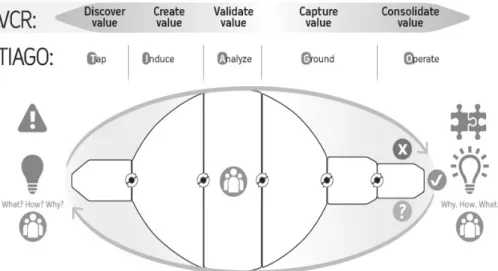
The VCW can be divided into two major components: DIANA and TIAGO. The DIANA theoretical framework (see Appendix 2) presents a wide view of the theory, which provides a comprehensive approach for dealing with global and local problems. As such, DIANA is based on theoretical rationales and includes the guidelines for the implementation of TIAGO, the practical framework. The development of DIANA framework was based on practical cases, both successful and unsuccessful, and on the analysis of the literature. The TIAGO component is adaptable to each individual case, thus providing a more specific and tailored approach for the VCW user. Within the TIAGO framework (see Appendix 3), the Value Creation Radar (VCR) is a simplified version of the VCW, ideal for projects with short time frames and/or limited financial and human resources. For instance, the VCR can be used to easily locate the right market for a foreign expansion. If further research is needed and more resources are to be allocated, other VCW cycles can be conducted and the 15Is of Innovation can be implemented. Within the five TIAGO phases, the 15Is comprise a wide range of elements (e.g., filters, frameworks, concepts, among others) collected, developed, and created during the last two decades while building on the experience from various industries (Lages, 2016).
4.1. TIAGO Framework – The Practical Application Tool of VCW
TIAGO, the more practical instrument of VCW, is composed by five different phases. The first one is denominated as Tap and its main goal is to define the research question to be examined. At this stage, organizations review and contextualize the main challenges to be addressed. In
order to gain insights about the specific problem, it is critical to define and characterize the market space, to search and to understand subjacent trends, targets and value propositions. This stage provides input to the next stages and allows researchers to “amass knowledge of the domain of interest and related and unrelated domains” (Andrews & Smith, 1996: 175). The duration of this stage is highly variable as research questions might be clearly defined at the beginning or might evolve with the progression of the analysis made.
The second phase is called Induce and is divided in generation of ideas and generation of filters, collected through different processes and involving multiple stakeholders. The ideas are the solutions proposed to answer to the problem in hand, while the filters are the criteria to apply in the selection of the ideas. In the process of ideas and filters collection, the framework suggests the application of the Poker Method (see Appendix 4), developed by Lages and Hartmann (Lages, 2015). This method allows participants to validate, review, multiple and/or eliminate ideas and filters suggested, being a tool to refine input and ideas/filters created. In the Analyze phase, the third phase, the key decision makers of the company play a fundamental role in the overall framework process as they classify the solutions and filters coming from the previous phase (Lages, 2016). This classification impacts the final outcome as it “depends on the hierarchy and control systems within the organization, and the number of internal and/or external stakeholders involved in the process” (Lages, 2016: 3). At this stage, the Poker Method is crucial, as key decision makers are the ones with the power to decide the final ideas and filters. By the end of this phase, key decision makers determine ideas’ potential and rank filters from the most to the least important (Lages, 2016).
The next stage of the framework is called Ground phase. At this stage, the Value Creation Funnel (VCF) is created. The VCF consists on a practical instrument composed by the ideas and ranked filters with the highest potential. Its main goal is to narrow the set of potential
allows to “identify the solutions with the highest potential in a particular context” (Lages, 2016: 6). It is also important to state that the VCF should be flexible, meaning that it should “give open space to consider the human factor, emotions, ideas, solutions, and strategic filters” not shown by the top-managers in the previous stage (Lages, 2015: 6).
The final phase of the TIAGO framework is the Operate phase, where key decision makers should decide on a “Go, No-Go or Check” basis about solutions’ future operationalization (Lages, 2016). If they decide to Go with the presented solution(s), an implementation plan should be designed accordingly.
4.2. Value Creation Wheel and Organizational Innovation
4.2.1. Defining Innovation
To better understand the capabilities of the VCW it is important to relate the concepts of innovation and value. According to Schumpeter’s Economic Development Theory (1934) “innovation is the source of value creation” (Schumpeter, 1934: 497). Fried (2005) and Drucker (1985) also associate the two concepts by stating that “innovation can be defined as the application of new ideas to the products, processes, or other aspects of the activities of a firm that lead to increased value” (Fried, 2005: 4). However, for some academics the relation between innovation and value creation is not so straight. Besides, Daniel and Klein (2014) claim that “the concept of innovation remains abstract, ambiguous and diffuse”, being impossible to measure the real impact innovation has in value creation (Daniel & Klein, 2014: 23).
Innovation concept has evolved over time. More than ever, innovation is seen as a requirement that must be fulfilled by modern organizations (Daniel & Klein, 2014). It determines firms’ position in the market, being considered by Dogan the most powerful competitive weapon (Dogan, 2015). Accordingly, the importance of management innovation has been increasing, since it is considered a resource that allows firms to introduce novelty raised by innovation.
Moreover, firms are changing from a close to an open innovation system, which supports “that companies can leverage the knowledge generated externally to improve their innovation performance” (Petkovski et al., 2015: 93).
Another important question that arises when discussing innovation is related with its sources. According to Schumpeter (1934), “introduction of new goods or new production methods, the creation of new markets, the discovery of new supply sources, and the reorganization of industries” are all sources of innovation (Schumpeter, 1934: 496). Nonetheless, new sources of innovation have been arising and recently creativity has been appointed as a very important source. Leonard and Swap (1999) are scholars that studied the connection between innovation and creativity stating that “innovation is the end result of a creative activity” (Leonard-Barton & Swap, 1999: 3). Moreover, Dogan (2015) defines innovation as the visible concrete and solid result of creativity (Dogan, 2015).
4.2.2. Value Creation Wheel as an Innovation Promoter
The VCW is a tool that stimulates innovation and creativity in companies. VCW’s second stage is the one where this is more visible, as ideas and filters generation involve the participation of a wide range of stakeholders, from laggards to lead users. The main concern in the Induce phase of TIAGO framework is the quantity rather than the quality of the ideas and filters and thus, all are considered valid. Furthermore, since VCW supports the participation of multiple stakeholders, it allows the creation of a high number of ideas and filters. Actually, this is one of the main advantages of open-innovation, since generally the value of the best idea increases with the variability of ideas (King & Lakhani, 2013).
4.2.2.1. Induce Solutions
The first part of the Induce phase is ideas generation, which has been growing as a widely and routinely process applied by organizations, being recognized as an “important stage or component process in models of creativity and innovation” (Litchfield & College, 2008: 649). Academics started to question the value of ideas that come from company’s outside area of expertise (Franke, 2015). Although lead-users (Von Hippel, 1986) may seem the group that can exercise the highest contribution, Lages (2016) also mentions the innovation resistance people and laggards as relevant groups. Groups that seem to resist to innovation are the ones who play the “devil's advocate” role. The devil’s advocate stimulates discussion since he holds a dissenting view and therefore, contradicts and counterarguments the majority (Grant, 2016). One the other hand, laggards are defined as “the last group of users to adopt a product” (Jahanmir & Lages, 2015: 8). Conducted studies suggested that laggards can have a significant contribution to the process as they “tend to want simple, cost-effective products focused on specific uses” (Lages, 2016: 7). For this reason, they play a vital role in identifying “critical filters that explain why products/services might succeed in the market” (Lages, 2016: 7). The Lag-User Method aims to involve laggards in the process of “idea generation and new product development” (Jahanmir & Lages, 2015: 1).
In order to be more flexible, creative and efficient, organizations have been using methods to promote innovation and creativity (Shalley, 2002). Ideas can be collected through distinct methods namely brainstorming sessions, bank of ideas, crowdsourcing, networking, open-innovation, focus groups, innovation contests and workshops (King & Lakhani, 2013; Lages, 2016; Pearson & Tony, 2015; Schrage & Kelley, 2001). Accordingly, companies should base exercises on Osborn’s brainstorming rules and prevent criticizing any of the ideas, in order to not neglect ideas (Osborn, 1957). The practice of different exercises is justified by the fact that there are contrary views regarding the benefits of each of them. Regarding brainstorming, while
some argue that this creates more ideas than people working alone, others suggest brainswarming, a technique where participants write down their individual ideas first and only then share them with the group (McCaffrey, 2014). King and Lakhani (2013) argue that opening the idea selection process creates value because “outsiders have distinctive expertise and perspectives, which enable them to pick winning ideas” (King & Lakhani, 2013: 42).
4.2.2.2. Induce Filters
The second part of the Induce phase consists on filters collection. Preferably, the ones involved in the generation of solutions should not be the ones involved in the generation of filters, as humans’ mind involuntarily filters a lot of information when generating ideas and vice versa (Lages, 2016). Performing both tasks separately promotes even further breakthrough creativity, which allows the creation and capture of value (Schrage & Kelley, 2001). Filters are important since organizations’ capacity to translate ideas into usable and applicable solutions is highly limited by their own internal structure and external market influences (Adams et al., 2006). According to Hansen and Birkinshaw (2007), ideas’ selection is conditioned by their alignment with the company’s needs, potential to generate profits and integration within the different channels in the innovation value chain (Hansen & Birkinshaw, 2007). Hence, filters comprise “the reasons (e.g., problems, challenges, threats, opportunities, strategies) why a solution might or might not be suitable for future implementation” (Lages, 2016: 6). Typical categories for filters include: Product/Service/Technology/Person, Market/Competition, Team/Company and Environment (Lages, 2016).
4.3. Value Creation Wheel Challenging Paradoxes and Trade-offs 4.3.1. Exploring Paradoxes and Trade-Offs
Paradoxes can be defined as ideas involving two opposing thoughts or propositions that are equally required to achieve a desired result (Slaatte, 1968). Paradoxes are often contemplated as vital for the success of companies, and “excellent companies have learned how to manage paradox” (Peters & Waterman, 1982: 100). This gains even more relevance in a business world, where changes in technology, global competition and workforce diversity are intensifying the presence of paradoxes (Lewis, 2000). Accordingly, managers need to embrace the tensions and anxieties caused by paradoxes to generate creative insight and change (Eisenhardt & Westcott, 1988). In order to achieve effectiveness, “an organization must possess attributes that are simultaneously contradictory, even mutually exclusive” (Cameron, 1986: 545).
4.3.2. Value Creation Wheel as a Tool to Overcome Paradoxes and Trade-Offs
The complexity of today’s organizations requires models that are not based only on linear and rational problem solving (Lewis, 2000). In this sense, the VCW appears as a breakthrough tool that allows companies to overcome common paradoxes and trade-offs. According to Lages (2016), “the VCW builds on the idea that in addition to the control system, experts require both ‘boxes’ and ‘no boxes’, both ‘flexibility and structure’, both ‘converging and spreading’, and both ‘trade-off and paradoxes’ to manage uncertainty” (Lages, 2016: 3).
In fact, authors have shown that people tend to prefer to avoid trade-offs, particularly those which are most difficult (Luce et al., 1999), potentially hurting the efficacy of the decision-making process. Furthermore, deciding between a trade-off highly depends on factors such as how information is displayed and the complexity of the problem (Payne et al., 1993) which, once again, may harm the effectiveness of the final decision. Using the example of the manufacturing trade-offs (Skinner, 1969), the idea was that focusing on a narrow set of
competitive objectives would give higher levels of performance than those possible with a broader set of objectives (Silveira & Slack, 2001). However, Schonberger (1986) showed that trade-offs were a “myth” suggesting that “world class manufacturing” firms were outperforming others in many areas simultaneously. Collins and Schmenner (1993) implied that it would be better to seek “complements” between competitive objectives, instead of just focusing on a few. The VCW, similarly to these authors, challenges the concept of trade-off by integrating opposite ideas. The “tech-push and market-pull paradox”, for instance, is not a problem in VCW, since both perspectives are considered without a bias towards one or the other. Instead of looking at these two mindsets as trade-offs, the VCW includes them both, taking advantage of the technological and the market views (Lages, 2016). Market-pull and tech-push exercises can be related with two important parts of open innovation: outside-in and inside-out. According to Chesbrough et al. (2014), the outside-in “involves opening up a company’s innovation processes to many kinds of external inputs and contributions”, while the inside-out “requires organizations to allow unused and underutilized ideas to go outside the organization for others to use in their businesses” (Chesbrough et al., 2014: 19).
Another paradox that firms face nowadays is related with value innovation, viewed by academics as the new way companies must look into the market: “Value innovation focus on making competition irrelevant by creating a leap in value for buyers” (Kim & Mauborgne, 2005: 2). It is this kind of innovation that allows companies to move from competing in a red ocean to creating their own market space: a space with no competition and where the demand becomes uncontested; the also called blue ocean spaces (Kim & Mauborgne, 2005). VCW can be used as a tool that challenges companies to overcome the value-cost trade-off as it can be used to discover blue ocean spaces.
planning while innovation suggested new product development. VCW challenges this conventional approach as it combines both strategy and innovation, which allows firms to redefine their business models in order to create value for customers and all the company’s stakeholders (Doz & Hamel, 1998).
Furthermore, the VCW allows to incorporate already existing control systems, working as a complementary method. Thus, it can be considered as a tool that embraces cooperation in order to reach better solutions for all kinds of challenges (Lages, 2016). VCW’s author emphasizes its contribution to create value, “acting as the perfect bridge between the “why” (i.e., value of the problem, opportunity, challenge, market need, and market pain) and the “what” (i.e., value of the idea, solution, technology, patent, science, service, or even a person)” (Lages, 2016: 6).
4.4. Value Creation Wheel Compared with Other Methodologies
Frameworks provide a more systematic way of approaching certain key choices, which may have tremendous impact on organizations and individuals (Iyengar & Lepper, 2000; Lewis, 2000). The Ansoff Matrix (Ansoff, 1957), the BCG Matrix, the GE/McKinsey Matrix and the Cooper Stage-Gate Model (Cooper, 1990) are examples of widely used models by organizations. However, these frameworks simplify radically the complexity of the real business world. The Ansoff Matrix, for instance, emphasizes a strategy towards growth. Yet, in some cases, that may not be an appropriate focus for a company at a certain time (Richardson & Evans, 2007). The Stage-Gate Model fails to incorporate guidelines for the inclusion of open innovation activities in the model (Grönlund et al., 2010). Design Thinking is a more contemporaneous approach for value creation that relates people's interactions with systems and technology. It combines “strategic objectives and technical business requirements with emotions and conceptual thinking” and aims to make “interactions simple, intuitive, and empathetic” (Meyer, 2015: 42). As such, Design Thinking is a process that promotes innovation
and organizational change, being applied in firms as a future-oriented innovation method (Brenner & Uebernickel, 2016). However, Design Thinking still, to this day, does not have a clear description and can be interpreted in different ways (Kimbell, 2011), making it more difficult to apply in real business cases.
In general, the problem is that the business environment today is completely different to what existed in the 1970s, when some of these methods were implemented, thus making these models less relevant (Burns, 2014). The drawbacks of these models are particularly evident in situations of great uncertainty or drastic changes. The characteristics of today’s markets require constant adaptation, experimentation and balance between strategic focus and flexibility (Bingham et al., 2014). Additionally, as companies move into execution, these frameworks leave them with incomplete and fragmented information regarding how to translate the theory into practice (Richardson, 2008). In that sense, and as previously mentioned above, one of the greatest strengths of the VCW is the ability to solve a wide range of paradoxes, contrarily to other frameworks which tend to focus on trade-offs in detriment of a great number of potential solutions.
Furthermore, VCW is a circular model, whose process can be started in any of its different stages and allows for repetition in accordance to companies’ corresponding needs (Lages, 2016). Besides, it is a dynamic and recursive framework characterized by constant feedback and continuous loops, in opposition to linear models (Adams et al., 2006). This is another advantage of VCW, in line with the thought that “value creation processes tend to be continuous, whereas value outcomes tend to be tied to a specific point in time” (Gummerus, 2013: 21). Real-time reviews and evaluations of inputs, might result in virtuous feedback loops, allowing the improvement of all the process and enhancing the benefits of the final outcome (Schenkel et al., 2015).
4.5. Value Creation Wheel as a Multipurpose Tool
VCW’s impact has been extensively recognized not only in companies, ranging from start-ups to Fortune 500, but also in the Academy, being used as tool for value creation in multiple industries and academic courses. It can be used by executives, engineers, scientists or entrepreneurs to solve their questions and problems in a wide range of areas. The VCW methodology is spread worldwide, with projects developed in a variety of countries such as Belgium, China, Finland, Germany, South Korea, UK or USA (Lages, 2016).
Currently, VCW is involved in multiple organizational challenges, from bringing new ideas to the domestic and international markets to stimulating an environment of innovation within a company, or even finding new ways to rationalize time and financial resources. At Imprensa Nacional - Casa da Moeda (INCM), one of the latest VCW’s projects, the methodology was highly acclaimed. In the words of Luís Matos, Director of INCM, “the VCW allowed to design an innovative management process that nowadays is part of our culture”.
Also, in a recently held conference about VCW in the Healthcare sector, Pedro Pita Barros, Dean of Nova Saúde, claimed that “VCW does not substitute innovation, but it filters innovation”. In the same conference, Daniel Traça, Dean of Nova SBE, added that “VCW connects academies, companies and society, promoting entrepreneurship”. Likewise, VCW promotes intrapreneurship, as it encourages organizations to discuss and to explore their resources and capabilities (Maier & Pop Zenovia, 2011).
5. TIAGO Framework Applied to Real Challenges
In the second part of this thesis, three case studies are introduced that allow the comprehension of TIAGO’s methodology application at Jerónimo Martins Distribuição de Produtos de Consumo (JMD) and Whymob. The first, and quoting Paula Hortinha, JMD’s Managing Director, considered VCW “as a tool that incentivized discussion and involved company’s
workers in the projects”. Marta Lopes, JMD’s New Brand Manager, regarded VCW as “a completely new and disruptive approach but very logical, methodical and organized”. Furthermore, VCW’s flexibility and constant loops were perceived as an undoubtedly great benefit to improve results. The second, Whymob’s CEO, Paulo Pires, positively evaluated the project, claiming that “ideas’ collection from outside was very enriching”. Henrique Ahnfelt, CSO of Whymob, added that “VCW allowed us to have a clearer view regarding the entities who could care about our product”.
The three problems analyzed in each of the case studies illustrate VCW’s capability to solve problems in different maturity stages.
• At JMD the questions addressed were the following:
(1) “Which is the best strategy to add a category of selective cosmetic into JMD
distribution’s portfolio?”, developed by Ana Filipa Malheiro. This represents a business case, where operationalization actions are still abstract, since JMD does not currently operate in the selective cosmetic market;
(2) “Which is the best strategy to grow in HoReCa (Hotels, Restaurants and Cafes)
channel?”, studied by Ana Catarina Mendonça. This challenge is closer to go-to-market as it is related with strategic planning for HoReCa channel, where JMD currently operates.
• At Whymob the question examined was:
(3) “Who cares about the Transplantation Solution abroad?”, answered by Miguel
Paulino. This research question has the highest technology readiness level, as the company did already developed the product/service as well as its business model in Portugal. The next step for Whymob is internationalization.
Case Study 1: “Jerónimo Martins Distribuição de Produtos de Consumo: Expand Company’s Operations into a New Business Market using the Value Creation Wheel”
Abstract
Paula Hortinha, the Managing Director of Jerónimo Martins Distribuição de Produtos de Consumo (JMD), was considering the possibility to expand company’s operations into new business areas. Selective cosmetic was on top of her list and to help her defining the best strategy in this market, she decided to use the Value Creation Wheel (VCW). The VCW team applied the methodology and presented the final solutions to the Board of Directors. The case ends with the deliberation of the Board about the use of VCW in the next steps of company’s business case.
Keywords: Innovation Management; Selective Cosmetic Market; Strategy; Value Creation
Case Study 1: “Jerónimo Martins Distribuição de Produtos de Consumo: Expand Company’s Operations into a New Business Market using the Value Creation Wheel”
In December 2015, Paula Hortinha, the Managing Director of Jerónimo Martins Distribuição de Produtos de Consumo (JMD), a distribution company that is part of the representation services of the Jerónimo Martins Group, was sitting in her office reviewing the company’s annual performance and analyzing new growth strategies for the next year. For some time, Hortinha was assessing the possibility to expand the company’s operations into new business areas. Among different possibilities regarding markets to explore, Hortinha decided to opt for the selective cosmetic market. The challenge she had in hands was to choose the right strategy to add a category of selective cosmetic into the company’s portfolio. As a true innovation devotee, Hortinha was willing to try a new methodology, the Value Creation Wheel (see
Exhibit 1). In order to do that, she contacted the VCW team to help her find the best solution
to solve this challenge.
Company Overview
Established in 1792, Jerónimo Martins is a Portugal-based international Group engaged in food retail and distribution sectors. The Group’s activities are divided into 4 business segments: Food Distribution, Manufacturing, Marketing, Representations and Restaurant Services and Agro-Business. Jerónimo Martins Distribuição was established in 1985 and is part of the Representation Services segment, which dedicates its business to the representation and distribution of national and international brands in Portugal, on an exclusive basis. On its activity, JMD covers three different segments: Modern Trade, which includes wholesalers and food retailers, Food Service and Impulse. JMD holds a solid and diversified brand portfolio, as
top leading in the Portuguese market. JMD’s Unique Selling Proposition focus on long-term relationships, market coverage, brand management and trade relevance.
Initial meeting: VCW and JMD’s Business Case Presentation
In January 2016, Hortinha scheduled her first meeting with the VCW team and Marta Lopes, the New Business Manager of JMD. After a deep presentation about the model and its different process stages, the team was curious to hear about the company’s future challenges and goals. Hortinha and Lopes shared some growth challenges they were facing inside the company’s current channels and expressed their desire to pursue new business opportunities. They enlightened a business case being developed internally focus on the selective cosmetic market. The main purpose of this business case was to expand JMD’s operations into new business markets. As such, it was focused on market analysis namely regarding selective cosmetic categories and trends.
So far, JMD strategies were mainly based on the Ansoff Matrix, a tool that describes four growth strategies – Market Penetration, Market Development, Product Development and Diversification – which depends on the type of market and product the company pretends to achieve. As this expansion would involve an enormous change in the company’s business model, JMD decided to rely on VCW, as Hortinha considered it a disruptive methodology that would break the paths adopted so far.
What most excited Hortinha and Lopes was the fact that the model involved multiple stakeholders in the process of idea generation. Besides, they were very surprised by the fact that the model broke some of the trade-offs companies impose as barriers at the very beginning. At the end of the meeting, the research question to be addressed by the VCW team was not clearly defined. However, it was established that the research question would probably be related with the previously mentioned business case. For the next two weeks, Hortinha and
Lopes were in charge of exploring the position and context of JMD towards the problem and then present the final research question to the VCW team.
VCW Phase 1 - Discover Value (Tap): Understanding the company, the market space and the challenge
The VCW team received the final proposal. The question to address was “Which is the best strategy to add a category of selective cosmetic into JMD’s brand portfolio?”. In the first phase of the model, the team had the task to define the market to which the problem is subject to. Besides, it also explored the market opportunities and trends to gain practical insights and knowledge about the industry.
Market Definition & JMD Position
The global cosmetic industry is divided into two distinct market segments: mass market and selective market. The selective cosmetic market can be defined as the marketplace where cosmetic products(see Appendix 5) are sold in specialist retailers and department stores, pharmacies, and duty-free spaces. After a short meeting with Marta Lopes, it was settled that this should be the market definition to be used in the study. However, Lopes suggested to exclude pharmacies from the analysis and to focus the research on the Portuguese market in five main cosmetic categories: make-up, skin care, fragrances, hair care and personal hygiene. The VCW team had the opportunity to explore the operations JMD performed in the selective cosmetic market. For many years, JMD’s business was divided into two parts: food area and cosmetics. The cosmetic department was responsible for the distribution and representation of brands in the selective cosmetic market, whose main distribution operations were independent from food distribution area.
The VCW team conducted an interview with Filipa Mateus, the Assistant of Sales and Marketing in the past cosmetic division. She started by explaining that JMD was responsible for the implementation, distribution and management of Calvin Klein (CK) brand in Portugal. Despite having other brands under JMD’s cosmetic portfolio, CK was, by far, the largest business inside the department. The team was curious to know why JMD was no longer present in the cosmetic market. Mateus explained that in 2006 CK brand was bought by Coty, a multinational group. As Coty already had its own structure in Portugal in the selective cosmetic market, JMD was obliged to transfer CK’s distribution rights. This event had a considerable impact in the cosmetic department. As such, the division was forced to design a new business model and to define new strategies for the department as they were totally dependent on CK sales. In the following years, the department’s main objective was to consolidate its position with the current brands – through the extension of their distribution – and add new brands to the cosmetic’s portfolio. Despite the company’s efforts in restructuring the cosmetic division, its operations were ended in 2013, as the division was not able to respond to the market’s imposed challenges.
Market Opportunities and Trends
The team also explored global market opportunities and future trends. According to Allied Market Research report, sales in the global cosmetic industry are expected to grow 3.7% compounded annual growth rate (CAGR) over the next 4 years and, in 2020, the overall industry is projected to reach the value of 390.0 billion dollars. Regarding the different segments of the cosmetic industry, the one with the highest growth prospects is the beauty product segment due to the increased demand for a youth image and beauty standards. The more educated, healthy and environmental consciousness consumer is the main responsible for the rising of new market niches in this industry. Organic, natural skin and sun-care products are new segments that are
conquering market share. These segments are expected to grow at a CAGR of 5.6% between 2015 and 2020. In 2014, 80% of the total cosmetic sales were controlled by the female segment. However, the market is facing the increase of male cosmetic products, projected to increase until 2020. Distribution channels have also suffered some changes over the years. Online business is increasing so fast that in 2014 represented 60% of United States total sales in the cosmetic industry and it is expected to increase globally at a 5.3% CAGR during the period 2015-2020.
Portugal Market Profile & Main Players
As Lopes suggested, the team decided to assess the Portuguese cosmetic market and explore its different categories. MarketLine data suggests that by the end of 2016 the Portuguese cosmetic market reaches the value of 989.9 million euros. Within this market, the segments with the highest market value would be skin-care, hair care and fragrances with a share of 26%, 25% and 23%, respectively. In 2013, skin-care and fragrances were the two categories with the highest penetration in the selective cosmetic market. Skin-care had 49% of its total sales in this type of channel, while fragrances recorded 46%. Personal hygiene was the segment that registered the lowest penetration in this market, as more than 65% of the products in this industry were sold in the mass market. For the period 2014-2018, the Cosmetic Portuguese market value is expected to increase in all segments. During this period, fragrances and skin-care industries are the segments that expect the highest growth rates.
There are two main players in the Portuguese selective market. L’Oréal counting with a share of 25% in the make-up market and 37% in the skin-care market and Estee Lauder Companies with a market share of around 10% in the same segments.
After conducting this analysis, the VCW team was able to gain practical insights about the Portuguese market, future trends and JMD’s historical performance in the segment.
VCW Phase 2 - Create Value (Induce): Collecting Solutions and Filters
The second phase of the VCW was divided into two different stages. The first stage was idea generation; whose objective is the collection of possible solutions to address the problem in hands. In the second stage, the team was responsible for the collection of potential filters, which represent the criteria to apply in the selection of ideas. It is important to highlight that, at these stages, all ideas and filters were considered valid.
The VCW team decided to adopt different approaches regarding idea generation. These approaches included: brainstorming and focus group sessions, workshops, online questionnaires and interviews; all involving multiple stakeholders.
The team was responsible for the organization of two brainstorming sessions in JMD, with a total of 10 participants. Outside the company, the team performed similar sessions and a workshop, involving 13 students from the New Product Development course of the Master Degree in Management at Nova School of Business and Economics (Nova SBE), 15 students from MIT Portugal and 20 members of Nova SBE’s Clubs: Nova Junior Enterprise, Nova Consumer Goods and Nova Marketing Cub. Online surveys were also conducted (see
Appendix 6 and 7). From the 189 responses, the team could evaluate some drivers towards the
consumption of cosmetic products; generating more ideas from those findings. Moreover, the VCW team realized interviews with the start-up Uduni, two Academic Professors from Nova SBE and some industry related stakeholders: L’Oréal, Oriflame, Torrestir, Unilever, Wells and Yves Rocher. With such interviews, it was possible to collect relevant information, which was used to generate more ideas. This was done, through market-pull exercises (see Appendix 8),
by taking an outside-in view, which allowed to explore needs/requirements that came from the cosmetic market. From all these exercises, a total of 48 ideas were generated.
Regarding filter generation, the team followed similar approaches. For some of the brainstorming sessions, the VCW team asked the participants to report some constraints they find relevant to exclude or select the most appropriate solutions. Besides, based on the previous interviews, the team was able to generate more filters to apply to the collected solutions. These processes allowed the collection of 58 filters that were grouped in 4 categories with distinct characteristics: Product/Service/Technology/Person, Market/Competition, Team/Company and Environment.
During the processes of idea and filter generation, participants played the Poker Method (Lages, 2015) that allowed refining the input by validating, reviewing, multiplying or eliminating the ideas and filters collected.
VCW Phase 3 - Validate Value (Analyze): Feedback from JMD’s Board of Directors
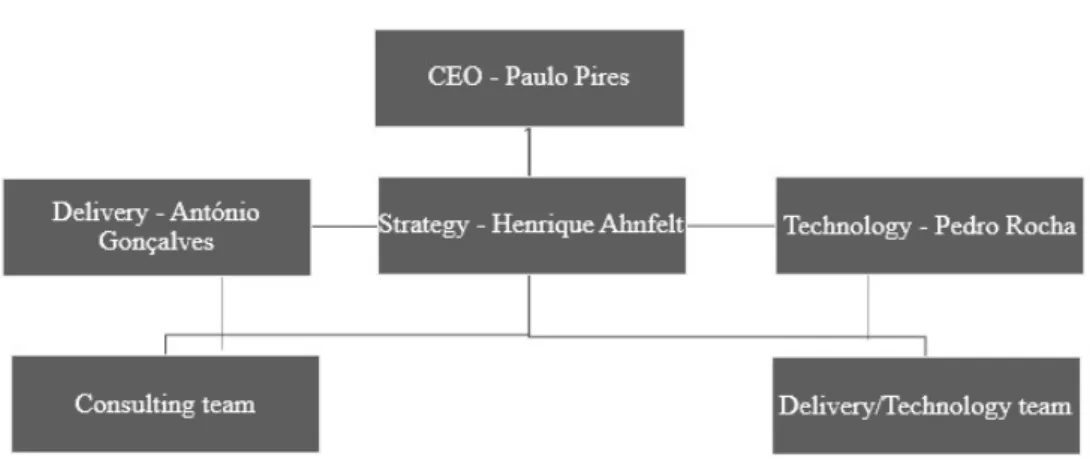
A meeting with the Board of Directors (see Exhibit 2) was organized in early April. With this meeting, the team was expected to receive feedback about the input generated in order to validate the ideas and filters with the highest potential. To successfully complete this stage, the members of the VCW team concluded that they should also involve the Board into the process of idea and filter generation. Accordingly, they decided to organize a brainstorming session with the audience. Questioned by the VCW team, the audience started by assigning the filters they considered as ‘qualifiers’, which correspond to filters that the company has to ensure right in the beginning in order to the project move forward. The team presented the filters collected and the Board had the opportunity to discuss them collectively in order to assess the initial potential in the structure of the Value Creation Funnel (VCF). The team took a similar approach
presented the collected ideas and after, the Board stated the ones they considered to have the highest initial potential. The Poker Method was a fundamental tool at this stage as the board is the one with the power to determine the path of the ideas and filters. As so, in the last part of the meeting, the audience looked into all ideas and filters discussed and applied the method accordingly. The Board was very surprised with the list of ideas and filters, as the company was not able to generate this kind of input in previous brainstorming sessions, where JMD used the Design Thinking approach.
The team was in charge of adding the new ideas and filters generated in the brainstorming session to the ones that were validated by the audience, and eliminating the ones the board directly discarded. Once this work was completed, the team was ready to send the final document with a total of 52 ideas and 62 filters for validation (see Appendix 9 and 10). The document had a set of instructions for each key decision player to follow. The work was simple. They should start by classifying each idea and filter in a ‘High-Medium-Low’ scale, where High stands for ‘Idea/Filter with High Potential’. In quantitative filters, key players should indicate a numerical range they consider relevant for the application of the filter in question. After classifying all the filters, key players should specify the ones they consider as ‘qualifiers’. Subsequently, they had to focus on the ones with High and Medium classification and rank them from the most to the least important.
Once the team received the validated results, it was time to analyze the final potential of each idea and filter. The final potential was determined by calculating the weighted average of each key player’s classification, as key players could have different decision weights in the final outcome. Hortinha determined that herself and 6 other members of the Board would represent 94.5% of the decision power, counting 13.5% each, while Lopes would have the remaining 5.5%. This process resulted in a total of 14 solutions and 21 filters, where 7 were qualifiers.
VCW Phase 4 - Capture Value (Ground): Identifying the Final Solution
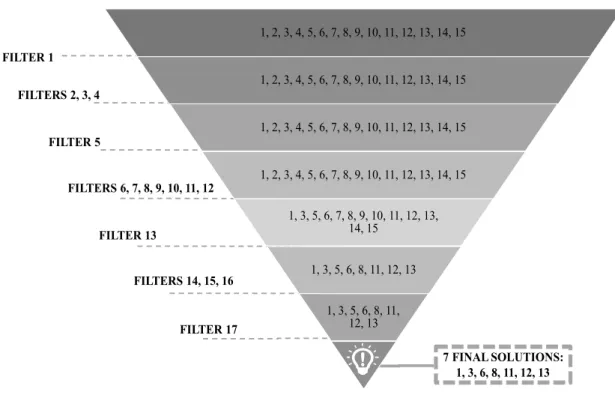
In this fourth stage, the team built the Value Creation Funnel (VCF) (see Figure 1) based on the final results of the previous stage (see Appendix 11 and 12). In the VCF, filters were applied to the ideas by order of importance. Some filters were grouped since the Board ranked them equally. From this process resulted 4 final solutions.
VCW Phase 5 - Consolidate Value (Operate): Ideas’ Presentation and Discussion
It was time to present the final solutions to the Board of Directors. For this meeting, Hortinha invited some external collaborators, which demonstrated JMD’s continuous willingness to involve external stakeholders in the process. In the scheduled meeting, the VCW team started by presenting a brief description of the past 4 stages. Then, the 4 final solutions were revealed. As the methodology suggests in this stage, the Board should decide for a No-Go/Go/Check basis about the solutions presented.
Figure 2 - Panel of Final Solutions
Source: Developed by the VCW team
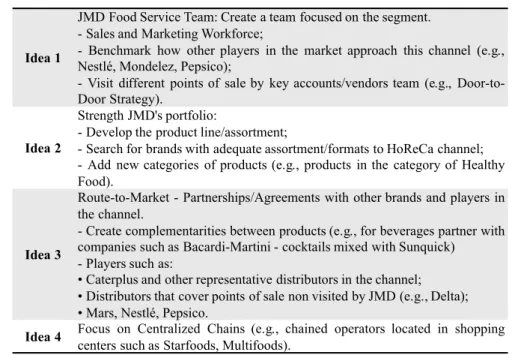
The Board was surprised with the fact that none of the solutions suggested a specific category, but acknowledged the value of the input gave by the solutions obtained. However, all members recognized that the problem they addressed was not very specific as the company did not have any operation in the selective cosmetic market. The Board immediately validated the first two solutions in the panel. As Hortinha said “The VCW team presented two solutions that can have an enormous impact in the business case that we are currently developing, and to which our team did not pay attention”. Regarding the solutions, she added “By studying these suggested countries (UK, USA, Nordic and Asian countries) using these social tools (Youtube, Instagram and Pinterest), our team can gain practical insights about new consumers’ trends or even new
Panel of Final Solutions
1. Analyze the market to predict innovation tendencies across countries and new consumer
trends: UK, USA, Nordic and Asian countries using tools as YouTube, Instagram and Pinterest
2. Take advantage from the current channels the company already has.
▪ Food Service segment: HoReCa channel – distribution to Hotels and Spas ▪ Impulse segment: distribution to airport’s specialists department stores
3. Benchmarking of marketing, product diversification and distribution strategies 4. Create an independent distribution network specific for this area
company’s current distribution channels (Hotels and Airports) could be very helpful for us in the short-term and it is an option that we never thought about” (see Exhibit 3).
Once these two solutions were successfully validated, the Board started discussing the remaining solutions. Regarding the idea “Benchmarking of marketing, product diversification and distribution strategies”, the Board was divided. While some members suggested that this idea could complement the analysis of the international markets, others were more reserved. They argued that the business case the company was developing around this market was in its initial stage and, as so, the company could not clearly identify which kind of metrics and practices they should target. Unanimously, the Board decided that this solution should be revised in order to integrate the business case at a later stage.
Regarding the creation of an independent distribution network for this channel, the Board decided not to validate this solution. As Hortinha justified “This solution is not in our short-term agenda. It will depend on the position we will have in the selective cosmetic market”. The VCW team explained that the Value Creation Radar (VCR) was completed, where the company had its first contact with the value that the problem under study could bring to the company. Besides, the team also presented two very important recommendations. At this initial stage, it might be worth to include more internal and external stakeholders, which have some practical knowledge of the market, into the idea and filter generation. Likewise, in order to find relevant categories in the selective cosmetic market, JMD could launch national and international contests to assess market gaps and design its strategy accordingly. Besides, as the company will have to deeper its research in many fronts to proper define a strategy in the selective market, the team recommended conducting various VCW cycles, by exploring the 15Is of innovation. Further VCW cycles could help the company breaking down the question and move from an abstract concept to a concrete solution. The project completed by the VCW
is still planning to enter, it is crucial to progress step by step and narrow down questions as time goes by. The Board revealed its interest to apply further VCW cycles in order to narrow down the problem in hands.
Concluding the meeting, the Board agreed that VCW was a useful tool to conduct an initial analysis and to explore new paths in the selective cosmetic market. Quoting Pedro Castro, the Sales Director of JMD, “VCW turned out to be a much more rational tool when compared with previous methods used at JMD”. The Board also highlighted that some of the ideas collected in the previous stages would be incorporated in the business case as it evolves. Likewise, the Board considered that VCW turned out the decision-making process shorter and more efficient, even for an abstract project.
How should JMD progress with the input given by the VCW team?
The Board had to decide how to incorporate the recommended solutions in the business case being developed. Moreover, it was time to start thinking about new research questions in order to turn the idea to enter the selective cosmetic market in a more tangible thought. Should JMD rely on new VCW cycles in order to explore market needs and pains? Can VCW help JMD to find quality brands, growing outside? To progress with the project, the Board should clear what information is need next and how the best pathway to get there.
Teaching Note Case Synopsis
This case study illustrates the application of the Value Creation Wheel (VCW) to a challenge of Jerónimo Martins Distribuição de Produtos de Consumo (JMD): how to define a strategy in the cosmetic selective market, an area outside of the company’s expertise. The case study starts by introducing JMD’s current operational activities. Then, the 5 stages of the VCW are introduced. The first stage is Tap, whose objective is to gain insights, evaluate trends and opportunities about the market the problem is subject to. In the second phase, Induce, the team is responsible for the idea and filter collection using multiple approaches. A meeting with the key decision makers was organized in the third stage, Analyze, whose objective was to identify the ideas with the highest potential and rank the filters that would be used in the Value Creation Funnel (VCF). In the fourth stage, Ground, the team built the VCF and reached to 4 final solutions. In the last stage, Operate, the team presented the final solutions to the Board. The case concludes with the discussion of VCW team’s suggestions for the next operational steps in JMD’s business case.
Learning Objectives
This case study promotes the discussion in Business Strategy, Innovation Management, International Marketing, New Product Development and Value Creation courses at the Masters, MBA and Executive levels. The learning objectives will depend on the course the case is addressed to, including the following:
• To acknowledge the practical application of the different stages of the Value Creation Wheel;
• To understand how companies access the possibility to enter into a new business market; • To comprehend how to assess ideas and filters’ potential and determine the ones that solve
• To understand the importance of the involvement of external stakeholders.
Recommended Readings
• Lages, L. F. (2016). VCW—Value Creation Wheel: Innovation, technology, business, and society. Journal of Business Research. DOI: 10.1016/j.jbusres.2016.04.042.
Discussion Questions
1. Which are the main differences between the VCW and Design Thinking Processes? 2. How do you think that proposed solutions can allow JMD to innovate?
3. How do you think JMD could address the next steps of the business case?
Discussion Notes
1. Which are the main differences between VCW and Design Thinking Processes?
This question requires an analysis of Design Thinking and VCW’s processes in order to understand how both methodologies address challenges, gather ideas and implement solutions. After this analysis, it is possible to identify some important differences between the two methods:
• Idea Generation
VCW divides the second phase, Induce, in two different sub-phases. The first is concerned with ideas collection and the second with filters collection. Filters are the criteria to be applied in the selection of ideas, where any idea suggested is considered valid. Design Thinking constitutes an additive process, meaning that the ideas are listed using only the word “and”, while the VCW model is considered a multiplicative process as it allows the use of “and/or/but”, both on idea and filter generation. Moreover, Design Thinking usually groups ideas in big categories after their collection, while VCW remains unbiased, as it progresses with uncategorized ideas to the
next phases. Nonetheless, VCW is able to better eliminate barriers as it requires a second phase only concerned with difficulties and barriers to be considered in ideas’ implementation. In contrast, Design Thinking many times ends up avoiding creativity as participants do not divide the two processes, and unconsciously filter up-front many of the ideas suggested.
• From Selection Process of Solutions to Operationalization
In Design Thinking process, similar ideas are grouped in different clusters with no specific order. The selection process to find the final solution is done by eliminating the ideas of each different cluster that are not valued by the organization. In contrast, the VCW comprises an unbiased selection process. Both ideas and filters are ranked independently by key decision makers, which determine the potential of each idea and filter. The ideas and filters with the highest potential are the ones that constitute the Value Creation Funnel (VCF). Although both methods suggest the development of a prototype under the solution’s concept, the VCW emphasizes operationalization. As the VCF filters each idea according to the criteria selected by the Board, it is more visible which solution the company should focus on. Besides, the VCW model suggests the application of different VCW cycles during the operationalization process to help to define and detail some ideas that may arise.
2. How do you think that proposed solutions can allow JMD to innovate?
This question opens the discussion about the role of innovation in business. Organizations are aware that innovation plays an integral role in their long-run sustainability. The dominant source of innovation is incremental innovation, which implies exploitation or a small change in company’s current resources. As it is performed under the existing business model, it is considered a low-risk movement, whose objective is to improve the overall performance of the
competitors usually respond quickly to this kind of innovation. In the case study, the VCW model answered to an incremental question, as the research question suggested: “add a new category of selective cosmetic”. Therefore, the panel of solutions presented some incremental answers. For instance, the idea of benchmarking marketing, distribution and product diversification strategies could bring a short-term strategic advantage to the company as it helps to create efficiencies and incremental operating improvements. However, the benchmarking practice is not sustainable. It suggests the application of practices and ideas that are already being used by the competitors. By following this type of practice the company becomes ‘the follower’ instead of ‘the leader’.
In contrast, breakthrough innovation creates disruptive solutions that are capable of transforming existing markets or creating new ones. Although it involves high uncertainty, breakthrough innovations are one of the main sources of competitive advantage, once they challenge business models and define new ways of doing business. Therefore, in the long-run, organizations that pay more attention to breakthrough advances set the stage for higher growth rates and leading positions in the market. Incorporating breakthrough innovations, companies can achieve sustainable competitive advantage by differentiating their product/service in the market.
In the case of JMD, and following the proposed solutions, it can use benchmarking in order to determine market gaps and new opportunities to explore. Nonetheless, benchmarking should be used as a supportive tool, since it does not allow to enjoy competitive advantage. However, throughout VCW’s process a massive number of ideas was created. As such, in future actions JMD can rely on these ideas to define its strategic actions, namely marketing, distribution and communication strategies.
3. How do you think JMD could address the next steps of the business case?
This answer will be based on the VCW team’s recommendations. In order to successfully complete the next steps of the business case, the Board can decide to apply different VCW cycles, where different research questions will be addressed. Although this is a subjective question, answers should reflect the need of JMD to narrow its strategic approach. As an example, the following analysis will be divided into 4 main groups of strategies. For each one, are presented some examples of research questions that could be addressed.
• Entry Strategy: Which type of partnerships should JMD establish in this market? How can JMD take advantage from Jerónimo Martins Group’s current joint-venture with Puig? How could JMD implement an independent distribution network?
• Marketing Strategy: How should JMD communicate its represented brands in the selective cosmetic market? How should JMD manage communications with specialist retailers? Which is the best strategy to approach selective cosmetic’s retailers?
• Distribution Strategy: How can JMD ensure an efficient distribution network? Should distribution to this channel be made separately? How could JMD beneficiate from its current distribution partnerships?
• Human Resources Strategy: How should be the composition of JMD’s focused team to this segment? Should JMD rely on internal or external knowledge? How to create an independent division?
Exhibits
Exhibit 1 – Value Creation Wheel (VCW)
Source: Lages, L. F. (2016). VCW—Value Creation Wheel: Innovation, technology, business, and society. Journal of Business Research. DOI: 10.1016/j.jbusres.2016.04.042.
Exhibit 2 – Board of Directors
Source: JMD Internal Presentation, 2016
Exhibit 3 – JMD’s Route-to-market
Source: JMD Internal Presentation, 2016
Modern Trade
Food
Retail DistributionDirect
Wholesale DistributionDirect
Specialized
Retail DistributionDirect
Food Service
HoReCa and distributorsPartnerships
Kiosks &
Others and distributorsPartnerships
Impulse
Vending Direct/indirect distribution
Gas
Stations Direct/indirect distribution
References
• Franke. (2015). R&D To Innovate Better, Find Divergent Thinkers. Harvard Business Review, 93(6), 26–28.
• Global Insight (2007). A Study of the European Cosmetics Industry. Retrieved from Global Insight
• Jerónimo Martins Distribuição de Produtos de Consumo (n.d.). Retrieved from http://www.jmd.pt/
• Jerónimo Martins Group (2010). Annual Report 2010 Retrieved from http://www.jeronimomartins.pt/investidor/relatorios.aspx
• Jerónimo Martins Group (2016). Annual Report 2015. Retrieved from http://www.jeronimomartins.pt/media/665170/annualreportjeronimomartins2015.pdf
• Jerónimo Martins Group (n.d.). Retrieved from
http://www.jeronimomartins.pt/?lang=en
• Lages, L. F. (2015). How to grow, create and capture value in domestic and international markets? Nova SBE Working Paper #599.
• Lages, L. F. (2016). VCW—Value Creation Wheel: Innovation, technology, business, and society. Journal of Business Research, DOI: 10.1016/j.jbusres.2016.04.042.
• MarketLine. (2014). Facial Care in Portugal. Retrieved from MarketLine
• MarketLine. (2013). Haircare in Portugal. Retrieved from MarketLine
• MarketLine. (2014). Make-Up in Portugal. Retrieved from MarketLine
• MarketLine. (2014). Personal Hygiene in Portugal. Retrieved from MarketLine
• MarketLine. (2014). Skincare in Portugal. Retrieved from MarketLine
• MarketLine. (2013). Suncare in Portugal. Retrieved from MarketLine
• Silva, T. F. (2016, May 12). Quer pôr a sua empresa a inovar e a criar valor? Use esta ferramenta de gestão. Dinheiro Vivo. Retrieved from
https://www.dinheirovivo.pt/empresas/quer-empresa-inovar-criar-valor-use-esta-ferramenta-gestao/
• PWC (2013). Breakthrough Innovation and Growth. Retrieved from http://www.pwc.com/innovationsurvey
Case Study 2: “Jerónimo Martins Distribuição de Produtos de Consumo: Growing in HoReCa Channel using the Value Creation Wheel”
Abstract
Paula Hortinha, Managing Director of Jerónimo Martins Distribuição de Produtos de Consumo (JMD), was concerned with the company’s growth challenges. In order to enhance JMD’s revenues streams, Hortinha decided to rely on the Value Creation Wheel (VCW) to help the company defining a growth strategy for HoReCa channel. After a 5-months project, the VCW team identified the ideas with the highest potential, which were presented to the Board of Directors. The case ends with the deliberation of the Board regarding proposed solution’s implementation, based on their perceived impact on the future success of the company.
Keywords: HoReCa Channel; Innovation Management; Strategic Planning; Value Creation