What do managers think about
the potential of success of CrM
campaigns?
Managers’ perspective regarding Cause-related
Marketing
Bruna Monteiro Castanheira
Universidade Católica Portuguesa | Católica Porto Business School 2019
What do managers think about
the potential of success of CrM
campaigns?
Managers’ perspective regarding Cause-related
Marketing
Final Dissertation presented to Católica Porto Business School to obtain a master’s degree in Marketing
by
Bruna Monteiro Castanheira
Under the orientation of: Susana Cristina Lima da Costa e Silva
Carla Sofia Carvalho Martins
Universidade Católica Portuguesa | Católica Porto Business School 2019
ii
“In this ever-changing society, the most powerful and enduring brands are built from the heart.” - Howard Schultz, former CEO of Starbucks
iii
Acknowledgments
My sincere appreciation to my supervisors, Professor Susana Cristina Lima da Costa e Silva and Professor Carla Sofia Carvalho Martins, for all the patience, guidance, advice, availability and mentoring.
My kindest thank you note to all that played an important role in this project, by motivating and supporting me in all the moments I thought of giving up and second doubted myself.
Additionally, a special acknowledgement to my father for continuously pushing me to be better and believing in my unquestionably and every time, to my mother for being an example of strength, determination and resilience and to my brother for having me as a role model and making me want to be my best self for him.
v
Abstract
This research emerged with the intent to analyze Cause-related Marketing from the perspective of companies. The main purpose was to collect, gather and to interpret information regarding this subject, trying to achieve a better understanding about what managers think about CrM: analyzing the level of acceptance and usage of this marketing tool, based on the model UTAUT, used to interpret the collected data.
As research method the main adopted method was in-depth interviews, but a brief questionnaire was also provided to the interviewees in order to receive additional information.
Even though CrM was well evaluated by the participants and is well positioned in terms of acceptance and usage, based on the four factors analyzed: performance and effort expectancy, social influence and facilitating conditions, this study lead to conclusion that managers see the benefit of company partaken in initiatives as such but not necessarily Cause-related Marketing. Interviewees express excitement towards CrM, but even more for the idea of companies really caring and taking their interest, time and funds to help consumers social concerns, not necessarily in the way of a partnership with a cause but as a way of being of the firm.
Keywords: Cause-related Marketing, managers perspective, cause, corporate social responsibility, UTAUT model, performance expectancy, effort expectancy, social influence, facilitating conditions
vii
Resumo
Esta pesquisa surgiu com o propósito de analisar o Marketing relacionado com Causas sob a perspetiva das empresas. O objetivo principal foi recolher, reunir e interpretar informações sobre este tópico. Tendo em vista alcançar um melhor entendimento sobre o que os gestores pensam sobre CrM: analisando o nível de aceitação e uso dessa ferramenta de marketing, tendo por base o modelo UTAUT - utilizado para interpretar os dados coletados.
Como método de pesquisa, o principal método adotado foram as entrevistas em profundidade, porém um breve questionário também foi fornecido aos entrevistados, a coletar informações adicionais.
Apesar de, de forma geral, esta ferramenta de marketing, estar bem avaliada pelos participantes e encontrar-se bem posicionada em termos de aceitação e uso, com base nos quatro fatores analisados: expectativa de desempenho, expectativa de esforço, influência social e condições facilitadoras, este estudo levou à conclusão de que os gestores vêm o benefício da empresa participar em iniciativas deste género, mas não necessária e exclusivamente desta forma concreta. Os entrevistados expressam entusiasmo com este tipo de marketing, mas mais ainda pela ideia de empresas serem verdadeiramente preocupadas e que dedicarem interesse, tempo e recursos para ajudar com assuntos que representam as preocupações sociais dos consumidores, não necessariamente na forma de uma parceria com uma causa, mas como um modo de ser da empresa.
Palavras-chave: Marketing relacionado com causas, perspetiva de gerentes, perspetiva de marketers, causas, associações, responsabilidade social corporativa, modelo UTAUT, expectativa de desempenho, expectativa de esforço, influência social, condições facilitadoras
ix
Index
Acknowledgments ... iii Abstract ... v Resumo ... vii Index ... ix Introduction ... 6Chapter I – Literature Review and Proposed model ... 9
1.1 Literature review ... 9
1.2 Proposed model ...15
Chapter III - Analysis of the results ... 22
3.1 Performance expectancy ...22 3.2 Effort expectancy ...25 3.3 Social Influence ...28 3.4 Facilitating conditions ...31 Chapter IV – Discussion ... 38 Chapter V - Implications ... 42 5.1 Theoretical contributions ...42 5.2 Managerial contributions ...43 5.3 Limitations ...44
5.4 Future research guidelines ...45
Chapter VI – Conclusions ... 47
References ... 49
Appendices ... 53
Annex 1 - Interview template ...53
Annex 2 - Questionnaire ...55
11
Table index
Table 1 – Interviewees demographic and professional information ……...….17 Table 2 - Most common answers of the four variables under analysis…….…36
6
Introduction
The essence of Cause-related Marketing is marketing the product, service, brand or company through the link with a non-profit organization (Berglind & Nakata, 2005). This tie between these two parties and the final consumer is an upgraded strand of Corporate Social Responsibility, when comparing to donations, because the firm cares about one specific cause, which will have an impact on the perceived image that the consumer has about it (Quinones et Rebollo, 2009).
According to Bennett (2008, p.44), “Although a substantial academic literature exists concerning consumer perspectives on CrM (…) research into corporate attitudes towards CrM has been negligible”. This research serves the attempt to fill this void, and further explore the perspective of companies regarding CrM, assuming the purpose of finding out to which extent are companies aware of the existence of CrM, the benefits that this marketing tool can present to firms and how to implement it as a marketing strategy. By analyzing this topic, is intended to explore the different opinions and perspectives of managers working with marketing or brand management, regarding Cause-related Marketing and the potential success of this tool, evaluating the acceptance and use of this marketing tool trough in-depth interviews.
Considering the subject under analysis, some research questions were perceived as more relevant:
7
● Are managers aware of the existence of Cause-related Marketing as a marketing tool?
● What do managers think about the potential success of CrM campaigns?
● Do managers know which are the required elements to implement this type of marketing tool and which advantages might result from this implementation?
● Which factors or elements do managers consider obstacles or barriers when considering the adoption of CrM?
● Which are the factors that managers considered more relevant to implement this tool?
In terms of structure, this study is composed by an in-depth literature review, the method development, the presentation of the elected model to analyze the subject, the methodology, empirical work followed by data analysis and interpretation, discussion of the collected results and conclusions regarding it.
9
Chapter I – Literature Review and Proposed
model
1.1 Literature review
Facing an increasing concern regarding humanitarian topics, nowadays it is unthinkable the possibility of a company being something other than socially responsible. Consumers demand and support companies that care and make their share to help shared concerns that they have. More and more, companies try to find ways to evolve and do more for others, with the intent to achieve these new expectations that are imposed to them. In that line of thought, and as a way to be socially responsible, and further differentiate themselves and their products from competitors (Bronn & Vrionni, 2001), Cause-related Marketing (CrM) emerged as a communication and differentiation tool used by several companies (Murphy, 1997).
Defined by Vanhamme et al. (2012, p. 259) as a “social initiative in which organizations donate to a chosen cause in response to every customer purchase made”, CrM is often characterized as a win-win-win situation (Silva & Martins, 2017), because all the parts involved benefit from it: the company, the non-profitable organizations (NPOs) and final consumers (Berglind & Nakata, 2005). In the consumer perspective, CrM, stimulates moral elevation, inspiration and motivation on customers to act on behalf their beliefs, frees them of the choice of which cause to support, making the action of helping more regular and
10
convenient (Romani et Grappi, 2014; Berglind & Nakata, 2005), and also, consumers appreciate “the idea of contributing to the society while satisfying their individual needs” (Kim & Lee, 2009, p.467). For the cause: non-profit organizations get access to more financial resources, get more exposure and message efficacy and, in some cases receive “human resources in the form of new volunteers and advocates” (Berglind & Nakata, 2005, p.449). Additionally, for firms: morale, retention and recruitment (Berglind & Nakata, 2005; Duncan & Moriarty, 1977; Bronn & Vrioni, 2001), decreases in the impact of negative publicity (Varajadan & Menon, 1988), facilitation of the entry in new markets (Varajadan & Menon, 1988), possibility to higher or premium prices (Bronn & Vrionni, 2001), and, probably, the most important benefit enhancement of consumer’s preferences and increase in the choice of said specific brand when in comparison with competitors, are some of the main benefits that can be obtained due to Cause-related Marketing (Duncan & Moriarty, 1977; Barone et al, 2000; Bronn & Vrioni, 2001).
Even though not so notorious, or with the same level of impact, comparing to the potential benefits, it is important to state that CrM also presents disadvantages and risks for the company. Besides the fact that Cause-related Marketing campaigns can backfire and hurt the reputation of both parties involved (Demetriou, et al., 2010), CrM tends to appeal only to people sympathetic with the cause (and it's nearly impossible to find a cause that appeal to everyone), can have “a negative effect on those members of a society who are critical of the cause”, and, more drastically can lead to a reduction in the relatedness and affinity that some consumers might feel toward the company (Sheikh & Beise-Zee, 2011, p.28).
Despite the fact that the numerous advantages surpass the risks that CrM presents for the parties involved, it’s been the subject of harsh critics and skepticism (Barone et al., 2000). Under scrutinized analysis is the motivation that drive companies to engage with causes (Smith & Stodghill, 1994). Consumers
11
often question the reasons why firms embrace a campaign of this kind: “whether a company’s support of a social cause is designed to benefit the cause or the company” (Barone et al., 2000, p.249). According to Liesse (1990) profitable organizations are trying to profit from non-profit organizations. Other authors, like Bronn & Vrioni (2001) consider these campaigns an attempt to look good after a negative situation; and few even contemplate CrM campaigns as a diversionary tactic to hide deeper problems and “clever manipulation to enrich a corporation’s coffers” (Berglind & Nakata, 2005, p.444). This line of thinking occurs because in certain occasions firms spend more money on advertising their contributions than with their actual contributions and because of the fact that promotional expenditures are tax deductible, which raise even more suspicions regarding the real motives of CrM (Varajadan & Menon, 1988). We, as consumers are accustomed to denoting “social responsibility as a behavior of companies and philanthropy as a behavior of individuals, but when an individual has control of a company, these distinctions become blurred”, and we lose insight of the real motives that underlie behind these kind of initiatives (File & Prince, 1998, p. 1529).
With the intent to fight the skepticism, extensive literature exists to help corporations achieve a successful Cause-related Marketing campaign, but the question remains: are managers aware of what take under consideration when planning a CrM campaign? According to the literature, firms should, in order to implement a successful campaign: present a consistent and believable contribution to a cause (Bronn & Vrionni, 2001), tie the cause to the organization, use this tool as a long term strategy (Bronn & Vrionni, 2001), “carefully pair the cause and company”(Berglind & Nakata, 2005, p.452) because the level of company-cause fit influences the consumer (Grupta & Pirsch, 2006), choose a cause that suits the firm’s customer profile, the characteristics of the firm’s product, and the brand image and positioning (Varajadan & Menon, 1988), be genuine and transparent in their behavior as a trustworthy campaign is crucial
12
for the support of consumers (Bronn & Vrionni, 2001; Webb & Mohr, 1998) and most important, be very careful about how consumers perceive the company’s motivation and study the customer knowledge regarding the topic (Bronn & Vrionni, 2000; Barone et al., 2000).
Ultimately, the truth is that the line between advocacy or exploitation, altruism or profit is blurred (Berglind & Nakata, 2005). It’s difficult to discover the real reasons why companies choose to adopt this marketing tool, but according to Folse et al. (2014), advertisers have expressed interest in the persuasiveness of this marketing tool. Could be due to the realization of the benefits that can derive from Cause-related Marketing (Demetriou, et al., 2010) such as “enhancing the image of their company”, product promotion (File & Prince,1998, p.1531) or increase sales (Nowak & Clark, 2003), to achieve economic and social objectives (Ross, et al., 1991), to demonstrate their “responsiveness to society’s heightened expectation and demands for responsible corporate behavior” (Demetriou, et al., 2010, p.288), because managers are feeling pressured to tie their philanthropic activities with corporate strategies to improve overall performance (Webb & Mohr, 1998); because a firm’s performance is being judged on the impact it has on the environment and society (Sheikh & Beise-Zee, 2011), or even because “CrM allows corporations to benefit from their philanthropic investments by combining charitable contributions with innovative marketing techniques” (Ross, et al., 1991, p.58)
From the company’s perspective, even though this type of marketing is not the easiest to communicate, it's usually cheaper and more easily adjustable to different customer targets (Sheikh & Beise-Zee, 2011). In addition to the cheapness and targeting flexibility benefits, authors like Till and Nowak (2000) and Vanhamme et al. (2012), take this subject to a higher level and justify the adoption of Cause-related Marketing due to two distinct approaches: tactical, in which the ultimate purpose is to increase “revenue through the improved effectiveness of the profit base organization’s sales promotion efforts”
13
(Vanhamme et al., 2012, p. 261) or strategic, which consists in a long term focus on improving the perceived corporate image on consumers’ minds.
The motives that drive companies to implement this tool don’t necessarily need to be exclusively self-interest or selflessness: in a study conducted by File and Prince (1998, p.1530), 71% of chief executive officers believed that “corporate contributions should reflect corporate self-interest such as community enhancement”. In fact, in the same article the authors discovered that, often, business owners justify using CrM by linking both ethical and business rationales, they admitted considering this tool as “an opportunity to explore the intersection between personal values and corporate goals” (File & Prince, 1998, p.1532). Discovering which reasons weight more when deciding to implement CrM is one of the main focus of this study.
Ultimately, even if not conducted entirely for the “right” reasons, CrM still gives everyone involved the possibility to help those in need, benefits the elected cause and the company, elevates consciousness about others’ needs, helps developing a more compassionate marketplace and motivates social responsibility among businesses (Berglind & Nakata, 2005).
However, the skepticism arises because instead of donating at a corporate level, which wouldn’t involve consumers in the process and count as corporate social responsibility, when adopting a Cause-related Marketing campaign the firm offers to donate only if the consumer engages in the exchange (Ross, et al., 1991): it’s a mandatory condition. This is a factor that can be interpreted as a positive thing as corporations are trying to “move away from simple donation toward collaborative joint ventures with social causes” (Smith & Higgins, 2000, p.308), which will lead to more impact in the long run, but can also be interpreted as the company only gives and contributes if it gains something in the process, hence the disbelief and critics.
Despite the fact that we don’t know much on how organizations “balance philanthropic motivations with those of corporate self-interest” (File & Prince,
14
1998, p.1530), and at which percentage each contributes to the use of CrM, because there isn’t a lot of research on the company’s perspective about it (Bennett, 2014), according to Demetriou et al, (2010, p.266), the number of corporations realizing the benefits of CrM is increasing: companies are now “adopting it as marketing tool to achieve their marketing objectives, by demonstrating commitment to improving the quality of life in the communities in which they operate”, and CrM is gaining popularity as promotional tool between managers and fundraisers. According to Varajadan and Menon (1988), factors like proximity, time frame, consumer’ personal characteristics, level of association, choice of the cause and geographic scope influence the impact of CrM campaigns.
Considering that the tendency is for CrM campaigns increase in the future (Bednall, et al., 2000), authors like Smith & Higgins (2000) call the need to further analyze the social context in which CrM emerge and evolve. Even though in most cases we might never be completely aware of the real motives for companies to implement this type of marketing, the truth is that firms that do use Cause-related marketing try to distance themselves “from nostalgic portrayals of philanthropy, emphasizing its function as a strategic marketing tool to achieve both social and corporate objectives” (Smith & Higgins, 2000, p.307), usually preferring terminology such as “strategic giving” and “pragmatic altruism”. Following the attempt to further dissociate themselves from the mentioned concept, is extremely important that managers design, implement and evaluate CrM programs that differentiate from similar ones (Robinson, et al., 2012) and are perceived as transparent and well-intended in order to avoid possible adverse public reaction (Bednall, et al., 2000). In result, firms are increasing their standards and level of demand in the process of selecting a cause to partner with, by assessing objectives and establishing common goals (Smith & Higgins, 2000). Also following the same purpose, Ellen, et al., (2000), suggests that marketers focus on four main structural elements that will influence consumers’
15
evaluations about the campaign: donation size, congruence with firm’s core business, effort shown by the firm and commitment between the firm and the cause.
1.2 Proposed model
In order to analyze this subject, surfaced the need to elect a model to guide, both the development and interpretation of the collected in-depth interviews. After analyzing several different models, the UTAUT model - Unified Theory of Acceptance and Use of Technology (developed by Venkatesh, Morris, Davis and Davis, 2003) - seemed the best option, considering the fact that this model helps to understand the degree to which respondents feel regarding a new technology, or in this specific case a different type of marketing, in terms of acceptance, intention and use. Using this model as a guideline we will reach this research purpose analyzing what do managers think about Cause-related Marketing: understanding if they accept it as a viable option, if they intend to implement it and if they used, use or consider using it in the future, by evaluating what managers’ think of CrM in terms of performance and potential, effort to develop and implement, their opinion regarding what the ones involved in the company environment would think about it and which conditions do they have, or don’t have, that could facilitate the acceptance and use of this type of marketing.
This model, which integrates different variables analyzed by eight different models, to “assess the likelihood of success for new technology introductions and helps them understand the drivers of acceptance” (Venkatesh, et al., 2003, pp 426), consolidates numerous different variables into four core determinants that determine the degree of acceptance, intention and usage: performance expectancy, which corresponds to the degree to which the potential user believes the acceptance and use of this new tool will improve his or the company performance, effort expectancy, which measures the perceived degree of easiness
16
to use said tool, social influence, which is the degree to which the individual perceive that relevant others think of the use of the new tool or system, and facilitating conditions, which are described as the degree to which the individual believes that the organization already has pre-existing conditions to facilitate the implementation of this new tool – figure 1 (Venkatesh, Morris, Davis and Davis, 2003). Even though in the original version proposed by Venkatesh, Morris, Davis and Davis, the authors linked these four constructs with four moderating factors: age, experience, gender and voluntariness of use (Alkhunaizan and Love, 2012), it was believed to be better not to considered them in this research due to the reduced size of the sample under analysis.
Another reason why the UTAUT model was believed to be a good approach to analyze this topic was due to the linkage between the four variables and some of the factors addressed on the literature review. It is possible to examine and explore these variables, based on the previously existent work. Adapted to this particular concept of CrM the model variables have different parameters than the ones used to interpret the acceptance and usage of a new technology.
In this specific context: performance expectancy is contextually related to subject’s interpretation on the potential of Cause-related Marketing, positive or negative, more specifically benefits or risks that can derive from the
Figure 1 – UTAUT Model and the four variables Font: Own authorship
17
implementation of this type of marketing. Benefits such as enhancement of the company image, product promotion, increase of loyalty or growth of sales, and risks such as hurting the firm reputation, repelling effect on members non-supporters of the elected cause or reduction in the relatedness and affinity with the company are some of the factors expected to analyze under the performance expectancy variable.
The variable effort expectancy is, on the other hand, linked with the effort necessary to develop a campaign of Cause-related Marketing: the obstacles and barriers that managers and firms have to overcome in order to successfully implement this type of marketing will be stated and evaluated according to the perceived demanding effort. Considering the studies analyzed in the literature review, the main efforts to overcome are the pre-established skepticism and criticism towards CrM, the fact that is a difficult type of marketing to communicate and requires cautious planning and monitoring.
The variable social influence is directly connected to the opinion of everyone involved on the company’s environment: costumers, shareholders or administrative and coworkers. On the literature review it was only possible to assess the possible feedback from the client about CrM, and the fact that this marketing tool usually improves employee’s morale and benefits their opinion about the firm. More is expected to be explored in the conducted interviews concerning superiors and shareholders perception.
Lastly, the variable facilitating conditions is linked to all the conditions that can enable or simplify the effective implementation of CrM: a long-term approach, transparency and full commitment, are some examples of facilitation conditions mentioned on the literature review.
18
Chapter II - Methodology
Previously established and noticed the absence of prior academic research, regarding Cause-related Marketing (Bennett, 2008), has emerged the need to develop an exploratory study with the intent to further study managers perspectives about this type of marketing.
Following the example of a study conducted by File and Prince (1998), the targeted respondents were screened to be individuals responsible for marketing and/or decisions involving Corporate Social Responsibility within small, medium size or multinational enterprises. Considering the time available to develop this research, six seemed an appropriate quantity of interviews to collect, transcript and analyze. For that reason, six directors of marketing departments were contacted to be a part of this research and be interviewed about this topic. For additional context, respondents were leaded to an established definition of CrM to assure consistency within the topic and more reliable results. The interviewees ranged from 32 to 52 years of age, 66,6% woman and 33,3% male.
19
In the literature most of the study cases that selected the UTAUT as the model, the authors developed their studies using questionnaires, however considering the intended openness of this particular topic, the model was adapted to this particular subject and interviews were believed the better approach. However, with the purpose to further explore some of the questions, and following the example of this model creators, a simple questionnaire was created and provided to the interviewees. The main focus and information source where still the in-depth interviews for the reason previously stated.
Both the interview and questionnaire questions were developed based on the Venkatesh, Morris, Davis and Davis (2003) approach on the subject but adapted to the topic under analysis: to evaluate marketing managers perspectives concerning the four main constructs of the UTAUT model. In order to understand the performance expectancy that managers perceived of this marketing tool the interview guide had the questions: “What is the potential that you see in Cause-related marketing?”; “Do you believe that the company you currently work at would benefit from the implementation of CrM?”; “Which do you think is the more common outcome for a company that adopts CrM?”; “Which would you say are the higher risks of a CrM campaign?” and “According to your perspective on the topic, which are the factors that most contribute to the success of Cause-related Marketing?”. To assess the effort expectancy associated with this marketing tool, the following questions were drafted: “Which are the biggest challenges or obstacles in CrM campaigns?”; “As a marketer what do you think about this type of marketing in terms of easiness of planning?”; “And in terms of implementation?”. To interpret marketers’ perspective concerning the social influence of everyone involved on the trade process, the questions created were: “How do you believe your firm’s target audience would react if your company implemented a CrM strategy?”, “Regarding your firm’s directors and shareholders, which do you think would be their opinion about CrM?”, “And how about your coworkers? Which do you think would be their opinion on the
20
matter?” and finally, “Which would be the image perceived about the company in the case it implements CrM?”. Lastly the questions “Which do you think are the necessary resources to implement a CrM campaign” and “Do you think your company has these resources available?” served the purpose of understanding if the gathered conditions facilitated or hinder the implementation of Cause-related Marketing. In the questionnaire the respondents, like in the authors of the UTAUT model suggested, were asked to rate several statements regarding each one of the four variables. It was expected the construct “social influence” to have a higher impact on acceptance and use of Cause-related marketing, because of the social component of this marketing tool.
Using this model, we will be able to assess the potential acceptance and use of Cause-related marketing campaigns, evaluating what do managers think of this marketing tool expectancy regarding performance and effort, if and which facilitating conditions are considered prior to the implementation of CrM on the corporate environment and social influence of consumers, shareholders and employees.
The in-depth interviews were conducted on January 2018 trough skype, due to the interviewees limited availability. None of the interviews had any time restrictions and their duration varied from 25 to 58 minutes. All interviews were entirely recorder and transcribed, with the participants consent.
In order to construct the interview, the literature review and the guidelines for future research presented in the study of Varadarajan and Menon (1988), in which the authors note the importance of conducting a research to selected firms that have used CrM programs, were extremely helpful. The authors expressed the need to find answers for questions, such as: “What are some of the major corporate and marketing objectives firms strive to realize by participating in Cause-related Marketing Programs?” and “What are executives’ perceptions of the strengths and limitations of CrMPs”, which were prior established research questions for the present study. Additionally, the research conducted by Bennett
21
(2008) and the study of File and Prince (1998) on the subject, provided helpful parameters to draft an supplementary questionnaire: Bennetts’ study on the subject (2008), inspired certain questions – presentation of the items to respondents with a self-enumerative scale in which they were asked to rate displayed answering options according to their opinion on the matter, as well as the most traditional approach to the UTAUT model, which also helped in the construction of several of the questions presented on the questionnaire.
After gathering a sufficient number of responses to grant credibility and reliability to the results, analyzing the data was the next step. Most of the analysis was inferred from the in-depth interviews that were conducted because it was the elected way to investigate this topic and due to the reduced size of the sample of questionnaires this doesn’t allow a generalization.
22
Chapter III - Analysis of the results
Considering the proposed model, UTAUT, both research methods, in-depth interviews and questionnaires, analysis were conducted based on the four core determinants previously mentioned: performance and effort expectancy, social influence and facilitating conditions, with the final intent to measure the level of acceptance and usage of Cause-related Marketing.
3.1 Performance expectancy
As the first variable under analysis, performance expectancy allows to interpret managers perspective regarding Cause-related Marketing potential, or lack of it.
As more common outcome from campaigns using CrM, participants stated several benefits for the company: the association to the idea that the firm is socially responsible and take on an active part on society matters, the consequent growth of the value of the brand, the increase of brand awareness, the improvement of the brands’ image and reputation, differentiation from its competitors with more average positioning, and higher possibility of engagement with the brand from more supportive and loyal customers (Sónia Pargana).
23
However, like everything, this marketing tool has its pros and cons, and presents numerous risks that might emerge if the cause is poorly chosen, one of the parts is in it for selfish purposes or dubious motives, or if the consumer perceives a CrM campaign as a “commercial maneuver” (Marta Quelhas). This represents a bigger risk nowadays due to the size and reach of media, which can suspect, investigate and discover less altruist motives and rapidly leaks information as such, which will, consequently, have a massive impact on the brand’s image. On this matter, Fábio Faria demonstrated real concerns:
As more damaging risks for the company, the following were mentioned during the interview process: badly damage the firm’s image and reputation, being perceived as fake and misinterpretation from consumers, seeing the adoption of Cause-related Marketing lead by exploitive and self-interest reasons. All these risks can develop a general disbelief and distrust against the company, which will lead to loss of loyalty, consumers and consequently, sales. Ana Moreira noted that
Even though the interviewee Ana Moreira is a firm believer that
this was not the general opinion that other interviewees expressed: they often mentioned the skepticism of consumers towards these types of associations when
“Specially now, with the coverage, reach and easiness of spread, a campaign with a delicate topic can be a risk because one bad move and the media will blow bad news out of proportions very fast and in an uncontrollable way to hurt the company. We’ve
seen this happen with several companies.”
“From my perspective, one of the major risks is costumers understanding the campaign as exploitive and a trivialization of CrM”
“consumers can notice when a brand is being authentic or fake and exploiting a cause to self-promote”
24
coming from companies, due to brands usually being concerned with their own goals. Graça Borges specified that
All interviews admitted that if right set of conditions were gathered Cause-related Marketing has a massive potential (Graça Borges) in terms of performance and can really elevate the company in the eyes of consumers and increase the company’s value. Obviously, none of the respondents identify this as the ideal type of marketing to implement when the goal is to quickly increase sales. Ana Moreira acknowledge
It was general agreed that managers engage in CrM for the qualitative factors instead of quantitative (Ana Moreira): the goal is to benefit the company in different ways then numbers, improving the firm’s image, corporate morale, affection towards the brand and/or product, preference over competitors, among other qualitative issues. Proving this statement Graça Borges affirmed that
Even though increasing sales is not the main objective of companies when they choose to implement Cause-related Marketing, by participating in campaigns like this and concerning themselves about sustainability, this is always the ultimate goal for every company. Pedro Gonçalves confirmed that
“consumers don’t know to which extent brands are being genuine or not.”
“If the goal was to increase sales, we had other ways, more immediate to achieve it, for instance to do a 60% off campaign.”
“what we are expecting - from a campaign like this - is a reinforcement on loyalty and reputation levels.”
“We place social purpose before sales goals and at the same time by doing so, we reassure that sales are guaranteed.”
25
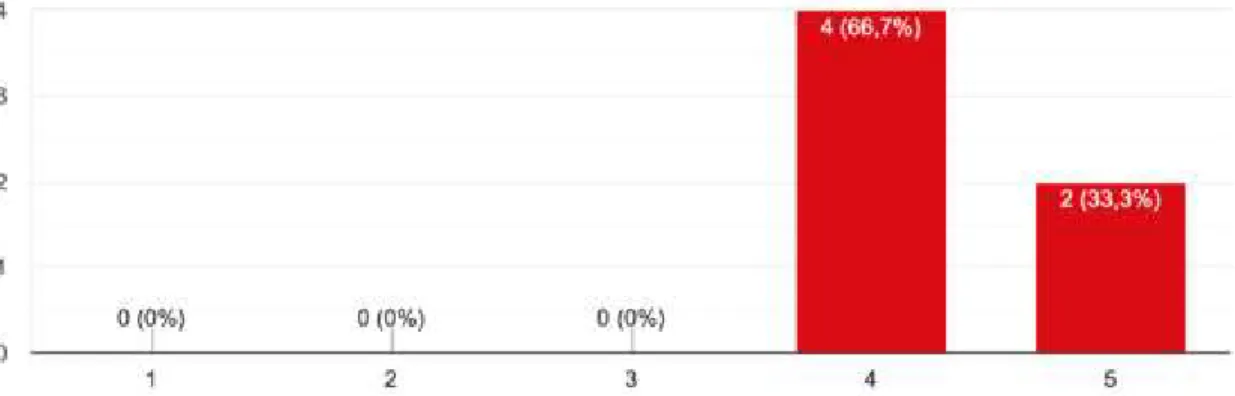
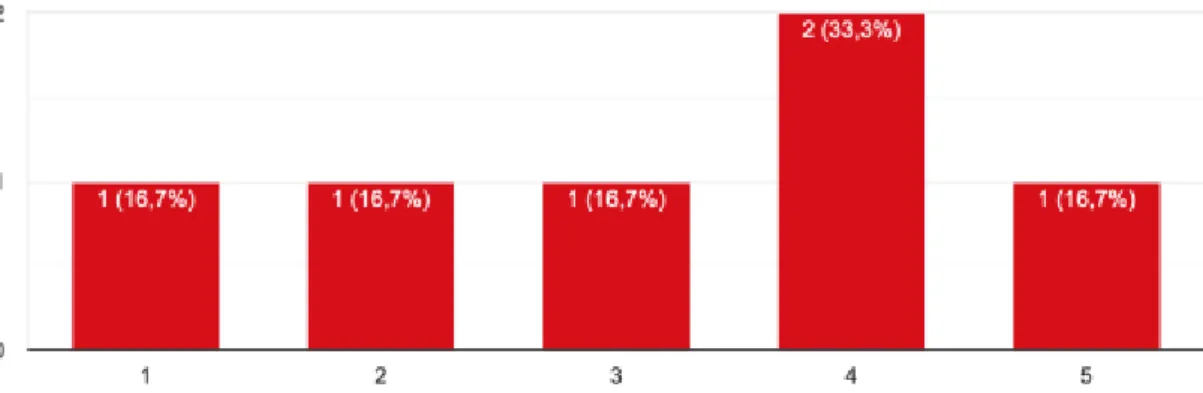
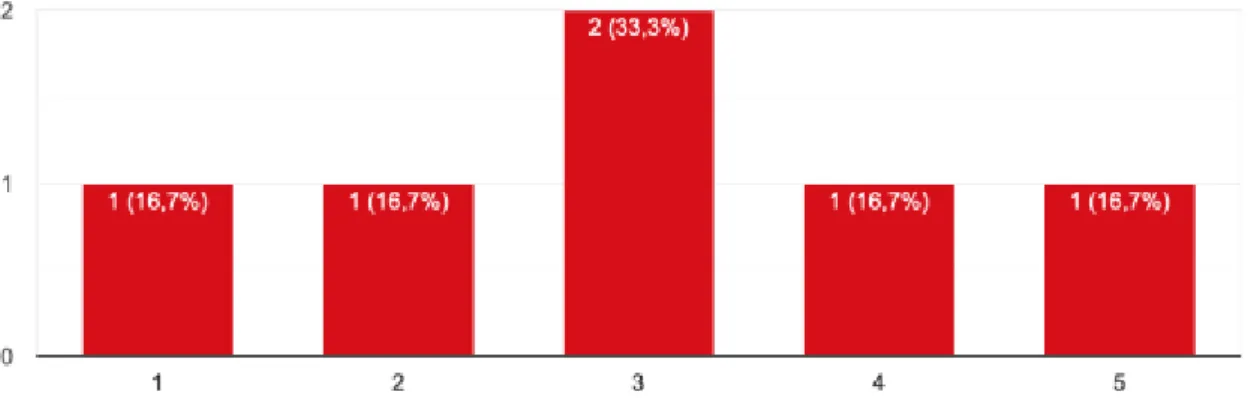
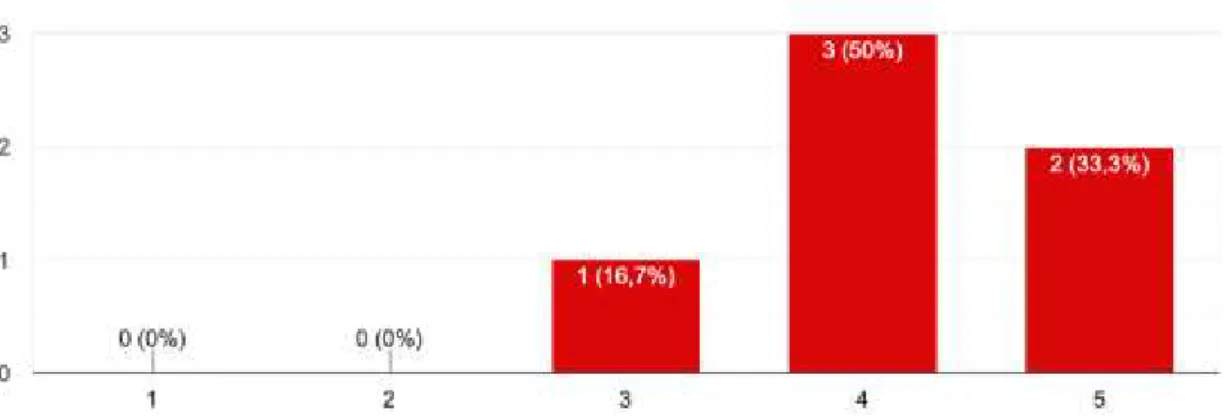
From the questionnaires was possible to infer that, in conformity to what’s been established on the analysis of the interviews, participants consider this marketing campaign beneficial for the company (annex 3, figure 8.2), a useful tool (annex 3, figure 8.1) that will improve the company’s’ image (annex 3, figure 8.5), make consumers elect the brand using CrM over its competitors (annex 3, figure 8.8) and also motivate employees (annex 3, figure 8.7). However, this is not the best way to achieve sales goals easier or faster (annex 3, figures 8.3 and 8.4), nor indicated to achieve profits or quantitative goals (annex 3, figure 8.6).
3.2 Effort expectancy
In terms of effort expectancy, only one of the participants had the opinion that CrM didn’t implied a lot of effort and classified this type of marketing as easy to implement, justifying her perception with the fact that, usually, the cause is glad to accept all help, which really facilitates the mediation process by removing the discussion of values out of consideration. According to Ana Moreira
Ana Moreira argues that CrM opens access and facilitates the implementation of campaigns with a heart. The company simply place the offer on the table, try to identify common aspects between the company and the cause and move forward, because for causes everything a company has to offer is more than welcome. Even regarding advertising and communication. Ana believes that this type of campaign simplifies the procedure:
“usually these campaigns are relatively easy to implement because normally we are dealing with causes or association with whom we don’t discuss values or negotiate with.”
“Media corporations often want to advertise initiatives like this for free”
26
The other five interviewees had the opposite opinion as they classify CrM as more complex, difficult and laborious, when in comparison with more traditional types of marketing, as implies more planning, controlling, delicate topics and legal and administrative issues. Sónia Pargana detailed, when asked about easiness of planning and implementation of a CrM campaign:
Even Ana Moreira, that characterized CrM as easy to implement, agreed that Cause-related Marketing demands the development of a full and complete evaluation not only of the plan but also of the cause as well, as it is necessary to comprehend every aspect involved concerning the cause: the vision, mission and values of the cause and everyone working on it, true intentions, motives and origins. Marta Quelhas shared the same concerns about the complexity and demanding analysis of the cause stating that
Agreeing with the literature, all subjects interviewed agreed that a detailed monitoring of the process is decisive to the success of Cause-related Marketing because campaigns like this obligate firms to do a lot more of adjustments, even during the campaign, in order to reach a bigger impact and achieve the set goals.
“Is fundamental to understand who’s working there, what’s their records and history, as well as to do a little research and investigation to understand the seriousness and credibility of our potential partner. That’s the reason why the managers advocate that this marketing tool demands a much bigger effort, especially in hours devoted to it, because it requires study, and an understanding of everything that needs to be done and how, alongside with a constant analysis”
“it's way easier to place a commercial on tv or create a campaign for people to sample our products than to talk to the association and develop a partnership, and all these things have a lot of legal and administrative issues and take months to plan and execute.”
27
Considering the fact that CrM implies a serious commitment of everyone implicated, this is overall a more long, complicated and demanding method, specially when compared with more conventional types of marketing (Graça Borges).
After conducting a campaign like this Marta Quelhas highlighted the need and importance of focus of the proposed campaign to the target audience, as she felt that, when she implemented a CrM strategy, it did not receive the expected adhesion, because the selected cause didn’t feel close to consumers. Her and her colleagues felt that even though they defined the cause and explain the motives, consumers couldn’t relate to it enough to care, contribute and take action. Marta Quelhas noted that
When choosing the bigger challenge the participants couldn’t reach an understanding: Marta mentioned the choice of the cause, which implies an immense amount of research and careful commitment; Ana Moreira elected the construction of a CrM plan for a long term and not a one-time thing, Sónia stated the correct communication of a campaign like this, every word matters in this context, Pedro chose the continuity, consistency and the fact that is long-term, for Graça is to know to which extent do we have freedom to involve our partners during the development of campaigns as such, the margin that we have to communicate with and about them can be a challenge (especially when we are dealing with causes that have a lot of politics involved), and lastly Fábio nominated the bigger challenge the fact that as this concept is not very known maybe this type of mkt is difficult when compared to other types and more
“we explained which was the cause and who were we helping but the recipient was always too far way. And I got the impression that at least a lot of Portuguese still had that mindset that made them think: - they’re trying to help someone in other continents or countries who we don’t know, when there are so many people in need here.”
28
complex also because it’s a concept very specific that deals with some skepticism already established and implicates a more thought, careful and rigorous implementation due to the fact that this is a very delicate and sensitive topic and can rapidly have a negative impact for the company. But overall, all respondents agreed that CrM has a lot of rules, barriers, things to look out for, and more than two also mentioned the choice of the cause and the coherence and consistency needed in CrM as big challenges to overcome.
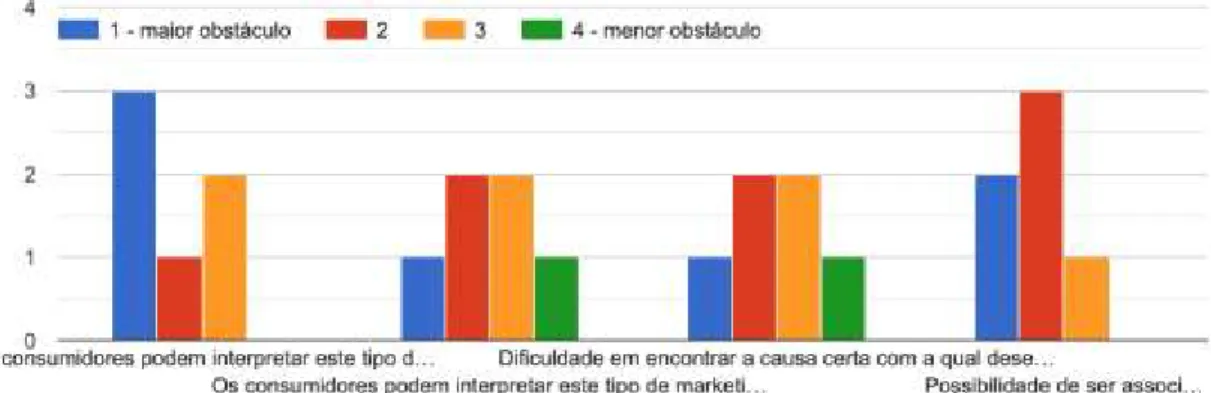
Even tough in terms of personal effort participants seem to believe that their own interaction with CrM would be easy and comprehensive (annex 3, figure 9.1), in figure 9.3 (annex 3) we can easily understand that marketers don’t perceive this type of marketing as easy to maintain (annex 3, figure 9.3), as consistent with the information provided by the interviews.
3.3 Social Influence
As almost every participant interviewed had already participated on a campaign of this kind, they already had feedback from previous campaigns regarding the opinion of others about Cause-related Marketing campaigns. Basically, all the answers to the questions concerning the opinion of consumers, shareholders or administration and coworkers about Cause-related Marketing started as “Assuming that…” followed by one, or more, of the facilitating conditions enumerated bellow for a campaign of this kind to succeed.
Every participant, except Sónia, stated that they believed that in the eventuality of their company implement CrM, their target audience response would be extremely positive (Ana Moreira), or admitted expecting a good reaction (Marta Quelhas), and not at all believe their consumers would perceive it as opportunism (Fábio Faria), mainly because the consumers are already aware
29
“consumers expressed a better reaction if the brand helped directly”
of the values that the company stand up for and this wouldn’t appear as something completely unrelated to the firm's’ core. Sónia Pargana, with a different perspective, expressed her concern
And she even added that
In addition, Marta Quelhas mentioned that, after the experience she had with CrM, they drifted apart from that specific model, not abandoning it completely, but stepping away from it because she and her colleagues got the impression that several consumers felt like the company could help with it own money, instead of demanding the contribution of the final consumer to help others. She stated
Overall Marta confess that she simply felt like
and also thinks that because the firm is a multinational, consumers know that the company is financially capable financial and react differently than if it came from other companies, smaller in size and profit amount.
“I think that, in some cases, costumers are already a little saturated with this type of campaigns because they - usually- don’t believe in the good will of brands and companies, and very often aren’t willing to pay more or chose that product over another just to give or contribute to something to someone they don’t know”
“unfortunately, consumers are still very self-centered and prefer immediate discounts over these types of campaigns.”
“We felt that in this particular model (...) the number of consumers that interpreted these campaigns as ‘if the brand wants to help the cause a, b or c it can, but not with my money’ was increasing”.
30
Regarding the opinion of shareholders or administration towards this type of campaign, all six interviews agreed. As the additional value of the brand is an increasingly concern of companies, more and more leaders are becoming extra aware and want their brands to be sustainable and helpful, not necessarily with a partnership with a cause but something full time that makes the difference (Pedro Gonçalves) and they can realize the real advantages that Cause-related Marketing can have to the firm’s image. Sónia Pargana and Graça Borges, respectively, noted that
Regarding their co-workers, interviewees also concur that they would have a positive reaction toward CrM, justifying their opinion with the fact that we are all people and we all have an internal desire to do the right thing and make a different or contribute to something bigger than us. Pedro Gonçalves mentioned that
Fábio even goes the extra mile and state that his coworkers would be excited to be a part of a campaign like this according to what he knows from them: their values, their education, themselves.
Expecting positive reaction from everyone involved in the process is extremely encouraging and can lead more companies to accept and use Cause-related Marketing, but obviously it is important that all the conditions to succeed are gathered and its better if the company implementing CrM is already known
“They really see this type of campaigns with very good eyes”
“They can understand how CrM can really value their assets and has several advantages that can represent to a company being permanently linked with solidarity purposes”.
“At the end of the day they are consumers as well and live the same problems as other consumers.”
31
for their values and principles, as this facilitates the acceptance of the campaign as honest and helps to decrease the pre-existing skepticism.
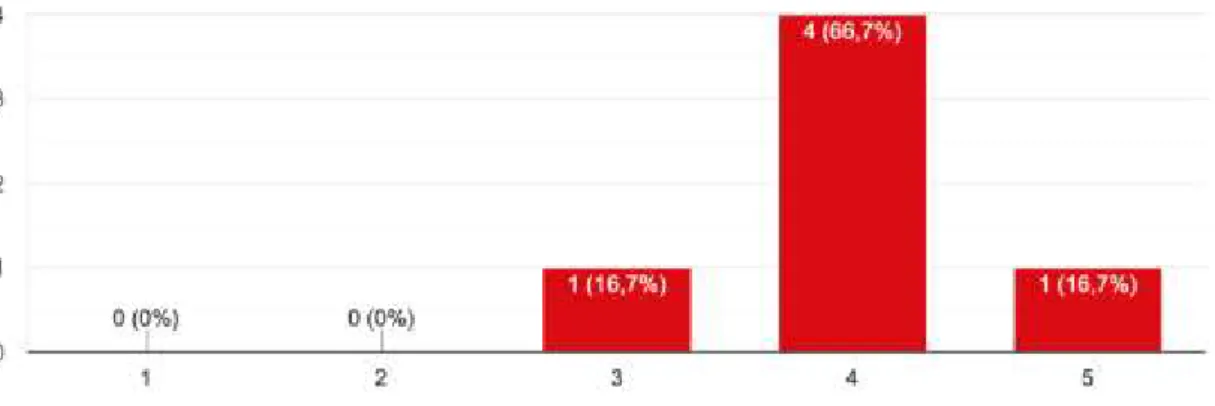
Also in conformity with the interview analysis, according to figures 10.1, 10.2, 10.3, 10.4, 10.6 and 10.7, (annex 3) all participants agree that the target audience, shareholders and administration, and coworkers would appreciate and value the implementation of a CrM campaign, as consumers have a better image from companies that have CrM campaigns (annex 3, figure 10.5), CrM improves the image that the consumers has about the firm (annex 3, figure 10.8) and make consumers chose the brand using CrM over its competitors (annex 3, figure 10.9).
3.4 Facilitating conditions
Practically as a general rule, every participant agreed that companies can truly benefit from Cause-related Marketing when planned, implemented and constantly monitored correctly, depending on the sector and assuming that the company, products, or brand, adopting CrM already have a certain level of affection or loyalty associated to it. Marta Quelhas declared regarding her previous involvement
In order to prevent the previously stated risks from happening and as a way to fight skepticism the interviewees identified several crucial conditions that would facilitate the planning and implementation and would increase the chances of successfully adopting CrM:
● plan and implement a very consistent campaign on medium and long-term, because campaigns like this only work if the company really invests on it
“In my experience, this type of toll works better for products with some level of attachment and loyalty.”
32
consistently and during a long period of time, for clients to understand that the company really cares and it’s not simply another campaign. No repercussions will be felt on short-term (Pedro Gonçalves). On this topic Marta Quelhas affirmed that
So, it is advised to study the possibility of implementing a campaign of this kind applied on medium or long-term, as there is no reason to engage in something like this to do once and for a short period (Ana Moreira);
● choose a topic linked to the core of the company and try to innovate, but always supporting the elected first related topic. Consistency is extremely important for the consumer to develop the association between the brand and the cause (Graça Borges);
● have real and transparent relation with the cause, truly investing and devoting time and commitment to it. As Ana Moreira and Graça Borges, respectively, noted:
● believe on the cause and “everything about it” (Pedro Gonçalves) “It’s critical to have a genuine connection with the cause and continuity in the support”
“The result will depend on the consistency (...) as doing it once and not repeating it, nor implementing an appropriate communication campaign will lead to a very small impact on
short-term but in long-term the impact will be null”
“I consider fundamental feeling and being completely committed to them”
33
“Is very important that exists congruence between the companies’ and causes’ objectives and values.”
● be careful not to make these campaigns something trivial and face them with the necessary seriousness (Ana Moreira);
● choose an organization that is reliable, in order to prevent extra risks and damages related to this partnership. Ana Moreira advised:
• select a cause that consumers value and its close to them and, more importantly, a cause that consumers can easily understand why the link with the organization. The fit between the cause and the company, as well as core values and vision are fundamental to decrease skepticism, make the campaign more believable and trustworthy, and facilitate acceptance, comprehension and support towards the association among both parties involved on consumers’ minds. Marta Quelhas and Ana Moreira, respectively, mentioned that:
● have a well-established partnership (Sónia Pargana), where transparency, honesty and communication are crucial, and listen to everyone involved because it can really help adjusting and improving the plan (Graça Borges); ● lastly, because CrM campaigns are already predisposed to skepticism and
critics and considering the, usually, delicate topics approached, develop a thoughtful and well defined communication strategy to assure no exploitation or misinterpretation from neither side. The way that the
“The elected cause should be believable and trustworthy, because we wouldn’t want to associate with a cause that later on will generate a scandal or is exploiting the partnership for less noble causes”.
Ana Moreira
“In order for Cause-related marketing to work we need to have good affinity between the brand and the cause, something that connects well”
34
campaign is communicated and advertised can be determinant to its success, due to sensitivity and delicacy of the subject (Pedro Gonçalves). In the same context, Fábio Faria recommended:
At the same time, invest in communication so everyone knows what’s being done and why (Graça Borges) and value the follow up from everyone involved in the campaign. Having into account all perspectives will help to create a better campaign: more reliable, trustworthy, overall better adjusted to the goal. Marketing Manager Beauty and Care at Unilever Fima, Marta Quelhas noted that:
Aside to the essential conditions to succeed, marketers were questioned regarding the resources they believed were crucial to implement a CrM campaign. Only two types of resources were identified as necessary to develop a Cause-related Marketing campaign: human and financial, and every participant admitted that the company where they worked at had those resources available, even if it was necessary some adjustments. Still according to Marta:
Considering that this marketing tool requires hours of research and a constant monitoring, this would imply to have someone fully devoted to this project, because it involves a lot of conversations with the cause, numerous meetings
“it’s necessary for people to relocate and focus the resources to do things that really matter”
“the disbelief of consumers sometimes come from never seeing the realization of the help they provided and was promised. It’s very important the before, the during and the after and sometimes brands forget (...) it's crucial to show the realization, the proof.” “Carefully control all publicity and communication regarding the campaign”
35
with the administration and demands a full communication plan (Sónia Pargana), so human resources are “the main resources needed” (Marta Quelhas). Ana Moreira highlighted that more than available human resources, it’s necessary people that are motivated and dedicated, trust, believe and cherish this type of initiative:
Additionally, financial resources are also mentioned as important but not crucial, as this type of campaign is not considered expensive. Fábio Faria noted that
Money is simply necessary to invest on advertising and other matters that might appear, because due to the fact that the established partnership is almost always with a non-profit organization or cause, this will imply that all cost fall on the responsibility of the company.
Other factors that might be considered facilitating conditions are:
• the fact that there is an increasingly concern from consumers and brands regarding social responsibility, because this represents a reason for this type of marketing to be implemented and accepted more easily; • the fact that managers and marketers are aware of what it takes to
develop a campaign like this and are aware of the risks;
“In my opinion, CrM is not very demanding in terms of monetary resources”
“usually causes don’t have the resources, so the sponsorship, promotion and communication will all be a responsibility of the brand”. Sónia Pargana
“To be involved in these campaigns we need people who believe in this project and want to take it further with the right energy for
36
• and the fact that managers expect good responses from their target audience and have complete support from their supervisors to implement campaigns like this.
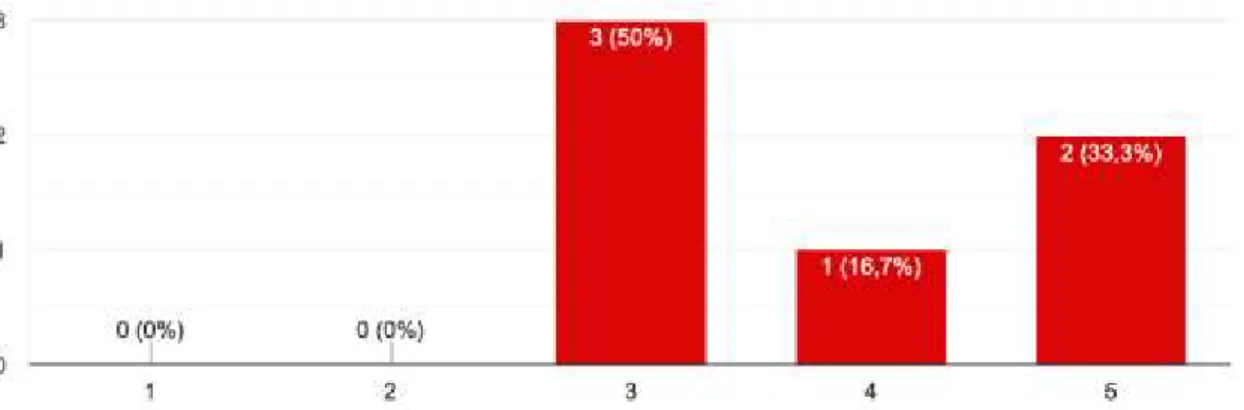
As facilitating factors the questionnaires reveled: the, previously mentioned fact that all the interviewees work on companies that already have the necessary resources to implement CrM (annex 3, figure 11.2), the fact that in most of the participants cases this type of campaign doesn’t interfere with currently active campaigns (annex 3, figure 11.3), and the fact that work colleagues know how to and want to help implement this type of marketing (annex 3, figure 11.1) and also that they are motivated to help and contribute to social causes which my lead to easier acceptance of CrM campaigns and increase of motivation and staff morale for participating in something like this (annex 3, figure 11.5).
In order to better comprehend and consolidate the more relevant information withdrawal from the in-depth interviews on each of the four variables under analysis the following table was created:
37
Table 2 – Most common answers regarding each one of the four variables under analysis: performance expectancy, effort expectancy, social influence and facilitating conditions
38
Chapter IV – Discussion
Agreeing with the literature, marketers see the increasing importance of developing campaigns with a heart, linked with something that consumers feel close to. After analyzing the collected data is safe to affirm that Cause-related Marketing is very well positioned in the mind of marketers. Using the UTAUT model, to further analyze the gathered we can highly classify CrM regarding the four variables under analysis, except for the effort performance.
This notion of a lot of effort implicated to develop a Cause-related Marketing campaign, especially when comparing to other types of campaigns, can be interpreted as the reason why, even though managers realize the “massive potential” of this kind of marketing, expect incredible feedback of CrM from everyone in the company environment (shareholders and administration, coworkers and most importantly the target audience) and seem to have the resources and other factors to help implement this type of campaign, don’t invest more on it.
With the intent of answering the question stated on the literature review regarding if the managers are aware of what to take under consideration when planning a CrM campaign, the information taken from the interviews indicate that yes, managers do know which factors are crucial to conduct a successful CrM campaign. In conformity with evidence from previous studies, the interviewees mentioned the same or similar factors: the importance of long-term, consistency,
39
coherence and fit between cause and firm core values and lastly careful planning and monitoring of the process – campaign and ways to advertise it.
Regarding the performance expectancy it was clearly visible that the participants saw the numerous benefits that CrM could present, not only to the company but also to the cause. From an early stage it was relatively easy to understand that the performance expectancy would be one of the biggest, if not the bigger, driver for the acceptance and user encourager of Cause-related marketing. Interviewees perceived the tremendous potential of this marketing tool when well-planned and implemented it. Agreeing with the findings of other authors, cited on the literature review, interviewees mentioned as main advantages for the company: the association to the idea that the firm is socially, consequent growth of brand value, increase of brand awareness, improvement of the brands’ image and reputation, higher possibility of engagement and loyalty, differentiation from its competitors and increase in the choice over its competitors.
Also further proving the validity of the studies analyzed in the LR, the conducted interviews allowed to access CrM in terms of facilitating conditions. All interviewees agreed that some financial resources are in fact needed but not in a greater amount, as this type of marketing is usually cheaper and implies less monetary investment. Mentioned as indispensable and crucial where human resources, people that truly believed and were excited with the campaign: to plan, implement, develop, monitor and evaluate it. In a general manner, applicants concluded that basically every company has the resources needed as long as there is will-power to create adjustments in case they’re necessary. The relative easiness to possess the necessary resources, partnered with the expectance of positive outcome, the existent increasingly concerns from consumers and brands regarding social responsibility and confidence of managers on their knowledge to pull-off a CrM campaign, lead me to conclude that marketers have gathered all the conditions necessary to facilitate the
40
adoption of this type of marketing, which can incite the usage of CrM according to the model.
Even though in the literature several authors described the majority of consumers as very skeptic and critic, most respondents acknowledge that possibility and risk as features to overcome, but also believed that in the event of their company implement a CrM campaign, said campaign would be well received and accepted by consumers, coworkers and shareholders, because they trust that they know what it takes to succeed, how to avoid the obstacles and prevent the risks. This perspective regarding the opinion of orders allows to conclude that the social influence, in this case, will facilitate the acceptance of Cause-related Marketing, according to the UTAUT Model.
Described by both, well-known published authors and the respondents inquired for this research, as not the easiest type of marketing to implement and communicate, the expected effort associated to CrM is high, especially when compared with other types of marketing, which will difficult the acceptance and resulting usage of this marketing tool. The majority of the interviewees characterized Cause-related Marketing as challenging to plan, considering all the variables, risks and obstacles involved. They classified it as very complex and demanding, implying constant updates, monitoring and control to prevent damages to the company.
In a wider approach, according to the UTAUT model, the performance and effort expectancy combined with the social influence will directly influence managers acceptance of this different type of marketing, which will consequently affect the usage of it, if the facilitating conditions are congregated as well. Post-analysis of the qualitative research we can assume that this type of marketing isn’t more accepted and used because of the perceived effort that implies.
In order to respond to the main research question of this study, regarding what managers think about Cause-related Marketing: we can determine that managers think highly of CrM, see an amazing potential on this marketing tool and are
41
fully aware of both benefits and risks of it, as well as elements needed to implement a CrM campaign. However, in terms of effort necessary to overcome the skepticism, critics, risks and obstacles this type of marketing loses points.
I noticed that marketers mentioned a lot more the importance of doing good, participating in initiatives, organizing campaigns with good values and positive messages or contributing in another ways, etc. , instead of strictly partnering with a cause, demanding the intervention of the client on the process to donate something. One of the interviewees even doubted the worthiness of Cause-Related Marketing, advocating that the importance of adapting and meeting costumers’ expectations towards corporate social responsibility doesn’t strictly imply a partnership with a cause – and the risks involved – merely implies commitment from the company to be sustainable, support causes or initiatives and do good. Marketers consider crucial for a brand to care, to be sustainable and to support what it truly believes but to do this it doesn’t have to “implicate having a partnership with a cause” but something more as “adopting a stand to contribute to a sustainable ecosystem” as a way to adapt and remain relevant, “it has to be something that the company is, not something that the company does” (Pedro Gonçalves).
42
Chapter V - Implications
5.1 Theoretical contributions
This study demonstrated that not only are managers aware of Cause-related Marketing, they are capable to identify the advantages, risks and obstacles that can derive from it, as well as know what is necessary to implement a campaign of this type successfully. Building on the literature review, managers comprehend the tremendous potential of CrM, assuming that when all the conditions to succeed are carefully followed, this type of marketing can truly benefit everyone involved: the company, the cause and the final consumer.
Interviewees mentioned the importance of congruence between the values defended by the firm and the cause, with the intent to facilitate the consumers’ association and comprehension of this created link, which sustain the numerous studies and researched that exist highlighting the importance of fit between the cause and the company.
This research also showed that marketers might attribute more value to the act of a corporation being socially responsible than restrictively to establish a partnership with a cause. Due to the already mentioned increasing concern from consumers to be more socially involved, there are now several marketing types that help companies to improve their image and reputation, increasing loyalty
43
and brand affection, that might not present as many difficulties and effort for managers.
In terms of the variables analyzed, even though CrM is perceived as complex and challenging regarding the effort expectancy, is also perceived has enormously beneficial and socially accepted – when the conditions, previously mentioned, are met. This indicates that in terms of acceptance, the effort expectancy is the only variable that difficult the acceptance and consequential usage. If the effort would be less, I believe that this would conduct to more companies implementing Cause-related Marketing as a marketing strategy.
5.2 Managerial contributions
As attentions are currently focused on firms, to comprehend their social impact, is very important that managers, or marketers, before implementing a Cause-related Marketing strategy, as one of the interviewees mentioned, really think about the impact that they intend to achieve with this marketing tool in the long-run, and, accordingly, define a detailed plan to do so. For instance, if the purpose is to increase sales on a short-term period, this marketing type is not definitely advised, but if the goal is to improve the company’s’ image, increase consumer loyalty and brand recognition, CrM can be ideal.
As formerly indicated is vital that marketers know how to do it, in order to prevent the risks and negative impact that can originate from CrM. To succeed using Cause-related Marketing, this must be thought always in a long-term perspective, be transparent and trustworthy, both implementation and communication strategy should be carefully planned and analyzed, and the elected cause should be cautiously chosen, preferentially completely aligned with the company’s core values, due to the impact that will reflect on the brand.