M
ASTER
M
ASTER OF
S
CIENCE IN
M
ONETARY AND
F
INANCIAL
E
CONOMICS
M
ASTER
´
S
F
INAL
W
ORK
D
ISSERTATION
T
HE
SRRI
AND
P
ERSONAL
P
ENSION
F
UNDS
M
ASTER
M
ASTER OF
S
CIENCE IN
M
ONETARY AND
F
INANCIAL
E
CONOMICS
M
ASTER
´
S
F
INAL
W
ORK
D
ISSERTATION
T
HE
SRRI
AND
P
ERSONAL
P
ENSION
F
UNDS
M
ARIA
Z
IOLKOWSKI
S
UPERVISION
:
M
ARIA
T
ERESA
M
EDEIROS
G
ARCIA
1 Introduction 1
2 Theoretical Context 4
2.1 The Pension System in Portugal . . . 6
2.2 The Demographic Framework . . . 7
2.3 Risk Preferences . . . 13
3 Personal Pension Funds 17 3.1 The Regulatory Environment . . . 18
3.2 The Performance of Personal Pension Funds . . . 20
4 Methodology and Data 23 4.1 Benchmarking . . . 24
4.2 Data description . . . 25
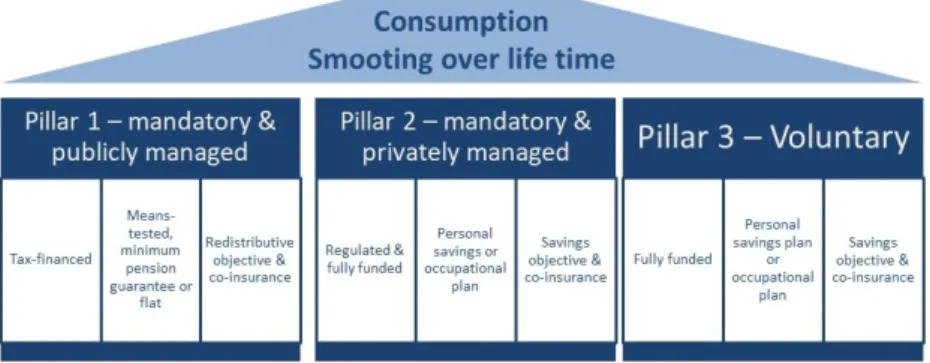
5 Empirical Results 27 6 Conclusion 30 A Appendices 37 A.1 The Worldbank’s Three Pillar System . . . 37
A.2 The Dependency Ratio . . . 38
A.3 The Retirement Age in the EU . . . 39
A.4 The Pension Gender Gap . . . 40
A.5 Open Private Pension Funds in Portugal . . . 41
2.1 Development of the Dependency Ratio in the Euro zone . . . 10
2.2 PSI 20 and DAX and Indexed Portuguese and German 10y Government Bonds . . . 14
2.3 Eurostoxx 50 and EONIA returns . . . 14
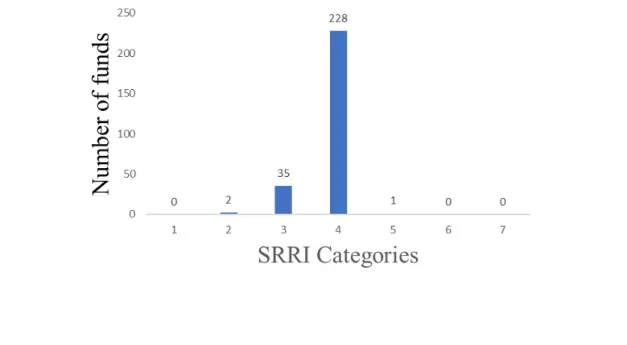
4.1 Euronext ETFs split based on the SRRI . . . 26
3.1 Pension Fund returns in selected countries of the European Union . . . 21
4.1 Synthetic Risk and Reward Classification . . . 24
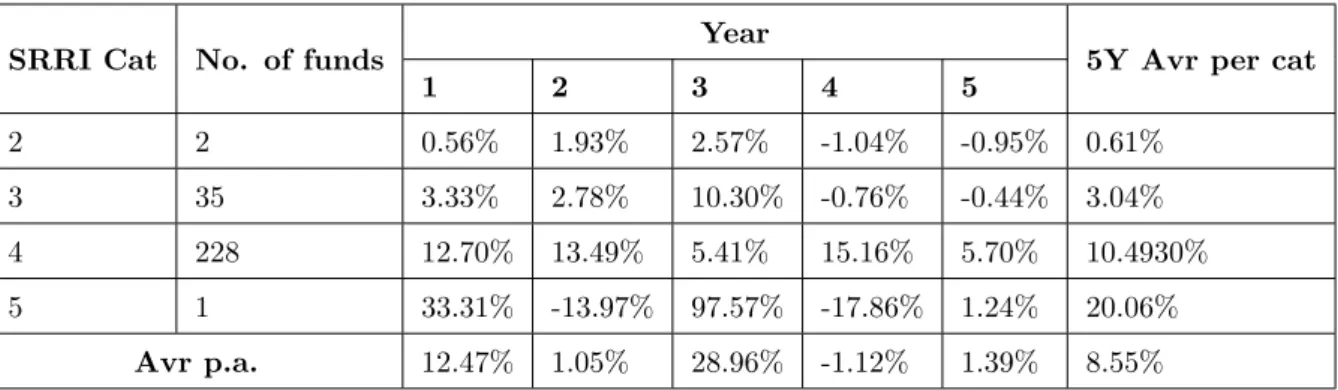
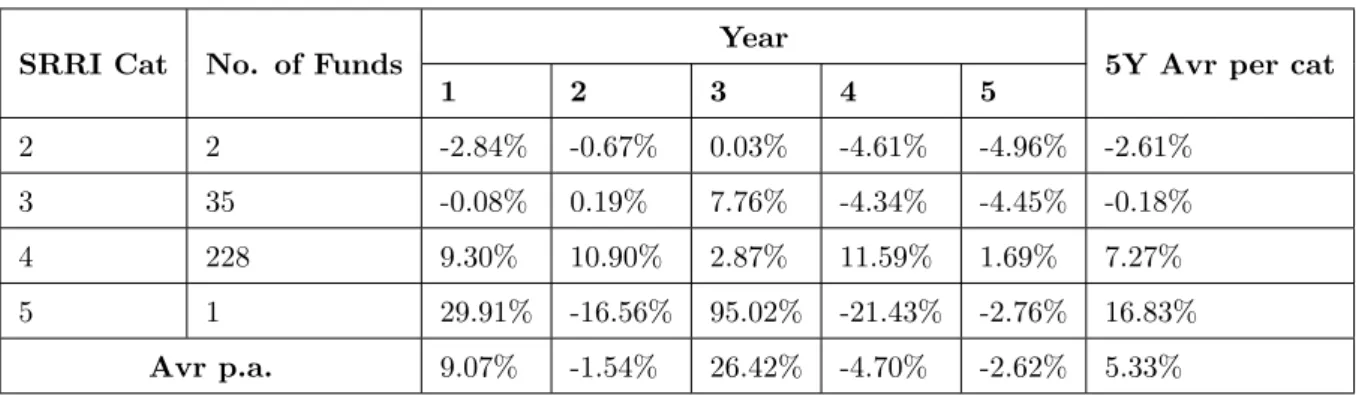
5.1 Average yearly returns of exchange traded funds . . . 27
5.2 Harmonized Consumer Price Index 06/2013 – 06/2018 . . . 28
5.3 Average yearly returns of exchange traded funds - inflation - proxy for management fees . 28 5.4 The Performance of Selected Portuguese Personal Pension Funds . . . 29
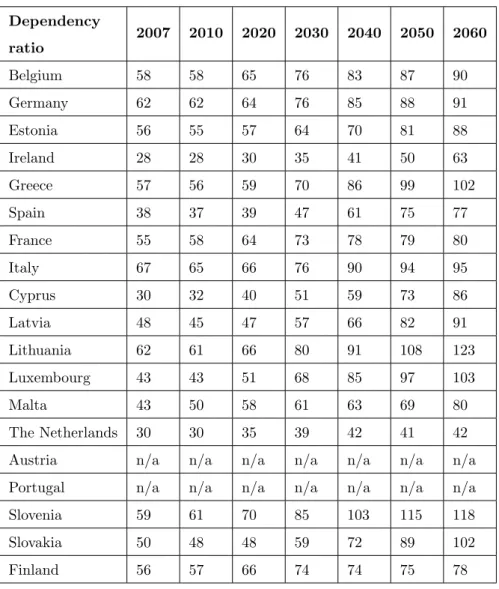
A.1 Current and Projected Dependency Ratios in the European Union – Country Breakdown 38 A.2 Real and Statutory Retirement Age in the European Union – Country and Gender Breakdown 39 A.3 Gender Gap in Pensions on Average - Country Breakdown . . . 40
A.4 Open Pension Funds in Portugal and Data Availability (1) . . . 41
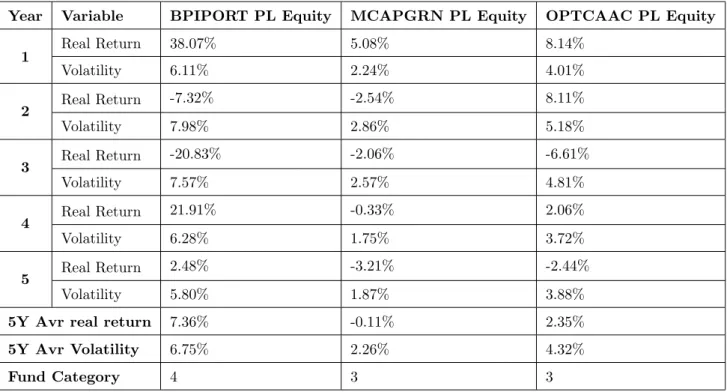
A.5 Open Pension Funds in Portugal and Data Availability (2) . . . 42
A.6 Open Pension Funds in Portugal and Data Availability (3) . . . 43
A.7 Euronext Exchange Traded Fund Names and Bloomberg Tickers (1) . . . 44
A.8 Euronext Exchange Traded Fund Names and Bloomberg Tickers (2) . . . 45
A.9 Euronext Exchange Traded Fund Names and Bloomberg Tickers (3) . . . 46
A.10 Euronext Exchange Traded Fund Names and Bloomberg Tickers (4) . . . 47
A.11 Euronext Exchange Traded Fund Names and Bloomberg Tickers (5) . . . 48
A.12 Euronext Exchange Traded Fund Names and Bloomberg Tickers (6) . . . 49
A.13 Euronext Exchange Traded Fund Names and Bloomberg Tickers (7) . . . 50
A.14 Euronext Exchange Traded Fund Names and Bloomberg Tickers (8) . . . 51
Regulatory tendencies in the European Union have been increasing since the crisis of 07/08. The regulator has imposed a new set of prudential rules to increase the stability of financial markets; one of the focuses was the transparency of costs and fees for customers regulated through Mifid I and II. However, most of these regulations have not had any impact on the third pillar of pension systems – such as voluntary personal pension funds. They are currently regulated mostly by national directives but the EU wide regulators will centralize regulation and introduce a Pan European Personal Pension Product (PEPP) in the coming months.
In the light of modern demographic developments, such as raising life expectancy, lower birth rates and the generation of baby boomers to retire soon, the dependency ratio is rising and will most likely continue to rise. Without additional funding sources and a shift in the political narrative, the future of state funded pensions (at a sufficient level) is uncertain and at risk. Assets as a percentage of the GDP in the second and third pension pillar are rising and younger generations are looking for alternative sources for their future pensions.
Saving money might not be enough to preserve purchasing power (namely, if the inflation rate is higher than the interest rate). In this thesis I discuss based on proxies from which risk level onwards (based on the regulator’s classification), investments are able to overcome the inflation threshold on average. I come to the conclusion that this threshold is category 4 based on the Synthetic Risk and Reward Indicator (SRRI) risk categorization, which is broadly used by the regulator. Summarizing, investments in lower categories might not be beneficial for investors. As the PEPP is supposed to have a default option, the risk category of this option will have a huge impact on the financial well-being of future generations once they retire if they choose this investment vehicle.
In finance, the positive correlation between risk and reward is well known. A riskier financial product can establish higher returns, however, the higher the volatility, which is mostly used for measuring risk, the higher the downward risk, thereby, increasing the magnitude of potential losses. In economics, individual and aggregate saving rates are a prominent topic. Individuals tend to save a part of their income for future consumption. In order to preserve the purchasing power of capital or even increase it, savings should be invested at a rate that is above inflation. Based on risk preferences, investors will choose a set of financial assets in order to maximize their utilities. In this thesis, I discuss the risk and reward profile of personal pension funds. In particular, I assess the minimum risk category for the preservation of the purchasing power of investments. Empirical studies on personal pension funds are still very limited, mostly because of lacking data. This circumstance makes it partly impossible to draw conclusions on the performance of these financial products in the European Union. The European Insurance and Occupational Pension Authority is currently in the process of gathering sufficient data for a European Union wide database. As the data is not available yet, I use proxies based on exchange traded funds listed at Euronext to reach a conclusion.
Life expectancy has been increasing in the last decades but the statutory retirement age (which significantly differs from the actual retirement age) remains more or less stable (EC, 2018), with the exception of some reforms. Politicians are reluctant to increase the age thresholds not only to keep their popularity but also, as older workers often struggle to find employment and individuals show a decrease in productivity from 65 onwards (Lazear, 1979; Duncan, 2001). As a result the dependency ratio of economies is increasing; together with increases in social and health expenses this is posing a challenging environment for the social state. In addition, the valuations used for pension system are questioned in science, which makes it even harder to assess the sustainability of current pension systems. Plamondon, Drouin, Binet, Cichon, McGillivray, B´edard and P´erez-Montas (2002) argue that the models used are calibrated to small occupational pension funds and are not able to account for the vast uncertainties that determine the amount of money, which will be needed in the future. Accurate assessment needs a new stochastic approach. Furthermore, improvements in the governance are needed to account for a broader population and ensure that specific groups are not marginalized and do not suffer from systematic disadvantages (Plamondon, Drouin, Binet, Cichon, McGillivray, B´edard and P´erez-Montas, 2002).
The pension systems between members of the European Union member states differ in a substantial manner and it is far beyond the scope of this thesis to discuss each and every of them1. Therefore, I
discuss the Portuguese pension system in particular and one can also see commonalities between the individual systems in the European Union as they are based on a three pillars, with a mandatory first 1An extensive overview of the current pension systems in the member states of the European Union can be found in the
pillar, which is publicly managed, mandatory second pillar and voluntary third pillar.
The dominance of a certain pillar in a country is dependent on many factors, such as the institutional framework, the economic situation and the level of financial literacy among the population. In the case of Portugal the recent financial crisis is also an important factor as the economy was severely hit by the financial shock and following reformed its social system to cover occurred losses. At the same time a well funded pension system is necessary to ensure the economic well being of older generations once they retire as the economic shock led to an increase in unemployment (decrease pension contributions and also the ability of employed individuals to support members of their families which are unable to work).
I focus on the third pillar of pension systems and discuss the financial performance of personal pension funds in relation to their risk profile. The importance of the private pillar is growing as demographic changes make it less likely for governments to be able to guarantee a sufficient first pillar retirement income under the current institutionalized system and economic narrative without any substantial tax reforms. It remains to mention that the importance of the third pillar could also be reduced if states were able to introduce a more reliable first pillar that is able to sustain despite economic and financial shocks occurring by finding additional source of financing.
Depending on the phase of the economic cycle and the monetary and fiscal policy of the state, overnight deposits might loose purchasing power if the interest rate is lower than inflation. Compounding interest is often described as one of the most powerful financial concepts, where it makes a huge difference if the average rate of return is for example 2% or 3% over the course of 40 years. Especially investments in pension funds done by young people are therefore very meaningful and will determine the financial well-being of these individuals during retirement years highly.
In this work I discuss the risk category of funds, according to the European classification based on the Synthetic Risk and Reward Indicator (SRRI), that investors on average have to choose in order to at least preserve their capital until reaching the retirement age. Risk preferences are a powerful microeconomic concept and are often used to explain investment and consumption decisions. They are also prominent in financial optimization and portfolio theories but are often seen as an exogenous factor. This work does take a different approach as I do not want to endogenize risk preferences but assess which risk level is needed to not loose purchasing power. As I show in the recent years investors had to invest in equity funds or funds with an overweight in equities to achieve a desired level or returns. I combine these insights with a broad theoretical framework, discussing the effects of financial literacy on investments and savings, the regulatory environment of pension funds, the new proposal of a Pan European Personal Pension Product issued to the European Commission and finally the performance of (pension) funds compared to their benchmarks and exchange traded funds.
The Pan European Pension Product is supposed to be designed with limited choices and default options and choosing the default option is very important as investors with limited financial knowledge or mal informed investors will most likely not deviate from the default option. Summarizing, in this thesis I discuss the returns of the proxies I build for European personal pension funds and conclude from which risk category onwards the funds are profitable for their investors. I cross check my results with the
Portuguese personal pension funds.
In the next chapter I review the above mentioned theoretical context, giving an overview of the status quo, discuss demographic trends and risk preferences. In the next chapter I highlight the importance of personal pension funds, point to their regulatory framework and summarize a number of studies on performances of personal pension funds. The regulatory environment also contains EIOPA’s proposal for an EU single market for personal pension plans. Next, I move on to describing the methodology adopted in this thesis, reviewing different concepts of risk classifications and benchmarking and a brief data description. The second last chapter presents the results and I end with a conclusion.
In the 1960s the Lifecycle Hypothesis was first described by Franco Modigliani. According to it saving and consumption decisions made by individuals are based on their expectations of resources over their lifetime. This means that consumption decisions depend on variables such as current income, expectations about future income and future consumption. The theory can be extended by bequests and other variables and is dependent on the discount rate of individuals and their preferences for future consumption. A positive correlation between consumption in time t and the discount rate of economic agents can be observed since the a high discount rate indicates that present consumption is valued higher than future consumption and therefore economics agents will save less of their income. Following, the consumption is not stable but adapts to different life stages to enable individuals to save capital when they earn labor income, which can then be used for future consumption when their income stream declines. The expectations about future income and the propensity to save are highly dependent on the expected length of the work and retirement period; the longer the expected period without income (or small income) – the retirement period – the higher the propensity to save (Modigliani, 1966).
The theory can be seen as a baseline scenario that offers important insights into saving decisions and consumption patterns. Additionally, it provides intuition for the economy as a whole because it is able to derive important macroeconomic variables such as the savings rate, aggregate demand and the output of an economy.
In this framework, individuals are assumed to be rational enough to assess achieve the consumption smoothing effect and also earn enough money to be able to set a substantial portion of their income apart for future consumption but one of the reasons for economies is poverty relief, therefore, suggesting that some individuals are dependent on the State for achieving a minimum threshold of consumption. Other reasons for developing a state pension system include the insurance against social risk or redistribution goals (Barr and Diamond, 2009).
In 1994 the World Bank has defined the well-known Three Pillar Pension system and issued a rec-ommendation for economies to implement it in order to counterfeit demographic developments such as rising life expectancy and declining fertility rates paired with the decline in traditional support systems, e.g. families (The World Bank, 1994). An additional benefit is the full risk diversification among public and private management of pensions. The Worldbank’s classification system is present in a great number of economies today2.
2In the last 30 years, the proposal has also been criticized and also revised by the Worldbank itself. The Worldbank
has acknowledged the plurality in pension systems worldwide, the revised recommendation consists of five pillars: which are: a non-contributory “zero pillar” for a social pension, a mandatory “first pillar”, a mandatory “second” pillar, a voluntary “third pillar”, which all correspond to the pillars from the original proposal and a non-financial “fourth pillar”, which includes informal support from families, non-monetary support from the state or non-financial assets accumulated by individuals (World Bank, 2008). The more flexible system is supposed to counterfeit poverty among elders in a more efficient way.
The pillars are classified as following3:
1. Publicly managed savings with mandatory participation: the main objective is alleviating age poverty and co-insuring against income risks, low investment returns and economic factors, such as inflation or private market failures through the redistribution of income between different income cohorts.
2. Privately managed savings with mandatory or voluntary participation: link benefits actuarially to costs of the income smoothing over lifetime process. In addition, this pillar is able to boost the development of financial markets and capital accumulation in economies, where these markets are under developed.
3. Voluntary savings: provide additional protection for people who want a higher pension income or additional insurance. Personal pension plans are part of this pillar.
According to The World Bank (1994) the involvement of governments is necessary because individuals often suffer from short-sightedness, are confronted with inadequate savings instruments, suffer from long-term poverty or from financial illiteracy and the private sector can or does not account for these risks. In order to counterfeit severe poverty among older age cohorts and parts of populations which are unable to work, a state funded pension pillar is necessary.
One can differentiate between three main financing and managerial arrangements.
1. Public pay-as-you-go offers: income redistribution systems that define benefits as not actuarially tied to contributions and which are usually financed through taxes from the working population.
2. Occupational plans: privately managed plans which often hold tax advantages. These arrangement have experienced a shift from defined benefit to defined contribution in recent years.
3. Personal savings and annuity plans: fully funded defined contribution plans, which are also often encouraged by tax incentives.
Pension systems benefit from a multi-pillar system because of several reasons. One of them is that systems with a dominant public pillar might not guarantee a sufficient level of redistribution, saving and insurance as it is prone to the lack of efficiency and distribution failures as high levels of taxes might be needed paid by wealthier cohorts, which can serve as an incentive for tax evasion (The World Bank, 1994). Also, a one pillar system can lead to deadweight losses and negative effects on the growth level of economic. Furthermore, it fails to foster the development of capital markets. Economic growth might be hindered if the private sector does not have access to pension assets because they are only managed by the government as the money could be invested in capital markets instead (The World Bank, 1994). However, this can be contested as savings are not automatically invested, the assumption that savings equal investments is too simplified (Ghilarducci, 1995). Some commercial banks in Europe decided to pass on negative interest rates charged by the ECB to their customers but deposits accounts are still filled
with idle money. A system relying solely on occupational plans is not able to redistribute income from a social perspective and might be subject to employer or insurance company default. Privately managed personal saving plans do not take financial illiteracy or long term poverty into account and accelerate inequalities that result from differences in labor incomes and unequal starting positions in life between individuals. Lastly, lower income classes might not be able to save a portion of their income as all of it is used for current consumption to satisfy basic needs (The World Bank, 1994).
The need for a well funded pension system depends to a considerable amount on the ability of the population to save for their retirement individually. If the saving rate is high in a country and the population invests in financial products or other investment vehicles, such as property, precious metals or art, most people will be able to achieve a consumption smoothing effect without dedicated retirement savings, as they can liquidate their other investments once the retirement age has been reached, although this argument is somehow oversimplified as we have to account for individual cases, where economic agents become dependent before reaching their retirement age, financial shocks and other peculiar circumstances. However, this is not the case in most countries and for a vast majority of people. In addition, the pension system as a whole is highly important for the redistribution of wealth and a number of theoretical concepts influence it to a great extent. From an economic point of view the micro and the macro level are relevant, on the individual basis consumption and investment decisions are made based on it. From a macro perspective, pension systems can be see as important investors and can have a significant impact on the growth rate of an economy. Fully funded pension systems need to invest the capital, therefore, these plans can foster the development of specific sectors.
The implementation and enforcement of a multi pillar system has been also criticized as it takes responsibility away from the states. The privatization of the system creates new challenges for individuals, especially for lower income classes and for labour unions to develop international standards for pension investments (Ghilarducci, 1995). In addition, Ghilarducci (1995) criticizes that a decentralized pension system looses the insurance aspect as workers are self-responsible to work long enough to contribute sufficiently and are exposed to the risk of low returns and that
“[t]he 1994 World Bank report on international pensions applauds efforts to transform the global pension fund management framework into the Anglo-Saxon model of finance markets embracing MPT [modern portfolio theory] - which is unrestrictive.” (Ghilarducci, 1995, 64)
2.1
The Pension System in Portugal
The statutory retirement age in Portugal in 2008 was 65 for men and women, whereas, the effective exit age in 2007 was 62.9 for males and 62.3 for females, which is higher than the European comparison, especially for women. The lowest has been observed in France with 59.5 for males and 59.4 for females with a statutory age of 60 (EC, 2009). The average life expectancy is 82, which means that on average, people receive pension income for almost 20 years (OECD, 2016).
pushing for structural changes. Scholars argue that these reforms have led to the increase of inequality and general austerity measures. Hermann (2017) gives an overview of the structural reforms that have been adopted in many member states. The author shows that pension systems have been affected by seven specific proceedings in a number of countries, such as the increase of the retirement age, the reduction of pension payments, temporary pension freezes, the extension of contribution periods, the extension of periods on which pension payments are calculated, the limitation of access to early and invalidity pensions and automatic adjustments to life expectancy. Portugal suffered from a temporary pension freeze, limitations of access to early and invalidity pensions and reductions in pension payments, e.g. the elimination of the 13th and 14th pension payments putting more pressure on the second and third pillar of the pension system.
The pension system in Portugal has undergone several reforms in recent decades in order to improve its capability of consumption smoothing throughout the lifetime of individuals and provide an appropriate level of retirement income for the country’s inhabitants.
The first pension scheme was established in 1929 and secured retirement income for public sector employees, in 1935 a plan for the private sector followed. These pension plans were fully-funded and have been changed to pay-as-you-go funds in 1962 when the previous system failed to provide an adequate income for retirees. In the 1980s the second and third pillar were introduced in the country and 19 years later the alignment of these three pillars began.
The first pillar was subject to several cuts due to the financial crisis of 07/08 and following the importance of the second and third pillar increased. However, one needs to consider that the importance of the second and third pillar also suffered from the financial crisis, since the financial well-being of the Portuguese population suffered generally on average. Therefore, individuals often had to cut consumption and also saving rate, where parts could have gone to the third pillar. Furthermore, unemployment rose, leading to a decrease of contributions to the second pillar. According to the original idea, the first pillar should satisfy basic needs and is labor-market based (mandatory for private and public sector employees); additional retirement income should be covered by pensions from occupational (voluntary) and private pension plans (voluntary and often paired with tax benefits) and individual saving accounts.
Occupational pension funds are managed by 22 institutions and consisted of 224 different pension funds in 2013, 90% of the assets under management were allocated to closed funds in 2009 and the majority of pension plans are defined benefit but the trend is displaying a shift towards defined contributions (Garcia, 2017).
In Portugal 21.8% of people aged 65+ are at risk-of-poverty or social exclusion and the relative poverty gap for the same age cohort was 18% in 2016 (EC, 2018).
2.2
The Demographic Framework
The 21stcentury is marked by a number of severe institutional challenges that are materializing worldwide.
raising inequality and unequal distribution of resources but also, transform our pension systems and labor markets, especially in European countries, to meet challenges such as an ageing population and recent and future technological revolutions.
As population ages and life expectancy rises, the costs for social security rise, pension and health care expenditures are accelerating in many countries. Politicians and scholars have been questioning the sustainability of existing systems for years and decades and many European countries are imposing reforms in their pension systems, as has been discussed with regards to Portugal in the previous section. Although, the demographic changes were present for decades almost no additional funding for the pension systems has been put aside to ensure its sustainability.
The exogenous developments, such as demographic changes paired with endogenous increases in fund-ing gaps in many economies, led to worldwide macroeconomic challenges. Accordfund-ing to Bloom et al. (2015) one can differentiate between four major groups:
1. Older people work less than young and middle aged people on average. This leads to a lower output per person ratio in countries with a larger proportion of older population.
2. Consumption tends to be a higher percentage of income for older people and average savings tend to fall throughout the life cycle, which can lead to lower investments.
3. An increased cohort of retired people affects public and private pension schemes. As a lower share of the population is contributing to the systems and a larger share is receiving pensions.
4. Older people tend to burden the national expenditures by higher cost for health care based on diseases and disabilities as the longevity increases.
The current demographic environments do not only have downsides. A larger cohort of retirees might boost consumption, especially for age related consumption goods, for example, medical goods. As the dependency ratio and social expenditure for health care increase, a pay as you go system becomes more and more unsustainable, the financing sources need to be diversified. Opinions differ on the question if the pension system is facing an economic problem or a political one. The pension system does not necessarily have to be self-sufficient. The idea of a social system is to redistribute among the population and the redistribution does not have to be limited to employees and pensioneers only. The state can spend more than current pension contributions on current pensions as long as they find a way to finance the additional burden in a sustainable way.
Lutz, Sanderson and Scherbov (2008) also show that the speed of ageing is likely to increase in the next decades and will start decelerating by 2050. In Western Europe the average age is projected to raise from 38.3 in 2000 to 53.5 in 2100 and Eastern Europe is exhibiting a similar increase from 37 to 52.4. The same holds for the median age, which according to the authors, will increase from 36.8 to 56.5 and 35.6 to 55.7 in the same time period in Western and Eastern Europe. The proportion of the population over 60 years more than doubles in both regions from 0.20 to 0.46 and 0.18 to 0.44, respectively. The probability in Western Europe for a age distribution, where over 1/3 of the population is 60+, is 82%
within this century. According to the estimations of the authors, the prospective median age will increase from 36.8 in 2000 to 41.3 in 2050 and decrease back to 37.7 in 2100 in Western Europe. The share of the population, with a remaining life expectancy of less than 15 years will change from 0.13 to 0.19 in 2050 and 2100. Thereby, indicating a stabilization and slowdown in population ageing. Lastly, the average remaining years decrease from 41 in 2000 to 39.7 in 2050 and reverting to 43.5 in 2100 in Western Europe. In countries of the Global North, population ageing is the dominant trend, where the most challenging times are yet to come before a slow down can be expected, as forecasts show that the dependency ratio will almost double by 2050. The older cohort typically will hold a larger share in assets, which will increase the productivity of labor and wages but lead to a decline in the return on capital in a closed economy. In an open economy the effect will be different, as capital will be invested abroad once the return on capital starts declining. A decline in capital or labor productivity might then lead to a decrease in economic growth (Lee and Mason, 2011).
The above mentioned projections clearly highlight the current and upcoming challenges for most pensions systems. The dependency ratio keeps raising and will almost double in some countries once the generation of the so-called baby boomers will stop working and retire. Without any reforms, such as substantial tax reforms and re-distributional fiscal policy, European countries might not be able to support such a big proportion of an older population and the third pension pillar might then gain more and more importance in the next years when it comes to providing a minimum retirement income.
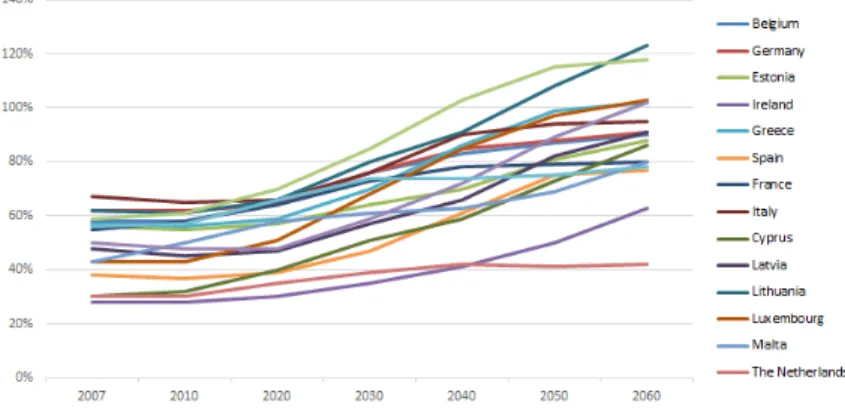
The dependency ratio describes the proportion of the non-working population to the working popu-lation – the number of children and of retired people divided by the non-retired number times 100. In all countries we are expecting this ratio to grow, as life expectancy rises and fertility rates decreases – the portion of dependent individuals increases while the working population grows slower or decreases. In some countries the ratio was very low and is not projected to grow strongly. The Netherlands had a ratio of 28% in 2007 and the projection shows 42% in 2060. On the other extreme is Lithuania with 63% in 2007 already and expected 123% in 2060. One can see that the increase between 2007 and 2060 lies between 12 percentage points and 61, with an average of 39 percentage points. This is clearly a significant acceleration in all countries of the Euro zone. The dependency ratio will grow stronger in less developed European countries. A possible explanation for this phenomenon is that young people in these countries are currently going abroad to neighbour countries to earn more during their work life but are expected to return to their home country for their retirement period, as future generations might continue doing this, the proportion of retirees will exceed the proportion of workers very quickly.
Figure 2.1: Development of the Dependency Ratio in the Euro zone
Data retrieved from EC (2009)
However, it is not only the first pillar that might suffer from the mentioned projections, all three pension pillars will be facing new challenges without substantial reforms and new funding sources. States will suffer from the increasing burden of the social state and financial markets might suffer from a huge sell movement on the financial markets. The Asset Market Meltdown Hypothesis argues that there is a strong link between financial assets and the age structure of the population. Based on the sizes of the age cohorts supply of financial assets might exceed demand substantially, leading to decreasing asset prices and thereby reducing returns on investments for sellers of financial products (Poterba, 2001).
Theoretical models tend to establish and calibrate a very strong relationship between the age compo-sition of market participants and the return on or price level of financial assets based on the Asset Market Meltdown and Lifecycle Hypothesis. A simple plot of the ratio of 40 – 64 years old to total population and leading stock indices displays a strong correlation and gives strong reasoning for further research. One of the simplest baseline models was established by Poterba (2001). Based on a two period overlapping generation model, with a fixed amount of capital, savings rate and income, the author concludes that generational cohorts, which are big will have to buy assets at a higher price while they are working and sell at a lower price if the next cohort is smaller as the price will drop due to the increased supply of financial assets when the large cohort retirees. The limitations and shortcomings of this model have been broadly discussed in academia as the assumptions are very simplified and do not take international capital flows or governmental policies into account. Future developments remain uncertain and the model does not account for changes in other factors that influence investments, investments are not liquidated automatically to be used for consumption (Brooks, 2006) and can serve as bequests (Abel, 2001). Also, under the assumption of rationality and symmetric information to a certain degree, investors are aware of the future decline in asset prices and therefore, this should already be reflected in present values of financial assets, thereby, not leading to a financial meltdown (Schich, 2009).
Summarizing, it might be the case that not only the increased dependency ratio but also lower financial markets returns on average will lead to a highly challenging environment for pension systems, especially
in the Global North.
Inequality in income and wealth is raising worldwide, which implies that richer people are becoming richer and poorer people even poorer; the gap between different cohorts is widening. The economic idea is that individuals save during the time that they are employed in order to guarantee and secure consumption for the time when they are retired. However, if they do not have the means to finance current consumption they will also not be able to save for future consumption and will in addition not receive any capital gains. As the future of state pension systems is unclear and governments are trying to make individuals more self-responsible and encourage them to increase their savings for a private pension, the increase in inequality will disable some individuals to secure this future source of consumption.
Skopek, Buchholy and Blossfeld (2011) find that the wealth distribution in European countries is highly right skewed, even more than the income distribution. Based on their sample of 13 EU member states, they conclude that the bottom 20% of the sample distribution have between -1% and 1% of the wealth of the country, where most countries show a value of 0%. In contrast the value for the top 5% of the distribution range from 21% to 53% (in Poland) of the total wealth.
In addition, the net worth Gini Coefficient shows values from 0.51 (in Belgium) up to 0.75 (in Poland) indicating a higher overall level than the net income Gini Coefficient for all countries from the sample (Dabla-Norris, Kochhar, Suphaphiphat, Ricka and Tsounta, 2015).
One important distinction to be made is between the inequality of outcomes and opportunities. The inequality of outcomes can be quantified by measures such as the Gini Coefficient, whereas, the inequality of opportunities describes differences based on unchangeable factors, such as discriminatory factors, e.g. ethnicity, gender, religion. This separation is useful to understand how inequalities arise, however, both types are strongly linked to each other. Based on Rawls (2009) definition of justice, one can say on one hand that inequality in opportunities is unjust and should therefore not exist in a democratic and fair society. On the other hand the author acknowledges that both types of inequalities exist as the principles of justice are not flawless and must rely on fairness since:
“[n]o society can, of course, be a scheme of cooperation which men enter voluntarily in a literal sense; each person finds himself places at birth in some particular position in some particular society, and the nature of this position materially affects his life prospects” (Rawls, 2009, 12).
John Rawls also correctly points out that one type can lead to another, specifically that inequality of opportunities leads (in many cases) to inequality of outcomes. The set of possible outcomes is restricted through the minimized set of opportunities. Therefore, it is necessary to understand that the social order we have established in not just as per Rawls’ definition and different realities are partly even grounded and justified by our social order.
The above argument can be better understood through an example. Let us assume that we have to equal individuals but one of them is so-called financial literate because his or her parents taught him or her everything they knew on this subject and the other is not. If both of them receive a certain amount to invest, the odds are high that the person with financial knowledge will achieve a better return
on his or her investment (assuming that financial returns do not follow a random walk). Although one would assume that the individuals are able to achieve equality in outcomes, as they do not differ in other cognitive abilities, risk preferences or any other factor, one of them is advantaged because he or she been taught the basic principles of investing. This difference in opportunities leads to a difference in outcomes for the mentioned individuals.
The individual level of financial knowledge has important implications for welfare. Neoclassical mi-croeconomic approaches assume a well-informed (fully informed), rational investor, who determines his or her savings and consumption ratio based on risk preferences and the discount rate. However, there is a huge literature, which shows that assuming rationality does not necessary reflect real life circumstances4. The level of financial knowledge also differs greatly based on factors such as gender or age, where white, middle-aged, college-educated men seem to have the best financial knowledge (Lusardi and Mitchell, 2014).
Empirical results of studies on financial literacy are shocking, not only a huge lack of understanding basic financial concepts has been detected but also most individuals tend to overestimated their knowledge and therefore to not seek professional financial advise according to the results. Lusardi and Mitchell (2014) identify three main concepts, which have to be understood by individual investors in order for them to decide rationally on their investments: the numeracy and capacity to do calculations related to interest rates, understanding inflation, and understanding risk diversification. The researchers show that on average less than 50% of the research subjects were able to answer simple questions regarding financial knowledge, proving that the mentioned concepts are not preliminary knowledge.
An increase in the overall level of financial literacy can benefit all market participants through in-creasing consumer welfare, inin-creasing demand for financial products in the financial services industry, decreasing regulatory burdens for policy makers and increasing economic stability for the economy as a whole (Yoong, 2011).
Summarizing, one can see that the future of pension system in the European Union (and worldwide) is uncertain. Demographic changes urge economies to reform their systems but instead of trying to foster equality and decrease inequality among populations, the reforms often lead to an increase in differences in financial income and wealth between different groups. If the assumption is right that in a few years the financial sector will be facing a huge decline in financial asset prices, states will have to step in and provide a bare minimum of pension income for their citizens as private pension schemes will suffer from major losses and will not be able to provide for their investors. Lacks of financial literacy lead investors and savers to make non-optimal decisions and not make use of financial concepts such as compounding interest, thereby, even promoting inequality as only a few have access and can make use of financial markets.
The importance of a good governance of private pension funds is even higher as this could be a financial instrument that enables the broad mass of people to gain access to financial markets through well managed 4The results of game theoretical experiments with individuals often show that choices are not as rational as mainstream
economic theory assumes. Examples of this can be found in Colman (2003), Bornstein and Yaniv (1998) and Gintis (2000). Also, a full discussion of the assumption of rationality and its shortcomings can be found in Ziolkowski (2017).
and optimally allocated and diversified assets. Unfortunately, pension funds are often criticized for low returns and high management fees, which makes the benefit of using them as an investment vehicle questionable, especially compared to low cost alternatives (G¨ok¸cen and Yal¸cın, 2015). In addition, fees are negatively correlated with the total amount of assets as a very wealthy investor will pay a lower fee because of economies of scale as fees are sometimes also charged in a nominal amount or to a certain threshold on a percentage basis. Asset and portfolio managers might have an incentive to offer discounts on management fees for wealthier people in order to adhere their wealth to the fund.
2.3
Risk Preferences
Institutions and states recommend people to save for their retirement, however, most of them do not have a sufficient level of financial literacy for rational decision making and investments or savings end up locked up in low return saving or investment accounts, making people actually worse off as their money has a higher purchasing power at the time of saving than it will in the future (OECD, n.d.). When individuals decide to invest in pension plans, occupational or personal, they often face a lack of accountability from the fund managers and most of the achieved investment returns are used to pay management fees. In recent years, the European Union was confronted with a low interest rate environment, making less risky investment returns even lower, thereby, forcing many investors to overweight stocks in their portfolios but pension plans have specific asset allocations they have to stick to and early withdrawals are very often punished or even impossible. Even if assuming that pension plan investors on average have a sufficient level of financial knowledge to observe that their asset allocation needs to be adopted to the business cycle phase, which we are currently facing, it still might be impossible or hurtful for them to act accordingly and change their investment strategy due to the institutional framework of pension plans.
In 2007/08 the worldwide economy, especially the US was hit by a severe financial shock, followed by spill over effects to Europe and the emergence of domestic sovereign debt crises. We have experienced a major recession followed by a depression. The European Central Bank and the Federal Reserve tried to counterfeit the economic downturn with cheap money, lowering the interest rates and even opting for unconventional monetary policies, such as quantitative easing.
Returns of stocks and bonds are negatively correlated and since interest payments have been lowered as a response to the economic turmoil the stock markets have experienced a few highs. The below two graphs show that in many moments government bonds and stock indices are negatively correlated and experience adverse developments on the markets. Especially the German and the Portuguese data seem to be displaying this pattern, as can be seen in figure 2.2. The European data in figure 2.3 looks less sound because it contains more averaged values and many different factors play an important role. In addition, the importance of a diversified portfolio becomes visible through these graphs. Investors typically want to achieve a substantial return by minimizing volatility, which can be achieved be investments in negatively correlated assets.
Figure 2.2: PSI 20 and DAX and Indexed Portuguese and German 10y Government Bonds
Data retrieved from Bloomberg
Figure 2.3: Eurostoxx 50 and EONIA returns
In financial theory the time horizon of investments is a significant variable. For pension savings, young investors will typically hold their assets for a longer time period than somebody who is planning to retire in the next few years. If the time horizon is large, investors can choose financial products with a higher volatility as they can wait for recessions and financial downturns to pass before liquidating the assets. Mainstream economic and finance theories very often assume rationality and symmetric information, in the sense that individuals are able to correctly incorporate their knowledge in their financial decisions. Therefore, it is also assumed that the risk preferences of investors gradually decline as individuals become older (Mcleish, 1982; Brown, 1990; P˚alsson, 1996); equities should therefore be over represented in young people’s choices, whereas fixed income should be under represented and vice versa for older investors. As I will show in this section most investors are not rational in this sense and factors such as gender and knowledge have a remarkable impact on risk preferences.
Studies on the gender pay gap often try to explain their outcomes by risk preferences as well, as women tend to take less risk in their professional lives and therefore often do not get promoted or are not responsible for major projects (Bowles and McGinn, 2008). Differences in incomes translate then to the gender pension gap and different saving and investment rates. The average gender pay gap in the European Union in 2012 was 38.3% (taking the male pension income as a base), it ranged from 4.8% in Estonia to 44.7% in Germany, in Portugal the gap was 31.1% (EC, 2018). The differences are huge and as women earn less on average, they also have lower savings and are often less able to additionally save money for the retirement years. Following, one can assume that they have on average lower incomes from all three pillars than men.
Risk preferences also directly influence savings and pensions as they are highly relevant for investment decisions. Economics differentiates between risk averse, risk neutral and risk loving individuals. According to the financial theory, investors decide based on their preferences how much risk they are willing to take and Optimal Portfolio Theory suggests that once the risk level is determined the portfolio can be optimized subject to the risk constraint (Markowitz, 1952). Following, what matters to investors is the Sharpe ratio and not the absolute or relative performance of their investments.
From our personal experience we know that most people do not base their saving decisions on the Sharpe Ratio or the state of the economic environment. The research question I pose in this thesis concerns wealth preservation, so relative performance is the most important indicator for this but people often only take absolute performance into account (and ignore important determinants of the performance, such as inflation). There is a strong correlation between performance and risk, the riskier a product is, the higher the volatility and the higher (lower) the performance can be.
Many researchers have determined two factors that influence risk preferences for investments, the first one is financial literacy and the second is gender. However, these two factors are reciprocal as women tend to have a lower level of financial knowledge on average.
Dwyer, Gilkeson and List (2002) find in a national survey in the US of mutual fund investors that there is a large gender gap in risk taking, which is halved if their regression controls for financial literacy. According to the authors wealthier, more educated investors tend to take on a higher risk level on average.
Gender differences in risk taking behaviour have been observed, which does not mean that there is a natural difference (Croson and Gneezy, 2009). The question between nature and nature regarding gender differences in general is still controversial and I do not aim to answer it here5 but one must take into
account that if risk taking is rewarded in investment decisions, or if a high level of risk preferences are needed to preserve invested capital, women will have on average lower rate of returns on their investments than men. Experiments that prove this point have been conducted by B¨onte (2015), who shows that women are less competitive on average or Cronson and Buchan (1999), who show that women are more generous on average and might therefore, have a lower tendency to save for their retirement period.
Next to gender, age and parental background also play a significant role in explaining differences in risk attitudes (Dohmen, Falk, Huffman, Sunde, Schupp and Wagner, 2011).
5Feminist theory and gender theory can be divided in three schools of thought: Egalitarian feminism, Differential
feminism and Post-structuralism. Nowadays Differential feminism has been mostly rejected as it argues that there are natural differences between sexes. Egalitarian feminism and Poststructuralism, which are the contemporary mainstream do not acknowledge natural distinctions between men and women, where the latter does not even accept the rigid categories of men and women. (Becker and Kortendiek, 2010).
Personal pension funds are fully funded defined contributions plans, where savings are deposited in a personal account and become available once the retirement age of the investor is reached. They are voluntary and independent of the employer and contributors can choose the investment manager themselves as opposed to occupational pension funds, where the provider, e.g. the manager of the assets, such as an insurance or asset management company, is chosen by the employer. Economies can benefit from personal pension plans as the long term individual saving rate increases, capital markets develop, investments in productive capital are boosted and corporate performance is subject to more monitoring (The World Bank, 1994). Governments can encourage investments in personal pension plans by creating a non-inflationary economic environment, an adequate regulatory framework that fosters confidence in the financial sector, by increasing financial literacy and also, by giving tax incentives to pension plan investors.
The subject of this thesis are personal pension plans as this is the pillar that is voluntary and con-tributions to it are based on free will, individuals therefore, actively decide if they want to participate in it or not, contrary to the first pillar, which is mandatory. However, pension funds are not as closely monitored as opposed to mutual funds, which makes data on them scarcer and might lead to governance problems among others. However, the regulator has realized the severe negative impacts that the missing data can have and EIOPA is working on a European Union wide survey to increase the transparency of personal pension funds. Additionally, pension funds are a hot topic given the recent efforts of the European Commission to regulate the personal pension market (more).
Lower income classes most likely are not able to save a substantial portion of their income, therefore, personal pension funds and the return on capital is not very relevant for them. Financial knowledge is often interconnected with wealth – high wealth and income cohorts are able to assess the needed risk level and diversify their investment portfolio towards an optimal portfolio better. On the contrary, middle income cohorts might not have the knowledge and their wealth is not big enough to benefit from financial consultation and advisory services at financial institutions. So they end up with lower returns on average than their wealthier counterparts and the wealth gap and pension gap increase further. In this sense the third pillar reproduces existing inequalities whereas the first pillar aims to reduce them (Foster, 2014). If personal pension funds are able to achieve a “good” return on average, in the sense that their performance is comparable to mutual funds and ensures substantial capital growth over time, they might have a positive effect on the wealth and pension gap. However, there are other externalities, such as the social risk of a disease or death, that are not taken into account here.
It is also interesting to look at the pension gap from a gender perspective as it “can be understood as the sum of gender inequalities over a lifetime, including differences in the life course (motherhood penalty), segregated labour market and gendered social norms and stereotypes more generally” (EIGE,
2015).
Personal pension plans in theory have the ability to serve as a corridor to enable a large number of individuals access to financial markets without requiring a high level of financial literacy and thereby, have the power to distribute capital income more equally. Based on the high importance of personal of personal pension plans in the light of the unknown future of the first pillar, EIOPA has proposed the development of an EU Single Market for personal pension products. Starting from the assumption of the implementation of such a europe wide personal pension product, I conduct the necessary risk levels based on the Synthetic Risk and Reward Indicator, which is widely adopted in the financial market industry of pension savings and broadly used by the regulator also for mutual funds to ensure capital preservation until retirement.
For this thesis I adopt EIOPA’s definition (EIOPA, 2014, 12f.) of personal pension products (PPP), which is based on the below characteristics:
• Individual membership (independent of employers)
• Payment of contributions to an individual account
• Explicit retirement objective
• Early withdrawals of accumulated capital are limited or penalized
• Providers are private entities
• Personal pension funds are funded
• Restrictions may apply as to use of accumulated capital
Personal pension products gain importance as most countries are facing pension gaps and funding deficits. Stress tests conducted by EIOPA in 2017 show that most European countries exhibit a substantial funding gap in their pension systems which can lead to spillovers to the real economy (EIOPA, 2018).
The size of investments in personal pension products varies between European countries, a possible explanation are structural differences in social systems between countries (OECD, 2016). However, there is a common trend that shows that personal pension plans become more and more important and that the European Union is encouraging its citizens to invest in personal pension products not only by developing a standardized Pan European Personal Pension Product and thereby, transferring the social responsibility of states towards individuals.
3.1
The Regulatory Environment
Since the recent economic crisis, central banks have started regulating financial markets more. In the European Union, the European Central Bank is the main authority that poses directives on its member states, which are then translated into national law, based on the specifications of each country to match the requirements of domestic markets. The regulation of pension funds and the pension systems is still
a national mandate but the European Commission is trying to change this and proposed first regulatory measures to harmonize the national regulatory environment for personal pension plans.
Regulation is generally needed to counterfeit three different types of risks: systematic market, systemic and agency risk. Supporters of free markets often point to possible negative effects of regulation, such as a suboptimal asset allocation and a possible herding effect among investment managers. Pension funds are different from banks as they have a long term perspective, systematic market risks evolve because current generations can not trade with future generations, thereby, making intergenerational risk sharing impossible. Systemic risk arises based on asymmetric information and the possibility of bank runs and finally agency risk occurs as trading often happens between parties with different (asymmetric) information and especially pension funds are prone to moral hazard and adverse selection. Pension fund managers’ salaries are often based on short term goals and performances (relative to inadequate benchmarks) thereby, encouraging managers to focus on short term gains instead of ensuring substantial capital gains that can be realized when his or her investors retire (Srinivas, Whitehouse and Yermo, 2000).
Personal pension products can be defined as defined contribution (DC), defined benefit (DB) and hybrid products; DC clearly dominate the European market with almost 80% (EIOPA, 2016, 85f.).
Despite the remarkable size and importance of the private pension fund sector the available data on it is very scarce. According to the OECD (2016) the size of personal pension funds as a percentage of a country’s GDP is variable and is between 0.3% in Portugal and 44.4% in Denmark in 2016. This discrepancy is based on the differences in the institutional set up of pension systems between countries. EIOPA has established that personal pension funds accounted for e1,089 billion by the end of 2014 in the EU and are spread over 67 million consumers (EIOPA, 2016, 7)6. The Netherlands, the UK and
Belgium account for 77% of total assets in the EU which can be explained through differences in pension savings culture and the maturity of the third pillar in the country (EIOPA, 2016, 82f.). Regardless of the differences one can observe that the total number of assets and their percentage to the GDP are growing across the European Union. The increase can be explained by higher investments in private pension plans or positive rates of return or both (OECD, 2016).
The European Commission is currently in the process of implementing regulatory measures on pension funds in order to counterfeit the mentioned market failures, such as a suboptimal asset allocation or herding effects, and ensure a stable financial system. One of the main aims of it is to improve reporting requests, increase the available data and thereby ensure transparency. In addition, switching between personal pension plans also across country borders should be facilitated as more and more people work and life in different countries of the European Union during their lifetime (ECB, n.d.).
In order to increase transparency of personal pension plans for their investors, the European Com-mission voted to build a Capital Markets Union within its member states. The union contains also a new European Central Bank regulation for pension funds.
6This data exclude Germany as it has not provided data to EIOPA. In addition, Cyprus, Greece and Liechtenstein have
indicated that there are currently no personal pension products available in their markets and Finland, Slovenia and Sweden have not participated in the survey.
“The objective of the new regulation is to improve the quality of the data reported by pension funds. [...] The idea behind the regulation is to help plug a data gap that makes it difficult to achieve a comprehensive understanding of cash flows and risks associated with pension obligations. More data would increase transparency on pension funds’ activities, making it easier to verify whether they are delivering on their promises. [...] Once this regulation enters into force pension funds will report a larger set of data, with a higher level of harmonisation and transparency, resulting in a stronger information base for policy decision-making.” (ECB, n.d.)
Another goal of the new regulation is to harmonize the pension system between European member states as the labor market is becoming more and more globalized and the European Commission believes that economies of scale can be increased. EIOPA’s goal is to establish a Pan-European Personal Pension Product (PEPP) that will be characterized by standard information provision, limited investment choices and the definition of one default investment option, regulated, flexible, biometric and financial guarantees, regulated, flexible caps on costs and charges, regulated, flexible switching and transfer of funds and no specification of de-cumulation options (EIOPA, 2016, 5).
The structure of the national pension systems is dependent on the regulatory environment. Follow-ing, the third pillar is also dependent on the institutional structure of the member states (Cristea and Thalassinos, 2016). Although the EU is enforcing a strong regulatory set of prudential rules for many financial institutions, personal pension plan providers remained vastly regulated on national level and do not fall under a common European directive. On a national level we can differentiate between regulations that limit pension funds to a minimum investment in governments bonds or capital projects or limit the maximum exposure of pension funds to certain assets classes with high volatilities. Most European countries have quantitative limits for each asset class, which differs based on the investment vehicle. The Portuguese government, for instance, imposes that closed and open pension funds can invest up to 100% in equities and real estate, bank deposits and loans, whereas, personal retirement savings schemes financed through pension funds are limited to 55% exposure in equities and 20% in real estate, bank deposits and loans (OECD, 2017a).
3.2
The Performance of Personal Pension Funds
The assessment of the performance of European personal pension funds is a not well developed topic in academia due to the lack of data and it is understood that pension funds differ from mutual funds and have to be assessed in a different way, specifically with a much larger time horizon. The evaluation of personal pension funds is also challenging because of differences in legal frameworks and valuation methodologies between the member states of the European Union. Despite this, there is still a number of studies that discuss the performance of the funds. Below I will provide a brief overview of some findings. According to de Dreu and Bikker (2017), Dutch pension funds are not sophisticated investors. The authors base this finding on three factors: they round their asset allocations to 5% tranches, investments
in alternative, complex asset classes are rare and the presence of a significant home bias. All these factor lead to limitations in risk diversification.
Studies that have been conducted in the past for specific countries show little or no evidence of added value through active investment management, such as an actively managed fund. Given the high cost structure, passive investment strategies, such as exchange traded funds, are often a better alternative. The investment returns of pension funds do not outperform their respective benchmarks in most cases and therefore most investors would be better off investing in passive strategies as the costs and fees associated with these investment vehicles tend to be much lower.
The simple average of the real investment return for occupational and personal pension plans in 18 European Union countries in 2016 was 3.6% (net of investment expenses), ranging from 8.3% in Poland to -1.2% in the Czech Republic (OECD, 2017b).
Antolin (2008) compares pension fund returns to benchmarks that have been build on the basis of the Sharpe Ratio. The conclusion can be summarized as: “[...] pension funds have generally underperformed with respect to the hypothetical portfolio with the highest (mean) return for a given level of risk”. The main results are displayed in table 3.1.
Table 3.1: Pension Fund returns in selected countries of the European Union
Country Reference period Gross nominal returns Std dev Nominal bench-mark returns Std dev Returns - bench-mark Czech Republic 07/1998-12/2005 6.7 0.020 6.4 0.018 0.3 Hungary 01/1999-12/2004 10.0 0.056 11.3 0.067 -1.3 The Netherlands 1993-2005 8.6 0.078 9.2 0.086 -0.6 Poland 09/2000-12/2004 13.9 0.070 12.0 0.070 1.9 United Kingdom 1985-2004 10.1 0.135 11.9 0.146 -1.8
As one can see, the results are mostly negative even without subtracting the annual fees for private pension funds. Only Polish and Czech pension funds show a positive return relative to an optimized portfolio.
Gregory and Tonks (2006) evaluate the performance of personal pension funds in the UK between 1980 and 2000 against different types of benchmarks, such as a single factor CAPM, a Fama-French 3-factor model and a 4 factor benchmark model allowing for differences in market timing and conditioning the performance on macroeconomic variables. The authors find “that average performance is not significantly different from zero [which] is consistent with much of previous literature, that on average managed funds
do not earn abnormal returns.” (Gregory and Tonks, 2006, 19)
Petraki and Zalewska (2017) not only study the performance of pension funds but also assess the adequacy of pension funds’ primary prospectus benchmarks and conclude that the benchmarks chosen are often not adequate and that although pension funds have outperformed their benchmarks in the UK between 1980 and 2009 this changes rapidly when comparing the performance to other benchmarks, which are not defined in the funds’ prospectus. The differences arise because funds often are allowed to invest in other asset classes then their primary prospectus benchmark and therefore, the optimal asset allocation of the benchmark and fund might differ in a significant manner.
Another study on the UK market between 1986 and 1994 shows that “[m]ost funds would have been better off with their strategic allocation placed in passive index funds”. Thereby, questioning the added value of active asset management strategies (Blake, Lehmann and Timmermann, 1999, 460).
Lithuania has a mandatory second pension pillar, data between 2011 and 2015 suggests that only the most profitable funds reach slightly higher yields than the benchmark with significantly lower volatility over the period but the majority of funds has underperformed their benchmark (Kabaˇsinskas, ˇSutien˙e, Kopa and Valakeviˇcius, 2017).
Outside of the European Union pension funds also do not seem to overperform passive investment strategies as shown by G¨ok¸cen and Yal¸cın (2015). Even before subtracting fees for active investment strategies the authors conclude that Turkish pension funds failed to provide abnormal returns between 2004 and 2011. By performing a style analysis and separating investment decisions in style and selection investment returns in their sample are explained by default and risk premia and the returns do not differ from benchmark returns significantly (before costs).
Based on the above mentioned literature, one can conclude that on average personal pension funds do not outperform their benchmarks and that index funds or benchmarks, can therefore be seen as an optimistic proxy for private pension fund performance.
Similar conclusions can be drawn for mutual funds. The literature also suggest that cost efficient alternatives such as exchange traded funds or index funds are on average a better investment option. Although risk adjust returns are often similar between these three investment options, actively managed funds display lower real returns when deducting management fees from the performance. For example, Pace, Hili and Grima (2016) find that actively managed mutual funds offer the same risk adjusted return as index funds but the fee structure is different, therefore, most investors would be better off when choosing the cost efficient alternatives, such as index funds. Also, Afonso and Martins Cardoso (2017) find that there is no significant difference between exchange traded funds, index funds and actively managed equity mutual funds regarding outperformance and underperformance of their respective benchmark.
Because of the challenging data situation, I was not able to conduct a performance analysis of European personal pension funds. So, I decided to take a back-of-the-envelope approach and change my original research question, also taking into account the up coming EIOPA regulation. As I have mentioned the proposal for the regulation of personal pension products recommends a limited number of investment options and a default option. Until now it is unclear what the default option will be. Based on the assumption that a majority of investors will not deviate from the default option, this is a very important factor and will have a significant impact on future returns and losses of investors in the Pan European Personal Pension Product. Instead of assessing only the performance, I examine which volatility level an investor has to choose on average to preserve the value of his or her investments.
I measure volatility with the SRRI, which groups funds into seven categories depending on their volatility, so the upturn and downturn risk. It was tailored to provide investors with a harmonized risk and reward indication, ensure an appropriate diversification of investment units across different asset classes, be applicable to all investment funds and cost-efficient in its implementation among other objectives. Hence, the SRRI should be included in every Key Information Document (KID).
SRRIs are based on the weekly volatility of the fund’s past returns, which is rescaled to a yearly basis in a second step (if these are not available monthly returns shall be used). The sample period should cover at least 5 years of a fund and should take possible dividends into account.
volatility = σf = v u u t m T − 1 T X t=1 (rf,t− ¯rf)2 (4.1)
rf,t represents the returns of a fund measured over T non overlapping periods of the duration of 1/m
years. Assuming the ideal scenario of weekly returns, m = 52 and T = 260 and ¯rf is the arithmetic mean
of the returns over the T periods.
arithmetic mean = ¯rf = 1 T T X t−1 rf,t (4.2)
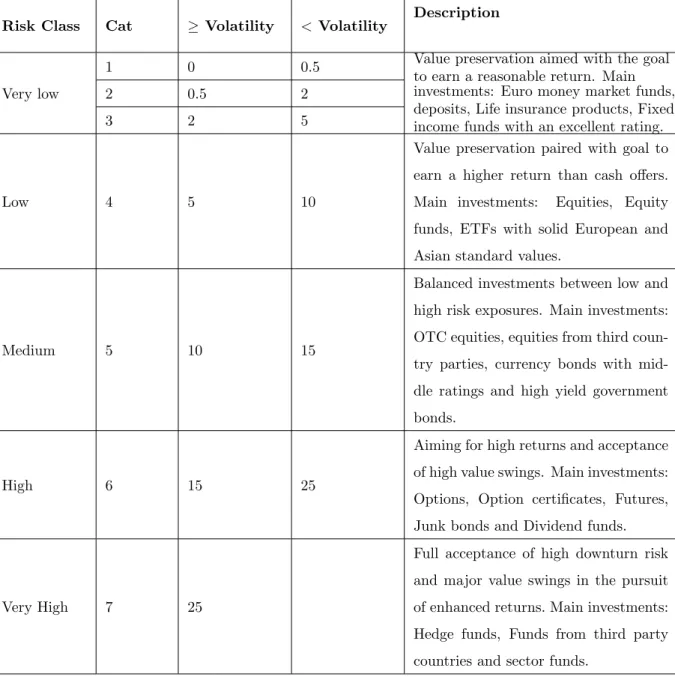
Table 4.1 presents the risk classification of funds into seven categories, which is also used by the European Union, their minimum and maximum volatility bound and examples of financial assets, which typically fall under this risk category (Meteor Research Department, n.d.).
Table 4.1: Synthetic Risk and Reward Classification
Risk Class Cat ≥ Volatility < Volatility
Description
Very low
1 0 0.5 Value preservation aimed with the goal to earn a reasonable return. Main investments: Euro money market funds, deposits, Life insurance products, Fixed income funds with an excellent rating.
2 0.5 2
3 2 5
Low 4 5 10
Value preservation paired with goal to earn a higher return than cash offers. Main investments: Equities, Equity funds, ETFs with solid European and Asian standard values.
Medium 5 10 15
Balanced investments between low and high risk exposures. Main investments: OTC equities, equities from third coun-try parties, currency bonds with mid-dle ratings and high yield government bonds.
High 6 15 25
Aiming for high returns and acceptance of high value swings. Main investments: Options, Option certificates, Futures, Junk bonds and Dividend funds.
Very High 7 25
Full acceptance of high downturn risk and major value swings in the pursuit of enhanced returns. Main investments: Hedge funds, Funds from third party countries and sector funds.
4.1
Benchmarking
Before I move on to the data description, I want to clarify the meaning of a benchmark since it is a crucial concept in financial theory and also in this thesis.
A benchmark should be broad, neutral, investable and representative. However, it can be challenging (or even impossible) to fulfil all of these criteria at once. One can differentiate between four types of benchmarks: objective-driven, granular, broad and strategic. Of these four only a strategic benchmark is able to meet all the quality criteria mentioned above (Blackrock Portfolio Solutions, n.d.).
An objective-driven benchmark is not asset-class specific but focuses on a goal, which can be the return. In the light of pension fund investments, a benchmark of the fund’s costs plus inflation should