CONSUMER ATTITUDES AND PERCEPTIONS TOWARDS
MEDICINE TYPES:
BRAND MEDICINES VERSUS GENERIC MEDICINES
Ana Margarida Nunes Francisquinho
Project submitted as partial requirement for the conferral of Master in Marketing
Supervisor:
Prof. Susana Henriques Marques, Director Bsc Marketing Management, ISCTE – Lisbon University Institute
2 ABSTRACT
Portugal, like the rest of the world, is going through a huge economic crisis, in this sense; other types of product emerge to meet consumer needs and the country's economy.
In fast moving consumer goods, arise distributors brands, parallel in Pharmaceutical Industry and market, arise brands with Generic medicines. These medications come with a much lower cost to the consumer and present the same quality of the correspondent Brand medicines.
In Portugal, these drugs have become a success story, recognized by the European Medicines Association (Gonçalves, 2009), which is related with the governmental measures adopted by governments, since the introduction of this type of medication in Portuguese market, as the creation of reference prices.
However, this growth could have been even greater if it had not been observed a low rate of prescription in an initial phase. In this study, in order to understand how to enhance the consumption of these drugs and understand why in many cases Brand medicines are still elected as the first choice, the researcher proposed to observe the consumer due to its active and participatory on their health. As such, through a questionnaire, subjects were approached and questioned regarding the attitude and behavior towards the two types of medications and performed a subsequent statistical analysis. The results of this research focus on consumer perceptions about the Generic drugs, the impact that the sources of information and new technologies have on consumer behavior, perception of quality and sense of security concerning both types of medicines and intent of repeating the purchase in the future.
Key words: Medicine type, consumer behaviour, branding.
3 RESUMO
Portugal, assim como o resto do Mundo, está a atravessar uma enorme crise económica, neste sentido, surgem outros tipos de produto para fazer face às necessidades do consumidor e à economia do país.
No grande conumo surgem as marcas de distribuidor, paralelamente na Indústria e mercado farmacêutico, surgem as marcas de medicamentos Genéricos.
Estes medicamentos surgem com um custo bastante inferior para o consumidor e apresentam-se coma mesma qualidade dos medicamentos de Marca correspondentes. Em Portugal, estes medicamentos tornaram-se um caso de sucesso, reconhecido pela Associação Europeia de Medicamentos (Gonçalves, 2009), o que está relacionado com as medidas governamentais adoptadas pelos vários governos, desde a introdução deste tipo de medicamentos no mercado Português, como é o caso da criação de preços de referência. Contudo, este crescimento poderia ter ainda sido maior, caso não se tivesse observado a baixa taxa de prescrição inicial. Neste estudo, de forma a perceber como se poderá aumentar o consumo destes medicamentos e compreender o porquê de em muitos casos ainda serem eleitos como primeira escolha os medicamentos de Marca, o investigador propôs-se a observar o consumidor devido ao papel ativo e participativo que este tem na sua saúde. Como tal, através de um questionário, foram abordados e questionados temas relativos a atitude e comportamento perante os dois tipos de medicamentos e realizada uma posterior análise estatística. Os resultados desta investigação centram-se na percepção do consumidor sobre os medicamentos Genéricos, o impacto que as fontes de informação e novas tecnologias têm no comportamento do consumidor, a percepção de qualidade e sentimento de segurança relativo a ambos os tipos de medicamentos e a intenção de repetição de compra no futuro.
Key words: Medicine type, consumer behaviour, branding.
4
DEDICATION
“Even the safest men and the more confident women have experienced a moment of hesitation, huge and small doubts, which may not even deserve to be called doubts, so small they are. Vacillations, it would be better to say. Should I go to this dinner, even though the homeowner does not know me well? Should I take all the money from the bank and invest in this madness? Should I send an e-mail apologizing for my negligence? At this time, we need a little push. And it is to the pusher that I dedicate this chronicle, to all those who witness the hesitations of others and say, go ahead!
At a time when almost no one looks in the eyes of the other, where most people are little interested in what concerns the other, just only thanking to those who realize our unbelief, indecision, suspicion, all that paralyzes us and spent a little of their energy with us, insisting.”
Martha Medeiros It would be impossible to accomplish this stage of my life without the contribution of many people:
To Susana Marques, thesis supervisor, I thank for all the support, guidance and availability, thank you for all the know-how sharing and for all your valuable contributions to this journey.
To my parents, for all the support, incentive and unconditional love. To Ricardo that was always by my side, supporting me in each moment, with a smile, a laugh or a word of motivation. Both forgive the lack of availability and time that was not spent with you. To all friends and family (sorry for not mentioning names but I believe that each one will review the words that I leave here) who accompanied me and contributed to the realization of this project, I am very grateful for the support and encouragement received over the years, thank you!
To colleagues, professors and friends involved in this study, thank you, for the time, availability and participation.
5
CONTENT
1. INTRODUCTION ... 13
2. LITERATURE REVIEW ... 15
2.1. Consumer behaviour ... 15
2.1.1 Decision making process ... 15
2.1.1.1 Decision making process stages ... 16
2.1.2. Types of buying ... 18
2.2. Branding ... 19
2.2.1 Types of brands ... 20
2.2.1.1 Concept of manufacturer brand ... 20
2.2.1.2 Concept of private label ... 21
2.3. Application camp: Pharmaceutical industry ... 23
2.3.1 Pharmaceutical Industry in Portugal ... 27
2.3.2 Pharmaceutical Market ... 30
2.3.3 Types of product... 35
2.3.3.1 Brand medicines ... 35
2.3.3.2 Generics medicines ... 35
2.3.3.2.1 Safety, quality in Generics ... 37
2.3.3.2.2 Advantages ... 37
2.3.3.2.3 Generics market ... 39
2.3.3.2.4 Generics positioning in the Portuguese Market ... 40
2.3.3.2.5Competitiveness of the generic medicine ... 42
2.3.3.3 With prescription versus Without Prescription - OTC ... 43
6
2.3.4 Distribution circuit ... 44
2.3.5.1 Industry pressures involving distribution ... 47
2.3.5.2 Distribution strategies ... 48
2.3.6 Price Strategies ... 50
2.3.6.1 Portuguese Pharmaceutical Price Strategies ... 52
2.3.7 Communication ... 53
2.3.7.1 Presence of pharmaceutical companies in the internet ... 55
2.3.7.2 Empowerment of customers ... 56
2.3 Research Framework ... 57
3. METODOLOGY ... 63
3.1 Methodological choices ... 63
3.2 Population and sampling ... 64
3.3 Scales ... 66
3.4 Instrument collection ... 66
3.5 Data collection ... 68
3.6 Data analysis procedures ... 69
4. RESULTS AND ANALYSIS ... 70
4.1 Socio-demographic Characterization of the sample ... 70
4.2 Medicine’s habits usage ... 73
4.3 Influencers Role ... 78
4.4 Past experience with Medicines ... 81
4.5 Reimbursement has an important purchase factor ... 85
4.6 Future purchase intension ... 87
4.7 Hypothesis testing ... 88
7
5. DISCUSSION AND CONCLUSIONS ... 105
5.1 Conclusion ... 105
5.2 Limitations ... 107
5.3 Implications for Marketing and Management... 108
5.4 Directions for future research ... 108
6. BIBLIOGRAPHY ... 110
7. APPENDIX ... 117
7.1 Historical evolution of Generics ... 117
7.2 Portuguese legislation ... 119
7.3 Questionnaire ... 121
7.4 Binominal test ... 128
7.5 Independent Sample T-Test ... 129
7.6 Chi-square test of independence ... 130
7.7 Bilateral test of K-S Independence ... 132
7.8 Crosstabs ... 136
8
LIST OF FIGURES
Figure 1: The model of Consumer Behaviour ... 17
Figure 2: Model of brand strategies ... 23
Figure 3: Main intervenient in the Pharmaceutical industry ... 30
Figure 5: The Pharmaceutical Industry Structure... 45
Figure 6: Economic Structure of the Wholesale Industry ... 47
Figure 7: Research Hypothesis ... 62
Figure 8: Distribution of the sample by gender (%) ... 70
Figure 9: Distribution of the sample by age (%) ... 71
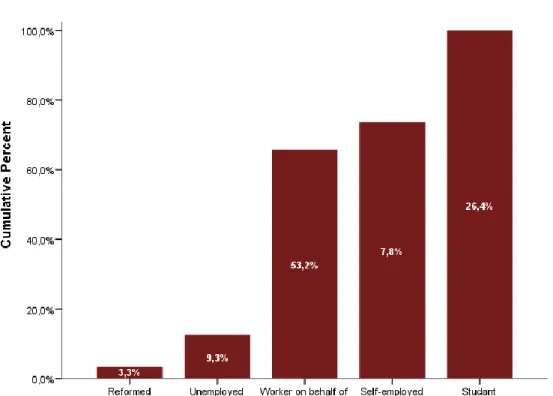
Figure 10: Distribution of the sample by occupation (%) ... 72
Figure 11: Distribution of the sample by Qualifications (%) ... 72
Figure 12: Distribution of the sample by income (%) ... 73
Figure 13: Distribution of the sample by frequency of purchase ... 74
Figure 15: Generic Medicine advice by the Doctor ... 74
Figure 14: Generic Medicine advice by Pharmaceutical ... 74
Figure 16: Generic Medicine instead of Brand Medicine ... 75
Figure 17: Brand Medicine changed for a Generic Medicine ... 75
Figure 18: Reason for not asking a Generic Medicine ... 76
Figure 19: Future Behaviour ... 77
Figure 20: Distribtution of influences ... 78
Figure 21: Information collected by influencers ... 79
Figure 22: Frequencies of the quantity of information through medical sources ... 80
Figure 23: Percentage of inquiries that know that they have a Generic Medicine available ... 81
Figure 24: Frequency of Medicines consumption from the more consumed Medicines in Portugal 82 Figure 25: Reasons to prefer Brand Medicines ... 82
Figure 26: Reasons to prefer Generics ... 82
Figure 27: Generic purchase influence reasons ... 83
Figure 28: Consumer behavioural profile ... 84
Figure 29: Distribution of sample reimbursement ... 85
9
Figure 31: Health Insurance Reimbursement ... 86
Figure 32: Percentage of inquiries that followed a Generic treatment after a Brand one ... 87
Figure 33: After Generic behaviour and Future purchase ... 88
Figure 34: Reliability test for Medical entities information transmission ... 94
Figure 35: Internet influence behaviour ... 96
Figure 36: Past experience with Generics ... 100
10
LIST OF TABLES
Table 1: Pharmaceutical Market ... 31
Table 2: R&D investment in Europe ... 32
Table 3: Medicinal product with marketing authorization ... 33
Table 4: Table 3: Total Market Value (retail price) ... 33
Table 5: Number of generic medicinal products ... 34
Table 6: Main therapeutic groups in 2012... 34
Table 7: Comparative analysis about generics medicines politics ... 41
Table 8: Reliability test for quantity of information through medical sources ... 79
Table 9: Reliability test for quantity of information through external sources ... 79
Table 10: Reliability test for Internet behaviour ... 96
11 EXECUTIVE SUMMARY
Generic medicines are an important and recognised font of competition to Brand medicines, but also an important innovation for cost reduction in Pharmaceutical Market, which turns possible savings for both, patients and State.
In this context, it is important to understand the consumer behaviour associated to both medicine types (Generics and Brand), and it is also relevant to find out what is the attitude of people towards those, what can influence consumers attitudes and also if this attitude influences behavioural intension and the future purchase, due to the engagement created. Besides, it is interesting to study if there are different answers according to different ages and different proximity with the new technologies (internet, websites and social networks). This master thesis theme is Consumer Attitudes and perceptions towards medicines types:
Brand Medicines versus Generic Medicines.
For the research purpose it was applied an online survey to a non-representative sample between the ages of 18-70 years, that buy medicines. From 26th to 30th of September, 269 valid questionnarie answers were collected.
From this research it was possible to conclude that the number of people that buy Generics and Brand Medicines does not vary too much within the more consumed therapeutic groups. Although it also proves that the Generic engagement is now as bigger as the engagement with Brand Medicines.
The majority of the inquiries are influenced by someone in their decision process. It is also interesting to observe that a certain number in this sample (9%) is searching for information about medicines in the internet.
There have been a contribution from doctors and pharmacists to the Generic spread, due to the fact that they arealready prescribing this type of medicines. Although in what concerns the transmition of information, it can be concluded that there is still a lot to do, starting by those entites, that should talk more with patients in order to explain what those medicines are, why they are cheaper and to explain that they are as safe as the other type.
In what concerns consumer beheviour it could be concluded in this study that the majority of the respondents are more engaged with Generics and starting to substitute the Brand medicine for this type.
The reimbursement in this industry, is one of the more important issues for the consumer, although it could be concluded that the type of medicine is not influence by the existence of reimbursement.
12 In what concerns Generic future purchase, respondents have the intention of repeating the purchase due to the quality and safety transmitted by those.
Nevertheless, this research has some limitations that were assumed in the metodology, they do not compromise the results, as it is still with a high level of confidence that the researcher arrive into conclusions, and that hypotheses were done.
The main limitations of this research were the absence of preliminary qualitative studies, the way the sample recruitmentt was done and the fact that this is a non-probabilistic sample.
13 1. INTRODUCTION
The theme of this thesis is Consumer Attitudes and perceptions towards medicines types:
Brand Medicines versus Generic Medicines.
Brand Medicines is a term to define those drugs that can only be produced and sold by the company that holds the patent for the drugs. On the other side, Generic Medicines can be defined as replicas of brand name drugs with the same quantities, effects and side effects, way of administration, risks and safety and as strength as the original medicine; which mean that the pharmacological effects are the equal as those from brand name medicines (Stoppler & Hecht, 2009).
This theme is relevant, as Generics Market has been growing in the last years, due to a variety of measures, as promotional campaigns, introduced by the health Ministry and Infarmed. Those campaigns have the aim of creating within the patients the confidence and safety so that they start consuming those medicines, that have great quality and lower prices, when comparing with Brand Medicines.
Portugal has been making huge efforts in order to improve the access to medicines, promoting more consistent health measures where the main objective is to reach the more patients as possible. Within those measures are the pharmaceutical products and the Generics Medicines politics.
Pharmaceutical market, is very special, with a great complexity and variety of intervenient: pharmaceutical companies, distributors, pharmacies, doctors, health technicians, patients, public and private health entities and insurance companies.
This thesis has four chapters. Chapter one, is the Literature Review, that approaches Consumer behaviour, in this topic it is developed the decision making process and its stages as well as types of buying. Branding and the types of brands were also topics explored at the Literature Review. Then, it was explored the Pharmaceutical Industry, its application in Portugal, its market and the types of product.
14 Distrubution and price strategies were also topics developed in the Literature Review. Finally it was discussed the communication and the presence of it in the internet and made a research framework with the hypothesis to be tested.
The second chapter is Metodology, in this chapter the collection and analysis of the quantitative data is explained. There were collected 269 valid surveys from a convenience sample through an online basis. The survey was online from 26th to 30th of September. In order to analyse this data, some parametric and non-parametric tests were performed, with SPSS, statistical software, along with other descriptive analysis.
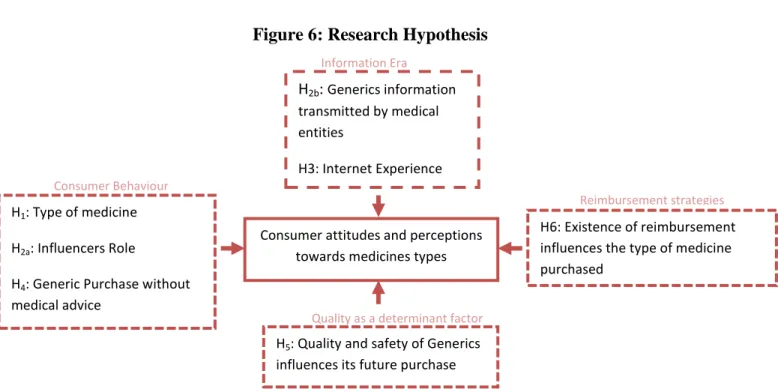
Chapter three represent the results, and interprets the results of this study, based on the model presented in the Literature Review, there are seven main hypothesis that are going to be tested:
If when buying the main therapeutic groups, the proportion of Portuguese’s that prefer Generics is bigger than those that prefer Brand Medicines.
If final purchase is influenced by industry prescribers or other advisers/influencers. If the information medical entities transmit about generics, influences positively the
knowledge consumers have about it.
If consumers experience with internet has influence in the purchase decision.
If the majority of the inquiries do not change their behaviour after medical advice
for a Brand Medicine.
If quality and safety perceived by the past experience with generics have a positive
influence in future Generic consumption.
If the existence of reimbursement has influence in the type of medicine purchased.
Finally the last chapter is the Discussion and Conclusions that include, conclusions, limitations of this research, implications for management and recommendations for future research.
15 2. LITERATURE REVIEW
2.1. Consumer behaviour
Consumer behaviour can have several definitions, it examines how individuals acquire, use and dispose of company offerings (Noel, 2009).
Consumer behaviour is defined “as the behaviour that consumers display in searching for,
purchasing, using, evaluating and disposing of products and services that they expect will satisfy their needs” (Schiffman & Kanuk, 2007). According to these authors “consumer behaviour focuses on how individuals make decisions to spend their available resources (time, money, effort) on consumption-related items”. These decisions are related with what
they buy, why and where, and also how often do they do and use that. The evaluation after purchase is also a buying behaviour because it will have impact on future purchases (Schiffman & Kanuk, 2007).
Solomon, 2010, went further and said that consumer behaviour is “the process involved
when individuals or groups select, purchase, use or dispose of products, services, ideas, or experiences to satisfy needs and desires”.
Consumers are all unique, so there is no similar consumer behaviour, even since we are child until we get older we face lots of different buying behaviours. Despite the behaviour we all have, the important thing to retain is that we are all consumers, no matter our differences we all consume on a regular basis, food, clothes, education, transportation, (Solomon, 2010).
2.1.1 Decision making process
Consumer decision making has been a topic of great interest to researchers. Around 300 years ago Nicholas Bernoulli, Jonh Van Newmann and Oskar Morgenstern, started to think about consumer behaviour (Richarme, 2005). Those economists only explored the act of purchase (Loudon & et al, 1993). A model that resulted from this theory is the “Utility
16 theory” which suggests that consumers choose to have in mind the expected outcomes of their decisions. Consumers are viewed as rational decision makers who are only concerned with self-interest ( (Schiffman & Kanuk, 2007) (Zinkham, 1992)).
Although contemporary research, considers lots of factors influencing the decision making of consumer, these factors can be described as the need for recognition, information search, search for alternatives and respective evaluation, building of purchase intention, act of purchasing, consumption and finally disposal.
There are five stages in this process that are described as: problem recognition, information search, judgement, decision making, and post-decision processes (Noel, 2009).
The author added that this is a process that happens every day; however it has more impact every day; however it has more impact in consumers when the purchase is important for them, for example if it is an expensive product or if has impact on health or self-image (Noel, 2009).
However the products that is not so important, as chewing gum do not follow such complicated process. In that case, consumers try to experience problem recognition and then they make a decision without losing too much time in gathering information and evaluate other alternatives (Noel, 2009).
2.1.1.1 Decision making process stages
There are four stages of the decision making process (Noel, 2009):
Problem recognition: There is a problem for consumers when their state differs from the
state they would like to experience. That means that they have a need that is not satisfied.
Information search: in order to solve a problem the search for alternatives starts so that
17
Judgment and decision making: after the identification of the problem and the search for
alternatives completed, the evaluation of alternatives should now take place, based on the possible options. This means that a decision about whether a brand satisfies a need has to be made.
Post- decision processes: when the decision is made and the product purchased, it is time
for the last step, knowing if the consumer is satisfied with a product or service. If a person is satisfied with a product can have a positive reaction and recommend it to his/her friends, or repeat the purchase. When a person is dissatisfied, can have a negative reaction and make a complaint or even return the product. 1
1
Font: (Noel, 2009)
Figure 1: The model of Consumer Behaviour
External Influences Firm’s Marketing Efforts
Product
Promotion
Price
Place
The consumer’s culture
Religion Ethnicity Reference Groups Social Class Internal Process Psychological Processes Motivation Perception Attitudes Knowledge Decision Making Problem recognition Information search Judgement Decision making Psychological Processes Purchase Post-purchase behaviour Post-decision processes
18 2.1.2. Types of buying
The decision to buy differs a lot from person to person; it all depends on the need of the person. There are different factors influencing the nature of buying (Kotler et al., 2008). These authors classified buying decisions into four different categories: complex buying behaviour; dissonance reducing buying behaviour; habitual buying behaviour and variety seeking buying behaviour. The categories are classified according to the degree of involvement and difference among brands:
Complex buying behaviour: there is a high involvement with the purchase and there are
significant perceived differences among brands. The consumer in that situation will go through a learning process by developing benefits about the product, attitudes and in the end make a thoughtful purchase. These situations occur with products of high price, risk low quality and so on. A good example is the purchase of a mobile or laptop. Both products are expensive and there is a variety of brands. Consumers feel uncomfortable to decide for a specific brand.
Dissonance reducing behaviour: happens when consumers are highly involved with a
product that is expensive, not frequent and of risky purchase; however they see little differences between brands. In the post purchase phase, consumers may experience discomfort when they notice the disadvantages of the purchase.
Marketeers should take care of the post-purchase communication by providing evident support.
An example of this purchase is a sofa or a kitchen cabinet, consumers categorize the difference in accordance to price range.
Habitual Buying behaviour: there is a low involvement from the consumer as well as little
significant brand difference. Normally consumers have less involvement with low-cost products. In this category the search for information is not high, consumers do not look for the characteristics of the brand and they do not make thoughtful decisions about which brand to buy. On the other side they are continuously receiving information while watching
19 television or reading magazines, in the end they will choose a brand because it is familiar to them. As it has created some kind of symbol and visual image in their minds, buyers will identify the product with which they feel attached too. In order to stimulate product trial marketers often use price and sales promotions.
A good example is a lighter, consumers just go for it and purchase it, there is no brand loyalty.
Variety seeking buying behaviour: this situation has a low involvement from consumers
although it has a significant brand differences. Normally in this situation consumers change a lot the brand. The switching of brands occurs because there is sake of variety more than dissatisfaction. Consumers change preference for certain body soap for variation although satisfied with current brand.
2.2. Branding
Branding is a discipline that born from consumer goods domain, in particularly fast moving consumer goods (FMCG) (Garder & Levy, 1955).
A brand is inextricably linked to the product (Garder & Levy, 1955), as so a brand can be defined as a set of benefits (emotional and functional) that outspread a unique and welcome promised (de Chernatony & McDonald, 2003).
Kapferer (2008) also agrees with this definition, as he considers a brand as a set of added perceptions with an emotional component, which is led by a phenomenon of non-indifference in consumer’s hearts that goes from emotion to like.
Moriarty & Duncan, (1998) defined branding as a siglaling concept, and this definition is still used nowadays, as it is considered as a “differentiating sign, symbol, or any other
feature that identifies one seller’s good or service as distinctive from those of other sellers.
A brand is a “mixture of attributes, tangible and intangible,symbolised in a trademark,
20 According to Kotler ( 1997), there can be six levels of meaning in a brand:
- Attributes: words associatede to brandes products. A brand has to convey its attributes;
- Beneffits: customer do not buy a brand or product for its attributes, they buy t for their beneffits. A brand has to convey meaning in terms of beneffits;
- Values: a brand sould identify values that coincide with the delivered benefit package and also say something to the customers;
- Culture: A brand may represent a certain culture;
- Personality: the brand can also project a certain personality, and it will attrack those whom self-image matches the brand image;
- User: brand suggests the kind of consumer who buys or uses the product.
Gordon (2006), defines consumer perspective of branding as a continuous process of creation of a meaning, as they learn about a brand with the multiple experiences they share with it. Each experience will be integrated with the one that is already in their mind.
2.2.1 Types of brands
Nowadays dominance of manufacturer brands is being challenged by retailer’s brands. This situation is more noticeable in some categories than others (Chimhundu, 2010). By definition, manufacturer brands can be defined as brand owned by manufacturers and retail brands are the ones owned by retailers (Baden-Fuller, 1984). These two types of brands are normally positioned side-by-side at the point of sale (Chimhundu, 2010).
2.2.1.1 Concept of manufacturer brand
Manufacturer brands are those created by producers and have their chosen brand name. In these types of brands, the producer is responsible for marketing the brand. When creating their brand names, manufacturers gain extensive distribution, for example when retailers want to sell their brand, and also build customer brand loyalty (Riley, 2013).
21 There are some advantages in developing and selling a manufacturer brand (Onlamai, 2012):
- Develop customer loyalty; - Attract new customers; - Enhance prestige; - Ensure dealer loyalty.
2.2.1.2 Concept of private label
According to Euromonitor (1998), a private label can be defined as a brand name owned by a retailer or wholesaler for a line or a variety of items under controlled or exclusive distribution. Later in 2002, ACNielsen, defined it as a product produced, improved, processed, packed or distributed exclusively by the organization that has the brand control and it can assume two formats: carry the company’s name or use other brand not associated to the company’s name. The same fount in 2004, announced that due to these characteristics and their appeals, the market for private labels has grown a large amount in the last years. Semeijn et al. in the same year, defend that private brands are exclusive from one shop and they compete in different product categories
The distributor’s brands have assuming different names among the years, Cardoso & Alves, (2008) agree with that name and also give the same name in their literature. Others like, Sayman et al. (2002), GabrielsenT. & Sorgardb L., (2002), Bonfrer P. & Chintagunta A. (2003), Srinivasan & Pauwels, (2004), Morton & Zettelmeyer (2004), and Semeijn (2004), prefer the term store brands. It is also possible to call these type of brands, private label, and defensors of this name are Cotteril et al., (2000), Shannon & Lockshin (2001), Hassan & Dilhan, (2004). Pereira, (2001) prefers the term white brands, whereas Neto, (2001) is more likely to call to these brands proper brands.
It is not exactly precise when private brands where born, although since its first approaches it is possible to know that they follow an optimization in price/quality relationship. The first products were not offering any additional benefit; the majority was not following severe patterns of quality, the absence of image and colour in the simple packaging, easily distinguished from competitors, and the low price concept exclusivity were the main
22 characteristics of those. With those features they were understood as low quality products for consumers.
According to Salgueiro (1994), the main idea was that client only wanted to buy the product not the publicity, neither the packaging. This idea was based in the principle that the notoriety of the competitor should be considered an advantage, in that way distributors will introduce in the market the same product with lower price and without investing in any innovation.
During the 70’s and 80’s the producers of big brands start to notice the power of the private brands and in order to destroy that power, they decide to make huge efforts in their adds exploring the quality of their products. When noticing that consumers were paying more attention to the quality. As a result, the private brands, by that time were not only competing by price, but also by quality. When private labels start feeling the need to show more quality, other aspects came on board too: new categories, better margins and more products.
Consumers were by that time choosing based on price, quality and image. As a consequence, the private labels were able to show their power and Gutwilig (2000) said that in the USA, consumers considered the private label were in the same level of quality as the big brands.
Nowadays it is from all the preoccupation to know what the aspects more relevant are for consumers and answer to their needs, in order to create an attachment to the brand and product.
The most important advantages of private labels are (Onlamai, 2012): - Earn higher profits;
23 Figure 2: Model of brand strategies
2.3. Application camp: Pharmaceutical industry
In a general aspect it is possible to say that after the Second World War the Pharmaceutical Industry showed a huge success, having as global leaders in the production of medicines Germany and Switzerland. However in recent decades USA has been gaining weight and supplants European companies. Also the globalization is an incentive for other countries to gain weight in the pharmaceutical industry, with particular prominence of China and India. Despite a weakness in Europe in this sector against other USA and some Asian countries, pharmaceutical industry is still one of the most important and competitive sectors in Europe (Lilaia, 2010).
The loss of competitiveness in the European Pharmaceutical Industry against other countries follows the general poor performance of the European economy, with very low growth rates when compared to USA or some Asian countries (Lilaia, 2010). Last year data
Brand strategies
NoBrand
Brand
Manufacturer Brand Private Brand
Individual Brand
Family Brand
24 confirm the increasing weakness of European industry against its main competitor, USA (Bica, 2006).
Pharmaceutical industry is facing huge challenges, which are related with drug safety, intellectual property in emerging markets and industry image (Poli & Glass, 2009).
In recent years this industry has faced huge pressures which could be related to the environment of change that the healthcare is living (Jolly et al., 2005). According to these authors, the business had to adjust to deal with the new demand of the byers while at the same time achieving profits. They also stated that in order to develop the future, strategic plans, adaptation to new paradigms and a rethink of the marketing strategy and selling strategies should be done, so that a reorganisation in the health systems arrives.
Chris David, has the opinion that in order to “survive in today’s marketplace, pharmaceutical companies must tailor products and marketing techniques to meet individual needs” (David, 2001). The author defends that the consumer empowerment is
the main reason for the healthcare transformation, due to the fact that the new consumer has higher education, access to internet as an information source, and greater personal wealth, as so they expect to have bigger influence in their own medical treatment, by considering healthcare as a right, and not as a privilege as it used to be considered by prior generations. According to this author the centralization in the individual creates a different form of healthcare, one that delivers individualized, informed, interactive, immediate, and integrated health management.
Some of the industry major concerns are: government price controls, costs of launching new products and the growing number of people influencing product choice (healthcare payers, pharmacists and patients themselves, rather than just the physician) (PricewaterhouseCoopers, 1998).
This feeling of dissatisfaction with the pharmaceutical industry is also shared with other authors that defend that in the future complications with issues related with political
25 environment, drug safety, industry image and viability will appear. ( (Patterson, 2008); (Rajamäki, 2008); (Klein, 2008); (Lopert & Moon, 2007)). Recent experiences with the safety of drugs had the consequence of slowed the rate of new drug development (Truelove, 2006).
What is known is that private and public spending on medicines slowed down in 2007, by providing the lowest rate since 1977 (Poli & Glass, 2009).
Those authors conducted a study involving more than 70 industry members from commercial operations and research and development (R&D), from many countries. This individuals where asked to rank the important industry issues in the first phase. In the second phase, statistical techniques were applied in order to found out the possible linkage with the identified issues. As a result six issues were considered of major significance:
Industry’s image: industry image is a major problem for its leaders. In many countries the
healthcare delivery is still not available for some portions of the population. One of the respondents from the study claimed that many people cannot afford that the healthcare system is also related with profits.
This poor view of the industry in both developed and developing areas is very attractive for the public leaders (David, 2001).
Drug safety: This issue is not the one receiving more attention in the media. The question
of drug safety is not only related with problems that some medicines have found, it has more to do with long term and strong forces ( (Leiden, 2008); (Keyhani, 2008); (Anderson, Juurlink, & Detsky, 2008)).
As stated before healthcare is considered a right in some countries, and soon customers will demand risk-free drugs as a right also.
Cost of drug development: There is a rise in the costs of drug development which can be
associated with the complexity of the studies demanded by the regulatory. Another factor might be the medical conditions which in some cases are more difficult to treat.
26 One of the respondent said that his CEO wanted no just to stop the growing in costs but also to reduce them for half.
Price regulation: according to the study, some people are worried about the possibility of
industry change due to its regulation.
Another problem that can be associated with price regulation is reducing patient’s access to the products and diminishes medicine innovation.
Political environment: the political environment is said to have an influence in the price to
the access that people might have to pharmaceutical products, and also limit medicines innovation.
Lack of new drugs: there is a concern that people may not be able to pay for this new drug,
due to the price they might cost.
In order to understand the relationship between these issues a factor analysis was conducted:
Society perception of pharma: the image of the industry is one of major concern,
especially due to the healthcare costs and prescription medicines. Prices in prescription medicines are increasing due to the price increase in commercialized products.
Availability of safe new drugs: There is a perception from the society that companies still
do not know how to deal with the question of safety in medicine. Factor contributing to the availability of safety are the absence of intellectual property in key markets, the use of generic medicines and also the profits generated outside USA.
Politics and legislation: In this point there is little control from the executives. The politics
and legislation has impact on:
27 - Prohibition of the “authorized generic” products from the pharmaceutical brand, which will impact on the life cycle strategies;
- Attempts to coordinate the direction of the research which will affect the speed of discovery and development of cures and prevent the current diseases.
Regulatory environment: There is an increase in the regulation of medicines and also in the
marketing. The cost to bring a new product to the market and the time for the product to be approved is, more than ten years (DiMasi & Grabowski , 2007). The pharmaceutical industry is in the top of the regulated industries, but somehow some people find it important as it represents safety and proves therapeutic value.
Drug innovation and diffusion: The concern in this area is related with the costs of
development which causes worries about the potential lack of blockbusters in the next years, the absence of new and innovative medicines and the marketing strategies efficacy.
Global financial results: The traditional marketing will not be enough to provide the
necessary profits that are required for the continuity of innovation. Although, profitability levels will still be needed to guarantee innovation.
One of the participants stated that “the largest problem is its inability to document the value of its innovative products to third party payers, who are critical to the industry’s future prosperity; increasingly the customer is the payer”.
2.3.1 Pharmaceutical Industry in Portugal
The OCDE classifies the sectors into four technology intensity groups and the Portuguese pharmaceutical industry is an economic activity which is part of the so called sectors with high technological density.
This sectors present growth rates of productivity much higher than the medium and low technological sectors. It has also been showed that in high technological sectors, the
28 capacity to produce more qualified and productive jobs is higher than in medium and low technological industrial sectors.
Portuguese pharmaceutical industry reveals persistence in term of maintaining a reasonable production capacity over the last few decades, the investigation shows that the sector has some imitative characteristics, revealing a set of sharp weaknesses that give it an internationally competitive position confirmed by weak economic indicators (Godinho, Bica , & Rodrigues, 2006).
The development and international positioning of the Portuguese pharmaceutical sector is important not only for the industrial development and its contribution to the exportations, but also for the maintenance of a strategic sector for our country (Godinho, Bica , & Rodrigues, 2006).
According to the annual Apifarma report of 2012, here were 122 pharmaceutical companies in that year and 406 medicines wholesalers (data from 2011).
According to the last data (2010) there were 9.580 people working for the pharmaceutical industry. The provisory data for production in the year of 2012 was 1.335.000.000 € and the exportations value in the same year achieve the value of 703.000.000 € while the importations represented 2.196.000.000 € which represents a huge imbalance between the input and output of medicines, which creates the necessity to reinforce the productive sector and export capacity (Apifarma, 2012).
According to Pinto (2002), Portuguese Pharmaceutical Market has a main stucture of three fundamental intervenients: State, doctor and patient.
State: Has a crutial role has regulator, having worries related to the financial nature. The
state act as an intervenient in many phases of the control proccess, namely the MA (Market authorization) of new medicines, fixing the price and reimbursements, labeling rules, quality waranty and medicines safety (Cabrita, 2012).
29
Doctor: The doctor has the role of active agent, he is the prescriber, he has the power to
decide which medicines the patient will receive (Cabrita, 2012).
Narciso (2005) in his studies about prescription habits, proved that doctors tend to have in attention consumers preferences when making a decision. Although, there is a tendency for them to choose medicines with which they are familiar, and that they still hesitate in prescribing generic medicines. Some doctors present fear in the differences of biequivalent components between branded medicines and generics medicines, which can present complications to patients according to Run & Felix, 2006. That fear is related to the efficiency and success of the treatment, that means the effectiveness of the medicine (Pinto et al., 2010).
Nowadays, medicine prescription has to be done throught information systems, which allows a better control from the State. In this way, the doctor has now access to all detailed in the formation about pharmaceutical products existing in the market, all reiumbursed medicines, technical evaluations of medicines, enumeration of the generics with lower price, price of branded medicines, and also the historic of the last medicines prescribed to his patient (Cabrita, 2012).
Patient: Is the effective consumer of the medicine product. Although, he is a passive agent,
that is dependent of choice of the medicine more suitable for his therapeutic from the doctor, having in this way less power to choose (Pinto, 2002).
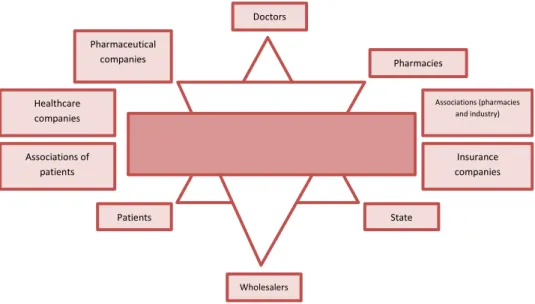
Other intervenients: There other entities that have an influence in the market,as the
pharmaceutical companies, the wholesalers, pharmacies, insurance companies, associations (of patients, pharmacies or industry) and healthcare companies. Figure 3 represents the whole intervenients and relations existing in the pharmaceutical industry2:
30 It is possible to form two big groups, excluding the three main intervenient; the first one is related with product offer (pharmaceutical companies, pharmacies and wholesalers. The second consists of establishing relations and power between the three main intervenient (associations from industry and patients, healthcare companies and insurance companies) (Cabrita, 2012).
2.3.2 Pharmaceutical Market
According to the European Association of Pharmaceutical Industry, 2012, Portugal saw a decrease in 1, 8% of its market, although it was not the only one, as Greece also followed this tendency with a diminution of 8, 3%. Ireland was not behind and confronted a reduction in 7,2% of its market, while the United Kingdom was fighting a break of 6,3%. Norway even though not such a big fall, also faced a decrease of 0, 7%. On the other side, countries such as Estonia, Romania and Slovakia saw an increase of 40, 1%, 32% and 29, 1% respectively (Apifarma, 2012). Doctors State Patients Pharmacies Pharmaceutical companies Associations (pharmacies and industry) Insurance companies Healthcare companies Associations of patients Wholesalers
31 Table 1: Pharmaceutical Market3
Units: Millions of euros (WP)
Countries 2007 2008 2009 2010 Growth 07/10 Germany 25.241 26.523 27.047 27.002 7,1% Austria 2.736 2.921 2.996 3.022 10,5% Belgium 3.932 4.189 4.320 4.428 12,6% Bulgaria 542 617 616 671 23,8% Cyprus 174 188 n/d 200 14,9% Denmark 1.860 2.006 2.073 2.150 15,6% Slovakia 846 1.057 1.064 1.092 29,1% Slovenia 487 493 509 519 6,6% Spain 13.209 13.949 14.744 14.858 12,5% Estonia 137 141 189 192 40,1% Finland 1.848 1.978 1.979 2.005 8,5% France 25.501 26.196 27.146 27.334 7,2% Greece 5.503 5.573 5.850 5.047 -8,3% Netherlands 4.616 4.680 4.654 4.686 1,5% Hungary 1.955 2.091 1.984 2.064 5,6% Ireland 1.902 1.760 1.888 1.766 -7,2% Italy 16.734 17.824 18.540 19.909 19,0% Latvia 257 291 277 276 7,4% Lithuania 404 436 478 479 18,6% Polonia 4.237 5.014 4.484 5.016 18,4% Portugal 3.490 3.660 3.716 3.428 -1,8% United Kingdom 14.493 12.826 12.512 13.583 -6,3% Czech Republic 1.586 1.832 1.895 1.976 24,6% Romania 1.601 1.914 1.909 2.113 32,0% Sweden 3.052 3.172 2.771 3.172 3,9% Total EU 27 136.343 141.331 143.641 147.085 7,9% Switzerland 2.726 2.919 3.235 3.235 18,7% Norway 1.360 1.345 1.350 1.350 -0,7%
The same font also found out that, in 2008 Portugal spent 71 million of Euros in R&D; in 2009 this number increased to 103 million Euros. Although in 2010 it was possible to assist to a huge reduction of this investment, to less than half, 42 million Euros. This reduction made Portugal, one of the lowest investors in Europe (Apifarma, 2012).
32 Table 2: R&D investment in Europe4
Units: Millions of euros
4 Source: EFPIA - European Association of Pharmaceutical Industry
Countries 2008 2009 2010 Germany 4.840 5.379 4.812 Austria 433 280 190 Belgium 1.884 1.809 1.780 Bulgaria n/d 1 1 Denmark 1.052 1.102 1.102 Slovakia n/d n/d n/d Slovenia 100 88 91 Spain 914 967 966 Estonia n/d n/d n/d Finland 228 255 227 France 5.120 4.964 4.964 Greece 84 n/d 84 Netherlands 471 550 550 Hungary n/d n/d n/d Ireland 250 260 194 Italy 1.200 1.220 124 Latvia n/d n/d n/d Lithuania n/d n/d n/d Polonia n/d n/d n/d Portugal 71 103 42 United Kingdom 5.426 4.976 5.402 Czech Republic n/d 49 49 Romania 30 150 199 Sweden 811 746 988 Total EU 27 22.914 22.899 21.916 Switzerland 3.500 3 4.320 4.619 Norway 117 96 104
33 In what comes to percentage, during the year of 2010, according to EFPIA, Portugal had only 2% of the total European Pharmaceutical Market; in contrast, France and Germany were the bigger detectors of the Pharmaceutical Market with 19% and 18% respectively. (Apifarma, 2012)
Between 2007 and 2011, 2007 was the year with less market authorization introduction, whereas 2011 was the one with more, 12.616 and 15.859 units respectively, in the category of medicinal products, which represents an evolution of 25.7% between 07/11. In the branded medicines category, 2008 was the year with less market authorization and 2011 the year with more, 7.923 and 8.738 respectively, which represents a growth rate of 3.2% between the period of 2007 and 2011. The percentage of branded products in this period suffered a diminution of 17.9% (Apifarma, 2012).
Table 3: Medicinal product with marketing authorization5
Units: Nº %
The total market value (retail price), between the period of 2007 and 2011, the growth rate was always decreasing, respectively: 4.1% (2007); 3% (2008); 1.7 % (2009); -1.1% (2010); -6.5% (2011). The main responsible for this decreasing is the ambulatory market which has always been decreasing while the hospital market only starts to decrease from 2009 on (Apifarma, 2012).
Table 4: Table 3: Total Market Value (retail price)6
% Units: Millions of euros;
5
Source: Infarmed – Medicinal Statistic 2011
6 Source: Infarmed
2007 2008 2009 2010 2011 Growth 07/11
Medicinal products 12.616 12.381 13.555 14.817 15.859 25,6%
Medicinal products (brands) 8.465 7.923 8.246 8.535 8.738 3,2%
% branded products 67% 64% 61% 58% 55% -17,9%
Presentations 41.659 44.192 50.118 53.777 53.733 38,6%
2007 Growth 2008 Growth 2009 Growth 2010 Grow th
2011 Growth
Total Market 4.144 4,1% 2.267 3,0% 4.341 1,7% 4.294 -1,1% 4.014 -6,5%
34 There is a negative evolution in the ambulatory market, while the hospital market had a positive evolution between the years of 2007 till 2011 (Apifarma, 2012).
It is also possible to observe a huge evolution along the years in the number of generic medicines, representing a growth rate of 134.2% between 2007 and 2012 (Apifarma, 2012).
Table 5: Number of generic medicinal products7
Units: Nº %
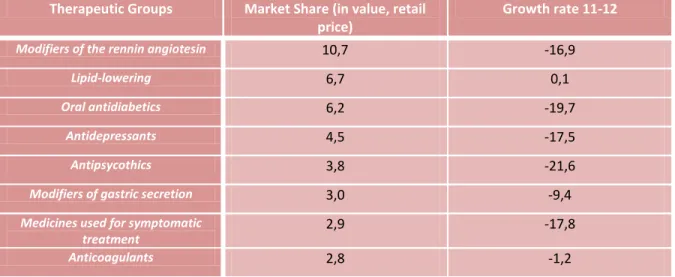
Table 6: Main therapeutic groups in 2012
Units: Nº %
Therapeutic Groups Market Share (in value, retail price)
Growth rate 11-12
Modifiers of the rennin angiotesin 10,7 -16,9
Lipid-lowering 6,7 0,1
Oral antidiabetics 6,2 -19,7
Antidepressants 4,5 -17,5
Antipsycothics 3,8 -21,6
Modifiers of gastric secretion 3,0 -9,4
Medicines used for symptomatic treatment 2,9 -17,8 Anticoagulants 2,8 -1,2 7 Source: Infarmed Prescription medicines 3.118 ,8 -1,4% 3.182,5 2,0% 3.134,0 -1,5% 3.064,5 -2,2% 2.767,3 -9,7% Non Prescription medicines 181,0 n/d 188,9 4,4% 210,1 11,2% 201,9 -3,9% 205,8 2,0% Hospital Market 843,8 3,2% 896,0 6,2% 997,3 11,3% 1.028,1 3,1% 1.040,9 1,2% 2007 2008 2009 2010 2011 2012 Growth 07/12 N. of generic medicinal products 4.063 5.230 6.400 7.891 8.979 9.516 134,2% N. of GM presentations 16.786 21.622 27.135 32.983 37.138 8 38.598 129,9% % of GM 34,9% 45,6% 50,6% 56,7% 60,2% n/d ---
N. of INN with authorized GM
n/d 272 301 325 351 357 18,6%
% of INN with authorized GM
35
Antiepileptic’s and anticonvulsants 2,7 -20,9
Other 56,6 -9,3
Total 100,0 ---
The group with higher market share are the medicines used to cure hypertension (modifiers of the rennin angiotensin), with 10.7%. Then, with 6.7% are positioned the medicines used to regulate cholesterol (lipid-lowering). Medicines used to cure diabetes are also well positioned in terms of market share (6.2%). The pills used for depression and anxiety have a market share of 4.5%. Medicines used for delirium and hallucination are placed in the 5th position with a market share of 3.8%. Other medicines that also have an important positioning in what concerns market share are modifiers of gastric secretion (3%), symptomatic treatment (2.9%), anticoagulants (2.8%), antiepileptic and anticonvulsionants (2.7%).
2.3.3 Types of product 2.3.3.1 Brand medicines
Brand name medicine is a term to define those drugs that can only be produced and sold by the company that holds the patent for the drugs. Normally brand name medicines are given a patent for around 20 years, which provides a protection for the company that spent money in research, development and marketing for the new product. With the patent it is not allowed for other companies to make and sell the product. Nevertheless, when the patent expires, other pharmaceutical companies, when approved, can start producing a generic version of the medicine (Bihari, 2010).
2.3.3.2 Generics medicines
Generic medicines can be defined as replicas of brand name drugs with the same quantities, effects and side effects, way of administration, risks and safety and as strength as the original medicine; which mean that the pharmacological effects are the equal as those from brand name medicines (Stoppler & Hecht, 2009).
36 Generic medicines have the same active substances as the original medicine, whose intellectual property rights, relating to the active substances or manufacturing process have expired and are therapeutic equivalents of those, not only because they have the same qualitative and quantitative composition but also because they have the same pharmaceutical form (Infarmed, 2005).
According to the medicine status (Decree law 176/2006, 30 of August), generic medicine is referred to “a product containing the pharmaceutical form and whose bioequivalence with the reference product has been demonstrated by appropriate bioavailability studies” (Maria, 2007).
By law, all the generic medicines should have the acronym “MG” in their package, as well as a market authorization with the respective register number (Infarmed, 2013).
Generics must submit bioequivalence with the branded original. Bioequivalence means that the generic has to release the active ingredient at the same rate and extent as the original brand name drug (Barros & Nunes, 2011).
A normal phenomenon that happens is that companies that originally started to develop the medicine will still continue to produce and market the brand name version of the product, while at the same time creating a generic version and sell the product under both types, branded and generic (Weber, 2008).
Sometimes generic medicines may have different colours, flavours or different inactive ingredients than the original branded medicine (Stoppler & Hecht, 2009). Although by law generics should have the same active ingredients. Nevertheless, law does not specify anything more about generic formulation, which means that inactive ingredients can be changed in order to adjust pill size, colour, and the same properties like how much time it will be needed for the pill to dissolve in the stomach. Each manufacturer has its own variation of the inactive properties (Weber, 2008).
37 2.3.3.2.1 Safety, quality in Generics
Due to the fact that generic medicines are cheaper than the branded, many patients are attracted by this powerful argument (Weber, 2008). Although people are still concern about why these medicines are less expensive, wondering if the quality and effectiveness are compromised when using generics (Stoppler & Hecht, 2009). Nevertheless, the answer, according to theses authors is simple, this medicines are less expensive due to the fact that manufacturers have no expenses in the development, research, marketing and promotion, because this issues have already been done by the company that possess the patent.
When the medicines patent protection ends, the molecular formula becomes a matter of public, and by this time other pharmaceutical companies are allowed to manufacture the medicine as well. In the end the only investment necessary for generic manufactures are the costs of setting up a production line (Weber, 2008).
2.3.3.2.2 Advantages
Generic medicines represent an advantage not only for the final consumer but also for the National Health Service and country economy.
Generic medicines, are those, whose active substances have been in the market for several years, provide greater assurance of effectiveness and allow a better understanding of its safety profile (Lilaia, 2010).
The decree law n. 176/2006 of 30th August requires that generic medicines have the same quality of the reference medicine, which can be done through the bioequivalence, using bioavailability studies, which means that there is also an advantage in what concerns quality.
In Portugal, the expenses with health represent a huge part of the country wealth, according to GDP, and in turn, drugs also represent a larger share of health spending, which puts into
38 question the sustainability of the health system. Generics as price reducers may be a solution for this problem.
.
Another advantage of the generics is that in general they are 20 or 35% cheaper than the reference medicine whose pharmaceutical form is the same and which have the same dosage, which is an economic advantage not only for users but also for the Health National Service, due to the fact that the prices are substantially cheaper than the reference medicine (Infarmed, 2013).
European Union generics are sold at a price between 20 and 90% less than the reference medicine, which mean that in countries such as Holland, United Kingdom and Switzerland, generics are responsible for half of the total medicines, which in terms of costs, just represent a fifth of the expenditure with medicines (Apogen, 2010).
Savings generated by the use of generics allows the purchase of new innovative drugs, usually much more expensive and therefore, there is a positive complimentarily between generic and innovative medicines (Lilaia, 2009).
Simoens (2010), also agrees with (Lilaia, 2009), saying that generic medicines guarantee huge savings to the health care providers and foster innovation.
Although the author adds that, EU is not maximizing their full potential in generic drugs. It is possible to achieve a saving of around 27% to 48% if taken appropriate measures in EU countries. In average, each of the 98 000 patients that uses generic, spared 100 Euros a year, which means that generics allow more patients to be treated at a lower cost.
By the state, there is also a direct correlation between increased prescribing of generic drugs and reducing public expenditure on health.
39 In Portugal a phenomena that is possible to assist in some therapeutic areas is the fact that the reference medicines decrease their price in order to compete with generic medicines this fact leads to a widespread fall in prices, and consequently, a better access to health.
In average users pay 33% of the medicine price in the act of buy, which means that the State, rather, all of us, we pay the remaining 67%. Consequently, if the generic prices are low, there will be fewer costs for the Portuguese economy as well as for all of us, as taxpayers (Aguiar, 2008).
2.3.3.2.3 Generics market
The implementation of the generic medicines in Portugal is a huge successful case which is recognise by the European Generics Association (Gonçalves, 2009). The author add that there are several reasons for this success which might be related to a set of measures implemented by various governments since the introduction of generic drugs in our country, such as the creation of reference prices.
These measures have helped increase the efficiency of the national health system and generate significant savings for users and for the state, allowing the reimbursement of new drugs.
As stated before, the Portuguese generic market presents a very recent history, and even more when compared with other European countries. One of the factors contributing for the Portuguese results, were the communication campaigns and the health politics adopted by the government, which lead not only in sales but also in a huge acceptance by all intervenient in the health area (Lilaia, 2008). Another factor that might have contributing for the consolidation of the Portuguese generics market was the fact that the Symposium about generic medicines in Europe took place in Portugal during the year of 2007 and was organized by INFARMED and Apogen, the objective of this Symposium was to inform about the generic medicine as a front line in the prevalent pathologies.
40 About the Portuguese market, Portugal is on the right track relatively to generic medicines consumption, but there is still a huge margin for progress in these drugs (Lilaia, 2008).
2.3.3.2.4 Generics positioning in the Portuguese Market
It is an objective for the Portuguese generic market to establish its position in a European context, although some European countries have realities that are quite different. United Kingdom is an example of this, due to the fact that they have a free price policy. On the other side, United Kingdom has introduced lots of financial advantages for the users, establishing differences among the prices of brand medicines and generics, as well as reducing the percentage that must be supported by consumers (Gonçalves, 2009).
Other authors, (Simoens & Coster, 2006), agree that lots of studies have shown that this type of measures represent a great incentive to the change in the usage of branded medicines into generics.
Medicines are divided in homogeneous groups and the reference price of each medicine is equivalent to the sell price of the generic medicine with higher price in the market, from the same group. The reference price is used for the State to establish the reimbursement price of the medicines (Gonçalves, 2009).
There are still some imperfections in the Portuguese generic market, such as high prices, bonding prices to the reference price, lots of medicines with similar prices, absence of competitors, huge amount of generics with the same active substances or lots of active substances without a generic (Maria, 2007).
Although generics market share had an increase in the last years, Portugal is still too far from the sales volume of other European countries, not only because it is one of the poorest countries, but also because it has the smallest reference pension. (Gonçalves, 2009).
41 In a context where Portugal is suffering from a huge crisis, all the savings resulting from the generics into the State and users, its usage is still far away from its potential, that is why doctors should increase the prescription of generics (Lilaia, 2009).
In table 5 there is a resume of a study conducted by European Generics Association, where it is possible to understand the positioning of the generics in Portugal, comparatively with other countries. It is possible to observe that in Portugal there are only two activities being implemented from the existing five which are “competitiveness existence” and “incentives for the users that are looking for generic medicines”. Comparing with Sweden and United Kingdom that are implementing more activities, Portugal is still too far and still has lots of path to develop.8
8 Font: EGA Market Review, 2007
I: Countries with coherent generic medicines politic
IV: Countries with incentives for pharmaceuticals to dispense generics II: existing competition from generic drugs within the regulatory frameworks III: Countries with incentives for doctors to prescribe generics
V: Countries with incentives for patients when looking for generics
Au str ia Bel g iu m Po rtu g a l Ita ly Fr a n ce Po lo n ia Ho lla n d De n m a rk G er ma n y Un ited K in g d o m Sw ed en Sp a in X X X X X X X X X X X X X X X X X X X X X X X X X X X X X X X X X X X X X X X X X X X X X X X X X X X X X X X X X X X X X X X X Table 7: Comparative analysis about generics medicines politics