Junho de 2013
Vanessa Cristina Pires Pinto
Adversity, Depressive Symptoms and
Suicide Attempts: Study of Women in
Community and Comparison between
Women in Prison and Women in the
Community
Universidade do Minho
Dissertação de Mestrado
Mestrado Integrado em Psicologia
Área de Especialização em Psicologia da Justiça
Trabalho realizado sob a orientação da
Professora Doutora Ângela Maia
Junho de 2013
Vanessa Cristina Pires Pinto
Adversity, Depressive Symptoms and
Suicide Attempts: Study of Women in
Community and Comparison between
Women in Prison and Women in the
Community
Universidade do Minho
ii Índice Agradecimentos………. iii Resumo……….. iv Abstract……….. v Literature review………... 6 Method………... 8 Participants………... 8 Measures………... 9 Procedure……….. 10 Statistical analyses……… 10 Results………... 11 Discussion……….. 13 References………. 17
iii
Agradecimentos
Esta dissertação de mestrado resulta do esforço conjunto de várias pessoas e entidades que me ajudaram a concretizar este meu objetivo académico. A estas dedico o meu trabalho.
À Professora Doutora Ângela Maia agradeço a disponibilidade permanente em esclarecer todas as dúvidas que surgiam durante todo o processo. Agradeço ainda o incentivo dado para que este trabalho fosse submetido a revistas internacionais no sentido de ter algum impacto científico. Com a sua exigência e rigor científico aprendi que, apesar do longo percurso que é a escrita e submissão de um artigo científico, vale a pensa a insistência e o trabalho árduo.
À Dra. Joana Alves quero agradecer o facto de me ter incluído no seu projeto de investigação e estar disponível sempre que a sua ajuda era solicitada.
À Comissão de Ética do Centro de Investigação em Psicologia (CIPSI) da Universidade do Minho por ter autorizado a realização deste estudo.
À Direção Geral dos Estabelecimentos Prisionais agradeço a permissão da recolha de dados nas suas instituições e a colaboração prestada na convocação e receção das
participantes.
Às participantes pela disponibilidade para voluntariamente participarem e partilharem informação potencialmente traumática. Sem ela nada teria sido possível.
Aos meus pais por terem contribuído para a realização deste percurso académico e por toda a preocupação e apoio constante. À minha irmã por me ajudar na concretização deste trabalho através da partilha de conhecimentos e apoio incondicional. Ao meu irmão pelo incentivo prestado e tornar tudo mais simples.
Ao Carlos por estar sempre presente e conseguir animar-me e incentivar-me nos momentos de maior desânimo. Pela sua capacidade em entender-me e responder afetiva e efetivamente. Foi, é e será um dos pilares mais fortes que me sustenta.
Aos meus amigos por terem compreendido e perdoado as ausências, nomeadamente à Tânia, Sara, Ana, Rita, Joana e Carla.
A todos os que não foram mencionados mas contribuíram para a realização deste projeto.
iv
Adversidade, Sintomas Depressivos e Tentativas de Suicídio: Estudo de Mulheres na Comunidade e Comparação entre Mulheres Reclusas e da Comunidade
Resumo
A relação entre adversidade na infância, depressão e tentativas de suicídio tem sido estudada, mas nunca o foi em amostras exclusivamente femininas da comunidade. Por outro lado a literatura sugere que existe uma elevada prevalência de adversidade, depressão e tentativas de suicídio em reclusas. Este estudo teve como objetivos analisar estas variáveis em mulheres da comunidade e compará-las com um grupo de reclusas, analisando o contributo da adversidade para a depressão e tentativas de suicídio. Um total de 394 mulheres (211 reclusas e 183 da comunidade) completou o Adverse Childhood Experiences Study Questionnaire e a sub-escala da depressão do Psychopathological Symptom Inventory. As mulheres na comunidade relatam muitas experiências adversas e estas são preditoras da sintomatologia depressiva e das
tentativas de suicídio. As reclusas relataram mais abuso sexual, abuso de substâncias na família, familiares em reclusão e divórcio dos pais, enquanto as da comunidade relataram mais violência doméstica. Não há diferenças entre os dois grupos quanto ao total de
experiências adversas. A depressão e as tentativas de suicídio são superiores nas reclusas. Nos dois grupos a adversidade é preditora tentativas de suicídio. Programas de prevenção
comunitários e projetos prisionais que considerem a história de vida e problemas específicos são necessários em contexto prisional.
v
Adversity, Depressive Symptoms and Suicide Attempts: Study of Women in Community and Comparison between Women in Prison and Women in the Community
Abstract
The relationship between childhood adversity, depression and suicide attempts has been studied, but never in exclusively female community samples. On the other hand the literature suggests that there is a high prevalence of adversity, depression and suicide attempts in female inmates. This study aimed to analyze these variables in women from the community and compare them with a group of inmates, analyzing the contribution of adversity to depression and suicide attempts. A total of 394 women (211 inmates and 183 from community) completed the Adverse Childhood Experiences Study Questionnaire and the depression subscale of the Psychopathological Symptom Inventory. Women in the community reported many adverse experiences and these are predictors of depressive symptoms and suicide attempts. Female inmates reported more sexual abuse, substance abuse in the family, family members in prison and divorced parents, while the community reported more domestic violence. There are no differences between the two groups in the total number of adverse experiences. Depression and suicide attempts are higher among inmates. In both groups the adversity predicts suicide attempts. Prevention community programs and projects that consider life history and specific problems are needed in the prison context.
6
Adversity, Depressive Symptoms and Suicide Attempts: Study of Women in Community and Comparison between Women in Prison and Women in the Community
The literature suggests that adverse childhood experiences are prevalent, coocorrent and are associated with negative consequences for the subsequent functioning. The impact of adverse childhood experiences on the index of depression and suicide attempts is significant, cumulative and destructive (Felitti, et al., 1998; Felitti, 2002). This association is stronger in women due to higher vulnerability and their psychological morbidity (MacMillan, et al., 2001).
Studies with community samples found that childhood adversity is associated (Edwards, Holden, Felitti, & Anda, 2003; Felitti, et al. 1998; Lu, Mueser, Rosenberg, & Jankowski, 2008) and is a significant predictor of depression symptoms and suicide attempts in adulthood (Anda, et al., 2006; Dube, Felitti, Dong, Giles, & Anda, 2003; Felitti, et al., 1998; Lanoue, Graeber, Hernandez, Warner, & Helitzer, 2012).
The prevalence of exposure to childhood adversity and psychopathology is especially high in some disadvantaged groups, as are women inmates. It is estimated that the worldwide population of prisoners is 10 million (Fazel, & Baillageon, 2011), of which 500,000 are female (van der Bergh, Gatherer, Fraser, & Moller, 2011). In 2006, a systematic review reported that 6% of all inmates were female (Harris, Hek, & Condon, 2006). Despite the under-representation of women in prisons, their numbers have been increasing (Browne, Miller, & Maguin, 1999; Fazel & Benning, 2009; Fazel & Danesh, 2002; Fazel &
Baillargeon, 2011; Green, Miranda, Daroowalla, & Siddique, 2005; Hatton, Kleffel, & Fisher, 2006; van der Bergh, et al., 2011; Watson, Stimpson, & Hostick, 2004). In Portugal, the percentage of female inmates is the highest in Europe (Matos & Machado, 2007), consisting of 5.45% of the prison population in Portugal (Direção Geral de Estabelecimentos Prisionais, 2013).
A history of one or more adverse experiences is frequently found in the prison population. Female inmates report having been victims of different types of adversity (Bartlett, 2007; Browne, et al., 1999; DeHart, 2008; Green, et al., 2005; Hatton, et al., 2006; Sacks, 2004; Tripodi, Onifade, & Pettus-Davis, 2013). In a recent study, Marzano, Hawton, Rivlin and Fazel (2011) found that all female prisoners reported at least one adverse
experience, and sexual or emotional abuse was the most frequently reported experience. Another study of American inmates reported that 72% were exposed to domestic violence, 69% had a family member in prison, 53% were victims of sexual abuse and 42% suffered
7
physical abuse (Ravello, Abeita, & Brown, 2008). A study of 42 women detained in Portugal showed that 76%, 50% and 26% reported physical, emotional or sexual abuse, respectively. Globally, 98% of women inmates suffered at least one adverse experience and 64% reported five or more adverse experiences (Alves & Maia, 2010).
There is a high prevalence of mental disorders in inmates (Fazel, & Danesh, 2002; Fazel & Baillargeon, 2011; Kjelsberg, et al., 2006; van der Bergh, et al., 2011) and this rate is higher than in the general population (Bartlett, 2007; Fazel & Danesh, 2002; Harris, et al., 2006; Hatton, et al., 2006; Kjelsberg, et al., 2006; Marzano, Fazel, Rivlin, & Hawton, 2010; Sacks, 2004; van der Bergh, et al., 2011). A study comparing male inmates and women inmates (Alves, Dutra e Maia, 2013) found that depressive symptoms were higher in women that in men, and another study found that the average number of depression indicators in female inmates was higher than the non-incarcerated population (Alves & Maia, 2010). However, Fazel and Baillargeon (2011) report that 12% of women in Western countries suffer from depression, in contrast to women in other regions, where the prevalence is 5-7%.
Suicide attempts are also common in prisons (Fazel & Baillargeon, 2011; Marzano, et al., 2011; Tripodi, et al., 2013; Watson, et al., 2004). Harris and colleagues (2006) found that 25% of women prisoners had attempted suicide in the year before their study, while Ravello and colleagues (2008) found that 83% of inmates who had considered suicide made at least one attempt. One comparative study found that women prisoners have 20 times more likely to die of suicide than women in the general population. In addition, found that women´s who had attempted suicide had a mental disorder (Marzano, et al., 2010).
Several investigations of victimization in childhood in non-incarcerated populations have reported that it is a predictor of depressive symptoms in adulthood (Anda, et al., 2006; Chapman, et al., 2004; Dube, et al., 2003; Felitti, 1998; LaNoue, et al., 2012; MacMillan, et al., 2001; Pinto, Alves, & Maia, in press). The result of studies of women inmates (Alves, & Maia, 2010; Marzano, et al., 2011) indicate that those who have attempted suicide were exposed to more adversity. In a study by Alves and Maia (2010), adverse experiences
explained 40% of the variance in the symptoms of psychopathology in women inmates, while Blaauw, Arensman, Kraaij, Winkel and Bout (2002) observed that childhood adversities are predictors of suicide attempts. Ravello et al. (2008) found that inmates who had experienced four or five different types of adversity were seven times more likely to attempt suicide compared to those exposed to fewer types of adverse experiences. This relationship between adversity and suicide has also been found in the general population (Dube, et al., 2001; Dube, et al., 2003; Felitti, et al., 1998; Lu, et al., 2008) and obese populations (Silva & Maia, 2010).
8
A history of adversity, depressive symptoms and suicide attempts are prevalent in persons in community, especially women, and women prisoners. The aims of this study were 1) to characterize the prevalence of self-reported adverse experiences, depressive symptoms and suicide attempts in adult women from community, and analyze if adverse experiences are predictors of depressive symptoms and suicide attempts; 2) to compare women inmates with women in the community in terms of self-reported adverse childhood experiences, depressive symptoms and suicide attempts and 3) analyze, in the full sample, the contribution of
adversity to suicide attempts. Previous studies that characterized community samples in regards to adversity included male and female and for this reason we decided to do this research only with females. The studies that compared inmates and no inmates on the history of adversity had focused on only one or two types of adverse experiences (e.g., Tripodi, et al., 2013). Therefore, in this study we analyzed 10 categories of adversity (the five categories against the individual, comprised emotional abuse, physical abuse, sexual abuse, physical neglect and emotional neglect; and the five categories related to the family environment, comprised family use of alcohol or drugs, mental illness or suicide in the family history, imprisonment of a family member, domestic violence against the mother figure and divorce among parents).
In light of the results found in the literature, we expected that 1) women in
community will report an high prevalence of adverse experiences, 2) adversity will predict depression and suicide attempts in this sample, 3) women inmates will report a higher number of adverse experiences compared with women from community, 4) women inmates will have more depressive symptoms and suicide attempts than the women in the community and 5) adverse experiences will predict suicide attempts in both groups.
Method
Participants
This study included two groups of participants. The first was composed of 211 women inmates of two women´s prisons, aged 18 to 68 years (M = 36.44, SD = 10.61), in which 114 (54.5%) women were detained for crimes related to drugs, 18 (8.6 %) women were detained for robbery, 14 (6.7%) women were detained for crimes against property, 13 (6.2%) women were detained for murder and 52 (24.0%) women were detained for others crimes. The duration of the sentences ranged from six to 324 months (M = 76.88, SD = 52.07). The comparison group included 183 community women aged between 18 and 62 years (M = 37.76, SD = 10,797), who were recruited from the users and recommendations of
9
of the community group were similar to the inmates. Understand Portuguese was required for inclusion in either group. Other demographic characteristics of the groups are shown in Table 1.
Table 1
Demographic Characteristics of Women Inmates and from Community
Inmates Community n (%) n (%) Marital status1 Married/living as married 147 (69.3) 124 (68.5) Single/Never married 24 (11.3) 30 (16.6) Divorced/separated 29 (13.7) 20 (11.0) Widowed 12 (5.7) 7 (3.9) Education
Never went to school 10 (4.7) 2 (1.1) Less than 4 years 21 (10.0) 5 (2.7)
4th grade 46 (21.8) 31 (17.0) 6th year 53 (25.1) 57 (31.3) 9th year 51 (24.2) 57 (31.3) 12th year 30 (14.2) 30 (16.5) Professional status Employed 125 (59.0) 97 (55.1) Unemployed 87 (41.0) 79 (44.9)
Note1: Information on marital status and employment status of women inmates is on the moment of arrest.
Measures
Sociodemographic questionnaire. This measure was used to collect information about
age, marital status, education and the employment status of the participants. Inmates were also asked to report the reason for their detention and duration of their sentence.
Adverse Childhood Experiences (ACE) Study Questionnaire (Felitti et al., 1998,
Portuguese version, Silva & Maia, 2008). This self-report questionnaire assesses the
experiences, up to age 16, of the 10 categories of adversity. Adverse experiences are divided into two categories: experiences where the child was direct victim (emotional, physical and sexual abuse and physical and emotional neglect) and experiences integrated in a
10
family, imprisonment of a family member, domestic violence against the mother figure and parental divorce). For each type of adversity, the participant indicated how often the
experience occurred, and the responses were scored zero (not reported) or one (reported). If the category of physical and emotional abuse or neglect was rated often or very often, the score was carried over to both categories (often or very often). A women was defined as a victim of an adverse experiences if she responded positively to one or more of the adverse experiences items. In the Total Adversity Index, the sum of the positive responses in the 10 categories of adversity ranged from zero (no exposure of adverse experiences) and 10 (exposure to all adverse experiences).
Brief Symptoms Inventory (BSI, Derogatis, 1982; Portuguese version, Canavarro,
1999). This inventory was used to evaluate psychological symptoms in the week before the survey. BSI evaluates nine psychopathology dimensions (Somatization, Obsessive,
Compulsive, Interpersonal Sensitivity, Depression, Anxiety, Hostility, Phobic Anxiety, Paranoid Ideation and Psychoticism) but only the depression subscale was used in this study. The depression subscale includes six items rated on a Likert scale, ranging from “not at all” to “extremely”. The adapted Portuguese scale has good psychometric characteristics
(Canavarro, 1999).
The occurrence of suicide attempts was assessed by the question "Have you ever
attempted suicide?". If the answer was “yes”, participants were asked to indicate "How many times?".
Procedure
Ethical approval was sought from the General Services Prisons and the Ethics Committee of the Research Center at the university where the study was conducted. During the initial contact with participants, the purpose of the study was explained and confidentiality and anonymity was guaranteed. Participants were asked to sign informed consent and were told that they could withdraw at any time. Given the low socioeconomic status of the
prisoners, permission to recruit volunteers was sought from the heads of job centers for adults with low levels of educational and from various social community services, which were located in the north of the country to create better demographic match. Data collection
occurred between July and October 2012. The data from the inmates were collected within the PhD project of Dr. Joana Alves. Only data from the comparison group were collected by the author of this dissertation.
11
All data were entered and analyzed using the statistical software IBM® SPSS®
Statistics (SPSS, version 19.0). We used descriptive statistics to characterize
sociodemographic variables and to obtain the frequency of the different types of adversity. The exploratory analysis revealed that the assumptions underlying the use of parametric tests were not met. Therefore, as suggested by Fife-Schaw (2006), we analyze the data with parametric and nonparametric equivalent tests. The findings in both tests were the same, and we chose to present the results of the stronger parametric tests.
From women living in the community, a hierarchical linear regression was used to analyze, controlling the level of education, if the adverse experiences are predictors of depressive symptoms and logistic regression was used to evaluate the predictive power of adversity on suicide attempts.
A one-sample t-test was performed to compare the mean of the depressive symptoms of the inmates, the comparison group and the general population of Portugal.
To compare women prisoners with the comparison group on suicide attempts and each type of adverse experience reported, we used the chi-square test.
The t-test for independent samples was used to compare inmates and women from the community on depressive symptoms and the number of suicide attempts.
To evaluate the predictive power of adversity on suicide attempts in full sample, we performed a logistic regression analysis.
Results
Among women from community, 179 (98.9%) reported having experienced at least one adverse experience in childhood, and of these, 38 (17.1%) reported having experienced five or more kinds of adversity. The average of depressive symptoms was 0.95 (SD = 0.87) and 17 participants (9.3%) reported having attempted suicide.
The hierarchical regression to test if the total number of reported adverse experiences predicts depressive symptoms showed that the model was significant explaining 6.6% of the variance in depressive symptoms, F (1, 212) = 15,555, p ˂ .001, t = 3.944, p ˂ .001. The adversity β was .264.
Logistic regression using total of adversity as predictor of suicide attempts, controlling depressive symptoms, showed that the model is significant, χ2 (1) = 14.579, p ˂ .001, with the increase of one-point in the overall adversity increasing the risk of attempts suicide 1.818 times.
12
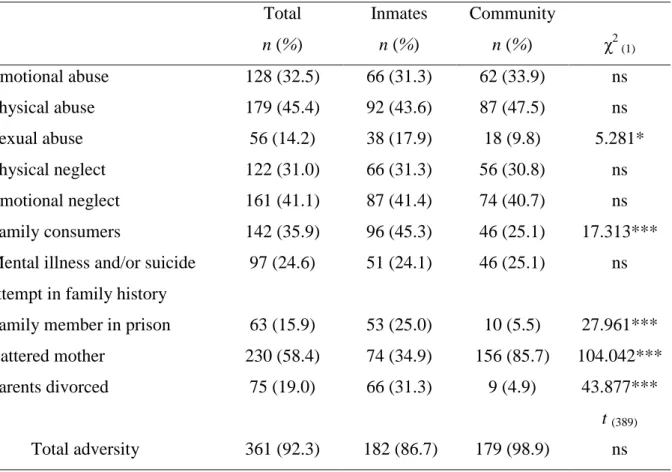
Table 2 shows the frequency of each of the categories of adverse experiences for the entire sample, inmates and the community. Women inmates had a higher incidence of sexual abuse, substance abuse in the family, a family member in prison and divorced parents than women in community. Women in the community reported more exposure to domestic
violence in the family; however, there were no significant differences between the two groups on total adversities.
Table 2
Frequency of Each of the Categories of Adversity and Comparison between Women Inmates and from Community (chi square or t test)
Total Inmates Community
n (%) n (%) n (%) χ2 (1) Emotional abuse 128 (32.5) 66 (31.3) 62 (33.9) ns Physical abuse 179 (45.4) 92 (43.6) 87 (47.5) ns Sexual abuse 56 (14.2) 38 (17.9) 18 (9.8) 5.281* Physical neglect 122 (31.0) 66 (31.3) 56 (30.8) ns Emotional neglect 161 (41.1) 87 (41.4) 74 (40.7) ns Family consumers 142 (35.9) 96 (45.3) 46 (25.1) 17.313*** Mental illness and/or suicide
attempt in family history
97 (24.6) 51 (24.1) 46 (25.1) ns
Family member in prison 63 (15.9) 53 (25.0) 10 (5.5) 27.961*** Battered mother 230 (58.4) 74 (34.9) 156 (85.7) 104.042*** Parents divorced 75 (19.0) 66 (31.3) 9 (4.9) 43.877*** t (389) Total adversity 361 (92.3) 182 (86.7) 179 (98.9) ns Note: *p ˂ .05; *** p ˂ .001; ns = not significant
The women inmates had a higher rate of depressive symptoms than women living in the community, t (388) = -5.848, p ˂ .001. A one sample t-test showed no significant
differences between the community sample and the general population on the Portuguese adaptation of the BSI (Canavarro, 1999) (community: M = 0.997, SD = 0.877; general population: M = 0.893, SD = 0.722; t (176) = 1.579, p = .116). The same was not true for
13
population in Portugal (inmates: M = 1.555, SD = 1.002; general population: M = 0.893, SD = 0.722; t (211) = 9.617, p ˂ .001).
Table 3 presents the prevalence of suicide attempts and the results of the comparison between the two groups on this variable, showing that inmates reported more suicide attempts than women in the community.
Table 3
Prevalence of Suicide Attempts and Number of Attempts for Women Inmates and from Community
Total Inmates Community
Suicide attempt n (%) n (%) n (%) χ2(1) No 313 (79.2) 147 (69.3) 166 (90.7) 27.269*** Yes 82 (20.8) 65 (30.7) 17 (9.3) Number of attempts M (DP) 0.44 (1.084) M (DP) 0.69 (1.334) M (DP) 0.14 (0.556) t (391) -5.182*** n (%) n (%) n (%) 1 36 (9.1) 27 (12.7) 9 (4.9) 2 19 (4.8) 15 (7.1) 4 (2.2) 3 11 (2.8) 10 (4.7) 1 (0.5) 4 4 (1) 5 (2.4) 0 (0) 5 7 (1.8) 6 (2.8) 1 (0.5) 6 1(0.3) 1 (0.5) 0 (0) 7 1(0.3) 1 (0.5) 0 (0) Note: *** p ˂ .001
Logistic regression with the full sample, using total adversity as the predictor and controlling for age, education and depressive symptoms, showed that the model was significant, χ2
(1) = 26.592, p ˂ .001, with the increase of one point in adversity increasing the
risk of suicide attempts 1.410 times. For inmates, the results were χ2
(1) = 16.788, p ˂ .001 and
Odds Ratio = 1.353; for women in community χ2(1) = 13.308, p ˂ .001 and Odds Ratio =
1.749.
Discussion
Understanding the relationship between life experiences and mental health,
particularly in specific populations, is important because it can contribute to more effective prevention and intervention programs.
14
This study measured adverse experiences, depressive symptoms and suicide attempts in women from community and compared the data to a group of women inmates. The results suggested that the prevalence and variety of self-reported adverse experiences in women in disadvantaged social settings was high.
The relationship between adversity, depressive symptoms and suicide attempts can be explained by several mechanisms. Some authors suggest that risk factors such poverty and lack of social support, probable consequences of exposure to adversity, contribute to depression and suicide (Dube et al. 2003; MacMillan et al. 2001). Another model suggests that the experiences of adversity are related to a set of features as emotional deregulation, low self-esteem, insecure attachment or interpersonal difficulties and it is these consequences that contribute for the later development of depression and suicide attempts because they may act as mediators in this relationship (Dube et al., 2001; Figueiredo, Fernandes, Matos, & Maia, 2002; Whiffen, Thompson, & Aube, 2000).
Women inmates reported a high incidence of sexual abuse, substance abuse in their family, relatives arrested and parental divorce, and women in the community reported more domestic violence in their family of origin.
Contrary to our hypothesis, there were no significant differences in the total number of experiences of adversity reported by the two groups. One possible explanation is that the participants in the comparison group, being predominantly of low socioeconomic status, belonged to a social and economic environment similar to the inmates. Some studies have shown that childhood adversity (including exposure to violence) is a risk factor associated with lower social adjustment and low socio-economic status (Evans & Kim, 2010). This relationship is mediated by education (Wickrama, Simons, & Baltimore, 2012).
These results are consistent with previous studies reporting a high prevalence of adverse experiences in community samples (Anda, et al., 2006; Edwards, et al., 2003; Felitti, 2002; Lu, et al., 2008; Pinto, et al., in press) and women inmates (Alves & Maia, 2010; Browne, et al., 1999; DeHart, 2008; Green, et al., 2005; Marzano, et al., 2011; Ravello, et al., 2008). The categories of adversity most frequently reported by women inmates were
substance abuse among family members and physical abuse, which coincides with the results of previous studies (Alves & Maia, 2010; Ravello, et al., 2008).
As expected, the index of depressive symptoms and the average number of suicide attempts was higher in women prisoners, and the same was higher than the mean in general population of Portugal. In this sense, our results are consistent with previous studies (Bartlett, 2007; Fazel & Danesh, 2002; Harris, et al., 2006; Hatton, et al., 2006; Kjelsberg, et al., 2006;
15
Sacks, 2004; Tripodi, et al., 2013; van der Bergh, et al., 2011). It is becoming apparent that female inmates have specific mental health needs.
Several authors have sought to explain how childhood victimization can contribute to criminal behavior, which might help explain the high prevalence of adversity in inmates. Bandura’s (1977) Social Learning Theory suggests that children exposed to certain behaviors will adopt those behaviors later in life; we found that substance abuse by family members was the most prevalent adversity cited by women inmates and they were mostly arrested mostly for drug-related crimes. In addition, 25% of female inmates reported that a family member was jailed, which suggests exposure to antisocial activities at a young age. In addition, children who witness domestic violence or are victims of physical abuse are more likely to have externalizing disorders (McDonald, Jouriles, Tart, & Minze, 2009, Wolfe, Crooks, Lee, McIntyre-Smith, & Jaffe, 2003), which can lead to behaviors that culminate in detention. This is consistent with the position that adversity is related to crime (e.g., Alves & Maia, 2010; DeHart, 2008). The development of emotions, such as anger, may influence this relationship. Mullings, Marquart and Brener (2000) found that women victims of sexual abuse during childhood were more likely to live in conditions of marginalization and socio-economic instability, engage in prostitution, consume illicit substances and be arrested at an early age. An arrest can be seen as a re-victimization because the lack of privacy and independence in prison can cause a woman to relive past abuses. In addition, the experience of neglect in infancy may contribute to the development of depressive symptoms in prison because the lack of social support experienced during incarceration increases the impact of adversity (Nurius, Logan-Greene, & Green, 2012; Tripodi, et al., 2013). These factors, in conjunction the unavailability of the usual coping strategies (e.g., alcohol and drugs), may contribute to suicidal behavior (Fazel & Benning, 2009; Marzano, et al., 2011). Thus, depressive symptoms and substance abuse may be mediating factors between adversity and suicide (Dube, et al., 2001; Whiffen, Thompson, & Aube, 2000).
Research based on neuroscience theories, which have been advanced to explain these relationships, have found that repeated exposure to adverse experiences could permanently affect brain structure and function due to the effects of continual activity of the stress system on the areas of the brain responsible for emotional responses (Dube, et al., 2003; Maia, 2010).
In summary, the results of this study are relevant and highlight the need to develop strategies for primary, secondary and tertiary prevention to reduce the prevalence of early adverse experiences and prevent the adoption of risk behaviors in response to these adverse experiences. Moreover, if such behaviors have already been expressed, programs focused on
16
behavior change are necessary (Ravello, et al., 2008). This requires developing prevention programs that recognize the influence of early adverse experiences throughout the life cycle in the prison, in the community, and, particularly, in disadvantaged settings (Green, et al., 2005; Larkin, Shields, & Anda, 2012; Nurius, et al., 2012). Given the prevalence and risk that depressive symptoms and substance abuse have for suicide attempts, particularly in a prison context, it is also necessary to develop intervention programs that include psychological and pharmacological treatment (Marzano, et al., 2010).
Limitations and recommendations
Despite its contribution, this study has limitations. First, it is retrospective and used self-report measures, which may have led to a bias in reports of exposure to adverse experiences (Dube et al. 2003; Felitti, et al. 1998). As Pinto and Maia (2012) found in a sample of youth with documented histories of childhood maltreatment, the greatest problem in using self-reports measures were the underreporting of adverse experiences. Thus, the true prevalence of adverse experiences may be higher than found in this study.
Second, adversity exposure in adulthood was not evaluated. This could add important information because the relationship between adversity and depressive symptoms is partly mediated by the exposure to adverse experiences in adulthood (LaNoue, et al., 2012). The study of victimization in the prison environment would be extremely relevant because
incarceration itself can be seen as re-victimization (Mullings, et al. 2000), and several types of adverse experiences can occur in prison.
Third, the timing of the suicide attempts was not reviewed. Therefore, in the group of women prisoners, it was not possible to know whether the suicides attempts occurred before or after incarceration. It is important to know if imprisonment increases the risk of suicide attempts.
Fourth, the reliability and validity of the Portuguese adaptation of the BSI, which was used to compare depressive symptoms in the general population with the inmates and the comparison group, has not been validated with an exclusively female population.
Finally, because this study is cross-sectional, it was not possible to establish causal relationships.
Considering the results and limitations presented here, we believe that future research should evaluate women inmate´s exposure to adversity at different stages of life and explore whether other variables (e.g., social support, type of crime) are mediators of the relationship between adverse experiences and psychopathology.
17 References
Alves, J., Dutra, A., & Maia, A. (2013). História de adversidade, saúde e psicopatologia em reclusos: comparação entre homens e mulheres. Ciência & Saúde Coletiva, 18 (3), 701-709.
Alves, J., & Maia, A. (2010). Experiências adversas durante a infância e comportamentos de risco para a saúde em mulheres reclusas. Psicologia, Saúde & Doenças, 11 (1), 151-171.
Anda, R., Felitti, V., Bremner, D., Walker, J., Whitfield, C., Perry, B., Dube, S., & Giles, W. (2006). The enduring effects of abuse and related adverse experiences in childhood: A convergence of evidence from neurobiology and epidemiology. European Archives of
Psychiatry and Clinical Neuroscience, 256, 174-186.
Bandura, A. (1977). Social learning theory. New Jersey, NJ: Prentice Hall.
Bartlett, A. (2007). Women in prison: concepts, clinical issues and care delivery. Psychiatry,
6 (11), 444-448.
Blaauw, E., Arensman, E., Kraaij, V., Winkel, F. W., & Bout, R. (2002). Traumatic life events and suicide risk among jail inmates: the influence of types of events, time period and significant others. Journal of Traumatic Stress, 15 (1), 9-16.
Browne, A., Miller, B., & Maguin, E. (1999). Prevalence and severity of lifetime physical and sexual victimization among incarcerated women. International Journal of Law and
Psychiatry, 22 (3-4), 301-322.
Canavarro, M. (1999). Inventário de sintomas psicopatológicos – B.S.I. In M. Simões, M. Gonçalves, & L. Almeida (Eds.), (vol. II, pp. 87-109). Testes e provas psicológicas em
Portugal. Braga, Portugal: APPORT/SHO.
Chapman, P., Whitfield, L., Felitti, V., Dube, R., Edwards, J., & Anda, F. (2004). Adverse childhood experiences and the risk of depressive disorders in adulthood. Journal of
Affective Disorders, 82, 217-225.
DeHart, D. (2008). Pathways to prison: Impact of victimization in the lifes of incarcerated women. Violence Against Women, 14 (12), 1362-1381.
Direção Geral de Estabelecimentos Prisionais (2013). Estatísticas prisionais. Consultado na World Wide Web a 05 de Fevereiro de 2013 em: http://www.dgsp.mj.pt/.
Dube, S., Anda, R., Felitti, V., Chapman, D., Williamson, D., & Giles, W. (2001). Childhood abuse, household dysfunction, and the risk of attempted suicide throughout the life span: Findings from the adverse childhood experiences study. American Medical
18
Dube, S., Felitti, V., Dong, M., Giles, W., & Anda, R. (2003). The impact of adverse childhood experiences on health problems: Evidence from four birth cohorts dating back to 1900. Preventive Medicine, 37, 268-277.
Edwards, V., Holden, G., Felitti, V., & Anda, R. (2003). Relationship between multiple forms of childhood maltreatment and adult mental health in community respondents: Results from the adverse childhood experiences study. American Journal of Psychiatry, 160 (8), 1453-1460.
Evans, G., & Kim, P. (2010). Multiple risk exposure as a potential explanatory mechanism for the socioeconomic status-health gradient. Annals of the New York Academy of
Sciences, 1186, 174-189.
Fazel, S., & Baillargeon, J. (2011). The health of prisoners. Lancet, 377, 956-965.
Fazel, S., & Benning, R. (2009). Suicides in female prisoners in England and Wales, 1978-2004. The British Journal of Psychiatry, 194, 183-184.
Fazel, S., & Danesh, J. (2002). Serious mental disorder in 23000 prisoners: A systematic review of 62 surveys. Lancet, 359, 545-550.
Felitti, V., Anda, R., Nordenberg, D., Williamson, D., Spitz, A., Edwards, V., Koss, M., & Marks, J. (1998). Relationship of childhood abuse and household dysfunction to many of the leading causes of death in adults: The adverse childhood experiences (ACE) study. American Journal of Preventive Medicine, 14 (4), 245-258.
Schaw, C. (2006). Levels of measurement. In G. M. Breakwell, S. Hammond, C. Fife-Schaw, & J. A. Smith (Eds.), Research methods in Psychology (3ª Ed.). London, England: Sage.
Figueiredo, B., Fernandes, E., Matos, R., & Maia, A. (2002). Maus Tratos na Infância: Trajectórias desenvolvimentais e intervenção psicológica na idade adulta. In R. Abrunhosa & C. Machado (coord.), Violência e vítimas de crimes, vol. I: Adultos (pp. 200-263). Coimbra: Quarteto Editora.
Green, B., Miranda. J., Daroowalla, A. & Siddique, J. (2005). Trauma exposure, mental health functioning, and program needs of women in jail. Crime and Delinquency, 51, 133-151.
Harris, F., Hek, G., & Condon, L. (2006). Health needs of prisoners in England and Wales: the implications for prison healthcare of gender, age and ethnicity. Health and Social
Care in the Community, 15 (1), 56-66.
Hatton, D., Kleffel, D., & Fisher, A. (2006). Prisoner´s perspectives of health problems and healthcare in a US women´s jail. Women & Health, 44 (1), 119-136.
19
Kjelsberg, E., Hartvig, P., Bowitz, H., Kuisma, I., Norbech, P., Rustad, A., Seem, M., & Vik, T. (2006). Mental health consultations in a prison population: a descriptive study.
BioMed Central Psychiatry, 6 (27), 1-9.
LaNoue, M., Graeber, D., Hernandez, B., Warner, T., & Helitzer, D. (2012). Direct and indirect effects of childhood adversity on adult depression. Community Mental Health
Journal, 48, 187-192.
Larkin, H., Shields, J., & Anda, R. (2012). The health and social consequences of adverse childhood experiences (ACE) across the lifespan: An introduction to prevention and intervention in the community. Journal of Preventive & Intervention in the
Community, 40, 263-270.
Lu, W., Mueser, K., Rosenberg, S., & Jankowski, M. (2008). Correlates of adverse childhood experiences among adults with severe mood disorders. Psychiatric Services, 59 (9), 1018-1026.
Maia, A. (2010). Abordagens neuropsicológicas à vitimação. In C. Machado (Org.),
Vitimologia: Das novas abordagens teóricas às novas formas de intervenção (pp.
81-102). Braga, Portugal: Psiquilibrios Edições.
MacMillan, H., Fleming, J., Streiner, D., Lin, E., Boyle, M., Jamieson, E., Duku, E., Walsh, C., Wong, M., & Beardslee, W. (2001). Childhood abuse and lifetime
psychopathology in a community sample. American Journal of Psychiatry, 158 (11), 1878-1883.
Marzano, L., Fazel, S., Rivlin, A., & Hawton, K. (2010). Psychiatric disorders in women prisoners who have engaged in near-lethal self-harm: case-control study. The British
Journal of Psychiatry, 197, 219-226.
Marzano, L., Hawton, K., & Fazel, S. (2011). Psychosocial influences on prisoner suicide: A case-control study of near-lethal self-harm in women prisoners. Social Science &
Medicine, 72, 274-883.
Matos, R., & Machado, C. (2007). Reclusão e laços sociais: discursos no feminino. Análise
Social, 185, 1041-1054.
McDonald, R., Jouriles, E., Tart, C., & Minze, L. (2009). Children´s adjustment problems in families characterized by men´s severe violence toward women: Does other family violence matter? Child Abuse Neglect, 33 (2), 94-101.
Mullings, J., Marquart, J., & Brener, V. (2000). Assessing the relationship between child sexual abuse and marginal living conditions on HIV/AIDS-related risk behavior among women prisoners. Child Abuse & Neglect, 24 (5), 677-688.
20
Nurius, P., Logan-Greene, P., & Green, S. (2012). Adverse childhood experiences (ACE) within a social disadvantage framework: Distinguishing unique, cumulative, and moderated contributions to adult mental health. Journal of Prevention & Intervention
in the Community, 40, 278-290.
Pinto, V., Alves, J., & Maia, A. (in press). Adversidade na Infância Prediz Sintomas Depressivos e Tentativas de Suicídio em Mulheres da Comunidade. Estudos de
Psicologia.
Pinto, R., & Maia, A. (2012). A comparison study between official records and self-reports of childhood adversity. Child Abuse Review. doi: 10.1002/car.2232.
Ravello, L., Abeita, J., & Brown, P. (2008). Breaking the cycle/mending the hoop: adverse childhood experiences among incarcerated American Indian/Alaska native women in New Mexico. Health Care for Women International, 29, 300-315.
Sacks, J.Y. (2004). Women with co-occurring substance use and mental disorders (COD) in the criminal justice system: A research review. Behavioral Sciences and the Law, 22, 449-466.
Silva, S. & Maia, A. (2010). Experiências adversas na infância e tentativas de suicídio em adultos com obesidade mórbida. Revista Psiquiatria Rio Grande do Sul, 32 (3), 69-72. Tripodi, S.J., Onifade, E., & Pettus-Davis, C. (2013). Nonfatal suicidal behavior among
women prisoners: The predictive roles of childhood victimization, childhood neglect, and childhood positive support. International Journal of Offender Therapy and
Comparative Criminology. doi: 10.1177/0306624X12472879
Van der Bergh, B., Gatherer, A., Fraser, A., & Moller, L. (2011). Imprisonment and women´s health: Concerns about gender sensitivity, human rights and public health. Bulletin of
the World Health Organization, 89, 689-694.
Watson, R., Stimpson, A., & Hostick, T. (2004). Prison health care: a review of the literature.
International Journal of Nursing Studies, 41, 119–128.
Whiffen, V. E., Thompson, J. M., & Aube, J. A. (2000). Mediators of the link between childhood sexual abuse and adult depressive symptoms. Journal of Interpersonal
Violence, 15 (10), 1100-1120.
Wickrama, K., Simons, L., & Baltimore, D. (2012). The influence of ethnicity and adverse life experiences during adolescence on young adult socioeconomic attainment: The moderating role of education. Journal of Youth and Adolescence. doi:
21
Wolfe, D., Crooks, C., Lee, V., McIntyre-Smith, A., & Jaffe, P. (2003). The effects of
children´s exposure to domestic violence: A meta-analysis and Critique. Clinical Child