O
RIGINALA
RTICLEMortality in patients with chronic kidney disease
undergoing hemodialysis in a public hospital of Peru
Authors
Percy Herrera-Añazco1 Vicente Benites-Zapata2 Adrian V. Hernandez3 Edward Mezones-Holguin3 Manuela Silveira-Chau4
1 Universidade Nacional de Piura.
2 Universidade de San Martín
de Porres.
3 Universidade Peruana de Ciencias Aplicadas. 4 Universidade Nacional
Federico Villarreal.
Submitted on: 09/04/2014. Approved on: 12/04/2014.
Correspondence to:
Percy Herrera-Añazco. Hospital Nacional 2 de Mayo. Olavegoya 1879 dpto 701. Distrito de Jesus Maria. Lima-Perú. E-mail: [email protected]
I
NTRODUCTIONThe number of dialysis centers made available by the Peruvian Ministry of Health (MOH) is insufficient. Seventy percent of the Peruvian population is covered by the country’s national health insurance, but in many regions patients do not have access to nephrologists or renal care centers.1 Kidney care options
are mostly concentrated in Lima. However, many of the city’s inhabitants are still underserved, with patients not receiving the treatment they need and others being forced to discontinue dialysis.1,2
Despite the advances in the treatment of individuals with chronic kidney disease (CKD), death rates are reportedly high among hemodialysis (HD) patients.3,4 Among other factors,
mortality has been associated with the treatment they are administered before starting dialysis.5-9 Therefore,
dialysis candidates should undergo proper assessment by a nephrologist in order to mitigate patient morbidity and mortality.9-12
In Argentina, the mortality rate reported for prevalent patients on maintenance hemodialysis was 15.65 deaths per 100 patient-years.13 In Brazil, an annual mortality rate of 19.9% has been described.14 In Peru, studies have reported mortality rates for dialysis patients covered by public health insurance15 and individuals
treated at national MOH-managed
DOI: 10.5935/0101-2800.20150031
Introduction: The Peruvian Ministry of Health does not have a national program of hemodialysis and hospitals that offer it have coverage problems, which may result in increased mortality.
Objective: We evaluated mortality of a population with incident hemodialysis in a Peruvian public hospital as well as its associated factors. Methods:
Retrospective and descriptive study of a population over 18 years-old who started treatment between January 1, 2012 and December 31, 2013 with the final follow-up day on31 March 2014. We used bivariate and multivariate logistic regression models to evaluate factors associated with mortality and Kaplan Meier curves were used to determine the probability of survival.
Results: We included 235 patients with a mean age of 56.4 ± 15.8 years. Median follow-up was 0.6 years (IQR 0.3 to 1.5). 50% of years withdrew from therapy during the study for lack of financial resources or space available. The third month mortality was 37.7% (95% CI 4.7 to 48.5) and 49.5% (95% CI 5.8 to 61.4) at 7 months. There was a trend towards lower mortality when patients had more than 6 months with a diagnosis of chronic kidney disease (CKD) (OR = 0.39 [95% CI 0.12 to 1.27]) and when the patient was admitted with scheduled dialysis (OR = 0.28 [95% CI 0.01 to 2.28]). Conclusion: Half of patients died within seven months of follow-up. Scheduled dialysis and having longer time with CKD diagnosis tend to be associated with lower mortality
A
BSTRACTreference centers.16 However, the association
between death and patient health status before the start of dialysis has not been studied.
The Hospital Nacional 2 de Mayo (HN2M) - a national reference center - and the Hospital Nacional Cayetano Heredia (HNCH) are the largest MOH-managed dialysis centers in Peru. Assessing their dialysis programs may shed light on the country’s actual patient mortality rates. This study aims to present the mortality rates and the factors associated with the death of patients starting dialysis at the Hospital Nacional 2 de Mayo.
M
ETHODSThis study enrolled a cohort of patients with CKD on maintenance hemodialysis seen at the Nephrology Center of the HN2M. Patients aged 18 years or older were recruited between January 1, 2012 and December 31, 2013. They were followed up until March 31, 2014.
The date of the start of dialysis was considered as the date of patient enrollment in the study. The end date could be either the day the patient was last seen alive at the clinic, the verified day when the patient discontinued treatment, or the patient’s date of death.
Patients on HD for acute kidney injury or poisoning, and individuals with CKD who started HD in other centers were excluded.
The following demographic and clinical data were recorded on a database: age, gender, whether the patient was seen regularly at the hospital, etiology of CKD, and whether the patient was started on planned or emergency HD.
The time for which the patient had been diagnosed with CKD, a minimum of two visits to a nephrologist the previous year, and the kind of vascular access used at the start of HD were also captured. Workup data such as hemoglobin, potassium, pH, bicarbonate, and creatinine levels before the first HD session were collected, along with patient glomerular filtration rates (GFR) calculated with the formula presented in the Modification of Diet in Renal Disease (MDRD) study.17
Nursing records were used to establish the dates of start of HD, discontinuation of treatment, and patient death.
In statistical analysis, mean values and standard deviations were calculated for continuous variables following a normal distribution, while medians and interquartile ranges were calculated for variables with asymmetric distributions. Percent frequencies were used to describe categorical variables. Student’s t-test was used to analyze continuous variables associated with death following a normal distribution and the Mann-Whitney U test was applied to asymmetric variables. Categorical variables were analyzed with the chi-square test or Fisher’s exact test, depending on the expected values. Survival was estimated using the Kaplan-Meier curves. The following variables were treated using univariate and multivariate logistic regressions: age, glomerular filtration rate, time for which the patient had been diagnosed with CKD, previous assessment by a nephrologist, and planned dialysis. Associations were estimated by the calculation of odds ratios (OR) with a 95% confidence interval. Statistical significance was attributed to findings with a p < 0.05.
Statistical analysis was carried out with the aid of software package STATATM version 11.0 (Stata
Corp LP, College Station, TX).
The data sets used in this study were obtained from the epidemiologic surveillance service of the nephrology clinic at the HN2M. Therefore, approval from the Hospital’s Research Ethics Committee was not required.
R
ESULTSTABLE 1 DEMOGRAPHIC AND CLINICAL VARIABLES OF THE STUDIED POPULATION
Variables Total
N = 236
Deceased N = 68
Living
N = 168 p-value Age (years) 56.40 ± 15.76 59.35 ± 14.80 55.20 ± 16.02 0.07
Males 149 (63.14) 41 (60.29) 108 (64.29) 0.57
Etiology of CKD 0.34
Diabetic nephropathy 78 (44.07) 28 (51.85) 50 (40.65)
Chronic glomerulonephritis 41 (23.16) 13 (24.07) 28 (22.76) Obstructive uropathy 27 (15.25) 5 (9.26) 22 (17.82)
Hypertensive nephropathy 22 (12.43) 7 (12.96) 15 (12.20)
Polycystic kidney disease 9 (5.08) 1 (1.85) 8 (6.50)
Time for which the patient had
been diagnosed with CKD 0.55
< 1 month 107 (45.34) 31 (45.59) 76 (45.24)
1-6 months 53 (22.46) 18 (26.47) 35 (20.83)
> 6 months 76 (32.20) 19 (27.94) 57 (33.93)
Type of Vascular Access 0.11
Arteriovenous fistula 8 (3.43) 0 (0) 8 (4.82)
Non-tunneled catheter 225 (95.18) 67 (100) 158 (95.18)
HN2M patient 79 (33.91) 27 (40.91) 52 (31.14) 0.15
Planned dialysis 15 (6.36) 1 (1.47) 14 (8.33) 0.07
Follow-up by a nephrologist 57 (24.15) 19 (27.94) 38 (22.62) 0.38
Workup
Glomerular filtration rate 4.94 ± 3.08 5.39 ± 3.06 4.76 ± 3.08 0.16
Hemoglobin 7.18 ± 2.52 7.13 ± 2.52 7.19 ± 2.53 0.85
pH 7.29 (7.20- 7.36) 7.29 (7.17-7.36) 7.29 (7.21-7.36) 0.54
HCO3 11.11 ± 4.76 11.13 ± 5.31 11.10 ± 4.52 0.97
Potassium 6.11 ± 1.49 5.94 ± 1.57 6.18 ± 1.45 0.25
Calcium 7.70 (6.90-8.40) 7.90 (7.00-8.40) 7.65 (6.70-8.40) 0.35
Phosphorus 7.27 ± 2.84 7.33 ± 2.55 7.24 ± 2.95 0.85
Mean ± standard deviation; median (interquartile range); number (percentage). CKD: chronic kidney disease; H2M: Hospital Dos de Mayo.
The median follow-up was 0.6 years (IQR 9-45). Eighty-two percent of the participants were followed for less than three months. Sixty-eight patients died and 118 (50.2%) dropped out of treatment during follow-up.
The mean mortality rate in the third month was 37.7% (95% CI; 29.3 to 48.5), while in the seventh month the mean death rate was close to 50% (49.5%; 95% CI 38.8 to 61.4). See the Kaplan-Meier curve in Figure 1 for the patient survival distribution pattern.
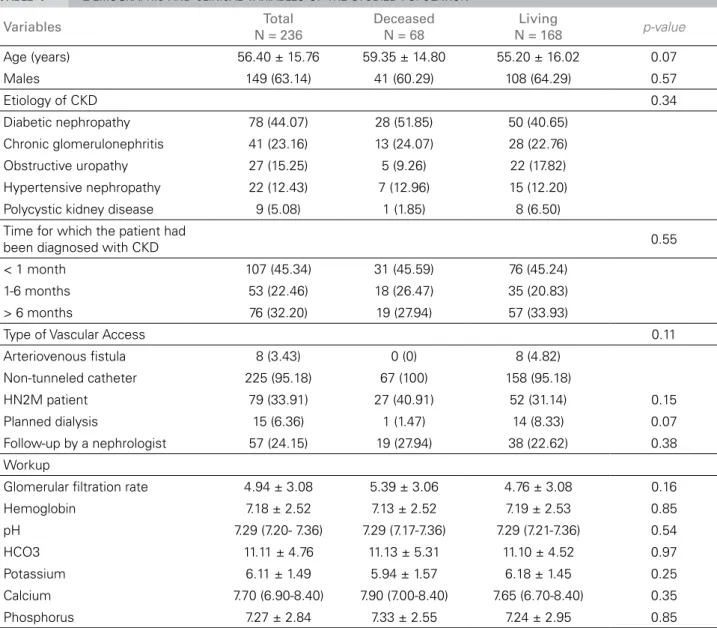
Table 1 shows the distribution of patient
demographic and clinical variables according to their health statuses at discharge. Patient GFR, hemoglobin, bicarbonate, potassium, calcium,
and phosphorus levels were also captured. No statistically significant differences were observed when the values found for survivors versus
deceased patients were compared.
Figure 1. Kaplan-Meier curves of patients with chronic kidney disease
on hemodialysis. TABLE 2 MULTIVARIATE LOGISTIC REGRESSION FOR DEATH RATES OF PATIENTS WITH CHRONIC KIDNEY DISEASE ON HEMODIALYSIS
Variable Odds Ratio (95% CI) p-value
Age* 1.03 (0.99-1.07) 0.08
Etiology
Diabetic nephropathy 1 --Chronic
glomerulonephritis 0.92 (0.25-3.38) 0.90
Obstructive uropathy 0.28 (0.76-1.06) 0.06 Hypertensive
nephropathy 0.64 (0.14-3.01) 0.57
Polycystic kidney
disease 0.41 (0.40-4.31) 0.46
Time for which the patient had been diagnosed with CKD
< 1 month 1
--1-6 months 0.55 (0.18-1.71) 0.30
> 6 months 0.39 (0.12-1.27) 0.11
Follow-up by a
nephrologist 2.29 (0.89-5.91) 0.09
Glomerular filtration
rate 1.00 (0.88-1.13) 0.99
Planned dialysis 0.28 (0.01-2.28) 0.18
* Odds ratio for each year of age.
D
ISCUSSIONHigh death rates were seen among incident patients, with values reaching 50% in the seventh month of follow-up. Death rates were lower among patients diagnosed with CKD for over six months and individuals on planned versus
emergency dialysis.
The literature indicates death rates are high among dialysis patients,3,4 and in Peru they appear
to be as high as the rates reported in African countries, a region in which the costs and death rates associated with renal replacement therapy (RRT) are considered in the decision of whether a patient should start treatment at all.18 This
finding shows that Peru’s economic growth has not been associated with improved health status of patients with CKD or enhanced coverage by the MOH.1,2
The issues around the cost of RRT reported in other developing nations19,20 have led the Kidney
Disease Improving Global Outcomes (KDIGO) initiative to consider the publication of a guide on palliative care for patients with stage-5 CKD after it was found that in many parts of the world RRT was not available.21
Two studies on the mortality of HD patients have been carried out in Peru. Meneses et al.15
compared the death rates of incident patients on dialysis from 1982 to 1995 and from 1995 to 2007 seen at a private clinic and public health insurance patients and found no significant differences between the two time periods. The
authors reported a first-year overall survival rate of 87% (n = 236). Cieza et al.16 discussed the
survival rates of patients on three RRT modes (hemodialysis, peritoneal dialysis, and kidney transplant) seen at the HNCH between January 1, 2008 and December 31, 2011. The first-year survival rate for patients on HD was 95.1% ± 0.21 (n = 90). Lower survival rates in the three modes of RRT were observed for female patients and patients aged 60 years or older.
The type of patients enrolled in these studies explains the discrepancy in mortality when compared to our study. The studies cited above enrolled only prevalent patients and did not include subjects who dropped out of treatment. Additionally, the study by Meneses et al. was carried out at a private care unit, while Cieza et al. did not include patients on emergency dialysis or individuals who died on the first hospitalization. These studies form only a partial picture of the issues previously reported1 for patients on dialysis
Our study found a trend toward lower death rates among patients on planned dialysis and in-dividuals diagnosed earlier with CKD. However, efforts to implement changes in the direction of these findings may be hampered, as only a third of the patients had been previously seen at the hospital. This finding and the fact that almost half of our patients were diagnosed only a mon-th before mon-they were started on dialysis, show mon-the inexistence of a comprehensive care program sponsored by the MOH for patients with CKD.
Adequate renal monitoring has been associated with better outcomes in patients on hemodialysis.9-12 Among other things, renal
monitoring includes having patients on planned dialysis, having a nephrologist to follow them up,9,11 and offering patients an arteriovenous
fistula as a permanent vascular access.22
However, despite these recommendations, reported outcomes vary. Eighty-three percent of the incident patients on dialysis in Germany have arteriovenous fistulae, against 69% in Spain and 15% in the United States.6
Follow-up by a nephrologist before the start of HD was reported for 56.6% of the patients in the United States7 and 63% in Spain.8 Most of the patients in
this study started HD with a transitional venous catheter, and only one in four had consulted with a nephrologist prior to starting dialysis.
The outcomes reported in this study were similar to those described in a Brazilian study, in which nearly half of the patients started on dialysis did not know they had CKD, and approximately one in four had been seen by a nephrologist before being prescribed HD.23
An alarming number of patients dropped out of dialysis. The reasons leading patients to drop out of treatment were not studied, as the subjects who decided to leave our dialysis center were not followed. However, the reduced number of seats for chronic dialysis in the hospital - only a hundred - and poverty are the most likely reasons for patients to drop out of treatment.2
This study has important limitations, namely: (1) the outcomes reported herein reflect the reality of one institution, and may not be used to describe
other Peruvian MOH-managed public hospitals. However, as the study was held at a national reference hospital, it may be used to discuss issues not considered in past reports of death rates of patients on dialysis in Peru; (2) the significant number of patients dropping out of treatment may cause an underestimation of the reported death rates; (3) the small number of patients included and events -58- may also limit the analysis of associated factors; and (4) the elevated frequency of factors attributable to poor prior disease management, both in living and deceased patients, impedes the identification of statistically significant associations.
In conclusion, elevated death rates were observed for the dialysis patients included in this study. Patients diagnosed earlier with CKD and individuals started on planned dialysis tended to have lower mortality rates.
ACKNOWLEDGEMENTS
The authors would like to thank Dr. Marcus Tolentino Silva, Adjunct Professor at the School of Medicine, Federal University of Amazonas.
R
EFERENCES1. Herrera-Anazco P, Mezones-Holguín E, Hernandez AV. Glo-bal kidney disease. Lancet 2013;382:1243-4. PMID: 24120193 DOI: http://dx.doi.org/10.1016/S0140-6736(13)62087-5 2. Herrera-Añazco P, Palacios-Gillén M, Hernandez AV. Alta tasa
de interrupcion de hemodiálisis en pacientes del hospital nacio-nal 2 de mayo de Perú. Rev Nefrol Dial Transpl 2014;34:94-8. 3. Nordio M, Limido A, Maggiore U, Nichelatti M, Postorino M,
Quintaliani G; Italian Dialysis and Transplantation Registry. Survival in patients treated by long-term dialysis compared with the general population. Am J Kidney Dis 2012;59:819-28. DOI:http://dx.doi.org/10.1053/j.ajkd.2011.12.023
4. Goodkin DA, Bragg-Gresham JL, Koenig KG, Wolfe RA, Aki-ba T, Andreucci VE, et al. Association of comorbid conditions and mortality in hemodialysis patients in Europe, Japan, and the United States: the Dialysis Outcomes and Practice Patterns Study (DOPPS). J Am Soc Nephrol 2003;14:3270-7. DOI: http://dx.doi.org/10.1097/01.ASN.0000100127.54107.57 5. Bradbury BD, Fissell RB, Albert JM, Anthony MS, Critchlow
CW, Pisoni RL, et al. Predictors of early mortality among incident US hemodialysis patients in the Dialysis Outcomes and Practice Patterns Study (DOPPS). Clin J Am Soc Nephrol 2007;2:89-99. DOI:http://dx.doi.org/10.2215/CJN.01170905 6. Rayner HC, Pisoni RL, Gillespie BW, Goodkin DA, Akiba T,
Akizawa T, et al.; Dialysis Outcomes and Practice Patterns Stu-dy. Creation, cannulation and survival of arteriovenous fistu-lae: data from the Dialysis Outcomes and Practice Patterns Stu-dy. Kidney Int 2003;63:323-30. PMID:12472799 DOI: http:// dx.doi.org/10.1046/j.1523-1755.2003.00724.x
8. Pérez-García R, Martín-Malo A, Fort J, Cuevas X, Lladós F, Lozano J. Baseline characteristics of an incident haemodialysis population in Spain: results from ANSWER--a multicentre, pros-pective, observational cohort study. Nephrol Dial Transplant 2009;24:578-88. DOI:http://dx.doi.org/10.1093/ndt/gfn464 9. Saggi SJ, Allon M, Bernardini J, Kalantar-Zadeh K, Shaffer R,
Mehrotra R; Dialysis Advisory Group of the American Socie-ty of Nephrology. Considerations in the optimal preparation of patients for dialysis. Nat Rev Nephrol 2012;8:381-9. DOI: http://dx.doi.org/10.1038/nrneph.2012.66
10. Moist LM, Trpeski L, Na Y, Lok CE. Increased hemodialy-sis catheter use in Canada and associated mortality risk: data from the Canadian Organ Replacement Registry 2001-2004. Clin J Am Soc Nephrol 2008;3:1726-32. DOI: http://dx.doi. org/10.2215/CJN.01240308
11. Frimat L, Loos-Ayav C, Panescu V, Cordebar N, Briançon S, Kessler M. Early referral to a nephrologist is associated with better outcomes in type 2 diabetes patients with end-stage renal disease. Diabetes Metab 2004;30:67-74. DOI: http://dx.doi. org/10.1016/S1262-3636(07)70091-5
12. Maynard C, Cordonnier D. The late referral of diabetic pa-tients with kidney insufficiency to nephrologists has a high human and financial cost: interdisciplinary communication is urgently needed. Diabetes Metab 2001;27:517-21.
13. Marinovish S, Lavorato C, Celia E, Araujo J, Bisigniano L, Sorat-ti M. Mortalidad según el registro de pacientes en diálisis crónica de Argentina 2004-2005. Nefrol Dial Trasplant 2009;29:13-48. 14. Sesso RCC, Lopes AA, Thomé FS, Lugon JR, Watanabe Y, San-tos DR. Diálise crônica no Brasil - Relatório do Censo Brasilei-ro de Diálise, 2011. J Bras NefBrasilei-rol 2012,34:272-7.
15. Meneses L, Leon C, Huapaya J, Cieza J. Sobrevida en hemodiá-lisis según el periodo de ingreso de pacientes entre 1982 y 2007, en Lima, Perú. Rev Med Hered 2011;22:157-61.
16. Cieza Zevallos J, Bernuy Hurtado J, Zegarra Montes L, Or-tis Soriano V, León Rabanal C. Supervivencia en terapias de reemplazo renal dentro de un concepto integral de oferta de servicios públicos en el Perú, periodo 2008 y 2012. Acta Med Per 2013;30:80-5.
17. National Kidney Foundation. K/DOQI clinical practice guidelines for chronic kidney disease: evaluation, classifica-tion, and stratification. Am J Kidney Dis 2002;39:S1-266. 18. Ekrikpo UE, Udo AI, Ikpeme EE, Effa EE.
Haemodialy-sis in an emerging centre in a developing country: a two year review and predictors of mortality. BMC Nephrol 2011;12:50. DOI:http://dx.doi.org/10.1186/1471-2369-12-50
19. Sakhuja V, Sud K. End-stage renal disease in India and Pakistan: burden of disease and management is-sues. Kidney Int Suppl 2003;S115-8. DOI: http://dx.doi. org/10.1046/j.1523-1755.63.s83.24.x
20. Ranasinghe P, Perera YS, Makarim MF, Wijesinghe A, Wa-nigasuriya K. The costs in provision of haemodialysis in a developing country: a multi-centered study. BMC Nephrol 2011;12:42. DOI:http://dx.doi.org/10.1186/1471-2369-12-42
21. Kasiske B, Wheeler D. Kidney Disease: Improving Glo-bal Outcomes--an update. Nephrol Dial Transplant 2014;29:763-9. DOI: http://dx.doi.org/10.1093/ndt/gft441 22. Fluck R, Kumwenda M. Renal Association Clinical Prac-tice Guideline on vascular access for haemodialysis. Ne-phron Clin Pract 2011;118:c225-40. PMID: 21555898 DOI:http://dx.doi.org/10.1159/000328071