644
Rev Soc Bras Med Trop 49(5):644-647, September-October, 2016 doi:10.1590/0037-8682-0097-2016
Short Communication
Corresponding author: Dr. Lucas da Silva Muniz. e-mail: [email protected]
Received 11 March 2016 Accepted 25 July 2016
The inluence of assistive technology on occupational
performance and satisfaction of leprosy patients
with grade 2 disabilities
Lucas da Silva Muniz
[1], Irmara Géssica Santos Amaral
[1], Thiago da Silva Dias
[1],
Jorge Lopes Rodrigues Júnior
[1][1]. Departamento de Terapia Ocupacional, Universidade do Estado do Pará, Belém, Pará, Brasil.
Abstract
Introduction: We aimed to investigate the feasibility of assistive technology (AT) devices to improve leprosy patients’
occupational performances and satisfaction. Methods: This is a pretest-posttest design study. The Canadian Occupational Performance Measure was used to assess the occupational performance and satisfaction of ive leprosy participants with grade 2 disabilities before and after ten 45-minute interventions using assistive technology devices. Results: The data showed a statistically signiicant 7-point average improvement (p<0.05) in participants’ post-intervention performance and satisfaction scores. Conclusions: Assistive technology devices may be useful therapeutic tools to enhance autonomy/independence and satisfaction of leprosy patients with grade 2 disabilities.
Keywords: Leprosy. Assistive technology. Occupational performance.
Leprosy is one of the oldest and most intriguing human diseases. Evidence of leprosy is found in some of the earliest records of human history, such as in bible scriptures, as well as from human skeletons dating as far back as 2000 before Christ(1). The most common complications of leprosy include
loss of sensation, atrophy, paresis, and muscle paralysis. If these conditions are not adequately treated during their early manifestations, they may progress to permanent sequelae and/ or disabilities(2). Since 2001, a three-grade classiication system
has been used to grade impairments of eyes, hands, and feet(3).
Grade 0 involves no leprosy-related impairments; grade 1 involves loss or decrease in sensation; and grade 2 involves the eyes (lagophthalmos, ectropion, trichiasis, central corneal opacity, or visual acuity lower than 0.1 or an inability to count the examiner’s ingers at a distance of 6m); hands (trophic and/ or traumatic lesions, clawed hands, bone reabsorption, or wrist drop); and feet (trophic and/or traumatic lesions, clawed feet, bone reabsorption, foot drop, or ankle contracture)(3). These
symptoms impair several activities, including activities of daily living (ADL).
The ADL comprise typical tasks required for self-care and self-maintenance, such as hygiene, bathing, and feeding(4).
Impaired occupational performance may trigger a process that frequently inluences people’s biopsychosocial context, impairing self-esteem and the sense of independence(5). The
rehabilitation process for disabled people includes the therapeutic use of assistive technology (AT) devices to compensate patients’ impairments and deicits, aiming to increase, maintain, or improve functional skills. This process increases patients’ sense of satisfaction and life purpose(6). In general, AT is able
to improve several areas of human performance, ranging from simple daily tasks, including feeding and writing, to complex tasks, such as driving(7). AT adaptations are customized devices that are prescribed, and that aim to enable functional recovery and to stimulate independence(5). AT adaptations enable different
levels of improvement of functional independence, dependent on the devices, procedures, and the patient’s remaining functional potential(8). Using AT for leprosy patients aims to facilitate the
performance of ADL by promoting more comfort, stability, and functionality when using the impaired limb(9).
645 Muniz LS et al. - Assistive technology and occupational performance
Research risks included device-related aspects, such as possible allergic reactions or contamination; improper use, pain, discomfort and/or maladjustment; and changes in household dynamics during the research period. We planned to minimize these risks by using minimally privacy-invasive methods, paying close attention to biomechanical, anthropometric, sensory, and motor principles, as well as using reliable materials that were comfortable, durable, lightweight, and affordable. Research beneits comprised improvements in the participants’ quality of life, functionality, and social and occupational participation. In addition, this research might demonstrate the effectiveness of using AT as a therapeutic procedure for the broader population of interest.
Five individuals met the inclusion and exclusion criteria and participated in this research. Inclusion criteria were a diagnosis of leprosy, a grade 2 disability, dificulty performing at least two ADL, and being 18-65 years old. Exclusion criteria comprised diagnoses other than leprosy, other disability grades, no dificulty performing ADL, being younger than 18 years or older than 65 years old, and having neurodegenerative comorbidities or a mental illness or disorder.
The irst step included participant assessment and inclusion in the study, which encompassed a clinical assessment, signing the informed consent form, and initial assessment using the Canadian Occupational Performance Measure (COPM). We selected the COPM for this research, since it is a validated and reliable instrument that has been successfully used in different populations and settings. The administration of this instrument comprises a semi-structured interview that provides data regarding which activities have more importance or meaning for the participants, and how much dificulty they experience when performing each activity. The COPM aims to measure changes in the clients’ perceptions of their occupational performance over time, as well as changes in their level of satisfaction with their performance. These data help the examiner to set goals, plan treatment, and measure the clients’ progress(10) (11). The
participants can use the COPM to report which activities they need and/or wish to perform; individuals can report which activities they are expected to perform but are either unable to or are able to but are unsatisied with their actual performance. Each participant rates the importance of different activities using a 10-point rating scale, which ranges from 1 (not important at all) to 10 (extremely important). Based on these data, the individual selects up to ive highly important activities and rates them according to both performance and satisfaction using a 10-point scale ranging from 1 (unable to perform the activity/ very dissatisied) to 10 (perfectly able to perform the activity/ extremely satisied). The total score is obtained by summing the scores for performance and satisfaction. Comparing the scores of the initial and inal assessment provides a measure of progress. The authors who created the measure highlighted that even a 2-point change is clinically signiicant(10).
The second step comprised prescribing and itting of the AT adaptive devices, as well as ADL training while wearing the devices. The training included ten 45-minute therapeutic sessions. The feeding device was made of ethyl vinyl acetate,
contact adhesive, and Velcro®. The device was attached to the spoon/knife/fork handle, aiming to compensate deicits in grasp and holding patterns. We were very thorough when choosing the materials and designing the devices, which were planned and built based on each participant’s anthropometric proile and biotype. The therapeutic use of an AT device encompasses the participant’s adjustment and adaptation to a new situation(12).
Adaptation is intrinsically related to occupations, in which use of the device enhances independence in ADL(13).
The third step encompassed the inal assessment using the COPM and the data analysis. We performed a quantitative statistical analysis of the data provided by the COPM. The analysis of effect size regarding the use of AT devices was based on data resulting from standardized and non-standardized protocols, as well as observation records. We stored the data in Microsoft Excel iles and used BioEstat 5.0 software for statistical analysis. We used descriptive and inferential methods to analyze the effect of using AT devices on performance and satisfaction of the sample comprising leprosy patients with grade 2 disabilities (n = 5). Quantitative variables were presented as measures of central tendency and variability. Normality was assessed using the Shapiro-Wilk test. Qualitative variables were presented using proportional distributions. We used the Wilcoxon test to compare the scores on the COPM before and after the exposure to use of the AT device, since the variables were not normally distributed. Alpha was set at 0.05 for rejection of the null hypothesis. The data collection and analysis were performed in the Assistive Technology Laboratory at Pará State University’s Center of Biological and Health Sciences in 2014. Based on the initial data collection, including clinical assessment and the COPM, we found that all participants experienced feeding-related dificulty, particularly dificulty holding eating utensils.
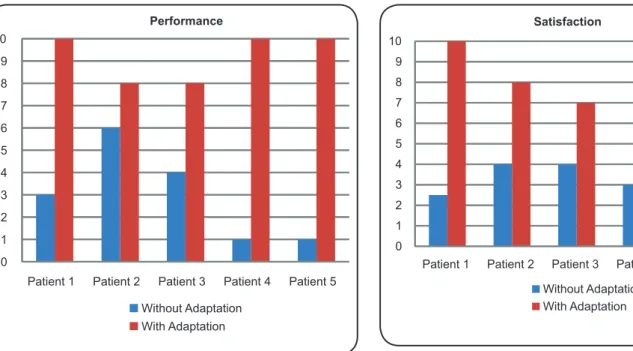
Figure 1 shows the participants’ COPM scores for
performance before and after using AT devices while eating. Based on this graph, we observed signiicant changes in the pre- and post-intervention scores. Figure 2 shows the COPM satisfaction scores before and after using the adaptive device to perform feeding. We observed signiicant changes in this item.
Table 1 shows the results of the feeding assessment using the
COPM in terms of performance and satisfaction scores. We found a statistically signiicant (p < 0.05) change in the post-intervention or With AT device performance scores (median = 10.0) compared to the pre-intervention or “Without AT device” scores (median = 3.0), which denotes a 7-point average performance improvement. Similarly, the post-intervention satisfaction scores (median=10.0) showed a statistically signiicant (p < 0.05) change compared to the pre-intervention scores (median = 3), which denotes a 7-point average satisfaction improvement.
646
Rev Soc Bras Med Trop 49(5):644-647, September-October, 2016
0 1 2 3 4 5 6 7 8 9 10
Patient 1 Patient 2 Patient 3 Patient 4 Patient 5
Performance
Without Adaptation With Adaptation
FIGURE 1. Average COPM performance scores for feeding among leprosy patients (n=5). Source: Field Research, Belem, State of Pará, Brazil, 2014. COPM: Canadian Occupational Performance Measure.
0 1 2 3 4 5 6 7 8 9 10
Patient 1 Patient 2 Patient 3 Patient 4 Patient 5
Satisfaction
Without Adaptation With Adaptation
FIGURE 2. Average COPM satisfaction scores for feeding among leprosy patients (n=5). Source: Field Research, Belem, State of Pará, Brazil, 2014. COPM: Canadian Occupational Performance Measure.
TABLE 1
Feeding assessment of leprosy patients (n=5) according to the COPM, Belém, State of Pará, Brazil, 2014.
COPM – Performance COPM – Satisfaction
COPM (ADL 1) W/Ad W/o Ad Dif. W/Ad W/o Ad Dif.
Minimum 8.00 1.00 2.00 7.00 1.00 3.00
Maximum 10.00 6.00 9.00 10.00 4.00 9.00
25th percentile (Q1) 8.00 1.00 3.00 7.50 1.75 3.50
50 th percentile (Median) 10.00 3.00 7.00 10.00 3.00 7.00
75th percentile (Q3) 10.00 5.00 9.00 10.00 4.00 8.25
Arithmetic mean 9.20 3.00 6.20 9.00 2.90 6.10
Standard deviation 1.10 2.12 3.11 1.41 1.25 2.51
Coeficient of variation (%) 11.91 70.71 50.23 15.71 42.93 41.15
Wilcoxon (p-value) 0.042 0.043
COPM: Canadian Occupational Performance Measure; ADL: activities of daily living; W/Ad: with AT device; W/o Ad: without AT device; Dif.: difference. Source: Field research.
Assistive technology devices can be part of facilitated environments, since they enable maximization of remaining potentials and occupational resigniication. In this context, AT aims to minimize a patient’s functional disabilities by using therapeutic resources that assist the performance of daily activities, improve functional performance, equalize opportunities, and increase independence(15).
This research used the COPM to verify signiicant quantitative improvements in participants’ performance and satisfaction in undertaking an ADL, eating, after using AT devices; the scores
647 re-establishment of routines with signiicant improvement in
performance. Thus, it aims to provide an effective therapy, which enhances self-conidence, self-assurance, autonomy, and independence. The use of AT adaptive devices in this research strongly inluenced the occupational performance and satisfaction of leprosy patients with grade 2 disabilities in terms of feeding activities. These two outcomes suggest that AT devices might be effective therapeutic tools for leprosy patients.
This study has some limitations, such as the small number of participants and the focus on one speciic type of ADL. Thus, the study requires replication using a larger number of participants aiming to enhance external validity. In addition, considering the level of impairment of grade 2 leprosy-related disabilities, it would be interesting to perform studies with other types of ADL, aiming to expand the knowledge regarding the use of AT devices for leprosy patients.
Ethicals considerations
The research project was submitted to and approved by the National Research Ethics Committee – namely Plataforma Brasil – and by the Pará State University’s Research Ethics Committee. The project met the principles of the National Health Council’s resolution number 466/2012 and met the Brazilian standards for research involving human beings. The research project was approved under the number 579.739 and under the Certiicate of Presentation for Ethical Assessment number 25298514.8.0000.5174. The participants were properly informed about every aspect of the research based on the informed consent form, including objectives, methods, techniques, and procedures for data collection. The participants were made aware of their freedom to leave the study when desired, and of the research risks and beneits. In addition, we used aliases to protect the participant’s identities.
Conlicts of Interest
The authors declare that they have no conlicts of interest.
REFERENCES
1. Araujo S. Epidemiologia molecular da hanseníase: sorologia anti PGL-I e PCR em swab nasal de paciente com hanseníase e contatos domiciliares. Dissertação de Mestrado. Uberlandia: Universidade Federal de Uberlândia; 2012. 44p.
2. Edit LM. Breve história da hanseníase: sua expansão do mundo para as Américas, o Brasil e o Rio Grande do Sul e sua trajetória na saúde
pública brasileira. Saude Soc 2004; 13:76-88.
3. Mantellini GG, Goncalves A, Padovani CR. Physical disabilities in leprosy: some contemporary basic aspects. J Mycobac Dis 2012; 2:121.
4. Kielhofner G. Model of human occupation: theory and application. 4th edition. Baltimore: Lippincott Williams & Wilkins; 2008. 608p.
5. Alves de Oliveira AI, Lourenço JMQ, Garoti MF. Tecnologia Assistiva: pesquisa e pratica. Belém: EDUEPA; 2008. 184p. 6. Neistadt ME, Crepeau EB. Willard & Spackman - Terapia
Ocupacional. Traduzido do original: Willard & Spackman's Occupational Therapy. 9th edition. Rio de Janeiro: Guanabara
Koogan; 2002. 888p.
7. Mendonca KNN. Conhecimento e utilização de equipamentos de tecnologia assistiva pelos terapeutas ocupacionais do Distrito
Federal. Monograia de Bacharelado em Terapia Ocupacional.
Brasília: Universidade de Brasília; 2012. 51p.
8. Teixeira E. Atividades de vida diária. In: Teixeira E, Sauron FN, Santos LSB, Oliveira MC, editores. Terapia ocupacional na reabilitação física. Capítulo 10, São Paulo: Editora Roca; 2003. p. 193-219.
9. Freitas PJP. Reabilitação da mão. 1st edition. São Paulo: Atheneu;
2006. 578p.
10. Cup EH, Scholte op Reimer WJ, Thijssen MC, van Kuyk-Minis MA. Realiability and validity of the Canadian occupational performance measure in stroke patients. Clin Rehabil 2003; 17:402-409. 11. Dedding C, Cardol M, Eyssen IC, Dekker J, Beelen A. Validity of
the Canadian occupational performance measure: a client-centred outcome measurement. Clin Rehabil 2004; 18:660-667.
12. Teixeira E, Oliveira MC. Adaptações. In: Fernandes AC, Ramos ACR, Casalis MEP, Herbert SK. AACD Medicina e Reabilitação - Princípios e Prática. Capítulo 35, São Paulo: Editora Artes Médicas;
2007. p. 671-706.
13. Cavalcanti A, Galvão C. Adaptação ambiental e doméstica.
In: Cavalcanti A, Galvão C, editors. Terapia Ocupacional:
fundamentação e prática. Rio de Janeiro: Guanabara Koogan; 2007.
p. 420-426.
14. Garcia JRL, Macário DPAP, Ruiz RB, Siqueira LMS, Cará MRG. Considerações psicossociais sobre a pessoa portadora de hanseníase. In: Opromolla DVA, Baccarelli R, editors. Prevenção de incapacidades e reabilitação em hanseníase. Bauru: Instituto Lauro de Souza Lima; 2003. p. 25-30.
15. Rodrigues AC. Reabilitação práticas inclusivas e estratégias para a ação. 1st edition. São Paulo: Andreoli; 2008. p. 370.