
This article was published in Engineering Science and Technology, an
International Journal, 2017
http://dx.doi.org/10.1016/j.jestch.2017.01.009
A key review of building integrated photovoltaic (BIPV) systems
Emrah Biyik a, Mustafa Araz a, Arif Hepbasli a,⇑, Mehdi Shahrestani b, Runming Yao b, Li Shao b, Emmanuel Essah b, Armando C. Oliveira c, Teodosio del Caño d, Elena Rico d, Juan Luis Lechón d, Luisa Andrade e, Adélio Mendes e, Yusuf Baver Atlı f
a Department of Energy Systems Engineering, Faculty of Engineering, Yasar University, 35100 Bornova, Izmir, Turkey
b School of Construction Management and Engineering, The University of Reading, Whiteknights, PO Box 219, Reading, Berkshire RG6 6AW, United Kingdom
c Mechanical Engineering Department – FEUP, University of Porto, 4200-465 Porto, Portugal
d Onyx Solar, C/ Rio Cea 1-46, 05004 Ávila, Spain
e LEPABE – Faculdade de Engenharia, Universidade do Porto, rua Dr. Roberto Frias, 4200-465 Porto, Portugal
f Graduate School of Natural and Applied Sciences, Ege University, 35100 Bornova, Izmir, Turkey
Abstract
Renewable and sustainable energy generation technologies have been in the forefront due to concerns related to environment, energy independence, and high fossil fuel costs. As part of the EU’s 2020 targets, it is aimed to reach a 20% share of renewable energy sources in final energy consumption by 2020, according to EU’s renewable energy directive. Within this context national renewable energy targets were set for each EU country ranging between 10% (for Malta) and 49% (for Sweden). A large share of renewable energy research has been devoted to photovoltaic systems which harness the solar energy to generate electrical power. As an application of the PV technology, building integrated photovoltaic (BIPV) systems have attracted an increasing interest in the past decade, and have been shown as a feasible renewable power generation technology to help buildings partially meet their load. In addition to BIPV, building integrated photovoltaic/thermal systems (BIPV/T) provide a very good potential for integration into the building to supply both electrical and thermal loads.
In this study, we comprehensively reviewed the BIPV and BIPVT applications in terms of energy generation amount, nominal power, efficiency, type and performance assessment approaches.
observed to be i) improvements on system efficiency by ventilation, hence obtaining a higher yield with lowering the panel temperature
ii) new thin film technologies that are well suited for building integration. Several approaches to achieve these objectives are reported in the literature as presented in this paper. It is expected that this comprehensive review will be beneficial to researchers and practitioners involved or interested in the design, analysis, simulation, and performance evaluation, financial development and incentives, new methods and trends of BIPV systems.
1.
Introduction
Although electricity plays an essential role in modern society, still there are about 1.2 billion people living without access to electricity, mostly living in rural areas of Africa and Asia [1]. This fact highlights the importance of generating electricity from distributed sources, where renewables have a large presence, to meet local demands in such rural areas. According to the International Energy Agency the share of renewables in electricity generation is expected to rise up to 25% of the total power generation in 2018 [2]. Photovoltaics (PV) generated electricity is also estimated to double its share by 2018 compared to 2011 [2]. PV technology is rapidly-growing compared to other renewables, and, as a result, numerous studies have been conducted on this topic. As part of these studies, Building Integrated Photovoltaics (BIPV) systems play an important role in generating electricity. Some review studies have already been conducted in the literature, regarding BIPV systems but they either provide a very general overview without sufficient detail or are focused on a specific country or application type (e.g. solar façades). Kong et al. [3] reviewed various building energy efficiency options in China, within the context of eleventh five-year plan period. Within this context, they explained the subsidies given to BIPV projects and the application process for them. In [4], research about building integrated energy storage opportunities were reviewed, while the developments in China were also explained. In [4], BIPV systems were also considered as building integrated energy storage systems and were divided into three subgroups: BIPV systems with solar battery, Grid-connected BIPV systems and PV-Trombe wall. For grid-connected BIPV systems the grid was considered as an infinite cycle battery with a huge capacity. Quesada et al. [5], reviewed research conducted and developments achieved in the first decade of the 21st century related to opaque solar façades. They divided opaque solar façades into two subgroups, namely active and passive façades. As part of active solar façades, BIPV and BIPV/T systems were explained. They also categorized the studies conducted so far, considering their content, as ‘‘theoretical and experimental study”, ‘‘development”, ‘‘feasibility” and, ‘‘application example”. It was concluded that both BIPV and BIPV/T technologies are favorable systems. Significant amount of energy can be produced with higher efficiency due to the cooling effect of the air flowing behind PV panels. Ref. [6] was the second part of the review study explained in Ref. [5], where the authors
reviewed transparent and translucent solar façades with the same paper organization. Thus, semitransparent BIPV and BIPV/T systems were explained and reviewed as active façade systems. Jelle et al. [7], reviewed state of art BIPV technologies in their study. They first gave some information about current PV technologies and their classification, since BIPV applications generally follow the developments in PV cells. The authors reviewed BIPV products available in the market, and categorized them into four subgroups, namely foils, tiles, modules and solar cell glazing products. They concluded that new PV technologies would lead to more efficient and low-cost BIPVs, which would result in shorter payback periods. In [8], a comprehensive analysis of the important developments of various BIPV/T systems was pro- vided. The BIPV/T systems, which were formed starting by early 90s, has attracted increasing interest since 2000 due to its potential to help design net-zero energy buildings by increased solar energy utilization. A wealth of papers report experimental and numerical studies related to the BIPV/T system design and effects of the BIPV/ T system on the building performance. The BIPV/T systems studied are: air-based systems, water-based systems, concentrating systems and systems involving a phase change working medium such as BIPV/T with either heat pipe or heat pump evaporator. In [9], a building-integrated photovoltaics with the thermal energy recovery provides a very good potential for integration into the building which consumes zero energy but this technology is not in common use. The advantages are more certain than traditional PV systems of BIPVT. In [10], a BIPV/T system, the flow of a fluid, that is generally air, in a canal beneath PV panels gives way to recovery of a significant part of solar radiation as thermal energy. Thus, heat can be produced through BIPV/T systems to partially supply building demand. On the other side, the panel is cooled by recovered heat from the photovoltaic panel hence increasing its electricity generation efficiency. Shi and Chew [11] reviewed design of renewable energy systems. As part of their study, they also explained BIPV and BIPVT systems and gave examples from the studies conducted so far. In [12], pathways and research opportunities for the BIPV systems of the future were investigated, and PV development progress and its impact on BIPVs, new materials and solutions for BIPVs and their long-term durability were discussed in detail by giving examples from the literature. Low production cost, low environmental impacts and high efficiencies were considered as key factors for future BIPV systems. It was mentioned that retrofit- ting and relatively easy installation of BIPVs are very important because of the huge volume of existing buildings. It was also stated that governmental subsidies are of great importance to get the attention of the industry, and that especially solar cell glazing products present great opportunities, since they provide solar shading, daylight transmission and electricity production. Other important development is PCM technology. In [13], phase change materials are used for heat storage and passive electronic temperature control. All of the PV–PCM systems which were investigated have a power to laten the temperature increase of PV using PCM. If the organic cell efficiency increases, it may be appropriate to use a PCM to maintain an organic cell at an optimum production temperature. There is a certain potential of the PCM due to the high temperature of
the PV. In [14], examples of BIPV/T systems in the literature were given as part of an overview of photovoltaic/thermal (PV/T) systems. In [15], advances, approaches and solutions related to BIPV applications in Solar Decathlon Europe houses were presented. As discussed in [16], a smaller portion of the photovoltaic industry constitutes BIPV, yet it is growing steadily. The lack of validated prediction simulations that are required to make the conscious economic decisions prevent the widespread use of BIPV. The project, which can take many years to compare the performance of BIPV panels to the estimation of photovoltaic simulation tools, has been undertaken by the National Institute of Standards and Technology (NIST). Input parameters which describe the electrical performance of BIPV panels exposed to various meteorological conditions are required for the existing simulation models. In the same study the authors have explained how to make experimental tests by providing the necessary parameters. Ref.
[17] is related to the thermal analysis of double skin facades with BIPV panels. Studies were classified as theoretical and experimental in the literature and these studies are separated as naturally ventilated systems and mechanically ventilated with the external influences. Researchers have found it more important to investigate mechanically ventilated façades due to the flexibility of the system. Finally, researchers suggested Nusselt number correlations and convective heat transfer correlations with the relevant ranges of the Reynold’s number.
In this paper, we present a comprehensive review of current developments in the BIPV and BIPV/T area and focus to subgroups according to study issue such as building application and experimental studies, simulation and numerical studies, cell module design studies, grid integration studies, and finally, policy and strategies studies. In the first part of the current study, the description of BIPV systems and their categorization are presented. BIPV and BIPV/T systems reported in the literature are then reviewed from the energetic, exergetic, economic and environmental aspects, while their types and performance indicators are given in a tabulated form. We then present available BIPV solutions in the market that meet a wide array of requirements. Finally, the main conclusions drawn are presented.
2.
System description
PV systems used on buildings can be classified into two main groups: Building attached PVs (BAPVs) and BIPVs [18]. It is rather difficult to identify whether a PV system is a building attached (BA) or building integrated (BI) system, if the mounting method of the system is not clearly stated [7,19]. BAPVs are added on the building and have no direct effect on structure’s functions [18]. On the other hand, BIPVs are defined as PV modules, which can be integrated in the building envelope (into the roof or façade) by replacing conventional building materials (tiles e.g.) [20]. There- fore, BIPVs have an impact of building’s functionality and can be considered as an integral part of the energy system of the building. There are many parameters that need to be considered for the integration of PVs into the
building envelope and they are shown in Fig. 1 [21].
A BIPV system is schematically illustrated in Fig. 2 [22]. As can be seen from the figure, the PV system is integrated to the façade of the building. The outdoor air enters the system from the bottom and leaves it from the top. During this process it absorbs the heat of PV modules, reducing their temperature which results in an improvement in their efficiency and lifetime. In some applications, a fan and an air duct is employed in the system in order to draw the heated air into the room to reduce the heating load in winter. Such systems are called BIPVT systems and benefit from solar energy both electrically and thermally. In Fig. 3, the schematic illustration of a BIPVT system is given [5].
The categorization of BIPV systems can be made according to solar cell type, application type or their names in the market. Solar PV technologies are divided into two sub-categories, silicon based and non-silicon based, while roof and façade integration are the only two types of application. On the other hand, the categorization described in [7] was used for the products in market. The BIPV products were divided into four categories, foils, tiles, modules and solar cell glazing, in Ref. [7], according to the description of the manufacturer or the material that is replaced by the BIPV product. A complete schematic of the categorization used in this study is given in Fig. 4
3.
Review of BIPV/BIPVT systems
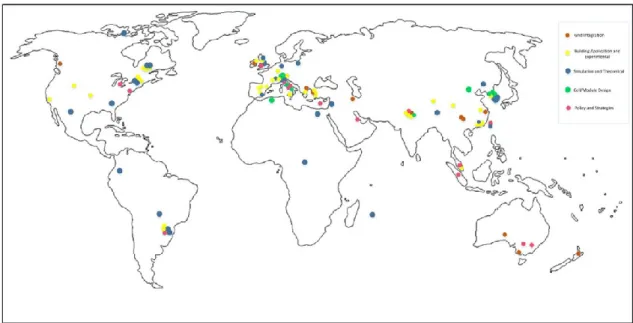
In this section, BIPV and BIPVT systems have been comprehensively reviewed in terms of energy generation amounts, nominal power, efficiency, open circuit voltage (OCV), short circuit current (SCC), maximum power point (MPP), fill factor, their type and performance assessment. All papers are listed according to their publication years from past to present and available data given in the papers are presented in Table 1. If there are no data, it was indicated as ‘‘N/A”. When ‘‘-” is used between two numbers, it means that the number on the left is the minimum value, while the right one is the maximum value found in study. On the other hand, values for different systems in the same study or results of the studied system under different conditions are separated with a ‘‘;” sign. In many papers, the type of the BIPV system was not explicitly stated. Thus, only the known parameter is marked and other cells are left blank in such cases. Based on the reviewed papers, it can be stated that there are many theoretical and experimental studies con- ducted so far, having a wide range of applications regarding energy generation capacities. Many studies are carried out in the world on BIPV. As shown in Fig. 5, building application studies in Spain, simulation studies in American continent, cell and module design studies in South Korea, grid, policy and strategy studies in Australia are more common. Most of the systems were energetically and economically evaluated, with some presenting environmental analyses as well. Exergetic assessment of BIPV and BIPVT systems, however, has been limited in the literature.
3.1. Building applications and experimental studies
Building application refers to experiments applied on the building or performed in the laboratory. Various analyses of prototype or system were performed. In general, module efficiency is low at high temperatures. Many studies are made in order to solve this fundamental problem. According to these studies, efficiency is increased by heat absorption at the back of the PV. In order to create this, studies were conducted such as using air or fluid to create a forced convection, opening alternative inputs between hot and cold area in PV, provide fresh air, PV’s air gap changing and air gap to set the optimal level. In this way, increase in both the annual production and module life can achieved. Otherwise, shadowing effect, ambient temperature, the direction of the building and the slope of the PV have a significant effect in order to achieve higher power output and efficiency in the building applications.
Omer et al. [23] reported the monitoring results of two different BIPV systems. The first system installed was a thin film PV façade application formed with a 58º tilt angle. The second system consisted of monocrystalline PV roof slates and tilt angle 52º. The average annual system efficiency for the first BIPV system was 2%, while that of the second system was 3.6%. The capital costs for the first and second system were ₤34,560 and ₤17,550, while the annualized energy costs were 34.01 ₤/kWh and 3.69 ₤/kWh, respectively. It was also concluded that both of the systems were not cost effective at the then current price of energy in 2002.
In [24], a 260 m2 BIPV system was computationally modeled using ESP-r building energy simulation software. The modules were mounted on a building with an air gap of 250 mm. This gap allows the air to be heated, which is then used for water pre- heating. Three different design options, namely PV/C (BIPV + cool- ing of cells), PV/T (BIPV + air heating) and BIPV, were considered for the simulations. Annual energy production amount of these three scenarios were found to be 83,680, 83,584 and 83,205 MJ, respectively.
Yang et al. [25] experimentally investigated the performance of the first BIPV system installed. There was also an air gap between the PVs and the wall to allow cooling and increasing the efficiency. The results showed that the maximum power output occurred on the roof. The total annual energy output of the system was estimated to be 6878 kWh. The power price of the BIPV system was estimated to be between HK$ 1.5/kWh and HK$ 2/kWh, which was higher than the prices of electricity supplied by two local companies.
Mallick et al. [26] experimentally investigated a novel asymmetric compound parabolic PV concentrator and compared the results with a similar non-concentrating system. The results showed that the power ratio between these two systems was 1.62 for the same cell area. In other words, the maximum power point of the system with the PV concentrator was 62% higher than the concentrating one. On the other hand, the conversion efficiency of the non-concentrating system was 8.6%, while that of the non-concentrating system was 6.8. It
was also reported that the average cell temperature of the novel system was 12 ºC higher than the non-concentrating system.
In [27], a nonlinear first order stochastic differential equation for the heat transfer of a BIPV component was developed. The model was developed using a series of well-controlled experiments of a PV module consisting of 121 polycrystalline Si cells that cover an area of 1.44 m2. It was concluded that the presented method is very useful for modelling nonlinear stochastic thermal phenomena in BIPV systems.
In Ref. [28], a BIPVT system was examined with three different configurations. The first configuration was the base case of unglazed BIPV with air flow under it. In the second configuration 1.5 m vertical glazed solar air collector was added to the system. In the third and last configuration a glazing over the PV was added.
For all the configurations a 7 kWp It was stated that the preheated air in the first configuration was suitable for an HVAC system and preheating of water, while in the second and third configurations significant improvements in thermal efficiency were achieved. On the other hand, in the third configuration, the electricity production was decreased significantly due to excessively high PV panel temperatures.
Corbin and Zhai [29] a novel BIPVT was examined, absorbers, a thermal storage tank and a pump, by which water is circulated to the absorbers. Two different CFD models were created. In the first model, a standard, close to the roof surface, BIPV system was modeled, while in the second model, a liquid-cooled tube-fin absorber was located in the cavity to examine active heat recovery effects. The results showed that the second BIPVT could reach up to 5.3% more electrical efficiency compared to a natural ventilated system. The thermal and total efficiencies of the system were found to be 19% and 34.9%, respectively.
In [30], the air based BIPVT system of a solar house was thermally modelled. The BIPVT system was coupled with a ventilated concrete slab (VCS) system to also provide active solar heating. The annual electricity generation was estimated to be 3265 kWh. Three different technologies, a dryer, an air to water heat exchanger to produce domestic hot water, and a VCS were adopted to use the heated air by the BIPVT system. A quasi-two dimensional, control volume, steady state model was developed. It was stated that the model can be used for similar systems and is useful for air flow control. The results showed that the BIPVT system could significantly reduce PV operating temperatures, and could produce an important amount of thermal energy. The temperature rise of the air that passes through the collector on a sunny day with a flow rate of 250 L/s is found to be between 30 and 25 ºC. This temperature rise is equal to a thermal energy gain of 8.5–10 kW. In [31], Unlike the previous study, a 3D control volume, explicit finite difference thermal model was developed for the VCS system. The design of the VCS system used in [30] was explained. The sizing of the VCS system was made for a typical sunny winter day in Canada, assuming an air flow rate of 250 L/s and air temperature of 40 ºC
for 4 h. The VCS system was experimentally investigated to assess its performance, and it was found out that it can store 9–12 kWh thermal energy within 6 hours with an air inlet of 35 ºC and 200 L/s.
Agrawal and Tiwari [32], the use of BIPVT system was investigated. The system had an air blower which consumed 0.12 kWp and provided a 1.2 kg/s constant mass flow rate through the ducts. The performance of the system was examined for four parallel and serial connection combinations. The electrical and thermal exergies of the system was found to be 16,209 kWh/y and 1531 kWh/ y, respectively, while the average overall thermal efficiency was 53.7%. It was also concluded that the parallel combination shows the best performance for constant air velocity, while the system connected in series gives better performance for constant air mass flow rate. In another similar study [33], the system was thermally modelled and analyzed under the climatic conditions of two Indian cities, Bangalore and Srinagar. The PV modules used in the system were described in Ref [32], it conducted a study to determine the temperatures of solar cell, duct air and room air for a BIPVT system applied to the rooftop of a laboratory building. Six fans, 12 W each, were employed to circulate the air through the ducts. The results showed that the proposed system is favorable for both moderate and cold climates in terms of yearly electrical energy and exergy production amounts compared to a conventional BIPV system. The electrical efficiencies were found to be between 12.5% and 16% while the thermal efficiencies were in the range of 50% to 54%. In [34], unlike previous two studies, performance of semi- transparent and opaque BIPVT systems for roofs and façades were analytically assessed and two options were considered in the analysis: BIPVT system with air duct and without air duct. The air mass flow rate was taken between 0.85– 10 kg/s for the systems with air duct. It was found that the difference between semitransparent and opaque BIPVT systems with air duct was 1.46 ºC, while that of the systems without air duct was 9.80 ºC. The differences for the systems located on the roof were 1.13 ºC and 9.55 ºC, respectively. The maximum room air temperature was found to be 22 ºC, which occurred in the semitransparent BIPVT system without air duct, while the outdoor air temperature was 4.4 ºC. It was also determined that increasing the air mass flow rate led to an increase in room air temperature for the semitransparent BIPVT system.
In [35], a BIPV Trombe wall was examined. For the experiments a 0.50 m air gap was left between the modules and the wall. There were two 0.08 m2 air vents located on the wall to provide heating in winter. The results indicated that the simulation and test results were in good agreement. The electrical and thermal efficiencies on 5th of February were found to be 4.5% and 20.3%, respectively. On the other hand, the natural ventilation mass flow rates were 0.013 kg/s and 0.035 kg/s for irradiations of 638.6 W/m2 and 750.88 W/m2, respectively. According to another trombe wall study, single and double glass and a-Si semi-transparent PV panels
were evaluated and compared against each other In [36].The sys- tem was installed on a well-insulated test room, where covering brick, vertical bored brick, extrude polystyrene and plaster were used for the thermal mass. The nominal power of the PV panel was 27 W, while the OCV and SCC were 49 V and 1.02 A, respectively. There were two vents located on the upper and lower parts of the system, through which the air was transferred into/from the room by natural convection. The tests were carried out for two days, on 25th and 26th of February, and the results showed that the maximum electrical power rate was 35.79 W/m2, while the electrical efficiency ranged between 4.27 and 4.65%.
In Ref. [37], architectural design aspects of BIPV systems, including (i) how to design BIPV systems, (ii) the lifetime of such systems, and (iii) whether to choose BIPV or BAPV, were studied in detail. The authors have also designed a novel mounting structure to solve issues related to maintenance and replacement of PV components. It was concluded that function, cost, technology and aesthetics are more important than high integration. It was also mentioned that due to the lower lifetime of PVs compared to the lifetime of buildings (50 years), easy maintenance and replacement of PV modules are important.
In [38], the yearly electricity generation amounts of two systems were analyzed. The first system was 3.072 kWp BIPV system. Thin- film a-Si technology was used and it consisted of 24 flexible modules (128 Wp each). The second system was a curved, 12 kWp PV system and which system consisted of 88 flexible panels (136 Wp each) and were made of thin-film a-Si laminates. The results showed that the first system had a higher annual energy yield at 1265 kWh/kWp, while the second system generated 1110 kWh/ kWp, which is about 88% of the first system’s. Also, in the summer period the yield of curved system was relatively higher. Thus, they concluded that a good compromise between form and function was reached in the second (more aesthetically) system. X”
In [39], transient thermal analysis of a BIPV system were experimentally conducted. The experimental setup consisted of a PV panel and a plexiglas panel. A hood was built on the exit of the frame and two axial fans with different capacities were employed. The experiments were carried out in three stages. In the first mode, no fan was used (natural convection), while in the second and third modes, fans were run at 110 m3/h and 190 m3/h flow, respectively. According to the results obtained on September 30th, the temperature change of air for different modes was between 4.5 ºC and 8.9 ºC, while the power range was 74.7–85.5 W. The lowest panel surface temperature occurred in Mode 3. The results suggested that overall heat transfer and cooling increased with higher air flow rates, thus increased fan capacities.
In Ref [40], the first practical BIPV application was experimentally investigated. Transparent thin-film a-Si cells were used on the windows. The PV array were connected 6 in series and 8 in parallel. The system was monitored for a two-year period and the monthly electricity generation amount was determined to be
48.4 kWh/kWp, while the annually electricity generation amount was 580.5 kWh/kWp. It was found out through the simulations that the electricity generation amount of the system can be improved up to 47% by changing the azimuth and shading effects.
Santos and Rüther [41] assessed the potential of two BIPV/BAPV systems for the existing 496 single-family residential buildings. The first system was a 2.25 kWp c-Si system, while the second sys- tem was a 10 kWp a-Si system installed. Four 125 Wp PV modules were used in the a-Si PV kit, while five 200 Wp modules were considered in the c-Si PV kit. The results showed that 87% of the PV kits would be able to generate 95% of the maximum theoretical potential, while only 3% of the systems would be able to generate 85% of the maximum theoretical output. It was also concluded that the kits would be able to produce 40% of the individual annual energy demand of the buildings.
In [42], electricity production and cooling energy saving effects of a BIPV system was evaluated. The system was made of thin film a-Si triple junction solar cells. The solar absorptance of the roof decreased from 0.75 to 0.38 after the BIPV installation. The results indicated that the daily energy output range of the system was 0.15 kWh/m2 (in winter) – 0.4 kWh/m2 (in summer) and the average system efficiency for the entire evaluation period was found to be 4.6%. Although the effect on HVAC energy consumption could not be determined due to the repairs on the HVAC system, the authors had concluded that such a BIPV system installed on an office building in Phoenix, AZ would result in 9.6 kWh/m2 and 2.9 MJ/m2 annual cooling and heating energy savings, respectively. In [43], electrical and thermal performance of a PV system integrated as cladding components to building envelope was analyzed. The tests were conducted on a test reference environment (TRE). Four equal sized p-Si PV modules (121-cell glass-glass, 64-cell glass-glass, 121-cell glass-tedlar and 121-cell transparent tedlar-glass) were tested under different air flow conditions. The glass- glass 64-cell PV module showed the highest thermal efficiency while the glass-glass 121-cell PV module showed the worst electric behavior. Also, the electrical efficiency of the glass-tedlar PV module was higher than that of the tedlar-glass one. After that, the collected data were used for the development and validation of a mathematical model. In another TRE work [44], a double skin BIPV system was modeled. Experimental work was conducted in a test reference environment of Lleida (TRE-L). The TRE-L was a well- insulated wooden box, which can be rotated to any inclination.
The experiments were carried out for two different inclinations (vertical and 30º) and seven flow rates, through a half year period.
Grey-box model was selected as the stochastic method and Continuous Time Stochastic Modelling (CTSM) software was used for the modelling process. It was concluded that the two-state grey-box model described the dynamics of the system with enough accuracy. In [21], a Test Reference Environment (TRE), which allows evaluation of experimental data for electrical and thermal performance assessment of double skin BIPV systems, was presented. The requirements of a standard TRE,
including the geometry, instrumentation, experiment procedure and calibration issues, were described referring to experience gained through the 10 years of development in different European research projects. It was con- cluded that although the assessment of electrical performance data was defined in IEC standards, they do not cover BIPV systems. The outdoor test environment described in the study was proposed as the common TRE for the evaluation of electrical and thermal performance of BIPV applications. According to another TRE study, Friling et al. [45] investigated mathematical modelling of the heat transfer of BIPVs since PV efficiency is closely related to its temperature. Experimental data was obtained from the TRE [38] mentioned above. The analysis showed that it was necessary to employ nonlinear state space models in order to obtain a satisfactory description of the PV module temperature. The results showed that the heat transfer increased when the forced ventilation is increased, and both the fins and a high forced velocity in the air gap contribute to increased heat transfer from the BIPV unit.
In Ref [46], a comparison study of naturally ventilated double- sided PV (PVF) and conventional clear glass façade (CF) was con- ducted. On the first cell there was only a clear glass and a shield on the façade, while on the second one, a PV layer consisting of a-Si PV cells was employed. It was shown that the indoor air temperature for PVF was lower than that of CF system. The results also indicated that the effect of module temperature on PV efficiency was very small for this type of cells. There was only a 0.29% decrease in the conversion efficiency for a temperature rise of 15.6 ºC. It was concluded that besides electricity generation, the PVF system could also lead to energy savings by reducing the air conditioning load.
Drif et al. [47], presented a method for the assessment of energy losses related to partial shading of BIPV systems. PV modules were split into 9 sub-arrays (2.5 kWp, each). Each sub-array consisted of 2 parallel strings with 10 PV modules in every string. The theoretically generated energy by 1 sub-generator was found to be 12.41 kWh for a day, while measurements indicated 10.62 kWh/- day. Therefore, the daily energy losses due to shading were found to be 1.79 kWh, which corresponds to 14.4% of the total generated energy by the BIPV system.
In [48], performance of a 142.5 kWp on-grid BIPV system, which were grouped into 22 arrays with different orientation and tilt. An array consisted of two parallel strings with 18 modules in series. The average monthly energy generation was estimated to be 12.1 MWh, while the average monthly performance ratio was 0.81 according to the results. Several parameters, such as the difference between actual and statistical irradiance amounts, tilt angle, PV module temperature, partial shading and irradiance fluctuations, and their effects to systems performance were also presented. In [49] Defaix et al. used the available statistical data to estimate the technical potential of BIPV in the EU-27. In the analysis they assumed that the BIPV would be based on a mix of crystalline wafer and thin film modules and had taken an average efficiency of 17.9%, and assumed a performance ratio of 0.8. The results showed that the technical potential of BIPV in
the EU is 951 Gwp, while the yearly energy generation potential was 840 TWh. It was concluded that this amount corresponds to more than 22% of the expected European electricity demand.
In [50], PVT system is designed as experimental, unglazed, sin- gle pass, open loop. For the minimum friction loss of the fluid in the system and at the channel to be created for mass flow rate between 0.02 and 0.1 kg/s a power input between 4 and 85 W is required. When the experimental results are examined, it is observed that the thermal and electrical efficiency increases as the mass flow rate increases. The thermal efficiency is between 28 and 55% and the electrical efficiency is between 10.6 and 12.2% for midday.
Wei et al. [51] compared the cost-benefits of domestic solar water heater (DSWH) and BIPV systems. The lifetime and energy production amount of the BIPV system were taken as 25 years and 140 kWh/m2, respectively. The results showed that the BIPV system was more favorable only if a roof area of more than 6 m2 exists. Otherwise DSWH systems were found to be more beneficial. It was also suggested to install DSWH systems to buildings having roof areas of up to 14 m2, if the cost of BIPV is more than RMB 0.9/ kWh.
In [52], the use of semi-transparent BIPV modules and their impact on human comfort were examined. The test facility consisted of two identical, 10 m2 rooms. In the first test a thin film CIS PV module and a thin film with a CIS PV module showed better performance in terms of hygro-thermal comfort. The energy consumption for heating and lighting were found to be slightly lower for CIS PV module, while the energy generation amount was also higher than that of a-Si PV module. Second tests were conducted using a m-Si PV module instead of the a-Si PV module, where hygro-thermal comfort analysis again presented better results for the CIS PV module. The lighting demand of m-Si PV module was slightly higher than that of CIS. On the other hand, the m-Si PV module showed better results in terms of energy production (0.09–1.31 kWh/day).
Yang and Athienitis [53] investigated two inlet air based BIPVTs. The experimental setup which consist of 45º sloping and 2 tempered glass. Result indicate two inlet panel showed 5% more thermal efficiency compared with one input semi-transparent panel showed 7.6% more thermal efficiency according to another. Other than this, in addition design of two inlet panel to be preferred that is simple and cheap. Contrary to their previous study, in [54], Yang and Athienitis carried out performance evaluation of multi-inlet BIPVT system. One and two inlets solar simulator and BIPVT prototype was investigated for developing a correlation about heat transfer with convection. Results indicate four inlet panel showed 7% more efficiency according to one inlet, while no significant difference was found between four and five inlets.
In Ref [55], a BIPVT system was made for new type prototype which consist of m-Si panel, 5 10 cm insulation, 1030 548 dimension and 7 cm air gap. For the experimental study 8 moving lamps, each with a maximum power of 4.6 kW, were
used. These lamps can be adjusted between 0º and 90º. The result of the experiment new types of solar collector shows similar thermal efficiency with UTC unglazed thermal collector, in addition this new model as the production of electricity 10% – 15% causes higher combined efficiency.
In [56], a BIPVT system which consists of air channel in between, PV layer, an insulation and plywood layer was investigated. There is a natural convective heat flux on the back of system. The system was located 0º, 45º, 90º in inclination angle which was used two different mass flow rate 174 kg/h and 232 kg/h. Optimal values were obtained at 45º angle and 232 kg/s mass flow rate. Results indicate for this orientation, average temperature is 43.8 ºC, heat transfer coefficient of PV is 16.25 W/m2K, heat transfer coefficient of insulation is 5.9 W/m2K.
In [57], passive low cost strategy was developed for lower mod- ule temperature and increase life-time of module. Two type PV panels were used. These With Fin(WF) and No Fin(NF) panels connect in series. Experimental setup was prepared as illustrated Fig 6. Experimental results show that panel temperature can decrease by 5.2 ºC and PV nominal power output can increase by 2.3% with this reduction. Annual energy generation and module life-time can increase by 1.2% and 31% respectively.
In Ref [58], 16 years old a-Si cell was made used for experimental performance analysis. System characteristics is 6 refurbished strings, of 18 modules connected in series. When experimental results considering, system total output was found 6.5 kWp. Power output of this old system increased less than 10% under standard test condition and when examining to the last 10 years, performance ratio is almost unchanged. Even if the need for additional work basically these results show that, given by manufacturers argument ‘‘it will perform over 80% after 20–25 years” is validated. In [59], shading effect analysis of a BIPV system was performed.
The building consist of 5 floor, each floor are installed with 3 a-Si (triple junction amorphous PV) modules on each array. When energy rating (kWh/kWp) were measures, it was revealed that an annual difference by 16% and a monthly difference between by 10% – 24% occur. Annual energy rating of first array is 1072 kWh/ kWp, Annual energy rating of second array 885 kWh/kWp. Minimum electricity output was measured in November due to radiation is least compared with a whole year. If declination angle decreases, energy rating reduces. Shading effect has a significant effect as ambient temperature, the direction of the building and the PV’s tilt angle. In [60], analyses of an open channel BIPV system were carried out which system specifications 1.5 m in height, 0.7 in depth, 0.1 in length. 3D calculation and natural convection analysis were pro- vided between two wall for 3 different configurations (uniform, staggered, non-uniform) given in Fig. 7. Results show that alternative input should be opened between hot and cold zone. In this way, heat transfer with convection and chimney effect with mass flow rate increases.
the width of the air gap (10 cm, 20 cm, 30 cm). Prototype is shown in Fig. 8. For this different air gap width were made temperature measurement and analysis. Result of the analysis, when stepped layout identified, more ventilation is obtained compared with the flat layout. Side vortex contributes to non- uniform temperature distribution when considering 3D flow. Finally, we can say ‘‘The effect of the gap is more for high velocities.”
In [62], there is four important topics for development PV market namely, PV integrated to building envelope, price decline, efficiency of PV and electrical storage. 3 field tests were made and investigated for various conditions such as backstring ventilation, condensation and coloring. According to field test 1, PV output power varies between 10% and 40% on spring and autumn day respectively. PV output reduce 0.5%. Because of 100% relative humidity, there is jeopardy of condensation for ventilated and non-ventilated arrays. If black module compared with color module, results of field test 2 show that difference of 10% was observed for PV output power, difference of 62% between vertical and zigzag type lineup. Zigzag type module lineup is more advantageous in autumn-spring period.
In [63], a BIPVT system design has been developed to be used for heating the liquid that was water by cooling the solar energy. The developed panel is as follows: an aluminum high density poly- ethylene (HDPE) functionally graded material (FGM) panel which is consist of aluminum water tubes. In this way, the temperature was reduced through easily transferring heat from panels to the water tubes. When the results of the laboratory studies are examined, there has been a significant increase in energy conversion efficiency both in terms of electrical production and heat collection. The module temperature at 37.5 ºC was reduced to 32 ºC with a flow temperature of 30 ml/min. As a result, the flow rate was increased to 150 ml/min. The solar radiation at 150 ml/min has been respectively electricity energy of 32.94 W and 44.91 W respectively for 800 W/m2 and 1000 W/m2 and efficiency were 14.51% and 15.8%.
3.2. Simulation and numerical studies
Simulation studies are of great importance for the analysis of the BIPV and BIPVT systems. Simulation work has increased in academic studies with improvement and expansion of recent technology. As a result of these developments, analysis and design of BIPV systems becomes easier and cheaper. Software packages that are used for analysis and design are summarized in Table 2. In general, modeling was carried out in order to determine BIPV performance with detailed fluid and thermal analysis. In addition, theoretical calculations were pursued by software that solve complex mathematical equations. Simulation studies were made about performance evaluation, power generation, the energy potential of the façade, the effect of shading factors, power generation, electricity usage amounts, temperature analysis, CFD modeling, energy equation analysis and algorithm
solutions.
In [64], the potential of BIPV technologies was assessed for six different PV technologies, namely m-Si, P-Si, amorphous silicon, cadmium telluride, copper indium diselenide (CID) and hetero- junction with intrinsic thin layer, were considered. The results showed that total annual energy generation amounts were between 42.6 MWh and 144.5 MWh.
In Ref [65], three different models of BIPV were used to evaluate the performance of a system. In the first model (Model A) monthly performance of the system in urban and rural areas was assessed, while in the second model (Model B) the hourly PV power output of urban and rural areas was calculated. The effect of spectral response of PV modules was considered in the third model (Model C) and the results were compared to Model B. The results showed that the hourly electrical output of Model B is slightly lower than that of Model C, but the difference is less than 6%. The urban PV conversion efficiency was higher than that of rural areas. It was also concluded that the solar radiation and other climatic data should be carefully selected to have a good prediction of the energy output.
In [66], potential energy demand reduction that can be achieved by a BIPV installation was evaluated. The nominal PV power was calculated to be between 557 kWp and 1670 kWp for different PV energy fractions between 33% and 100%, while the yearly energy generation amount was estimated to be between 654.8 MWh and 1963.2 MWh for the same fractions. It was also concluded that their large, free of shade and typically horizontal construction makes buildings ideal candidates for BIPVs.
In Ref [67], PVSYST 3.41 software was used to analyze the correlation between the optimal angle and latitude of a BIPV system.
For this purpose, 20 different locations which lie in the northern hemisphere and having latitudes between 0º and 85º were selected. The results showed that approximately 98.6% of the optimal performance can be achieved when the latitude is used as the tilt angle instead of the optimum angle.
In [68], an open loop air based BIPVT system was developed as the steady state and transient models. According to results, steady state models generate rapid assessment of the energy balance and this system beneficial for design. Transient models generate more understand the value for development of control algorithms and system design optimization and this model preferable for experimental measurement due to contain thermal capacity effect.
In [69], the simulation programs were used for modelling a BIPV system as a shading device. The system consisted of 114 units and each panel was constructed of 230 solar cells. The electricity consumption results according to the experiments were found to be 221.5 kWh, while simulations estimated 217.8 kWh. The results showed that the air temperature of the remodeled system increases as it reaches higher flows, which potentially results in a reduced power generation while increasing the energy conservation effect, however.
was assessed. 78 cities were studied and only in 8 of them the optimum tilt angle was found to be equal to the latitude. Considering the roofs, it was shown that at least 85% of the maximum solar irradiation was available for an optimally tilted system facing north or west, while that of south facing roofs was found to be at least 66%. When façades were considered it was shown that a maximum of 60% of the irradiation was reachable. Therefore, it was concluded that BIPV systems could be considered not only for the roofs, but also on façades at low latitudes.
In [71], BIPV systems in two office buildings (Building A and B) were selected for the examination. Firstly, the yearly electricity usages of these buildings were determined. According to the simulation results, the annual electricity consumption of Building A was about 28,190,000 kWh while that of Building B was 46,800,000 kWh. On the second stage of the study, the electricity production amounts were analyzed. The maximum electricity generation on Building A was found to be 1,875 MWh/year. On the other hand, the maximum energy generation of Building B was found to be 2,785 MWh/year. These generation amounts accounted for 6.65% and 5.92% of the total electricity consumptions of Building A and B, respectively.
In [72], a BIPV system was tested. The experimental system was a test cell with dimensions of 0.6 m x 0.6 m x 1.0 m. The PV panels were located on the roof of the building and necessary data were collected. These data were used during the optimization process. The results indicated that the optimization led to a decrease on the standard deviations and maximum differences between the simulation and experiment results.
In [73], a PV system was integrated into a 1024 m2. Two zones, 192 m2 each, were covered with twelve opaque, a-Si thin film PV panels. The results showed that the electricity production of the system was 8.25 kWh/m2.year. On the other hand, the overall efficiency of the system was found to be 4.7%. After that, the system was modeled using ANN, where Levenberg-Marquardt algorithm was used as training method. The results of the modeling indicated that ANN was suitable for modelling of the system studied.
Lu and Law [74] developed a methodology for the estimation of overall energy performance of semi-transparent, single-glazed PV window. Five different orientations, namely south, south-east, south-west, east and west, were considered in the simulations. The simulations were conducted in three parts: one-dimensional transient heat transfer model, power generation model and indoor daylight illuminance model. The results showed that the total heat gain from the windows could be reduced by about 65% when semi- transparent BIPVs were used. This reduction was then converted into energy consumption of air conditioning system, where COPs of 2.8 and 4.8 were assumed for water cooled and air cooled systems, respectively. The calculations revealed 900 kWh and 1300 kWh energy reductions for water and air cooled air conditioning systems, respectively. The energy generation amounts ranged between 40 and 80 kWh/m2. It was evident from the results that the largest saving occurred thanks the cooling load reduction.
study, a BIPVT prototype with single inlet was tested and an explicit finite difference control volume model was developed. The air flow rate in the channel was changed to give Reynolds numbers between 1,200 and 10,000, while the artificial wind speed was ranged from 1.6 to 3.5 m/s. In the second part, this model was used to study improved designs with multiple inlets and other heat transfer improvements. Firstly, the model was used for a system with two inlets and the results indicated a 5% increase in thermal efficiency. It also resulted in a 1.5 ºC decrease in the peak PV module temperature. After that, a vertical glazed solar air collector was added to the end of the system and wire mesh was applied to this section. The increase in thermal efficiency after this improvement was found to be 10%.
In Ref. [76], North Cyprus was taken as a case study for evaluating the willingness to pay (WTP) for BIPV systems The proposed system consisted of 4 kWp on-grid system. Its estimated cost and payback period was 6000 Euros and 3 years, respectively, when the excess of the electricity was sold with the price of 0.25 Euros/kWh. 265 heads of the households were taken as the sample of the study and the respondents were asked how much they would pay for the system. The results showed that individuals were willing to pay 6000 Euros including 25% for the installation of 4 kWp BIPV system on average.
In [77], the TRNSYS model has been developed for the BIPVT system. Accordingly, the air source heat pump (ASHP) system was used for an archetype sustainable house (ASH). The maximum efficiency of the BIPVT system is 16%. Studies were made by considering 2 different flows which mass flow rates were 0.4 and 0.1 on the heat pump. As a result, 225 kg of carbon dioxide emission was prevented with this used modular design and an average of $ 24 per a month was made a profit in 2014.
Veldhuis and Reinders [78] pursued a detailed analysis of shadow effects on BIPV performance. A building has been simulated with a 3D model and it was analyzed with respect to various shadow situations. Results give information ‘‘how do we do more to optimize installation” and its indicate 4 PV module based on four connection type (series, parallel, two series connected cells such as 1 & 2 and cell in parallel and two series connected cells such as cell 1 & 4 and cell 2 & 3 in parallel) was analyzed. Energy output was obtained 20.9 Wh, 25.6 Wh, 24.2 Wh, 23.6 Wh, respectively In [79], a BIPVT model was designed. The subject of this study is to provide information about the important differences between these two software packages: EnergyPlus and TRNSYS. For this purpose, a PV system which consisted of five serial connected 1m 1.2 m PV panels was designed. There is an air channel behind the PV system and was placed angle of 45º. The results indicated there are differences and inconsistencies such as sky temperature calculations, electrical models and wind speed that is used by each software.
In Ref [80], a room of a residential building was simulated. The roof is insulated between the cold room however no insulation is used between the roof and the hot room. The electricity production was calculated month by month for a whole year. According to the results of the study, the PV system with the cold roof has
generated 7% more power than the one with the hot roof.
In [81], multiple inlet BIPVT system was investigated. System description of air channel height is 0.1 m, panel dimensions are 0.5 m x 1 m, each panel’s frame 0.04 m. Solar simulator test was performed to measure the solar irradiation for 0º, 45º, 90º inclination angle. System was investigated for three total flow rates 100 kg/h, 200 kg/h and 300 kg/h. Results indicate, which is based on comparison of measured data with the simulated results, in terms of no external wind and no solar irradiation, the model was found for adequate estimation of the inlets.
Hailu et al. [82] investigated a two stage variable capacity air source heat pump (TS VC ASHP) system. This system consist of wall gap is 76.2 mm, air flow velocity is 1 m/s. The system as shown in Fig. 9. Thermal performance of the system was examined with two scenarios; (A) directly feeding atmosphere air to TS VC ASHP, (B) Coupling TS VC ASHP system with BIPVT on façade. Results indicate maximum COP is 5.31 for TS VC ASHP coupled with BIPVT system.
Average temperature is 4.4 ºC for this day. The same day COP is 4.2 for TS VC ASHP without couple to BIPVT system.
In [83], a CFD analysis of a BIPVT system was performed. System with an air source heat pump was designed. RNG k-e turbulence model was chosen in the Viscous Model in fluent solving. Numerical simulation of the system was carried out. The system was thermally investigated based on different inlet velocities such as 2 m/s, 3 m/s, 4 m/s, 5 m/s, 6 m/s. The COP of the air source heat pump sys- tem was found to be 4.6 for the optimal velocity (4 m/s).
Knera et al. [84] investigated façades potential by considering additional lighting from BIPV system for an office room. Modelling was made for annual energy requirement of the office room. It was considered to have 3 LED lamps in the room. Especially, electrical requirement increased when end of working hours in November,
December and January. Results indicate based on the investigate of façade potential, the system must be applied to the southern façade. The lowest efficient façade is the north side.
In [85], annual energy demand of a commercial building is 1460 MWh. A few parameters were taken on BIPV system. First parameter, system inclination angle was investigated between 0º and 90º with 10º intervals. Result show for first parameter, maximum energy generation has been 27 MWh/year. Vertical placement should not be preference due to both expensive and energy produced can only receive the 60%. Second parameter, how much area is required to reach target production value (27 MWh) for three type cells (m-Si, p-Si, thin film). This analyze results show the required area approximately same when m-Si and p-Si cell using for this study. If we consider p-Si cell is more cheap than m-Si cell, we should prefer to p-Si cell type module. Last parameter is aim to climate investigation with 30º inclination angle p-Si module for 4 different cities (Rome,
Barcelona, Cairo, Beirut). Results indicate approximately same production amount was obtained for each cities.
Kamel and Fung [86] made modelling and characterization study on Transparent Building Integrated PVT (TBIPVT). A PV sys- tem was investigated for 0.2 mass flow. The system which consisted of total area 1.9 m2. Results indicate TBIPVT module compared with opaque module, it was made obtained more thermal energy. If packing factor decrease from 0.9 to 0.5, thermal efficiency increase by 25% and electrical production decrease by 42%. Because available cell area is reduced. In addition, if packing factor is increased electrical production was also observed increase.
In [87], in order to reduce the losses due to shadow factor, many studies were conducted in Colombia. For this purpose, azimuth angle was made calculating and simulation results were plotted. Results show annual solar radiation increases. Results indicated that for each 3 degrees increase in latitude, annual solar radiation increased by 8% approximately. Another result from the study, every type of roof is suitable in everywhere in Colombia, however façade applications are not suitable for places below of the 7 degrees’ latitude.
In Ref [88], air gap variations were designed with 3 different program in order to determine optimal air gap type in BIPV system. Concluded that optimal air gap for reducing the PV temperature should be 120 mm if the PV is flat. Also, the nearest point should 60 mm and the further point should be 150 mm if the PV is inclined. If the PV temperature increases, the efficiency is decreases. Optimizing the air gap would decrease the heat transfer of a PV with the inclination angle of 80º and 132 kWh/m2 electricity production. Thus, the cooling load of the components and the CO2 emission can decrease approximately 50%.
In [89], shading type BIPV is an important system for decreasing the energy use. Studies were made based on various parameters which are tilt angle, window to wall ratio of construction, overhang length. Result show that PV module generates more electricity at the smaller tilt angle. If tilt angle exceeds 40º, PV output power is reduced. When tilt angle become 80º, annual power output is 106.8 kWh/m2, reduced by 27% compared with the largest value of 146.4 kWh/m2. If tilt angle and overhang length increases, power output increases. Maximum electricity production is 598.26 kWh when the tilt angle of PV 70º and the length of the overhang 0.4 m.
Mirzaei and Zhang [90] made simulation study of 3D CFD model. PV which consist of 30 mm air gap was applied mesh and then thermal analysis was made on the 3D model. Analysis results indicate it is composed of the highest surface temperature at the lowest speed (0.5 m/s) and it tends to decrease at speeds over 2 m/s. The main reason of this, related to wind of convection increase on air gap between PV and wall.
(BISPVT) system was investigated. The system area of 36.45 m2 which consist of 30 PV modules and peak power of 5.4 kW. Results reported that annual thermal energy output is 76.66 kWh for total thermal efficiency is 56.07%. Maximum heat was taken from fins to air stream is 25.485 Wh and annual heat extracted from fins is 55.4 kWh.
In [92], two types of m-Si panel (SPR-343J-WHT-U, SPRNE-245-WHT-D) were applied to a building façade. PV slope angles were taken 45º, 135º, 225º, 315º. Annual energy production of these angles were found for SPR-343J-WHT-U model 375.9 kWh, 377.3 kWh, 380.4 kWh, 266.3 kWh, respectively, for SPRNE-245- WHT-D model 365.6 kWh, 148.6 kWh, 133.6 kWh, 659.5 kWh. Based on this results, sufficient energy production can possible for 37 households if global average energy consumption considered that be 167 kWh and 71 t CO2 emissions may be blocked. In [93], the performances of three different types of semi-transparent BIPV (opaque, 30%, 50%) were examined using simulations for three cities of France (Nice, Paris. Lyon) under summer and winter climate conditions. The study results indicated that the electricity production based on module type for Nice, Paris and Lyon in the winter climate are 4–8.1 MWh, 2.4–5.9 MWh, 2– 4 MWh, respectively, while it is 6.8–7.5 MWh, 4.7–5.5 MWh, 3.4– 4 MWh in summer.
In [94] a simulation model of a flat plate BIPVT system was per- formed economically and energy analysis. There are 3 different arrangements for this system analysis (building and stand alone, roof BIPVT collectors, façade/roof BIPVT panels). As a result, End user was affected from alternative design options these are integrated and non-integrated, but It is recommended to install this system for new buildings to be built in the coming years due to the costs will decrease current market will develop in the future.
3.3. Cell/module design studies
Development of BIPV technology has revealed to development of the module and the necessity of increasing efficiency. Studies on this issue includes analysis about different types of modules or consisting of different types of components for new buildings. The studies related to the design of semitransparent color aesthetical PV module reveals that it is more efficient when this type of module Compared with standard module. New type white modules is promising to obtain a higher efficiency of conservation and in terms of low temperature module. Other than this, as a new type of module design which has created a sandwich-like structure which consist of top thin-film, polyurethane in middle and organic color-plate at the back side. In terms of the characteristics of the material of the new structure showed better performance. Dye sensitized solar cell is a significant improvement for BIPV. Over the last two decades, several efforts are being directed to thin-film technologies aiming significantly reduced manufacturing cost per Wp. These thin-film technologies are mainly based on CdTe, CIGS and amorphous Si. Nevertheless, present manufacturing and materials challenges are limiting their growth on PV
market; these are mainly related to high processing temperatures (>500 ºC) and environmental concerns related to Cd and Te. Following this high growth of thin-film technologies, another PV device emerged with potential for low-cost fabrication and versatile applications, as flexible or light-weight products: the dye-sensitized solar cells (DSCs) [95]. State of the art lab DSCs, also known as Grätzel solar cells, attained 13% energy conversion efficiency on small area devices [96]. This technology is an important type of thin-film photovoltaics with special interest for building integration applications. As discussed in previous sections, BIPV envisages the incorporation of photovoltaic panels, but so that these elements become actually an integral part of the building.
In particular, the photovoltaic cells must have properties similar to the materials that are currently used on the buildings and must be cost-competitive. These properties are patterns, transparency, colors, mechanical resistance compliant to the application and long lifetime. Of course, besides the ones listed before, the photovoltaic modules must have the capability to produce energy when installed in facades, mainly in the vertical position. This means that the PV panels should take efficient advantage of tilted and diffuse radiation. It is interesting to realize that DSCs fulfill the majority of these requirements. Additionally, DSCs enable a stable efficiency for a temperature range up to 60 ºC, unlike silicon technologies that strongly decreases the efficiency with temperature. DSC technology uses mainly non-toxic and cheap raw-materials and spends less energy during the manufacturing process than conventional PV technologies, making it an environmentally friendly product.
In [97], these unique features when compared to other technologies make DSCs suitable for applications such as: solar protection fins and louvers, sun protection panels and canopies, facade cladding for curtain facades and rear-ventilated facades, double facades, semi-transparent window areas, sliding shutters, street furniture.
Following these enthusiastic features, various design concepts of DSCs prototypes were already installed and their potential was assessed. The first European laboratory working on the scaling- up of DSCs was ECN (Energy Research Center of the Netherlands) developing several modules of DSCs with different designs (Z- type, current collecting and monolithic). The sizes varied between 100 and 900 cm2 and maximum efficiencies of 5.5% under standard conditions were reached. The cell-photocurrent stability during 10,000 h of light soaking at 2.5 suns was confirmed by an external entity.
In [98], the greatest drawback pointed to DSCs is related to the still low-efficiency compared to conventional Si-based PV devices. Though, the standard parameters considered to compare energy harvesting efficiency, such as the efficiency measured under standard test conditions and expressed in watt peak (Wp), may lead to an incorrect estimation of the real amount of energy produced by a specific PV technology. In particular, in realistic outdoor BIPV installations, the gap of energy production between DSCs and other available technologies is lower than expected due to geographical localization, non-perpendicular
alignment with the sun and cloudy environments. These demonstrates the encouraging performances of DSC under real outdoor conditions.
In Ref [99], actually, in terms of energy production, DSCs are able to convert efficiently both direct and diffuse light. This allows DSCs to be able to absorb the non-perpendicular incident solar radiation without needing complex sun tracking systems with a minimal efficiency loss; able to start producing electricity earlier in the day and finish later and with high adaptability to cloudy weather. However, only a more consolidated large-scale production of DSC panels may allow an extensive verification of the expected beneficial characteristics of DSC technologies, e.g. in terms of response to light intensity and diffuse light and the angular dependence of efficiency.
In [100], in 2007, a glass façade with integrated DSC modules of 30X30 cm2 in a total area of 70X200 cm2 was displayed. A decorative design was reached by using a structured-scattering layer of white porous ZrO2. Generated data showed that during sunny days DSCs modules generated 10% more electricity than single- crystalline Si-devices of the same nominal power (Wp). Also, in cloudy days DSC modules produced 20% more electricity (although the total electricity produced was obviously lower than production during sunny days). DSCs overpassed the energy generation of single-crystalline Si-devices with the same nominal power mainly from drawn until mid-morning and from mid-afternoon to the sunset.
In Ref [101], the first exterior solar window facade was installed. A total surface area of 300 m2 was installed with 1400 DSC modules, each 35X50 cm2, and with 5 different shades of red, green and orange, giving the ensemble a warm and dynamic aspect. DSCs not only produce electrical energy from solar energy, but they also shade the building from direct sunlight, reducing the need for air conditioning.
In [102], another important project will be developed during 2015 by G2E and Fibag, installing more than 6000 m2 of building facades. The most important high profile showcase is the Science Tower in Graz Austria, built by SFL-Fibag. This project is one of the largest BIPV project, where about 2000 m2 of DSC will be fully integrated into the building envelope.
Vats et al. [103] worked on A roof integrated PV application with air duct and different PV technologies, such as m-Si, p-Si, a- Si, CdTe, CIGS and HIT, and different packing factors (0.42, 0.62 and 0.83) were considered in the energy and exergy analysis. A fan was employed in the system to draw the air into the room with a mass flow rate of 0.85 kg/s. The results showed that decreasing the packing factor from 0.83 to 0.42 results in a decrease of 10 ºC on module temperature, which led to a 0.2–0.6% improvement in efficiency. The maximum annual electricity production occurred in HIT system with 813 kWh, while the maximum annual thermal energy was 79 kWh for a-Si system with 0.62 packing factor. Thermal energy and exergy in HIT system (0.62 packing factor) was found to be 83 kWh and 32 kWh, respectively.
![Fig. 1. Parameters for PV building integration [21].](https://thumb-eu.123doks.com/thumbv2/123dok_br/18699850.916175/46.892.269.633.100.414/fig-parameters-pv-building-integration.webp)
![Fig. 3. Schematic illustration of a BIPVT system [5].](https://thumb-eu.123doks.com/thumbv2/123dok_br/18699850.916175/47.892.218.682.106.390/fig-schematic-illustration-bipvt.webp)
![Fig. 7. A staggered configuration of PV module [60].](https://thumb-eu.123doks.com/thumbv2/123dok_br/18699850.916175/49.892.198.713.102.566/fig-staggered-configuration-pv-module.webp)
![Fig. 9. Forced convection with a BIPVT system [82].](https://thumb-eu.123doks.com/thumbv2/123dok_br/18699850.916175/50.892.265.628.99.374/fig-forced-convection-bipvt.webp)
![Table 1. Summary of the BIPV systems studies examined [18–84,87,89,93–132].](https://thumb-eu.123doks.com/thumbv2/123dok_br/18699850.916175/51.1262.112.1217.84.743/table-summary-bipv-systems-studies-examined.webp)
