J. res.: fundam. care. online 2014. jul./set. 6(3):1139-1151
1139
RESEARCH
A visita pós-operatória como estratégia de avaliação da qualidade da assistência de enfermagem no transoperatório
Postoperative visit as a strategy for assessment of nursing care quality in intraoperative Visita postoperatoria como estrategia para la evaluación de la calidad de la atención de enfermería
en intraoperatoria
Tatiane Xavier¹, Maristela Freitas Silva², Thais Falcão Pereira Frias³
Objective: evaluating the quality of nursing care provided to patients during the perioperative period. Method: a field research, quantitative descriptive conducted with 25 patients hospitalized in the surgical wards of the Pedro Ernesto University Hospital, in the postoperative period from July to October 2012. Data were obtained from interviews and contained in the instrument of postoperative visit physical examination, designed to evaluating the nursing care during the perioperative period. The data analysis was conducted by simple descriptive statistics. Results: one patient had two adverse events related to surgical positioning and duration of surgery; the care provided met the expectations of the patients. Conclusion: the instrument of postoperative visit was effective in assessing the quality of nursing care during the perioperative period. Descriptors: operating room nursing, perioperative period, patient safety, quality of health care, outcome and process assessment.
Objetivo: avaliar a qualidade da assistência de enfermagem prestada ao paciente no período transoperatório. Método: pesquisa de campo, quantitativa descritiva, realizada com 25 pacientes internados nas enfermarias cirúrgicas do Hospital Universitário Pedro Ernesto, no período pós-operatório, entre julho a outubro de 2012. Os dados foram obtidos da entrevista e do exame físico constantes no instrumento de visita pós-operatória, construído para avaliar a assistência de enfermagem prestada no período transoperatório. A análise dos dados deu-se pela estatística descritiva simples. Resultados: um paciente apresentou dois eventos adversos relacionados ao posicionamento cirúrgico e à duração da cirurgia; a assistência prestada atendeu às expectativas dos pacientes. Conclusão: o instrumento de visita pós-operatória foi eficaz para avaliar a qualidade da assistência de enfermagem prestada no período transoperatório. Descritores: enfermagem de centro cirúrgico, período perioperatório, segurança do paciente, qualidade da assistência à saúde, avaliação de processos e resultados.
Objetivo: evaluar la calidad de la atención de enfermería prestada a los pacientes durante el período perioperatorio. Método: la investigación de campo, cuantitativa descriptiva, realizada con 25 pacientes ingresados en las salas de cirugía del Hospital Universitario Pedro Ernesto, en el periodo postoperatorio de julio a octubre de 2012. Los datos se obtuvieron a partir de entrevistas y de examen físico constantes en el instrumento de visita postoperatoria, diseñados para evaluar los cuidados de enfermería durante el período perioperatorio. El análisis de los datos se realizó mediante estadística descriptiva simple. Resultados: un paciente tuvo dos eventos adversos relacionados con el posicionamiento quirúrgico y la duración de la cirugía, la atención recibida ha cumplido las expectativas de los pacientes. Conclusion: el instrumento de la visita postoperatoria fue eficaz en la evaluación de la calidad de los cuidados de enfermería durante el período perioperatorio. Descriptores: enfermería de quirófano, periodo perioperatorio, seguridad del paciente, la calidad de la atención de salud, evaluación de procesos y resultados.
Title: The postoperative visits as a strategy for evaluation of the quality of nursing care in intraoperative. Monograph, 2012, presented to the Faculty of Nursing at the State University of Rio de Janeiro (UERJ).
¹Nurse, specialist in nursing in the Surgical Center and Central of Material and Sterilization from the State University of Rio de Janeiro (UERJ). Email: [email protected]. ²Nurse at the University Hospital Pedro Ernesto (HUPE), master of nursing from the Federal University of Rio de Janeiro and assistant professor at the State University of Rio de Janeiro (UERJ). Email: [email protected]. ³Nurse, Master of nursing from the State University of Rio de Janeiro (UERJ), specialist in nursing in the Surgical Center and Central of Material and Sterilization, UERJ, Deputy Professor, Department of Medical-Surgical Nursing, Faculty of Nursing UERJ. Email: [email protected].
ABSTRACT
RESUMEN RESUMO
J. res.: fundam. care. online 2014. jul./set. 6(3):1139-1151
1140
T
he present research has as an object of study the evaluation of thequality of nursing care during surgery.
At principle, it is pertinent to highlight that the resolution COFEN No. 358 of October 15th, 2009, provides for the Care System Nursing (ASN) and the implementation of the
Nursing Process (PE) in public or private environments, where it occurs professional nursing care¹.This resolution determines the realization of the Nursing Process these institutions.¹
The nursing process (PE) is an organized way of providing care to the client. It consists of: data collection, nursing diagnosis, planning, implementation and evaluation of care results.² The PE is a method that can be used to implement nursing theory in practice, this theory being the foundation for the SAE can be performed.²
The Care System Perioperative Nursing (SAEP) is an adaptation of the Nursing Process for the surgical patient.³ The SAEP is based on comprehensive care, individualized, ongoing, participatory, documented and evaluated, and a methodology to be used by nurses in the operating room to implement their goal.4 Registering is considered criteria for evaluating
the quality of service delivery health, ie the quality of the recordings is a reflection of the quality of care.5
The phases of the SAEP are³: preoperative visit, perioperative care planning, implementation of care, evaluation of care, which is the postoperative nursing visit, and reformulation of assistance to be provided.
Already in postoperative visit is made the assessment of the assistance in pre- and intraoperative period, consisting of the physical examination and the interview. 4
This study is justified because, by evaluating the nursing care during surgery, it becomes possible to conduct planning, actions and reformulation of procedures enabling patient safety.
The problem of this research was: How is it possible to evaluate the quality of nursing care during surgery?
The hypothesis for this problem is: The postoperative visit using indicators to investigate the occurrence of adverse events appears as an effective strategy to evaluate the quality of nursing care during surgery.
An adverse event is defined as unintentional injury or damage that can result in disability or dysfunction, temporary or permanent, and / or prolongation of hospitalization or death as a result of care, and not by the natural progression of the underlying disease.6
There is an estimate that 234 million surgeries are performed worldwide each year, which would be an operation for every 25 people.6 And because of these procedures occur
two million deaths and seven million people have adverse events, however 50% of these events can be avoided.6 And, according to the World Health Organization (WHO), every 10
persons in need of health care, one will harm due to adverse events.6
INTRODUCTION
J. res.: fundam. care. online 2014. jul./set. 6(3):1139-1151
1141
However, in order to reduce these occurrences to WHO (World Health Organization), through the World Alliance for Patient Safety, which was launched in 2004 proposed some challenges, among which highlights the second global challenge patient safety: safe surgery saves lives.6
This challenge has the current global order raise quality standards that are desired in health services in any region of the world6.The Challenge includes the prevention of surgical
site infections; safe anesthesia; safe surgical teams and indicators of surgical care.6
And studies conducted in hospitals in many countries indicate that there is a relationship between the occurrence of adverse events (incidents that cause harm to patients) and increased length of hospital stay, mortality and hospital spending.7
Therefore, the aim of this study was to evaluate the quality of nursing care provided to patients during the perioperative period. And the specific objectives were to establish which indicators recommended in the literature can be used as a parameter for evaluating the quality of nursing care during surgery; build an instrument postoperative visit using the indicators recommended by the amenable literature review; test an instrument postoperative visit with built indicators recommended by the literature assessable
Evaluation is a management function which has the purpose of assisting the decision-making process for it to be, if possible, rational and well efetivo8. In health services, assessment is used as a process to define the extent of achievement of goals and objectives.8 Moreover, addressing the quality issue in health requires correlate it with the
question of evaluation.8
The perioperative period, relates to when the patient is received in the operating room extending to its submission to the living Post Anesthetic Care Unit (RPA).4 This same
period can be found in the literature spanning two moments, the first, what is the reception / admission of the patient to the operating room, the nurse; and second, the intraoperative.³
Nurses have an important role in the prevention of complications related to anesthesia and surgical procedures, responsible for planning and implementing actions that can reduce risks and ensure privacy and security for the surgical patient.9
Thus, the relevance of this research lies in enabling the implementation of the postoperative visit, the nurse Surgical Center; contribute towards improving the quality of nursing care; promote patient safety while contributing to the goal of the Second Global Challenge for Patient Safety (released by the World Health Organization in 2009); encouraging approach to the evaluation of nursing care and studies on postoperative visit because during the national bibliographic databases in ScIELO, MEDLINE, LILACS, conducted from May to August 2011, only two remote studies on the subject were found.
J. res.: fundam. care. online 2014. jul./set. 6(3):1139-1151
1142
METHOD
It is a field research, being a descriptive study of a quantitative approach.
The field study was the surgical wards 1 and 2 (general surgery), 4 and 5 (general surgery), surgical wards of otolaryngology, orthopedics, neurosurgery and gynecology of the University Hospital Pedro Ernesto (HUPE). The same is located in the municipality of Rio de Janeiro / RJ. It is located on Boulevard 28 de setembro, nº 77, Vila Isabel.
The University Hospital Pedro Ernesto was opened in 1950. It has 44 thousand square meters of building area, containing 525 beds and has more than 60 specialties and subspecialties. Besides ambulatory care reference for various specialties, also has appropriate for cardiac surgeries, kidney transplants and heart transplant technology. Is the field of teaching and research in the health area, and is considered an important national core training of professionals in the medical field. In 2011, according to data from the registry of the operating room of the Pedro Ernesto University Hospital, 5477 surgeries were performed in the operating room, including all surgical specialties.
The study population comprised 25 patients mediate postoperative. Inclusion criteria were: patients older than 18 years, hospitalized in surgical wards, six surgical specialties, who underwent elective surgical procedure in the operating room, able to respond to interview questions and who had received visit preoperative nursing, such as the application of the remaining phases of the SAEP (Care System Perioperative Nursing).
The six surgical specialties found in the study were: general surgery, orthopedics, neurosurgery, otolaryngology, gynecology and proctology, which are characterized by performing procedures, medium and large.
According to the secretariat of the surgical center, among the specialties found in the survey, which held the largest number of surgical procedures in the same year, was general surgery, with a total of 780 surgeries. The otolaryngology, orthopedics and gynecology, performed surgeries and 483, 292 and 238 respectively. Have a proctology, conducted 229 surgeries, and neurosurgery, 159, the two specialties that performed fewer surgical procedures compared to other specialties mentioned above.
Regarding the SAEP, it is noteworthy that comprise its phases: pre-operative visit, perioperative care planning, implementation of care, evaluation of care (postoperative nursing visit) and recast the assistance to be provided.³ The preoperative visit, the HUPE, is performed based on the form of pre-operative visit 24 hours before surgery, at the hospital the patient, which varies according to specialty, being taken by a nurse who has latter only this award in the industry, and the nursing resident Surgical Center.
The continuation of the records in the form of SAEP, after the preoperative visit, occurs on the day of surgery, already in the operating room during the patient's admission until discharge to the ward or place of hospitalization after surgery. Records are made by nurses and / or technicians trained nursing and the places where they occur are receiving the surgical center, pre -anesthetic room operating room operating room (intraoperative)
J. res.: fundam. care. online 2014. jul./set. 6(3):1139-1151
1143
and recovery room (RA) from the center surgical (this room is used as pre -anesthetic and as post-anesthetic). These sites constitute the perioperative period. This period covers the time when the patient is admitted to the surgery center until he be taken to the room Post Anesthetic Care Unit (RPA).4
However, despite the SAEP be practiced during the perioperative period, postoperative nursing visit has not yet been implemented for such a unit, but the intention is to start your application from this research, fulfilling in this way, in full, all SAEP steps.
This study before it started, was reviewed by the Ethics Committee (CEP) with humans the Pedro Ernesto University Hospital (HUPE), scope of research, and was approved by the same Ethics Committee (Registration No. 3142/2011) as it was in accordance with the ethical standards for research involving humans, according to Resolution No. 196 of October 10th, 1996.10
After approval by the Research Ethics Committee, the Term of Free and Informed Consent Form (ICF) was presented to participants. So were informed about the guarantee of anonymity, moreover doubts were clarified and given information about the aims of the study and the right to refuse to participate in the research at any stage thereof. The research was initiated after the consent of the participant, by signing the consent form.
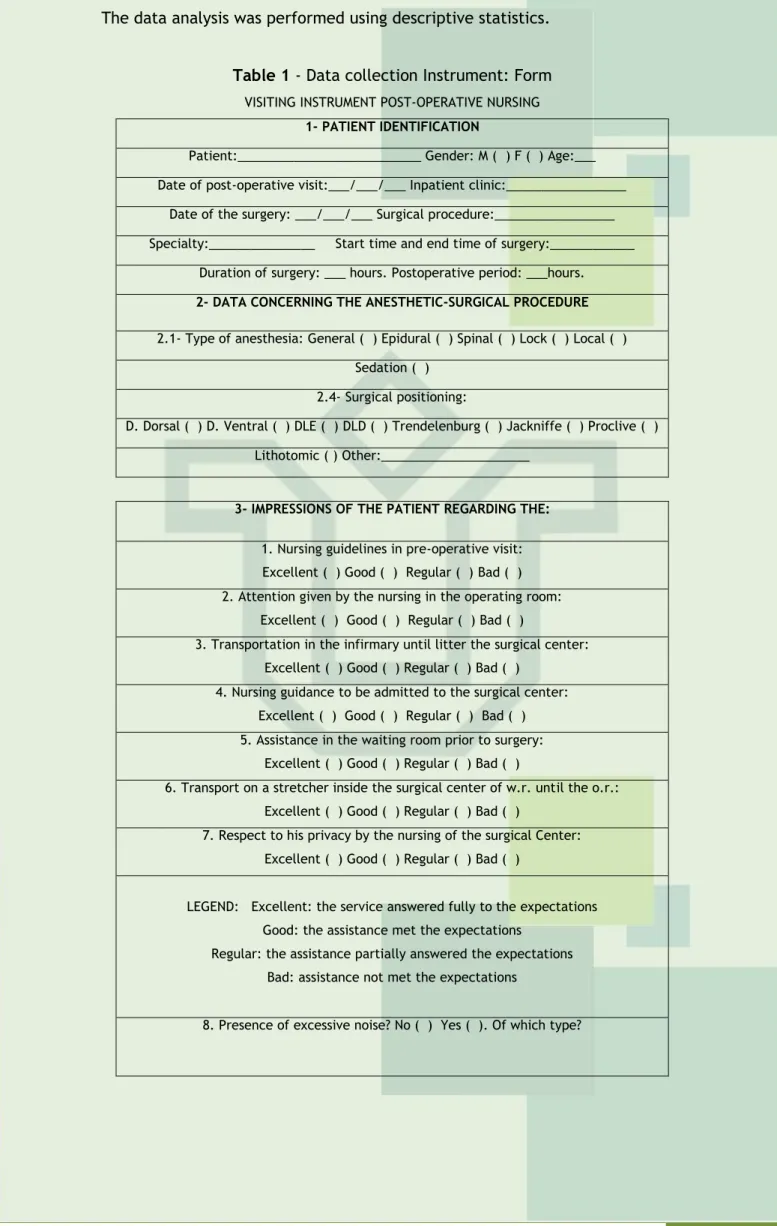
Data collection occurred from July to October 2012. Technique of data collection form was used (Data Collection Instrument), which was called Instrument Business Postoperative. This instrument was built with windows (adverse events) recommended by the literature and assessable, as Table 1 below.
The quality of care can be measured by instruments, which conforming the steps: identifying the needs and expectations of customers, establishing standards of care, the systematization to plan and implement the care and assistance of the audit process and also the human resources, who are qualified and committed to the establishment of assistance actions.8
The form (Table 1) was used to perform structured interviews from seven closed questions and one open, and that systematic observation was made through physical examination of the patient from the listing of adverse events recommended by the literature. The form is in a script of questions, which is filled by the interviewer, the interview simultaneously, and also allows the researcher and the interviewee having a face to face contact11. We chose the form to be suitable for carrying out the interview as it can
allow the questions and/or issues not understood by the interviewee are clarified by the interviewer.11
The two research techniques used for data collection were: a structured and standardized interview, and a systematic observation. Systematic observation is defined as a structured technique, planned and controlled.11 Here the observer knows what he wants
and what needs to get importance in a given situation.11 Systematic observation technique
was used during the physical examination.
We emphasize that both the structured interview and the physical examination were performed at the same time, however applied to each patient on different days, in the immediate postoperative period.
The middle period starts after the first 24 hours after surgery extending to patient discharge or return home³. It is in this period that the medical staff and the nurse should
J. res.: fundam. care. online 2014. jul./set. 6(3):1139-1151
1144
assess the anesthetic-surgical intervention, establishing the plan of care for patients hospitalized until they have high.³
The data analysis was performed using descriptive statistics.
Table 1 - Data collection Instrument: Form
VISITING INSTRUMENT POST-OPERATIVE NURSING 1- PATIENT IDENTIFICATION
Patient:__________________________ Gender: M ( ) F ( ) Age:___ Date of post-operative visit:___/___/___ Inpatient clinic:_________________
Date of the surgery: ___/___/___ Surgical procedure:_________________ Specialty:_______________ Start time and end time of surgery:____________
Duration of surgery: ___ hours. Postoperative period: ___hours. 2- DATA CONCERNING THE ANESTHETIC-SURGICAL PROCEDURE 2.1- Type of anesthesia: General ( ) Epidural ( ) Spinal ( ) Lock ( ) Local ( )
Sedation ( ) 2.4- Surgical positioning:
D. Dorsal ( ) D. Ventral ( ) DLE ( ) DLD ( ) Trendelenburg ( ) Jackniffe ( ) Proclive ( ) Lithotomic ( ) Other:_____________________
3- IMPRESSIONS OF THE PATIENT REGARDING THE: 1. Nursing guidelines in pre-operative visit: Excellent ( ) Good ( ) Regular ( ) Bad ( ) 2. Attention given by the nursing in the operating room:
Excellent ( ) Good ( ) Regular ( ) Bad ( )
3. Transportation in the infirmary until litter the surgical center: Excellent ( ) Good ( ) Regular ( ) Bad ( )
4. Nursing guidance to be admitted to the surgical center: Excellent ( ) Good ( ) Regular ( ) Bad ( ) 5. Assistance in the waiting room prior to surgery:
Excellent ( ) Good ( ) Regular ( ) Bad ( )
6. Transport on a stretcher inside the surgical center of w.r. until the o.r.: Excellent ( ) Good ( ) Regular ( ) Bad ( )
7. Respect to his privacy by the nursing of the surgical Center: Excellent ( ) Good ( ) Regular ( ) Bad ( )
LEGEND: Excellent: the service answered fully to the expectations Good: the assistance met the expectations
Regular: the assistance partially answered the expectations Bad: assistance not met the expectations
J. res.: fundam. care. online 2014. jul./set. 6(3):1139-1151
1145
4- ADVERSE EVENTS RELATED TO NURSING CAREAdverse event Related with/to Place of the event Characteristics Skin lesion Position of the neutral plate
( ) Thermal blanket ( ) PVPI/antiseptics ( ) Adhesive/plaster ( ) Trichotomy ( ) Electrodes ( ) Cuff of PA ( ) Pulse oximetry Sensor ( )
Security range Shape Pad ( ) Pneumatic cuff ( ) Arm/bracket clamp ( ) Support for shoulder ( )
TOT Fixer ( ) Other: Pressure ulcer ( ) Focal alopecia Supine position ( )
Falls ( )
Fractures ( ) Teeth injury Prone position ( )
Other: Hematoma ( ) Ecchymosis ( ) Erythema ( ) Hyperemia ( ) Edema ( )
Pain Lateral position ( )
Other: from 1 to Intensity 10:_____ Ocular injury Prone position ( ) Ocular region:
Left ( ) Right ( ) Blurred vision and/or severe pain and/or blindness Ear injury Prone position ( ) Cartilage/ pinna :
Left ( ) Right ( ) Low Back Pain Supine position ( ) Lumbar region ( )
Paresis Lateral position ( ) Upper limb: Left ( ) Right ( ) Paresthesia Lateral position ( ) Upper limb:
Left( ) Right ( )
Perineal injury/breast Supine position ( ) Male genitalia ( ) Edema, hematoma and
ischemia Left breast ( )
Right breast ( ) graft rupture, Breast lesion, stretch Workforce reduction
MMSS Lateral position ( ) Upper limb: Left ( ) Right ( ) Other:
J. res.: fundam. care. online 2014. jul./set. 6(3):1139-1151
1146
RESULTS AND DISCUSSION
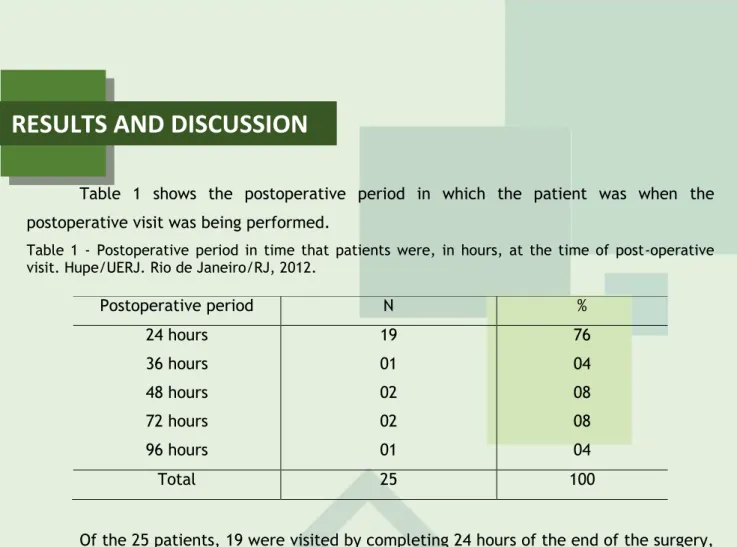
Table 1 shows the postoperative period in which the patient was when the postoperative visit was being performed.
Table 1 - Postoperative period in time that patients were, in hours, at the time of post-operative visit. Hupe/UERJ. Rio de Janeiro/RJ, 2012.
Postoperative period N % 24 hours 19 76 36 hours 01 04 48 hours 02 08 72 hours 02 08 96 hours 01 04 Total 25 100
Of the 25 patients, 19 were visited by completing 24 hours of the end of the surgery, which corresponds to 76% of patients surveyed (Table 1).
The postoperative visit should be performed 24-72 hours after the anesthetic-surgical.12 However, 01 researched, which represented 4% of all patients, was played with
96 hours of the postoperative period, this being the period in which it was possible involvement in the research, because when you make the visit on the second day after surgery, the patient, operated by neurosurgery, found himself unable to answer the questions listed on the form.
However, according to another author4, the visit is usually held on the second
postoperative day, because this time the patient is in a position to participate more effectively. However, according to our data and our observations during this research, we realize that is not always possible to visit at this time, due to clinical conditions of the patient, since we observed the difficulty of speech in patients of otorhinolaryngology, and malaise, due to the peculiarities of each patient regarding postoperative recovery, since each individual has both experience as distinct organic responses in situations of health and illness.
The following data refer to the duration of surgery of patients surveyed ranging from less than 1 hour more than 4 hours, as shown in Table 2.
Table 2 - Duration time of surgery of patients surveyed. Hupe/UERJ. Rio de Janeiro/RJ, 2012.
Time of surgery N %
Lesser than 1 hour 01 04
Between 1h - 01h59min 06 24
Between 2h - 02h59min 12 48
Between 3h - 03h59min 05 20
Over 4 hours 01 04
J. res.: fundam. care. online 2014. jul./set. 6(3):1139-1151
1147
The data found in Table 2 refer to the time of surgery of patients surveyed. Of the 25 participants, 12 (48%) had surgery time between 2 hours and 02h and 59 min. This time period was the most common. Only one patient underwent surgery with less time, which occurred in less than 1 hour, corresponding to 04% of 25 patients.
A period of two to three hours of exposure to the constant pressure in the tissue can cause skin sores and focal alopecia, moreover, these traumas can evolve in stages according to the level of the tissues involved.³
Table 3, below, shows the type of surgical positioning used for the surgical procedure the patients in the study and the number of patients who were positioned.
Table 3 - Surgical positioning of patients participating in the research. Hupe/UERJ. Rio de Janeiro/RJ, 2012.
Surgical positioning N %
Supine position 23 92
Left lateral decubitus 01 04
Right lateral decubitus 01 04
Total: 25 100
As could be seen above, the supine position was used for the surgery of 23 patients, which corresponded to 92% of patients. The left lateral decubitus and the right have been used in surgery for two patients, corresponding each to 04% of patients.
The supine or supine position is the most used in general surgery³, yes that was confirmed through the survey results.
The risks when the patient is positioned supine are³: brachial plexus injury (for exaggerated abduction above 90°), ischemic necrosis of the bony prominences, alopecia, injury to the brachial plexus, spinal cord injury, dislocation of the cervical vertebrae, nerve damage radial and ulnar, back pain, perineal injury and compartment syndrome.
Already in the lateral position is no risk of cervical injury, shoulder injury, injury to the eye and the ear, atelectasis, peroneal nerve injury, necrosis of the femur and decreased perfusion.³
Below, in Table 02, the impressions of the patient, referring to seven questions related to care of it preoperatively, intraoperatively and postoperatively are presented; qualification of this assistance (in excellent, good, fair and poor) and the number of patients who performed these qualifications.
Impressions of the patient regarding the
Qualification and number of patients (%) Total of patients Excellent Good Regular Bad
1. Nursing guidelines in pre-operative visit 84% 16% 00 00 100% 2. Attention given by the nursing in the
operating room
72% 28% 00 00 100% 3. Transportation in the infirmary until
litter the surgical Center
64% 36% 00 00 100% 4. Nursing guidance to be admitted to the
surgical Center
J. res.: fundam. care. online 2014. jul./set. 6(3):1139-1151
1148
Table 2 - Data referent to impressions of patients, postoperatively, interned in Hupe/UERJ. Rio de Janeiro/RJ, 2012.
Table 02 shows seven tasks related to care received by the patient, who received the name of “impressions of the patient regarding the” and were qualified in the interview, in excellent, good, fair or poor, by the participant. The caption decoding skills: great, good, fair and poor, respectively, the following: assistance fully met the expectations, the service has met the expectations, assistance partially met expectations, and the assistance did not meet expectations.
Importantly, this part of the form was developed based on experience arising from pre-operative visits, the reports of patients mediate postoperative. Given the reports of these patients regarding factors that generated bother them, we built the "box of prints”, justifying this way the characteristic of the questions, which are closed. However, we add other questions also need to be able to assess the care provided, and in view of the patient, and not only, based on adverse events that can be found on physical examination.
Then, the data concerning the patient's impressions regarding assistance, as are shown in Table 02, also contemplate what is said in the literature on post-operative nursing visit, that evaluates the assistance in preoperative and intraoperative through questions to the patient.13
Thus, as can be seen in Table 2, the impressions of the patients regarding nursing guidelines on preoperative visit were classified as excellent by 84% of participants, the total number of patients. While 16% of respondents as being good, none of them responded that assistance was fair or poor.
The attention given by the nursing staff in the operating room was described as excellent by 72% of patients, and as good by 28%. The transport of the stretcher to the operating room nurse was qualified as excellent by 64% of patients, and how well, by 36%.
By qualifying the nursing guidelines when admitted to the surgical center, the majority (60% of patients) responded that was great, while 36% responded that it was good, and 4% described as regular. Regarding the assistance in the waiting room (RA) before surgery, 80% of patients qualified it as excellent and 20% as good. Transport in litter already inside the operating room anesthetic recovery (RA) to the operating room was considered excellent by 72% of patients, and good for 28%. Respect their privacy by the nursing staff of the surgical center was qualified as excellent by 72% of patients, and as good by 28%.
5. Assistance in the waiting room prior to surgery
80% 20% 00 00 100% 6. Transport on a stretcher inside the
surgical center of w.r. until the o.r.
72% 28% 00 00 100% 7. Respect to your privacy by the nursing of
the surgical Center
72% 28% 00 00 100%
Legend of qualifications :
Excellent: the service answered fully to the expectations Good: the assistance met the expectations
Regular: the assistance partially answered the expectations Bad: assistance not met the expectations
J. res.: fundam. care. online 2014. jul./set. 6(3):1139-1151
1149
CONCLUSION
Considering the list of adverse events related to nursing care based on the relevant literature in the form of constant postoperative nursing (Table 1) visit, were found during the data collection two occurrences of adverse events in the same patient. The operation performed in this patient was rhinoplasty, which lasted from 3 hours and 3 hours and 59 minutes. The pain and bruising, with location in the sacral region, the two adverse events were found through the interview and physical examination.
Table 1 (Form postoperative visit) shows a list of adverse events related to nursing care, which possibly led to its occurrence (associated with / to), the region in which the event occurred, the characteristic of the adverse event and the total of these events.
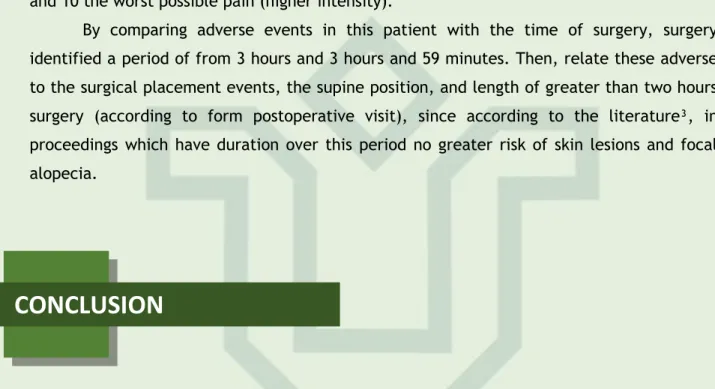
Then, according to Table 1, a total of two adverse events were found in the same patient that were bruising and pain, both located in the sacral region. The pain was characterized as to its intensity, 1-10, as equivalent to 7. Postoperative pain was evaluated using the numerical pain scale of 0-10. Zero indicates no pain, 4 represents moderate pain, and 10 the worst possible pain (higher intensity).
By comparing adverse events in this patient with the time of surgery, surgery identified a period of from 3 hours and 3 hours and 59 minutes. Then, relate these adverse to the surgical placement events, the supine position, and length of greater than two hours surgery (according to form postoperative visit), since according to the literature³, in proceedings which have duration over this period no greater risk of skin lesions and focal alopecia.
At the end of the study, we concluded that our goal of evaluating the quality of nursing care provided to patients during the perioperative period has been reached, and it was also possible to realize that this evaluation process is more complex than one might think, since it requires an effective control relating to the relevant Care System Perioperative Nursing (SAEP) records so that an accurate assessment to be made.
It is worth noting that all three specific objectives of the research were included because it was possible to: establish the indicators recommended in the literature that could be used as a parameter for evaluating the quality of nursing care during surgery; build an instrument postoperative visit using the indicators recommended by the amenable literature review and testing the instrument postoperative visit with built indicators recommended by the amenable literature review.
Regarding the analysis of the data, this reveals that our initial hypothesis was confirmed, figuring postoperative visit as an effective strategy to evaluate the quality of nursing care during the perioperative period.
When dealing with the analysis of data on patients' impressions about the care they received, this showed that patients have positive impressions of assistance received perioperative nursing as much by the support team, who are the forwarders. In this field
J. res.: fundam. care. online 2014. jul./set. 6(3):1139-1151
1150
referring to impressions of patients forwarders, albeit implicitly existing in the study were also evaluated in order to identify whether the transport of the patient from the ward to the operating theater is played with quality.
Given the above, we recommend testing the pre -operative visit, also to patients from other specialties since it was not possible to cover all of them, due to the short time available for data collection, the canceled surgeries, the conditions of the patient to participate effectively during the preoperative visit, the severity of the condition of the hospitalized patient during the preoperative visit and their postoperative conditions, which prevented the application form of the postoperative visit. The testing of this instrument in patients from other specialties, not comprised in this study is important because it can reveal other adverse events not observed in this study.
J. res.: fundam. care. online 2014. jul./set. 6(3):1139-1151
1151
REFERENCES
1. Brasil. Cofen. Resolução nº 358 de 15 de outubro. 2009.
2. Tannure MC, Gonçalves AMP. SAE, Sistematização da Assistência de Enfermagem: Guia Prático; Rio de Janeiro: Guanabara Koogan; 2009.
3. Sobecc. Sociedade Brasileira de Enfermeiros de Centro Cirúrgico, Recuperação Anestésica e Centro de Material e Esterilização. Práticas Recomendadas SOBECC. 5. ed; São Paulo: SOBECC, 2009; 304 p.
4. Possari JF. Centro Cirúrgico: Planejamento, Organização e Gestão.3 ed; São Paulo: Iátria; 2007; p. 230.
5. Schulz RS, Silva MF. Análise da evolução dos registros de enfermagem numa unidade cirúrgica após implantação do método SOAP. Revista Hospital Universitário Pedro Ernesto. 2011.
6. Souza LP, Bezerra ALQ, Camargo e Silva AEB, Carneiro FS, Paranaguá TTB , Lemos LF. Eventos adversos: instrumento de avaliação do desempenho em centro cirúrgico de um hospital universitário. Rev enferm UERJ; Rio de Janeiro, 2011 jan/mar;19. 127-33.
7. Gouvêa CSD, Travassos C. Indicadores de segurança do paciente para hospitais de pacientes agudos: revisão sistemática. Cad Saúde Pública; Rio de Janeiro 2010 jun; 26(6):1061-1078.
8. Kurcgant P. Gerenciamento em Enfermagem. A qualidade e a avaliação dos serviços de saúde e de enfermagem. Guanabara Koogan. 1 ed, 2005; p. 80-81.
9. Brito MFP, Galvão CM. Os cuidados de enfermagem no uso da eletrocirurgia. Porto Alegre:
RS. 2009 [Acesso em 22 out 2011]; 319-27. Disponível em:
http://seer.ufrgs.br/index.php/RevistaGauchadeEnfermagem/article/view.
10. Ministério da Saúde (BR). Conselho Nacional de Saúde. Comissão Nacional de Ética em Pesquisa/CONEP. Diretrizes e normas regulamentadoras de pesquisas envolvendo seres humanos. Resolução n.º 196/96. Brasília (DF); 1996.
11. Lakatos EM, Marconi MA. Fundamentos de metodologia científica. 7. ed; São Paulo: Atlas; 2010.
12. Carvalho R, Bianchi ERF. Enfermagem em Centro Cirúrgico e Recuperação. 1 ed; São Paulo, Editora: Manole; 2007.
13. Ursi ES, Macul SF. A Atuação do enfermeiro de centro cirúrgico em visitas pré e pós-operatórias. Enfoque; São Paulo, 1987 jun; v.15; n.1; p. 4-6.
Received on: 25/12/2013 Required for review: No Approved on: 25/04/2014 Published on: 01/07/2014
Contact of the corresponding author:
Tatiane Xavier Avenida 28 de Setembro, nº 77, Vila Isabel - CEP.: 20551030 - Rio