Expression of cytokines in gingival crevicular fluid
associated with tooth movement induced by aligners:
a pilot study
Vitória de Oliveira Chami1, Livia Nunes2, Jonas Capelli Júnior3
Introduction: The search for more aesthetic and comfortable orthodontic devices has led to an increase in the use of clear aligners. Objective: To increase knowledge on biological mechanisms of orthodontic tooth movement using Invisalign align-ers. Methods: This study included 11 patients with a mean age of 23.6 ± 4.8 years. Cases planning included alignment and leveling of lower incisors using Invisalign aligners. Gingival crevicular fluid samples were collected from the lower incisors on the day of delivery of aligner number 1 (T0) and after 1 (T24h), 7 (T7d), and 21 (T21d) days. During the observation period of the study, the patients used only the aligner number 1. Levels of nine cytokines were quantified using Luminex’s multi-analysis technology. Non-parametric tests were used for comparisons between cytokine expression levels over time.
Results: Cytokine expression levels remained constant after 21 days of orthodontic activation, except those of MIP-1β, which presented a statistical difference between T24h and T21d with a decrease in the concentration levels. IL-8, GM-CSF, IL-1β, MIP-1β, and TNF-α showed the highest concentrations over time. Conclusions: The different behavior in the levels of the investigated cytokines indicates a role of these biomarkers in the tissue remodeling induced by Invisalign.
Keywords:Invisalign. Gingival crevicular fluid. Cytokines.
1 Universidade Federal de Santa Maria, Programa de Pós-Graduação em Ciências
Odontológicas (Santa Maria/RS, Brazil).
2 Universidade do Estado do Rio de Janeiro, Programa de Pós-Graduação em
Odontologia (Rio de Janeiro/RJ, Brazil).
3 Universidade do Estado do Rio de Janeiro, Departamento de Odontologia
Preventiva e Comunitária (Rio de Janeiro/RJ, Brazil).
Submitted: July 19, 2017 - Revised and accepted: February 17, 2018
» The authors report no commercial, proprietary or financial interest in the products DOI: https://doi.org/10.1590/2177-6709.23.5.041-046.oar
How to cite: Chami VO, Nunes L, Capelli Júnior J. Expression of cyto-kines in gingival crevicular fluid associated with tooth movement induced by aligners: a pilot study. Dental Press J Orthod. 2018 Sept-Oct;23(5):41-6. DOI: https://doi.org/10.1590/2177-6709.23.5.041-046.oar
» Patients displayed in this article previously approved the use of their facial and in-traoral photographs.
Contact address: Livia Nunes
Av. 28 de Setembro, 157, sl. 230, Vila Isabel – Rio de Janeiro/RJ
Introdução: a busca por dispositivos ortodônticos mais estéticos e confortáveis gerou um aumento no uso de alinhadores transparentes. Objetivo: ampliar o conhecimento sobre os mecanismos biológicos associados ao movimento dentário orto-dôntico promovido por alinhadores Invisalign®. Métodos: a amostra foi constituída por 11 pacientes, com idade média de
23,6 ± 4,8 anos. O planejamento dos casos incluiu alinhamento e nivelamento de incisivos inferiores usando os alinhadores. O fluido gengival crevicular foi coletado na superfície vestibular de incisivos inferiores no dia da entrega do alinhador número 1 (T0) e após 1 (T24h), 7 (T7d) e 21 (T21d) dias. Durante o período de observação do estudo, os pacientes utilizaram apenas o alinhador número 1. Os níveis de nove citocinas foram quantificados por meio do sistema Luminex de multianálise. Testes não paramétricos foram realizados para comparações entre os níveis de expressão de citocinas ao longo do tempo. Resultados: a concentração das citocinas manteve-se constante após 21 dias de ativação ortodôntica, exceto a MIP-1β, que apresentou uma redução estatisticamente significativa entre os tempos T24h e T21d. As IL-8, GM-CSF, IL-1β, MIP-1β e TNF-α apresenta-ram as maiores concentrações ao longo do tempo. Conclusão: a constância na expressão dos níveis das citocinas parece estar compatível com o estímulo mecânico induzido por alinhadores.
INTRODUCTION
The mechanical stimulus associated with in-duced tooth movement must be performed smoothly and continuously, promoting a series of tissue and cell changes in the periodontium, ac-companied by an increased release of inflammatory mediators, such as cytokines.
These biochemical mediators are low molecu-lar weight proteins that are involved in all phases of
inflammation.1 Proinflammatory cytokines induce
the classic characteristics of inflammation, through vasodilation and invasion of tissues by leukocytes, while anti-inflammatory cytokines are involved in the resolution of inflammatory process.
The cytokines are characterized by overlapping and interlocking functions, and provide informa-tion on local cell metabolism, reflecting periodontal
health status and bone remodeling.2,3 Thereby, the
evaluation of this mediators is important to eluci-date the molecular mechanisms that occur during orthodontic movement.
To monitor the biological responses during orth-odontic therapy, gingival crevicular fluid (GCF) anal-ysis is the method of choice because it is noninvasive and feasible to collect the fluid at different time inter-vals without producing sequelae. In addition, cyto-kine expression in GCF can provide an indirect
mea-surement of changes in the periodontal ligament.4,5
The Invisalign system induces tooth movement using plastic trays called aligners. In selected cases, these aligners represent an alternative to the
tradi-tional metal or ceramic brackets.6 They produce
in-termittent forces on the teeth because they are re-movable and their strength levels fluctuate over the
course of treatment. Kuncio et al7 suggested that
teeth moved with aligners are not subjected to the typical stages of orthodontic movement as described
by Krishnan and Davidovitch.2
There are only few studies in the orthodon-tic literature that have clarified the biological phe-nomena of orthodontic movement using aligners. Thus, the aim of the present study was to detect
and quantify nine cytokines: interleukin (IL)-β,
(IL)-7, (IL)-8, (IL)-17, colony stimulating factors
G-(CSF), GM-(CSF), monocyte chemoattractant protein(MCP)-1, macrophage inflammatory protein
(MIP)-1β, and tumor necrosis factor (TNF)-α, in
orthodontically moved teeth using aligners.
MATERIAL AND METHODS Sample selection
This study sample consisted of 11 patients (6 women [54.5%] and five men [45.5%]) with a mean age of 23.63 ± 4.88 years, undergoing treat-ment at the Orthodontic Clinic of the Dental School of Universidade do Estado do Rio de Janeiro(Brazil).
The inclusion criteria were: full permanent
den-tition; Little’s Irregularity Index (Little,8 1975)
be-tween 3 and 5 mm in the anterior segment of the lower arch; absence of caries or restorations in the anterior teeth; and full-mouth plaque score ≤ 30% and full-mouth bleeding score ≤ 10%. Patients with autoimmune diseases and those who were pregnant or lactating were not eligible. Additionally, partici-pants exhibiting a prolonged use of medication (e.g., antibiotics, antihistamines, cortisone, hormones, and any other medication that may interfere with the inflammatory process or may adversely affect the periodontium) three months before and during the study period were excluded. This study protocol was approved by the Research Ethics Committee of Hospital Universitário Pedro Ernesto/UERJ. A signed in-formed consent was obtained from patients’ parents prior to the study.
Periodontal control
One week before the start of orthodontic treat-ment and during collection times, all patients re-ceived oral hygiene instructions to demonstrate the correct use of brush and floss to control possible gingival inflammation.
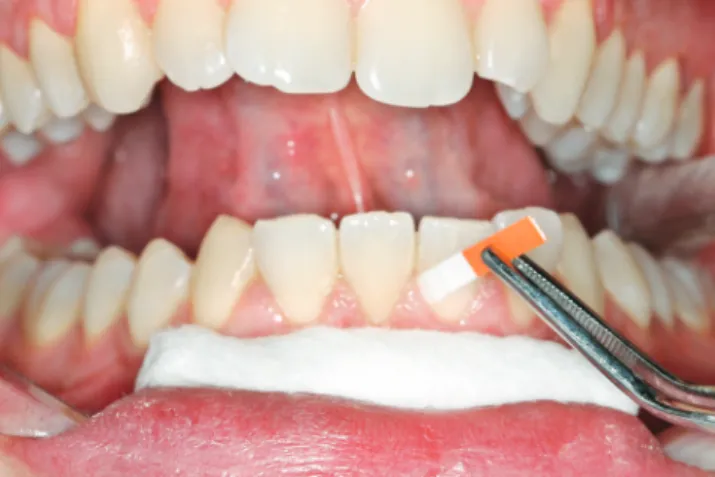
Figure 1 - Samples were collected from the vestibular face of lower central Orthodontic devices
The Invisalign aligner (Align Technology, San Jose, California) was the orthodontic device used in the study. Using the ClinCheck software, patient planning, including alignment and leveling of the anterior teeth, was performed by a single operator. The inferior arch was selected to be evaluated con-sidering that the Irregularity Index of lower
inci-sors8 was one of the inclusion criteria.
During the 21-day observation period of the study, the patients used only the number 1 align-er. Before insertion of the aligner, patients were instructed on the use and hygiene of the device. It should be noted that there was no bonding or in-terproximal reduction in the teeth during this stage of treatment.
Immunological monitoring
The GCF samples were collected from the vestib-ular face of lower central incisors and lateral incisor (teeth #31, #41, and #42) at different times: on the day of delivery of the aligner (T0) and at 1 (T24h), 7 (T7d), and 21 (T21d) days after orthodontic acti-vation (Fig 1).
Prior to GCF collection, the supragingival plaque was carefully removed. The collection sites were isolated using cotton rolls and dried with light air jets. GCF was collected using absorbent paper strips
(Periopaper®, Interstate Drug Exchange,
Ami-tyville, NY, USA), which were inserted 1–2 mm into the gingival sulcus and maintained for 30s. Samples contaminated with blood were discarded, and a new sample was collected a few minutes later from the same site. Paper tips from the same patient were pooled in a sealed Eppendorf plastic tube and
stored at -80oC until analysis.
Thereafter, the GCF samples were thawed, and biomarkers were detected using Luminex
multi-an-alyte technology (Bio-Plex ProTM Human Cytokine
Grp I Panel 17-Plex, Catalog no. M50-00031YV, BIO-RAD, Hercules, CA, USA) according to the manufacturer’s instruction. Samples were incubated with antibodies immobilized on color-coded mic-roparticles, washed to remove unbound material, and then incubated with biotinylated antibodies to the molecules of interest. After further washing, the
the biotinylated antibodies was added before the fi-nal washing step. The Luminex afi-nalyzer was used to determine the magnitude of the phycoerythrin-derived signal in a microparticle-specific manner.
Statistical analysis
RESULTS Periodontal
During the study period and GCF collection, all patients exhibited a clinically satisfactory oral hygiene. Data collected for the BOP showed values below 30% of the evaluated sites and VPI below 10% (Fig 2). In addition, the evaluated indices decreased over time.
Inflammatory mediators
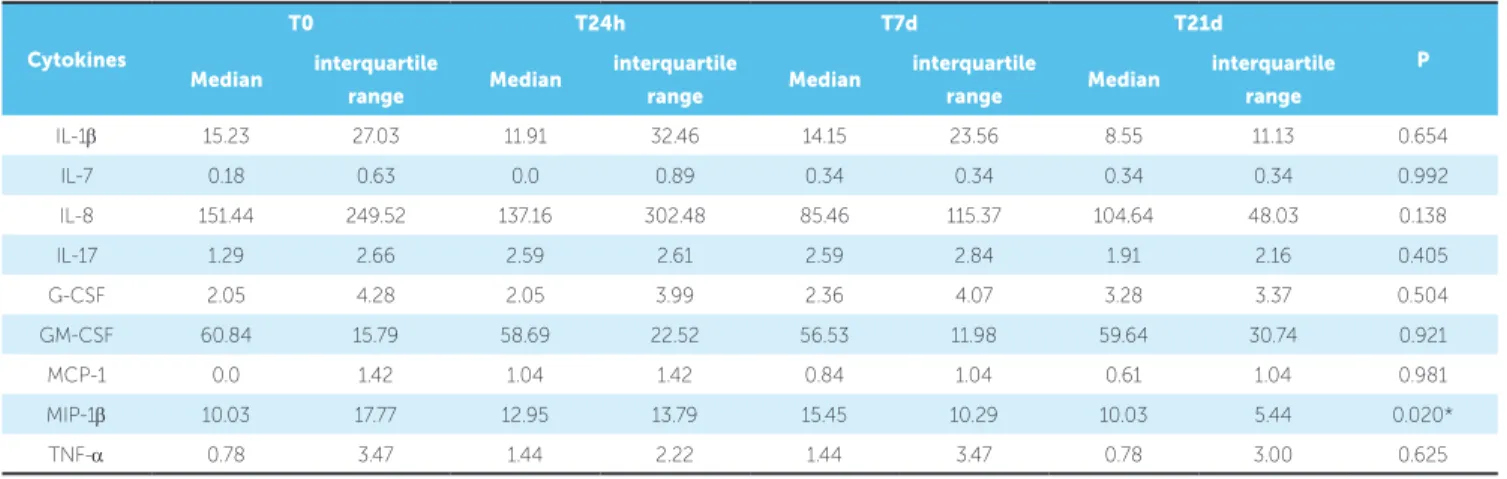
The levels of the different GCF biomarkers are summarized in Table 1.
All cytokines, IL-1β, IL-7, IL-8, IL-17, G-CSF,
GM-CSF, MCP-1, MIP-1β, and TNF-α were
iden-tified and quaniden-tified at all times. The levels of all
mediators, except MIP-1β, were similar over time
with no significant change. In particular, decreases over time were seen for all these GCF biomarkers.
At the pairwise comparisons, the level of MIP-1β
was significantly lower at 21 days as compared to
the 24 hours (p <0.05). IL-17, MCP-1, MIP-1β and
TNF-α showed greater levels at 24 hours as
com-pared to the corresponding baseline scores.
DISCUSSION
Invisalign aligners are an alternative treatment that provides greater aesthetics and more comfort
for orthodontic patients.9 Thus, the demand for this
type of device has significantly increased in the re-cent years; however, studies related to the biology of movement using aligners are scarce.
When assessing cytokine concentration levels
dur-ing the study period, all mediators, except MIP-1β,
showed fluctuations over time, with no statistically significant differences.
MIP-1β, which is considered a chemoattractant
cytokine, is related to the activation and recruitment of monocyte/macrophage cell lines. Furthermore,
Figure 2 - Descriptive analysis of the percentage of sites with visible plaque (VPI) and gingival bleeding (BOP).
Cytokines
T0 T24h T7d T21d
P
Median interquartile
range Median
interquartile
range Median
interquartile
range Median
interquartile range
IL-1β 15.23 27.03 11.91 32.46 14.15 23.56 8.55 11.13 0.654
IL-7 0.18 0.63 0.0 0.89 0.34 0.34 0.34 0.34 0.992
IL-8 151.44 249.52 137.16 302.48 85.46 115.37 104.64 48.03 0.138
IL-17 1.29 2.66 2.59 2.61 2.59 2.84 1.91 2.16 0.405
G-CSF 2.05 4.28 2.05 3.99 2.36 4.07 3.28 3.37 0.504
GM-CSF 60.84 15.79 58.69 22.52 56.53 11.98 59.64 30.74 0.921
MCP-1 0.0 1.42 1.04 1.42 0.84 1.04 0.61 1.04 0.981
MIP-1β 10.03 17.77 12.95 13.79 15.45 10.29 10.03 5.44 0.020*
TNF-α 0.78 3.47 1.44 2.22 1.44 3.47 0.78 3.00 0.625
Table 1 - Total amount of cytokines throughout the collection times.
Data are presented as median and interquartile deviations (pg). p: differences over time, p ≤ 0.05 represents a statistical difference. * significant difference between T24h and T21d.
this chemokine may play an important role in host response by recruiting inflammatory cells into ac-tive inflammation and inducing the release of other
cellular mediators.10 Proinflammatory cytokines,
such as IL-1, IL-6, and TNF-α, and resident cells,
such as fibroblasts and osteoblasts, appear to induce
chemokines such as MIP-1β.11 Thus, the role of
chemokines in orthodontic tooth movement may be associated with the fact that these mediators are involved in the migration of monocytes to the peri-odontal ligament, where they will differentiate into osteoclasts and macrophages, essential cells for orth-odontic movement.
In this study, the expression levels of MIP-1β
were statistically different at T24h and T21d. This
finding is contrary to that of Capelli et al,12 who
showed a consistency in the concentration of this cytokine, without statistically significant differ-ences, during the distalization of canines with
re-traction loops. Thus, the greater level of MIP-1β
at T24h would be consistent with the release of in-flammatory markers in early hours after a exposure to orthodontic forces.
The proinflammatory cytokines, such as TNF-α,
IL-1β and IL-8, are related to the acute phase of
in-flammatory response associated with tooth move-ment; therefore, their expression levels are increased during the initial hours after orthodontic force
ap-plication.11 This increase in TNF-α and IL-8
ex-pression levels was observed in the first 24 h after the aligner was installed. These results are consistent with those of a previous study that used conventional orthodontic appliances, with the insertion of NiTi wires and mechanical distal movement of canine
be-fore or after dental alignment and leveling.1,14-17
In contrast, IL-1β expression levels showed
fluc-tuations over time, which is consistent with the
findings by Iwasaki et al,18 where a peak
concentra-tion of this cytokine was not characterized within
the first 24 h. Castrofolio et al19 demonstrated that
a peak concentration of IL-1β occurred 21 d after
orthodontic activation with Invisalign.
IL-17, considered a pro-inflammatory cyto-kine, acts synergistically with other cytokines, such
as IL-1, IL-6, TNF-α. In this study, the results
showed no significant changes in the concentration
levels of IL-17 over the observation period, similar to a previous study that applied intrusive forces on the premolar teeth wherein no statistically
signifi-cant changes in IL-17 levels were observed.20
Despite its importance in bone remodeling as a pro-inflammatory cytokine, the production of GM-CSF dur-ing orthodontic movement remains unclear. In this study, fluctuations in results were observed with no statistically significant differences, which is consistent with the re-sults of a study conducted on adult patients using forces
for the distalization of canines.21 However, in the
ado-lescent patients of this same study, concentration levels
were higher in 24h;21 which was also identified after 4 h
in a study using forces for canine distalization.17 In
an-other study, GM-CSF could not be evaluated because its
expression was below detection levels.22
MCP-1 has been described as chemokine that stimu-lates osteoclast formation and bone resorption. The pres-ent study observed no changes in its levels over time, and
this was in agreement with previous studies12,16.
IL-7 mediator was identified at low expression levels at all times and there are no human studies in literature that focus on the response of IL-7 to orth-odontic treatment.
Despite the possible influence of periodontal in-flammation on the results of cytokine analysis in the GCF, since there is a possibility of increased secre-tion due to periodontal plaque related inflamma-tion; the periodontal indices in the present study remained low and presented a decrease over the studied time.
A possible explanation for the present findings relates to the type of device used in this study: it is possible to remove the device for oral hygiene. In ad-dition, the patients were submitted to oral hygiene control by providing them with brushing instruc-tions throughout the study period. Thus, the chang-es observed are strongly associated with stimulation of tooth movement.
In this study, concentration levels of inflamma-tory mediators were analyzed and longitudinally identified in a single sample using immunoenzymat-ic multi-analysis assay with mimmunoenzymat-icrospheres. This as-say has the ability to simultaneously measure a large number of targets with a small sample, thereby
Considering the wide range of biological sponses and factors interfering with GCF, the re-duced number of participants may be considered a limitation of the present study. However, this study analyzed a total of 180 sites and a large number of
previous studies used similar sample sizes.1,12-17,19-20,22
Another important limitation was that GCF is a transudate that is used to remotely study phenomena
that occur in the periodontal ligament.1,21,24 Thus,
these results should be interpreted with caution. Finally, the present results warrant further inves-tigations to clarify the biological mechanisms be-hind orthodontic aligners.
CONCLUSIONS
When using aligners (Invisalign), cytokine ex-pression levels involved in cell recruitment indicates a role of these biomarkers in the tissue remodeling induced by light forces. Thus, further studies are needed to increase the knowledge regarding inter-ferences and biological influences during orthodon-tic treatment with Invisalign.
1. Başaran G, Ozer T, Kaya FA, Hamamci O. Interleukins 2, 6, and 8 levels in human gingival sulcus during orthodontic treatment. Am J Orthod Dentofacial Orthop. 2006 July;130(1):7.e1-6.
2. Krishnan V, Davidovitch Z. Cellular, molecular, and tissue level reactions to orthodontic force. Am J Orthod Dentofacial Orthop. 2006 Apr;129(4):469. e1-32.
3. Krishnan V, Nair A, Ranjit A, Davidovitch Z. Research in tooth movement biology: the current status. Semin Orthod. 2012 Dec;18(4):308-16. 4. Perinetti G, Primozic J, Castaldo A, Di Lenarda R, Contardo L. Is gingival
crevicular fluid volume sensitive to orthodontic tooth movement? A systematic review of split-mouth longitudinal studies. Orthod Craniofac Res. 2013 Feb;16(1):1-19.
5. Capelli J Jr, Fidel Jr R, Figueredo CM, Teles RP. Change in the gingival fluid volume during maxillary canine retraction. Dental Press J Orthod. 2010 Mar-Abr;15(2):52-7.
6. Site Invisalign Brasil. 2016 [Acesso em: 1 Mar 2016]. Disponível em: http:// doutor.invisalign.com.br/sobre.
7. Kuncio D, Maganzini A, Shelton C, Freeman K. Invisalign and traditional orthodontic treatment postretention outcomes compared using the American Board of Orthodontics Objective Grading System. Angle Orthod. 2007 Sept;77(5):864-9.
8. Little RM. The irregularity index: a quantitative score of mandibular anterior alignment. Am J Orthod. 1975 Nov;68(5):554-63.
9. Rossini G, Parrini S, Castroflorio T, Deregibus A, Debernardi CL. Efficacy of clear aligners in controlling orthodontic tooth movement: a systematic review. Angle Orthod. 2015 Sept;85(5):881-9.
10. Emingil G, Atilla G, Başkesen A, Berdeli A. Gingival crevicular fluid EMAP-II, MIP-1alpha and MIP-1beta levels of patients with periodontal disease. J Clin Periodontol. 2005 Aug;32(8):880-5.
11. Alhasimi N, Frithiof L, Brudvik P, Bakhiet M. Chemokines are upregulated during orthodontic tooth movement. J Interferon Cytokine Res. 1999 Sept;19(9):1047-52.
12. Capelli J Jr, Kantarci A, Haffajee A, Teles RP, Fidel R Jr, Figueredo CM. Matrix metalloproteinases and chemokines in the gingival crevicular fluid during orthodontic tooth movement. Eur J Orthod. 2011 Dec;33(6):705-11. 13. Nunes L, Quintanilha L, Perinetti G, Capelli J Jr. Effect of orthodontic force
on expression levels of ten cytokines in gingival crevicular fluid. Arch Oral Biol. 2017 Apr;76:70-5.
REFERENCES
14. Başaran G, Ozer T, Kaya FA, Kaplan A, Hamamci O. Interleukine-1beta and tumor necrosis factor-alpha levels in the human gingival sulcus during orthodontic treatment. Angle Orthod. 2006 Sept;76(5):830-6.
15. Karacay S, Saygun I, Bengi AO, Serdar M. Tumor necrosis factor-alpha levels during two different canine distalization techniques. Angle Orthod. 2007 Jan;77(1):142-47.
16. Alikhani M, Raptis M, Zoldan B, Sangsuwon C, Lee YB, Alyami B, et al. Effect of micro-osteoperforations on the rate of tooth movement. Am J Orthod Dentofacial Orthop. 2013 Nov;144(5):639-48.
17. Grant M, Wilson J, Rock P, Chapple I. Induction of cytokines, MMP9, TIMPs, RANKL and OPG during orthodontic tooth movement. Eur J Orthod. 2013 Oct;35(5):644-51.
18. Iwasaki LR, Chandler JR, Marx DB, Pandey JP, Nickel JC. IL-1 gene polymorphisms, secretion in gingival crevicular fluid, and speed of human orthodontic tooth movement. Orthod Craniofac Res. 2009 May;12(2):129-40.
19. Castroflorio T, Gamerro EF, Caviglia GP, Deregibus A. Biochemical markers of bone metabolism during early orthodontic tooth movement with aligners. Angle Orthod. 2017 Jan;87(1):74-81.
20. Madureira DF, Silva JM, Teixeira AL, Abreu MH, Pretti H, Lages EM, et al. Cytokine measurements in gingival crevicular fluid and periodontal ligament: are they correlated? Am J Orthod Dentofacial Orthop. 2015 Aug;148(2):293-301.
21. Ren Y, Maltha JC, Van’t Hof MA, Von Den Hoff JW, Kuijpers-Jagtman AM, Zhang D. Cytokine levels in crevicular fluid are less responsive to orthodontic force in adults than in juveniles. J Clin Periodontol. 2002 Aug;29(8):757-62. 22. Van Gastel J, Teughels W, Quirynen M, Struyf S, Van Damme J, Coucke W,
et al. Longitudinal changes in gingival crevicular fluid after placement of fixed orthodontic appliances. Am J Orthod Dentofacial Orthop. 2011 June;139(6):735-44.
23. Khalifian S, Raimondi G, Brandacher G. The use of Luminex assays to measure cytokines. J Invest Dermatol. 2015 Apr;135(4):1-5.