1
M
ASTER
ACCOUNTING
,
TAXATION AND CORPORATE FINANCE
MASTER
´
S FINAL WORK
DISSERTATION
O
PTIMIZATION OF DISTRIBUTION IN THE SUPPLY CHAIN
.
C
ASE
S
TUDY
:
M
EDIMPORT
.
N
ELSON
T
IAGO
I
NÁCIO
S
ILVA
II
MASTER
ACCOUNTING
,
TAXATION AND CORPORATE FINANCE
M
ASTER
’
S FINAL
W
ORK
DISSERTATION
O
PTIMIZATION OF DISTRIBUTION IN THE SUPPLY CHAIN
.
C
ASE
S
TUDY
:
M
EDIMPORT
.
N
ELSON
T
IAGO
I
NÁCIO
S
ILVA
O
RIENTATION
:
P
ROFESSOR DOCTOR
J
OSÉ
M
ANUEL
D
IAS
L
OPES
III
Abstract
The purpose of this project was to examine Supply Chain Management (SCM) strategies that MEDIMPORT can implement to reduce the high costs and increase efficiency. Following a case study research, it was used data from semi-structured interviews, consultants with experts, observations and internal documentation from the company.
From the analyse emerge the problems of poor transportation infrastructure inherent to Mozambique. The challenges of distribution and logistics conduct to recommendations assent to implement a new supply system model based on digitalization of the supply chain and introduction of an anti-counterfeit system of drugs.
The main purpose is to improve the transparency of information across the supply chain allowing better decisions regarding the management of consumptions, stocks, and forecast.
Is expected that efficiency increase but also revenues given the more customer-centric approach imposed by the recommendations.
Keywords: Supply chain; Pharmaceutical industry; Africa; Sub-Saharan Africa; Medicine distribution.
IV
Resumo
O objetivo deste projeto passou por examinar as estratégias de gestão da cadeia de abastecimento que a MEDIMPORT pode implementar para reduzir os elevados custos e simultaneamente aumentar a eficiência.
Na pesquisa, baseada num estudo de caso, foram utilizados dados provenientes de entrevistas semiestruturadas, consultas junto de especialistas, observações e documentação interna da empresa.
Da análise emergem os problemas de infraestrutura de transporte precária inerente a Moçambique. Os desafios da distribuição e logística conduziram a recomendações baseadas na implementação de um novo modelo de sistema de distribuição assente na digitalização da cadeia de abastecimentos e na introdução de um sistema de combate à falsificação e fraude de medicamentos.
O principal objetivo passa por melhorar a transparência da informação ao longo da cadeia de abastecimento, permitindo a tomada de melhores decisões em relação à gestão de consumos, stocks e previsões de consumo.
Espera-se que a eficiência aumente, mas também as receitas, dada a abordagem mais centrada no cliente ditada pelas recomendações.
Palavras-chave: Cadeia de logística; Indústria farmacêutica; África; África Subsaariana; Distribuição de medicamentos.
V Table of contents
Abstract... III Resumo ... IV List of Tables ... VII List of Figures ... VII Abbreviations and Acronyms ... VIII
1. Introduction ... 1
1.1. Background information ... 1
1.2. Research objectives and problem statement ... 1
1.3. Research project structure ... 1
2. Literature review ... 2
2.1. Process of literature research... 2
2.2. Literature review: considerations ... 3
3. Methodology ... 8
4. Analysis of the current situation ... 8
4.1. Macro-environmental of Mozambique ... 9
4.2. Pharmaceutical sector in Mozambique: brief considerations ... 12
4.3. Value Chain of MEDIMPORT: subsidies ... 13
4.4. Trends and market drivers... 16
5. Recommendations ... 17
5.1. Introduction ... 17
5.2. New distribution model: push supply system model... 18
5.3. Market strategy: mode of entry ... 20
5.3.1. Complete externalization of logistics ... 21
5.3.2. Pharmaceutical manufacturing ... 22
VI
6. Financial analysis ... 26
6.1. New distribution model: push supply system model... 26
6.2. Anti-counterfeit system ... 27 7. Implementation plan ... 27 8. Risk management ... 29 9. Final remarks ... 31 9.1. Conclusion ... 31 9.2. Research limitations ... 32 9.3. Future work ... 32 10. Bibliography ... 33 11. Appendixes ... 36
VII
List of Tables
Table I: Main databases, search terms, experts and organizations used for literature search 3
Table II: Macro-environmental of Mozambique ... 9
Table III: Opportunities and threats for MEDIMPORT ... 14
List of Figures Figure 1: Supply Chain System: functions and cross-cutting areas ... 6
Figure 2: The rule of “six rights logistics” ... 7
Figure 3: New distribution model ... 20
Figure 4: Factors impacting the choice of mode entry ... 24
Figure 5: Anti-counterfeit system ... 25
Figure 6: Financial indicators from the new supply system model ... 26
Figure 7: Financial indicators from anti-counterfeit system ... 27
Figure 8: Risk management of new supply system model ... 29
VIII
Abbreviations and Acronyms
3PL Third-Party Logistics
API Active Pharmaceutical Ingredient AU African Union
CIF Cost, Insurance and Freight
CMAM Central Medical Store / Central de Medicamentos e Artigos Médicos CSCMP Council of Supply Chain Management Professionals
ERP Enterprise Resource Planning FCF Free Cash-Flow
FMCG Fast-Moving Consumer Goods
FRELIMO Mozambique Liberation Front / Frente de Libertação de Moçambique GDP Gross Domestic Product
GNI Gross National Income GSK GlaxoSmithKline
HIV/AIDS Human Immunodeficiency Virus infection and Acquired Immune Deficiency Syndrome
IFC International Finance Corporation IMF International Monetary Fund KPI Key Performance Indicators
LNCQM National Quality Control / Laboratório Nacional de Controlo da Qualidade de Medicamentos
LNG Liquefied Natural Gas LPI Logistics Performance Index
MIRR MIRR
MoH Ministry of Health
NGO Non-Governmental Organization NHS National Health Service
NPV NPV
P&L Profit and Loss
PELF Pharmacy and Logistics Strategic Plan / Plano Estratégico de Logística Farmacêutica
PESS National Health Sector Strategic Plan / Plano Estratégico do Sector de Saúde PLM Project Last Mile
PMPA Pharmaceutical Manufacturing Plan for Africa PPP Public-Private Partnership
RENAMO Mozambique National Resistance / Resistência Nacional de Moçambique SADC Southern African Development Community
SCM Supply Chain Management SMS Short Message Service
TRIPS Trade-Related Aspects of Intellectual Property Rights UPD United Pharmaceutical Distributors
USAID United States Agency for International Development
WACC WACC
1
1. Introduction
1.1. Background information
SCM allows organizations to optimize the utilization of assets and resources, generate more profits, respond to customer demand and ultimately maximize the shareholder value.
The supply chain in the pharmaceutical industry involves multiple connections and actors. Only with alignment across the supply chain is possible adequate forecasting, procurement, inventory and distribution management. Any link that fails compromises the efficiency of all the supply chain with negative impacts on product costs, quality, and availability (Wisner et al., 2011).
1.2. Research objectives and problem statement
The research project aims at first place to identify challenges in the supply chain that have negative impacts on a reliable and cost-efficient distribution of medicines in Mozambique.
The problem statement can be expressed in the following terms:
How can MEDIMPORT reduce the high costs associated with SCM due to inherently poor transportation infrastructure and simultaneously increase the efficiency and availability of medicines?
The major objective of the present study is to propose good practices in the supply chain processes that can be implemented feasibly by MEDIMPORT. The desirable impact relies on reducing operating costs, improve profitability, and facilitate increased availability and distributions of medicines to retailers.
1.3. Research project structure
The research project is organized in five main parts: i) literature review; ii) methodological approach, iii) analysis of interviews and company, iv) recommendations and v) final remarks.
2 The literature review focused on the pharmaceutical industry, supply chain and distribution in Africa and particularly sub-Saharan Africa. Experts in the field were also consulted. The purpose was to assure that the results of the research project were aligned with the existing knowledge given the specificities of sub-Saharan Africa.
Taking into consideration the nature of the research, based on a case study, it was used qualitative method research as a methodological approach. For the effect, several interviews and meetings, internal and external to the company, were made in an open and interactive process. The interviews were predominantly face-to-face and assumed a non-standardized and semi-structured format. Several internal documents of the company were analysed as well as observation of practices in warehousing and management of inventory.
The third part consisted in organize, analyse and interpret the information collected from several sources. The relevant findings were summarized.
Based on the analyse some recommendation was developed with cover of financial, implementation and risk considerations.
The research project end with final remarks and considerations.
2. Literature review
2.1. Process of literature research
For the research was applied to a combination of two dimensions: a review of literature and expert consultations. For the literature review, was taken into consideration a list of search terms and key organizations working and producing relevant literature relative to SCM in sub-Saharan Africa (Table I).
3 Table I: Main databases, search terms, experts and organizations used for literature search
Source: author
The documents found were quickly analysed through titles and abstracts. The relevant studies were then scrutinized and lead to other relevant sources. The experts consulted provide additional recommendations of literature. It was taken into consideration studies addressing the pharmaceutical supply chain and industry as well as practices of distribution applied in Africa and particularly in sub-Saharan Africa.
2.2. Literature review: considerations
Having access to better health in one of the major goals and recurrently a desirable outcome worldwide in terms of social and economic development (Sachs, 2001). As expressed in the Abuja Declaration, in April 2001, the African Union (AU) countries set a target of allocating at least 15 % of their annual budget to improve the health sector.
In Mozambique, it is the State who assumes the responsibility of guaranteeing the right and access to health for all citizens.
4 After the independence from Portugal in 1975, the Mozambican government set up a National Health Service (NHS) along with designing and implement priority policies of pharmaceutical services, defining health as a pillar to be developed (Weimer, 2012).
The government at that time put efforts into creating a primary health system care to reach the poorer population that lived in rural areas. The system had so many successes that the World Health Organization (WHO), cited it as a model for developing countries (Walt and Melamed, 1983). Almost a quarter of the State budget was dedicated to health care (MISAU, 2015).
The Constitutions of 1975 clear expresses in article 89: “All citizens have the right to medical and health care, under the Law, as well as the duty to promote and defend public health” (Macuácua, 2018). The revision constitutional made in 2004 goes further in establishing in paragraph 5 of Article 116: “It is the State’s duty to promote, discipline and oversee the production, sale, and use of chemical, biological and pharmaceutical products and other means of treatment and diagnosis” (Macuácua, 2018).
Medicines are health inputs that play an essential role. Nevertheless, medicines are a motive of conflict and tensions globally. They can be classified as a public good, alongside with the right to health (as expressed in the Mozambican Constitution), but on the other side, many times they are manufactured by private companies whose main goal is to maximize value to shareholders (Sachy et al., 2018).
According to the WHO, at least one-third of the world’s population has no regular access to medicines (Hogerzeil and Mirza, 2011). Several reasons are explaining the lack of access:
A lot of people in developing countries do not have access to health technologies although there are more financial resources available and developments of new types of medicines (Frost and Reich, 2009).
The high prices of medicines put problems of affordability. This can even happen in urban centres like Maputo, to some segments of consumers (Russo and McPake, 2009).
Ineffective and inefficient distribution network for medicines having as consequence poor or even unavailability of medicines to the poorest segmentation of the population. This is especially marked in certain areas of the world as sub-Saharan Africa (Yadav, 2015). In the case of Mozambique, it also needs to considerer the poor infrastructure health and the high prevalence of communicable diseases.
5 The distribution of medicines plays a fundamental role. Several institutions specializing in manufacturing, import, wholesaling, retailing and various other auxiliary functions need to coordinate to allow drugs being available to end patients (Sachy et al., 2018). In the case of Mozambique, this supply chain is organized in a complex net of structural and institutional arrangements.
Over time, the profession of SCM has evolved to meet the changing needs of the global supply chain. According to the Council of Supply Chain Management Professionals (CSCMP):
“Supply chain management encompasses the planning and management of all activities involved in sourcing and procurement, conversion, and all logistics management activities. Importantly, it also includes coordination and collaboration with channel partners, which can be suppliers, intermediaries, third party service providers, and customers. In essence, supply chain management integrates supply and demand management within and across companies” (CSMP, 2013).
The CSCMP also defines logistics management as:
“(…) The part of supply chain management that plans, implements, and controls the efficient, effective forward and reverses flow and storage of goods, services and related information between the point of origin and the point of consumption to meet customers' requirement. (…) Logistics management is an integrating function, which coordinates and optimizes all logistics activities, as well as integrates logistics activities with other functions including marketing, sales manufacturing, finance, and information technology” (CSMP, 2013).
The SCM includes the logistics activities plus the coordination and collaboration of human resources and other functions (see Figure 1).
6 Figure 1: Supply Chain System: functions and cross-cutting areas
Adapted from (giz, 2016)
A logistics system includes (USAID, 2009):
A system capable of collecting and reporting timely logistics data to inform quantification, procurement, storage, and distribution.
An inventory control system that ensures proper management of stock levels. Storage and warehousing that can store commodities so that integrity and quality are
maintained.
A distribution system for efficient movement of commodities from manufacturers through to facilities.
Enough personnel trained in logistics.
The primary objective of logistics is allowing availability. For this is necessary a regular and efficient supply of medicines. Without a proper channel of distribution, there are no medicines independently of the production process.
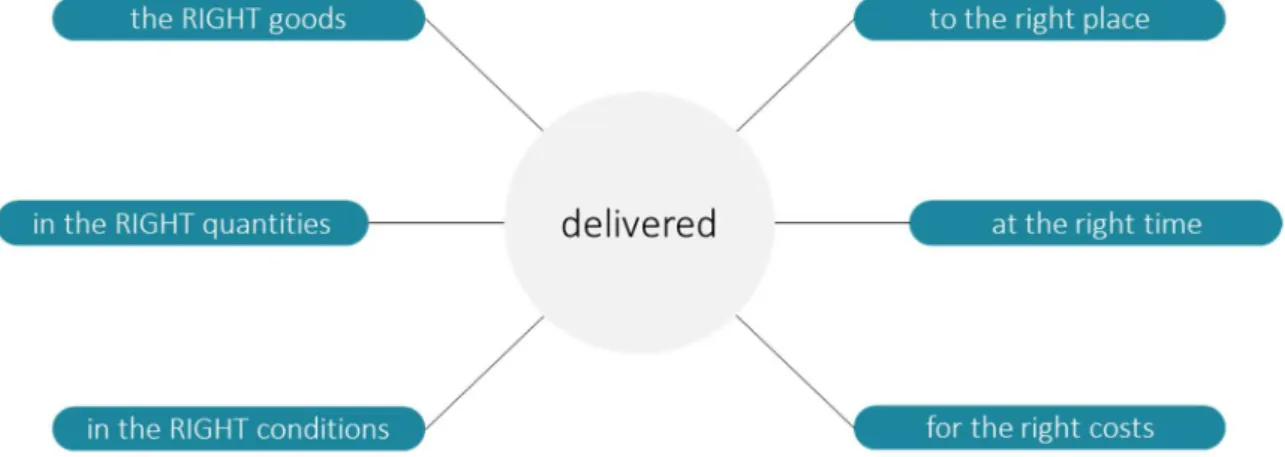
7 It is also possible to evaluate the purpose of a logistic system thought customer expectation. The scheme “six rights of logistics” is a representation of that purpose:
Figure 2: The rule of “six rights logistics” Adapted from (USAID, 2011)
Medicine logistics systems in sub-Saharan Africa have received considerable attention in recent years, driven by some factors including (Yadav et al., 2011):
More capital invested and increased economic activity. Consequently, the medicine supply chain also needs to respond to this higher demand.
The level of stocks at the supply chain is increasing but there is no reduction in stock-outs for end-users given all the inefficiencies along the supply chain, particularly in rural areas.
In Mozambique, 66,6% of the population live in rural areas (INE, 2019). The challenges in rural areas in terms of distribution are tremendous. Some of these difficulties are related to the following factors (Naude and Khumalo, 2001):
Relatively low densities of population and economies of scale.
The large distances that must be traversed, mostly involving the use of poor roads or tracks.
Low rates of private vehicular mobility, tele-connectivity, and activities of maintenance.
Under-developed market facilities, storage, and other logistical infrastructure. The high cost of capital putting not only limits in terms of scale but also achieving
8 All this conjecture often makes logistical services extremely expensive. An organization can establish a competitive advantage when can position itself in the market in a way that differentiates from the competitors. This differentiation also provides more defences against its competitors. Empirical literature reveals that distribution and flexibility are among the competitive capabilities. (Barney, 2012)
Applying the best practices in distribution organizations can reduce the operating costs associated with transportation and inventory holding, improve profitability, and increase the availability of medicines.
3. Methodology
In terms of methodology was followed a qualitative research based on open-ended questions.
Following a case study approach, it was used semi-structured interviews to obtain a more in-depth knowledge of current practices and challenges faced by MEDIMPORT in distributing medicines in Mozambique.
When considering the process of collecting data, interviews assume a major role of a qualitative research method based on a case study (Yin, 2014).
The interview sessions were open to discuss all aspects that could address the problem statement of the research project. A guide for the interview questions can be found in appendix 1. The interviews were conducted with the management team.
4. Analysis of the current situation
The analysis comports four thematic areas: i) the macro-environment of Mozambique, ii) brief considerations regarding the pharmaceutical sector in Mozambique; iii) subsidies to the value chain of MEDIMPORT and iv) trends and market drivers that will affect the pharmaceutical sector in sub-Saharan Africa.
9
4.1. Macro-environmental of Mozambique
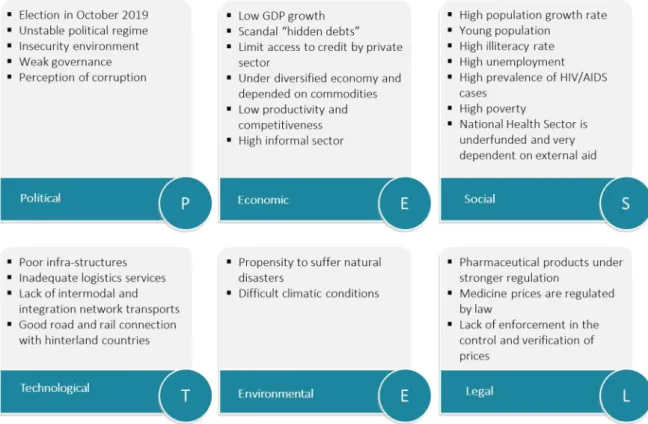
The macro-environmental factors have a profound impact on an organization’s performance. In the case of MEDIMPORT there are several specifies that need to be considered (Table II).
Table II: Macro-environmental of Mozambique
Source: author
After independence in 1974, Mozambique enter a civil war. In 1992, the two major political parties in dispute, Mozambique Liberation Front (FRELIMO, Frente de Libertação de Moçambique), in power since the independence, and Mozambique National Resistance (RENAMO, Resistência Nacional de Moçambique), signed in Roma a peace agreement. However, the tensions were permanent along the time. More recently, at the beginning of August, the two parties signed a new agreement of peace (the third in the history of the country). In the meanwhile, the agreement is being put in cause by some armed fractions of the RENAMO that contest the terms and conditions of the agreement and well the leader. For October of 2019 are scheduled presidential elections. A scenario of violence is not out of place taking into consideration the history of violence. Another source of instability is related
10 to the terrorist attacks attributed to Islamist movements in the province of Cabo Delgado, north of the country, were major reserves of natural gas where discovered.
Mozambique is a low-income country with a Gross National Income (GNI) per capita of only 460 dollars. The projected growth of the Gross Domestic Product (GDP) is modest at around 2,7 % in 2019 (AfDB, 2018b). In 2016, several investigations, initiated by The Wall Street Journal, reveal debts hidden in public accounts of approximately 2.2 billion dollars. After the disclosure, some relevant and meaningful events take place. The International Monetary Fund (IMF) suspend the financial assistant program. Moody, Fitch and Standard and Poor's downgraded the credit rating due to the increased risk of default. The group of donors of the Mozambican State Budget decided to suspend international aid to the country. Mozambique dive into an economic and financial crisis with contraction of investment, GDP and employment. The Central Bank has implemented a restrictive monetary policy in the last years. Inflation was been containing around 7% with the stabilization of Metical (local currency). The State uses domestic financing sources leaving the private sector with limited access to credit. The economy is little diversified and dependent on commodities (e.g. coal and graphite). The country has a debt-to-GDP ratio above 100% being at high risk of debt distress. On the other side, Mozambique's private sector is still developing, contributing just to 65 % of the GDP, and is characterized by low productivity and competitiveness (ADB, 2019). The horizon is the production of Liquefied Natural Gas (LNG), forecasted to start in 2022/2023, with high expectations to dynamize the economy.
The general census of the population in 2017 reveals a population of 27.909.798 inhabitants. Nearly 66% live in rural areas. The median age is around 17 years. The fertility rate remains high at 5,2 children per woman. The illiteracy rate is 39%. (INE, 2019). Although tertiary education has become more accessible, the quality is still a major concern impacting the productivity of the economy. The unemployment rate is still higher. Estimation point for unemployment of 21% in 2015 (AfDB, 2018b). Mozambique is one of the 10 countries in the world most affected by Human Immunodeficiency Virus infection and Acquired Immune Deficiency Syndrome (HIV/AIDS). Poverty remains a challenge. According to the last information collected in 2015, poverty was just bellowed 50% of the population (INE, 2015). The NHS is underfunded. From 2014 to 2018, the health sector has been recording an average allocation of 9% of the State budget, well below the 2001 Abuja Declaration goal of governments to allocate 15% of their budgets to health (Cavelane, 2019).
11 In the past years, the country has significantly relied on support from external development partners and financing to fund the health sector and to purchase medicines. From 2012 to 2016, external aid represents 61% in financing current expenses and almost 75% of investment expenses in the health sector. In the last years, due to the hidden debt scandal, the donors have reduced the support to the State budget. Nevertheless, some donors have implemented their development plans aside from the Ministry of Health (MoH) planning (Cavelane and Mapisse, 2019). In 2013, the MoH approved a National Health Sector Strategic Plan (PESS, Plano Estratégico do Sector de Saúde), from 2014 to 2019, that defined several strategies and reforms aimed at solving the main problems in the health and pharmaceutical sectors. The plan has been extended in time.
In what concerns to environment Mozambique was positioned in the first place of the climate risk index for 2015 (GERMANWATCH, 2017). Between March and April 2019, two devastating tropical cyclones (Idai and Kenneth), hit the coast of Mozambique killing hundreds of people. Houses and basic infrastructure were destroyed on a large scale. The event put millions of people without access to food and water in the region affected. The country is extremely vulnerable to adverse climate conditions.
This year, Mozambique was rank 135th in the Doing Business Index, against position 138 of the previous edition of the annual World Bank report. Myriad bureaucratic and infrastructure challenges, such as getting access to electricity and water, are often cited as barriers to doing business (Group 2019). The indicators evaluated in the Logistics Performance Index (LPI), Indicate Mozambique need to address the competence and quality of logistics services. It is recommended that companies should focus on their core business and consider outsourcing distribution and logistics (Arvis et al., 2018). The forum MOZEFO (think thank group in Mozambique) points out the lack of a strong and reliable connection between the north and south of the country. The communications are more horizontally oriented putting in contact the hinterland countries to the ports located in the Indic Ocean (Maputo, Beira, and Nacala). Roads do not offer the best conditions for the circulation of people and goods. Lack of intermodal and integration network transports and undeveloped rail and maritime transport. The logistics costs are extremely high and uncompetitive (MOZEFO, 2016).
The regulation of pharmaceutical products is governed by Law no. 12/2017 of 8th September, which establishes the rules applicable to the production, distribution, use, and marketing of medicines, vaccines, biologic products and health products. A new price regime
12 was also approved by Ministerial Order 21/2017 of 13th March. Prices are regulated through a cost-plus system fixing cost and profit mark-ups for each stage of medicine distribution. The price of medicines is the same in all national territory. Price controls seems not to be completely effective due to the lack of enforcement with distortions of the prices across the supply chain1.
4.2. Pharmaceutical sector in Mozambique: brief considerations
The pharmaceutical sector in Mozambique is small. The market is evaluated in 40 million of dollars. Several agents are involved in the sector:
The public sector, under the NHS and Central Medical Store (CMAM, Central de Medicamentos e Artigos Médicos), more geographically extensive.
The profitable private sector with almost exclusive presence in the urban areas and extremely fragmented.
Non-Governmental Organizations (NGOs) with strong connections to the public sector.
Traditional medicine practitioners, still widely accepted by local communities, offering non-allopathic medicines and complementary to conventional medicine. The relation between the different agents are highly complex and characterized by being:
Fragmented. The last information available from 2017 provided by the MoH, reported 136 import-wholesalers of medicines registered in the country.
Interdepended and extremely reliant on foreign aid. The external partners account for 81% of medicines funding (N’weti, 2019).
Overlapping. As an example, the United States Agency for International Development (USAID) import and distribute medicines through its channels being a competitor of the profitable private sector2.
1 According to a pharmacist, that possesses a store in the suburbs of Maputo when the product does not sell, and the expiry date is close the normal practice is to decrease the price.
2 Information recollect in meeting with Leah Hasselback (Supply Systems Strengthening Advisor at USAID).
13 Until the recent past, importation and retailing of medicines were led by MEDIMOC and FARMAC pharmacies, two para-statal enterprises that acted for many years as sole importer and distributor, respectively. MEDIMOC is presently being sell. Private companies will do all the importation.
Retailers tend to divide their clientele into:
General population (the lower-class population) from the suburb, of limited willingness to pay.
Mozambican elite and expatriates, with a preference for branded medicines.
The Government of Mozambique has acknowledged the importance of pharmaceutical logistics and as a part of the reform agenda for MoH, developed a Pharmacy and Logistics Strategic Plan (PELF, Plano Estratégico de Logística Farmacêutica).
Pharmaceutical logistics is one of the lowest-funded areas in the health sector, accounting for only 7% of the total projected costs through 2019 (MISAU, 2013).
There is public evidence of systematic stock-outs of medicines in public pharmacies throughout the country (Wagenaar et al., 2014).
4.3. Value Chain of MEDIMPORT: subsidies
The major challenge of MEDIMPORT consists of linking manufacturers and retailers in a short period.
The company is vertically integrated as an importer and wholesaler. It is the first private entity registered in Mozambique (registration license 2).
Relies on Third-Party Logistics (3PL) in two crucial moments: a) shipping the medicines to Mozambique and b) supplying to retailers located outside Maputo.
The central warehouse and support activities (management, procurement, technical compliance, human resources, commercial and sales) are located at Maputo (capital of Mozambique). Besides the warehouse, the infrastructure is composed of three distribution vehicles and an Enterprise Resource Planning (ERP) provided by company PHC.
The company is subject to strict regulations to comply with storage standards practices of medicines especially that require could conditions.
14 The portfolio is constituted by prestigious drug medicines, branded (AstraZeneca Bayer, Ben, Bial, Merck Sanofi) and generic (Bluepharma), with exclusive representation.
MEDIMPORT sells almost exclusive in the urban areas of Maputo (representing around 80% of revenues), Nampula and Beira.
The margins of the wholesales and retailers are pre-defined. In the case of the wholesale the price is calculated based on the Cost, Insurance and Freight (CIF), with the addition of bank, customs clearance, and harbour expenses, as well as other direct import fees charged until the distributor warehouse, until a maximum of up to 9% of the CIF price.
The macro-environment presents to MEDIMPORT external opportunities and threats that is synthetized in table III and developed along the document.
Table III: Opportunities and threats for MEDIMPORT
Source: author
The business model of MEDIMPORT has some relevant and impactfully characteristics that affect the overall performance:
The company typically holds four months of inventory. The cost associated includes warehousing, capital, and obsolescence.
15 The working capital comport two components: a) investment in inventory (four months) and b) credit to major retailers (30 days). The credit cycle is on average 150 days. Moreover, there is the risk that retailers delay the payment. If the client is the MoH the scenario is even worst. The default of obligations is not in question, but the credit cycle increases significantly. It can take one year to receive the payment from MoH.
MEDIMPORT has a slow order cycle time and payment cycle, on average 9 months, between the purchase from manufacture and the payment from the retailer.
The containers are ordered monthly to reduce the transport cost.
The payment to manufactures cannot be made in domestic currency (Metical). The company is exposed to exchange rate fluctuations and impacted by the financial cost of acquiring foreign currency. Additionally, can face limitations on overseas payment as a result of monetary policy restrictions.
The digitalization and flux on information across the supply chain are incipient. Most of the retailers have poor information connectivity and lacks a truly and efficient logistics management information system. Ordering is made by phone or email in the case of more sophistication retailers.
The company also need to address several key points:
The demand for medicines is unpredictable but the company must be able to supply retailers without requiring that they hold large inventories on-site. As expressed by a pharmacist, in the pharmacies located in the suburbs it is not viable to stock brands, as they are very expensive and will not sell. There are only cheaper drugs. If the pharmacy is in the city, there is no interested in stocking cheaper drugs.
Mechanisms to provide working capital to retailers to allow purchasing medicines before receiving from the final consumer.
Provide regular information about the medicines, not only to drug prescribers but also to retailers. Extend the support to retailers in commercial and sales training or inventory management to improve the retailer’s business.
16
4.4. Trends and market drivers
The evolution of the pharmaceutical sector in sub-Saharan Africa will be driven by several factors:
Increased healthcare expenditure. In part due to rising consumerism of growing population, urbanization and emerge of a middle class (Holt et al., 2015). In Mozambique, a significant part of the population of the upper-middle class has been seeking healthcare in neighbouring South Africa. This cross-border movement is a clear sign that the population’s standard of living is increasing, and that demand for quality healthcare is higher than the supply. Predictably, new private clinics, hospital infrastructures in rural areas, and importation of medicines will be stimulated by this tendency (Pinheiro et al., 2018). The retail pharmacy Mopani, located in South Africa, delivers medicines in Maputo by ordering charging a delivery charge3. On the other
side, there is a tendency to an increase in healthcare insurance coverage.
Shift from infectious and parasitic illnesses to noncommunicable diseases to chronic diseases. There will be an increasing disease burden with diabetes, cancer, respiratory disease and heart diseases (Silverman et al., 2019).
Maturing business environment: strengthening of regulatory landscape and falling of trade barriers (AfDB, 2018a). The integrity of products, function, and authenticity, is a serious and becoming even more important issue (Bale, 2005).
Shift towards generics. There is an increased acceptance for generics associated with questions of affordability. Local manufacturing is being stimulated in Africa (Dong and Mirza, 2016).
Partnerships with Government bodies. Public-Private Partnerships (PPPs) initiatives to increase disease awareness and foment affordable treatments.
Digital innovations. Development of digital Information and communications technology industry. Rise of e-health initiatives to bridge gaps between healthcare providers and patients.
3 In Monapi Pharmacy shop located in White River (two hundred kilometres away from Maputo) the pharmacy employs people that speak Portuguese to attend Mozambicans.
17
5. Recommendations 5.1. Introduction
For MEDIMPORT, expand the market in Mozambique, imply in first place the premise that customers have access to products. Investing in distribution becomes essential to capture market share and customer preference.
Coca-Cola is an example of a company that accepted to do a high investment to make the product available anywhere in Africa. At some point this raised the question: if we can get a Coca-Cola anywhere in the world, then why not life-saving medicines? Therefore, emerge an initiative denominated Project Last Mile (PLM). It consists of a partnership between Coca-Cola Sabco (local bottler in Mozambique), Global Fund, MoH and CMAM. The main goal is to improve the availability of life-saving medicines in all country. For that Coca-Cola provide expertise, systems and processes to CMAM. Now it was concluded for seven of the 11 provinces of the country the route-mapping and distribution optimization. The prevision is that at April of 2020 this process will be concluded for all country4.
There are still huge challenges for the health and medicine sector since in Mozambique, since poor infrastructure, to fragmented and inefficient market and lower purchasing power.
Because the market is still small, to MEDIMPORT reinforce their presence and gain a competitive advantage against the competitors, it is suggested that the company implement new distribution methods.
The recommendation is that MEDIMPORT in a short-term implement a push supply system model. A pilot project in Maputo province is proposed and depending on the results expanding nationally sustainably and profitably. The solution takes into consideration the technological maturity of the country.
In a medium-long term, with the prospects of economic growth and rising demand for healthcare services and medicines, is relevant to think how to optimize the value for shareholders because of the presence in sub-Saharan Africa. For that, two new modes of
4 Information recollect in meetings with José Neves (Country Lead of PLM) and Luís Silva (external consultant of Global Fund).
18 entry are briefly evaluated with different levels of investment, risk and geographical coverage.
Lastly is recommend an implementation of a system to tackle the problem of counterfeit medicines.
5.2. New distribution model: push supply system model
Presently MEDIMPORT uses a pull supply system model. This means that the retailers (pharmacies and hospitals/clinics), first launch the purchase order and just then the company supply the medicines. In some circumstances is the clients that get the product directly in the main warehouse located in Maputo.
The pull-based supply system presents several drawbacks:
Non-actionable consumption data and poor forecasting of clients needs; No reliable and dedicated transport;
Cashflow problems.
Consequently, there are fluctuations in stock levels with frequent stockouts but also risks of over-ordering (e.g. in an emergency) in retailers. This can lead to the so-called "bullwhip effect".
In the new proposed model, push supply system, MEDIMPORT is responsible to decide when to supply medicines to clients based on stock levels of clients, without their direct intervention. This is only possible if there is real-time information and communication. The principle behind is that Information is the heart that drives the logistic cycle. Better information allows collecting, organize and make better decisions about consumptions, stocks, shipments and other variables.
The actionable plan includes commercials visiting each pharmacy periodically with a delivery car loaded with medicines. In the pharmacies, they count stock levels. If the stock of a certain product reaches the minimum level, an immediate reposition is made thought the moving warehouse.
Moreover, data of consumption is collected and transfer to the main office. For the effect, commercials use a tablet connected to an online platform that makes real-time data available.
19 Purchase orders collected by the firm by other channels (e.g. email or phone) are then integrated into the system and medicines delivery according to the established routes.
Under this design, the improvement of transparency along the supply chain is expected to:
Increase the order volumes.
Reduce the incidence of stockouts and over-ordering.
Improve the accuracy of stock level information with a more regular review of minimal levels.
Improve the forecast.
It is also suggested that MEDIMPORT use:
WhatsApp to provide information about the products to clients. Mobile phone is well diffused in Mozambique. Frequently pharmacies do not have laptops or other electronic equipment. Vodacom, the major telecommunication operator in the country with a share market of approximately 50% and a global reach of 6 million people, is launching a free service of information regarding maternal health care and nutrition for babies based on products accessible for the poorest within its social corporate responsibility.
Although data is protected and cannot be diffused by telecommunication operators is still possible to know in more details the potential market of consumers for medicines in the country. A simple strategy consists in asking consumers on WhatsApp about, for example, willingness to pay, number of medicines taken in average during a certain period and after completing with success the questionnaire reward the person with a credit recharge for mobile phone5. In addition, WhatsApp
can be used as an interface to receive purchasing orders.
The service m-pesa and similar services to facilitate the payments.
The digitalization will allow the supply chain to be more efficient and customer-focused (Figure 3).
5 Information collected in a meeting with Samir Chandra (WASP, VAS & Digital Manager at Vodacom).
20 Figure 3: New distribution model
5.3. Market strategy: mode of entry
When evaluating the market strategy, MEDIMPORT must take in consideration three factors:
Choice of location: regional, country or urban/rural areas. Entry mode and subsequent operational strategy.
Portfolio selection.
In what concern to the choice of location, MEDIMPORT is almost exclusive present in the major urban areas of Mozambique. In terms of entry mode and operational strategy, the company has followed a centralized decision-making structure with the implantation of a sales subsidiary in the country. The portfolio ranges from branded drugs to generics.
Given the unique challenges, complexities but also the perspectives of a favourable evolution of the macroeconomic environment in Mozambique, it is reasonable to accept rethinking the entry mode in Mozambique: what kind of operations and legal form to adopt. Two approaches were considered implying different mobilization of resources, competencies but also investment and risk:
Complete externalization of logistics; Pharmaceutical manufacturing.
21 5.3.1. Complete externalization of logistics
Enter in a strategic partnership with a logistic company to outsource all the importation and distributions of medicines in Mozambique. In this scenario, MEDIMPORT would cooperate in marketing and sales functions. Infrastructure, technology, procurement, inbound and outbound logistics as well operations would become fully the responsibility of the logistic company. The presence of MEDIMPORT would reduce substantially.
The shift for a complete externalization would require finding the appropriate partner. Factors as strategic, capability, cultural and organization fit needed to be evaluated (Lasserre, 2017).
Few companies have suitable capability for adding value in a future partnership as it is designed in Mozambique. Companies with large experience in supplying retail pharmacies, private hospitals, dispensing doctors and retail health stores in South Africa do not venture in Mozambique. As explained by a representative of United Pharmaceutical Distributors (UPD)6, Mozambique have poor infrastructure representing a high risk, particularly in the last
mile delivery costs.
On a national level, according to an exploratory analysis, the firm Tropigalia (one of the market leaders in distribution), demonstrate competences to integrate a future partnership. The company is responsible for distributing and representing global brands (e.g. Unilever). According to the management team7, the company import from Portugal
containers every week, have appropriate infrastructures, distribute to all over the country and have an integrated inventory management system. The business model is centred in Fast-Moving Consumer Goods (FMCG) with complete management of the supply chain in the country. At the time of the meeting, it was revealed the company is evaluating the possibility of investing in retail health stores as importer-wholesaler.
Given the potential high costs associated with managing a complex supply chain and cover all country, this entry mode might work as a mitigation factor. On the other side, there is less substantial control over operations.
6 Information collected in a meeting with Rehana Landis (Exports coordinator).
22 5.3.2. Pharmaceutical manufacturing
Developing a local production of drugs requires thinking also in location. The pharmaceutical market in Mozambique is still small. But at a regional level increasingly new opportunities arise.
Mozambique, but also Angola, belong to the trading block Southern African Development Community (SADC). Only adopting a regional approach is possible to achieve economies of scale essential to compete on price maintaining a sustainable project. Some developments have occurred toward economic agreements, removal of trade tariffs, and harmonization of medicine registration processes. SADC is also served by several trade corridors facilitating the circulation of people and goods.
Consider opening a factory is based on the premise of long-term growth prospects of the region, largest working-age population, faster urbanization, significant natural resources (e.g. oil and gas) that can stimulate economic growth, and epidemiological transition (cancer, diabetes and hypertension will put the biggest burden on Africa´s healthcare system replacing AIDS/HIV and malaria).
The African Union (AU) developed in 2007 a Pharmaceutical Manufacturing Plan for Africa (PMPA) and established a Technical Committee to evaluate in more detail the production of drugs in Africa.
From the research and pieces of evidence, several drawbacks must be taken into consideration. Issues with human resources (training and retention), no Active Pharmaceutical Ingredient (API) production on the continent and impact of the agreement on Trade-Related Aspects of Intellectual Property Rights (TRIPS) for the acquisition, irregular and expensive utility costs, international pricing competition and lack of investment (Berger et al., 2016).
The high costs of API are a barrier to compete on price against Asian generic manufacturers. When thinking in portfolio segmentation NGOs can be grouped in the same customer segment of MoH, where price is the first criteria of procurement8. In Mozambique,
the external partners account for around 80% of medicines funding. It is essential to explore the elasticity of demand and optimize the trade-off between volume and price. This model
23 requires high volume and low margins to overcome the challenge of affordability at least in the beginning phase.
Another key point is ensuring good manufacturing practices and guaranty production of quality. This is a prerequisite for WHO prequalification status and a criterion that must be fulfilled in NGOs procurement.
The access to credit in financial institutions is difficult, particularly in Mozambique. Besides the scarcity of funding for the private sector, the overall rates are high. The International Finance Corporation (IFC) can be a viable source of financing. Given the amount of investment involved and that the project help improving the business environment and the health care conditions, the institution is willing to analyse and support the project if there is a viable investment opportunity in more favourable conditions 9.
Notwithstanding, some positive examples emerge in Africa. In SADC community only South Africa has a limited degree of API production. Is estimated that South Africa represents more than 70% of the total estimated production in sub -Saharan region projected in USD 1 billion of dollars (IFC, 2008).
Aspen Pharmacare, a vertically integrated manufacturer, is a leader of the market. For some time, the company partnered with GlaxoSmithKline (GSK) in product licensing arrangements as well as skills and equity transfer. The deal ends at 2016. The company is also present in other countries of the region (e.g. Botswana, Namibia or Tanzania).
In Mozambique, there is only one considerable manufacturing company of drugs. It is a state-owned company (SMM - Sociedade Moçambicana de Medicamentos, S.A.). The company started producing in 2012 antiretroviral and other drugs to support HIV/AIDS. In the meanwhile, the portfolio was expanded to other kind of diseases (diabetes, hypertension, mental illness and inflammation). The project is an initiative of the Brazilian and Mozambican governments. Brazil not only transfer technology, manufacturing management, training local technical crew but also provide financing. The total investment was around 21,5 million dollars mainly financed by the Brazilian State and the private company Vale (Farmaguinhos, 2014). In the original agreement has stated four objectives: a) expand the access to antiretrovirals in the country; b) build local production of generic pharmaceuticals; c) reduce dependence on international pharmaceutical imports and d) contribute to building local pharmaceutical
24 capacity in Mozambique (Oliveira, 2013).
The entry modes presented, complete externalization of logistics (externalization mode) or pharmaceutical manufacturing in Angola or Mozambique (internalization mode), demand an in-depth analysis that this study not cover.
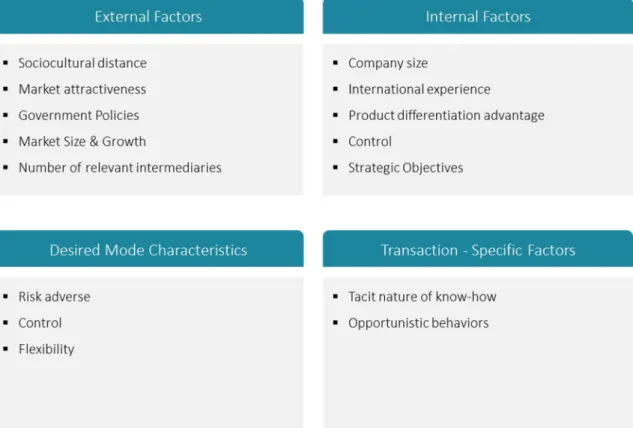
Several factors will impact the eventual choice of entry mode (Lasserre, 2017). In Figure 4 is synthesized some variables relevant for the process of decision grouped in four factors: external, internal, desired mode characteristics and transaction-specific factors.
Figure 4: Factors impacting the choice of mode entry
5.4. Anti-counterfeit system
In low and middle income countries it is estimated that the substandard and falsified products represent USD 30.5 billion dollars (WHO, 2017).
According to the Mozambican health authorities, it is estimated that 12% of the medicines on sale in the country are counterfeit. The National Quality Control (LNCQM, Laboratório Nacional de Controlo da Qualidade de Medicamentos) do not have enough resources (human and equipment) to handle the situation.
The increase of counterfeit drugs is adding additional need for proof of origin and product traceability along the supply chain. Introducing anti-counterfeit measures will
25 generate not only strong brand loyalty but also reduce false competition and increase revenues.
Investing in tracking technology can be a solution. Systems developed by companies such as mPedigree or Sproxil already enable the authenticity of medicines through validation via mobile phone. The solution is being adopted by some companies in Africa. Drugs are printed with a unique code disguised by a scratch-off coating. When the medicine reach consumers they can send a text message with the code to receive confirmation of the veracity of the product.
The informal sector in Mozambique is estimated to account for 31% of the GDP (Medina and Schneider, 2018). The percentage of medicines counterfeit is Mozambique is high. It is recommended that MEDIMPORT address the problem by implementing a system based on a validation via mobile phone. The system in the essence is based on the same principles as the solutions offered by mPedigree or Sproxil, presented before, but with some adaptations.
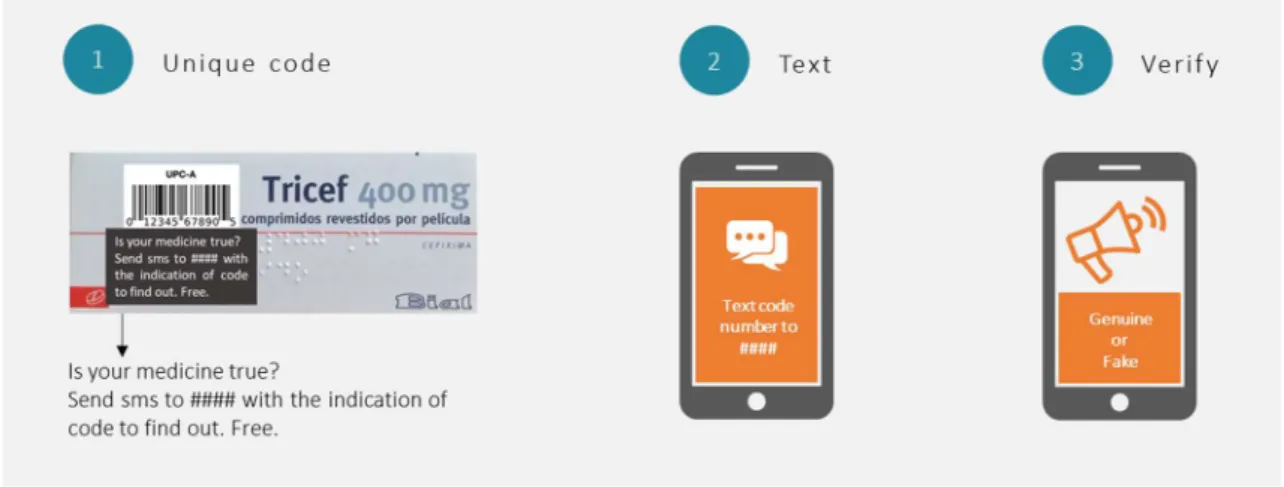
Once the medicines are imported all the boxes must have a sticker with the final price to the consumer. The suggestion (see Figure 5) is to take advantage of this step to impress also in the stick a unique code, with a brief explanation of how to confirm the veracity.
Figure 5: Anti-counterfeit system
Then the consumer just needs to send a Short Message Service (SMS) to a given number and will receive immediately also by SMS the information about the veracity of the medicine genuine or fake. Once the code is used the system will devolve that information to avoid frauds.
26
6. Financial analysis
6.1. New distribution model: push supply system model
The financial evaluation assumes (see Appendix 2) that the introduction of a new supply system will increase the sales constantly over the period of analyse, from 2020 to 2025.
The operational costs include personal expenses (hiring of 2 drivers/commercials and 1 warehouse keeper), selling, general & administrative expense and vehicles expenses (fuel and maintenance).
The total investment of the project (vehicles, tablets, mobile phones and integration of information) is estimated in MZN 2,5 million of meticais.
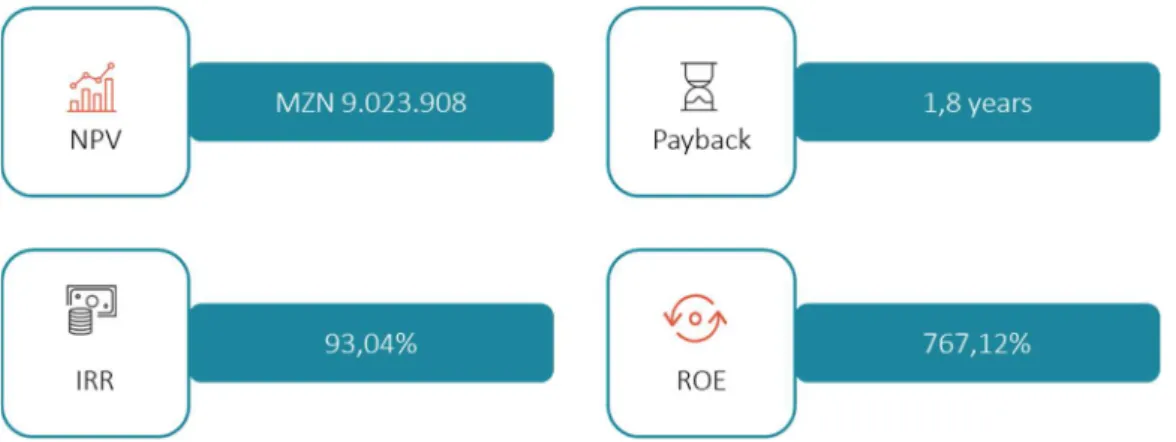
The complete pro-forma Profit and Loss (P&L), Free Cash-Flow (FCF) and Balance Sheet can be found in Appendix 3. The major figures (see Figure 6) demonstrates a Net Present Value (NPV) positive. The Modified Internal Rate of Return (MIRR) is greater than the Weighted Average Cost of Capital (WACC), meaning the launch of the project is financially attractive.
Payback take place near the second year. Historically the company present high values of cash and cash equivalents. The investment is making with equity considering a rate of return required by equity investors of 25%. With the financial leverage, the financial indicator improves despite it is a small investment.
Figure 6: Financial indicators from the new supply system model
Two scenarios were built (pessimist and optimistic) to evaluate possible deviations from the market study and corresponding impacts to the NPV of the project (see Appendix 4) by changing the growth of revenues.
27
6.2. Anti-counterfeit system
The financial evaluation assumes (see Appendix 5) that the introduction of an anti-counterfeit system applied to medicines will increase awareness among consumers and allow MEDIMPORT to capture a fragment of the counterfeit and informal market. The expectation is that the company capture 0,5% of the counterfeit market in the first year and increase smoothly that percentage along the 5 years analysis.
The major cost refers to communication (SMS sent and received by the consumer) and changes in printing (for which was foreseen a small investment of 200.000 meticais).
The complete pro-forma P&L, FCF and Balance Sheet can be found in Appendix 6. The major figures (see Figure 7) demonstrates an NPV positive. Payback takes place after the second year.
Figure 7: Financial indicators from anti-counterfeit system
Two scenarios were built (pessimist and optimistic) to evaluate possible deviations from the market study and corresponding impacts to the NPV of the project (see Appendix 7) by changing the percentage of counterfeit market acquired.
7. Implementation plan
A visual representation of the implementation plan of the two recommendations proposed can be seen in Appendix 8.
Concerning the implementation of the new supply system model, the process begins with the presentation of the program to retailers. This phase is essential. From the feedback
28 and constructive interaction, the program can be adjusted. Is essential that the value proposition fit the retailer's needs.
In the meanwhile, the selection of eligible retailers can also start. The criteria for selection must take in consideration geographic and population coverage.
Simultaneous is desirable to initiate the process of route mapping and optimization of distribution. Taking into consideration the internal knowledge of the market in Maputo province, external services of location intelligence can be dispensed. The three phases mentioned before are projected to take two months.
The process of hiring should take place in the first month following a period of intensive training. The emphasis should be put in sales and management of inventory. Is recommended formation on-job taking advantage of the internal resources and knowledge (country managers and commercial of the different brand drugs). It is suggested to hire people with previous similar experience given the typically slow learning curve.
The investment in infrastructure (vehicles, laptop and tablets) is expected to take a maximum one month in line with the integration of data in the same platform.
Monthly should be an evaluation of the system. It is recommended to having in place Key Performance Indicators (KPI) to measure the performance and evolution of the different stages of the supply chain. The exercise of measuring the supply chain allows understanding how is currently performing. But most important detect where are inefficiencies and help managers to implement measures to improve (Aronovich et al., 2010). Appendix 9 propose some metrics. The selection of indicators was made by supply chain function: (1) Product Selection, Forecasting and Procurement; (2) Warehousing and Storage; (3) Inventory and (4) Distribution and Transport (USAID, 2006). For each function was elected four dimensions: quality, cycle time, financial and productivity (Frazelle, 2002). Nevertheless, there are always risks of choosing indicators that hide possible inefficiencies in the supply chain.
After six months, the extension of the program to other provinces should be evaluated, particularly in Nampula where the company will open a new warehouse.
The implementation plan for the anti-counterfeit system starts with the necessary approvals given by the MoH. It was established for this phase one month. After the approval follows the agreement with a telecommunicator operator and the printing tests. Both phases should take half a month. After this, the service can be launch in the market followed by a monthly evaluation of the data.
29
8. Risk management
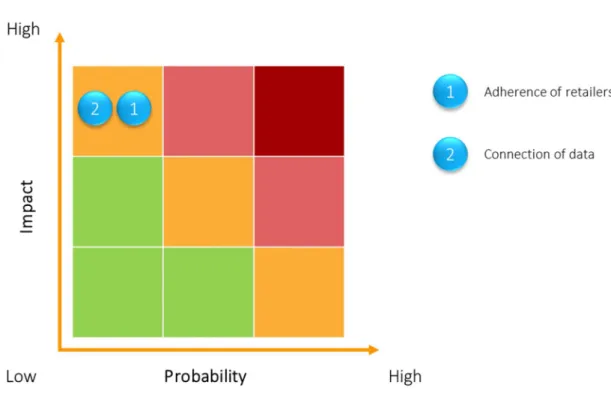
For the new supply system were identified two risks with low probability but high impact (see Figure 8).
Figure 8: Risk management of new supply system model
The first risk is associated with the adherence of retailers to the new supply system model. The mitigation measures consist of:
When presenting the system most be clear the advantages: avoid stockouts or overordering, reduce the cost of controlling stock and ordering, dedicated transport and commercial and technical assistance. The goal is to help improve the overall performance of the business.
In extremis cases for the retailers that achieve a certain volume of orders can benefit from medicines on a consignment basis. This improves the working capital and avoid the costs with medicine expiring. This nuance to the system seems not to be so favourable to MEDIMPORT. However, the cycle of payments has no reasons to increase substantially. The credit will be cut-off. Normally is it given credit period of 30 days. On the other hand, with full control of consumption and stocks, it is possible to allocate medicines than don´t sell in a retailer to another. The financial interest of both parts become more aligned.
30 The second risk is related to the connection of data between the different devices in the same platform. Having the appropriate technology is vital to implement this new system. Otherwise, the main objective of having reliable and real-time data to take decision is compromised. The technology proposed is compatible with the ERP used by MEDIMPORT. Nevertheless, some solutions have been implemented in other African countries with success. Software mSupply is an interesting inventory control system, free for a single user, that run on a tablet or smartphone. According to Craig Drown10 the company is presently
building a "health supply hub" that will work as a vendor managed inventory. On the other side mSupply carry many functions of an ERP and use a RESTful API that allows other system to connect.
Relatively to the anti-counterfeit system were identified three risks with different probabilities and impacts (see Figure 9).
Figure 9: Risk management of anti-counterfeit system
The first risk, with low probability but high impact, respects to the formal authorization of MoH. Some similar practices have been implemented in other African countries. The counterfeit medicines are above all a public health matter. In the case of
31 resistance for acceptability is recommended to join forces with other companies that operate legally in the country and suffer from uncompetitive practices.
The second risk with, with medium probably of happen but low impact, respects to the main goal: acquire a part of the value transacted in the counterfeit segment. It is also important to keep in mind that medicines in Mozambique can be sold at unit invalidating the utilization of the system as it is design. Although the risk is medium to high the impacts are low given that:
The cost and investment are not significant given the company´s structure.
Allow the company to raise awareness in consumers to the problematic of counterfeit medicines and increase the loyalty of the brands.
To mitigate the risk is suggested to invite the media and explain the measure. The third risk concerns the possible attempts of fraud with high impact and probability. It is proposed to use a unique code in each box of medicines that once validated cannot be used again.
9. Final remarks 9.1. Conclusion
Given the importance of SCM is crucial that companies apply best practices to overcome inefficiencies and increase profitability. Improving processes require commitment and investment.
Given the context where MEDIMPORT develop activities is necessary to look at innovative ways of doing things. The recommendation of implementing a new supply system and introduce an anti-counterfeit system increase the visibility across the supply chain. Also address the objectives of improving efficiency and profitability. Given the more customer-centric approach is expected to increase the brand loyalty.
The investments are not meaningful in a short time. Given the prospects of economic growth and rising demand for medicines, it is recommended that MEDIMPORT rethink it´s business model. Two ideas emerge: complete externalization of the logistic process and launch of a manufacturing drug plan. The investment, risk and control are very different. This
32 way, it is recommended that the company evaluate it´s strategy to address the new opportunities.
9.2. Research limitations
The interviews were performed to the top management team of MEDIMPORT. When considering the challenges that importers-wholesalers face in the country it is a small sample. Although the company is a market leader more companies should de consulted to have a broader characterization of the issues affecting the distribution sector of medicines in Mozambique.
Another limitation is related with access to data and information. The official government institutions tend not release the reports even under request. Other point is associated with the credibility and friability of the information that comes to public.
The last limitation is given by the theoretical background. Should be deeper and more detailed. There is no relevant literature in Mozambique regarding supply chain of drugs. The studies that exist for sub-Sahara Africa do not often mention Mozambique.
9.3. Future work
The future work is to present the recommendations to the board of the company follow by a deeper analyse and discussion together. If approved, the different financial assumptions, timeline and execution should be reviews according to insights of the management team. Ultimately, they are the one who must implement the recommendations.
It is proposed also a medium-long term revision of the strategy based in two different entry modes. It is recommended to develop a deeper analyse that involve technical and financial viability studies.
33
10. Bibliography
ADB 2019. African Economic Outlook. Côte d’Ivoire: African Development Bank Group.
AFDB 2018a. Africa-to-Africa Investment Report: A first look. Côte d’Ivoire: African Development Bank.
AFDB 2018b. Mozambique Country Strategy Paper 2018 -2022. Côte d’Ivoire: African Development Bank.
ARONOVICH, D., TIEN, M., COLLINS, E., SOMMERLATTE, A. & ALLAIN, L. 2010. Measuring supply chain performance: Guide to key performance indicators for public health managers. Arlington, Va.: USAID, DELIVER PROJECT, Task Order.
ARVIS, J.-F., OJALA, L., WIEDERER, C., SHEPHERD, B., RAJ, A., DAIRABAYEVA, K. & KIISKI, T. 2018. Connecting to compete 2018: trade logistics in the global economy. Washington: The World Bank.
BALE, H. Pharmaceutical Counterfeiting: Issues, Trends, Measurement. 2005. WIPO/OECD Workshop.
BARNEY, J. 2012. Purchasing, supply chain management and sustained competitive advantage: The relevance of resource-based theory. Journal of Supply Chain Management, 48, 3-6. BERGER, M., MURUGI, J., BUCH, E., IJSSELMUIDEN, C., MORAN, M., GUZMAN, J., DEVLIN, M. &
KUBATA, B. 2016. Strengthening pharmaceutical innovation in Africa. Council on Health Research for Development (COHRED). New Partnership for Africa’s Development (NEPAD). CAVELANE, B. 2019. Relatório de Logística de Medicamentos. Maputo: Estudos do Centro de
Integridade Pública (CIP).
CAVELANE, B. & MAPISSE, I. 2019. Análise da Transparência da Ajuda e do Volume de Recursos dos Doadores no Sector da Saúde (2012-2018). Maputo: Estudos do Centro de Integridade Pública (CIP).
CSMP. 2013. CSCMP Supply Chain Management Definitions and Glossary [Online]. Available: https://cscmp.org/CSCMP/Educate/SCM_Definitions_and_Glossary_of_Terms/CSCMP/Edu cate/SCM_Definitions_and_Glossary_of_Terms.aspx?hkey=60879588-f65f-4ab5-8c4b-6878815ef921.
DONG, J. & MIRZA, Z. 2016. Supporting the production of pharmaceuticals in Africa. Bulletin of the World Health Organization, 94, 71.
FARMAGUINHOS 2014. Projeto Instalação Fábrica Antirretrovirais Outros Medicamentos Cooperação Técnica Internacional Brasil Moçambique. Brasília: Fiocruz.
FRAZELLE, E. 2002. Supply chain strategy: the logistics of supply chain management. USA: McGrraw Hill.
34
FROST, L. & REICH, M. 2009. Creating access to health technologies in poor countries. Health Affairs, 28, 962-973.
GERMANWATCH 2017. Global Climate Risk Index 2017. Bonn: Germanwatch e.V.
GIZ 2016. Smart logistics for medication - improving access to medicines and diagnostics in Kenya. Bonn: GIZ.
HOGERZEIL, H. & MIRZA, Z. 2011. The world medicines situation 2011. Geneva: World Health Organization.
HOLT, T., LAHRICHI, M., MINA, J. & SILVA, J. 2015. Insights into Pharmaceuticals and Medical Products Africa: A Continent of Opportunity for Pharma and Patients. Zurich: McKinsey and Company.
IFC 2008. The Business of Health in Africa: Partnering with the Private Sector to Improve People's Lives. Washington (District of Columbia): International Finance Corporation.
INE 2015. Inquérito ao Orçamento Familiar - IOF 2014/15. Maputo: INE.
INE 2019. IV Recenseamento Geral da População e Habitação 2017. Maputo: INE.
LASSERRE, P. 2017. Global Strategic Management. London: Macmillan International Higher Education.
MACUÁCUA, E. 2018. Constituição da República de Moçambique Anotada. Maputo: Escolar Editora.
MEDINA, L. & SCHNEIDER, F. 2018. Shadow economies around the world: what did we learn over the last 20 years? Linz: IMF.
MISAU 2013. Plano Estratégico do Sector de Saúde – PESS 2014-2019. Maputo: MISAU. MISAU 2015. Contas Nacionais de Saúde de Moçambique - 2012. Maputo: MISAU.
MOZEFO 2016. Os desafios de infra-estrutura e logística de moçambique: Investimento, mobilidade e competitividade. Maputo: MOZEFO.
N’WETI 2019. A Pharmaceutical Logistics still far from answering health concerns of the country: budgetary weaknesses. Maputo: N’WETI.
NAUDE, A. & KHUMALO, S. 2001. Establishment of viable rural supply chains, markets and associated economic opportunities. SATC 2001. South Africa: CSIR.
OLIVEIRA, L. 2013. Inicitativa de Instalação da Fábrica de Antiretrovirrais e Outros Medicamentos Em Moçambique; Avaliação do Projecto. Fundação Oswaldo Cruz: Farmanguinhos.
PINHEIRO, P., PAULOURO, F. & FONTES, P. 2018. Pricing & Reimbursement 2018: Mozambique, Global Legal Insights.
RUSSO, G. & MCPAKE, B. 2009. Medicine prices in urban Mozambique: a public health and economic study of pharmaceutical markets and price determinants in low-income settings. Health Policy and Planning, 25, 70-84.