Can reef conservation programmes help reduce
SCUBA diving damage to coral reefs? A case study in
Thailand
Dissertação apresentada por
Bruno Miguel Silvestre Mendes
Para a obtenção do grau de
Mestre em Biologia Marinha, na especialidade de Ecologia e Conservação Marinha
Faro, 2008
Universidade do Algarve
Can reef conservation programmes help reducing
SCUBA diving damage to coral reefs? A case study in
Thailand
Dissertação apresentada por
Bruno Miguel Silvestre Mendes
Para a obtenção do grau de
Mestre em Biologia Marinha, na especialidade de Ecologia e Conservação Marinha
Dissertação orientada por:
Dr. Karim Erzini
(UALG – Faculdade de Ciências do Mar e do Ambiente)
Dr. Niphon Phongsuwan
(PMBC – Phuket Marine Biological Center)
Faro, 2008
Universidade do Algarve
“Most people are familiar with terrestrial habitats and can relate to a walk in the woods. Few, however, have experienced the wonders of a coral reef except for occasionally viewing a Jacques Cousteau special. Whilst it is easy to capture images of rain forests being cut down and to collect data to quantify the magnitude of habitat destruction on land , it is more difficult to study and document coral reef processes and degradation”
Acknowledgments
I would like to give all my gratitude to my mother for having the biggest importance for the accomplishment of this work and for always believing in me. To all my family, for all their support, help and incentives.
I also would like to express my sincere thanks to the following individuals and institutions for their major and invaluable inputs:
Dr. Karim Erzini for accepting to be my supervisor and helping me through the hard process of writing the dissertation.
Dr. Niphon Phongsuwan from the Phuket Marine Biological Centre, for accepting to be my co-supervisor, extremely helpful and for having received me with open arms in the Greenfins-Thailand programme.
The Phuket Marine Biological Centre, Greenfins Thailand and all the Staff for providing the background for the study and the best support.
André Glória for helping me out during the field work, as a Greenfins volunteer and as the best friend ever.
Meyung for her amazing energy and help during the field work as a Greenfins volunteer Bex Tyrer for being the most “everything” in my life, the most amazing partner and for the specific support and help with the writings.
Justine and Aey for their partnership in the Greenfins project and for their supply of materials for the thesis.
Guy Corsellis (Asia Divers, Koh Tao) and Mark Soworka (Buddha View, Koh Tao) for their friendship, role-modeling, availability and contribution for this thesis
All the dive operators’ members of Greenfins that were available and authorized the study during their dive operations.
Ninja, for his amazing friendship, love and life. Away but in the heart.
A last but not least big thanks to my friends from Portugal and from all around the world that somehow supported me and accompanied me during this process.
Abstract
Coral reefs are under threat all over the world. Coastal human activities are not always sustainable in this vulnerable ecosystem and may produce continual and cumulative damage. At the present, Thailand is a main tourist destination for SCUBA divers from all around the world and this industry is having a big expansion in recent years. However this growth is revealing problems at the conservation level, since Thailand has difficulties implementing and enforcing environmental laws and regulations to manage its coral reefs. Therefore, reef conservation programmes appear as a non-regulatory form to attempt to reduce the damage produced by SCUBA divers to the corals. The reef conservation programme Greenfins was funded in 2004 with the mission statement “to protect and conserve coral reefs by establishing and implementing environmentally friendly guidelines to promote a sustainable diving tourism industry”.
This study attempts to quantify the amount of damage that SCUBA divers produce in Thailand and compare the damage produced by guided SCUBA divers form Greenfins dive operators and non-Greenfins members. Also, some diver personal characteristics, diver history, diver environmental characteristics and dive characteristics were examined and tested against the influence in the number of divers that damaged the reef and the damage rate. The mean average of damaging contacts was 1.97 per 30 minutes of the dive and the median damage was one contact per 30 minutes of the dive. Most damage occurred in the first 10 minutes of the dive, involuntarily and caused by the diver’s fins. Comparatively, these results are relatively lower than those of other studies with non-Greenfins operators. In Thailand, reef topography was the only factor that influenced the damage to the corals, with diving in vertical topographies showing a lower damage. However in the Andaman Sea, divers with high level of environmental awareness and divers with knowledge of Greenfins were less damaging to the corals, suggesting a better involvement of the members with the aims of the programme.
This study suggests that dive operators should promote the environmental education of their staff and customers in order to reduce damage on the coral reefs. Some measures that can be implemented are for example: choice of the dive sites according to reef topography, with preference given to vertical topographies; provide documentation and information on coral reefs marine life and conservation; improve the pre-dive briefings,
vulnerability of corals, buoyancy control and fins awareness.
To a certain extent it can be concluded that the implementation of reef conservation programmes such as Greenfins, may be already improving the education of the SCUBA divers and reducing the damage on the corals of Thailand.
Resumo
Os recifes de coral estão sob ameaça ecológica por todo o mundo. As actividades humanas neste vulnerável ecossistema nem sempre são sustentáveis e podem provocar danos contínuos e cumulativos. A Tailândia é um país com grande procura turística devido aos seus recursos naturais, clima, baixo custo de vida e oferta de actividades recreativas. A sua indústria de mergulho encontra-se em grande expansão e apesar dos inúmeros beneficios económicos, é actualmente uma preocupação ao nível da conservação da natureza. A Tailândia, como muitos outros paises do Sudeste Asiático revela problemas na implementação das suas políticas de conservação da natureza e na gestão dos seus recursos naturais. A fiscalização e gestão destas actividades ao nível prático são escassas e dificilmente conseguidas ao nível governamental.
Como forma não-regulatória de reduzir o impacte da indústria de mergulho recreativo com escafândro autónomo (i.e. SCUBA diving) nos recifes de coral da Tailândia, foi criado em 2004 o programa de conservação dos recifes de coral, denominado Greenfins, com o intuito de “ proteger e conservar os recifes de coral, através do estabelecimento e implementação de directivas amigas do ambiente para promover uma indústria turistica de mergulho sustentável”.
De facto, existe agora um interesse em monitorizar, compreender e gerir o comportamentos dos mergulhadores de forma a puder contribuir para a gestão dos recifes de coral. Este estudo teve como objectivo quantificar o impacte dos mergulhadores recreativos com escafândro autónomo na Tailândia. Isto foi possível através da análise dos contactos provocados pelos mergulhadores com os corais e da comparação entre os mergulhadores usuários de centros de mergulho membros do programa Greenfins e os mergulhadores sem particular afiliação a qualquer programa de conservação de recifes de coral.
Os mergulhadores foram observados em 27 locais de mergulho distintos, a profundidades entre zero e trinta metros, localizados no Mar de Andamão e no Golfo da Tailândia. No total foram observados 155 mergulhadores aleatoriamente, durante 30 minutos dos seus mergulhos e anotados todos os contactos com o recife de forma a calcular a taxa de contactos e a proporção de mergulhadores que provocaram danos no recife. De acordo com estudos anteriores, os contactos prejudiciais para os corais foram
distinguidos em toque, quebra ou re-suspensão de sedimento sobre os corais. Globalmente, foram registados 430 contactos com o substrato, sendo considerados 306 dos contactos como prejudiciais para os corais. A média de contactos prejudiciais com os corais foi de 1.97 por cada 30 minutos de mergulho e a mediana foi de um contacto por cada 30 minutos de mergulho.
Para testar o efeito de certas características na quantidade de mergulhadores que danificam os corais e na taxa de contactos prejudiciais, foram testadas 11 variáveis, incluindo características pessoais do mergulhador (i.e. sexo, idade e fotógrafia subaquática), histórico do mergulhador (número de mergulhos registados (experiência) e certificação de mergulho), características ambientais do mergulhador (nível de consciência ambiental, conhecimento do programa Greenfins e ocorrência de briefing ambiental) e características do mergulho (i.e. topografia do recife, corrente subaquática e tamanho do grupo de mergulho).
A quantidade de mergulhadores que danificaram os corais e a taxa de contactos deste estudo foram inferiores a outros estudos semelhantes. Isto sugere que actualmente, o programa Greenfins já exerce um efeito benéfico em relação ao prejuízo nos corais causado pelos mergulhadores. Relativamente à análise das 11 variáveis enunciadas, na amostra global da Tailândia, o único resultado que apresentou significância estatística foi a topografia do recife. As topografias verticais em forma de pináculo e de parede apresentaram o menor número de mergulhadores a danificarem o recife e uma menor taxa de contactos. Foi possivel prever a probabilidade de provocar danos aos corais quando se mergulha em pináculos como 0.30 inferior a quando se mergulha noutras topografias e a probabilidade de danificar os corais é superior 2.24 vezes.
A maior parte dos danos aos corais ocorreu nos primeiros 10 minutos do mergulho e a maior percentagem de contactos ocorreu involuntariamente, e produzida por contactos com as barbatanas. Também a maior parte dos danos foram causados a corais moles, seguido dos corais duros, no entanto a maioria dos contactos com o substrato ocorreram com substrato inerte.
Não foram encontradas diferenças na média de danos provocados nos corais, entre o Mar de Andamão e o Golfo da Tailândia. No entanto, quando analisadas separadamente essas duas amostras, algumas variáveis tiveram influência nos danos causados aos corais. No Mar de Andamão, o nível de consciência ambiental e o prévio conhecimento
do programa Greenfins mostraram uma relação com a ocorrência de danos aos corais. O nível de consciência ambiental também influenciou a taxa de contactos. Um maior nível de consciência ambiental produz uma redução no número de mergulhadores que causaram danos nos recifes, assim como ter conhecimento do programa Greenfins mostrou uma redução no número de mergulhadores que causaram danos. Também um maior nível de consciência ambiental mostrou um menor número de contactos por 30 minutos de mergulho. Outra importante descoberta foi que o número de contactos voluntários com os corais diminuiu com o facto do mergulhador ter conhecimento do programa Greenfins.
Quando analisadas separadamente as amostras de mergulhadores com e sem conhecimento do programa Greenfins, a variável sexo mostrou influência nos danos causados aos corais. Um maior número de indíviduos do sexo feminino provocam danos nos corais durante o mergulho, mas pelo contrário os mergulhadores masculinos provocam mais danos durante 30 minutos.
Este estudo sugere que os centros de mergulho devem promover a educação ambiental dos seus guias de mergulho e dos seus clientes de forma a reduzir os impactes nos recifes. Algumas medidas podem ser tomadas são por exemplo: a escolha do sitio de mergulho, consoante a topografia, preferindo as topografias verticais e tendo em conta a experiência dos mergulhadores; expôr e facilitar documentação sobre a vida marinha e conservação; melhorar os briefings introdutórios ao mergulho, com particular referência á vulnerabilidade dos corais e ao controlo de flutuabilidade e barbatanas.
De certa forma pode-se concluir que a implementação de programas de conservação dos recifes de coral, como o Greenfins, já demonstram uma melhoria na educação dos mergulhadores e uma redução nos danos produzidos nos corais da Tailândia.
Palavras-chave: turismo, recife de coral, mergulho recreativo com escafândro
Table of Contents
Acknowledgments _______________________________________________ iv Abstract________________________________________________________ v Resumo _______________________________________________________ vii Table of Contents ________________________________________________ x List of Figures__________________________________________________ xii List of Tables __________________________________________________ xiii
1 Introduction _____________________________________________________ 1
1.1 Aim of the Study ______________________________________________ 1 1.2 The Coral Reefs _______________________________________________ 1 1.3 SCUBA Diving and its Impacts ___________________________________ 2 1.4 The Coral Reefs of Southeast Asia and Thailand______________________ 5 1.5 Reef Tourism _________________________________________________ 8 1.6 The Environmental Programme “Greenfins” _________________________ 9 1.7 Carrying Capacity and Future Perspectives _________________________ 10 1.8 Literature Review on Diver’s Influencing Characteristics______________ 11 1.9 Research Questions ___________________________________________ 14
2 Methodology ____________________________________________________ 15
2.1 Study Site ___________________________________________________ 15 2.2 Data Gathering _______________________________________________ 17 2.3 Biological Characteristics of the Sites _____________________________ 19 2.4 Statistical Analysis ____________________________________________ 20
3 Results _________________________________________________________ 21
3.1 Contacts with Damage _________________________________________ 22 3.1.1 Diver Personal Characteristics _______________________________ 22 3.1.2 Diver History ____________________________________________ 26 3.1.3 Diver Environmental Characteristics __________________________ 28 3.1.4 Dive Characteristics _______________________________________ 32 3.2 Contacts with the Total Substrate_________________________________ 36 3.3 Predicting Damage Contact (logistic regression) _____________________ 37 3.4 Differences between Distinct Periods of the Dive ____________________ 37
3.5 Differences in between Diving Areas______________________________ 39 3.6 Differences in between having Knowledge or not of Greenfins _________ 40 3.7 Influencing Characteristics of Diver Behavior and Affected Substrate ____ 41
4 Discussion ______________________________________________________ 43
4.1 Gender _____________________________________________________ 44 4.2 Age ________________________________________________________ 45 4.3 Photography _________________________________________________ 46 4.4 Certification Level ____________________________________________ 47 4.5 Experience (number of logged dives)______________________________ 47 4.6 Pre-dive Environmental Briefing _________________________________ 48 4.7 Greenfins Knowledge__________________________________________ 49 4.8 Environmental Awareness Level _________________________________ 50 4.9 Reef Topography _____________________________________________ 50 4.10 Current _____________________________________________________ 52 4.11 Dive Group Size ______________________________________________ 52 4.12 Other Influencing Characteristics of Divers and Diver Damage _________ 53 4.13 Differences between the Periods of the Dive ________________________ 54 4.14 Recommendations for Dive Operators to Reduce Damage _____________ 55 4.15 Greenfins Final Comments______________________________________ 58 4.16 Study Limitations and Recommendations for Further Studies___________ 60
5 References ______________________________________________________ 62 6 Appendix _______________________________________________________ 68
List of Figures
Figure 1 – Diver holding to bare substrate to regain control during a wall dive... 3 Figure 2 – Coral Reef Condition in Thailand (2002 – 2004). Source: Status of Coral Reefs in East Asian Seas Region 2004... 6 Figure 3 – Map of Thailand showing both Andaman Sea and Gulf of Thailand. Red Boxes are the areas where the observations took place: 1- Phuket and Koh Phi-Phi Group; 2- Koh Lanta Group; 3- Khao Lak (Similan) Group; 4- Koh Tao Group.
Adapted from Status of Coral Reefs in Tsunami affected countries: 2005... 15 Figure 4 – Schematic interpretation of the reef topographies used in this study (modified from Greenfins, 2007) ... 20 Figure 5 – Frequencies of divers (n=155) observed according to: number of contacts with the total substrate (green) and number of contacts considered as damaging (blue), during 30 minutes of their dives... 22 Figure 6 – Box-plot graphs of the diver characteristics variables: gender and
photography, against number of contacts with damage to the reef per 30 minutes of the dive. Open circles represent outliers and asterisks represent extreme values. ... 23 Figure 7 – Scatter plot of the diver characteristics variable: age, against number of contacts with damage per 30 minutes of the dive... 25 Figure 8 - Box-plots for diver history variable: certification class against number of contacts with damage per 30 minutes of the dive... 27 Figure 9 – Scatter-plot for diver history variable: number of logged dives, against
number of contacts per 30 minutes of the dive... 28 Figure 10 – Box-plots for the environmental background variables: Environmental awareness level, previous knowledge of Greenfins and pre-dive environmental briefing, against number of contacts with damage per 30 minutes of the dive... 30 Figure 11 - Box-plots for the dive characteristics variables: reef topography, current and dive group size, against number of contacts with damage per 30 min of the dive... 33 Figure 12 – Scatter-plot for the variable dive group size against number of contacts with damage per 30 min of the dive ... 35
List of Tables
Table 1 – Study Dive Site Names and Geographical Coordinates________________ 16 Table 2 – Summary of effects for the total number of divers and diver/reef interactions recorded over the whole study period by diver personal characteristic variables: gender, age, class and photography. _____________________________________________ 23 Table 3 – Rates of damage per 30 minutes of the dive by the diver characteristics
variables: gender, age class and photographer _______________________________ 24 Table 4 - Summary of effects for the total number of divers and diver/reef interactions recorded over the whole study period by diver history variables: certification level and experience level. ______________________________________________________ 26 Table 5 – Rates of damage per 30 minutes of the dive by the diver history variables: Certification level and experience level ____________________________________ 27 Table 6 - Summary of effects for the total number of divers and diver/reef interactions recorded over the whole study period by environmental characteristics variables: Environmental awareness level, knowledge of Greenfins and existence of a pre-dive environmental briefing. ________________________________________________ 29 Table 7 – Rates of damage per 30 minutes of the dive by the diver environmental
characteristics variables: Environmental awareness level, knowledge of Greenfins and pre-dive environmental briefing __________________________________________ 31 Table 8 - Summary of effects for the total number of divers and diver/reef interactions recorded over the whole study period by dive characteristics variables: reef topography, current and dive group size. _____________________________________________ 33 Table 9 – Rates of damage per 30 minutes of the dive by the dive characteristics
variables: Reef topography, current and dive group size _______________________ 36 Table 10 – Logistic regression results for relationship between the independent
1 Introduction
1.1 Aim of the Study
The purpose of this study is to quantify diver damage in Thailand and compare the damage by contact from recreational guided SCUBA divers from Greenfins dive operators and non-Greenfins members. Another aim is to examine the relationship between those characteristics of the divers and of the dives with the contacts and damage to the coral reefs. In order to achieve this, the independent variables were divided into diver personal characteristics (i.e. gender, age and photographer), diver history (i.e. number of logged dives (experience) and certification), diver environmental characteristics (i.e. environmental awareness level, knowledge of Greenfins programme and environmental briefing occurrence) and dive characteristics (i.e. reef topography, current and dive group size). The examination of these independent variables was important to the study because it was hoped that this would allow for the identification of characteristics and factors contributing to significant differences in contacts and damage to the reefs from recreational SCUBA divers. It was felt that such knowledge, in Thailand, was limited and it was hoped that an increase in information would be of practical help to both the dive operators and the policy makers and ultimately, improve coral reef conservation.
1.2 The Coral Reefs
Coral reef ecosystems are unique and among the most complex and biodiverse ecosystems on earth. Renowned for their beauty, they draw millions of tourists from around the world each year (Burke et al., 2002). Coral reefs are highly productive ecosystems that provide a variety of valuable goods and services to local and international communities. According to Cesar (2000), these goods and services include recreational opportunities for diving, snorkelling, and viewing (direct use values);
coastal protection and habitat/nursery functions for commercial and recreational fisheries (indirect use values); and the welfare associated with the existence of diverse natural ecosystems (preservation values). Coral reefs also possess a high actual and potential value as biochemical material for pharmaceutical and other products. They also possess a high ecological value, promoting the growth of mangroves and seagrasses, both of which provide essential sheltering habitat to many marine species, and help to protect coastal areas from erosion (Burke et al., 2002).
According to many authors (Burke et al., 2002; Brander et al. 2007; Tratalos & Austin, 2001) and despite the provision of their multiple valuable services, including their immensurable natural heritage value, coral reefs face a number of anthropogenic threats, including pollution, over-fishing and sedimentation resulting from land-use practices. Further evidence (Jameson et al., 1999; Tratalos & Austin, 2001) has demonstrated that reefs may become degraded as a result of poorly planned or intensive tourism use. In particular, as will be shown below, recreational SCUBA diving not only directly
increases the risk of physical damage to the reef via contact from the divers, but it also indirectly increases the risk of reef degradation. Scuba diving brings increased risks to
the reefs from the anchoring of (and pollution from) dive boats, a potential disturbance to the reef ecology through the changing of marine behaviour and a possible decrease in water quality due to the inadequate development of coastal areas of tourism (Yeemin, 2004). Although these indirect impacts from recreational SCUBA diving are not the focus of this study their potential for reducing the carrying capacity of the reef are important and will be elaborated on below.
1.3 SCUBA Diving and its Impacts
Scuba diving is probably the most popular adventure sport in the world and large numbers of scuba divers visit coral reefs every year. Diving tourism is spread around 91 countries and territories (Spalding et al., 2001). The magnitude of this industry can be understood from the analysis of recent data on diver training. The world’s largest scuba diving training organisation, the Professional Association of Dive Instructors (PADI), accounts for around 75% of all SCUBA diving certifications world-wide. Worldwide, from its beginning of operations in 1964 to 2006, PADI has issued more than 15 million
certifications. In 2006, PADI issued a total of 924.270 certifications, from which 535.657 were new divers. PADI Asia Pacific (which includes the area of focus for this study) issued a total of 127.493 certifications at the entry-level. The island of Koh Tao alone, which is a central recreational dive hotspot in Thailand, and one of the research bases for this study reached a record total of 27.000 PADI certifications in 2007 (PADI, 2008). This small island is one of the most important locations in terms of certifications for PADI in all of Southeast Asia.
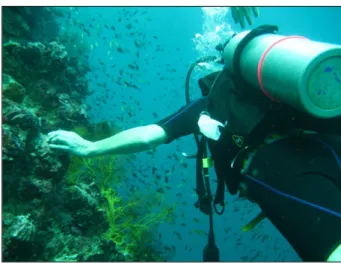
Figure 1 – Diver holding to bare substrate to regain control during a wall dive.
Researchers such as Worachananant, (2007) argue that the current sensitivity of the worlds coral reefs to pollution and other major disturbances, decreases their resistance to what may appear to be relatively small impacts from recreational SCUBA divers or snorkelers, resulting in what can be referred to as the 'cumulative impact' reef damage. As a result, in cases where the reefs are simultaneously affected directly by other forms of degrading perturbations, these recreational impacts may slow or prevent the recovery of the reef (Hawkins et al. 1999; Plathong et al., 2000). In Thailand, this theory has particular relevance due to the devastation to the coral reefs caused by the December 2004 Tsunami. The long term impact of the Tsunami on Thailand's coral reefs varied greatly. In the two areas of this study, the Gulf of Thailand remained unaffected while the Andaman Sea witnessed the highest number of human causalities and the greatest geographic and natural resources impact within the entire country (Yeemin, 2005). This study was conducted three years after the event and visible signs of the damage to the reefs were still evident. It cannot be discounted that the Tsunami appears to have
further reduced the carrying capacity of the reefs to external factors and specifically to the impact of SCUBA divers, or that vice versa, SCUBA divers are reducing the recovery rate of Thailand’s affected reefs (Phongsuwan, 2006).
Damage to corals by visitors and SCUBA divers in particular are becoming increasingly significant as an environmental impact affecting coral reefs. Several studies have analyzed how snorkelling and SCUBA diving (Rogers et al., 1988; Hawkins & Roberts, 1992; Talge, 1992; Zakai & Chadwick-Furman, 2002; Barker & Roberts 2004) can impact the reefs by breaking, bumping or re-suspending sediment on corals.
In the case of bumping, in general no visible damage occurs, but part of the protective mucus layer may be damaged or removed, providing a higher susceptibility to diseases or to other overgrowing organisms (Talge, 1990 and 1991; Hawkins et al., 1999).
Breaking coral produces visible damage such as fractured hard skeleton and kills the polyps directly involved. Evidence, though, shows that larger broken fragments from some corals (e.g. branching corals) may likely use fragmentation for reproduction and growth, but diver’s breakage usually is resumed to small tips of the corals which have low survival (Talge, 1991; Zakai & Chadwick-Furman, 2002).
Sedimentation is also considered in this study, since it can damage corals by preventing the symbiotic zooxanthellae from photosynthesizing and maintaining the corals healthy. Heavy sedimentation has been for long associated with fewer coral species, less live coral, lower coral growth rates and greater abundance of branching forms (Rogers, 1990).
The effects of diver damage on the coral reefs is complex, but in general it can result in a reduction of the percentage cover of live coral and an increase in the amount of dead coral and coral rubble (Hawkins & Roberts, 1993; Tratalos & Austin, 2001; Hawkins et al., 1999; Zakai & Chadwick-Furman, 2002). Diving may also affect species diversity, although lower levels of coral survival in areas subject to a high disturbance can be offset to some degree by the colonization opportunities made available by diver damage. This may explain why the effect of diving on species numbers appears weaker than it does for hard coral cover (Tratalos & Austin, 2001).
During SCUBA diving, contact with the substrate can manifest in different ways:
- It may be voluntary, usually to gain control, to move closer to objects of interest, to take photographs, or in a current;
- Involuntary, generally as a result of inexperience, carelessness and a lack of buoyancy control.
(Talge, 1990)
The possible impacts of SCUBA diving are of particular concern in countries like Thailand, where coral reefs are a highly prized part of the natural heritage and the dive industry is an important part of the economy (TAT, 2008). Despite the economic importance of the local dive industry based on coral reefs, there is only a limited amount of quantitative data available concerning the relation between frequencies of SCUBA dives, diver behaviour and damage rates to coral reefs in Thailand. As explained above, this lack of extensive studies regarding impacts made by different SCUBA divers at different dive sites is a gap this study aims to reduce.
1.4 The Coral Reefs of Southeast Asia and Thailand
Southeast Asia supports significant richness in marine biodiversity. It is home to around 34 percent of the world’s total area of corals (COBSEA, 2005). Thailand alone has a total coastline of more than 2,600 km and 300 islands, along which stretch approximately 153 km2 of coral reefs (Phongsuwan, 2006). Thailand’s coastal waters are located between 6º N and 13º N, offering good environmental conditions for coral reef development (Sudara, 1981; Yeemin, 2005). Its coastlines are spread along the east and the west coasts of the Gulf of Thailand and along the Andaman Sea (see Fig. 4). Thailand is ranked in 26th place out of a total of 80 countries around the world that possess reef corals in their waters and its reef corals account for 0.75 percent of the coral reefs worldwide (Spalding et al., 2001). The coastline of the Andaman Sea and the west coast of the Gulf of Thailand are considered as two different oceanographic groups in Thailand, with distinct coral patterns and abundances. Within these groups there are three different types of reefs: coral communities with no true reef structure, developing fringing reefs and early formation fringing reefs. (Yeemin et al., 2001)
Thailand has more than 250 species of hard corals and more than 30 species of soft corals (Yeemin, 2005). These two general types of corals were used in this study:
sp., Favites sp., etc);
- Soft corals (e.g. Gorgonacea, Dendronephthya sp., Lobophytum sp., Capnella sp., etc).
Hard (scleractinian) corals, which create the substratum and structural complexity of coral reefs, are vulnerable to damage resulting from human recreational activities. This is due to their slow growing carbonate substructure, which is relatively brittle and their polyps which are easily crushed. Also some of the most contacted hard coral species by divers have massive morphologies which usually have a low capacity for recovery from damage (Hall, 1997). In contrast, when studying the diver impact on soft corals it appears that these flexible, fast growing corals are able to withstand disturbance better than hard corals (Tratalos and Austin, 2001). Due to their morphology, branching corals have higher susceptibility to diver contacts and break more frequently than other types of hard corals (Rouphael & Inglis, 1997).
In terms of coral reef status, Thailand represents a mixed pattern from 1994 to 2004 (see Fig. 2), with improvements in the health of some reefs and the deterioration of many others within the Gulf of Thailand, while the status of the Andaman Sea reefs remains relatively unchanged (Yeemin, 2005). Worachananant (2007) reported that recently there has been a rapid and steady growth in tourism and recreational activities, such as SCUBA diving, which leads to obvious increases in coral reef-related tourism activities and its associated problems, in the Gulf and the Andaman Sea.
Figure 2 – Coral Reef Condition in Thailand (2002 – 2004). Source: Status of Coral
According to Phongsuwan & Chansang (1992), in the Andaman Sea, the factors that affect the reefs may differ depending upon the location and in some places it may be a combination of effects. Outbreaks of Acanthaster planci, damage from sedimentation, tourism activity resulting in boat anchoring and eutrophication, along with an intense period of dynamite blasting, can be identified as the possible causes for the deterioration of those particular reefs. The impact of the 2004 tsunami, for example, was assessed in 174 sites covering the six affected provinces and resulted in 13% of the sites showing severe impact, 47% showing low to moderate impact and 40% had no visible impact. Apparently this damage is less significant than that resulting from major threats such as the ones produced by humans (Phongsuwan et al., 2006). A localized assessment of a National Park in the west coast (Mu Koh Surin) indicated that areas of high tsunami-related coral damage, cortsunami-related with areas that did not have substantial live hard coral cover prior to the tsunami and that the overall loss in coral cover as a result of the tsunami averaged at about 8% (Yeemin, 2005). Therefore, most of the coral reefs did not suffer serious damage and it is estimated that they will naturally recover within the 5 to 10 years, if effective management is implemented to reduce damage from human activities (Phongsuwan et al., 2006).
In the Gulf of Thailand, where part of the observations took place, according to the CPAD Newsletter (CPAD, 2006), the island of Koh Tao has experienced accelerating levels of development in its relatively short history of tourism. Observation from locals suggests that as recently as 10-15 years ago, this island had a much broader and richer biodiversity than at present. Yeemin et al. (2005) reported that Koh Tao had seen live coral coverage declining by 17% within a period of five years, mostly due to boat and anchor damage. In Koh Tao degradation of coral communities was caused by both natural and human factors, such as typhoons and the bleaching event of 1998 which resulted in high mortality rates for several coral species. As well as these natural disasters there have also been a variety of human impacts, such as land development, waste water discharges, trampling by tourists, divers and anchoring. A future challenge for Koh Tao is the implementation of integrated coastal management plans and effective tourism management, which requires more studies on carrying capacity and particularly on diver damage quantification.
1.5 Reef Tourism
Worldwide, 10% of world GDP is created by travel and tourism industry. In Thailand, according to the World Travel and Tourism Council (WTTC), the contribution of travel and tourism to the GDP is expected to rise from 14.1% (1,280.5 bn THB or 38.3 bn US$) in 2008 to 15.4% (THB 2,974.7 bn or US$ 78.7 bn) by 2018 (WTTC, 2008). Reef tourism is a major global industry in expansion and it is the major foreign exchange earner for the country. The relative increase in expendable capital from developed countries combined with the gradual increase in leisure time, the expansion of global tourism and the reduction of long haul flights from Europe and other countries, to tourist hubs such as Thailand have fuelled both the dive and snorkelling industries (TAT, 2005). Paradoxically, technical advances in equipment paired with an increased trend in environmental issues, nature conversation and outdoor pursuits have, according to Barker and Roberts (2004), resulted in an increase in the popularity of coral reef recreation and in particular in SCUBA diving. More than 12 million visitors from around the world, travel to Thailand´s 26 marine parks (which cover 50% of its reefs, Main and Dearden, 2007) each year (TAT, 2006). One of the main reasons for this influx of visitors to Thailand specifically is the diversity of its marine life, including a rich abundance of soft and hard corals and reef and pelagic fish. Dive tourism in Thailand has rapidly increased by more than twenty times from 25,000 divers in 1985 (TAT, 2008). Thailand now welcomes over 550,000 dive tourists each year and is home to over 80,000 certified divers of its own. The island of Phuket for example is a main center for the diving industry in Thailand and in 2000 there were over 85 dive companies operating through the Andaman Sea (Bennett, 2002).
Thailand was the country of selection for this study due to its high popularity among worldwide SCUBA divers, the increasing growth of marine recreational tourism (Worachananant, 2007) and the recent availability and implementation of a pioneer environmental programme named Greenfins. Therefore, if tourism is well planned, and is appropriate to local circumstances, it can do much for the sustainable development of coastal areas in Thailand. Tourists are attracted to pristine seas, so there is a strong incentive to manage the environment properly (GESAMP, 2001).
1.6 The Environmental Programme “Greenfins”
According to IYOR 2008, there is an urgent global need to increase the awareness and understanding of coral reefs, and to further conserve and manage these valuable environment and related ecosystems.
In response to the increased threats to coral reefs, in 2004, the reef conservation programme Greenfins was implemented in three countries: Thailand, Indonesia and the Philippines. Greenfins is an initiative of the United Nations Environmental Programme (UNEP) and the Coordinating Body on the Seas of East Asia (COBSEA). In Thailand it was implemented by the Phuket Marine Biological Center (PMBC) and the Department of Marine and Coastal Resources (DMCR).
The main objective of the Greenfins programme is to protect and conserve the coral reefs. It aims to promote public awareness through the creation of a network of environmental friendly dive operators that adopt sustainable tourism practices in coral reef areas, while simultaneously promoting the monitoring of coral reefs (Greenfins, 2007). The programme was officially launched in Phuket, during the Workshop of 30th May 2007. At the present time the Greenfins programme is running well in two of the initial three countries and in both Thailand and Philippines, it is now well established. Greenfins still needs to be fully implemented in Indonesia. In 2007, Greenfins had registered 77 member dive operators (mostly foreign) and more than 200 individual members (mostly locals) distributed in Thailand.
The Greenfins programme provides certificates to dive operators according to a set of environmentally friendly guidelines. Initially the dive operators (represented by the managers and staff) are introduced to the programme with a formal presentation and supplied with a full package of materials from the programme, including a Code of Conduct (see Appendix) to which they agree to obey. At the dive operator’s discretion a full training in ReefWatch, a reef survey technique adopted by the programme is usually provided. Other trainings are also provided upon request or recommendation, such as presentations on the biology of the reef and environmental education, the construction of mooring buoys and dive site and beach clean ups.
To assure that the affiliated dive operators promote and follow the Greenfins Code of Conduct, network leader assessments are made in each shop, vessels and dive
operations every year. The procedure assesses some of the issues previously mentioned. For example, whether or not the dive operator promotes a no-touch policy to every diver, amongst other environmental recommendations. Those who promote the practices and have good results retain their membership and can even achieve a certificate of excellence. This has the additional benefit of providing reassurance to potential environmentally aware customers. The results of the assessments are reported yearly to the UNEP and released for public consultation.
Anecdotal evidence suggests that Greenfins certified dive operators have a different attitude towards their customers and employees regarding their responsibility towards teaching diving and guiding recreational divers. Amongst others, normal procedures for certified dive operators includes promoting environmental awareness, emphasising the importance of good buoyancy control, a no touch policy and general training on the biology of coral reefs to their staff. These procedures appear to influence the way the dive staff interact with the clients, raising their awareness for the environment and increasing their respect for the sea. It cannot be discounted that an environmental friendly centre (namely a Greenfins member) may attract a particular kind of public who is already more aware, concerned of environmental issues and motivated to reduce their impacts on the reef. For some of the Greenfins members, when registering for the dive trip, either inside the dive centre or via the internet, many clients are asked to fill out a questionnaire which includes questions about the client's dive history and a Greenfins code of conduct for review. Environmental and reef ecology posters are displayed around the dive centre and other materials are very accessible to the customers.
1.7 Carrying Capacity and Future Perspectives
Internationally the carrying capacity of coral reefs has been determined to be around 5000 per site per year (Harriot, 2002). In 2002, following an experiment in the Red Sea, Zakai and Chadwick-Furman proposed a carrying capacity of 5000-6000 dives per site per year, confirming the findings of Harriot et al. (1997) in Australia, Hawkins and Roberts (1997) in Egypt, Hawkins et al. (1999) in the Caribbean and Schleyer and Tomalin (2000) in South Africa. Carrying capacity is dependent on the amount of
environmental damage inflicted by divers, the capacity of the biological systems to recover from the damage and the acceptability to divers of crowded diving conditions (Salm, 1986).
According to Hawkins and Roberts (1997) educating divers on how to minimize the damage they cause underwater considerably reduces impacts, therefore raising the carrying capacity of an area. Recent studies have shown that carrying capacity as a means to quantify damage in coral reefs is more complex than it appeared. This is because it is based on the assumption that the effects of individuals are relatively similar and can be averaged over large homogeneous groupings, however, individual divers may vary greatly in their behaviour and in the amount of damage that they cause (Talge, 1990; Roberts and Harriot, 1995; Rouphael and Inglis, 1995; Harriot et al., 1997; Medio et al., 1997; Hawkins & Roberts, 1997).
Carrying capacity also varies according to site characteristics and wise management will incorporate monitoring of damage levels to keep site use within sustainable intensities. Therefore the conservation of these sensitive environments may be more effectively facilitated, if dive operators and dive guides are able to identify potential situations and provide divers with cautionary pre-dive briefings (Medio et al., 1997), targeting and emphasising environmental friendly diving practices such as those recommended by the Greenfins´ Code of Conduct. Such non-regulatory measures may provide a rewarding positive result in the global management of the coral reefs. Therefore, scientists, managers, policy-makers and stakeholders must work together effectively if the seas and coasts are to be protected and developed, and if their resources are to be used sustainably (GESAMP, 2001).
1.8 Literature Review on Diver’s Influencing Characteristics
Some studies (Rouphael and Inglis, 2001; Liew, 2001; Uyarra & Côté, 2007) analysed the differences in damage produced by males and females. Some of those studies showed that males cause more damage than females and that may be because male divers are more likely to ignore pre-dive instructions on safety and environmentally benign behaviour than female divers (Vredenburgh and Cohen, 1993). However, recently in Thailand, Worachananant (2007) reported exactly the contrary, having
females producing more contacts with the corals and causing more damage than males. Photographers are considered by many authors (Rouphael & Inglis, 2001; Worachananant, 2007; Barker & Roberts 2004; Medio et al. 1997) as some of the worst offenders to the coral reefs, damaging more corals due to the manipulation of photography equipment, the proximal activity to the reef and the deliberate contact with the marine organisms when taking a picture.
One of the most influencing characteristics in damage behaviours is diving experience, based on the number of logged dives, since it is generally recognized that divers with more dives usually have more buoyancy control, hence less interactions with the corals. Some authors (Worachananant, 2007; Barker & Roberts, 2004) studied the effect of this diving experience on the damage produced on the reef and in general concluded that less experienced divers produce more contacts with the coral reef. In general, regarding the diver’s certification, it appears that there is no important relation with damage inflicted to the corals (Harriot et al. 1997; Barker & Roberts, 2004).
Current effect was studied by Barker and Roberts (2004) and Thompson (2004), but both studies had no significant results, and it appears that current may have no effect on the diver damage. Nevertheless, the presence of different levels of current produces higher stress on the dives and may influence the damage behaviour.
Barker and Roberts (2004) results appear to indicate that dive companies need to ensure that dive guides brief divers accordingly and with an environmental approach, but most importantly that the guides actually intervene when they see divers damaging the reef. Barker & Roberts also recommend that dive groups should be small enough to ensure that dive guides can supervise all members of the group effectively. Although the study provided no ideal number, interviews with dive leaders and personal experience could define a 'small group' as three or less divers.
A study by Medio et al (1997) in Egypt, illustrated how educational tools such as the environmental briefings may be used to reduce rates of damage to living corals, and they concluded that diver behaviour may be influenced by those tools. Studies from Davis and Tisdell (1995), Plathong et al. (2000) and Medio et al. (1997) exploring the effects of environmental education concluded that increased diver education on reef damage resulted in a lower incidence of physical damage to the reef during diving or snorkelling. Other researchers (Barker & Roberts, 2004; Kenchington, 1993; Salm
1986; Tilmant, 1987; Worachananant, 2007) emphasised the importance of public awareness and active participation (such as the training of dive staff) in environmental programmes, especially for those involved in the tourism industry. However in 1996, according to a study by Medio, in which 100 questionnaires were sent to marine parks and reserves world-wide, less than 25% had implemented diver environmental awareness programmes. In recent years, according to PADI (2008) the affiliation and participation in environmental programmes such as Project AWARE continues to increase worldwide.
Many previous studies (Barker & Roberts, 2004; Rouphael & Inglis, 1997; Hawkins et al., 1999; Zakai & Chadwick-Furman, 2001; Medio et al., 1997; Uyarra and Côté, 2007; Liew et al., 2001; Harriot et al, 1997; Walters & Samways, 2001; Worachananant, 2007) have examined the effects of SCUBA diving and have explored the relationship of some of the mentioned variables to coral damage among organized dive operations run by random dive centres. However, such studies did not include a reference to particular affiliations with reef conservation programmes or a specific environmental mandate. In fact, there is a lack of data regarding the relationship between SCUBA divers and coral damage when diving with trips organised by environmental friendly dive centres.
In order to rectify this lack of data, the following study proposes to observe divers from environmental friendly dive operators in the Andaman Sea and the Gulf of Thailand, and where possible, compare findings with other previously mentioned studies. The observations were made on dive operators affiliated and certified with the Greenfins programme.
1.9 Research Questions
This study investigates the following:
• If SCUBA divers from dive operators affiliated with Greenfins cause on average, less damage than non-Greenfins SCUBA divers.
• If the factors: gender, age, underwater photography, number of logged dives (experience level), diver certification, environmental awareness level, knowledge of Greenfins and pre-dive environmental briefing, reef topography, current and dive group size are influencing factors on the divers behaviours. • Whether these variables influence the contact rate and the number of divers
contacting with the total substrate or who damaged the corals.
• Whether some combination of these variables could be used in order to model the amount of potential damage which certain diver characteristics could cause to the coral reefs.
• Checking for any differences in the average number of contacts between three time periods of the dive.
• Comparing the two sample sets, the Gulf of Thailand and the Andaman Sea in terms of average diver damage rates.
• Identify any relationship or differences in damaging contacts and contact rates by the independent variables within the two sample sets, the Gulf of Thailand and the Andaman Sea.
2 Methodology
2.1 Study Site
Using the reef conservation programme Greenfins as background, permission was obtained from 22 dive operators members (see Appendix), based on Koh Phuket, Koh Lanta, Koh Tao and Kao Lak (Similan), Thailand (see Fig. 3), to accompany divers on their daily dive trips as an observer.
Figure 3 – Map of Thailand showing both Andaman Sea and Gulf of Thailand. Red
Boxes are the areas where the observations took place: 1- Phuket and Koh Phi-Phi Group; 2- Koh Lanta Group; 3- Khao Lak (Similan) Group; 4- Koh Tao Group. Adapted from Status of Coral Reefs in Tsunami affected countries: 2005
1
2 3
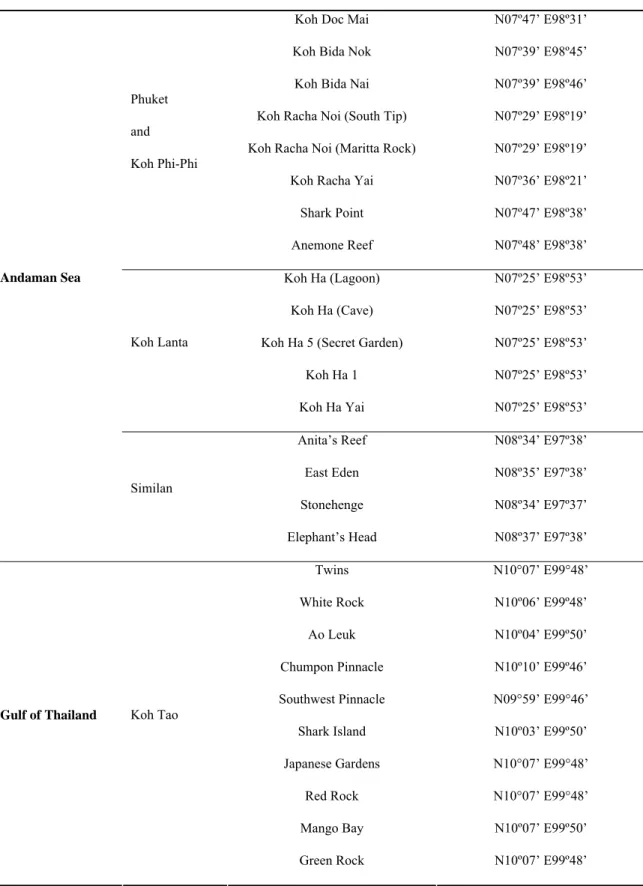
The dive sites used for this study were as follows:
Table 1 – Study Dive Site Names and Geographical Coordinates
Koh Doc Mai N07º47’ E98º31’ Koh Bida Nok N07º39’ E98º45’ Koh Bida Nai N07º39’ E98º46’ Koh Racha Noi (South Tip) N07º29’ E98º19’ Koh Racha Noi (Maritta Rock) N07º29’ E98º19’ Koh Racha Yai N07º36’ E98º21’ Shark Point N07º47’ E98º38’ Phuket
and Koh Phi-Phi
Anemone Reef N07º48’ E98º38’ Koh Ha (Lagoon) N07º25’ E98º53’ Koh Ha (Cave) N07º25’ E98º53’ Koh Ha 5 (Secret Garden) N07º25’ E98º53’ Koh Ha 1 N07º25’ E98º53’ Koh Lanta
Koh Ha Yai N07º25’ E98º53’ Anita’s Reef N08º34’ E97º38’ East Eden N08º35’ E97º38’
Stonehenge N08º34’ E97º37’
Andaman Sea
Similan
Elephant’s Head N08º37’ E97º38’
Twins N10°07’ E99°48’
White Rock N10º06’ E99º48’
Ao Leuk N10º04’ E99º50’
Chumpon Pinnacle N10º10’ E99º46’ Southwest Pinnacle N09°59’ E99°46’ Shark Island N10º03’ E99º50’ Japanese Gardens N10°07’ E99°48’ Red Rock N10°07’ E99°48’ Mango Bay N10º07’ E99º50’
Gulf of Thailand Koh Tao
2.2 Data Gathering
Data was collected on scuba divers and dive operations during 11 months spread over two major periods. The first period was from January 2007 to July 2007 and the second period from October 2007 to November 2007. Both periods were considered high season for the diving industry at each particular area of study. Nevertheless, dates were imposed by a matter of logistics and availability of the dive operators. During this period, the behaviour of 155 guided divers (n=155) was studied during 30 minute observations per diver. The divers were observed over 27 dive sites, at 0–30 m depth, located on the Andaman Sea and the Gulf of Thailand (Fig. 3).
The total number of divers on the boats varied from one to forty, but the divers were grouped in smaller groups of one to nine divers and assigned with a dive leader (i.e. Divemaster or Instructor). Stratified random selection was used to decide which groups and which divers were to be observed before they entered the water, aiming for a representative sample of chosen sub-groups. Some of those included visible detectable characteristics such as gender, age and whether the diver was an underwater photographer or not. On each sample dive used for the study, between one and three divers were discretely observed from a distance of 3–5 m underwater, depending upon visibility conditions. To keep the anonymity of the observer and prevent any change in behaviour by the divers, the dive staff were asked to treat the observer as a normal guest. If divers asked about the observer’s work, they were informed that the observer was collecting general data on the reef’s health.
Behavioural observations started from the time divers had descended and began adjusting their buoyancy or in the case of observations on student divers, the observations started as soon as they finished their skills practice and began adjusting their buoyancy for the dive. All of the observations lasted for the duration of 30 minutes. The observation times were divided in three 10 minute periods since the start of the dive. Each contact was then recorded in a pre-prepared slate, according to the time of observation during the dive (i.e. first, second or third 10 minute period of the dive). This adopted approach allowed the analysis of the differences in number of contacts, depending on the time of the dive, since it appears that more contacts may occur during the first period of the dive, when divers drop down over the reef and adjust
their buoyancy. Profiles of the dive at each site varied according to the reef topography. All divers concluded their dives sometime after the end of the 30 minute period.
In terms of contact with the reef the distinctions between diver behaviours were defined as: source of contact (i.e. body contact, fin contact or equipment contact); the effect of contact (i.e. breakage, bump or raising of sediments). The type of benthic substrata contacted was also recorded as one of four categories: hard corals, soft corals, bare substratum (e.g. rock, sand, dead coral) and other living substrata. This last category included other invertebrates such as sea anemones, sea cucumbers, giant clams and certain living organisms that could not be included in the other categories. When the contact was with sandy substrate and if sediment was kicked up increasing the risk of sedimentation landing on nearby corals, this would be considered as a contact with sand resulting in sediment re-suspension.
For further elaboration, either contacts with the living corals or re-suspension of sediment over them were considered as the variable: contacts with damage. Those contacts plus any contacts with bare substratum and other non-coral living benthos were considered as the variable: total contacts with substrate. The type of contact and damage observed was also classified as voluntary if the contact was seen as an intentional act of the diver or as involuntary if it was an unintentional act. Prior to entering the water at each dive site, the dive leader gave a briefing containing a general description of the dive site, information about the planned dive profile and safety rules. In some of the cases recorded, the dive leader had an environmental friendly approach, explaining briefly about the biodiversity and fragility of the coral reef system, and reminded the divers not to touch the substrate, not to remove or collect anything underwater and to remember to control their buoyancies and fins. Immediately after the end of each observation dive, each diver was requested to answer a questionnaire relating to their diving certification, experience and other personal information (see Appendix). Right after delivering back the questionnaires, the divers were interviewed personally to confirm the answers. Also, three questions were used to provide quantification for the variable environmental awareness level. The divers were asked whether or not they were affiliated with an environmental organization, whether they had any preference for environmental diving centres over non-environmental ones and if they read any marine life magazines. Any diver who answered with more than one positive response to these three questions was considered as possessing a high level of environmental awareness.
Any diver who only answered with one or no positive answers was considered as having a low level of environmental awareness.
According to the number of previously logged dives, divers were categorized into three different groups: a novice diver as having less than 50 dives; an intermediate diver as having between 51 to 100 dives; and an experienced diver as someone with more than 100 dives. The certification levels were classified according to the international dive standards: a student diver (i.e. any diver in training or non-certified diver with an instructor); basic level diver (open water or equivalent certification); an advanced level diver (i.e. at least rescue diver or equivalent certification); and instructor diver (i.e. any diver with instructor certification, but not the leader of the dive).
Additionally at each dive site, data on patterns of diver activity and usage (e.g. number of dive boats over each dive site) were also collected, to attempt to estimate roughly the number of divers and understand the magnitude of the problem.
2.3 Biological Characteristics of the Sites
All the dive sites were characterized according to dive site conditions: temperature, current, visibility and reef topography. General physical conditions present during the dives were measured qualitatively and quantitatively underwater by the observer. The measured variables were: visibility and current, (which were measured using an estimate based on observer’s experience), the temperature, maximum depth, average depth and total dive time (all of which were measured using a dive computer ®Suunto Mosquito). The variable current was measured as weak, moderate, strong or none. The description of the topography of the dive sites took into account the categorization as defined by Rouphael and Inglis (1997), but ultimately it was adapted from Reefwatch (Greenfins) in order to achieve a better relation with the morphology of Thai reefs, as shown below and in Fig. 4:
Slope – fringing reef sloping gently;
Pinnacle – submerged pillar or pillars standing alone and rising from a sandy bottom or coral garden with more than 100 m of open water between the pillars and the reef; Wall – vertical or near vertical drop-off extending from the surface of water to the bottom of the dive site with no discernible slope;
Varied – for some combination of the other topographies.
Figure 4 – Schematic interpretation of the reef topographies used in this study
(modified from Greenfins, 2007)
2.4 Statistical Analysis
Statistical analysis of the data was performed using the SPSS program, version 16.0. An alpha level of 0.05 was used for all statistical tests performed on the sample.
Several descriptive statistics were performed on all variables to synthesize and report the sample. Due to the high non-normality of the variable distributions and the categorical nature of most variables, non-parametric statistical tests were performed to test the significance of the results. Mann-Whitney tests and Kruskal-Wallis tests were performed to identify differences in the average contact rate with the substrate and with damage between the independent variables. Chi-square tests (χ2) were used to find relationships between the categorical independent variables and the occurrence of damage contact, determining if the number of divers who damaged the reef varied among the groups of the categorical independent variables and in which way. Whenever the asymptotic method for significance was not adequate due to violation of the assumptions of the Chi-square (i.e. more than 20% of the categories not having a minimum expected frequency of 5), exact tests such as the Fisher’s exact test were used. Any correlation between age, number of logged dives and the number of divers in the group with the contact rate of damage was obtained using Spearman’s rank correlation
coefficient. Friedman’s test was used to check for differences in the average of contact rate in the three distinct 10 minutes periods of the dive.
Logistic regression modelling was used to predict the binary outcome of damage (damage or no damage) to the coral reef according to possible combinations of eleven independent variables. The independent variables which were tested were: gender, age, photographer, number of logged dives, diving certification, current level, reef topography, number of divers in the group, environmental awareness level, previous knowledge of Greenfins and whether an environmental briefing was given or not. The variables: age, number of logged dives and number of divers in the group were the non-categorical variables, and all the other variables were non-categorical. Categorical variables were coded using a deviation contrast (i.e. to examine how influential each category of each variable was to the average of all categories) and a forward stepwise method was used with a significant level of α=0.05. Likelihood ratio is associated with that method and it re-runs the model excluding the non-significant variable combinations.
3 Results
During the study period, 66 dives were made at 27 dive sites in the Andaman Sea and the Gulf of Thailand. 155 divers were observed underwater throughout their dives and a total of 430 contacts with the substrate were recorded. 306 of the contacts were considered as damaging to the reef and were made against living reef corals (i.e. hard and soft corals) or re-suspended sediment over them, while the remaining 124 contacts were produced with other benthic organisms, rock substrate or dead coral.
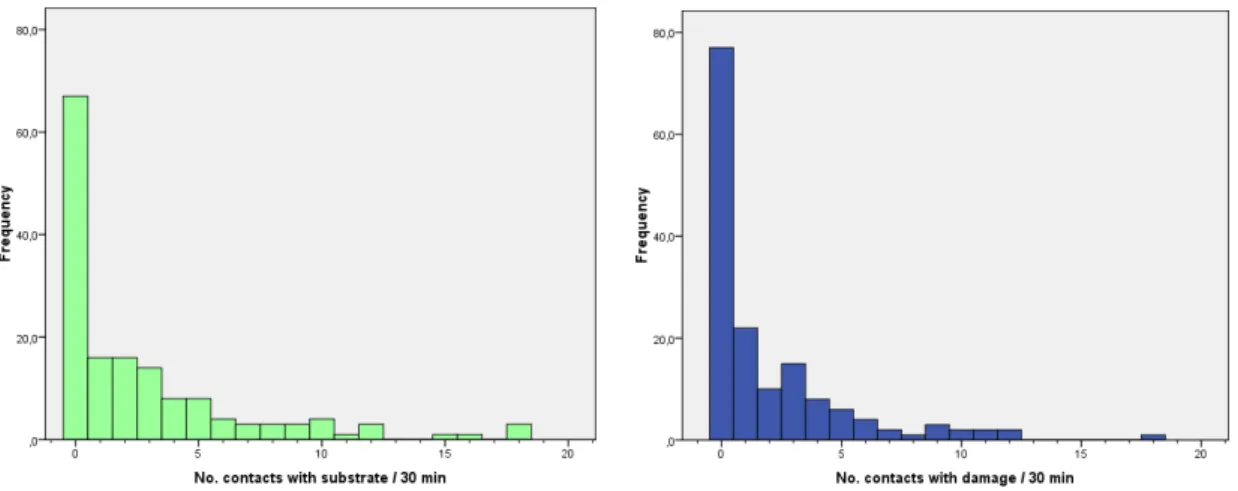
From the total 155 observed divers, 88 (56.8%) contacted the substrate at least one time during the dive, with a mean contact rate of 2.77±0.64 (mean±95%CI) and a median of one contact per 30 minutes of the dive. Of those divers, 78 (88.6%) made contact with some forms of live coral or re-suspended sediment over the corals. For this study, both of these behaviours, contacts (i.e. bumps or breaks) with living corals and the re-suspension of sediment over them, were considered as damaging contacts and were what was mostly analysed. Fig. 5 shows both distributions, the one from all contacts with the substrate and the other from the contacts that were considered as damaging.
Distributions were highly non-normal (skewed to the right) with a minimum value of zero. The substrate contact distribution presented a maximum of 18 contacts. 67 (43.2%) divers did not contact the substrate at all. For the distribution of the damaging contacts the maximum was also 18 contacts, while 77 divers (49.7% of the sample) made no damaging contacts with the reef. The mean was 1.97±0.49 (95% CI) damaging contacts per 30 minutes of the dive and the median was one contact.
Figure 5 – Frequencies of divers (n=155) observed according to: number of contacts
with the total substrate (green) and number of contacts considered as damaging (blue), during 30 minutes of their dives.
3.1 Contacts with Damage
3.1.1 Diver Personal CharacteristicsGender
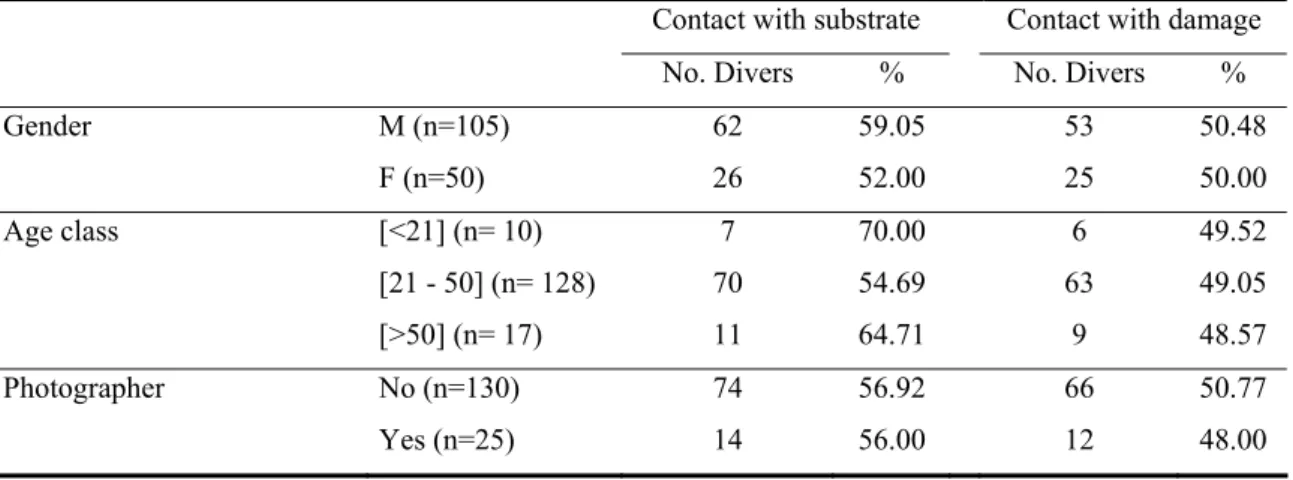
In the total sample, 105 divers (67.7%) were males and 50 divers (32.3%) were females. A similar proportion of male divers and female divers contacted the reef with damage at least once during the 30 minute observation period of the dive. 53 (50.5%) of the male divers and 25 (50.0%) of the female divers contacted the reef with damage one or more times. When a Chi-square test was performed, it was found that gender and the occurrence or not of damage were not related (χ2= 0.003, d.f.=1, p= 0.956).
Table 2 – Summary of effects for the total number of divers and diver/reef
interactions recorded over the whole study period by diver personal characteristic variables: gender, age, class and photography.
Contact with substrate Contact with damage
No. Divers % No. Divers %
Gender M (n=105) 62 59.05 53 50.48 F (n=50) 26 52.00 25 50.00 Age class [<21] (n= 10) 7 70.00 6 49.52 [21 - 50] (n= 128) 70 54.69 63 49.05 [>50] (n= 17) 11 64.71 9 48.57 Photographer No (n=130) 74 56.92 66 50.77 Yes (n=25) 14 56.00 12 48.00
The number of contacts with damage per 30 minutes was not influenced by gender. Even though slight differences in the average number of contacts among female and male divers were visible in the sample (see Fig. 6), those differences were not great enough to exclude the possibility of random sampling variability. Therefore no significant difference was found between the number of contacts with damage / 30 minutes made by male divers in comparison to female divers (Mann-Whitney U test, p=0.734).
Figure 6 – Box-plot graphs of the diver characteristics variables: gender and
photography, against number of contacts with damage to the reef per 30 minutes of the dive. Open circles represent outliers and asterisks represent extreme values.
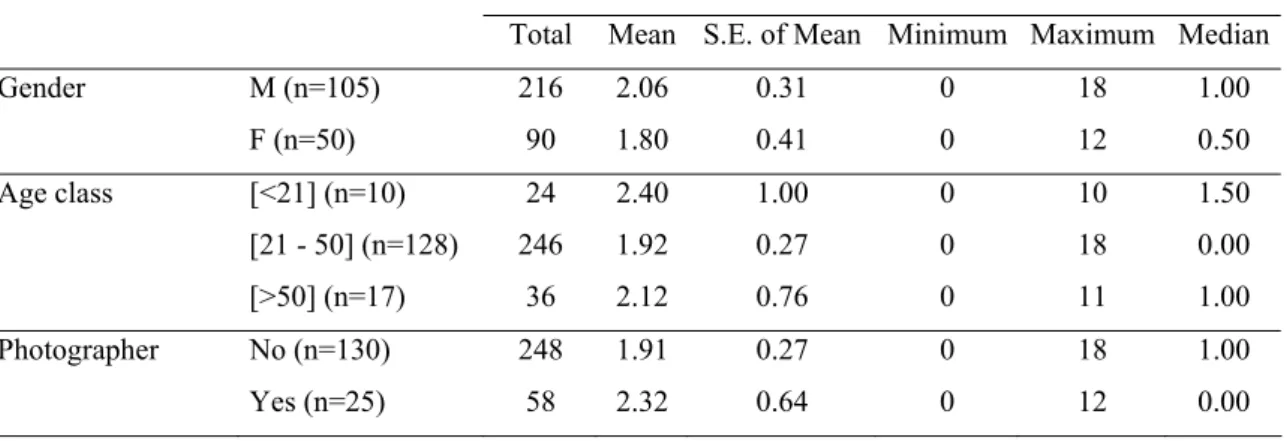
Table 3 – Rates of damage per 30 minutes of the dive by the diver characteristics variables: gender, age class and photographer
No. contacts with damage / 30 min
Total Mean S.E. of Mean Minimum Maximum Median
Gender M (n=105) 216 2.06 0.31 0 18 1.00 F (n=50) 90 1.80 0.41 0 12 0.50 Age class [<21] (n=10) 24 2.40 1.00 0 10 1.50 [21 - 50] (n=128) 246 1.92 0.27 0 18 0.00 [>50] (n=17) 36 2.12 0.76 0 11 1.00 Photographer No (n=130) 248 1.91 0.27 0 18 1.00 Yes (n=25) 58 2.32 0.64 0 12 0.00 Age
Age ranged from 15 to 76 years old, with a mean of 32.65±1.85 (95%CI) and a median of 30 years old. To test the relationship between age and the occurrence or not of damage contact, age was classified as those divers under the age of 21, divers aged between 21 and 50 and divers over the age of 50. Within the first classification of divers aged less than 21, six of those divers (60.0%) did some damage to the reef. The second classification had 63 divers (49.2%) producing damage contact and the third classification had nine divers (52.9%). This result did not show significance for a relationship between these two variables (Fisher’s exact test χ2=0.525, d.f.=2, p=0.858). When the number of contacts with damage per 30 minutes was analysed against age (Fig. 7), no correlation was found (Spearman’s rank correlation, r= -0.039, p=.629, n=155).
Figure 7 – Scatter plot of the diver characteristics variable: age, against number of
contacts with damage per 30 minutes of the dive.
Photography
Twenty five (16.1%) divers were photographers using non-professional photography equipment (i.e. regular digital cameras with underwater housing), and this category included both male and female individuals. It is important to mention that no specialist photographers were amongst the sample, meaning that no divers would be using bulky and difficult to handle photography equipment.
Twelve divers (48.0%) engaged in photography activities produced damage to the reef, contrasting with 66 divers (50.8%) of the non-photographers who caused damage to the reef. This difference was not statistically significant (χ2=0.064, d.f.=1, p=0.800).
Nevertheless, photographers had a higher mean of contacts [2.32±1.33 (95%CI)], but a lower median of zero than non-photographers, who had a mean of 1.91±0.53 (95%CI) contacts and a median of one contact. One explanation for this difference might be because some small group of individual photographers had a higher number of contacts, increasing the overall average mean of the group. But this difference between the rate of contact with damage made by non-photographer and photographer divers was not significant (Mann-Whitney U test, p=.692).
3.1.2 Diver History
Certification level
Basic level divers were the most surveyed group with a total of 113 divers (72.9%), 33 (21.3%) had advanced certification, 5 (3.2%) were student divers and 4 (2.6%) were instructors.
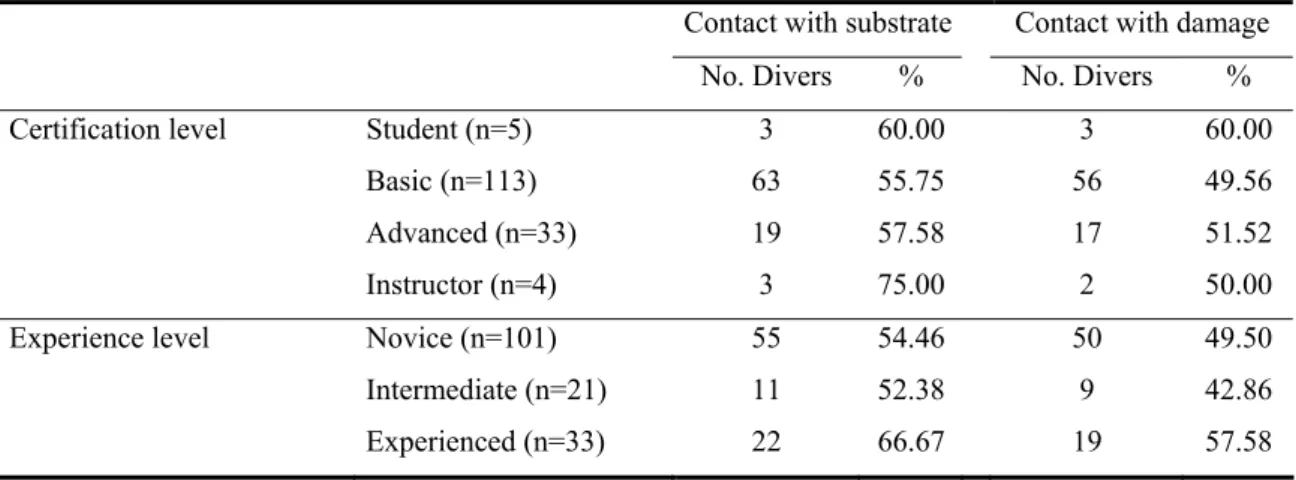
Table 4 - Summary of effects for the total number of divers and diver/reef interactions recorded over the whole study period by diver history variables: certification level and experience level.
Contact with substrate Contact with damage
No. Divers % No. Divers %
Certification level Student (n=5) 3 60.00 3 60.00
Basic (n=113) 63 55.75 56 49.56
Advanced (n=33) 19 57.58 17 51.52
Instructor (n=4) 3 75.00 2 50.00
Experience level Novice (n=101) 55 54.46 50 49.50
Intermediate (n=21) 11 52.38 9 42.86
Experienced (n=33) 22 66.67 19 57.58
56 (49.6%) of basic level divers damaged the reef. In contrast, 17 divers (51.5%) from the advanced level contacted the reef with damage. Three student divers (60.0%) and two instructors (50.0%) made damage contact with the reef at least once (see Table 4). A non-significant exact test resulted from these small differences (Fisher’s Exact Test χ2= 0.437, d.f.=3, p=1.00), indicating no relationship between the two variables.
Figure 8 - Box-plots for diver history variable: certification class against number of
contacts with damage per 30 minutes of the dive.
There was no difference between the number of contacts with damage in the four analysed certification levels (Kruskal-Wallis H, χ2= 0.767, p=.858) (Fig. 8).
Table 5 – Rates of damage per 30 minutes of the dive by the diver history variables: Certification level and experience level
Contacts with damage / 30 min
Total Mean S.E. of Mean Minimum Maximum Median
Certification level Student (n=5) 14 2.80 1.66 0 9 2.00
Basic (n=113) 192 1.70 0.24 0 12 0.00
Advanced (n=33) 91 2.76 0.77 0 18 1.00
Instructor (n=4) 9 2.25 1.93 0 8 0.50
Experience level Novice (n=101) 180 1.78 0.28 0 12 0.00
Intermediate (n=21) 35 1.67 0.63 0 11 0.00
Experienced (n=33) 91 2.76 0.68 0 18 1.00
Experience level (number of logged dives)
The SCUBA divers who were observed varied widely in experience. The number of dives completed until the time of observation varied from 2 to >1500, with a mean of 87.07±31.44 (95%CI), a median of 32 dives and a mode of 6 dives. Experience level was defined as the number of previous logged dives resulting in three categories: